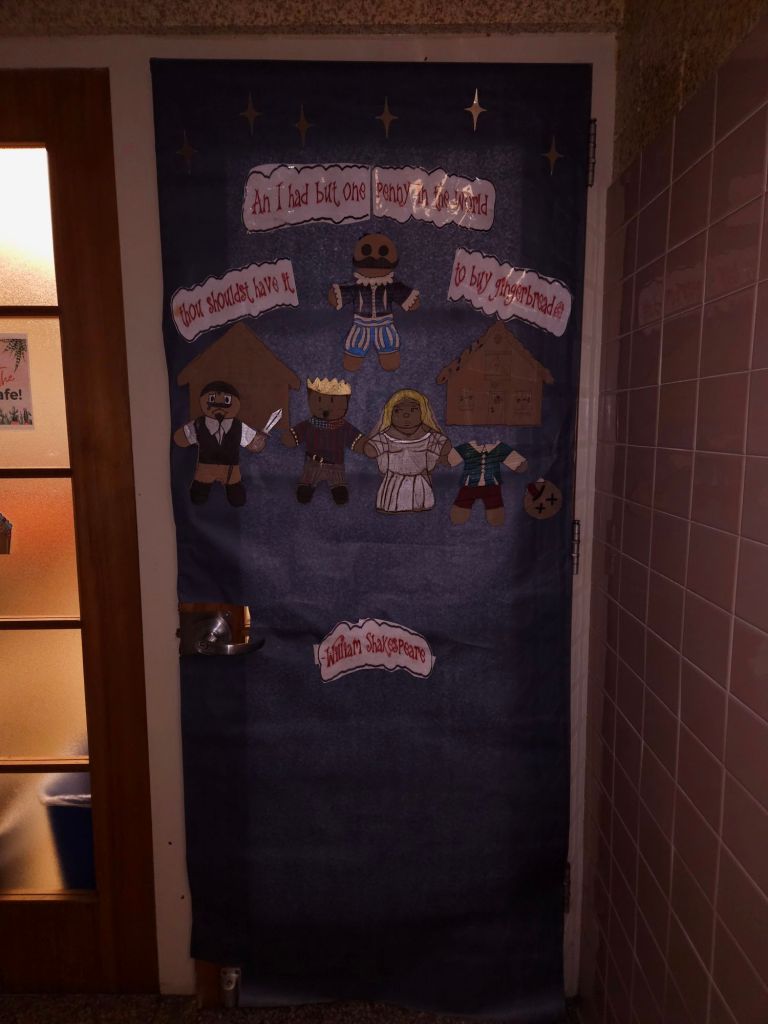
Every holiday season, my school likes to decorate the classroom doors in a festive way. I wanted to celebrate my Shakespeare Club and also teach the club members about Shakespearean fashion, Shakespearean characters, and maybe a little bit about engineering too. I’m very proud of the results, and I wanted to share this idea with you to maybe inspire you next holiday season!
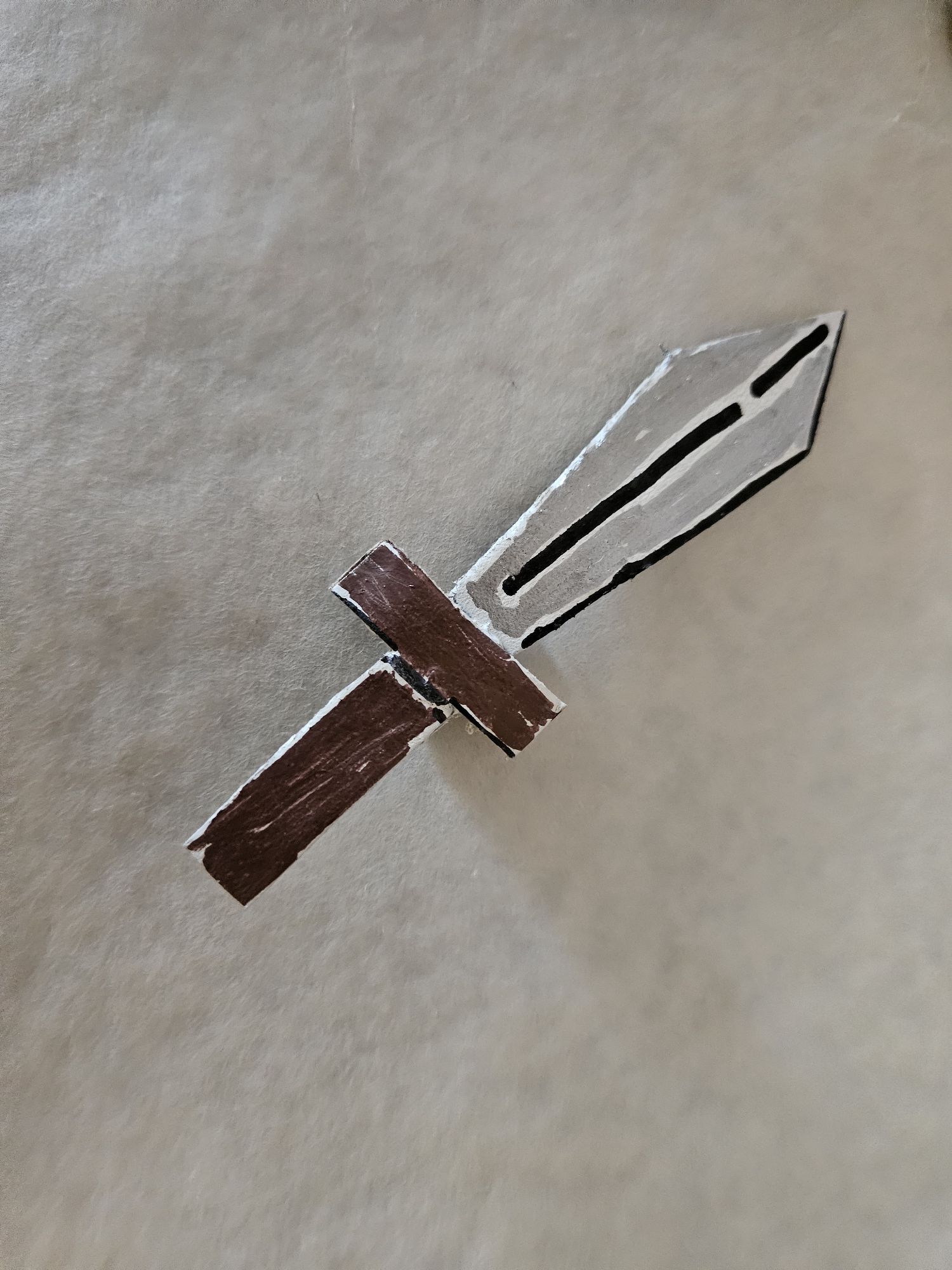
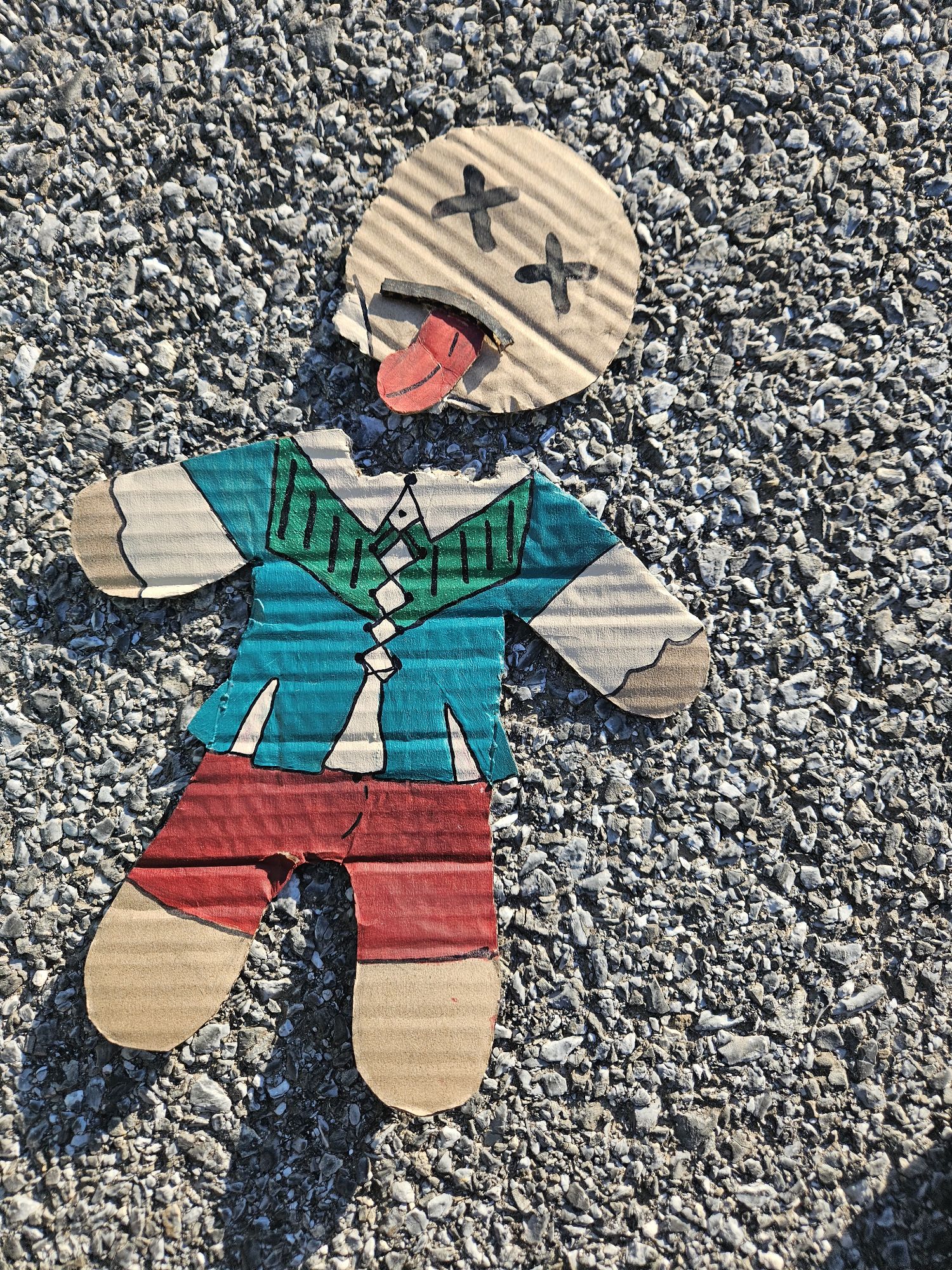
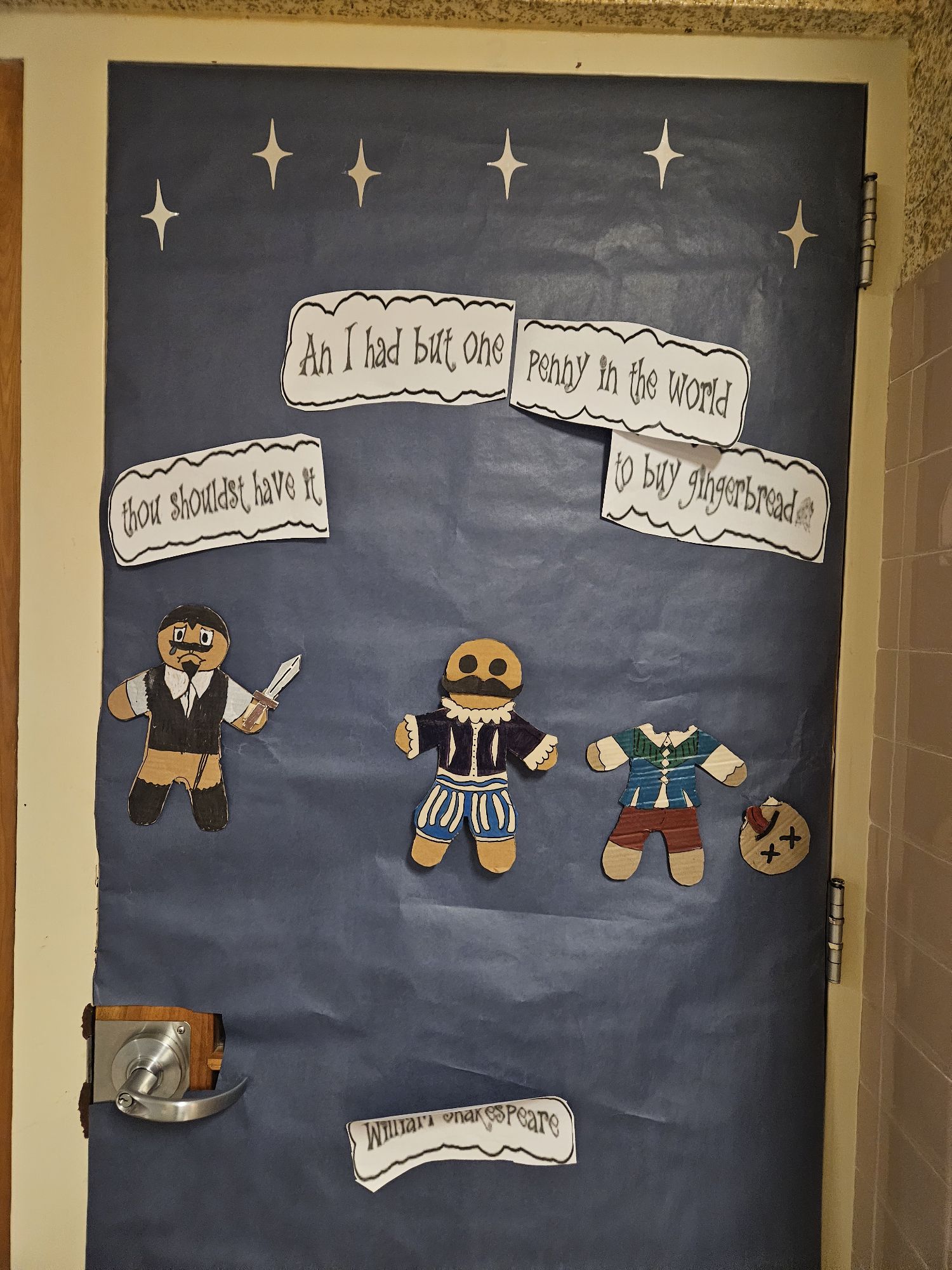
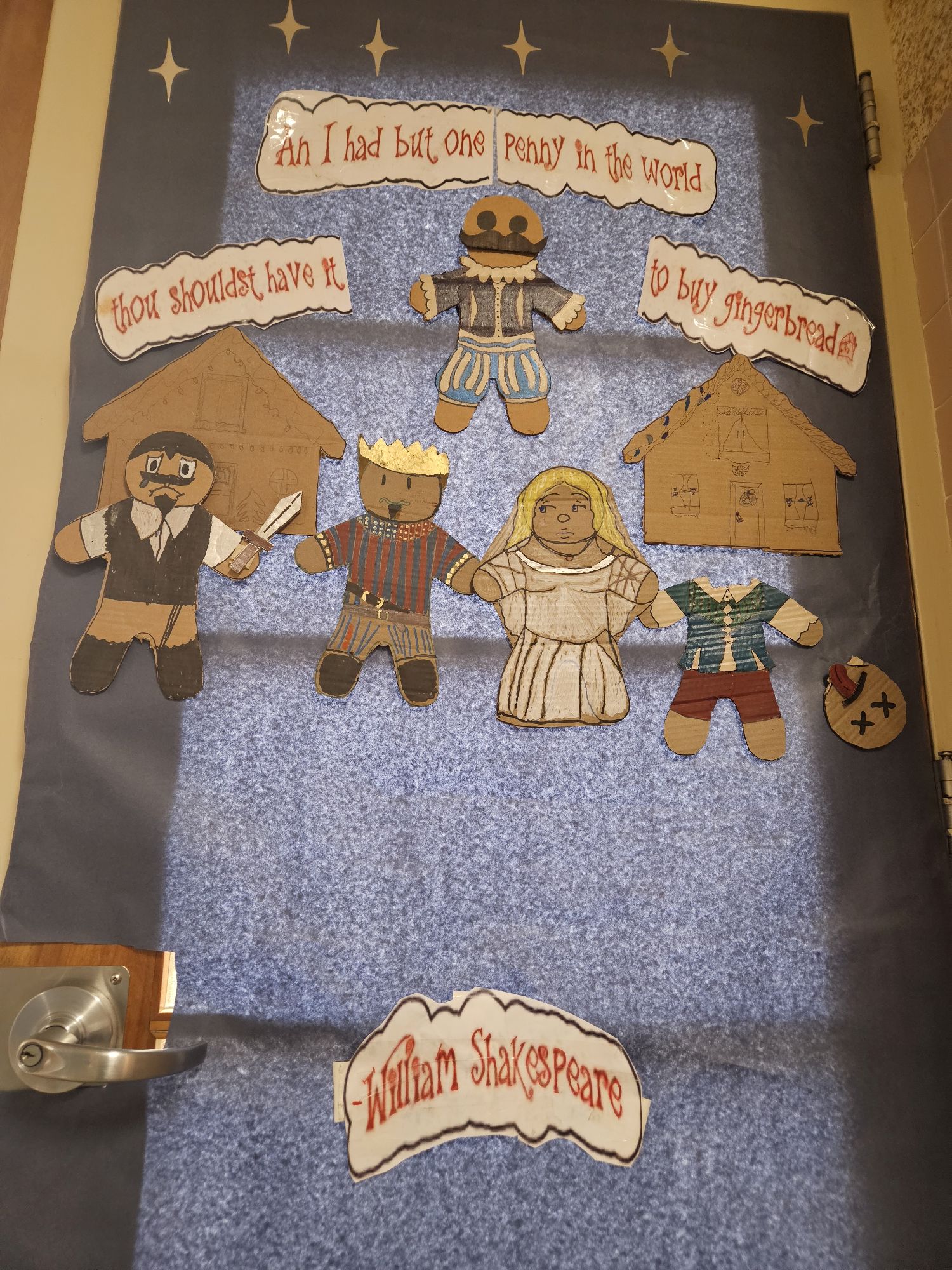
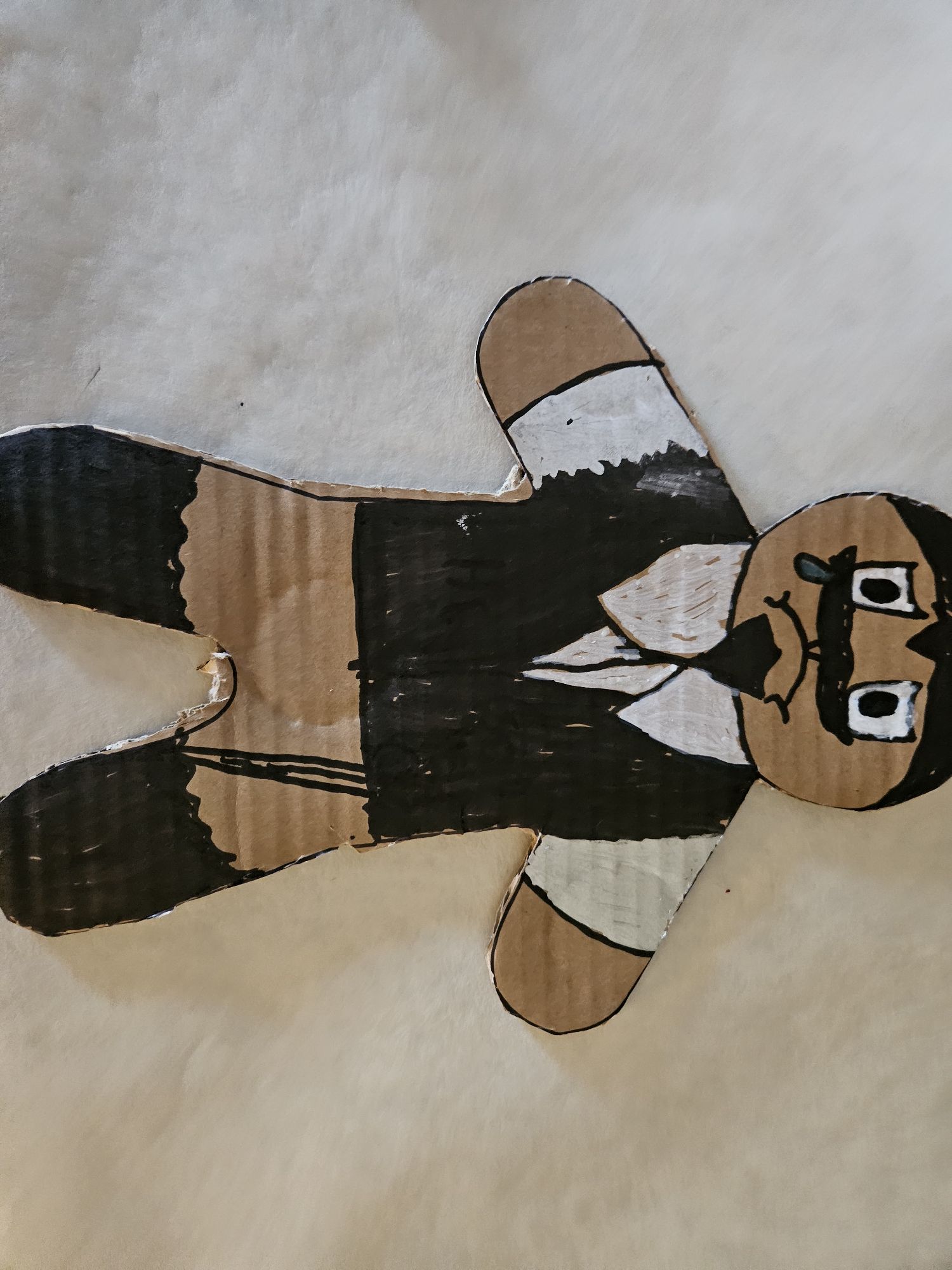
Gingerbread Hamlet Close up of Hamlet’s sword Gingerbread Shakespeare Off with his head!Gallery of my Gingerbread Madness
The Concept
Hath I but one penny in the world, thou should’st have it to buy gingerbread. – Love’s Labors Lost
Since the theme had to be holiday-related, I looked at the above quote and decided to make Shakespearean gingerbread men! I knew I wanted to make the kids design a bunch of gingerbread men that would look like Shakespearean characters. While we were at it, I wanted gingerbread houses and maybe even a 3D element to go along with it. I knew it wouldn’t be easy, but I also knew my group was up to the task!
The plan
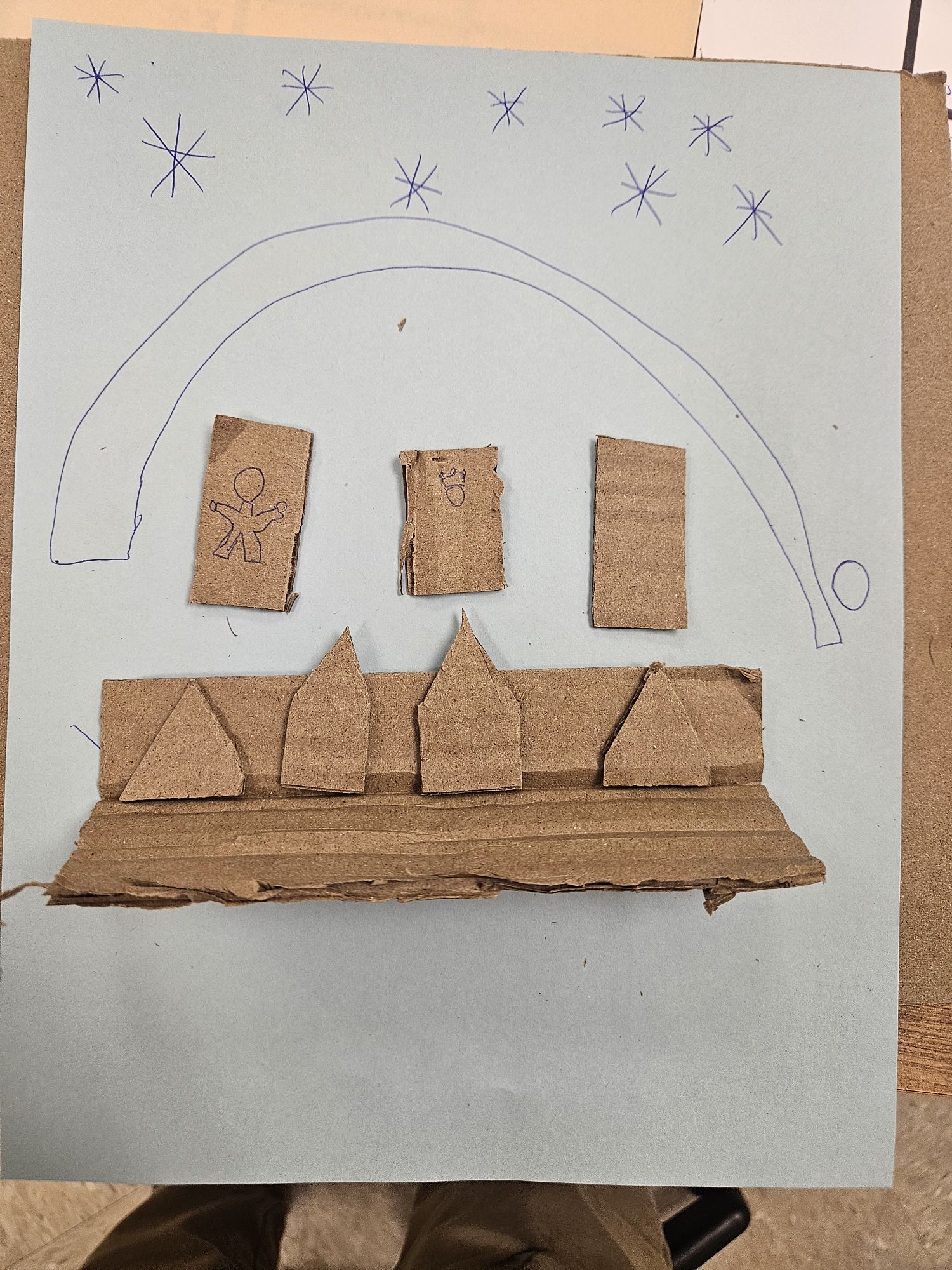
My concept drawing of how the door should look
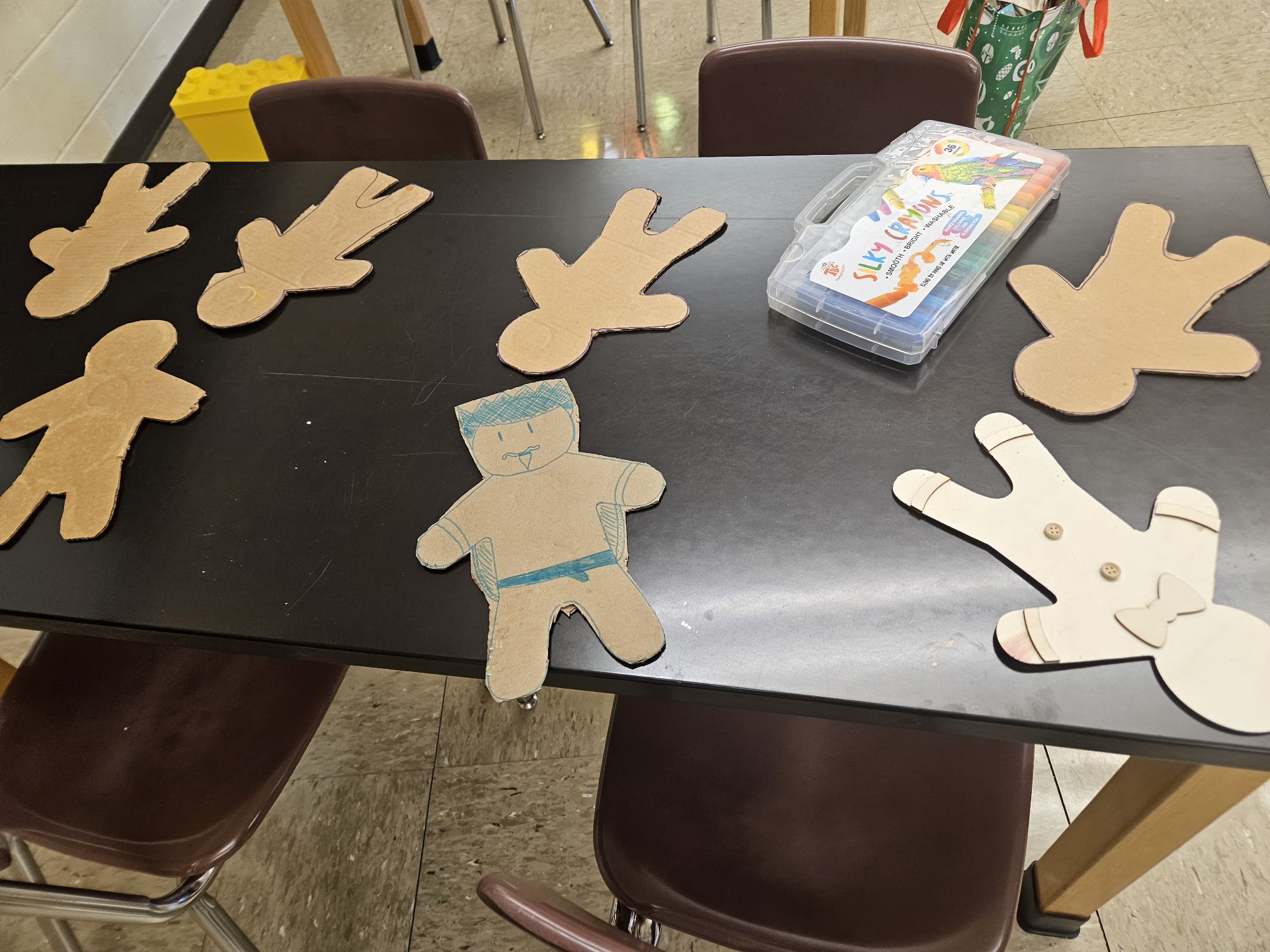
I knew I couldn’t use real gingerbread, so I chose the next best thing- cardboard! I made a cardboard plan of the door to show to my group. I then found a wooden gingerbread man at the local dollar store and used that as a template for the cardboard characters. Finally, I explained the concept to the group, and divided my group up into teams- one group would draw and color the gingerbread houses, one group would color the gingerbread men based on pictures of Shakespearean characters:
Gingerbread HamletGingerbread Henry V Gingerbread Juliet
My final group created a 3D gingerbread house with a light in it to make the gingerbread village come to life. They even put my little puppet Shakespeare pal in there (I guess it’s his winter home).
Shakespeare actually lived during the settlement of Virginia, and the Pilgrims came to America just 4 years after he died. I wonder, if Shakespeare had lived, what he would have made of this American tradition?
Why no Coriolanus?? David Oyelowo is playing him at the National Theatre and it’s the one analysis of Shakespeare you don’t have! Please hurry! I’m seeing it on Friday!
User Noittickles, sent to me today
Well, with a request like that, how can I refuse!
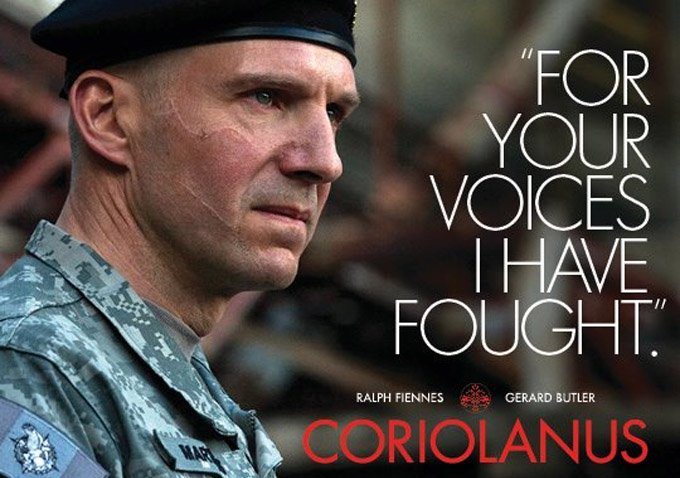
Coriolanus is the only Shakespearean story about Republican Rome, which is to say, before Julius Caesar turned Rome into a dictatorship. The play has been called pro-democracy, pro-monarchy, fascist, Marxist, and many other things. In some ways, the play is rather simple and its verse isn’t much fun to read, but the questions it poses, and the way Coriolanus shows the clash between power and common people, makes it fascinating to think about.
The play’s title character is also the most opaque one Shakespeare ever wrote. Some say he is a war hero, undone by the mob. Some say he is a want-to-be dictator who hates the common people and wants to keep power among the military elite. Unlike Hamlet, Macbeth, or any of Shakespeare’s other tragic heroes, we never get a sense of his true intent, or his actual feelings on anything.
To illustrate this, let’s look at two very different interpretations of the same speech. In Act III, Scene iii, the tribunes (representatives of the commons in the Senate), have organized a smear campaign to prevent Coriolanus from becoming Consul, (the highest rank a Roman aristocrat could achieve before Emperor Augustus). Coriolanus is furious at the Tribunes, and vows to leave Rome to take his revenge on the city. Here’s the text of the speech:
Coriolanus. You common cry of curs! whose breath I hate
As reek o' the rotten fens, whose loves I prize
As the dead carcasses of unburied men
That do corrupt my air, I banish you;
And here remain with your uncertainty!
Let every feeble rumour shake your hearts!
Your enemies, with nodding of their plumes,
Fan you into despair! Have the power still
To banish your defenders; till at length
Your ignorance, which finds not till it feels,
Making not reservation of yourselves,
Still your own foes, deliver you as most
Abated captives to some nation
That won you without blows! Despising,
For you, the city, thus I turn my back:
There is a world elsewhere.
[Exeunt CORIOLANUS, COMINIUS, MENENIUS, Senators,]
and Patricians]
Aedile. The people's enemy is gone, is gone!
Citizens. Our enemy is banish'd! he is gone! Hoo! hoo!
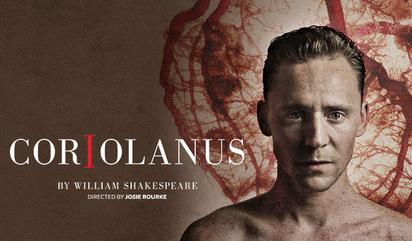
In the first speech, Tom Huddleston plays Coriolanus as a heroic soldier, disgusted and hurt by the lies of the scheming Tribunes:
Hiddleston chose to play Coriolanus not as a villain but as a frustrated demagogue- someone who wants to lead his people to greatness, whether they like it or not. Whether you approve of his methods, Hiddleston’s Caius Martius does care about the good of Rome. You can almost see the tears in his eyes as he leaves the city he loves, the city he bled for, and that has now betrayed him.
By Contrast, Ralph Fiennes takes a much more authoritarian and cruel route in the film Coriolanus, which Fiennes also directed:
Youtube critic Kyle Kallgren made the excellent case that Fiennes’ Coriolanus is first and foremost, a soldier. You could argue that perhaps Coriolanus has no political ambition whatsoever; he merely wants to keep fighting because war is all he knows. Maybe he purposefully sabotaged himself during his campaign for Consul, because all he wishes to rule is the battlefield:
Kalgren also highlights the “proto fascist” parts of Fiennes’ performance, since Fiennes himself has played Nazis, serial killers, and of course, Lord Voldemort, who is essentially a fascist dictator. Like Merchant of Venice, the Nazi party used Coriolanus as a propaganda tool, claiming that Caius’ fall from grace showed the failure of a weak democracy:
The poet deals with the problem of the people and its leader, he depicts the true nature of the leader in contrast to the aimless masses; he shows a people led in a false manner, a false democracy, whose exponents yield to the wishes of the people for egotistical reasons. Above these weaklings towers the figure of the true hero and leader, Coriolanus, who would like to guide the deceived people to its health in the same way as, in our days, Adolf Hitler would do with our beloved German Fatherland.
Martin Brunkhorst, “Shakespeare’s Coriolanus in Deutscher Bearbeitung. Quoted from Weida
It makes sense that fascists would gravitate towards a play about a seemingly virtuous Roman military leader. After all, the word “fascism” is an Italian word, coined by Benito Mussolini, to evoke the glory days of the Roman Empire- days when Roman society was based on military conquest under a strong leader. What these fascists fail to recognize is that Coriolanus is not a strong leader- he hates politics and is unable to gain any support from the people or from the elites in power. His inability to “play the game” of Roman politics, does make him appealing to some, but on the whole, his career is a disaster.
Some have chosen to interpret the story of Coriolanus as a sort of action-movie wish fulfillment- a man in a lawless society who uses his fists rather than words. Back in the 1990s, Steve Bannon (former advisor to President Donald Trump), wrote a hip-hop musical called: The Thing I Am, which re-interpreted the story of Coriolanus as a police captain who is trying to clean up downtown LA, which is embroiled in gang warfare. I find this interpretation paper-thin and not at all conducive to the spirit of the original play. It also has very racist and paternalistic undertones. You can read my review of it here:
Shakespeare refuses to be prescriptive on political or social issues. He tries to represent all sides of an issue and let the audience decide. With the rise of neo-fascist movements, sectarian violence, and the persistent questions surrounding police and military forces, Coriolanus is more relevant than ever. I haven’t seen this production at the National Theater, but I hope it calls attention to the various angles and points of view of the play- Coriolanus the war hero, Coriolanus the traitor, Coriolanus the soldier, Coriolanus the would-be-dictator. David Oyelowo is a fantastic Shakespearean actor, so I’m sure he can bring a great deal of complexity and nuance to this complicated man.
What I find interesting is that the trailer chooses to use this speech, when Coriolanus has defected to Rome’s enemies, the Volskies. He seems sorrowful, desperate, and afraid of what the Volskies will do to him, now that he is in their camp. One line that Oyelowo delivered exceptionally well was the line “Only the name remains.” I haven’t seen the whole play, but it seems THIS Coriolanus is concerned with the glory of his name living after him. The final question this play asks is, for such a complicated man, how will Coriolanus be remembered?
Well, there you go, Stopittickles! Hope you enjoyed this overview of the play Coriolanus. If you like this review, you might like to sign up for my online class on Julius Caesar via outschool.com:
According to Branaugh, the idea behind the film was to emphasize beautiful things like tranquility and love, but preserve and heighten the danger of being hunted by a powerful warlord like the Duke
Interview with the director and cast at the Barbican
The Plot Of the Play
Historical Context
Branaugh set the film in 19th century Japan, at a time when English people came to Japan for the first time, and created small English communities in the country. I’ll discuss later that I have very conflicting feelings with this choice, but I will give Branaugh this- it does highlight the fish out of water journey that Rosalind and the other characters go through leaving their homes at court, and becoming enamored with a new country.
The Cast
The cast is full of veteran Shakespeareans and gifted Hollywood stars. Bryce Dallas Howard is charming as Rosalind, and has good chemistry with RSC actor David Oyelowo. I also enjoyed Brian Blessed’s dual role as Duke Senior and Duke Frederick. Kevin Klein is very sincere as Jaques but I wish he had a bit more fun with the over exaggerated melancholy that Jaques puts on. The overall effect of the performances is a sentimental, charming, beautiful, witty group of people who are having a fun time.
My Reaction
The cast is great, the cinematography is stunning, and the music is charming. Overall, Branaugh has done a great job of bringing the spirit of the play alive- that of a sweet, pastoral comedy about love, unrestrained by wealth or status. What I worry about though, is that Branaugh might inadvertently be celebrating colonialism. Yes, Japan is a beautiful country with a highly sophisticated and rich culture, so it makes sense that English people would be drawn to it. That does not justify the cruel way the English and Americans colonized parts of Japan, made the people mine for gold, and forced them to trade with the west. I worry that, like The Mikado, Branaugh celebrates Japan in a way that makes it seem like westerners were justified in taking so much away from it. I wish the plot had more of a “look but don’t touch” attitude to Japanese culture.
I also question the decision to cast barely any Asian actors. Given the story Branaugh wants to tell, it makes sense to cast non-asian actors as Thr Duke, Rosalind, Celia, and even Orlando, since they are the ones who come to the forest from an English-style court. But the roles of Corin, Silvius, Audry, Phoebe, and even Old Adam are people who are supposed to be familiar with the country, meaning it would make perfect sense to cast Asian actors in these roles. Frankly, there are very few well known Asian actors in Hollywood and I would love to give some of them a chance to shine, especially since Shakespeare has long been a way for actors to show their skills.
In conclusion, I can see why people like this movie and I too enjoy it, despite its questionable subtext. I don’t want to take away anyone’s enjoyment of the film, just to remind people not to be too seduced by the historical practice of taking something “As You Like It”
If you like this analysis, you might be interested in signing up for my Outschool Course on Shakespeare’s Comedies. Link down below. Share this class with a friend and you will get $20 USD off! You’ll also get $20 USD when you sign up with your link and take their first class!
To me, this one’s obvious. Hamlet is a grim, bookish young man who loves complicated plans more than conflict. Also, like Professor Flitwick the head of Ravenclaw, Hamlet loves songs and plays like this one, which incidentally quotes lines from Macbeth:
Coriolanus- Slitherin
Tom Felton as Coriolanus
I go into greater detail in my most recent post, but Coriolanus is a warrior who tries to turn his wealth and military success into political power. He’s also compared to a dragon or serpent, the symbol of Slytherin House. And, as if that weren’t enough, Ralph Fiennes, who starred and directed a movie about Coriolanus, also played the heir of Salazar Slytherin himself, Lord Voldemort.
Ralph Fiennes as Coriolanus
Helena- Hufflepuff
Hermione- Griffindor
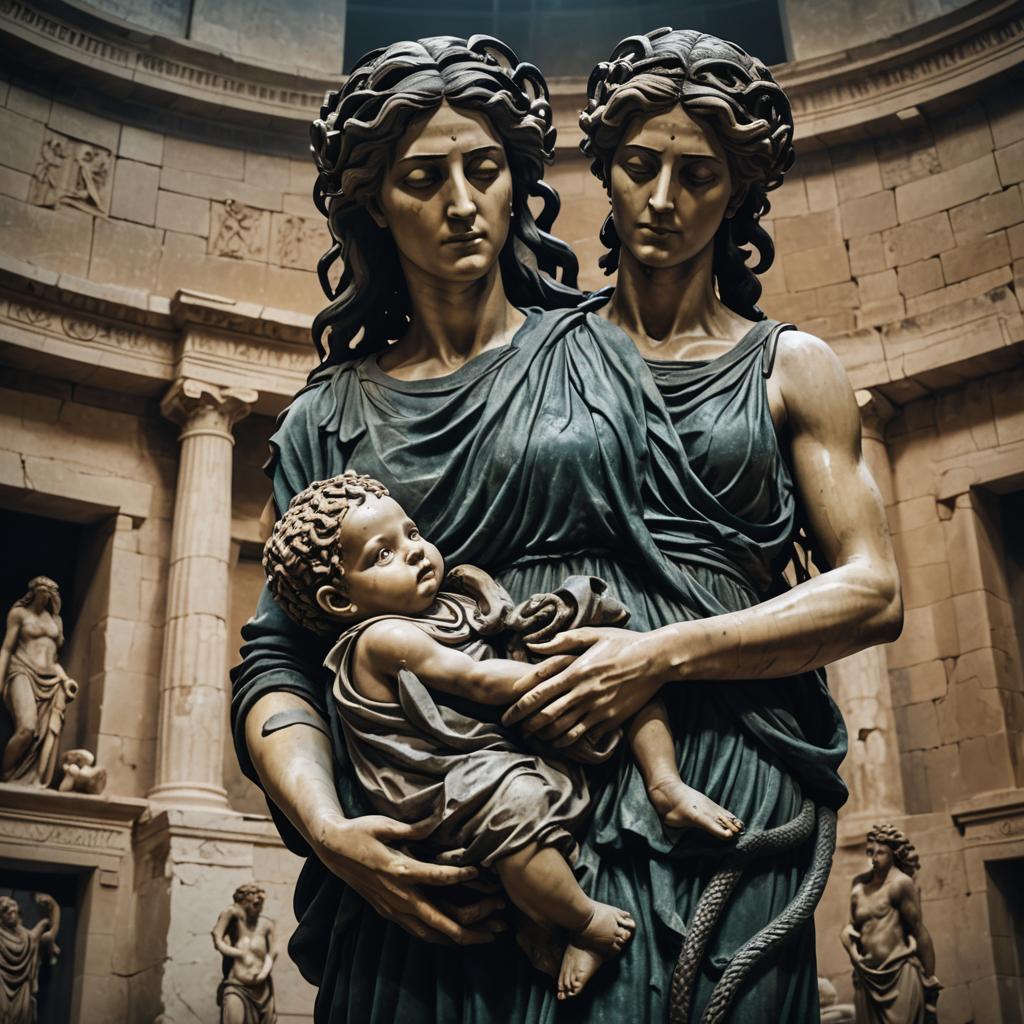
No, I am not talking about Harry Potter’s bookish best friend- I’m talking about the brave and virtuous queen Hermione from The Winters Tale. In the trial scene, she has to go against her husband and her Kung and defend herself and her children in court:
Hermione defends herself in court
Henry V- Griffindor or Slytherin?
Good my lords, I am not prone to weeping, as our sex Commonly are; the want of which vain dew Perchance shall dry your pities: but I have That honourable grief lodged here which burns Worse than tears drown: beseech you all, my lords, With thoughts so qualified as your charities Shall best instruct you, measure me; and so The king’s will be perform’d!
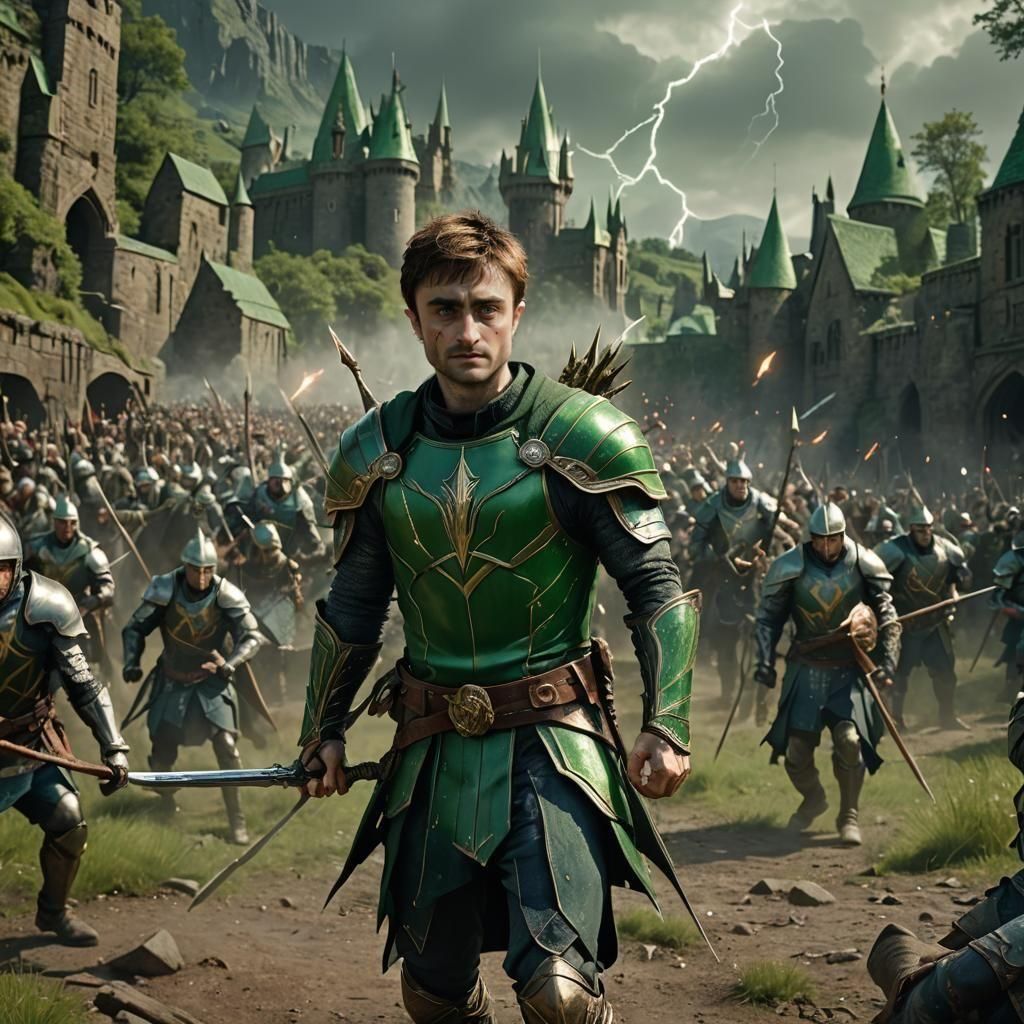
Like Harry Potter himself, you could make two equal cases for Harry the King; that he is a great brave warrior worthy of the Griffindor lion, or a Machiavellian, sly, ambitious snake.
Ages: Pre Teen- teen. The story is highly condensed so older readers might want a more in-depth adaptation to understand the themes and ideas of the plot.
Premise: This graphic novel is a good introduction to “A Midsummer Night’s Dream.” It tells the bare minimum of the story with very little dialogue and almost none of the original text. Most of the story is conveyed through the visual medium.
ABOUT THE ILLUSTRATORS (Reprinted from the graphic novel)
https://www.behance.net/berelince?locale=en_US Berenice Muniz is a graphic designer and illustrator from Monterrey, Mexico. In the past, she has done work for publicity agencies, art exhibitions, and she’s even created her own webcomic. These days, Berenice is devoted to illustrating comics as part of the CGraphikslava crew. In her spare time, “Bere” loves to draw, read manga, watch animated movies, play videogames, and kill zombies Fares Maese is a graphic designer and illustrator. He has worked as a colorist for Marvel Comics and as a concept artist for the card and role-playing games Pathfinder and Warhammer. Fares loves spending time playing video games with his Graphikslava comrades, and he’s an awesome drum player: https://faresmaese.artstation.com/
About the Retelling Author
The career path of Nel Yomtov has taken him from the halls of Marvel Comics, as an editor, writer, and colorist, to the world of toy development. He then became editorial and art director at a children’s nonfiction book publisher, and now Nel is a writer and editor of books, websites, and comics for children. A harmonica-honking blues enthusiast, Nel lives in New York with his wife, Nancy. They have a son. Jess.
mY rEACTION
I read this version to my five year old son and he enjoyed the colors and characters, which is why I feel confident recommending this version to younger children. It won’t help you pass a test on Midsummer and you won’t get the whole story. But you might get a tantalizing glimpse of Shakespeare’s world of fairies, lovers, and funny fools and honestly, that’s fine with me. As I’ve stated before, parody and short pop-culture adaptations of Shakespeare are great ways to connect with young people, and I see this book as a tool to do just that.
tECHNICAL eXECUTION
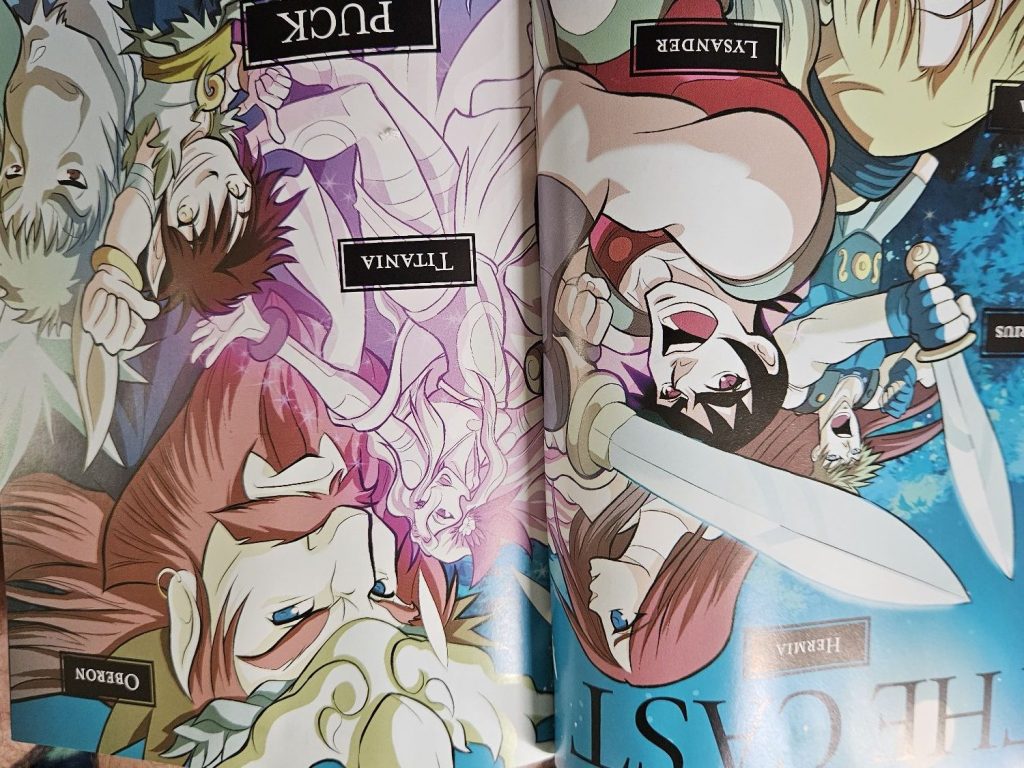
Character Design. It’s interesting to see the difference in style between this version, and the Manga Shakespeare version I previously read. That one was very much inspired by the Shoujo manga style, which emphasizes drama and relationships. This version’s drawings are softer, more cartoonish, and the expressions are less stiff, (except for Oberon, who is drawn very austerely). I particularly like the design for Puck with his big mischievous eyes and squat, childlike shape. I would argue however that the lovers and Mechanicals aren’t distinct enough, which is a problem since they are the most important characters.
The Adaptation
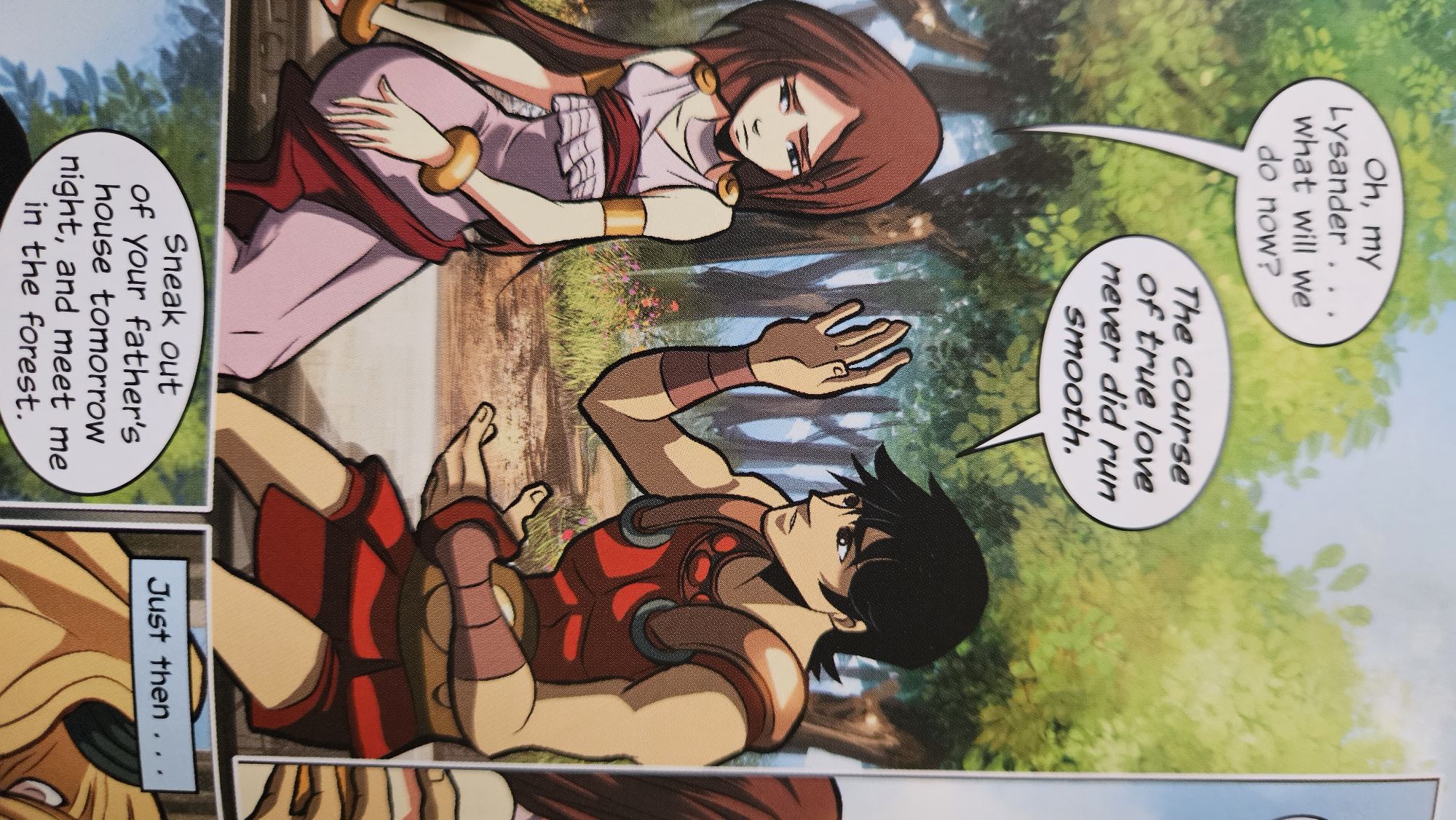
Like I said, this is a bare minimum adaptation of the play. None of Shakespeare’s text is used and the lines and speeches are cut liberally. The entire book is only 77 pages which of course means, that there are a lot of cuts. There’s no mention of the Indian boy, Titania’s tiff with Oberon, Philostrate, the other fairies, and all the great speeches are cut. This version is focused entirely on the plot, and it cuts it quite efficiently. To demonstrate this, below on the left is a panel that shows how Lysander and Hermia express their frustration with not being allowed to marry. On the right is the original text of the scene.
Ay me! for aught that I could ever read, Could ever hear by tale or history, The course of true love never did run smooth; But, either it was different in blood, Lysander. Or else misgraffed in respect of years, Lysander. Or else it stood upon the choice of friends, Or, if there were a sympathy in choice, War, death, or sickness did lay siege to it, Making it momentany as a sound, Swift as a shadow, short as any dream; Brief as the lightning in the collied night, That, in a spleen, unfolds both heaven and earth, And ere a man hath power to say ‘Behold!’ The jaws of darkness do devour it up: So quick bright things come to confusion.
The Colors
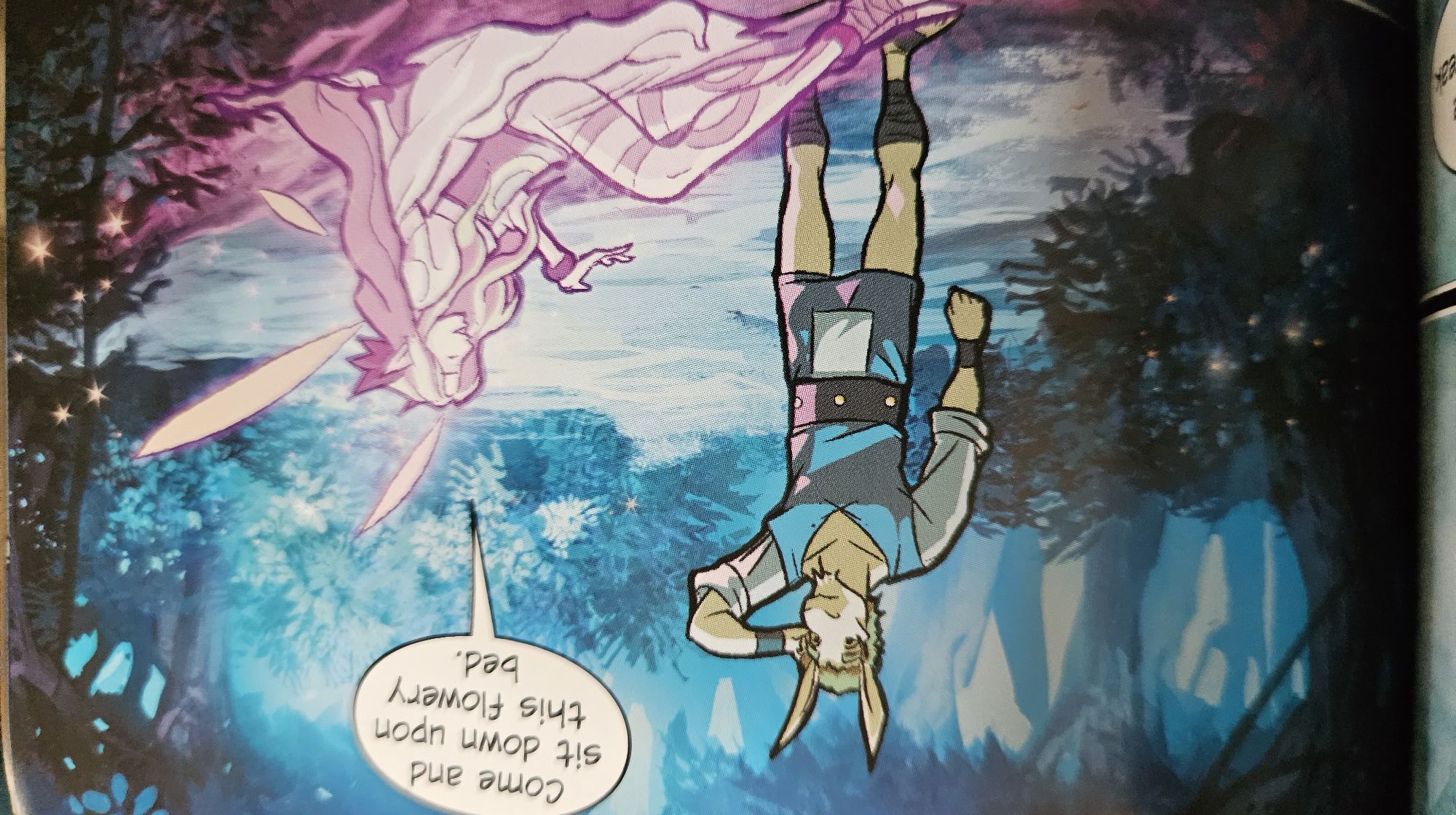
The colors are very beautiful. Other manga stories have colorful title pages but no color in the panels. This comic is alive with color and the colors help tell the story. Athens represents the world of the daytime, so the colors are very warm and vibrant. In the nighttime, the colors are cool and the characters are drawn with very sharp lines to make sure they don’t fade into the background.
IN Conclusion
This version tells l the story quickly and entertainingly with a vibrant and colorful style that was lacking in the Manga version. Granted, the Manga Shakespeare did allow me to focus on the text more, but I think I actually prefer this version, simply because of its beautiful artwork. Check it out if you get a chance!.
Parent Description- A fully online, fully interactive course into Shakespeare’s histories taught by a professional text coach and actor.
Students- Uncover the scandalous and gory history behind Shakespeare’s most action-packed plays! Shakespeare’s histories have inspired such works as “Empire,” “Game of Thrones,” “Hamilton” and even the “Star Wars” trilogy. This class will unlock for you why these stories of power and betrayal have been so popular for 400 years.
Format:
0. The class will have a Nearpod with slides, activities, and links to my other resources. The class will be a combination of slides, activities, and videos. Each class will have
Weekly Discussion questions via Google Forms such as: “What do you know about Shakespeare the man?” or, “Are Shakespeare plays still relevant today?”
Video Analysis- Every week I’ll discuss a different play with a short video.
I’ll provide some context, explaining what is happening in the play durin the speech, and any relevant historical context.
We’ll watch a recording and the students can write their impressions on what they like and don’t like.
Immersive activities such as:
– Shakespeare arts and crafts and recipes such as making costumes and props.
– My online Shakespeare board game.
Virtual tours of the Tower Of London,
Weekly Web Quests like “find a Shakespeare quote that you use in normal speech,” “find a movie or character that’s based on Shakespeare,” or “Draw a picture of a Shakespearean character (stick figures are acceptable).
6 Week Course
Week 1 – Why Hamilton is Like A Shakespeare History Play Hamilton and Shakespearean History We’ll discuss what makes a history play a history play, why they were so popular in Shakespeare’s day, and draw parallels between Shakespeare and the Broadway Musical “Hamilton.”
What is a history play?
Song quest: Watch the Horrible histories king song
Worksheet- which Shakespearean character reminds you most of Hamilton?
What would you call the tone of this speech? Patriotic? Mournful? Excited? Bitter?
The deposition Scene (video- 3 minutes)
The danger of this scene:
Though Queen Elizabeth I is now almost universally beloved, she wasn’t always in Shakespeare’s time. By 1601, she was 68 years old and had no male heir. Her government had also failed to put down a rebellion in Ireland. Some people in her government were getting restless.
Robert Devereaux, Earl of Essex was one of those restless nobles. He’d been one of the Queen’s favorites, but after failing to crush the rebellion in Ireland, his relationship with her sourered. He then plotted to rebel against the Queen, and take the throne for himself.
To do that though, Essex would need to get people on his side, so he recruited Shakespeare! One of Essex’s servants paid Shakespeare’s companies to perform a scene from Shakespeare’s Richard II; the scene where a handsome and charismatic nobleman convinces the king to willingly give up his power.
This scene was so dangerous that when the play was published, it was taken out by Elizabeth’s censors.
Playing Richard video: Fiona Shaw Questions What does making Richard female emphasize for an audience? What point does Shaw’s performance say about women in power?
Week 3 Henry V week
Tom Hiddleston as Henry V
Basic plot- Young king fights a war and conquers France proving himself to the world.
Olivier vs. Branaugh
-Concept- what if the play was a Hockey movie?
Henry is like the coach or team captain who gives inspirational speeches
The underdogs win
The snooty bad guys lose
How this translates to staging fights/ directing the characters (website/ youtube interviews)
Activity= write a trailer or design a poster for Henry with a cool tag line.
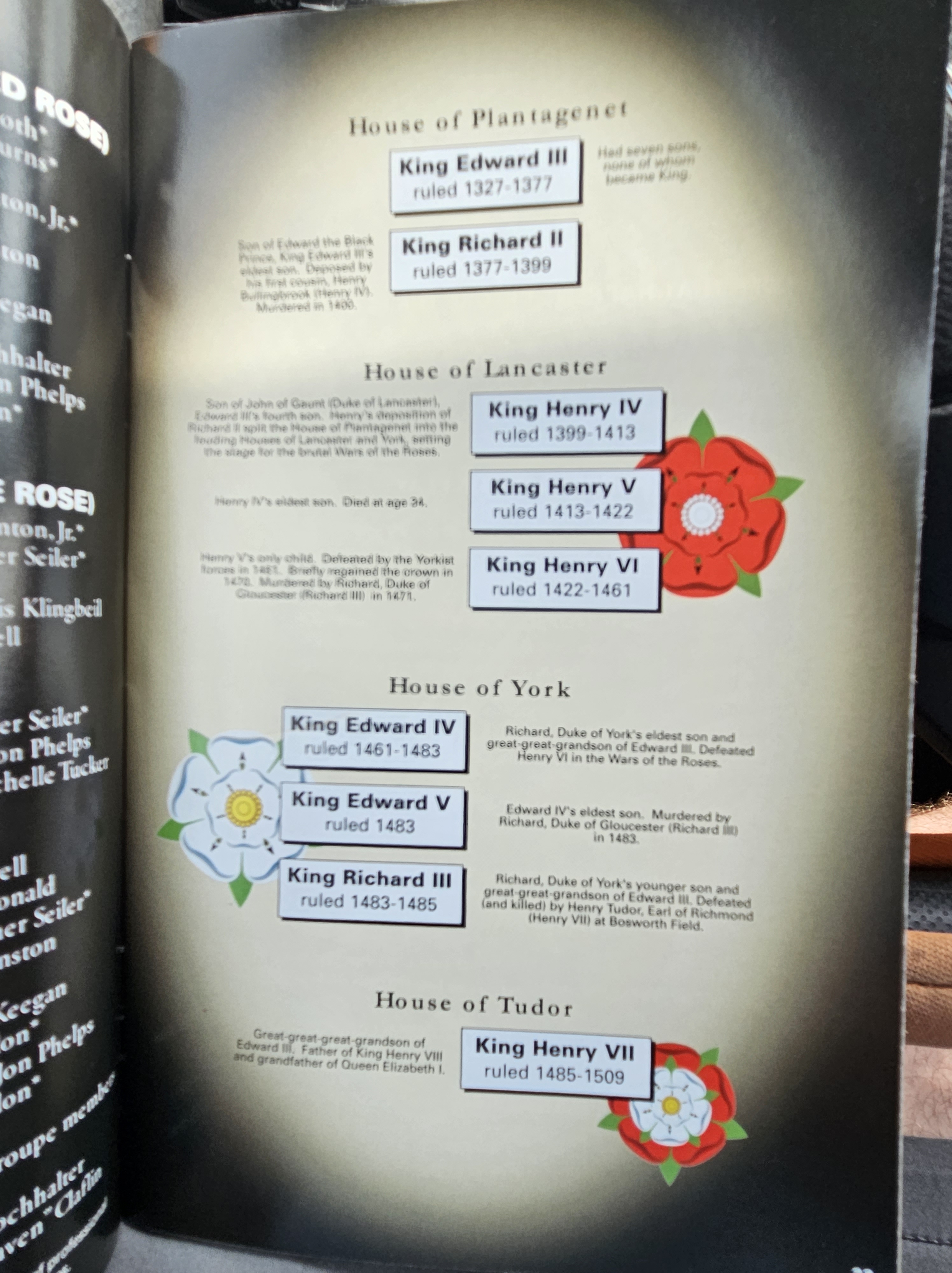
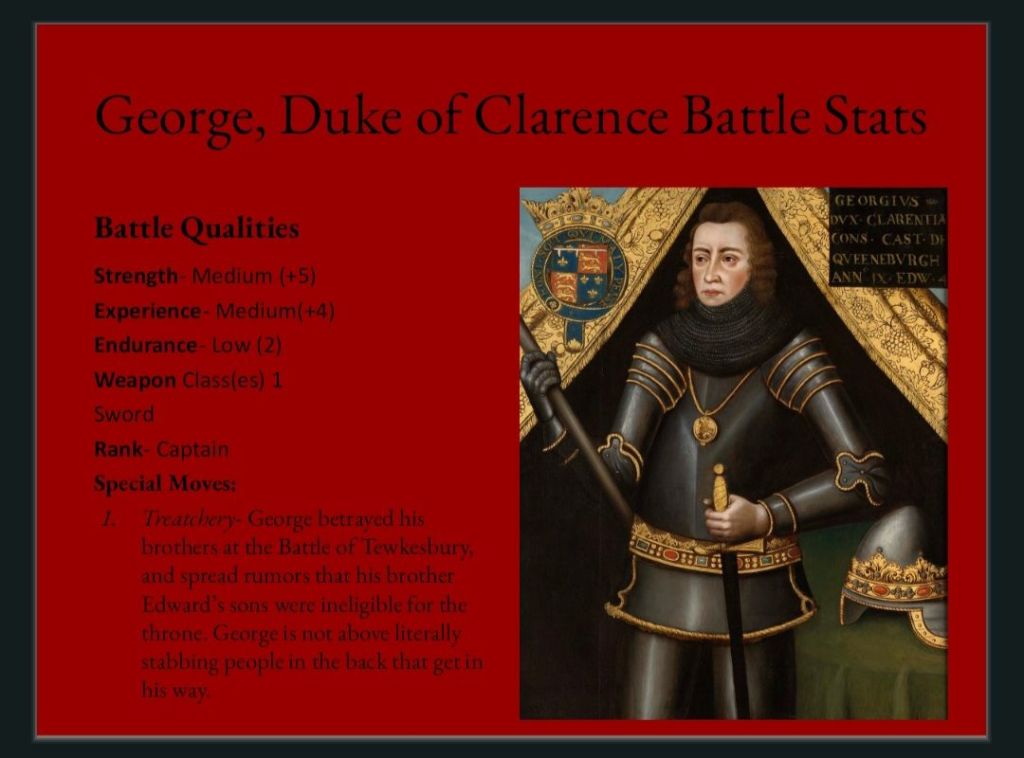
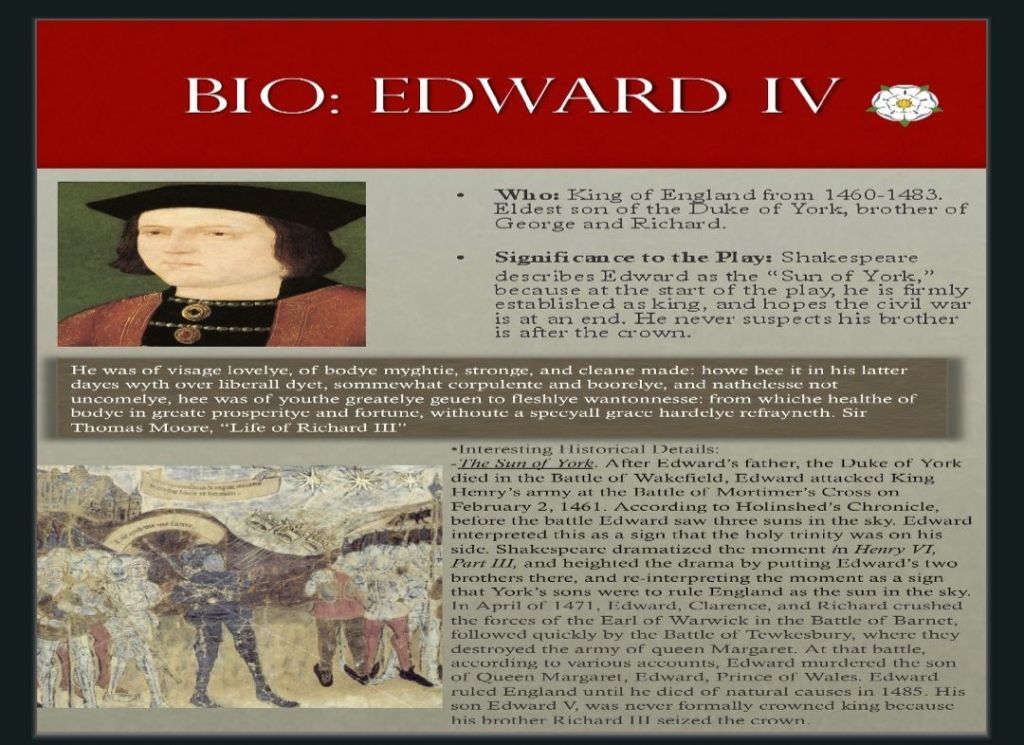
Week 4- The Wars of the Roses-
Summary of the three Henry VI plays
Wars of the Roses Horrible Histories
Web quest- research one major character from the 3H6 ASC website:
Richard of Gloucester
Henry VI
Margaret of Anjou
Richard of York
Medieval warfare
Watch one of the Weapons that Made Brittain videos and answer 5 questions.
The battles of the Wars of the roses
Costumes
Week 5- Richard III- The rise of the corrupt king
Close reading- “Now Is the Winter of Our Discontent”
Slides on Richard’s plot.
Richard and Machiavelli
Richard and Emperor Palpatine
Richard and Modern Leaders
Richard vs. the Amir of Gloucester
Propaganda activity- make a campaign slogan/ poster for Richard.




























































 The Shakespearean Student