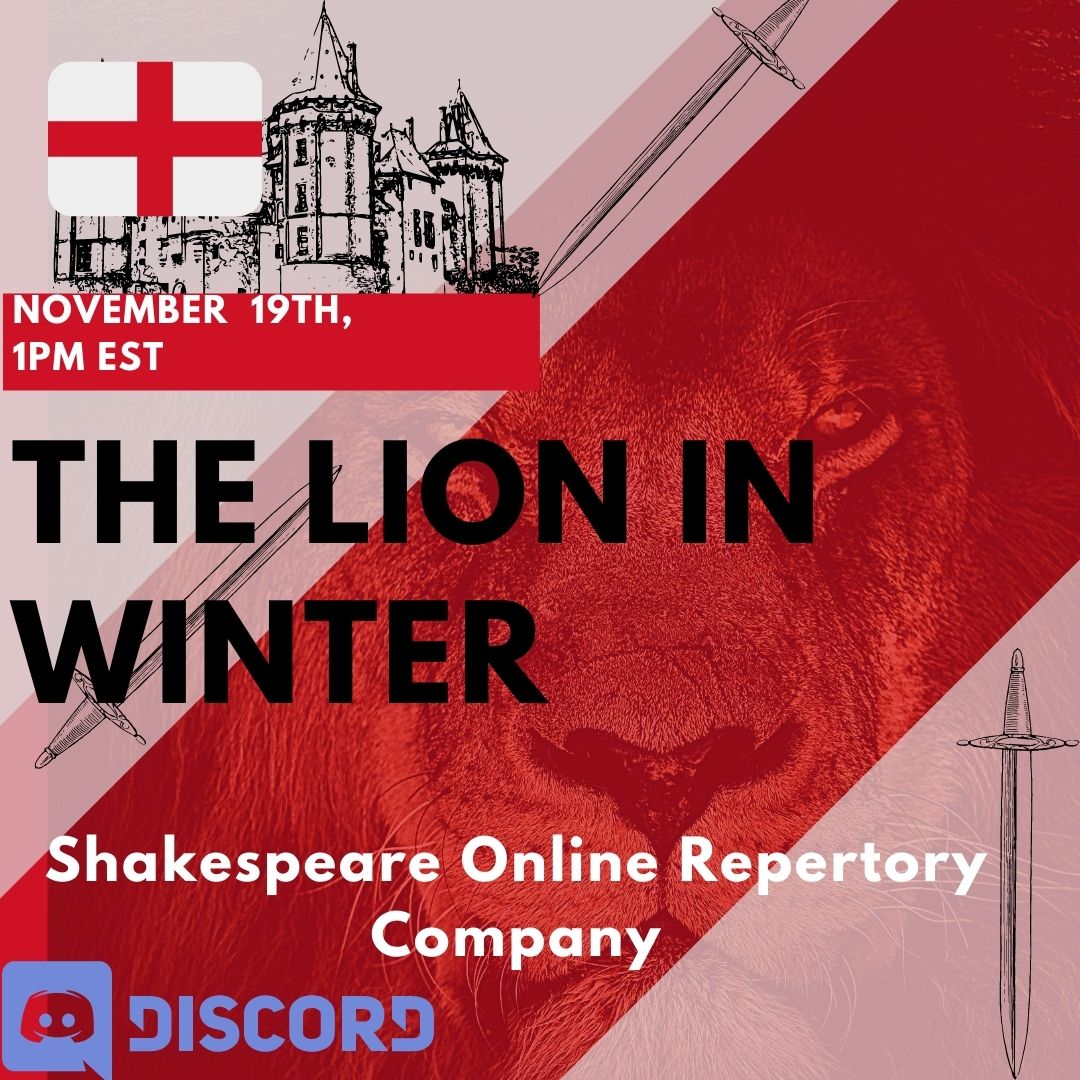
Please join me and the Shakespeare Online Repertory Company on Discord.com at 1PM. We’ll be reading “The Lion In Winter” by James Goldman, which, you may remember was made into an Oscar-winning film in 1968:
Original 1968 trailer for the film, “The Lion In Winter,” starring Timothy Dalton, Anthony Hopkins, Katharine Hepburn, and Peter O’Toole.
As many of you know, I’ve been in two plays with the Shakespeare Online Rep before, and like the production of “Lear” I did last month, this play is about a king, (the historical King Henry II played by Peter O’Toole), and his three children, who ruins his kingdom through his selfishness and inability to connect with his children. In addition, his wife Elenor De’Aquitaine (Hepburn) is powerful, cunning, and ruthless and will stop at nothing to get power away from Henry. She even manipulates her own children against Henry; John (the infamous king of the Robin Hood Legend), Richard (known later as Richard the Lionheart), and Jeffrey.
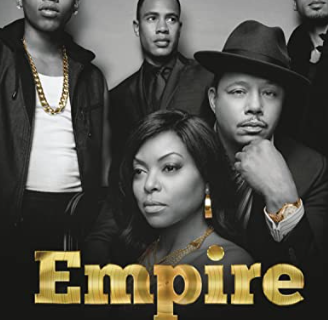
The acclaimed TV show “Empire” owes a lot to “King Lear,” but as you can see, it owes a lot more to “The Lion In Winter.” The character Lucius Lyon is much more based on King Henry, with his violent past, his mistresses, and his powerful wife Cookie, who is clearly an African American Elenor De’Aquitaine. Furthermore, the children are even more clearly derived from the three Plantagenet children: Hakeem, the spoiled, foolish philanderer played by Bryshere Gray, definitely has echoes of Kanye West, but Prince John is definitely in his DNA. Similarly, the talented Jamal, who is loved by his mother and hated by his homophobic father could definitely swap stories over dinner with Richard the Lionhearted, (though I doubt Jamal ever went on crusades). And lastly, the emotionally damaged Andre does have some Macbeth-like traits with his vaulting ambition and his brilliant, cunning wife Rhonda. But unlike Macbeth, Andre uses his business-savvy mind and his ability to manipulate his brothers to take power away from his father, which is exactly what Jeffrey does in “The Lion In Winter.”
Will our production be as cool as Empire, or as star-studded as the movie? Honestly, no. But I will say that after working with these actors before on multiple projects, this production should be fun, exciting, and moving, and definitely worth the hearing.
This list is not about skill or the talent of the actor. This is to honor the contributions of Shakespearean actors who also appeared in one of my favorite film and television franchises of all time: Star Trek. Accordingly, some of the actors who weren’t essential to either Star Trek or Shakespeare or both are placed lower on the list even if I personally love the actor or the character they portrayed.
#10: Marina Sirtis
The English actress played Counselor Troi on Star Trek: TNG. Like John DeLancie, however, aside fromplaying Ophelia inHamlet, I was unable to find much Shakespeare in her credits, which is a shame because she has an incredible speaking voice. I frankly think the creators of the show spent way too much of the series trying to sexualize her and didn’t create enough opportunities for her to use her telepathic abilities or her empathic abilities.
#9: John Delancie
Like I said before, I am judging these actors for their cumulative contributions to Shakespeare, and unfortunately, I didn’t find many Shakespeare credits for Mr. DeLancie. That said, he is one of my all-time favorite Star Trek actors and was part of Star Trek The Next Generation all the way through the series. As the omnipotent entity Q, Mr. DeLancie plays a Richard III-like villain who manipulates the poor humans around him for his own amusement. He is also very interested in human nature and engages in many debates with Picard on the virtues of humans, like in this epic scene:
Q (John DeLancie) and Picard (Patrick Stewart) debate the virtues of the human race (Hide and Q, episode 10).
John DeLancie actually started acting in a high school production of Shakespeare’s Henry V, and later performed at the American Shakespeare Center in Connecticut: (Source: https://www.johndelancie.com/pages/my-past-work) ,
Gene Roddenberry, the creator of Star Trek envisioned the 23rd century as a time when mankind would be united in purpose but all people would keep their cultures and racial identities. Accordingly, a lot of the cast came from a diverse cultural background; African Americans, Russians, and very notably, Jews. One man who brought his own Jewish background into the core of Star Trek was Leonard Nimoy- son of Russian Jews who spoke Yiddish. In the article above, Nimoy mentions how he incorporated the famous Vulcan hand gesture of “Live Long And Prosper,” from the blessing his rabbi gave his congregation, which Nimoy saw as a boy:
Nimoy started out as a theater actor, starting with Yiddish theaters in Boston and New York, and he continued to work in theater and radio before and after Star Trek. His first foray into Shakespeare happened in 1975 when he was cast as Malvolio in Twelfth Night.
“I’ve been studying and reading and watching Shakespeare long enough to feel excited and positive about it. The biggest problem an actor has is finding good material. With Shakespeare, you know that not only do you have good material, you have a proven piece that has been staged successfully many times.”
— Leonard Nimoy, Pittsburgh Post-Gazette, 1975.
Though Nimoy is now internationally beloved for his work on stage, screen, and radio, as a child had to overcome prejudice because of his Jewish roots. I wish Nimoy had played Shylock in theMerchant of Venice since he had the potential to play the role with a lot of passion and pathos. Just goes to show that Mr. Nimoy was a man of great accomplishment and creativity, and a Renaissance Man to boot.
#7 George Takei
I studied at the Shakespeare Institute at Stratford Upon Avon in 60s. So it is with great joy that I will be making my London stage debut this January!
George Takei
With his iconic deep, smooth voice and skill as a fencer I wasn’t surprised to find out that the actor who played Hikaru Sulu was a classically trained actor. Sadly, I was unable to find many Shakespeare credits for Mr. Takei, which is a shame since I wanted to find some clips of him performing Shakespeare to put here. The best I could find was this clip from TOS.
I was able to find this interview where the actor shares his thoughts on Shakespeare. I’m actually going to see Mr. Takei in a live show in April of 2023, and I suggest you do too if you can. He’s a fascinating guy and a great activist for Asian Americans and the LGBTQ+ community. Like Leonard Nimoy, he has overcome discrimination and oppression and spread his wings creatively through many different media. Hopefully, I can update this list once I see him live to include more quotes and thoughts about Shakespeare from the man himself.
#6: Brett Spiner
Fan art of Data (Brett Spiner) holding the head of his evil brother Lore. 2017 by Kaylen M Bennett
Brett Spiner is a multi-talented veteran of film, stage, screen, and radio, so it makes sense that he has a grounding in Shakespeare. More than that, Spiner’s character, the andriod Lt. Commander Data, (one of the best characters of Star Trek: The Next Generation), faces a Shakespearean dilemma- he wants to understand what it’s like to be human, though he isn’t. He is not only mechanical but he doesn’t have emotions. Therefore he offers an objective commentary on the way the human characters interact, not unlike Horatio in Hamlet or the Fool characters in many other Shakespeare plays.
Data’s struggle to understand humanity even extends to reading and performing Shakespeare himself, as this clip shows:
Data even impersonates a Shakespearean actor playing Puck in the episode Time’s Arrow, (a preview of Spiner’s role as Puck in Gargoyles):
I might be cheating a little by putting Spiner this high on the list, since technically he hasn’t done many full Shakespeare plays, but doing these little snippets as Data on Star Trek, or as Puck on Gargoyles was a way to introduce Shakespeare to younger viewers, which as I will discuss later, is one of the great gifts Star Trek gave Shakespeare fans like me.
#5: William Shatner
To be honest, I don’t care much for William Shatner as an actor or a person. He drove away a lot of his fellow cast members on Star Trek, his ego is infamous, and his delivery of Shakespeare is clipped, slow, and I would argue, lazy. That said, Shatner is very good at playing characters who are arrogant, and he does know a lot about how to deliver Shakespeare for TV.
I will give credit to Shatner; he’s good at playing smarmy or arrogant characters which is why Captain Kirk was a good role for him. He was also surprisingly good as Marc Antony- he really sells the verbal irony as he subtly attacks Brutus in the “Friends, Romans, Countrymen” speech. Like Kirk, Antony is (to quote General Chang in Star Trek VI), “An insubordinate, unprincipled, career-minded opportunist,” and Shatner plays both of them with skill and relish.
Shatner actually got his first break in the theater as an understudy in a production of Henry V, where he got to take on the title role when Christopher Plummer got sick (more on that later). As this video above shows, Shatner continued to play Shakespeare throughout his career, and as Kirk, he explored the ‘brave new worlds of Star Trek with a Shakespearean curiosity.
#4 Benedict Cumberbatch
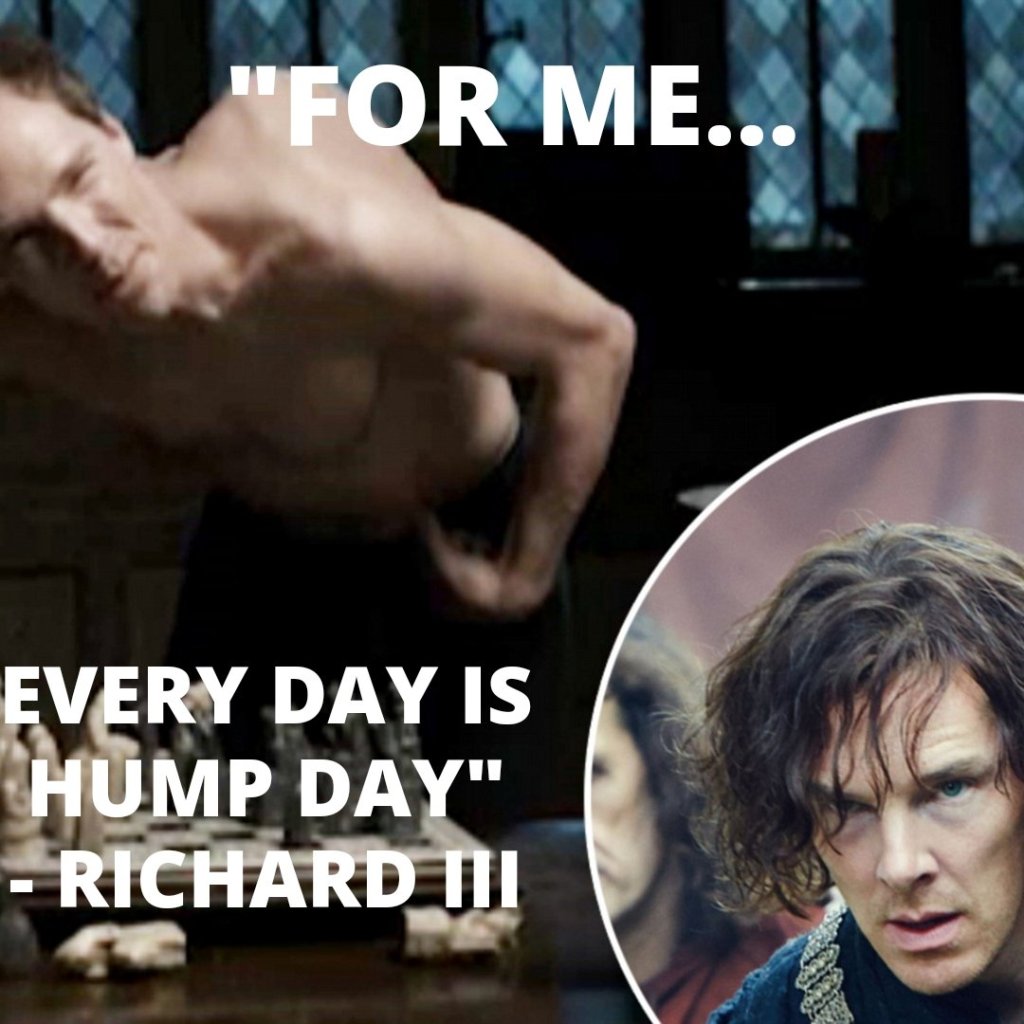
Though his contribution to Star Trek is comparatively small- playing the villain Khan in Star Trek: Into Darkness, Benedict Cumberbatch is quickly becoming the best of the new generation of Shakespearean actors who have made the leap to the Final Frontier. I covered his Shakespeare work in other posts such as my review of his Hamlet. So let’s just enjoy the Machiavellian villainy in this clip, where he taunts Spock with Richard III-like glee.
#3 Christopher Plummer
[William] Shatner was Plummer’s understudy in a 1956 production of Henry V at the Stratford Shakespeare Festival. Plummer could not go on one evening due to illness, which led to Shatner’s big break. “He didn’t do what I did at all,” Plummer recalled in a separate interview. “Where I stood up to make a speech, he sat down. He did the opposite of everything I did. And I knew that son of a $%*# was going to be a star.”
Christopher Plummer, who tragically died last year, was a loss to both stage, screen, and by all accounts, everyone he knew or worked with. He was a dear man a consummate professional, and he brought that skill with Shakespeare and a love of Star Trek to create one of the greatest villains in Star Trek history.
General Chang, the war-mongering Klingon in “Star Trek VI”, who assassinates his own Chancellor Gorkon to start a war with the Federation, is a great antagonist, especially considering that Kirk was tempted to do the same thing himself. Kirk hates the Klingons and wishes death and destruction on the whole race. This film came out just two years after the fall of the Berlin Wall, and the blind hatred between the Klingons and the Federation is a brilliant metaphor for the last days of the Cold War.
Shakespeare appears at the center of this metaphor- Chang assassinates Gorkon like Brutus killed Caesar, fearing that his peace talks with the Federation would destroy the Klingon Empire. Chang hates The Federation and Kirk in particular. The only human he has any affection for is Shakespeare, (whom he himself believes is Klingon), and he taunts Kirk with Shakespeare quotes relentlessly. Chang’s character also has echoes of Macbeth- killing his king and then blaming someone else in a show trial where he serves as the prosecution. Finally, just like Macbeth, Chang dies fighting when the Enterprise figures out how to shoot at his ship while it’s cloaked.
As the quote above indicates, it’s fitting that Plummer played Chang since the two of them have had a friendly rivalry ever since they played opposite each other in Henry V. He’s a great antagonist onstage and a towering, dignified presence offstage. In a way, the two men were two sides of a coin- Shatner being a loud and boisterous movie/ TV star, Plummer being a dignified, matinee-idol type. These big egos tussle extremely well in Star Trek VI, yet, as even Shatner admitted, they admired each other a lot:
Before I move on, I’d like to show you my favorite performance of Plummer’s. It’s a short monologue from Long Day’s Journey Into Night, where Plummer plays a washed-up Shakespearean actor, who ruined his career doing populist trash. One can see some of Plummer’s antipathy toward The Sound Of Music in his performance. Still, thankfully, Plummer didn’t meet the same fate as James Tyronne:
#2: David Warner
It’s appropriate that Star Trek VI: The Undiscovered Country, which is a film named after a quote from Hamlet cast a beloved Hamlet, David Warner. Like Patrick Stewart and Benedick Cumberbatch, Warner was a veteran of the Royal Shakespeare Company, and he played Hamlet back in 1975:
Warner’s character in Star Trek VI thinks that this speech is about the future, and like MLK, Gorbechav or Gandhi, he tries to bring a “brave new world” to fruition by making peace with his enemies through nonviolent means. This includes sharing his love for Shakespeare. I like to think that Gorkon knows that Shakespeare was actually human, and when he quotes him to the Enterprise crew, it’s a means to ingratiate himself to the humans by finding common ground.
Sadly though, Gorkon in his idealism forgets that the speech is actually about death (or possibly it was translated incorrectly into Klingon). Indeed, this misunderstanding of humans and Klingons is what costs Gorkon his life. The situational and verbal irony of this quote from Hamlet is worthy of Shakespeare himself and it helps Warner’s performance become one of the most memorable in the movie.
Amazingly though, as if one incredible Star Trek performance wasn’t enough, Warner came back again. Ignoring his performance in the infamous Star Trek V, Warner gave a truly chilling performance as the sadistic Cardassian Gul Navek in the two-part episode “Chain Of Command,” where he captures and tortures Captain Picard!
Like the Klingons, the Cardassians are a warlike race of conquerors who use their war machine to better their society through conquest. In subsequent portrayals, they seem like a metaphor for the Nazis since they attempted to exterminate the Bajoran race, and their military philosophy seems to be inspired by fascism. In this episode, Warner’s cruelty echoes many horror stories of POWs enduring sadistic torture at the hands of the likes of Adolph Eichman, Heinrich Himmler, and many other monsters who told their torturers to “On no account show the slightest mercy.”
The chilling way Warner plays Gul Madred is one of the high points of the series. He and Stewart worked before on a production of Hamlet in 1965, and the way these two play off each other is masterful. Warner is powerful, in command, dangerous, and sly. Picard never knows when he is telling the truth, and as time goes on, Madred revels in how much closer he is to breaking the pitiful human. Still, Picard in his wonderful stoicism never breaks, and briefly manages to turn the tables on Gul Madred, when he makes the mistake of opening up to Picard about how in reality, he is a scared and miserable soul, trying to fill the emptiness of his heart with power and sadistic pleasure. Again, these two actors are so powerful that all you need is them, and a dark room to create compelling drama.
#1: Sir Patrick Stewart
Patrick Stewart as King ClaudiusStewart as The Ghost in HamletSir Patrick Stewart as Jean Luc PicardStewart as ShylockStewart as Cassius in “Julius Caesar”
You probably saw this coming. Not only is Stewart the most important character on Star Trek: The Next Generation, but he’s also one of the greatest living Shakespeareans, and has become a sort of icon for Shakespearean acting himself.
Stewart has given so many memorable performances over the years, but one of my favorites was fairly recent- when he played Marc Antony in Antony and Cleopatra. I mentioned how, in Julius Caesar, Antony is essentially the Captain Kirk of his time- brash, cunning, arrogant, and unprincipled. In the play that bears his name though, Antony is a shadow of his former self- a drunk, foolish old man who is completely blinded to the threat Octavian poses to him. Stewart said that he based his portrayal on his own father, who was himself a soldier and an alcoholic, who was very abusive to the young Stewart and his mother. With this in mind, the portrayal has a poetic justice to it that the man who lied and cheated so many Romans finally gets cheated by the foremost man of Rome. At the same time, Stewart makes us feel for him; since so many people admire Stewart (myself included), seeing him play a man who is bringing himself low, makes us all want to save him from himself. It’s the definition of catharsis.
It’s November, the month when we Americans ponder perilous journeys to new worlds and give thanks to the people who settled our country. As this clip from “Shakespeare In Love” illustrates, Shakespeare clearly had these kinds of journeys on his mind. They influenced plays like “Twelfth Night,” “The Comedy Of Errors,” and especially “The Tempest.” It’s not surprising that long journeys to America were on Shakespeare’s mind; he lived right at the time of the first settlements in America, and the Pilgrims celebrated the first Thanksgiving only four years after Shakespeare died:
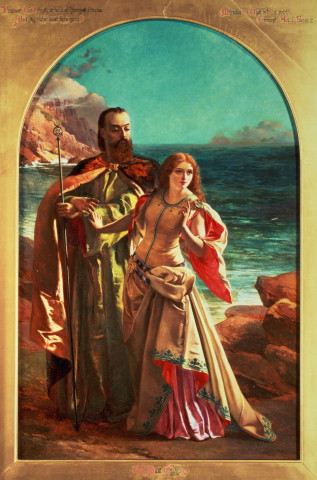
However, as I said in my “Is Shakespeare Being Cancelled?” post, the people who colonized America were hardly saints and they did impose their own culture on the indigenous people that lived there. This tension between the romantic ideal of taming the unspoiled wilderness of America and the reality of colonization is deep within Shakespeare’s last solo play. Its hero is a magician with the power to control spirits and who enslaves the only creature living on the island before he came- Caliban.
Though Prospero did not come to the island by choice, he certainly imposes his will on the creatures and spirits of the island and even calls himself the lord of it. On the other hand, he eventually leaves, pardons Caliban, sets Ariel free and resumes his former life as the Duke of Milan, so the story isn’t entirely about colonization. At its core, The Tempest is a story about revenge, savagery, and redemption. Audiences back in 1611 would probably see Caliban as a savage with his rough manner, bizarre appearance, and peculiar religious beliefs. But the real savage is Prospero, who like Dr. Frankenstein, gives in to his baser desires for control and revenge; enslaving Caliban, and conjuring the Tempest to take his revenge on his brother Antonio. But Prospero eventually repents and abandons his quest for revenge and this decision improves everyone’s lives, especially his own. He can now move on and become a better duke and a better man.
This play is fascinating to ponder and it has spawned countless re-interpretations. As I said before, this journey to a strange new world has influenced both the Horror and Science Fiction genres. The themes and characters of The Tempest can be found in works such as Frankenstein, to Brave New World, to Star Trek, which is why this month, I will be not only analyzing The Tempest, but also the Shakespearean roots of one of my favorite TV shows- Star Trek: The Next Generation!
If you are your child are interested in learning more about this fascinating play, I actually teach a class about it as part of my course on Shakespeare’s Comedies which starts November 5th at 4PM, EST. Below is a trailer and link:
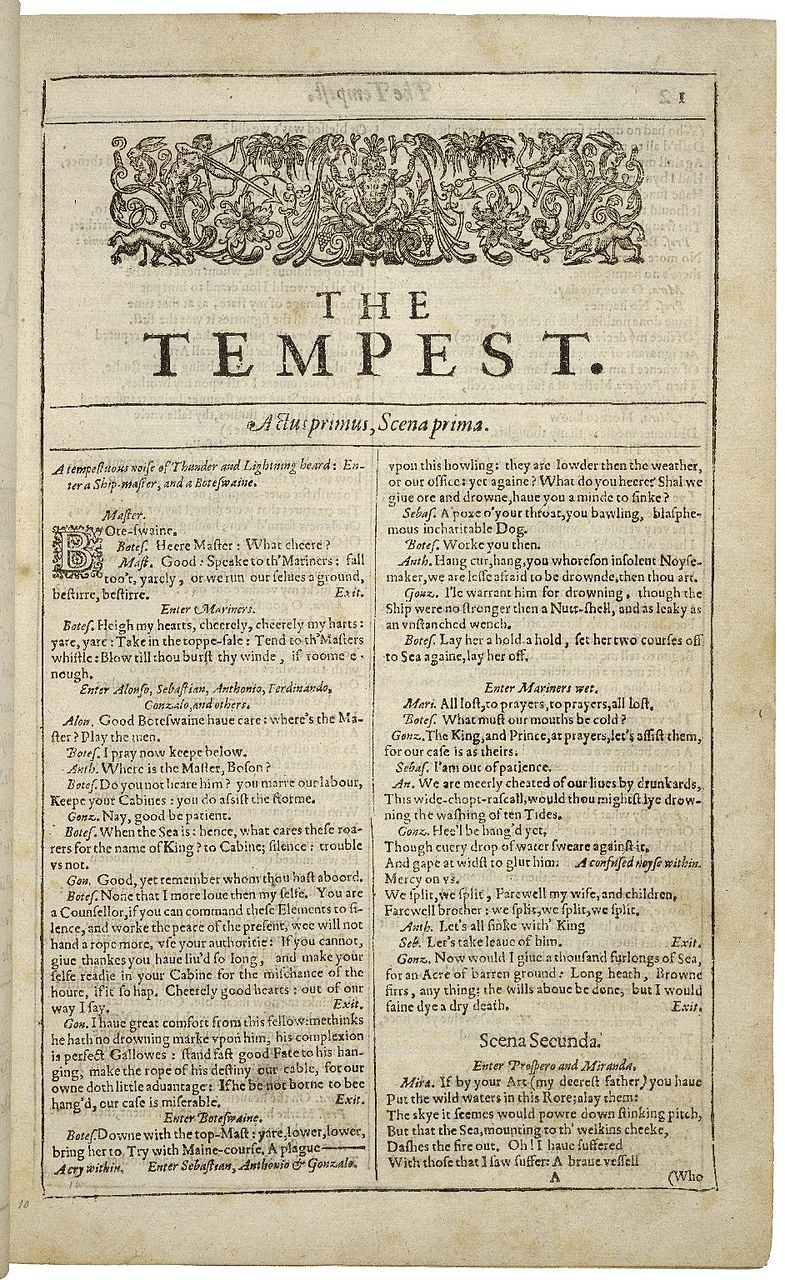
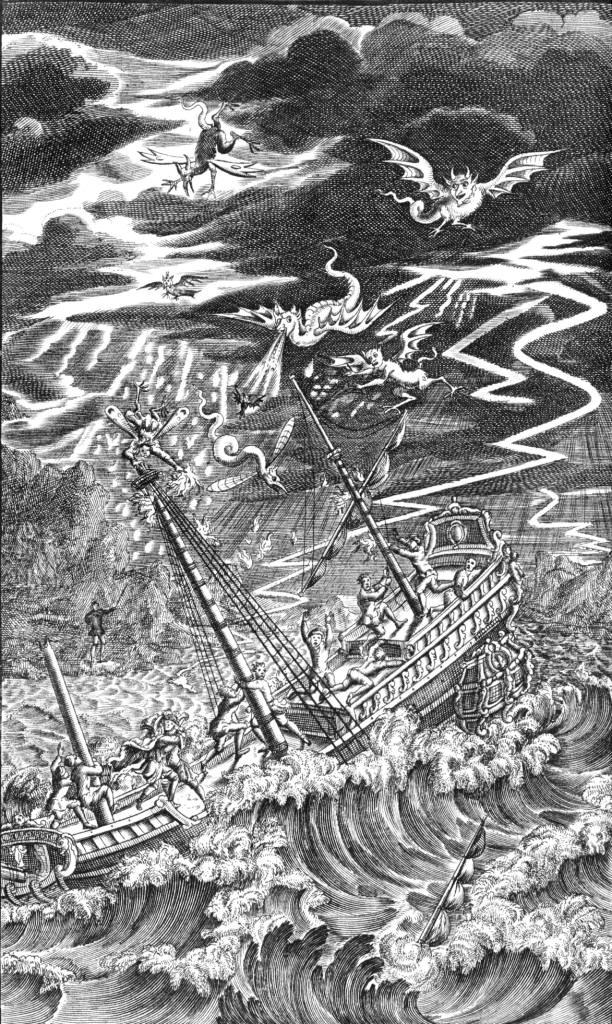
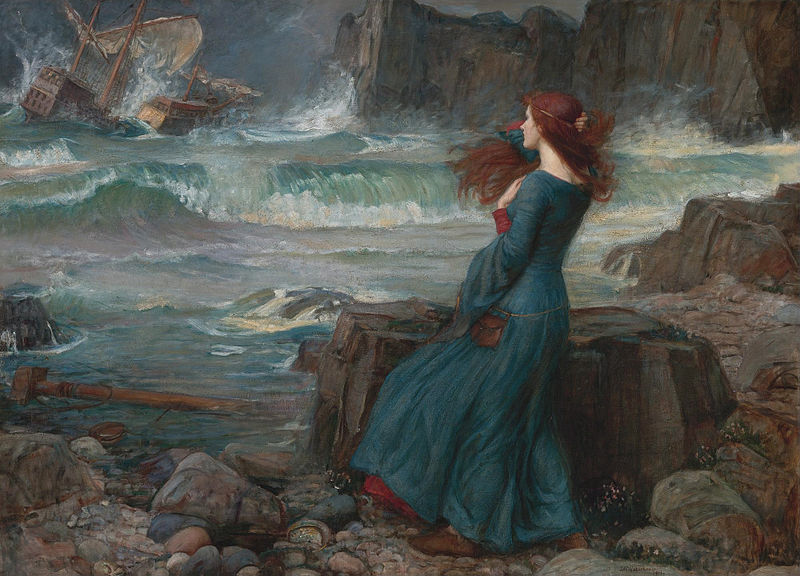
Today I’ll be tracing the recurring themes and motifs that evolved from Shakespeare’s last solo play, “The Tempest,” and chart a course that explains the evolution of this play into the beloved Star Trek franchise.
Shakespeare’s The Tempest is based on a real story. As I said before, the story might have come from a traveler’s story about visiting the island of Bermuda in the early 1600s. The idea of Europeans going to an uncharted island, meeting the strange inhabitants, and ‘civilizing’ them, might have inspired Shakespeare to write the story of Prospero.
In addition to the Bermuda story, the age of English colonization had firmly begun at this time. The first English colony in America, Jamestown was settled in 1607, and The Tempest came out 1611.
At the same time, The King was worried about magic and trying to marry his daughter off to a prince.
Shakespeare wasn’t allowed to comment on contemporary issues, so instead of setting the play in England or even contemporary Europe, he set it on a fantastical island with spirits Prospero can control. His control becomes a metaphor for colonization. At the same time, we see a fantasy version of James’ daughter’s marriage in the romance between Ferdinand and Miranda. The motifs of discovering strange new worlds and encountering new races of people form the core of Star Trek and space-based science fiction in general, and an adaptation of The Tempest in the 1950s would set the template that the Enterprise and her crew would be built on.
“Forbidden planet”- The Tempest goes Sci-Fi
Forbidden Planet is a story about a dashing, adventurous captain, a curmudgeonly doctor, and a science officer who are from a United group of planets that peacefully searches for “brave new worlds,” and the people in them. Obviously, these characters are very similar to Captain Kirk, Dr. McCoy, and Mr. Spok, so clearly Star Trek owes its initial creation to the success of Forbidden Planet, which was a Sci-fi adaptation of the Tempest. The question then is if there is there more that we can say about the connection between Shakespeare and Star Trek.
Star Trek’s relationship with Shakespeare
The main connective tissue of Star Trek and The Tempest is the use of exotic locations and alien cultures to explore issues that were close to home. When people in 1600 went to see Hamlet Prince of Denmark they didn’t see an ancient legend of a Viking Prince as the original Amleth, written by Saxo Grammaticus; what they saw was a thoroughly modern story of a Renaissance Prince tackling theological issues that had only just been dreamt of by the English protestants; issues of predestination, issues of Calvinism, issues of the questions about the issue the existence of purgatory, etc. That would have been unheard of to the original audience of Prince Hamlet. The appeal was seeing a different place and time to retell an ancient legend that at the same time spoke to the present time of the 17th century. Star Trek does the same thing only looking to the future instead of the past.
Like Star Trek, Shakespeare used exotic locations to examine issues that were universal, (no pun intended), issues that were very much for the consumption of his audience. Look at Star Trek; every alien race the Enterprise encounters is an allegory for some culture or idea on Earth, like the two-toned alien Lokai and Bele that represent segregation and racism, or the Klingons who represented the Soviet Union, or the Borg, who represent imperialism and authoritarianism, cults, and to a certain extent fascism,
In Star Trek, space-age technology was always secondary to character; it was always about fragmenting the human condition into different recognizable alien species. Through the characters of Dr. McCoy, Captain Kir, and Mr. Spok, Star Trek examines humanity through 3 distinct points of view; that of Kirk the wide-eyed Explorer, McCoy, the cynical doctor with a heart of gold, and the cold and logical Mr. Spock. As the series went on, the allegories to contemporary affairs grew more nuanced, like how in Star Trek 6, the conflict between the Federation and the Klingons represents the final days of the Soviet Union, and the fear on both sides of what a post-Cold War world would be like.
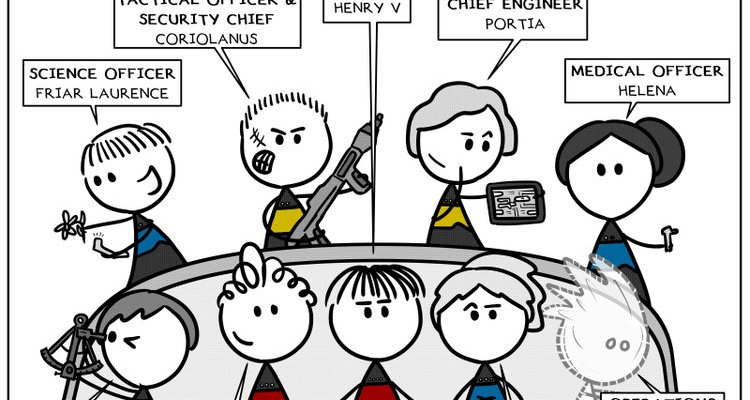
Star Trek The Next Generation: The Tempest, Reformed.
Why did the creators of Star Trek cast Patrick Stewart, the foremost Shakespearean actor of his time, to play the captain of the Enterprise? I would say it is because Shakespeare is a writer who follows some of the same tropes that Star Trek would later use, so the creators needed a Shakespearean actor to communicate these ideas to the audience.
When Star Trek: The Next Generation first came out in the mid-1980s; the lens through which we saw alien cultures changed significantly: Picard sees humanity and the universe through a sentimental lens; viewing all cultures with no concept of superiority or paternalism. Like Shakespeare, Picard sees these cultures as his own and all worthy of respect. That’s why these cultures are often drawn to him and embrace him as one of their own, such as in the episode where he literally lives the life of a man named Kamin on the now-dead planet of Katan, and becomes the only living man to pass on their stories:
Picard’s greatest antagonist Q is a warped mirror of Picard; somebody who sees humanity as a plaything but nonetheless is intrigued and fascinated by human nature:
Taken together, Picard and Q are like the two sides of Shakespeare’s Prospero in The Tempest. Simmilar to how Dr. Morbius represents Prospero’s ego in Forbidden Planet, Picard represents the superego- the part devoted to improving the lives of his crew and the aliens he helps, and who looks at each “brave new world,” he encounters with awe and respect.
Q however, is Prospero’s Id- a malevolent, cynical, vengeful man, (who like Prospero in the episode Deja Q, is actually banished from his rightful place in the Q Continuum). He torments and enslaves creatures for his own amusement and his curiosity about humanity is more morbid and sadistic than scientific or philosophical. With this in mind, it makes sense that Q has been such an enduring part of the Star Trek series since he is an essential component of the series’ psychological makeup.
Science fiction in general is about possibilities- looking at where we came from and where we are and asking questions about where we are going. Generally speaking, Shakespeare looked more to the past than the future, but his conclusions were pretty much the same- he saw “What a piece of work man is,” but also feared greatly for his survival. Star Trek takes these concepts and projects them out to the far future. Even though in the 24rth century humans have mastered space travel, eliminated poverty, and put aside petty prejudice, people are still people and the conflicts they have don’t change. What’s great about Star Trek is how well both choose to tell the eternal story of the human condition, looking before and after and making some truly profound discourse on what it means to be human. Perhaps the real final frontier is the same as the first- the human heart.
“Upon Such Sacrifices: King Lear and the Binding of Isaac”
I’ve compared King Learto a fairy tale in the past, but i haven’t compared it to a story from the King James Bible, even though Shakespeare, in all likelihood wrote and performed it for James himself. This article form the Jewish Review of Books is a comparison between Lear and the Old Testament Bible. First, the author has a tantalizing historical tidbit that might explain why Shakespeare chose to write Lear for King James:
Before ascending to the English throne, James VI of Scotland wrote a political guide, Basilikon Doron, for his eldest son advising him never to divide his kingdom (as Lear does) but “make your eldest son Isaac, leaving him all your kingdoms.”
Noah Millman.
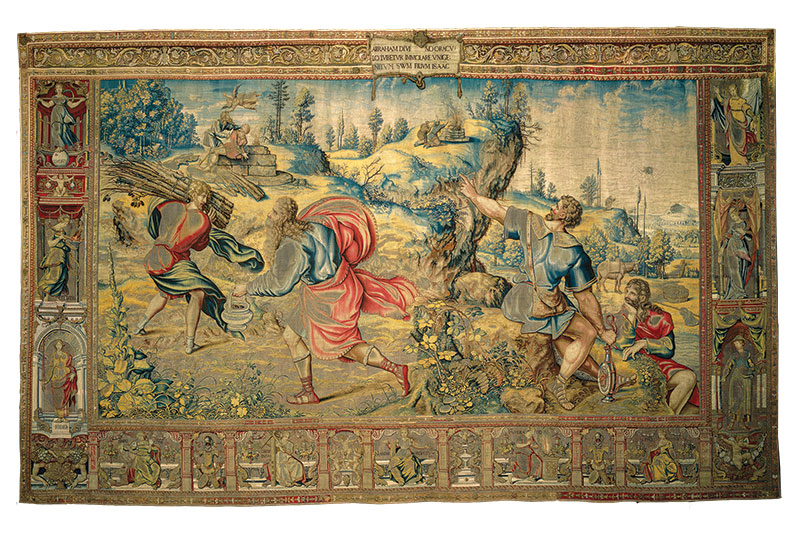
The article also draws some fascinating parallels between Lear and other Biblical patriarchs especially the sacrifice of Isaac, which takes place in Genesis 22, or as it’s known in Jewish tradition, the akeda.
The akedah prompts different questions than King Lear does, not of how so much tragedy could have sprung from a foolish love test, but how the God of all creation could have put his faithful servant to such an unconscionable test in the first place. And so there is a long interpretive tradition that labors to elide that fact in increasingly creative ways. Surely God never intended Isaac to be a sacrifice—the boy was merely to be present at the sacrifice! How could Abraham have thought otherwise, when God had already sworn that it was through Isaac that his promise to Abraham would be fulfilled? Or, alternatively, surely Abraham never doubted that God was merely testing him—after all, Abraham tells Isaac himself that God would provide a lamb to substitute!
It’s interesting to see the parallels between Lear and an Old Testament patriarch. He constantly asks his gods for help and swears by them when he pronounces his doom, yet arguably he has no real faith in his gods or his daughters, which is why his foolish love test in Act I, serves as the catalyst that corrodes and destroys his kingdom and his life. However, maybe Lear sees himself this way, as a king appointed by God, with the authority to test his daughters’ love as God tested Abraham. Ian McKellen seems to share this view and sees Lear as a priest who is unwilling to give up his “special relationship with his gods.”
The actor playing Lear can benefit from studying the sort of old-fashioned patriarchs presented in the Bible because they help shape his worldview. In addition, the concept of faith and how it is tested is another big theme in Lear and contrasting how men in the Bible keep their faith while Lear loses it is an illuminating way to contextualize both works. Was Shakespeare trying to write a parable for kings? Perhaps, but he certainly encapsulates very well the struggles and anxieties of keeping power, and the desire for divine intervention when a kingdom bleeds.
James Earl Jones as King Lear at the Public Theater (1974)
This is my absolute favorite of all the King Lears I’ve seen. Jones nails the blind rage and puffed-up pride of Lear, while also being absolutely clear in his delivery. Unlike a lot of other Lears I’ve seen, you get the sense that, although this man is a bad dad and probably a bad king, he wasn’t always like this, that he was very respected and magnanimous.
In addition, the supporting cast is incredible- Raul Julia (famous for playing M. Bison and Gomez Adams), brings a delicious slimy charm as Edmund and Rene Aberjounois as Edgar brings every bit of his chameleon-like acting to Edgar, Poor Tom, the guy on the cliff, and the guy who fights Oswald. It’s simply astonishing to see Rene play so many different characters and do so many different voices in one performance.
The cast’s excellence doesn’t stop there- Rosalind Cash, Ellen Holly and Lee Chamberlain are all excellent as Lear’s daughters. Cash in particular has the bearing of a queen, and she isn’t afraid to go toe-to-toe with her father, even though he’s played with such might by Jones. Holly plays Regan as sort of a sniveling middle child, which I didn’t enjoy as much, but I think it’s a legitimate interpretation. And of course, Lee Chamberlain does a great job capturing the gentleness and grace of Cordelia, truly a “Kind and dear princess.”
Douglas Watson 1921-1989
Jones will always be my favorite performer in this version, but I have to give a special shout-out to Douglas Watson as The Earl of Kent. I’ll be honest, he really helped me understand the character, and I put elements of his portrayal into my own. First off, even with the elaborate verse that Kent has to deliver, Watson makes it sound like it was written yesterday. In addition, he does a great job of playing the ‘plain knave’ aspect of Kent. He’s gruff and loud, especially with Oswald, whom Kent can’t stand because of his simpering sycophantic ways. I hope I remain true to the spirit of the character, while, also giving it my own spin.
Hopefully watching all these great performances will get you interested to watch the humble little radio play, (though please don’t measure our performance against these masterpieces). Hope to see you tomorrow to watch the show!
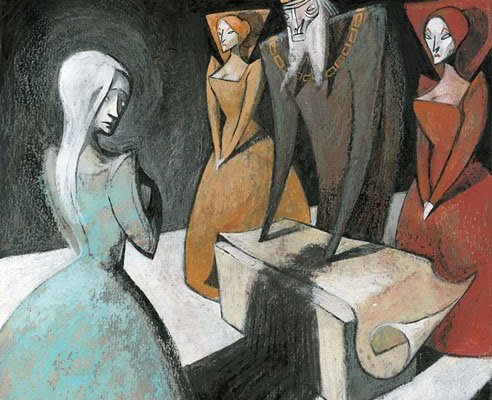
Shakespeare’s King Lear is an age old tale. Like Cinderella it has been reinterpreted throughout time and in many different cultures. Here are a few interesting highlights in the old legend and how it got to Shakespeare in the 1600s.
The Princess Who Loved Her Father More Than Salt
This is an old folktale from my favorite podcast, Journey With Story, which starts with the Cordelia/ Lear plot of a foolish king who banishes his honest daughter. Then through extraordinary circumstances it becomes a Cinderella story. I think at some point these two stories were one and the same until they diverged and one became a story about an absent father and a wicked stepmother, while the other became about a wicked father and a dead mother.
The ancient ballad of King Leir, which helped inspire Shakespeare. It serves as a cautionary tale against flattery, and it places equal blame on Lear and his daughters:
And calling to remembrance then
His youngest daughters words,
That said the duty of a child
Was all that love affords:
But doubting to repair to her,
Whom he had banish'd so,
Grew frantick mad; for in his mind
He bore the wounds of woe:

Which made him rend his milk-white locks,
And tresses from his head,
And all with blood bestain his cheeks,
With age and honour spread.
To hills and woods and watry founts
He made his hourly moan,
Till hills and woods and sensless things,
Did seem to sigh and groan.

Even thus possest with discontents,
He passed o're to France,
In hopes from fair Cordelia there,
To find some gentler chance;
Most virtuous dame! which when she heard,
Of this her father's grief,
As duty bound, she quickly sent
Him comfort and relief
The characters of Gloucester and his children, Kent, and the Fool are absent in this ballad, but unlike the fairy tale above, both Lear and Cordelia die in each other’s arms.
The Annonymous History of King Leir, (first published c. 1594)
The anonymous history of King Lear, written shortly before Shakespeare
This play was written for Shakespeare’s rival acting company The Queen’s Men around 1590). Since the Queen was patronizing the company, most of their plays were government-funded propeganda. For instance, it was the Queen’s men who first did a tragedy of the wicked King Richard III.
Michael Wood. In Search Of Shakespeare, 2002.
If you watch the first 20 minutes of the documentary above, you will see that Wood and many other scholars believe Shakespeare must have worked for the Queen’s men, or at least performed their scripts, since they did their own versions of King Lear, Richard III, King John, and Henry V.
However Shakespeare got a hold of The Queen’s Men’s scripts, he didn’t adhere to them rigidly. Their King Lear follows the fairy-tale / history format of having Cordelia be banished, disguise herself as a peasant (like Cap ‘O Rushes in the earlier version), and eventually she is restored to her rightful place. Shakespeare’s version must have been a MASSIVE shock to anyone who read these old tales and ballads. In Shakespeare’s version, everyone dies and there is no guarantee that the kingdom will survive. Every other tragedy ends with a new king or emperor to take over the kingdom but Lear leaves the audience with a sense of apocolypse; that Lear’s madness and Edmund’s machinations have doomed England and all these characters’ lives will be erased by Time.
As pessimistic as Shakespeare’s Lear is, it does seem more true to life than the previous versions. Perhaps this is because of a legal case from 1603 that might have inspired Shakespear to adapt the story: In 1603, two daughters tried to have their father declared insane. By an astonishing coincidence, the third daughter, who protested, happened to be named Cordelia! Perhaps Shakespeare, (who had three children and was preparing to retire), might have been inspired by this case and worried he might suffer the same fate.



















 The Shakespearean Student