As you probably know if you subscribe to this blog, I love to review adaptations of Shakespeare, so imagine my delight when I realized that the classic teen comedy Mean Girls from 2004, (and the current Broadway show of the same name), is based on Julius Caesar! This movie doesn’t have Shakespearean dialogue or the names or locations, but the essence of the play is the same, albeit with a more modern ending.
In Shakespeare’s play and Tina Fey’s script, the main antagonist is popular, and dangerous, and inspires fear and envy from everyone. Regina George and Caesar both rule their empires through their armies, intimidation, their wealth, and their supreme self-confidence. In addition, both names are associated with royalty- Regina in Latin means queen.
I didn’t realize that the movie has its roots in Julius Caesar until I saw this video from the YouTube channel The Take: https://youtu.be/FRfoEzZbK_Y. It was when I watched this video, that I realized Mean Girls character Janis was an analog for Shakespeare’s character Cassius, the man who sets the plot in motion to assassinate Caesar.
In the movie, Janis meets a well meaning girl and manipulates her into betraying Regina. Look at this clip where after Cady feels betrayed by Regina, Janis outlines her conspiracy, with a Roman sword in her hand! https://youtu.be/D0JMoa4QfA0
Like Cassius, Janis claims that once Regina is destroyed, the social order of the high school will change from a dictatorship to a democracy, but what she really wants is to supplant and replace Regina and make herself the new queen Bee. Even her name is a clue to her malevolent nature, she is named after the Roman god with two faces!
Sir Patrick Stewart as Cassius in the 1972 RSC production of Caesar
Similarly in Julius Caesar, Cassius convinces Brutus that once Caesar dies, Rome will be a republic again. In real life, Brutus was Caesar’s close friend, so Brutus agonizes over whether he is doing the right thing and whether he owes more loyalty to Rome, or his friend Caesar: https://youtu.be/IoDwXjKIenI
If Janis is Cassius, what about Brutus?
Cady Heron (played in the movie by Lindsay Lohan), is naive but intelligent. Like Brutus, she is manipulated and carefully chosen to betray the king. Janis chooses Cady because she’s pretty enough to get close to Regina, her looks are like social currency. Brutus’ social currency was his family: he was descended from the founder of the republic so he lent credibility to the conspiracy. He was also close in family to Caesar and Cassius.
In both stories once the monarch is destroyed, the power vacuum immediately starts to close; rather than change the social order, a new monarch arises. In Caesar, the second triumvirate takes over for the first, and Caesar’s nephew Augustus eventually becomes the supreme ruler of the Roman empire.
In Mean Girls, once Regina loses her social cache, Cady takes her place.
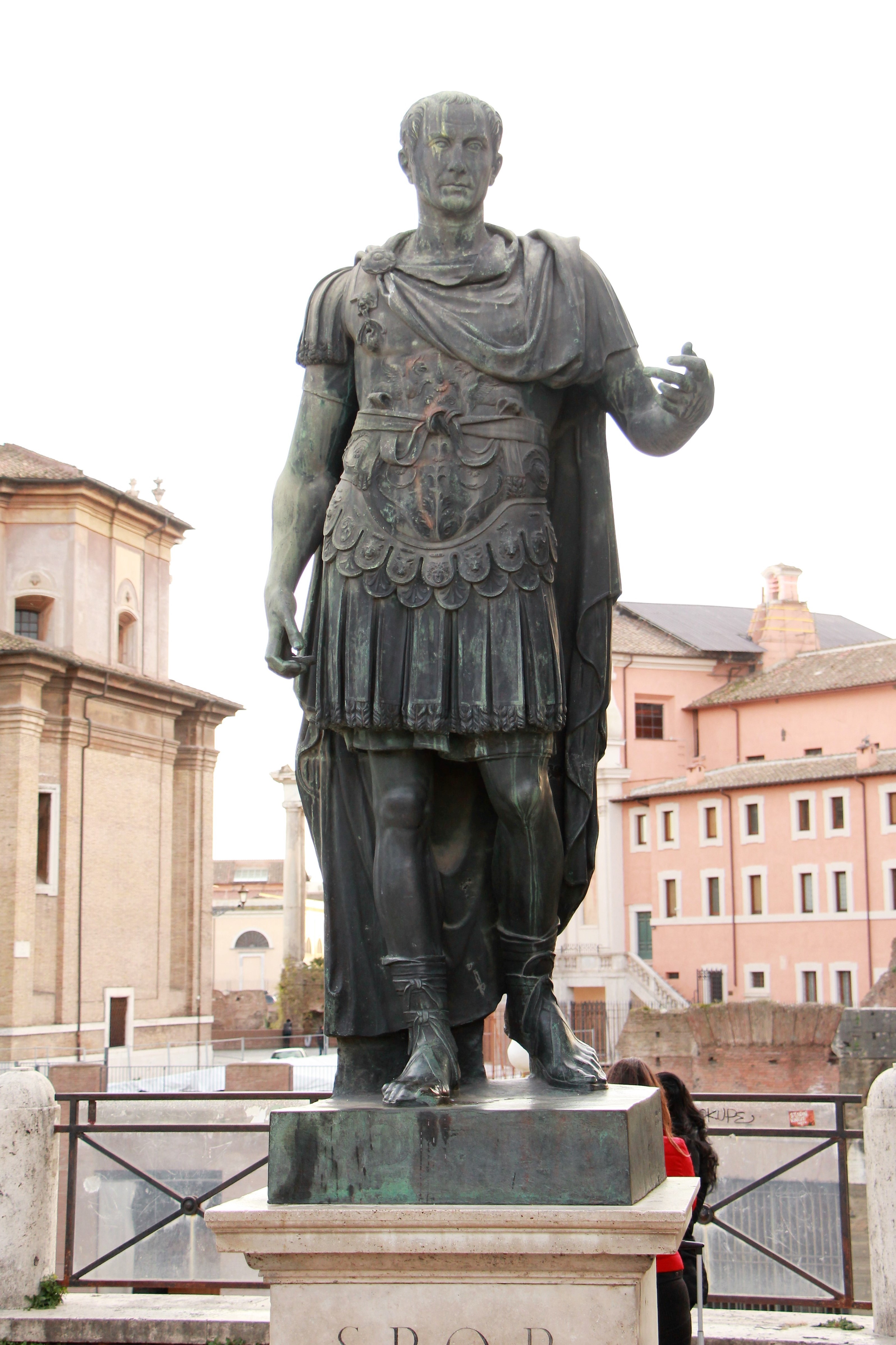
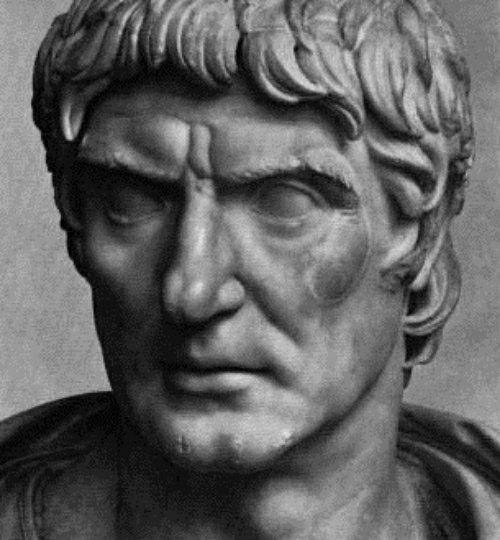
Then when Janis exposes Cady and Regina, she briefly basks in becoming a new Queen Bee- her revolution to overthrow a tyrant has paid off, bit now she is the tyrant herself. This actually mirrors the real Julius Caesar, who took power from the feared dictator Lucius Cornelius Sulla.
Bust of Sulla
Like Regina and her Burn Book, Sulla kept a list of people he saw as threats called the Proscriptions, only Sulla used it to execute the people on the list and seize their property. Caesar started his career as a populist soldier working for the Senate against Sulla and for the people, but became a dictator himself, the very thing he was sworn to oppose!
The movie does end on an encouraging note when the adults finally step up and address the terrible things that their students are doing, which has important lessons about bullying that every young person should see.
Tina Fey actually admitted that she herself was a Mean Girl in high school, so there’s a great deal of honesty when her character confronts the kids about the consequences of bullying each other.
Though the movie ends happily, the Cesarian parallels are not over; even though this high school has been democratized, the problems that created this Mean Girls autocracy remains. As you can see in the final minutes of the movie, a new crop of Plastics arrive just as the old group disbanded.https://youtu.be/LshX2God-wkIn four years when the regime changes again, will there be a new Caesar?
After rewatching clips from the movie, I realized that Tina Fey actually made a Caesar reference right there in the movie!
In this clip, Gretchen is in English class, perfectly paraphrasing Cassius’ speech in Act I, Scene ii, even the part about Caesar being a colossus:
Cassius. Why, man, he doth bestride the narrow world
Like a Colossus, and we petty men
Walk under his huge legs and peep about
To find ourselves dishonourable graves.
Brutus and Caesar: what should be in that ‘Caesar’?
Why should that name be sounded more than yours?
Write them together, yours is as fair a name;
Sound them, it doth become the mouth as well;
Weigh them, it is as heavy; conjure with ’em,
Brutus will start a spirit as soon as Caesar.
Now, in the names of all the gods at once,
Upon what meat doth this our Caesar feed,
That he is grown so great? Age, thou art shamed!
Rome, thou hast lost the breed of noble bloods!
When went there by an age, since the great flood,
But it was famed with more than with one man?
When could they say till now, that talk’d of Rome,
That her wide walls encompass’d but one man?
Now is it Rome indeed and room enough,
When there is in it but one only man.
O, you and I have heard our fathers say,
There was a Brutus once that would have brook’d
The eternal devil to keep his state in Rome
As easily as a king. I.ii. 226-252.
Now I know Mean Girls is based more on a book and by Tina Fey’s own experiences than Shakespeare, but the point is that the next time you are bored and angry about having to read a play based on a guy who’s been dead for over 2,000 years, take a look at the lunch table next to you and you’ll see that things haven’t changed that much.
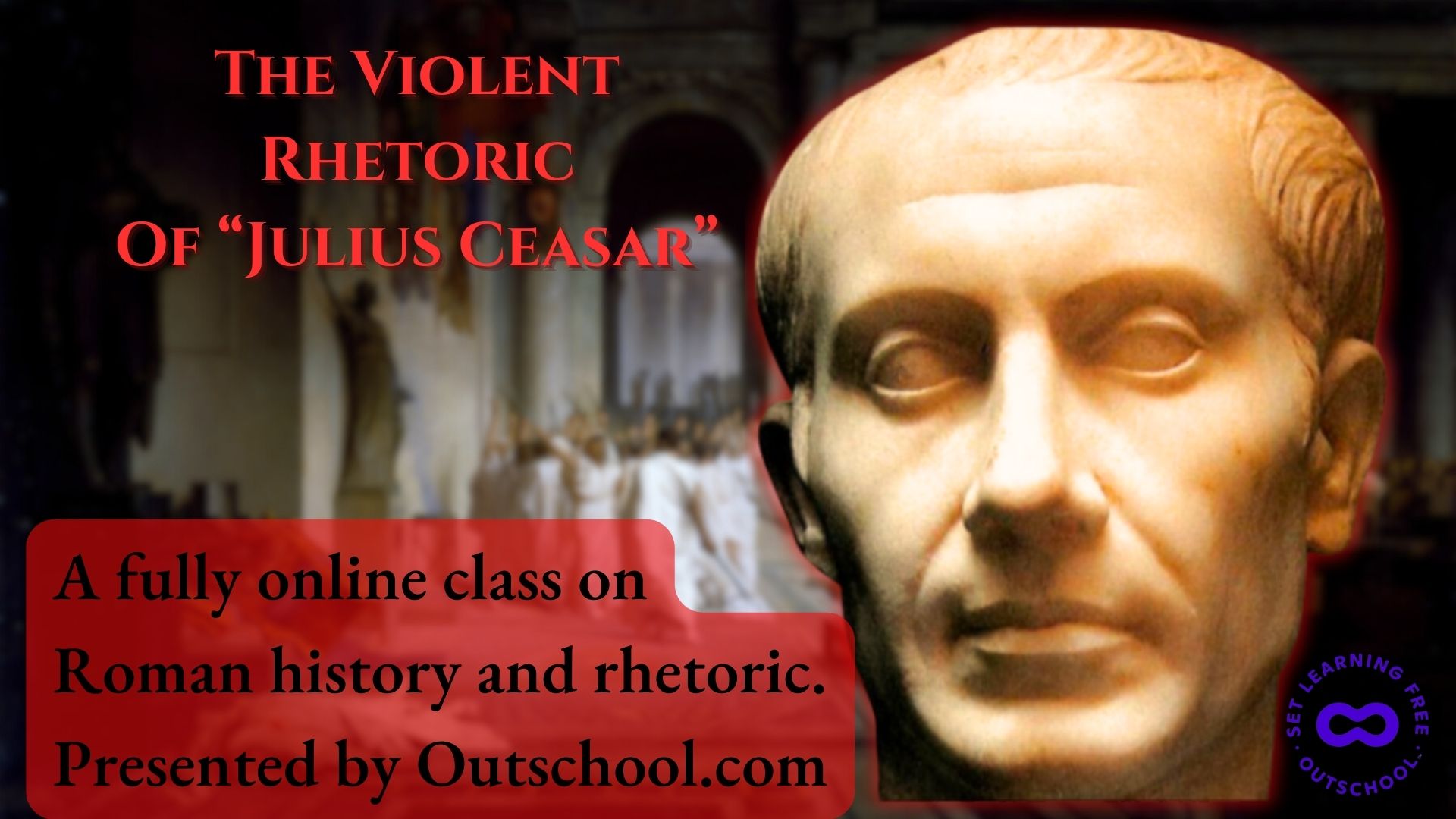
The class breaks down some of the most famous speeches in Julius Caesar and gives you some tips and tricks on how to write persuasive speeches like Antony’s “Friends, Romans, Countrymen,” speech. Use these powers for good though, not to turn your school into a Mean Girls dictatorship! https://outschool.com/classes/84ee847d-19f3-45f8-9f25-81e688b8497d
There’s also a fully asynchronous version that you can do on your own time whenever you want:
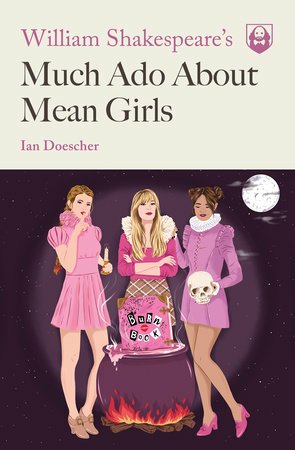
Finally, if you love Mean Girls and Shakespeare, check out Much Ado About Mean Girls by Ian Doescher, author of the William Shakespeare’s Star Wars trilogy.
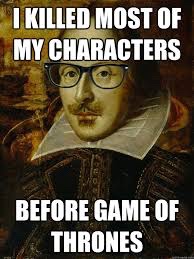
I love Game Of Thrones! If you’ve ever read the books or seen the series on HBO, like me you might be amazed by the scale and complexity of the world author George RR Martin created. He wove together a rich tapestry of medieval history, legends, and yes, Shakespeare. He used some of Shakespeare’s plots, commented and expanded on his themes, and adapted some of his iconic characters into a very rich and in a way, very modern story. Today I’m going to examine the components of Martin’s narrative that he embroidered off of Shakespeare’s plots, themes, and characters. If you like my take on this, or if you disagree, please leave a comment below! If you have any suggestions for other popular works adapted from Shakespeare, let me know and I’ll review them on the blog!
Part I: Story
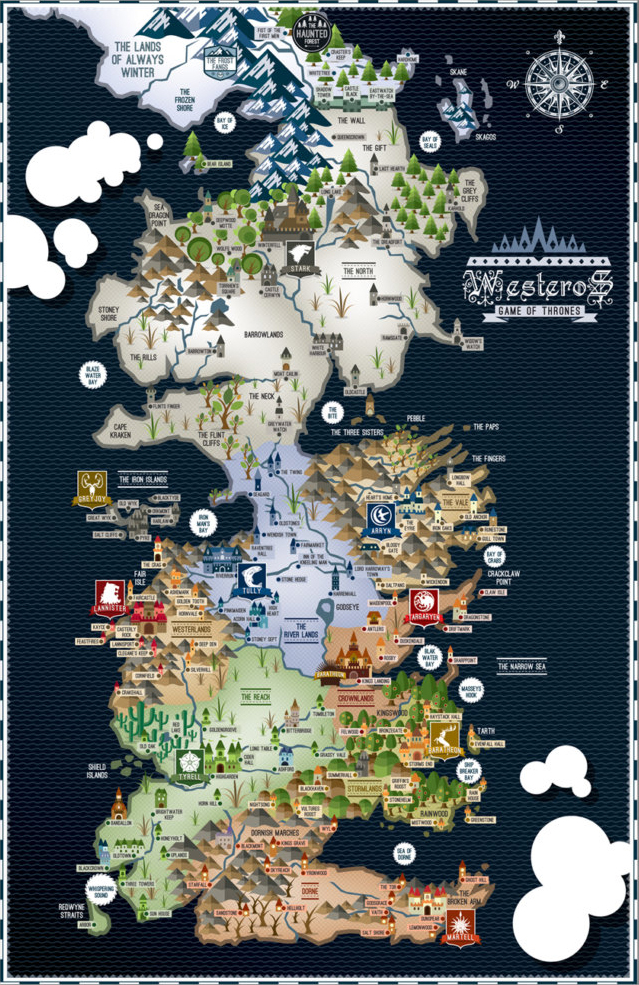
Shakespeare wrote four plays that chronicle a series of civil wars where powerful families battled each other for the crown of England. Like Game of Thrones, the conflict was mainly between the kingdoms in the North and South:
Shakespeare’s three parts of King Henry VI and Richard III chronicle the real struggle between the Yorkists in the north to take the crown from the Lancastrians in London in the South.
Part II: Themes
Power corrupts, especially those who go seeking it.
The death of chivalry and honor in favor of political backstabbing.
King Henry VI has a speech where he watches a great battle while sitting on a molehill, watching the tide turn back and forth between his soldiers and the Yorkists. As with Game Of Thrones, the more blood each side has on its hands, the harder it becomes to decide whom to truly root for. In the end, it doesn’t seem to matter- kingdoms are won and lost as arbitrarily as a game. All it takes is time, and a good player to win.
The silence of the Gods. Shakespeare’s King Lear is constantly making oaths to his gods and asking them to punish his enemies. Likewise, Lear’s friend the Duke Of Gloucester, places his faith in the gods to protect Lear and punish the usurpers Goneril and Regan. Nevertheless, the action of King Lear doesn’t show any kind of divine judgement- Lear is exiled, goes mad, is sent to prison, and finally dies. Gloucester loses his sight, his lands, and dies randomly right after he is re-united with his son Edgar. In both King Lear and Game Of Thrones, there is a persistent question as to the nature of the gods, or even the surety of their existence.
King Lear mourns Cordelia’s death by
James Barry, c. 1786.
No where is this more apparent than at the end of the play King Lear, when, just as it seems that the Duke of Albany is about to reward the good people and punish the wicked, King Lear arrives howling, with the dead Cordelia in his arms. “Is this the promised end?” in horror at the gods’ apparent cruelty. https://youtu.be/7acLWsal1FU
In Game Of Thrones, the good characters pray to their old gods and new, but never seem to hear from them or sense their influence. Osha, the Wildling even suggests that the gods have no power in King’s Landing, where the special God’s Wood trees have been cut down.
Part III: Characters
Below is a list of my favorite GOT characters, with my interpretation of their Shakespearean roots.
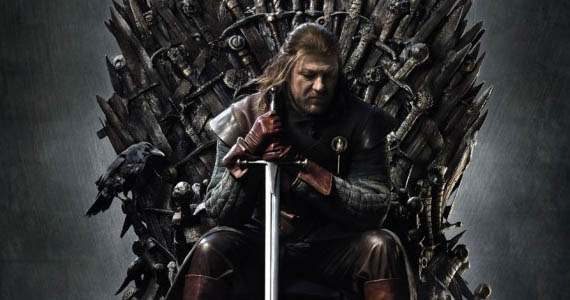
Ned Stark- Humphrey Duke of Gloucester from Henry VI, Part II
Duke Humphrey is a Yorkist from the north of England, just as Ned is Lord of Winterfell, a powerful kingdom in the north of Westeros. King Robert makes Ned Protector Of the Realm when he dies, which makes him king in all but name, and tasked with taking care of Robert’s young son Joffrey until he comes of age.
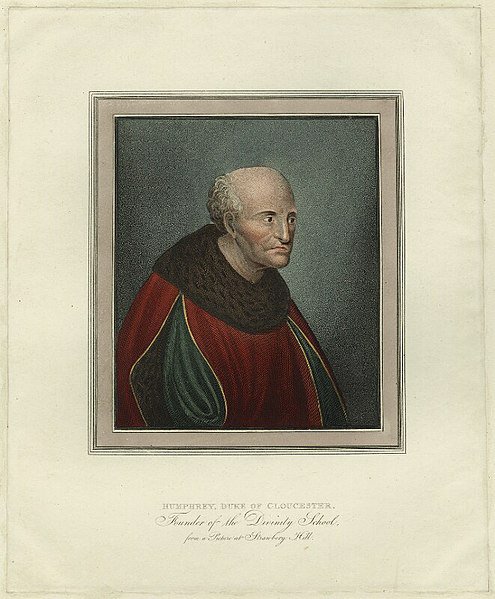
Portrait of the historical Humphrey, Duke of Gloucester from the National Portrait Gallery, artist unknown.
In Shakespeare’s Henry VI trilogy, King Henry the Fifth makes his brother Humphrey Lord Protector before he dies, to take care of England until his infant son Henry VI comes of age to rule. Like Ned, Humphrey is loyal, blunt, and only interested in keeping the realm at peace. In both Westminster and the Red Keep, all the lords are conniving and ambitious, and only interested in advancing themselves politically. These two lord protectors are the only ones with the good of the kingdom in mind.
Both Ned and Humphrey are betrayed and executed by those ambitious lords around them for the same reason; they stand in the way of the lords in their quest for power. In Henry VI, Part II, Henry’s ambitious queen Margaret starts a smear campaign against Humphrey’s wife, then pressures the King to force Gloucester to resign. As if that weren’t enough, Margaret also secretly conspires to murder the noble duke. Similarly, In Game of Thrones (Spoiler Alert), queen Circe puts her son on the throne and proclaims Ned a traitor. In both cases though, once the Lord Protector dies, the whole kingdom erupts in fights and arguments for the crown on all sides.
Ned Stark also resembles the heroes of Shakespeare’s Roman plays. He is cold and stoic as Brutus, and a devoted soldier like Titus Andronicus. Ned’s dire wolf is another connection with Shakespeare’s Roman plays; the wolf 🐺 is the symbol of the Roman Empire; packs of cold hunters who depend on each other for the survival of the family.
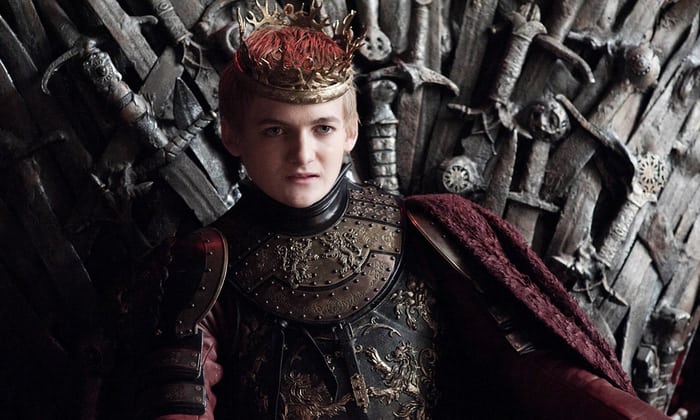
King Joffrey- Saturnine from Titus Andronicus– Joffrey is like the worst kind of tyrant- rash, proud, violent, and cruel. He lacks the maturity to make wise decisions and because of his privileged upbringing, he takes even the tiniest slight against him as an act of treason, and leaves a trail of heads in his wake. Worse still, he is easily manipulated by his mother Circe, who teaches him to act and feel superior to everyone else, and never care for the good of anyone but himself. In that way, he is very much like a Roman Emperor like Nero or Caligula, the real people whom Shakespeare adapted into the character of Emperor Saturnine in his play Titus Andronicus.
When we first meet Saturnine, he leads an angry mob into the streets of Rome, demanding to be made emperor, and threatening all out war if he doesn’t get his way. He also turns on the loyal soldier Titus, (who helped him win a war and win his crown), just because Titus wouldn’t give Saturnine his daughter in marriage. In the clip below from the 1999 movie Titus, Emperor Saturnine (Alan Cummings) is furious just because Titus wrote some mean scrolls about him, after Saturnine killed two of Titus’ sons, and banished a third.
King Robert Baratheon- Edward IV from Richard III.
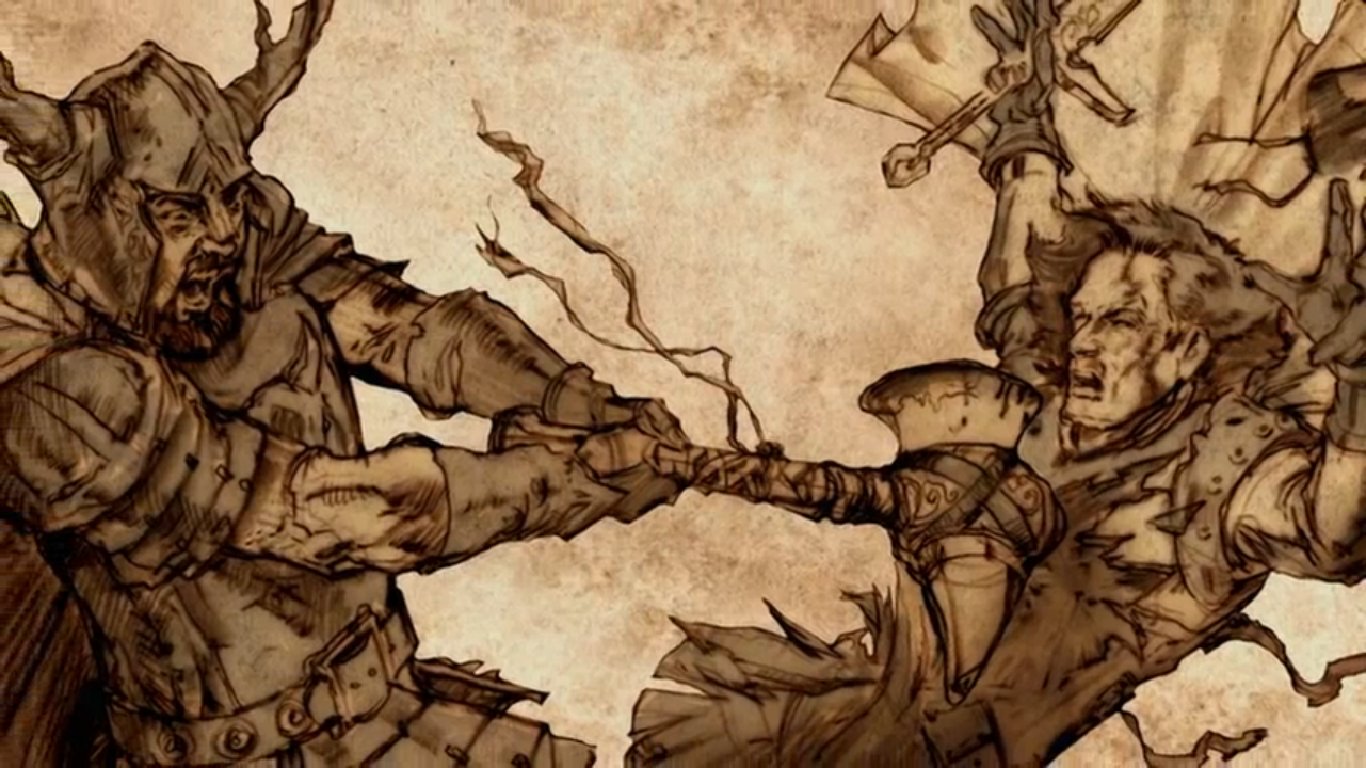
◦ In the first book of the Game of Thrones series, Robert is the King of the Seven Kingdoms, having won a civil war to take it away from the Mad King Araes Targaryen. Edward in the play Richard III has just won the crown of England after a civil war against the mad King Henry VI. Both men were powerful warriors and used to be strong and handsome. People loved and feared him, but now the pressures of keeping the throne has literally consumed them.
P. 53
Next had come King Robert himself, with Lady Stark on his arm. The King was a great disappointment to Jon. His father had talked of him often: the peerless Robert Baratheon, demon of the Trident, the fiercest warrior of the realm, a giant among princes. Jon only saw a fat man, red-faced under his beard, sweating through his silks.
Jon had noticed that too. A bastard had to learn o notice things, to read the truth that people hid behind their eyes. Two seats away, the king had been drinking heavily all night. His broad face was flushed behind his black beard.
In this passage from Thomas More’s History Of Richard III, (Shakespeare’s primary source for the play), More chronicles how Edward went from a handsome young king, loved and feared by all, into a gluttonous, lecherous, sick old man, who was consumed by care.
He was a goodly personage, and very princely to behold: of heart, courageous; politic in counsel; in adversity nothing abashed; in prosperity, rather joyful than proud; in peace, just and merciful; in war, sharp and fierce; in the field, bold and hardy, and nevertheless, no further than wisdom would, adventurous. Whose wars whosoever would well consider, he shall no less commend his wisdom when he withdrew than his manhood when he vanquished. He was of visage lovely, of body mighty, strong, and clean made; however, in his latter days with over-liberal diet [1], he became somewhat corpulent and burly, and nonetheless not uncomely; he was of youth greatly given to fleshly wantonness, from which health of body in great prosperity and fortune, without a special grace, hardly refrains. This fault not greatly grieved the people, for one man’s pleasure could not stretch and extend to the displeasure of very many, and the fault was without violence, and besides that, in his latter days, it lessened and well left.
-Thomas More, History Of Richard III, c. 1513
There are also similarities in how the characters died. King Robert was killed by a wild boar, while King Edward was killed by his brother Richard, whose sign was a white boar. As a bonus, the stag that is the sigil of House Baratheon, is also the seal of King Richard II, the king who, in the Shakespearean tragedy that bears his name, started the civil war when he was murdered in the Tower Of London. Below is a picture of the famous Wilton Diptych, (Richard the Second’s private alter piece), which depicts the king and all the angels in heaven wearing a badge with a white stag on it.
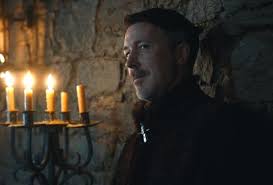
LittleFinger -Lucio from Measure For Measure, Iachimo from Cymbeline, Bawd from Pericles, etc. Shakespeare has a host of character like this lord of Westeros, the Master of Coin. He is cowardly and cynical, but he is also very clever and understands people’s weaknesses, especially sex. Like Bawd from Pericles, Little Finger has grown rich off brothels, and like many real life governments, he turns his prostitutes into spies. This gives him not only cash, but dirt on every lord in the 7 kingdoms. He only worries about Ned Stark, (who can’t be bought), and Vares the eunuch, who can’t be seduced. Little Finger is basically an oily politician and exploits the power of lust in the men of King’s Landing.
Jon Snow– Edgar and Edmund in King Lear Philip the Bastard in King John.
◦ Snow is the illegitimate son of Ned Stark. He’s aware of what he is, so he joins thieves and rapers as a knight of the Night Watch to make a life for himself, just as Edgar becomes a mad beggar in King Lear once he is accused of attempted murder. He has few illusions and like all the base-born children in Shakespeare:
775
He was who he was, Jon Snow, bastard oath breaker motherless, friendless, and damned. For the rest of his life, however long that might be- he would be condemned to be an outsider, the silent man standing in the shadows who dares not speak his true name.”
◦ Shakespeare wrote several characters born out of wedlock such as Phillip Falconbridge in King John, and Edmund from King Lear.
Unlike Jon Snow, Edmund in King Lear uses deceitful and cruel cunning in order to advance his position in life. Snow doesn’t try to change the rules, but both of them know that no one is going to give them anything. Early in book one, Jon learns to accept the cruelty of the world, and to accept what he is:
Let me give you some council, bastard, never forget what you are, for surely the world will not. Make it your strength. Then it can never be your weakness. Armor yourself in it, and it will never be used to hurt you.
Song Of Ice And Fire, p. 57.
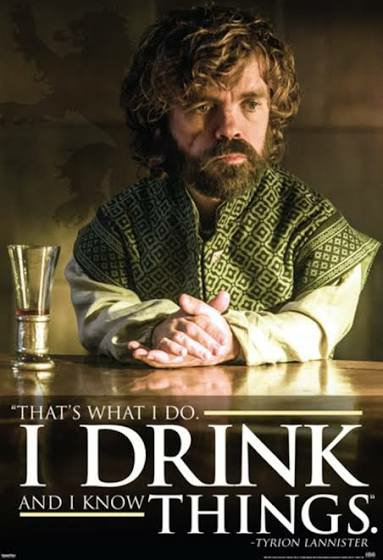
🦁 Tyrian Lannister –
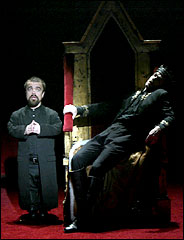
Obviously he shares some parallels with Richard III, with his small size and the fact that he is the most hated member of a powerful family. In fact, Peter Dinklage who plays Tyrion played Richard the Third back in 2004.
In terms of his personality however, Tyrion has neither the cruelty, nor the bitterness of Richard. For this reason, I would argue that Tyrion more closely resembles Sir John Falstaff.
◦ Like Falstaff, Tyrion laughs at his physical form as a way of disarming his enemies.
◦ Both Characters are famous for talking their way out of anything.
◦ Both characters are down on their luck for most of the books
Both characters are, ahem, fond of drink. Falstaff even has a beer named after him:
◦ Most Of all, Tyrion and Falstaff are survivors – they will do anything to stay alive, good or bad. They are also unapologetic about acting cowardly and deceitfully to avoid death. In Falstaff’s famous ‘Catechism speech,’ he mocks the concept of honor and how it frequently gets men killed.
FALSTAFF
‘Tis not due yet; I would be loath to pay him before
his day. What need I be so forward with him that
calls not on me? Well, ’tis no matter; honour pricks
me on. Yea, but how if honour prick me off when I
come on? how then? Can honour set to a leg? no: or
an arm? no: or take away the grief of a wound? no.
Honour hath no skill in surgery, then? no. What is
honour? a word. What is in that word honour? what
is that honour? air. A trim reckoning! Who hath it?
he that died o’ Wednesday. Doth he feel it? no.
Doth he hear it? no. ‘Tis insensible, then. Yea,
to the dead. But will it not live with the living?
no. Why? detraction will not suffer it. Therefore
I’ll none of it. Honour is a mere scutcheon: and so
ends my catechism.
Now observe this passage where Tyrion reacts to the death of a noble knight who was foolish enough to wear armor while crossing a river on a raft.
“Good my lord,” the messenger said. “Lord Brax was clad in plate-and-mail when his raft overturned. He was so gallant.” “He was a fool,” Tyrion thought, willing his cup and staring down into the wind depths. Crossing a river at night on a crude raft, wearing armor, with an enemy waiting on the other side–if that was gallantry, he would take cowardice every time. Song of Ice and Fire, 765.
My favorite part of the books is the way Martin writes the female characters. All the female characters are dealing with the fact that women have very little power or say in their society and they all use Shakespearean means or methods to get what they want.
🦁 Circe- Tamara and Lady Macbeth
◦ Circe
Just as her son Joffrey has the arrogance and sadistic cruelty of a Roman emperor, Circe is a mirror image of the cruel empress Tamara, Queen Of Goths in Titus Andronicus. Both women are attracted to power and motivated by revenge. Tamara wants revenge against General Titus, who executed her son in the war. After seducing and marrying the emperor, she uses her influence to execute two of Titus’ sons. She then uses her lover Aaron the Moor (with Whom she secretly has a child), to concoct a plot to rape and mutilate Titus’ daughter. And if that weren’t enough, she tries to drive him mad by appearing at his home dressed as the Roman goddess Revenge. In short, Tamara is a classic femme fatale, who raises above the social oppression of her sex by seducing powerful men, and stabbing them in the back.
Circe is also a femme fatale, though Martin gives her more time to explain her motivations than Shakespeare gives Tamara. Like the Queen Of Goths, Circe marries King Robert Baratheon, while secretly having a taboo affair, this time with her brother Jamie. The difference is that Circe kills not strictly for vengeance, but mainly to conceal the fact that her son Joffrey is actually the product of her incest in order to protect him and eventually make him king. This is why Circe kills Ned Stark, Jon Aron, and consents to the murder of all or Robert Baratheon’s true born sons.
Circe does desire revenge, but not against anyone in particular. Instead, she wants to repay the patriarchy that keeps her down simply because she is a woman. Quote about Circe when she talks about how jealous she is of Jamie. In that chapter we get a great sense of who Circe really is. Because she’s a twin, she compares herself to her brother, observing how Jamie was given on her glory and respect when he became a knight and a member of the King’s Guard, while she was sold off to king Robert at the age of twelve like a slave or a common whore. Why, Circe asks, if she looks so much like him and acts so much like him, is she treated so differently just because she’s a woman? In a perverse sort of way, her incest might be a misguided attempt to claim part of Jamie’s honor and power through sexual conquest. Both Tamara and Circe show how an oppressive patriarchy can plant truly destructive thorns in the hearts of women, and these two queens reap that bitter harvest by cutting down the men in power one by one.
like camera Circe is driven by her love for her children and her desire and her pride and desire for vengeance. She spends the first half of the place seducing the emperor to gain his favor and then when she is made empress she uses her power to systematically destroy Titus and his family. Similarly, Circe marries king Robert and then when he dies she makes her son she then kills Ned Stark guy in prisons his daughter tries to kill the second of and
Catelyn-
Hermione From The Winters Tale ❄️ 🐺
◦ Pious
◦ Kindness and mercy are her weapons as well as her will and devotion to her friends and family. Even Tyrion is impressed by her integrity.
🐺 Aria- Imogen from Cymbeline
◦ If it’s a mans world, pretend you are one! She learns to use a sword ⚔️ and uses her small size and gender to sneak away from her enemies.
🐉 Daenerys Targaryen- Cleopatra!
◦ Crafty and beautiful
◦ Uses her sexuality to gain a powerful man’s protection
◦ Her dragons 🐉 make her a goddess, elevating her beyond a woman and even a queen. In a society that opposed and ignored women, female monarchs needed to practically deify themselves in order to get the same respect as their male counterparts.
Just as the real Cleopatra claimed to be a descendant of the goddess Isis and Elizabeth I was part of the cult of the virgin queen, The Mother Of Dragons has a mythic power that commands fear and adoration.
Spoiler Alert
In the final chapter of book one, Daenerys tries to simultaneously say goodbye to her warrior husband Khal Drogo, and to get her few remaining soldiers to swear loyalty to her. She dresses him, she braids his hair, she puts him atop a pyre, and waits for a star to pass overhead to give his funeral a cosmic significance:
“This is a wedding too.”
The pyre shifted and the logs exploded as the fire touched their secret hearts. She could hear the screams of frighten horses and the voices of the Dothraki. “No,” she wanted to shout to him, “No my good knight, do not fear for me. The fire is mine. I am Daenerys Stormborn, daughter of dragons, bride of Dragons, Mother Of Dragons.”
This mirrors how, once Cleopatra loses Antony and knows that the Romans are coming to capture her, she says goodbye to Antony, and asserts herself as queen.
CLEOPATRA
Give me my robe, put on my crown; I have Immortal longings in me: now no more The juice of Egypt’s grape shall moist this lip: Yare, yare, good Iras; quick. Methinks I hear Antony call; I see him rouse himself To praise my noble act; I hear him mock The luck of Caesar, which the gods give men To excuse their after wrath: husband, I come: Now to that name my courage prove my title! I am fire and air; my other elements I give to baser life.
Have I the aspic in my lips? Dost fall? If thou and nature can so gently part, The stroke of death is as a lover’s pinch, Which hurts, and is desired. Dost thou lie still? If thus thou vanishest, thou tell’st the world It is not worth leave-taking. Antony and Cleopatra, Act V, Scene ii.
Dany does the same thing. She lights the pyre to help her husband ascend to the heavens, taking his place among the stars. Then, she sits on top of the pyre along with her three dragon eggs. Miraculously, she survives the fire and the dragons hatch, thus establishing her as the true heir of House Targarean and the Mother Of Dragons.
After witnessing the queen embracing her serpentine children, the blood riders that swore oaths to defend her husband swear again to defend her, promising to help her win the Iron Throne. Her power to command loyalty can win her the throne, and unlike Robert, keep it!
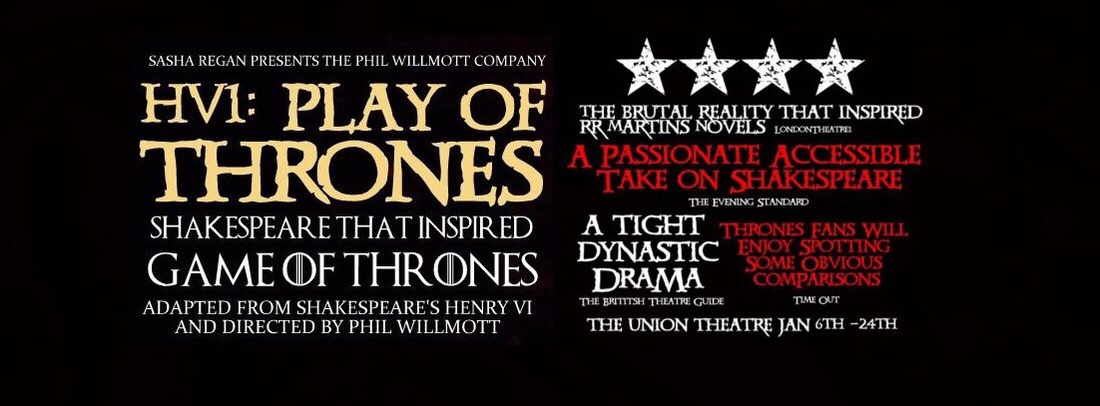
There are enough comparisons between Shakespeare and GOt that one playwright even adapted Shakespeare to resemble a Game Of Thrones story. Below is a poster of
Play Of Thrones, an adaption Of The Henry VI plays that, as I’ve mentioned, are full of characters and scenes similar to Game Of Thrones:
We’ve discussed a little bit about how to create sonnets, now let’s talk about the creator of 154 of the greatest sonnets the world has ever known.
The sonnets are some of the most mysterious pieces of writing Shakespeare ever created. We don’t know when he wrote them, we don’t really know in what order he wrote them, we don’t know for whom he wrote them, and we certainly don’t know whom they are about. That hasn’t stopped many conspiracy theorists and many, many, many, writers from coming up with imaginative stories about these often tantalizing and mysterious pieces of writing.
Genesis:
the only thing we know for sure about Shakespeare sonnets is that they were first published in 1609, as “Shakespeare’s Sonnets, Never Before Imprinted.” A lot of scholars believe that the sonnets were actually published without Shakespeare’s permission. The main evidence for this comes from Shakespeare’s contemporary Francis Meres who referred to them as Shakespeare sonnets “distributed by his among his friends.” Scholars theorize that someone got a hold of these poems that Shakespeare meant to keep private, and published them without his consent or even his knowledge. All we know for a fact is that some of them already existed before 1609.
The Mysterious Young Man.
Scholar Steven Greenblatt in his wonderful book Will In the World, presents a more straightforward theory about where the sonnets came from: Shakespeare wrote them for some quick cash. As a writer, Shakespeare couldn’t always rely on the theater to make a living, especially since the theaters were often closed during times of plague, and religious holidays.
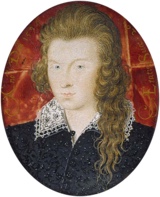
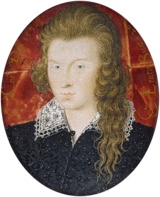
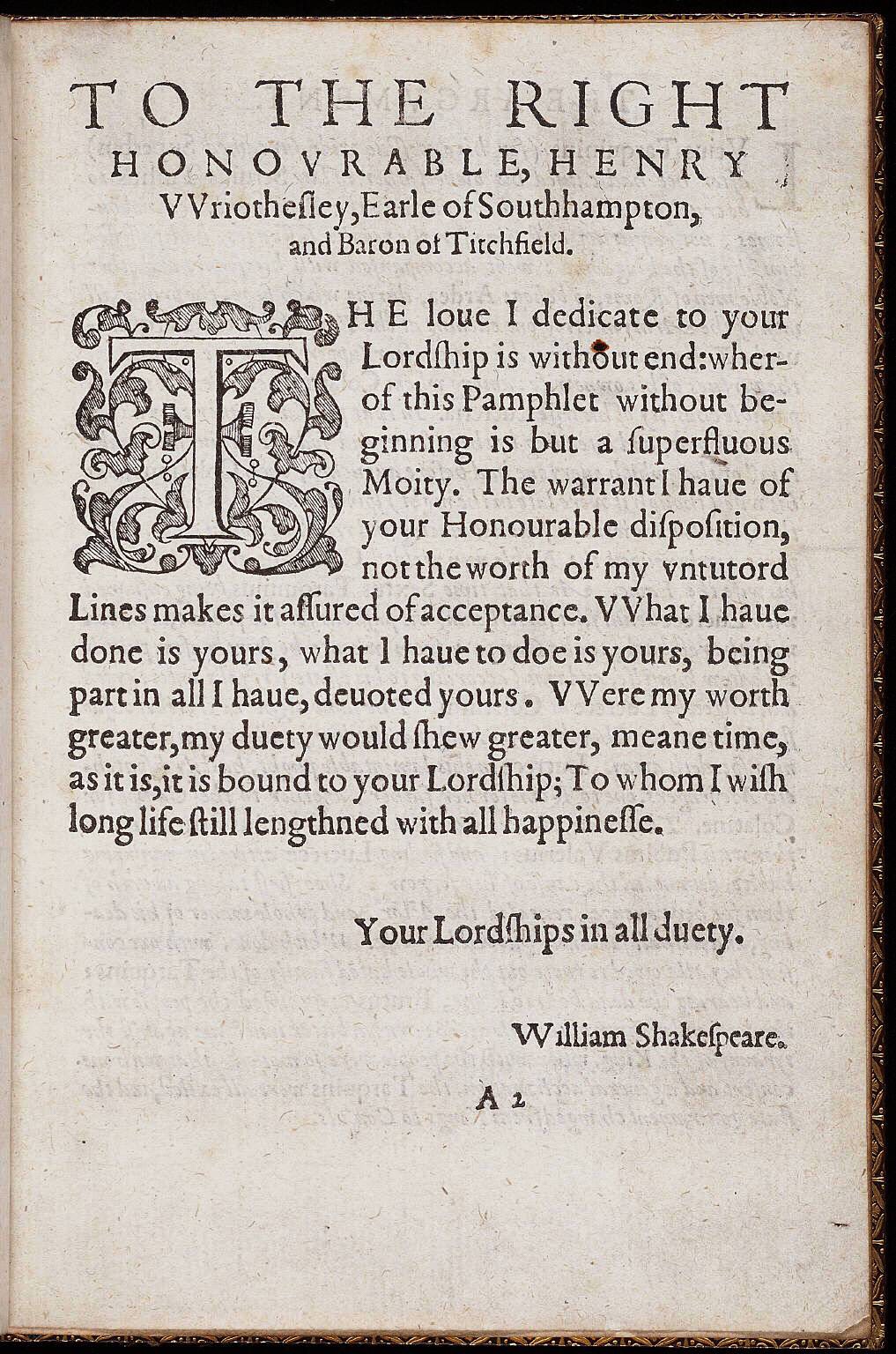
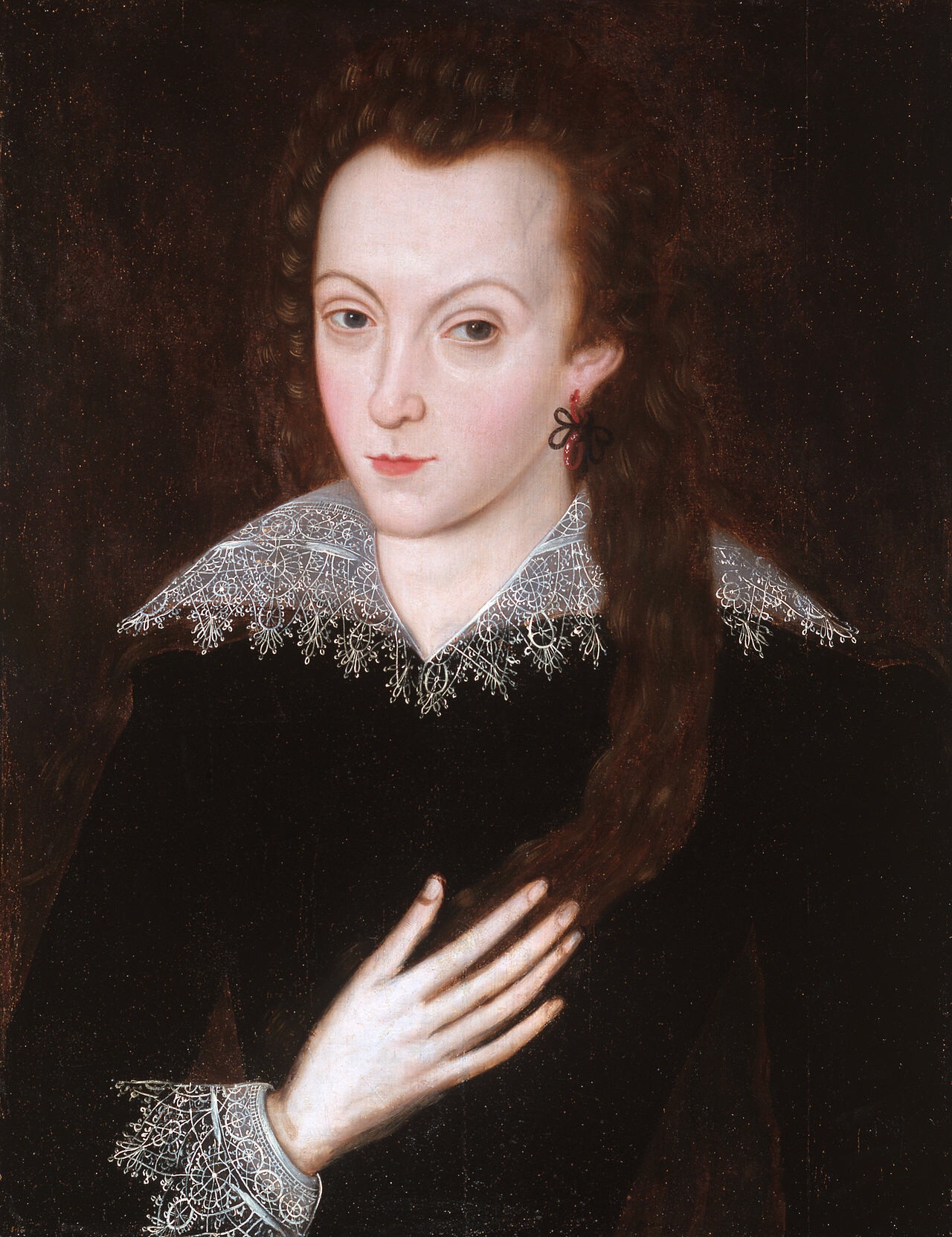
Greenblatt believes that in order to pay his bills in the mid-1590s, Shakespeare wrote poetry for Henry Wriothesley, 3rd Earl of Southampton. We know that The Bard dedicated two long poems to Southampton, Venus and Adonis, and TheRape Of Lucreece and the language Shakespeare uses on the dedication is very personal, even slightly flirty. Greenblatt believes that most if not all of the early sonnets were also written for Southampton. Greenblatt points out that Wriothesley was expected to get married and produce an heir, but he was in his late 20s and had not yet chosen a wife.
Greenblatt believes that Shakespeare was hired by someone in the Southampton family to write a series of love poems that would encourage the Earl to hurry up and get hitched. Indeed, the first 126 sonnets refer to a young, good looking blonde- haired man who has tragically remained single.
This theory works for most, but not all of the early sonnets Sonnet 33 seems to refer to a dead child. Many scholars believe that this sonnet was composed specifically for the death of Shakespeare’s own son Hamnet, who died in 1596 at the age of just eight years old. Obviously since Hamnet is so similar to Hamlet, Shakespeare might have given him a much more fitting tribute a few years later.
My favorite interpretation of the young man of the sonnets comes from the movie Shakespeare In Love. Since the love expressed in the sonnets between the speaker and the Fair Young Man seems to be somewhat sexual in nature, it kind of lends itself to the notion that Shakespeare might’ve been homosexual. What I find amusing is that in the film, since his lady love is his disguised as a boy, ( like so many of Shakespeare’s heroines ), the film answers the question of whether Shakespeare was gay or straight by having the young Shakespeare fall in love with a blonde woman disguised as a male actor, In the scene below, Shakespeare watches his mistress perform in disguise as Romeo, then dedicates a sonnet to her, while still referring to her as male in the sonnet! https://youtu.be/xpyTl3OMWrU
The DarkLady
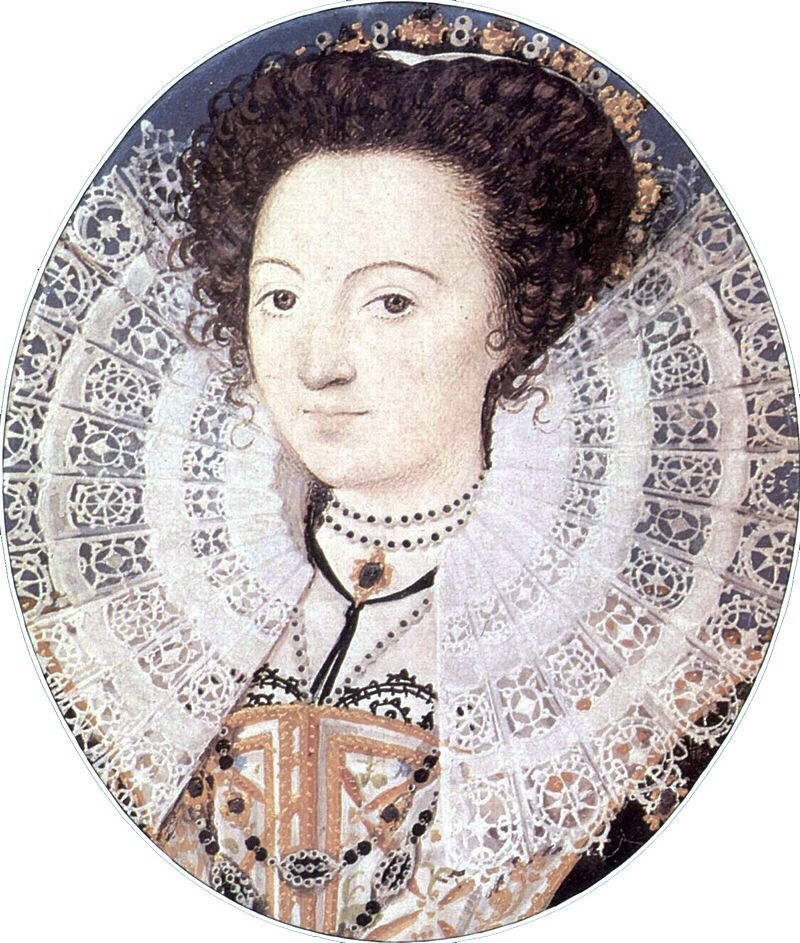
In the next group of sonnets, the speaker refers to a woman that the speaker calls his mistress. We have no clues from the sonnets as to who she might be, except that her skin is dark. Many many people have wondered who this young woman might be. My favorite theory comes from scholar Michael Wood in his documentary In Search Of Shakespeare. Wood theorizes that it might’ve been in Emilia Lanier, who was the wife of Shakespeare’s patron. One of her descendants, Peter Bassano, has put forth the notion that Shakespeare could have been involved with Mrs. Lanier.
Of course, it also seems likely that The Dark Lady just could’ve been a literary exercise for Shakespeare, who was also writing Anthony and Cleopatra at the time. https://youtu.be/u0W9v9jVp04
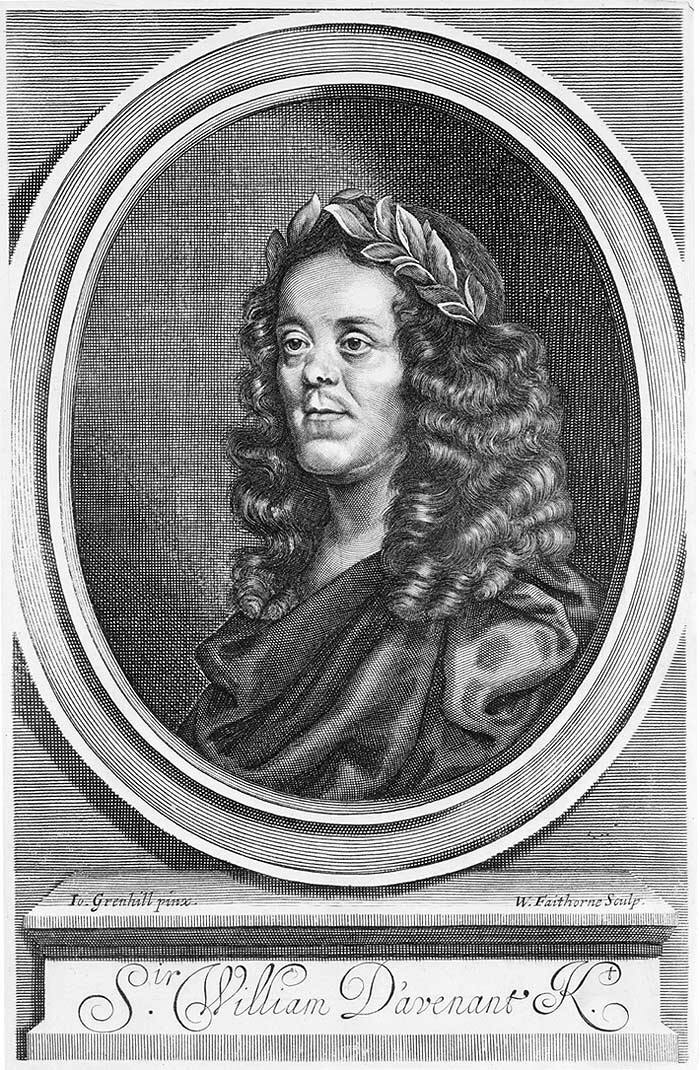
Other candidates for The Dark Lady have included the mother of celebrated 18th century playwright and actor, William Davenant.
Sir William himself claimed to be Shakespeare’s illegitimate son, and his parent’s tavern is midway between Stratford and London, so it’s not entirely impossible that Shakespeare at least knew the boy’s mother. The apocryphal story comes from John Audley’s biography of Shakespeare from 1693. Here is what he says about Shakespeare and Davenant:
Mr. William Shakespeare was wont to go into Warwickshire once a year, and did commonly in his journey lie at this house [the Crown] in Oxon, where he was exceedingly respected… Now Sir William [Davenant] would sometimes, when he was pleasant over a glass of wine with his most intimate friends–e.g. Sam Butler, author of Hudibras, etc., say, that it seemed to him that he writ with the very spirit that did Shakespeare, and seemed contented enough to be thought his Son. He would tell them the story as above, in which way his mother had a very light report, whereby she was called a Whore.[2]
My favorite interpretation of the Dark Lady Myth comes from Doctor Who, in an episode called The Shakespeare Code where The Doctor s companion Martha Jones, (who is black), meet Shakespeare and he immediately is smitten with her.
It is supremely naïve to assume that anybody can pin down a definitive Dark Lady. Adultery was just a serious back then as it is now, and admitting to it, even in a play or poem would have been suicide for Shakespeare, which is why the sonnets are vague enough so that they never conclusively point to any specific party, which helps keep this tantalizing mystery alive to this day.
If you enjoyed this post, you might want to sign up for my Outschool class on Shakespeare’s love poems. We’ll discuss the mystery of the Dark Lady, and you’ll learn to create your own sonnets, just in time for Valentines Day!
Today I’m going to do an analysis of one of the most famous speeches in all of Shakespeare: Antony’s Funeral Speech in Act III, Scene ii of Julius Caesar, commonly known as the “Friends, Romans, Countrymen” speech.
I. Given Circumstances
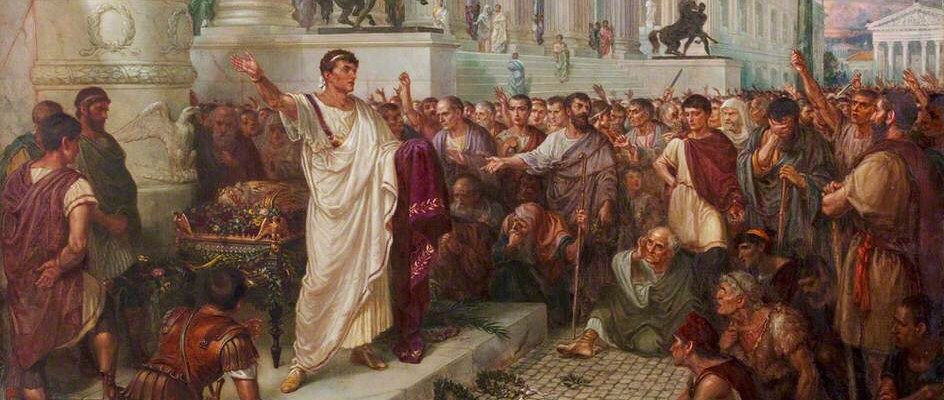
Antony is already in a very precarious position. His best friend Julius Caesar was murdered by the senators of Rome. Antony wants vengeance, but he can’t do so by himself. He’s also surrounded by a mob, and Brutus just got them on his side with a very convincing speech. They already hate Antony and Caesar. His goal- win them back. Here is a clip of Brutus (James Mason) speaking to the crowd from the Joseph Mankewitz movie version of Julius Caesar:
So the stakes are very high for Antony: If he succeeds, the crowd will avenge Caesar, and Antony will take control of Rome. If he fails, he will be lynched by an angry mob.
II. Textual Clues
If you notice in the text of the speech below, Antony never overtly says: “Brutus was a liar and a traitor, and Caesar must be avenged,” but that is exactly what he gets the crowd to do. So how does he get them to do so, right after Brutus got them on his side?
Antony. Friends, Romans, countrymen, lend me your ears;
I come to bury Caesar, not to praise him.
The evil that men do lives after them;
The good is oft interred with their bones; 1620
So let it be with Caesar. The noble Brutus
Hath told you Caesar was ambitious:
If it were so, it was a grievous fault,
And grievously hath Caesar answer’d it.
Here, under leave of Brutus and the rest— 1625
For Brutus is an honourable man;
So are they all, all honourable men—
Come I to speak in Caesar’s funeral.
He was my friend, faithful and just to me:
But Brutus says he was ambitious; 1630
And Brutus is an honourable man.
He hath brought many captives home to Rome
Whose ransoms did the general coffers fill:
Did this in Caesar seem ambitious?
When that the poor have cried, Caesar hath wept: 1635
Ambition should be made of sterner stuff:
Yet Brutus says he was ambitious;
And Brutus is an honourable man.
You all did see that on the Lupercal
I thrice presented him a kingly crown, 1640
Which he did thrice refuse: was this ambition?
Yet Brutus says he was ambitious;
And, sure, he is an honourable man.
I speak not to disprove what Brutus spoke,
But here I am to speak what I do know. 1645
You all did love him once, not without cause:
What cause withholds you then, to mourn for him?
O judgment! thou art fled to brutish beasts,
And men have lost their reason. Bear with me;
My heart is in the coffin there with Caesar, 1650
And I must pause till it come back to me.
First Citizen. Methinks there is much reason in his sayings. Julius Caesar Act III, Scene ii.
The two main methods Shakespeare uses to infuse Antony’s speech with powerful persuasive energy are the way he writes the verse, and his command of rhetoric.
A. Verse
The greatest gift Shakespeare ever gave his actors was to write his plays in blank verse. It not only tells you which words are important to stress, it gives you clues about the character’s emotional journey; just as a person’s heartbeat can indicate their changes in mood, a subtle change in verse often betrays the character’s pulse and state of mind. Antony uses his own emotions and his powers of persuasion to manipulate the crowd, so his verse helps show how he changes the pulse of the Roman mob.
I could write a whole post on the verse in this page, which I don’t need to do, since The Shakespeare Resource Center did it for me: http://www.bardweb.net/content/readings/caesar/lines.html What I will do is draw attention to some major changes in the verse and put my own interpretations on how Antony is using the verse to persuade the crowd:
The first line of the speech grabs your attention. It is not a standard iambic pentameter line, which makes it rhythmically more interesting. In the movie version, Marlin Brando as Antony shouts each word to demand the crowd to just lend him their attention for a little while. He uses the verse to emphasize Antony’s frustration.
“The Evil that men do, lives after them”- Notice that the words evil and men are in the stressed position. Antony might be making a subconscious attempt to say Brutus and the other evil men who took the life of Caesar are living, when they deserve to die.
“If it were so..” Again, Antony might be making a subtle jab at the conspirators. Brutus said Caesar was ambitious and Antony agrees that ambition is worthy of death, but he also adds an If, to plant the seeds of doubt in the crowd’s minds. To drive it home, the word if is in the stressed position, making it impossible for the crowd to not consider the possibility that Caesar wasn’t ambitious, and thus, didn’t deserve to be murdered.
B. Rhetoric
One reason why this speech is so famous is its clever use of rhetoric, the art of persuasive speaking. Back in ancient Rome, aristocrats like Antony were groomed since birth in the art of persuasive speech. Shakespeare himself studied rhetoric at school, so he knew how to write powerful persuasive speeches. Here’s a basic breakdown of the tactics Antony and Shakespeare use in the speech:
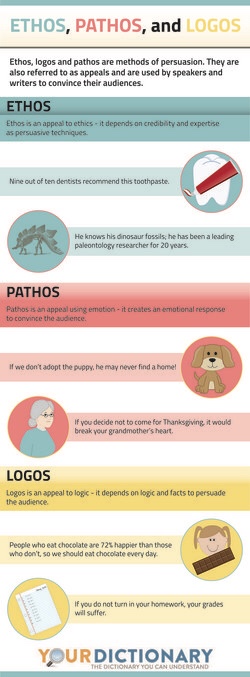
Ethos, Pathos, and Logos
The three basic ingredients of any persuasive speech are Ethos, Pathos, and Logos. Ethos is an appeal to the audience based on the speaker’s authority. Pathos is an appeal to the emotions of the crowd, and Logos is an appeal to facts and or reason. Both Brutus and Antony employ these three rhetorical tactics, but Antony doesn’t just appeal to his audience, he manipulates them to commit mutiny and mob rule.
Logos Antony has very few facts or logical information in his speech. His major argument is that again, since Caesar wasn’t ambitious, (which is very hard to prove), his death was a crime. Antony cites as proof the time Cæsar refused a crown at the Lupercal, but since that was a public performance, it’s hardly a reliable indication of Caesar’s true feelings.
You see logos as a rhetorical technique all the time whenever you watch a commercial citing leading medical studies, or a political debate where one person uses facts to justify his or her position. If you look at Hillary Clinton during the 2016 Presidental Debate, she frequently cited statistics to back up her political positions
Ethos-
Ethos is an argument based on the speaker’s authority. Brutus’ main tactic in his speech is to establish himself as Caesar’s friend and Rome’s. He says that he didn’t kill Caesar out of malice, but because he cared more about the people of Rome.
BRUTUS: If there be any in this assembly, any dear friend of Caesar’s, to him I say, that Brutus’ love to Caesar was no less than his. If then that friend demand why Brutus rose against Caesar, this is my answer:
–Not that I loved Caesar less, but that I loved Rome more. JC, III.ii.
Antony employs the exact same tactics, establishing himself as Caesar’s friend and telling the crowd that, as Caesar’s friend, Antony believes that Caesar did not deserve his murder. His use of Ethos therefore, helps Antony refute Brutus’ main claim.
Again, the 2016 debate is another excellent way of showing ethos in action. Hillary Clinton and Brutus frequently cited their political experience and their strength of character to justify their views. There’s an excellent article that examines Hillary’s use of Ethos in her political rhetoric: https://eidolon.pub/hillary-clintons-rhetorical-persona-9af06a3c4b03
Pathos
Pathos is the most frequently used rhetorical tactic: the appeal to emotion. Donald Trump uses this constantly, as you can see in this clip from the 2016 debate:
Pathos is bit more of a dirty trick than Ethos and Logos, which is why Brutus doesn’t use it much. As scholar Andy Gurr writes:
Brutus is a stern philosopher and thinker. His faith in reason fails to secure the crowd from Antony’s disingenuous appeal to their affections, which uses sharp sarcasm and some twisted facts.
Antony’s major appeals to emotion:
His grief over losing Caesar
His painting of Cæsar as a generous, faithful friend
Shaming the crowd for not mourning Caesar’s death
Appeal to piety by showing the body funeral reverence.
His use of Caesar’s bloody body and mantle to provoke outrage from the citizens.
His use of Caesar’s will to make the crowd grateful to Caesar, and furious at Brutus.
Rhetorical Devices
If Ethos, Pathos, and Logos are the strategies of rhetorical arguments, rhetorical devices are the artillery. If you check out the website Silva Rhetoricae, (The Forest Of Rhetoric), you can read about the hundreds of individual rhetorical devices that politicians have used in speeches and debates since ancient history. I will summarize here the main ones Antony uses over and over again in “Friends, Romans, Countrymen.” For another more compete analysis, click here: https://eavice.wordpress.com/2011/02/05/jv-rhetorical-devices-in-antonys-funerary-speech-from-shakespeares-julius-caesar/
Irony The way Antony keeps repeating “Brutus is an honorable man,” is a particularly sinister form of irony, which here means to imply the opposite of what you have said to mock or discredit your opponent. The irony is that the more Antony repeats this idea that Brutus is honorable, the more the crowd will question it. If Brutus were truly honorable, he would not need Antony to remind them. Of course, Brutus can still be honorable whether Anthony mentions it or not, but this repetition, coupled with Antony’s subtle rebuttals Of Brutus’ arguments, manages to shatter both Brutus’ motives, and his good name, at least in the eyes of his countrymen.
Antimetabole is the clever use of the same word in two different ways. Antony manages to work it in twice in this speech:
“If it were so, it was a grievous fault,
And grievously hath Caesar answer’d it.”
“You all did love him once, not without cause: What cause withholds you then, to mourn for him?”
Rhetorical question This is the most famous rhetorical device which by the way in Antony’s day would have been known as Erotema. Antony asks a series of questions designed to refute the notion that Caesar was ambitious, from his mercy to his captives, to Caesar’s tenderness to the poor, and of course his refusal to take the crown during the Lupercal. Each question calls Brutus’ claims into question and seeds doubt in the crowd.
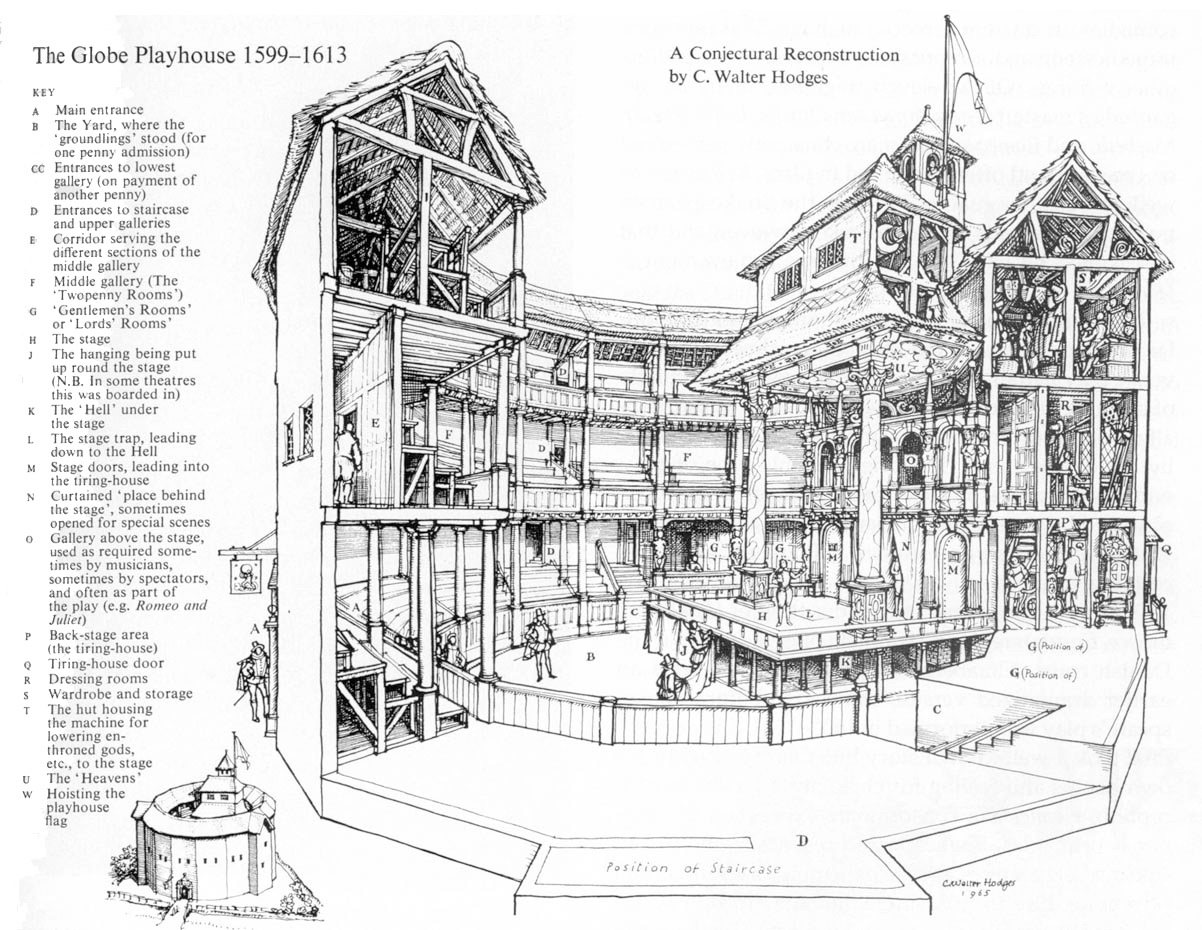
Unlike most Shakespearean plays, with Julius Caesar, we have an eyewitness account of how the play was originally performed. Swiss student Thomas Platter wrote a long description of watching the play at the original Globe Theatre in 1599. This is a translation that I found on The Shakespeare Blog:
On September 21st after lunch, about two o’clock, I and my party crossed the water, and there in the house with the thatched roof witnessed an excellent performance of the tragedy of the first Emperor Julius Caesar, with a cast of some fifteen people; when the play was over they danced very marvellously and gracefully together as is their wont, two dressed as men and two as women…
Thus daily at two in the afternoon, London has sometimes three plays running in different places, competing with each other, and those which play best obtain most spectators.
The playhouses are so constructed that they play on a raised platform, so that everyone has a good view. There are different galleries and places, however, where the seating is better and more comfortable and therefore more expensive. For whoever cares to stand below only pays one English penny, but if he wishes to sit he enters by another door, and pays another penny, while if he desires to sit in the most comfortable seats which are cushioned, where he not only sees everything well, but can also be seen, then he pays yet another English penny at another door. And during the performance food and drink are carried round the audience, so that for what one cares to pay one may also have refreshment.
The actors are most expensively costumed for it is the English usage for eminent Lords or Knights at their decease to bequeath and leave almost the best of their clothes to their serving men, which it is unseemly for the latter to wear, so that they offer them for sale for a small sum of money to the actors.
So the conclusions we can draw based on Platter’s account include that Antony was standing on a mostly bare stage with a thatched roof, raised slightly off the ground. We can also guess that, since the merchants were selling beer, fruits, and ale, that the audience might have been drunk or throwing things at the actors.
As Platter notes, and this page from Shakespeare’s First Folio confirms, there were only 15 actors in the original cast, so Shakespeare’s company didn’t have a huge cast to play the gigantic crowd in the Roman street. In all probability, the audience is the mob, and Antony is talking right to them when he calls them “Friends, Romans, Countrymen.” I believe that the audience was probably encouraged to shout, chant, boo, cheer, and become a part of the performance which is important to emphasize when talking about how to portray this scene onstage. A director can choose whether or not to make the audience part of the action in a production of Julius Caesar, which can allow the audience to get a visceral understanding of the persuasive power of politicians like Brutus and Antony. Alternatively, the director can choose instead to have actors play the crowd, and allow the audience to scrutinize the crowd as well as the politicians.
In conclusion, the reason this speech is famous is Shakespeare did an excellent job of encapsulating the power of persuassive speech that the real Antony must have had, as he in no small way used that power to spur the Roman crowd to mutiny and vengeance, and began to turn his country from a dying republic into a mighty empire.
If you liked this post, please consider signing up for my online class where I cover the rhetorical devices in Julius Caesar and compare them with several other famous speeches. Register now at http://www.outschool.com
For a fascinating look at how a modern cast of actors helps to create this scene, check out this documentary: Unlocking the Scene from the Royal Shakespeare Company’s production in 2012, with Patterson Joseph as Brutus, and Ray Fearon as Antony:
The Merchant Of Venice is unquestionably Shakespeare’s most controversial play- it covers such topics as anti-semitism, religious hypocrisy, racism, slavery, and the meaning of justice and mercy. As I have written before, few people read this play in school, but I believe that it has many lessons to teach our children. I also believe its lessons are also very much a part of the Christmas/ Hanukkah/ Kwanza holiday season, and here’s why:
Short summary
Famous quotes
All that glitters is not gold.
Hath not a Jew Eyes
The quality of mercy is not strained
You may very well wonder why this play about greed and prejudice reflects the warm holiday spirit. I would argue that, like cold winter snow, this play emphasizes the importance and the need for compassion, humanity, and generosity because without it society becomes truly frigid.
Merchant Of Venice takes an unflinching look at greed, prejudice, and religious hypocrisy, while at the same time retaining a hope for peace on Earth and goodwill towards men.
One of the best ways I can justify the connection between Merchant and the holidays is by comparing it to the quintessential Christmas story, Charles Dickens’ A Christmas Carol. In terms of tone, themes and especially characters, these two classics are very close indeed. Shylock is an ancestor of Scrooge- in addition to both being money lenders, both men are miserly, cold, and willing to destroy lives for wealth. Shylock even has a ghost that comes back to haunt him. Shylock mentions a ring that he got from his late wife Leah, similar to how Scrooge lost his only love, Belle. Just as Scrooge is a counterexample of everything that Christmas stands for, Shylock’s greediness, cruelty, and hatred of the people around him make him a figure to avoid, no matter what holiday you celebrate.
Merchant also raises questions about materialism, which we should all consider around the holidays. Shylock especially mentions this in quotes like: “You take my life when you take the means whereby I live.”
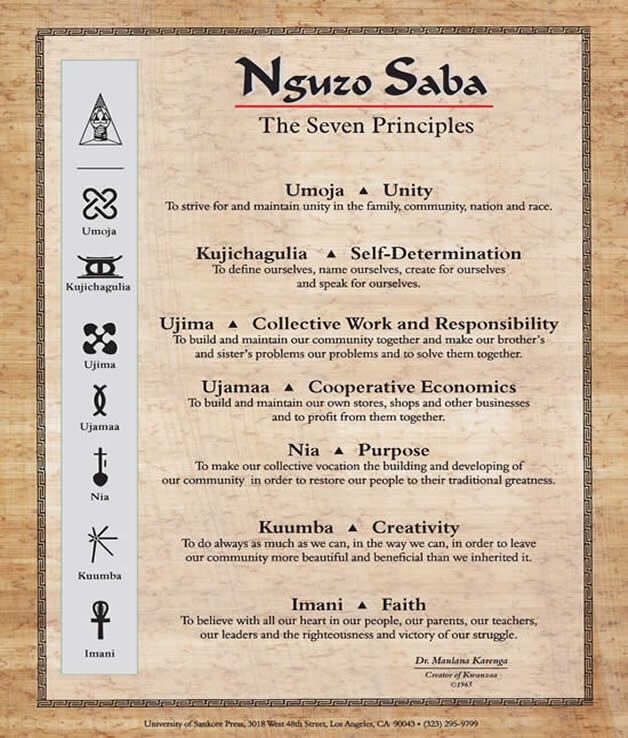
The themes of Merchant also reflect a modern multicultural holiday season. In one example which I wrote about before, The Prince Of Morocco has a great speech that calls to mind the concept of kuchijagulia, or self determination, one of the 7 principles of Kwanzaa.
According to the official Kwanza website, kuchijagulia means, “To speak up for oneself,” and Morocco definitely does that:
Mislike me not for my complexion,
The shadow’d livery of the burnish’d sun,
To whom I am a neighbour and near bred.
Bring me the fairest creature northward born,
Where Phoebus’ fire scarce thaws the icicles,
And let us make incision for your love,
To prove whose blood is reddest, his or mine.
I tell thee, lady, this aspect of mine
Hath fear’d the valiant: by my love I swear
The best-regarded virgins of our clime
Have loved it too: I would not change this hue,
Except to steal your thoughts, my gentle queen. Merchant Of Venice, Act II, Scene I.
Moracco’s unwillingness to change who he is makes him a model of the kind of pride African Americans celebrate during Kwanza. In addition Shylock, the Jewish moneylender, is also very proud of his heritage. His famous quip: “Sufferance is the badge of all our tribe,” expresses perfectly the resilience of the Jewish people, which of course is the central point of Hanukkah.
When it comes to Christmas, Antonio demonstrates a Christ- like self sacrifice, when he lets himself be arrested and nearly killed by Shylock.
▪Bassanio. Good cheer, Antonio! What, man, courage yet!
▪ The Jew shall have my flesh, blood, bones and all, 2045
While Antonio’s actions mirror Christ’s sacrifice. Portia’s famous “The Quality Of Mercy Is Not Strained,” speech, goes to the heart of the reason why Christ came to earth; to grant mercy to the sinners who would be damned otherwise
▪Shylock. On what compulsion must I? tell me that.
▪Portia. The quality of mercy is not strain’d, 2125
▪ It droppeth as the gentle rain from heaven
▪ Upon the place beneath: it is twice blest;
▪ It blesseth him that gives and him that takes:
▪ ‘Tis mightiest in the mightiest: it becomes
▪ The throned monarch better than his crown; 2130
▪ His sceptre shows the force of temporal power,
▪ The attribute to awe and majesty,
▪ Wherein doth sit the dread and fear of kings;
▪ But mercy is above this sceptred sway;
▪ It is enthroned in the hearts of kings, 2135
▪ It is an attribute to God himself;
▪ And earthly power doth then show likest God’s
▪ When mercy seasons justice. Therefore, Jew,
▪ Though justice be thy plea, consider this,
▪ That, in the course of justice, none of us 2140
▪ Should see salvation: we do pray for mercy;
▪ And that same prayer doth teach us all to render
▪ The deeds of mercy. Merchant Of Venice, Act IV Scene I.
Shakespeare no doubt wrote these characters to reflect the Christian values many people celebrate at Christmas. Meanwhile the play’s comic subplot with Bassanio and Portia teaches Christians about generosity and mercy. As I have written before, the character Bassanio is the moral center of the play, and his journey mirrors many characters in classic Christmas stories who learn about giving and receiving, the true meaning of Christmas.
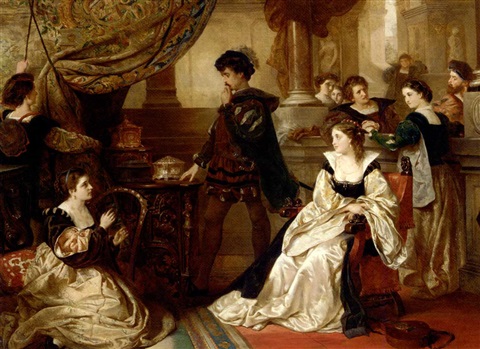
In Act III, Scene ii, Bassanio participates in the highest stakes Secret Santa gift exchange ever: three boxes of gold, silver, and lead are set before him.
If Bassanio picks the right gift, he will be rich, powerful, and married to a beautiful woman, but the winning box is inscribed with a warning: “Who chooses me must give and hazard all he has.” Bassanio wins the gift auction, which means he may marry the beautiful Portia, but he gives her the choice to marry him or not: https://youtu.be/6IFSMgggS8k
[Music, whilst BASSANIO comments on the caskets to himself]
▪Bassanio. So may the outward shows be least themselves: 1440
The world is still deceived with ornament.
▪ In law, what plea so tainted and corrupt,
▪ But, being seasoned with a gracious voice,
▪ Obscures the show of evil? In religion,
▪ What damned error, but some sober brow 1445
▪ Will bless it and approve it with a text,
▪ Hiding the grossness with fair ornament?
▪ There is no vice so simple but assumes
▪ Some mark of virtue on his outward parts:
▪ How many cowards, whose hearts are all as false 1450
Look on beauty, 1455
▪ And you shall see ’tis purchased by the weight;
▪ Which therein works a miracle in nature,
▪ Therefore, thou gaudy gold,
▪ Hard food for Midas, I will none of thee;
▪ Nor none of thee, thou pale and common drudge 1470
▪ ‘Tween man and man: but thou, thou meagre lead,
▪ Which rather threatenest than dost promise aught,
▪ Thy paleness moves me more than eloquence;
▪ And here choose I; joy be the conseque
[Reads] 1500
▪ You that choose not by the view,
▪ Chance as fair and choose as true!
▪ Since this fortune falls to you,
▪ Be content and seek no new,
▪ If you be well pleased with this 1505
▪ And hold your fortune for your bliss,
▪ Turn you where your lady is
▪ And claim her with a loving kiss.
▪ A gentle scroll. Fair lady, by your leave;
▪ I come by note, to give and to receive. 1510
▪ Like one of two contending in a prize,
▪ That thinks he hath done well in people’s eyes,
▪ Hearing applause and universal shout,
▪ Giddy in spirit, still gazing in a doubt
▪ Whether these pearls of praise be his or no; 1515
▪ So, thrice fair lady, stand I, even so;
▪ As doubtful whether what I see be true,
▪ Until confirm’d, sign’d, ratified by you. Merchant of Venice Act III, Scene ii.
Like the story The Gift Of the Magi, Bassanio prizes Portia’s love, and is willing to give her all he has in return, which is what separates him from the other suitors. Bassanio also understands it’s not the physical gift that is really the gift, it’s the love that it represents that really matters, which allows him to look past the outward appearance of the lead chest. Having gratitude for the gifts we receive and pledging our love to others is something that everyone should remember at Christmas and all festive occasions.
In Conclusion, it isn’t cheery, and it is not as hopeful as most holiday stories, but in the season when people of all faiths celebrate together, Merchant Of Venice is a great reminder of our shared humanity and how we can show love and mercy to our fellow people.
Book– Will in the world by Steven Greenblatt- An amazing analysis of Shakespeare’s life and career. The chapter “Laughter At the Scaffold,” traces the link between Merchant Of Venice and the real life treatment of Jews in the 16th century
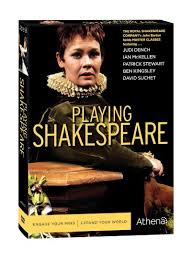
Book/ TV- Playing Shakespeare by John Barton.
Movie– Merchant Of Venice 2004 Movie starring Al Pacino. I like the way the director films the drama documentary style, using a single handheld camera in most of the shots. Pacino is very good at playing Shylock as a bitter, cynical old man who is trying to survive in a powerful Christian country.
Well, today is the last day of July, so I wanted to go out with a bang!
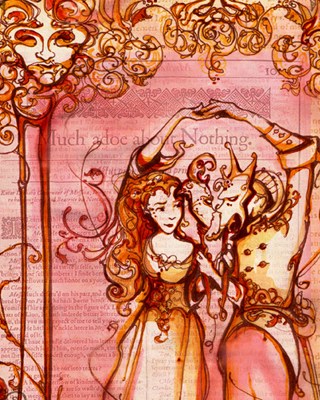
First of all I finally finished my Play of the Month Page for Much Ado About Nothing, so that’s up for you. Also, I’m going to post three reviews of Shakespearean movies. So enjoy this last look at Much Ado, while I prepare for my new play of the month!






























 The Shakespearean Student