Mafia Tropes in “Richard III”

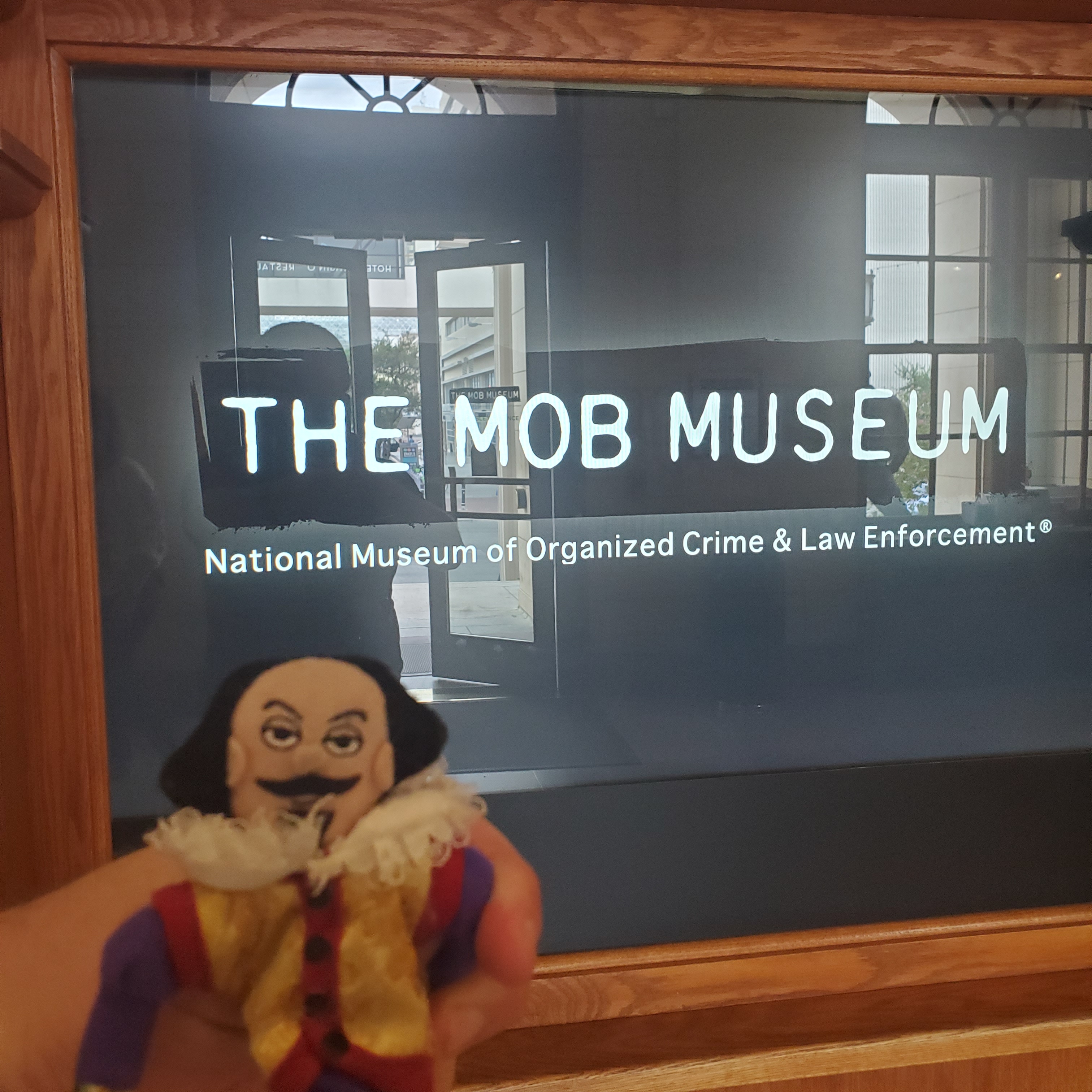
Last month, I took a short vacation to Las Vegas, where, as some of you know, I went to Area 15 and the Omega Mart Exhibit. I also visited the Las Vegas Mob Museum. I’ve been fascinated by the mob for years. The Mob (AKA The Outfit), has within its many threads a potent combination of corruption, seduction vice, and violence all hidden behind the veneer of honorable men who do what they feel they have to to protect their families and their communities.

Not surprisingly, while at the museum, I saw parallels between the history of organized crime and Shakespeare, specifically his most popular history play about a powerful family that takes over the crown of England in a brutal turf war, and then one of its most feared soldiers bribes, intimidates, and murders his way to the top; Richard III.

A Protection Racket: Feudalism vs. La Cosa Nostra


The structure of the mafia paralleled the feudal system. In a world where a police force didn’t offer much protection for marginalized communities, the mafia thrived by offering protection for these communities, (especially to immigrants and people of color in the 19th and early 20th century).


Much earlier than that, the feudal system of the middle ages, which started to crumble after Richard’s reign ended, was designed specifically so poor peasants could get protection from wealthy landowners after the fall of the Roman Empire. These lords offered the protection of their knights to these peasants i. Return for labor and a percentage of their income working the field. Like the mafia, these peasants paid tributes to their lords and these lords demanded loyalty. In the museum, there’s an interactive video where you can become a ‘made man,’ which means become an official member of a mafia crew. Like a king knighting a lord, this ceremony meant pledging your life to your superiors, and being at their beck and call no matter what. In addition, like medieval knights, mafiosos were not allowed to murder other made men without permission from their capo or boss.


However benevolent they might appear, In both cases the Dons and the medieval lords were extorting their underclass. Failing to pay tribute to their lords would cause the peasants to lose their lands, and any disloyalty to the mafia would be severely punished. These powerful, violent thugs used their private armies to intimidate the weak into giving them what they wanted.

Part II: The Two Families

To thoroughly explain the parallels between the Wars of the Roses and the mob, I need to make clear that Richard iii is more than just the story of one man’s rise to power, although there are also mafia stories that fit this mold such as Scarface, White Heat, and the real-life story of Al Capone.

As this hilarious “weather report” from “Horrible Histories,” makes clear, during the Wars of the Roses two powerful families, (each with a claim to the English crown) fought each other in a brutal turf war. As Shakespeare characterizes in his play Henry VI, Part III, the battles between the houses of York and Lancaster shook England like a mighty storm, and for a while it was hard to tell who would prevail:

Henry VI. This battle fares like to the morning's war,
When dying clouds contend with growing light,
What time the shepherd, blowing of his nails,1105
Can neither call it perfect day nor night.
Now sways it this way, like a mighty sea
Forced by the tide to combat with the wind;
Now sways it that way, like the selfsame sea
Forced to retire by fury of the wind:1110
Sometime the flood prevails, and then the wind;
Now one the better, then another best;
Both tugging to be victors, breast to breast,
Yet neither conqueror nor conquered:
So is the equal of this fell war.
Henry VI, Act II, Scene i

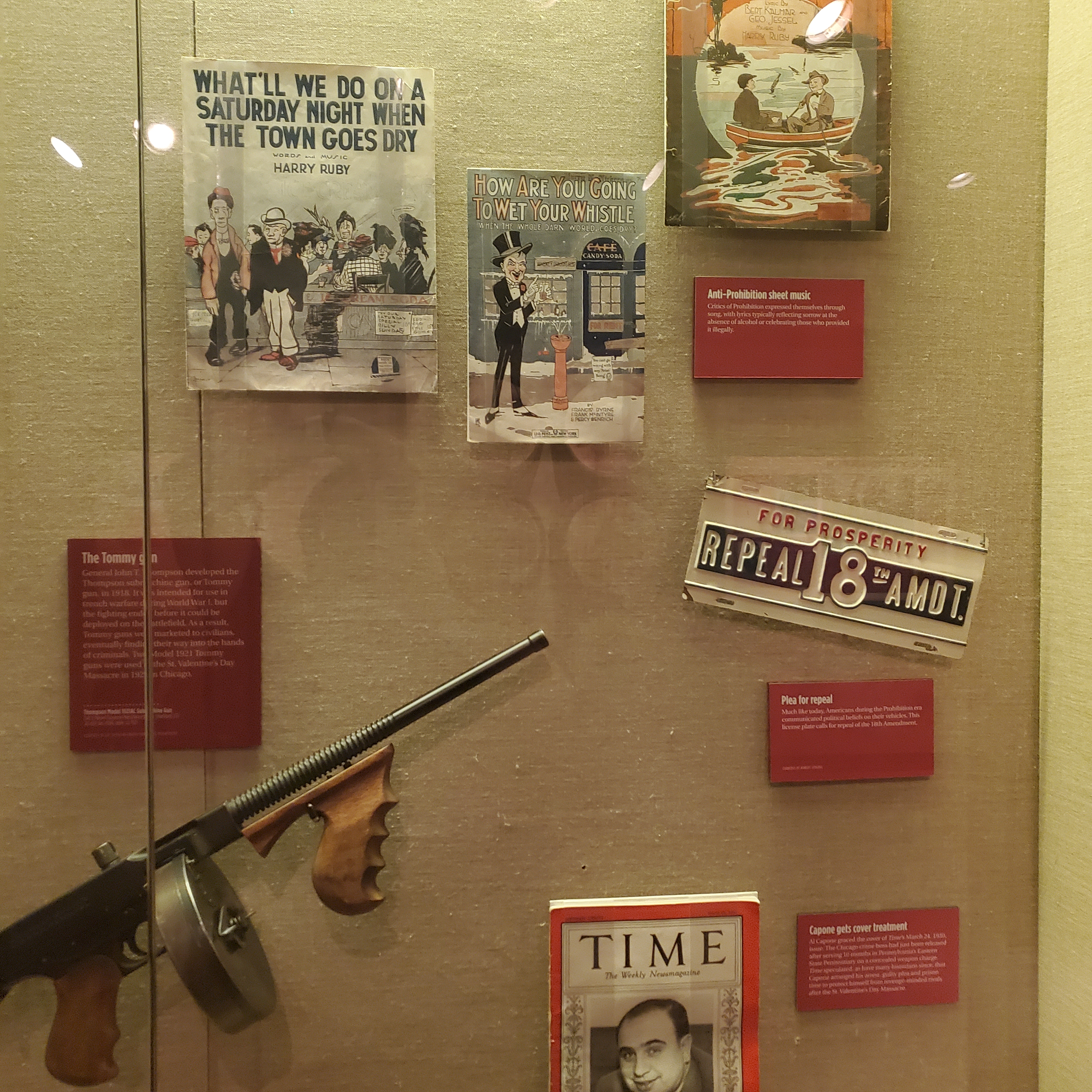
During the Wars of the Roses, it was King Henry’s incompetence and mental illness that gave the Yorkists the ability to challenge the House of Lancaster for the crown. In the 1920s, the passage of the 18th amendment, (which made alcohol illegal, and thus a profitable commodity for organized crime), that allowed the mob to rise to unheard-of power through illegally buying, distributing, and selling alcohol. As the photo and subsequent video shows, Prohibition largely led to the rise in organized crime in America, especially in Chicago. During Prohibition, the Italian Sough-side Gang fought for control of Chicago’s bootlegging trade and subsequently destroyed their competition from the Irish gangs through corruption, intimidation, and violence.

The Don rises- Richard Vs. Al Capone

Opening Scene from Ian Mckellen’s 1995 movie of Richard III.

Like the Italian and Irish gangs In Prohibition-era Chicago, the Yorkist and Lancastrian armies battled for the English throne. As Ian McKellen’s excellent movie (set in the 1930s) shows, Richard was instrumental in destroying the leading Lancastrians at the Battle of Tewkesbury, including Prince Edward and King Henry.

In Chicago, the most feared mobster soldier was Al Capone, who many scholars believe was responsible for killing off high ranking members of the Irish gang during the infamous St. Valentines Day Massacre, where the gang members were ‘arrested’ by South Side gangsters disguised as cops. As the Irish stood against the wall with their hands behind their heads, the phony cops pulled out Tommy guns from their coats and let out a hail of bullets on their unsuspecting quarry.

In Shakespeare’s play, the only Lancastrian to survive the war is Queen Margaret, wife to the murdered King Henry, and mother to the slaughtered Prince Edward. In this scene from Al Pacino’s “Looking For Richard,” she curses Richard for his cruel slaughters. It’s not surprising that Pacino was so drawn to Richard II that he starred in and directed this film. After all, Pacino is famous for playing mafia characters who slaughter their way to the top.
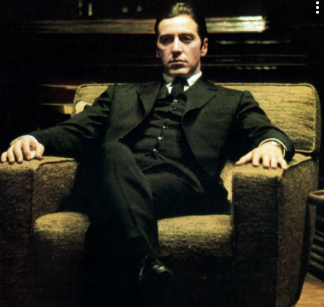
Once Capone killed the competition, he ruled a multimillion-dollar empire of bootleggers and maintained that empire through corruption, intimidation, and by constantly playing innocent, just like Richard himself.

Hypocrisy, Corruption and hidden violence

“Men in general judge more by the sense of sight than by the sense of touch, because everyone can see, but few can test by feeling. Everyone sees what you seem to be, few know what you really are; and those few do not dare take a stand against the general opinion.”

Niccolo Machiavelli

Both Richard III and mobsters are masters of double-speak, that is, seeming to say one thing and meaning something else. Look at this passage where Richard talks about killing his nephew, then denies it:

Las Vegas: The town that bedded and abetted the mob.
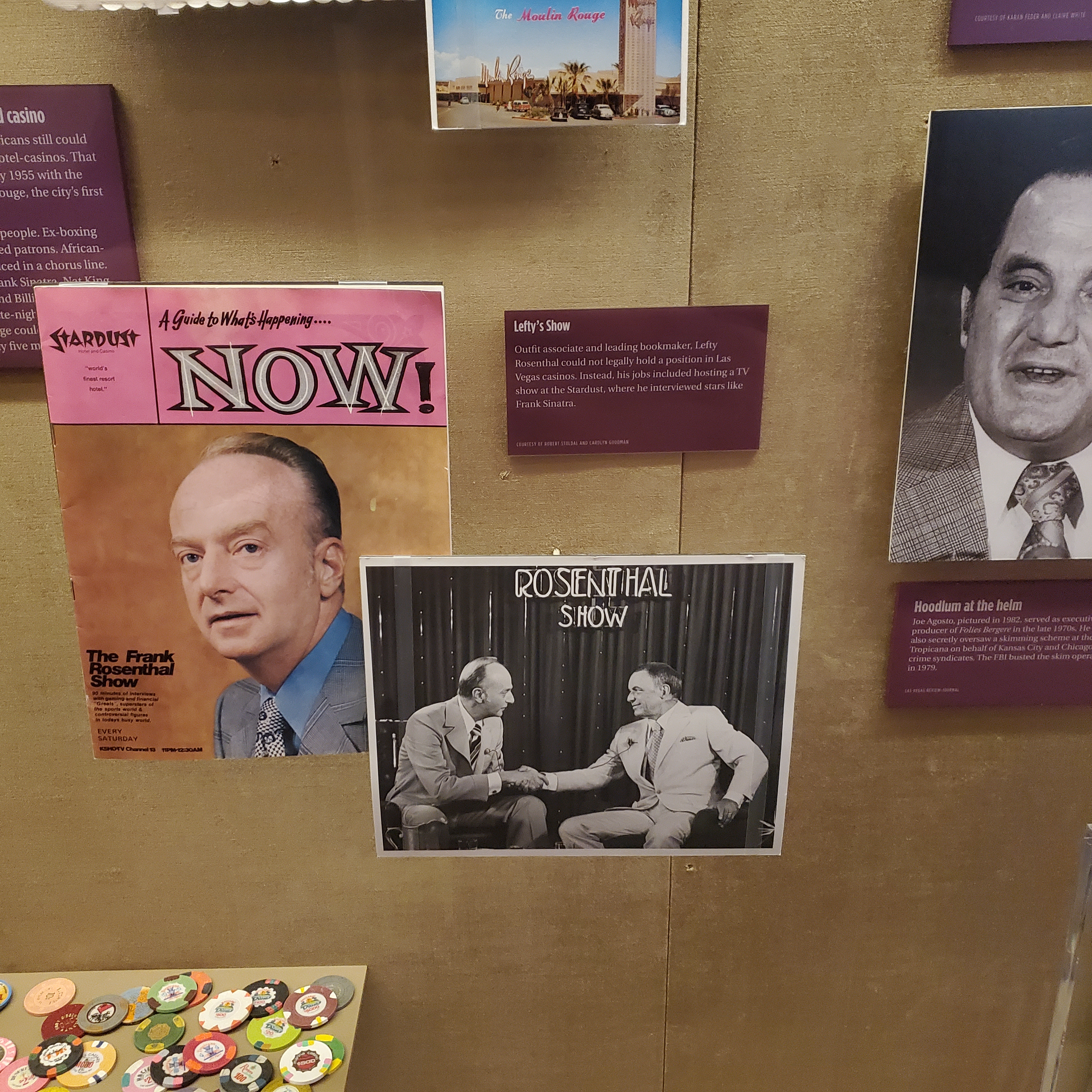
After Al Capone’s demise and the repeal of Prohibition, the mafia found another vice to capitalize on: gambling. As the video below indicates, using their connections with the Teamsters Union and midwestern bookmakers, the mob in the midwest financed, built, and run almost every casino in Las Vegas, including The StarDust and the Hassienda. Once the casinos were built, the mob extorted millions of dollars from the casinos every month!

The profits from the casinos bought the mob even more power and influence, but this skim depended on making sure the bosses controlled their underlings, and defended their casinos from cheaters and snitches, which is why they defended their casinos through intimidation and violence.

Murders in The White tower and the city of sin.

A series of quotes from Las Vegas Mobsters

“Simple, plain, Clarence. I do love thee so, that I shall shortly send thy soul to Heaven.”

—Richard III, Act I, Scene i

When Richard of Gloucester starts his quest to become king, he begins by convincing his brother King Edward to execute his other brother George. Richard bribes the murderers to kill George before the king can reverse the death sentence. Richard has thus eliminated another obstacle in his way, and gained two loyal followers who will do anything for his gold.

Richard hires two murderers to kill the duke of Clarence (Nigel Hawthorne).

The mafia dealt the same way with traitors, stool pigeons, and anyone who tried to challenge the bosses. Look at this tour of the Mafia museum, where the grandson of the gangster Meyer Lansky starts by reminiscing about the glamourous lifestyle of Las Vegas mobsters, but the tour quickly takes a dark turn as Lansky II talks about how his grandfather ordered brutal executions for anyone who crossed The Las Vegas Outfit.

The Mafia Museum, Las Vegas
Exterior of the Mafia Museum

It was an enormously interesting trip going to the Mafia Museum, and if you can get out to Las Vegas, be sure to visit, (don’t forget the password to visit the speakeasy bar in the basement!) It was eye-opening for me how prevalent the sort of corrupt protection racket that started in the middle ages and continued into most of the 20th century helped define The Wars of the Roses and the mafia. As long as the strong prey on the weak and the law can’t protect everyone equally, these kinds of violent thugs will be lurking in the shadows, waiting for a shot at the crown.

Resources for Teachers and Students: A Visit To Elizabethan London

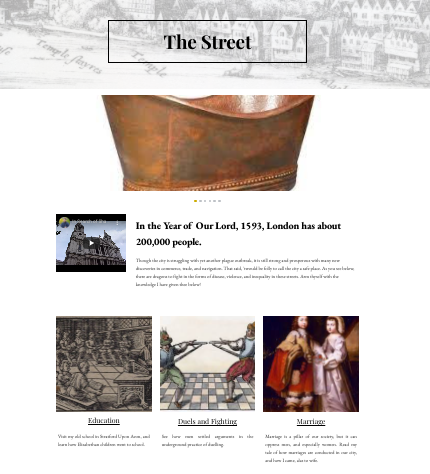
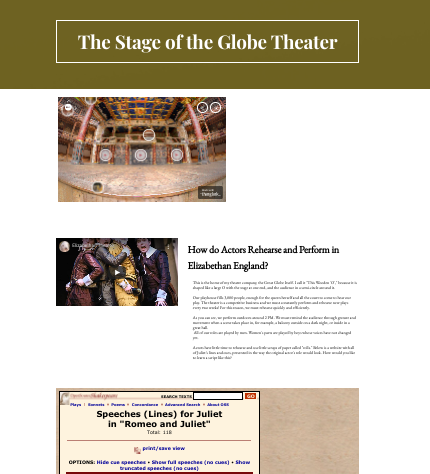
I’m working on several educational projects at the moment and I’m proud to share this one with you. It’s what I call a virtual tour of Shakespeare’s London. The teacher I’m working with said she wanted to teach the kids about the culture of Elizabethan London as he was writing Romeo and Juliet. Naturally with the pandemic a field trip was out of the question, (for multiple reasons), but I wanted to create a visually interesting tour of the places Shakespeare knew and worked and try to imagine his perspective and how that might have informed the characters and themes of Romeo and Juliet.

So I created this: a website written as if Shakespeare himself is taking you on a tour of his London in the year 1593, the year where, as far as we know, he had just completed writing Romeo and Juliet. 1593 was also the middle of another outbreak of Bubonic Plague. It has virtual tours of Shakespeare’s Globe Theater, Hampton Court Palace, Shakespeare’s Grammar School, and a quiz where you can pretend you’re in the Elizabethan doctor’s office.

For the class I’m helping, the students will fill out a worksheet as they navigate the website so they learn from the material at their own pace. If you’re interested, leave a comment and I’ll post the worksheet so you can use it in your classroom.

My hope is that this website can be a resource for anyone trying to connect with Romeo and Juliet and trying to learn from the culture of Elizabethan London. Shakespeare was a product of his time and his experiences must have had an influence on what he wrote. Even if they didn’t, they certainly influenced the people who saw the play and he knew that it would. So I hope it can help you understand a little bit more about the world of this famous play, and the context of the world that created it.

Shakespeare’s Greatest Mother Characters 

Happy Mothers Day!

This slideshow requires JavaScript.


I thought I would take a little time to showcase some of Shakespeare’s great mother characters. Some of these women are models of selflessness, compassion, and devotion to the children they take care of. Other ones… not so much. Just for fun, I also made some suggestions for Mother’s Day gifts if you had one of these mother’s on the list.
The Good Mothers
Countess of Roussilion from Alls Well That Ends Well

Though she is technically not the heroine Helena’s mother, the Countess is still a fantastic example of selflessness, support, and love. As she says “you never oppressed me with a mothers groans but I expressed to you mothers care.” She also encourages her foster daughter Helena to play doctor and save the King Of France from a deadly illness, giving her a job and a bright future!
Mother’s Day Gift: either some French Wine and cheese, or a Doc McStuffins for her future grandchild.
2. Hermione in The Winters Tale

Her husband arrests her for infidelity with no proof at all, while she’s still pregnant! Then she stands up in front of the entire court, having just given birth in prison, just to prove her child is a legitimate heir to the throne. Hermione is a mighty example of grace and courage under fire, as beautiful and strong as the statue she looks like at the end of the play. What more needs to be said!?

Mother’s Day Gift: Statue polish
3. Queen Elizabeth in Richard the Third

As you can see in my description, Elizabeth started out as a poor widow trying to get a better future for her children. Then she becomes the queen and takes a lot of crap from lords like Richard for her marriage, and her sons.
As Richard schemes to get the throne, Elizabeth is the only one who sees how dangerous he is, and how he will certainly try to kill her two sons to get it. To protect them from Richard, Elizabeth hides her sons in a church and tries her best to keep him away from them. The only problem is her husband made Richard Lord Protector, and responsible for everything connected to crowning the new king, (terrible judgment on his part).
Once her husband the king dies, Richard proclaims Elizabeth’s sons as bastards and makes himself king. He then has them secretly murdered in the Tower Of London. Even though Elizabeth can’t defend her sons for long, she identified the threat, and did her best to stop him. In this clip from the TV Series “The White Queen,” Elizabeth tries to get her sons released from the Tower, while her brother is oblivious to the danger they are in: https://youtu.be/5Y3qYeq0ok4
Though Elizabeth fails to protect her sons, she succeeds in saving her daughter. Richard knows that if his enemy Henry Tudor marries Elizabeth’s daughter (who is also named Elizabeth), he can lay claim to the throne and destroy Richard. The wicked king tries therefore, to marry his niece himself! Elizabeth refuses to pimp her daughter to the king and curses him for all of his heinous murders. Click here to see the epic battle of these two great characters in a scene from Ian McKellen’s movie version of Richard III. Look at the power and wit Elizabeth (Annette Benning), displays as she refuses to wed her daughter to Richard, (Ian McKellen).
https://youtu.be/dHqlTSCe18k
At the end of the scene, Elizabeth says she will persuade her daughter to marry the king, but she secretly marries the young princess to Henry Tudor, who becomes King Henry the Seventh after defeating Richard in battle. So Elizabeth succeeds in protecting her daughter and helped to start a dynasty of monarchs, including her granddaughter, Queen Elizabeth I.
Mothers Day Gift : Sweaters for her sons to wear in the tower.
Alternative Mother’s Day Gift: A baby monitor that works within the Tower Of London, so she won’t have to worry about her kids being slaughtered.
Queen Margaret in King Henry the Sixth Part III.

Though her methods are questionable, and her blood thirstiness legendary, Margaret still fights bravely to defend her son’s rightful claim to the English throne.
Video bio of Queen Margaret: https://youtu.be/hJnspEh99h4
Mother’s Day Gift: A dozen Red roses.
Cleopatra

The quintessential queen of Egypt is similar to Margaret in “the ends justify the means” category of mothers. Cleopatra will hook up with any powerful man to protect her son and heir to the throne. Cleopatra’s son, Cesarean is the love child that she had with Julius Caesar. After Caesar’s assassination, Cleopatra seduced Marc Antony, Caesar’s friend and a consul of Rome. Also, according to some historians, Cleo found a way to hide her son after Octavius Caesar tried to kill Cesarean and his mother. She reportedly sent him into hiding through secret tunnels underneath the city of Alexandria.
http://thevoiceofthezamorin.blogspot.com/2015/06/what-happened-to-son-of-queen-cleopatra.html?m=1
Mother’s Day Gift: A snake- proof brassiere.
Mediocre Moms
1. Thaisa in Pericles. A lot like her husband Pericles on my OK Dads list, Thaisa’s problem is that, though she clearly loves her children, she doesn’t see them for nearly 20 years. Granted, she doesn’t really know that they’re there they’re still alive but nonetheless, you would think that a good mother would at least check.
2. Constance in King John.

I wasn’t sure where to put her on this list, even though she demonstrates great love and affection for her son, (whom King John just murdered), the truth is that Constance doesn’t really do much for her son that we see during the play. https://youtu.be/fpAZju8RbiI
What Constance mainly has going for her is her supremely agonizing expressions of grief over her son’s death. Steven Greenblatt in his book Will in the World, suggests that her speeches might’ve been Shakespeare’s own horror and grief at the loss of his son, who died around the same time King John was supposedly written. https://www.spectator.co.uk/2015/06/is-the-globe-right-to-revive-shakespeares-king-john/
Mother’s Day Gift: barbershop coupon, have you seen that hair, honey?
Also on the ok mom list, Mistress Page in Merry Wives, and Lady Capulet In Romeo and Juliet.
Bad Moms

1. Tamara in Titus Andronicus. She’s called a ravenous tiger in the play, and it’s easy to see why. She encourages her own sons to rape a girl, (Titus’s daughter Lavinia), then murder Lavinia’s husband! As if that wasn’t enough, Tamara tells the boys to cut out Lavinia’s tongue and cut her hands off, so she can’t accuse them of their crimes. Later Tamara tells her lover Aaron to murder their illegitimate baby, so her husband the emperor won’t find out about the affair. Worst of all, Tamara leaves her sons alone with her mortal enemy, Titus which allows Titus to (spoiler alert )…….. kill her sons, chop them up in a pie and serve them to her. She accidentally eats her own sons!
Mothers Day Gift: a parenting book! Or if you’re really sick, a bib with a picture of her kids on it.
2. Dionyza In Pericles- This Queen is a show mom of the worst kind- She’s a Queen from a far off kingdom, tasked with raising her own children and King Pericles’ daughter Mariana. When Dionyza sees that Mariana is a better singer/ dancer/weaver, etc than her own daughter, she tries to kill her! https://youtu.be/z9UW-p7iEk
Mother’s Day Gift:ITonya on DVD,Tanya Harding’s mom and Dionyza should compare notes.
3. Queen in Cymbeline Similar kind of deal. She’s a wicked stepmother who wants to kill the heroine Imogen and make her own son Cloten the heir to the throne. Shakespeare didn’t give her a name, she’s that wicked!

The Queen in Cymbeline, Oregon Shakespeare Festival, 2013 http://www.stageandcinema.com/2013/08/06/cymbeline-oregon-shakespeare/
Mother’s Day Gift: A name.
Gertrude in Hamlet This one is very ambiguous. On the one hand, she loves her son, and tries to protect him from his wicked uncle Claudius. On the other hand, she married Claudius less than two months after her first husband died in mysterious circumstances . It’s never revealed in the play whether Gertrude was complicit in the old king’s murder, but when Hamlet Confronts her about the marriage, she is full of remorse.

Absent
To be honest, this list was easier to put together than my Fathers Day list, because there are fewer choices. In 9 Of Shakespeare’s plays, there are no mother characters at all:
Love’s Labor’s Lost
Midsummer Night’s Dream
The Comedy Of Errors
Two Gentlemen Of Verona
Measure For Measure
Twelfth Night
The Tempest
As You Like It
Merchant Of Venice
It’s hard to know how much Shakespeare knew about motherhood. From what we know about his life, he probably wasn’t around to see his wife Anne raise his two daughters in Stratford, since he spent most of his time in London writing and acting in his plays.
In any case, the thing that comes across in all the mother’s in Shakespeare’s plays is the level of sacrifice and selflessness that so many mothers demonstrate. Being a parent is tough, but the rewards are greater than even the Bard could ever explain.
Happy Mother’s Day Everyone!