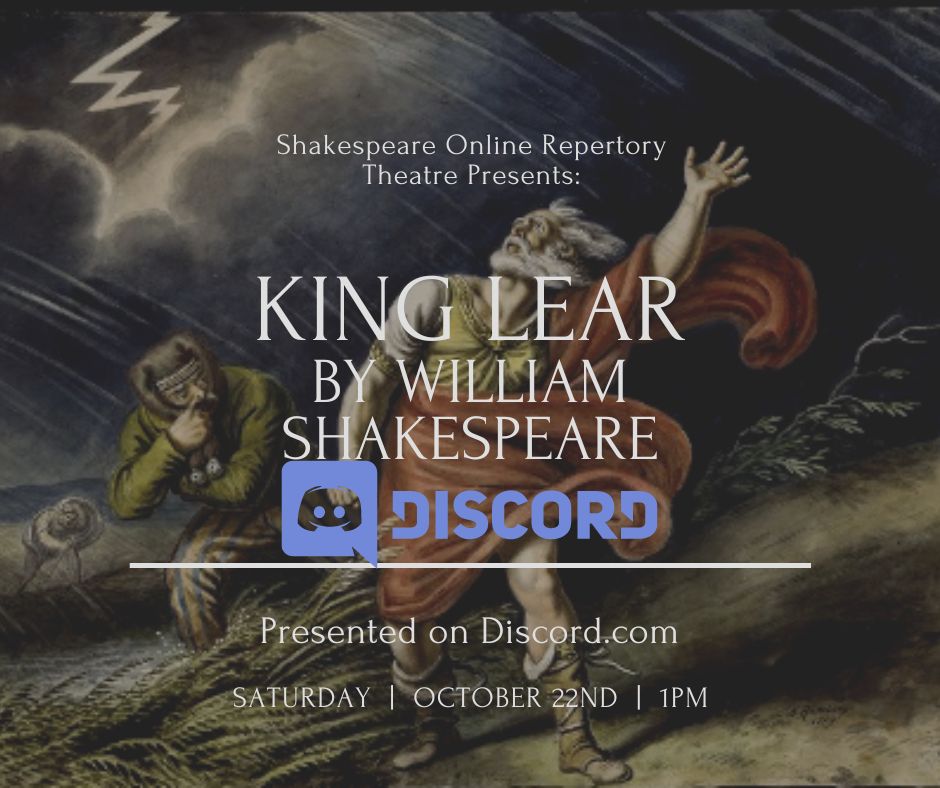
On October 22nd at 1PM EST, I’ll be joining the Shakespeare Online Repertory Theatre on Discord for an online dramatic reading of “The Tragedy of King Lear.” I’ll be playing The Earl Of Kent! Check it out on Discord.com! Below is also a link to a YouTube live stream of the show as well.
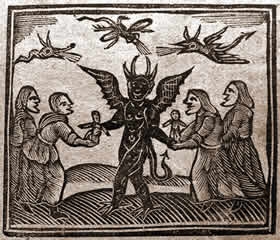
Woodcut from the witch trial of 1597, in which witches supposedly tried to drown King James I.
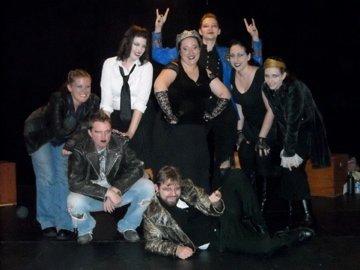
Me and the cast of “Macbeth,” 2009.
Guy Fawkes Day
Official logo of “Sleep No More”
For the spookiest and most cursed month of the year, I’ve chosen Shakespeare’s Macbeth as my play of the Month for October because it’s full of witches, ghosts, and other supernatural creatures. It also shows the terrible effects of fear on people’s minds. Plus, as I explained in my post on Shakespeare and Halloween, most Halloween witches would be all but silent without Macbeth’s witches.
I was saddened to hear of the recent passing of actor Kevin Conroy, world-renowned as the voice of Batman and Bruce Wayne on Batman The Animated Series, the Arkham Asylum games, and many others. Conroy is definitely my favorite Batman, and as I and many others have said before, there are Shakespearean tropes in the Caped Crusader. From the very beginning, Conroy drew inspiration from a particular Shakespearean play, the melancholy prince, dressed in black, who seeks to revenge his father’s murder: Hamlet, Prince of Denmark:
I did a cold audition, I had never done an animated voice before. I said the only exposure I’ve had is the Adam West show from the 60’s and they said “NO! NO! NO! That’s not it.” I said ZIP POW POP and they said “NO! It’s, think film noir, think the 40’s New York. Think dark, think a kid who just watched his parents get murdered and spends his life avenging their deaths and he lives in the shadows. He’s got this dual personality and he’s never resolved this torture of his youth. I said you are telling the Hamlet story, this is heavy stuff. And he said yeah, no one has ever said that before, but yeah I guess it is. This is like a classic archetypal, Shakespearian tragedy. So I just used my theater training and put myself into that head (Batman voice) And I got into this very dark place and came up with this voice. (Regular Voice) And as I did it I saw them all running around in the booth. And I thought well either I did something really bad or something really good because I hit a nerve, I know I hit a nerve. And they came out and they said well we’ve seen about over 600 people and how would you like to do the part?
Kevin Conroy
It makes sense that Conroy would use Shakespeare to flesh out Batman. He was a veteran of the Old Globe Theater in San Diego, and performed in Hamlet several times. He even played the prince himself for the New York Shakespeare Festival in 1984. Yet I don’t think Conroy’s decision to make Batman a sort of modern-day Hamlet was entirely based on just his past experiences with Hamlet.
“Batman is basically the American version of Hamlet,” Affleck said. “We accept that he’s played by actors with different interpretations.”
Ben Afleck, Entertainment Weekly, 2015.
Batman and Hamlet are basically Revenge Tragedies; age-old stories that began with Oedipus Rex and the Orestia in ancient Greek plays, where a hero must lift a plague on his society by avenging the death of a parent (usually the father). This kind of play was very popular in Shakespeare’s day and included a host of others such as Shakespeare’s Titus Andronicus, The Spanish Tragedy, Locrine, The Dutchess of Malfi, and later The Revenger’s Tragedy.
But Hamlet, like Batman, is an avenger. He didn’t make Denmark rotten. That was Claudius, and if Claudius self-punished like Oedipus, Claudius would be a tragic hero too. But Claudius is just a garden-variety villain, and so Denmark needs a hero to set things right. Enter Hamlet. He’s “tragic” only in the sense that he dies, and since he dies after completing his heroic mission, he dies triumphant. But unlike the deaths of Claudius, Oedipus, and Macbeth, his death isn’t necessary to restore order. It’s just an epilogue.
As this clip above indicates Hamlet is unique among revengers because his conflict doesn’t come from the machinations of his villain; he’s stopped by his own internal conflicts. Batman is more active than Hamlet, but he also wrestles with internal conflicts and Conroy plays these conflicts with a lot of subtlety and nuance. To illustrate this conflict, let’s look at some great clips from the series!
Batman admits he wanted Revenge: “The Curious case of Hugo Strange”
In this episode, Dr. Strange (not the Marvel Superhero), uses a dream-reading machine to try and blackmail Bruce Wayne, and inadvertently discovers his secret identity. Not only does this episode dramatize Wayne’s literal worst nightmare, (someone figuring out who he is), it also touches on the pain of his past and how even though now Batman is a deputized agent of the law who never kills, he began as an angry, vengeful vigilante, like Hamlet:
I am myself indifferent honest, but yet I could accuse me of such things that it were better my mother had not borne me. I am very proud, revengeful, ambitious; with more offences at my beck than I have thoughts to put them in, imagination to give them shape, or time to act them in.
Hamlet, Act III, Scene i.
Batman’s Conflict With His parents.
In this clip from the animated movie Mask Of the Phantasm (1993), a pre-Batman Bruce Wayne feels a conflict between his obligation to avenge his parent’s death, and his budding romance with Ms. Andrea Beaumont:
One can almost sense an Ophelia- Hamlet-like conflict where Bruce knows his quest to avenge will consume him, and leave no time to pursue romance. In all revenge tragedies, the hero has to avenge alone, or at least without the support of a spouse or partner. Hamlet also makes the choice to cut Ophelia out of his life, though it’s not clear why. It could be he’s worried that Claudius will harm her, it could be he’s worried she’s compromised since her father tried to spy on him, or it could simply be that he doesn’t trust her. It’s up to the actor and director to “Pluck the heart of Hamlet’s mystery.”
Eventually though, the choice is made for him, and Bruce Wayne completely commits to his quest to battle the crime in Gotham, as this epic scene from “Mask of The Phantasm” shows:
Haste me to know’t, that I, with wings as swift As meditation or the thoughts of love, May sweep to my revenge.
Hamlet, Act I, Scene v.
Hamlet and Batman’s Demons
The spirit that I have seen May be a devil; and the devil hath power T’ assume a pleasing shape; yea, and perhaps Out of my weakness and my melancholy, As he is very potent with such spirits, Abuses me to damn me.
Hamlet, Act II, Scene ii.
What’s truly unique about the animated version of Batman is that it’s the only one that takes time to show Batman’s complex relationship with the ghosts of his parents. As previously discussed, Bruce Wayne’s desire to revenge their death and to punish the wickedness of Gotham is what spurs him to keep fighting as Batman, but he also wonders many times if he’s doing more harm than good. He’s also tempted to forget them and try to lead a normal life, like in the episode “Perchance to Dream,” (which itself is a quote from Hamlet). Above all, the animated show knows that, since children are watching this show, they will connect with Batman’s fear of not living up to his parent’s expectations, a fear to which every child can relate.
In the first season episode “Nothing To Fear,” the villainous Scarecrow exploits Batman’s fear of disappointing his parents by drugging him with a fear toxin, causing Bruce to hallucinate that his father is berating him and calling him a failure. Hamlet gets a similar ghostly chewing out in The Closet Scene:
Father’s Ghost. Do not forget. This visitation Is but to whet thy almost blunted purpose.
Hamlet, Act III, Scene iv
While The Ghost of Hamlet’s Father is mostly supportive in this scene, Hamlet worries many times in the play if Claudius is in fact innocent, and the Ghost is a demon sent by the Devil to get him to kill an innocent man, and thus damn him for eternity. This uncertainty is the same that Batman wrestles with, as he confronts his own demon-like apparition. Batman then defiantly responds to this fiendish hallucination with one of the most iconic lines in the series:
Only a consummate professional like Conroy with his grounding in Shakespeare in general and Hamlet in particular could portray such an iconic character. Many fans of Batman like me believe that Conroy’s portrayal was the peak of the franchise, and I feel fortunate that it came out when I was a child. I mourn Conroy’s loss, yet as Mr. Affleck mentioned in the quote above, like Hamlet, the character of Batman has many possible interpretations, and though Conroy will always be my favorite, I hope new and exciting interpretations will arise from the shadows in time, bringing this complex, Shakespearean character to a new audience.
“Good Night, Sweet Prince and flights of bat wings fly thee to thy rest.”
I’ve talked about some great Hamlets and some awful Hamlets. Now I want to talk about one that I find very much a mixed bag. The direction is incredible, for the most part it’s very well cast, and it has some truly memorable visuals, even though they’re very much rooted in the world-weary pre-9/11 New York of Y2K.
The mid 90s were the golden age for teenage Shakespeare adaptations with films like “Romeo+Juliet,” “10 Things I Hate About You,” and “O.” All of these films chose to do Shakespeare in modern day, and use youthful actors in the main parts. Since many teen novels and stories feature a brooding young protagonist dealing with the loss of a parent, while trying to find his/her place in the world, it makes sense Hollywood would continue this trend with Hamlet.
The trailer markets this as a sort of “cool Hamlet,” which is more about drama and exciting visuals then long-winded speeches. Director / screenwriter Michael Almereyda has a lot of interesting experience that translates well in this film., in addition to making films he also makes documentaries and short films. I think he wanted to tell this story like a documentary of a high-profile murder case, one where one of the victims happens to be an amateur short-film maker
The Acting
I actually really liked Ethan Hawke as Hamlet. He has a real effortless delivery of Shakespeare and he plays Hamlet as a troubled art-student type of kid who wants to see life through a film lens instead of dealing with the chaos of real life. The film also has some creative staging choices for Hake’s soliloquies. Look at how they staged “To Be Or Not To Be,” in a way that though dated, is a clever way of establishing Hamlet’s worldview. This Hamlet wants to be an action hero like Schwartzenegger, but is cursed with a conscience, anxiety, and fear of the unknown:
Sam Shepherd as the Ghost
Before he was a movie star, Ethan Hawke was an accomplished stage actor appearing frequently in the gritty western-inspired dramas of playwright Sam Shepherd. It seems appropriate that for Hamlet, the ghost of his father was played by one of Hawke’s theatrical mentors, plus as I said in my post on ghosts, it’s very true to form having the ghost played by a playwright
Sam Shepherd as the Ghost in Hamlet
Shepherd is my favorite incarnation of The Ghost. He’s simultaneously fatherly and terrifying, he’s mournful and hopeful. He doesn’t have any special effects to detract from his performance, nor is he just a disembodied voice. The understated nature of Shepherd’s performance works perfectly for film!
Polonius and his family
I have to give special mention to Julia Styles (Ophelia), Liev Schrieber (Laertes), and Bill Murray (Polonius). All their scenes are great and they play off each other very well. You really feel bad for this family which winds up broken by Hamlet and the king, even though they did nothing wrong.
I particularly love this staging of Act I, Scene iii, where Laertes gives his sister Ophelia some advice before leaving for France. Their father Polonius in turn, gives Laertes some fatherly advice, concluding in the famous line: “This above all, to thine own self be true.”
Liev Schrieber as Laertes Shrieber was a great choice for a more movie -like American Laertes. He has a distinguished way of talking and a no-nonsense air about him that works well for the son of a corporate executive like Murray’s Polonius. At the same time, you can sense his boiling hatred of Hamlet, even in this first scene. He’s a great antagonist and plays well with Murray and Hawke.
Bill Murray As Polonius If you read my review of Branaugh’s Hamlet, you noticed I said that I thought his casting was terrific with two exceptions. One of which was casting Richard Briars as Polonius. Branaugh, (and Derek Jacobi in the stage production that inspired the movie), chose to direct Polonius as having no humor whatsoever- to play him as Claudius’ right-hand man. A controlling and micromanaging father who is obsessed with keeping up appearances. While Briars is a fantastic actor, you lose a lot of Polonius without giving him at least a little comic pedantry.
Bill Murry has no problem balancing the funny and business-like aspects of Polonius’ character. Like Peter Venkmen in Ghostbusters, he takes himself too seriously and loves to hear himself talk, and lke his character in Lost In Translation, he has a great deal of fatherly tenderness with Julia Styles. I also love the bit where he puts some extra money in Laertes’ backpack. This Polonius isn’t a fool, but he’s also a bit of a worry wart- and his fretting over his kids blinds him to what Hamlet is really up to.
Julia Styles as Ophelia As I mentioned, Ms. Styles did a number of great Shakespeare movies in the mid 90s, including her iconic portrayal of Kat Stratford in “10 Things I hate About You.” Sadly, the director didn’t give her much to do in the fisrt half of this movie. Her Ophelia mostly looks pretty and does as little as possible. The only moment that stood out to me was the look of guilt on her face after Hamlet discovers she’s wearing a wire in the “Get Thee To A Nunnery” scene.
Styles shines however in The Mad scene. I think her strong personality clashed in the first half of the film with the rather weak and docile Ophelia they were going for. Thankfully, during the Mad Scene, she screams, gets in people’s faces, and has a lot of fury towards the men in the scene. Also, putting the scene in the famous Guggenheim Art Museum works very well- it’s a public place, so anything Ophelia says makes Claudius look bad. Also, the spiral design of the museum feeds into the disorientation Ophelia feels without her father. Finally, the art itself calls back her love of photography and Hamlet’s love of film.
The BEST MOUSETRAP EVER!
A lot of the scenes and soliloquies of this film are very hit-and-miss, but the one moment of the play Almereyda absolutely nails is the play-within-a-play in Act III, Scene i. First of all, the director cuts all the intentionally bad dialogue and turns the play into a silent film-within-a-film, with lots of homemade charm and disturbing imagery. Mr. Almereyda carefully adapted the often-cut dumb show that happens before the play, and used that to fashion Hamlet’s short film:
[Hautboys play. The dumb show enters.]2015 Enter a King and a Queen very lovingly; the Queen embracing him and he her. She kneels, and makes show of protestation unto him. He takes her up, and declines his head upon her neck. He lays him down upon a bank of flowers. She, seeing him asleep, leaves him. Anon comes in a fellow, takes off his crown, kisses it, pours poison in the sleeper’s ears, and leaves him. The Queen returns, finds the King dead, and makes passionate action. The Poisoner with some three or four Mutes, comes in again, seem to condole with her. The dead body is carried away. The Poisoner wooes the Queen with gifts; she seems harsh and unwilling awhile, but in the end accepts his love.
Not only does this film fulfill its dramatic function, (making Claudius betray his guilt), but we also get a window into Hamlet’s mind. We see how he sees his father, his mother, and his life before his father’s death. As an added bonus, the film is subtle enough that Claudius would’ t be able to make sense of it unless he had actually murdered Hamlet’s father.
My problems with the film:
Like I said, my problem isn’t with Hawke. My problem is the rest of the film. Some actors just mumble their lines. Sometimes the director wastes time with pointless film clips which only seem to exist to remind you that “This Hamlet is artsy.” But my biggest problem with the film is the pace. Almereyda does a great job paring down Hamlet to its core drama- Hamlet vs Claudius and the poor people who get caught in the crossfire. Though he is sparing with dialogue, he wastes time with silence. A lot of the film is the characters sitting around watching TVs, looking at photos, sleeping, or just staring off into space. In addiiton, the delivery is very mixed. Like I said, Hawke’s quiet, understated delivery works very well, but not for every character. To varying degrees, everyone in the film is guilty of what I call “movie Shakespeare acting,” which is to say, being so afraid of sounding like Oliver and Branaugh, that they mumble their lines, slow the pace down, and turn the emotion down to nearly zero, because they don’t want their performances to appear over-the-top. The thing is, Hamlet is a tragedy about people who are fighting for their lives and souls. A little quiet introspection is important, but too much of it drags the play or the movie down.
The STUPID ENDING
As you read in my post on the duel in Hamlet, Shakespeare’s play, ends in a fencing match where Laertes betrays Hamlet by fighting with a poisoned sword, which Hamlet eventually uses to kill Laertes and Claudius. It’s a powerful moment of poetic justice. In Almereyda’s version, LAERTES JUST SHOOTS HAMLET.
To be fair, the whole scene doesn’t work well in a 21st-century context. Laertes just told Hamlet to literally “Go to Hell,” but then in the very next scene Hamlet agrees to play against him in a friendly fencing match? Only a complete idiot wouldn’t know that something suspicious is up. In every good production I’ve seen, Hamlet knows this is a trap, but he does it anyway. I think he intends to let God decide their quarrel like in old-fashioned judicial combat.
Since dueling isn’t practiced anymore (except in episodes of The Office), it seems bizarre that Hawke’s Hamlet would agree to be in the same room with Laertes, let alone fight with him. I wish the director had done something, anything to justify Hamlet’s choice to fence with Laertes, or just do away with the fencing entirely and have them fight over Ophelia’s grave.
The other thing I hate about this scene is that it isn’t a fight; it’s a murder and a very stupid one. Laertes shoots Hamlet but instead of shooting him at a distance, he walks right over and shoots Hamlet, close enough for Hamlet to turn the gun on Laertes. This makes Shreiber’s character seem incredibly stupid and completely unsympathetic. Not only is it stupid, but it’s also cowardly. Hamlet is unarmed, and can’t defend himself against a bullet. If Laertes had a knife, Hamlet would’ve at least have had a fighting chance. As it is, we get a pointless, bloody end to a great character, and Laertes does it in a cowardly ignoble way.
The Film’s Influence
Whether or not you’ve seen and liked this film, it definitely influenced one of the most well-received Hamlets of recent memory.The Royal Shakespeare Company’s 2009 TV movie of Hamlet takes a lot of cues from Michael Almereyda’s film.
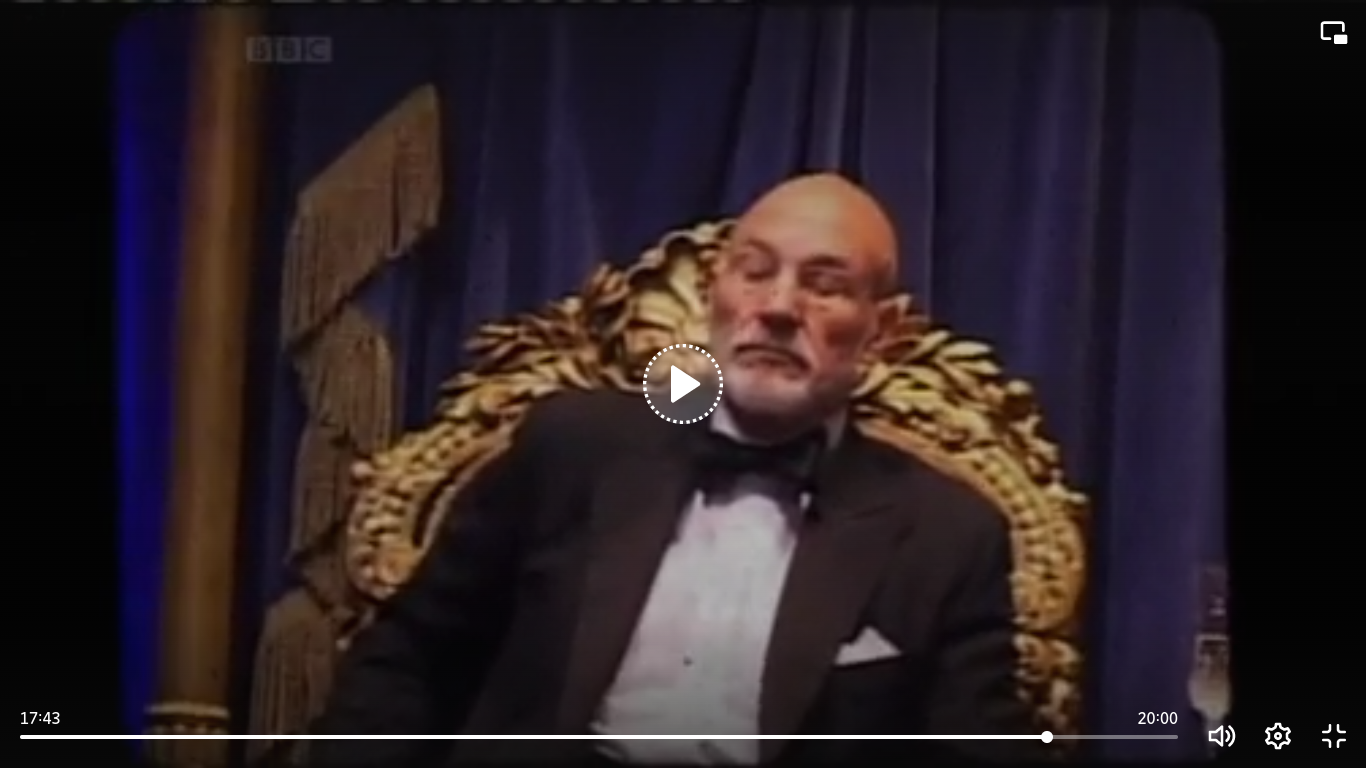
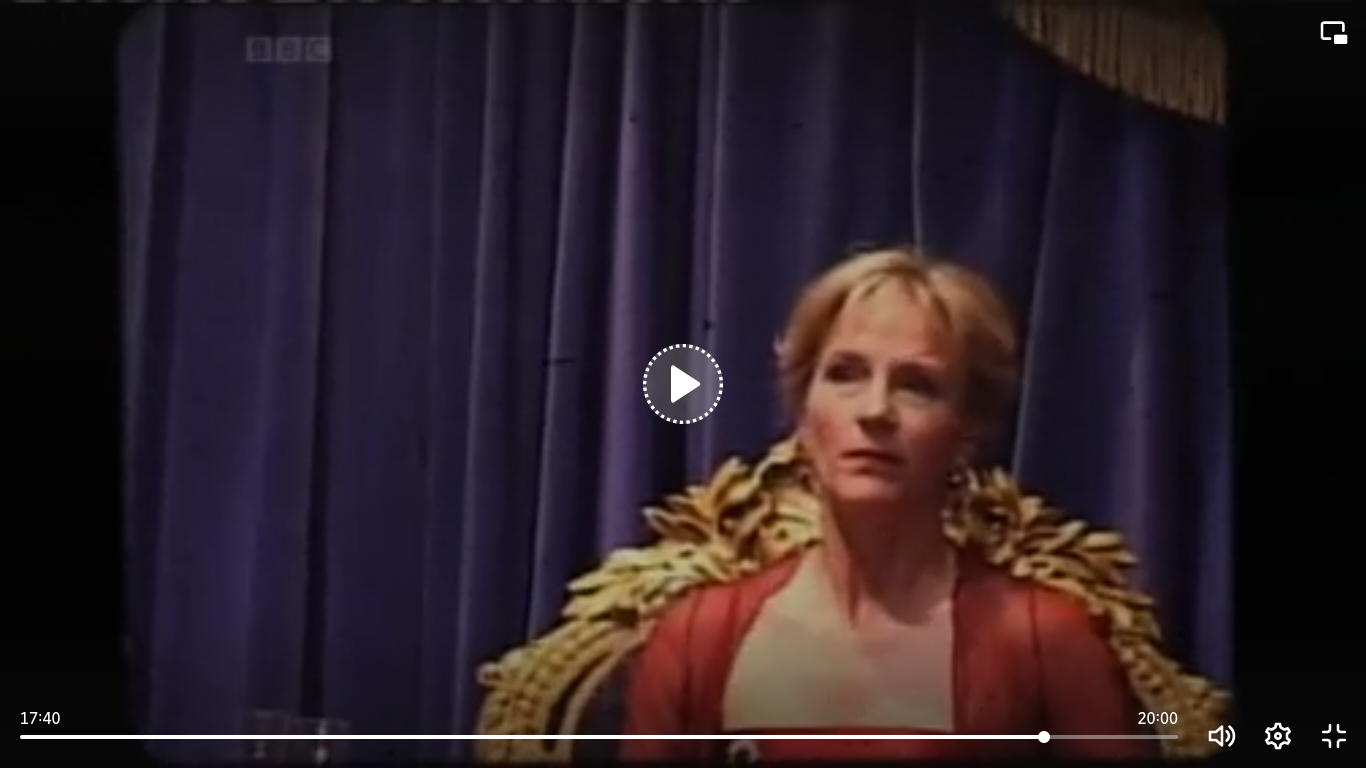
The Concept- Court intrigue Both films immerse themselves in the trappings of wealth and status in American and British society. In Act I, Scene iii Kyle Mcglaughlin as Claudius holds large press conferences, surrounds himself with bodyguards, security cameras, and lives in the luxury Hotel Elsinore. Patrick Stewart in the same scene holds an exclusive black-tie soiree attended by bishops, men in tails and women in ballgowns. Plus the British version keeps the monarchy, it just updates it with marble pillars, spotless floors, and golden chains and thrones.
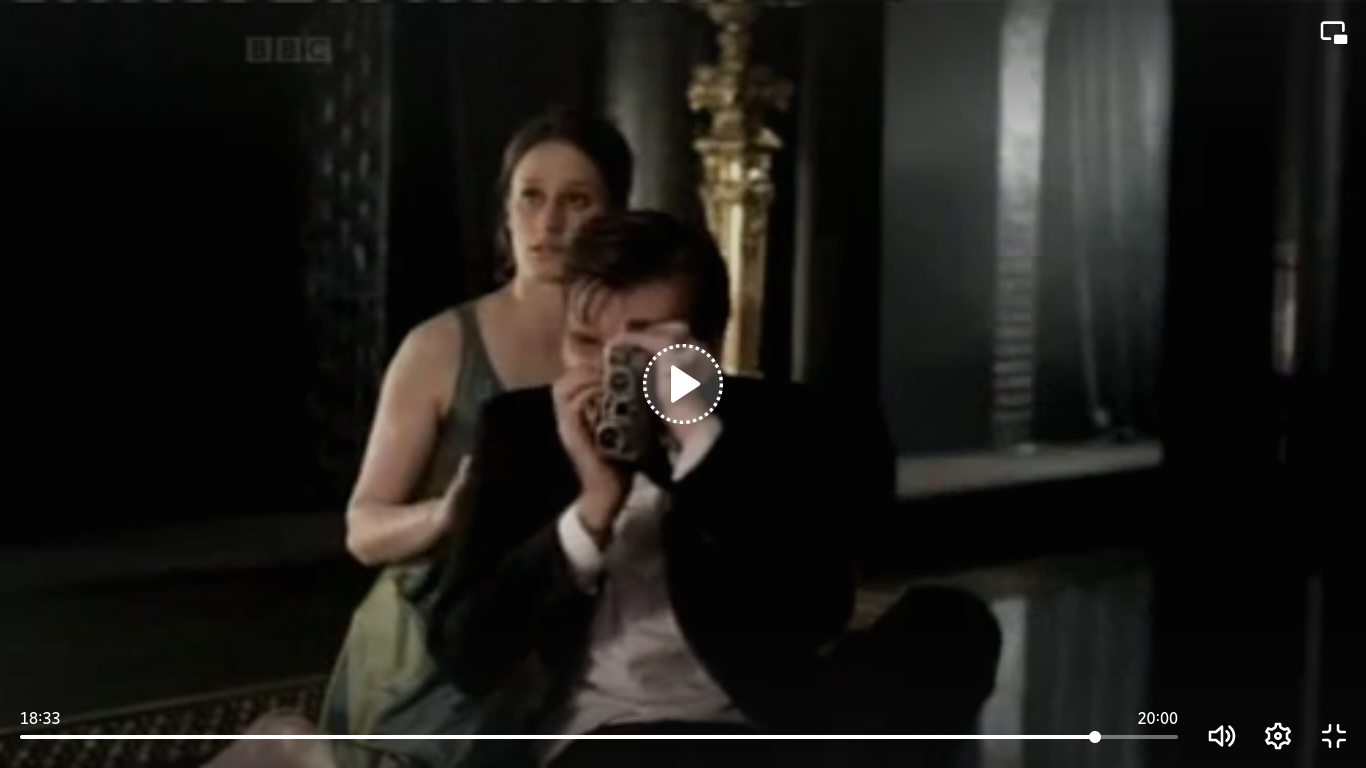
Watching and being watched– Both films start off with security camera footage, and shots of security cameras become a running motif that demonstrates Claudius’ control over Hamlet’s life. Also in both films Hamlet defies his uncle by filming him back with his own camera.
Updating Gertrude One of the flaws of Shakespeare’s text is that he judges Gertrude far too harshly. To Hamlet, it is incomprehensible that his mother could fall in love and marry anyone else. I like that in both versions, Gertrude is still relatively young, and the Claudius figure is relatively charming and handsome, while the ghost seems warlike and cold. You get the sense that Hamlet’s father was a good king, but a lousy husband. Little touches like this flesh out her character, and make us compelled to see what happens to her.
You cannot call it love; for at your age2460 The heyday in the blood is tame, it’s humble, And waits upon the judgment;
So, to be brief, this version isn’t the best, but it has plenty of clever set pieces, good performances, and early 2000s angst to trigger any millennial’s nostalgia goggles. More than that, I think later productions are indebted to this little movie for paving the way to bring Hamlet into the 21st century.
I’m helping to coach an actor who’s doing Hamlet’s first soliloquy in Act I, “O that this too, too, solid flesh.”
The text of the speech
Hamlet. O that this too too solid flesh would melt,
Thaw, and resolve itself into a dew!
Or that the Everlasting had not fix'd
His canon 'gainst self-slaughter! O God! God!
How weary, stale, flat, and unprofitable
Seem to me all the uses of this world!
Fie on't! ah, fie! 'Tis an unweeded garden
That grows to seed; things rank and gross in nature
Possess it merely. That it should come to this!
But two months dead! Nay, not so much, not two.
So excellent a king, that was to this
Hyperion to a satyr; so loving to my mother
That he might not beteem the winds of heaven
Visit her face too roughly. Heaven and earth!
Must I remember? Why, she would hang on him
As if increase of appetite had grown
By what it fed on; and yet, within a month-
Let me not think on't! Frailty, thy name is woman!
A little month, or ere those shoes were old
With which she followed my poor father's body
Like Niobe, all tears- why she, even she
(O God! a beast that wants discourse of reason
Would have mourn'd longer) married with my uncle;
My father's brother, but no more like my father
Than I to Hercules. Within a month,
Ere yet the salt of most unrighteous tears
Had left the flushing in her galled eyes,
She married. O, most wicked speed, to post
With such dexterity to incestuous sheets!
It is not, nor it cannot come to good.
But break my heart, for I must hold my tongue!
Hamlet, Act I, Scene ii, lines 332-363.
Given Circumstances
This is the first time Hamlet really speaks. He’s extremely tight-lipped to Claudius and his mother, and for good reason: he just witnessed his father die under mysterious circumstances, his mother remarried, his school year canceled, and himself proclaimed heir to the throne. All of this happened within a month! It’s very hard to process this kind of massive shift in your life, so Hamlet waits until he is alone.
The speech is full of distrust for his uncle, contempt for his mother, and deep starry-eyed mourning for his father. Hamlet compares his father to Hyperion, the Greek Titan who ruled the Sun- a being who inspired awe and terror. He then contrasts that with Claudius whom he compares to a satyr- an old, half-goat man who is horny in more ways than one. Hamlet clearly doesn’t like or trust his uncle and is disgusted by the notion that he is now Hamlet’s stepfather.
How does Hamlet feel about himself? Well, the text is somewhat ambiguous. The soliloquy’s first line might be saying that Hamlet wants to melt away into air, but it could just as easily apply to the Ghost (who is still on Hamlet’s mind), Claudius (who he hates), or Gertrude (whom he’s disgusted at because she’s sleeping with his uncle). We don’t have a clear picture yet how Hamlet feels about himself in this moment, but we do know that his world is shattered and is no longer as happy as it once was:
How weary, stale, flat, and unprofitable seem to me all the uses of this world.
Act I, Scene ii, Line 336.
Verse
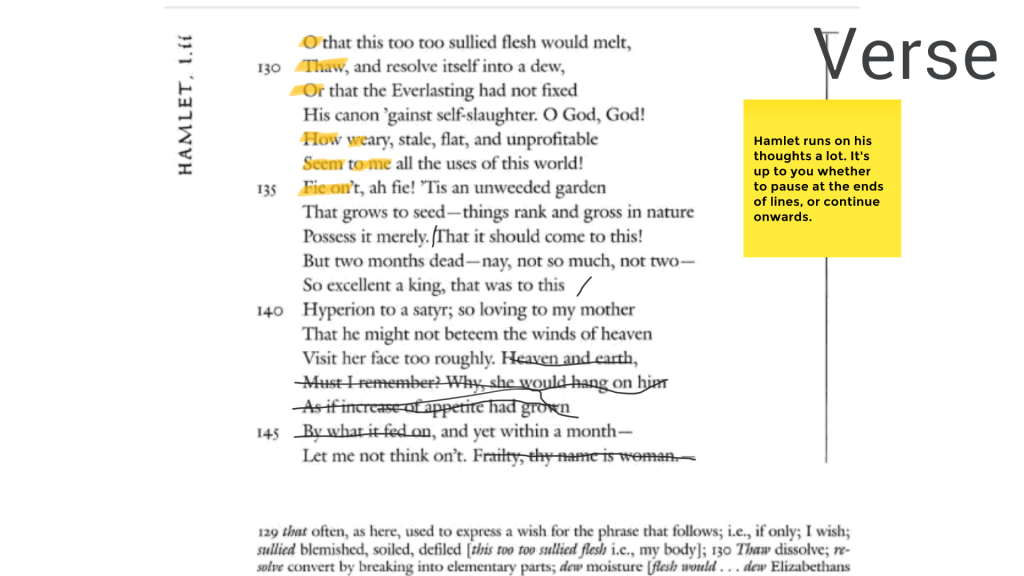
Analysis of the verse of Hamlet’s 1.2 Soliloquy. Note the trochaic meter in the first 3 lines.
As I often say, verse is the heartbeat of a character, and as Hamlet says, his own heart is broken so his verse is very irregular. Ideas spill over into multiple lines instead of tight, 10-syllable lines. In the excellent book, “Speak the Speech”, Rhona Silverbush and Sami Plotkin comb the speech for clues in the verse that suggest Hamlet’s fragile emotional state:
The piece is riddled with starts and stops mid line, sentence fragments, and [self] interruptions, which underscore Hamlet’s extreme agitation.
In the picture below, you can see how Hamlet often inverts his lines from Iambic to Trochaic (emphasis on the odd beats, rather than the even beats):
It’s up to the actor to decide which emotions Hamlet is showing and how this effects his breath, voice, and physicality, but the structure of the verse, the punctuation, and the flow of the thoughts gives him or her clues to play with, as you can see in this video with RSC actor Pappa Essiedu:
Imagery
Ambiguity and textual choices
Hamlet is a play that is all about the ambiguities that plague us as we go through life and its title character is constantly second-guessing, third-guessing, and fourth-guessing himself. In this speech, there are questions that the actor must decide for him/herself, because Hamlet and Shakespeare leave them open:
Whose flesh is solid? His father’s? His own? The world? Claudius?
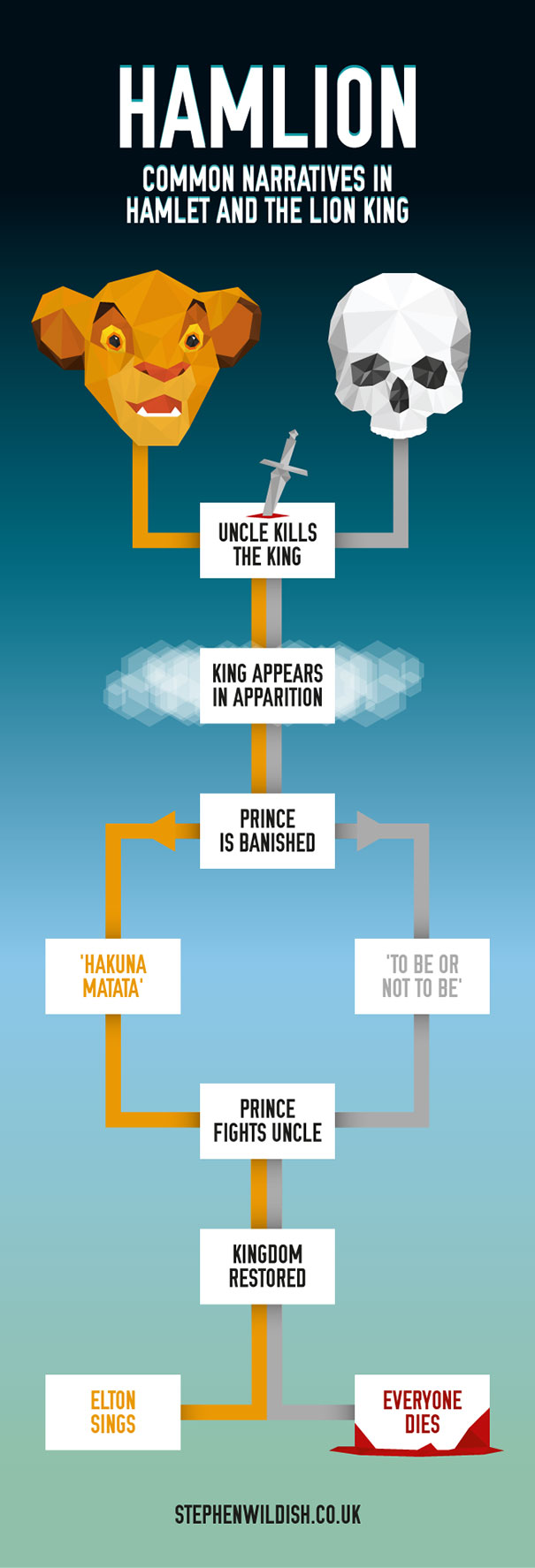
Educators love to compare Shakespeare to classic Disney, myself included. After all, both Shakespeare and Walt Disney were popular entertainers who adapted classic stories into new forms for larger audiences.
You can make a pretty strong case that Hamlet is “The Lion King” from these narrative similarities:
Infographic of Lion King similarities from Daily Infographic.com
It’s also true that, when the story artists at Disney decided to make the villain Mufasa’s brother, they noted the parallels to Shakespeare as the film was being written:
Though Shakespeare’s Hamlet is very much the story of a renaissance prince, it’s important to remember that the play’s sources date back to the Dark Ages. The anonymous “UR-Hamlet,” (later published in the early 1590s ), is based on an ancient legend about a prince who fights to the death to revenge his father’s murder. Shakespeare’s adaptation still contains a nod to this ancient culture that praised and highly ritualized the concept of judicial combat.
Back in Anglo-Saxon times, private disputes, (such as the murder of one’s father) could be settled through means of a duel. In this period, England was occupied by the Danes, (which we would now call Vikings), and several Viking practices of judicial combat survive. For example, the Hólmgangan, an elaborate duel between two people who fight within the perimeter of a cloak.
At the end of Shakespeare’s Hamlet, the revenge cycle between Hamlet, Leartes, and Fortinbras, comes to a close using a duel. Hamlet has murdered Leartes’ father but Hamlet did not intentionally kill him. This kind of legal dispute would certainly have been settled with a duel in Saxon times. This is one reason why Leartes scorns Hamlet’s offer of forgiveness at the beginning of the scene, and instead trusts in the outcome of the fight to prove his cause. Hamlet and Leartes begin fighting officially under the terms of a friendly fencing match, but it becomes clear early on that at least in the mind of Leartes, this is actually a blood-combat. He is demanding blood for the death of his father, as the Danes would have done during the Anglo Saxon times when Shakespeare’s source play of Hamlet was written.
What happens in the fight
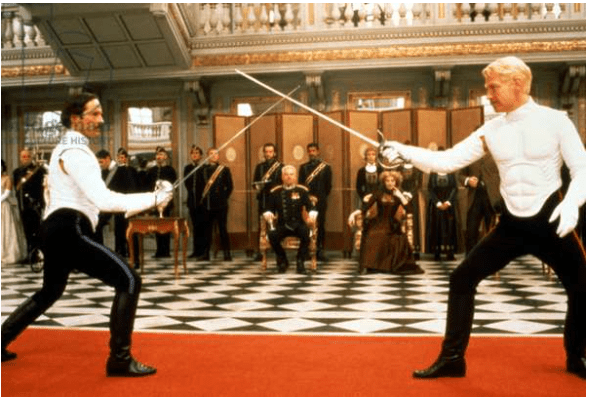
Olivier’s Sword Fight in Act V, Scene iii (1948).
The sword fight at the end of Hamlet is surprising in many ways. First of all, it is much more choreographed than many of Shakespeare’s other fights which are usually dramatized on the page very simply with two words: “They fight.” In Hamlet by contrast, Shakespeare has a series of important and descriptive stage directions. Furthermore, the fight is divided into three distinct bouts or phrases, or if you like “mini fights.” Below is the full text of the fight. I shall then explain what happens in each phrase.
PHrase One
Shakespeare it very clear that Hamlet gets a normal fencing rapier, while Leartes gets a sharp one, they fight one fencing bout where Hamlet scores a point. This is the most “sportsman like” part of the fight:
Enter King, Queen, Laertes, Osric, and Lords, with other

Attendants with foils and gauntlets.

A table and flagons of wine on it.

Claudius. Come, Hamlet, come, and take this hand from me.
[The King puts Laertes' hand into Hamlet's.]

Hamlet. Give me your pardon, sir. I have done you wrong;
But pardon't, as you are a gentleman.
Laertes. I am satisfied in nature,
Whose motive in this case should stir me most
To my revenge. But till that time
I do receive your offer'd love like love,
And will not wrong it.3890
Hamlet. I embrace it freely,
And will this brother's wager frankly play.
Give us the foils. Come on.
Laertes. Come, one for me.
Hamlet. I'll be your foil, Laertes. In mine ignorance3895
Your skill shall, like a star i' th' darkest night,
Stick fiery off indeed.
Laertes. You mock me, sir.
Hamlet. No, by this hand.
Claudius. Give them the foils, young Osric. Cousin Hamlet,3900
You know the wager?
Hamlet. Very well, my lord.
Your Grace has laid the odds o' th' weaker side.
Claudius. I do not fear it, I have seen you both;
But since he is better'd, we have therefore odds.3905
Laertes. This is too heavy; let me see another.
Hamlet. This likes me well. These foils have all a length?
They Prepare to play.

Osric. Ay, my good lord.
Claudius. Set me the stoups of wine upon that table.3910
If Hamlet give the first or second hit,
Or quit in answer of the third exchange,
Let all the battlements their ordnance fire;
The King shall drink to Hamlet's better breath,
And in the cup an union shall he throw3915
Richer than that which four successive kings
In Denmark's crown have worn. Give me the cups;
And let the kettle to the trumpet speak,
The trumpet to the cannoneer without,
The cannons to the heavens, the heaven to earth,3920
'Now the King drinks to Hamlet.' Come, begin.
And you the judges, bear a wary eye.
Hamlet. Come on, sir.
Laertes. Come, my lord. They play.
Hamlet. One.3925
Laertes. No.
Hamlet. Judgment!
Osric. A hit, a very palpable hit.
Laertes. Well, again!
Claudius. Stay, give me drink. Hamlet, this pearl is thine;3930
Here's to thy health.
[Drum; trumpets sound; a piece goes off [within].]
Give him the cup.
Hamlet. I'll play this bout first; set it by awhile.
Phrase Two
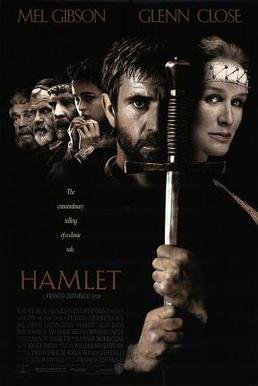
Mel Gibson in “Hamlet” (1990)
Claudius. Come. [They play.] Another hit. What say you?3935
Laertes. [aside] And yet it is almost against my conscience.
Again, Hamlet gets the upper hand and scores a point. While his mother is celebrating his victory, she accidently drinks the poisoned cup that Claudius meant for Hamlet. Now Claudius is enraged, Laertes is angry because of losing the first two bouts, and Hamlet is blissfully unaware that he is in mortal danger.
Phrase Three
When Hamlet isn’t expecting it, Leartes wounds him with the poisoned sword. From there, the fight degenerates into a violent, bloody mess where Hamlet disarms Laertes, then stabs Leartes. After this, the Queen dies, and Hamlet kills Claudius:
Hamlet. Come for the third, Laertes! You but dally.3950 Pray you pass with your best violence; I am afeard you make a wanton of me.
Gertrude. No, no! the drink, the drink! O my dear Hamlet!3965 The drink, the drink! I am poison’d. [Dies.]
Hamlet. O villany! Ho! let the door be lock’d. Treachery! Seek it out.
[Laertes falls.]
Laertes. It is here, Hamlet. Hamlet, thou art slain;3970 No medicine in the world can do thee good. In thee there is not half an hour of life. The treacherous instrument is in thy hand, Unbated and envenom’d. The foul practice Hath turn’d itself on me. Lo, here I lie,3975 Never to rise again. Thy mother’s poison’d. I can no more. The King, the King’s to blame.
Hamlet. The point envenom’d too? Then, venom, to thy work. Hurts the King.
Claudius. O, yet defend me, friends! I am but hurt.
Hamlet. Here, thou incestuous, murd’rous, damned Dane, Drink off this potion! Is thy union here? Follow my mother. King dies.
God’s providence in Hamlet (or lack therEof)
It is telling that everyone dies in this scene, which indicates that the concept of providence seems somewhat ambiguous in this scene- yes, Claudius dies but so does Hamlet. In addition, Leartes dies justly for his own treachery as he claims, but he also tries to avoid damnation. Leartes is guilty of treason for killing Hamlet, but Hamlet is guilty of killing an old man and a young maid, so Leartes asks God to forgive Hamlet for two murders, while he has only committed one. Providence doesn’t seem clear which crimes are worse. Further, Providence fails to reveal the guilt or innocence of Queen Gertrude- did she know her second husband murdered her first? Did she support Hamlet’s banishment? Did she know the cup was poisoned, and is therefore guilty of suicide, or was she ignorant and punished by fate for her adultery and incest? Knowing the conventions of judicial combat help the reader understand the compex world of Hamlet, a world devoid of easy answers.
How Would I Stage the Fight?
Phrase 1 I want the two combatants to start en guarde, their blades touching, then there will be a series of attacks on the blade. Hamlet will advance and attack the low line of Leartes’ sword Hamlet will advance and attack the high line of Leartes’ sword Leartes will advance and beat attack the high line of Hamlet’s sword Leartes will advance and attack the low line of Hamlet’s sword
Hamlet performs a bind on Leartes’ sword, sending it off on a diagonal high line. Hamlet attacks Leartes leg and Leartes will react in mild pain.
Phrase 2 Leartes is no longer fighting in polite manner, so this will be the real fight where he’s actually going for targets Hamlet and Leartes come together and bow, Both go into en guarde and Osric signals the start of the fight. Hamlet attacks Leartes’ blade high Leartes attacks Hamlet’s blade low Leartes suddenly does a moulinet and attacks Hamlet’s right arm. Hamlet does a pass back and parries 3 Leartes attacks Hamlet’s Left Arm. Hamlet does another pass back and parries 4 Leartes cuts for Hamlet’s head. Hamlet passes back and does a hanging parry 6, which causes the sword to slide off. Hamlet ripostes, slips around Leartes’ ________side, and thrusts offline in suppination. He then flicks the sword, hiting the back of Leartes’ knee. Phrase 3 Concern- you need to have enough space for Hamlet to chase Leartes DS, and for Leartes to slice Hamlet with the forte of his sword. Before the bout is supposed to start, Hamlet walks toward the sword, point down to Leartes US L or USR “I am afeard you make a wanton of me” Leartes: “You mock me sir!” Hamlet: “No, by this hand” Hamlet presents his hand. Leartes places his sword on it, and slices it Leartes gives Hamlet a stomach punch Hamlet falls to his knees dropping the sword. If necessary, Hamlet can pull out a blood pack to put on his hand.
Leartes points his blade above Hamlet’s head, then brings it back, preparing to strike off Hamlet’s head. Leartes: “Have at you now” Hamlet ducks to the right, with his leg extended. Leartes Passes forward, trips on Hamlet’s leg. Hamlet does a slip and goes behind Leartes’ back. Hamlet rabbit punches Leartes on the back, picks up Leartes’ sword, noticing the blood on it Leartes slowly rises, then notices Hamlet with his sword, he quickly grabs Hamlet’s weapon Hamlet shoves Leartes DS into a corp a corp, then traps Leartes’ blade The two push each other for a while
Osric: “Nothing Neither way” Hamlet pushes Leartes downstage, then slices him across the back. Leartes stops DS, and falls to the ground
Murder of Claudius If Claudius is standing, we can have Horatio grab the king around the neck, Hamlet places the sword across Claudius’ stomach, and slices him. If Claudius is seated, Hamlet picks up the goblet with one hand, slices the king’s leg, then, (after establishing a good distance), Hamlet points the blade off line, just left of Claudius’ neck. Hamlet is giving Claudius a choice- drink or be stabbed. When Claudius chooses to drink, either Hamlet or Horatio can give him the cup. If Horatio gives it to Claudius, it might give him the idea to die later.
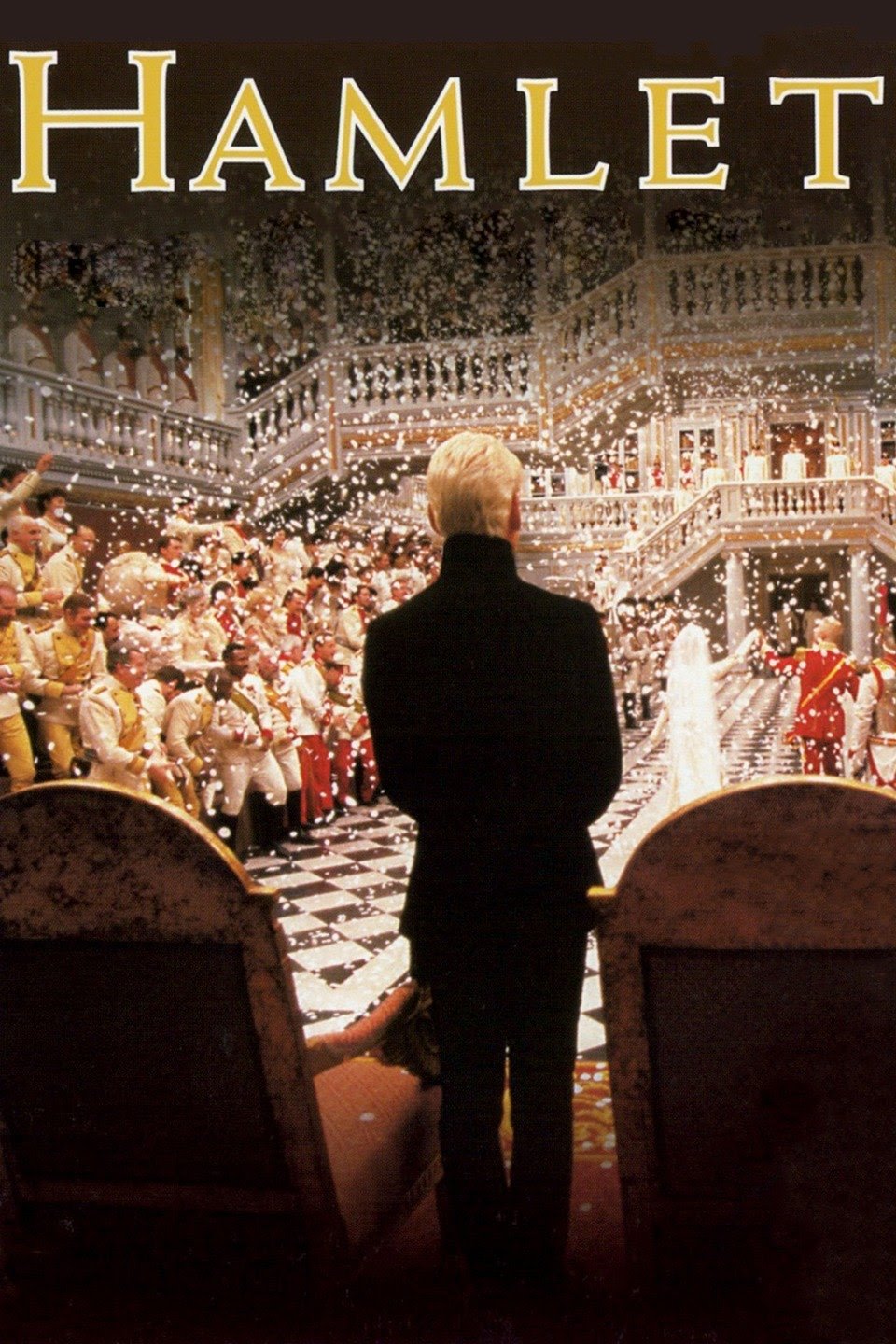
This is a play I’ve been obsessed with since I was 16 years old. There’s so much to say about it, but I’ll be focused mainly on the mysteries of its famous plot and characters. In the meantime, here’s some background info on the play collected from the posts I’ve done on it over the years:
Play of the Month: Hamlet. My complete summary with pictures, videos, and discussion questions
How Accurate Is Hamnet? I review the novel “Hamnet” which is a work of historical fiction. It focuses on the possibility that Shakespeare wrote “Hamlet” after the death of his 11-year-old son.
Shakespeare on Ghosts: In this post, I discuss the meaning and psychological significance of the Ghost in “Hamlet”.
Internet Shakespeare Editions: https://internetshakespeare.uvic.ca/Library/Texts/Ham/. Has all four quartos in modern and original type, lots of background sources, and the text of the German Hamlet “Bestrafte Brudermord.”





















 The Shakespearean Student