I created this video as part of my “What Was Christmas Like For William Shakespeare?” class on Outschool.com. It should be a really fun class with lots of games, facts, fun, and recipes from Christmas Past! If you want to sign up, go to my Outschool profile page.
From now to January 13th, I’m offering a $5 discount for any class that is $10 or more! You can take my Shakespeare classes for as little as $4! Go to my Outschool.com class and enter the coupon code: HTHESNIF6B5 at checkout!
If you’re new to Outschool, use the referral code below when you sign up. You’ll automatically get $20 USD offas a thank you to use on future classes! My referral code is: MaRDyJ13
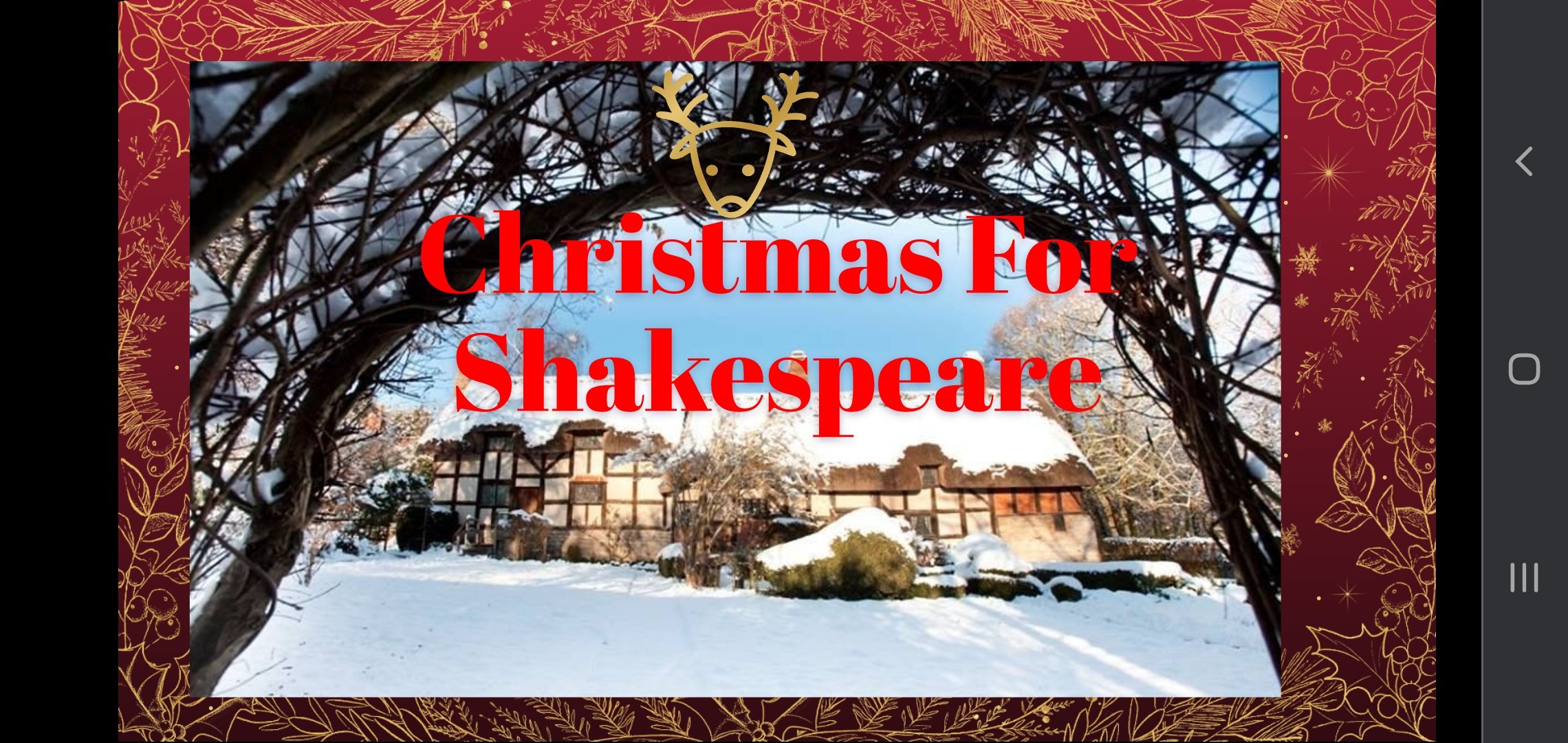
Title card for my new online course, What Was Christmas Like For William Shakespeare?
The goal of this class is to learn about both Shakespeare and the Elizabethan period through the lens of Christmas. I will begin by asking the class "What traditions do you think of when you think of Christmas? We will then contrast the traditions of Christmas from the 17th century and now, including a brief period when Christmas itself was illegal.
Once I have contextualized this period, we will then go through the plot, characters, and themes of Shakespeare’s most famous Christmas play- “Twelfth Night.”
Slideshare presentation I made about the play Twelfth Night
The class will include videos, multimedia presentations, virtual tours, interactive quizzes, and online activities. The students will play games inspired by real Elizabethan Christmas traditions, get some festive recipes, and learn what it was like to be an actor in Shakespeare's company, when they performed "Twelfth Night" and other plays before Queen Elizabeth and King James.
If you’re reading this as I post it, there’s a Shakespearean nerd in your life and your wits are about to turn trying to find a gift. I’ve already written about printed editions of Shakespeare and educational apps, so you can consult those if that’s what you are looking for. Now I’m covering the kinds of stuff that die-hard Shakespeare fans will kill a king and marry with his brother for, basically nerdy swag that no Shakespearean fanatics should be without!
For anyone: Immortal Longings.com- This company is very special to me. If you’ve seen any of my Play Of the Month posts, you’ve seen the gorgeous artwork for Shakespeare’s plays by the artist Elizabeth Schuch. Not only do I love her work, my wife and I put her prints on the decor for our wedding day, and wrapped some of my presents in wrapping paper with her designs on it. If you go to her website, she sells Shakespearean art printed on and inspired by Shakespeare’s plays on everything from tapestries to clothes to iPhone cases. I highly recommend checking her work out, and patronizing it as much as possible: https://society6.com/immortallongings/s?q=popular+framed-prints
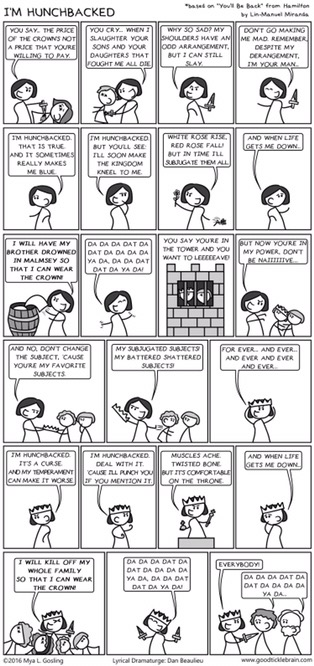
I also want to give a shout-out to the website Good Tickle Brain, a weekly Shakespearean comic that satirizes the Bard’s work with love. I feel the best way to introduce anyone, young or old to Shakespeare is through a healthy dose of satire and parody. Mya Gosling loves Shakespeare and it comes through in her simple, funny retellings of his plays. If you go to their shop (spelled Shoppe to appeal to nerds like me), you can get some of her comic books, funny T-shirts, and a few educational posters for teachers too: https://goodticklebrain.com/shoppe/
Adults
The Bard game This is the Monopoly for Shakespeare Nerds- each player pretends to be a theater manager putting on plays in real locations where Shakespeare’s company toured during his lifetime. You make money by reciting speeches or improvising one in the Shakespearean style, or by answering Shakespearean trivia questions. A must-have for any Twelfth Night Party! Review of the game: https://boardgamegeek.com/boardgame/12372/shakespeare-bard-game https://boardgamegeek.com/boardgame/12372/shakespeare-bard-game
Bards against humanityMost people know the raunchy card game where you try to encapsulate a disgusting word or phrase with a description written on your card. Well, there’s a Shakespeare version too! It makes sense that someone made a card game inspired by the king of the Elizabethan put-downs, (and the inventor of one or two modern curse words!)
Wine🍷 Though I was unable to find actual wine with Shakespeare’s name on it, practically every other part of the wine drinking experience has been branded with Shakespeare- wine bags, glasses, corks and bottle stoppers, and even whole bars! If you spend a few minutes looking online, you can find tons of Shakespearean wine merch. By the way, here’s a convenient list of quotes Shakespeare wrote about alcohol: http://www.shakespeare-online.com/faq/shakespearedrinking.html
Pen and ink There’s a lot of good versions of pen and ink with Shakespeare’s name on them. Imagine the fun you can have writing sonnets with your own Shakespearean pen and ink!
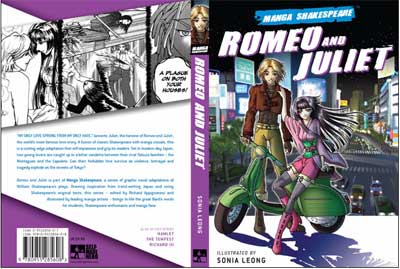
The title page of the clever comic book, “The Manga Shakespeare”
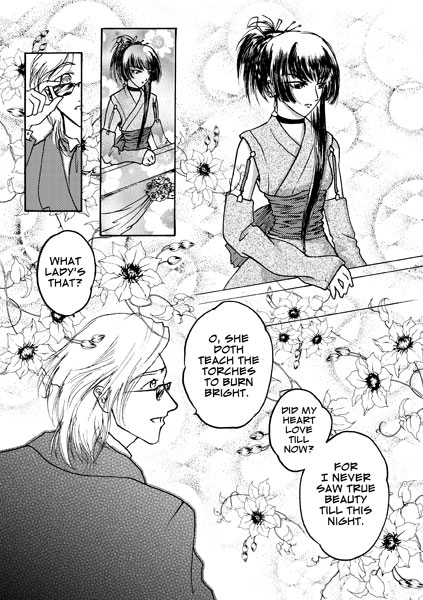
Shakespearean Comic Books. I’ve written reviews about some of these books and I’m very impressed by the artwork and the clever adaptations. Click here to read my review of the Romeo and Juliet Comic.
Kids
Pop-Up Shakespeare by the writers of the Reduced Shakespeare Company. I’m a huge fan of The Reduced Shakespeare Company and they have created an amazing new popup book for kids of the entire Shakespearean cannon!
Barbie and Ken as Romeo and Juliet. Ok, so this is a bit of a stretch, but hey, I’d get it for my daughter.
Board books 📖 Yes, even toddlers can get into Shakespeare. I actually read this to my daughter a lot. It’s not the story of the play, but it does introduce some of the characters and famous lines which can help a child to become familiar with Shakespeare.
Cover of “King Of Shadows,” an excellent Young adult novel for anyone who loves Shakespeare.
King 👑 Of shadows (Ages 8-12) This is an excellent young adult novel that teaches a lot about Shakespeare’s theater and the time period in which he lived. For a complete review, click here:
This was one of my favorite books growing up. It tells the story of Shakespeare’s life and work, with special attention to the creation of the Globe Theater in 1599. It’s gorgeously illustrated and a great read for kids!
So there are some gift ideas for the Shakespeare nerd in your life. Merry Christmas!
Here’s one more gift that you could give a Shakespeare nerd ages 13-18: A class from ME!
Go to my Outschool profile and Get $5 off the following classes:
The Merchant Of Venice is unquestionably Shakespeare’s most controversial play- it covers such topics as anti-semitism, religious hypocrisy, racism, slavery, and the meaning of justice and mercy. As I have written before, few people read this play in school, but I believe that it has many lessons to teach our children. I also believe its lessons are also very much a part of the Christmas/ Hanukkah/ Kwanza holiday season, and here’s why:
Short summary
Famous quotes
All that glitters is not gold.
Hath not a Jew Eyes
The quality of mercy is not strained
You may very well wonder why this play about greed and prejudice reflects the warm holiday spirit. I would argue that, like cold winter snow, this play emphasizes the importance and the need for compassion, humanity, and generosity because without it society becomes truly frigid.
Merchant Of Venice takes an unflinching look at greed, prejudice, and religious hypocrisy, while at the same time retaining a hope for peace on Earth and goodwill towards men.
One of the best ways I can justify the connection between Merchant and the holidays is by comparing it to the quintessential Christmas story, Charles Dickens’ A Christmas Carol. In terms of tone, themes and especially characters, these two classics are very close indeed. Shylock is an ancestor of Scrooge- in addition to both being money lenders, both men are miserly, cold, and willing to destroy lives for wealth. Shylock even has a ghost that comes back to haunt him. Shylock mentions a ring that he got from his late wife Leah, similar to how Scrooge lost his only love, Belle. Just as Scrooge is a counterexample of everything that Christmas stands for, Shylock’s greediness, cruelty, and hatred of the people around him make him a figure to avoid, no matter what holiday you celebrate.
Merchant also raises questions about materialism, which we should all consider around the holidays. Shylock especially mentions this in quotes like: “You take my life when you take the means whereby I live.”
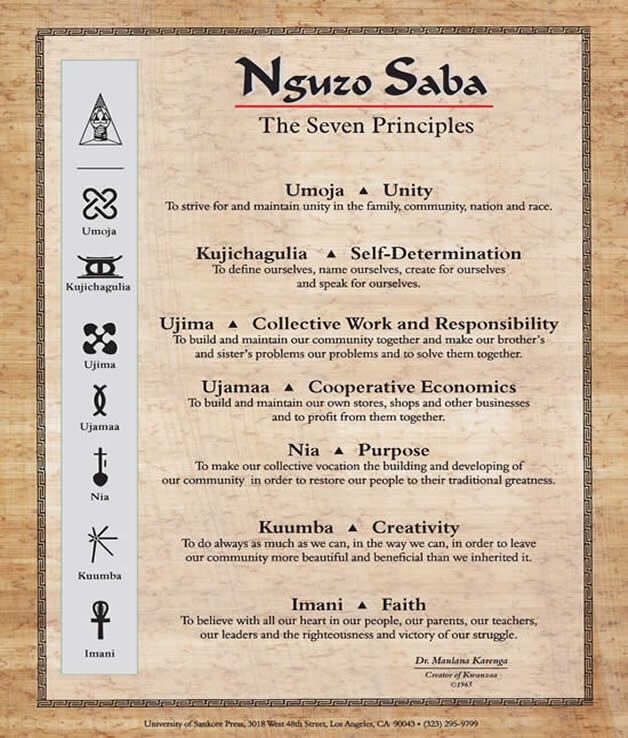
The themes of Merchant also reflect a modern multicultural holiday season. In one example which I wrote about before, The Prince Of Morocco has a great speech that calls to mind the concept of kuchijagulia, or self determination, one of the 7 principles of Kwanzaa.
According to the official Kwanza website, kuchijagulia means, “To speak up for oneself,” and Morocco definitely does that:
Mislike me not for my complexion,
The shadow’d livery of the burnish’d sun,
To whom I am a neighbour and near bred.
Bring me the fairest creature northward born,
Where Phoebus’ fire scarce thaws the icicles,
And let us make incision for your love,
To prove whose blood is reddest, his or mine.
I tell thee, lady, this aspect of mine
Hath fear’d the valiant: by my love I swear
The best-regarded virgins of our clime
Have loved it too: I would not change this hue,
Except to steal your thoughts, my gentle queen. Merchant Of Venice, Act II, Scene I.
Moracco’s unwillingness to change who he is makes him a model of the kind of pride African Americans celebrate during Kwanza. In addition Shylock, the Jewish moneylender, is also very proud of his heritage. His famous quip: “Sufferance is the badge of all our tribe,” expresses perfectly the resilience of the Jewish people, which of course is the central point of Hanukkah.
When it comes to Christmas, Antonio demonstrates a Christ- like self sacrifice, when he lets himself be arrested and nearly killed by Shylock.
▪Bassanio. Good cheer, Antonio! What, man, courage yet!
▪ The Jew shall have my flesh, blood, bones and all, 2045
While Antonio’s actions mirror Christ’s sacrifice. Portia’s famous “The Quality Of Mercy Is Not Strained,” speech, goes to the heart of the reason why Christ came to earth; to grant mercy to the sinners who would be damned otherwise
▪Shylock. On what compulsion must I? tell me that.
▪Portia. The quality of mercy is not strain’d, 2125
▪ It droppeth as the gentle rain from heaven
▪ Upon the place beneath: it is twice blest;
▪ It blesseth him that gives and him that takes:
▪ ‘Tis mightiest in the mightiest: it becomes
▪ The throned monarch better than his crown; 2130
▪ His sceptre shows the force of temporal power,
▪ The attribute to awe and majesty,
▪ Wherein doth sit the dread and fear of kings;
▪ But mercy is above this sceptred sway;
▪ It is enthroned in the hearts of kings, 2135
▪ It is an attribute to God himself;
▪ And earthly power doth then show likest God’s
▪ When mercy seasons justice. Therefore, Jew,
▪ Though justice be thy plea, consider this,
▪ That, in the course of justice, none of us 2140
▪ Should see salvation: we do pray for mercy;
▪ And that same prayer doth teach us all to render
▪ The deeds of mercy. Merchant Of Venice, Act IV Scene I.
Shakespeare no doubt wrote these characters to reflect the Christian values many people celebrate at Christmas. Meanwhile the play’s comic subplot with Bassanio and Portia teaches Christians about generosity and mercy. As I have written before, the character Bassanio is the moral center of the play, and his journey mirrors many characters in classic Christmas stories who learn about giving and receiving, the true meaning of Christmas.
In Act III, Scene ii, Bassanio participates in the highest stakes Secret Santa gift exchange ever: three boxes of gold, silver, and lead are set before him.
If Bassanio picks the right gift, he will be rich, powerful, and married to a beautiful woman, but the winning box is inscribed with a warning: “Who chooses me must give and hazard all he has.” Bassanio wins the gift auction, which means he may marry the beautiful Portia, but he gives her the choice to marry him or not: https://youtu.be/6IFSMgggS8k
[Music, whilst BASSANIO comments on the caskets to himself]
▪Bassanio. So may the outward shows be least themselves: 1440
The world is still deceived with ornament.
▪ In law, what plea so tainted and corrupt,
▪ But, being seasoned with a gracious voice,
▪ Obscures the show of evil? In religion,
▪ What damned error, but some sober brow 1445
▪ Will bless it and approve it with a text,
▪ Hiding the grossness with fair ornament?
▪ There is no vice so simple but assumes
▪ Some mark of virtue on his outward parts:
▪ How many cowards, whose hearts are all as false 1450
Look on beauty, 1455
▪ And you shall see ’tis purchased by the weight;
▪ Which therein works a miracle in nature,
▪ Therefore, thou gaudy gold,
▪ Hard food for Midas, I will none of thee;
▪ Nor none of thee, thou pale and common drudge 1470
▪ ‘Tween man and man: but thou, thou meagre lead,
▪ Which rather threatenest than dost promise aught,
▪ Thy paleness moves me more than eloquence;
▪ And here choose I; joy be the conseque
[Reads] 1500
▪ You that choose not by the view,
▪ Chance as fair and choose as true!
▪ Since this fortune falls to you,
▪ Be content and seek no new,
▪ If you be well pleased with this 1505
▪ And hold your fortune for your bliss,
▪ Turn you where your lady is
▪ And claim her with a loving kiss.
▪ A gentle scroll. Fair lady, by your leave;
▪ I come by note, to give and to receive. 1510
▪ Like one of two contending in a prize,
▪ That thinks he hath done well in people’s eyes,
▪ Hearing applause and universal shout,
▪ Giddy in spirit, still gazing in a doubt
▪ Whether these pearls of praise be his or no; 1515
▪ So, thrice fair lady, stand I, even so;
▪ As doubtful whether what I see be true,
▪ Until confirm’d, sign’d, ratified by you. Merchant of Venice Act III, Scene ii.
Like the story The Gift Of the Magi, Bassanio prizes Portia’s love, and is willing to give her all he has in return, which is what separates him from the other suitors. Bassanio also understands it’s not the physical gift that is really the gift, it’s the love that it represents that really matters, which allows him to look past the outward appearance of the lead chest. Having gratitude for the gifts we receive and pledging our love to others is something that everyone should remember at Christmas and all festive occasions.
In Conclusion, it isn’t cheery, and it is not as hopeful as most holiday stories, but in the season when people of all faiths celebrate together, Merchant Of Venice is a great reminder of our shared humanity and how we can show love and mercy to our fellow people.
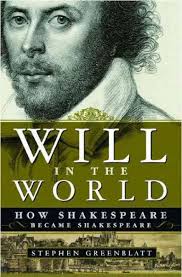
Book– Will in the world by Steven Greenblatt- An amazing analysis of Shakespeare’s life and career. The chapter “Laughter At the Scaffold,” traces the link between Merchant Of Venice and the real life treatment of Jews in the 16th century
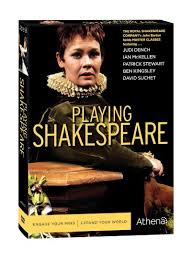
Book/ TV- Playing Shakespeare by John Barton.
Movie– Merchant Of Venice 2004 Movie starring Al Pacino. I like the way the director films the drama documentary style, using a single handheld camera in most of the shots. Pacino is very good at playing Shylock as a bitter, cynical old man who is trying to survive in a powerful Christian country.
Merry Christmas Eve everyone! Today I will be talking about how Shakepeare’s two royal patrons, Queen Elizabeth I and James I celebrated this holiday!
We have surviving records that prove Shakespeare and his troupe performed at Christmas during the reigns of Queen Elizabeth and King James I. The buildings still exist so we can imagine what Shakespeare’s performancesal at court might have looked like. What follows is a bit of historical detective work, with a nice holiday flavor to boot.
How did Good Queen Bess celebrate Christmas?
Like her predecessor Henry VIII, Her Majesty Elizabeth accepted presents from the nobles on New Year’s Day instead of Christmas morning. From all over the kingdom, people would bring the best and most extravagant presents to the queen, hoping to gain her favor at court. Take a look at this true case of what her favorite courtier, Robert Dudley gave the queen for Christmas in 1588:
Dudley gives Queen Elizabeth a wristwatch
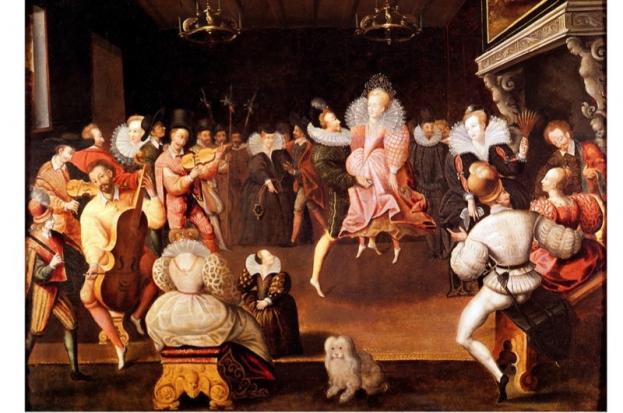
Unlike her dad however, Elizabethan Christmas was a more elaborate affair than a week of sitting and feasting. Yes, Gloriana had elaborate feasts, but she preferred to impress her nobles and visiting dignitaries with dances, jousts, and plays. She was an accomplished dancer and poet, and she loved court masques.
A masque is sort of like a combination masked ball and performance art piece. The nobles would put on costumes and masks and enact a historical or mythological event, like “the Golden Age Restored,” a masque Ben Johnson wrote for Twelfth Night in 1616. The intent was to flatter the queen and her court, as well as having a good time. Of course, Liz still made time on the dance floor for Shakepeare’s company!
.
How the plays were performed:
The plays would be in a large empty hall like the banquet hall or dance hall. Probably the tables would be removed from the feasting, then the dancing would begin. At around 10PM, the actors would take their places. There might be a makeshift tiring house, which was mainly just a curtain that the actors could hide behind to wait for their entrances.
The queen or King would be sitting on a throne on a raised platform so that she or he could be clearly seen by the actors and the audience. Which plays did They Perform?
In 1594 The Lord Chamberlain’s Men played before the Queen at Greenwich Palace. Alas, we don’t know which plays they performed this time. What follows is a list of the plays we do know Shakepeare’s company played at Christmas.
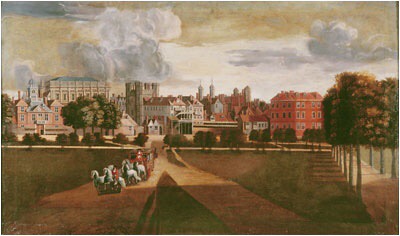
Whitehall Palace by Dankerts, 1675.
Love’s Labors Lost– 1597 at Whitehall palace. This time we know which play they performed before the Queen, because it’s listed right on the title page. I suspect that printing where the play was performed was designed to fire the imagination of the people who bought it. If you couldn’t be at court to see Shakespeare’s play, you could at least read his words and imagine you were there.
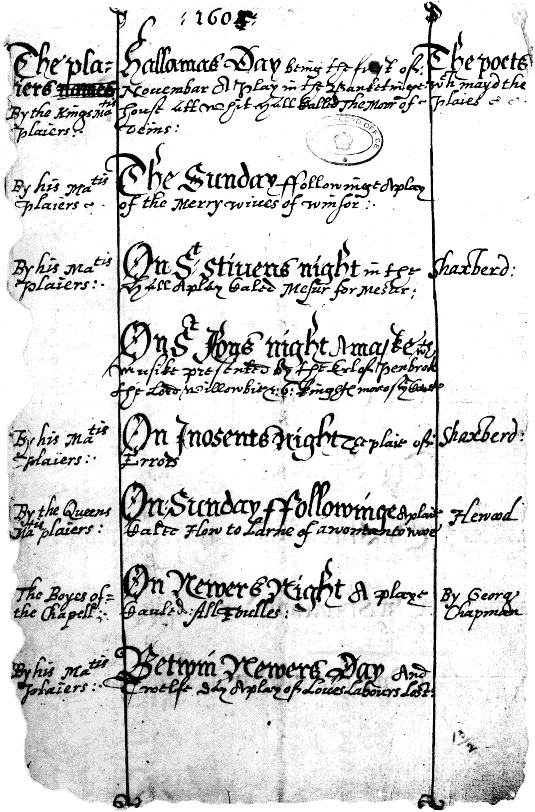
James I invited Shakepeare’s company to perform at Hampton Court many times. Below is an account of the plays for the Christmas holiday in 1603. Notice that Shakepeare’s name is spelled “Shaxberd.”
Here’s a list of some more plays we know Shakepeare’ performed at Christmas:
Midsummer Nights Dream- 1603 on New Years Day, Hampton Court.
Measure for Measure on Boxing Day 1603, Hampton Court.
King Lear on Boxing Day 1606.
Twelfth Night- Candlemas (Feb 2nd 1602).
Twelfth Night 1618 and 1619 (location unknown).
Below is an episode of the incredible documentary “In Search of Shakepeare.” The first twelve minutes show what Christmas might have been like at Hampton Court in 1603, the first year of King James’ reign.
James loved plays and masques even more than Liz, which is why he employed one of the greatest scenic artists of all time, Inigo Jones, to come up with extravagant stage designs and costumes for plays and masques. James’ Queen Anne Of Denmark performed in quite a few masques herself. James also treated the Christmas season as a time of charity, which might have inspired some of the lines in King Lear, which was performed ‘on the feast of Steven’ 1606:
“Poor naked wretches… who soer you are. I have taken too little care of this.” -King Lear, Act III, scene I (The Storm Scene).
We can recall the contrast between King Lear and Good King Wenceslas. In the scene I quoted earlier, Lear laments that he hasn’t been more charitable to the poor, now that he himself feels cold and homeless.
The Christmas season would carry on until oh January 6, aka Twelfth Night. This was the day when, according to Christian tradition, the Three Wise Men finally got to Bethlehem and delivered their presents. Shakespeare’s play Twelfth Night is all about celebrations of feasting, fools and clowns, and of course, epiphanies.
If you liked this post, please consider signing up for my new online class, “What Was Christmas Like For William Shakespeare?” I’ll go further into the traditions of Elizabethan Christmas and add some insight into Shakespeare’s play “Twelfth Night.” Register now at Outschool.com!
Once Shakespeare became a member of the Lord Chamberlain’s Men and later The King’s Men, the royals often requested that he and his company perform as the official royal entertainment at Christmas. Christmas for Shakespeare from 1592 to 1613 meant work. Nevertheless, it must’ve been a thrill for this country boy from Warwickshire England to see how the king and courtiers of his country would celebrate Christmas with elaborate feasts, parties, dances, and of course drama.
We know for a fact that Shakespeare was asked to perform at Christmas. As you can see on this title page for Shakespeare’s Loves Labors Lost, we have records of his plays being performed by name for the Christmas feast. In Tudor and Jacobean times, The Master of the Revels kept records of which plays he permitted to perform during the Christmas season and those records reveal what kind of entertainment each monarch enjoyed at Christmas. Christmas at King Henry VIII’s palace
Although King Henry the Eighth died before Shakespeare was born, his Christmas feasts were so lavish I simply had to devote some space in this post to talk about him. Henry outlawed all sports and games at Christmastime during his reign, focusing instead on drama and feasts. Part of the reason that the king outlawed any kind of sports (except archery), was because of the huge caloric quantity ingested from his feasts. To be blunt, as Henry aged, his diet only got worse. Near the end of his life, he was so overweight, his attendants needed a crane to get him out of bed!
Henry’s Christmas feasts were the stuff of legend. One-third of his palace at Hampton Court was devoted to the kitchens! The feast would include as many exotic and expensive dishes as the king’s court could imagine!
Christmas turkey became popular in Henry the Eighth’s day, but it would certainly share a dish with peacock, hare, goose, and wild boar; the most vicious animal to kill in the wild forest. There’s even a Christmas carol called the Boar’s Head Carol, which celebrates how hard it was to procure and prepare such an animal. For Henry, exotic food was a symbol of his power and so he stocked his Christmas feast with the most elaborate food a king could buy to impress his nobles and visiting dignitaries.
After the feast, the court would sing together, often to unaccompanied music called madrigals. These were short, secular songs in multiple voice parts and they were the pop songs of Henry’s day; he even composed a few himself!
If you watch this video you can see an incredible documentary, where a group of historic food historians re-creating an elaborate Tudor feast: A Tudor Feast
If you liked this post, please consider signing up for my new online class, “What Was Christmas Like For William Shakespeare?” I’ll go further into the traditions of Elizabethan Christmas and add some insight into Shakespeare’s play “Twelfth Night.” Register now at Outschool.com! – Shakespearean Student
Well, Christmas is almost here; soon many of us will be traveling home to celebrate the holidays with our families, enjoying parties, presents, carols, and decorations. However, our modern traditions weren’t always the norm for people who celebrate Christmas. In the interest of historical curiosity, we here at Shakespearean Student would like to talk a little bit about how William Shakespeare might’ve celebrated Christmas!
As with everything in Shakespeare’s life, many times scholars have nothing but “what if’s” to go on, because few records exist, there were no photos from the period, and very few documents survive related to Shakespeare. He also kept no journals or diaries to record what his life might’ve been like. However, based in the holiday traditions of England that have lingered on to this day, we can surmise what Christmas might’ve been like in the late 16th century.
Part 1: Stratford
Shakespeare was born in 1564, in the town of Stratford-Upon-Avon in the county of Warwickshire England. As I mentioned earlier, Shakespeare would not have known many of our modern Christmas traditions. The Christmas Tree as we know it didn’t come into being until Queen Victoria’s reign, (and she certainly didn’t light hers with electric lights). Victoria also invented the idea of putting presents under the tree. I’m not an expert on Christmas, but my research would indicate that probably Elizabethans like Shakespeare didn’t even give out presents on Christmas Day! Instead, in country towns like Stratford in Tudor times, Christmas was a time of feasting, singing, caroling, and theatre!
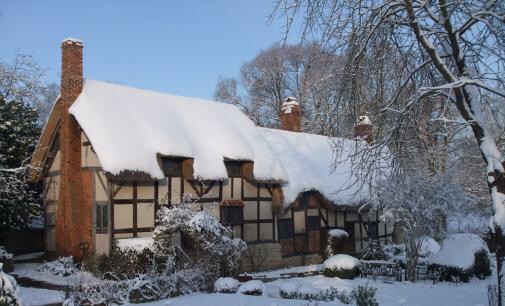
The Shakespeare family home at Christmas
The Christmas season in Shakespeare’s day usually extended from Christmas Eve to the twelfth night after Christmas also known as Twelfth Night or Epithany. Common people usually decorated their homes with holly and ivy, and celebrated Christmas Eve by lighting their homes with candles and by burning the Yule log, an ancient tradition dating back over 1,000 years when the Vikings controlled most of England. It was a symbol of light and warmth in the darkest time of the year.
Replica of Shakespeare’s kitchen.
Feasting-
Roast goose was a staple of the common man’s feast at Christmas. In 1588, Queen Elizabeth commanded the whole country to consume geese to commemorate England’s victory over the Spanish Armada. Other traditional fare included plum porridge, beer or ale, and the most celebrated Christmas beverage of all: Wassail!
Wasailing-
The old tradition of caroling comes from an ancient pagan holiday tradition of showing charity to the poor at the winter solstice. People would go door to door asking for alms and occasionally a warm beverage. This ancient practice evolved into caroling and Wasailing!
The word “wassail” is an old Celtic word that means “lambswool,” it refers to the fact that the drink is covered with a thin foam that looks kind of like the wool of a sheep. It is also derived from the Anglo-Saxon “wassail,” which means “be in health,” so it is simultaneously a drink, a toast, and an explanation of what the drink looks like.
Like our modern-day caroling, people would sing and dance going door to door asking for a traditional glass of wassail or a mince pie. A mince pie is a traditional meat pie that is often filled with 12 different ingredients to symbolize the 12 days of Christmas.
Mince pies were popular with both peasants and kings, and contains both fruit and different types of meat including rabbit chicken duck and hare.
Wasailing also has its roots in ancient pagan holidays and that’s why it’s often accompanied with a traditional Morris dance, where the dancers are waving handkerchiefs, knocking sticks together and dancing with brightly colored ribbons. This was a great tradition back in the small towns and shires of England and continues to this very day. Below you’ll find a video where you can make some wassail yourself! I Just a note that in this recipe, the cook has left out the alcohol and has also left out the egg which is necessary to create the foamy lambswool. Nonetheless I think it’s a very good recipe and I welcome you to try it for yourself.
Plays–
As the mayor’s son, young William had a VIP pass to see all traveling actors who came to town. Shakespeare’s dad would’ve decided who got to perform at the guild halls and local inns, so he and his son would’ve watched private performances of all the shows first. After that, John Shakespeare decided who got to perform, and who would be sent away. In addition to professional troupes at Christmas, craftsmen in Will’s hometown people in Warwickshire would come together and put on a show! These amateur dramatic pieces were known as Mystery Plays.
Mystery Plays got their name from the old meaning of mystery: a trade or skill. Much like modern nativity plays or community theaters, every year all the craftsmen from the town would put on a series of short shows derived from Bible stories at Christmas time, and showcase their crafts as well as their acting talents. For example the goldsmiths were in charge of the Three Wise Men story.
We know that Shakespeare liked these plays because he refers to one in particular many, many times: The play of King Herod. in the Bible, Herod The Great is fearful of the baby Jesus and sends his soldiers to kill any young baby that they can find in the city of Jerusalem. Very often when Shakespeare refers to any of his villainous characters he describes them as Herod-like.
The Mysteries were printed during Shakespeare’s lifetime and people in York, Coventry, and Wakefield England still perform them today! Here’s a video of a little girl who performed in the York Mystery play last year:
I hope you enjoyed this little sojourn into the ancient traditions of the common folk back in Shakespeare’s England.
If you liked this post, please consider signing up for my new online class, “What Was Christmas Like For William Shakespeare?” I’ll go further into the traditions of Elizabethan Christmas and add some insight into Shakespeare’s play “Twelfth Night.” Register now at Outschool.com!

























![Candleglow%20PR%20small[1]](https://shakespeareanstudent.com/wp-content/uploads/2015/12/candleglow20pr20small1.jpg)


 The Shakespearean Student