Shakespearean Tropes In Meow Wolf’s “Omega Mart” (Spoiler alert)

Giant Skull art as part of Area 15. Hamlet would be dazzled.

I just got back from Las Vegas where I had a simulating, terrifying, and extremely engaging trip to the Meow Wolf Area 15! If you haven’t heard of them, Meow Wolf is an arts and entertainment group which specializes in creating multimedia experiences, and their most popular and mysterious installation is their apocalyptic grocery store, Omega Mart.

Even if you’ve never been to Omega Mart, you might have seen their website, their ’employee training videos’, or the music videos that have been floating around the Internet. My journey began when I saw this video by the YouTube channel Food Theory. After seeing this video, I, like Matt Pat was compelled to go there myself and discover what Omega Mart was like.

My handwritten notes about the mysteries of Omega Mart that I wanted to explore once I got there.

“We take a lot from open world games [where] you can play the story lines or you can just mess around.  We like giving people that optionality (sic). If you’re a 5 year old kid and you aren’t into reading a bunch of material, you just want to run around and treat it like a playground, and that’s totally fine.”

Vince Cadleback, CEO of Meow Wolf
Video artwork that was projected on the wall of the Forked Earth room

A Note about the experience

Meow Wolf’s CEO has stated that the experience of Omega Mart is ultimately up to you. Similar to Sleep No More, this art installation (and it is an art installation) is much like an experiential theater experience in that there is no proscenium, and you do not sit down; it is not a passive watching experience but an active mystery. In Sleep No More, you followed various actors and watched them act out scenes in front of you. In Omega Mart, the story is more epistulary, meaning that there are no live performances, but you can unlock the story at your own pace through reading journal entries, corporate memos and websites, mini-games, and of course, actors performing in corporate videos, commercials, and even security footage. Like a modern video game, you can just walk around the open world and enjoy it, or you can unlock all the lore and piece together the mystery of Omega Mart yourself. This is story a story that is rife with greed, personal tragedy, family drama and maybe even murder. So of course my Shakespeare brain activated, and I wanted to see if I could find some Shakespearian tropes in the story of Omega Mart. I should mention that this kind of experience is often best when you let it become a surprise, so if you truly want to experience Omega Mart without spoilers, stop reading….

STOP RIGHT
NOWSTOP RIGHT
NOWSTOP RIGHT
NOWSTOP RIGHT
NOWSTOP RIGHT
NOWSTOP RIGHT
NOWSTOP RIGHT
NOW RIGHT RiGHT St0p R$GHT N00000W!

 OK well if you’ve continued reading grab your tattoo chicken, apply your whale song deodorant and let’s get going!

The Characters

The drama of Omega Mart focuses on a single family, the Dram family: Walter, Charlie, Cecilia and Marin Dram. As you go through the various exibits in the Meow Wolf installation (not just the OmegaMart store), you begin to piece together what happened to them, how this family broke apart, and what Shakespearian tropes can we see within this story.
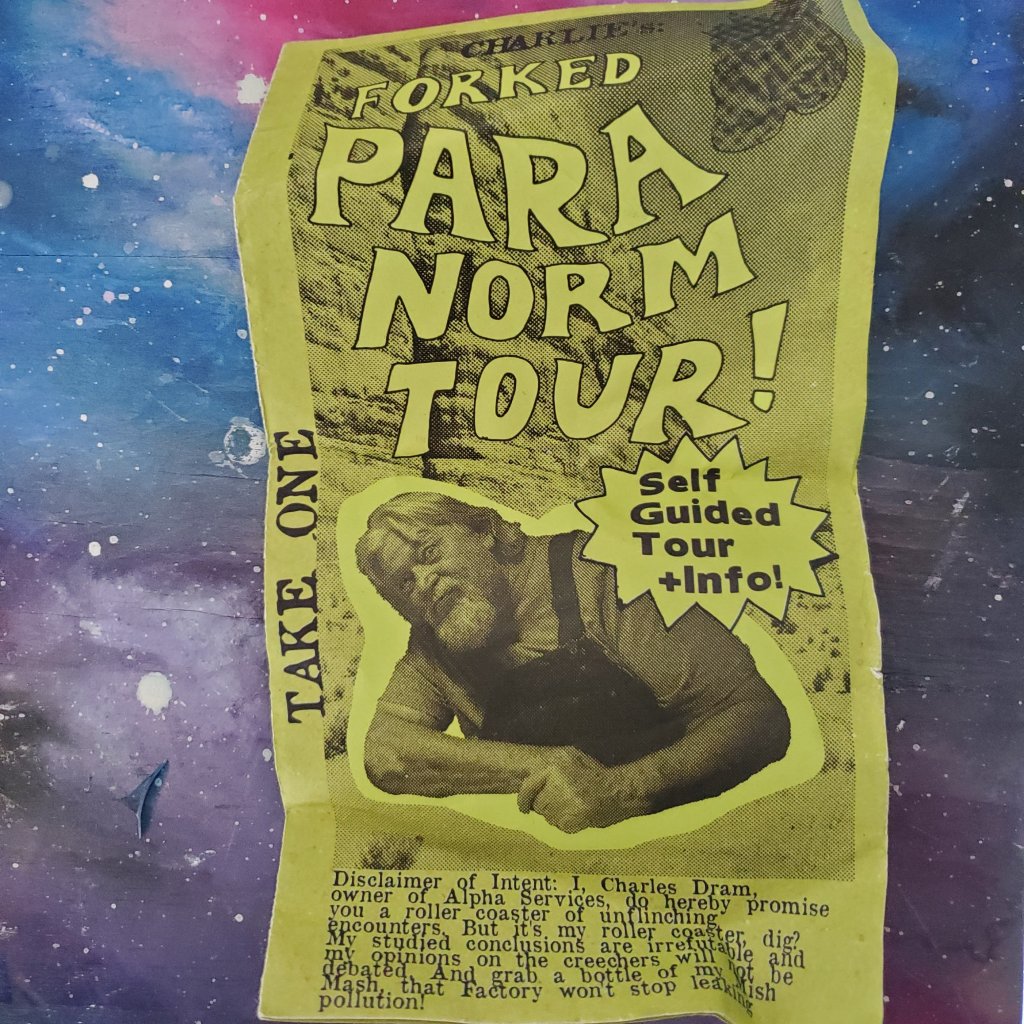
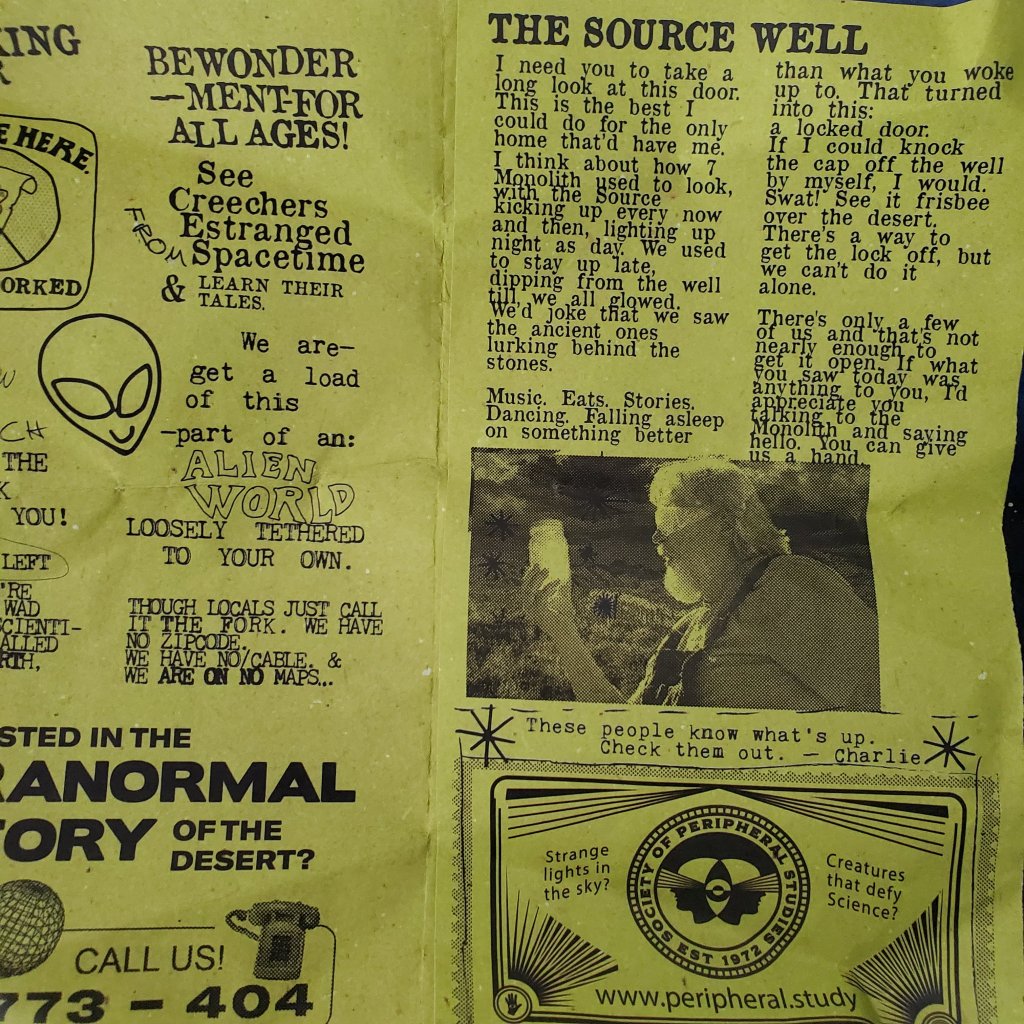
  1. Charlie Dram: Sir John Falstaff The whole story begins with Charlie Dram; an old garage attendant who lives in the fictional town of Seven Monolith Villiage in Nevada. As you can see in the brochure I photographed above, Charlie runs a small tourist attraction where he guides tours allowing people to see The Forked Earth- a dimensional rift between our world and an alien planet, that is also the fount of a powerful and dangerous place called The Source Well. At some point, Charlie goes into business with his family, who eventually cut him out of their lives.

Henry VI know thee not, old man. Fall to thy prayers.
How ill white hairs become a fool and jester!
For God doth know, so shall the world perceive,
That I have turn’d away my former self;
So will I those that kept me company.

  • King Henry IV, Part II, Act V, Scene 5.

Walter Dram, CEO of Dramcorp
2. Walter Dram: King Lear. This being America of course it was inevitable that somebody would try to capitalize on the Source Well, specifically Walter dram Charlie's brother Walter. Mr. Dram, the CEO of Dramcorp found a way to harness the source and use it. It's not explicitly stated but it's highly implied that he took the Source to a place called Plenty Valley and started using it to revitalize crops out in the Las Vegas desert.
After harnessing The Source, Walter found that he was able to create produce that had unusual properties and from there he opened his grocery store, Omega Mart. If you go to the store, the products seem just a little off- they all have peculiar names, seem to have peculiar properties and in some extreme cases they seem to have inhuman properties like like lemons that are alive!

Charlie calls these creatures  "mascots;" creatures that have that seem to be living cereal boxes. The source seems to have unpredictable and uncontrollable effects on natural products but because every Omegamart produce is doused with Additive S (which is Walter's addictive additive made from The Source), customers don't seem to care if they become addicted to any products that are laced with The Source.

Walter finds himself extremely rich and successful and opens up his corporation Dram Corp in 1977. Decades later in 2020, Walter promises to make his daughter Cecilia Dram his sucessor when he retires, but at some point, he must have reneged on that promise, proclaiming Kaz Matzumora the future CEO. What happened to accelerate the fallout between Walter and Cecilia, we're not sure, but it's quite possible that it has something to do with Cecilia's daughter Marin.

Better that thou hast not been born, then not to have pleased me better.

King Lear

So we have a rich and successful man, who, now that he’s getting old, desires to pass his empire on to younger people, including his daughter. At the same time, he refuses to let go of power, and is willing to throw family under the bus to get his way, as he did with Charlie, and would have done with Marin, (more on that later). Let’s just say, it is very easy to spot the parallels between Walter Dram, and King Lear. Look at this video below where Walter seems to repent for his greed and abandoning his family, though it takes place in an ethereal prison.

  • LearPray, do not mock me.
    I am a very foolish fond old man,
    Fourscore and upward, not an hour more nor less;
    And, to deal plainly,
    I fear I am not in my perfect mind.
    Methinks I should know you, and know this man;
    Yet I am doubtful; for I am mainly ignorant
    What place this is; and all the skill I have
    Remembers not these garments; nor I know not
    Where I did lodge last night. Do not laugh at me;
    For (as I am a man) I think this lady
    To be my child Cordelia.
King Lear Act IV, Scene vii.

When I watched the Film Theory about Omega Mart, I thought Walter was like King Duncan in Macbeth, and his daughter Cecelia was Lady Macbeth, killing Walter to gain his power. The truth though, is much more complicated, and it centers around Walter’s granddaughter, Marin.

2. Marin Dram: Cordelia from King Lear, Miranda from The Tempest

if you look at the videos in Charlie’s office you can see Cecilia Dram (Walter’s daughter), drinking the Source. Within a minute she starts having cramps, and convulsions; she has been literally impregnated by the Source! Her daughter Marin was conceived by Cecilia Dram and the Source. But, there’s a catch; Marin, because she was created from the Source, cannot be too far from the Source Well. So, rather than living with her her mother and grandfather at Dramcorp, she’s forced to live in a yurt in Seven Monolith Village, very close to the Source Well.

Tarot cards found in Marin’s desk.

Marin’s diary expresses a deep sense of loneliness and a desire to explore the world, not unlike Prospero’s daughter Miranda in The Tempest. She also expresses romantic feelings for Rose, a girl who lives in Seven Monolith, (who according to Charlie, is the granddaughter of a woman who successfully translated the language of the aliens who created the Source Well). The wonderful music video “Marin’s dream” playing below, shows cogent references to Marin having bisexual feelings for Rose and fear towards her mother. This is partly because, since Marin is connected to the Source and her family has been exploiting The Source for profit, she is fearful that her mother will exploit her for her Source-given powers .

We are such suff as dreams are made on, and our little life is rounded with a sleep

Prospero- The Tempest

It is further revealed that Marin is capable of creating living creatures with her own mind because of her connection to the Source. Below is a drawing by Marin of a hamster which then came to life in 7 Monolith! These powers make Marin highly desirable to both Celia and Walter. As Charlie mentions in the brochure, there are living product creatures called mascots and it seems likely that Marin is literally creating these creatures in her sleep!

At the end of the music video you can see Marin going through a portal in the wall. In Seven Monolith you can access numerous posters, emails, and phone calls that discuss and speculate about Marin’s disappearance. Some say she ran away from home, some say she was violently sucked into the portal, but the music video makes it very clear that Marin Dram chose to leave Seven Monolith Villiage, and to leave our universe as we know it. Why? It probably has to do with her mother, Cecilia Dram.

Cecilia’s letter to Charlie, May 2017

Cecelia Dram: Goneril and prosperO

Like I said before, I was expecting Cecelia to be the villain in the story- a power-hungry “thankless child,” (as King Lear puts it), who murdered her own father to take control of his empire. Now it’s possible that she did want to take the company at some point, but what also seems clear is that Cecelia is also seeking redemption for herself, and a reunion for her family.

Cecelia and Walter’s Disappearance

In a highly classified video that you can only access in the Dram Corp offices, Walter and Cecilia confront each other about Marin, and Walter seems to be intent on exploiting her gifts for profit. At this point, the video cuts out, but the audio tells us that Walter has fallen into the Source Well. It’s unclear whether he fell or if Cecilia or Marin pushed him, but what we do know is that Walter in every subsequent and email and communication with the board is referred to as “traveling.” When I first saw this, I thought that it meant that Cecilia had murdered Walter simply to gain control of the company, but it seems to be wilder than that; it seems that Cecilia might have thrown Walter into the source well to protect her daughter, but now wishes to get him back.

Once Walter falls into the Source Well, he actually absorbed so much Source that he no longer has a physical form; he seems to have ascended to a higher plane of existence and as you can see in this whiteboard, there’s a rumor that he is actually hiding somewhere in the Omega Mart facility. I won’t give away where he actually is though; you’ll have to discover it yourself.

Cecilia’s motives are the most interesting and ambiguous in the course of the Omegamart storyline. Her demeanor changes drastically after the disappearance of her father and daughter; it seems that she is trying to harness the power of the source not for profit but for but to cause her employees to “Ascend to a higher plan of existence.” Other members of the board in teleconferences seem frustrated with her, accusing her of no longer taking an interest in selling products anymore and that she seems to be coming down with strange cult-like behavior. Look at this highly confusing LED talk she gave one month after Walter’s disappearance:

So it’s ambiguous what Cecilia’s motives are- it could be that she’s attempting to create an army of Source-addicted zombies to do her bidding. It’s also possible that she is trying to figure out how to replicate the same experience as Walter and Marin. Maybe she wants to try and replicate what happened to them, so she can see them again.

Further evidence also supports that Cecelia is desperate to contact Marin and Walter by the fact that in addition to working on LAT, (her employee advancement program), Cecilia is also pushing her research team to create inter-dimensional portals. The clip above in which Cecilia talks to her DART scientists strongly implies what Cecilia really wants to do is to find her daughter in whatever dimension that she’s actually in. Notice that when the test subject mentions a teenage girl he sees in his dreams, Cecelia immediately drops everything to talk to him. Soon after that, DART starts working on DRAMNILATE, a technology that allows researchers to look inside people’s dreams, and test them on the exact same employee as before. Clearly Cecelia is hellbent on finding Marin anywhere, even in dreams!

Through the entire Omegamart storyline, it is ambiguous as to whether Cecilia is the hero or the villain. Her quest to find her family is noble, but she is hiding behind a mask of unbridled capitalism and exploiting a company that creates an addictive substance to do it. It seems almost Faustian that Cecelia has made a deal with the Devil to try and get her family back.

 Tell your piteous heart there’s no harm done. No harm.

I have done nothing but in care of thee,

Of thee, my dear one, thee, my daughter, who

Art ignorant of what thou art…

The Tempest , Act I, Scene ii.

So what does this have to do with Shakespeare? When I saw how Cecelia was protecting Marin I saw a king Lear trope; a greedy cruel old man who places his kingdom ahead of even his own family. Lear’s daughter Goneril lies to him and rejects him, but she does so to protect herself. Cecelia is alike a Goneril who protects Cordelia, the youngest and most innocent of Lear’s daughters, while Marin is like Cordelia herself.
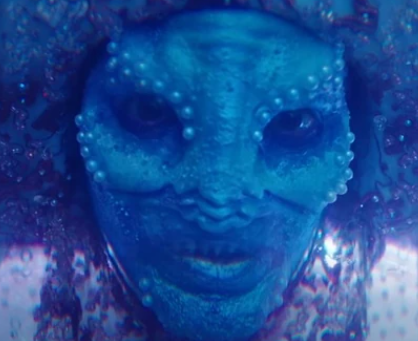
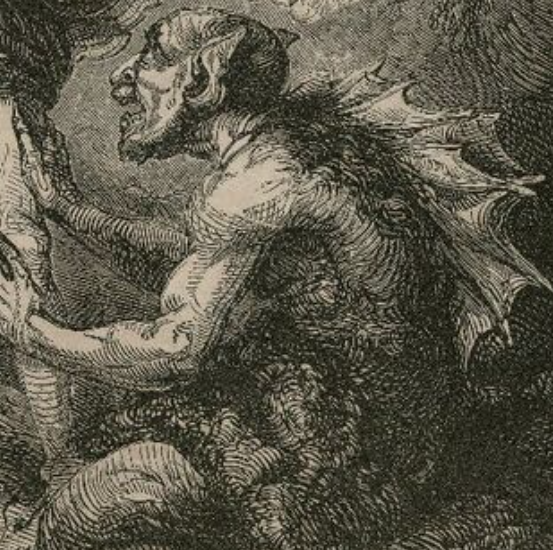
Zenion creature (left), and illustration of Caliban (right).

This island’s mine, by Sycorax my mother,
Which thou takest from me! When thou camest first,
I loved thee And show’d thee all the qualities o’ the isle,
Cursed be I that did so! All the charms
Of Sycorax, toads, beetles, bats, light on you!
For I am all the subjects that you have,
Which first was mine own king!

Caliban, Act I Scene ii.

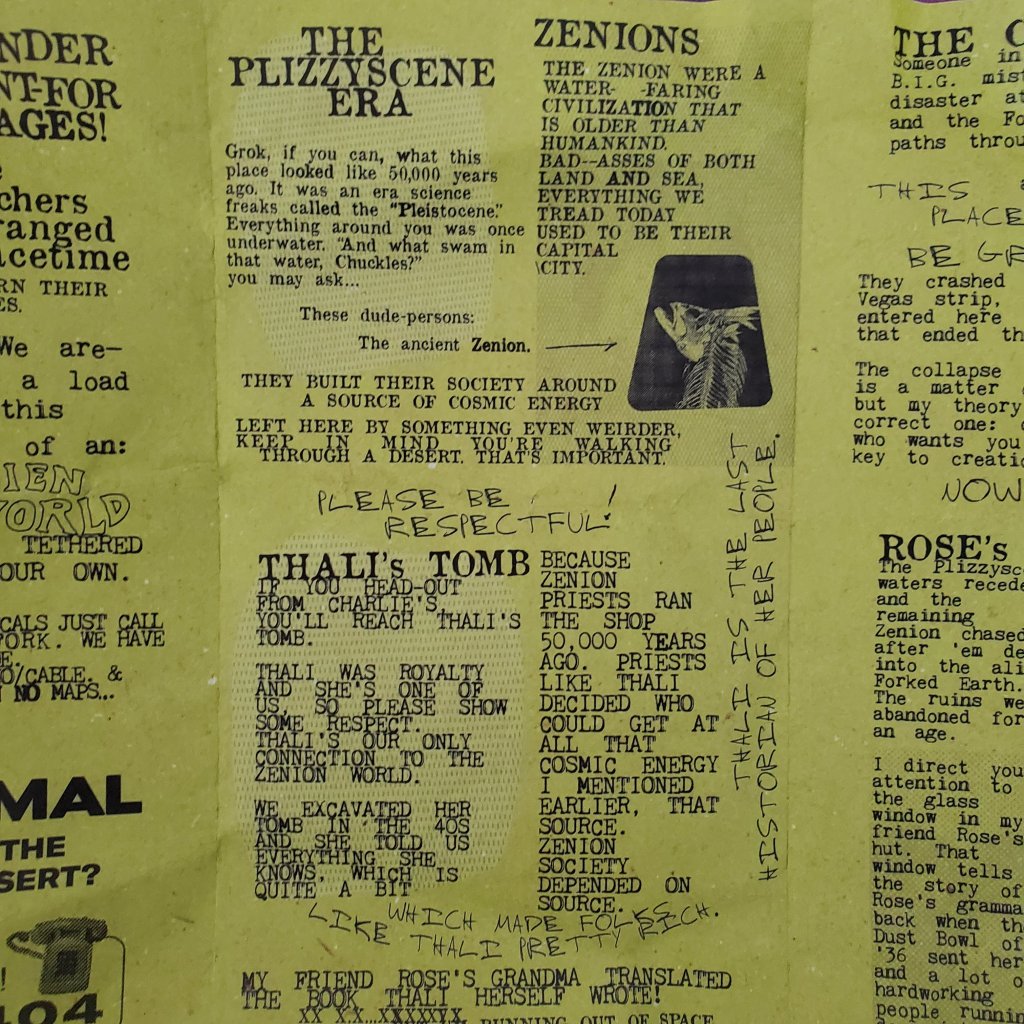
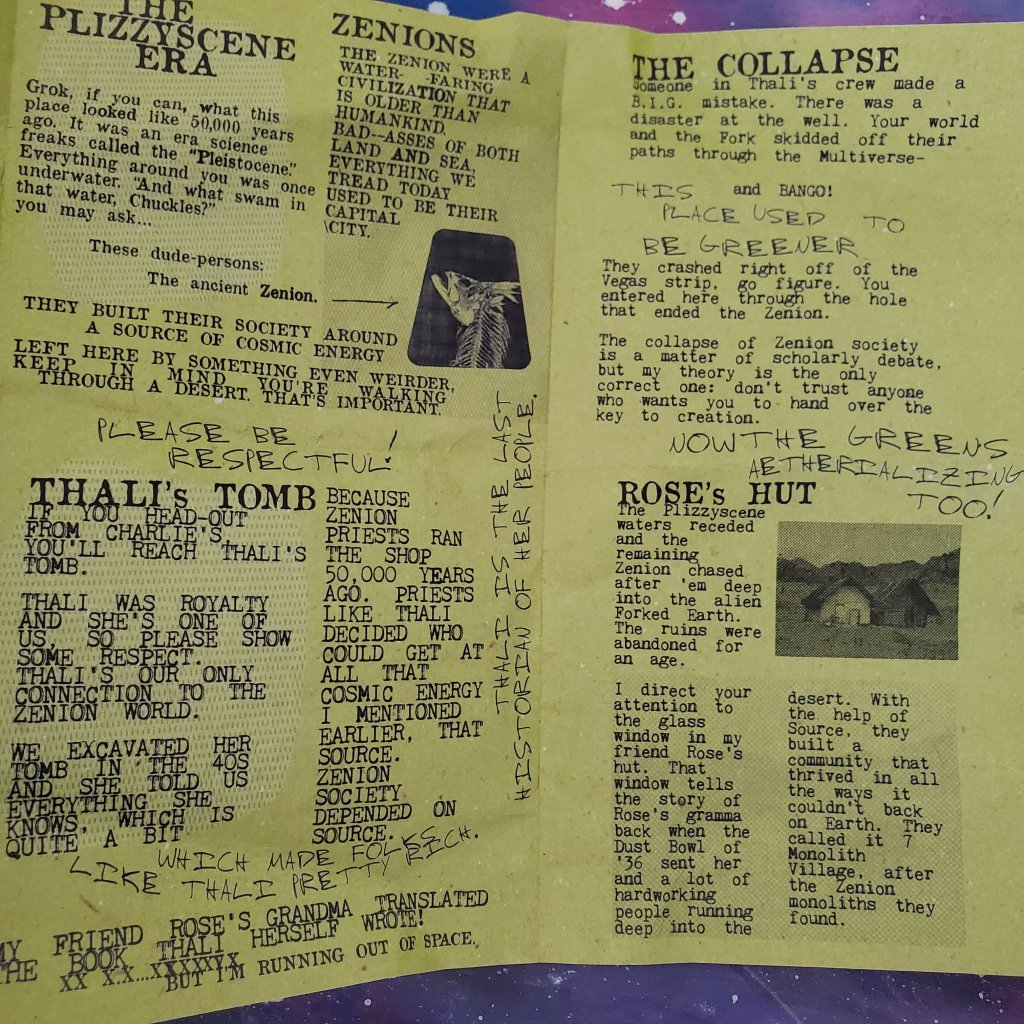
Looking at the totality of the Omegamart story, there are several connections to the Tempest Calliban the creature that lives on Prospero’s island bears striking similarities to the Zenions. He is described as being man and fish, much like the Zenions. Further, Caliban is not a native inhabitant of the island; he was brought over by the witch Sycorax and Prospero exploited him after Sycorax died, much like how the Dram family, especially Walter, exploited The Zenion’s magical Source.

In both cases, the Prospero character has both noble and ingnoble goals- Prospero wants to get himself and his daughter home, but also to revenge his exile to the island. Walter and Cecilia seem like Prospero split in two: there is a light side that wishes to defend Marin and see her safely home,and the dark side that wishes to exploit The Source and addict unwitting consumers.
I won’t give away how the story of omegamart ends but let’s just say that Walter gets across the notion that he has repented for his greed, and wishes to free the Source from the factory, much like how Prospero frees Ariel at the end of The Tempest. In both cases, YOU are the necessary person to help free Walter. Both Walter and the Meow Wolf team have hinted that there are new areas of Omega Mart that guests haven’t unlocked yet. Perhaps you will be the one to unlock the secret to free Walter, and the Source!

  • ProsperoNow my charms are all o’erthrown,
    And what strength I have’s mine own,
    Which is most faint: Let me not,
    Since I have my dukedom got
    And pardon’d the deceiver, dwell
    In this bare island by your spell;
    But release me from my bands
    With the help of your good hands:
    And my ending is despair,
    Unless I be relieved by prayer,
    Which pierces so that it assaults
    Mercy itself and frees all faults.
    As you from crimes would pardon’d be,
    Let your indulgence set me free.
Prospero. Act V, Scene i

Thanks for reading this post. If you enjoyed reading it, leave a comment below. Please also relate any Omega Mart stories you had at Area 15!

Shakespeare Crafts: Shield

Now put your shields before your hearts, and fight
With hearts more proof than shields

Coriolanus, Act 1, Scene iv.
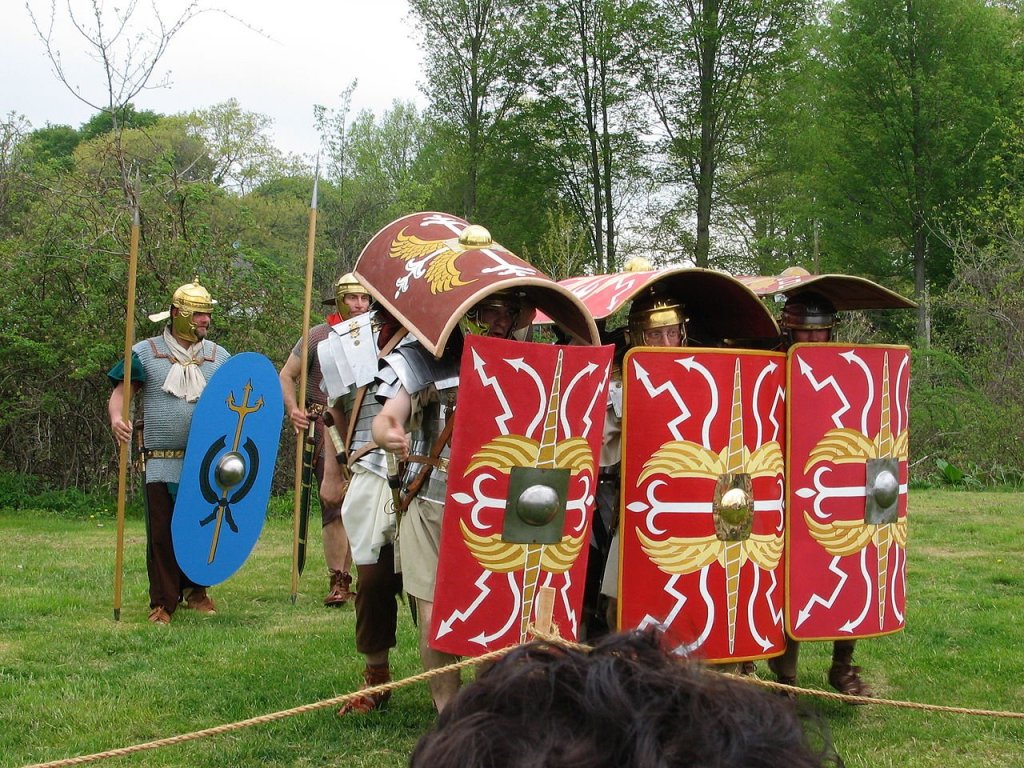
Roman re-enactors demonstrate a testudo formation (The Tortoise). Wikimedia Commons.

Shakespeare uses the word “shield” over 30 times, often as a verb meaning ‘to protect.’ However, there are a few very important references to this ancient tool of defense, and constructing one can teach you a lot about the history of a culture, and that culture’s methods of waging war.

A Brief History of Shields

The seven-fold shield of Ajax cannot keep

The battery from my heart

Antony and Cleopatra, Act IV, Scene 14.

As the quote above from Antony and Cleopatra mentions, the shield has been around since the dawn of history, certainly since Roman times. The Romans prized their large shields called scuta, which they used in defensive formations as the soldiers crashed through their enemies’ defenses.

DIY Roman shield
A replica of an ancient Celtic shield.

In medieval times, Anglo-Saxons and Vikings used new and more sophisticated shield formations in some of the most important battles in early British history. This included the Battle of Hastings in 1066, which ended the Anglo-Saxon era when the English abandoned the protection of their shield wall to chase the Norman invaders, who then annihilated their forces and proclaimed their leader William of Normandy, the conqueror of all England.

In this excellent video, historian and fight choreographer Mike Loads traces the history of medieval shields and shows step-by-step how to make an authentic Anglo-Saxon shield!

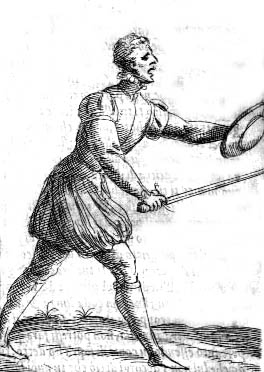
Man fighting with a sword and buckler.
Illustration of a man fighting with a sword and buckler

Swashbuckling

[Enter SAMPSON and GREGORY, of the house of Capulet, armed with swords and buckles]

Shakespeare’s Romeo and Juliet begins with servants armed with swords and small shields called bucklers. These shields were designed to be used in single combat (duels) and were very light and agile. According to Mike Loads, young men would wear their swords and bucklers on their hips and make a loud racket as they walked through the streets. The shield proclaimed that they were armed and dangerous. This macho swaggering is the origin of the term “swashbuckling,” which is probably how these servants see themselves since they spend the first scene of the play trying to pick a fight.

What Is heraldry?

A series of heraldic devices from the Royal College of Arms.

Just as the sound of a buckler announced to the world that a young man was armed and ready to fight, the design on a nobleman’s shield announced his status, his house, and his family motto. The popular historical consensus is that once the medieval knight arrived on the battlefield, they started using their shields and tabards as a colorful display; one that made it clear that they were noble. In war, a knight or other nobleman could collect a hefty ransom if they captured another knight alive, so if you belonged to a rich noble house, your brightly decorated shield could save your life on a battlefield in more ways than one.

Each heraldic design would be registered in the College Of Arms, and many of them are still on record today. In Shakespeare’s Pericles, a group of knights presents their shields to King Simonides and his daughter Thaisa right before a joust and she reads their mottos. The shields are like the knight’s ID tags and help the princess know whom to award the prize money once the jousting is over:

Simonides. Are the knights ready to begin the triumph?
First Lord. They are, my liege;
And stay your coming to present themselves.
Simonides. Return them, we are ready; and our daughter,
In honour of whose birth these triumphs are,
[To Thaisa] 'Tis now your honour, daughter, to explain
The labour of each knight in his device.
Thaisa. Which, to preserve mine honour, I'll perform.
[Enter a Knight; he passes over, and his Squire]
presents his shield to the Princess]
Simonides. Who is the first that doth prefer himself?
Thaisa. A knight of Sparta, my renowned father;
And the device he bears upon his shield
Is a black Ethiope reaching at the sun
The word, 'Lux tua vita mihi.'
Simonides. He loves you well that holds his life of you.  Pericles, Act II, Scene ii.

How to make your own shield!

Since shields are an important part of Shakespeare’s plays, here’s how you can make a shield activity at home or in the classroom.

Making the basic shape

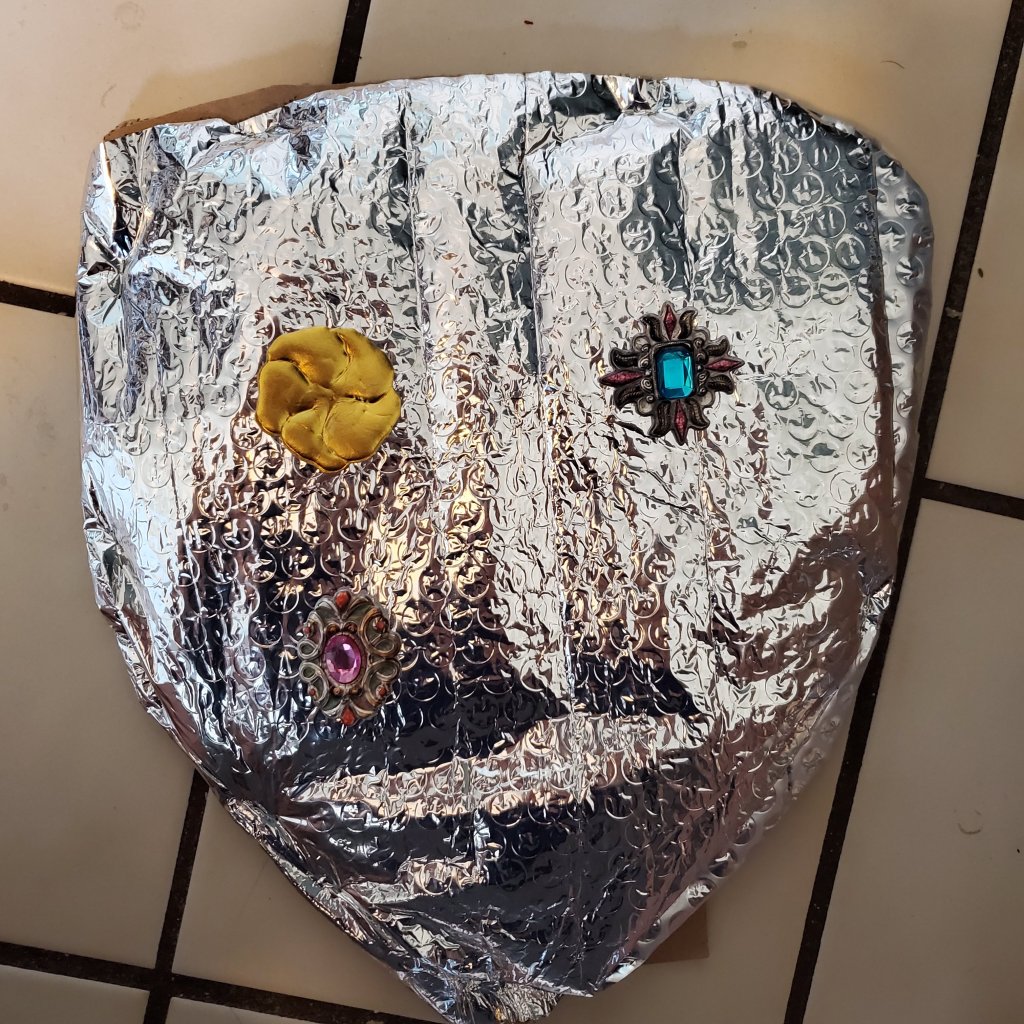
If you want to make a buckler, you need a round surface a little bigger than a dinner plate. You should be able to hold it and move it like an extension of your fist. If you want to make a basic 14th-century type shield like the ones I have below, cut out the familiar, ‘State of Ohio’ shape below. I made mine about 11 inches long, and 10 inches wide. I used cardboard but you can also use paper or wood or metal if you have real craftsperson talent.

Choosing a color and design

I got a lot of good information on how people chose designs for their shields by visiting English Herritage.org’s Guide to Heraldry: https://www.english-heritage.org.uk/guide-to-heraldry. The website has a lovely catalog of the colors and designs real knights and barons and lords used to make their shields/ coats of arms stand out. You can choose a simple background with a plant, animal, etc. in the foreground, or you can divide the shield into a cross, a diagonal line called a Fess, or a triangle called a chevron.

The Personal Touch

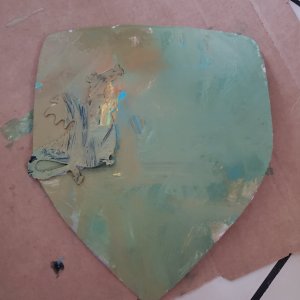
You need not be constrained by historical precedent in coming up with your shield. Like any canvas, the only limits on your shield design are your imagination. Check out these designs I made with my kids!

Your Motto

Most mottos are single lines of text (usually in Latin), that illustrate what is important to the house that sports it. For example, Richard II’s motto was: “loyalté me lie,” (“Loyalty binds me.”). You could come up with a simple motto and Google Translate it into Latin or French, etc.

Regal coat of arms for King Richard III. Note the white boar, (Richard’s personal charge). Note also that he has combined the 3 red lions of the royal house of Plantagenet, with the blue and gold fleur de lis of the crown of France. Richard claims the throne of England and France and combining heraldic imagery is known as “marshaling.”

Now that you have your shield, with its own unique motto and design, it can be a useful tool to explain how people saw themselves in Shakespeare’s day. Nowadays we mainly see ourselves as individuals, but this kind of heraldry illustrates how knights, nobles and servants saw themselves mainly as part of a house, with its own values, its own traditions, and sometimes an us vs. them mentality against other houses.

This kind of household mentality is of course, at the core of Romeo and Juliet and the Wars of the Roses cycle of plays, and Shakespeare uses heraldry to illustrate this mentality. Look how the knights in the tournament scene from the 2013 film are dressed in their houses’ colors and the nobles and servants are also wearing those same colors:

Like sports fans who wear the jerseys of their favorite teams, shields and heraldry proclaim the allegiance of the servants and nobles who belong to powerful houses/ kingdoms. This kind of emblem can help students understand a piece of medieval and Renaissance history, and how that history shapes our own mentalities today.

References:

  1. English Heritage Guide To Heraldry: https://www.english-heritage.org.uk/guide-to-heraldry
2. Sword and Buckler and Why I Do It by Borislav Krustev. HEMA Digest, FEBRUARY 12, 2019.

3. https://www.thearma.org/essays/SwordandBucklerP4.htm#.YtysVlfMLq8

Hqppy Father’s Day From Shakespearean Student!

Hello everyone!

Happy Father’s Day! I’ve been teaching a number of classes these past few days so I haven’t had much time to post but in honor of Father’s Day- here’s a bunch of my favorite past Father’s Day posts:

  1. Shakespearean Father’s Day Cards: Find some nice Shakespearean sentiment to show your Shakespearean dad how much you care. 
Special posts for Father's Day!
Shakespearean Greeting Cards from Immortal Longings.com
  • 2. Bios of William Shakespeare and John Shakespeare Both Shakespeare and his father had children, and both worked hard to make a better life for their offspring, so I thought I’d tell you some of their life stories so you can learn more about these great men.
The house on Henley Street, where Shakespeare was born in 1564. Click here to learn more about Shakespeare’s birthplace.
  • 3. My Picks For Top 5 Best and Worst Dads in Shakespeare I’ve gone through the entire cannon from As You Like It to Alls Well That Ends Well, and picked out the dads whom I think deserve recognition either as great or terrible parents. Who will take the coveted #1 Shakespeare Dad prize? Stay tuned to find out!
Coffee mug with a quote from one of Shakespeare’s most well-known dads Polonius in “Hamlet.”

I’ll also be sharing some great memes and reviews on Instagram and my podcast next week.

The Shakespeare Authorship Controversy and Conspiracy Theories

“There is a tendency for us to view Shakespeare as this unquestionable monolithic genius. But there is also in us all that iconoclast that wants to tear him off his pillar or plinth.”

Dr. Katrina Marchant

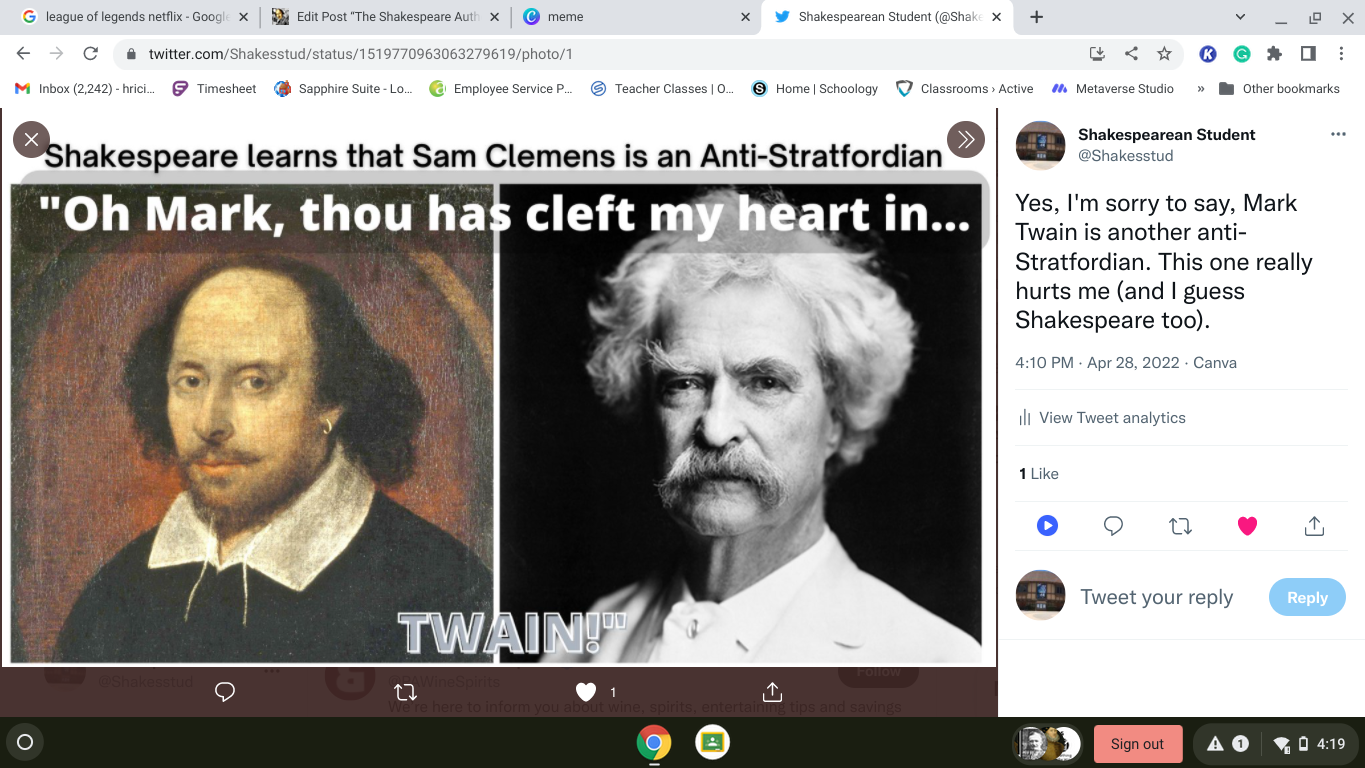
There are few things that will drive a Shaespeaeran scholar more skull-shatteringly livid than when someone asks them if Shakespeare wrote the plays attributed to him. There are dozens of YouTube rants, bile-dripping academic papers, tinfoil-hat Tweets, and of course, centuries of anti-academic book bashing and counter-bashing research on the subject. So I won’t try to settle this debate, but I think the debate itself is worth looking at.

The authorship controversy is essentially a conspiracy theory- Was some unknown writer sending scripts to Shakespeare’s company and using the actor from Stratford as a patsy, or a pen name? Is there a massive cover-up to disguise the author of the most celebrated works in the English language? If so, why? How? and what else are they hiding?

The Malleus Malefecarum, “The Witch’s Hammer,” a 15th century book that posits that there is a vast conspiracy of witches living among us.

Now if there’s one thing I’ve learned over the past four years is that it’s extremely rare to change anyone’s mind about any kind of conspiracy theory, and there are hundreds! Ancient Aliens, Bill Gates, Covid vaccine microchips, Elvis isn’t dead, The Illuminati, Kennedy Assassination, Pizzagate, Q-Anon, Trump’s Russia connections, the list goes on. Several recent studies show that the majority of Americans have heard at least one conspiracy theory, and many of us believe these theories to varying degrees. Sadly, the internet, which was designed to share information, is extremely good at sending misinformation as well.

So as an en educator and a father, I want to focus on the Shakespeare conspiracy not just because it gets my dander up, but also because, compared to these other theories, it is actually one of the least harmful. Conspiracies like the Plandemic hoax are extremely dangerous because they dissuade people from getting a life-saving treatment, and allow this pandemic to continue. By contrast, ultimately it doesn’t really matter who wrote Shakespeare’s plays, so I think this kind of exercise is useful for educators to challenge students to think critically about this low-stakes theory, and then applying the same skill to others to become better-informed thinkers.

How to break down the Shakespeare conspiracy theory

First, let’s summarize the most compelling points of the theory that Shakespeare didn’t write his plays. This is a video by director Roland Emmerich, which he made to help promote his film “Anonymous.” Emmerich dramatizes the controversy by portraying the Earl of Oxford writing the plays of Shakespeare anonymously, and sending them to Shakespeare’s company, giving the man from Stratford credit for writing them.

There’s an old saying in science that “Extraordinary claims require extraordinary proof,” and, aside from the fact that the Earl of Oxford wrote poems, there is no evidence that Oxford ever even spoke to Shakespeare’s company. In fact, almost none of this video is supported by any historical evidence. Now it would be a lot of work to refute each argument of this video point by point right? And surely I have better things to do than do a point-by-point refutation, but…

A Point-by Point refutation of the Roland Emmerich video:

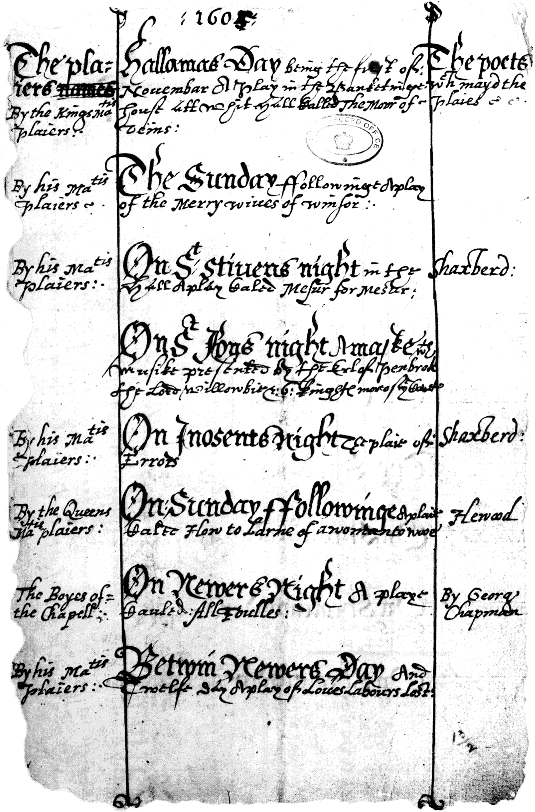
– Shakespeare did leave evidence of his handwriting, just not evidence of his dramatic writing. The fact that his correspondence didn’t survive doesn’t mean there wasn’t any. The kind of cheap parchment that writers of the period used dissolved very easily, especially when they used ink with high iron content. The examples we have of Shakespeare’s writing are mainly legal records and books that were designed to last. In short, there’s no conspiracy to hide Shakespeare’s manuscripts, they simply didn’t survive.

The dedication page of the 1623 First Folio.

We don’t know for sure that his parents were illiterate, or that his daughters were. That is based on an urban legend, not actual proof. Also, plays were not written to be read, that’s why TV viewers are viewers and the grounding are called an audience.

A. Shakespeare wrote about aristocratic people because they were paying his rent. His company was literally named “The Lord Chamberlain’s Men.” One reason why Shakespeare was more successful than Ben Johnson was that he was deferential and obsequious to the English aristocracy; he had to sing their praises to stay in business.

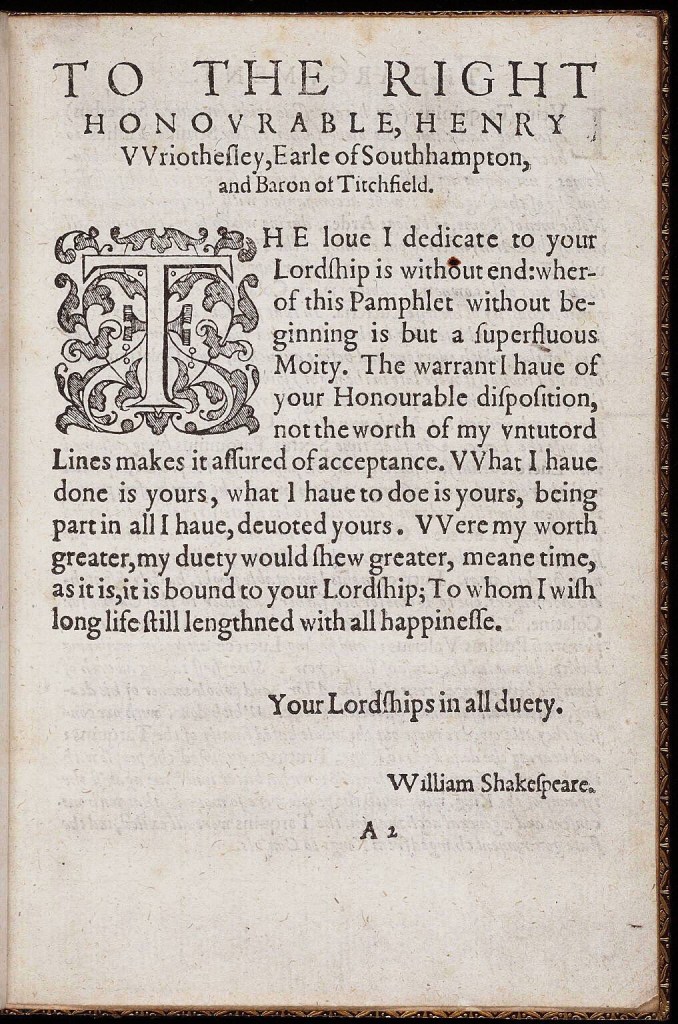
Dedication page of Venus and Adonis, which Shakespeare wrote to the Earl Of Southampton.

B. Every character that Emmerich mentions is not an aristocrat- Bottom is a lower-class weaver, Mistress Overdon is an inn-keeper. The only aristocrats Shakespeare ever insults are Polonius (who isn’t real), and Sir John Oldcastle in the early draft of King Henry IV, which he immediately changed to Sir John Falstaff once Oldcastle’s family members complained about it to Shakespeare’s company. Emmerich is flat-out lying when he says Shakespeare mocks the English upper class like an equal.

C. There’s a very simple explanation of how Shakespeare was able to write about the manners and lives of the English aristocratic class: he didn’t. All of Shakespeare’s comedies (except for Merry Wives which has the aforementioned Falstaff as a character), and tragedies take place in other countries like Italy, France, Sicily, or Greece. His History plays are set in England, but they dramatize events that happened 100-200 years before Shakespeare was born, meaning that he didn’t need to know too much about contemporary court politics. Furthermore, the majority of the plots he used were recycled from history books, poems, and prose romances.

It’s useful to think of Shakespeare not as a novelist like Dickens or Tolstoy and more like a TV or film screenwriter like George Lucas or Aaron Sorkin. He didn’t write based on real-life experiences or conjure new ideas out of thin air. He was a popular dramatist who adapted existing works of literature to be dramatized onstage. This is why I created my YouTube comedy series “If Shakespeare worked for Disney.” Emmerich, like many Anti-Stratfordians, is assuming that Shakespeare couldn’t have written plays about the nobility without being one himself, but that’s not what Elizabethan dramatists did- they adapted pre-existing work to fit on the public stage, which means anyone with a good education and knowledge of the theater could have written them, regardless of his or her upbringing.

If you are wondering how I could possibly know Shakespeare’s writing process,, the answer is simple: All of Shakespeare’s sources have survived, which means that I can prove that his plays are adaptations. This is a common problem with most conspiracy theories- they never take the straightforward way to explain something. Instead, they take a theory and twist facts to suit that theory. In this case, they twisted the facts about the Earl of Oxford’s life to make him look like Hamlet and based on that, they made him look like the true author of Shakespeare.

D. Honestly the handwriting is the weakest point- yes Shakespeare spelled his name differently in documents but this was before standard English spelling. The first English dictionary was at least 100 years after Shakespeare’s death. This point is clearly designed to discredit Shakespeare and make him seem uneducated. But again, this point is irrelevant when you consider that Shakespeare wrote for theater, where standard spelling is completely unnecessary.

By the way, Ben Johnson spelled his name differently in his manuscripts.

The Debate- Feelings vs. Facts. Modern vs. early modern

When I was in high school, taking my first class on Shakespeare, I watched this documentary which almost convinced me that Oxford was the true author of Shakespeare. The researcher they interviewed seemed so passionate and I wanted to believe what he said was true. But that was before I started reading about Shakespeare’s life for myself, and looked at the evidence myself.

How to Spot a Conspiracy Theory

https://allianceforscience.cornell.edu/conspiracy-theory-handbook/

The common traits of Conspiracy Theories from the Conspiracy Theory Handbook

If you look at many different conspiracy theories, they often exist in a form outside of normal reality, to the point where the believers have no interest in any kind of contrary evidence, logic, or any person who even questions it. Essentially the conspiracy becomes their identity, and they will virulently defend this conspiracy from anyone and anything that opposes it. Below is an explanation of the basic parts of a Conspiracy theory, with some points on how they all apply to the Shakespeare Authorship Controversy

Contradictory Beliefs:

Believers in conspiracies are motivated by feelings, not facts, and they don’t care how inconsistent those theories are. For example, the same people who believe Joe Biden lost the presidential election, also believe that the president (Joe Biden) is also being played by an actor. This might explain why many people believe that people like Christopher Marlowe wrote the works of Shakespeare, despite the fact that he died 9 years before Shakespeare started writing.

Overriding suspicion:

Again, since the believer is motivated by feelings, they are naturally suspicious of any contrary evidence and just assume anyone who contradicts them is in on the conspiracy. This is called self-sealing the conspiracy.

Nefarious intent:

One question that inevitably comes up with the Shakespeare Authorship debate is: “Who cares?” Usually, this means “Does it really matter who wrote the plays?” However, I want to use this question in this context: “Why go through the trouble to conceal who wrote these plays?” As I mentioned earlier, though Shakespeare is very famous and culturally important now, he certainly wasn’t back in his lifetime. Playwriting was not a venerated profession, and socioeconomically, Shakespeare was little better than a tailor. Why would it be worth it to conceal who wrote a few, fairly popular plays in 1616?

It would take an enormous amount of effort to conceal who wrote these plays for 400 years- you’d have to pay off publishers, fake court records (like the one I showed you above), keep an entire court quiet, and make sure nobody ever wrote down the truth for 400 years. Why would it be worth it? This kind of logic is why the Moon Landing and the Flat Earth conspiracies don’t hold up to rational thought- there’s simply no reason to go through the effort of concealing the alleged truth. The truth itself is just easier to defend.

Something Must be wrong:

As the name implies, Anti-Stratfordians don’t so much believe in Bacon, Pembroke, Oxford, etc, so much as they actively choose not to believe in William Shakespeare of Stratford. This means they will use every bit of their energy trying to prove that theory, and won’t stop until they find something, no matter how nonsensical, to prove their Shakespeare is the real Shakespeare.

Persecuted victim:

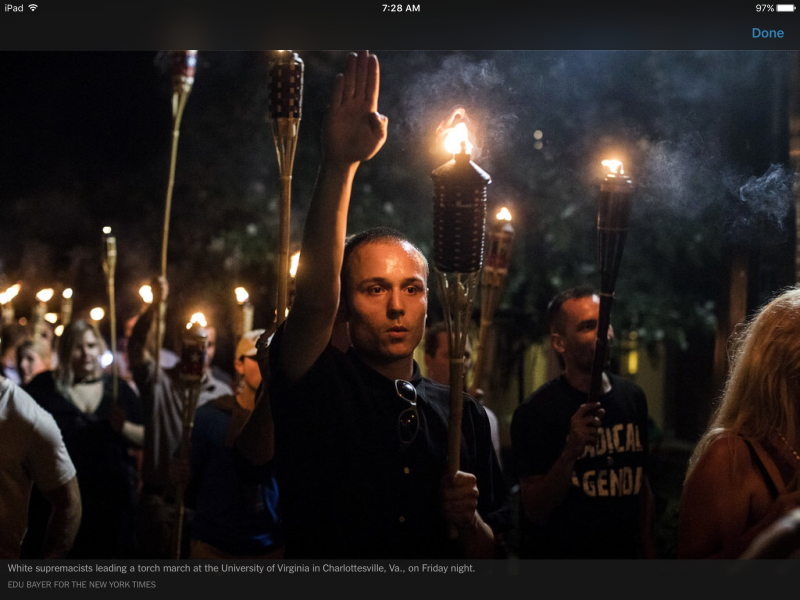
Let me be blunt- a conspiracy is very simmilar to a delusion, and any attempt to shatter that delusion is a form of persecution for the conspiracist. The most infamous example of how conspiracy theorists can feel persecuted and empowered at the same time is the way it permeated Nazi Germany and neo-Nazi units. Hitler came to power by spreading the theory that the Jews were secretly controlling the world and Germany was persecuted, while at the same time, Germany was destined to control the world in the eyes of the Nazis. I mention this not because I think Anti-Stratfordians are Nazis (how could I watch I Claudius otherwise?), but that conspiracy theories are potentially very dangerous because they foster a self-serving victim mentality where people are constantly looking for someone to blame for their problems and they will sometimes become violent against anyone who challenges them.

Immune to Evidence

One of the most important concepts in law is the notion that someone is ixznnocent until proven guilty. Along those lines, the prima facie, the accepted truth is accepted as truth, until new evidence contradicts it. If you look at the Supreme Court mock trial for the Authorship question back in 1987, that was the conclusion they came to in the end. Though little historical evidence for Shakespeare has survived, there is NO PHYSICAL evidence that contradicts it, so in the interest of prima facie evidence, they ruled for Shakespeare.

Now real conspiracy believers never believe in the merits of contrary evidence. They will just assume it is manufactured or faulty; part of the attempts of those nefarious truth concealers to pull the wool over their eyes.

Re-Interpreting Randomness

I’ve seen many people claim that the evidence for conspiracies is not found in documents or in scientific explanation, it’s in some kind of code or cipher or series of clues that only the believers understand. As you’ll see below, some of the most famous Anti-Stratfordians claimed to find hidden codes and ciphers in Shakespeare’s plays that prove that he was concealing his true identity. They will also cite coincidental details like the fact that the crest of Edward DeVere was an eagle shaking a spear, and claim this proves his identity as the true author of the plays. When you see a theory like like this, remember, correlation is not causation. Just because a few bad things happened when a few people said “Macbeth,” does not mean Macbeth is cursed. Some things actually are coincidences and not everything has a dramatic or sinister cause. This brings me to my next point:

The real enemy of conspiracies: Disappointing facts (Spoilers ahead for the movie “Coco”)

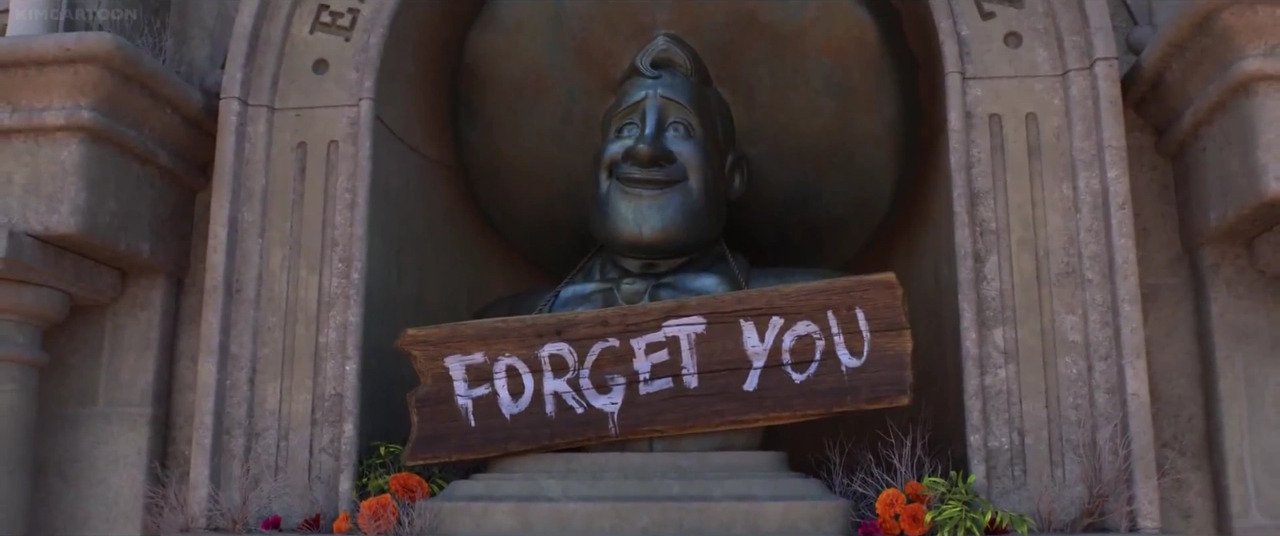
Let’s do a little thought experiment: Let’s imagine that you were Miguel from Disney’s Coco, and you discovered that your hero Ernesto Dela Cruz murdered your grandfather Hector, but (unlike in the movie), he actually DID write the songs he said he did. How would you feel about Hector? Would you hope and pray that Ernesto lied and your virtuous grandfather was the real author? Might you even concoct a conspiracy theory to rewrite Ernesto’s history and get Hector celebrated as the real author of “Remember Me?”

I’m not suggesting that Shakespeare is guilty of murder, or any other crime (apart from usury, hoarding grain, and a few minor tax violations). What I’m trying to do is to draw parallels between two men who are icons that are beloved by their hometowns, who created work that resonates with a lot of people.

We all have a tendency to take people we admire and put them on pedestals, (like the quote at the beginning mentions), and many people try to identify with their heroes. This is really easy with Shakespeare because most of the personal details of his life have vanished, so we can imbue him with our own sensibilities. Case in point- when Mya Angelou read Shakespeare’s sonnets as a little girl, she initially thought that he was a black girl. Likewise, Eugene O’Neill and other Irish and Irish American writers have thought he might be been Irish.

Some of the most outrageous anti-Stratfordians clearly have an axe to grind because they have a family connection (real or imagined) to the man they believe to be Shakespeare. In the 19th century, Delia Bacon wanted to prove that the real author of Shakespeare’s plays was the 17th-century poet, philosopher, and essayist, SIR FRANCIS BACON. Ms. Bacon hated Shakespeare because she thought he was an illiterate sheep-poaching commoner. She, therefore, used her theory to hoist Shakespeare off his literary pedestal, and therefore elevate herself because she believed she was descended from Sir Francis (though in reality, she wasn’t).

Rather than using any kind of historical evidence to prove her theory, Ms. Bacon claimed there was an elaborate code hidden in the iambic pentameter. Subsequent literary pseudo-scholars have attempted to hack the code and prove that they can prove that Sir Francis was the real author of the plays. In the late 1800s, American politician and author Ignatius Donnelly appropriated Ms. Bacon’s theory and claimed he had found the code, which rested on the pagination of the First Folio.

Donnelly had a knack for spreading conspiracy theories; as the title page of his book shows, he also authored a book where he claimed he correctly identified the location of the lost city of Atlantis. He also hated Shakespeare because Donnelly believed he was nothing more than a businessman, exploiting the talent of others, so like Bacon, he cooked up these ‘facts’ to suit his theory in order to take Shakespeare down.

Like many conspiracy theories, Anti-Stratfordians don’t have any factual basis for the ideas they hold, they are responding to an emotional need or desire. Donnelly and Bacon wanted fame, recognition, and revenge against a man they hated. J. Thomas Looney, who proposed that the Earl of Oxford wrote Shakespeare, wanted a ‘fairy prince’ that is, a semi-mythical Bard who would lead England into a golden age. All these people were dissatisfied with the man from Stratford, so they created a Shakespeare of their own, and tried to justify his existence.

Title page of the 1623 Folio, the first complete edition of Shakespeare's plays.
Title page of the 1623 Folio, the first complete edition of Shakespeare’s plays.

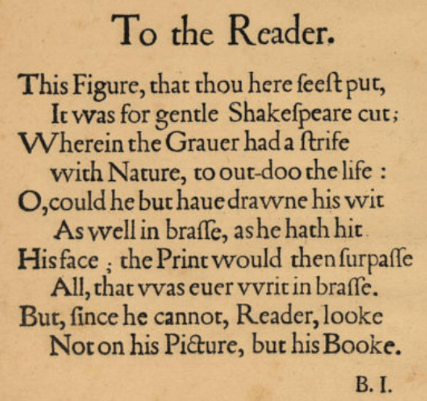
To briefly sum up why the Bacon/ Donnelly theory is false, it hinges on the page numbers of the Folio, but Shakespeare didn’t print the first Folio. If you look at the title page, it was assembled by two actors from Shakespeare’s company- Henry Condell and John Hemmings, and it was printed by Isaac Jaggard, the same man who printed Shakespeare’s Sonnets in 1609. Writers had no say in how their work was printed and in fact Jaggard actually printed the sonnets without Shakespeare’s permission! The notion that Jaggard had any interest in properly printing a secret code in the pages of his posthumous book seems to me, incredibly unlikely at best.

Lesson plan

I’ve adapted a lesson plan about conspiracy theories to include a discussion of the Shakespeare authorship question. I’ll also include a worksheet that you can use in your classroom to distribute among your students if you choose to use it as well. I think it’s a good way to foster critical thinking, scientific reasoning, and historical curiosity, and if it prevents more people from joining Q-Anon, so much the better!

This lesson plan makes use of the Conspiracy Theory Handbook, and it has great, easy to read activities about how to spot a conspiracy theory, how to talk to a conspiracy theorist, and how to avoid being taken in by a conspiracy.

Sources:

https://www.americanprogress.org/press/release/2020/10/13/491521/release-new-survey-shows-conspiracy-theories-thriving-u-s-election-nears/:

https://www.forbes.com/sites/rainerzitelmann/2020/06/29/how-many-americans-believe-in-conspiracy-theories/?sh=62b9725d5e94

https://www.c-span.org/video/?618-1/shakespeare-author-pseudonym#