Creating A Character: Richard III

In 2011, I wrote a graduate thesis about some of the challenges of playing Shakespeare’s Richard III, specifically those related to playing his deformity. What follows in this post is an adaptation of the presentation I gave at the American Shakespeare Center’s Blackfriars Playhouse, in Staunton Virginia. I gave this presentation with the help of my actors, Matt Carter, Jemma Levy, Amanda Noel Allen, and David Santangello. I also interviewed live onstage, one of the ASC’s greatest actors John Harrell and his director Thadd McQuade, about a unique production of Richard that he performed for the company back in 2002. What follows is the script I wrote for the presentation, as well as the video and Powepoint slides I projected for the audience, to help you see my work in performance. You can also consult a website I designed for the ASC’s production of Henry VI, Part III, where Richard was played by actor Ben Curns.


PRESENTATION SCRIPT

MATT CARTER:

Now is the winter of our discontent
Made glorious summer by this sun of York;
And all the clouds that lour’d upon our house
In the deep bosom of the ocean buried.
But I, that am not shaped for sportive tricks,
Nor made to court an amorous looking-glass;
I, that am curtail’d of this fair proportion,
Cheated of feature by dissembling nature,
Deformed, unfinish’d, sent before my time
Into this breathing world, scarce half made up,

And that so lamely and unfashionable
That dogs bark at me as I halt by them.

Why, I, in this weak piping time of peace,
Have no delight to pass away the time,
Unless to spy my shadow in the sun
And descant on mine own deformity: Applause, he sits on one of the gallant stools.

Section 1: Introduction

Slide01

PAUL:

Many of you recognize those famous lines from the opening soliloquy of Richard III, ably delivered by Matt Carter. Did you notice the ways Matt was moving and the qualities of his voice? Tonight, my actors and I will show you some of the choices actors have made in playing the deformity of Richard III. Deformity and Richard are so closely linked that I would argue that it is the central driving force of the character. The different performances we will discuss show changes in views on deformity, as well as changing theories on the actor’s craft.

Every actor is interested in the human body, every actor is interested in how the mind and body work together, and most importantly, how to present the mind and body of a character to an audience in a clear and articulate way. No matter how the actor decides to represent it, Richard’s deformity of mind and body are essential to the understanding of the character. In his first soliloquy, in the play Henry the Sixth, Part III, he expresses a deep pain, sorrow and bitterness at being denied a normal body. As Jemma delivers this speech, ask yourself- do you pity him? Does this man have a reason to be angry?

JEMMA LEVY:

Why, love forswore me in my mother’s womb:
And, for I should not deal in her soft laws,
She did corrupt frail nature with some bribe,
To shrink mine arm up like a wither’d shrub;
To make an enviousmountain on my back,
Where sits deformity to mock my body;
To shape my legs of an unequal size;
To disproportion me in every part,
And am I then a man to be beloved?
O monstrous fault, to harbour such a thought!

Henry VI, Part III, Act III, Scene i.

PAUL:

In this speech, like the previous one, Richard expresses the belief that his deformity was a curse, laid on by his mother. During the Renaissance, people believed that deformity was a mark of evil and a sign of being cursed by God. Like the Mark of Cain in the Bible, Richard’s deformity signifies that he was “determined,” (presumably by God), to prove a villain.” The deformity also gives Richard psychological motivation. Lacking a normal body, Richard is hungry for revenge, and in search of something to elevate himself above more fortunate people- power.

Section 2: Burbage

PAUL: The first Richard was almost certainly Richard Burbage, Shakespeare’s star actor. Burbage was associated with the role long after his death.

DAVID SANTAGELLO:

A funerall Elegy on the death of the famous Actor Richard Burbage:

Who died on Saturday in Lent, the 13th of March 1618′

No more young Hamlet though but scant of breath

Shall cry revenge for his dear father’s death:

Edward shall lack a representative,

And Crookback, as befits, shall cease to live.”

PAUL:

Unfortunately, we have no information on how Burbage played the deformity, but we have one clue as to how his performance might have been received, in the form of an apocryphal story from the diary of law student John Manningham, on 13 March 1602:

AMANDA:

Upon a time when [Richard] Burbage played Richard III,

There was a citizen grew so far in liking with him that before she went from the play,

She appointed him to come that night unto her by the name of Richard III.

Shakespeare, overhearing their conclusion, went before, was entertained, and at his game ere Burbage came.

The message being brought that Richard III was at the door,

Shakespeare caused return to be made that ‘William the Conqueror was before Richard III.’

Slide02

PAUL:

Although this story is apocryphal, it does hit upon other features of Richard’s deformity- his supreme confidence, and his beast-like sexuality. Scholars have pointed out that Richard’s lack of scruples, (the result of being born deformed), makes him completely focused and confident. Likewise, his non-conformity to traditional standards of beauty could also be seen as a rebellion against societal norms, and thus, a strange aphrodisiac. This dark creature, without a recognizable human shape, manages to exert a dark pull on the audience.

Section 3: Cibber
Slide03

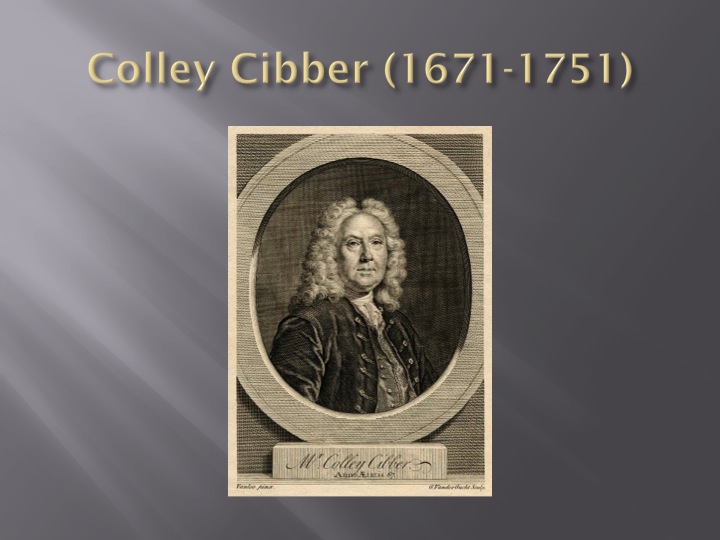
Surprisingly, for nearly 300 years, portrayals of Richard III have been heavily influenced by an obscure author who was not even Shakespeare’s contemporary

During the Restoration of theater in the 17th century Shakespeare’s plays were largely out of fashion, condemned by critics as “too vulgar for this refined age,” and playwrights began to rewrite and adapt them. The most successful adaptation of Richard the Third, came from poet-laureate Colley Cibber in 1671. Cibber’s text interpreted the story as one man’s evil rise to the crown, not the culminating story of the Wars of The Roses. Cibber cut most of the history involved. He condensed scenes, omitted others, and gave Richard 10% more of the dialogue, then Shakespeare. Cibber’s text also re-emphasizes the importance of deformity to Richard’s character- adding 8 more uses of the words “deformed,” or “ugly.” To further the point, Cibber inserted text from other Shakespeare plays that speak about Richard’s deformity, such as the Henry VI speech spoken earlier. Cibber freely cut-and pasted from Shakespeare’s histories, which can be demonstrated in this speech where the Lady Anne mourns for the death of Henry the Sixth, using lines written by Shakespeare for the funeral of King Henry the Fifth:

AMANDA:

Hung be the heavens with black, yield day to night!
Comets, importing change of times and states,
Brandish your firey tresses in the sky,
And with them scourge the bad revolting stars
That have consented unto Henry’s death!

O be accursed, the hand that shed his blood

Accursed the head that had the heart to do it!
If ever he have wife, let her be made
More miserable by the life of him
As I am made by Edward’s death and thine!

PAUL:

Cibber also wrote his own speeches for Richard, such as this one where Richard resolves to woo Lady Anne in spite of his deformity:

JOHN HARRELL:

But see! My love appears. Look where she shines

Through her dark veil of rainy sorrows

Tis true, my form perhaps may little move her;

But I’ve a tongue shall wheedle with the devil.

PAUL: Cibber’s text was extremely popular with actors because it raised Richard’s importance to a star role. Actors such as David Garrick made their debut as Cibber’s Richard, and some of Cibber’s editorital choices still survive in the two movie versions of Richard by Ian McKellen and Laurence Olivier.

13188-15979

IanMcKellen

Section 4: Olivier

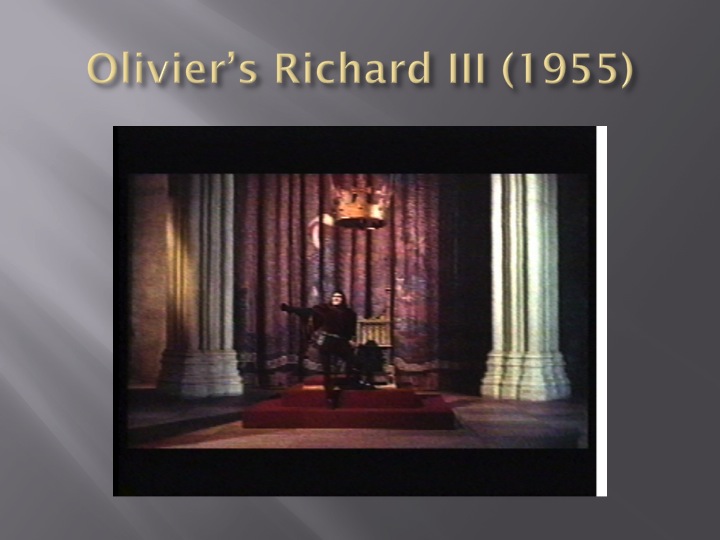
Olivier, in the 20th century was considered the definitive Richard. In his film version he emphasizes Richard’s evil and deceptive nature. He uses the character’s physical disabilities (as well as various cinematic techniques) to reveal his moral depravity.
Slide04

  • The Crown of England- the tremolos and the large crown that appears in the beginning, middle, and end of the film. Homage to Cibber.
  • CINEMATIC USE OF DEFORMITY
  • Long camera angles as he limps away, exposing hump and limp
  • Shadowy silhouette
  • In this shot, Richard slinks away from the camera, leaving his bizarre silhouette to unfurl like a snakeSlide06
  • In this shot, Richard bends over to whisper evil thoughts into the king’s ear.
  • Finally, in this shot, we see the shadow of Richard’s head, as he stares into the cell of his brother Clarence, as he plans his murder. We see through this shot, Richard looms as a great evil presence.

Section 5: Sher

Slide07

After Olivier, actors abandoned the approach of making Richard into a monster, and favored a more human, natural approach.

The role of Richard III however, presents unique challenges for actors attempting to do this; they are attempting to do something un-natural by playing a deformity that they do not actually have. Thus they are attempting to play something “un-natural” within the precepts of naturalistic acting.. Antony Sher’s massive preparation for the role, using Method acting techniques, included both a thorough research into the physical effects of real disability, and a deep examination of its psychological effects.

Slide08

  • Used Method acting techniques to create the role:
    • Real-life experience- Crutches came from his own real injury.
    • Research into physical deformity.
    • Textual Research
    • Image Research. He used Margaret’s text to create a visual design for his character, a bottled spider.
    • Psychoanalysis- brought Shakespeare’s text to a real psychiatrist to “put Richard on the couch.”
  • Sher’s technique led him to go into a deep, psychological probing of Richard’s mind. He viewed the deformity as a source of deep pain, through which we can identify with Richard as a human being.
  • Listen to how David, applying Method-inspired text analysis, conveys Richard’s human emotions.

DAVID:

But I, that am not shaped for sportive tricks,
Nor made to court an amorous looking-glass;
I, that am rudely stamp’d, and want love’s majesty
To strut before a wanton ambling nymph;
I, that am curtail’d of this fair proportion,
Cheated of feature by dissembling nature,
Deformed, unfinish’d, sent before my time
Into this breathing world, scarce half made up,
And that so lamely and unfashionable
That dogs bark at me as I halt by them;

PAUL: Sher’s massive preparation for the role represent the limits that an able bodied actor could go to portray a disability he himself did not have.

Section 6: From Sher to Harrell

Slide09

  • Sher’s Richard created an unexpected backlash from disabled community.
  • One response to this: a number of Richards played by disabled actors.
  • Henry Holden in 2007. Like Sher, on crutches, only he needed them.
  • Peter Dinklage played the role with none of the traditional deformities.
  • His size was a kind of disability, as it literally hindered him from taking the crown
    • He was tangled in his robes,
    • Couldn’t reach the throne.
  • Critics writing about the performance claimed watching him was more real. You weren’t watching a performance, you watched a real man, with a real struggle.
  • Another response is approaching the deformity from a more stylized perspective.
  • This was the approach favored by Thadd McQuade.Slide11
  • The essence of this performance was watching a man struggle through life trying to overcome obstacles and find a place for himself in the world, a struggle that is the essence of all tragedy.

Section 7: 10 minute interview with Thadd and John.

Slide12

Both– Explain the way you chose to represent deformity (bowling ball) and why.

  • John- I got an email from actor JP Schiedler, (who was in the production) who said “ As I recall John was very interested in working inside of some form of restriction which forced his body to adapt, struggle and physically change how he could deal with the world around him which the ball did.” If this is true, I’d like you to talk about this idea- why was it important for you to have something that restricted you? I want to get an idea of how you saw the physicality of Richard and how it is important to the character.
  • Thadd, when I interviewed you, you mentioned that doing the play naturalistically can actually be off-putting because an able-bodied actor will never completely pull off the deformity. I want you to repeat some of that to explain the virtues of a more presentational Richard.
  • Both- How did your techniques contribute to a better understanding of the play for the audience?

Conclusion: Richard’s deformities and disabilities are both physical and psychological. They are the driving force in his life. Portraying Richard’s deformity is a microcosm of the challenges that face all actors: making choices of how to explore the mind and body of a character. Watching an actor take on the challenge of portraying this man’s struggles. This struggle is the essence of tragedy and watching an actor take on the challenge of creates powerful and poignant theatre.
Happy St. Crispin’s Day/ Battle of Agincourt Day

Good evening everyone!

Today is the 600th anniversary of the Battle of Agincourt, one of the greatest victories in English history, where King Henry the Fifth and his 5,000 troops, fought and won against the French, who outnumbered them 5 to 1! Why is this important? Well, in Shakespeare’s history play Henry the Fifth, he gives the king the greatest pep-talk speech of ALL TIME!

This speech is so awesome, it’s cool even when a 5-year old does it!

So you may be wondering, what is Agincourt, and what is St. Crsipin’s Day?

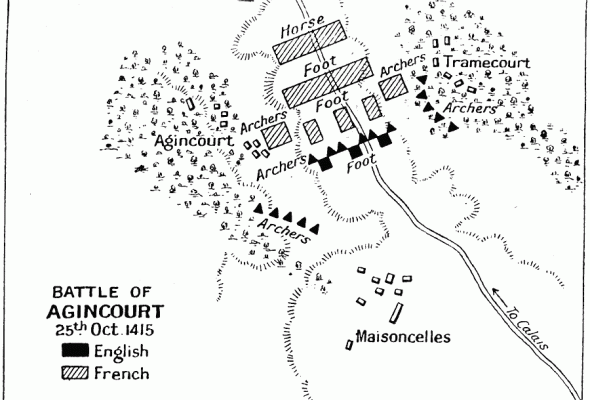
Well Agincourt is a castle in France where on October 25th, 1415, King Henry fought a decisive battle that helped him conquer all of France. For more info on the battle, click here to read this article from the Telegraph.

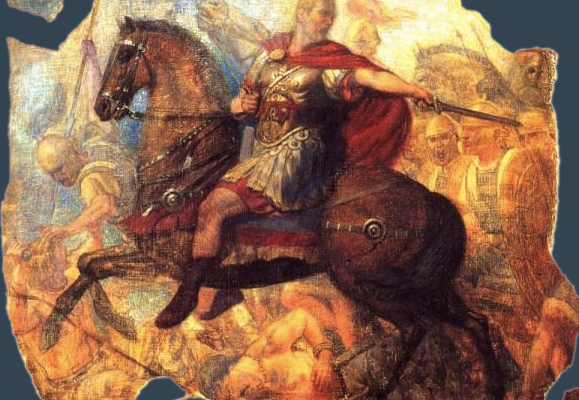
Contemporary drawing of the Battle of Agincourt.

As for St. Crispin, I wrote about him before when I was working on a high-school production of “Henry the Fifth,” which you can read about here. Long story short- he was the patron saint of SHOEMAKERS!

And finally, a funny take on the battle from my favorite kid’s show, “Horrible Histories.”

See you tomorrow!

Paul

A Few More Updates

Hi folks!

I’ve now finished my work on Romeo and Juliet, and this October, I’m taking a little time to talk about two of Shakespeare’s spookiest plays- Macbeth, and Julius Caesar. Right now, the Royal Shakespeare Company is putting on a very inventive production of the play, and I’d like to talk a little about this interpretation. You can read about it here: http://www.telegraph.co.uk/culture/theatre/theatre-reviews/9317659/Julius-Caesar-Royal-Shakespeare-Theatre-Stratford-upon-Avon-review.html 

You can read my analysis of Julius Caesar here.

Here are some posts I’ve got waiting in the wings:

  1. A spooky Shakespeare Stories related to Julius Caesar, and the assassination of President Lincoln!
  2. Analysis of the speeches in Julius Caesar (podcast, hopefully).
  3. Play of the Month for Macbeth.
  4. Explanation of the curse of Macbeth.
  5. Review of “Haunt Me Still,” the sequel to “Interred WIth Their Bones” by Jennifer Lee Carrel.

Stay tuned!

Shakespeare Review: My Shakespeare

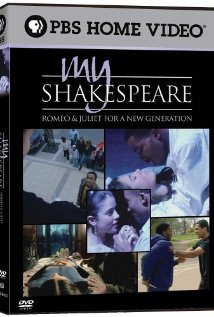
On this page, I review a Shakespeare book, movie, or TV show that I feel has some kind of value, either as an interpretation of Shakespeare, or a means to learn more about the man and his writing. This post will introduce you to an incredible documentary, and in my view one of the best ways to encourage, excite, and challenge young people reading Romeo and Juliet Aptly titled, it is called, My Shakespeare.

  1. Name:My Shakespeare
  2. Year: 2004
  3. Director: Michael Waldman
  4. Ages:PG for frank discussions of violence, and occasional suggestive language.
  5. Media:Full length documentary, (available on Amazon and Netflix DVD)
  6. Recommendation: I’d recommend this to high school and college students, as well as all theater teachers and practitioners. A word of caution though- nearly everyone in the documentary speaks with various British accents (from posh London to poor Harlesden), and thus if you think your class might not be able to understand foreign accents, you might want a different version, or put on the subtitles.
  7. Premise: Director Patterson Joseph is a man on a mission- to prove that the people in his home town, (the poor, violence-ridden town of Harlesden England), that these same people can and will put on a production of Romeo and Juliet, in just four weeks. The cast has never acted before, and Patterson sometimes has to drag them kicking and screaming into rehearsals, but eventually they all learn that putting on a Shakespeare play can become an extremely personal experience. In the beginning, they are attempting Shakespeare, but by the end they live it. In between the action, there are interviews with Baz Luhrman, the celebrated director of the Leonardo Dicaprio film version of Romeo and Juliet back in 1996. Baz serves as a sort of chorus, explaining some of the challenges a director like Patterson will inevitably face as he and his actors bring the play to life.
  8. Repeated Ideas That Run Through the Documentary:
    1. You can do this- you can act, you can understand Shakespeare, you can finish something, you can show emotions, and you can direct.
    2. Shakespeare is able to tell stories that appeal to everyone, and here’s the proof.
    3. The best way to understand Shakespeare is to get on your feet and do it.
  9. Moments to watch for: Before I list my favorite moments in the documentary, I’d like to list the theatrical process by which Patterson and his company put on Romeo and Juliet. 
    • The Process Of Creating Romeo and Juliet:
      1. Auditions/ Improv Games (4 weeks to go)
      2. Table Work, where the actors read the script and talk about their characters.
      3. Paraphrasing the script and improv (9 days to go)
      4. Stage combat Rehearsals- prepping the fights.
      5. Opening Scene rehearsal on a basketball court.
      6. Vocal Rehearsal
      7. The Emotion Workshop (8 days to go) The actors try to tap into their own emotions to try and bring some real feelings into their parts.
      8. Death Scene Rehearsal in a Graveyard!
      9. Last minute changes (5 days to go)
      10. Globe theater rehearsal
      11. Nighttime Balcony Scene Rehearsal at the aptly named, “Shakespeare Road.”
      12. Tech Rehearsal at the Royal Academy Of Dramatic Arts.
      13. Speed Through Rehearsal/ The final rehearsal (1 day to go)
      14. Performance at the Royal Academy Of Dramatic Art
    • Now a look at some of my favorite parts of the documentary.
    1. The audition/ casting scene- In this scene you watch the future cast members explore the story of the play through improvisation, then you see their background through a series of headshots and dossiers. The whole cast is more diverse than any West End production: black, white, Christian, Muslim, young people and old people. Patterson’s casting choices alone makes this production fresh and relevant to our shrinking little world. A few cast members are refugees that came to England because of their countries’ own family feuds in Somalia and Afghanistan. Even more striking, Romeo and Juliet are very young- 18 and 22 respectively, which gives their love scenes an amazing truth and honesty. At first they think they have nothing in common with their characters, but in reality they have even more in common than most of us who read Romeo and Juliet.
    2. The table work scene where the cast learns about their characters You see Mustafa as Mercutio learn that Shakespeare can be funny, you see Jonathan as Romeo learn that some of Shakspeare’s words are still used today, and you see Muska just start to flirt with the idea of playing Juliet.
    3. Jonathan’s Story- Unlike most actors who have played Romeo, Jonathan Thomas has been in a real fight, and he describes it in brutal detail, even showing the scars he got from his stab wounds. Hearing his story gives his performance a truth and poignancy that I’ve never seen in any other version.
    4. The Balcony Scene Rehearsals- In this documentary the two leads perform the scene many times, in rehearsal where they talk about how hard it is to play love realistically, in Shakespeare’s Globe, where they see how it was done in Shakespeare’s day, in a modern balcony back in Harlesden, (on the appropriately named “Shakespeare Road,” and at last in the final performance. Few documentaries show just how hard it is to do a Shakespearean scene, particularly if it’s famous, and how many different ways a director and a pair of talented actors can play it and find new things each and every time.
    5. The scene where Patterson lets one of the actors go. Everyone in this production has to overcome obstacles, even the director; when one of his actors fails to perform, he simply has to drop the axe and recast one of his lead roles. Theater is hard work, and just like any job, the director has to take control and do what is necessary to make sure that the production is a success.
    6. Rehearsal at the Globe Theater On one very special day, the actors step onto the stage of the reconstructed Globe, and take a few tentative steps into the 1500s. Once in the space, they take to it like fish to water, playing with the audience, playing with projection, and their lines are infused with a special kind of energy that only arises from the boards of an Elizabethan stage. I found it interesting that when Jonathan was talking to Mark Rylance, the artistic director of the Globe, he asks what kind of man Shakespeare was, because he’s starting to see Shakespeare as a peer!
  1. My reaction: This documentary gives me hope every time I see it. Over and over again Patterson instills in his cast the idea of “Yes, you can,” yes, these people can understand Shakespeare, yes they can learn their lines, yes they can act, yes they can do something intelligent, and moving, and honest, and beautiful and what better play to bring that message across than Romeo and Juliet, which is full of youthful energy and excitement. My only complaint is the interviews with Baz Luhrman don’t really add much to the documentary side of things; Luhrman was really only there for name recognition, and he certainly knows less about Shakespeare than the RSC veteran Patterson. Nevertheless, the whole documentary Is nothing short of inspiring from beginning to end.
  2. Notable cast members
  1. Muska Khpal as Juliet. An 18 year- old Afghan refugee who came to England in 1996, without even speaking English, now playing one of the greatest characters in English literature! Like Juliet herself, Muska has very strict parents (who didn’t approve of her playing the part), and is at first is extremely shy towards Romeo, toward the play, and even the director, but when you hear her talk about her dream to return to Afghanistan and become a doctor, you can sense Juliet’s strength and independence.
  2. Jonathan Taylor 22 year-old Jonathan is a very charismatic and intelligent young man. After this production he became a professional actor. He speaks articulately about the experience of acting for the first time, reading Shakespeare for the first time, and even his own experiences with love and violence on the streets of Harlesden. He is also very talented and speaks the lines with an effortless panache. I found myself rooting for him the whole time, and the fact that I got to see this production spark his interest in acting and then to see him change and grow was truly inspiring.
  3. Mustafa as Mercutio Tiny, sparkle eyed Somali refugee. He is truly Mercurial- he frequently jokes and kids with the cast, yet at the same time, he is deathly serious when he talks about his life in Somalia- seeing people die in front of him. When he dies onstage, you know his performance is drawn from some real world experience.
  1. Grade: 5 Shakespeare globes.

Another Review: Films Media Group – “My Shakespeare: Romeo and Juliet for a New Generation:” http://www.films.com/ecTitleDetail.aspx?TitleID=20674&r=

Interview with the director, Joseph Patterson: http://www.theguardian.com/culture/2012/jul/01/shakespeare-and-me-paterson-joseph-julius-caesar

The Genesis of Romeo and Juliet

Hello loyal subscribers and first-time readers!

If you’ve read any of my last four posts, hopefully I gave you some insight as to the literary sources of Shakespeare’s Romeo and Juliet, and a little bit of what Shakespeare accomplished in writing the play, so now I’d like to focus on what was going on when Shakespeare wrote it; what was going on in his own life and his career. Unfortunately, nobody knows when Shakespeare’s company first performed Romeo and Juliet, but since it was published in 1597, it must have been written sometime between 1593, and 1596.

Above- Video Bio of Shakespeare by me!

  • In 1593, Shakespeare was in a bit of a creative slump; all the London theaters were closed down, thanks to an outbreak of Bubonic Plague Shakespeare knew intimately the pain, fear, and heartbreak that plague could bring- At age 7, he saw his sister Anne die in April 4, 1579. Anne Shakespeare was 8 years old.
  • In addition, Shakespeare had gained success from his four English history plays,, but great tragedy had never been his forte. In fact, although he was a commercial success, Shakespeare wasn’t respected much in his own artistic community. In 1592, Robert Greene, a well-known smarty-pants dramatist in 1593, saw that his plays were getting passed over by theatre goers in favor of Shakespeare, who was an uneducated ACTOR!!! This set Greene’s teeth on edge, and he published an insulting pamphlet which slyly satirizes Shakespeare as:
    • Greene's Essay An upstart Crow, beautified with our feathers, that with his Tygers hart wrapt in a Players hyde, supposes he is as well able to bombast out a blanke verse as the best of you: and being an absolute Iohannes fac totum, is in his owne conceit the onely Shake-scene in a countrey

    -Robert Greene, Greenes, Groats-worth of Witte, Bought With a Nillion Of Repentance (with original spelling) [1592].

More criticism ensued from Shakespeare’s distant relative, a poet and Jesuit missionary named Robert Southwell. Because of his Catholic beliefs, Southwell was an outlaw and a traitor to the Queen, yet he continued to try and convert England back to Catholicism with everything he did and wrote. Somewhere between his secret arrival in England in 1586, and his capture, torture, and execution in 1595, Southwell wrote a dedicatory essay addressed “To my poet cousin, Master W.S,”

the text of the title page is reprinted below:

Worthy Cousin, Poets by abusing their talents and making the follies and fainings of love the subject of their base endeavors, have so discredited this faculty (ability) that a poet, a lover, and a liar are but three words of one signification.

Southwell’s speech strongly echoes the speech Shakespeare gives to Theseus in his play A Midsummer Night’s Dream, especially the comment where Theseus claims “The lunatic, the lover, and the poet are of imagination all compact.” We don’t know how much influence Southwell had on Shakespeare, but in any case, it’s clear that around 1593, Shakespeare was trying to establish himself as a true Renaissance writer, which meant writing great poetry and not just crowd-pleasing histories full of blood and gore.

So Shakespeare had to face two great challenges- to defend his art from his detractors, and to make a living without the theatre in a time of plague. To pay his rent, he took a job writing poetry for the Earl of Southampton, Henry Wriothesley (pronounced “Rizely,” left). By all accounts, the Earl was a spoiled, vain pretty- boy who loved patronizing poets. To please Wriothesley, Shakespeare composed two long epic poems, “Venus and Adonis,” and “The Rape Of Lucrece,” classical stories inspired by Shakespeare’s favorite Roman poet, Ovid.

According to The Poetry Foundation, a lot of the themes and language devices Shakespeare employed in these two poems contributed greatly to Romeo and Juliet. Most notably, Shakespeare’s use of the concept of forbidden love, his creation of strong, tragic heroines who conquer their predicaments in their deaths, Shakespeare’s use of paradox to describe impossible situations, and perhaps, in the case of Adonis, a model for the character of Romeo:

it features an innocent hero, Adonis, who encounters a world in which the precepts he has acquired from his education are tested in the surprising school of experience. His knowledge of love, inevitably, is not firsthand (“I have heard it is a life in death, / That laughs and weeps, and all but with a breath.”

(reprinted 8/30/12 from http://www.poetryfoundation.org/bio/william-shakespeare).

In these two poems Shakespeare was refining his craft, and examining questions about the nature of love. In Venus and Adonis, the title characters explore love as a giddy romp through the forest, but their relationship ends with a tragic accident when a wild boar kills Adonis. In The Rape Of Lucreece, Shakespeare shows the destructive quality of male desire, and the nobility of self-possessed women. I think that Romeo and Juliet would not have existed without Shakespeare making a meditation on his craft, on the nature of love, and the fragility of human life.

Shakespeare’s Romeo and Juliet

As you saw from my post last week, Romeo and Juliet wasn’t a new story- it had appeared as a poem in 1587 and in several versions before that. When Shakespeare adapted the story, he used his new-found powers of poetic language to make the story more alive, more beautiful, and to make the characters more complete.

What Did Shakespeare Do Differently With His Version Of the Story?

              • Plot- Generally, Shakespeare keeps the same plot as the poem version of the play, but compresses characters, times, and speeds the action along faster.
                • Shakespeare compresses the story to 5 days, making the love affair even more passionate and volatile.
                • He changes the Capulet’s feast from a Christmas celebration to a summer’s feast, making the time of year hot and dangerous.
                • He makes Juliet 13 instead of 16 as she was in the poem.
                • He makes Peter Capulet’s servant, instead of Romeo’s.
                        • Themes- Shakespeare, more than most poets who have interpreted this story, refuses to put the blame squarely on Romeo and Juliet, which is why he invents thematic devices to put the blame on chance, fate, or possibly an angry God.
                                    • Plague Themes– In the 16th century, plagues were viewed as a consequence of angering God. The fact that Mercutio curses the two warring families with “A plague on both your houses,” suggests that the lover’s deaths was a just punishment from God, or at least a horrible instance of random chance.

                                    Importance of Fate- Romeo and Juliet are first described as “Star-crossed lovers,” which means their destinies are intertwined, and determined by an unlucky star, (like being crossed by a black cat). In addition, Medieval and renaissance poets often invoked the goddess Fortuna, who guides people’s destinies and controls whether they have good fortune or bad fortune. Some said this destiny was written in the stars, as Romeo angrily denounces after he hears of Juliet’s death:

                                    “Is it even so? Then I DEFY you stars!”

                                    Shakespeare uses these thematic devices to make the fates of Romeo and Juliet less clear and more open to interpretation. Without a clear-cut moral, Shakespeare’s audiences could make up their own minds.

                                    The Language Of Romeo and Juliet

                                    • Steven Greenblatt, editor of the Norton Anthology of Shakespeare’s plays, points out the amazing variety of wordplay and language devices in Romeo and Juliet, which Shakespeare employs to allow characters to insult each other (like verbal artillery), to curse, to mock, to impress, and in the case of Romeo and Juliet themselves, “To create a new Heaven and a new Earth” (Norton, 889). Romeo and Juliet are unable to be together due to their feuding families, so through poetic imagery they turn their situation into paradise and turn each other into gods. Romeo turns Juliet into the Sun, the force that sustains all life on Earth, and Juliet asks God to:

                                    Take him and cut him out in little stars,

                                    And he will make the face of heaven so fine

                                    That all the world will be in love with night

                                    And pay no worship to the garish sun (R&J III.i).

                                    • Antithesis-To characterize the powerful and contradictory forces at work in the hearts of the characters, Shakespeare frequently has them speak using antithesis- putting two opposite terms next to each other, such as in the phrase,“Why then, O brawling love, O loving hate, O anything of nothing first create” (R&J, I. i).

                                                • One big way Shakespeare uses antithesis is the repeated imagery of night and day. Night stands for beauty, danger, love, and hidden love, as in the example from Act III above, and from the phrase: “I have night’s cloak to hide them from my eyes,” from the Balcony Scene. Day on the other hand, is associated with fighting, unpleasantness, and rudeness, like in the example above, where Juliet describes the Sun as “garish” or rude. In fact, the first time the word “day” is used in the play, Shakespeare follows it with the rhyme, “fray,” which immediately sets up how the day means hotblooded violence.
                                                  • One final example occurs in Act IV, Scene v, where Romeo has slipped into Juliet’s bedroom during the night, where Romeo laments how, as it comes closer to day time, the time for him to leave draws near:
                                                  • JULIET: O, now be gone; more light and light it grows.
                                                    ROMEO More light and light; more dark and dark our woes!
                                                  • I could go on talking about Shakespeare’s literary devices, but the important thing is that, to establish himself as a great Rennaisance poet, Shakespeare put his love of language in this play more than he had ever done before, and it shows in every line.

                                                What was the first performance like?

                                                • Above is the trailer for a production of Romeo and Juliet at the re-built Globe Theatre in 1999, which illustrates how this production relied thoroughly on the imagination of the audience.
                                                • Just like us at Open Air Shakespeare NRV, the first production of Romeo and Juliet was outdoors during the afternoon, (we know from the records of the time that plays took place about 2PM most of the time).
                                                • There were minimal props and scenery, no lighting and few sound effects, and the actors were able to talk directly to the audience.

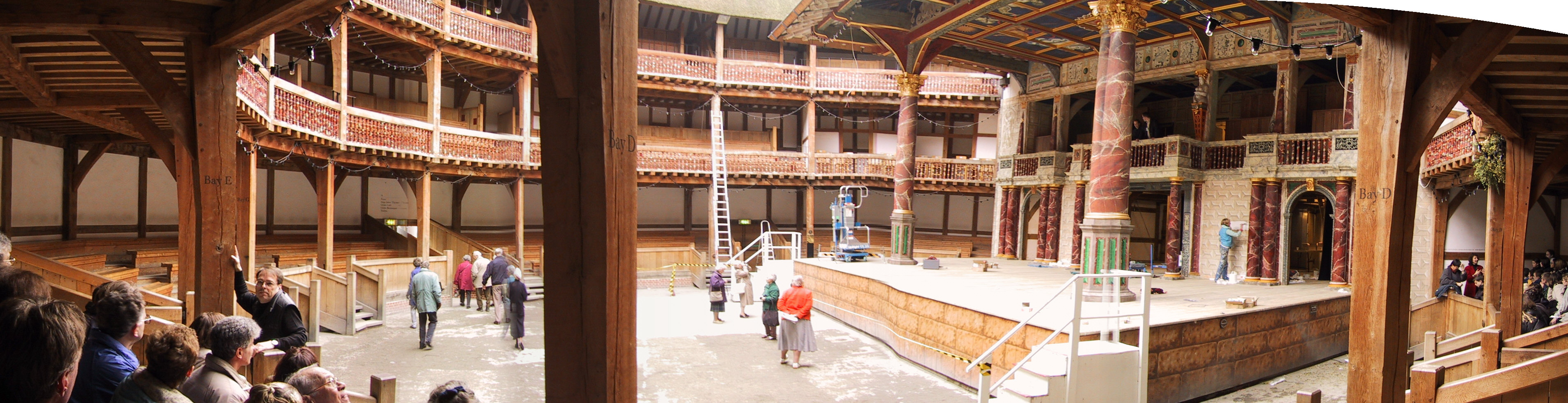
                                                The Globe Theatre Panorama

                                                • Another important thing about Elizabethan performance is the multiple levels of the audience. As you can see, audience members can stand on a semi-circle around the stage. These audience members were called “groundlings,” and they paid a penny to stand through the show. For another penny, audience members sat on wooden planks like the people in the foregrounds. The upper galleries were a little less expensive, since they were further away from the stage, and the most expensive seats of all were The Lord’s Rooms (far right just below the roof of the stage). The Lord’s Rooms allowed wealthy patrons to be seen by everyone in the house, showing off their aristocratic status. The Lord’s Rooms also doubled as a musicians gallery, and also as Juliet’s balcony, as you can see in this video
                                                • The backstage facade area that the actors went through for costume changes was called the Tiring House, where at the end of the play, they would push out Juliet on a stone slab, to represent her tomb.
                                                • Since the Globe Theatre wasn’t built until 1599, Romeo and Juliet was not originally performed there. You can see a contemporary sketch of The Swan, Shakespeare’s first theatre, by clicking here: http://internetshakespeare.uvic.ca/Library/SLT/stage/public%20theater/sources.html

                                                Success for Shakespeare

                                                • Without question, Romeo and Juliet was popular in Shakespeare’s lifetime;
                                                • It was printed in 1597, two more times during Shakespeare’s lifetime, then it was printed four more times between 1622, and 1637. It would probably have continued printing continuously till this day, if not for the Puritans abolishing theater in 1642.
                                                • The same year Shakespeare first performed the play, we know he became a shareholder in the Chamberlain’s Men, which meant he not only got a salary for writing and performing, he also got a share in the profits.
                                                • Critics praised Shakespeare’s poetry, calling him “The poet of the heart-robbing line.”

                                                So, to sum up, Shakespeare composed this masterpiece during a very turbulent time- he was unable to act, the theaters were closed. He was no doubt afraid of being killed by the plague, and all the while he was being plagued by critics. When he wrote the play, he expanded his art and craft to a new and unheard of degree, ensuring his place in history as the finest dramatist in the English-speaking world. It was truly a labor of love.
                                                – Shakespearean Student

                                                Romeo and Juliet: “Why Do We Have To Read This Play” Part III

                                                Here is the last post on my series of 3 which examines the importance question of why should we read or see this play? In the last post I argued that, although the play is sometimes billed as a moral story, the characters engage in really reprehensible behavior- premarital sex, muder, and whining about their teenage problems. So the question is, if the play isn’t a moral parable, what can we gain from reading it?

                                                Reason # 3- The Play Shows Truths About

                                                the Human Condition.

                                                • Richard Dadd, Sketch for the Passions. Love (1853)

                                                  Even though the play’s characters frequently do rash and sometimes foolish things, this only serves to make them more complex and realistic. The truth is, we all do foolish things when in love, and they all dramatically effect our lives, (sometimes for better or for worse).

                                                The point is that the qualities we demonstrate when we’re in love, reveal who we truly are. Romeo is foolish, obsessed with his lover, sometimes selfish, and hot-blooded. He is also tender, caring, utterly without deceit or pretense, and committed to his beloved at any cost.

                                                • I believe this is why we really need to keep reading and watching this play. As Judy Dench said in the film “Shakespeare In Love,” the play shows the very truth and nature of love, not just the budding romances or passionate affairs, but dark obsessions, painful separations, family bonds, and even, “glooming peace,” as the Prince says at the end of the play. Shakespeare shows them all, not judging one to be better or worse, but demonstrating the feelings and the actions that arise in reaction to the powerful force of love.

                                                Frank Dicksee, Romeo and Juliet (1884)

                                                So when you read this play, try to look beyond the peculiar language, the old-fashioned type and the flowery poetry. Inside you might see a reflection of yourself, what Shakespeare called, “the mirror up to nature.”

                                                Thanks for Reading,

                                                -Shakespearean Student

                                                Happy Birthday Juliet!

                                                Hi Folks,

                                                Not only is it the first day of this month, it’s also a Shakespearean holiday! According to this passage from “Romeo and Juliet,” today is Juliet’s Birthday!

                                                NURSE: Even or odd, of all days in the year,
                                                Come Lammas Eve at night shall she be fourteen.
                                                Romeo and Juliet, Act I, Scene ii.
                                                Lammas Eve, is a pagan holiday, also known as Lughnasa, a Celtic holiday traditionally held on August 1st, or the midway point between the summer solstice and the Equinox. It was a day celebrating harvests and the beginning of fall, and was celebrated through eating wheat, drinking wine and burning a giant wicker man in effigy, (the inspiration of the film of the same name, and the festival of Burning Man). By the way, not everyone appreciates this holiday, click here to see what I mean.
                                                There is also another significance to Juliet’s birthday. It makes her a Leo, a star sign traditionally associated with the Sun. So, when Romeo calls her “The Sun,” there is a literal connection to her birth. Shakespeare makes many allusions to astrology in Romeo and Juliet, as a metaphor for fate.
                                                In the next few days I’ll be talking about what these allusions mean and how they help people understand the play.
                                                Enjoy Juliet’s Birthday everyone!
                                                By the way, here’s a link to a fun website: Juliet’s Blog: http://julietisthesun.blogspot.com/