Close Reading: Lady Macbeth “Come You Spirits.”

For commentary: http://www.bbc.co.uk/arts/yourpaintings/paintings/ideal-portrait-of-lady-macbeth-97937

For the final class of my course on Shakespeare’s Tragedies, I’m coaching two young actors on a pair of tragic speeches I’ve selected, and I thought I’d share some of that work with you. The first is a speech by Lady Macbeth that comes from Act I, Scene v. In this speech, Lady Macbeth prays to dark spirits to make her cold and remorseless, so that she can convince her husband to kill the king, and take the throne.

The Text

Lady Macbeth
The raven himself is hoarse
That croaks the fatal entrance of Duncan
Under my battlements. Come, you spirits390
That tend on mortal thoughts, unsex me here,
And fill me from the crown to the toe top-full
Of direst cruelty! make thick my blood;
Stop up the access and passage to remorse,
That no compunctious visitings of nature395
Shake my fell purpose, nor keep peace between
The effect and it! Come to my woman’s breasts,
And take my milk for gall, you murdering ministers,
Wherever in your sightless substances
You wait on nature’s mischief! Come, thick night,400
And pall thee in the dunnest smoke of hell,
That my keen knife see not the wound it makes,
Nor heaven peep through the blanket of the dark,
To cry ‘Hold, hold!’ Macbeth, Act I, Scene v, Lines 388-403.

The Given Circumstances

Lady Macbeth has just received a letter from her husband. That letter informs her the witches prophesied he would be king. Soon after she’s finished reading it, another messenger, (hoarse and out of breath), tells her that King Duncan will be staying at her castle tonight! Lady Macbeth immediately sees this as the perfect opportunity to make her husband king, by plotting to murder Duncan as he sleeps under her roof.

Traditional Interpretations

I’ve seen at least six productions of “Macbeth” and when it comes to this scene I think the main interpretations I see are either that Lady Macbeth is gleefully evil, or highly sexual. While it is true that she is praying to dark spirits, and her language when she speaks to Macbeth is sexually charged, I feel that these are not the only options when playing this character.

Francis McDormad

I love the regal poise of Francis in this 2021 movie. She is utterly in control and has absolutely no qualms about murder. I get the sense that she’s more praying to Mercury to get her to speak daggers to her husband, instead of to Lucifer to help her use one. She even has knives coming out of her ears (look at those earings!) This Lady Macbeth doesn’t seem evil in the sense of a cartoon villain. She’s just a woman in a violent society who believes that regicide is an acceptable way to sieze power. I think in this world, might makes right.

By contrast, Judy Dench in the 1979 RSC production is also very human. Her spirits are like… well spirits. You get the sense that she’s taking a swig of liquid courage to get her to go through with these actions which SHE KNOWS ARE WRONG.

Literary Devices

Imagery

“The Triple Hecate,” by William Blake, 1794.

Ravens in Greek and Norse myths were birds of prophecy and associated with the goddess of magic, Hecate (who appears in the play in Act IV). Ravens often appeared to announce deaths or execution. The speech is also full of imagery that rejects traditionally ‘feminine’ virtues. Lady Macbeth seems to associate womanhood with kindness, mercy, pity, and remorse and thus attempts to shed her femininity to accomplish her cruel objective of killing Duncan.

Verse

The Rauen himselfe is hoarse,
That croakes the fatall entrance of Duncan
Vnder my Battlements. Come you Spirits,
That tend on mortall thoughts, vnsex me here,
And fill me from the Crowne to the Toe, top-full
Of direst Crueltie: make thick my blood,
Stop vp th'accesse, and passage to Remorse,
That no compunctious visitings of Nature
Shake my fell purpose, nor keepe peace betweene
Th'effect, and hit. Come to my Womans Brests,
And take my Milke for Gall, you murth'ring Ministers,
Where-euer, in your sightlesse substances,
You wait on Natures Mischiefe. Come thick Night,
And pall thee in the dunnest smoake of Hell,
That my keene Knife see not the Wound it makes,
Nor Heauen peepe through the Blanket of the darke,
To cry, hold, hold. Macbeth, Act I, Scene v, First Folio Reprint from Internet Shakespeare Editions.

It’s interesting to note that (in the First Folio text) this speech is only three sentences long. It is a constant build up of energy with only three stops. In addition, Shakespeare puts the most important words, at the end of each line. Almost every line ends with something Lady M wants to kill, such as Duncan, or wants to kill within herself (peace, remorse, nature, Woman(hood). The verse also has commands strewn about in the beginnings and ends of lines. The question is, how confident does Lady Macbeth feel while giving them?

Questions to consider

One of the biggest questions I have with this play is why Lady Macbeth and her husband want to be king and queen anyway? After all, Shakespeare has written plenty of plays that detail how hard and stressful (uneasy) it is to be king. Plus, Macbeth is already a trusted lord and friend of the king, why would he want to damn himself to get a job he knows isn’t his to take? I think that, especially now in the 21st century, it’s very important to have a coherent motive for why the Macbeths are willing to kill for the crown.

Our Interpretation

Looking over the text, my actress sensed a deep loneliness in Lady Macbeth and a haunted feeling that makes her seem desperate to change her life. I thought about how insomnia and paranoid fears are repeated motifs in the play, as well as character traits found in both Macbeth and later Lady Macbeth. Then I thought- Macbeth is a soldier; his wife has probably had to spend years wondering if he is going to come home and imagining what kind of terrible death he might suffer on the battlefield While the king sits safely at home. Perhaps she sees killing the king as a form of revenge for all the fear and sleepless nights she’s experienced, and an attempt to protect her husband from war, by safely placing him on the throne. Maybe she sees this as the only way to make sure her beloved husband never dies in battle. Therefore, instead of watching an evil woman become more evil, you’re watching a good woman, (with good intentions), damn herself for love, which I would argue is a much more active and dynamic choice.

Resources:

https://myshakespeare.com/macbeth/act-1-scene-5

Richard the Second: “Non Sans Droit?”

Richard the Second: “Non sans Droit?” by Paul Rycik
The motto which I titled this post means “Not Without Right.” I chose it because it’s Shakespeare’s family motto, but also because in my view, Richard the Second is a play about the Divine right of kings; it asks whether kings are appointed by God, and if so, does that mean that they are free to do what they want, and whether or not they can be deposed. Today I want to examine how these questions are addressed in the play. I’ll do this by showing you passages from the text on video with a few notes by me. These recordings are by the Royal Shakespeare Company, England’s premiere acting troupe.

Picture #1- The Wilton Diptych
http://www.nationalgallery.org.uk/cgi-bin/WebObjects.dll/CollectionPublisher.woa/wa/work?workNumber=NG4451
 
This picture from the National Gallery in London illustrates admirably how Richard, who was the son of the Black Prince, the greatest warrior in English history, truly believed he was appointed by God. It depicts the 10 year-old king in full golden robes, being blessed by the Baby Jesus, the Virgin Mary, John the Baptist, Edward the Confessor, and St. Edmund. As I said before, Richard was only 10 when he was crowned; he believed he was God’s representative his whole life.


Video #1– Act IV, Scene I David Tennent playing Richard the Second

This is a recording of the famous Deposition Scene in which Richard must give his crown up to Henry Bolingbroke. It is clear from the text that Richard considers this not only treason but a form of blasphemy. This is evidenced in such passages where Richard compares himself to Jesus, another king betrayed by his followers.

 “So Judas did to Christ, but he in 12 found truth in all but one, I in 12,00 none,” 

Richard is in no doubt that he is appointed by God, and anyone who tries to question or depose him is damned. 

Other characters take differing views on the divine right- the gardeners don’t believe in divine right- to them, a kingdom is ruled by men, not divine incarnations. They are pragmatic and think Richard’s claims foolish

Video #2 Act II, scene I- Patrick Stewart speaking as John of Gaunt

John of Gaunt believed in divine right, that’s why he killed Woodstock. In this famous speech, Gaunt reveals his passion for England, how he believes it has a special place among nations, and that a king’s duty is to protect it. But, when Richard sells land, Gaunt is forced to question how can a king be divine if his actions are wrong. He even suggests that Richard is no longer worthy of his royal blood: “O, spare me not, my brother Edward’s son; that blood already, like the pelican, hast thou tapped out and drunkenly caroused.”
 
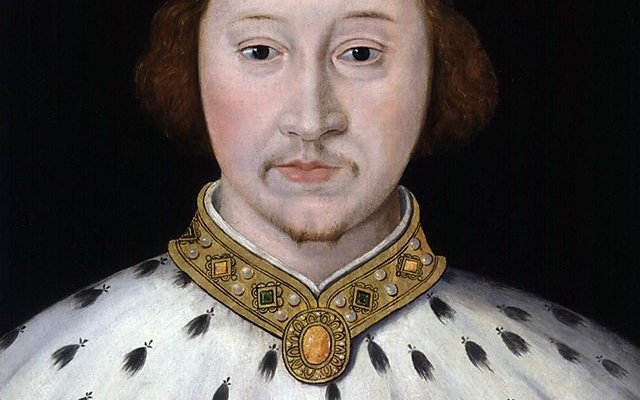
Picture #2 Henry Bolingbroke from the 1975 production of Richard II

Bolingbroke’s motives are secret throughout the play. We don’t know if he always intended to seize the crown, whether he was forced to by his followers, or if he was forced to because Richard put him in an impossible position- his father’s lands seized by the crown and himself an exile. Equally enigmatic is if Bolingbroke believes in divine right. If he does, Bolingbroke must feel unimaginable guilt, especially in the scene when Richard is deposed. (Act IV, i) In the scene, Richard warns Bolingbroke that God will damn him for betraying his king, “The deposing of a king and cracking the strong warrant of an oath, marked with a blot, damned in the book of heaven.”

 
 Once Richard is dead, Bolingbroke is forever shaken, paranoid, and fearful of assassination. My thinking is that Bolingbroke did believe that what he did was truly terrible and he spends the rest of his life mourning over it. This is why in the next play, Henry IV, Bolingbroke, now the king, says one of the most famous lines Shakespeare ever wrote: “Uneasy is the head that wears the crown.”
 
As you can see- there are several differing viewpoints on the issue of divine right- some people believe in it, some don’t. Thus the issue is never resolved because no one is proven right. I’ve written before that on controversial issues, Shakespeare never presents one view stronger than the other; he gives voice to every side of an issue and merely shows the conflict that happens when these characters fight with each other. It is up to the audience to choose sides.

Interesting Side note: The Deposition Scene I referred to earlier has a very disreputable history- it was considered anti-government because the censors claimed it favored the deposing of kings. One of the Queen’s favorite lords, the Earl of Essex ordered the scene played on February 7th, 1601 for that purpose. He planned to use it to rally the people and start an armed rebellion against the queen. Shakespeare’s entire company was arrested and interrogated as co-conspirators. Fortunately, they got away with it, as this document shows:

Document: Examination of Augustine Phillips, February 17, 1601

Examination of Augustine Phillips, February 17th, 1601

Shakespeare’s company claimed that the only reason they put on the play was that the lords offered more cash than the usual fee for performing at court. They got the government to buy their story, but, (as scholar Michael Wood claims), maybe the Queen wasn’t fooled- she asked them to perform the same play, right before Essex’s execution. When he died, she was reported as saying: “I am Richard the Second, know ye not that.” 

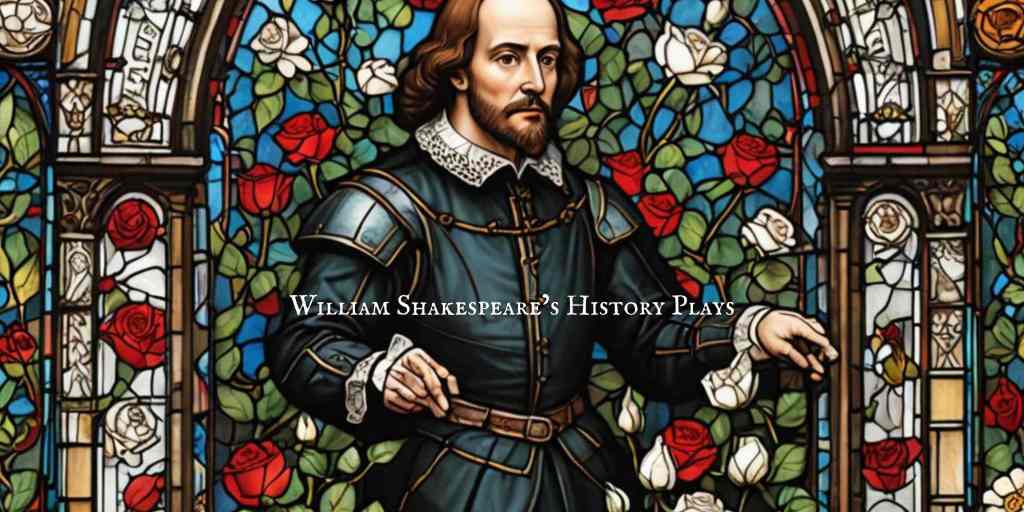
Outschool.com William Shakespeare’s Histories Poster

If you liked this post, you might enjoy signing up for my course on Shakespeare’s History Plays on Outschool.com. Click the link below to sign up:

https://outschool.com/teachers/The-Shakespearean-Student

Intro to Richard the Second

With the current political climate with leaders voluntarily giving up power and factions rising up within factions, I thought I might give you some historical perspective with Shakespeare’s play about a monarch who stole from his people, caused an insurrection, and whose supporters gave up their own power- Richard II.

Background presentation

Background info packet I created back in 2009.

Richard is a classic story of hubris. Richard literally believed he was appointed by god, and thus he could act with impunity. He, therefore, stole lands, taxed his people, and even gave land away to pay for his wars in Ireland. His actions offended his nobles, especially the house of Lancaster, who rose up and eventually deposed him. This play, therefore, has many lessons on how leaders cannot survive without their supporters, and nobles need to put the good of the people first.

Shakespeare’s version is not a dry chronicle with painstaking historical accuracy. For starters, every single line is in verse, and I don’t think even the real Richard spoke in iambic pentameter all the time. For a history play, this Richard has Shakespeare’s most poetic language:

Shakespeare’s Richard is full of self-pity, bewilderment, and a narcissistic desire for attention with a borderline God-complex. He even art-directs his own deposition with all the tragic solemnity of a passion play, casting himself as Christ, and everyone else as Pontius Pilate:

Shakespeare is very cogent about whether or not it was a good idea to depose Richard, especially since Queen Elizabeth was also an aging monarch who failed to produce an heir or quell a rebellion in Ireland (Shapiro: 1599). Nonetheless, the Queen was aware of the connection and famously declared: “I am Richard the Second, know ye not that?” Some productions have blatantly connected the two monarchs, and even dressed Richard as the Queen.

This play’s strength depends on the casting. Not much happens onstage except for lots of talking, planning, speechifying, and cursing. It depends on actors who can deliver these great lines with beauty but also sincerity:

My Visit to a Twelfth Night Party!

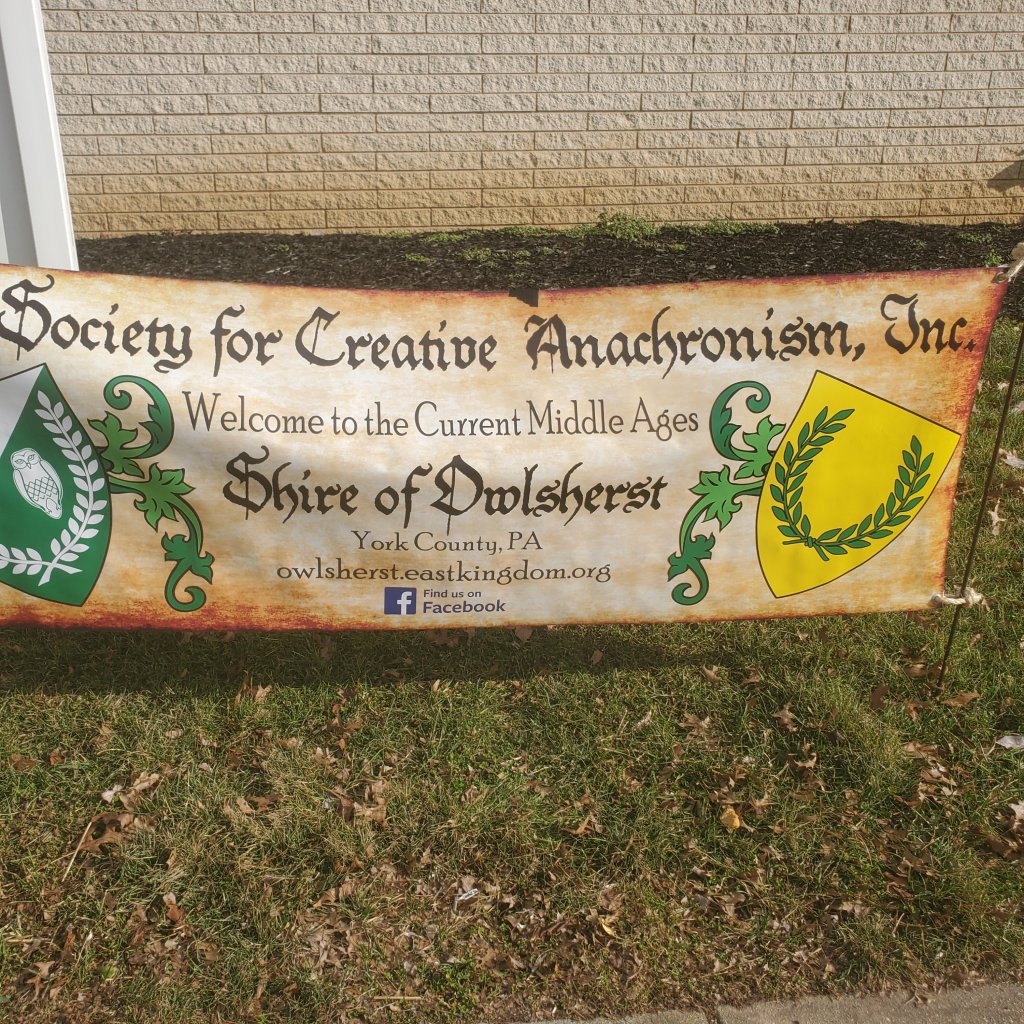
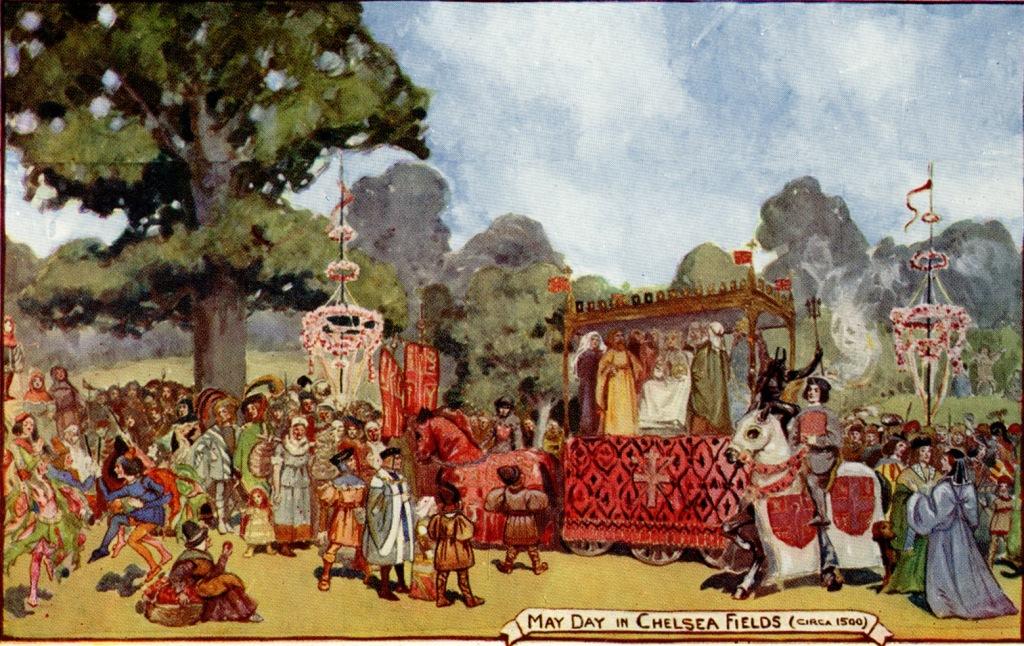
I can think of no better wrapup to my play of the month “Twelfth Night,” than by reporting on my visit to an actual Twelfth night Party, presented by the Society For Creative Anachronism.

What’s a Twelfth Night Party?

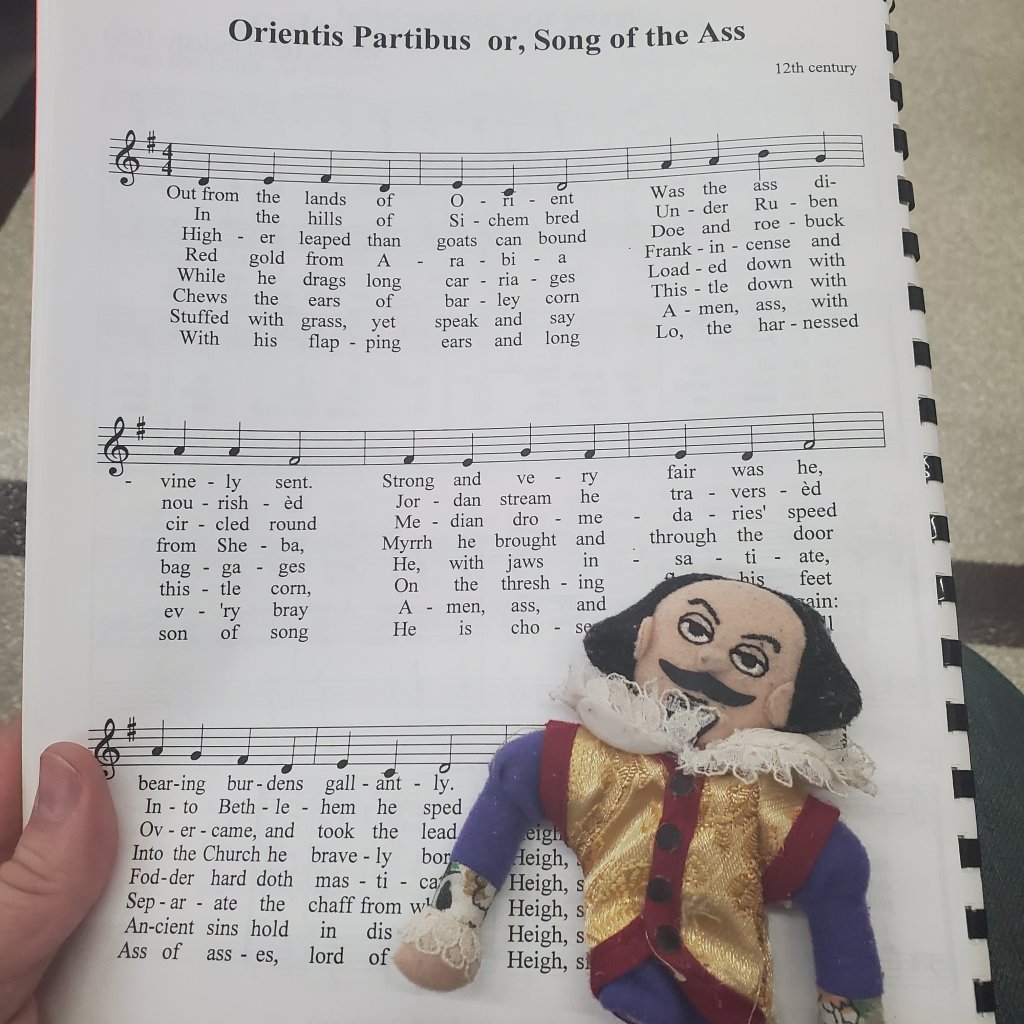
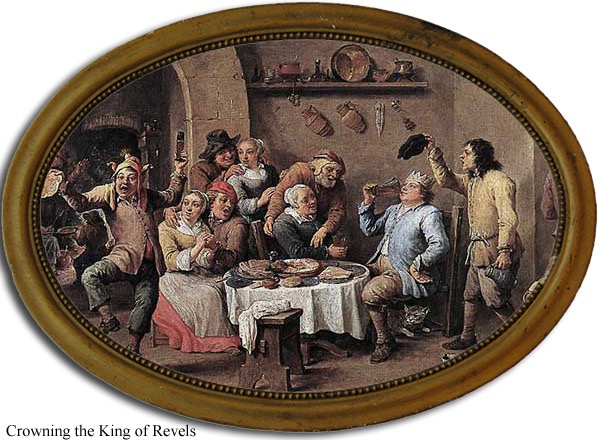
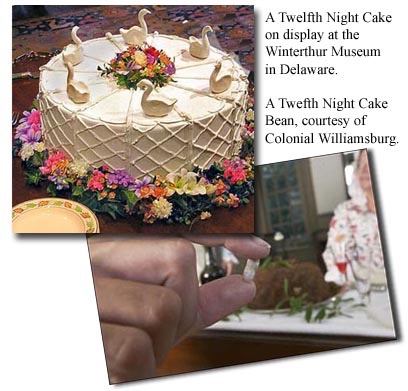
If you took my class on Shakespearean Christmas traditions or read my blog posts, you know that, back in Shakespeare’s day, Twelfth Night was a party to end the Christmas season. It was presided over by a Lord of Misrule, who would lead people in games and songs. The party would also have a Twelfth Night Cake with a bean in the center. If you found the bean, you’d have good luck for the year! So I was pleased to come to a real-life Twelfth Night party and see these traditions come to life!

What is the society for Creative anachronism?

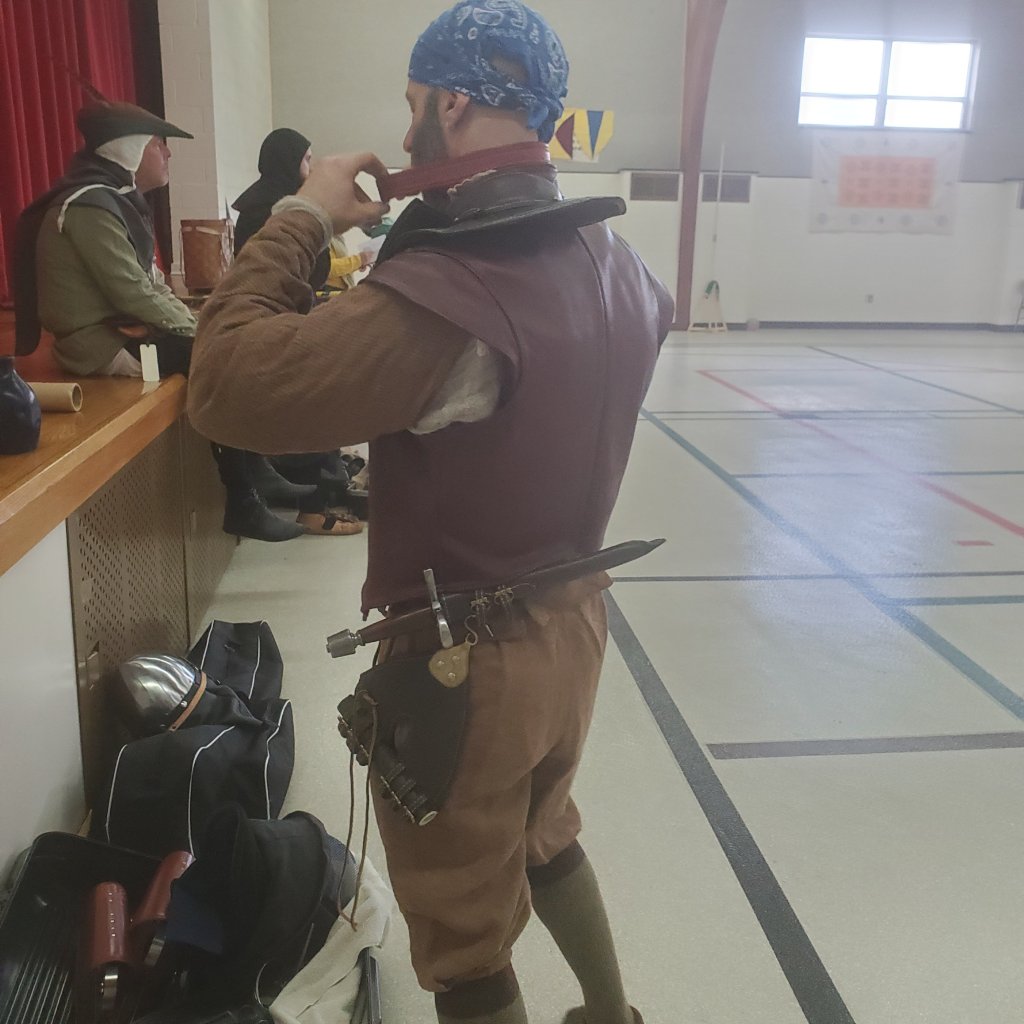
The short answer is- it’s LARPING for history nerds. Rather than creating a D&D persona and then getting arms and armor to play-fight in the backyard, SCA members create personas based on real medieval history, make or buy real historical arms and armor, (or arts and crafts as the case may be) and spend years of their lives studying and perfecting their immersion in that character’s life. SCA-ers learn how to fight with swords, daggers, spears, etc, how to sing medieval songs, medieval dances, and many other medieval ‘mysteries,’ which in this case means arts, crafts, and professions.

The Shire of Owlsherst

Owlsherst is the SCA’s local chapter in York PA. They have a number of dedicated members who specialize in textiles to rapier-dagger fighting. I’ve posted some videos of their fighting demonstrations on Youtube and Tiktok and their archery master has his own Tiktok channel. They hosted this year’s Twelfth Nigh party and have many other events throughout the year. For more information on this chapter, go to https://owlsherst.eastkingdom.org/

My reaction

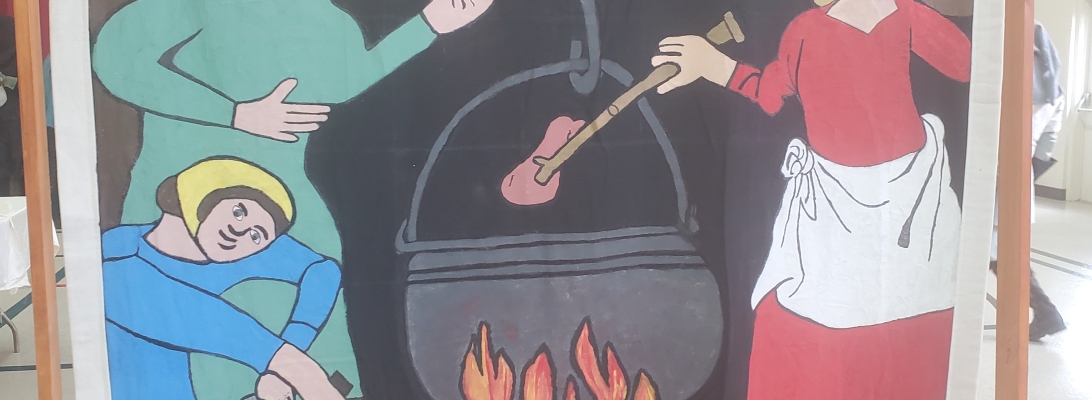
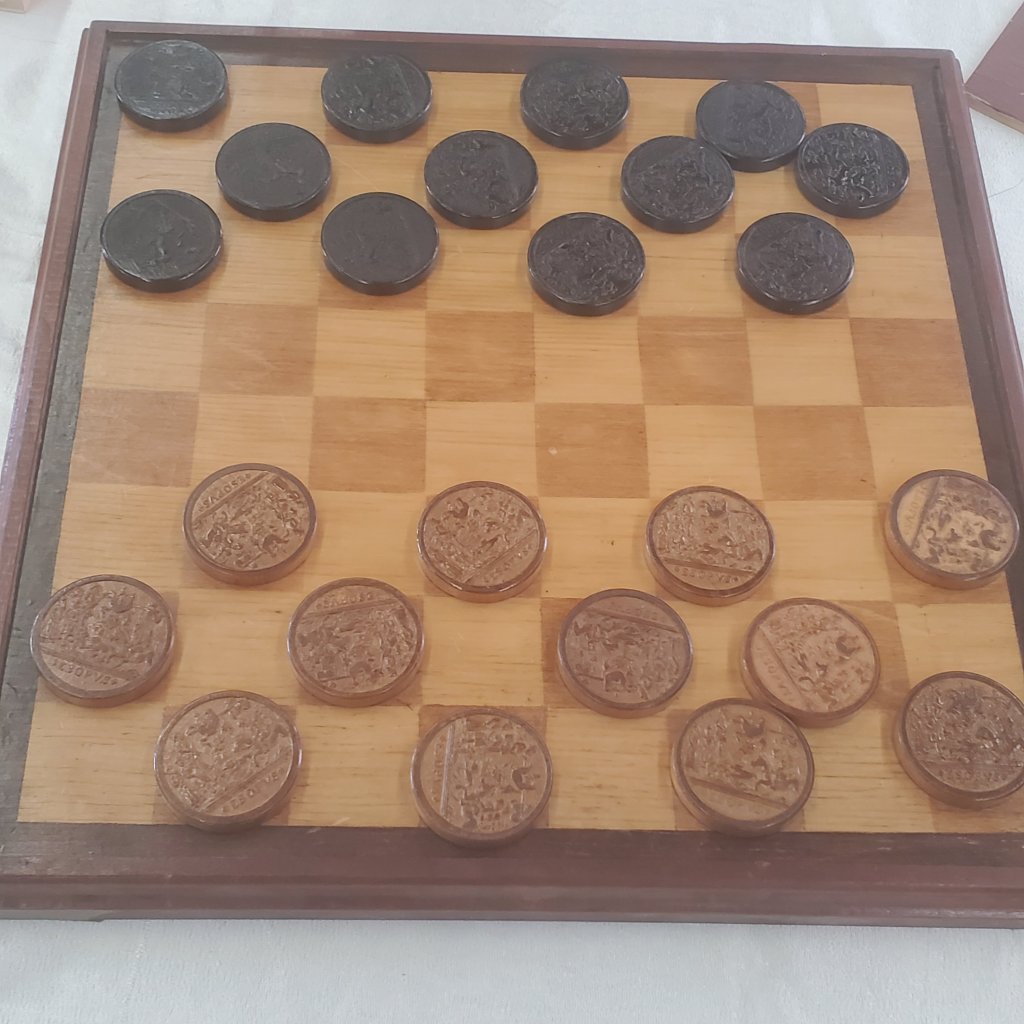
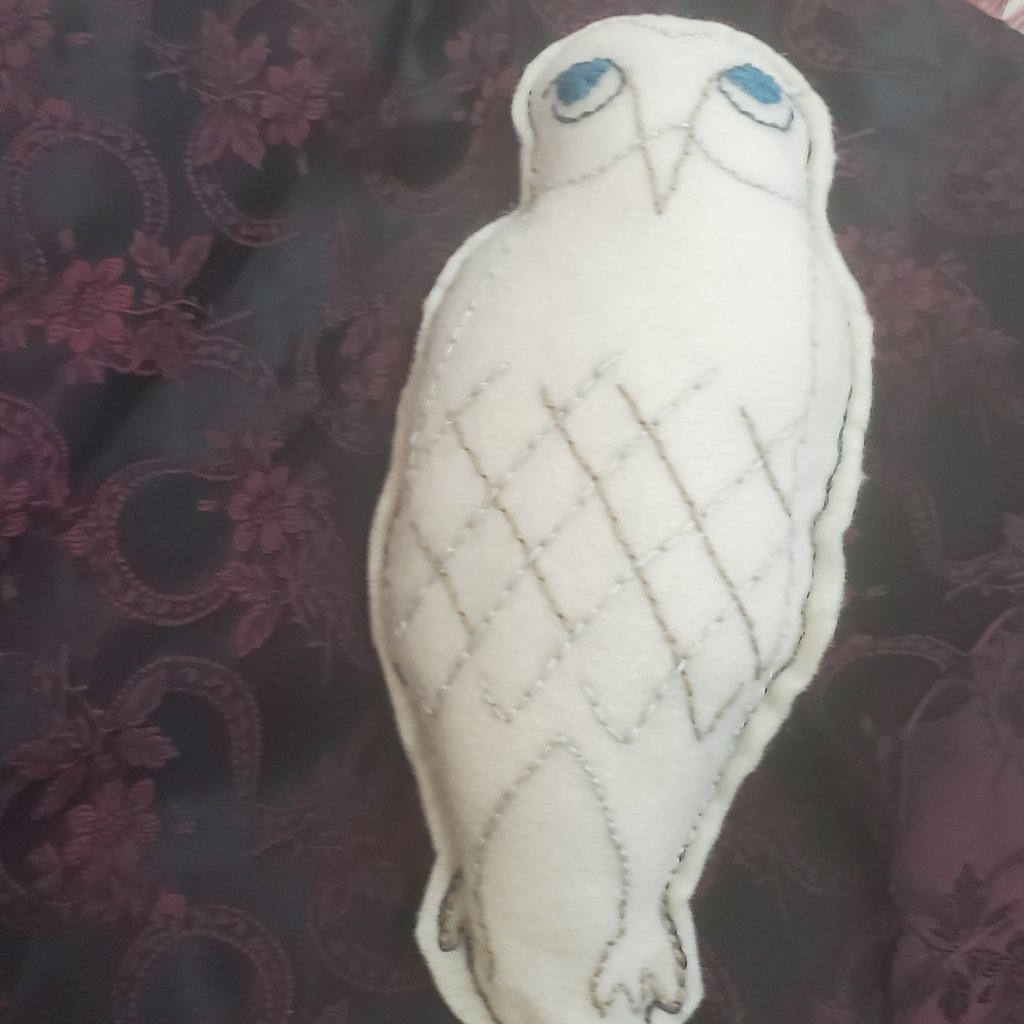
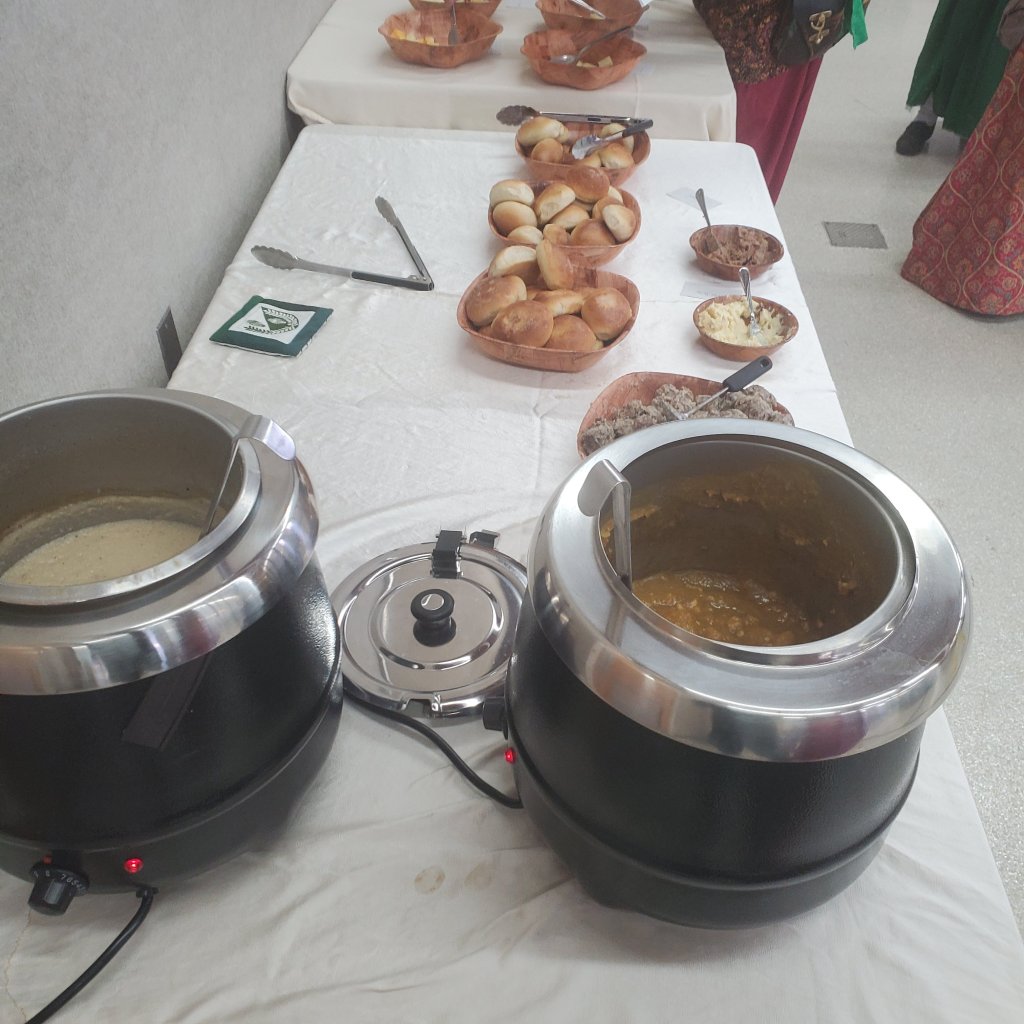
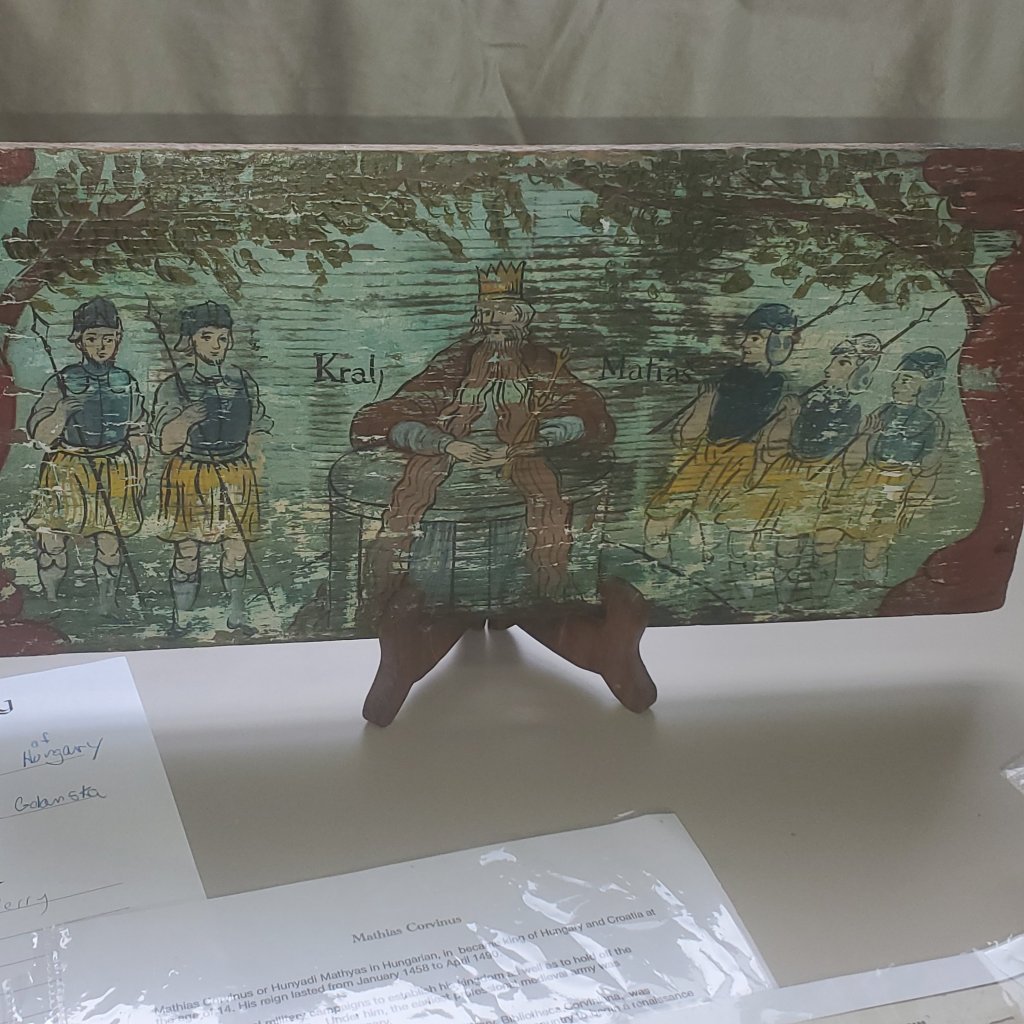
Every SCA event is a great way to celebrate people who are passionate about history and have talents for arts and crafts. Everything from the tapestries to the to the food, to the adorable owl toys, was made by hand by these dedicated people (most of whom brought their own medieval costumes). More members were doing live demonstrations of rapier/ dagger fights, binding books in cow leather, and singing medieval Christmas songs. I was inspired by everyone’s dedication and hard work to put this together. I also wonder if this is how Shakespeare himself felt when, as a child, he went to sheep shearing fairs and saw his friends and fellow artisans put on amateur bible plays on medieval pageant wagons.

That said…

I should warn you that, like a lot of historical reenacting societies like Civil War reenactors, etc, this society is more aimed at hardcore history nerds, than anyone else. This isn’t Medieval Times or a big-budget renaissance fair which is aimed at children and casual fun seekers. As such, it wasn’t really family-friendly. There aren’t many activities for kids and many of the arts and crafts are too delicate for toddlers and young kids. Also, this event isn’t particularly immersive or organized. People mostly just mingled, ate, and watched the various demonstrations. Keep in mind, this is just one chapter and just one event, which means your experience may vary. Nevertheless, because of the organization’s amateur historical nature, I would caution you to manage your expectations. Like I said before, this isn’t some big-budget Disney theme-park ride, but it is a chance for hardcore history nerds to get together, share their knowledge, and celebrate the traditions of a bygone era. If that’s your thing, I highly recommend it!