Verily, May the Fourth Be With Thee

Hi everyone!

Well today is May 4rth, when a lot of people have chosen to celebrate one of the most iconic movies of the 20th century: Star Wars! And why not? The story is full of conflict, introspection, love, change, the conflict between fathers and sons, and occasionally guidance from ghosts. Wait, that sounds familiar- it’s a lot like Shakespeare! Yes, the movie has a lot of parallels with the Shakespearean canon, and I’d like to share some of those similarities here. Below is a post I did for the American Shakespeare Center about how the Star Wars prequels parallel Shakespeare’s history saga of Henry the Sixth:

http://asc-blogs.com/2011/05/04/in-the-force-of-his-will-shakespeare-and-star-wars/

More recent posts for May 4rth

Videos

Podcasts

Enjoy May the Fourth!

Review: “Star Wars-  the Empire Striketh Back.” by Ian Doescher

As I was writing William Shakespeare’s The Empire Striketh Back, I was surprised to realize I had made more references to Shakespeare’s Much Ado About Nothing than any other play. Much Ado is a comedy—probably my favorite of Shakespeare’s comedies—so it was strange that lines from it kept popping up in the darkest of the original Star Wars® trilogy.

Ian Doescher, https://iandoescher.com/

Introduction

What Is William Shakespeare’s Star Wars?

William Shakespeare’s Star Wars is a series of parody plays written by Ian Doescher that takes the prose screenplays of the Star Wars story and transforms them into Elizabethan verse. Last time I mentioned how much I loved the cheeky references to Shakespeare and Star Wars, and how Doescher adapts the cinematic quality into Elizabethan drama very well. In my podcast, I also emphasized the way Doescher gives each character verbose Shakespearan language that works very well for radio and theater:

My podcast episode where I do dramatic readings of “Verily A New Hope.”

What I want to do with this post, (and the accompanying podcast), is to see whether this edition captures the fun, the clever wordplay, and the Shakespearean storytelling of “A New Hope,” with the second installment of the series, and if it helps to capture the shift in tone between the two movies, as Luke is tempted by the dark side and Han is betrayed and frozen by Lando.

Notes about the play

  1. The first play in the series, Verily, A New Hope,” took plot and structure inspiration from Henry V; it tells the story as an epic heroic story of Luke’s heroic deeds, much like how Henry V is about a king who grows from boy to man.
  2. By the playwright’s own admission, the dialogue is stuffed with lots of re-purposed quotes from Much Ado About Nothing, Shakespeare’s comedy of a womanizing, self-centered soldier who becomes a devoted husband. This is appropriate since the Leia/ Han plot within the play and movie starts out with them bickering like Beatrice and Benedick. Doescher says this was an accident, but I think he might have subconsciously taken inspiration from their love affair to help structure the dialogue. In the accompanying podcast episode, I talk more about how the use of Much Ado quotes helped to flesh out the characters of Luke, Leia, and especially Han.

Structure

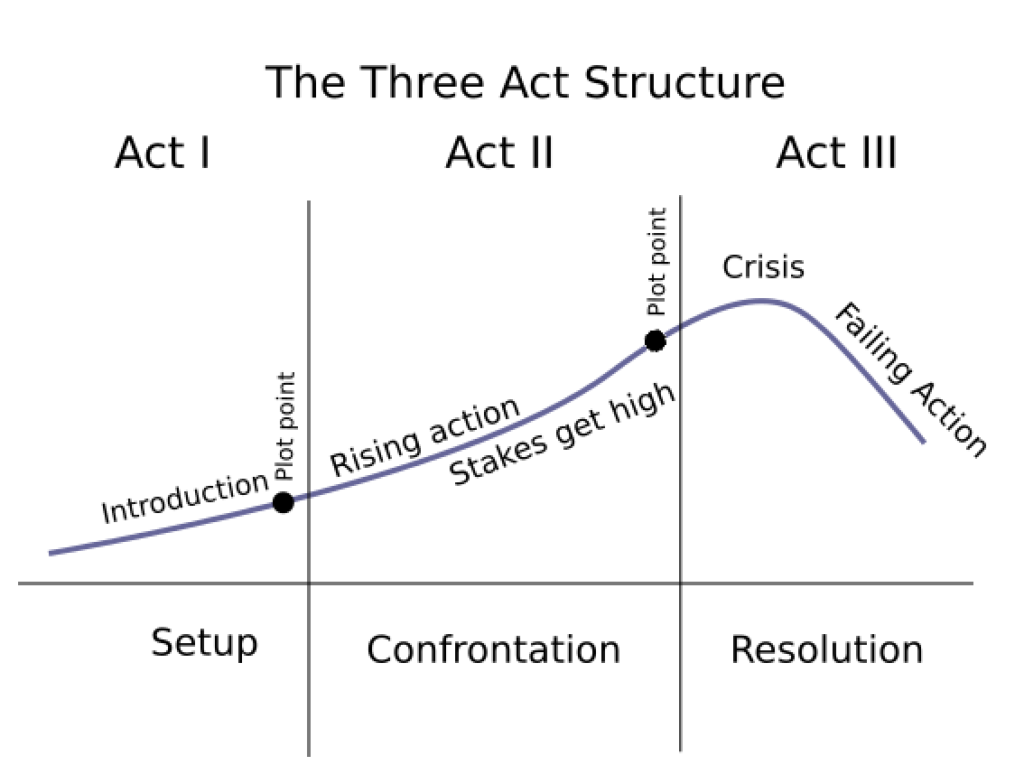
Movies and plays follow a similar structure where the action starts at a static place, tension rises, and finally, things get resolved at the end. A lot of the same elements are in both issues. The main difference is how they are arranged. Let’s see how Doescher translated the three-act structure of a screenplay, to the five-act structure of an Elizabethan tragedy.

As you can see, films have a 3 act structure

Elements to Watch for:

  1. The Language
    1. Choruses
    • A Chorus is a short speech where a character who is not part of the action of the play introduces the plot.  It functions the same way as the famous title crawl at the beginning of Star Wars.
  1. I mentioned last time that “Verily: A New Hope” uses choruses liberally, which is appropriate because the tone of this story is so much darker, and since the action follows the journeys of Han and Luke so closely Ian doesn’t use choruses as much. I suspect this is partly because unlike The Empire Strikes Back, A New Hope jumped around more between planets and locations and used wipes and other transitions heavily:

Below is a link to the Royal Shakespeare Company’s Learning Zone, where you can learn about the language of the Henry V chorus.

https://www.rsc.org.uk/shakespeare-learning-zone/henry-v/language/facts#

2. Repeated lines/ Half lines

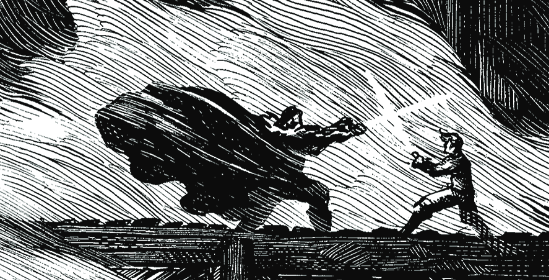
The literary technique of stichomythia has characters who speak at more or less the same time, using slightly different forms of dialogue. Doescher uses this well as a staging device by having Vader and Luke speak similar lines as Luke plummets down the shaft after losing his lightsaber duel:

These similar lines highlight the connection these two have (no spoilers), and also emphasize that, though the actors might be physically close onstage, their characters are meant to be far apart; they wouldn’t be saying this to each other.

In Romeo and Juliet, there’s an excellent example of stichomythia in Act IV, Scene iv, right after Juliet’s parents and Nurse discovers her, apparently dead. There is a long series of laments by her parents and nurse where they are shocked and horrified at her sudden death:

Lady CapuletAccursed, unhappy, wretched, hateful day! 2702
Most miserable hour that e’er time saw
In lasting labour of his pilgrimage!
But one, poor one, one poor and loving child,
But one thing to rejoice and solace in,
And cruel death hath catch’d it from my sight!
NurseO woe! O woful, woful, woful day!
Most lamentable day, most woful day,
That ever, ever, I did yet behold!2710
O day! O day! O day! O hateful day!
Never was seen so black a day as this:
O woful day, O woful day!
ParisBeguiled, divorced, wronged, spited, slain!
Most detestable death, by thee beguil’d,2715
By cruel cruel thee quite overthrown!
O love! O life! not life, but love in death!
CapuletDespised, distressed, hated, martyr’d, kill’d!
Uncomfortable time, why camest thou now
To murder, murder our solemnity?2720
O child! O child! my soul, and not my child!
Dead art thou! Alack! my child is dead;
And with my child my joys are buried.
Romeo and Juliet, Act IV, Scene v lines 2702-2723.

When I played Friar Laurence and the cast and I rehearsed this scene, the actors playing the Nurse and Juliet’s parents were struck by how similar the lines are and worried that these long passages of laments would get tedious to an audience. I realized by looking at the similar lines, the similar words (especially at the ends of lines), and the fact that Friar Laurence interrupts them at the end, led me to believe that these lines are meant to be spoken AT THE SAME TIME. This creates an effect of organized chaos where the actors seem to be wailing and ranting, but are actually speaking a carefully composed quartet of grief. Thus Doescher cleverly mimics Shakespeare’s use of stichomythia to convey Vader and Luke’s physical distance, and complementary feelings at the same time.

3. Parody Lines

The biggest appeal of William Shakespeare’s Star Wars is the fact that it is a parody, and I’ve said for many years that parody and gentle riffing on Shakespeare is a great way to get students to overcome their fear of Shakespeare and engage with him. Students who know Star Wars but don’t know Shakespeare will recognize the familiar characters and plots of the movies and then see how Shakespeare’s language tells the story anew. Similarly, people who know Shakespeare will recognize the way Doescher re-tools famous Shakespeare quotes to give to characters in the Star Wars Universe, like here, where he spoofs the intentionally bad speech of Snug the Joiner and gives it to the Wampa from Empire Strikes Back:

Peter Keavy as Snug the Joyner in “A Midsummer Night’s Dream,” 2017.

In the Educator’s guide, which I’ve attached below, Doescher tells you exactly which lines he has parodied and the plots of the original plays so the students can learn about Shakespeare through these famous speeches. Orson Wells once said that “We sit through Shakespeare in order to recognize the quotations,” and this edition gives us thrilling space battle, wonderful characters, and witty dialogue to keep us entertained while we wait.

Staged moments

As Doescher worked his way through all nine installments of Star Wars, he continued to expand and experiment with his storytelling. There are a couple of moments in “Empire” that work only onstage such as the aforementioned moment of stichomythia after the lightsaber duel, and the scene in Act II, Scene ii where the Imperial Walkers known as AT-ATs actually speak to each other onstage. Like the French in Henry V, it’s interesting to see the battle from the enemy’s point of view, albeit a highly biased one. I won’t reprint it here for copyright reasons, but I will put this funny sketch in as a placeholder:

My Criticism

Although I loved “Verily, A New Hope,” I feel that Doescher didn’t go far enough to adapt the dialogue in interesting ways and play with the stagecraft of Star Wars to make it more distinct from the film and the first installment. My favorite moment of the play was the Wampa speech which was great because it not only parodies one of my favorite speeches in “A Midsummer Night’s Dream, it also made the Wampa attack tonally distinct from the film- the film is tense and grim, while the Wampa speech is funny and charming. I wish Doescher had embraced the parody and silly tone he shows in this speech and applied it more to the rest of the play; we already know Empire is the darkest installment of the series, but that doesn’t mean it needs to be played like that the whole time.
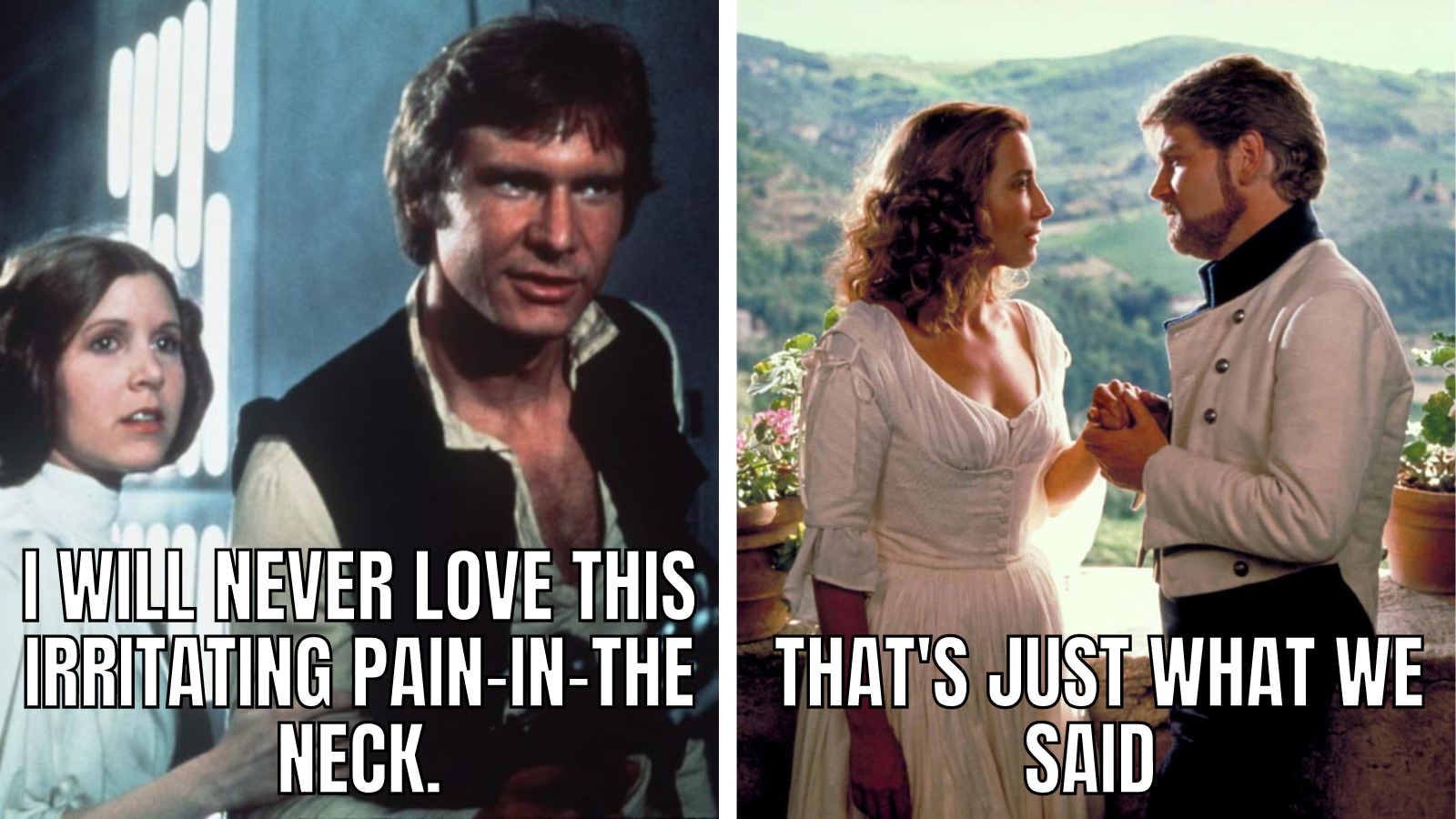
What I think works best in the film is the romantic comedy between Han and Leia; Doescher does a wonderful job pointing out the parallels between Han and Leia and Benedick and Beatrice which is not only fun, but helps Star Wars fans appreciate the comedy of Much Ado About Nothing even more. This is why I’m glad Doescher took painstaking notes on how he parodied Much Ado and other plays in the guide below:

The Education Guide

Doescher’s official website.

Support My podcast

If you enjoyed the accompanying podcast episode to this post, please consider subscribing and donating to help me continue making fun and educational content like this!
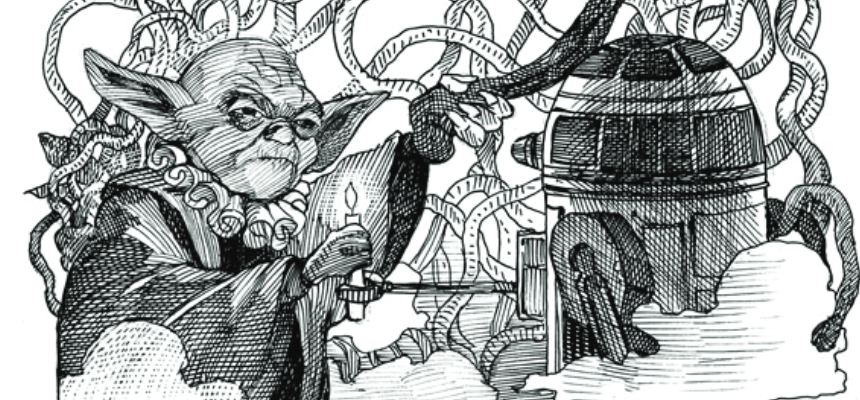
New Video: Yoda Speaks Shakespearean QUotes!

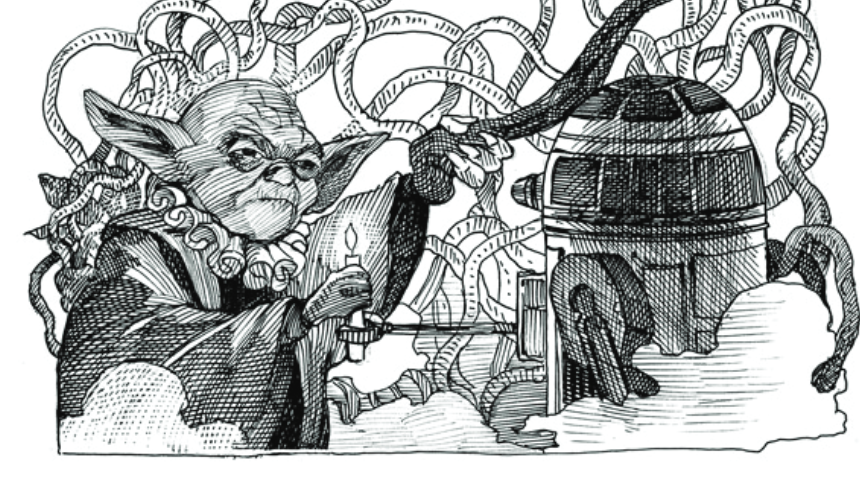
This is part of my upcoming podcast where I demonstrate how similar Yoda’s speech is to some Shakespearean dialogue. Actor and puppeteer Frank Oz, who puppeteered the character and supplied the voice explained that the idea behind the character’s iconic speech pattern was a discovery he made reading through the script:

“It’s funny you ask about [Yoda] because I was just looking at the original script of The Empire Strikes Back the other day and there was a bit of that odd syntax in it, but also it had Yoda speaking very colloquially. So I said to George [Lucas]: ‘Can I do the whole thing like this?’ And he said: ‘Sure!’ It just felt so right.”  

https://screenrant.com/star-wars-yoda-speak-speech-pattern-frank-oz-response/

There are a lot of in-universe theories as to why Yoda speaks like this. David Adger, from Queen Mary University of London has a theory that, much like many Latin languages have a different syntax than English, perhaps Yoda is speaking in the syntax of his language while speaking English:

He’s speaking English but changed the structure of it to be like his native language,” Adger points out. “We can find out something about Yoda’s native language by looking at how he speaks English, in the same way as I can find out about a French person’s native language by looking at how that French person speaks English. Yoda says things like ‘the greatest teacher failure is’… If you were to say that in a language like Hawaiian … it would be almost exactly the same … putting the predicate before the subject,” the professor used as an example.

David Adger, qtd in Comic Book.com, https://comicbook.com/starwars/news/star-wars-yoda-frank-oz-empire-strikes-back-dialogue-lines/
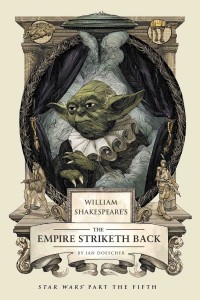
Book cover for Ian Doescher’s “The Empire Striketh Back,” a Shakespearean parody of Star Wars Episode 5.

Why Do Shakespeare and Yoda speak like this?

Example of Anastrophe from https://www.grammar-monster.com/glossary/anastrophe.htm.

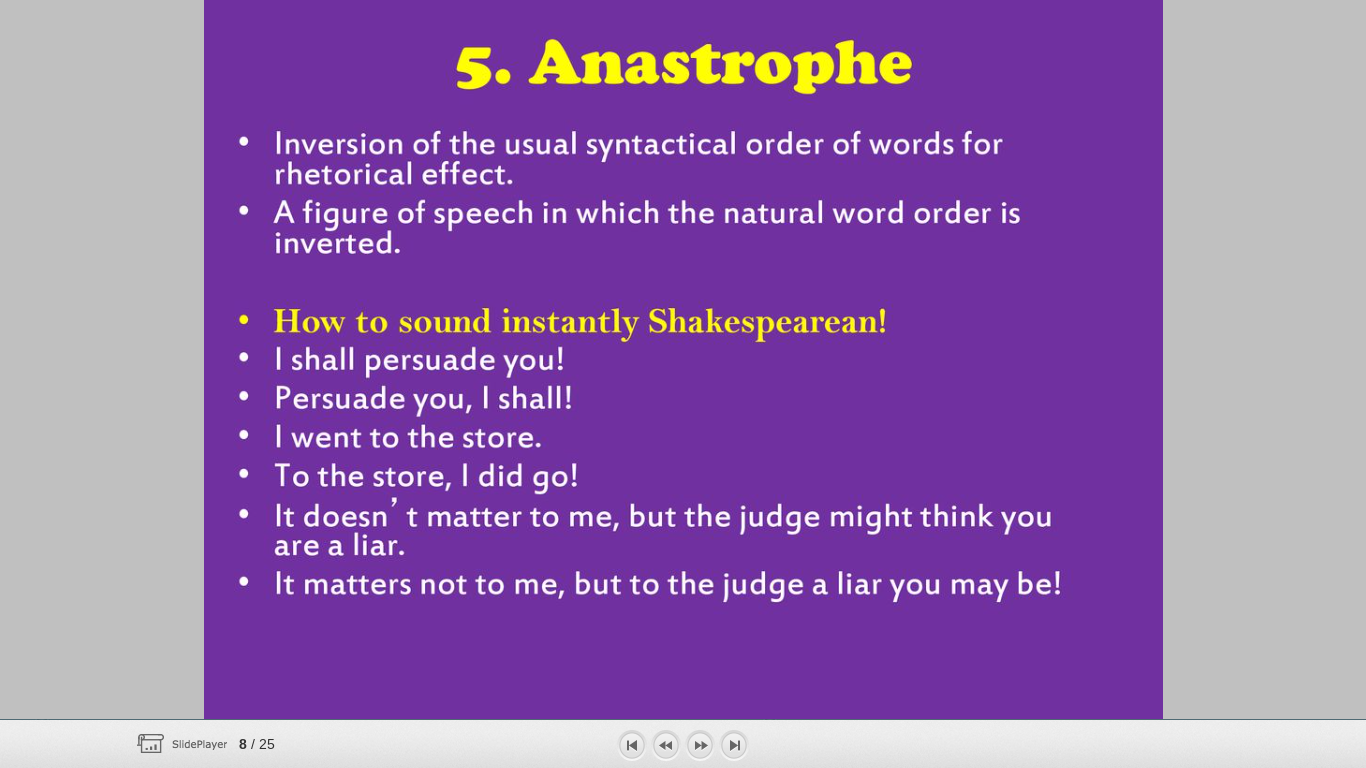
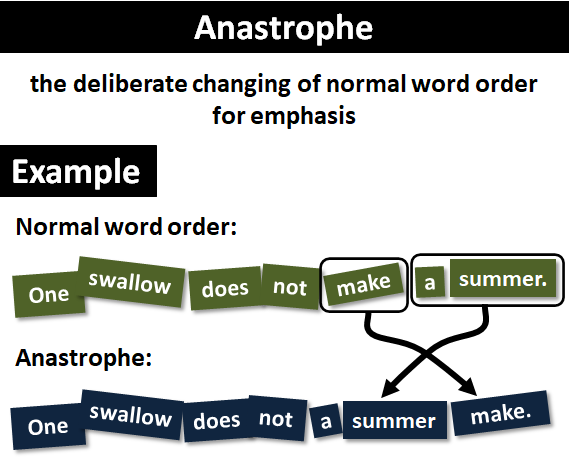
From a Shakespearean perspective, what Yoda is doing is called anastrophe, a rhetorical technique that is used for emphasis. Instead of the familiar- Subject-Verb-Object syntax of English, the order is flipped to grab the reader/ listener’s attention:

http://rhetoric.byu.edu/

According to Silvae Rhetorica (The Forest of Rhetoric), the word Anastrophe is Greek for “backward turning,” where the writer twist the word order around. As I said before, this creates a surprising effect, much like this painting by Picasso:

“People take the eye for granted. If I paint an eye in an eye socket, they take it for granted. If I take it out of the eye socket and stick it somewhere else, it comes as a shock, and they see the eye anew.”

— Pablo Picasso

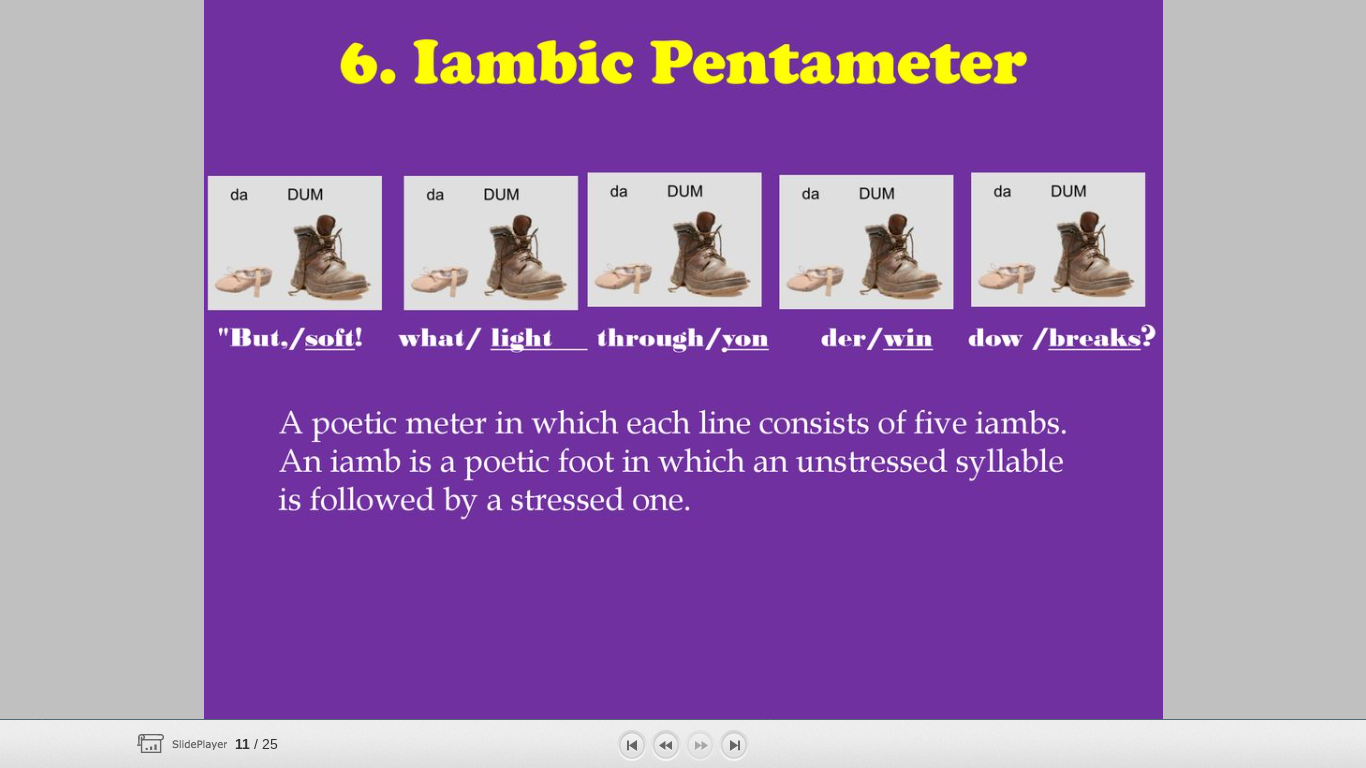
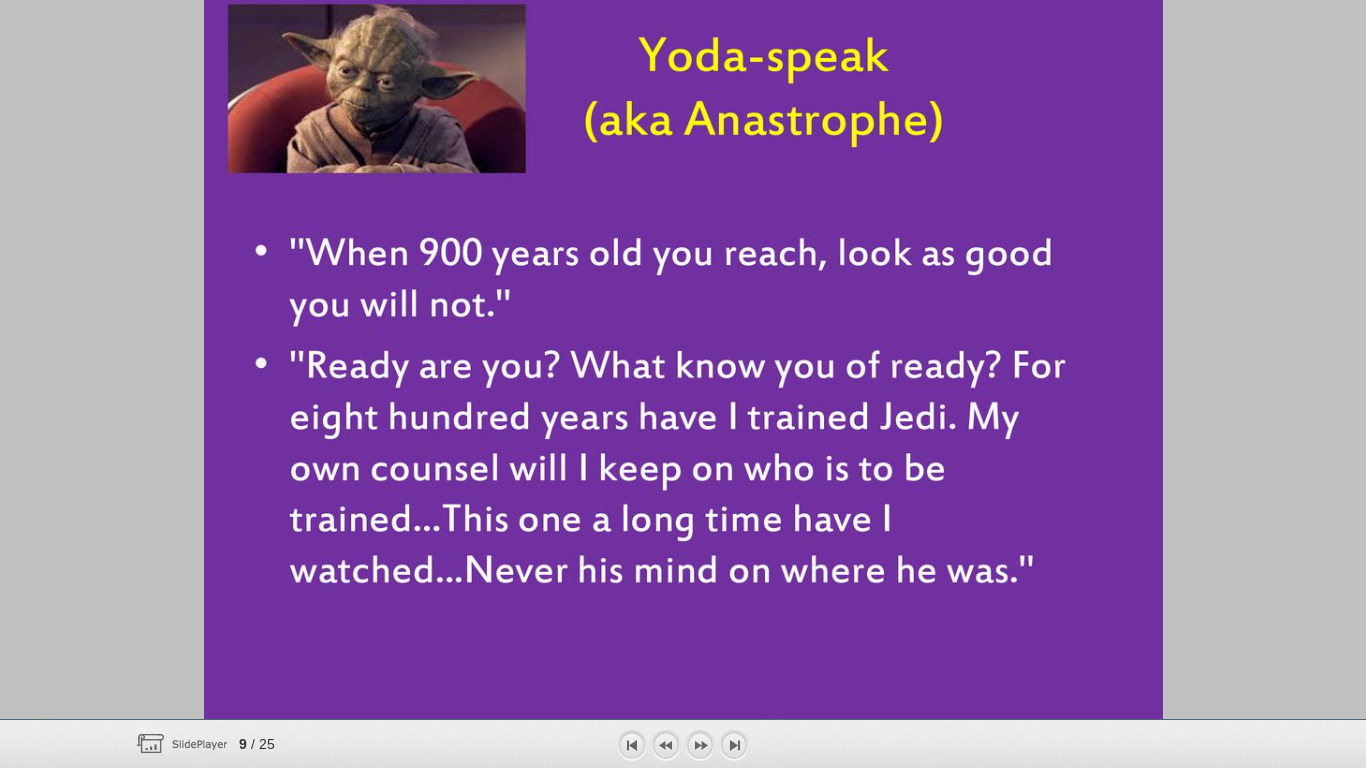
In the following slides, (which I found from Slideplayer.com), you can see examples of how Shakespeare and Yoda use anastrophe.
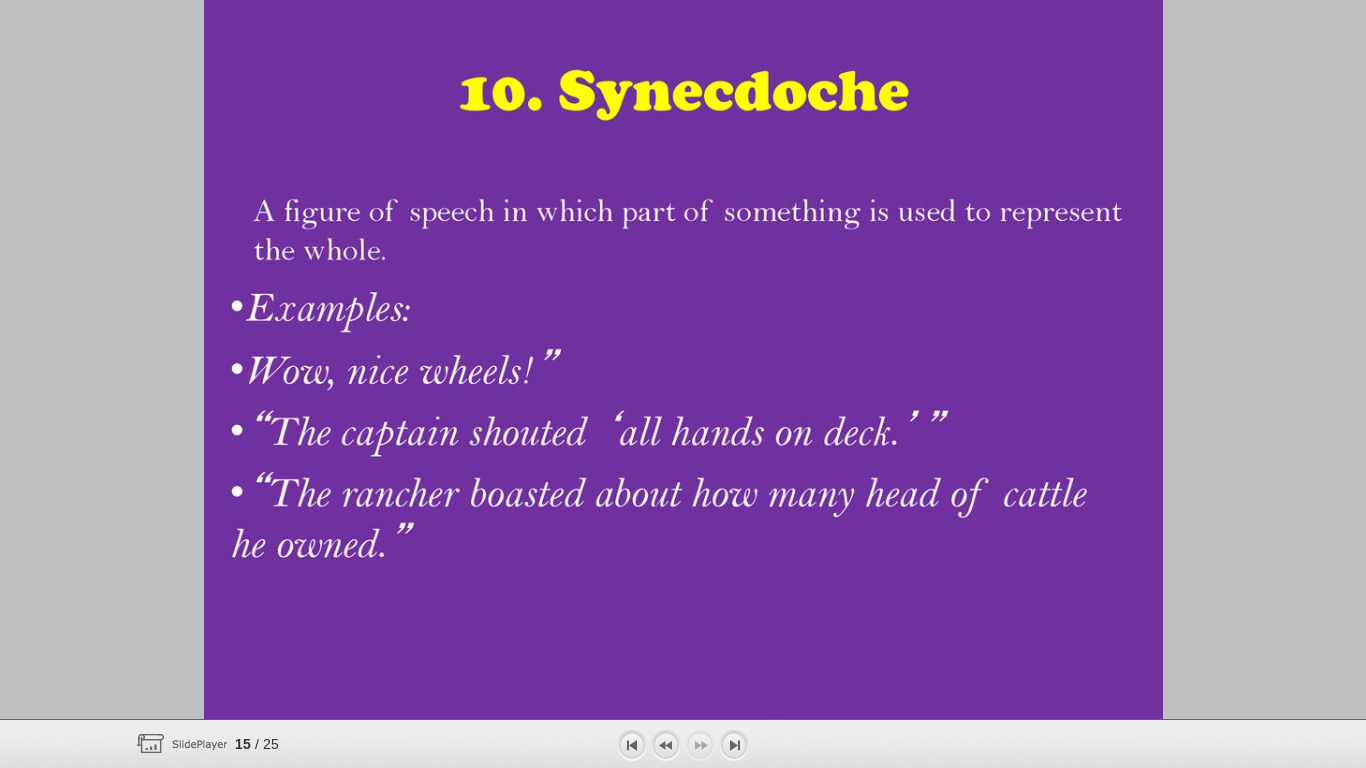
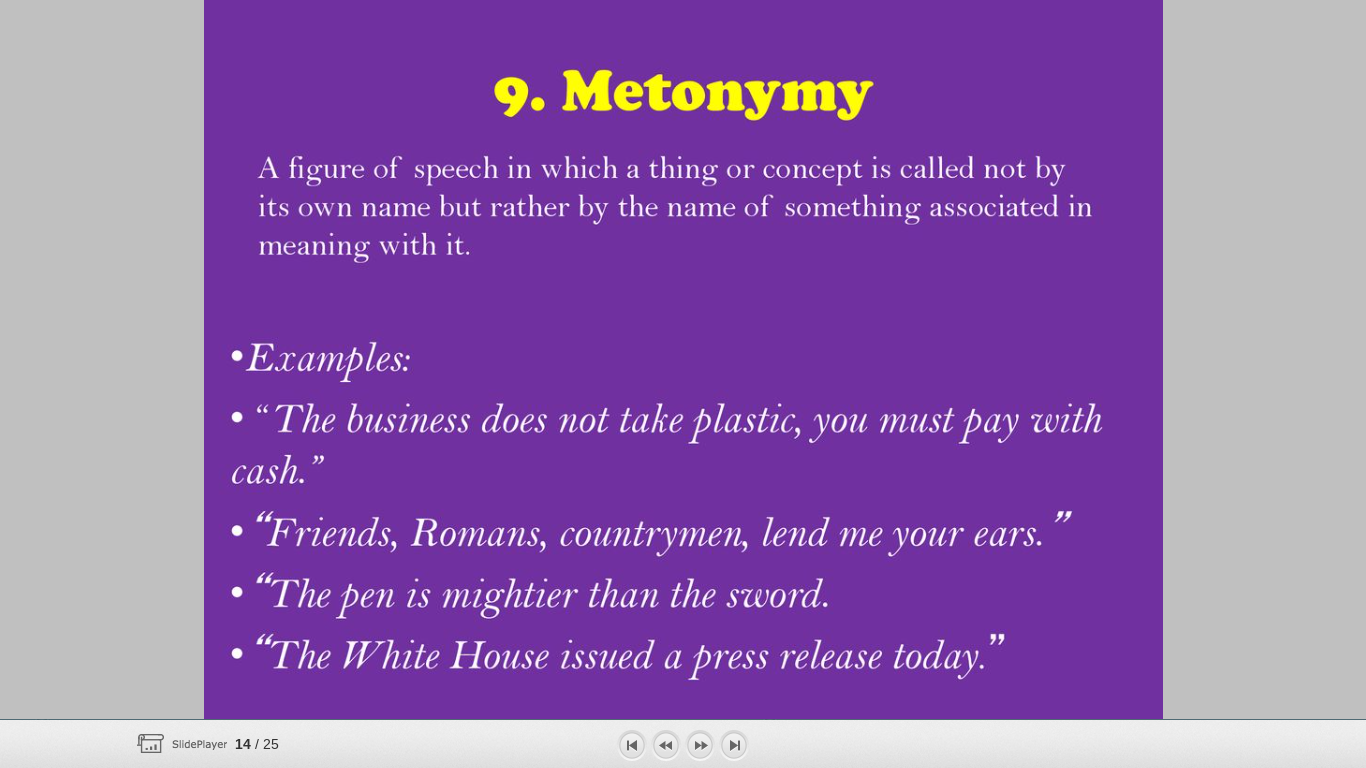
https://slideplayer.com/slide/13750257/

So I hope this post has helped you understand the force of Yoda’s unique style of speaking that was first used by The Bard!
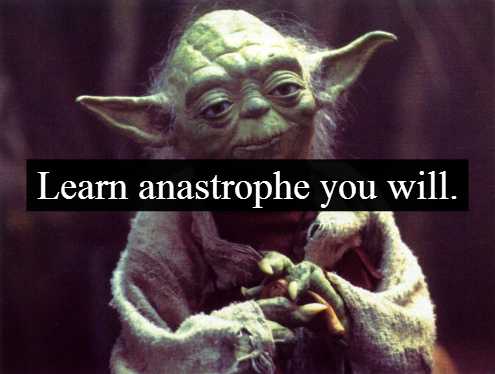
anastrophe - Phocabulary word - Photo Word of the Day to improve and  enhance word memory. Beginner, intermediate, advanced words including  definition, synonyms, and antonyms.

If you liked this post, please listen to my new podcast about Ian Doescher’s Shakespearean parody of Star Wars: The Empire Strikes Back, which I’ll publish on May 4rth (hopefully)
https://open.spotify.com/show/65BtDNOfX5Ls5yPoepwHHM .

Special Discount For My Online Class:

Scan the QR code to see my list of classes.

This Friday is the grand premiere of my new online class: “Shakespeare: The Lost Play,” where you discover who stole Shakespeare’s play. Below is the latest trailer.

Since I want as many people to play as possible, I’m creating a coupon: Get $10 off my class “Shakespeare’s Lost Play Mystery Game” with coupon code HTHES4OXNY10 until May 8, 2023. Get started at https://outschool.com/classes/shakespeares-lost-play-mystery-game-ny9HhlxI and enter the coupon code at checkout.

My Top 10 Favorite Shakespeares

Shakespeare’s birthday is coming up! This is the week where I usually stop talking about individual plays, and talk about the man himself. Today I’d like to cover how he’s been portrayed in fiction. As you’ll see, with such a famous and at the same time mysterious figure like Shakespeare, there is a lot of leeway in terms of how you portray him. This list shows multiple interpretations of Shakespeare and at different stages (ages) of his life. Some are comic, some are tragic, but all are fascinating to discuss:

#10: Rhys Ivans (Anonymous, as The Earl Of Oxford).

Like I said in my podcast, I don’t believe Oxford was the real Shakespeare, and I have some issues with the character and his lack of humanity. That said, I do like the character they were going for- a tortured genius who has to create, in spite of himself, and it destroys him and his family.

#9: Hugh Laurie

I love what they do here- Shakespeare’s a temperamental artist who hates editors, but ultimately accepts that he has to put butts in seats. It’s very true-to-life and Rowan Atkinson and Hugh Laurie do a great job in this sketch!

#8: Kill Shakespeare Volume 2

Like I said in my full review, I really like the idea of an aging Shakespeare buckling under the pressures of being an icon. Bardolatry, the worship of Shakespeare as a literary god, has been a real thing in academic circles for at least the last 200 years and I think it really hampers first-time readers from even attempting to read Shakespeare. Since this comic is very much attempting to get people to do just that, it makes sense that they portray Shakespeare as a deeply flawed human who is trying his best, but not able to live up to his god-like persona.

#7 Matthew Baynton- Horrible Histories

Even though this history show for kids is also trying to make Shakespeare accessible for British schoolchildren, it actually takes the opposite approach for Shakespeare- make him cocky, self-assured, silly, and a bit of a schlamaazel, who like his own creation of Mercutio, talks too much and invariably gets himself into trouble.

#6: King Of Shadows

Cover of “King Of Shadows,” an excellent Young adult novel for anyone who loves Shakespeare.

“Nat, say hello to William Shakespeare”. They might as well have said, “Nat, say hello to GOD!”

-King Of Shadows

Again, most interpretations of Shakespeare are aware of and try to subvert the god-like status he has in our culture, which is why this YA novel attempts to humanize him, by having him interact with the hero, Nathan, a 20th-century child actor, go back in time and finds himself switching places with another Nathan Field, a real boy actor in Shakespeare’s company. Nathan then meets and befriends Shakespeare and the two form a father-son bond.

This book takes place just a few years after the death of Shakespeare’s own son, Hamnet, so this William Shakespeare has a son-shaped hole in his heart. It’s really heartwarming to see the two broken people form a family bond.

#5: Hamnet

As I said before, Shakespeare is not the main character of this novel; he pops in and out of the life of the real main character; his wife Anne, as he visits her at his parents’ home, and later when he sees her on periodic trips home from London. His characterization is entirely indirect. That said, we learn a ton about him through her perceptive eyes. We see his hatred of his abusive father, his frustration with being a glover’s son with no time to make a living in the theater. We see his ambition take hold as he travels to London, and at last, his contrite return to finally become a good husband after the death of his son. This Shakespeare is sort of a prodigal son, who searches for fame and fortune as a young man in the big city, but eventually comes to value his life at home. This solves the mystery of why Shakespeare never moved his family to London, why he retired in the early 1610s, and why his writings have nothing about his relationship with his family, his wife, or especially his son. This Shakespeare is scarred; trying to redeem himself from the sins of his past.

#3 Kenneth Branaugh- “All Is True”

This Shakespeare is at the end of the journey he took in “Hamnet.” He’s retired from theater, trying to pick up the pieces of his life in Stratford, and trying to reconcile his feelings for the fair-young-man (played by Ian McKellen), and his wife, (played by Judy Dench). It’s melancholic, but still funny in a dour way.

#3: Christian Borle- “Something Rotten”

Like I said in the review of the Broadway musical, Borle is the best part of this show. Like Matthew Baynton, he plays Shakespeare as a cocky young self-assured genius on the outside, but unlike Baynton, we see he has a deeper side underneath. As he sings in the incredibly catchy “Hard To Be the Bard,” Shakespeare is once again dealing with the problem of maintaining his success and is under a tremendous amount of pressure to crank out new and successful plays all the time. Even though he’s the antagonist, he’s more sympathetic than the heroes.

#2: Jacob Fiennes- “Shakespeare In Love”

I realize this movie has lost a lot of prestige over the years, thanks to the controversy over its loathsome producer, Harvey Weinstein. I realize that the film Shakespeare In Love might not have deserved best picture over films like Saving Private Ryan. That said, I still think it’s a fantastic movie and every single element from the sets to the costumes to the near-perfect casting, is top-notch, especially the casting of Jacob Fiennes as Shakespeare. This young, heartthrob Shakespeare hasn’t yet become the self-assured genius we see elsewhere on this list. He’s constantly out-classed by Christopher Marlowe, which is a very good choice because it helps us sympathize and root for this man, whom we all know will become a rich, successful genius, but hasn’t yet.

Fiennes also gives Shakespeare a very good arc- he’s a selfish dreamer like Bottom at the beginning and a sweet, sensitive man at the end. In the end, he writes for all the right reasons- supporting his family, immortalizing his love Lady Viola, and helping his friends and partners in the Chamberlain’s Men. Most of these Shakespeare are fairly static, but this movie gives him a great hero’s arc which allows us to like him and hope that his play is a success. As you can see in this alternate version of the final scene, Shakespeare makes a tearful goodbye to Viola, and sets about paying tribute to her in a play that will eventually become Twelfth Night. He also begins his lifelong partnership with Richard Burbage, who will go on to play Malvolio in that play, as well as Hamlet, Othello, and many others. It’s a satisfying conclusion to his arch, which like Viola, shows that Shakespeare is ready to take on a “brave new world” with a new sense of purpose.

#1: Dean Lennox Kelly From Dr. Who: The Shakespeare Code

Dr. Who (David Tennent) and Dr. Martha Jones ( Freema Agymann), are… disappointed when they meet Shakespeare in person in 1599.

Though this episode has an inauspicious start, Dean Lennox Kelly from this 2007 episode of Dr. Who finds a way to incorporate every aspect of every other Shakespeare on this list! He’s a cocky, self-assured showman on the outside who knows he’s a genius but is also a middle-class man of the people, playing to the groundlings. On the inside though, he is mourning the loss of his son and yearning for love, which is why he falls in love with Martha and (spoiler alert) makes her the Dark Lady of the sonnets. He also is clever enough to figure out what’s going on as three aliens try to manipulate him into using his gift of words to conjure the end of the world for them. Finally, he is still a hard-working writer and does occasionally doubt his own work:

Shakespeare: “To be or not to be”. Oh, that’s quite good.

10th Doctor: You should write that down

Shakespeare: I dunno… bit pretentious?

-The Shakespeare Code.

Again, the best thing about this Shakespeare is his arc- he drops his mask of genius and opens up to Martha and the Doctor, just like how the Doctor confides in Shakespeare how he is mourning the loss of his previous companion, Rose. In the end though, he draws strength in the memory of his son, and actually uses it to save the world!

Is this a historically accurate biopic? No. Is it a silly cartoon? Also no. The reason I ranked this episode the highest is because they managed to encompass the myth and the man of Shakespeare in a very compressed time, with tons of Shakespeare easter eggs, and historical references, and it was filmed in the real re-creation of Shakespeare’s own theater! Someday I’ll write a full review of this episode, but for now, I hope you’ve enjoyed this list, and are hungry for more Shakespeare’s Birthday Week content!

Shakespeare’s Fools

Happy April Fool’s Day! Today I’d like to look at the rich history of Shakespeare’s fools and clowns! Clowns are some of Shakespeare’s classic comic characters, but fools are complex characters that entertain, satirize, and even philosophize. They may dress the part, but they are no fools.

This clip from Mel Brooks’ comic masterpiece History of the World, Part I, has the writer/director perform as Comicus, a ‘stand-up philosopher’ from Ancient Rome- a philosopher who is basically a stand-up comic. As you’ll see, unlike clowns, most of Shakespeare’s fools basically fulfill this role- to satirize and make fun of people and institutions.

What Is A Fool?

Fools and clowns are based on medieval minstrels who, as this video from Monty Python’s Terry Jones shows, were itinerant entertainers who had to do a number of jobs including play music, dance, sing, compose poetry, juggle, and on occasion- START A WAR!

Fools Vs. Clowns

A fool is the renaissance version of a minstrel- an official royal entertainer who worked at royal courts. A clown is a comic part in a play. The often danced, sang, and did improv comedy. To illustrate the difference, here’s a short video about the life of Henry VIII’s favorite fool- Will Sommers

Foolish Founding Fathers

All of Shakespeare’s fools and clowns are based on ancient Italian sources-from the Roman comedies of Plautus and Terrence to the improvised comedy known as Commedia Del ‘ Arte

Short featurette documentary on the artform of “Commedia Del’ Arte” by The National Theater in London

Commedia is based on stock character types that Shakespeare adapted and fleshed out- Arlequinno became the constantly hungry Dromio, (among others), while Capitano became Falstaff and Pistol. Even Shylock has remnants of Brighella in his DNA. According to Dario Fo in his book: Manuale Minimodell’Attore, Shakespeare adapted stock characters from commedia to be his clowns, and sarcastic characters called sots, who commented on the action to become his fools (Fo, 107)

Will Kempe- Shakespeare’s First Great Clown

Despite his strength and skill as a dancer, Kempe specialized in playing oafish buffoons like Dogberry in Much Ado About Nothing, Falstaff in the Henry IV plays, and Peter in Romeo and Juliet. In the Second Quarto edition of Romeo and Juliet, you can see in the stage directions “Enter Will Kempe,” right before Peter speaks:

According to Will In the World by Steven Greenblatt, Kempe and Shakespeare had a falling out in the late 1590s, which many scholars have assumed might have been due to Shakespeare’s distaste for clowns wasting time with jokes that bogged down the play:

Hamlet:
Let those that play your
clowns speak no more than is set down for them. For there
be of them will themselves laugh, to set on some
quantity of barren spectators to laugh too. Though in the
meantime, some necessary question of the play be then
to be considered. That's villainous, and shows a most pitiful
ambition in the fool that uses it. Hamlet, Act III, Scene ii.

Kempe, for his part, seemed a little big for his britches; he and his fellow clowns seemed to think that Shakespeare's scripts were just vehicles for his own jokes and songs (Reynolds, 247). He then sold his share in the Chamberlain's Men, derriding them in print as "My notable Shake-rags," and then staged a publicity stunt where he danced across England!

1600-1613: The Golden Age Of Foolery

Kempe’s replacement was Robert Armin, an accomplished writer and singer, who specialized in playing satirical Fool roles. Armin appeared in several Shakespearean plays after 1599.

Unlike Kempe, Armin’s characters are essential to the plot of the play, and his jokes support the themes and ideas of the plays themselves. As Feste in Twelfth Night, Armin makes jokes that make fun of the overly-serious Orsino and Countess Olivia:

Feste. Good madonna, why mournest thou?
Olivia. Good fool, for my brother's death.
Feste. I think his soul is in hell, madonna.
Olivia. I know his soul is in heaven, fool.
Feste. The more fool, madonna, to mourn for your brother's
soul being in heaven. Take away the fool, gentlemen. Twelfth Night, Act I, Scene v.
Touchstone in “As You Like It”

Sometimes Armin’s characters are satirical mirrors of Elizabethan society; in As You Like It, Touchstone the Fool mocks the culture of dueling; implying that there are hundreds of loopholes that a gentleman may use to challenge a man to a duel, without actually fighting.

  • Touchstone I did dislike the cut of a certain
    courtier’s beard; he sent me word, if I said his beard was not
    cut well, he was in the mind it was. This is call’d the Retort
    Courteous. If I sent him word again it was not well cut, he would
    send me word he cut it to please himself. This is call’d the Quip
    Modest. If again it was not well cut, he disabled my judgment.
    This is call’d the Reply Churlish. If again it was not well cut,
    he would answer I spake not true. This is call’d the Reproof
    Valiant. If again it was not well cut, he would say I lie. This
    is call’d the Countercheck Quarrelsome. And so to the Lie
    Circumstantial and the Lie Direct.
  • Jaques (lord)And how oft did you say his beard was not well cut?
  • TouchstoneI durst go no further than the Lie Circumstantial, nor
    he durst not give me the Lie Direct; and so we measur’d swords
    and parted.

The Fool in “King Lear”

Perhaps Armin’s greatest comic creation was The Fool in King Lear; the ultimate satirist who makes fun of the king’s foolish choices. He tries to talk sense to the increasingly mad king, until he vanishes entirely, and Lear himself starts making fool-like cracks at the audience:

Lear Thou hast seen a
farmer's dog bark at a beggar?
Earl of Gloucester. Ay, sir.
Lear. And the creature run from the cur? There thou mightst behold
the great image of authority: a dog's obeyed in office.
The usurer hangs the cozener.
Through tatter'd clothes small vices do appear;
Robes and furr'd gowns hide all. Plate sin with gold,
And the strong lance of justice hurtless breaks;
Arm it in rags, a pygmy's straw does pierce it.
None does offend, none- I say none! Get thee glass eyes
And, like a scurvy politician, seem
To see the things thou dost not. King Lear, Act IV, Scene vi.

Through realizing his own foolishness, Lear recovers his sanity, and makes peace with his daughter, which beautifully shows the importance of fools, clowns, and satirists; to question ourselves, to sharpen our critical thinking, and to endure hardships with good humor. Therefore on this April Fools Day, I say,

“Here’s to the fools, to folly, to farce. Let them push the wealthy on the ar— APRIL FOOLS!”

References

Best, Michael. “Shakespeare’s Actors: Will Kempe” Internet Shakespeare Editions, University of Victoria, 28 Sept. 2016, ise.uvic.ca/Foyer/citing. Accessed 30 Sept. 2023.

Fo, Dario. Manuale Minimodell’Attore (English: “The Tricks Of the Trade” Translated by Joe Farrell, 1991. Accessed online at Google Books: https://www.google.com/books/edition/The_Tricks_of_the_Trade/akEJ9Ew9GaoC?hl=en&gbpv=1. 29 March. 2023.

For more tomfoolery

I teach a class specifically on Shakespeare’s comedies where I’ll talk a lot about the way Shakespeare writes clowns. I’ll also delve into the history of Commedia Del’Arte and how it influenced Shakespeare’s characters! For more information, visit http://www.outschool.com