Shakespeare the Father, Shakespeare the Son.

I realize Father’s day was last weekend, but I thought I’d like to cap off that week of posts with one final insight into Shakespearean fathers, only today they won’t be fictional! Today I’ll be sharing with you some details from the lives of William Shakespeare and his father, John Shakespeare. We’ve been talking about good, bad, and dad dads, so after reading this post, what do you think- were these men good fathers, or not?

-Bio of John Shakespeare c1530—to 1601

Ancestry-

Shakespeare Family Tree
  • John Shakespeare was born around the year 1530 (exact records no longer exist). He came from a long line of prominent farmers in Snitterfield, and moved to Stratford Upon Avon in Warwickshire, in the year 1557 John married Mary Arden, who also came from pretty posh country stock; records trace the Arden family back before the Norman conquest in 1066!
  • John and Mary’s children
    • Altogether, John and Mary had 8 children (see the family tree above.)
    • Sadly, their 2 eldest daughters Margaret and Anne died in infancy, making William the eldest child, and the son and heir of his father’s wealth.
    • William’s brother Edmund became an actor, while his sister Joan took over John’s old house.
    • Shakespeare was born in 1564 in a modest house on Henley Street, which still stands today!
The house on Henley Street, where Shakespeare was born in 1564. Click here to learn more about Shakespeare's birthplace.
The house on Henley Street, where Shakespeare was born in 1564. Click here to learn more about Shakespeare’s birthplace.
  • Mayor, Bailiff, Glover When John and Mary moved to Stratford, John established himself as a great fixture of the community- he started as the local glover, and rose to the highly respected office of town ale taster (no, I’m not kidding). At the height of his career, John became Mayor of Stratford, and an Alderman- a town counsilor who helped make decisions like whether or not to let local theater troupes come to town! Maybe John took his young son to watch the travelling players and helped inspire Will’s lifelong love of theater.
  • Teach Your Children Well Shakespeare got to go to one of the first ever public schools in England, where he learned English history, poetry, and the art of persuasive speech, everything he needed to become the great writer he would become.
  • Brogger not Blogger As I mentioned in my first post, Shakespeare’s dad had an illegal side business as a wool dealer. All wool was controlled by the English government, so selling it directly to people was a crime, and eventually John Shakespeare was caught. Fortunately, the fine he paid wasn’t enough to ruin him financially…yet.
  • Closet Catholic The biggest financial problem John Shakespeare faced was his religious beliefs. In 1757, archeologists unearthed a pamphlet where John confessed to be a secret Catholic in a society where the Church of England was the national religion. Scholar Michael Wood believes that John’s Catholicism led to financial ruin; he refused to go to Episcopal church and had to pay crippling fines every time he failed to appear.
  • John’s Descent At the same time, John’s debts kept mounting and he was afraid to go to the town council house for fear of more collectors, even though he was the mayor. The final blow came in 1576, when John was booted off the town council.
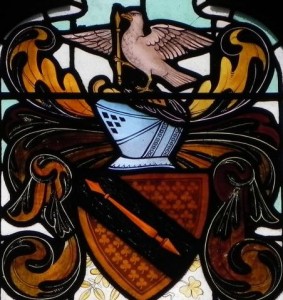
  • Son of Fortune John’s son William would eventually repair the family dignity when he became a success. In 1596, William made himself, and all the male members of his family gentlemen, by applying for a coat of arms. Below is a picture of Shakespeare’s family crest.
Shakespeare's coat of arms, as depicted in the Folger Shakespeare Library window.
Shakespeare’s coat of arms, as depicted in the Folger Shakespeare Library window.
  • John Shakespeare died in 1601, shortly after his son’s play Hamlet was published. Will might have honored his father’s memory by playing the Ghost of Hamlet’s father.

-Bio of William Shakespeare as a Father 1564-1616.

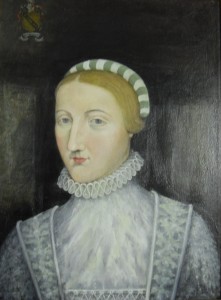
  • Drawing of Anne Hathaway, original artist unknown.
    Oil reproduction by Roger Dunn of an alleged drawing of Anne Hathaway. Reproduced with Permission, Shakespeare’ Birthplace Trust. Click on the picture to find out more about this work of art!

    Roger Dunn BA

    Wedding Bells In 1582, Will married Anne Hathaway (not the Oscar winning actress from Les Miserables, although that one has shown some love for Shakespeare too. Based on the timeline, it’s very likely that Anne was already pregnant when William married her. Some claim that the Bard was basically in a “shotgun” marriage, but nobody has proven otherwise. We do know that he wrote a sonnet to her on their wedding day, click here to read it!

  • Shakespeare’s Children Shakespeare and Anne had three kids (Judith, Susanna, Hamnet) Susanna was born in 1583, while the twins were born 5 years later.
  • Hit the Road! Sometime around 1590, Shakespeare moved to London and must’ve gotten a job with a theater company. Unfortunately, no records survive between the birth of Shakespeare’s children, and his first success as a playwright in 1592, which is why scholars refer to this period as “The Lost Years.” It was probably a tough life for the Shakespeares, with the father away in the city while they were cooped up in Stratford with their grandparents.
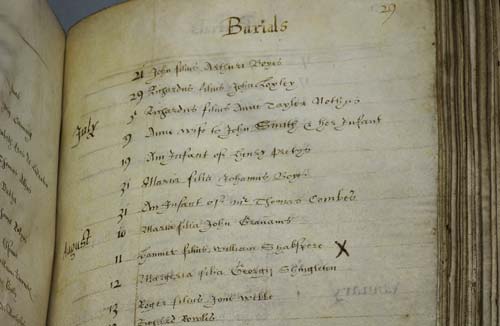
  • RIP Hamnet. Shakespeare’s only son died August 9th He was away in London at the time, and undoubtedly the news was a terrible shock.
Burial Registry of Hamnet Shakespeare

http://www.tandfonline.com/doi/abs/10.1080/00144940209597737?journalCode=vexp20

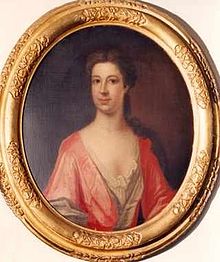
  • Will’s daughters Shakespeare had two girls, Judith and Susanna. Naturally, it’s hard to tell anything about Shakespeare’s personal feelings, but looking at his plays and his future actions, Shakespeare must have really loved his girls. Many of his later plays explore the relationships between fathers and daughters, and as you’ve probably noticed, most of the fathers on my previous countdowns have at least 1 girl. Shakespeare was preoccupied with his daughter’s futures and helped them find husbands, Susanna Shakespeare was arrested for refusing to take protestant communion Susannah married Dr. John Hall, a respected puritan physician. She also bore William his only grandchild, Elizabeth Barnard (pictured below).
Elizabeth Hall, 1608-1680. Shakespeare's granddaughter.
Elizabeth Hall, 1608-1680. Shakespeare’s granddaughter.

Will clearly loved his daughters, especially his daughter Susanna. His last 5 plays were about fathers trying their best to improve their daughter’s lives. In his will he gave his daughter Susannah 100 pounds of English money, as well as a dowry To his other daughter Judith he left 30 pounds, all of his silver, and permitted her to live in one of his houses on Henley street.

FMI:

  • by Michael Wood: A fantastic documentary/ book/ website, which looks at the life of William Shakespeare and his work. On this website is an interactive timeline that shows pictures of the places Shakespeare lived and worked, and the documents with his name on them: http://www.pbs.org/shakespeare/events/
  • Will In the World by Steven Greenblatt: A great biography of Shakespeare by a celebrated Harvard scholar and editor of tne Norton Shakespeare edition. Click here for a review: http://books.wwnorton.com/books/Will-in-the-World/. 

So that ends my posts on Shakespeare and Father’s Day. Stay tuned for another post about a very interesting holiday!

Illustration of the Shakespeare family, wife and children, 1890.

Which Shakespeare Edition is Right For You?

What’s the best Shakespeare edition to read? You may not know it, but all of Shakespeare’s plays are contained in just one little book that has been printed and re-printed for 400 years. Today you can find thousands of different versions of Shakespeare for your needs as a student, scholar, or just regular Shakespeare fan, and today I’m here to guide you through some of the most popular! Let’s take a look!

A Little Background:

Shakespeare's First Folio
The original printed edition of Shakespeare’s First Folio, 1623

During Shakespeare’s lifetime, he wrote his plays just for his company to perform. The scripts were distributed among the cast as little rolls of paper that had each actor’s part written on it (this is why an actor’s part is sometimes called his “role”). Sometimes the plays were published when the company wanted to make a little extra money, but they weren’t exactly best-sellers. After Shakespeare died, two actors from his company, John Hemmings and Henry Condell, decided to preserve Shakespeare’s work for all time, printing his plays in a beautiful book called Shakespeare’s First Folio in the year 1623. This book helped preserve 36 of Shakespeare’s plays, 17 of which were never printed before, and would have been lost forever if Hemmings and Condell hadn’t preserved them.

Today some purists say that the only way to read Shakespeare is by reading a facsimile of the First Folio, because it preserves Shakespeare’s original spelling, his stage directions, and the natural integrity of the verse form because of the way it’s printed on the page. To be honest, I see the merit in this, but only for actors and scholars who often need every clue in the text to inspire them to construct creative and inventive interpretations of Shakespeare’s work. However, for first time readers I recommend a modern edition, since the Folio has very few stage directions, and no standard spelling or punctuation, making it very hard to understand. Shakespeare is hard enough to read without love being spelled “loove” all the time.

imgres-1Shakespeare in modern type by Neil Freeman. These editions are the kind i urlmentioned earlier, the ones for Shakespeare Fundamentalists. These are the people who believe Shakespeare left clues for performance in every line, every punctuation mark, and every change in verse. I don’t dispute this view, but I also can’t fully support it because it encourages actors and directors to become slaves to iambic and to never deviate from the rigid construction of Shakespeare’s verse, even if they have a creative reason not to. Even classical musicians must be allowed some form of improvisation. Actors should have the same liberty to interpret the text as they see fit. You can rent or purchase individual versions of the Freeman Folio texts, or purchase the full version of the First Folio in modern type. For sample pages, click here: https://books.google.com/books?.

Editions of T
Editions of The Arden Shakespreare

The Arden Shakespeare– For over 100 years, this edition has been a favorite of scholars and actors alike. It focuses on the world of Shakespeare to help you understand the characters by detailing the interpretations directors have favored for the last 400 years. The Arden edition has excellent notes and is great for college students and honors high schoolers. http://www.bloomsbury.com/us/academic/academic-subjects/drama-and-performance-studies/the-arden-shakespeare/

The Norton Shakespeare

The Norton Shakespeare- This version is a more academic version with great notes by the venerated Steven Greenblatt of Harvard University. It focuses on the world of Shakespeare with notes about Elizabethan society, history, poetry, and mythology. I would recommend it for college students and adult readers.

Click here to sample some of this edition: https://books.google.com/books?id=2

Folger Shakespeare Library Edition of Hamlet

The Folger Shakespeare- Edited by the premiere Shakespeare scholarship institution in America: The Folger Shakespeare Libary, this version has very clear and simple explanations for what the characters are saying and has lots of pictures and notes. This version is excellent for high schoolers and is one of the standards in most school districts. Click here to sample some of their work. Be sure to also check out the Folger’s website! http://www.folger.edu/

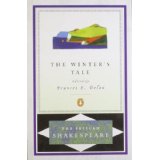
Penguin Shakespeare: The Winter's Tale
Penguin Shakespeare: The Winter’s Tale

The Penguin Shakespeare– this is probably the cheapest version of Shakespeare. It has a glossary and a few notes, but not as many pictures and clever editor’s notes as the Folger. http://www.amazon.com/s/?ie=UTF8&keywords=shakespeare+penguin+books&tag=googhydr-

No Fear Shakespeare: Macbeth

No-Fear Shakespeare- As I’ve said before, this edition is fundamentally flawed, and I don’t recommend it to anyone. It purports itself to be a “translation” of Shakespeare, when in fact it’s just a loose paraphrase. I don’t agree with most of the choices that the editors put in these editions, and I think it dumbs down Shakespeare too much. In addition, I reject the concept that the plays need a translation- they were written in English, and purporting that a student needs a translation of Shakespeare just makes him or her dependent on this edition and still assume that they cannot understand Shakespeare’s text. So once again, I don’t recommend this version, but if you’d like to check it out, here’s a link below: https://books.google.com/books?
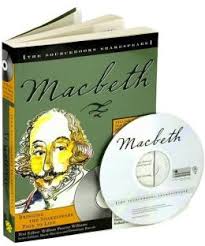
Sourcebook Shakespeare: Macbeth

The Sourcebook Shakespeare– This is my favorite version of Shakespeare to study. They are probably too expensive to use in a classroom, but they really are worth it for a Shakespeare appreciation class. Not only do they have tons of notes and a really reader-friendly layout, each edition also contains a CD with up to 30 scenes and speeches from Shakespearean productions dating back 100 years! These editions focus specifically on how directors and actors have taken the same plays and interpreted them in new and interesting ways. In my view, this combination of reading and listening is one of the purest ways to demonstrate Shakespeare’s versatility, and why we keep reading him today. The same company is also developing versions for iPad to make the experience even more interactive: http://www.sourcebooks.com/blog/

Filthy ShakespeareFilthy Shakespeare- To be honest, this version is really more of a dictionary of naughty topics Shakespeare explored about in his plays, and is really just for entertainment purposes, but I thought I’d mention it anyway. I should of course mention that this version is not for children since it has lots of adult language. Click here for a sample: https://books.google.com/books?id=E523EogqB84C

Thanks for reading this post. If you’d like to learn more about the issues of editing and adapting Shakespeare, check out The Struggle For Shakespeare’s Text by Gabriel Egan. Let me know how you liked this post! I’m also planning on creating a series of audio interpretations of Shakespeare. Stay tuned!

Play Review: “William Shakespeare’s Star Wars”

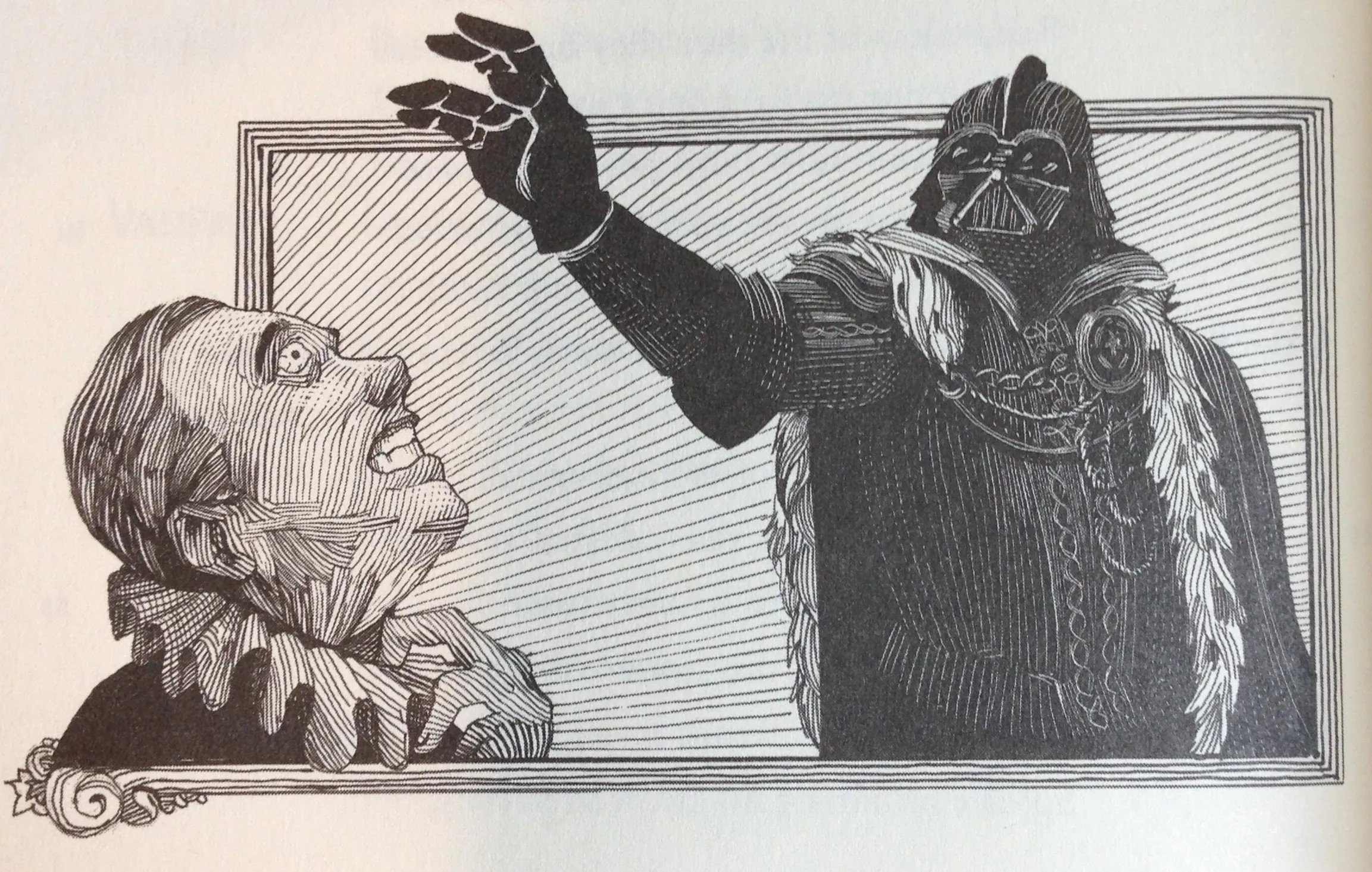
Illustration from William Shakespeare's Star Wars
Illustration from “William Shakespeare’s Star Wars”

Play review: William Shakespeare’s Star Wars

Since Monday was May the Fourth, and since I got some encouraging comments about the previous post, I’m happy to review one of the most interesting Shakespeare spin-offs I’ve ever encountered: William Shakespeare’s Star Wars by Ian Doescher. For those of you who haven’t heard of this play, it’s basically the script of Star Wars put into Shakespearean verse. The writer clearly loves both Shakespeare and Star Wars, and puts lots of cheeky Shakespearean references in the text, such as Luke Skywalker parodying Hamlet as he steals a Stormtrooper’s uniform and Yorrick-like, holds up the helmet to his face:

“Alas poor Stormtrooper, I knew ye not,” (Doescher IV, vi, 1) The play lends itself perfectly for performance in an Elizabethan playhouse with its sparse stage directions and an Elizabethan chorus that comments on the action and tells the audience whenever action occurs offstage, such as when the Death Star gunners prepare their mighty laser to destroy the planet Alderon. I certainly got a kick out of reading this play since I too am a huge Shakespeare/ Star Wars fan. However, since this blog is meant to help us learn and appreciate Shakespeare, the question is, does this play have any value to Shakespearean students? At first I wasn’t sure, but now I say yes!

Before I read the play, I was a little apprehensive as I’ve seen Shakespearean gimmicks fall flat before; I once saw a dreadful production of Macbeth where the whole cast was made up to look like zombies for absolutely no purpose except to cash in on the zombie fad. So at first, I wondered, “Why bother translate Star Wars into Shakespearean language”? As I read on though, I realized what the author had done was give readers a rare glimpse into how Shakespeare himself wrote.

This helps prove one thing I’ve always felt about teaching Shakespeare- parody and gentle satire are a great way to deconstruct his plays into something a little easier to grasp. As I said before, Doescher’s play is full of tiny bite-size portions of real Shakespearean dialogue that allow you to digest some of The Bard’s most famous lines. Also, he’s following the same ‘recipe’ Shakespeare used in his plays and speeches, so I’m going to deconstruct some of the Shakespearean elements that Doescher employed to concoct this Shakespeare/Sci-fi classic hybrid. I’ll focus on the first play in the series: Verily A New Hope, but you can find these components in all of the plays in the Star Wars Saga.

  1. Iambic pentameter- the most obvious difference between the original Star wars is that Doescher took the dialogue and put it into the same poetic meter Shakespeare used. For those who don’t know, Iambic pentameter is a kind of unrhymed poetry with 10 syllables per line. Each line also has 5 stressed beats that strike like a heart beat- Da DUM Da DUM Da DUM Da DUM Da DUM. To keep the emphasis on the right syllables, sometimes the writer has to shift the syntax or add and subtract words to get them to fit. This is why instead of the famous: “A long time ago, in a galaxy far, far away,” the Prologue at the beginning says:

“ In time so long ago begins our play,

In star-crossed galaxy far, far away.”

Doescher’s time-consuming process of translating a prose movie script into blank verse poetry is exactly Shakespeare did when he wrote his plays, only instead of movie scripts, he took the chronicles of English history to become Hamlet, Macbeth, Lear, and many others. With all the work involved in crafting poetry like this, it’s no wonder he didn’t have time to think up an original story!

  1. Telling the audience what you’re doing- As I said last week, one thing to keep in mind when you read Shakespeare is that his plays were performed outdoors with no microphones, in an audience of nearly 3,000 people! It must have been extremely hard to see or hear the action onstage. Shakespeare tried to solve this problem by having characters announce what they’re doing, which would be tedious, if he didn’t also know how to spice up the dialogue with lines that reveal the character’s emotional state, like when Lord Capulet says: “My fingers itch,” to warn his daughter he’s about to hit her. Doescher captures this extremely well in the speech where Vader lifts up the Rebel Leader and begins to choke him to death:

I turn to thee, thou rebel. Aye, I lift

Thy head above my own. Thou canst now choose

To keep thy secrets lock’d safe in that head

Or else to keep thy head, and thus thy life (Doescher I, ii 6-10).

This passage explains to the reader or playgoer that Vader has lifted the man over his head, (demonstrating his cruelty and his strength), and subtly plays on the fact that Vader is looking at his head, wants the knowledge in his head, and will crush his head if the Rebel doesn’t cooperate. Shakespeare’s Richard III makes a similar threat: “Villain, set down the corpse, or by St. Paul, I’ll make a corpse of him that disobeys!”

  1. The Aside One thing Shakespeare does that few modern writers ever do is have characters talk directly to the audience; thus establishing an intimate relationship between you and a person who is confiding their secrets in you. The most striking example of this in Shakespeare’s Star Wars is R2D2, who in the movie never spoke at all, but made cute little electronic beeps and whirrs. Having R2 speak gives the reader an unexpected closeness because R2 never speaks to anyone else.
  2. Personification Shakespeare is really good at finding a clever visual metaphor for an abstract idea, and will write speeches or dialogue where characters explore the nature of that idea, a meditation if you will. One of my favorite examples from Shakespeare’s Star Wars is the scene in which Luke and his uncle debate about whether Luke will stay on the farm. Luke compares himself to a bird that’s trying to fly away, while his uncle uses farm metaphors to try and keep him to stay:

OWEN: Wilt thou here in the desert yet desert? Tis only one more season.

LUKE: Now cracks a hopeful heart, when by the land,

A man’s ambitions firmly grounded are:

So shall a bird ne’er learn to fly or soar

When wings are clipp’d by crops and roots and soil.

It’s really very clever the way Doescher mimicks Shakespeare’s wordplay here. Luke is like a bird because he’s a pilot and longs to fly. Owen is a farmer on a desert and is worried about Luke deserting him. We get a clear picture of their relationship from this scene.

  1. Chorus Shakespeare sometimes uses a Chorus to tell us what is going on in plays where the location shifts from place to place- it’s a time honored device in epic storytelling. Nowadays we use a Chorus too, we just call it a Narrator. The difference is that a Chorus also can explain the tone and the mood of the action onstage, so that you can imagine it in your own mind. Take a look at this passage where the chorus describes the famous Star Wars Cantina:

Now mark thee well, good viewer, what you see,

The creatures gather round the central bar

While hammerheads and hornéd monsters talk.

A band composed of aliens bizarre:

This is the great cantina- thou may’st gawk! (III, I, 45-49).

You can see how, unlike a narrator who would just tell you there are a bunch of aliens here, the Chorus describes the sights and sounds of the bar so you can imagine it yourself. The Chorus in Shakespeare’s Henry the Fifth explicitly states that the audience needs to use their imagination to fill out the story of Henry’s conquest of France.

  1. The soliloquy A soliloquy is a speech spoken by a character alone on stage. It often has to do with a complex dilemma such as Hamlet’s “To Be Or Not To Be.”
1307_SBR_STARWARS_ILLO.jpg.CROP.article568-large

In Shakespeare’s Star Wars, Luke and Vader have the most soliloquis and with good reason- they have the most complicated emotional journeys- Luke goes from a simple farmboy from Tatooine to a Jedi Knight, while Vader goes from a Jedi to a Sith to a father. Shakespeare’s greatest power is his ability to put complex emotional journeys like these into speeches that the characters share right with us. I loved both these speeches too much to choose, so I’m going to talk about of both. The first is a soliloquy Vader speaks after he kills the Rebel leader:

And so another dies by my own hand,

This hand, which now encas’d in blackness is

O that the fingers of this wretched hand

Had not the pain of suffring ever known. Droescher I.ii, 27-30

This speech reminds me very much of Richard III, one of Shakespeare’s greatest villains. Richard, like Vader, has his life story told in 6 installments where he slowly becomes an evil mastermind. The images of this speech conjure up parts of Vader’s life story: how he lost his hand in Episode II and now has a robotic hand in a black glove. The speech also conjures the fact that his master the Emperor is able to shoot lightning from his hands, and of course, how Vader himself is able to kill by merely gesturing with his hand. Richard has a speech where he talks about all the people he’s killed to become king, and how he now has to kill even more to stay king:

I must be married to my brother’s daughter,
Or else my kingdom stands on brittle glass.
Murder her brothers, and then marry her!
Uncertain way of gain! But I am in
So far in blood that sin will pluck on sin:
Tear-falling pity dwells not in this eye (Richard III, Act IV, Scene i)

Luke has another speech where he talks about his destiny staring at the twin suns of Tatooine, but I won’t spoil that one for you! Needless to say, it’s awesome. I bring it up because In the movie, it was John Williams’ job to literally underscore Luke’s emotions as the music swelled. Shakespeare’s gift on the other hand was to put powerful emotions and thoughts into carefully composed soliloquys that sound like music when spoken well.

So as you can see, the author’s loving parody of Shakespeare allows us a rare glimpse of how the Bard wrote; his cleverness at adapting stories, his use of verse, wordplay, metaphor, personification, choruses, and his unique ability to write characters that talk to us as if we were in on their deepest secrets.

By the way, if you’re still unconvinced on this play’s educational value, check out this link to their educational website: http://www.iandoescher.com/wp-content/uploads/2013/08/ShakespeareStarWars_EducatorsGuide.pdf

Happy Birthday Shakespeare

In honor of Shakespeare’s birthday, I present this post to introduce you to some of the important events in his life and career!

5 Facts You Didn’t Know About Shakespeare

  1. Shakespeare wrote 39 attributed plays, 154 sonnets, four epic poems, and (some believe), might have had a hand in writing the King James Bible.
  2. He was the third of 8 children, but his elder siblings died as infants, so he was the eldest son.
  3. Shakespeare’s father had a criminal record: In 1572, he was caught selling wool illegally. The government had a monopoly on the wool trade, so this would be like selling bootleg tapes or mp3s online. He was also in trouble for lending money, just like Shylock in The Merchant Of Venice.
  4. Shakespeare’s whole company was suspected of treason and conspiracy! In late January of 1601, Shakespeare’s company was asked to perform a play February 7th, designed to foment rebellion against queen Elizabeth! The Earl of Essex hoped that the play would make people rise up and storm London, and planned to attack the castle the next day. Unfortunately, nobody showed up to the rebellion, and Essex was arrested and tried and convicted of treason. As for Shakespeare and his company, they were interrogated, but found not guilty; they just told the court officials that they did it for the money.
  5. Shakespeare invented the knock-knock joke! And also 1,700 other words. No other author in history has created more words and phrases than Shakespeare. For a few samples, click here: http://www.nosweatshakespeare.com/resources/shakespeare-words/

Now, so we don’t get on the wrong foot about Shakespeare, I would like to dispel some oft-perpetuated misconceptions:

Top 5 Lies About Shakespeare

  1. The law forbade women from performing in Shakespeare’s Day. Although this lie inspired the plot of one of my favorite movies, Shakespeare In Love, I feel this lie needs to be dispelled. There was no law prohibiting women from performing in any country. In fact, it was quite common to see women perform in Italy and France for centuries. However, in England, given the low status of theatre at the time, acting was not considered a reputable occupation, and women didn’t have the freedom to pursue occupations that men did, so though it wasn’t illegal, it was not encouraged.
  2. We know for a fact that Shakespeare had an affair Although pseudo scholars and conspiracy nuts claim that they can prove Shakespeare had a mistress, the so-called “Dark Lady,” there is no evidence from the poet’s life that he had any extramarital affair. He remained married to his wife Anne Hathaway until his death, and no one has ever testified that they ever saw him with any woman. Part of the basis of this lie comes from the fact that for the last 25 of his sonnets, Shakespeare refers to a woman of a darker complexion whom he calls his mistress, but you have to remember these were published poems that Shakespeare wrote for money. You wouldn’t assume Stephanie Myer wrote Twilight because of her unrequited love for a real sparkly vampire, would you?
  3. Shakespeare was a starving artist. It’s sad to say good bye to this myth; even I love the image of Shakespeare as a struggling writer trying to make it and unknowingly composing the greatest canon of work in western theatre. But sadly, Shakespeare’s work wasappreciated in its own time. He made enough money to become a gentleman and was granted a coat of arms in 1596. He also bought the second best house in town to accommodate his wife and three kids:

Nice digs, huh?

4. Shakespeare was illiterate. This lie refers to the fact that Shaksespeare’s father signed his name with an X on legal documents, so people assume his father was illiterate, and that his son must have been too. However, Shakespeare’s father was a town official; he didn’t need to write his name on documents. In addition, we have a copy of Shakespeare’s will with his own signature on it.

Pretty good evidence that he can write, don’t you think?

5. Shakespeare never wrote any of his plays Here it is, the biggest, most bloated lie of all. Hundreds of books, and millions of words have been wasted on this tired conspiracy theory, most recently in the form of a film called Annonymous. Every argument against Shakespeare as author of the plays that bear his name has been disputed hundreds of times by reputable scholars and yet, this terrible lie just won’t bite the dust. I know I can’t convince every conspiracy nut out there, but I can present a few bits of hard evidence to help all normal thinking persons to make up their minds.

Evidence that supports Shakespeare as the author of the plays he’s credited with writing:

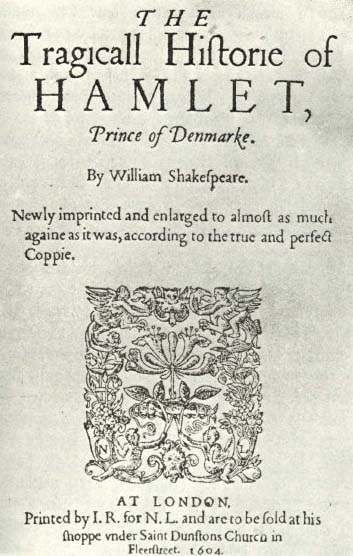
      • We have title pages of his plays with his name on them. Nearly all of Shakespeare’s work appeared in print before he died, then they were re-printed in the First Folio of 1623. A few of these plays actually have Shakespeare’s name on them, such as the 1604 edition of Hamlet (Above)
        • We have a manuscript of “Sir Thomas Moore” with Shakespeare’s handwriting on it. Although we don’t have a finished manuscript of a Shakespeare play, we do have copies of a play he didn’t finish called Sir Thomas Moore in the British Library. Analysis of the handwriting shows several writers, including one that closely corresponds to Shakespeare’s own. This play was written to be performed by Shakespeare’s company, so it confirms that he wrote their plays.
          • We have records of his plays being performed at court with his name attached to them. To me, this is the most important evidence to confirm Shakespeare’s authorship of his plays. Look at this account of the plays performed at court in 1604.

          This document lists all the plays Shakespeare’s company performed for the king that Christmas , as well as the playwright’s names. In the right column Shakespeare (spelled Shaxberd by a careless clerk) is credited as the author of Measure for Measure, Henry the Fifth, andComedy of Errors, among others. This proves he was a writer who wrote plays for the company he said he did, and that the king himself paid him to do it. It takes a tremendous amount of conspiracy hocus-pocus to pull the wool over the eyes of an entire court!

              • We have references to him being a playwright written by his rivals, especially Robert Greene who hated Shakespeare for being an upstart “Johnny do-everything” who, although he was an actor, could still write plays and poems as well as Greene, and the rest of his University Wits. For more info on Greene, search for his famous pamphlet “Groatsworth of Wit.”
                • Nobody else comes close. Sorry to disappoint you, but most of the supposed candidates for the “real” Shakespeare have at least 1 terribly big problem preventing them from writing the whole cannon- THEY WERE DEAD. Shakespeare stopped writing in 1613, which prevents all of the top contenders from writing the entire cannon:
                    1. Christopher Marlowe– Died 1593
                    2. Thomas Kidd– Died 1594.
                    3. The Earl of Oxford- Died 1604

                    I could go on with this hotly debated issue, which has been dissected by scholars far better then me, but let me close by saying that the main argument of the people who don’t believe Shakespeare wrote his own plays is that they believe a guy who wasn’t an educated nobleman couldn’t have written such beautiful and insightful truths about human nature. To this I reply, genius is not constrained by one’s upbringing. I’d say Shakespeare lived a kind of American Dream- going from a middle class boy in a country town to becoming the hot-ticket in London, and then capturing the imagination, “Not of an age, but of all time.”
                    Happy Birthday Will!

                    If you want more information about Shakespeare’s life and career, here are some websites to help you out!

                    1. Internet Shakespeare Editions:http://internetshakespeare.uvic.ca/Library/SLT/life/index.html
                    2. Treasures in Quarto (British Library) http://special-1.bl.uk/treasures/SiqDiscovery/ui/record.aspx?Source=text&LHCopy=0&LHPage=0&RHCopy=0&RHPage=1
                    3. In Search Of Shakespeare Website: the Shakespeare Dossier:http://www.pbs.org/shakespeare/events/
                    4. American Shakespeare Center Education Blog: “Book Review: Contested Will by James Shapiro” by Cass Morris.
                    5. Women’s Theatre History Online Bibliography:http://webapps.langara.bc.ca:8080/wtob/index.jsp
                    6. Shakespeare’s Life And Times by Terry Gray (University of Palomar)http://shakespeare.palomar.edu/life.htm