I designed this on an app called “GooseChase”, appropriate since Shakespeare invented the term!
If you click on the link, you can do a great scavenger hunt where you upload pictures or answer trivia questions for points, and of course they are all related to Shakespeare. If you have the app on your phone, search for Shakespeare Birthday Scavenger Hunt and enter the code: 2BON2B (Get it, to be or not to be)! You can also use the code NLEGVM. Let me know if you like it or if you cannot access the link.
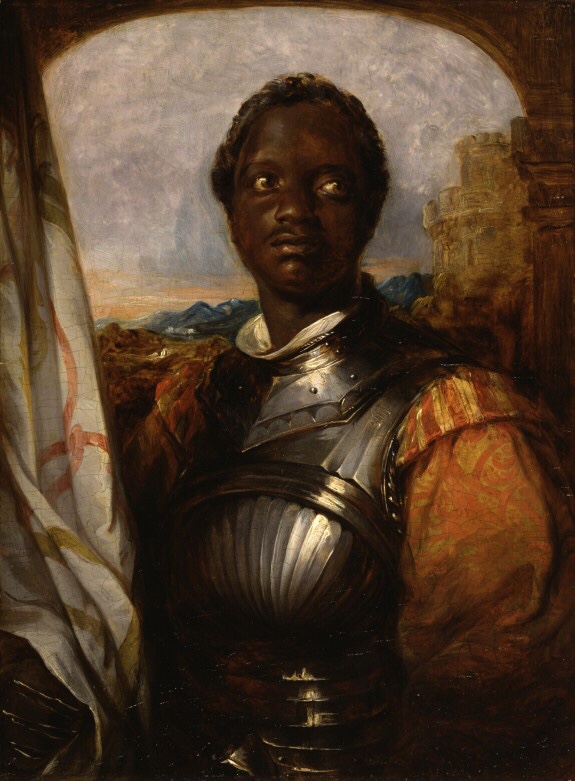
For February, I would like to give a shoutout to a wonderful article I read about famous black Shakespearean actors, and to link to a few of my old posts that detailed how Shakespeare approaches the issue of race. Enjoy:
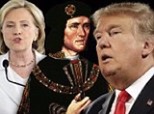
Since it’s now two years into the Trump presidency I thought I would follow up on my post I wrote when he was a candidate, and focus instead on his actions as president. Shakespeare’s Richard changes almost immediately once the crown is set on his head in the middle of the play, and the rest of his short reign is plagued with the exhaustive process of keeping it on his head, (and by extension, keeping his head on his shoulders). My main argument is that Trump’s presidency has steadily skirted more and more towards authoritarianism through his actions and his rhetoric, much the same way Richard became more like a dictator as soon as he became king. Moreover, Trump, Shakespeare’s Richard and even the historical king Richard have been distorted beyond recognition because of fake news, but not the kind you might expect.
Part I Before the Throne
As I have written before, Richard claims the throne by manipulating everyone in the British political machine- stoking hatred among the nobles, while trying to appear as a pious, humble man to the common people. Because of his years on reality television and experience as a businessman, even I must admit Trump has a gift at manipulating people’s perceptions and playing the part of a man of the people:
https://m.youtube.com/watch?v=cpxCl8ylJgE
If you watch Trump in interviews, he often closes his remarks with “believe me,” Richard also understands the power of oaths and pretends to speak like a plain blunt man, claiming that the British nobles hate him because he ‘tells it like it is’:
Cannot a plain man live and think no harm?But his simple truth must be abused by silken, sly, insinuating jacks!-Richard III, Act I, Scene iii
As for Trump, even though he is a privileged billionaire with inherited wealth, he pretends to be an unpretentious, unapologetic common man, abused by the ‘mainstream media’ and his political opponents.
Richard is also a fan of the moral equivalence argument, (also known as whataboutism). He tries to offset his own murders by mentioning other people and their misdeeds during the Wars Of The Roses, making them seem as bad or worse than Richard:
Let me put in your mind if you forget what you have been ere this and what you are, withal what I have been and what I am. RIII Act I, Scene iii.
Many have pointed out that both Trump and Fox News frequently use Whatsboutism to discredit their opponents and to shrug off their own guilt. It is also a tactic frequently used in former Soviet Union propaganda: https://youtu.be/PpVzHpgYuSc
My final comparison of the rhetoric between Trump and Shakespeare’s Richard is that both men are actors, players, or if you like, hypocrites. Trump actually tweeted how he sees each speech he makes as a tailor-made performance, while Richard praises his own ability to dissemble and equivocate to the skies: https://youtu.be/v6ji07tsI2M
Part II: The descent
Richard the third starts out the play as a evil underdog. Yes he kills people to gain the throne, but his deformity makes him seem sympathetic, and the fact that his victims have already killed plenty of people in the Wars of the Roses, gets him on our side. Once he’s crowned however, Richard step by step becomes more and more like an authoritarian dictator
What is an authoritarian? Basically an authoritarian regime concentrates power into the hands of one person, and tries to hold onto power by:
1. Projecting strength.
2. Demonizing opponents, both real and imagined.
3. Destroying institutions.
From the moment the crown is placed on his head, Richard starts to see threats to his power, and uses all his newfound resources to destroy every each and every threat. First he kills his nephews, (the legitimate heirs to the throne), then he kills his wife, so that he can remarry a princess to try and consolidate his power. And finally, when he faces his greatest threat the armies of Henry tutor Earl of Richmond, Richard goes full on dictator, calling himself a tower of strength, demonizing Richmond as a foreigner, and claiming that his soldiers will rape the English wives and daughters.
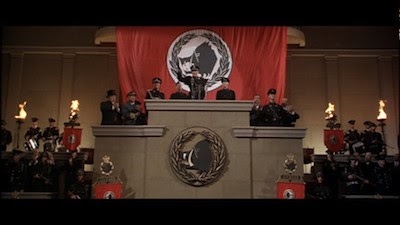
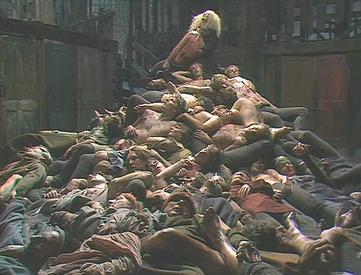
Still from Ian McKellen’s film version of Richard III, 1995
Trump is guilty of every one of these authoritarian strongman habits. He tries to convince people he is strong both physically and politically by having photo ops with doctors who claim that he is “the healthiest president ever”. He also attempted to project strength by misrepresenting the size of the crowds at his inauguration (which was a flat out lie), Furthermore, Trump demanded a military parade to emulate autocratic governments like North Korea. Then there’s his ultimate misguided show of American strength: the wall, which even Fox News has calculated will cost $25 billion dollars at least, and will do little to nothing to stop the flow of drugs and illegal immigration.
Trump also has from the beginning waged war on the Internet against any and all who oppose him. Let us not forget that Fox News is a 24 hour a day propaganda machine that exists almost entirely to condemn anyone who opposes the president and his agendas. And in terms of destroying institutions, his constant claims of “fake news“ seeks to destabilize the Free Press. America’s finding fathers guaranteed free press with the knowledge that if the government is corrupt, the only way the public can fight back is through the knowledge provided by a free and Independent press. But if the media is the enemy, we have no one to listen to except Trump himself.
Richard is even more comically trigger happy than Trump. Look at this scene where in less than 10 minutes, he sends a murderer to kill his nephews, plots to murder his wife and marry his niece, and completely throws off the Duke of Buckingham, his only supporter on his way to the crown!
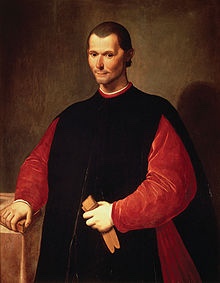
Richard’s authoritarian tactics actually spring from one of the best political theorists of the renaissance, unfortunately it was Machiavelli. Niccolo Machiavelli saw how the crown heads of Italy consolidated power through violence and intimidation, and he came to realize that the power behind the throne is much less to do with divine right or royal bloodline, and more with who can play the game and project power and strength. In Shakespeare’s Henry the Sixth Part III, Richard brags that in his quest to the good for the crown he will send Machiavelli to school: https://m.youtube.com/watch?v=v6ji07tsI2M
Portrait of Machiavelli by Sandi DiTito, c. 1650
I unfortunately don’t have enough time to get into the connections between Machiavelli, Richard, and Trump. Suffice it to say that all three advocate rule by fear and have no interest in preserving democracy. Below are some quotes and articles that I have collected about Machiavelli and his connection to Shakespeare and Trump:
Sadly, the ultimate similarity between Shakespeare’s Richard III, the real King Richard, and Trump is that the actual human has been swallowed up by a narrative. Even though most of what Trump says is a lie, to his supporters he is the one person who ‘tells it like it is,’ not because they believe him, but because they want to believe in the narrative he constructs.
These Ohio Voters Made Trump President. They’re Still With Him – TIME
Not only are his lies compelling, Trump himself has become a powerful symbol to the disenfranchised that the system is broken and corrupt, so why not vote for someone like him? He brands himself as a ‘plain blunt man’ who isn’t afraid to offend or criticize people in power, even though he is much worse than they are at running the government. According to the testimony of his former lawyer Michael Cohen, Trump described his own campaign as the ” The greatest infomercial in political history.” His campaign was from the start, a scam, where the ultimate con man told people he was going to fix healthcare, fix the immigrants coming into the country, and fix everything they didn’t like about America.
Trump and Richard exploit what you and I want to believe. A New York Times article from 2016 made an interesting comparison between Trump’s odious political persona and that of one of the “heels” or bad guys in professional wrestling. These characters are unrepentantly evil, and love to stir up anger in the crowd, and everyone knows that their every word and action is fake, but they buy into the story. This kind of suspension of disbelief is of course, the central guiding principle of theater itself, and arguably Shakespeare created a villain who would make a very effective wrestling heel.
The real Richard’s devolution from a historical king into a villainous archetype is more tragic, but just as powerful. The lies that the Tudor chronicles told about him were more compelling and politically convenient than the truth, and Shakespeare’s genius just further distanced us from caring what the real man was like. In essence, Shakespeare was inventing fake news far before Trump was railing about it. Just as we as an audience are complicit in the pretend crimes of a fake king when we watch the play, we are also complicit in perpetuating a comfortable simplistic story of the 15th century War of the Roses king Richard Plantagenet.
Trump and Richard show that history can be distorted when we focus less on what is really happening and more on what we want to see. More people wanted to believe his lies than Hillary Clinton’s facts, the same way people were forced to believe the Tudor lies instead of the real truth of what happened from 1483-1485. Likewise Shakespeare’s Richard exploits people’s fear, greed, and gullibility to gain power for himself, but this is his only talent; eventually his supporters lose faith in him, his enemies mobilize, and he is taken from power.
If you’re reading this as I post it, there’s a Shakespearean nerd in your life and your wits are about to turn trying to find a gift. I’ve already written about printed editions of Shakespeare and educational apps, so you can consult those if that’s what you are looking for. Now I’m covering the kinds of stuff that die-hard Shakespeare fans will kill a king and marry with his brother for, basically nerdy swag that no Shakespearean fanatics should be without!
For anyone: Immortal Longings.com- This company is very special to me. If you’ve seen any of my Play Of the Month posts, you’ve seen the gorgeous artwork for Shakespeare’s plays by the artist Elizabeth Schuch. Not only do I love her work, my wife and I put her prints on the decor for our wedding day, and wrapped some of my presents in wrapping paper with her designs on it. If you go to her website, she sells Shakespearean art printed on and inspired by Shakespeare’s plays on everything from tapestries to clothes to iPhone cases. I highly recommend checking her work out, and patronizing it as much as possible: https://society6.com/immortallongings/s?q=popular+framed-prints
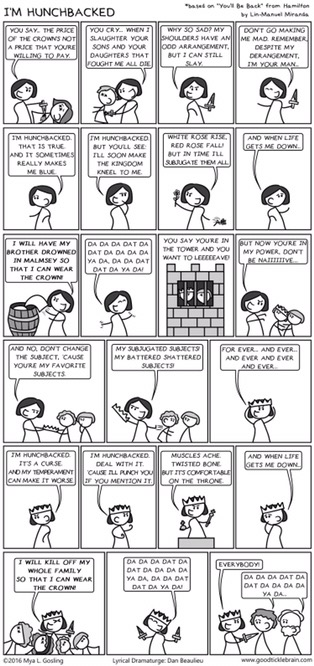
I also want to give a shout-out to the website Good Tickle Brain, a weekly Shakespearean comic that satirizes the Bard’s work with love. I feel the best way to introduce anyone, young or old to Shakespeare is through a healthy dose of satire and parody. Mya Gosling loves Shakespeare and it comes through in her simple, funny retellings of his plays. If you go to their shop (spelled Shoppe to appeal to nerds like me), you can get some of her comic books, funny T-shirts, and a few educational posters for teachers too: https://goodticklebrain.com/shoppe/
Adults
The Bard game This is the Monopoly for Shakespeare Nerds- each player pretends to be a theater manager putting on plays in real locations where Shakespeare’s company toured during his lifetime. You make money by reciting speeches or improvising one in the Shakespearean style, or by answering Shakespearean trivia questions. A must-have for any Twelfth Night Party! Review of the game: https://boardgamegeek.com/boardgame/12372/shakespeare-bard-game https://boardgamegeek.com/boardgame/12372/shakespeare-bard-game
Bards against humanityMost people know the raunchy card game where you try to encapsulate a disgusting word or phrase with a description written on your card. Well, there’s a Shakespeare version too! It makes sense that someone made a card game inspired by the king of the Elizabethan put-downs, (and the inventor of one or two modern curse words!)
Wine🍷 Though I was unable to find actual wine with Shakespeare’s name on it, practically every other part of the wine drinking experience has been branded with Shakespeare- wine bags, glasses, corks and bottle stoppers, and even whole bars! If you spend a few minutes looking online, you can find tons of Shakespearean wine merch. By the way, here’s a convenient list of quotes Shakespeare wrote about alcohol: http://www.shakespeare-online.com/faq/shakespearedrinking.html
Pen and ink There’s a lot of good versions of pen and ink with Shakespeare’s name on them. Imagine the fun you can have writing sonnets with your own Shakespearean pen and ink!
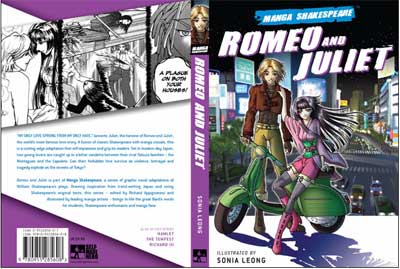
The title page of the clever comic book, “The Manga Shakespeare”
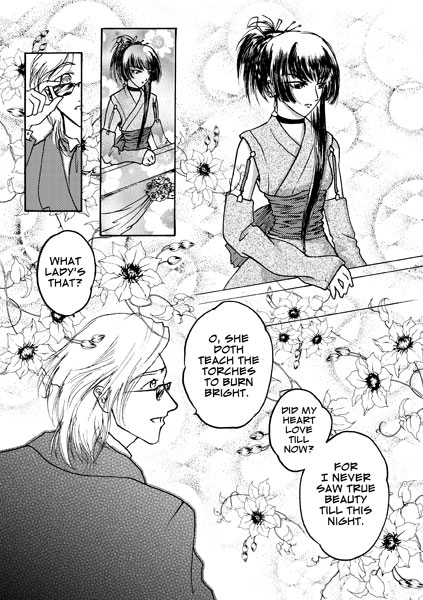
Shakespearean Comic Books. I’ve written reviews about some of these books and I’m very impressed by the artwork and the clever adaptations. Click here to read my review of the Romeo and Juliet Comic.
Kids
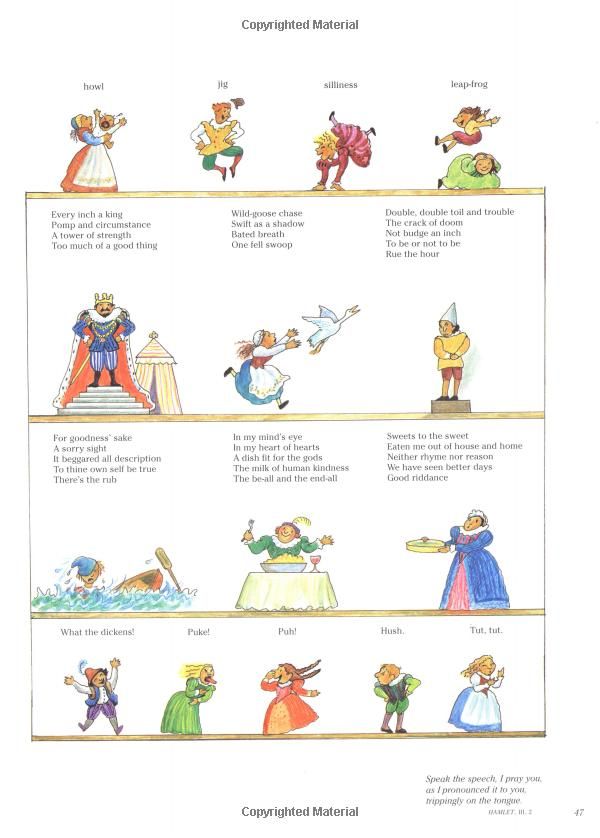
Pop-Up Shakespeare by the writers of the Reduced Shakespeare Company. I’m a huge fan of The Reduced Shakespeare Company and they have created an amazing new popup book for kids of the entire Shakespearean cannon!
Barbie and Ken as Romeo and Juliet. Ok, so this is a bit of a stretch, but hey, I’d get it for my daughter.
Board books 📖 Yes, even toddlers can get into Shakespeare. I actually read this to my daughter a lot. It’s not the story of the play, but it does introduce some of the characters and famous lines which can help a child to become familiar with Shakespeare.
Cover of “King Of Shadows,” an excellent Young adult novel for anyone who loves Shakespeare.
King 👑 Of shadows (Ages 8-12) This is an excellent young adult novel that teaches a lot about Shakespeare’s theater and the time period in which he lived. For a complete review, click here:
This was one of my favorite books growing up. It tells the story of Shakespeare’s life and work, with special attention to the creation of the Globe Theater in 1599. It’s gorgeously illustrated and a great read for kids!
So there are some gift ideas for the Shakespeare nerd in your life. Merry Christmas!
Here’s one more gift that you could give a Shakespeare nerd ages 13-18: A class from ME!
Go to my Outschool profile and Get $5 off the following classes:
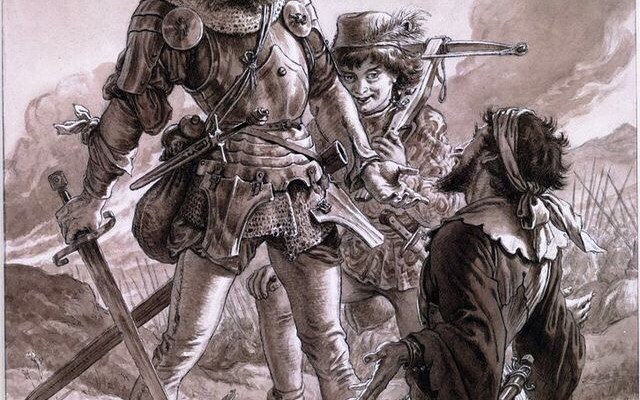
War and soldiers come up a lot in Shakespearean plays. After all, he wrote six plays about the Wars Of The Roses. Though most of his work is about the decisions about war made by powerful monarchs, occasionally he gives us some insight into the lives of common soldiers.
We don’t know if he ever fought, but warfare was very much on his mind at the beginning of his career, with good reason. In 1586 The Spanish armada attacked. Was Shakespeare enlisted? We don’t know.
His early plays are generally positive toward soldiers and it’s easy to see why. The growing nationalism in England resulting from the Tudor control over religion and language —was a direct and defensive reaction to the ex-communication of the Tudor monarchs (particularly Henry VIII and Queen Elizabeth. Shakespeare probably saw himself —
. He no doubt saw his role as building the epic sagas of England to remind his countrymen of England’s past victories, especially during the Spanish Armada and the later Irish Rebellion of 1599.
Shakespeare cashed in with 9 plays on English history that mainly take place on the battlefield. His plays were met with praise by audiences and critics:
“How would it have joyed brave Talbot (the terror of the French),” he wrote, “to think that after he had lain two hundred years in his tomb, he should triumph again on the stage and have his bones new embalmed with the tears of ten thousand spectators at least (at several times).” -Thomas Nashe, c. 1590.
In the first tetralogy, common soldiers don’t have any voice. Probably they were played by apprentices, and fencing masters. They were mainly set dressing. Shakespeare mainly focuses on the pivotal importance of leadership and his portrayal f leadership; he understood the consequences of the choices kings make during the war and its effect on millions of common people: like Talbott and King Henry the Fifth.
I want to analyze a short selection from Henry the Fifth, Act IV, Scene I. In this scene, the king is disguised as a commoner the night before a battle to see what his soldiers really think about him, and the impending fight with the French. An outspoken soldier named Williams tells him that if the fighting is wrong, the king is responsible for his soldiers’ deaths, and has to answer for the atrocities that happen during the war:
KING HENRY V
methinks I could not die any where so contented as in the king’s company; his cause being just and his quarrel honourable.
WILLIAMS
That’s more than we know.
BATES
Ay, or more than we should seek after; for we know enough, if we know we are the kings subjects: if his cause be wrong, our obedience to the king wipes the crime of it out of us.
WILLIAMS
But if the cause be not good, the king himself hath a heavy reckoning to make, when all those legs and arms and heads, chopped off in battle, shall join together at the latter day and cry all ‘We died at such a place;’ some swearing, some crying for a surgeon, some upon their wives left poor behind them, some upon the debts they owe, some upon their children rawly left. I am afeard there are few die well that die in a battle; for how can they charitably dispose of any thing, when blood is their argument? Now, if these men do not die well, it will be a black matter for the king that led them to it. King Henry V, Act IV Scene I.
Many productions of Henry the Fifth interpret this speech as Shakespeare’s attitude towards war, (a tempting prospect, since the soldiers’ name is William), but in the very next speech King Henry completely changes Williams’ mind! Here’s the full scene from Kenneth Branaugh’s 1989 movie version of the play, which he directed and starred as King Henry:
For my upcoming play Of the Month page I am examining the influence of Shakespeare’s Macbeth in popular culture. Many people have compared the play to Breaking Bad, so I was delighted when I found this trailer on YouTube that perfectly illustrates the common threads in these two works.
Nearly 30 scenes in Shakespeare’s plays take place in a garden, and his characters mention weeds, trees, flowers and herbs and their properties, both medicinal and just beautiful. Ever since this 1906 book of the plants mentioned in Shakespeare’s plays, great cities and private garden groups have created gardens that honor the fertile imagination of The Bard Of Avon. There are 33 of these Shakespeare gardens worldwide, in cities like New York, Barcelona, and of course, Shakespeare’s home town of Stratford Upon Avon.
Shakespearean Garden At Shakespeare’s Birthplace
Here is a good guide for how you can create a Shakespeare Garden of your own:
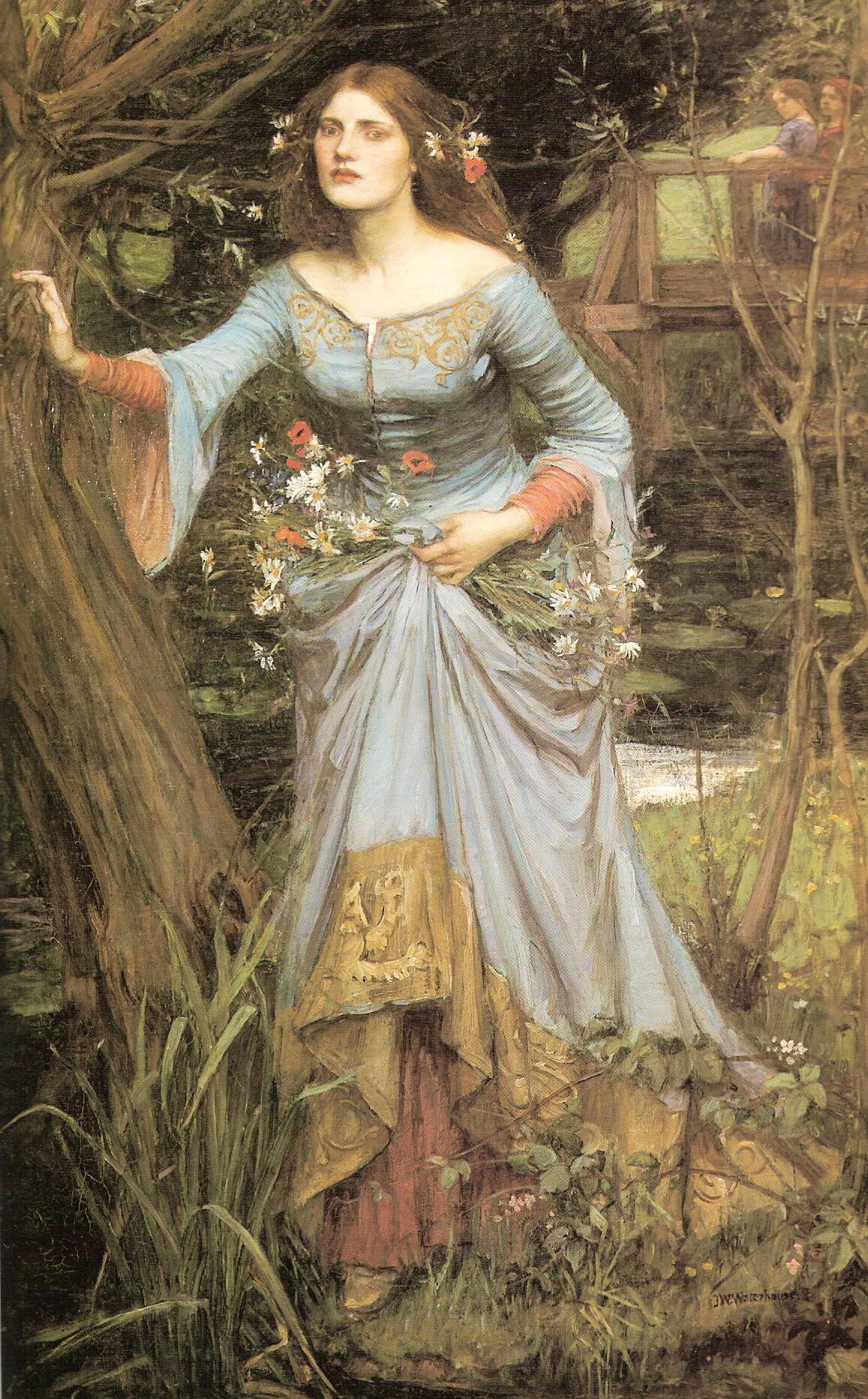
Finally, here are two of Shakespeare’s most famous quotes about plants and flowers- a speech from Ophelia in Hamlet and the Gardeners scene from Richard II:
OPHELIA
There’s rosemary, that’s for remembrance; pray,
love, remember: and there is pansies. that’s for thoughts.
LAERTES
A document in madness, thoughts and remembrance fitted.
OPHELIA
There’s fennel for you, and columbines: there’s rue
for you; and here’s some for me: we may call it
herb-grace o’ Sundays: O you must wear your rue with
a difference. There’s a daisy: I would give you
some violets, but they withered all when my father
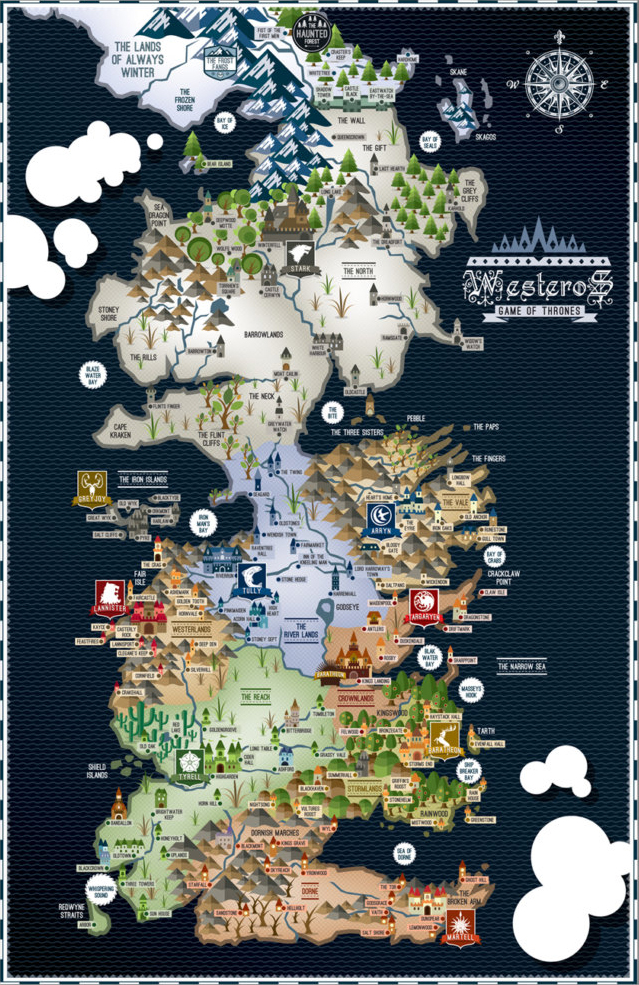
I love Game Of Thrones! If you’ve ever read the books or seen the series on HBO, like me you might be amazed by the scale and complexity of the world author George RR Martin created. He wove together a rich tapestry of medieval history, legends, and yes, Shakespeare. He used some of Shakespeare’s plots, commented and expanded on his themes, and adapted some of his iconic characters into a very rich and in a way, very modern story. Today I’m going to examine the components of Martin’s narrative that he embroidered off of Shakespeare’s plots, themes, and characters. If you like my take on this, or if you disagree, please leave a comment below! If you have any suggestions for other popular works adapted from Shakespeare, let me know and I’ll review them on the blog!
Part I: Story
Shakespeare wrote four plays that chronicle a series of civil wars where powerful families battled each other for the crown of England. Like Game of Thrones, the conflict was mainly between the kingdoms in the North and South:
Shakespeare’s three parts of King Henry VI and Richard III chronicle the real struggle between the Yorkists in the north to take the crown from the Lancastrians in London in the South.
Part II: Themes
Power corrupts, especially those who go seeking it.
The death of chivalry and honor in favor of political backstabbing.
King Henry VI has a speech where he watches a great battle while sitting on a molehill, watching the tide turn back and forth between his soldiers and the Yorkists. As with Game Of Thrones, the more blood each side has on its hands, the harder it becomes to decide whom to truly root for. In the end, it doesn’t seem to matter- kingdoms are won and lost as arbitrarily as a game. All it takes is time, and a good player to win.
The silence of the Gods. Shakespeare’s King Lear is constantly making oaths to his gods and asking them to punish his enemies. Likewise, Lear’s friend the Duke Of Gloucester, places his faith in the gods to protect Lear and punish the usurpers Goneril and Regan. Nevertheless, the action of King Lear doesn’t show any kind of divine judgement- Lear is exiled, goes mad, is sent to prison, and finally dies. Gloucester loses his sight, his lands, and dies randomly right after he is re-united with his son Edgar. In both King Lear and Game Of Thrones, there is a persistent question as to the nature of the gods, or even the surety of their existence.
King Lear mourns Cordelia’s death by
James Barry, c. 1786.
No where is this more apparent than at the end of the play King Lear, when, just as it seems that the Duke of Albany is about to reward the good people and punish the wicked, King Lear arrives howling, with the dead Cordelia in his arms. “Is this the promised end?” in horror at the gods’ apparent cruelty. https://youtu.be/7acLWsal1FU
In Game Of Thrones, the good characters pray to their old gods and new, but never seem to hear from them or sense their influence. Osha, the Wildling even suggests that the gods have no power in King’s Landing, where the special God’s Wood trees have been cut down.
Part III: Characters
Below is a list of my favorite GOT characters, with my interpretation of their Shakespearean roots.
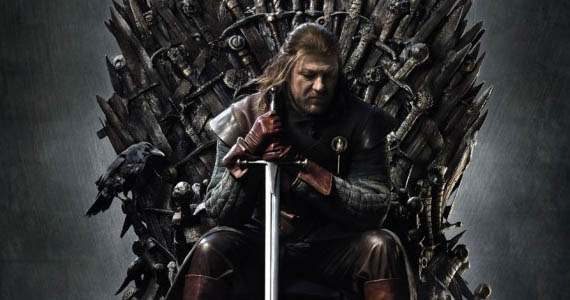
Ned Stark- Humphrey Duke of Gloucester from Henry VI, Part II
Duke Humphrey is a Yorkist from the north of England, just as Ned is Lord of Winterfell, a powerful kingdom in the north of Westeros. King Robert makes Ned Protector Of the Realm when he dies, which makes him king in all but name, and tasked with taking care of Robert’s young son Joffrey until he comes of age.
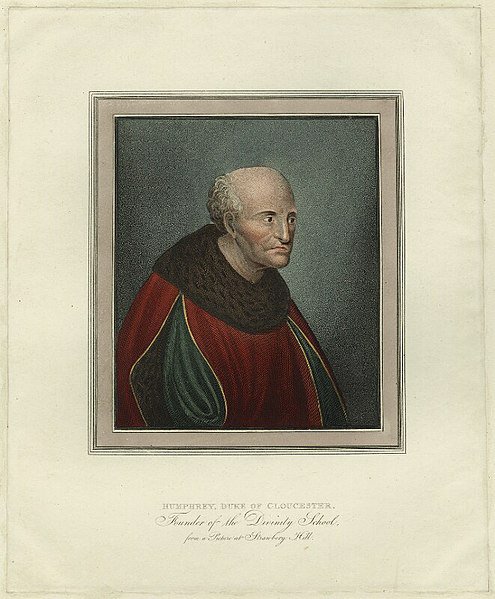
Portrait of the historical Humphrey, Duke of Gloucester from the National Portrait Gallery, artist unknown.
In Shakespeare’s Henry VI trilogy, King Henry the Fifth makes his brother Humphrey Lord Protector before he dies, to take care of England until his infant son Henry VI comes of age to rule. Like Ned, Humphrey is loyal, blunt, and only interested in keeping the realm at peace. In both Westminster and the Red Keep, all the lords are conniving and ambitious, and only interested in advancing themselves politically. These two lord protectors are the only ones with the good of the kingdom in mind.
Both Ned and Humphrey are betrayed and executed by those ambitious lords around them for the same reason; they stand in the way of the lords in their quest for power. In Henry VI, Part II, Henry’s ambitious queen Margaret starts a smear campaign against Humphrey’s wife, then pressures the King to force Gloucester to resign. As if that weren’t enough, Margaret also secretly conspires to murder the noble duke. Similarly, In Game of Thrones (Spoiler Alert), queen Circe puts her son on the throne and proclaims Ned a traitor. In both cases though, once the Lord Protector dies, the whole kingdom erupts in fights and arguments for the crown on all sides.
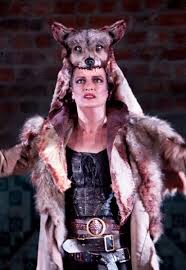
Ned Stark also resembles the heroes of Shakespeare’s Roman plays. He is cold and stoic as Brutus, and a devoted soldier like Titus Andronicus. Ned’s dire wolf is another connection with Shakespeare’s Roman plays; the wolf 🐺 is the symbol of the Roman Empire; packs of cold hunters who depend on each other for the survival of the family.
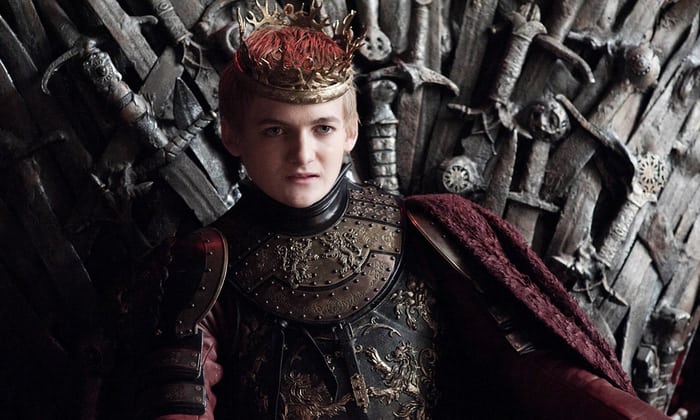
King Joffrey- Saturnine from Titus Andronicus– Joffrey is like the worst kind of tyrant- rash, proud, violent, and cruel. He lacks the maturity to make wise decisions and because of his privileged upbringing, he takes even the tiniest slight against him as an act of treason, and leaves a trail of heads in his wake. Worse still, he is easily manipulated by his mother Circe, who teaches him to act and feel superior to everyone else, and never care for the good of anyone but himself. In that way, he is very much like a Roman Emperor like Nero or Caligula, the real people whom Shakespeare adapted into the character of Emperor Saturnine in his play Titus Andronicus.
When we first meet Saturnine, he leads an angry mob into the streets of Rome, demanding to be made emperor, and threatening all out war if he doesn’t get his way. He also turns on the loyal soldier Titus, (who helped him win a war and win his crown), just because Titus wouldn’t give Saturnine his daughter in marriage. In the clip below from the 1999 movie Titus, Emperor Saturnine (Alan Cummings) is furious just because Titus wrote some mean scrolls about him, after Saturnine killed two of Titus’ sons, and banished a third.
King Robert Baratheon- Edward IV from Richard III.
◦ In the first book of the Game of Thrones series, Robert is the King of the Seven Kingdoms, having won a civil war to take it away from the Mad King Araes Targaryen. Edward in the play Richard III has just won the crown of England after a civil war against the mad King Henry VI. Both men were powerful warriors and used to be strong and handsome. People loved and feared him, but now the pressures of keeping the throne has literally consumed them.
P. 53
Next had come King Robert himself, with Lady Stark on his arm. The King was a great disappointment to Jon. His father had talked of him often: the peerless Robert Baratheon, demon of the Trident, the fiercest warrior of the realm, a giant among princes. Jon only saw a fat man, red-faced under his beard, sweating through his silks.
Jon had noticed that too. A bastard had to learn o notice things, to read the truth that people hid behind their eyes. Two seats away, the king had been drinking heavily all night. His broad face was flushed behind his black beard.
In this passage from Thomas More’s History Of Richard III, (Shakespeare’s primary source for the play), More chronicles how Edward went from a handsome young king, loved and feared by all, into a gluttonous, lecherous, sick old man, who was consumed by care.
He was a goodly personage, and very princely to behold: of heart, courageous; politic in counsel; in adversity nothing abashed; in prosperity, rather joyful than proud; in peace, just and merciful; in war, sharp and fierce; in the field, bold and hardy, and nevertheless, no further than wisdom would, adventurous. Whose wars whosoever would well consider, he shall no less commend his wisdom when he withdrew than his manhood when he vanquished. He was of visage lovely, of body mighty, strong, and clean made; however, in his latter days with over-liberal diet [1], he became somewhat corpulent and burly, and nonetheless not uncomely; he was of youth greatly given to fleshly wantonness, from which health of body in great prosperity and fortune, without a special grace, hardly refrains. This fault not greatly grieved the people, for one man’s pleasure could not stretch and extend to the displeasure of very many, and the fault was without violence, and besides that, in his latter days, it lessened and well left.
-Thomas More, History Of Richard III, c. 1513
There are also similarities in how the characters died. King Robert was killed by a wild boar, while King Edward was killed by his brother Richard, whose sign was a white boar. As a bonus, the stag that is the sigil of House Baratheon, is also the seal of King Richard II, the king who, in the Shakespearean tragedy that bears his name, started the civil war when he was murdered in the Tower Of London. Below is a picture of the famous Wilton Diptych, (Richard the Second’s private alter piece), which depicts the king and all the angels in heaven wearing a badge with a white stag on it.
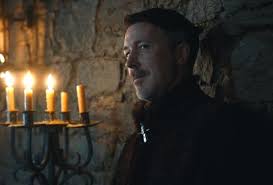
LittleFinger -Lucio from Measure For Measure, Iachimo from Cymbeline, Bawd from Pericles, etc. Shakespeare has a host of character like this lord of Westeros, the Master of Coin. He is cowardly and cynical, but he is also very clever and understands people’s weaknesses, especially sex. Like Bawd from Pericles, Little Finger has grown rich off brothels, and like many real life governments, he turns his prostitutes into spies. This gives him not only cash, but dirt on every lord in the 7 kingdoms. He only worries about Ned Stark, (who can’t be bought), and Vares the eunuch, who can’t be seduced. Little Finger is basically an oily politician and exploits the power of lust in the men of King’s Landing.
Jon Snow– Edgar and Edmund in King Lear Philip the Bastard in King John.
◦ Snow is the illegitimate son of Ned Stark. He’s aware of what he is, so he joins thieves and rapers as a knight of the Night Watch to make a life for himself, just as Edgar becomes a mad beggar in King Lear once he is accused of attempted murder. He has few illusions and like all the base-born children in Shakespeare:
775
He was who he was, Jon Snow, bastard oath breaker motherless, friendless, and damned. For the rest of his life, however long that might be- he would be condemned to be an outsider, the silent man standing in the shadows who dares not speak his true name.”
◦ Shakespeare wrote several characters born out of wedlock such as Phillip Falconbridge in King John, and Edmund from King Lear.
Unlike Jon Snow, Edmund in King Lear uses deceitful and cruel cunning in order to advance his position in life. Snow doesn’t try to change the rules, but both of them know that no one is going to give them anything. Early in book one, Jon learns to accept the cruelty of the world, and to accept what he is:
Let me give you some council, bastard, never forget what you are, for surely the world will not. Make it your strength. Then it can never be your weakness. Armor yourself in it, and it will never be used to hurt you.
Song Of Ice And Fire, p. 57.
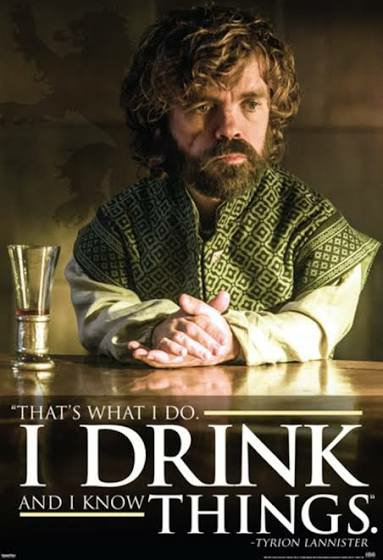
🦁 Tyrian Lannister –
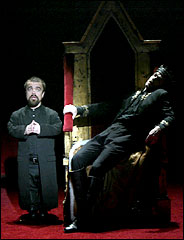
Obviously he shares some parallels with Richard III, with his small size and the fact that he is the most hated member of a powerful family. In fact, Peter Dinklage who plays Tyrion played Richard the Third back in 2004.
In terms of his personality however, Tyrion has neither the cruelty, nor the bitterness of Richard. For this reason, I would argue that Tyrion more closely resembles Sir John Falstaff.
◦ Like Falstaff, Tyrion laughs at his physical form as a way of disarming his enemies.
◦ Both Characters are famous for talking their way out of anything.
◦ Both characters are down on their luck for most of the books
Both characters are, ahem, fond of drink. Falstaff even has a beer named after him:
◦ Most Of all, Tyrion and Falstaff are survivors – they will do anything to stay alive, good or bad. They are also unapologetic about acting cowardly and deceitfully to avoid death. In Falstaff’s famous ‘Catechism speech,’ he mocks the concept of honor and how it frequently gets men killed.
FALSTAFF
‘Tis not due yet; I would be loath to pay him before
his day. What need I be so forward with him that
calls not on me? Well, ’tis no matter; honour pricks
me on. Yea, but how if honour prick me off when I
come on? how then? Can honour set to a leg? no: or
an arm? no: or take away the grief of a wound? no.
Honour hath no skill in surgery, then? no. What is
honour? a word. What is in that word honour? what
is that honour? air. A trim reckoning! Who hath it?
he that died o’ Wednesday. Doth he feel it? no.
Doth he hear it? no. ‘Tis insensible, then. Yea,
to the dead. But will it not live with the living?
no. Why? detraction will not suffer it. Therefore
I’ll none of it. Honour is a mere scutcheon: and so
ends my catechism.
Now observe this passage where Tyrion reacts to the death of a noble knight who was foolish enough to wear armor while crossing a river on a raft.
“Good my lord,” the messenger said. “Lord Brax was clad in plate-and-mail when his raft overturned. He was so gallant.” “He was a fool,” Tyrion thought, willing his cup and staring down into the wind depths. Crossing a river at night on a crude raft, wearing armor, with an enemy waiting on the other side–if that was gallantry, he would take cowardice every time. Song of Ice and Fire, 765.
My favorite part of the books is the way Martin writes the female characters. All the female characters are dealing with the fact that women have very little power or say in their society and they all use Shakespearean means or methods to get what they want.
🦁 Circe- Tamara and Lady Macbeth
◦ Circe
Just as her son Joffrey has the arrogance and sadistic cruelty of a Roman emperor, Circe is a mirror image of the cruel empress Tamara, Queen Of Goths in Titus Andronicus. Both women are attracted to power and motivated by revenge. Tamara wants revenge against General Titus, who executed her son in the war. After seducing and marrying the emperor, she uses her influence to execute two of Titus’ sons. She then uses her lover Aaron the Moor (with Whom she secretly has a child), to concoct a plot to rape and mutilate Titus’ daughter. And if that weren’t enough, she tries to drive him mad by appearing at his home dressed as the Roman goddess Revenge. In short, Tamara is a classic femme fatale, who raises above the social oppression of her sex by seducing powerful men, and stabbing them in the back.
Circe is also a femme fatale, though Martin gives her more time to explain her motivations than Shakespeare gives Tamara. Like the Queen Of Goths, Circe marries King Robert Baratheon, while secretly having a taboo affair, this time with her brother Jamie. The difference is that Circe kills not strictly for vengeance, but mainly to conceal the fact that her son Joffrey is actually the product of her incest in order to protect him and eventually make him king. This is why Circe kills Ned Stark, Jon Aron, and consents to the murder of all or Robert Baratheon’s true born sons.
Circe does desire revenge, but not against anyone in particular. Instead, she wants to repay the patriarchy that keeps her down simply because she is a woman. Quote about Circe when she talks about how jealous she is of Jamie. In that chapter we get a great sense of who Circe really is. Because she’s a twin, she compares herself to her brother, observing how Jamie was given on her glory and respect when he became a knight and a member of the King’s Guard, while she was sold off to king Robert at the age of twelve like a slave or a common whore. Why, Circe asks, if she looks so much like him and acts so much like him, is she treated so differently just because she’s a woman? In a perverse sort of way, her incest might be a misguided attempt to claim part of Jamie’s honor and power through sexual conquest. Both Tamara and Circe show how an oppressive patriarchy can plant truly destructive thorns in the hearts of women, and these two queens reap that bitter harvest by cutting down the men in power one by one.
like camera Circe is driven by her love for her children and her desire and her pride and desire for vengeance. She spends the first half of the place seducing the emperor to gain his favor and then when she is made empress she uses her power to systematically destroy Titus and his family. Similarly, Circe marries king Robert and then when he dies she makes her son she then kills Ned Stark guy in prisons his daughter tries to kill the second of and
Catelyn-
Hermione From The Winters Tale ❄️ 🐺
◦ Pious
◦ Kindness and mercy are her weapons as well as her will and devotion to her friends and family. Even Tyrion is impressed by her integrity.
🐺 Aria- Imogen from Cymbeline
◦ If it’s a mans world, pretend you are one! She learns to use a sword ⚔️ and uses her small size and gender to sneak away from her enemies.
🐉 Daenerys Targaryen- Cleopatra!
◦ Crafty and beautiful
◦ Uses her sexuality to gain a powerful man’s protection
◦ Her dragons 🐉 make her a goddess, elevating her beyond a woman and even a queen. In a society that opposed and ignored women, female monarchs needed to practically deify themselves in order to get the same respect as their male counterparts.
Just as the real Cleopatra claimed to be a descendant of the goddess Isis and Elizabeth I was part of the cult of the virgin queen, The Mother Of Dragons has a mythic power that commands fear and adoration.
Spoiler Alert
In the final chapter of book one, Daenerys tries to simultaneously say goodbye to her warrior husband Khal Drogo, and to get her few remaining soldiers to swear loyalty to her. She dresses him, she braids his hair, she puts him atop a pyre, and waits for a star to pass overhead to give his funeral a cosmic significance:
“This is a wedding too.”
The pyre shifted and the logs exploded as the fire touched their secret hearts. She could hear the screams of frighten horses and the voices of the Dothraki. “No,” she wanted to shout to him, “No my good knight, do not fear for me. The fire is mine. I am Daenerys Stormborn, daughter of dragons, bride of Dragons, Mother Of Dragons.”
This mirrors how, once Cleopatra loses Antony and knows that the Romans are coming to capture her, she says goodbye to Antony, and asserts herself as queen.
CLEOPATRA
Give me my robe, put on my crown; I have Immortal longings in me: now no more The juice of Egypt’s grape shall moist this lip: Yare, yare, good Iras; quick. Methinks I hear Antony call; I see him rouse himself To praise my noble act; I hear him mock The luck of Caesar, which the gods give men To excuse their after wrath: husband, I come: Now to that name my courage prove my title! I am fire and air; my other elements I give to baser life.
Have I the aspic in my lips? Dost fall? If thou and nature can so gently part, The stroke of death is as a lover’s pinch, Which hurts, and is desired. Dost thou lie still? If thus thou vanishest, thou tell’st the world It is not worth leave-taking. Antony and Cleopatra, Act V, Scene ii.
Dany does the same thing. She lights the pyre to help her husband ascend to the heavens, taking his place among the stars. Then, she sits on top of the pyre along with her three dragon eggs. Miraculously, she survives the fire and the dragons hatch, thus establishing her as the true heir of House Targarean and the Mother Of Dragons.
After witnessing the queen embracing her serpentine children, the blood riders that swore oaths to defend her husband swear again to defend her, promising to help her win the Iron Throne. Her power to command loyalty can win her the throne, and unlike Robert, keep it!
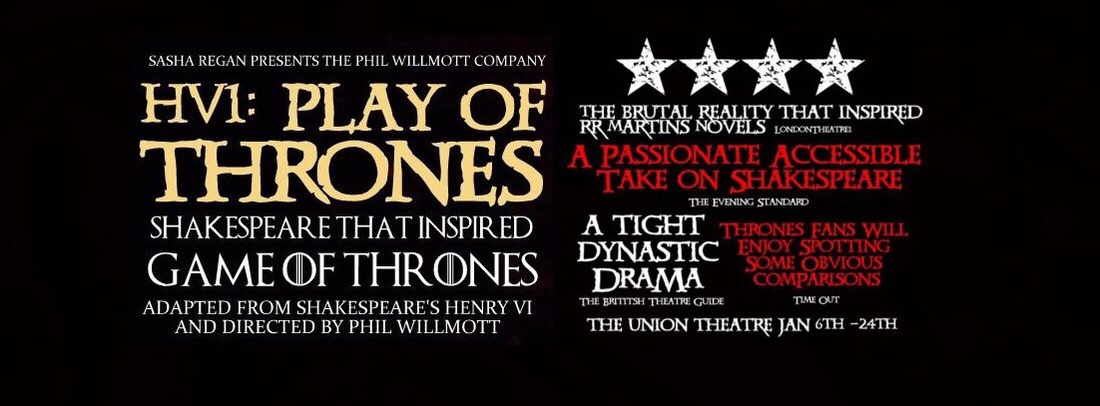
There are enough comparisons between Shakespeare and GOt that one playwright even adapted Shakespeare to resemble a Game Of Thrones story. Below is a poster of
Play Of Thrones, an adaption Of The Henry VI plays that, as I’ve mentioned, are full of characters and scenes similar to Game Of Thrones:



 If you click on the link, you can do a great scavenger hunt where you upload pictures or answer trivia questions for points, and of course they are all related to Shakespeare. If you have the app on your phone, search for Shakespeare Birthday Scavenger Hunt and enter the code: 2BON2B (Get it, to be or not to be)! You can also use the code NLEGVM. Let me know if you like it or if you cannot access the link.



 As I have written before, Richard claims the throne by manipulating everyone in the British political machine- stoking hatred among the nobles, while trying to appear as a pious, humble man to the common people. Because of his years on reality television and experience as a businessman, even I must admit Trump has a gift at manipulating people’s perceptions and playing the part of a man of the people:











 For my upcoming play Of the Month page I am examining the influence of Shakespeare’s Macbeth in popular culture. Many people have compared the play to Breaking Bad, so I was delighted when I found this trailer on YouTube that perfectly illustrates the common threads in these two works.
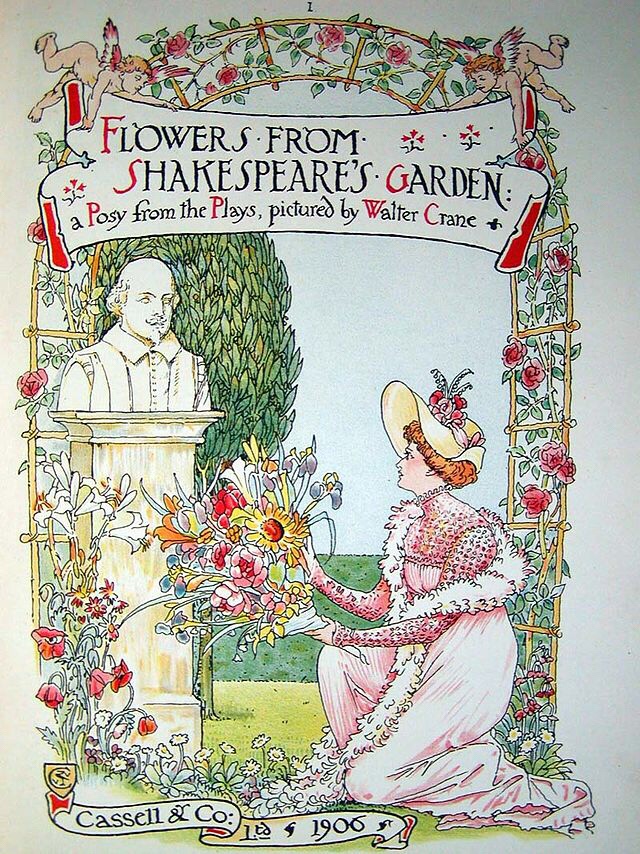 Ever since this 1906 book of the plants mentioned in Shakespeare’s plays, great cities and private garden groups have created gardens that honor the fertile imagination of The Bard Of Avon. There are 33 of these Shakespeare gardens worldwide, in cities like New York, Barcelona, and of course, Shakespeare’s home town of Stratford Upon Avon.










 The Shakespearean Student