Introducing our new Play of the Month: Shakespeare’s dark history play about murder and corruption, Richard III. First, a short presentation I made that introduces the characters and themes of the play.
Second, a quick, funny summary of the play from the Reduced Shakespeare Company
And finally, this incredible animated version of the play, which looks like a stained-glass window come to life!
Hung be the heavens with black, yield day to night! – William Shakespeare
One of the greatest classical actors of our time has gone to his great reward, which I hope includes a “good show” from Shakespeare himself. Most people know Alan Rickman as the slimy Professor Snape, or the evil Hans Gruber, or the cheating husband from “Love Actually,” but a generation ago he was a Shakespearean acting phenomenon at the Royal Shakespeare Company, playing such roles as Jaques, Hamlet, and Achilles. As much as I love Harry Potter, I think it’s wrong to remember such a versatile actor for only one role, so here’s a retrospective of his work that I found this morning. Guardian Tribute to Alan Rickman
“Good night sweet prince, and flights of angels sing thee to thy rest.”
Part One: The Invitation:Tradition says the 12th night does not actually start until nightfall on January 5th; it’s the celebration of the night when the wise men finally got to Bethlehem, so make sure you you’re clear on that in the invitation. If you need help on designing clever 12th night invitations, view my previous post on creating Valentine’s Day cards!Part Two: The FeastTraditionally celebrated with, (as Sir Toby puts it), “cakes and ale,” there’s a lovely recipe for a 12 night cake below.Picture/ recipe is available here: Jane Austin.com: Twelfth Night cakeA Twelfth Night cake is basically a fruitcake stuffed with spices and dried fruit, that symbolizes of the three kings that came from the orient to Bethlehem all those years ago. One game you can play with your guests is putting a bean in the center of the cake. Tradition holds that whoever finds the bean has good luck for the coming year.The alternative version favored in France and Switzerland, is made of puff pastry, egg, and rum. Here’s a recipe I found on food.com: Swiss Twelfth night cakeMusicSinging is a big part of 12th night as evidenced in this scene where sir Toby, Mariah and Sir Andrew start singing songs: Act II Scene III I have taken the liberty of putting down all the songs from 12th night and some YouTube clips of my favorite renditions.Hold Thy Peace, Thou Knave (Shakespeare Songbook)O Mistress Mine (2011)Come Away Death(2014 Shakepeare in the Park SoundtrackHey Robin, Jolly Robin ( Shakespeare Birthplace)I Am Gone Sir (Stratford Shakespeare Festival 2011)The Wind and Rain (Alabama Shakespeare Festival)Games
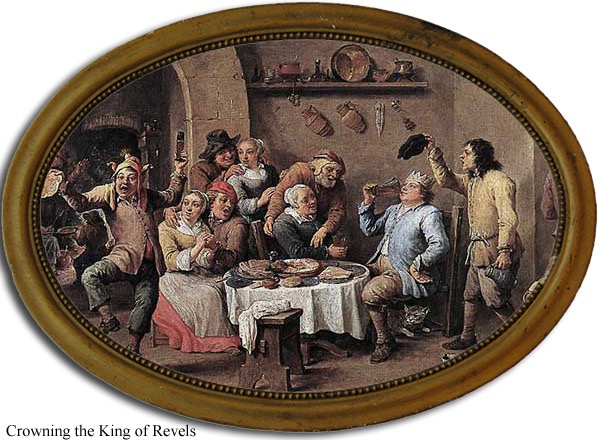
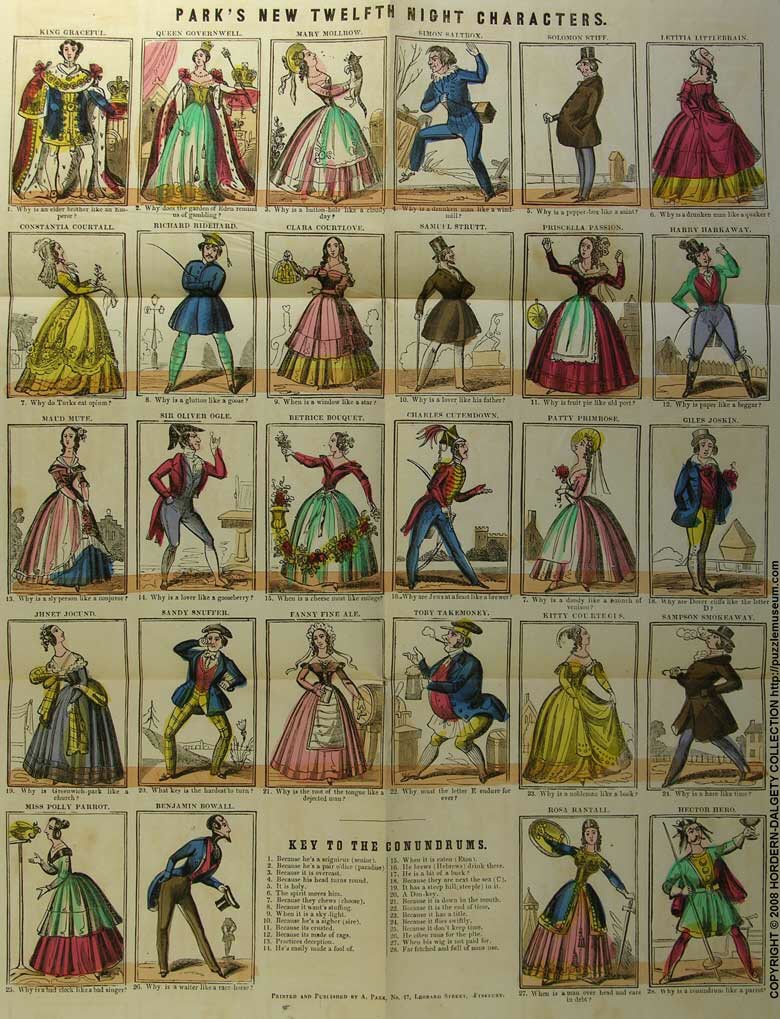
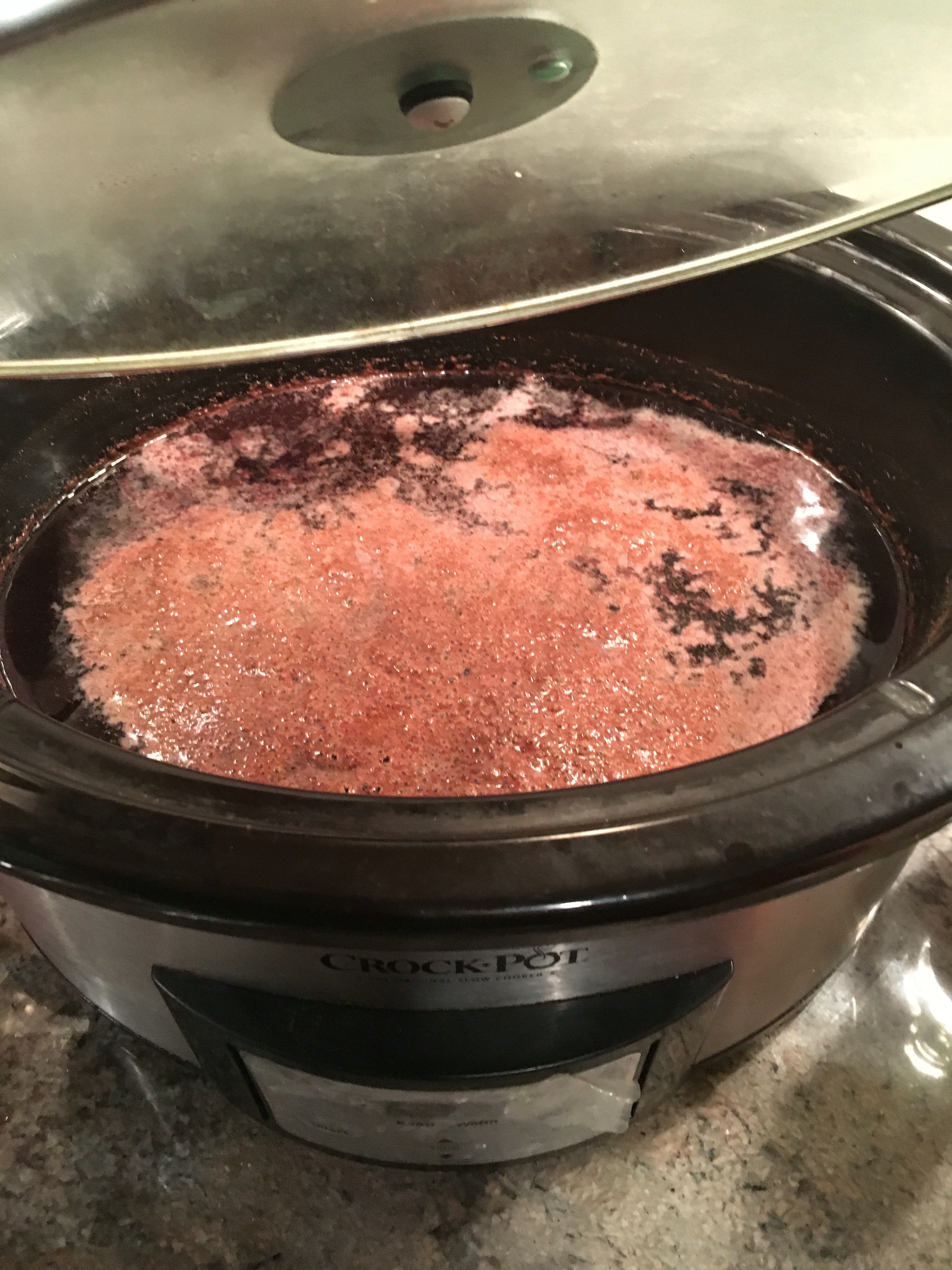
As I’ve mentioned in my previous posts one big part of the Christmas season was appointing a lord of misrule, and ancient tradition that goes back even before Christian times. In the play 12th night Feste basically serves as Lord Of Misrule; he presides over all the games and songs in the house, and he helps Sir Toby baffle Malvolio. In real life a Lord of Misrule presided over each Twelfth Night celebration, choosing which games and dances everyone would engage in.Most early Twelfth Night celebrations included a masked ball. In the 18th century, merrymakers engaged in a sort of role playing game, where they drew a character based on a popular archetype like the soldier Charles Cuttemdown or Beatrice Bouquet, and had to act like that character the rest of the night. Finally, a holiday that encourages you to LARP!Wassail.As I mentioned in my previous post wassail was the quintessential winter beverage and 12 night was not an exception. In this post you can see some photos of me actually making wassail myself in accordance with a trip up recipe I found on the food from the food network’s Alton Brown.Alton Brown Wassail recipe I didn’t have Madeira wine so I substituted port, but otherwise I used all the ingredients he mentioned in the recipe.Like I said in the previous post, Wassail is derived from an old word meaning “lamb’s wool,” and you can see why when you see the frothy mixture on top.I served this wassail to my in laws on Christmas night, and the only complaint I got was that the weather was a little too hot to enjoy it. I can personally attest that wassail warms you right down to your toes, which is great if you’ve been out caroling in 17th century England, but indoors during the hottest Christmas on record, it was a little uncomfortable- I was already wearing shorts and I was still too hot. My advice is- if you get a white Christmas, enjoy your wassail, but if it’s 60 degrees outside, stick to ale or Madeira, or some other kind of spicy spirit that you can serve
Well, that’s my advice, happy Twelfth Night everyone!Update: I’ve adapted the material from this post into an interactive, multimedia online class for kids aged 13-18! It will cover Elizabethan Christmas traditions and the plot and themed of Twelfth Night. You can register now at Outschool.com!Sources:Brownie Locks.com- History of Twelfth Night Catholic Encyclopedia: Feast of Fools Jane Austin.com: Twelfth Night Celebrations Lost Past Remembered: Twelfth night Why Christmas.com: the Twelve Days of Christmastime Project Britain: Twelfth Night http://projectbritain.com/Xmas/twelfth.htm
Well, Christmas is almost here; soon many of us will be traveling home to celebrate the holidays with our families, enjoying parties, presents, carols, and decorations. However, our modern traditions weren’t always the norm for people who celebrate Christmas. In the interest of historical curiosity, we here at Shakespearean Student would like to talk a little bit about how William Shakespeare might’ve celebrated Christmas!
As with everything in Shakespeare’s life, many times scholars have nothing but “what if’s” to go on, because few records exist, there were no photos from the period, and very few documents survive related to Shakespeare. He also kept no journals or diaries to record what his life might’ve been like. However, based in the holiday traditions of England that have lingered on to this day, we can surmise what Christmas might’ve been like in the late 16th century.
Part 1: Stratford
Shakespeare was born in 1564, in the town of Stratford-Upon-Avon in the county of Warwickshire England. As I mentioned earlier, Shakespeare would not have known many of our modern Christmas traditions. The Christmas Tree as we know it didn’t come into being until Queen Victoria’s reign, (and she certainly didn’t light hers with electric lights). Victoria also invented the idea of putting presents under the tree. I’m not an expert on Christmas, but my research would indicate that probably Elizabethans like Shakespeare didn’t even give out presents on Christmas Day! Instead, in country towns like Stratford in Tudor times, Christmas was a time of feasting, singing, caroling, and theatre!
The Shakespeare family home at Christmas
The Christmas season in Shakespeare’s day usually extended from Christmas Eve to the twelfth night after Christmas also known as Twelfth Night or Epithany. Common people usually decorated their homes with holly and ivy, and celebrated Christmas Eve by lighting their homes with candles and by burning the Yule log, an ancient tradition dating back over 1,000 years when the Vikings controlled most of England. It was a symbol of light and warmth in the darkest time of the year.
Replica of Shakespeare’s kitchen.
Feasting-
Roast goose was a staple of the common man’s feast at Christmas. In 1588, Queen Elizabeth commanded the whole country to consume geese to commemorate England’s victory over the Spanish Armada. Other traditional fare included plum porridge, beer or ale, and the most celebrated Christmas beverage of all: Wassail!
Wasailing-
The old tradition of caroling comes from an ancient pagan holiday tradition of showing charity to the poor at the winter solstice. People would go door to door asking for alms and occasionally a warm beverage. This ancient practice evolved into caroling and Wasailing!
The word “wassail” is an old Celtic word that means “lambswool,” it refers to the fact that the drink is covered with a thin foam that looks kind of like the wool of a sheep. It is also derived from the Anglo-Saxon “wassail,” which means “be in health,” so it is simultaneously a drink, a toast, and an explanation of what the drink looks like.
Like our modern-day caroling, people would sing and dance going door to door asking for a traditional glass of wassail or a mince pie. A mince pie is a traditional meat pie that is often filled with 12 different ingredients to symbolize the 12 days of Christmas.
Mince pies were popular with both peasants and kings, and contains both fruit and different types of meat including rabbit chicken duck and hare.
Wasailing also has its roots in ancient pagan holidays and that’s why it’s often accompanied with a traditional Morris dance, where the dancers are waving handkerchiefs, knocking sticks together and dancing with brightly colored ribbons. This was a great tradition back in the small towns and shires of England and continues to this very day. Below you’ll find a video where you can make some wassail yourself! I Just a note that in this recipe, the cook has left out the alcohol and has also left out the egg which is necessary to create the foamy lambswool. Nonetheless I think it’s a very good recipe and I welcome you to try it for yourself.
Plays–
As the mayor’s son, young William had a VIP pass to see all traveling actors who came to town. Shakespeare’s dad would’ve decided who got to perform at the guild halls and local inns, so he and his son would’ve watched private performances of all the shows first. After that, John Shakespeare decided who got to perform, and who would be sent away. In addition to professional troupes at Christmas, craftsmen in Will’s hometown people in Warwickshire would come together and put on a show! These amateur dramatic pieces were known as Mystery Plays.
Mystery Plays got their name from the old meaning of mystery: a trade or skill. Much like modern nativity plays or community theaters, every year all the craftsmen from the town would put on a series of short shows derived from Bible stories at Christmas time, and showcase their crafts as well as their acting talents. For example the goldsmiths were in charge of the Three Wise Men story.
We know that Shakespeare liked these plays because he refers to one in particular many, many times: The play of King Herod. in the Bible, Herod The Great is fearful of the baby Jesus and sends his soldiers to kill any young baby that they can find in the city of Jerusalem. Very often when Shakespeare refers to any of his villainous characters he describes them as Herod-like.
The Mysteries were printed during Shakespeare’s lifetime and people in York, Coventry, and Wakefield England still perform them today! Here’s a video of a little girl who performed in the York Mystery play last year:
I hope you enjoyed this little sojourn into the ancient traditions of the common folk back in Shakespeare’s England.
If you liked this post, please consider signing up for my new online class, “What Was Christmas Like For William Shakespeare?” I’ll go further into the traditions of Elizabethan Christmas and add some insight into Shakespeare’s play “Twelfth Night.” Register now at Outschool.com!
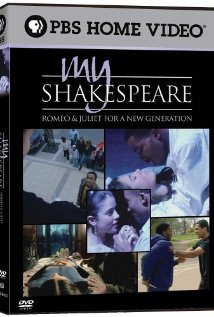
On this page, I review a Shakespeare book, movie, or TV show that I feel has some kind of value, either as an interpretation of Shakespeare, or a means to learn more about the man and his writing. This post will introduce you to an incredible documentary, and in my view one of the best ways to encourage, excite, and challenge young people reading Romeo and Juliet Aptly titled, it is called, My Shakespeare.
Name:My Shakespeare
Year: 2004
Director: Michael Waldman
Ages:PG for frank discussions of violence, and occasional suggestive language.
Media:Full length documentary, (available on Amazon and Netflix DVD)
Recommendation: I’d recommend this to high school and college students, as well as all theater teachers and practitioners. A word of caution though- nearly everyone in the documentary speaks with various British accents (from posh London to poor Harlesden), and thus if you think your class might not be able to understand foreign accents, you might want a different version, or put on the subtitles.
Premise: Director Patterson Joseph is a man on a mission- to prove that the people in his home town, (the poor, violence-ridden town of Harlesden England), that these same people can and will put on a production of Romeo and Juliet, in just four weeks. The cast has never acted before, and Patterson sometimes has to drag them kicking and screaming into rehearsals, but eventually they all learn that putting on a Shakespeare play can become an extremely personal experience. In the beginning, they are attempting Shakespeare, but by the end they live it. In between the action, there are interviews with Baz Luhrman, the celebrated director of the Leonardo Dicaprio film version of Romeo and Juliet back in 1996. Baz serves as a sort of chorus, explaining some of the challenges a director like Patterson will inevitably face as he and his actors bring the play to life.
Repeated Ideas That Run Through the Documentary:
You can do this- you can act, you can understand Shakespeare, you can finish something, you can show emotions, and you can direct.
Shakespeare is able to tell stories that appeal to everyone, and here’s the proof.
The best way to understand Shakespeare is to get on your feet and do it.
Moments to watch for: Before I list my favorite moments in the documentary, I’d like to list the theatrical process by which Patterson and his company put on Romeo and Juliet.
The Process Of Creating Romeo and Juliet:
Auditions/ ImprovGames (4 weeks to go)
Table Work, where the actors read the script and talk about their characters.
Paraphrasing the script and improv (9 days to go)
Stage combat Rehearsals- prepping the fights.
Opening Scene rehearsal on a basketball court.
Vocal Rehearsal
The Emotion Workshop (8 days to go) The actors try to tap into their own emotions to try and bring some real feelings into their parts.
Death Scene Rehearsal in a Graveyard!
Last minute changes (5 days to go)
Globe theater rehearsal
Nighttime Balcony Scene Rehearsal at the aptly named, “Shakespeare Road.”
Tech Rehearsal at the Royal Academy Of Dramatic Arts.
Speed Through Rehearsal/ The final rehearsal (1 day to go)
Performance at the Royal Academy Of Dramatic Art
Now a look at some of my favorite parts of the documentary.
The audition/ casting scene- In this scene you watch the future cast members explore the story of the play through improvisation, then you see their background through a series of headshots and dossiers. The whole cast is more diverse than any West End production: black, white, Christian, Muslim, young people and old people. Patterson’s casting choices alone makes this production fresh and relevant to our shrinking little world. A few cast members are refugees that came to England because of their countries’ own family feuds in Somalia and Afghanistan. Even more striking, Romeo and Juliet are very young- 18 and 22 respectively, which gives their love scenes an amazing truth and honesty. At first they think they have nothing in common with their characters, but in reality they have even more in common than most of us who read Romeo and Juliet.
The table work scene where the cast learns about their characters You see Mustafa as Mercutio learn that Shakespeare can be funny, you see Jonathan as Romeo learn that some of Shakspeare’s words are still used today, and you see Muska just start to flirt with the idea of playing Juliet.
Jonathan’s Story- Unlike most actors who have played Romeo, Jonathan Thomas has been in a real fight, and he describes it in brutal detail, even showing the scars he got from his stab wounds. Hearing his story gives his performance a truth and poignancy that I’ve never seen in any other version.
The Balcony Scene Rehearsals- In this documentary the two leads perform the scene many times, in rehearsal where they talk about how hard it is to play love realistically, in Shakespeare’s Globe, where they see how it was done in Shakespeare’s day, in a modern balcony back in Harlesden, (on the appropriately named “Shakespeare Road,” and at last in the final performance. Few documentaries show just how hard it is to do a Shakespearean scene, particularly if it’s famous, and how many different ways a director and a pair of talented actors can play it and find new things each and every time.
The scene where Patterson lets one of the actors go. Everyone in this production has to overcome obstacles, even the director; when one of his actors fails to perform, he simply has to drop the axe and recast one of his lead roles. Theater is hard work, and just like any job, the director has to take control and do what is necessary to make sure that the production is a success.
Rehearsal at the Globe Theater On one very special day, the actors step onto the stage of the reconstructed Globe, and take a few tentative steps into the 1500s. Once in the space, they take to it like fish to water, playing with the audience, playing with projection, and their lines are infused with a special kind of energy that only arises from the boards of an Elizabethan stage. I found it interesting that when Jonathan was talking to Mark Rylance, the artistic director of the Globe, he asks what kind of man Shakespeare was, because he’s starting to see Shakespeare as a peer!
My reaction: This documentary gives me hope every time I see it. Over and over again Patterson instills in his cast the idea of “Yes, you can,” yes, these people can understand Shakespeare, yes they can learn their lines, yes they can act, yes they can do something intelligent, and moving, and honest, and beautiful and what better play to bring that message across than Romeo and Juliet, which is full of youthful energy and excitement. My only complaint is the interviews with Baz Luhrman don’t really add much to the documentary side of things; Luhrman was really only there for name recognition, and he certainly knows less about Shakespeare than the RSC veteran Patterson. Nevertheless, the whole documentary Is nothing short of inspiring from beginning to end.
Notable cast members
Muska Khpal as Juliet. An 18 year- old Afghan refugee who came to England in 1996, without even speaking English, now playing one of the greatest characters in English literature! Like Juliet herself, Muska has very strict parents (who didn’t approve of her playing the part), and is at first is extremely shy towards Romeo, toward the play, and even the director, but when you hear her talk about her dream to return to Afghanistan and become a doctor, you can sense Juliet’s strength and independence.
Jonathan Taylor 22 year-old Jonathan is a very charismatic and intelligent young man. After this production he became a professional actor. He speaks articulately about the experience of acting for the first time, reading Shakespeare for the first time, and even his own experiences with love and violence on the streets of Harlesden. He is also very talented and speaks the lines with an effortless panache. I found myself rooting for him the whole time, and the fact that I got to see this production spark his interest in acting and then to see him change and grow was truly inspiring.
Mustafa as Mercutio Tiny, sparkle eyed Somali refugee. He is truly Mercurial- he frequently jokes and kids with the cast, yet at the same time, he is deathly serious when he talks about his life in Somalia- seeing people die in front of him. When he dies onstage, you know his performance is drawn from some real world experience.
I realize Father’s day was last weekend, but I thought I’d like to cap off that week of posts with one final insight into Shakespearean fathers, only today they won’t be fictional! Today I’ll be sharing with you some details from the lives of William Shakespeare and his father, John Shakespeare. We’ve been talking about good, bad, and dad dads, so after reading this post, what do you think- were these men good fathers, or not?
-Bio of John Shakespeare c1530—to 1601
Ancestry-
Shakespeare Family Tree
John Shakespeare was born around the year 1530 (exact records no longer exist). He came from a long line of prominent farmers in Snitterfield, and moved to Stratford Upon Avon in Warwickshire, in the year 1557 John married Mary Arden, who also came from pretty posh country stock; records trace the Arden family back before the Norman conquest in 1066!
John and Mary’s children
Altogether, John and Mary had 8 children (see the family tree above.)
Sadly, their 2 eldest daughters Margaret and Anne died in infancy, making William the eldest child, and the son and heir of his father’s wealth.
William’s brother Edmund became an actor, while his sister Joan took over John’s old house.
Shakespeare was born in 1564 in a modest house on Henley Street, which still stands today!
The house on Henley Street, where Shakespeare was born in 1564. Click here to learn more about Shakespeare’s birthplace.
Mayor, Bailiff, Glover When John and Mary moved to Stratford, John established himself as a great fixture of the community- he started as the local glover, and rose to the highly respected office of town ale taster (no, I’m not kidding). At the height of his career, John became Mayor of Stratford, and an Alderman- a town counsilor who helped make decisions like whether or not to let local theater troupes come to town! Maybe John took his young son to watch the travelling players and helped inspire Will’s lifelong love of theater.
Teach Your Children Well Shakespeare got to go to one of the first ever public schools in England, where he learned English history, poetry, and the art of persuasive speech, everything he needed to become the great writer he would become.
Brogger not Blogger As I mentioned in my first post, Shakespeare’s dad had an illegal side business as a wool dealer. All wool was controlled by the English government, so selling it directly to people was a crime, and eventually John Shakespeare was caught. Fortunately, the fine he paid wasn’t enough to ruin him financially…yet.
Closet Catholic The biggest financial problem John Shakespeare faced was his religious beliefs. In 1757, archeologists unearthed a pamphlet where John confessed to be a secret Catholic in a society where the Church of England was the national religion. Scholar Michael Wood believes that John’s Catholicism led to financial ruin; he refused to go to Episcopal church and had to pay crippling fines every time he failed to appear.
John’s Descent At the same time, John’s debts kept mounting and he was afraid to go to the town council house for fear of more collectors, even though he was the mayor. The final blow came in 1576, when John was booted off the town council.
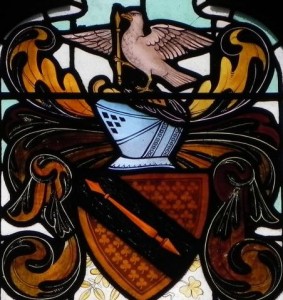
Son of Fortune John’s son William would eventually repair the family dignity when he became a success. In 1596, William made himself, and all the male members of his family gentlemen, by applying for a coat of arms. Below is a picture of Shakespeare’s family crest.
Shakespeare’s coat of arms, as depicted in the Folger Shakespeare Library window.
John Shakespeare died in 1601, shortly after his son’s play Hamlet was published. Willmight have honored his father’s memory by playing the Ghost of Hamlet’s father.
-Bio of William Shakespeare as a Father 1564-1616.
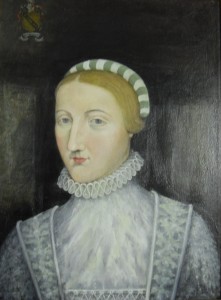
Oil reproduction by Roger Dunn of an alleged drawing of Anne Hathaway. Reproduced with Permission, Shakespeare’ Birthplace Trust. Click on the picture to find out more about this work of art!
Roger Dunn BA
Wedding Bells In 1582,Will married Anne Hathaway (not the Oscar winning actress from Les Miserables, although that one has shown some love for Shakespeare too. Based on the timeline, it’s very likely that Anne was already pregnant when William married her. Some claim that the Bard was basically in a “shotgun” marriage, but nobody has proven otherwise. We do know that he wrote a sonnet to her on their wedding day, click here to read it!
Shakespeare’s Children Shakespeare and Anne had three kids (Judith, Susanna, Hamnet) Susanna was born in 1583, while the twins were born 5 years later.
Hit the Road! Sometime around 1590, Shakespeare moved to London and must’ve gotten a job with a theater company. Unfortunately, no records survive between the birth of Shakespeare’s children, and his first success as a playwright in 1592, which is why scholars refer to this period as “The Lost Years.” It was probably a tough life for the Shakespeares, with the father away in the city while they were cooped up in Stratford with their grandparents.
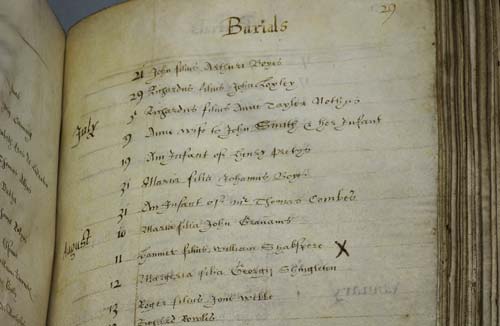
RIP Hamnet. Shakespeare’s only son died August 9th He was away in London at the time, and undoubtedly the news was a terrible shock.
Will’s daughters Shakespeare had two girls, Judith and Susanna. Naturally, it’s hard to tell anything about Shakespeare’s personal feelings, but looking at his plays and his future actions, Shakespeare must have really loved his girls. Many of his later plays explore the relationships between fathers and daughters, and as you’ve probably noticed, most of the fathers on my previous countdowns have at least 1 girl. Shakespeare was preoccupied with his daughter’s futures and helped them find husbands, Susanna Shakespeare was arrested for refusing to take protestant communion Susannah married Dr. John Hall, a respected puritan physician. She also bore William his only grandchild, Elizabeth Barnard (pictured below).
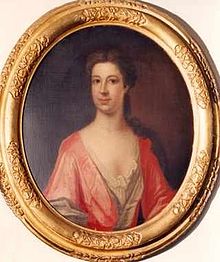
Elizabeth Hall, 1608-1680. Shakespeare’s granddaughter.
Will clearly loved his daughters, especially his daughter Susanna. His last 5 plays were about fathers trying their best to improve their daughter’s lives. In his will he gave his daughter Susannah 100 pounds of English money, as well as a dowry To his other daughter Judith he left 30 pounds, all of his silver, and permitted her to live in one of his houses on Henley street.
FMI:
by Michael Wood: A fantastic documentary/ book/ website, which looks at the life of William Shakespeare and his work. On this website is an interactive timeline that shows pictures of the places Shakespeare lived and worked, and the documents with his name on them: http://www.pbs.org/shakespeare/events/
Will In the World by Steven Greenblatt: A great biography of Shakespeare by a celebrated Harvard scholar and editor of tne Norton Shakespeare edition. Click here for a review: http://books.wwnorton.com/books/Will-in-the-World/.
So that ends my posts on Shakespeare and Father’s Day. Stay tuned for another post about a very interesting holiday!
Illustration of the Shakespeare family, wife and children, 1890.






 Sources: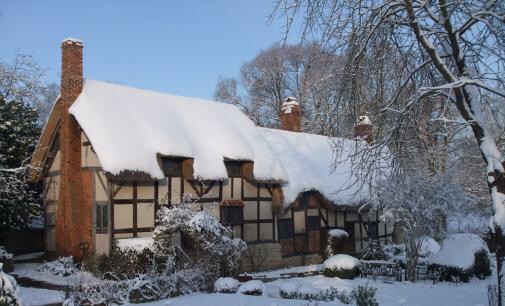

![Candleglow%20PR%20small[1]](https://shakespeareanstudent.com/wp-content/uploads/2015/12/candleglow20pr20small1.jpg?w=764)






 The Shakespearean Student