The Fashion Is the Fashion 4: The Journey of Romeo and Juliet

I’ve seen four live productions of Romeo and Juliet, (5 if you include West Side Story). I’ve also watched four films (6 if you include West Side Story and Gnomio and Juliet) and one thing that I’ve noticed again and again, and again is that you can tell the whole story of the play with clothing. This is a story about families who are part of opposite factions whose children secretly meet, marry, die, and fuse the families into one, and their clothes can show each step of that journey.

The feud
Nearly every story about a conflict or war uses contrasting colors to show the different factions. Sometimes even real wars become famous for the clothes of the opposing armies. The Revolutionary War between the redcoats and the blue and gold Continentals, the American Civil War between the Rebel Grays and the Yankee Bluebellies. In almost every production I’ve ever seen, the feud in Romeo and Juliet is also demonstrated by the opposing factions wearing distinctive clothing.

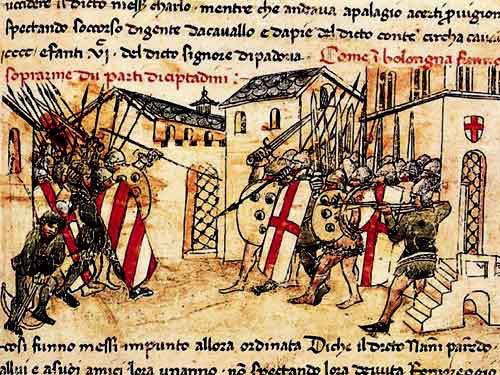
Guelphs and Ghibellines - Wikipedia


Historically, warring factions in Itally during the period the original Romeo and Juliet is set, wore distinctive clothes and banners as well. . In this medieval drawing, you can see Italians in the Ghibelline faction, who were loyal to the Holy Roman Empire, fighting the Guelph faction (red cross), who supported the Pope. Powerful families were constantly fighting and taking sides in the Guelf vs. ghibelines conflict in Verona, which might have inspired the Capulet Montegue feud in Romeo and Juliet.


Even the servants of the nobles got roped into these conflicts, and they literally wore their loyalties on their sleeves. The servants wore a kind of uniform or livery to show what household they belonged to. The servants Gregory and Sampson owe their jobs to Lord Capulet, and are willing to fight to protect his honor. Perhaps Shakespeare started the play with these servants to make this distinction very obvious. Here’s a short overview on Italian Liveries from the Metropolitan Museum of Art:

https://www.metmuseum.org/art/collection/search/86582


In 1966, director Franco Zepherelli set a trend with his iconic use of color in his movie. He chose to make the Capulets wear warm tones while the Montegues wore blue and silver. Juliet (Olivia Hussey) wore a gorgeous red dress that made her look youthful, passionate, and lovely, while Tybalt (Michael York), wore red, orange, and black to emphasize his anger, and jealousy (which has been associated for centuries with the color orange). By contrast, the Montagues like Romeo (Leonard Whiting) wore blue, making him look peaceful and cool. These color choices not only clearly indicate who belongs to which contrasting factions, but also help telegraph the character’s personalities. Look at the way these costumes make the two lovers stand out even when they’re surrounded by people at the Capulet ball:

Dance scene from the iconic 1968 film of Romeo and Juliet, directed by Franco Zeffirelli.
Gnomeo & Juliet - Wikipedia
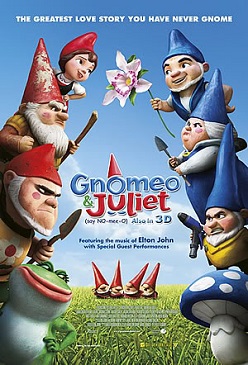
Poster for “Gnomio and Juliet, 2011


Zepherilli’s color choices were most blatantly exploited in the kids film Gnomio and Juliet, where they did away with the names Capulet and Montegue altogether, and just called the two groups of gnomes the Reds and the Blues.

The Dance


To get Romeo and Juliet to meet and fall in love, Shakespeare gives them a dance scene for them to meet and fall in love. He further makes it clear that when they first meet, Romeo is in disguise. The original source Shakespeare used made the dance a carnival ball, (which even today is celebrated in Italy with masks). Most productions today have Romeo wearing a mask or some other costume so that he is not easily recognizable as a Montague. Masks are a big part of Italian culture, especially in Venice during Carnival:


In the 1996 movie, Baz Luhrman creates a bacchanal costume party, where nobody wears masks but the costumes help telegraph important character points. Mercutio is dressed in drag, which not only displays his vibrant personality but also conveniently distracts everyone from the fact that Romeo is at the Capulet party with no mask on.


Capulet is dressed like a Roman emperor, which emphasizes his role as the patriarch of the Capulet family. Juliet (Claire Danes) is dressed as an angel, to emphasize the celestial imagery Shakespeare uses to describe her. Finally, Romeo (Leonardo DiCaprio) is dressed as a crusader knight because of the dialogue in the play when he first meets Juliet:

Romeo. [To JULIET] If I profane with my unworthiest hand
This holy shrine, the gentle fine is this:720
My lips, two blushing pilgrims, ready stand
To smooth that rough touch with a tender kiss.
Juliet. Good pilgrim, you do wrong your hand too much,
Which mannerly devotion shows in this;
For saints have hands that pilgrims' hands do touch,725
And palm to palm is holy palmers' kiss.
Romeo. Have not saints lips, and holy palmers too?
Juliet. Ay, pilgrim, lips that they must use in prayer.
Romeo. O, then, dear saint, let lips do what hands do;
They pray, grant thou, lest faith turn to despair.730
Juliet. Saints do not move, though grant for prayers' sake.
Romeo. Then move not, while my prayer's effect I take.
Thus from my lips, by yours, my sin is purged.
Juliet. Then have my lips the sin that they have took.
Romeo. Sin from thy lips? O trespass sweetly urged!735
Give me my sin again.
Juliet. You kiss by the book. Romeo and Juliet, Act I, Scene V, Lines 719-737.

Notice that Romeo calls Juliet a saint, and later an angel in the famous balcony scene, which explains her costume at the ball. Juliet refers to Romoe as a Pilgrim, which is a cheeky comment on his crusader knight costume. In the Crusades, crusader knights made pilgrimages to the holy land, with the hope that God (and presumably, his angels) would forgive their sins. Romeo’s name even means “Pilgrim.” Luhrman makes clever nods to Shakespeare’s text by dressing Romeo and Juliet in this way, and gives the dialogue a bit of a playful roleplay as the characters make jokes about each other’s costumes- Romeo hopes that he will go on a pilgrimage and that this angel will take his sin with a kiss.


In Gnomio and Juliet, the titular characters meet in a different kind of disguise. Rather than going to a dance with their family, they are both simultaneously trying to sneak into a garden and steal a flower, so they are both wearing black, ninja-inspired outfits. Their black clothing helps them meet and interact without fear of retribution from their parents (since they do not yet know that they are supposed to be enemies. The ninja clothes also establishes that for these two gnomes, love of adventure unites them. Alas though, it doesn’t last; Juliet finds out that Gnomio is a Blue, when they both accidentally fall in a pool, stripping their warpaint off and revealing who they are.

Trailer for “West Side Story,” (2021) directed by Steven Spielberg.


Sometimes the dance shows a fundamental difference between the lovers and the feuding factions. West Side Story is a 20th-century musical that re-imagines the feuding families as juvenile street gangs, who like their Veronese counterparts, wear contrasting colors. The Jets (who represent the Montagues) wear Blue and yellow, while the Sharks (Capulets), wear red and black. The gang members continue wearing these colors on the night of the high school dance, except for Tony and Maria (the Romeo and Juliet analogs). In most productions I’ve seen, (including the 2021 movie), these young lovers wear white throughout the majority of the play, to emphasize the purity of their feelings, and their rejection of violence. Thus, unlike Shakespeare’s version of the story, West Side Story makes the lovers unquestionably purer are more peaceful than Shakespeare’s Romeo and Juliet, and their clothing makes this clear.

Romeo (John Warren), meets Juliet (Alesia Lawson) in the 2010 Ashland University production of “Romeo and Juliet,” directed by Ric Goodwin.

The Merging of the family
(8:30-11:00)


Costume Designer Charlene in the 2006 AU production deliberately had the characters change clothes when they get married. Juliet was wearing the same iconic red dress as Olivia Hussey for the first two acts of the play but then changed into a pale blue gown that matches Romeo. The clothes re-enforce the idea that the marriage represents Romeo and Juliet abandoning their family’s conflicts, and simply showing their true colors.

Two sets of costumes for Juliet in the 2006 Ashland University Production. Pull the slider bar left to see how Juliet’s costume changes from the start of the show to the end.


Another way of getting everyone in the family to subconsciously unite in grief would be to costume everyone wearing black except Romeo and Juliet. At the end of the play, The Capulets are already mourning Juliet, (because she faked her death in Act IV), and the Montegues are already mourning Lady Montegue (who died offstage). Just by these circumstances, everyone could come onstage wearing black, uniting in their grief, which is further solidified when they see their children dead onstage.

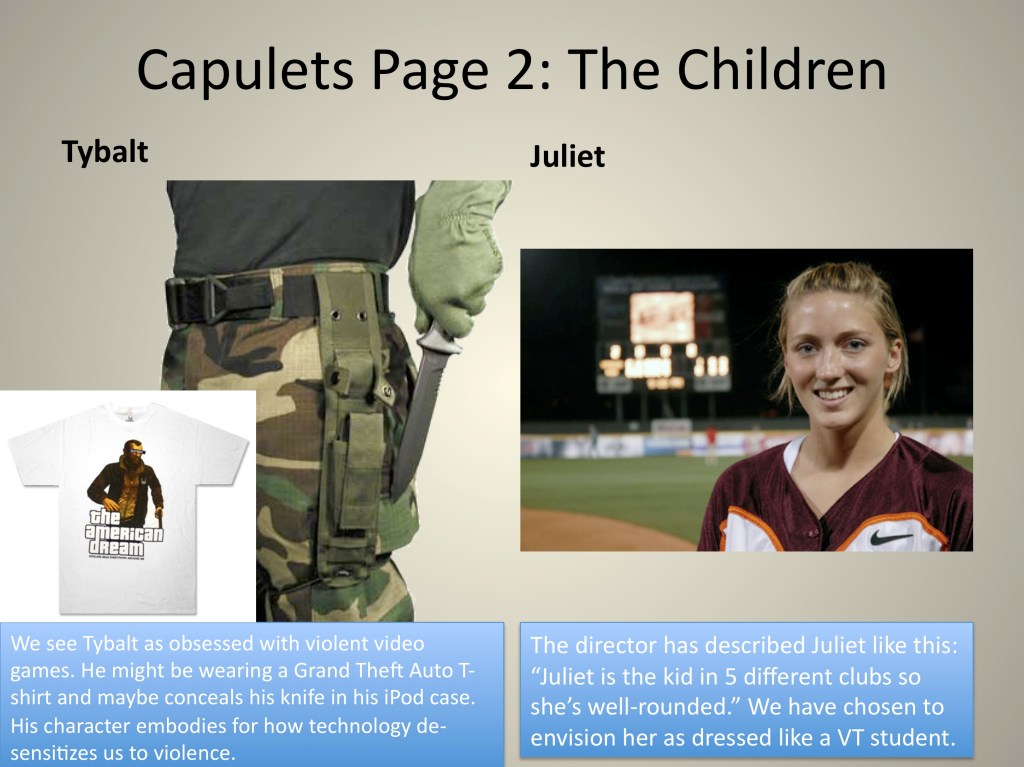
Not all productions choose to costume the characters like warring factions, but nevertheless, any theatrical production’s costumes must telegraph something about the characters. In these production slides for a production I worked on in 2012, the costumes reflect the distinct personality of each character and show a class difference between the Montagues and the Capulets.


The 2013 Film: Costumes Done Badly


The 2013 movie is more concerned with showing off the beauty of the actor’s faces, and the literal jewels than the clothes:

Most of the actors and costumes are literally in the dark for most of the film, probably because the film was financed by the Swarofski Crystal company, who literally wanted the film to sparkle. Ultimately, like most jewelry, I thought the film was pretty to look at, but the costumes and cinematography had little utilitarian value. The costumes and visual didn’t tell the story efficiently, but mainly was designed to distract the audience with the beauty of the sets, costumes and the attractive young actors. The only thing I liked was a subtle choice to make Juliet’s mask reminiscent of Medusa, the monster in Greek Myth, who could turn people to stone with a look. I liked that the film was subtly implying that love, at first sight, can be lethal.

New Acting Course for Young Actors Starting September 12th, 2021.

Trailer for my 2021 Acting course via Outschool.com

I’ve been working on a remote learning class for Outschool.com where I take some of the audition advice I wrote in Creating A Character: Macbeth, and some of the other acting posts I’ve published over the years. This will be a weekly virtual acting course for kids ages 13-18, starting September 12th at 10AM EST.

This class will outline the tools and techniques of Shakespearean acting such as projection, articulation, and imagination. Each We’ll also go over Shakespeare’s own advice on acting in his play “Hamlet: Prince of Denmark.” The course will culminate with the students choosing their own Shakespearean monologues and scenes, which they can use going forward in auditions, school plays, and classes.

The best thing about the course is that each week builds on the previous week’s experience, but you don’t need to go to all of them. I’ll be flexible and work with the student’s schedule so everyone gets as much out of the class as possible.

If you’re interested in signing up, go to Outschool.com. If you have any questions, email me by clicking here:

Hope to see you online soon!

Activities For Teachers and Students: Mock Trial of Romeo and Juliet

If you’re a teacher and your students are reading Romeo and Juliet, one question that your students might innevitably ask is, who’s to blame? The play ends with The Prince and the Watch trying to ascertain what happened over the past 5 days to Romeo and Juliet. He seems to place blame loosely on everyone, but it does make one wonder- will anyone face consequences for the numerous deaths, damages, anguish, and broken promises that resulted from the double suicides?

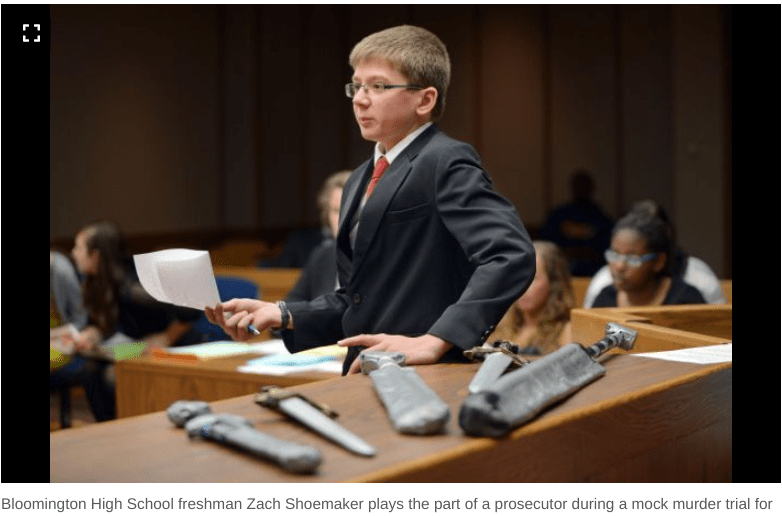
In 2021, I decided to create an activity that would allow the students in the English class I worked in to decide who is to blame for the deaths of Romeo and Juliet. I developed the project with the help of an English teacher and a real judge. We designed the project so it would test the kids’ knowledge of the play, and their persuassive speaking abilities (which we worked on in a previous unit).

I would like to share the journey of this project, which I think is a lovely way to get kids to engage with English Literature, as well as touching on other topics in high school English courses like persuassive writing, critical thinking, and research.

What kind of trial is it to be?

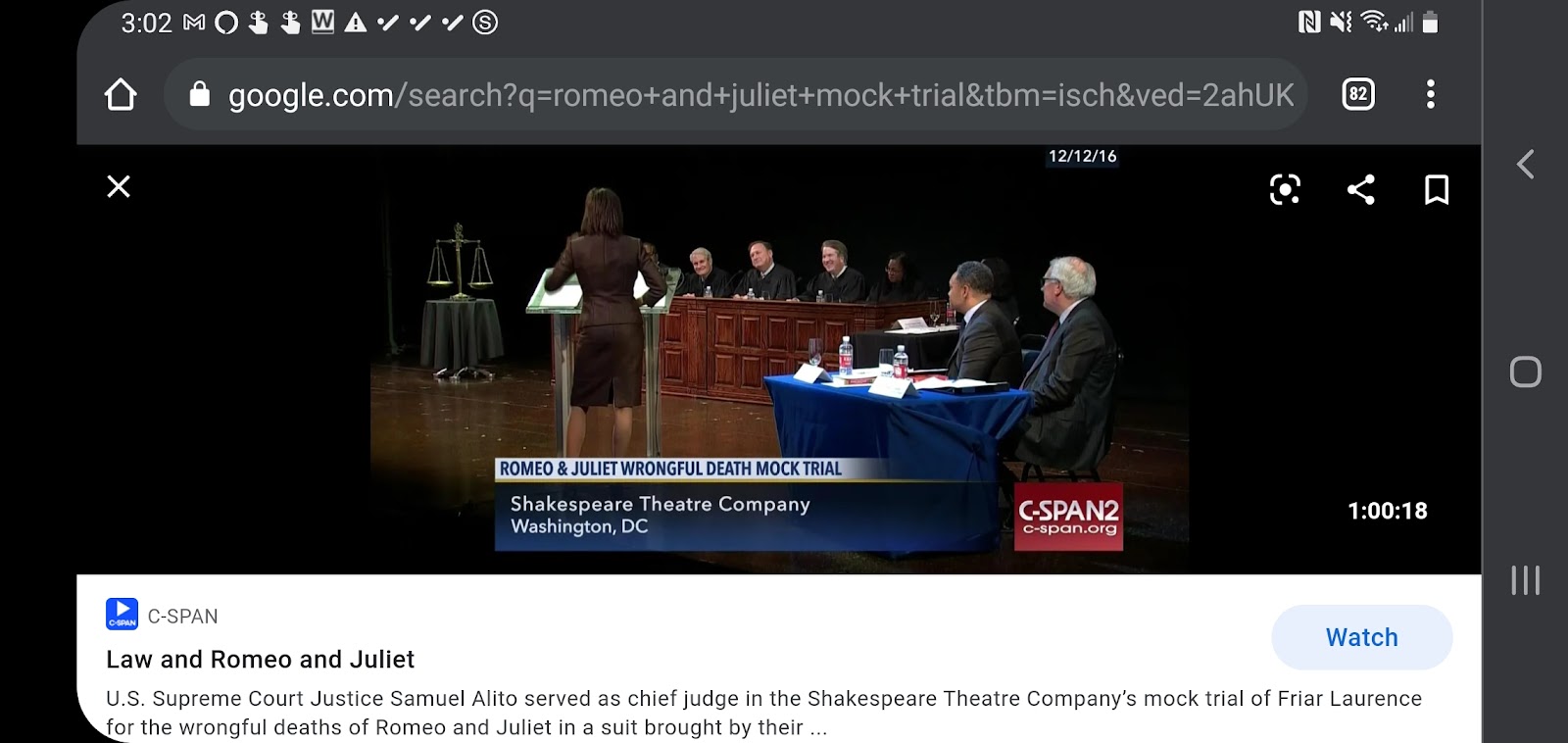
My original idea was to put Friar Laurence on trial for criminal negligence and/ or conspiracy to assist a suicide, There’s been plenty of classrooms, comedy sketches, and even some juries that blame Friar Laurence for the deaths of Romeo and Juliet, including the US Supreme Court, who put him in the dock as part of a mock trial at the Shakespeare Theater in Washington DC bac in 2016. If you go to C-Span’s website, you can watch the full trial itself: https://www.c-span.org/video/?419930-1/federal-judges-discuss-romeo-juliet

Though mock trials have tried Friar Laurence for murder in the past, the teacher I worked with decided we wanted to be sensitive to the issue of suicide and not place the blame for suicide on anyone other than Romeo and Juliet. This is a valid concern- since teenagers do occassionaly encounter suicide, we didn’t want to suggest that anyone could be held responsible for someone else’s suicide. However, if you decide to have a criminal murder or manslaughter trial, you can do so.

Our trial chose to focus on a different sort of negligence: we noted that, although Friar Laurence arguably isn’t guilty of murder, he certainly did perform the wedding of two minors without parental consent, a wedding that their parents absolutely didn’t apprve of, and that arguably caused irreperable financial damages to the houses of Capulet and Montegue. I therefore went about consstructing a criminal trial based on this perceived negligence.

The CRIMINAL PROHIBITIONS ON THE MARRIAGE OF MINORS ACT

In most states in the United states, parental consent is required to marry a minor, so in reality, Friar Laurence would almost certainly be found guilty of illegal marriage. The judge I worked with wanted to give the case a fighting chance, so she created a fae law that is just for our class called the CRIMINAL PROHIBITIONS ON THE MARRIAGE OF MINORS ACT, which you can read below. This law is designed to provide a loophole for Friar Laurence that allows a clergyman to perform a minor wedding without parental consent if the parents are themselves creating an unsafe and dangerous home. Our teacher liked this aspect of the case, becasue it allows the class to consider the partriarchial values of Lord Capulet, who for most of the play, treats his daugher like a piece of property, and threatens her with dire consequences if she chooses her own husband. This is the central argument of the trial- Was Friar Laurence negligent and irresponsible in marrying Romeo and Juliet, or was he respecting Juliet’s autonomy and trying to free her from an abusive household? Below is a complete description of the project, a presentation I created for the class, and some downloadable materials to get you started. If you have questions or suggestions for other projects, let me know!

Overview

A mock trial is an excellent way to engage a student’s critical thinking skills, persuasive writing skills, and challenge their knowledge of a sequence of events. In Shakespeare’s Romeo and Juliet, several violent deaths occur and at then end of the play it’s ambiguous who will be punished and how. Therefore, to engage students in the play, they can play judge, jury, and lawyers in a trial to answer the question: was Friar Laurence guilty of performing an illegal marriage?

Goals

  1. Test the student’s knowledge of the plot of the play
  2. Get them to make persuasive arguments defending and prosecuting the character of Friar Lawrence.
  3. Come to conclusions 
  4. Get the Jury to look at the rhetoric of the prosecution and defense.

Structure

  1. Quiz on the play to help assign roles- The highest scorers get to be lawyers and prosecutor, the next highest get to be witnesses, and the lowest scorers get to be the jury.
  2. Mock trial where the students take on the roles of witnesses, judge, lawyer, prosecutor, and jury
  3. The Jury delivers a verdict
  4. Class discussion.

Before the Trial

Only people who know the plot of the play should be allowed to be the lawyers, so I propose that before the trial starts, each student should be quizzed on the plot of the play. The students who score the highest should be allowed to play the prosecutor and defense lawyer. The third, fourth, and fifth highest scoring students can be The Judge and the two witnesses. Everyone else can be the jury. I would propose that the teacher or teaching assistant play the part of Friar Lawrence, as he/she will have to answer the toughest questions and know the most about the play. Of course, if you have a student with real acting talent, he or she can play Friar Lawrence. 

The Trial will take place over at least two days- one day for constructing legal arguments, and one day for the trial itself.

When the trial begins, each person will get a character sheet that details who they are, what their role is, in the trial, and what they know about the deaths of Romeo and Juliet. Unlike other mock trials, this will not be scripted. Think of it more like a D&D character sheet or murder mystery game; the characters are given information but not told what to say.  Below is a sample character sheet I made for the Prosecuting Attorney.

Structure Of the Trial

The Prosecutor intends to prove that Friar Lawrence performed an illegal marriage because he married two minors without their parent’s consent. The Defense intends to prove that the marriage was legal under the CRIMINAL PROHIBITIONS ON THE MARRIAGE OF MINORS ACT (a fake law made up for our class).

  1. Jury Instructions- The Judge
  2. Opening Statements- Prosecutor and Defense Lawyer
  3. Witness For the Prosecution- Lord Capulet
  4. Cross-Examination- Lord Capulet
  5. Witness For the Defense- Ghost Juliet
  6. Witness For the Prosecution- The Nurse
  7. Cross-Examination- The Nurse
  8. Defendant’s Testimony- Friar Lawrence
  9. Cross-Examination- Friar Lawrence
  10. Witness For the Prosecution- Lady Capulet
  11. Cross-Examination- Lady Capulet
  12. Closing Statements- Prosecutor and Defense Lawyer
  13. Post Trial Instructions- Judge
  14. The Verdict- Jury
  15. Weighing In- Judge

Worksheet content-

All characters will have a packet explaining who they are, their goal for the trial, and what their character knows about the alleged crime. They also have a copy of the structure of the trial, so they know when to speak. During the pre-trial prep day, the lawyers will decide on questions to ask the witnesses and construct arguments based on their knowledge of the law and the play. 

  1. -Friar Lawrence
  2. -The Nurse
  3. -Lord Capulet
  4. -Prosecutor
  5. -Defense Lawyer
  6. -Jury
  7. -Judge

Everyone will receive a copy of the CRIMINAL PROHIBITIONS ON THE MARRIAGE OF MINORS so the prosecution and jury can construct their arguments, and the Jury can judge the effectiveness of those arguments.

References:

  1. https://www.c-span.org/video/?419930-1/federal-judges-discuss-romeo-juliet
  2. https://betterlesson.com/lesson/610780/mock-trial-preparation-friar-lawrence-stands-trial-for-the-tragedy-of-romeo-and-juliet 

CRIMINAL PROHIBITIONS ON THE MARRIAGE OF MINORS ACT

Purpose

  1. The purpose of this act is to protect the integrity of the family and the independent rights of minor children.  

Prohibitions:

  1. No officiant shall perform the marriage of a minor child without the consent of the child’s parent, unless such minor child has first been determined to be emancipated and such determination was in the minor’s best interest.

Definitions:

  1. Officiant means a person authorized to perform weddings, including but not limited to a priest, minister, friar or pastor. 
  2. Minor child means a person 14 years but under the age of 18 years.
  3. The parent of a minor child shall mean the biological father of said child.
  4. The factors used in the determination of emancipation shall include the following;
  1. The demonstrated ability and capacity to manage his/her own affairs,
  2. The demonstrated ability and capacity to live independently, 
  3. The wishes of the minor child,
  4. The wishes of the parent,
  5. Any other factors including compensation which could influence the officiant.

      7) The factors used in the determination of the best interest of the minor child shall include the following:

  1. The age of the minor child,
  2. The home environment of the minor child, especially  if there is a risk of violence or harm to the minor child,
  3. Whether the marriage of the child promotes a union that is beneficial to society,
  4. Whether the minor child can manage his/her own finances.
  5. Whether the minor child has demonstrated other characteristics of maturity

     8) An emancipated child shall be entitled to enter into contracts, marry and enjoy the legal rights of an adult without the permission of his/her parent.

    9)  Whoever violates this law shall be guilty of a misdemeanor of the first degree, which is punishable by up to 6 months in jail and/or a $1,000 fine.  

Jury instructions (to be handed out ot the jury)

The jury need not be given a passive role- they can write down reactions on how effective the lawyers wer in presenting their arguments, which witness gave the best testimony, etc. In most jury trials, judges instruct the jury on how to put aside their personal biases when listening to the evidence, which I’ve written into some instructions below, based on instructions that Judge Taylor gave me.

So, that is my version of the Romeo and Juliet mock trial that you can freely use in your classroom. If you want to use it, please just give me credit. If you want to collaborate with me on your version, send me an email. I hope this project can be a widespread activity that will help students hone their persuasion, analysis, research, and of course, their interpretation of literature in a realistic context.

You can download the entire project for free on my TeachersPayTeachers page:

https://www.teacherspayteachers.com/Sellers-Im-Following/Add/Paul-Hricik

Thanks for reading, and see you in court!

Summer Shakespeare Academy!

I’m working this summer with the good people at Outschool, an online learning platform for kids ages 3-18. I’m designing a series of Shakespeare classes that you can sign up for. We’ll be doing acting exercises, reading Shakespeare’s text, and making Shakespeare props Cost is $3 per child.

The course is ala carte, that is, you can sign up for as many courses as you like. Each course builds on the last one, but you don’t have to have taken the previous ones to enjoy any one particular course Let me know in the comments which class(es) you are interested in, and/or what suggestions you might have. I can’t wait to hear what you think about these summer Shakespeare courses, and I hope to see you online soon!

1. Introduction to Shakespeare- (enrollment here: https://outschool.com/classes/introduction-to-shakespeare-or-how-i-learned-to-love-the-bard-UoHH5fes?sectionUid=973060db-f857-461a-a23a-f1476203a544&showDetails=true) We’ll talk about why Shakespeare is so famous and learn about his life and career. Then we’ll do some fun quizzes that you can earn prizes based on how well you pay attention!
2. How to write ✍ like Shakespeare (Enrollment here: https://outschool.com/classes/how-to-write-like-shakespeare-0HuPq1Cg?sectionUid=4243af25-ba41-4724-82a2-61bd7c7d862e&showDetails=true) Have you ever wanted to woo your sweetheart or write the next bestselling play? Well, this course will cover the secrets of Shakespeare’s writing. We’ll cover how to write romantic poems, the structure of Shakespeare’s plays, and you’ll get to write your own Shakespearean speeches!
3. Intro to Shakespearean acting Practical tips and tricks for your next Shakespeare audition.
4. Shakespeare’s villains
We’ll look at the darkest and creepiest Shakespearean characters and see why they still fascinate us today!
5. The Violent Rhetoric Of Shakespeare’s Julius Caesar (Registration Here: https://outschool.com/classes/the-violent-rhetoric-of-julius-caesar-fkMLbAtA?sectionUid=1f9220cd-8c28-438d-9799-8479494353a4&showDetails=true#usMaRDyJ13) In this one-time course, students will analyze the rhetoric and persuasive power in two speeches from Shakespeare’s “Julius Caesar”
6. Intro to Romeo and Juliet – Get a leg up on your next English class with this fun, frenetic look through the characters, themes, and story of Shakespeare’s most popular, and most-taught play.
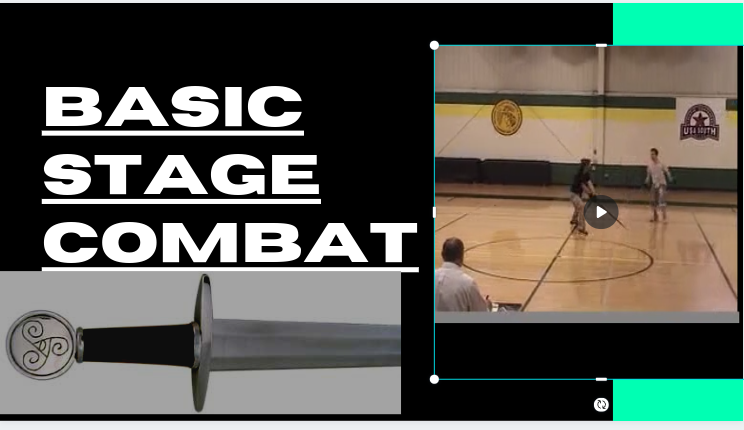
7. Basics Of Stage Combat (Registration here: https://outschool.com/classes/1120ada2-047d-4b0f-84f6-5eb4b0f7dc66/schedule#usMaRDyJ13 I’ll teach the kids about Elizabethan street fighting, and the basics of stage combat.
8. The Balcony Scene of Romeo and Juliet– It’s been called the greatest love scene of all time, but why? I’ll explain the imagery, the poetic language, and give you a chance to make your own love poetry!
9. Insults and Shakespeare You’ll craft your own Shakespeare insults and engage in a (respectful), beat down with your classmates! Along the way, we’ll talk about how insults escalate to violence in Shakespeare’s Romeo and Juliet.
10. The Iconic imagery of Romeo and Juliet We’ll look at some beautiful paintings, songs, and other works of art that build on Shakespeare’s poetic imagery.
11. Romeo and Juliet and pedagogy Shakespeare is uniquely challenging to get kids to engage with. I’ll give you some of my resources, games, and activities to help you delve into the play in your next class.

If you like these courses, let me know by leaving a comment below. If you’re interested in signing up, visit my teacher profile page: https://outschool.com/teachers/The-Shakespearean-Student. New classes will be added every week, and I’ll work around your schedule when planning the dates and times. Hopefully this will be a great chance for me to share my expertise with a young group of future Shakespearean students!

Crafting a Character: Friar Lawrence

Me as Friar Laurence. Ashland University, 2010.

I played this character back in 2010 as a college production and not to brag, but I want award both for my performance and also my role as dramaturg for that particular production, so I did a lot of research in into the character and I tried to bring my own spin on the part. So unlike my other Crafting a Character posts, I am going approach explaining the character as a series of questions instead of talking about it https://youtu.be/-ocOfP16tdw

Who Is Friar Lawrence?

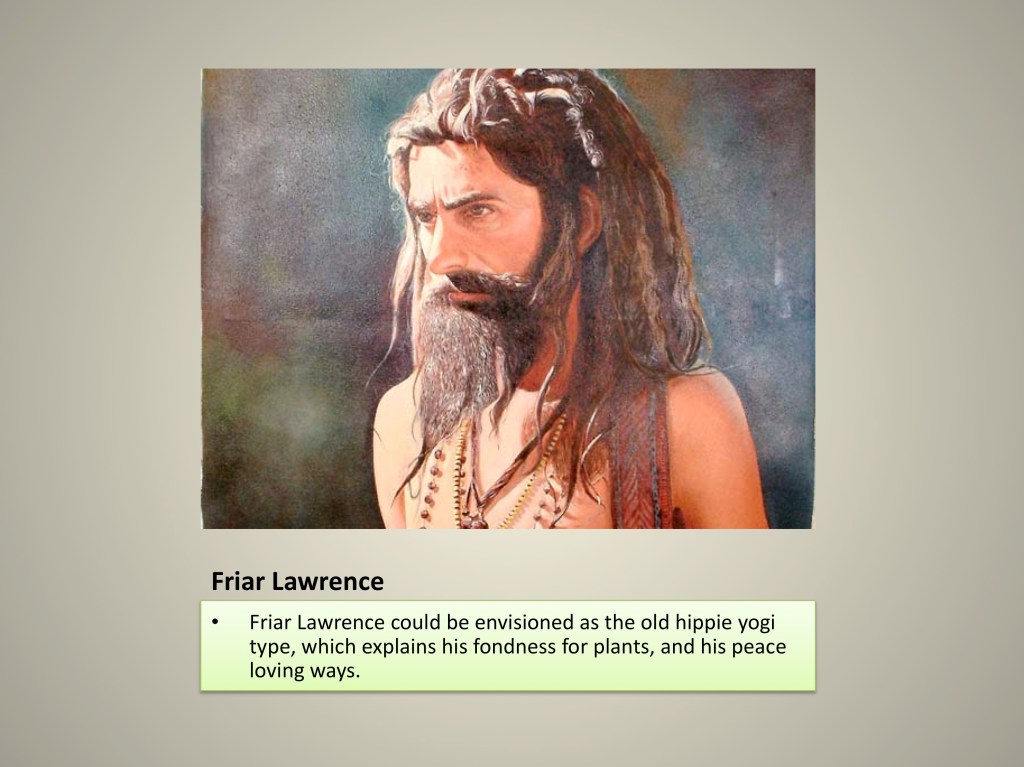
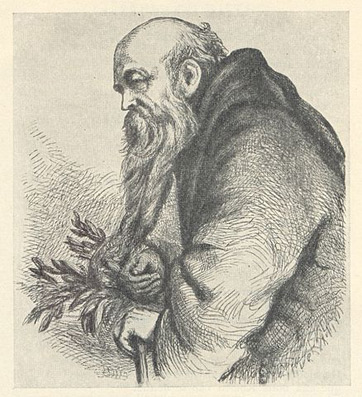
Concept art for Friar Lawrence, including a photo of Pete Postelwhite in the 1996 movie

A friar is a monk who belongs to a local monestary. Francis belongs to the Franciscan orders created by Saint Francis of Assisi. It was known for its naturalist philosophy, and St Francis himself is often depicted in paintings as being friends with birds and rabbits and things like that. He was also a strict vegetarian and believed the spirit of God is in all creatures.

Francis’ work was a reaction to the other orders of Catholic monks who, the Franciscans believed, had gotten corrupt and lustful. So the Franciscans in reaction to that corruption, tried to embrace poverty, plain living, and duty to the poor.

The Franciscans were also famous for not wearing shoes; Shakespeare calls one of them “[our] barefoot brother.” Again, the Franciscans value humility before God, and because of that, they shaved off part of their heads, (known as a tonsure hairstyle); it was way of stating that they were not concerned with their appearance, (so yes, it’s supposed to look stupid).

Why does Romeo hang around him? Friar Lawrence is supposed to be Romeo’s tutor, but really he is in the play because Shakespeare needed a convenient way to get Romeo married to Juliet without his parents finding out. He is also a neutral party who can be sympathetic to both Romeo and Juliet, without being tangled in the politics of the Capulet/ Montegue fued.

Romeo persuades Friar Lawrence to help him marry Juliet in Act II, Scene iii.

Friar Lawrence also acts as a character foil to Romeo. While Romeo is rash, passionate, and impulsive, Friar Lawrence is calm, slow, and contemplative, (appropriate qualities for a monk). During my production of Romeo and Juliet, the director beautifully explained their relationship by having Romeo trip and fall when he is excited about his impending marriage. I as Friar Laurence turned around and said calmly: “Wisely and slow, they stumble that run fast.”

My Interpretation Shakespeare makes references again and again to the character being old, yet the director and I made a conscious choice not to portray him as such. I portrayed him as just a few years older than Romeo, who is supposed to be a teenager. I played him as sort of about 25-26, the same age that I was when I played the part.

We did this because even though Friar Laurence acts as the voice of age and experience, he also seems very naive. He seriously believes that he can singlehandedly stop the feud between the Montegues and Capulets with one marriage. he never consults anybody else, and he leaves Friar John in charge of sending the all important letter to Romeo that Juliet is not dead, and never checks up with him on that.

Rather than being an old priest who is aged and experienced, I portrayed him as a young idealistic priest who doesn’t know better. In some ways, his love of God  has blinded him as much as Romeo’s love for Juliet. The Friar  thinks that being a peacemaker is something that God wants him to do. He thinks that bringing together souls is part of his heavenly mandate and he doesn’t think about the practical consequences of his religious fervour.

What is his role in the play?

Friar Laurence engineers the plots to get Romeo married to Juliet and hopefully settle the feud. When we first meet him, Romeo convinces Friar Lawrence to perform a secret wedding between Romeo and Juliet (Act II, Scene iii).

“Romeo shall thank thee daughter, for us both,” Romeo and Juliet, Act II, Scene v.

In Act II, Scene vi, Friar Lawrence secretly marries Romeo and Juliet, but first warns them to “Love moderately,” because he believes that an over abundance of passion can have disastrous consequences. He even compares Romeo and Juliet’s love to gunpowder.

In Act IV, Friar Lawrence has two scenes where he stops Romeo and then Juliet from killing themselves. First he stops Romeo, filled, with grief and remorse after murdering Tybalt, and being banished.

“What, rouse thee man, thy Juliet is alive!”
“Juliet, I already know thy grief…”
“Come you to make confession to this father?” Paris (Matt Bugay) meets Juliet (Alesia Lawson) outside of Friar Lawrence’s cell, Act IV, Scene 1.

In Act IV, Scene iii, Friar Lawrence concocts his plan to give Juliet a secret potion with which to fake her death. Juliet demands that he find a way to prevent her marriage to Paris or she will kill herself.

“The heavens do lour upon you for some ill.”
In Act V, Scene ii, Friar Lawrence learns from Friar John that his message that Juliet is alive, never reached Romeo.
“A greater power than we can prevent…” Friar Lawrence delivers the bad news that Romeo is dead, Act V, Scene iii.

Is Friar Lawrence To Blame For Romeo and Juliet’s Death?

A lot of scholars, teachers, and classrooms have pondered this question. In addition, even the Supreme Court of the United States put Friar Lawrence on trial in 2016 as part of a mock trial sponsored by the Shakespeare Theater in Washington DC. https://www.c-span.org/video/?419930-1/federal-judges-discuss-romeo-juliet

I am actually working on my own mock trial activity which I will share by the end of this month, but for right now I will summarize the major arguments:

The Defendant (Friar Lawrence) tried repeatedly to prevent Juliet and Romeo from committing suicide. In Act III, when Romeo tries to stab himself, Friar Lawrence stops him and convinces him to go to Mantua:

Romeo. O, tell me, friar, tell me,
In what vile part of this anatomy1985
Doth my name lodge? tell me, that I may sack
The hateful mansion.
[Drawing his sword]

Friar Laurence. Hold thy desperate hand:
Art thou a man? thy form cries out thou art:1990
Thy tears are womanish; thy wild acts denote
The unreasonable fury of a beast:
Thou hast amazed me: by my holy order,1995
I thought thy disposition better temper'd.
Hast thou slain Tybalt? wilt thou slay thyself?
And stay thy lady too that lives in thee,
By doing damned hate upon thyself?

Likewise in Act IV, Friar Lawrence stops Juliet from killing herself and gives her the vial of sleeping potion.

“Be not so long to speak, I long to die!” Juliet (Claire Danes), begs Friar Lawrence to divise a plan to prevent her marriage to Paris in the 1996 movie.

Throughout the play, Friar Lawrence attempted to keep Romeo and Juliet alive and together, but was thwarted by what could legally be interpreted as and ‘Act of God’:

Passage from Act V, Scene ii.
As this slide shows, the reason Friar John was unable to deliver the message to Romeo is that he was in quarantine. A literal “Plague on both your houses,” has indirectly killed Romeo and Juliet

What the prosecutor might say-

Friar Lawrence performed a marriage illegally, without consulting the parents of two minors. He also harbored a fugitive (Romeo), right after he was found guilty of murder. Finally, he tried to deceive Juliet’s parents by giving her a dangerous drug. On paper, though Friar Lawrence was certainly acting out of compassion for Romeo and Juliet, his actions were highly suspicious and could be considered criminal.

An English class can learn a lot putting Friar Lawrence on trial for his role in Romeo and Juliet’s deaths, as long as they are responsible in the way they portray teenage suicide.

Who Originally Played Friar Laurence?

I don’t have any substantial evidence to prove this but I do of have a theory: some of Shakespeare’s parts require a great amount of stage business; singing, dancing, swordfighting, improvising that kind of thing. Hamlet for example has to sing, dance, sword fight, and remember copious amounts of speeches and dialogue. Will Kempe had to dance and dance and sing. Robert Armin had to improvise and dance with the audience.

My theory is Shakespeare didn’t have time to learn extravagant stage business, since he was also writing the plays and helping with the company’s business dealings. With this in mind, he probably gave himself the parts that had long speeches. That’s why I think that Shakespeare himself might have played friar Laurence.

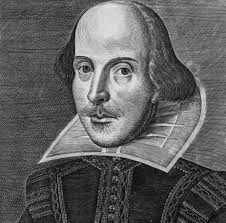
Plus Shakespeare had an edge playing the role over other actors. Since friars are supposed to shave their heads, and since we know that Shakespeare had thinning hair, he could have easily played the part himself.

So those of you who get cast as Friar Laurence and wish that you were cast is somebody young like Romeo or Tybalt, at least your consolation prize is that you might be playing the part that Shakespeare himself once played.

I hope you found this insightful and maybe helpful if you find yourself cast in Romeo and Juliet. I’ll be sure to post about the Friar Lawrence mock trial I’m currently working on. At the very least, I hope this information helps you see Friar Lawrence as more than an old guy who hangs around teenagers.

https://youtu.be/AMLRwqPm_gk snl

Review: Gnomio and Juliet

Gnomeo and Juliet

Theatrical poster for “Gnomio and Juliet,”

Like I said in the review for “Romeo and Juliet: Sealed With A Kiss,” adapting Shakespeare’s play for children seemed to me like an impossible undertaking, until I saw this film. This interpretation had all the romance and danger of Romeo and Juliet, with all the wry humor of Shrek. Before I present my thesis, I want to post a refutation of a review from a man I actually hold in very high esteem:

“You Wanted Me To Review Gnomio and Juliet, So I Did.” Kyle Kalgreen YouTube Video Essay.

I’ve watched all of Mr. Kalgreen’s reviews of Shakespeare on film, from Hamlet, to Ran, to Ralph Fiennes’ Coriolanus, and all but one of his reviews I genuinely loved. This is why I was so dissappointed when I saw this review. As his channel suggests, “Brows Held High” is mostly interested in high concept editions of Shakespeare and in a rare act of snobbery, Mr. Kalgren seems to turn his nose up at this movie, calling it essentially populist trash. He seems to say that the film misses the mark as a legitimate Shakespearean adaptation, and he’s not wrong. What he fails to notice though, is that is not the point of this movie. It’s purpose is not to be a faithful adaptation of Shakespeare, it’s a simplfied way of introducing children to Shakespeare.

This computer animated film is set in two adjoining houses in England, with two families of garden gnomes duking it out for supremacy. Though this seems like a ridiculous concept, it gives the film a great amount of charm, watching these two gnomes trot across the garden with their plaster feet, riding around on lawnmowers, and of course the fact that they are gnomes makes even Tybalt look cute.

Most importantly, unlike other ‘inanimate object comes to life’ movies, garden gnomes are able to be smashed. Unlike the nearly indestructable Woody or Lightning McQUeen- these characters can be smashed. It’s established in the first 10 minutes that both Gnomio and Juliet have parents that were smashed. This means that the audience is constantly worried for the safety of the characters, especially when they fight. This is a clever, kid-friendly shorthand that allows the audience to worry about the character’s mortality, without the gory realities of human death.

The characters are also handled with care and charm. Gnomeo is a cocky, self-assured gnome who first looks for adventure before finding love. Juliet is even more of a spitfire than her human counterpart, and is able to perform midnight catburgling into a nearby greenhouse. It’s their desire for fun and adventure that makes these two compatible, and makes their love easy for even a child to understand.

The film’s cleverness doesn’t stop there: the filmmakers inserted all kinds of Shakespearean jokes to make the play easier to understand and to entertain the audience. For example, the Capulet and Montegue households on “Verona Avenue” have the addresses 2B and another 2B crossed off, (punning on Hamlet’s most famous line). In addition, when we first meet Juliet, she argues with her father (voiced by Michael Caine) to let her off a small white platform that he forbids her from leaving. Because she’s a gnome, her father literally puts her on a pedestal, which beautifully illustrates the relationship between Juliet and Lord Capulet. In the play, this is hinted at, but not really explored, but in this version, it is front and center, and helps increase the drama.

Perhaps the most clever thing about Gnomeo and Juliet, is that the film makes you very aware that this is an homage, rather than a re-interpretation of the story. At the opening of the film, a tiny gnome with a ridiculously long hat says: “The story you’re about to see has been told before… A LOT.” This immediately reminds the audience that, although this film will give you the general idea of Shakespeare’s play, the real play is full of more violence and sex than a children’s movie will allow. At one point, Gnomeo even converses with an animated statue of Shakespeare himself, as a way of further conceding the homage, recognizing the difference between an adult-themed play, and a children’s movie, and hopefully, encouraging kids to see both versions.

Resources for Teachers and Students: A Visit To Elizabethan London

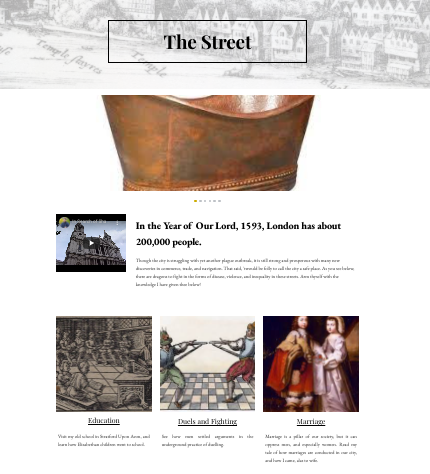
I’m working on several educational projects at the moment and I’m proud to share this one with you. It’s what I call a virtual tour of Shakespeare’s London. The teacher I’m working with said she wanted to teach the kids about the culture of Elizabethan London as he was writing Romeo and Juliet. Naturally with the pandemic a field trip was out of the question, (for multiple reasons), but I wanted to create a visually interesting tour of the places Shakespeare knew and worked and try to imagine his perspective and how that might have informed the characters and themes of Romeo and Juliet.

So I created this: a website written as if Shakespeare himself is taking you on a tour of his London in the year 1593, the year where, as far as we know, he had just completed writing Romeo and Juliet. 1593 was also the middle of another outbreak of Bubonic Plague. It has virtual tours of Shakespeare’s Globe Theater, Hampton Court Palace, Shakespeare’s Grammar School, and a quiz where you can pretend you’re in the Elizabethan doctor’s office.

For the class I’m helping, the students will fill out a worksheet as they navigate the website so they learn from the material at their own pace. If you’re interested, leave a comment and I’ll post the worksheet so you can use it in your classroom.

My hope is that this website can be a resource for anyone trying to connect with Romeo and Juliet and trying to learn from the culture of Elizabethan London. Shakespeare was a product of his time and his experiences must have had an influence on what he wrote. Even if they didn’t, they certainly influenced the people who saw the play and he knew that it would. So I hope it can help you understand a little bit more about the world of this famous play, and the context of the world that created it.

How to Throw a Fairies Themed Midsummer Night Dream Party (Quarantine Safe Edition)

Happy Midsummer everyone! Wednesday June 24rth is the Midsummer festival, which means as you go to sleep that night, I wish you all Midsummer Night Dreams! Before that though, I welcome you to party like it’s the court of King Oberon, and here are some ideas:

Background: What Are Fairies?

The story of Fairies has many authors that come from multiple folkloric traditions. The Greeks had nymphs, the Romans had cupid, and the English and Germans had…


1.  According to Paracelsus, fairies are elemental spirits that help control the Earth’s four elements: Silfs (air), gnomes (Earth), Salamanders (fire), and  Undines (water).
2. In some versions, they are household creatures that interact with humans
3. Some cultures call them demoted Angels, not good enough for Heaven, but not bad enough for Hell.

So you can see there are lots of traditions that contribute to our modern concept of the fairy, and plenty of ideas to adapt into your party!

Part One: The Invitation:

There’s a ton of free fairy clip art and fairy designs online. Below is an invitation I created for free with an app called Canva and a parchment background picture I found online.

1. Pixie invitations
2. Immortal Longings

Second card design I created on Canva.

You probably also know that I am a huge fan of the website Immortal Longings because of their excellent Shakespearean art and they sell cards too. You can buy the cards or download the pictures on their website.

Shakespearean Greeting Cards from Immortal Longings.com


Part Two: Decorations
Fairy

Fairy Dens Right now the Royal Shakespeare Company is making DIY Fairy decorations including a Fairy Den that you can share with your family and friends:

What is a Fairy Den? Fairies in folklore are closely tied to the Ancient Celts and Druids, who believed that Fairies live in hollow places underground. A fairy den is a homemade den that imitates the ancient fairy hollows.

Workshop on Fairy Dens and Fairy Lanterns: https://youtu.be/KC7CbPPIrjs

Fairy lights from IKEA

In addition to fairy dens, there are tons of fairy lights, fairy coloring books, and other fairy crafts you can find. Here is a fairy lantern my wife made using pickle jars!

First paint the jars with white paint and cut out paper fairies to paste around the inside of the jar (we used tackey glue). You can also stick star stickers on the inside of the jars.
For added realism, you can glue fake moss to the bottom of the jar. We got this from our local dollar store.
Put a small battery powered LED light inside.
Turn on the LED lights and take the lanterns somewhere dark.
Detail of the fairy lights.


Part ThreeThe Feast

Since the Fairies in Midsummer are woodland spirits, almost any forest or camping themed recipes can be adapted. Here are some ideas that my wife and I made for our own fairy themed party.

Snail sandwiches

Hedgehog cheese ball.


Hedgehog cheese ball:

Fruit wands with yogurt dip


Dessert

Chocolate GardenCake from How to Cook That: https://youtu.be/JidhdxiSsnQ

Fairy bread: For those of you who don’t live in Australia or New Zealand, Fairy bread is white bread covered in

https://www.allrecipes.com/recipe/80934/fairy-bread/

Homemade Fairy bread


Music

  • Dance of the Sugarplum Fairies

Games

1.  Pin the tail on the Bottom.

2. Love potion: Similar to follow the leader or musical chairs. A group of people lie down and pretend to sleep. Then someone plays Puck by putting a real or pretend flower in one of the player’s hands. The Puck then yells “Awake,” and sets a timer or plays some music. The object of the game is for everyone to chase after the flower and get it before time runs out.

Costumes:

Make some printable donkey masks for Bottom, flower crowns for the fairies, and don’t forget your wings!

Well, that’s my advice, happy  Midsummer everyone!

Sources:
Tolkein, JRR. On Fairy Stories