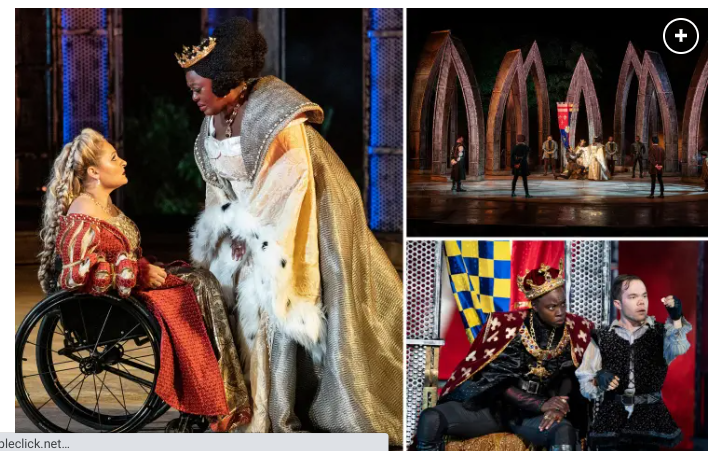
Mafia Tropes in “Richard III”

Last month, I took a short vacation to Las Vegas, where, as some of you know, I went to Area 15 and the Omega Mart Exhibit. I also visited the Las Vegas Mob Museum. I’ve been fascinated by the mob for years. The Mob (AKA The Outfit), has within its many threads a potent combination of corruption, seduction vice, and violence all hidden behind the veneer of honorable men who do what they feel they have to to protect their families and their communities.

Not surprisingly, while at the museum, I saw parallels between the history of organized crime and Shakespeare, specifically his most popular history play about a powerful family that takes over the crown of England in a brutal turf war, and then one of its most feared soldiers bribes, intimidates, and murders his way to the top; Richard III.

A Protection Racket: Feudalism vs. La Cosa Nostra


The structure of the mafia paralleled the feudal system. In a world where a police force didn’t offer much protection for marginalized communities, the mafia thrived by offering protection for these communities, (especially to immigrants and people of color in the 19th and early 20th century).


Much earlier than that, the feudal system of the middle ages, which started to crumble after Richard’s reign ended, was designed specifically so poor peasants could get protection from wealthy landowners after the fall of the Roman Empire. These lords offered the protection of their knights to these peasants i. Return for labor and a percentage of their income working the field. Like the mafia, these peasants paid tributes to their lords and these lords demanded loyalty. In the museum, there’s an interactive video where you can become a ‘made man,’ which means become an official member of a mafia crew. Like a king knighting a lord, this ceremony meant pledging your life to your superiors, and being at their beck and call no matter what. In addition, like medieval knights, mafiosos were not allowed to murder other made men without permission from their capo or boss.


However benevolent they might appear, In both cases the Dons and the medieval lords were extorting their underclass. Failing to pay tribute to their lords would cause the peasants to lose their lands, and any disloyalty to the mafia would be severely punished. These powerful, violent thugs used their private armies to intimidate the weak into giving them what they wanted.

Part II: The Two Families

To thoroughly explain the parallels between the Wars of the Roses and the mob, I need to make clear that Richard iii is more than just the story of one man’s rise to power, although there are also mafia stories that fit this mold such as Scarface, White Heat, and the real-life story of Al Capone.

As this hilarious “weather report” from “Horrible Histories,” makes clear, during the Wars of the Roses two powerful families, (each with a claim to the English crown) fought each other in a brutal turf war. As Shakespeare characterizes in his play Henry VI, Part III, the battles between the houses of York and Lancaster shook England like a mighty storm, and for a while it was hard to tell who would prevail:

Henry VI. This battle fares like to the morning's war,
When dying clouds contend with growing light,
What time the shepherd, blowing of his nails,1105
Can neither call it perfect day nor night.
Now sways it this way, like a mighty sea
Forced by the tide to combat with the wind;
Now sways it that way, like the selfsame sea
Forced to retire by fury of the wind:1110
Sometime the flood prevails, and then the wind;
Now one the better, then another best;
Both tugging to be victors, breast to breast,
Yet neither conqueror nor conquered:
So is the equal of this fell war.
Henry VI, Act II, Scene i

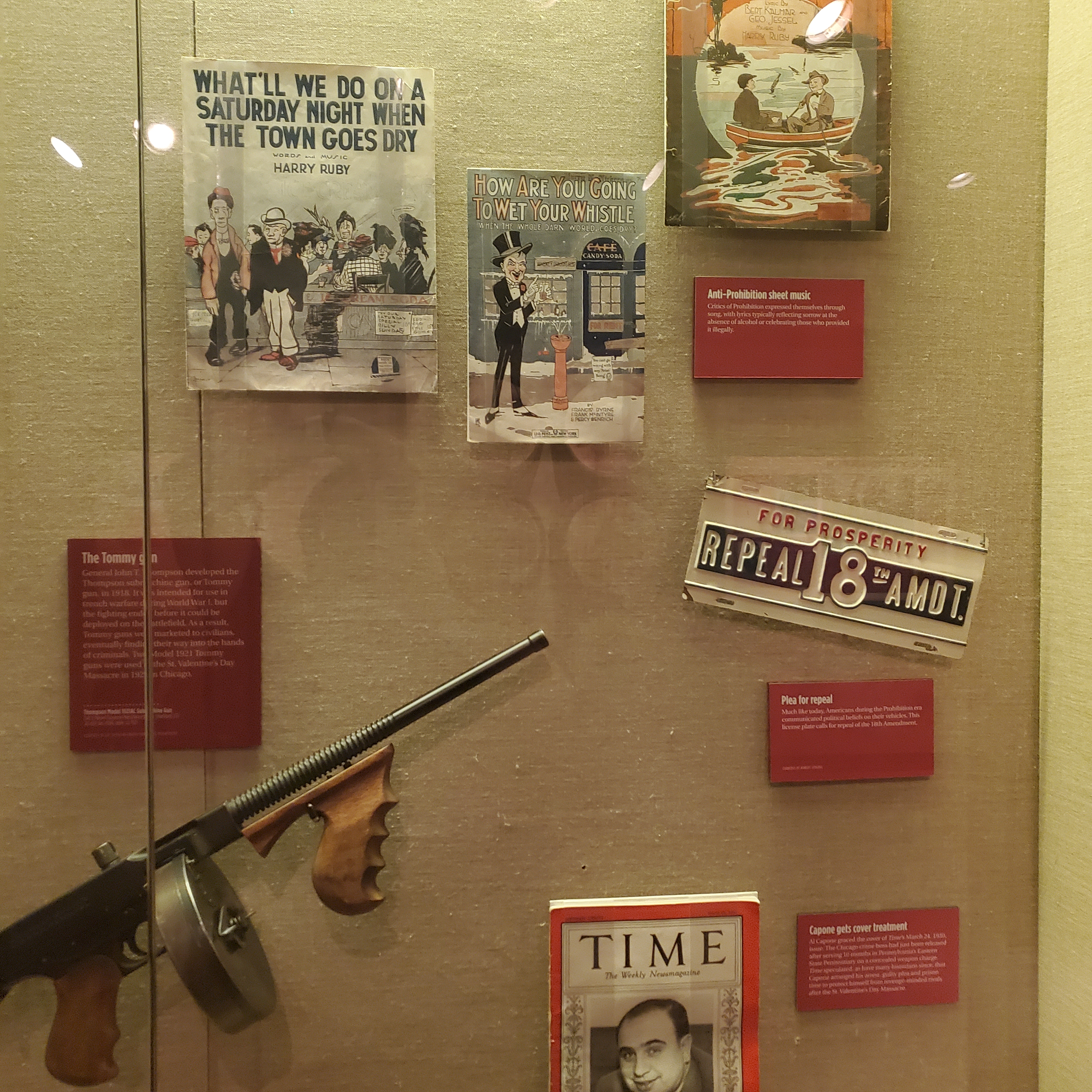
During the Wars of the Roses, it was King Henry’s incompetence and mental illness that gave the Yorkists the ability to challenge the House of Lancaster for the crown. In the 1920s, the passage of the 18th amendment, (which made alcohol illegal, and thus a profitable commodity for organized crime), that allowed the mob to rise to unheard-of power through illegally buying, distributing, and selling alcohol. As the photo and subsequent video shows, Prohibition largely led to the rise in organized crime in America, especially in Chicago. During Prohibition, the Italian Sough-side Gang fought for control of Chicago’s bootlegging trade and subsequently destroyed their competition from the Irish gangs through corruption, intimidation, and violence.

The Don rises- Richard Vs. Al Capone

Opening Scene from Ian Mckellen’s 1995 movie of Richard III.

Like the Italian and Irish gangs In Prohibition-era Chicago, the Yorkist and Lancastrian armies battled for the English throne. As Ian McKellen’s excellent movie (set in the 1930s) shows, Richard was instrumental in destroying the leading Lancastrians at the Battle of Tewkesbury, including Prince Edward and King Henry.

In Chicago, the most feared mobster soldier was Al Capone, who many scholars believe was responsible for killing off high ranking members of the Irish gang during the infamous St. Valentines Day Massacre, where the gang members were ‘arrested’ by South Side gangsters disguised as cops. As the Irish stood against the wall with their hands behind their heads, the phony cops pulled out Tommy guns from their coats and let out a hail of bullets on their unsuspecting quarry.

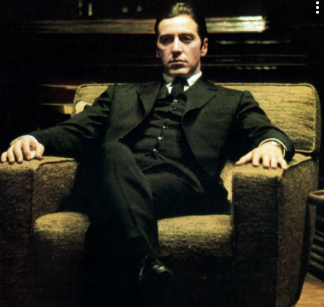
In Shakespeare’s play, the only Lancastrian to survive the war is Queen Margaret, wife to the murdered King Henry, and mother to the slaughtered Prince Edward. In this scene from Al Pacino’s “Looking For Richard,” she curses Richard for his cruel slaughters. It’s not surprising that Pacino was so drawn to Richard II that he starred in and directed this film. After all, Pacino is famous for playing mafia characters who slaughter their way to the top.

Once Capone killed the competition, he ruled a multimillion-dollar empire of bootleggers and maintained that empire through corruption, intimidation, and by constantly playing innocent, just like Richard himself.

Hypocrisy, Corruption and hidden violence

“Men in general judge more by the sense of sight than by the sense of touch, because everyone can see, but few can test by feeling. Everyone sees what you seem to be, few know what you really are; and those few do not dare take a stand against the general opinion.”

Niccolo Machiavelli

Both Richard III and mobsters are masters of double-speak, that is, seeming to say one thing and meaning something else. Look at this passage where Richard talks about killing his nephew, then denies it:

Las Vegas: The town that bedded and abetted the mob.

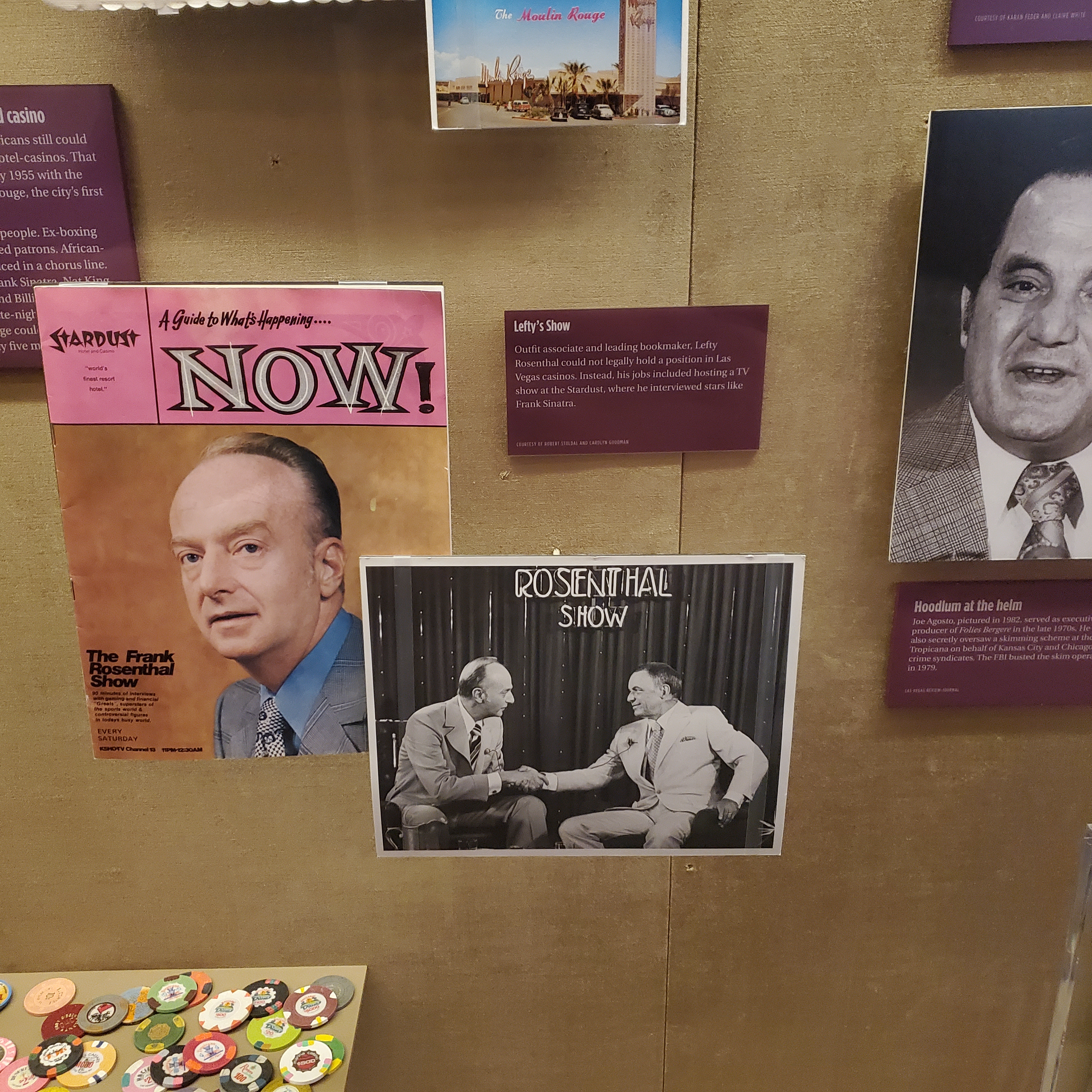
After Al Capone’s demise and the repeal of Prohibition, the mafia found another vice to capitalize on: gambling. As the video below indicates, using their connections with the Teamsters Union and midwestern bookmakers, the mob in the midwest financed, built, and run almost every casino in Las Vegas, including The StarDust and the Hassienda. Once the casinos were built, the mob extorted millions of dollars from the casinos every month!

The profits from the casinos bought the mob even more power and influence, but this skim depended on making sure the bosses controlled their underlings, and defended their casinos from cheaters and snitches, which is why they defended their casinos through intimidation and violence.

Murders in The White tower and the city of sin.

A series of quotes from Las Vegas Mobsters

“Simple, plain, Clarence. I do love thee so, that I shall shortly send thy soul to Heaven.”

—Richard III, Act I, Scene i

When Richard of Gloucester starts his quest to become king, he begins by convincing his brother King Edward to execute his other brother George. Richard bribes the murderers to kill George before the king can reverse the death sentence. Richard has thus eliminated another obstacle in his way, and gained two loyal followers who will do anything for his gold.

Richard hires two murderers to kill the duke of Clarence (Nigel Hawthorne).

The mafia dealt the same way with traitors, stool pigeons, and anyone who tried to challenge the bosses. Look at this tour of the Mafia museum, where the grandson of the gangster Meyer Lansky starts by reminiscing about the glamourous lifestyle of Las Vegas mobsters, but the tour quickly takes a dark turn as Lansky II talks about how his grandfather ordered brutal executions for anyone who crossed The Las Vegas Outfit.

The Mafia Museum, Las Vegas
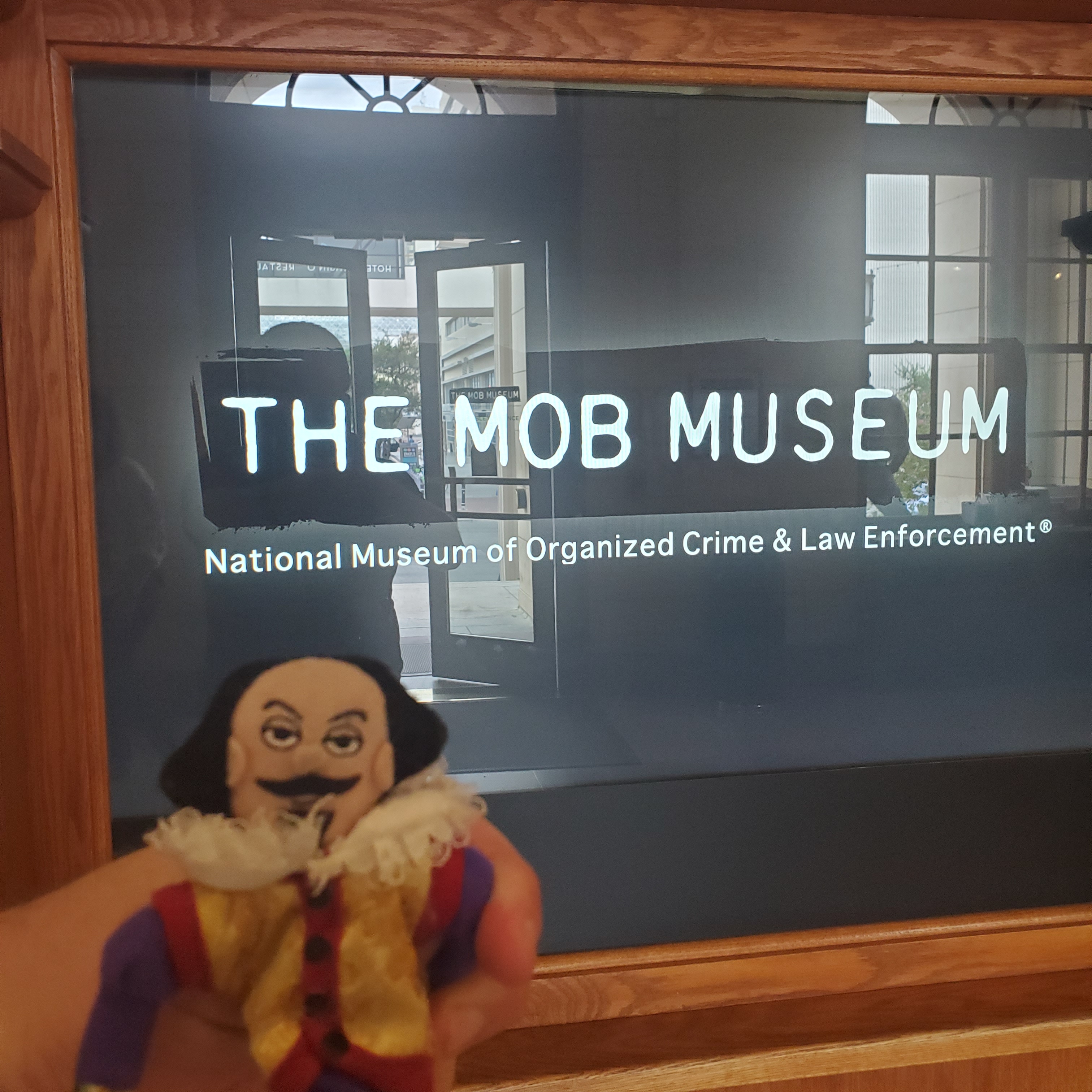
Exterior of the Mafia Museum

It was an enormously interesting trip going to the Mafia Museum, and if you can get out to Las Vegas, be sure to visit, (don’t forget the password to visit the speakeasy bar in the basement!) It was eye-opening for me how prevalent the sort of corrupt protection racket that started in the middle ages and continued into most of the 20th century helped define The Wars of the Roses and the mafia. As long as the strong prey on the weak and the law can’t protect everyone equally, these kinds of violent thugs will be lurking in the shadows, waiting for a shot at the crown.

The Fashion Is The Fashion 5: Richard III

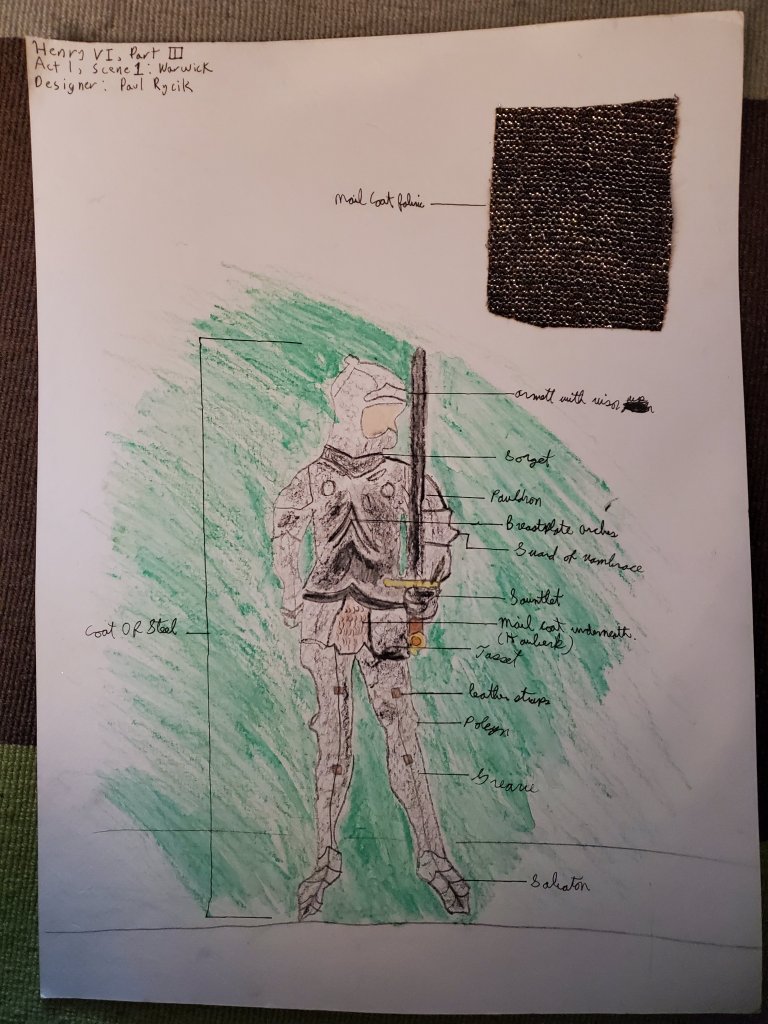
Sketch I made for a production of Richard III.

Today I’m going to talk about the unique costume challenges in dressing the cast for a production of Shakespeare’s history play, “Richard III.”

The play is set in 1483, a time period where, even though many European countries were at war, many nobles had sumptuous, more form-fitting clothes with fur, gold, leather, and other exotic fabrics. If you look at the sketch I did above, I gave Richard designs using velvet, leather, fur, and gold. After all, Richard is a powerful duke even before he takes the crown. For more information about this period, visit Fashion History.edu.

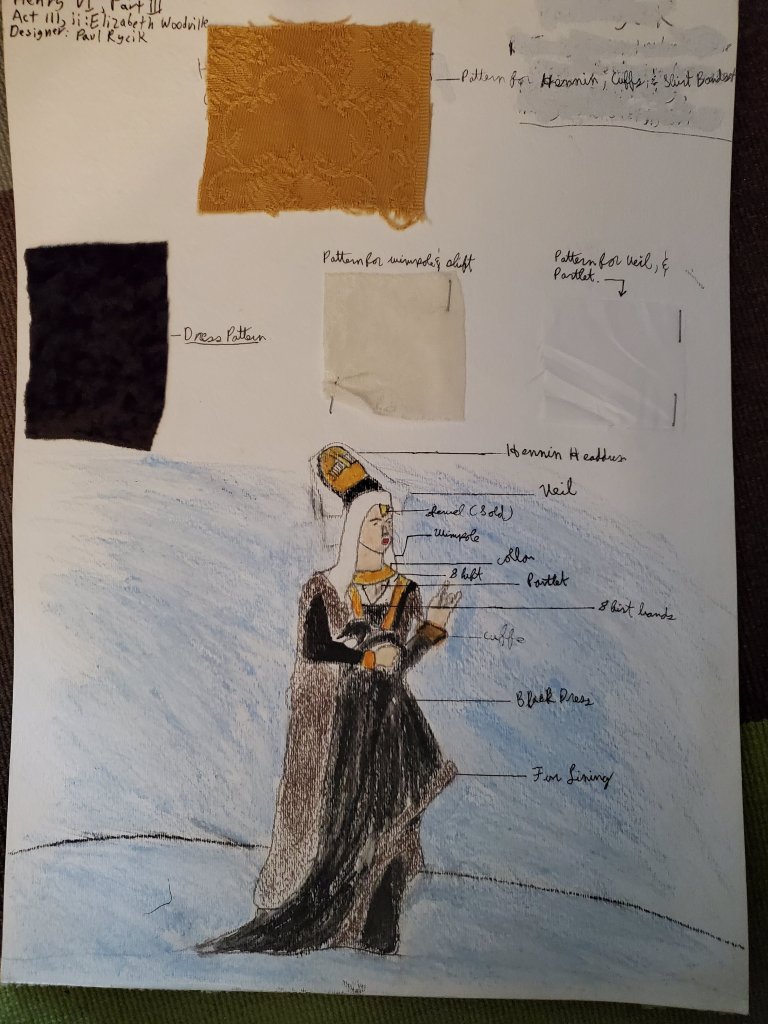
Design for Queen Elizabeth Woodville by me.

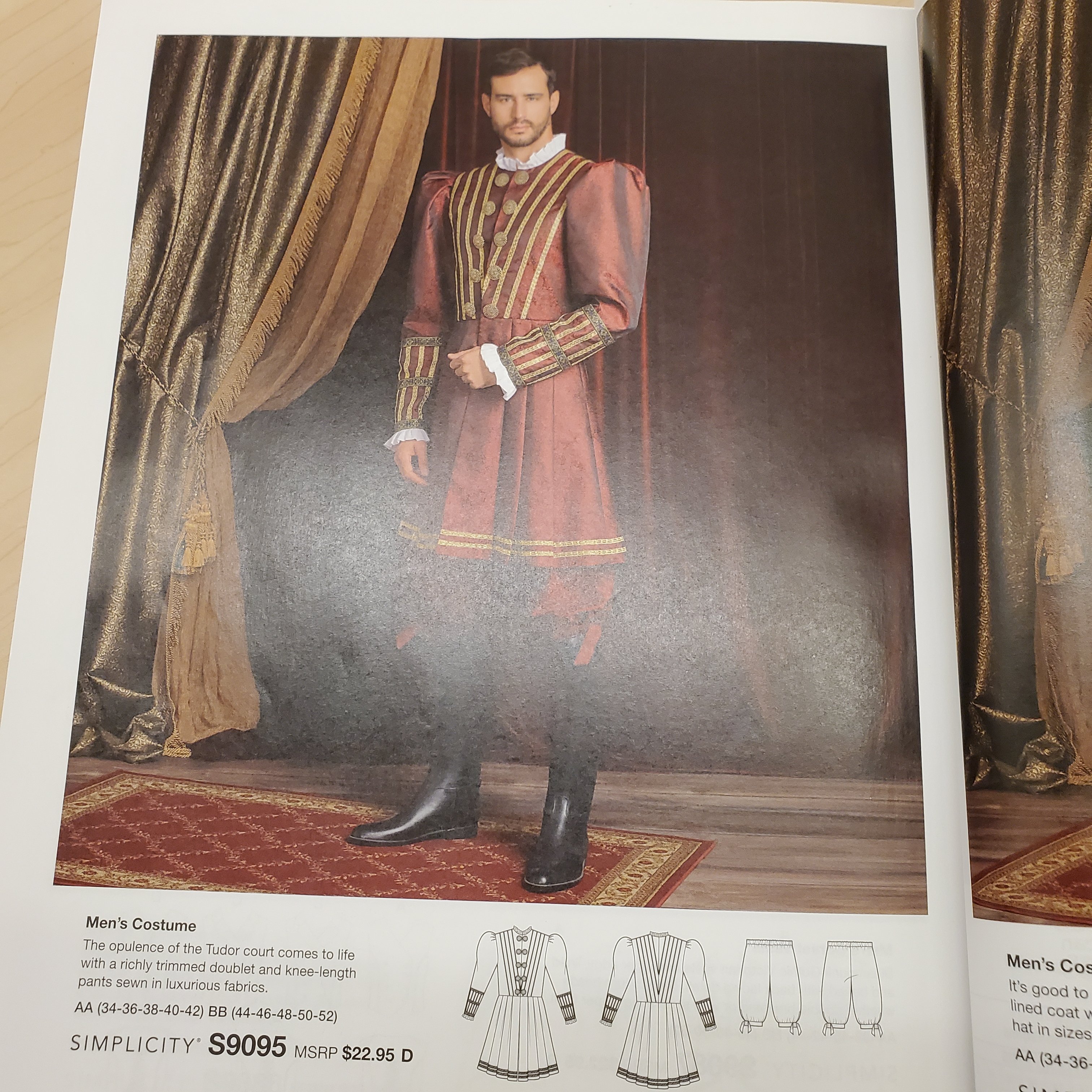
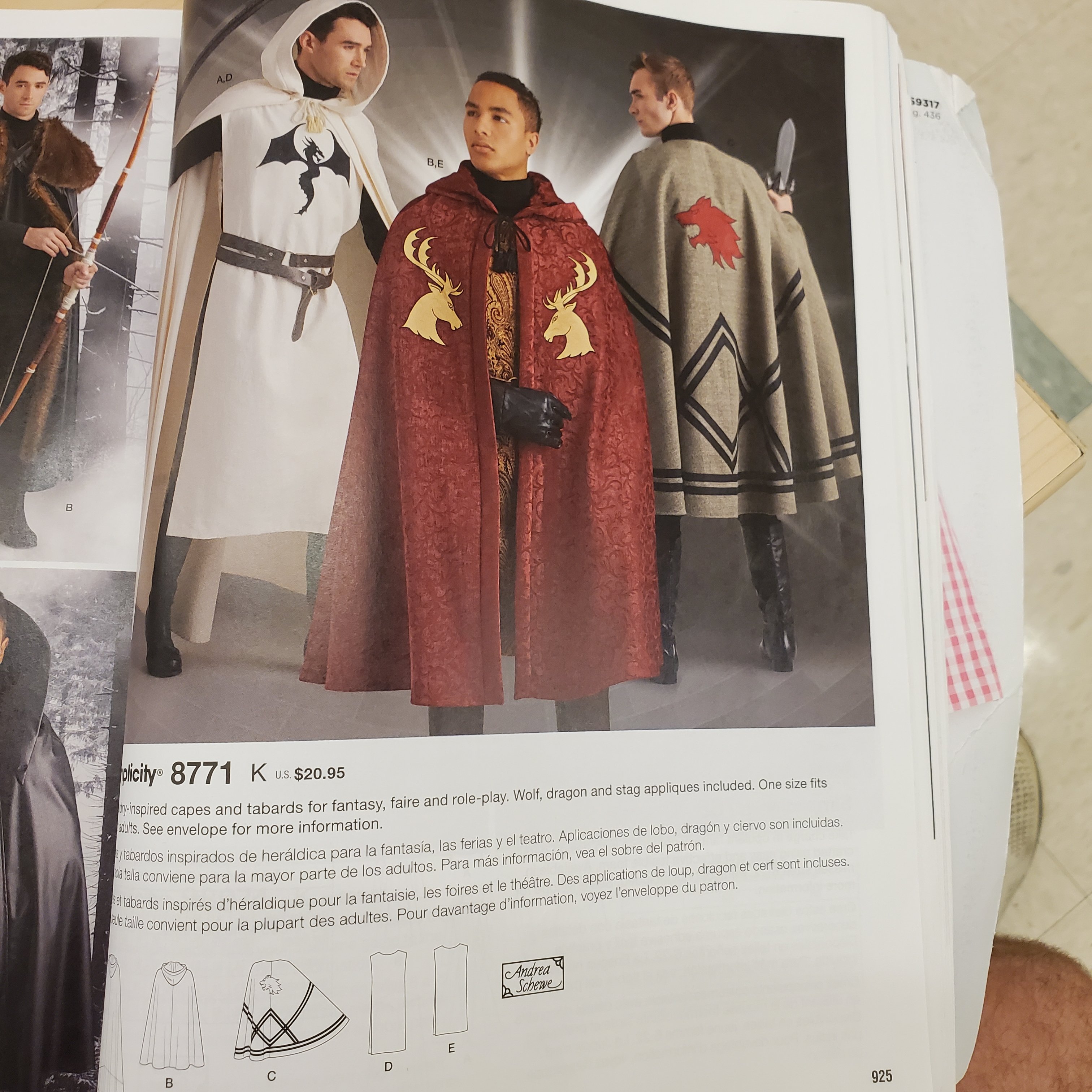
Further, if you’re interested in finding pre-made patterns of 15th century-inspired costumes, go to your fabric store and look for kits like the ones I photographed below.

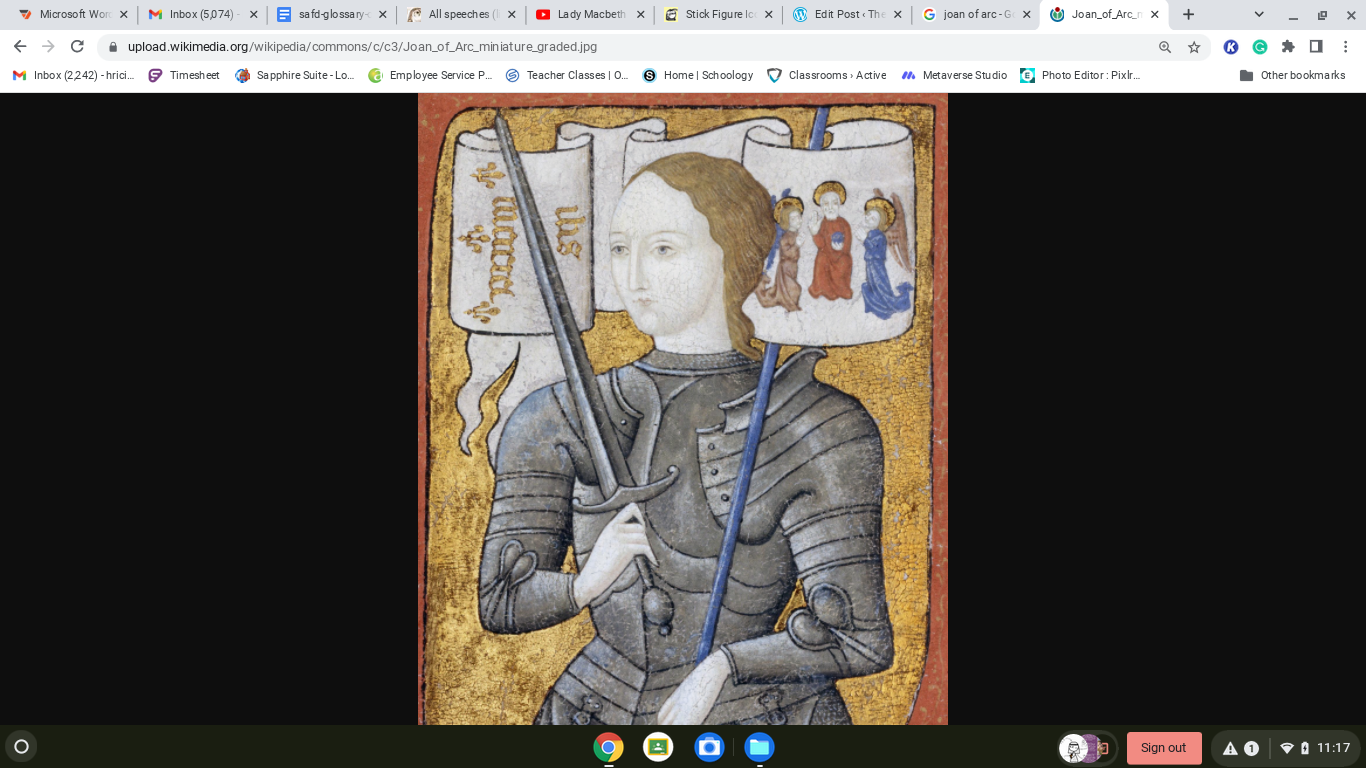
My design was based on a drawing by the 19th century illustrator HC. Seleous, and the color were taken largely from Richard’s royal portrait in the National Portrait Gallery. I also used a royal portrait of Elizabeth Woodville, queen to Edward IV, (Richard’s brother).

Donning the Hump

Interestingly, x-ray photography has recently revealed that Richard’s alleged hump was added to his portrait after his death. In reality, the king only suffered from merely a curvature of the spine. Just like in Shakespeare’s play, the Tudor Chroniclers literally defaced Richard’s image to make him look like an evil, deformed maniac.

Costume designers are vital to help the actors realize the deformity when playing Richard III, and they have done so in many ways. Ian Holm wore a boot on his leg. John Harrel had a bowling ball fastened to his hand, and Antony Sher had a large hump in the center of his back, both a cloth one that was built into his clothes, and an elaborate makeup prosthetic for scenes where he was partially undressed. When I researched for my thesis, I consulted Sir Antony’s book “Year Of the King,” where the actor explained his research into real spinal deformities, and how he incorporated them into the performance. You can see how my actor Matthew figured out how the hump would impede his walk and other movements.

For the final battle between Richard and Richmond, one has to decide on the period and think carefully of the fitness of the actors. 1485 was at the height of the era of suits of armor, and many films have chosen to have Richard fight to the death, while encased in a heavy metal coat of plates.

Benedict Cumberbatch in the 2017 BBC TV mini-series “The Hollow Crown.”
Design for a suit of armour for Henry Tudor

However, this has not always been the case. Ian McKellen had Richard fight in a gas mask in a 1940s British military uniform, driving around on a jeep that gets stuck once Richard utters his most famous line:

Richard III is a play about political intrigue, mafia-like turf-wars, and literal backstabbing and the clothes need to reflect this brutal and Machiavellian world. The costumer needs to help all the actors, not just Richard realize their place in the corrupt medieval political landscape of The Wars Of The Roses, as these characters go from an uneasy peace, to the last gasp of civil war.

Ian Mckellen in the 1995 movie version of Richard III.

Review: Kenneth Branaugh’s Henry V

Since July is my month to celebrate Shakespeare’s Henry V, I’d like to talk about one of the most celebrated versions of the play, Kenneth Branaugh’s Academy Award Winning film from 1989.

The Concept

Clip from Sir Laurence Olivier’s Henry V (1944)

Like many directors trying to re-adapt an old story, Branaugh began by looking at Sir Laurence Olivier’s 1944 movie version of Henry V, deliberately inverting a lot of Olivier’s choices.

Olivier’s version has a framing device where the audience watches the play in a movie-set recreation of the Globe Theater, (since Henry V was probably the first play ever performed when the Globe originally opened in 1599). For the first 30 minutes, you are not watching a movie but a filmed play, albeit one where your fellow audience members are dressed in costumes from 1599.

Stage Olivier
Olivier as King Henry stands on a reconstruction of The Globe Theater in his 1944 film.

While watching the play within a movie, and seeing ‘audience members’ clap and cheer for Henry, and boo and hiss the French, you get a keen sense of the theatrical illusion of the play, and its importance to English patriotism in 1599. This makes sense since the film itself was commissioned by Winston Churchill to help raise morale during the D-day invasion in 1944.

While Olivier’s film is theatrical and patriotic, Branaugh’s is cinematic and introspective. His film opens on an empty movie set with the Chorus (Derek Jacobi), giving us a tour of the set. He laments that, even with all the cinematic wizardry of modern movies, this movie cannot capture the true glory of Henry V.

Derek Jacobi as the Chrous in Henry V

Branaugh’s performance as the titular king is also quite different from Olivier’s. While Olvier is jovial and charismatic, Branaugh’s King Henry switches between cold and calculating, to intensely passionate. This isn’t to say that his acting is bad; but that Branaugh’s King Henry is a self-conscious actor. The king changes his performance to suit the scenario he’s in: diplomatic and calculating in the throne room, demented and violent on the battlefield, calm and confident with his troops, and pious and merciful in victory.

When I studied the play in college, my teacher posited whether Henry V is a Machiavellian king, and I think Branaugh’s certainly is, in that he knows kingship is a job; one that requires the king to constantly playing roles to get what he wants from people- love, awe, respect, or fear. He’s so good at acting, he even teaches his soldiers how to act like fearesome warriors in his famous “Once More Unto The Breach” speech.

Branaugh in King Henry V

What really sets Branaugh’s movie apart from Olivier’s is the way he handles battles. Again, Olivier in 1944 wanted to raise morale during WW2, when British soldiers were actually invading France to supplant a tyrant. Branaugh in 1989, had seen the world’s response to the Vietnam War, and the decades-long violence in his home country of Ireland. Therefore his version literally takes a dim view of war in general.

Branaugh’s world is not colorful or cheerful- the council scenes are full of candlelit shadows. Branaugh’s fireside chat with his soldiers is a smoky, shadowy look into the terror of men who know they must fight and die tomorrow. Look at the excellent performance of Michael Williams (Judy Dench’s late husband), who takes the king to task while looking at the campfire, almost as if he can see the fires of hell, coming for the English:

King Henry (Branaugh), talks in disguise to the soldier Williams (Michael Williams)
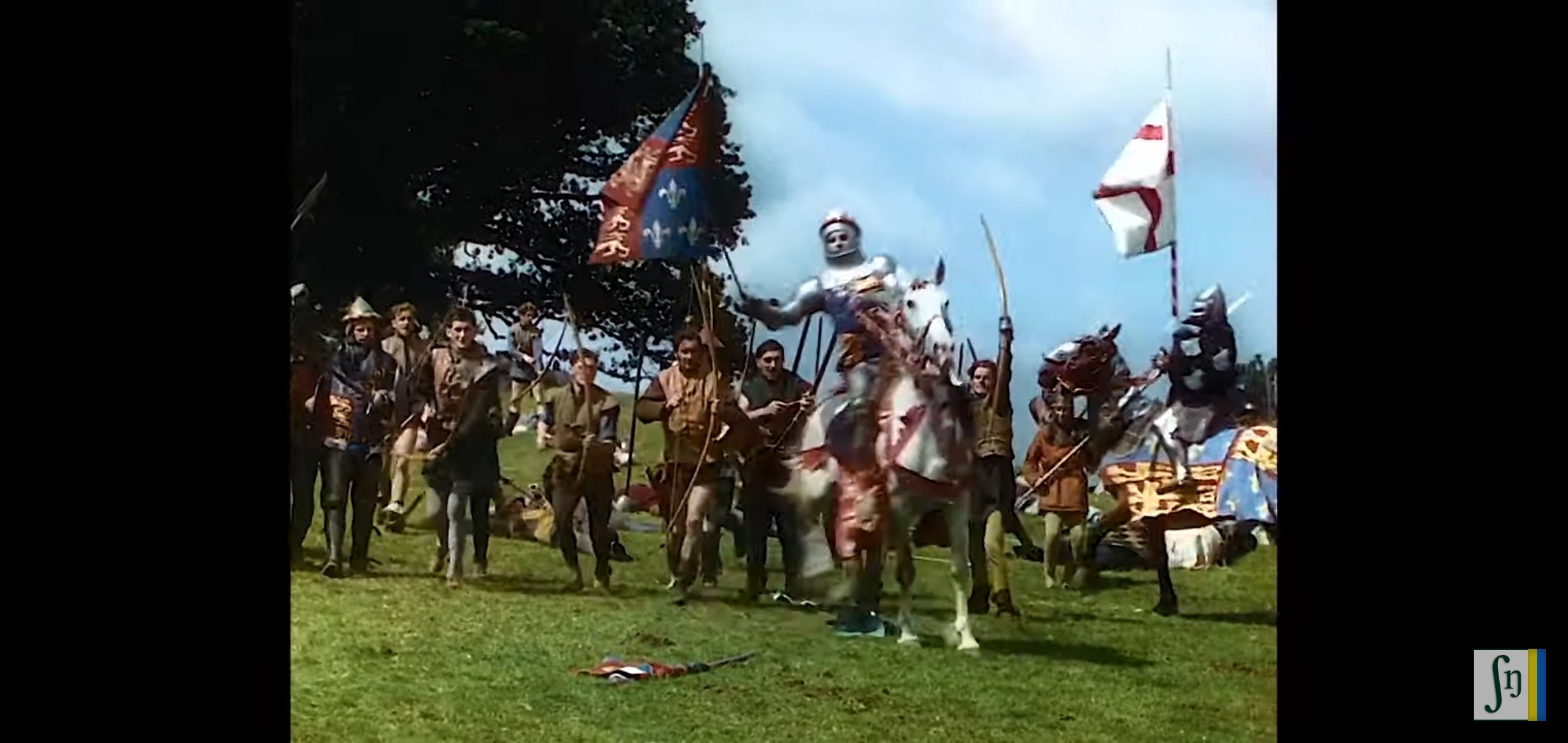
Comparison between Olivier’s 1944 version, and Branaugh’s 1989 movie portrayals of the Battle of Agincourt.

The most striking difference between the two films is how both directors stage The Battle of Agincourt. Olivier’s is a sun-kissed charge on white horses. Branaugh’s is a grimy, mud-stained mess, overcast with a fog of moral ambiguity. Even though the English win, they are meant to question whether or not they have been fighting for a worthy cause. Even after the King proclaims victory for God and country, and the music swells with the gorgeous notes of Non Nobis Dominine (composed and sung by Patrick Doyle), Branaugh has a long tracking shot of all the bodies slain on both sides in the battle. This is the film in a nutshell- a wonderfully acted, exciting, cleverly done thrill ride, that still pulls back and shows the inherently grim and destructive nature of war, that defiles all it touches.

Non Nobis scene from Henry V

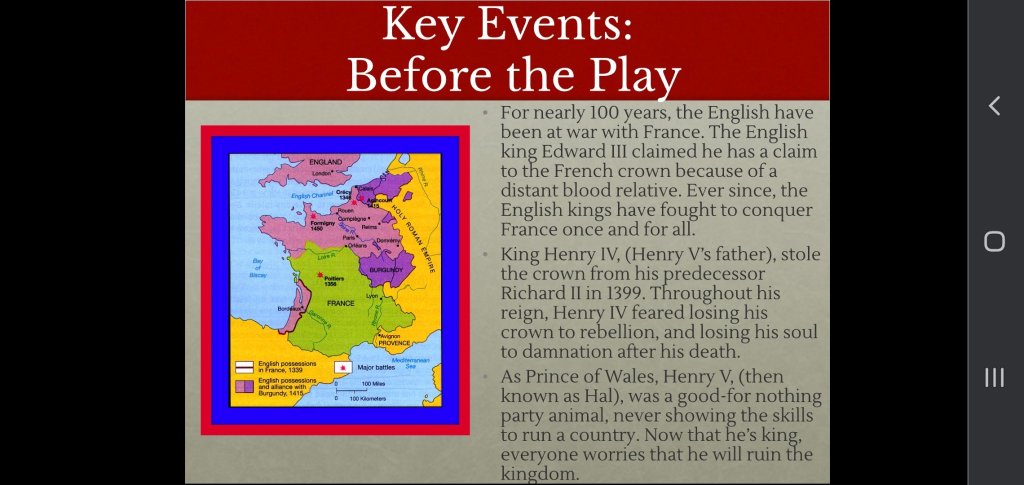
The Plot Of the Play

  • King Henry takes the throne in 1413 after his father dies. No one thinks he will run the country effectively.
  • The Dauphin (the French Prince) provokes Henry into declaring war with France, (thus allowing him to claim the right of his predecessor, King Edward III).
  • Henry fends off the French at Harfleur, despite the fact that they are shooting at him with cannons.
  • Henry’s army starts getting sick. Henry decides to start heading back to Calais 
  • The French raise a massive army and it marches towards Agincourt. Mountjoy the French herald warns Henry he will be annihilated and urges him to pay the French a ransom if he is captured. Henry refuses and marches his troops to battle the French at Agincourt.
  • Against all odds, Henry’s army defeats the French at Agincourt, with only about 30 English deaths, and over 10,000 French.

Henry and the French King make peace, and the play ends on a joyous celebration of peace and matrimony, though the Chorus also reminds us that once King Henry dies, his son will lose France and England will be torn apart by civil war.    

Historical Context

My Favorite Moments

I love Branaugh’s performance and his take on the Battle of Agincourt, but I’d be remiss if I didn’t mention some of the other performances and moments of the play.

  1. Armed Ultimatum: In this wonderful scene, we first see the overconfidence of the French, especially the hot-tempered Dauphin (Michael Maloney), who admits that he deliberately goaded Henry into declaring war because he wishes to personally fight with King Henry. His father the King, (played by Paul Scoffield) is a timid, melancholic individual, (historians often called him Charles the Mad), and he seems like an easily manipulated monarch, ripe for conquest by King Henry. We then see the imposing figure of the Duke of Exeter (Brian Blessed), who comes in full plate armor to warn the French that though the French outnumber the English, the English are a hardy and powerful people, and that King Henry will not stop until all of France is his.

Supporting Cast

Branaugh mainly casts his movies out of his Renaissance Acting theater troupe, which is why in almost all his movies you see familiar faces like Brian Blessed, Derek Jakobi, Richard Clifford, Richard Easton Michael Maloney, Paul Gregory and Geraldine McEwan. As someone who’s seen all of Branaugh’s Shakespeare movies, I get the curious sensation that I know these people, trust them, and find myself rooting for them since I saw them in other roles. Maybe Branaugh hoped his longtime viewers would be concerned for the lives of his “Band of Brothers.”

Welcome additions include Micheil Williams as Williams, as well as his wife Judy Dench as Mistress Quickly. These actors are just as home playing grubby common English peasants as they are playing kings and queens.

Emma Thompson and Geraldine McEwan sparkle onscreen as the French Princess Katherine and her maid Alice. The first time I saw the film, their French was so good, I didn’t believe it was really them! Likewise, the awkward wooing scene between Thompson and Branaugh (who were married at the time) is so charming, you forget all the violence and atrocities that happened on both sides earlier, and giddily enjoy their romantic banter.
My Reaction

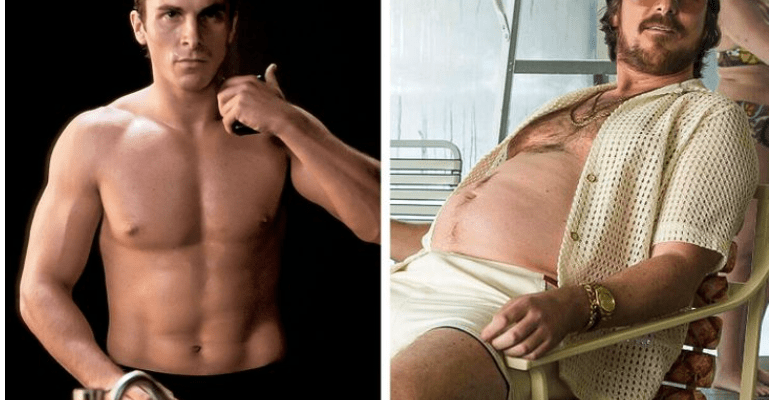
In short, Branaugh created, at least for now, the definitive Henry V for our times. It is a world where war is not glamorous and rarely just. Where common men die and rich men survive, though they must carry their sins on their back,( just as Branaugh carries the young boy played by Christian Bale). Yet it is also a story about the power of great leaders overcoming adversity, caring for their subjects, and doing the best they can to bring peace and stability to their people.

Bonus: Here’s an interview with Branaugh about the process of creating the film:

Branaugh in an interview with Bobbie Wygant in 1989.

Shakespeare Crafts: Shield

Now put your shields before your hearts, and fight
With hearts more proof than shields

Coriolanus, Act 1, Scene iv.
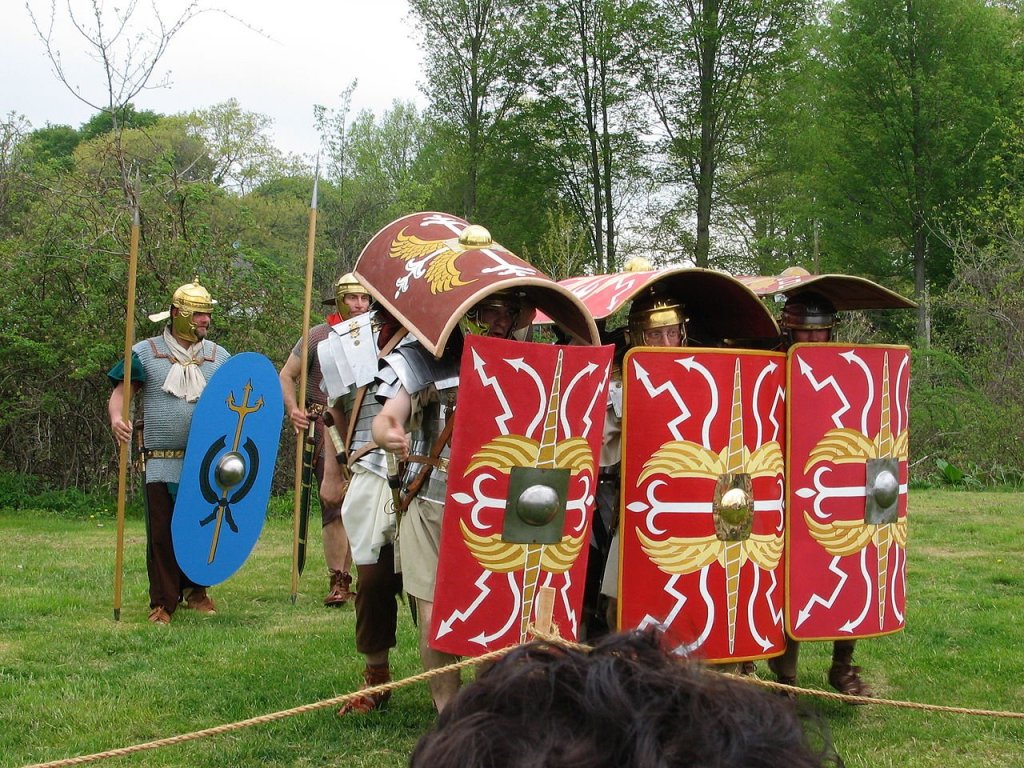
Roman re-enactors demonstrate a testudo formation (The Tortoise). Wikimedia Commons.

Shakespeare uses the word “shield” over 30 times, often as a verb meaning ‘to protect.’ However, there are a few very important references to this ancient tool of defense, and constructing one can teach you a lot about the history of a culture, and that culture’s methods of waging war.

A Brief History of Shields

The seven-fold shield of Ajax cannot keep

The battery from my heart

Antony and Cleopatra, Act IV, Scene 14.

As the quote above from Antony and Cleopatra mentions, the shield has been around since the dawn of history, certainly since Roman times. The Romans prized their large shields called scuta, which they used in defensive formations as the soldiers crashed through their enemies’ defenses.

DIY Roman shield
A replica of an ancient Celtic shield.

In medieval times, Anglo-Saxons and Vikings used new and more sophisticated shield formations in some of the most important battles in early British history. This included the Battle of Hastings in 1066, which ended the Anglo-Saxon era when the English abandoned the protection of their shield wall to chase the Norman invaders, who then annihilated their forces and proclaimed their leader William of Normandy, the conqueror of all England.

In this excellent video, historian and fight choreographer Mike Loads traces the history of medieval shields and shows step-by-step how to make an authentic Anglo-Saxon shield!

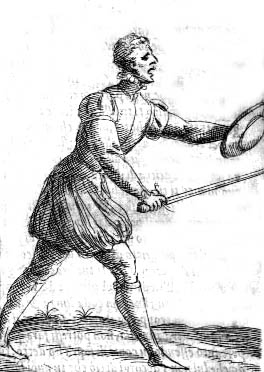
Man fighting with a sword and buckler.
Illustration of a man fighting with a sword and buckler

Swashbuckling

[Enter SAMPSON and GREGORY, of the house of Capulet, armed with swords and buckles]

Shakespeare’s Romeo and Juliet begins with servants armed with swords and small shields called bucklers. These shields were designed to be used in single combat (duels) and were very light and agile. According to Mike Loads, young men would wear their swords and bucklers on their hips and make a loud racket as they walked through the streets. The shield proclaimed that they were armed and dangerous. This macho swaggering is the origin of the term “swashbuckling,” which is probably how these servants see themselves since they spend the first scene of the play trying to pick a fight.

What Is heraldry?

A series of heraldic devices from the Royal College of Arms.

Just as the sound of a buckler announced to the world that a young man was armed and ready to fight, the design on a nobleman’s shield announced his status, his house, and his family motto. The popular historical consensus is that once the medieval knight arrived on the battlefield, they started using their shields and tabards as a colorful display; one that made it clear that they were noble. In war, a knight or other nobleman could collect a hefty ransom if they captured another knight alive, so if you belonged to a rich noble house, your brightly decorated shield could save your life on a battlefield in more ways than one.

Each heraldic design would be registered in the College Of Arms, and many of them are still on record today. In Shakespeare’s Pericles, a group of knights presents their shields to King Simonides and his daughter Thaisa right before a joust and she reads their mottos. The shields are like the knight’s ID tags and help the princess know whom to award the prize money once the jousting is over:

Simonides. Are the knights ready to begin the triumph?
First Lord. They are, my liege;
And stay your coming to present themselves.
Simonides. Return them, we are ready; and our daughter,
In honour of whose birth these triumphs are,
[To Thaisa] 'Tis now your honour, daughter, to explain
The labour of each knight in his device.
Thaisa. Which, to preserve mine honour, I'll perform.
[Enter a Knight; he passes over, and his Squire]
presents his shield to the Princess]
Simonides. Who is the first that doth prefer himself?
Thaisa. A knight of Sparta, my renowned father;
And the device he bears upon his shield
Is a black Ethiope reaching at the sun
The word, 'Lux tua vita mihi.'
Simonides. He loves you well that holds his life of you.  Pericles, Act II, Scene ii.

How to make your own shield!

Since shields are an important part of Shakespeare’s plays, here’s how you can make a shield activity at home or in the classroom.

Making the basic shape

If you want to make a buckler, you need a round surface a little bigger than a dinner plate. You should be able to hold it and move it like an extension of your fist. If you want to make a basic 14th-century type shield like the ones I have below, cut out the familiar, ‘State of Ohio’ shape below. I made mine about 11 inches long, and 10 inches wide. I used cardboard but you can also use paper or wood or metal if you have real craftsperson talent.

Choosing a color and design

I got a lot of good information on how people chose designs for their shields by visiting English Herritage.org’s Guide to Heraldry: https://www.english-heritage.org.uk/guide-to-heraldry. The website has a lovely catalog of the colors and designs real knights and barons and lords used to make their shields/ coats of arms stand out. You can choose a simple background with a plant, animal, etc. in the foreground, or you can divide the shield into a cross, a diagonal line called a Fess, or a triangle called a chevron.

The Personal Touch

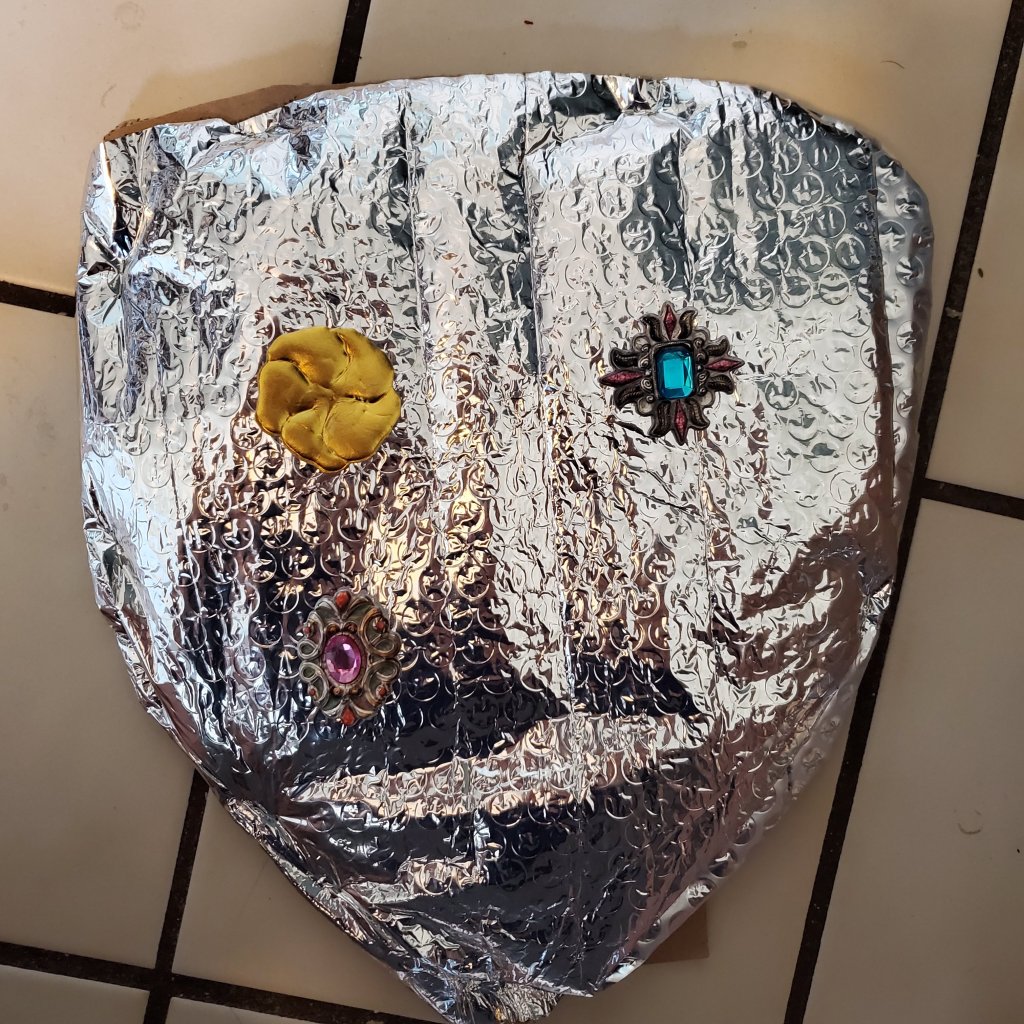
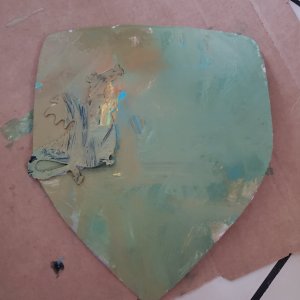
You need not be constrained by historical precedent in coming up with your shield. Like any canvas, the only limits on your shield design are your imagination. Check out these designs I made with my kids!

Your Motto

Most mottos are single lines of text (usually in Latin), that illustrate what is important to the house that sports it. For example, Richard II’s motto was: “loyalté me lie,” (“Loyalty binds me.”). You could come up with a simple motto and Google Translate it into Latin or French, etc.

Regal coat of arms for King Richard III. Note the white boar, (Richard’s personal charge). Note also that he has combined the 3 red lions of the royal house of Plantagenet, with the blue and gold fleur de lis of the crown of France. Richard claims the throne of England and France and combining heraldic imagery is known as “marshaling.”

Now that you have your shield, with its own unique motto and design, it can be a useful tool to explain how people saw themselves in Shakespeare’s day. Nowadays we mainly see ourselves as individuals, but this kind of heraldry illustrates how knights, nobles and servants saw themselves mainly as part of a house, with its own values, its own traditions, and sometimes an us vs. them mentality against other houses.

This kind of household mentality is of course, at the core of Romeo and Juliet and the Wars of the Roses cycle of plays, and Shakespeare uses heraldry to illustrate this mentality. Look how the knights in the tournament scene from the 2013 film are dressed in their houses’ colors and the nobles and servants are also wearing those same colors:

Like sports fans who wear the jerseys of their favorite teams, shields and heraldry proclaim the allegiance of the servants and nobles who belong to powerful houses/ kingdoms. This kind of emblem can help students understand a piece of medieval and Renaissance history, and how that history shapes our own mentalities today.

References:

  1. English Heritage Guide To Heraldry: https://www.english-heritage.org.uk/guide-to-heraldry
2. Sword and Buckler and Why I Do It by Borislav Krustev. HEMA Digest, FEBRUARY 12, 2019.

3. https://www.thearma.org/essays/SwordandBucklerP4.htm#.YtysVlfMLq8

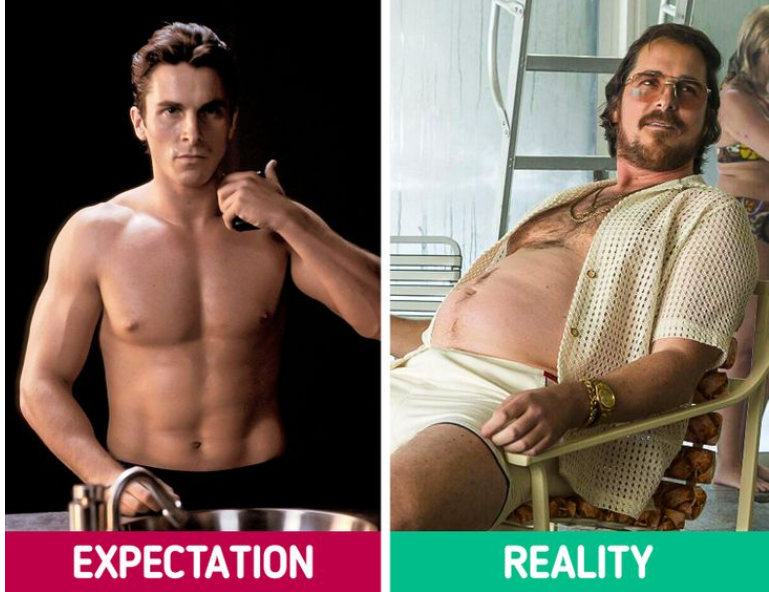
Can I transform my Dad Bod into a medieval Warrior?

https://darebee.com/workouts/knight-workout.html

Happy New Year everyone!

I’m going to be honest, I have a dad-Bod. I try to stay in shape by doing workouts at home and going to the gym, but recently it’s been a bit of a chore.

So like many of us this January, I’m trying to get in shape. So I decided to combine my love of Shakespeare, and make some workouts inspired by medieval Knights!

Screenshot of my Fighter App.

Every day I’ll do some kind of warrior workout 💪, whether it’s a Spartan Warrior workout from the app on my phone, this medieval knight workout I found online, or a rapier drill like the one below. I’ll also log my calories and try to stay away from processed foods and sugar. After all, King Henry didn’t eat them so I shouldn’t either.

https://www.mentalfloss.com/article/86084/10-workout-tips-14th-century-knight

I’ll let you know what progress I make on Twitter and Instagram. If you’re interested or have suggestions, leave a comment below! Hoo rah!

Week 1:

3 fighter workouts

Rapier Drills

A. 50-100 target lunges ( include redoubles and gathering steps).

B. Cutting drill (Start in first guard, advance and draw through)

C. Cut-thrust combo

D. Footwork Drill: Advance/ Retreat step, Redouble, Gathering Step

E. Passing Lunge

Summer Shakespeare courses!

Trailer for my summer Shakespeare Courses!

I’m beyond excited that I am able to offer three multiple week courses through Outschool for kids aged 6-12. If you scan the QR code below, you can see class descriptions and individual trailers. You can also check out the “My classes,” Page on this blog. I hope you and your family will join me this summer!

Today in history: End of the American Civil War

Shakespeare and the Civil War are forever linked. All the major players had a connection to the Bard, and some might surprise you:

1. Did you know US Grant played a woman in a Shakespeare play!

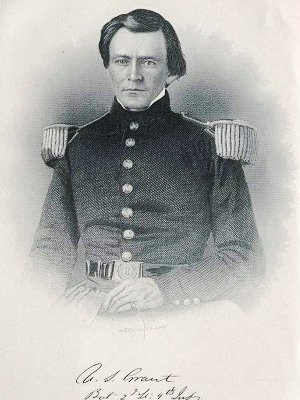
US Grant as a US army colonel in the Mexican American War, c. 1846

We rarely see images of the future general and future president without his well-kept beard, but if this apocryphal tale is true, Grant might have grown a beard after he was embarrassed by the reaction of his fellow soldiers during a performance of Othello, where Grant rehearsed the part of Desdemona:

That December, officers decided to stage “Othello.” They looked for someone to play the beautiful Desdemona. Grant was urged to try out for the part. He had a trim figure and almost girlish good looks; his friends called him “Beauty.” Though the costume fit perfectly, the officer playing the Moor couldn’t look at Grant without laughing. They sent to New Orleans for a professional actress to play Desdemona. After that, Grant grew a beard to hide his girlish good looks. He was “Beauty” no more.

Civilwartalk.com

#2. President Lincoln, Shakespearean Gentleman

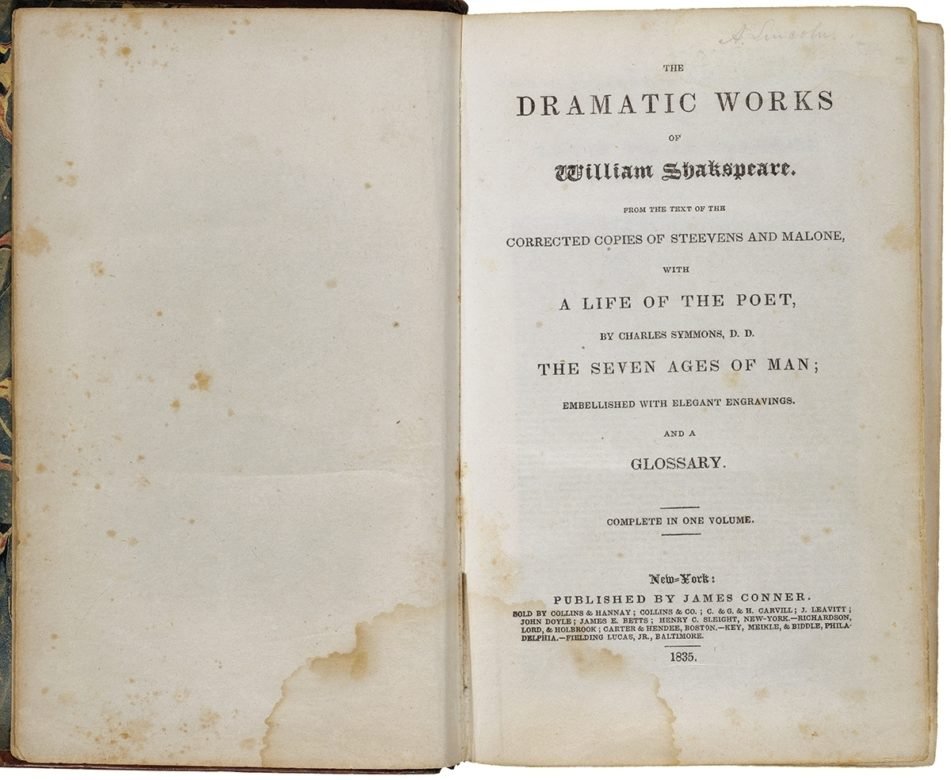
A copy of Shakespeare’s Plays, c. 1865. In the top-right corner, written in pencil is inscribed “A. Lincoln.”

I’ve talked before about how, to the South, President Lincoln was as big a tyrant as Julius Caesar, and how John Wilkes Booth was determined to cast himself as a real life Brutus

Photo from the 1864 benefit performance of “Julius Caesar,” starring John Wilkes Booth, Edwin Booth, and Junius Brutus Booth Jr (left to right).

https://www.whitehousehistory.org/the-american-presidents-and-shakespeare

What you might not know is that Lincoln’s favorite Shakespeare play was Macbeth. I find a more fitting character for the compassionate and eloquent president would be the good King Duncan from Macbeth. According to Whitehousehistory.org. Lincoln quoted some lines about the good king’s death, a few days before his own:

On Sunday, April 9, 1865, with the war over, he was returning to Washington on the River Queen from City Point, Virginia, where he had visited the front, and he talked Shakespeare to his companions, read aloud to them, and recited his favorite passages from memory. He spent most of his time on Macbeth. “The lines after the murder of King Duncan. Lincoln’s companions were struck by the slow, quiet way he read the lines:

“Duncan is in his grave;

After life’s fitful fever, he sleeps well,

Treason has done his worst; not steel, nor poison,

Malice domestic, foreign levy, nothing can touch

him farther.”

When Lincoln finished, he paused for a moment, and then read the lines slowly over again. “I then wondered,” reflected one of his friends, “whether he felt a presentiment of his impending fate.”

Whitehousehistory.org.

If you choose to sign up for my Outschool class: The Violent Rhetoric Of Julius Caesar, I compare Antony’s speech, (which essentially started a civil war in Rome), with Lincoln’s Gettysburg Address. I also discuss John Wilkes Booth and his obsession with the character Brutus.

Title image for my Outschool class: “The Violent Rhetoric Of Julius Caesar.

#3: Ex Confederates hid out in Shakespeare’s home town!

Ex-Confederate soldiers gathered in Royal Leamington Spa in England, c. 1865.

I was pretty shocked to learn this one, and it took a while before I found a decent amount of evidence to justify reporting on it here, but apparently a few ex confederates fled to England after the war, and took refuge at inns and houses in and around Stratford, including Royal Leamington Spa, which is a town just 12 miles from Stratford-upon-Avon.

I had scarcely become domesticated before the visits of the Confederates began, & we have now quite a little Southern Society. Mr & Mrs Fry of N. York, & Mrs Leigh reside very near us. Mr & Mrs Westfeldt also; but just now they are absent. Mr & Mrs Dugan, Mr & Mrs & the Misses
Stewart, Mrs Hanna & Miss Reynolds, Mr & Mrs Clements, Mr & Mrs Skinner, Capt Flinn, & various others who are here, off & on, compose the little nest of Confederates in Leamington.

Nathaniel Beverley Tucker, US Consul, 1861

England was anti Slavery in the 1860s but they were also partners with the Confederates in the lucrative cotton trade. CSA president Jefferson Davis dispatched a number of ambassadors and negotiators to hopefully gain support from the English to help them fight the US in the Civil War.

Once President Lincoln signed the Emancipation Proclamation, England politely declined to aid the confederacy militarily, but Davis’ visits opened the door for Confederates in England, and that is why they wound up living in Leamington Spa.

While they were there, some purchased English warships to become part of the Confederate Navy. Some even got married!

Sources:

1. Shakespeare and US Presidents: Whitehouse History.com

2. Civilwartalk.com

3. New York Times: John Wilkes Booth

4. Leamington History: “A Confederate Nest in Leamington.”