This is a play I’ve been obsessed with since I was 16 years old. There’s so much to say about it, but I’ll be focused mainly on the mysteries of its famous plot and characters. In the meantime, here’s some background info on the play collected from the posts I’ve done on it over the years:
Play of the Month: Hamlet. My complete summary with pictures, videos, and discussion questions
How Accurate Is Hamnet? I review the novel “Hamnet” which is a work of historical fiction. It focuses on the possibility that Shakespeare wrote “Hamlet” after the death of his 11-year-old son.
Shakespeare on Ghosts: In this post, I discuss the meaning and psychological significance of the Ghost in “Hamlet”.
Internet Shakespeare Editions: https://internetshakespeare.uvic.ca/Library/Texts/Ham/. Has all four quartos in modern and original type, lots of background sources, and the text of the German Hamlet “Bestrafte Brudermord.”
Happy Father’s Day! I’ve been teaching a number of classes these past few days so I haven’t had much time to post but in honor of Father’s Day- here’s a bunch of my favorite past Father’s Day posts:
Shakespearean Greeting Cards from Immortal Longings.com
2. Bios of William Shakespeare and John Shakespeare Both Shakespeare and his father had children, and both worked hard to make a better life for their offspring, so I thought I’d tell you some of their life stories so you can learn more about these great men.
The house on Henley Street, where Shakespeare was born in 1564. Click here to learn more about Shakespeare’s birthplace.
3. My Picks For Top 5 Best and Worst Dads in Shakespeare I’ve gone through the entire cannon from As You Like It to Alls Well That Ends Well, and picked out the dads whom I think deserve recognition either as great or terrible parents. Who will take the coveted #1 Shakespeare Dad prize? Stay tuned to find out!
Coffee mug with a quote from one of Shakespeare’s most well-known dads Polonius in “Hamlet.”
I’ll also be sharing some great memes and reviews on Instagram and my podcast next week.
In this section, I review a Shakespeare book, movie, or TV show that I feel has some kind of value, either as an interpretation of Shakespeare, or a means to learn more about the man and his writing.
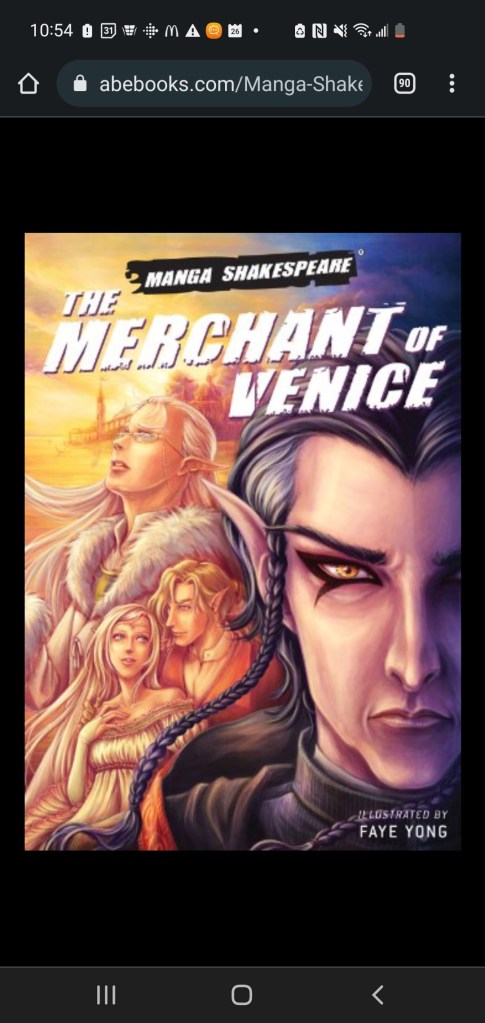
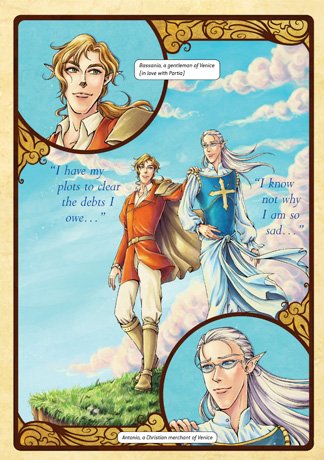
Name: The Manga Shakespeare– “Merchant Of Venice,” Illustrated by Faye Yong.
Ages: Adult/ Teen. There’s some PG-13 language, and the subject matter touches on racism and anti-Semitism, so it shouldn’t be read by really young kids.
Premise: Like the Midsummer Night’s Dream edition I already reviewed, this is the full play with Manga inspired illustrations. However, unlike Midsummer, this book is more conceptual. It reinterprets all the characters as either fairies, aliens, mermaids or merman, or some other fantasy characters. It is literally a fairy tale, which I find a fascinating concept for a number of reasons. That said, like any interpretation of Merchant, this choice is somewhat controversial for reasons I will get into below.
“A friend of mine said she got married in Venice and described it as like being in an RPG.”
Faye Yong, Illustrator for “The Manga Shakespeare: Merchant Of Venice.”
What Does Role-Playing Game (RPG) Mean? A role-playing game (RPG) is a genre of video game where the gamer controls a fictional character (or characters) that undertakes a quest in an imaginary world.
Defining RPGs is very challenging due to the range of hybrid genres that have RPG elements.
Traditional role-playing video games shared five basic elements:
The ability to improve your character over the course of the game by increasing his statistics or levels.
A menu-based combat system with several choices of skills, spells, and active powers as well as an active inventory system with wearable equipment such as armors and weapons.
A central quest that runs throughout the game as a storyline and additional (and usually optional) side quests.
The ability to interact with elements of the environment or storyline through additional abilities (e.g. lockpicking, disarming traps, communication skills, etc.)
The existence of certain character classes that define the characteristics, skills, abilities, and spells of a character (e.g. wizard, thief, warrior, etc.)
-“RPG” Technopedia
My reaction: I honestly don’t know what to think about the way the comic depicts races. In the interview above, illustrator Faye Yong explains how she chose a fantasy aesthetic for the graphic novel.
She read the script and represented the characters like the Prince of Aaragon, the Prince of Morocco, and re-interpreted them as fantasy characters. A good example is the Prince of Aragon. As you can see in this scene from the 2004 movie, Shakespeare portrays Aaragon as a vain, shallow person. Incidently, Aaragon is a province of Spain, over which the English just won a major naval victory, so Shakespeare makes this character a mockable popinjay since the Spanish were still the mortal enemies of the English:
Fay Yong wanted to heighten Aaragon’s vanity, so she made him a beautiful creature with long, flowing hair.
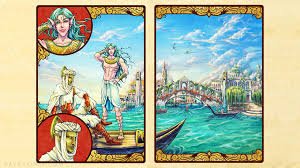
This is telling: Yong immersed herself with Shakespeare’s text, but she didn’t really delve into the real world context. She wasn’t interested in the real cultures of Aaragon, Morrocco, or even Venice, but to take Shakespeare’s impression of these cultures, and use Japanese style animation to tell Shakespeare’s story. For most of the play, this approach works quite well. After all, Shakespeare depicts Portia and her home in Belmont as an almost ethereal place, where men come from far and wide to see this magical kingdom, and Portias father gets a prophetic vision on his death bed that makes him alter his will so that only someone who can decipher his riddle will get to marry Portia and inherit her estate. Like I said, the scenes in Belmont work very well as a Manga comic, particularly Bassanio’s Zelda-style fetch quest where he has to choose the right casket to marry Portia. I hope someone someday turns this idea into a real game.
Faye Yong (the illustrator of “Merchant,” shows how she designed and drew the character Portia).
However, the scenes in Venice don’t work as well because Shakespeare wrote them with a clear understanding of the real Venice, and the tensions between the Jewish and Christian communities. Details like Antonio’s anti-Semitism, Shylock’s fury at his daughter marrying a Christian, and Portia’s own racism and anti-Semitism is frankly erased when you view it out of the context of the real Venice.
Another example of questionable racial re-interpretation is theThe Prince of Morrocco, who like Aaragon, is a suitor to Portia who likewise fails to choose the proper casket and win Portia.
In Yong’s version, Morocco has green, rather than brown skin now, (sort of like Piccolo from Dragon Ball Z), which is problematic because we associate green with sickliness and that makes this speech of Morocco’s even more problematic:
Mislike me not for my complexion,
The shadow'd livery of the burnish'd sun,
To whom I am a neighbour and near bred.
Bring me the fairest creature northward born,
Where Phoebus' fire scarce thaws the icicles,
And let us make incision for your love,
To prove whose blood is reddest, his or mine
Not surprisingly, the most controversial illustration choices center around Shylock the Jewish moneylender. As I’ve written before, Shylock has always been a controversial figure, and this comic interprets him in a way I find simultaneously simplistic and highly thought-provoking.
Faye Yong has stated that she wanted to make Shylock look the same as the Christian characters, but that his garb would reflect a sort of “dark elf” aesthetic. She describes him as the sort of fantasy character that worships the moon, rather than the sun. On the one hand, I applaud her for not giving into the old Jewish stereotypes like red hair, hook noses, etc. I also have to admit that Shylock is sort of a dark vengeful figure (he is after all, the villain), so making him a dark elf works on the surface.
On the other hand, again, without the context of anti-Semetism, and the complex relationship between Jews and Christians in the 16th century, much of the Shakespearean text is devoid of meaning. Perhaps this is an attempt to make the play more easily accessible to young readers like teenagers, and I applaud that, but as I wrote in my post about why everyone should read or teach this play, learning about the historical context of real Jews is this play’s great gift, and that is lost in this version.
On the other hand, depicting Shylock like some kind of dark elf or warlock actually brings to life a very real aspect of anti-Semetic prejudice that many people overlook today: for most of western history, many of our stereotypes of Jews were interlinked with our stereotypes about witches!
Jewish Stereotypes and the Occult
So, ironically, much the same way Ian McKellen’s Richard III helped modernize the complex medieval politics of the 15th century, seeing Shylock as a semi-mystical, possibly occult figure, actually brings to light some of the prejudices that real Jews in the 16th century faced!
In conclusion, Merchant Of Venice is extremely hard to adapt in a comic book context, and some aspects are a little lost in translation. That said, it is gorgeous to look at, and it has a great visual shorthand that enlivens Shakespeare’s text in a unique and appealing way.
Recommendation: I’d recommend this book to all mature fans of Shakespeare, anime, Manga, D&D, or any kind of nerd stuff!
In this section, I review a Shakespeare book, movie, or TV show that I feel has some kind of value, either as an interpretation of Shakespeare, or a means to learn more about the man and his writing.
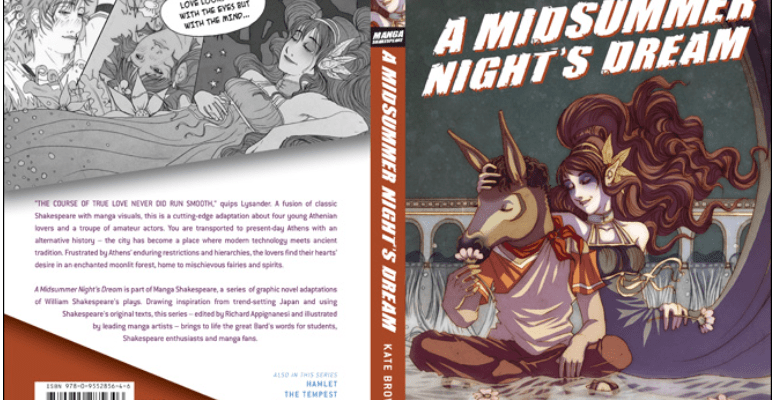
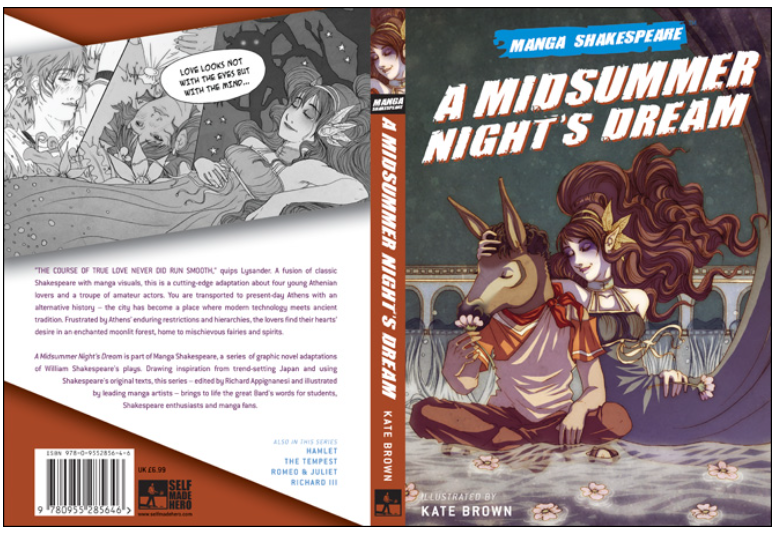
Name: The Manga Shakespeare: “A Midsummer Night’s Dream.
Ages: Pre Teen- Adult. No violence or explicit imagery, but the visual format might be confusing for younger viewers.
Premise:
My reaction:
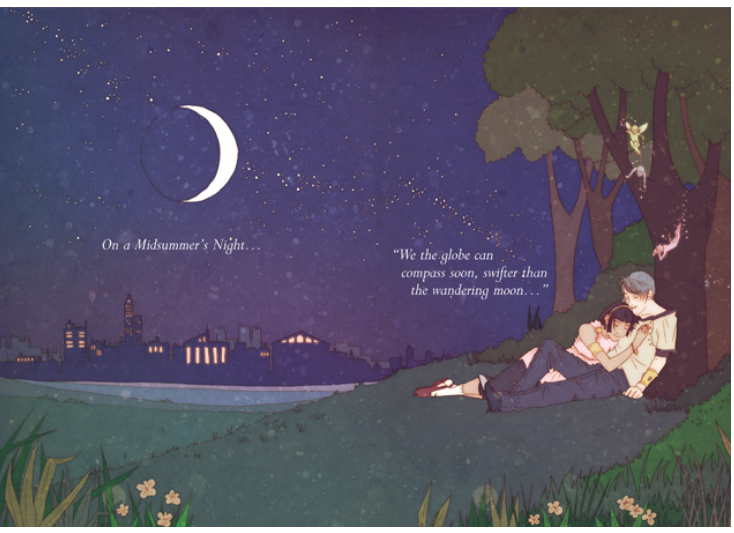
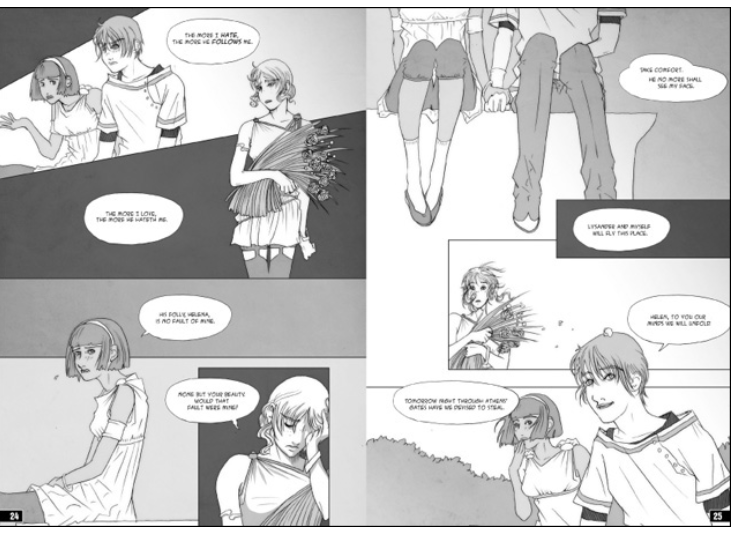
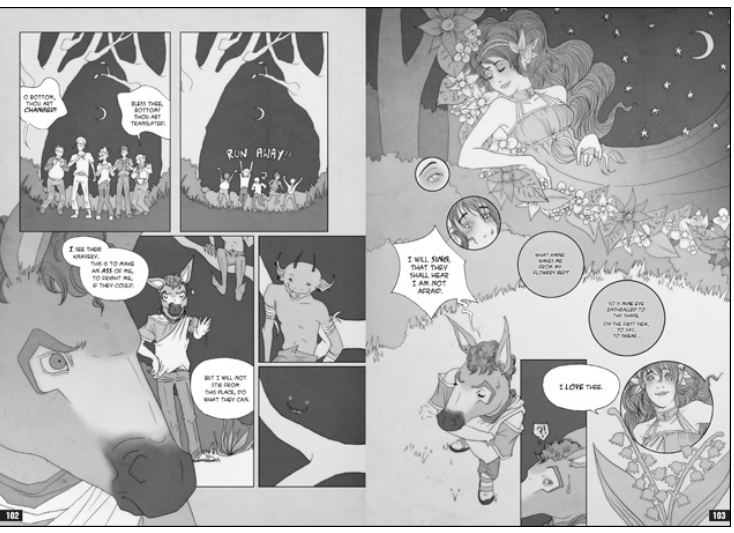
This series is very creative and in general, has a distinct and exciting style that works well for Shakespeare, though I would argue that “Midsummer” is one of the weaker ones in the series. The character designs are somewhat generic, and although the emotions are clearly conveyed, I feel that the style doesn’t clearly show who these people are or the different environments in the play- Athens, the Woods, and the Court.
Basic Details:
Sometimes the over-the top nature of manga drawings works well with this play. When Helena is mooning over Demetrius, we can see highlights in her eyes that work very well within the big-eyed, expressive style of Manga. By contrast, some other characters like Oberon are drawn very sharply, making him appear stern and even grim.
Another thing the style of pictures does is to literally illustrate the poetic passages of the For example, when Titania delivers her “These are the forgeries of jealousy,” speech, the images of the text compliment her concerns that the king and queen of the fairies are effecting the natural world.
Critique
I enjoy how well the characters convey emotions in this version because they help convey the meaning of the text. However, I think this visual style is too austere and sharp for such a vibrant, silly, colorful play. I wish the style of Manga didn’t dictate that most of the pages are black and white, because some color in the fairy scenes would add some much-needed magic.
Recommendation: This book is a good resource for classrooms exploring the text of “A Midsummer Night’s Dream,” but honestly I wouldn’t read it for pleasure.
In this section, I review a Shakespeare book, movie, or TV show that I feel has some kind of value, either as an interpretation of Shakespeare, or a means to learn more about the man and his writing.
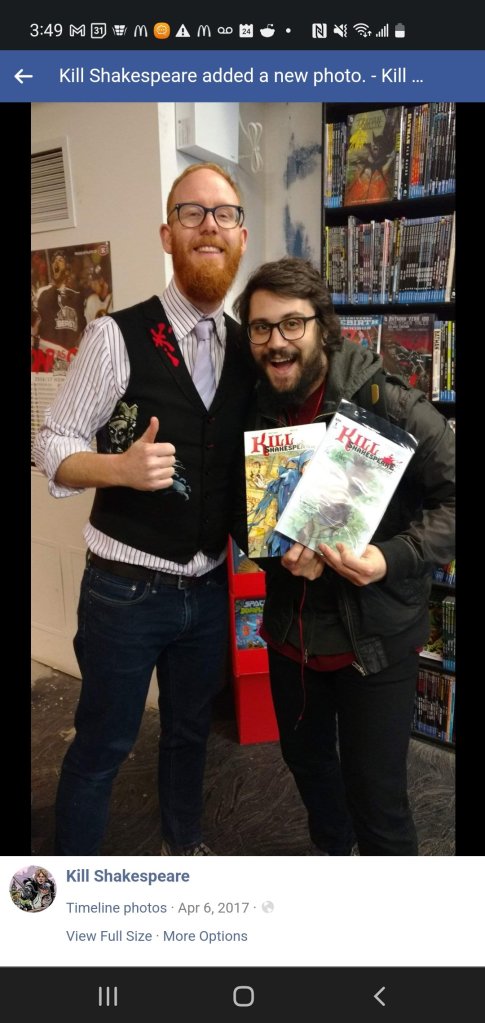
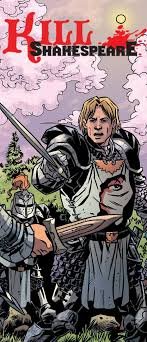
Name: Kill Shakespeare (Vol. 2) by Connor McCreery and Anthony Del Col
Ages: Adult/ Teen. There’s some PG-13 language and a lot of fighting and gore, so it’s not really for kids
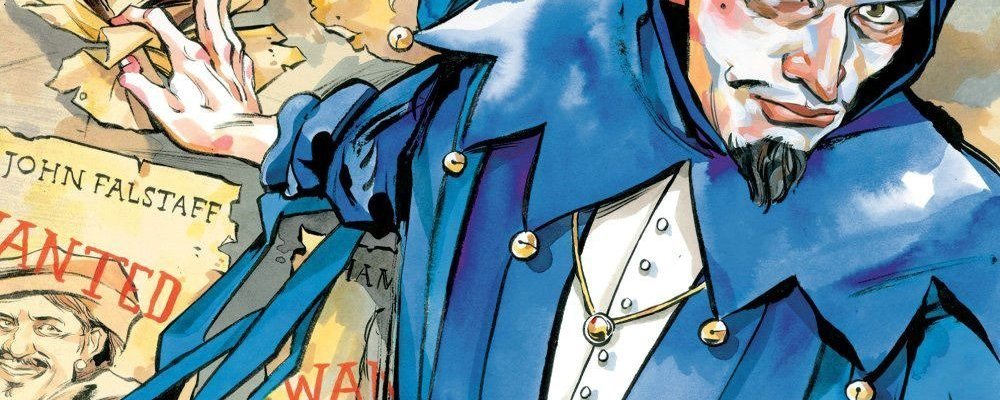
Premise: William Shakespeare is more than just a simple playwright- he has a magic quill that brings his characters to life. Some of the characters worship him like a god or like a father. Unfortunately, others (namely, the villain characters), are unhappy with their stories and want revenge, causing a civil war led by Richard III, Macbeth, Lady Macbeth, and Iago (who is once again, betraying Othello). Our heroes include Juliet, Othello, Falstaff, Hamlet, and Captain Cesario (who is actually Viola from Twelfth Night in disguise). Can the heroes defeat the villains? Can Shakespeare save his precious creations from destroying each other before it’s too late?
My reaction: In essence, this graphic novel is like Season 4 of one of my favorite TV shows, Once Upon A Time. The premise is that an ordinary writer is given the power to create living characters, some good and some evil. In fact, in Once Upon A Time Lore, Shakespeare WAS one of the Authors in the OUAT universe
Basic Details:
The main difference between Once Upon A Time and Kill Shakespeare is that the action is far more violent, and the characters have one main quality- ANGST. As I said, the villains are not happy with Shakespeare, which makes perfect sense. Macbeth famously called his life a “Tale told by an idiot,” and Richard III loves to blame his problems on either God, or his mother, since one or both of them cursed him with deformity and love of wickedness. It makes complete sense that these characters would rage against their creators. The heroes (especially the tragic ones) are also struggling with their sad pasts and trying to reconcile their feelings for Shakespeare. Is he their god? Is he their father? If so, is he a good one or a bad one?
What I like the most about this graphic novel is that the characters are consistent with how the real Shakespeare wrote him, yet they make different choices in the graphic novel. They also grow and play off each other in many interesting ways. Here are some examples:
Juliet in this version is much more of a fighter than a lover. She is a general of all the heroic Shakespearean characters and uses her hope and her wits to rally the troops. That said, she still misses Romeo, who died from the poison just like in Shakespeare’s version, and still has love in her heart. I won’t give anything away but, let’s just say that this time she climbs someone else’s balcony.
Falstaff This might be my favorite change in this version. Falstaff is still witty and gluttonous, but in this version, he’s on a bit of a redemption arc. He commits himself to fight with the rebels and even has faith in Shakespeare and the people around him. Plus, just like his moments with Prince Hal, Falstaff forms a father-son bond with Hamlet in this version, which is really fun to watch. It’s like they took everything bad about Falstaff and metaphorically ‘trimmed the fat.’
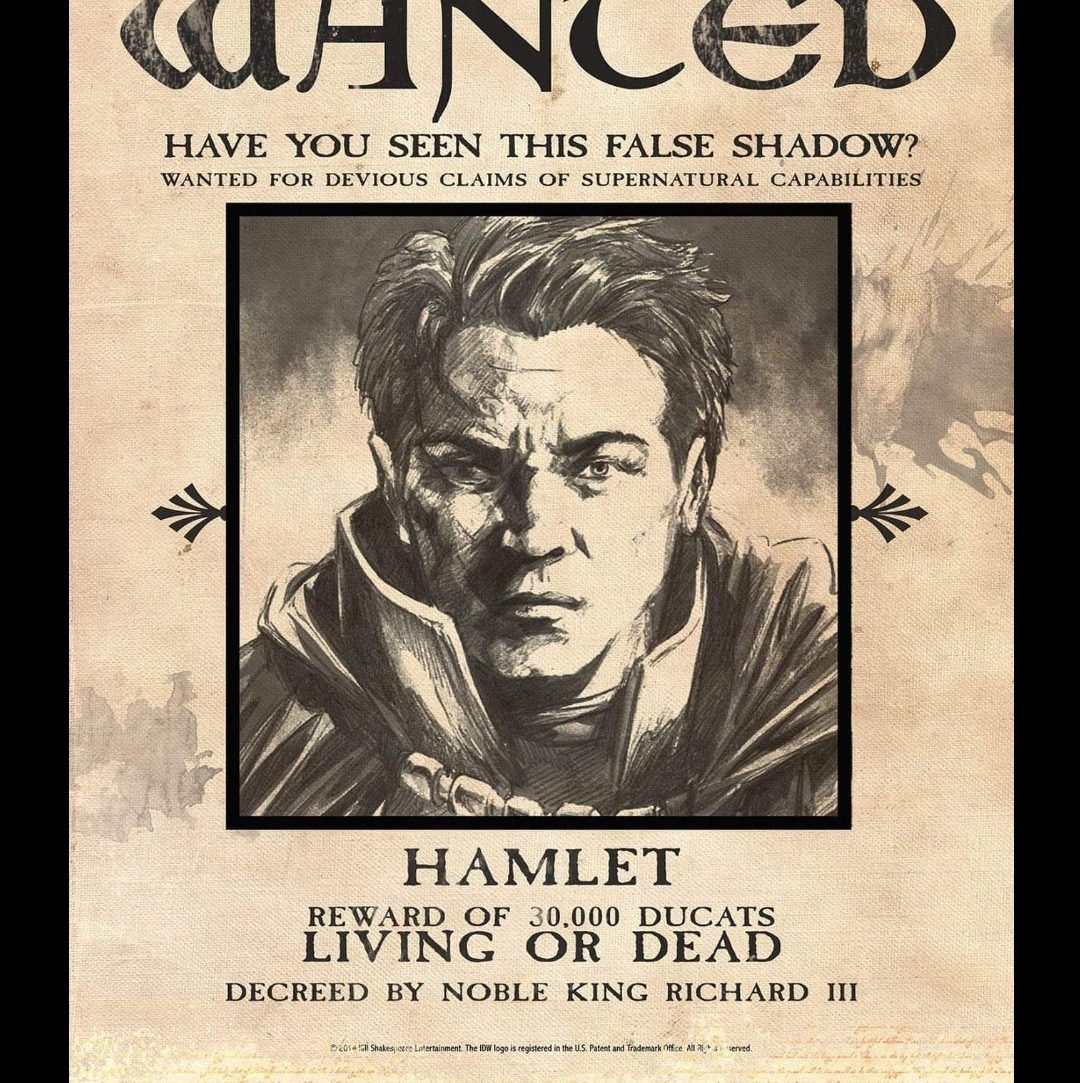
Hamlet (AKA The Shadow King in this version), is still brooding over the loss of his father, his murder of Polonius, and his loss of Ophelia. He has once again been thrust into a quest that he’s not sure he can complete- fighting King Richard, finding Shakespeare, and convincing him to help the heroes. That said, he is still capable of warmth, humor, and even romance (no spoilers).
MAJOR SPOILER ALERT
William Shakespeare
In Volume 2, Shakespeare is a jaded mentor figure who has retreated to an enchanted forest after failing to protect his creations. His arc is very similar to Luke Skywalker in The Last Jedi, in that he made a major mistake, failed to live up to the impossibly high standards people had for him, and hides away at the bottom of a bottle. He now has to choose whether to take responsibility for his creations or stay hidden away alone. I love this arc, I love the scene where he talks to Hamlet, and I love the way they develop his character.
Critique
It’s a small point, but with the exception of Falstaff and Viola, the comic characters in Shakespeare (at least in Volume 2), don’t have much to do. Feste and Sir Toby Belch appear as traveling players but they barely interact with the tragic leads. I think this was to keep the tone of the novel consistent, but honestly, I do kind of wish they had broken up some of the tragedy with some more comedy.
Recommendation: I’d recommend this book to all mature fans of Shakespeare, anime, Manga, D&D, or any kind of nerd stuff!
“Is not this something more than fantasy?”“O, that this too too solid flesh would melt, thaw, and resolve itself into a dew.”“Do not forever with thy veiled lids, search for thy noble father in the dust.” “A combination and a form indeed, where every God did set his seal…”“Thou knoweth ’tis common, all that lives must die. Passing through nature to eternity.”
So loving.. that he might not not between the winds of heaven, visit her face too roughly.”“There are more things in heaven and earth than are dreamt of in our philosophy.”“The Serpent that did sting thy father’s life, now wears his crown.”“O VILLAIN, SMILING, DAMNED VILLAIN!” “To Be, Or Not To Be, that is the question.”“Alas, poor Yorick… quite chop-fallen.”“O my offense is rank. A brother’s murder!”“A fellow of infinite jest, of most excellent fancy.”“There is a special providence in the fall of a sparrow.”“Thou art slain. In thee there is not half an hour of life.”
Trailer for my 2021 Acting course via Outschool.com
I’ve been working on a remote learning class for Outschool.com where I take some of the audition advice I wrote in Creating A Character: Macbeth, and some of the other acting posts I’ve published over the years. This will be a weekly virtual acting course for kids ages 13-18, starting September 12th at 10AM EST.
This class will outline the tools and techniques of Shakespearean acting such as projection, articulation, and imagination. Each We’ll also go over Shakespeare’s own advice on acting in his play “Hamlet: Prince of Denmark.” The course will culminate with the students choosing their own Shakespearean monologues and scenes, which they can use going forward in auditions, school plays, and classes.
The best thing about the course is that each week builds on the previous week’s experience, but you don’t need to go to all of them. I’ll be flexible and work with the student’s schedule so everyone gets as much out of the class as possible.
If you’re interested in signing up, go to Outschool.com. If you have any questions, email me by clicking here:
For Shakespeare’s Birthday, I thought I would discuss his most famous speech what is arguably his greatest play. Hamlet, Prince of Denmark was written in 1600, the pinnacle/ middle of Shakespeare’s career, after Julius Caesar but before Macbeth.
David Tennent as Hamlet. Royal Shakespeare Company, 2010.
To Be Or Not To Be has intrigued and mystified people for centuries. It is full of ambiguous imagery, haunting images, and solemn contemplative ideas. I’m going to try and break the speech down first like an intellectual argument, but I will also give you some of my interpretation of Hamlet’s thoughts and feelings. Shakespeare’s genius is creating a speech that gives plenty for the reader to interpret,, but it’s up to the reader to decide what’s happening in the speech.
Just a refresher of the plot:
1. The king has died and been seen as a ghost
2. He tells his son Hamlet that he was murdered by his brother Claudius, who killed him to become king and marry Hamlets mother, Gertrude.
Hamlet is trying to determine if the ghost is telling the truth and if so, how can Hamlet revenge the death of his father?
The speech occurs right in the middle of the play. Hamlet has been acting strange and the king is worried. He hides behind a tapestry right before Hamlet enters. He then delivers this famous and highly cryptic speech:
Ham. To be, or not to be, that is the Question:
Whether 'tis Nobler in the minde to suffer
The Slings and Arrowes of outragious Fortune,
Or to take Armes against a Sea of troubles,
And by opposing end them: to dye, to sleepe
No more; and by a sleepe, to say we end
The Heart-ake, and the thousand Naturall shockes
That Flesh is heyre too? 'Tis a consummation
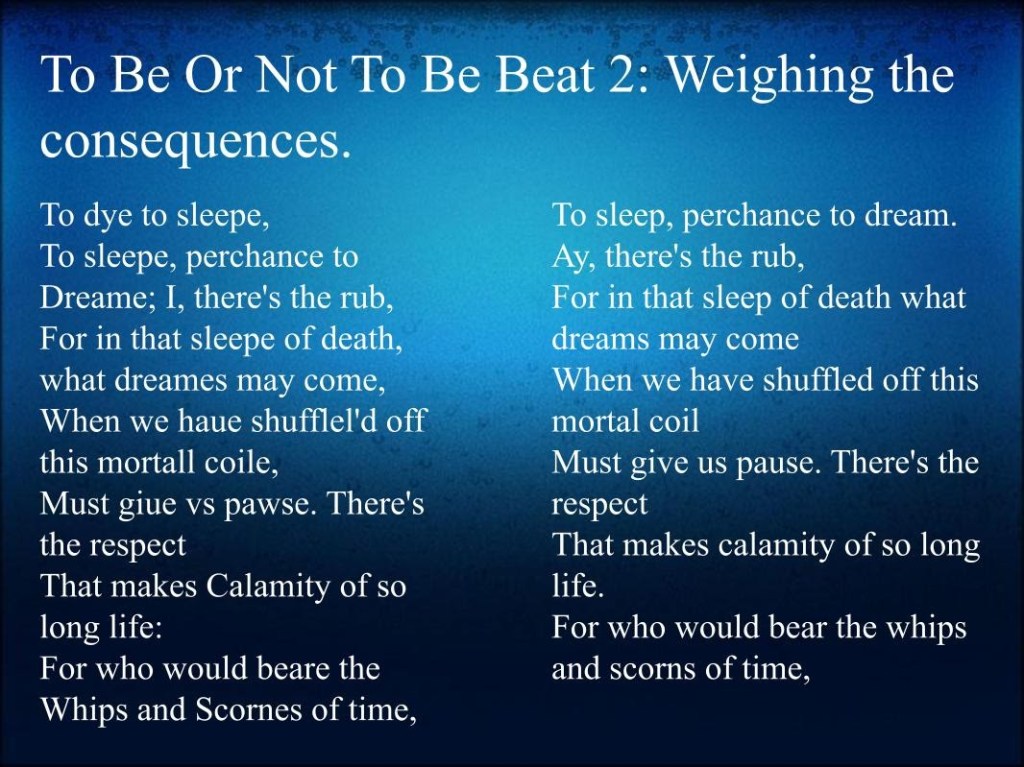
Deuoutly to be wish'd. To dye to sleepe,
To sleepe, perchance to Dreame; I, there's the rub,
For in that sleepe of death, what dreames may come,
When we haue shufflel'd off this mortall coile,
Must giue vs pawse. There's the respect
That makes Calamity of so long life:
For who would beare the Whips and Scornes of time,
The Oppressors wrong, the poore mans Contumely,
The pangs of dispriz'd Loue, the Lawes delay,
The insolence of Office, and the Spurnes
That patient merit of the vnworthy takes,
When he himselfe might his Quietus make
With a bare Bodkin? Who would these Fardles beare
To grunt and sweat vnder a weary life,
But that the dread of something after death,
The vndiscouered Countrey, from whose Borne
No Traueller returnes, Puzels the will,
And makes vs rather beare those illes we haue,
Then flye to others that we know not of.
Thus Conscience does make Cowards of vs all,
And thus the Natiue hew of Resolution
Is sicklied o're, with the pale cast of Thought,
And enterprizes of great pith and moment,
With this regard their Currants turne away,
And loose the name of Action. Soft you now,
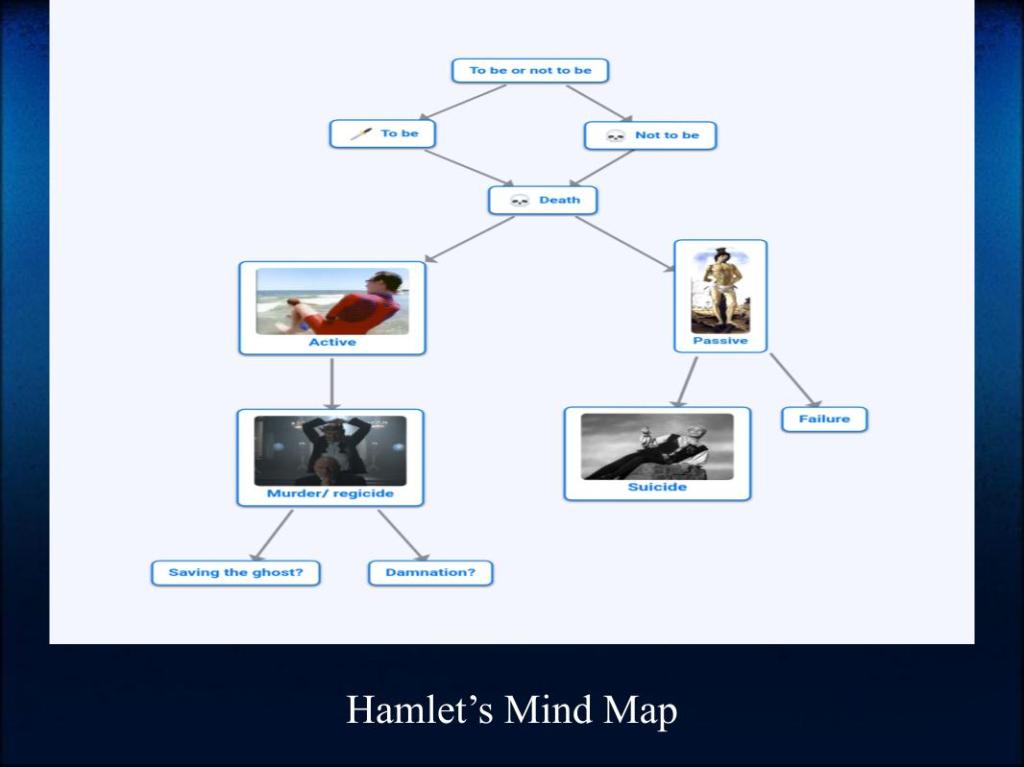
Now before I talk about the context of the speech, I want to deconstruct it as an intellectual argument. Hamlet is grappling with something huge, and he is weighing the consequences of his potential actions. Remember, Hamlet is a prince, but he is also a college student, so he turns his choice into an intellectual argument.
If you look at the speech as an argument, it hinges on two points- to be or not to be.
One is passive and one is active
Both actions are potentially lethal, as evidenced by the two metaphors Hamlet describes later.
Contrary to popular belief, I believe that this speech is not just about suicide. It’s about the choice between suicide and murder, (in this case killing Claudius).
Three Speeches- Macbeth, and Hamlet
Lets discuss the two central images at the start of this speech. One is active- fighting (“taking arms”), and one is passive (“to suffer…”). Both choices have a similar outcome- death. No one can fight the sea, and arrows are just as lethal.
Let’s look at the speech again, and turn it into a series of beats using the conjunctions “and, but, and or,” The speech has 6 beats. What he’s thinking about or feeling is open to interpretation, but the argument definitely changes at these points. First the thesis:
This beat sets up the two options (murder and suicide). Why do I think this? Because it’s similar to two other speeches: https://youtu.be/nq3hcs1yFKw
It’s worth noting that about the same time, Shakespeare wrote three great soliloquis; Hamlet’s “To Be Or Not To Be,” Macbeth’s “If It Were Done,” and Brutus’ “It must be by his death.” All three speeches have some notable commonalities:
All three speeches are in passive voice; the would be murderer wishes he didn’t have to kill someone, but wants the victim dead nonetheless.
Refuse to mention the name of the man who will die.
Refuse to say ‘murder’
Personify death in abstract terms.
When I noticed the commonalities between the speeches, I came to realize that all of them are about murder, not just suicide. I think Hamlet alone contemplates suicide as well as murder, possibly because unlike Brutus and Macbeth, Hamlet is not at all sure he’s doing the right thing.
Beat 1 The Nerve: Hamlet is working himself up for something; either murder or suicide. It’s ambiguous which one he starts with, and largely depends upon the actor’s interpretation.
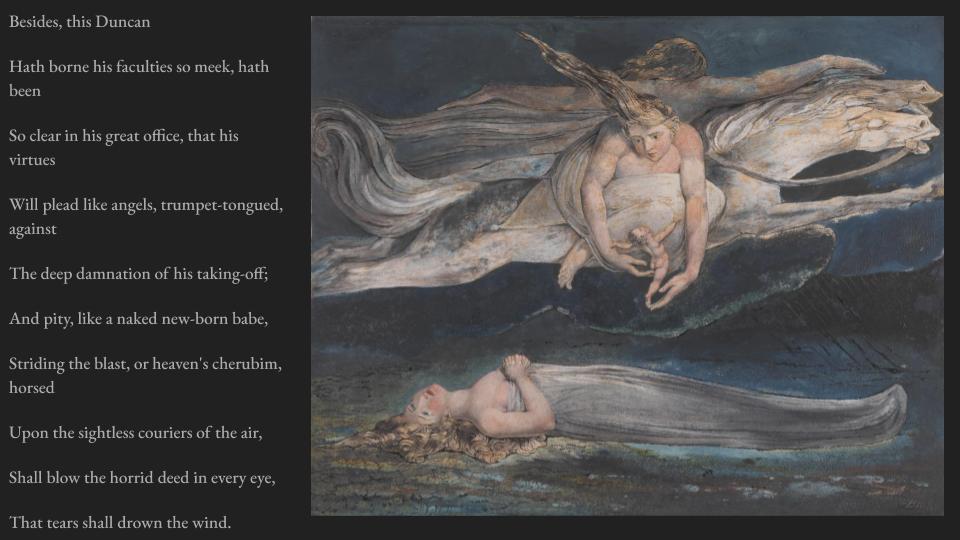
Beat 2The Consequences Whether Hamlet kills the king or himself, either way he could die and when he does, his soul will have to answer for his actions. This is similar to Macbeth, who worries that his foul murder will be exposed and judged by “Heaven’s cherubim, horses upon the sightless couriers of the air.”
“PITY,” by William Blake, alongside the text of Macbeth’s soliloquy from Act I, Scene 7.
“There’s the rub”- there’s the catch.
“Coil” refers to a snake skin. The line characterizes death as shedding an earthly body, something that seems all too easy to do. It’s an uncomfortable image because it makes death look all too easy. It also calls to mind the story of Gilgamesh, who had a flower that would grant him immortality, but a snake stole it, which is why snakes cam shed their skin, seemingly growing young again forever.
This beat is where Hamlet seems smothered in his frustrations with life.. Rather than making a decision, he’s sidetracked with a laundry list of universal problems. His energy seems up, but it’s unclear why.
When I performed this portion of the speech, I realized that everything Hamlet refers to, Claudius has done: he has oppressed and wronged the kingdom, he has delayed the law, and he has hindered Hamlet’s love for Ophelia by letting Polonius deny Hamlet’s access to her. Perhaps the laundry list is designed to psych him up- listing all the reasons Claudius deserves to die, (without tipping him off).
Beat 4: The Downward Spiral
Once again Hamlet is thwarted by the concept of Death and divine judgment. He seems to imply that everyone is scared into compliance with the threat of death.
The Conclusion:
Hamlet’s conclusion is that he has no conclusion. He can’t kill himself because his conscience tells him that God is against it, and he cannot kill Claudius because of fear of death or damnation.
When he says “The native hue of resolution,” he means red, (as in blood), is curtailed, cut off by the very thought of Deaths pale scythe.
Interpretations:
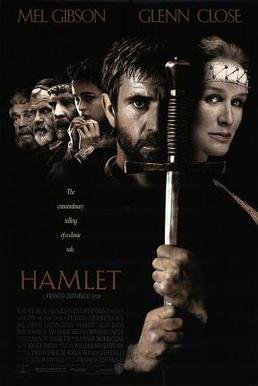
Mel Gibson plays Hamlet as a sort of man in mourning. He is as close to the action movie hero as Hamlet gets with his large, imposing physique and brutal looking medieval sword:
Speaking of action heroes, the whole movie Last Action Hero has a reoccurring motif of nodding to Hamlet. The avenging hero archetype is the prototype for every action movie, every superhero, (and most kung fu), and it began with Shakespeare’s Hamlet. This is why it’s hilarious that Schwarzeneger portrays him in Last Action Hero- the movie is a loving parody of every single action star since the original- Hamlet.
Why Else might Hamlet be so cryptic?
Not all versions are about suicide or murder
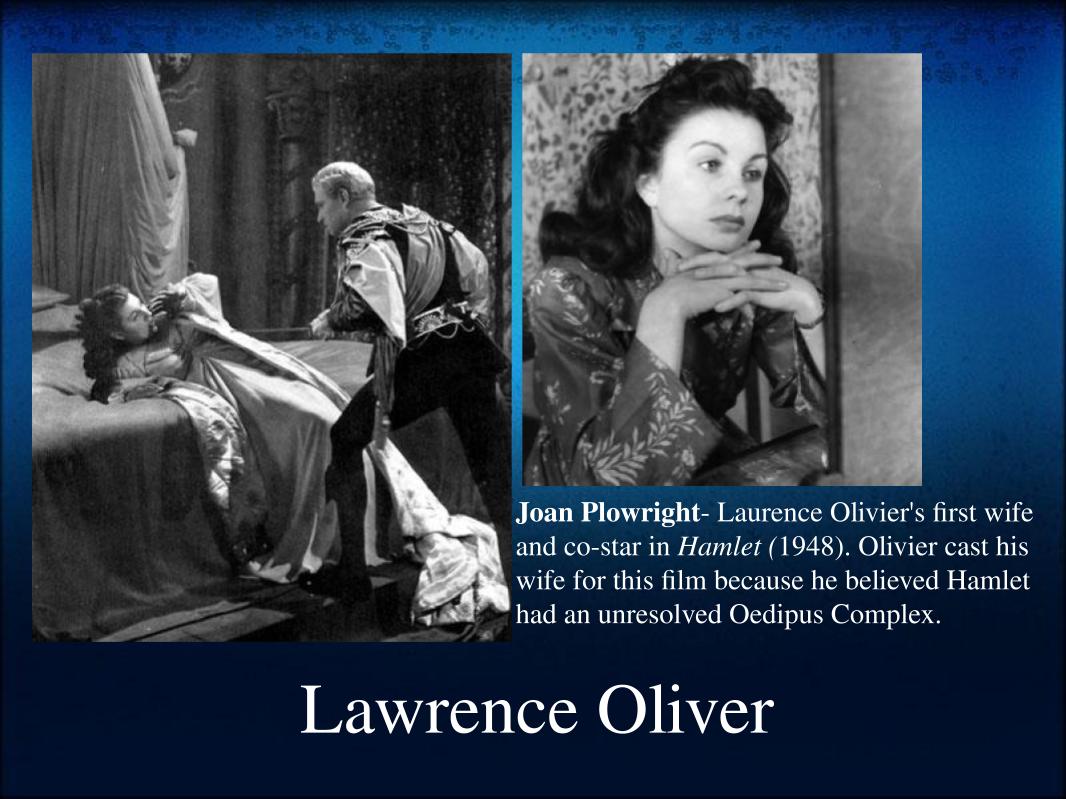
Lawrence Olivier believed that Hamlet has an Oedipus complex, and therefore has an unconscious desire to murder his father and sleep with this mother, which is why he considered himself unworthy to avenge his father’s death. In Olivier’s To Be, you can almost see his Hamlet aroused by his own Oedipal fantasies and then recoiling with disgust right before he says the line: “Perchance to dream.”
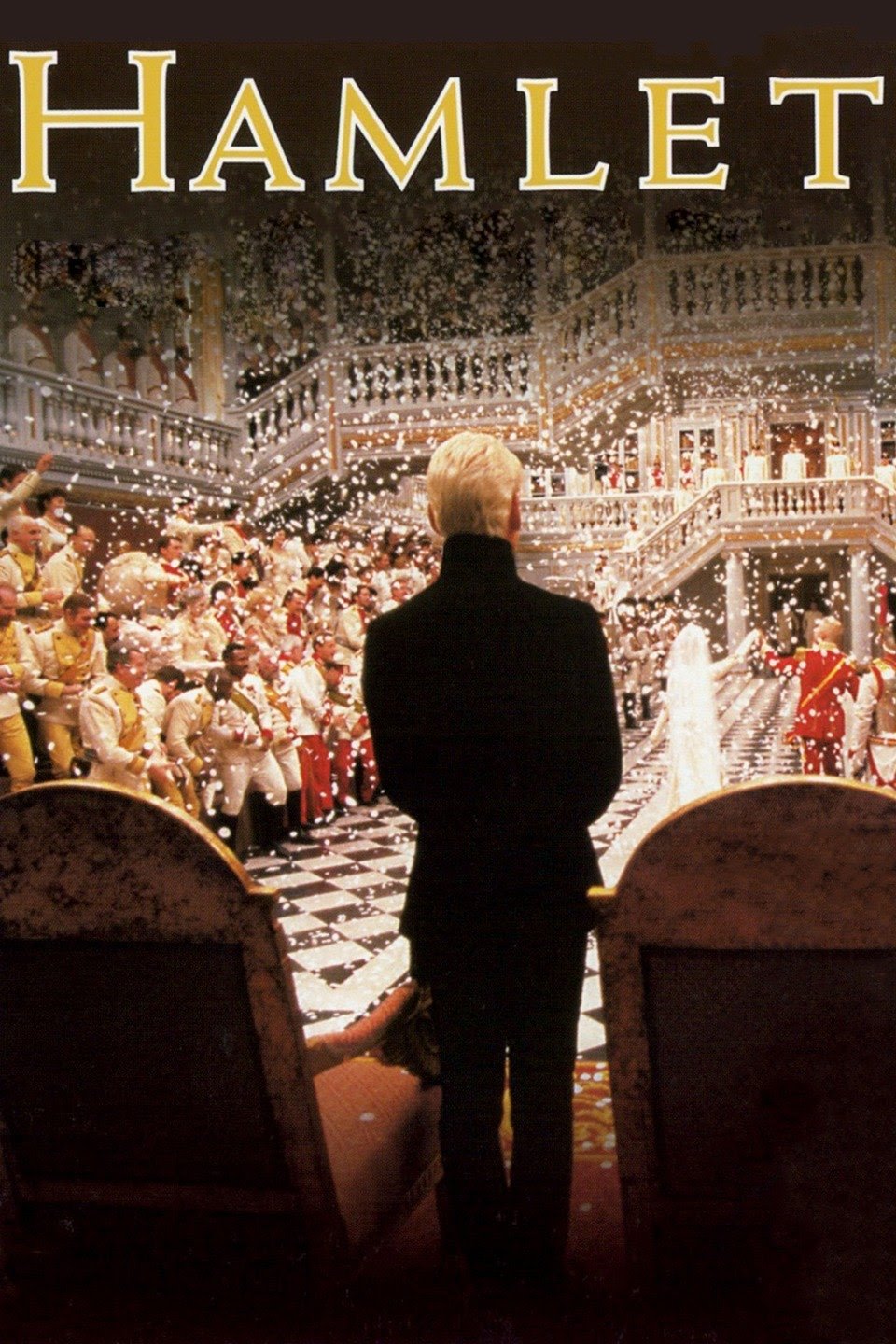
Kenneth Branaugh’s Hamlet centers around court intrigue. In contrast with Oliver’s Gothic Elsinore, his is bright and baroque, but it’s full of two way mirrors. Half the film is either large shots with lots of people watching public performances or POV shots of people being watched.
Branaugh’s interpretation of “To Be,” focuses on the possibility that Hamlet knows that Claudius is watching him through the two way mirror- he frightens him, puzzles, him, but in the end, never gives Claudius a clue as to his true intentions.
Murder or suicide?
the speech is not only famous for its universality but its evocative imagery, clear (albeit cryptic) construction, and heightened circumstances.
Shakespeare is able to give us a complete character without giving everything away, which allows anyone to reinterpret the character their own way. That is why Shakespeare’s characters endure.
































 The Shakespearean Student