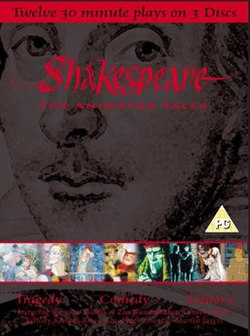
This is a 30 minute cartoon version of Macbeth originally produced for the BBC in 1992. It features Brian Cox as the voice of Macbeth (before he was the voice of McDonald’s), and Zoë Wanamaker as Lady Macbeth (before she was a witch who teaches at Hogwarts).
I like the way it portrays the horror imagery of the play in sort of a European-manga animation hybrid. Admittedly, there are better ones in the series, but this one is still pretty neat.
DVD box art for “Shakespeare the Animated Tales.”
To check out other episodes in the series, view this playlist:
Basics Of Stage Combat: Students will learn the basics of safely enacting a fight onstage, in preparation for a Shakespeare play. We will also learn about the history of sword fighting in the military and the duel.
Trailer for Basics of Stage Combat.
My daughter really enjoyed taking this class. She was actually able to use her sabre and try out her routine on her father. Paul is quite knowledgeable about Shakespeare and made the class really fun by teaching a fight scene from Romeo and Juliet. It is amazing watching her practice with Paul over Zoom. I hope Paul will have. more combat classes, it is a different way to learn Shakespeare.
IB, Parent
An Interactive Guide To Shakespeare’s London (New Class)
A virtual tour of Shakespeare’s London will get kids to interact with the culture of Elizabethan England.
Class Experience
To teach kids about the Elizabethan era and the background of Romeo and Juliet, The Instructor will interact with the class (via pre-recorded videos), pretending to be Shakespeare. The class, pretending to be actors in Romeo and Juliet, will get a virtual tour of The Globe Theater, Hampton Court Palace, and a virtual visit to an Elizabethan doctor's office. This activity is an immersive way for them to learn about the period, how it relates to the world of the play, and how Shakespeare changed theater.

The class will take the form of a guided WebQuest activity.  First, the students will get a worksheet that has a series of fill-in-the-blanks about Elizabethan society (below). The students will fill out this worksheet based on a Nearpod and in conjunction with a website I’ve made, https://sites.google.com/nebobcats.org/visit-to-elizabethan-london/home?authuser=0
Both the Nearpod and each webpage will have a virtual tour, a video, and text explaining some aspects of Elizabethan life. Before they go to each location, I will give a short introduction via prerecorded video:
Wizard Science
In this one-hour course, your child will discover the enchanting world of science through a series of magical experiments. Learn about such topics as Astronomy, Static Electricity, chemistry, and optical illusions.
In this one-hour course, students will learn and play games that will explore the history behind Christmas traditions. We will also discuss the themes, characters, and famous quotes from Shakespeare’s play “Twelfth Night.”
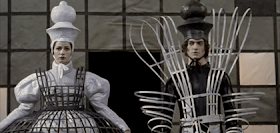
Geraint Wyn Davies as “Macbeth”Darren’s “Chess PawnOliver plays Banquo’s Ghost
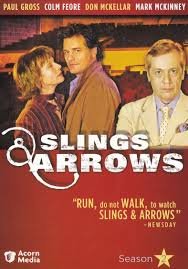
Slings And Arrows is a Canadian sitcom about a theater festival loosely based on the Stratford Shakespeare Festival in Ontario. Its hero, Geoffrey Tennant (Paul Gross), in addition to dealing with the seemingly endless problems (or should I say, “Slings and Arrows?”) mounting a Shakespeare play, is also worried he’s going mad, since he keeps seeing the ghost of his old mentor/ director Oliver Wells (Stephen Ouimette). For a recap of Season One, click here to read my review.
The premise of the Series
I describe this show as a funny, tragic, bittersweet comedy about drama. It’s The Office for Shakespeare Nerds!
Season 2 Retrospective
Whereas Season One was sometimes extremely dramatic and raw, Season Two is much more relaxed; it feels a little bit more like The Office for Shakespeare nerds. Each episode focuses much more on the work-a-day frustrations of running a theater. We see it through multiple perspectives and even multiple shows- we see one director not being able to complete Romeo and Juliet, we see another trying to cast for Pirates of Penzance, and finally we see Geoffrey trying to fulfill Oliver’s posthumous concept for Macbeth.
“You just need to sell more tickets.”
“It’s not that simple, we’re talking about THEATER!”
Season Two doesn’t just focus on the artistic side. The theater is going broke, and Richard is begging for money from sponsors and the government. Susan Coyne as the overworked Executive Assitant Anna also has her hands full taking calls, organizing the schedule, and of course her new additional frustration with the internship program.
Grace Lynn Kuhn as Emily sobs contritely in front of Geoffrey (Paul Gross)
This particularly made me laugh the first time I saw the show because at the time, I was interning for the American Shakespeare Center. I know what it’s like to feel like if you’re out of your depth but excited, thinking that this is going to be your big break, (while also being keenly aware that your job is mostly obviously getting coffee and writing notes in the prompt book). I have to give a shout-out to Grace Lynn Kung who plays intern Emily Wu; she does a great job of portraying this mixture of anxiety and youthful desire to please.
To be brief, this season has a much greater level of authenticity and realism that shows the series graduating from a soap opera into a real workplace comedy.
The Cast
Paul Gross as Geoffrey Tennet
In the first three episodes, Geoffrey is afraid to put on Macbeth because he thinks that Oliver will come back. Just like Season one, Geoffrey is still not sure whether Oliver is actually a ghost or is actually a manifestation of Geoffrey’s madness. As he continues to work on the production, he and Oliver quarrel as conflicting directors, and their private struggles as friends and colleagues even spill over into rehearsals, which threatens the production itself.
Gerand Wynt Davies as Henry Breedlove
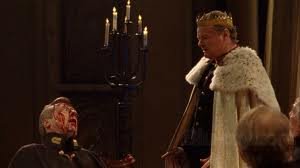
Geraint Wyn Davies as Henry Breedlove, onstage as Macbeth
The main curse in this production is the old guard of actors who are threatened by Jeffrey’s leadership; they got used to Oliver’s more relaxed style and they do not want Geoffrey shaking things up. Chiefly among them is Brian Cabbott and Henry Breedlove played by Geraint Wyn Davies, (who is really a classically trained actor from the Royal Shakespeare Company). Brian starts out by playing Claudius in Hamlet in the tail end to Season One. He’s disrespectful to Geoffrey and criticizes him to his face. Like Prince Hal dismissing Falstaff, Geoffrey dismisses Brian from the company.
One theme of Macbeth that is echoed again and again in Season two is middle-aged people feeling threatened by the young. It’s shown in Geoffrey’s clashes with Henry and Brian, with Richard being seduced by the hotshot young marketers at Froghammer, and especially with Darren Nichols, who is forced to direct Romeo and Juliet, and clashes with the young and idealistic Sarah (Joanne Kelly). She gives a passionate performance both as Juliet and as a young actress who desperately wants to do her best, and actually asks Geoffrey to direct her behind Darren’s back, as this adorable scene illustrates:
What’s great about this scene is it doesn’t just set up the star-crossed romance between Sarah and her costar; it also cleverly points out the similarities between Macbeth, and Romeo and Juliet. As you see at the end, Geoffrey is inspired by Sarah’s performance and it carries over to how he directs Henry and Ellen in Macbeth. Both couples are impulsive and reactive- they love pitting themselves against the world, and that is one reason why their affairs end in tragedy. Many scholars echo this interpretation, that if Romeo and Juliet had lived, they might have become the Macbeths. Seeing the balance between backstage drama, clever Shakespearean commentary, brilliant Shakespearean acting, and workplace comedy is at the heart of why this show works, and it’s handled masterfully in each and every episode of Season 2.
My favorite episodes
Episode 1: Season’s End
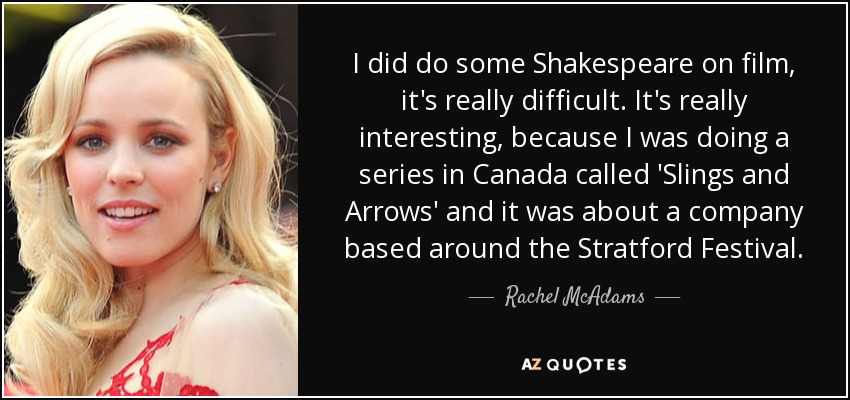
The Departure of Rachel McAdams As Kate
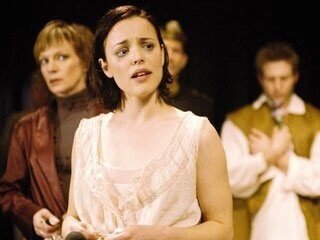
Rachel McAdams as Kate playing Ophelia in Season 1.
In the first episode, there is the tearful goodbye of Luke Kirby and Rachel McAdams, mirroring the fact that, as big Hollywood stars the two of them were unable to continue for a second season, even though everyone involved from the cast to the creators wishes they could. The life imitates art aspect of this episode makes it particularly tearful and sad to watch and yet it is a thoughtful and deeply well-earned sendoff.
Episode 2: Fallow Time
One of my favorite episodes is technically the Christmas episode of the show, and as such, Oliver gives Geoffrey a gift- he leaves him costume sketches, set designs, and notes on the play’s concept, which the ghost of Oliver explains in detail to Geoffrey and the audience. Maybe this kind of glimpse into the nitty gritty of theatrical concepts will only appeal to theater nerds, but I truly love it.
Episode 4: Fair Is Foul and Foul is Fair
While all the drama onstage is going on, Anna is getting some romantic attention from a playwright, unaware that (SPOILER ALERT), he’s using her for ideas for his script. In a way, this subplot shows us another aspect of Macbeth and Romeo and Juliet; in both these stories, the men use women for their own gain. Romeo arguably is using Juliet to play out his romantic fantasies, and Macbeth certainly depends on Lady Macbeth’s courage and cunning in order to go through with their plan to kill the king. Not surprisingly, all three romances end in tragedy.
Meanwhile on the stage during Macbeth rehearsals, Geoffrey is trying to get an organic, serious performance out of Henry, but he thinks he knows more than his director so Geoffrey has no choice but to fire him as he did Brian.
Episode 5: Steeped In Blood
S
In this episode Geoffrey puts the lovable understudy Jerry onstage as Macbeth. What’s interesting in this episode is, while Henry plays Macbeth as a larger-than-life soldier, Jerry plays him as sort of an everyman, letting himself be seduced by power and delusions of grandeur. Looking back, I actually owe a lot to this episode, since it helped inspire my own interpretation of Macbeth.
Episode Six: Birnam Wood
If I were going to pick one episode of Slings And Arrows for the time capsule, one episode of the show to stick up against every other show ever made, it would be “Birnam Wood.” I don’t honestly know if this is the best episode of the show—the series finale proper is probably that—but it’s my favorite episode of the show. It makes me cackle with delight, thrill with excitement, and smile with sympathy every time I watch it.
The season finale gives us a fully formed version of Macbeth and Romeo and Juliet: we get to see the designs, the technical rehearsals, the marketing, everything that the whole season was building up to into, not one but two complete theatrical performances!
First, Geoffrey cooks up an elaborate scheme to touch Darren’s heart and get him to scrap his cynical concept for Romeo and Juliet.
Geoffrey tricks Darren into re-directing “Romeo and Juliet”
As you can see, the scheme works, and Darren has an epiphany during tech rehearsals.
Darren has an epithany during tech for “Romeo and Juliet.”
In the show’s climax, for 20 minutes we get to see Henry perform as Macbeth and Ellen as Lady M. Geoffrey reluctantly re-hires Henry, but he refuses to let him walk all over him or his production. I won’t go into spoilers, but let’s just say Henry finally learns his lesson, with a little help from Oliver:
As I said last time, anyone who’s ever had a boring office job loves and recognizes the characters from “The Office,” while those of us in the theater recognize the crazy directors, the hopeful understudies, the divas, and the money-grubbing management. What’s great about this season is that, while Season one focused on them all broken apart, this season has them all coming together, using their talents to put on two excellent shows. After seeing the characters grow and change professionally and personally, we feel like proud parents and this fictional theater company feels more like a family, but any family can be broken… stay tuned.
I’m helping to direct a young actor playing Hamlet and we’re going over the “O That This Too Too Solid Flesh” speech. Going over the text, it occurred to me: what happened to Hamlet’s father?
Shakespeare makes it clear that Claudius poisoned Hamlet’s father with a vial of poison that he put in the king’s ear:
Sleeping within my orchard,
My custom always of the afternoon,
Upon my secure hour thy uncle stole,
With juice of cursed hebona in a vial,
And in the porches of my ears did pour
The leperous distilment; whose effect
Holds such an enmity with blood of man
That swift as quicksilver it courses through
The natural gates and alleys of the body. Hamlet, Act I, Scene v, lines 796-805.
The Ghost calls the poison “cursed hebannon,” which fis a poison that Shakespeare made up. Interestingly, Shakespeare’s original source for Hamlet makes no reference to poisoning, but that the king was stabbed in front of his own court. I think Shakespeare might have changed this simply because Queen Elizabeth was concerned about assassination herself, and Shakespeare didn’t want to make it look like he approved of assassination. Then again, maybe he changed it so that the murder didn’t seem like a repeat of Julius Caesar, (which Shakespeare’s company performed the year before Hamlet, (Source: New York Times, 1982).
The Ghost describes how, when the poison went through his ear canal, he experienced violent swelling, sores, and unimaginable pain. He actually compares himself to Lazarus, Jesus’ friend in the Bible who died of leprosy.
And with a sudden vigour it doth posset And curd, like eager droppings into milk, The thin and wholesome blood. So did it mine; And a most instant tetter bark’d about, Most lazar-like, with vile and loathsome crust All my smooth body. Hamlet, Act I, Scene v, lines 807-811.
Detail from “The Raising of Lazarus” by Rembrandt c. 1630
Sadly, Leprosy is still prevalent in third world countries so its symptoms are still very well understood: CONTENT WARNING: DISTURBING IMAGES IN THIS VIDEO
The poison is made up, but could such a poison actually exist? I found a wonderful article from the Journal of ENT (Ear, Nose, and Throat), where the author John Riddington Young posits the kinds of real-world poisons that might have this horrific effect on Hamlet’s father.
What actual poison was used? Shakespeare states, “the juice of cursed Hebenon” [6] but sadly, there is no such drug. Did he mean hemlock, or perhaps henbane? Laurence Olivier actually substitutes the name hemlock in his 1948 film. Belladonna, aconite and nicotine have all been suggested, but the most likely culprit is taxine from the yew tree. It is a deadly poison and its Old English name was heben. Shakespeare would certainly have known of it; he says in Richard II, archers bend ‘their bows of doubly fatal Eugh’ [7] (implying that apart from the arrows killing foes, there is an intrinsic toxicity in the wood).
I found a case study of a real case of Yew poisoning that emphasizes that it is incredibly fast-acting, “Fast as quicksilver”, that it can be misdiagnosed as another poison (like a snake bite, as Claudius later claims), and that it has no known antidote, the perfect way to kill a king:
. The taxine alkaloids (for example, taxine A, 2-deacetyltaxine A, isotaxine B, 1-deoxytaxine B) derived from p-dimethylaminohydroxycinnamic acid are the effective poisons of the yew [1]. In chemical terms, the compound is structurally related to veratrine, and the presence of an unsaturated lactone group makes this group of alkaloids similar to digitalis. Poisoning with the latter may be falsely diagnosed during a toxicological examination. Cardiac disturbances after intoxication by yew are ascribed mainly to the alkaloids paclitaxel and taxine B, affecting sodium/calcium permeability in cells [2]. The taxine alkaloid is absorbed through the digestive tract very rapidly, and the signs of poisoning manifest themselves after 30 to 90 minutes. An infusion made from 50 to 100g of needles is considered to be fatal [3–5], as no antidote is known.
So if you are playing Hamlet, in addition to the sadness and anger you feel after losing your father, you could also feel revulsion and pity at the painful, disgusting and cowardly way he was murdered. Truly, “MOST FOUL STRANGE AND MOST UNNATURAL.”
In 2008, I was in grad school studying Shakespeare. My roommate Robbie invited me to watch this show on DVD. I loved the show at the first watch and bought my own copy soon after. I also shared watching them with the woman who would later become my wife. Watching this show was our unofficial first date!
So as you can see, I clearly have a bias and a nostalgic connection to this show, but I think it has garnered enough praise that I can justify my admiration of it. The creators are Tony award-winning writers. The actors are acclaimed stars on stage and screen, all of whom have experience with Shakespeare, musicals, improv-comedy, or all three! So we have a comedy written by talented theater practitioners, acted by professional Shakespearean actors, and half the dialogue is Shakespeare? Was this show made specifically for me?
The premise of the Series
Something is rotten at the New Burbage Shakespeare Festival- a fictional Canadian Shakespeare company that is loosely based on the Stratford Shakespeare festival. The Artistic Director, Oliver Wells has died in suspicious circumstances, right before he was to start rehearsing “Hamlet.” Wells’ successor is a volatile actor-manager named Geoffry Tennet, who, in addition to dealing with the work-a-day demands of running a theater, the backstage drama of directing a play, his own romantic feelings for lead actress Ellen, is also having ghostly visits from his old mentor, Olliver! What follows is a funny, tragic, bittersweet comedy about drama. It’s The Office for Shakespeare Nerds!
The Cast
The drama centers around the actors and actresses in the New Burbage Festival as they rehearse a Shakespeare play; Hamlet in Season 1, Macbeth in Season 2, and King Lear in Season 3. The subplots are more often than not workplace drama. Ironically, though the main cast parallels hamlet, the management team of Richard St-John (with a hyphen, played by Mark McKinney) and Holly Day (Jennifer Irwin), are unknowingly playing Lord and Lady Macbeth. The two of them plan to sabotage the production and eventually replace all Shakespeare shows with a more profitable musical-theatre-centered festival. It’s deliciously ironic that McKinney plays the scheming musical-loving Richard, since he himself is one of the Tony-award-winning writers of the Drowsy Chaperone.
Paul Gross as Geoffrey Tennet
I’ve said before that Gorss gives a kind of animal intensity as Hamlet and Geoffrey, and this is especially true in Season 1. When we first meet him, Geoffrey lost his girlfriend, his sanity, and his career as a respected actor. Then he has to return to the theatre where the man who betrayed him works, and is forced to take over this same theater as Artistic Director.
Geoffrey’s Journey
If you’ve never seen the show before, I should warn you, GEOFFREY IS AN ABSOLUTE JERK in the first few episodes. Like I said, he starts out hating his job and pushing away everyone who comes in contact with him. However, little by little, he re-discovers why he loves theater, Shakespeare, and his friends and colleagues. Look at how he goes from a sarcastic pedant to a real director as he teaches these businesspeople how to act!
Rachel McAdams As Kate
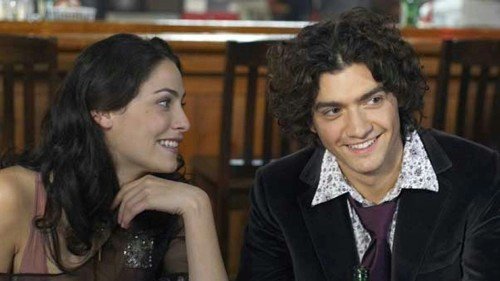
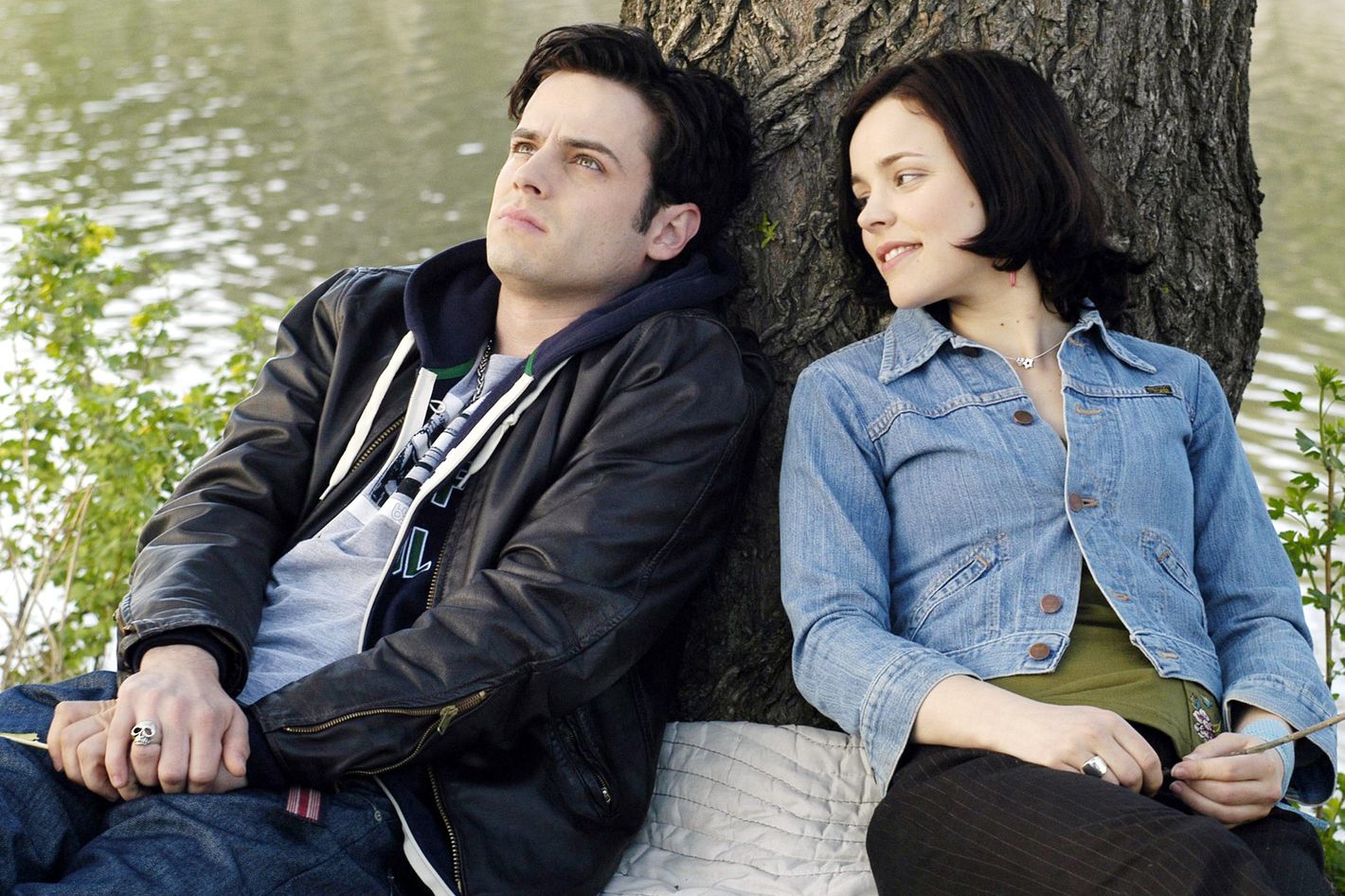
Rachel McAdams and Luke Kirby in “Slings and Arrows”
The most truly lovely thing about season 1 in particular, is watching Rachel McAdams’ charming and heartfelt performance as Kate. She plays a struggling actor who deeply loves the theater and dreams of becoming a respected actress. Her dreams are tested however when she falls in love with one of her co-stars and is accused of sleeping her way into a better role.
McAdams is the perfect ingenue in this show: She is naive, charming, Ernest, and kind. You watch Kate struggle and desperately want her luck to turn around and then rejoice when she gets to fulfill her dreams.
As Kate on Slings, she’s the understudy who knows better — happy to be cast, sad that she’s not really cast, and trying not to be bitter that the actual Ophelia is such a wreck. Her smarts and capability of course find her pairing off with Jake (Kirby), who’s more famous but less theatrical.
Slings and Arrows Is the Show Rachel McAdams (and All of Us) Deserved By Margaret Lyons. Vulture Magazine, Aug, 2015.
Then you remember… she was Regina George! It’s easy to overlook how good an actor Ms. McAdams is since she frequently is overshadowed by her co-stars. Much like Ophelia herself, people heap all the praise on Hamlet and forget Ophelia. When I keep in mind the breadth of emotions Ms. McAdams has to portray, and how incredibly different this role is from her role in Mean Girls, I feel compelled to say her acting rivals Paul Gross as Geoffrey Tennet
Season 1 Retrospective
Geoffrey: “Are you dead, or am I insane?
Oliver’s ghost: “I don’t see how those things are mutually exclusive.”
S&A Episode 3
My favorite episodes
I recommend watching all six episodes of Season 1 consecutively, but I can’t deny, some episodes are better than others, especially in Season 1. The first three episodes mainly focus on Oliver’s death and the tragedy of the falling out between Geoffrey, Oliver, and Ellen. This is important for backstory purposes, but it’s a little uncomfortable and sad to watch. My favorite episodes are episodes 4,5 and 6. Here’s why:
Episode 4: Outrageous fortune
After a drunken sword fight at his ex-girlfriend’s house, Geoffrey winds up in jail. This is his rock bottom. He even paraphrases Hamlet’s most famous speech as he contemplates ending it all in his cell. Thankfully, Oliver’s Ghost talks him out of it. Once he’s released, Geoffrey is re-energized and has a new purpose in life- directing Hamlet. Again, after three episodes of Geoffrey hurting, irritating, and sometimes even stabbing people, it’s nice to see our hero do what he was put here to do.
Episode 5:A Mirror Up to Nature
Geoffrey is finally fully committed to making the best Hamlet he can be, but he’s having problems with his Ophelia.
Geoffrey’s star is missing! With the production stalled, Geoffrey and Ellen finally have it out, and finally, share their tragic past with each other. Now the race is on to, “Repent what’s past, avoid what is to come, and fulfill their promise to Oliver.
So I hope I’ve articulated why I love this show and its characters. Just like anyone who’s ever had a boring office job loves and recognizes the characters from “The Office,” those of us in the theater recognize the crazy directors, the hopeful understudies, the divas, and the money-grubbing management. These characters feel like our friends and colleagues and they care so much about the universal dogma of “The show must go on,” no matter what kind of agonizing problems slow it down. Whether it be death, dementia, or a dislocated knee caused by a chameleon. the show within-this incredibly clever comedy about drama will catch your conscience… and your heart.
I was saddened to hear of the recent passing of actor Kevin Conroy, world-renowned as the voice of Batman and Bruce Wayne on Batman The Animated Series, the Arkham Asylum games, and many others. Conroy is definitely my favorite Batman, and as I and many others have said before, there are Shakespearean tropes in the Caped Crusader. From the very beginning, Conroy drew inspiration from a particular Shakespearean play, the melancholy prince, dressed in black, who seeks to revenge his father’s murder: Hamlet, Prince of Denmark:
I did a cold audition, I had never done an animated voice before. I said the only exposure I’ve had is the Adam West show from the 60’s and they said “NO! NO! NO! That’s not it.” I said ZIP POW POP and they said “NO! It’s, think film noir, think the 40’s New York. Think dark, think a kid who just watched his parents get murdered and spends his life avenging their deaths and he lives in the shadows. He’s got this dual personality and he’s never resolved this torture of his youth. I said you are telling the Hamlet story, this is heavy stuff. And he said yeah, no one has ever said that before, but yeah I guess it is. This is like a classic archetypal, Shakespearian tragedy. So I just used my theater training and put myself into that head (Batman voice) And I got into this very dark place and came up with this voice. (Regular Voice) And as I did it I saw them all running around in the booth. And I thought well either I did something really bad or something really good because I hit a nerve, I know I hit a nerve. And they came out and they said well we’ve seen about over 600 people and how would you like to do the part?
Kevin Conroy
It makes sense that Conroy would use Shakespeare to flesh out Batman. He was a veteran of the Old Globe Theater in San Diego, and performed in Hamlet several times. He even played the prince himself for the New York Shakespeare Festival in 1984. Yet I don’t think Conroy’s decision to make Batman a sort of modern-day Hamlet was entirely based on just his past experiences with Hamlet.
“Batman is basically the American version of Hamlet,” Affleck said. “We accept that he’s played by actors with different interpretations.”
Ben Afleck, Entertainment Weekly, 2015.
Batman and Hamlet are basically Revenge Tragedies; age-old stories that began with Oedipus Rex and the Orestia in ancient Greek plays, where a hero must lift a plague on his society by avenging the death of a parent (usually the father). This kind of play was very popular in Shakespeare’s day and included a host of others such as Shakespeare’s Titus Andronicus, The Spanish Tragedy, Locrine, The Dutchess of Malfi, and later The Revenger’s Tragedy.
But Hamlet, like Batman, is an avenger. He didn’t make Denmark rotten. That was Claudius, and if Claudius self-punished like Oedipus, Claudius would be a tragic hero too. But Claudius is just a garden-variety villain, and so Denmark needs a hero to set things right. Enter Hamlet. He’s “tragic” only in the sense that he dies, and since he dies after completing his heroic mission, he dies triumphant. But unlike the deaths of Claudius, Oedipus, and Macbeth, his death isn’t necessary to restore order. It’s just an epilogue.
As this clip above indicates Hamlet is unique among revengers because his conflict doesn’t come from the machinations of his villain; he’s stopped by his own internal conflicts. Batman is more active than Hamlet, but he also wrestles with internal conflicts and Conroy plays these conflicts with a lot of subtlety and nuance. To illustrate this conflict, let’s look at some great clips from the series!
Batman admits he wanted Revenge: “The Curious case of Hugo Strange”
In this episode, Dr. Strange (not the Marvel Superhero), uses a dream-reading machine to try and blackmail Bruce Wayne, and inadvertently discovers his secret identity. Not only does this episode dramatize Wayne’s literal worst nightmare, (someone figuring out who he is), it also touches on the pain of his past and how even though now Batman is a deputized agent of the law who never kills, he began as an angry, vengeful vigilante, like Hamlet:
I am myself indifferent honest, but yet I could accuse me of such things that it were better my mother had not borne me. I am very proud, revengeful, ambitious; with more offences at my beck than I have thoughts to put them in, imagination to give them shape, or time to act them in.
Hamlet, Act III, Scene i.
Batman’s Conflict With His parents.
In this clip from the animated movie Mask Of the Phantasm (1993), a pre-Batman Bruce Wayne feels a conflict between his obligation to avenge his parent’s death, and his budding romance with Ms. Andrea Beaumont:
One can almost sense an Ophelia- Hamlet-like conflict where Bruce knows his quest to avenge will consume him, and leave no time to pursue romance. In all revenge tragedies, the hero has to avenge alone, or at least without the support of a spouse or partner. Hamlet also makes the choice to cut Ophelia out of his life, though it’s not clear why. It could be he’s worried that Claudius will harm her, it could be he’s worried she’s compromised since her father tried to spy on him, or it could simply be that he doesn’t trust her. It’s up to the actor and director to “Pluck the heart of Hamlet’s mystery.”
Eventually though, the choice is made for him, and Bruce Wayne completely commits to his quest to battle the crime in Gotham, as this epic scene from “Mask of The Phantasm” shows:
Haste me to know’t, that I, with wings as swift As meditation or the thoughts of love, May sweep to my revenge.
Hamlet, Act I, Scene v.
Hamlet and Batman’s Demons
The spirit that I have seen May be a devil; and the devil hath power T’ assume a pleasing shape; yea, and perhaps Out of my weakness and my melancholy, As he is very potent with such spirits, Abuses me to damn me.
Hamlet, Act II, Scene ii.
What’s truly unique about the animated version of Batman is that it’s the only one that takes time to show Batman’s complex relationship with the ghosts of his parents. As previously discussed, Bruce Wayne’s desire to revenge their death and to punish the wickedness of Gotham is what spurs him to keep fighting as Batman, but he also wonders many times if he’s doing more harm than good. He’s also tempted to forget them and try to lead a normal life, like in the episode “Perchance to Dream,” (which itself is a quote from Hamlet). Above all, the animated show knows that, since children are watching this show, they will connect with Batman’s fear of not living up to his parent’s expectations, a fear to which every child can relate.
In the first season episode “Nothing To Fear,” the villainous Scarecrow exploits Batman’s fear of disappointing his parents by drugging him with a fear toxin, causing Bruce to hallucinate that his father is berating him and calling him a failure. Hamlet gets a similar ghostly chewing out in The Closet Scene:
Father’s Ghost. Do not forget. This visitation Is but to whet thy almost blunted purpose.
Hamlet, Act III, Scene iv
While The Ghost of Hamlet’s Father is mostly supportive in this scene, Hamlet worries many times in the play if Claudius is in fact innocent, and the Ghost is a demon sent by the Devil to get him to kill an innocent man, and thus damn him for eternity. This uncertainty is the same that Batman wrestles with, as he confronts his own demon-like apparition. Batman then defiantly responds to this fiendish hallucination with one of the most iconic lines in the series:
Only a consummate professional like Conroy with his grounding in Shakespeare in general and Hamlet in particular could portray such an iconic character. Many fans of Batman like me believe that Conroy’s portrayal was the peak of the franchise, and I feel fortunate that it came out when I was a child. I mourn Conroy’s loss, yet as Mr. Affleck mentioned in the quote above, like Hamlet, the character of Batman has many possible interpretations, and though Conroy will always be my favorite, I hope new and exciting interpretations will arise from the shadows in time, bringing this complex, Shakespearean character to a new audience.
“Good Night, Sweet Prince and flights of bat wings fly thee to thy rest.”
I’ve talked about some great Hamlets and some awful Hamlets. Now I want to talk about one that I find very much a mixed bag. The direction is incredible, for the most part it’s very well cast, and it has some truly memorable visuals, even though they’re very much rooted in the world-weary pre-9/11 New York of Y2K.
The mid 90s were the golden age for teenage Shakespeare adaptations with films like “Romeo+Juliet,” “10 Things I Hate About You,” and “O.” All of these films chose to do Shakespeare in modern day, and use youthful actors in the main parts. Since many teen novels and stories feature a brooding young protagonist dealing with the loss of a parent, while trying to find his/her place in the world, it makes sense Hollywood would continue this trend with Hamlet.
The trailer markets this as a sort of “cool Hamlet,” which is more about drama and exciting visuals then long-winded speeches. Director / screenwriter Michael Almereyda has a lot of interesting experience that translates well in this film., in addition to making films he also makes documentaries and short films. I think he wanted to tell this story like a documentary of a high-profile murder case, one where one of the victims happens to be an amateur short-film maker
The Acting
I actually really liked Ethan Hawke as Hamlet. He has a real effortless delivery of Shakespeare and he plays Hamlet as a troubled art-student type of kid who wants to see life through a film lens instead of dealing with the chaos of real life. The film also has some creative staging choices for Hake’s soliloquies. Look at how they staged “To Be Or Not To Be,” in a way that though dated, is a clever way of establishing Hamlet’s worldview. This Hamlet wants to be an action hero like Schwartzenegger, but is cursed with a conscience, anxiety, and fear of the unknown:
Sam Shepherd as the Ghost
Before he was a movie star, Ethan Hawke was an accomplished stage actor appearing frequently in the gritty western-inspired dramas of playwright Sam Shepherd. It seems appropriate that for Hamlet, the ghost of his father was played by one of Hawke’s theatrical mentors, plus as I said in my post on ghosts, it’s very true to form having the ghost played by a playwright
Sam Shepherd as the Ghost in Hamlet
Shepherd is my favorite incarnation of The Ghost. He’s simultaneously fatherly and terrifying, he’s mournful and hopeful. He doesn’t have any special effects to detract from his performance, nor is he just a disembodied voice. The understated nature of Shepherd’s performance works perfectly for film!
Polonius and his family
I have to give special mention to Julia Styles (Ophelia), Liev Schrieber (Laertes), and Bill Murray (Polonius). All their scenes are great and they play off each other very well. You really feel bad for this family which winds up broken by Hamlet and the king, even though they did nothing wrong.
I particularly love this staging of Act I, Scene iii, where Laertes gives his sister Ophelia some advice before leaving for France. Their father Polonius in turn, gives Laertes some fatherly advice, concluding in the famous line: “This above all, to thine own self be true.”
Liev Schrieber as Laertes Shrieber was a great choice for a more movie -like American Laertes. He has a distinguished way of talking and a no-nonsense air about him that works well for the son of a corporate executive like Murray’s Polonius. At the same time, you can sense his boiling hatred of Hamlet, even in this first scene. He’s a great antagonist and plays well with Murray and Hawke.
Bill Murray As Polonius If you read my review of Branaugh’s Hamlet, you noticed I said that I thought his casting was terrific with two exceptions. One of which was casting Richard Briars as Polonius. Branaugh, (and Derek Jacobi in the stage production that inspired the movie), chose to direct Polonius as having no humor whatsoever- to play him as Claudius’ right-hand man. A controlling and micromanaging father who is obsessed with keeping up appearances. While Briars is a fantastic actor, you lose a lot of Polonius without giving him at least a little comic pedantry.
Bill Murry has no problem balancing the funny and business-like aspects of Polonius’ character. Like Peter Venkmen in Ghostbusters, he takes himself too seriously and loves to hear himself talk, and lke his character in Lost In Translation, he has a great deal of fatherly tenderness with Julia Styles. I also love the bit where he puts some extra money in Laertes’ backpack. This Polonius isn’t a fool, but he’s also a bit of a worry wart- and his fretting over his kids blinds him to what Hamlet is really up to.
Julia Styles as Ophelia As I mentioned, Ms. Styles did a number of great Shakespeare movies in the mid 90s, including her iconic portrayal of Kat Stratford in “10 Things I hate About You.” Sadly, the director didn’t give her much to do in the fisrt half of this movie. Her Ophelia mostly looks pretty and does as little as possible. The only moment that stood out to me was the look of guilt on her face after Hamlet discovers she’s wearing a wire in the “Get Thee To A Nunnery” scene.
Styles shines however in The Mad scene. I think her strong personality clashed in the first half of the film with the rather weak and docile Ophelia they were going for. Thankfully, during the Mad Scene, she screams, gets in people’s faces, and has a lot of fury towards the men in the scene. Also, putting the scene in the famous Guggenheim Art Museum works very well- it’s a public place, so anything Ophelia says makes Claudius look bad. Also, the spiral design of the museum feeds into the disorientation Ophelia feels without her father. Finally, the art itself calls back her love of photography and Hamlet’s love of film.
The BEST MOUSETRAP EVER!
A lot of the scenes and soliloquies of this film are very hit-and-miss, but the one moment of the play Almereyda absolutely nails is the play-within-a-play in Act III, Scene i. First of all, the director cuts all the intentionally bad dialogue and turns the play into a silent film-within-a-film, with lots of homemade charm and disturbing imagery. Mr. Almereyda carefully adapted the often-cut dumb show that happens before the play, and used that to fashion Hamlet’s short film:
[Hautboys play. The dumb show enters.]2015 Enter a King and a Queen very lovingly; the Queen embracing him and he her. She kneels, and makes show of protestation unto him. He takes her up, and declines his head upon her neck. He lays him down upon a bank of flowers. She, seeing him asleep, leaves him. Anon comes in a fellow, takes off his crown, kisses it, pours poison in the sleeper’s ears, and leaves him. The Queen returns, finds the King dead, and makes passionate action. The Poisoner with some three or four Mutes, comes in again, seem to condole with her. The dead body is carried away. The Poisoner wooes the Queen with gifts; she seems harsh and unwilling awhile, but in the end accepts his love.
Not only does this film fulfill its dramatic function, (making Claudius betray his guilt), but we also get a window into Hamlet’s mind. We see how he sees his father, his mother, and his life before his father’s death. As an added bonus, the film is subtle enough that Claudius would’ t be able to make sense of it unless he had actually murdered Hamlet’s father.
My problems with the film:
Like I said, my problem isn’t with Hawke. My problem is the rest of the film. Some actors just mumble their lines. Sometimes the director wastes time with pointless film clips which only seem to exist to remind you that “This Hamlet is artsy.” But my biggest problem with the film is the pace. Almereyda does a great job paring down Hamlet to its core drama- Hamlet vs Claudius and the poor people who get caught in the crossfire. Though he is sparing with dialogue, he wastes time with silence. A lot of the film is the characters sitting around watching TVs, looking at photos, sleeping, or just staring off into space. In addiiton, the delivery is very mixed. Like I said, Hawke’s quiet, understated delivery works very well, but not for every character. To varying degrees, everyone in the film is guilty of what I call “movie Shakespeare acting,” which is to say, being so afraid of sounding like Oliver and Branaugh, that they mumble their lines, slow the pace down, and turn the emotion down to nearly zero, because they don’t want their performances to appear over-the-top. The thing is, Hamlet is a tragedy about people who are fighting for their lives and souls. A little quiet introspection is important, but too much of it drags the play or the movie down.
The STUPID ENDING
As you read in my post on the duel in Hamlet, Shakespeare’s play, ends in a fencing match where Laertes betrays Hamlet by fighting with a poisoned sword, which Hamlet eventually uses to kill Laertes and Claudius. It’s a powerful moment of poetic justice. In Almereyda’s version, LAERTES JUST SHOOTS HAMLET.
To be fair, the whole scene doesn’t work well in a 21st-century context. Laertes just told Hamlet to literally “Go to Hell,” but then in the very next scene Hamlet agrees to play against him in a friendly fencing match? Only a complete idiot wouldn’t know that something suspicious is up. In every good production I’ve seen, Hamlet knows this is a trap, but he does it anyway. I think he intends to let God decide their quarrel like in old-fashioned judicial combat.
Since dueling isn’t practiced anymore (except in episodes of The Office), it seems bizarre that Hawke’s Hamlet would agree to be in the same room with Laertes, let alone fight with him. I wish the director had done something, anything to justify Hamlet’s choice to fence with Laertes, or just do away with the fencing entirely and have them fight over Ophelia’s grave.
The other thing I hate about this scene is that it isn’t a fight; it’s a murder and a very stupid one. Laertes shoots Hamlet but instead of shooting him at a distance, he walks right over and shoots Hamlet, close enough for Hamlet to turn the gun on Laertes. This makes Shreiber’s character seem incredibly stupid and completely unsympathetic. Not only is it stupid, but it’s also cowardly. Hamlet is unarmed, and can’t defend himself against a bullet. If Laertes had a knife, Hamlet would’ve at least have had a fighting chance. As it is, we get a pointless, bloody end to a great character, and Laertes does it in a cowardly ignoble way.
The Film’s Influence
Whether or not you’ve seen and liked this film, it definitely influenced one of the most well-received Hamlets of recent memory.The Royal Shakespeare Company’s 2009 TV movie of Hamlet takes a lot of cues from Michael Almereyda’s film.
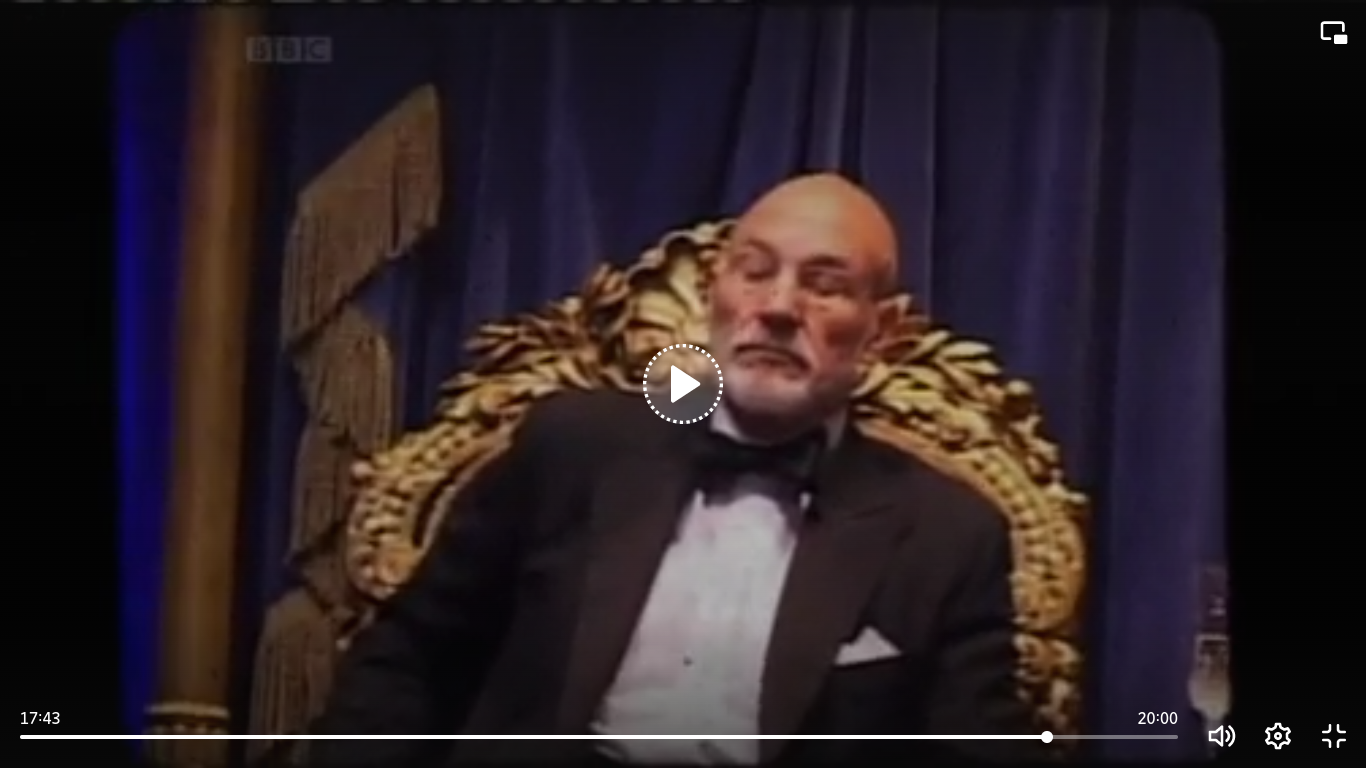
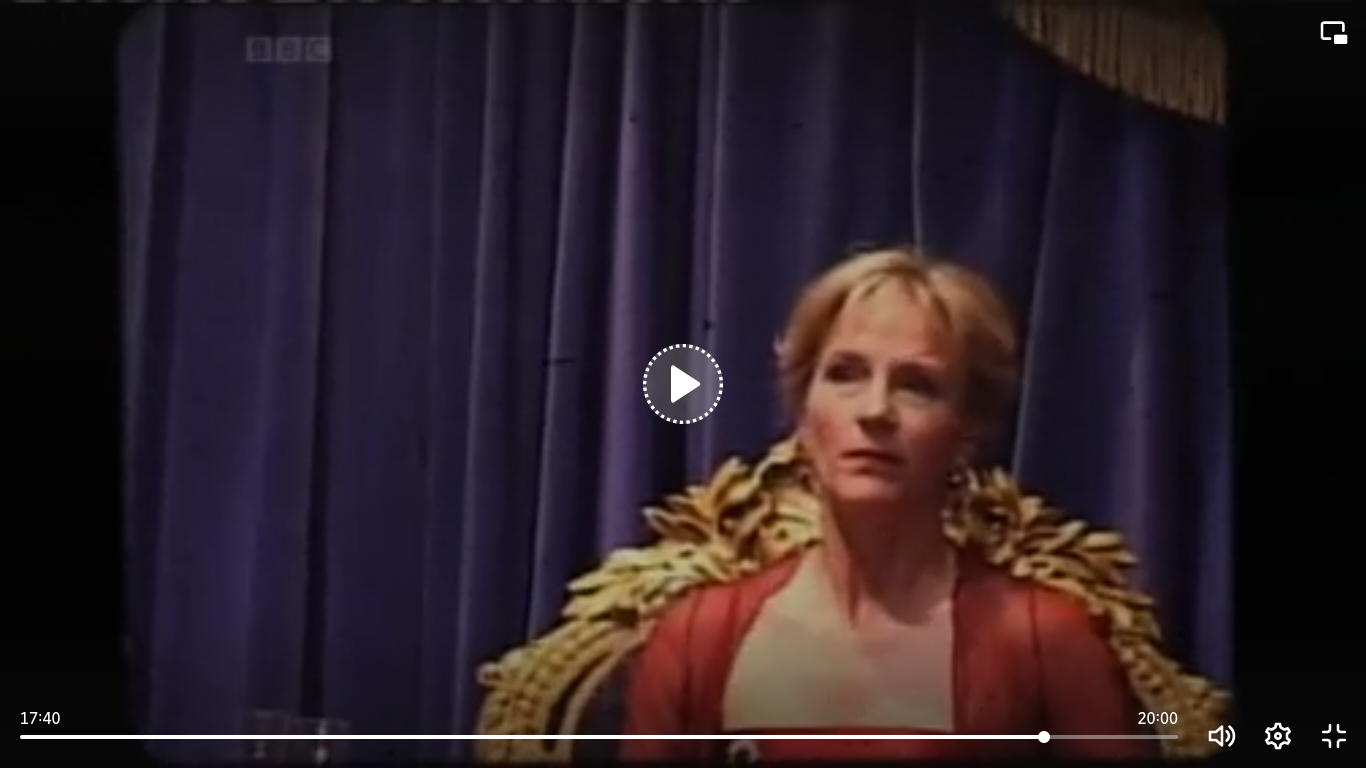
The Concept- Court intrigue Both films immerse themselves in the trappings of wealth and status in American and British society. In Act I, Scene iii Kyle Mcglaughlin as Claudius holds large press conferences, surrounds himself with bodyguards, security cameras, and lives in the luxury Hotel Elsinore. Patrick Stewart in the same scene holds an exclusive black-tie soiree attended by bishops, men in tails and women in ballgowns. Plus the British version keeps the monarchy, it just updates it with marble pillars, spotless floors, and golden chains and thrones.
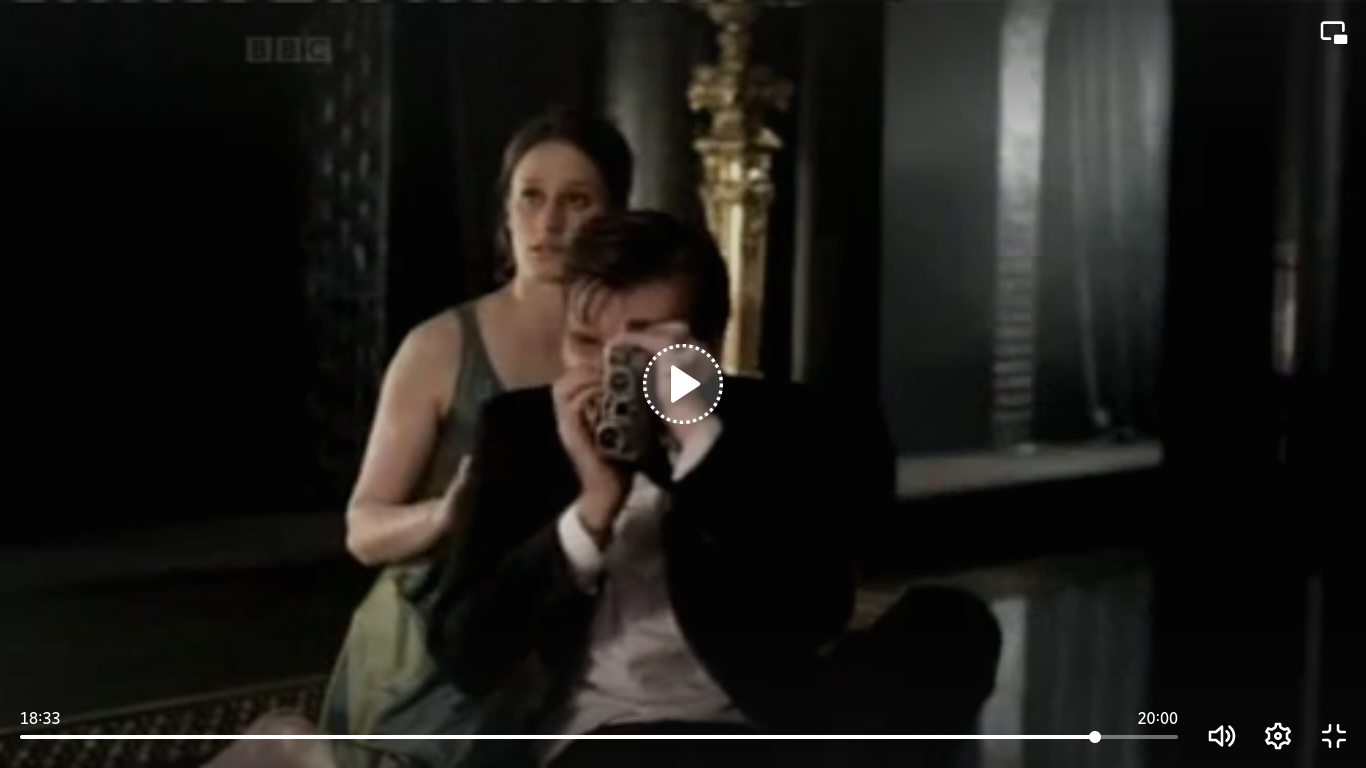
Watching and being watched– Both films start off with security camera footage, and shots of security cameras become a running motif that demonstrates Claudius’ control over Hamlet’s life. Also in both films Hamlet defies his uncle by filming him back with his own camera.
Updating Gertrude One of the flaws of Shakespeare’s text is that he judges Gertrude far too harshly. To Hamlet, it is incomprehensible that his mother could fall in love and marry anyone else. I like that in both versions, Gertrude is still relatively young, and the Claudius figure is relatively charming and handsome, while the ghost seems warlike and cold. You get the sense that Hamlet’s father was a good king, but a lousy husband. Little touches like this flesh out her character, and make us compelled to see what happens to her.
You cannot call it love; for at your age2460 The heyday in the blood is tame, it’s humble, And waits upon the judgment;
So, to be brief, this version isn’t the best, but it has plenty of clever set pieces, good performances, and early 2000s angst to trigger any millennial’s nostalgia goggles. More than that, I think later productions are indebted to this little movie for paving the way to bring Hamlet into the 21st century.
















 The Shakespearean Student