
Shakespeare on Riots

Today is March 15th, a day that history still bewares, because of the infamous day when armed, violent conspirators went to the Senate and attempted to overthrow elected rulers. For obvious reasons, this put me in mind of the heinous actions of another group of conspirators stormed another Senate and tried, unsuccessfully, to overthrow democracy.

January 6th, 2021 (which, coincidently, was Twelfth Night, one of my favorite Shakespeare-themed holidays), was a tragedy for multiple reasons. The protestors broke windows, destroyed furniture, defaced statues, broke into both chambers of Congress, and probably would have harmed lawmakers, in a violent protest of both the US presidential election and the Senate vote in Georgia that week.


Let me be clear, this was sedition and treason and everyone involved should be prosecuted to the full extent of the law. Anyone who says otherwise is blatantly attacking our cherished democracy, and spitting in the face of the rule of law. Unfortunately, Republicans in both chambers have been unwilling to condemn their actions for fear of alienating their base. If this is what the Republican party has come to, the party doesn’t deserve the name. A republic protects the right of the people to elect its representatives and dedicates itself to the peaceful transition of power. Left unchallenged, groups like this will bring anarchy and tyranny to our country.

How do I know this? Because it happened before. Shakespeare has long dramatized real historic events where people rise up against their governments (for better or worse). In all cases, whether protesting a famine, a war, or a cruel tyrannical usurper, the riots never accomplish anything except bringing chaos and bloodshed. Sometimes these ignorant rioters are goaded by charismatic powerful figures, but these upper-class characters are only exploiting the rioters, using their violence as a way to get power for themselves. So, let’s examine the language, tactics, and effects of rioters in three of Shakespeare’s plays: Julius Caesar, Henry VI Part III, and Sir Thomas More:

Example 1: Julius Caesar
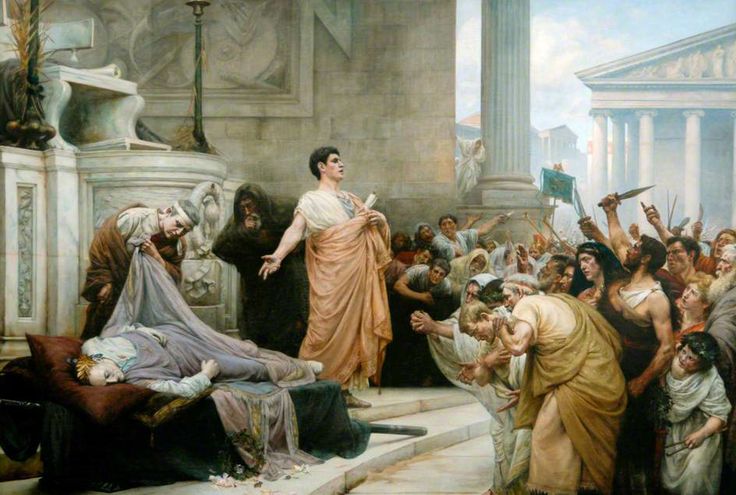
George Ed Robertson Antony
(c) Hartlepool Museums and Heritage Service; Supplied by The Public Catalogue Foundation

As I covered before in my “Friends, Romans, Countrymen,” post, during Antony’s famous funeral speech, he galvanizes the Roman crowd, first to mourn Caesar, then to revenge his death. How do they do this? By burning the houses of the conspirators and rioting in the street. They even kill a man just because he has the same name as one of the conspirators:

https://www.rsc.org.uk/shakespeare-learning-zone/julius-caesar/story/timeline

What does this violence accomplish? Nothing. Caesar is still dead. Brutus is still alive (though on the run). Antony merely wished to punish Brutus, and get the mob to hate him while he secretly cheats them out of their money. In Act Four, Antony becomes the de facto ruler of Rome because he leveraged his performance at the funeral, and uses his newfound powers to take money away from the citizens that Caesar promised to give them in his will. He manipulated them for his own purposes and duped them for political power.

Example 2: Jack Cade in Henry VI, Part ii.

Henry VI is the only king in English history to be crowned twice, deposed twice, and buried twice (Saccio 91). As the play begins, King Henry has already lost France, lost his mind, and lost the respect of his people. Around 1455, John Hardyng wrote a contrast between Henry’s father and himself. He laments that Henry the Fifth died so soon and then exhorts Henry to keep the quarrelsome lords in his government from warring among themselves.

Withstand, good lord, the outbreak of debates.
And chastise well also the rioters
Who in each shire are now confederates
Against your peace, and all their maintainers
For truly else will fall the fairest flowers
Of your great crown and noble monarchy
Which God defend and keep through his mercy.

(Excerpt from Harding’s Chronicle, English Historical Documents, 274).

Henry’s political ineptness was why Richard of York challenged his claim to the throne. Though Richard had little legal claim as king, he believed himself to be better than Henry.

In Shakespeare’s play Henry VI, Part ii, York tries to get the people’s support by engineering a crisis that he can easily solve. York dupes a man named Jack Cade to start a riot in London and demand that the magistrates crown Cade as the true king.

Biography of Richard, Duke of York, who challenged King Henry VI for his right to be king.

York and Cade start a conspiracy theory that Cade is the true heir to the throne and the royal family suppressed his claim and lied about his identity. Cade starts calling himself John Mortimer, a distant uncle of the king whom York himself admits is long dead:

The Royal National Theater’s production of Henry VI, Parts II, and 7. Jack Cade appears at about the 7-minute mark.
And this fell tempest shall not cease to rage
Until the golden circuit on my head,
Like to the glorious sun's transparent beams,
Do calm the fury of this mad-bred flaw.
And, for a minister of my intent,
I have seduced a headstrong Kentishman,
John Cade of Ashford,
To make commotion, as full well he can,
Under the title of John Mortimer.

Just like Cade and his rebels, the January 6th rioters were motivated by lies and conspiracies designed to crush their faith in their legitimate ruler. Even more disturbing, these rioters are pawns in the master plan of a corrupt political group. York doesn’t care that Cade isn’t the real king; he just wants to use Cade’s violence as an excuse to raise an army, one that he can eventually use against King Henry himself.
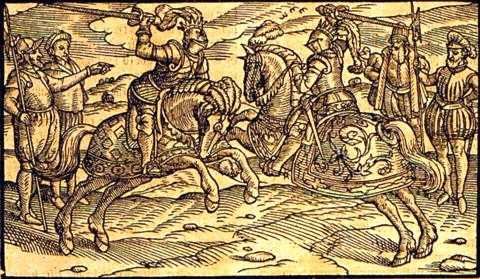
15th century woodcut from the War Of the Roses.

Similar to York’s lies and conspiracy-mongering, many Republicans have refused to accept the legitimacy of Joe Biden’s election, and some are actual proponents of Q Anon conspiracies!

A lot of Republicans deserve blame for fanning the flames of rebellion on January 6th, but arguably former President Trump deserves most of the blame. Even Rush Limbaugh admitted that Trump spread a huge amount of conspiracy theories without believing in any of them. He does this because he wants Americans to be afraid of imaginary threats that he claims he can solve. What’s easier to solve than a problem that doesn’t exist? Much like York, Trump tried to hold onto power by pressuring his supporters to pressure the Capital, feeding them lies about election fraud, and a secret democratic Satanic cult. Thus radicalized, they resolved to do what Cade’s mob did: “Kill all the lawyers.” Unfortunately, there are a lot of lawyers in the Senate.

As Dick the Butcher points out, most people don’t actually believe Cade is truly John Mortimer, they are just so angry at the king and the oppressive English government, that they are willing to follow him in a violent mob to take their vengeance upon the monarchy. This is why they try Lord Saye and execute him just for the crime of reading and writing! Similarly, the mob attacking the capital was made up of die-hard conspiracy adherents, and people just angry at the Democratic Party.

https://www.washingtonpost.com/technology/2021/01/20/qanon-trump-era-ends/

Like I said before, Cade and his mob is just a pawn in the machinations of York. Eventually the king’s enforcer, Lord Clifford convinces most of them to abandon Cade, and Cade himself dies a humiliating death- on the run from the law and starving, Cade is murdered by a farmer after trying to steal some food. After Joe Biden became the 46th President, many of the conspiracy group Q-Anon, who had many prominent members in the January 6th riot, began to disbelieve and abandon the conspiracies of the group. However, as this news story shows, some Q-Anon supporters are die-hard adherents and will never abandon their conspiracy theories, and some, like York’s supporters, are being recruited by other extreme groups. Sadly, as York shows, sometimes a riot is a rehearsal for another riot. In Shakespeare’s Henry VI, Part III, York finally amasses an army and challenges the Lancastrians in all-out war. Hopefully, the US government will hunt down and arrest these violent insurrectionists before they have the chance to do the same.

Example 3: Sir Thomas More

In the unfinished play “Sir Thomas More, a racist mob again attempts to attack London. This time they have no political pretenses; they want to lynch immigrants who they believe are taking English jobs. As I said in my “Who Would Shakespeare Vote For?” post, More’s speech is a perfect explanation of why this behavior cheapens and denigrated a country’s image, and weakens its ability to command respect from the rest of the world. Last time I posted a video of Sir Ian McKellen speaking this speech, but this time.. well just watch:
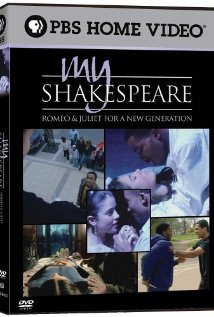
Shakespeare Review: My Shakespeare

On this page, I review a Shakespeare book, movie, or TV show that I feel has some kind of value, either as an interpretation of Shakespeare, or a means to learn more about the man and his writing. This post will introduce you to an incredible documentary, and in my view one of the best ways to encourage, excite, and challenge young people reading Romeo and Juliet Aptly titled, it is called, My Shakespeare.

  1. Name:My Shakespeare
  2. Year: 2004
  3. Director: Michael Waldman
  4. Ages:PG for frank discussions of violence, and occasional suggestive language.
  5. Media:Full length documentary, (available on Amazon and Netflix DVD)
  6. Recommendation: I’d recommend this to high school and college students, as well as all theater teachers and practitioners. A word of caution though- nearly everyone in the documentary speaks with various British accents (from posh London to poor Harlesden), and thus if you think your class might not be able to understand foreign accents, you might want a different version, or put on the subtitles.
  7. Premise: Director Patterson Joseph is a man on a mission- to prove that the people in his home town, (the poor, violence-ridden town of Harlesden England), that these same people can and will put on a production of Romeo and Juliet, in just four weeks. The cast has never acted before, and Patterson sometimes has to drag them kicking and screaming into rehearsals, but eventually they all learn that putting on a Shakespeare play can become an extremely personal experience. In the beginning, they are attempting Shakespeare, but by the end they live it. In between the action, there are interviews with Baz Luhrman, the celebrated director of the Leonardo Dicaprio film version of Romeo and Juliet back in 1996. Baz serves as a sort of chorus, explaining some of the challenges a director like Patterson will inevitably face as he and his actors bring the play to life.
  8. Repeated Ideas That Run Through the Documentary:
    1. You can do this- you can act, you can understand Shakespeare, you can finish something, you can show emotions, and you can direct.
    2. Shakespeare is able to tell stories that appeal to everyone, and here’s the proof.
    3. The best way to understand Shakespeare is to get on your feet and do it.
  9. Moments to watch for: Before I list my favorite moments in the documentary, I’d like to list the theatrical process by which Patterson and his company put on Romeo and Juliet. 
    • The Process Of Creating Romeo and Juliet:
      1. Auditions/ Improv Games (4 weeks to go)
      2. Table Work, where the actors read the script and talk about their characters.
      3. Paraphrasing the script and improv (9 days to go)
      4. Stage combat Rehearsals- prepping the fights.
      5. Opening Scene rehearsal on a basketball court.
      6. Vocal Rehearsal
      7. The Emotion Workshop (8 days to go) The actors try to tap into their own emotions to try and bring some real feelings into their parts.
      8. Death Scene Rehearsal in a Graveyard!
      9. Last minute changes (5 days to go)
      10. Globe theater rehearsal
      11. Nighttime Balcony Scene Rehearsal at the aptly named, “Shakespeare Road.”
      12. Tech Rehearsal at the Royal Academy Of Dramatic Arts.
      13. Speed Through Rehearsal/ The final rehearsal (1 day to go)
      14. Performance at the Royal Academy Of Dramatic Art
    • Now a look at some of my favorite parts of the documentary.
    1. The audition/ casting scene- In this scene you watch the future cast members explore the story of the play through improvisation, then you see their background through a series of headshots and dossiers. The whole cast is more diverse than any West End production: black, white, Christian, Muslim, young people and old people. Patterson’s casting choices alone makes this production fresh and relevant to our shrinking little world. A few cast members are refugees that came to England because of their countries’ own family feuds in Somalia and Afghanistan. Even more striking, Romeo and Juliet are very young- 18 and 22 respectively, which gives their love scenes an amazing truth and honesty. At first they think they have nothing in common with their characters, but in reality they have even more in common than most of us who read Romeo and Juliet.
    2. The table work scene where the cast learns about their characters You see Mustafa as Mercutio learn that Shakespeare can be funny, you see Jonathan as Romeo learn that some of Shakspeare’s words are still used today, and you see Muska just start to flirt with the idea of playing Juliet.
    3. Jonathan’s Story- Unlike most actors who have played Romeo, Jonathan Thomas has been in a real fight, and he describes it in brutal detail, even showing the scars he got from his stab wounds. Hearing his story gives his performance a truth and poignancy that I’ve never seen in any other version.
    4. The Balcony Scene Rehearsals- In this documentary the two leads perform the scene many times, in rehearsal where they talk about how hard it is to play love realistically, in Shakespeare’s Globe, where they see how it was done in Shakespeare’s day, in a modern balcony back in Harlesden, (on the appropriately named “Shakespeare Road,” and at last in the final performance. Few documentaries show just how hard it is to do a Shakespearean scene, particularly if it’s famous, and how many different ways a director and a pair of talented actors can play it and find new things each and every time.
    5. The scene where Patterson lets one of the actors go. Everyone in this production has to overcome obstacles, even the director; when one of his actors fails to perform, he simply has to drop the axe and recast one of his lead roles. Theater is hard work, and just like any job, the director has to take control and do what is necessary to make sure that the production is a success.
    6. Rehearsal at the Globe Theater On one very special day, the actors step onto the stage of the reconstructed Globe, and take a few tentative steps into the 1500s. Once in the space, they take to it like fish to water, playing with the audience, playing with projection, and their lines are infused with a special kind of energy that only arises from the boards of an Elizabethan stage. I found it interesting that when Jonathan was talking to Mark Rylance, the artistic director of the Globe, he asks what kind of man Shakespeare was, because he’s starting to see Shakespeare as a peer!
  1. My reaction: This documentary gives me hope every time I see it. Over and over again Patterson instills in his cast the idea of “Yes, you can,” yes, these people can understand Shakespeare, yes they can learn their lines, yes they can act, yes they can do something intelligent, and moving, and honest, and beautiful and what better play to bring that message across than Romeo and Juliet, which is full of youthful energy and excitement. My only complaint is the interviews with Baz Luhrman don’t really add much to the documentary side of things; Luhrman was really only there for name recognition, and he certainly knows less about Shakespeare than the RSC veteran Patterson. Nevertheless, the whole documentary Is nothing short of inspiring from beginning to end.
  2. Notable cast members
  1. Muska Khpal as Juliet. An 18 year- old Afghan refugee who came to England in 1996, without even speaking English, now playing one of the greatest characters in English literature! Like Juliet herself, Muska has very strict parents (who didn’t approve of her playing the part), and is at first is extremely shy towards Romeo, toward the play, and even the director, but when you hear her talk about her dream to return to Afghanistan and become a doctor, you can sense Juliet’s strength and independence.
  2. Jonathan Taylor 22 year-old Jonathan is a very charismatic and intelligent young man. After this production he became a professional actor. He speaks articulately about the experience of acting for the first time, reading Shakespeare for the first time, and even his own experiences with love and violence on the streets of Harlesden. He is also very talented and speaks the lines with an effortless panache. I found myself rooting for him the whole time, and the fact that I got to see this production spark his interest in acting and then to see him change and grow was truly inspiring.
  3. Mustafa as Mercutio Tiny, sparkle eyed Somali refugee. He is truly Mercurial- he frequently jokes and kids with the cast, yet at the same time, he is deathly serious when he talks about his life in Somalia- seeing people die in front of him. When he dies onstage, you know his performance is drawn from some real world experience.
  1. Grade: 5 Shakespeare globes.

Another Review: Films Media Group – “My Shakespeare: Romeo and Juliet for a New Generation:” http://www.films.com/ecTitleDetail.aspx?TitleID=20674&r=

Interview with the director, Joseph Patterson: http://www.theguardian.com/culture/2012/jul/01/shakespeare-and-me-paterson-joseph-julius-caesar