If you’re reading this as I post it, there’s a Shakespearean nerd in your life and your wits are about to turn trying to find a gift. I’ve already written about printed editions of Shakespeare and educational apps, so you can consult those if that’s what you are looking for. Now I’m covering the kinds of stuff that die-hard Shakespeare fans will kill a king and marry with his brother for, basically nerdy swag that no Shakespearean fanatics should be without!
For anyone: Immortal Longings.com- This company is very special to me. If you’ve seen any of my Play Of the Month posts, you’ve seen the gorgeous artwork for Shakespeare’s plays by the artist Elizabeth Schuch. Not only do I love her work, my wife and I put her prints on the decor for our wedding day, and wrapped some of my presents in wrapping paper with her designs on it. If you go to her website, she sells Shakespearean art printed on and inspired by Shakespeare’s plays on everything from tapestries to clothes to iPhone cases. I highly recommend checking her work out, and patronizing it as much as possible: https://society6.com/immortallongings/s?q=popular+framed-prints
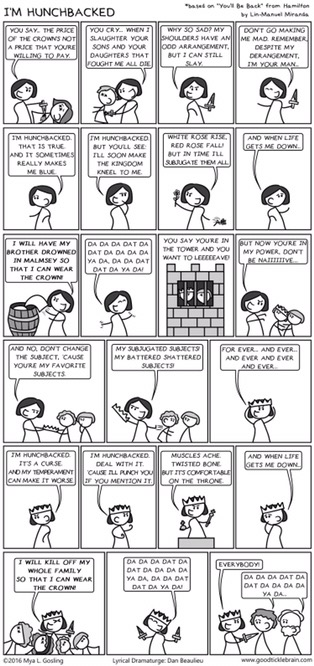
I also want to give a shout-out to the website Good Tickle Brain, a weekly Shakespearean comic that satirizes the Bard’s work with love. I feel the best way to introduce anyone, young or old to Shakespeare is through a healthy dose of satire and parody. Mya Gosling loves Shakespeare and it comes through in her simple, funny retellings of his plays. If you go to their shop (spelled Shoppe to appeal to nerds like me), you can get some of her comic books, funny T-shirts, and a few educational posters for teachers too: https://goodticklebrain.com/shoppe/
Adults
The Bard game This is the Monopoly for Shakespeare Nerds- each player pretends to be a theater manager putting on plays in real locations where Shakespeare’s company toured during his lifetime. You make money by reciting speeches or improvising one in the Shakespearean style, or by answering Shakespearean trivia questions. A must-have for any Twelfth Night Party! Review of the game: https://boardgamegeek.com/boardgame/12372/shakespeare-bard-game https://boardgamegeek.com/boardgame/12372/shakespeare-bard-game
Bards against humanityMost people know the raunchy card game where you try to encapsulate a disgusting word or phrase with a description written on your card. Well, there’s a Shakespeare version too! It makes sense that someone made a card game inspired by the king of the Elizabethan put-downs, (and the inventor of one or two modern curse words!)
Wine🍷 Though I was unable to find actual wine with Shakespeare’s name on it, practically every other part of the wine drinking experience has been branded with Shakespeare- wine bags, glasses, corks and bottle stoppers, and even whole bars! If you spend a few minutes looking online, you can find tons of Shakespearean wine merch. By the way, here’s a convenient list of quotes Shakespeare wrote about alcohol: http://www.shakespeare-online.com/faq/shakespearedrinking.html
Pen and ink There’s a lot of good versions of pen and ink with Shakespeare’s name on them. Imagine the fun you can have writing sonnets with your own Shakespearean pen and ink!
The title page of the clever comic book, “The Manga Shakespeare”
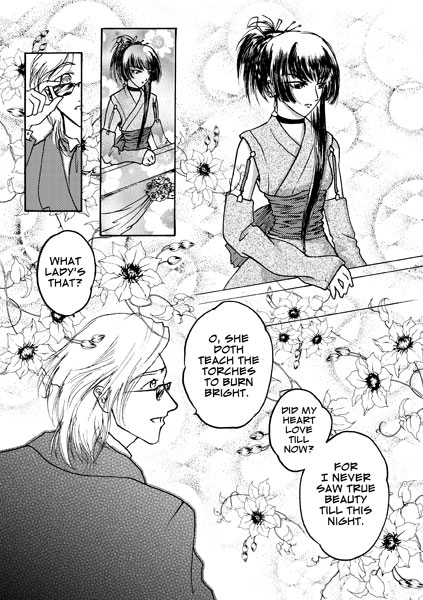
Shakespearean Comic Books. I’ve written reviews about some of these books and I’m very impressed by the artwork and the clever adaptations. Click here to read my review of the Romeo and Juliet Comic.
Kids
Pop-Up Shakespeare by the writers of the Reduced Shakespeare Company. I’m a huge fan of The Reduced Shakespeare Company and they have created an amazing new popup book for kids of the entire Shakespearean cannon!
Barbie and Ken as Romeo and Juliet. Ok, so this is a bit of a stretch, but hey, I’d get it for my daughter.
Board books 📖 Yes, even toddlers can get into Shakespeare. I actually read this to my daughter a lot. It’s not the story of the play, but it does introduce some of the characters and famous lines which can help a child to become familiar with Shakespeare.
Cover of “King Of Shadows,” an excellent Young adult novel for anyone who loves Shakespeare.
King 👑 Of shadows (Ages 8-12) This is an excellent young adult novel that teaches a lot about Shakespeare’s theater and the time period in which he lived. For a complete review, click here:
This was one of my favorite books growing up. It tells the story of Shakespeare’s life and work, with special attention to the creation of the Globe Theater in 1599. It’s gorgeously illustrated and a great read for kids!
So there are some gift ideas for the Shakespeare nerd in your life. Merry Christmas!
Here’s one more gift that you could give a Shakespeare nerd ages 13-18: A class from ME!
Go to my Outschool profile and Get $5 off the following classes:
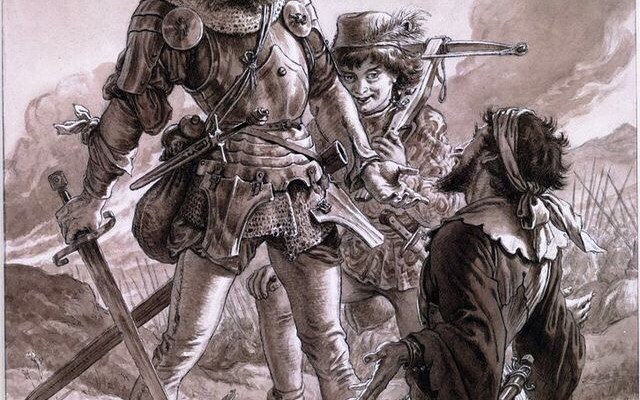
War and soldiers come up a lot in Shakespearean plays. After all, he wrote six plays about the Wars Of The Roses. Though most of his work is about the decisions about war made by powerful monarchs, occasionally he gives us some insight into the lives of common soldiers.
We don’t know if he ever fought, but warfare was very much on his mind at the beginning of his career, with good reason. In 1586 The Spanish armada attacked. Was Shakespeare enlisted? We don’t know.
His early plays are generally positive toward soldiers and it’s easy to see why. The growing nationalism in England resulting from the Tudor control over religion and language —was a direct and defensive reaction to the ex-communication of the Tudor monarchs (particularly Henry VIII and Queen Elizabeth. Shakespeare probably saw himself —
. He no doubt saw his role as building the epic sagas of England to remind his countrymen of England’s past victories, especially during the Spanish Armada and the later Irish Rebellion of 1599.
Shakespeare cashed in with 9 plays on English history that mainly take place on the battlefield. His plays were met with praise by audiences and critics:
“How would it have joyed brave Talbot (the terror of the French),” he wrote, “to think that after he had lain two hundred years in his tomb, he should triumph again on the stage and have his bones new embalmed with the tears of ten thousand spectators at least (at several times).” -Thomas Nashe, c. 1590.
In the first tetralogy, common soldiers don’t have any voice. Probably they were played by apprentices, and fencing masters. They were mainly set dressing. Shakespeare mainly focuses on the pivotal importance of leadership and his portrayal f leadership; he understood the consequences of the choices kings make during the war and its effect on millions of common people: like Talbott and King Henry the Fifth.
I want to analyze a short selection from Henry the Fifth, Act IV, Scene I. In this scene, the king is disguised as a commoner the night before a battle to see what his soldiers really think about him, and the impending fight with the French. An outspoken soldier named Williams tells him that if the fighting is wrong, the king is responsible for his soldiers’ deaths, and has to answer for the atrocities that happen during the war:
KING HENRY V
methinks I could not die any where so contented as in the king’s company; his cause being just and his quarrel honourable.
WILLIAMS
That’s more than we know.
BATES
Ay, or more than we should seek after; for we know enough, if we know we are the kings subjects: if his cause be wrong, our obedience to the king wipes the crime of it out of us.
WILLIAMS
But if the cause be not good, the king himself hath a heavy reckoning to make, when all those legs and arms and heads, chopped off in battle, shall join together at the latter day and cry all ‘We died at such a place;’ some swearing, some crying for a surgeon, some upon their wives left poor behind them, some upon the debts they owe, some upon their children rawly left. I am afeard there are few die well that die in a battle; for how can they charitably dispose of any thing, when blood is their argument? Now, if these men do not die well, it will be a black matter for the king that led them to it. King Henry V, Act IV Scene I.
Many productions of Henry the Fifth interpret this speech as Shakespeare’s attitude towards war, (a tempting prospect, since the soldiers’ name is William), but in the very next speech King Henry completely changes Williams’ mind! Here’s the full scene from Kenneth Branaugh’s 1989 movie version of the play, which he directed and starred as King Henry:
Nearly 30 scenes in Shakespeare’s plays take place in a garden, and his characters mention weeds, trees, flowers and herbs and their properties, both medicinal and just beautiful. Ever since this 1906 book of the plants mentioned in Shakespeare’s plays, great cities and private garden groups have created gardens that honor the fertile imagination of The Bard Of Avon. There are 33 of these Shakespeare gardens worldwide, in cities like New York, Barcelona, and of course, Shakespeare’s home town of Stratford Upon Avon.
Shakespearean Garden At Shakespeare’s Birthplace
Here is a good guide for how you can create a Shakespeare Garden of your own:
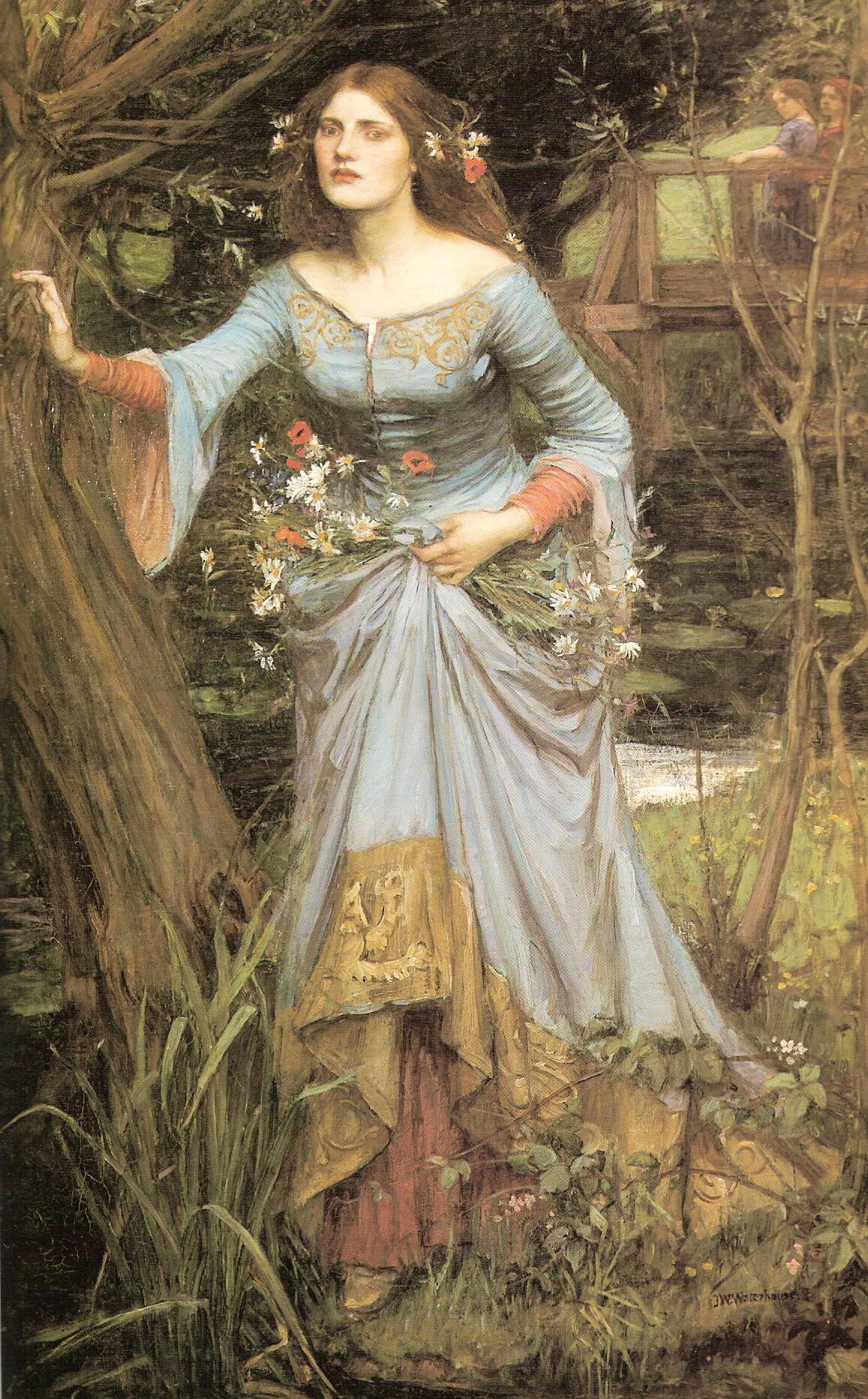
Finally, here are two of Shakespeare’s most famous quotes about plants and flowers- a speech from Ophelia in Hamlet and the Gardeners scene from Richard II:
OPHELIA
There’s rosemary, that’s for remembrance; pray,
love, remember: and there is pansies. that’s for thoughts.
LAERTES
A document in madness, thoughts and remembrance fitted.
OPHELIA
There’s fennel for you, and columbines: there’s rue
for you; and here’s some for me: we may call it
herb-grace o’ Sundays: O you must wear your rue with
a difference. There’s a daisy: I would give you
some violets, but they withered all when my father
We’ve discussed a little bit about how to create sonnets, now let’s talk about the creator of 154 of the greatest sonnets the world has ever known.
The sonnets are some of the most mysterious pieces of writing Shakespeare ever created. We don’t know when he wrote them, we don’t really know in what order he wrote them, we don’t know for whom he wrote them, and we certainly don’t know whom they are about. That hasn’t stopped many conspiracy theorists and many, many, many, writers from coming up with imaginative stories about these often tantalizing and mysterious pieces of writing.
Genesis:
the only thing we know for sure about Shakespeare sonnets is that they were first published in 1609, as “Shakespeare’s Sonnets, Never Before Imprinted.” A lot of scholars believe that the sonnets were actually published without Shakespeare’s permission. The main evidence for this comes from Shakespeare’s contemporary Francis Meres who referred to them as Shakespeare sonnets “distributed by his among his friends.” Scholars theorize that someone got a hold of these poems that Shakespeare meant to keep private, and published them without his consent or even his knowledge. All we know for a fact is that some of them already existed before 1609.
The Mysterious Young Man.
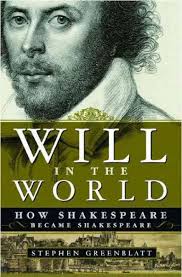
Scholar Steven Greenblatt in his wonderful book Will In the World, presents a more straightforward theory about where the sonnets came from: Shakespeare wrote them for some quick cash. As a writer, Shakespeare couldn’t always rely on the theater to make a living, especially since the theaters were often closed during times of plague, and religious holidays.
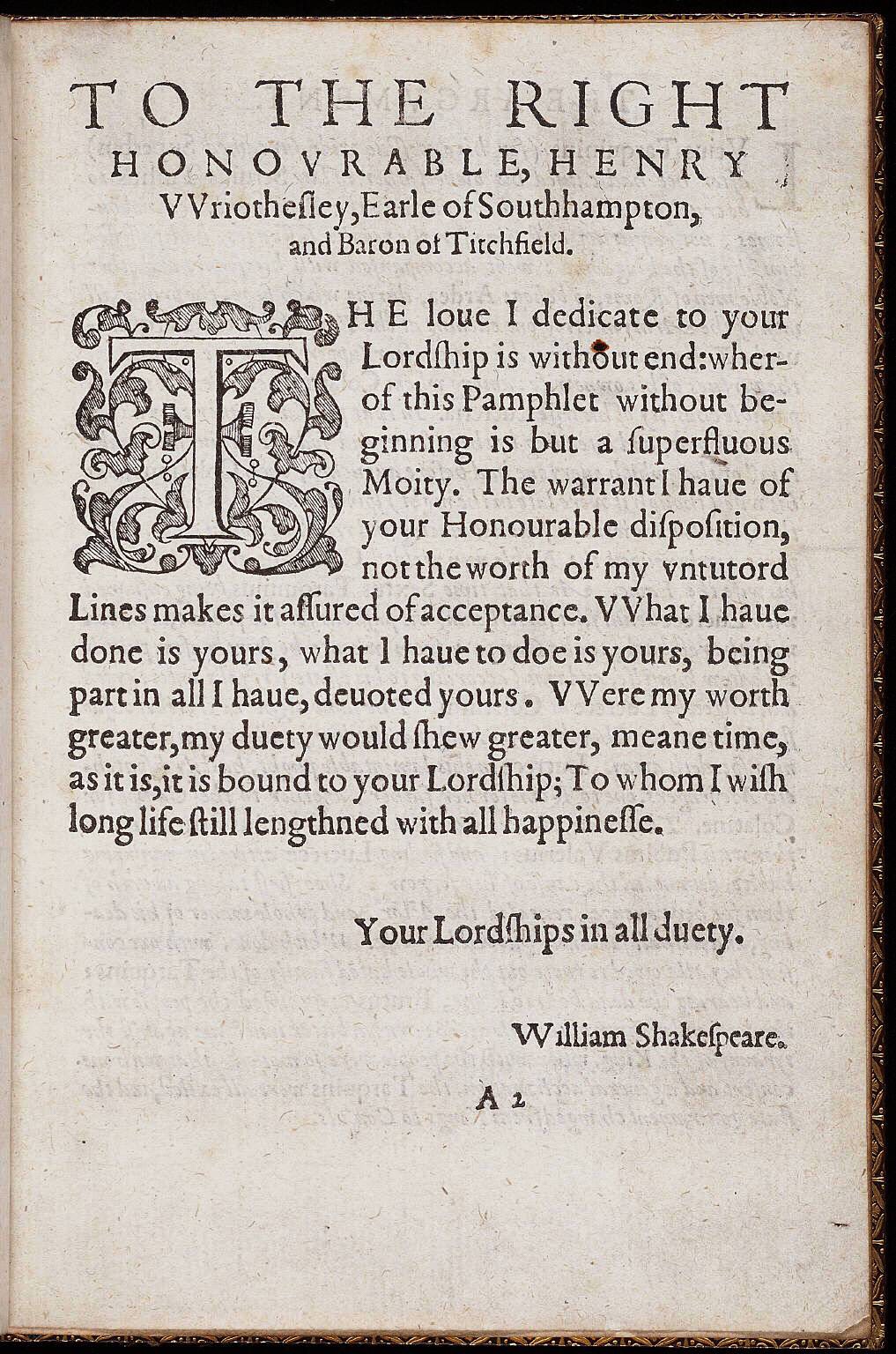
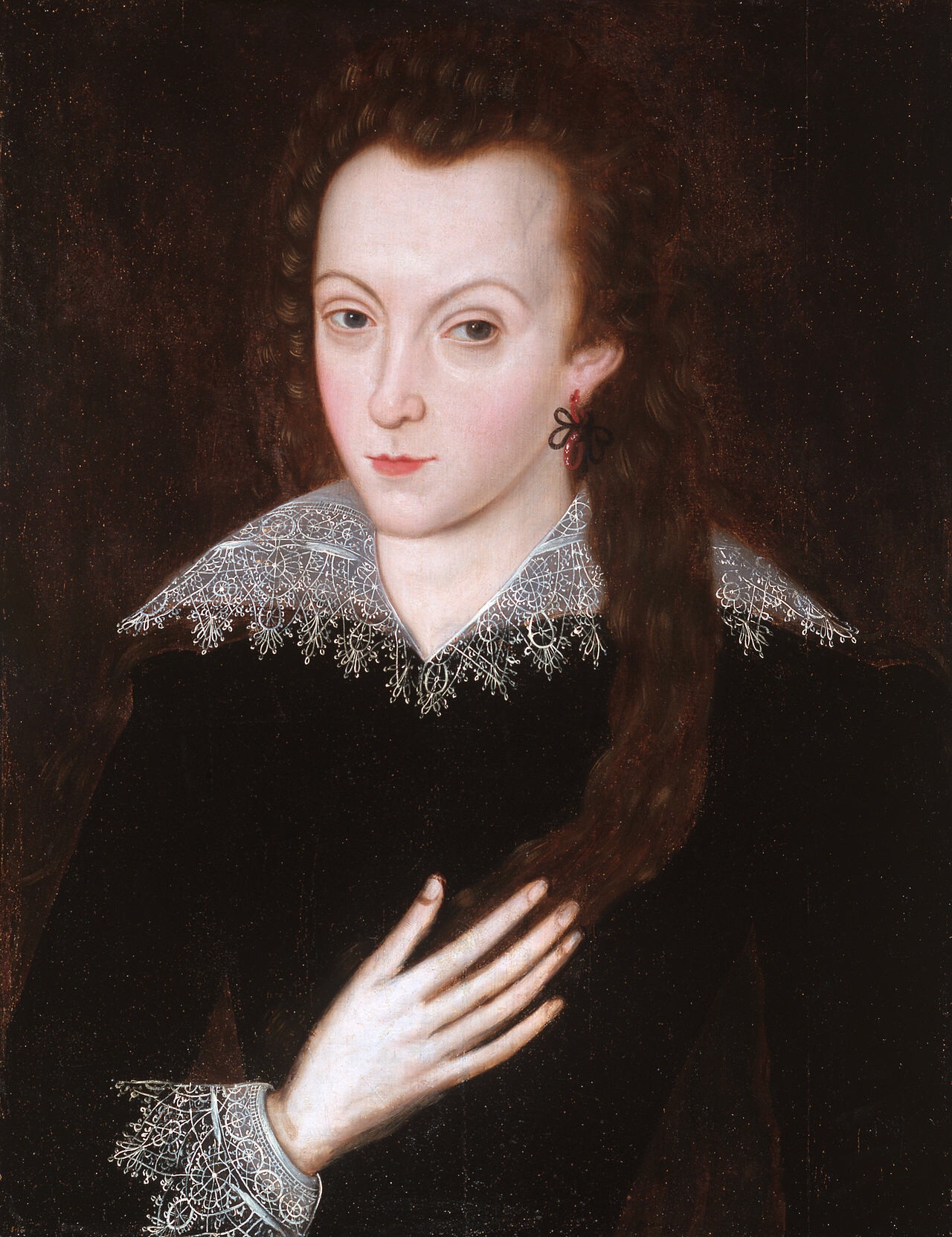
Greenblatt believes that in order to pay his bills in the mid-1590s, Shakespeare wrote poetry for Henry Wriothesley, 3rd Earl of Southampton. We know that The Bard dedicated two long poems to Southampton, Venus and Adonis, and TheRape Of Lucreece and the language Shakespeare uses on the dedication is very personal, even slightly flirty. Greenblatt believes that most if not all of the early sonnets were also written for Southampton. Greenblatt points out that Wriothesley was expected to get married and produce an heir, but he was in his late 20s and had not yet chosen a wife.
Greenblatt believes that Shakespeare was hired by someone in the Southampton family to write a series of love poems that would encourage the Earl to hurry up and get hitched. Indeed, the first 126 sonnets refer to a young, good looking blonde- haired man who has tragically remained single.
This theory works for most, but not all of the early sonnets Sonnet 33 seems to refer to a dead child. Many scholars believe that this sonnet was composed specifically for the death of Shakespeare’s own son Hamnet, who died in 1596 at the age of just eight years old. Obviously since Hamnet is so similar to Hamlet, Shakespeare might have given him a much more fitting tribute a few years later.
My favorite interpretation of the young man of the sonnets comes from the movie Shakespeare In Love. Since the love expressed in the sonnets between the speaker and the Fair Young Man seems to be somewhat sexual in nature, it kind of lends itself to the notion that Shakespeare might’ve been homosexual. What I find amusing is that in the film, since his lady love is his disguised as a boy, ( like so many of Shakespeare’s heroines ), the film answers the question of whether Shakespeare was gay or straight by having the young Shakespeare fall in love with a blonde woman disguised as a male actor, In the scene below, Shakespeare watches his mistress perform in disguise as Romeo, then dedicates a sonnet to her, while still referring to her as male in the sonnet! https://youtu.be/xpyTl3OMWrU
The DarkLady
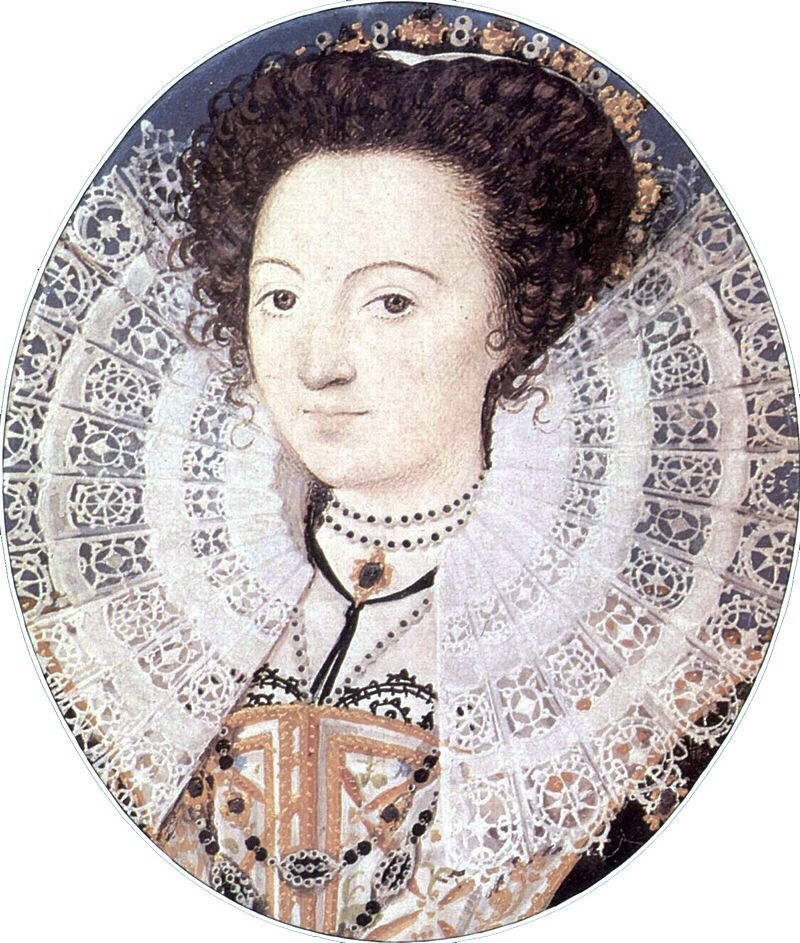
In the next group of sonnets, the speaker refers to a woman that the speaker calls his mistress. We have no clues from the sonnets as to who she might be, except that her skin is dark. Many many people have wondered who this young woman might be. My favorite theory comes from scholar Michael Wood in his documentary In Search Of Shakespeare. Wood theorizes that it might’ve been in Emilia Lanier, who was the wife of Shakespeare’s patron. One of her descendants, Peter Bassano, has put forth the notion that Shakespeare could have been involved with Mrs. Lanier.
Of course, it also seems likely that The Dark Lady just could’ve been a literary exercise for Shakespeare, who was also writing Anthony and Cleopatra at the time. https://youtu.be/u0W9v9jVp04
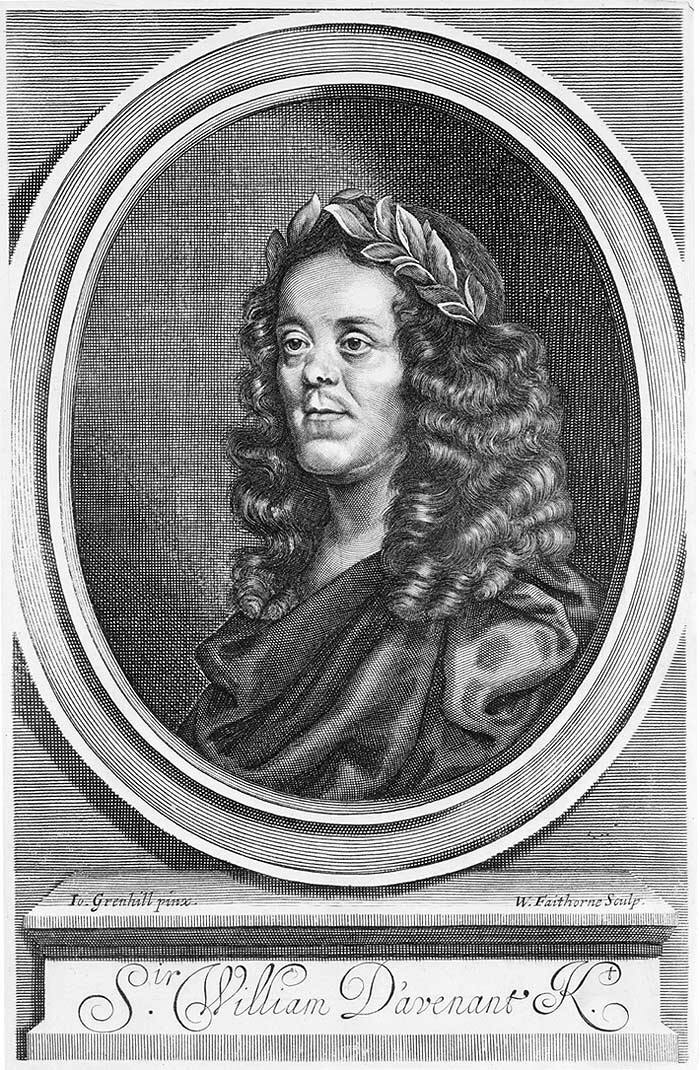
Other candidates for The Dark Lady have included the mother of celebrated 18th century playwright and actor, William Davenant.
Sir William himself claimed to be Shakespeare’s illegitimate son, and his parent’s tavern is midway between Stratford and London, so it’s not entirely impossible that Shakespeare at least knew the boy’s mother. The apocryphal story comes from John Audley’s biography of Shakespeare from 1693. Here is what he says about Shakespeare and Davenant:
Mr. William Shakespeare was wont to go into Warwickshire once a year, and did commonly in his journey lie at this house [the Crown] in Oxon, where he was exceedingly respected… Now Sir William [Davenant] would sometimes, when he was pleasant over a glass of wine with his most intimate friends–e.g. Sam Butler, author of Hudibras, etc., say, that it seemed to him that he writ with the very spirit that did Shakespeare, and seemed contented enough to be thought his Son. He would tell them the story as above, in which way his mother had a very light report, whereby she was called a Whore.[2]
My favorite interpretation of the Dark Lady Myth comes from Doctor Who, in an episode called The Shakespeare Code where The Doctor s companion Martha Jones, (who is black), meet Shakespeare and he immediately is smitten with her.
It is supremely naïve to assume that anybody can pin down a definitive Dark Lady. Adultery was just a serious back then as it is now, and admitting to it, even in a play or poem would have been suicide for Shakespeare, which is why the sonnets are vague enough so that they never conclusively point to any specific party, which helps keep this tantalizing mystery alive to this day.
If you enjoyed this post, you might want to sign up for my Outschool class on Shakespeare’s love poems. We’ll discuss the mystery of the Dark Lady, and you’ll learn to create your own sonnets, just in time for Valentines Day!
I thought I would take a little time to showcase some of Shakespeare’s great mother characters. Some of these women are models of selflessness, compassion, and devotion to the children they take care of. Other ones… not so much. Just for fun, I also made some suggestions for Mother’s Day gifts if you had one of these mother’s on the list. The Good Mothers Countess of Roussilion from Alls Well That Ends Well

Though she is technically not the heroine Helena’s mother, the Countess is still a fantastic example of selflessness, support, and love. As she says “you never oppressed me with a mothers groans but I expressed to you mothers care.” She also encourages her foster daughter Helena to play doctor and save the King Of France from a deadly illness, giving her a job and a bright future!
Mother’s Day Gift: either some French Wine and cheese, or a Doc McStuffins for her future grandchild.
2. Hermione in The Winters Tale 
Her husband arrests her for infidelity with no proof at all, while she’s still pregnant! Then she stands up in front of the entire court, having just given birth in prison, just to prove her child is a legitimate heir to the throne. Hermione is a mighty example of grace and courage under fire, as beautiful and strong as the statue she looks like at the end of the play. What more needs to be said!?
 Mother’s Day Gift: Statue polish
3. Queen Elizabeth in Richard the Third 
As you can see in my description, Elizabeth started out as a poor widow trying to get a better future for her children. Then she becomes the queen and takes a lot of crap from lords like Richard for her marriage, and her sons.
As Richard schemes to get the throne, Elizabeth is the only one who sees how dangerous he is, and how he will certainly try to kill her two sons to get it. To protect them from Richard, Elizabeth hides her sons in a church and tries her best to keep him away from them. The only problem is her husband made Richard Lord Protector, and responsible for everything connected to crowning the new king, (terrible judgment on his part).
Once her husband the king dies, Richard proclaims Elizabeth’s sons as bastards and makes himself king. He then has them secretly murdered in the Tower Of London. Even though Elizabeth can’t defend her sons for long, she identified the threat, and did her best to stop him. In this clip from the TV Series “The White Queen,” Elizabeth tries to get her sons released from the Tower, while her brother is oblivious to the danger they are in: https://youtu.be/5Y3qYeq0ok4
Though Elizabeth fails to protect her sons, she succeeds in saving her daughter. Richard knows that if his enemy Henry Tudor marries Elizabeth’s daughter (who is also named Elizabeth), he can lay claim to the throne and destroy Richard. The wicked king tries therefore, to marry his niece himself! Elizabeth refuses to pimp her daughter to the king and curses him for all of his heinous murders. Click here to see the epic battle of these two great characters in a scene from Ian McKellen’s movie version of Richard III. Look at the power and wit Elizabeth (Annette Benning), displays as she refuses to wed her daughter to Richard, (Ian McKellen). https://youtu.be/dHqlTSCe18k
At the end of the scene, Elizabeth says she will persuade her daughter to marry the king, but she secretly marries the young princess to Henry Tudor, who becomes King Henry the Seventh after defeating Richard in battle. So Elizabeth succeeds in protecting her daughter and helped to start a dynasty of monarchs, including her granddaughter, Queen Elizabeth I. Mothers Day Gift : Sweaters for her sons to wear in the tower. Alternative Mother’s Day Gift: A baby monitor that works within the Tower Of London, so she won’t have to worry about her kids being slaughtered. Queen Margaret in King Henry the Sixth Part III.

Though her methods are questionable, and her blood thirstiness legendary, Margaret still fights bravely to defend her son’s rightful claim to the English throne.
Video bio of Queen Margaret: https://youtu.be/hJnspEh99h4 Mother’s Day Gift: A dozen Red roses. Cleopatra

The quintessential queen of Egypt is similar to Margaret in “the ends justify the means” category of mothers. Cleopatra will hook up with any powerful man to protect her son and heir to the throne. Cleopatra’s son, Cesarean is the love child that she had with Julius Caesar. After Caesar’s assassination, Cleopatra seduced Marc Antony, Caesar’s friend and a consul of Rome. Also, according to some historians, Cleo found a way to hide her son after Octavius Caesar tried to kill Cesarean and his mother. She reportedly sent him into hiding through secret tunnels underneath the city of Alexandria. http://thevoiceofthezamorin.blogspot.com/2015/06/what-happened-to-son-of-queen-cleopatra.html?m=1 Mother’s Day Gift: A snake- proof brassiere. Mediocre Moms 1. Thaisa in Pericles. A lot like her husband Pericles on my OK Dads list, Thaisa’s problem is that, though she clearly loves her children, she doesn’t see them for nearly 20 years. Granted, she doesn’t really know that they’re there they’re still alive but nonetheless, you would think that a good mother would at least check. 2. Constance in King John.

I wasn’t sure where to put her on this list, even though she demonstrates great love and affection for her son, (whom King John just murdered), the truth is that Constance doesn’t really do much for her son that we see during the play. https://youtu.be/fpAZju8RbiI
What Constance mainly has going for her is her supremely agonizing expressions of grief over her son’s death. Steven Greenblatt in his book Will in the World, suggests that her speeches might’ve been Shakespeare’s own horror and grief at the loss of his son, who died around the same time King John was supposedly written. https://www.spectator.co.uk/2015/06/is-the-globe-right-to-revive-shakespeares-king-john/ Mother’s Day Gift: barbershop coupon, have you seen that hair, honey? Also on the ok mom list, Mistress Page in Merry Wives, and Lady Capulet In Romeo and Juliet. Bad Moms

1. Tamara in Titus Andronicus. She’s called a ravenous tiger in the play, and it’s easy to see why. She encourages her own sons to rape a girl, (Titus’s daughter Lavinia), then murder Lavinia’s husband! As if that wasn’t enough, Tamara tells the boys to cut out Lavinia’s tongue and cut her hands off, so she can’t accuse them of their crimes. Later Tamara tells her lover Aaron to murder their illegitimate baby, so her husband the emperor won’t find out about the affair. Worst of all, Tamara leaves her sons alone with her mortal enemy, Titus which allows Titus to (spoiler alert )…….. kill her sons, chop them up in a pie and serve them to her. She accidentally eats her own sons! Mothers Day Gift: a parenting book! Or if you’re really sick, a bib with a picture of her kids on it.
2. Dionyza In Pericles- This Queen is a show mom of the worst kind- She’s a Queen from a far off kingdom, tasked with raising her own children and King Pericles’ daughter Mariana. When Dionyza sees that Mariana is a better singer/ dancer/weaver, etc than her own daughter, she tries to kill her! https://youtu.be/z9UW-p7iEk Mother’s Day Gift:ITonya on DVD,Tanya Harding’s mom and Dionyza should compare notes.
3. Queen in Cymbeline Similar kind of deal. She’s a wicked stepmother who wants to kill the heroine Imogen and make her own son Cloten the heir to the throne. Shakespeare didn’t give her a name, she’s that wicked!

The Queen in Cymbeline, Oregon Shakespeare Festival, 2013 http://www.stageandcinema.com/2013/08/06/cymbeline-oregon-shakespeare/ Mother’s Day Gift: A name. Gertrude in Hamlet This one is very ambiguous. On the one hand, she loves her son, and tries to protect him from his wicked uncle Claudius. On the other hand, she married Claudius less than two months after her first husband died in mysterious circumstances . It’s never revealed in the play whether Gertrude was complicit in the old king’s murder, but when Hamlet Confronts her about the marriage, she is full of remorse.
 Absent
To be honest, this list was easier to put together than my Fathers Day list, because there are fewer choices. In 9 Of Shakespeare’s plays, there are no mother characters at all: Love’s Labor’s Lost Midsummer Night’s Dream The Comedy Of Errors Two Gentlemen Of Verona Measure For Measure Twelfth Night The Tempest As You Like It Merchant Of Venice
It’s hard to know how much Shakespeare knew about motherhood. From what we know about his life, he probably wasn’t around to see his wife Anne raise his two daughters in Stratford, since he spent most of his time in London writing and acting in his plays.
In any case, the thing that comes across in all the mother’s in Shakespeare’s plays is the level of sacrifice and selflessness that so many mothers demonstrate. Being a parent is tough, but the rewards are greater than even the Bard could ever explain.
Happy Mother’s Day Everyone!
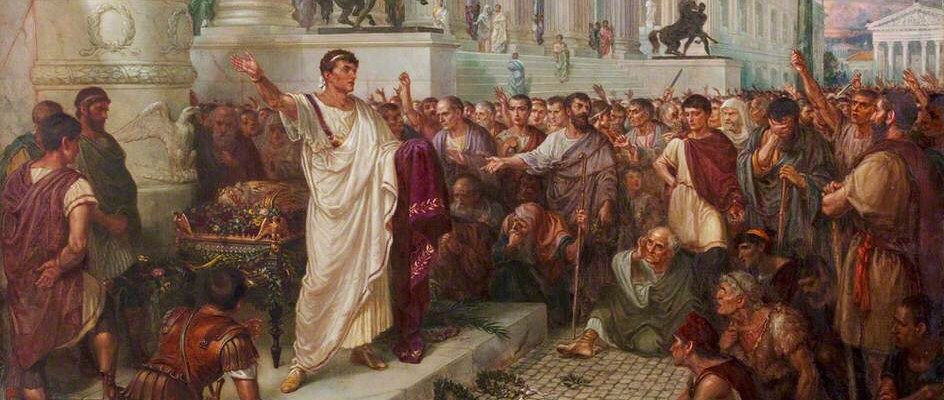
Today I’m going to do an analysis of one of the most famous speeches in all of Shakespeare: Antony’s Funeral Speech in Act III, Scene ii of Julius Caesar, commonly known as the “Friends, Romans, Countrymen” speech.
I. Given Circumstances
Antony is already in a very precarious position. His best friend Julius Caesar was murdered by the senators of Rome. Antony wants vengeance, but he can’t do so by himself. He’s also surrounded by a mob, and Brutus just got them on his side with a very convincing speech. They already hate Antony and Caesar. His goal- win them back. Here is a clip of Brutus (James Mason) speaking to the crowd from the Joseph Mankewitz movie version of Julius Caesar:
So the stakes are very high for Antony: If he succeeds, the crowd will avenge Caesar, and Antony will take control of Rome. If he fails, he will be lynched by an angry mob.
II. Textual Clues
If you notice in the text of the speech below, Antony never overtly says: “Brutus was a liar and a traitor, and Caesar must be avenged,” but that is exactly what he gets the crowd to do. So how does he get them to do so, right after Brutus got them on his side?
Antony. Friends, Romans, countrymen, lend me your ears;
I come to bury Caesar, not to praise him.
The evil that men do lives after them;
The good is oft interred with their bones; 1620
So let it be with Caesar. The noble Brutus
Hath told you Caesar was ambitious:
If it were so, it was a grievous fault,
And grievously hath Caesar answer’d it.
Here, under leave of Brutus and the rest— 1625
For Brutus is an honourable man;
So are they all, all honourable men—
Come I to speak in Caesar’s funeral.
He was my friend, faithful and just to me:
But Brutus says he was ambitious; 1630
And Brutus is an honourable man.
He hath brought many captives home to Rome
Whose ransoms did the general coffers fill:
Did this in Caesar seem ambitious?
When that the poor have cried, Caesar hath wept: 1635
Ambition should be made of sterner stuff:
Yet Brutus says he was ambitious;
And Brutus is an honourable man.
You all did see that on the Lupercal
I thrice presented him a kingly crown, 1640
Which he did thrice refuse: was this ambition?
Yet Brutus says he was ambitious;
And, sure, he is an honourable man.
I speak not to disprove what Brutus spoke,
But here I am to speak what I do know. 1645
You all did love him once, not without cause:
What cause withholds you then, to mourn for him?
O judgment! thou art fled to brutish beasts,
And men have lost their reason. Bear with me;
My heart is in the coffin there with Caesar, 1650
And I must pause till it come back to me.
First Citizen. Methinks there is much reason in his sayings. Julius Caesar Act III, Scene ii.
The two main methods Shakespeare uses to infuse Antony’s speech with powerful persuasive energy are the way he writes the verse, and his command of rhetoric.
A. Verse
The greatest gift Shakespeare ever gave his actors was to write his plays in blank verse. It not only tells you which words are important to stress, it gives you clues about the character’s emotional journey; just as a person’s heartbeat can indicate their changes in mood, a subtle change in verse often betrays the character’s pulse and state of mind. Antony uses his own emotions and his powers of persuasion to manipulate the crowd, so his verse helps show how he changes the pulse of the Roman mob.
I could write a whole post on the verse in this page, which I don’t need to do, since The Shakespeare Resource Center did it for me: http://www.bardweb.net/content/readings/caesar/lines.html What I will do is draw attention to some major changes in the verse and put my own interpretations on how Antony is using the verse to persuade the crowd:
The first line of the speech grabs your attention. It is not a standard iambic pentameter line, which makes it rhythmically more interesting. In the movie version, Marlin Brando as Antony shouts each word to demand the crowd to just lend him their attention for a little while. He uses the verse to emphasize Antony’s frustration.
“The Evil that men do, lives after them”- Notice that the words evil and men are in the stressed position. Antony might be making a subconscious attempt to say Brutus and the other evil men who took the life of Caesar are living, when they deserve to die.
“If it were so..” Again, Antony might be making a subtle jab at the conspirators. Brutus said Caesar was ambitious and Antony agrees that ambition is worthy of death, but he also adds an If, to plant the seeds of doubt in the crowd’s minds. To drive it home, the word if is in the stressed position, making it impossible for the crowd to not consider the possibility that Caesar wasn’t ambitious, and thus, didn’t deserve to be murdered.
B. Rhetoric
One reason why this speech is so famous is its clever use of rhetoric, the art of persuasive speaking. Back in ancient Rome, aristocrats like Antony were groomed since birth in the art of persuasive speech. Shakespeare himself studied rhetoric at school, so he knew how to write powerful persuasive speeches. Here’s a basic breakdown of the tactics Antony and Shakespeare use in the speech:
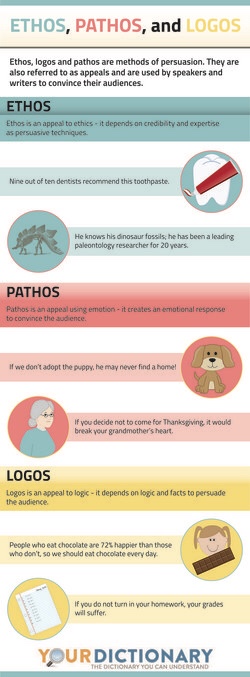
Ethos, Pathos, and Logos
The three basic ingredients of any persuasive speech are Ethos, Pathos, and Logos. Ethos is an appeal to the audience based on the speaker’s authority. Pathos is an appeal to the emotions of the crowd, and Logos is an appeal to facts and or reason. Both Brutus and Antony employ these three rhetorical tactics, but Antony doesn’t just appeal to his audience, he manipulates them to commit mutiny and mob rule.
Logos Antony has very few facts or logical information in his speech. His major argument is that again, since Caesar wasn’t ambitious, (which is very hard to prove), his death was a crime. Antony cites as proof the time Cæsar refused a crown at the Lupercal, but since that was a public performance, it’s hardly a reliable indication of Caesar’s true feelings.
You see logos as a rhetorical technique all the time whenever you watch a commercial citing leading medical studies, or a political debate where one person uses facts to justify his or her position. If you look at Hillary Clinton during the 2016 Presidental Debate, she frequently cited statistics to back up her political positions
Ethos-
Ethos is an argument based on the speaker’s authority. Brutus’ main tactic in his speech is to establish himself as Caesar’s friend and Rome’s. He says that he didn’t kill Caesar out of malice, but because he cared more about the people of Rome.
BRUTUS: If there be any in this assembly, any dear friend of Caesar’s, to him I say, that Brutus’ love to Caesar was no less than his. If then that friend demand why Brutus rose against Caesar, this is my answer:
–Not that I loved Caesar less, but that I loved Rome more. JC, III.ii.
Antony employs the exact same tactics, establishing himself as Caesar’s friend and telling the crowd that, as Caesar’s friend, Antony believes that Caesar did not deserve his murder. His use of Ethos therefore, helps Antony refute Brutus’ main claim.
Again, the 2016 debate is another excellent way of showing ethos in action. Hillary Clinton and Brutus frequently cited their political experience and their strength of character to justify their views. There’s an excellent article that examines Hillary’s use of Ethos in her political rhetoric: https://eidolon.pub/hillary-clintons-rhetorical-persona-9af06a3c4b03
Pathos
Pathos is the most frequently used rhetorical tactic: the appeal to emotion. Donald Trump uses this constantly, as you can see in this clip from the 2016 debate:
Pathos is bit more of a dirty trick than Ethos and Logos, which is why Brutus doesn’t use it much. As scholar Andy Gurr writes:
Brutus is a stern philosopher and thinker. His faith in reason fails to secure the crowd from Antony’s disingenuous appeal to their affections, which uses sharp sarcasm and some twisted facts.
Antony’s major appeals to emotion:
His grief over losing Caesar
His painting of Cæsar as a generous, faithful friend
Shaming the crowd for not mourning Caesar’s death
Appeal to piety by showing the body funeral reverence.
His use of Caesar’s bloody body and mantle to provoke outrage from the citizens.
His use of Caesar’s will to make the crowd grateful to Caesar, and furious at Brutus.
Rhetorical Devices
If Ethos, Pathos, and Logos are the strategies of rhetorical arguments, rhetorical devices are the artillery. If you check out the website Silva Rhetoricae, (The Forest Of Rhetoric), you can read about the hundreds of individual rhetorical devices that politicians have used in speeches and debates since ancient history. I will summarize here the main ones Antony uses over and over again in “Friends, Romans, Countrymen.” For another more compete analysis, click here: https://eavice.wordpress.com/2011/02/05/jv-rhetorical-devices-in-antonys-funerary-speech-from-shakespeares-julius-caesar/
Irony The way Antony keeps repeating “Brutus is an honorable man,” is a particularly sinister form of irony, which here means to imply the opposite of what you have said to mock or discredit your opponent. The irony is that the more Antony repeats this idea that Brutus is honorable, the more the crowd will question it. If Brutus were truly honorable, he would not need Antony to remind them. Of course, Brutus can still be honorable whether Anthony mentions it or not, but this repetition, coupled with Antony’s subtle rebuttals Of Brutus’ arguments, manages to shatter both Brutus’ motives, and his good name, at least in the eyes of his countrymen.
Antimetabole is the clever use of the same word in two different ways. Antony manages to work it in twice in this speech:
“If it were so, it was a grievous fault,
And grievously hath Caesar answer’d it.”
“You all did love him once, not without cause: What cause withholds you then, to mourn for him?”
Rhetorical question This is the most famous rhetorical device which by the way in Antony’s day would have been known as Erotema. Antony asks a series of questions designed to refute the notion that Caesar was ambitious, from his mercy to his captives, to Caesar’s tenderness to the poor, and of course his refusal to take the crown during the Lupercal. Each question calls Brutus’ claims into question and seeds doubt in the crowd.
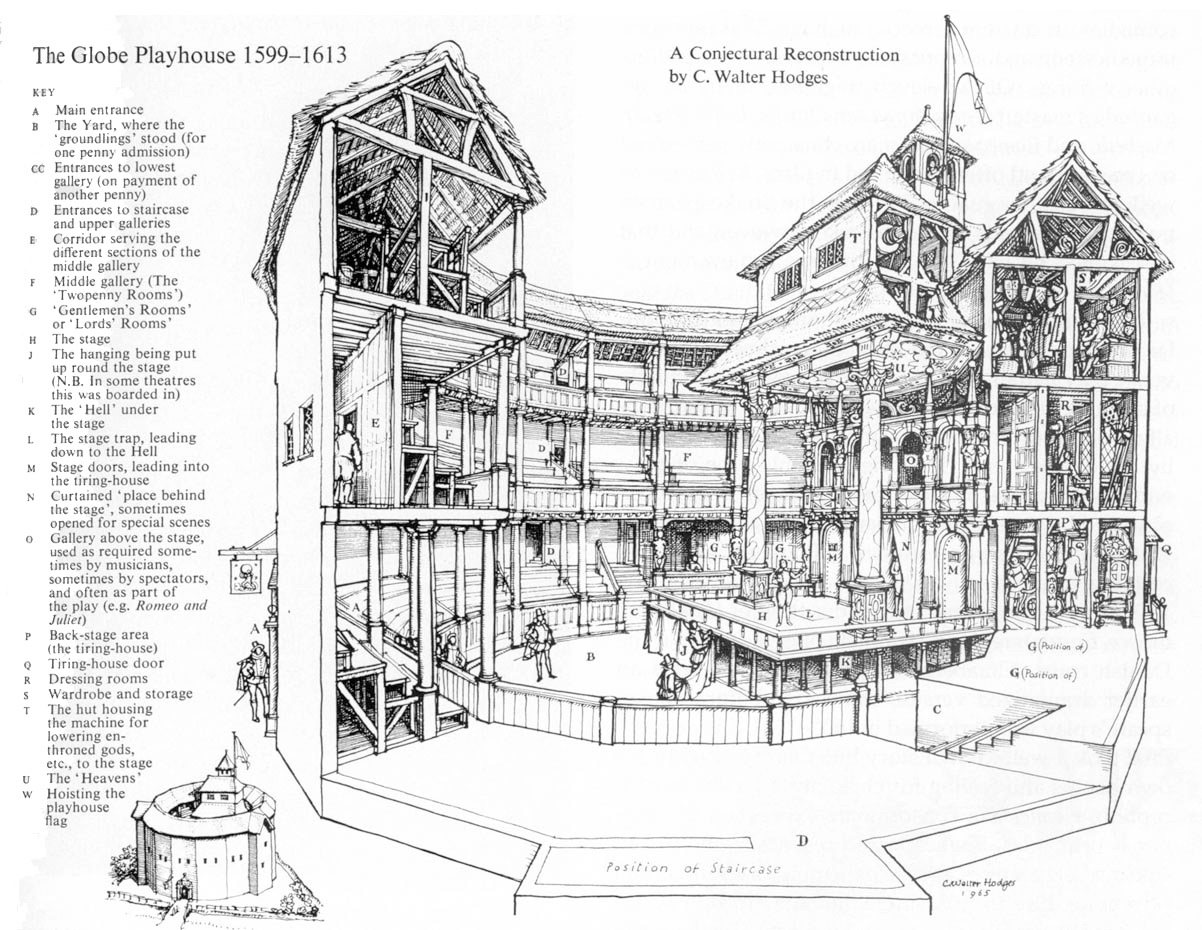
Unlike most Shakespearean plays, with Julius Caesar, we have an eyewitness account of how the play was originally performed. Swiss student Thomas Platter wrote a long description of watching the play at the original Globe Theatre in 1599. This is a translation that I found on The Shakespeare Blog:
On September 21st after lunch, about two o’clock, I and my party crossed the water, and there in the house with the thatched roof witnessed an excellent performance of the tragedy of the first Emperor Julius Caesar, with a cast of some fifteen people; when the play was over they danced very marvellously and gracefully together as is their wont, two dressed as men and two as women…
Thus daily at two in the afternoon, London has sometimes three plays running in different places, competing with each other, and those which play best obtain most spectators.
The playhouses are so constructed that they play on a raised platform, so that everyone has a good view. There are different galleries and places, however, where the seating is better and more comfortable and therefore more expensive. For whoever cares to stand below only pays one English penny, but if he wishes to sit he enters by another door, and pays another penny, while if he desires to sit in the most comfortable seats which are cushioned, where he not only sees everything well, but can also be seen, then he pays yet another English penny at another door. And during the performance food and drink are carried round the audience, so that for what one cares to pay one may also have refreshment.
The actors are most expensively costumed for it is the English usage for eminent Lords or Knights at their decease to bequeath and leave almost the best of their clothes to their serving men, which it is unseemly for the latter to wear, so that they offer them for sale for a small sum of money to the actors.
So the conclusions we can draw based on Platter’s account include that Antony was standing on a mostly bare stage with a thatched roof, raised slightly off the ground. We can also guess that, since the merchants were selling beer, fruits, and ale, that the audience might have been drunk or throwing things at the actors.
As Platter notes, and this page from Shakespeare’s First Folio confirms, there were only 15 actors in the original cast, so Shakespeare’s company didn’t have a huge cast to play the gigantic crowd in the Roman street. In all probability, the audience is the mob, and Antony is talking right to them when he calls them “Friends, Romans, Countrymen.” I believe that the audience was probably encouraged to shout, chant, boo, cheer, and become a part of the performance which is important to emphasize when talking about how to portray this scene onstage. A director can choose whether or not to make the audience part of the action in a production of Julius Caesar, which can allow the audience to get a visceral understanding of the persuasive power of politicians like Brutus and Antony. Alternatively, the director can choose instead to have actors play the crowd, and allow the audience to scrutinize the crowd as well as the politicians.
In conclusion, the reason this speech is famous is Shakespeare did an excellent job of encapsulating the power of persuassive speech that the real Antony must have had, as he in no small way used that power to spur the Roman crowd to mutiny and vengeance, and began to turn his country from a dying republic into a mighty empire.
If you liked this post, please consider signing up for my online class where I cover the rhetorical devices in Julius Caesar and compare them with several other famous speeches. Register now at http://www.outschool.com
For a fascinating look at how a modern cast of actors helps to create this scene, check out this documentary: Unlocking the Scene from the Royal Shakespeare Company’s production in 2012, with Patterson Joseph as Brutus, and Ray Fearon as Antony:
Was Shakespeare racist? When reading Othello by William Shakespeare, the only play he wrote where the hero is explicitly black, I truly feel like the Shakespearean student as opposed to the Shakespearean teacher. it’s a play that I find very difficult to get into, and very difficult to understand. Above all, the question I have is whether Othello is a positive or negative portrayal of a black man. So I am going to analyze the play, the prevailing views about race from Shakespeare’s time, and try to draw some conclusions about the play and its creator.
Disclaimer: I don’t advocate trying to speculate about how Shakespeare felt about anything. My real point in this post is to determine if the play Othello and its portrayal of people of color, has merit in today’s society, which is important to establish given the culture in which Shakespeare wrote it.
Part I: Black People And Shakespeare
By our standards, Shakespeare was probably racist. If you look at the ways black people are mentioned in documents of the period, the writers frequently describe black people with an air of otherness and superiority that shows little interest in the humanity of other races. In fact, one reason why the word “moor” is so problematic is that it basically referred to anyone not born in Europe. It could refer to people from Northern Africa, the Middle East, and even parts of Spain. Clearly, Europeans at the time weren’t interested in the particulars of their non-Caucasian neighbors’ culture and herritage.
This is not to say that Shakespeare never knew any black people. Michael Wood in his book In Search Of Shakespeare estimates that there might have been several thousand black people in London alone. City registers mentions not only black people employed in the city, but even some of the first inter-racial marriages. Therefore, the notion of Othello marrying Desdemona would not have been unheard of even in 1601.
As an important note, the black people living in Europe at the time weren’t slaves. The transatlantic slave trade didn’t really get started in and America until the 1650s, and slavery was illegal in England at the time. Wood mentions that there were black dancers, black servants, and other free black people living in and around London (Wood 25). Dr. Matthieu Chapman wrote an excellent thesis back in 2010 about the possibility that some black people might even have been actors in Shakespeare’s company. Furthermore, scholars have wondered for centuries if the Dark Lady of the sonnets was Shakespeare’snon-Caucasian mistress.
In any case, it is likely based on what we know about the growing multiculturalism of England in the 17th century, that Shakespeare knew some black people, and might have worked along side them. Though Shakespeare probably knew black people though, it is impossible to know if they influenced his play Othello.
Though black people were allowed to live and work without bondage, their lives were highly precarious, and far from easy. In 1601, Sir Robert Cecil, Queen Elizabeth’s chief counselor, presented a plan to explel all black people from England (Wood 251). The Cecil Papers at Hatfield House details that:
The queen is discontented at the great numbers of ‘n—‘ and ‘blackamoores’ which are crept into the realm since the troubles between her highness and the King Of Spain, and are fostered here to the annoyance of her own people.
Cecil mentions that a great deal of black people living in London were former slaves freed from captured Spanish ships. Spain of course was Catholic and their king Phillip II had sent a vast armada against the English which helps underscore a major reason for the hostility against these formerly Spanish moors; the fear that, even though these people were baptized English Christians, they might secretly be traitors, sympathetic to the Spanish or to the great numbers of Muslims living in Spain. The English weren’t the only ones concerned. In 1609, the Spanish king expelled the Moors from Spain entirely, probably due to the high levels of Muslims in Spain. With this in mind, you can see how topical Othello was for its time, since it touched on many contemporary issues of race and politics.
One important thing to remember about Othello is that he is not only a black man in a predominantly white country, he is in all probability a converted Muslim who helps the Venetian army fight Muslim Turks. With this in mind, you can imagine how hard it must be for the people of Venice to trust him, and how hard it makes it for Othello to feel like a true Venetian.
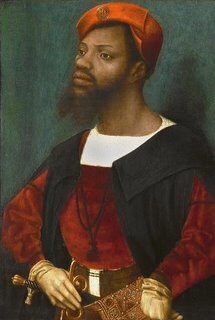
A very high profile example of the mixture of admiration and anxiety towards Moors comes from 1600. Ambassador Abdul Guahid from Morocco, (himself a Moor), came to visit London to discuss a military plan to take the East and West Indes away from the Spanish. He stayed at the court for several months during which time, Shakespeare’s company performed for him and the court. To commemorate the visit, a writer called Leo the African presented the ambassador with a book called A Geographical History Of Africa, and he himself posed for a portrait, shown below.
Most scholars cite Guahid as one of the likely inspirations for Othello’s character. Some even suggest that Othello’s original costume and appearance might have been taken from Guahid. Although he was honored publicly, according to the documentary Shakespeare Uncovered, in private, courtiers were whispering about Guahid, hoping that he would leave England soon. Whether Guahid was Shakespeare’s inspiration for Othello, it is worth noting the admiration and anxiety that he put into the hearts of the English courtiers he visited, including probably, Shakespeare.
So when Shakespeare wrote Othello, the black population was growing, a noble moor was getting attention at court, and he might have been living and working around black people in his company, so he might have been trying to present a black character in a positive light based on his experiences. So what does the text of Othello say about black people, and what Shakespeare might have thought about them?
The dilemma anyone reading or performing Othello faces is the fact that he is both a noble general who loves his wife, and also a jealous savage murderer. As I have mentioned, Shakespeare might have known black actors and some claim that he had a mistress of color, but that doesn’t guarantee that he was aware of the oppression and degradation of the African people. So why did he choose to make the character black in the first place?
Part II: What does the play say about race?
Shakespeare’s source for Othello was an Italian short story by Giovanni Battista Giraldi. It has some small differences in plot, but Othello’s character is identical to Shakespeare’s, though he is never referred to by name; instead he is only called “The Moor.” Still, Giraldi mentions The Moor’s bravery, skill in battle, and initial reluctance to believe the devilish ensign who deceived him. Therefore Shakespeare emphasized all the positive qualities of his original source.
Othello is not presented as a savage person; we see him as somebody who comes from somewhere else. It is impossible to pin down exactly where he comes from because his descriptions of his past are very vague and sometimes seemingly contradictory. As Germaine Greer mentioned in the TV documentary Shakespeare Uncovered, what we do know is that he definitely assimilated into Venetian culture, presumably converted to Christianity from whatever religion he had, and rose through the ranks by fighting the Ottoman Turks. This means Othello is waging war against Muslims. What I am trying to construct here is to determine based on what we know about black people from Shakespeare’s time and what we know about stereotypes of foreigners and others and the journey of Othello, is his murderous jealous behavior, as a result of nurture, (which is to say Iago‘s devilish manipulation), or by nature. In other words, did Shakespeare write a racist play that condemns interracial marriages due to the barbarous nature of Moors?
Othello is not the only jealous character in the Shakespearean cannon; Claudio in Much Ado, Postumous in Cymbeline, and Leontes in The Winter’s Tale all accuse their wives of infidelity and all of them threatened to kill those unfortunate (and innocent women). This means that Shakespeare is not implying that jealousy is inherently connected to race. Looking at the text of Othello, one interpretation I can offer is that it is less about black people and more about how white people perceive them. Just like in Shakespeare’s source, very few people in the play call Othello by his name, they call him a term that defines him by his race. In addition, though Othello never talks explicitly about his race and is very cryptic about his life, plenty of characters make assumptions about what being a moor means:
One reason Iago is able to manipulate the people close to Othello is because he can manipulate the prejudices that they have about black people. He knows that they will believe anything he says, as long as it falls in line with their preconceptions. In addition, since Othello isn’t a native Venetian, Iago can manipulate Othello’s inexperience with Venetian society:
IAGO
197 Look to your wife; observe her well with Cassio;
201 I know our country disposition well;
202 In Venice they do let heaven see the pranks
203 They dare not show their husbands; their best conscience
204 Is not to leave’t undone, but keep’t unknown.
OTHELLO
205 Dost thou say so?
IAGO
206 She did deceive her father, marrying you;
207 And when she seem’d to shake and fear your looks,
208 She loved them most.
OTHELLO
208 And so she did.
IAGO
208. go to: An expression of impatience.
208 Why, go to then;
209. seeming: false appearance.
209 She that, so young, could give out such a seeming,
210. seal: blind. (A term from falconry). oak: A close-grained wood.
210 To seel her father’s eyes up close as oak,
211 He thought ’twas witchcraft—but I am much to blame;
212 I humbly do beseech you of your pardon
213 For too much loving you.
OTHELLO
213. bound: indebted.
213 I am bound to thee for ever.
IAGO
214 I see this hath a little dash’d your spirits. Othello, Act III, Scene iii.
Plenty of actors, scholars, and directors have made the case that Shakespeare’s plays aren’t racist, but they do have racist elements. In Othello’s case, the racism of other people destroys an otherwise honorable man.
The Murder: As a counter argument, though Othello is not the only jealous hero in Shakespeare, he is the only black one, and he is the only one who kills his wife onstage. Therefore, even if Othello is a positive black figure at first, his behavior at the end of the play does give an impression of a man who has become a savage murderer, and it is important for the audience to question how watching a white woman being murdered in her bed by a black man makes them feel, especially when everyone else in the play has said he is a barbaric, lustful, foreign beast.
Part III Production History
Although there’s a decent argument that Othello isn’t a racist play, it’s production history has been harrowed with racism. For 250 years the role wasn’t even played by black actors. Even on film, the first black man to play Othello was Laurence Fishburne in 1995.
Going further back, the first genuine black actor to play Othello was Ira Adrige, an African American who moved to England in the mid 1800s. Above is a copy of the playbill for his celebrated touring performance of Othello in 1851, which inspired very powerful and polarized reactions: https://youtu.be/92Z-4eJj7Wo
Audiences have had incredibly powerful reactions to seeing real black actors in the role. Some have expressed disgust and racist hatred, (especially in the scenes with Desdemona), some have expressed praise, sometimes they have ignored the race issues entirely. Reportedly Joseph Stalin loved the play and participated enjoyed Othello’s strength and stoicism (Wood 254). Ultimately the context of a production often determines more of the audience reaction than the actors’ performances.
To end where I began, I’m well aware that it’s impossible to truly tell whether Shakespeare was racist, and it’s equally futile trying to pin down what he was saying about race when he wrote the part of Othello, but it is worth considering how the part is connected to changing views of race and racial relations. Ultimately it is up to the actors and director to decide whether Othello is a good man, a racist stereotype, or anything else. That is the beauty of Shakespeare’s complicated and compelling characters, they can translate beyond time, and maybe even race.




 Bards against humanityMost people know the raunchy card game where you try to encapsulate a disgusting word or phrase with a description written on your card. Well, there’s a Shakespeare version too! It makes sense that someone made a card game inspired by the king of the Elizabethan put-downs, (and the inventor of one or two modern curse words!)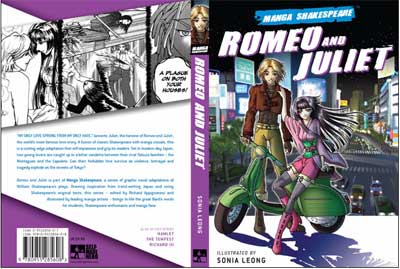
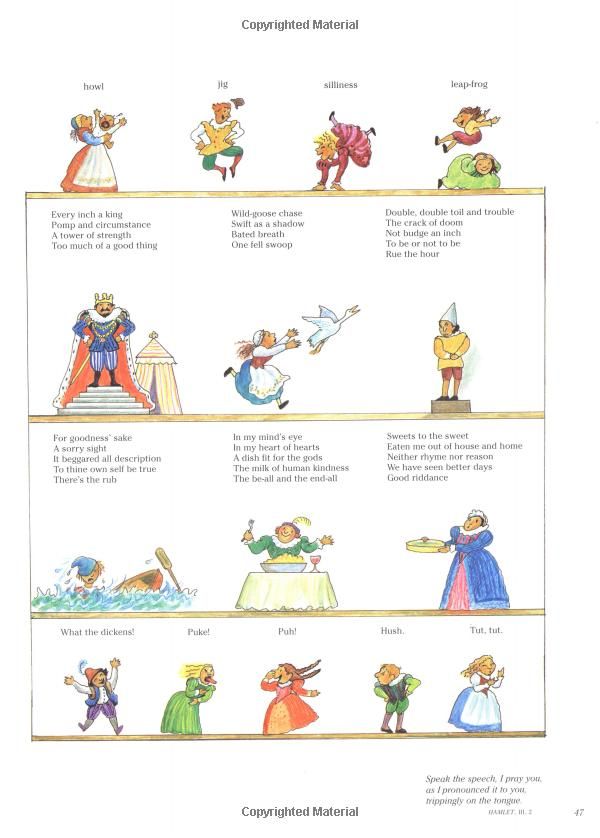


 Board books 📖 Yes, even toddlers can get into Shakespeare. I actually read this to my daughter a lot. It’s not the story of the play, but it does introduce some of the characters and famous lines which can help a child to become familiar with Shakespeare.




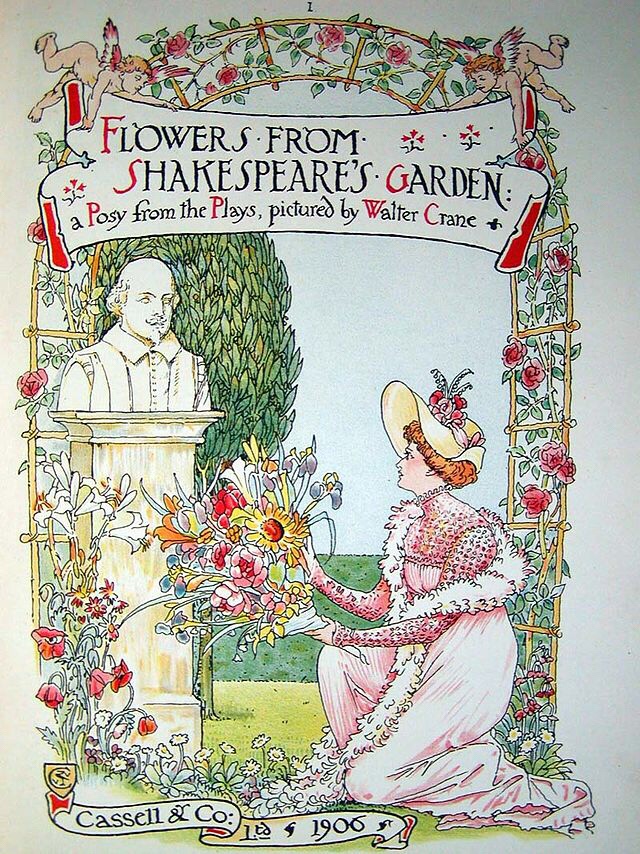 Ever since this 1906 book of the plants mentioned in Shakespeare’s plays, great cities and private garden groups have created gardens that honor the fertile imagination of The Bard Of Avon. There are 33 of these Shakespeare gardens worldwide, in cities like New York, Barcelona, and of course, Shakespeare’s home town of Stratford Upon Avon.









 The Shakespearean Student