Did Shakespeare use visual effects?

Stagecraft has a fascinating and interesting history. The way we portray spectacle on stage has changed a lot since the advent of television and movies, which utilize computers and animatronics, etc. to create impossible things that could never be is shown live. In a way, the pre-recorded nature of film and TV gives theater practitioners an advantage because the more clever they are with their stagecraft, the more impressive it is for the simple fact that it is live- happening right now in front of an audience.

What I want to do with this post is to speculate whether, with the technology of the time, if Shakespeare could have used some kind of visual spectacle to portray otherworldly creatures, such as the ghosts in Hamlet and Macbeth

The conventional wisdom
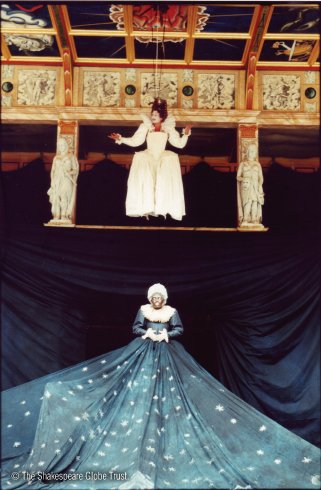
Contemporary accounts of the Globe theater mention two trap doors, one in the ceiling for angels and gods, and one in the floor for ghosts or devils.

Most books I’ve read on Elizabethan stagecraft say that the theaters of this era were very minimalistic in design. They had trap doors, they had galleries, they had a primitive flying rig, and they had music and some simple sound effects, but most of the experience was watching the actors, their costumes, their bodies, and hearing their voices hence ‘audience’- audio, “To hear.”

Professor Stephen Greenblatt of Harvard University explains the way the ghost probably haunted the Globe Theater in 1600.

We are told there wasn’t much visual representation of spectacle and fantasy on Shakespeare’s stage, which which is is odd because there are some pretty fantastical elements in his plays, especially Hamlet and Macbeth, where the former calls for a ghost and the latter calls for a ghost, witches, and a literal goddess to appear on stage. How may one ask, was this achieved back in Shakespeare’s day, the late 1590s and the early 1600s? The conventional wisdom is that the ghosts in Hamlet and the ghost in Macbeth came through a trap door in the stage known as Hell.

If you’re you go to the Globe now you can see this actual trap door being used. It used a primitive pully system to open up in the middle of the floor. The ghost would ascend to the stage through a small step ladder. Hamlet’s father’s ghost is described as wearing a suit of armor and being very pale. Banquo’s ghost is described as having long hair dappled with blood.

Banquo’s ghost appears during a banquet in Macbeth’s honor. Based on this hypothesis it’s likely that a banqueting table was brought out into the middle of a stage to conceal the ghost, to make it more of a surprise when it ascends onstage through the trap door, but the effect to modern taste would be rather dull. However impressive the performance, this cannot stand up to the stunning nature of visual effects using computer technology, motion capture, et cetera. I wanted to see if there are any Elizabethan theatrical illusions that would still have been accessible to Shakespeare back in the 1590s.

Idea #1: A Smoke-monster ghost?

My research began with this video from the YouTube History Channel Atun-Shei Films, where the author traces the history of film, (both as photography and film as a projection). He cites at the start, an incident in 1536 where a supposed necromancer appeared to conjure a ghost for an unsuspecting rube. According to The Lives Of the Necromancers, the solution was achieved by creating huge clouds of smoke within the theater space, (which was the Colosseum) and then using a primitive camera obscure to project a frightening image Into this space.
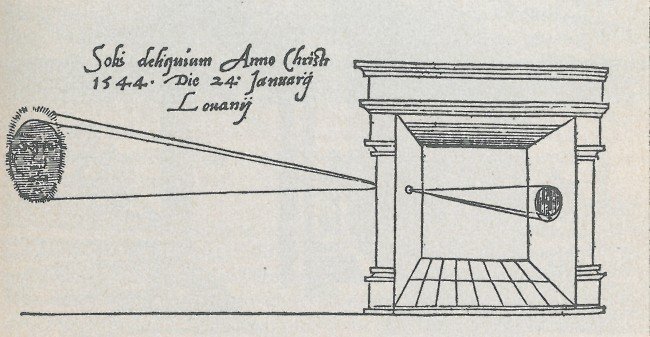
Sketch for an early camera obscura, dated 1544 by Leonardo Da Vinci.

Camera Obscura is a term is it Latin for dark chamber the principal had been discovered for century had existed for centuries bit is for centuries but only in the 1530s this was the 1st recorded example of it being used to create a theatrical illusion.

The question is, could Shakespeare’s company have performed the same illusion with the technology of the day? Honestly, I find it rather unlikely that Shakespeare’s audience would’ve put up with huge clouds of smoke in a wooden amphitheater. Still, the fact remains that primitive projection technology existed back in Shakespeare’s day, which means a director could reasonably implement it in a production of Hamlet or Macbeth, even under the constraints of Original Practices.

Banquo’s ghost in Macbeth

So the question remains, is there a visually striking way to represent the ghosts that could actually work in Shakespeare’s theater. My first idea is…

Idea 1: Glow In the Dark Paint

Paul Scoffield as The Ghost in Hamlet (1990, dir. Franco Zefirelli). Notice that he appears to glow pale blue.

Glow-in-the-dark paint wasn’t invented until 1908, but there are some rocks that naturally glow such as hackmanite and phosphorus.

https://www.sciencealert.com/scientists-have-figured-out-how-this-natural-stone-glows-in-the-dark/amp

Theoretically, Shakespeare’s company could have crushed this rock into a powder and made it into a paint that glowed onstage. There is precedent for this- in The Hound Of the Baskervilles, Sherlock Holmes discovers that the terrifying ghost-hound is merely a large dog painted with phosphorescent paint:

In mere size and strength it was a terrible creature which was
lying stretched before us. It was not a pure bloodhound and it
was not a pure mastiff; but it appeared to be a combination of
the two–gaunt, savage, and as large as a small lioness. Even
now in the stillness of death, the huge jaws seemed to be dripping
with a bluish flame and the small, deep-set, cruel eyes were ringed
with fire. I placed my hand upon the glowing muzzle, and as I
held them up my own fingers smouldered and gleamed in the darkness.

“Phosphorus,” I said.

“A cunning preparation of it,” said Holmes, sniffing at the dead
animal. 

Doyle, Part IV.

Though this paint would potentially make a terrifying effect, this would be impossible at an outdoor theater during the day. This makes it unlikely that Shakespeare used glow-in-the-dark paint at the Globe, as most of the performances took place in the afternoon. That said, both Hamlet and were written just at the point in which Shakespeare’s company was in the process of acquiring an indoor theater, the Blackfriars.

The Blackfriars and Shakespeare’s stagecraft

Almost all of these ideas would depend on Shakespeare having access to a theatre in which he could control the lighting. As you can see, the Blackfriars was lit with candles and its indoor nature meant that performances weren’t dependent on sunlight. Greg Doran, former director of the Royal Shakespeare Company has theorized in the past that maybe while his company was preparing to move into the Blackfriars, Shakespeare was changing his material to make it both literally and figuratively darker.

In the reconstructed Blackfriars, (where I studied and interned for three years), there is a trap-door and flying rig like the Globe, so the conventional trap-door ghost can and has been utilized there. I would also argue that in the Blackfriars unlike the Globe, there was a chance for more variety of theatrical illusions- perhaps a smoke projection, magic lantern, or even…

Idea 3: A Pepper’s ghost

A Peppers Ghost is a stage illusion that dates back to the 19th century. It uses the principle of refracted light to project the image of a ghost on top of a piece of glass. This image will appear translucent and could be very impressive to an audience at the Blackfriars! As you can see in the diagram below, the actor could be under the stage in the trap door standing in front of a mirror, and the glass sheet could be used to project his image to the audience. The only concern would be that this could limit the blocking of the other actors, and it might not make the ghost visible to the audience members in the upper galleries, but it would still be an impressive visual effect that uses scientific principles known in the 17th century.

Pepper's ghost diagram
Pepper’s ghost diagram.

Pepper’s Ghost illusions are still used frequently in theme parks, trade shows, and concerts where singers interact with “holograms.” As a special Halloween treat, (or trick as the case may be), I’ve included a video that will allow you to make your own Pepper’s ghost at home. If you choose to make one, leave me a comment!

So, in conclusion, though we are taught that Shakespeare’s theater often reveled in simplistic theatrical designs, I personally think that there is more room to explore low-tech theatrical illusions like these, especially at companies like the Globe Theater and the American Shakespeare Company, which pride themselves on using Shakespeare’s original staging practices. Live theater has dodged giving up its ghost for 2,000 years by exploring the limits of live theater through movement, voice, story, music, and yes spectacle. I think theater practitioners, even Original Practitioners should keep innovating new kinds of spectacular means to keep creating fresh interpretations of Shakespeare, that still keep within the spirit of the play’s original time and place.

Bonus: If you want to learn more about the stage illusions of Shakespeare’s company, click here to listen to That Shakespeare Life Podcast with Cassidy Cash. In this episode, she interviews theater professor Frank Mohler, who describes how thunder and flying effects were done in the 17th century, using records of the period, and his own experimentation.
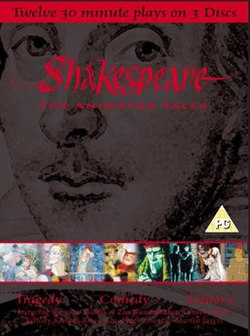
Shakespeare: The Animated Tales- “Macbeth”

This is a 30 minute cartoon version of Macbeth originally produced for the BBC in 1992. It features Brian Cox  as the voice of Macbeth (before he was the voice of McDonald’s), and Zoë Wanamaker as Lady Macbeth (before she was a witch who teaches at Hogwarts).

I like the way it portrays the horror imagery of the play in sort of a European-manga animation hybrid. Admittedly, there are better ones in the series, but this one is still pretty neat.

DVD box art for “Shakespeare the Animated Tales.”

To check out other episodes in the series, view this playlist:

Great classes are available December 1st.

Scehdule

Class Descriptions:

Basics Of Stage Combat:  Students will learn the basics of safely enacting a fight onstage, in preparation for a Shakespeare play. We will also learn about the history of sword fighting in the military and the duel.

Trailer for Basics of Stage Combat.

My daughter really enjoyed taking this class. She was actually able to use her sabre and try out her routine on her father. Paul is quite knowledgeable about Shakespeare and made the class really fun by teaching a fight scene from Romeo and Juliet. It is amazing watching her practice with Paul over Zoom. I hope Paul will have. more combat classes, it is a different way to learn Shakespeare.

IB, Parent

An Interactive Guide To Shakespeare’s London (New Class)

A virtual tour of Shakespeare’s London will get kids to interact with the culture of Elizabethan England.

Class Experience

To teach kids about the Elizabethan era and the background of Romeo and Juliet, The Instructor will interact with the class (via pre-recorded videos), pretending to be Shakespeare. The class, pretending to be actors in Romeo and Juliet, will get a virtual tour of The Globe Theater, Hampton Court Palace, and a virtual visit to an Elizabethan doctor's office. This activity is an immersive way for them to learn about the period, how it relates to the world of the play, and how Shakespeare changed theater.

The class will take the form of a guided WebQuest activity.  First, the students will get a worksheet that has a series of fill-in-the-blanks about Elizabethan society (below). The students will fill out this worksheet based on a Nearpod and in conjunction with a website I’ve made, https://sites.google.com/nebobcats.org/visit-to-elizabethan-london/home?authuser=0 
Both the Nearpod and each webpage will have a virtual tour, a video, and text explaining some aspects of Elizabethan life. Before they go to each location, I will give a short introduction via prerecorded video:

Wizard Science

In this one-hour course, your child will discover the enchanting world of science through a series of magical experiments. Learn about such topics as Astronomy, Static Electricity, chemistry, and optical illusions.

What was Christmas like For Shakespeare?

In this one-hour course, students will learn and play games that will explore the history behind Christmas traditions. We will also discuss the themes, characters, and famous quotes from Shakespeare’s play “Twelfth Night.”

The Fashion is the Fashion 6: Hamlet

Hamlet is a play that features a powerful noble family engaging in political and millitary intrigue. in Elizabethan England, clothes were of vital importance to denote a person’s status and wealth. The costumes also informed the movements and posture of the people that wore them.

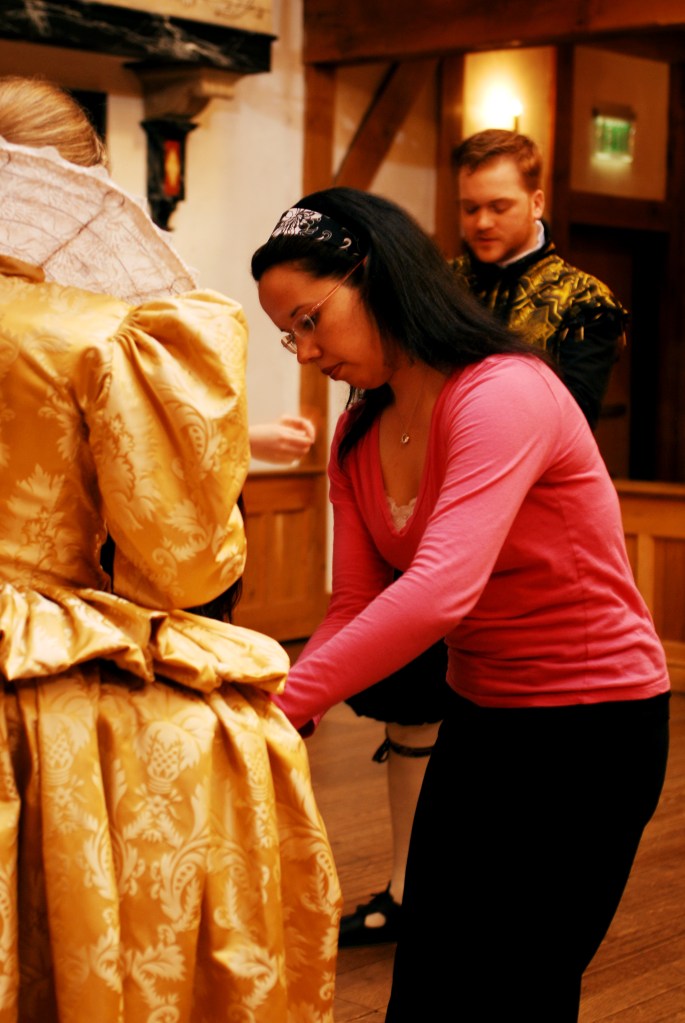
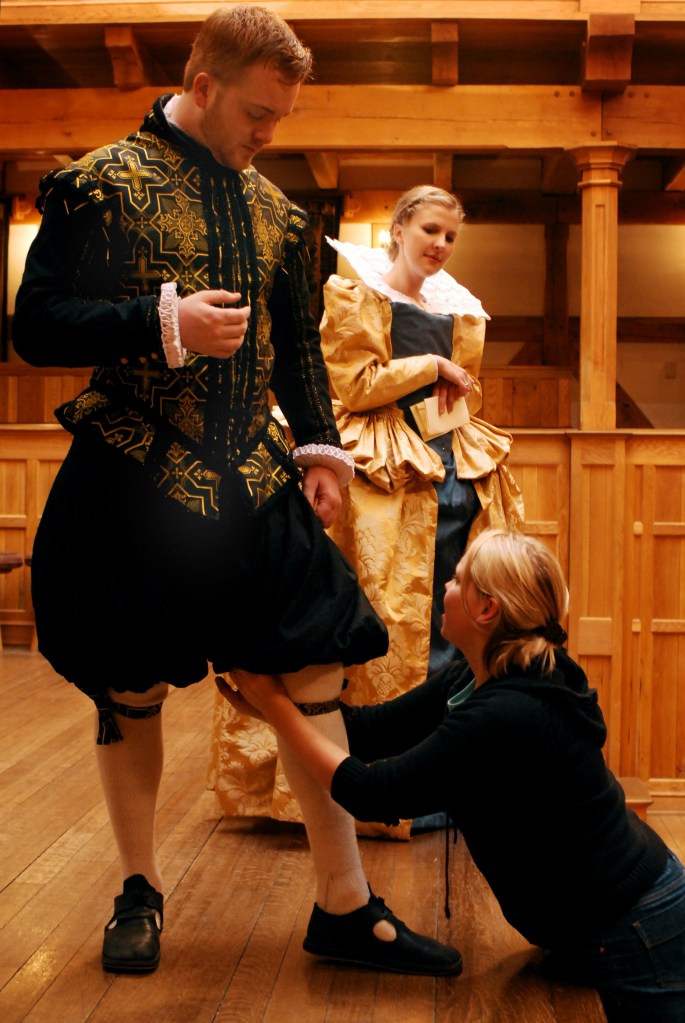
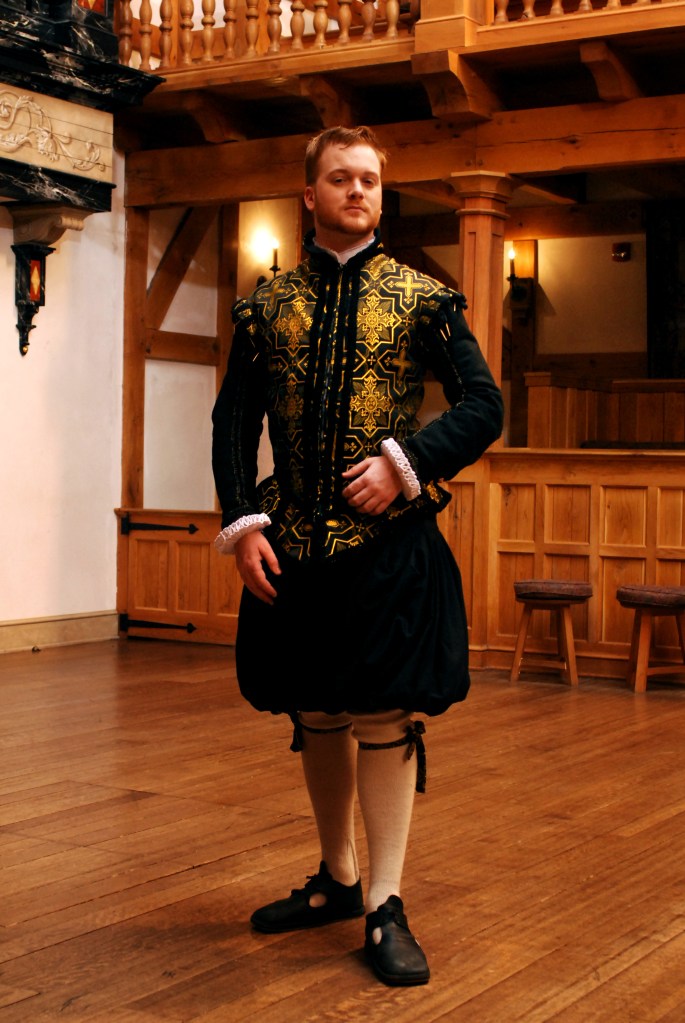
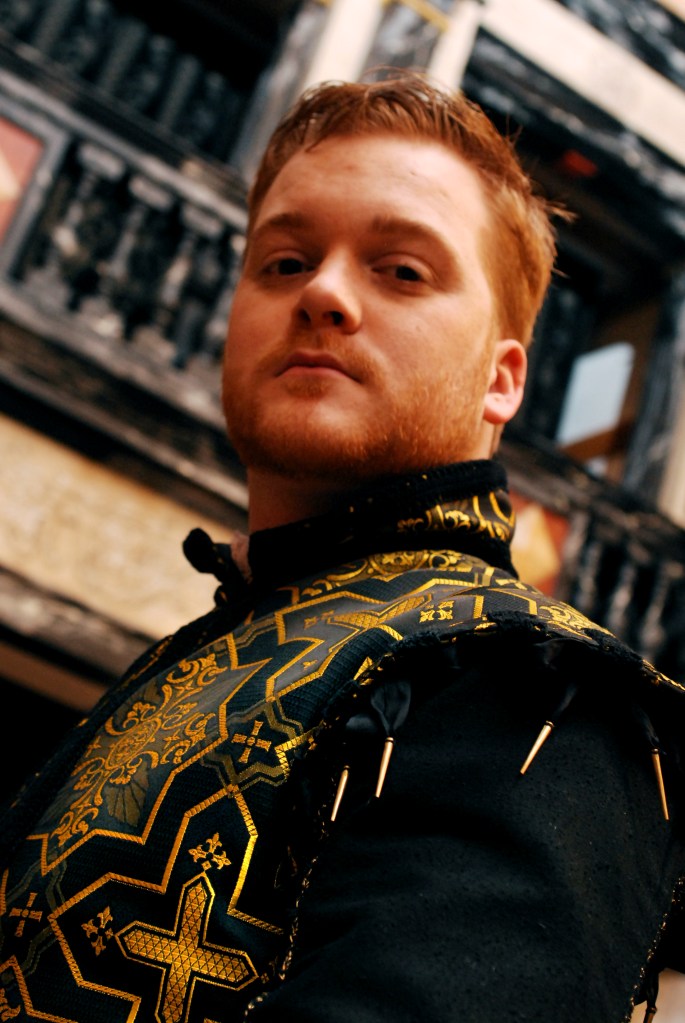
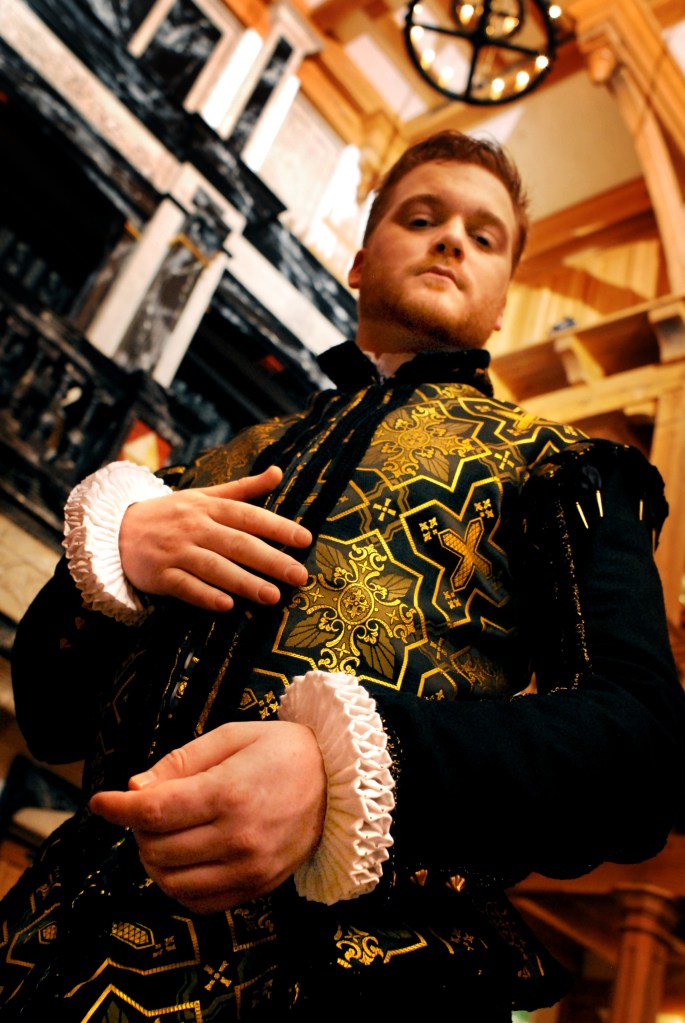
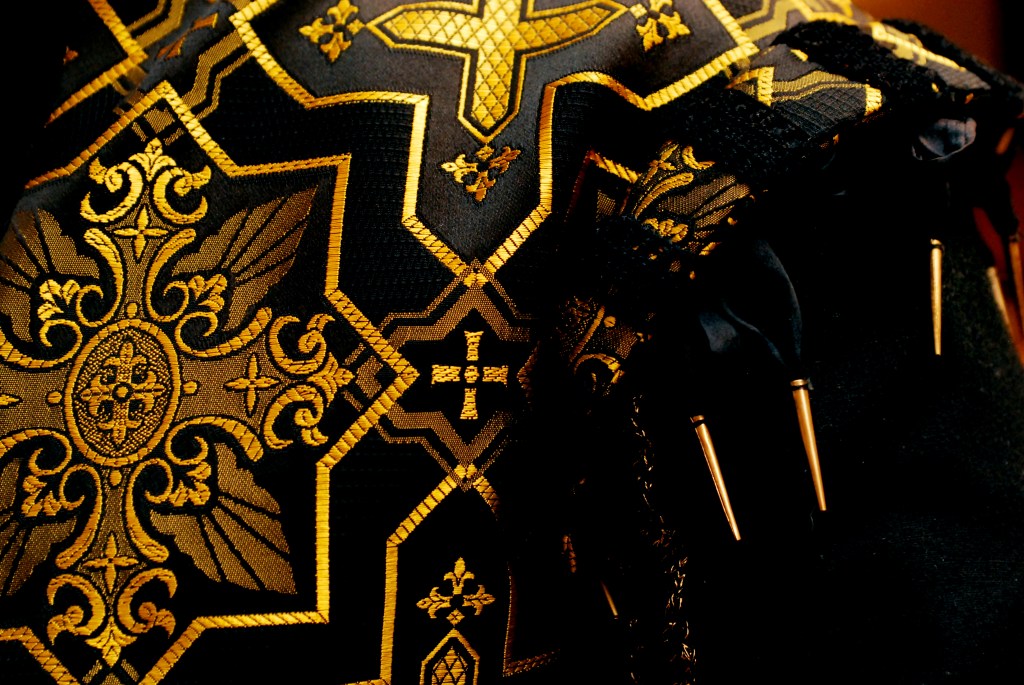
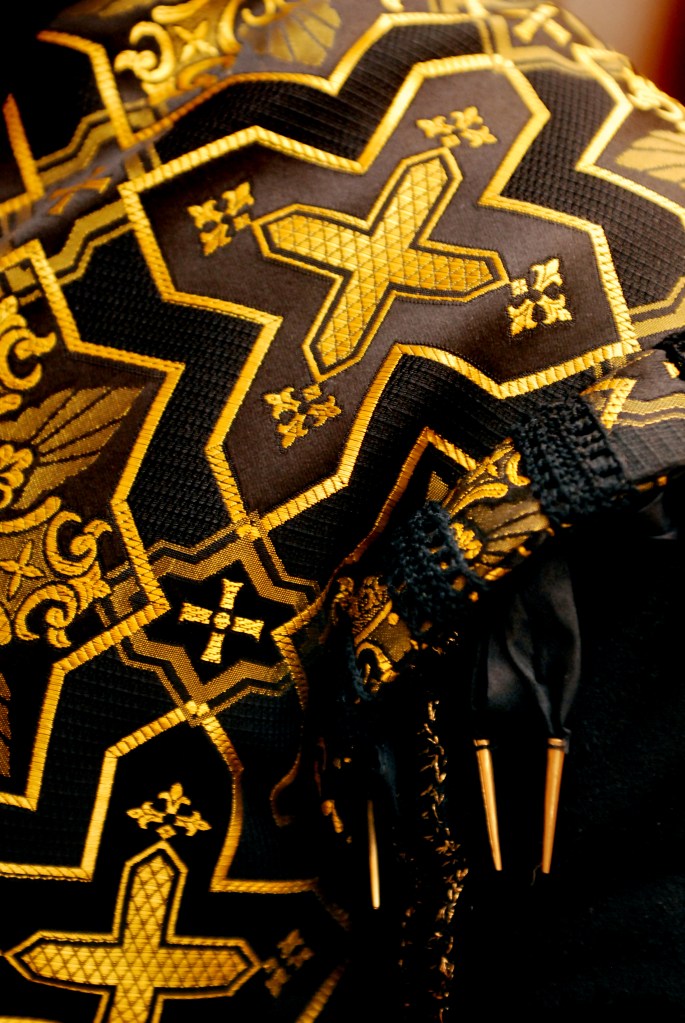
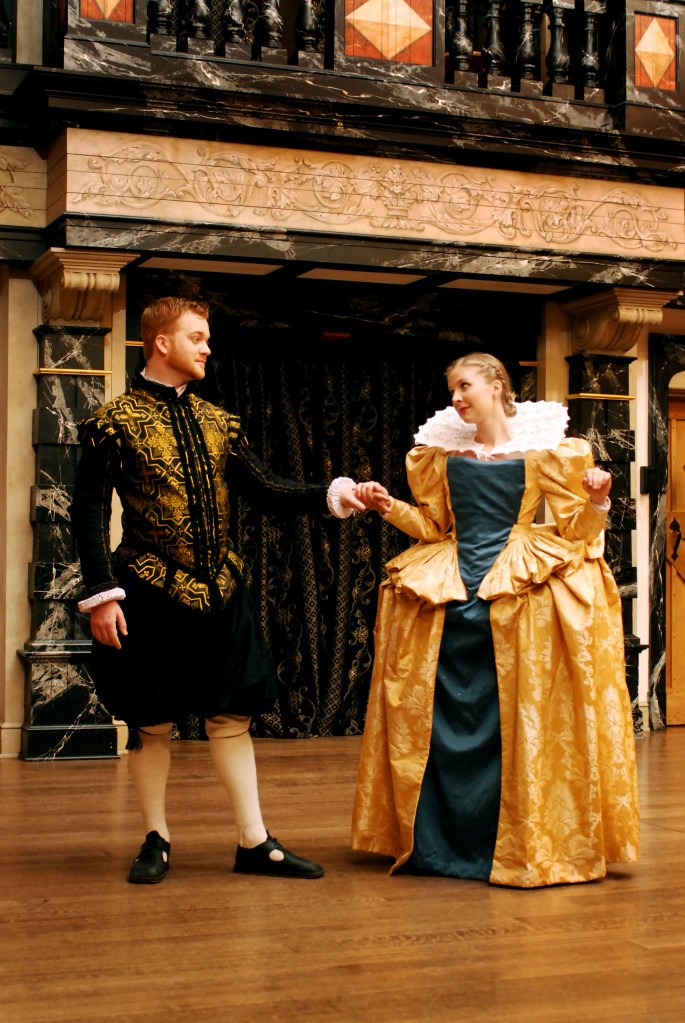
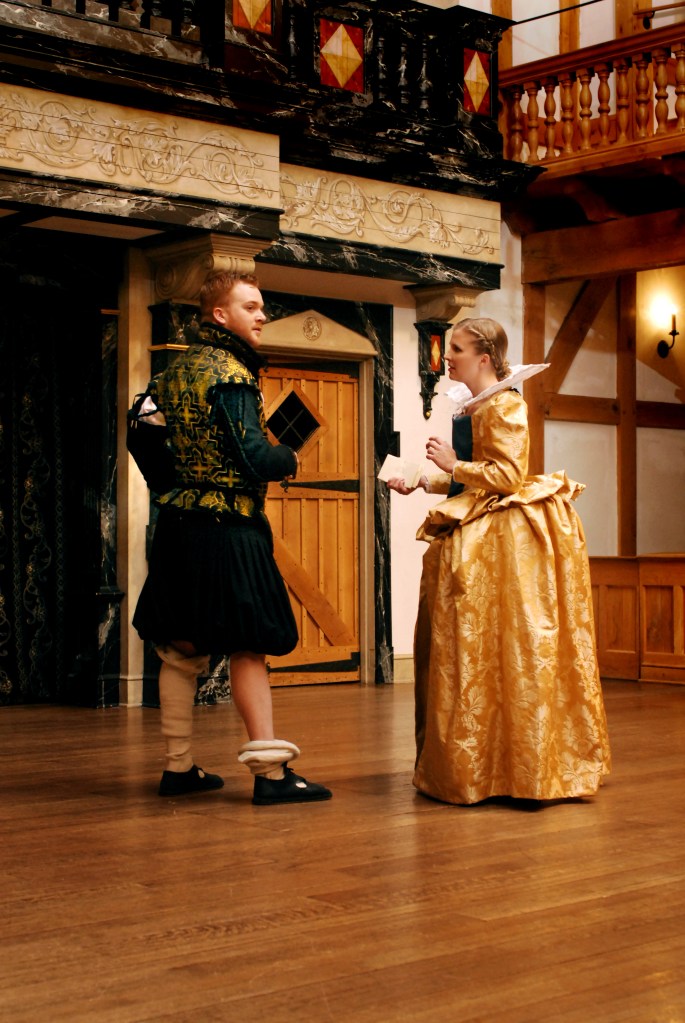
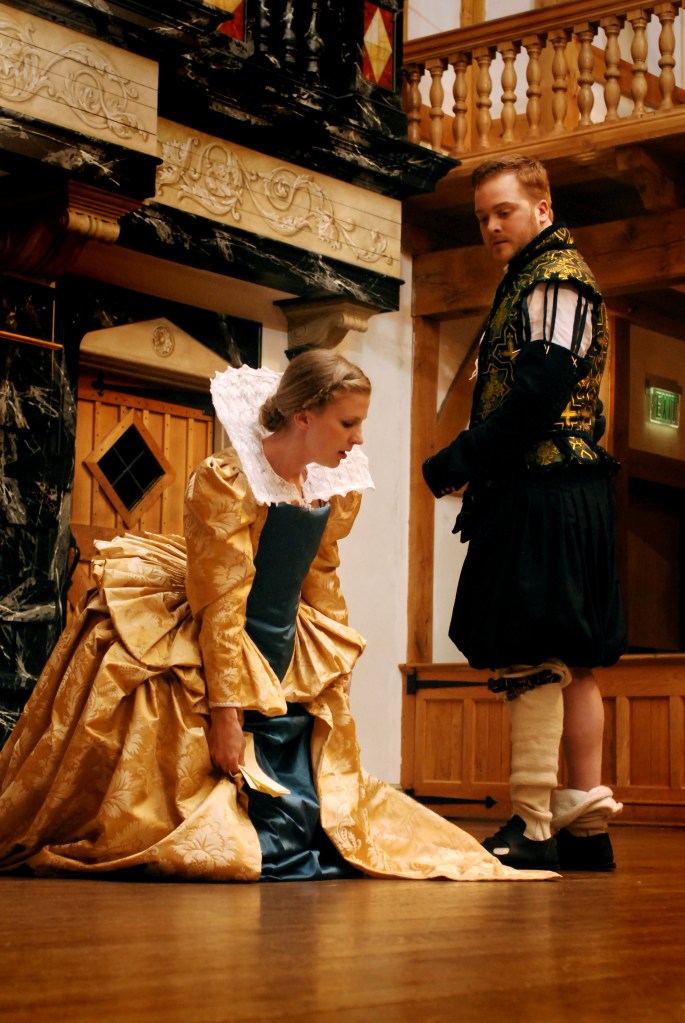
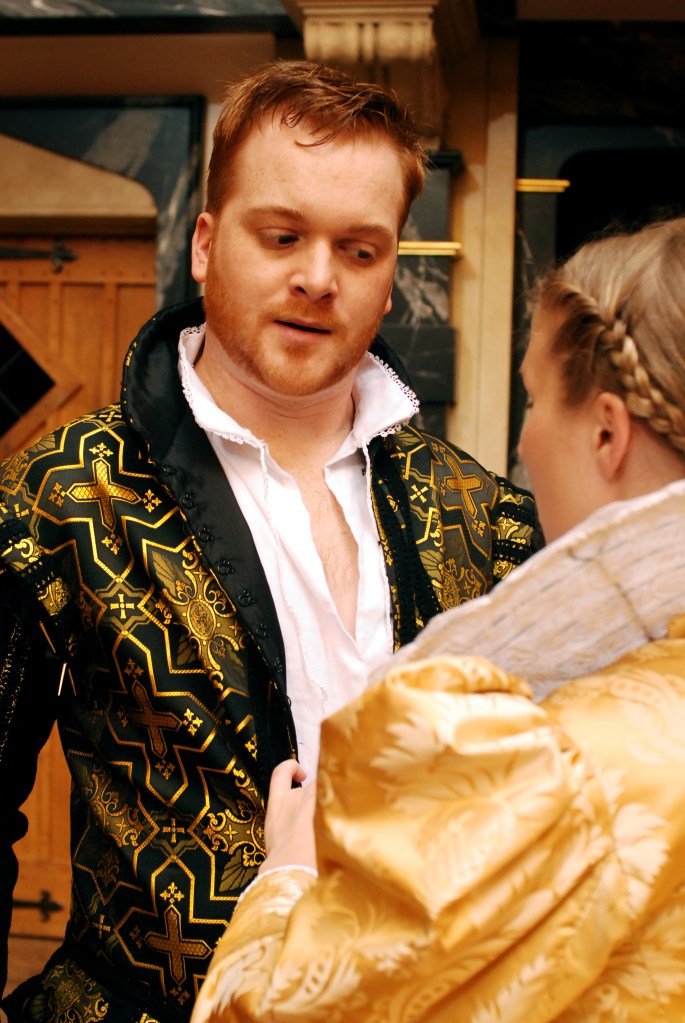
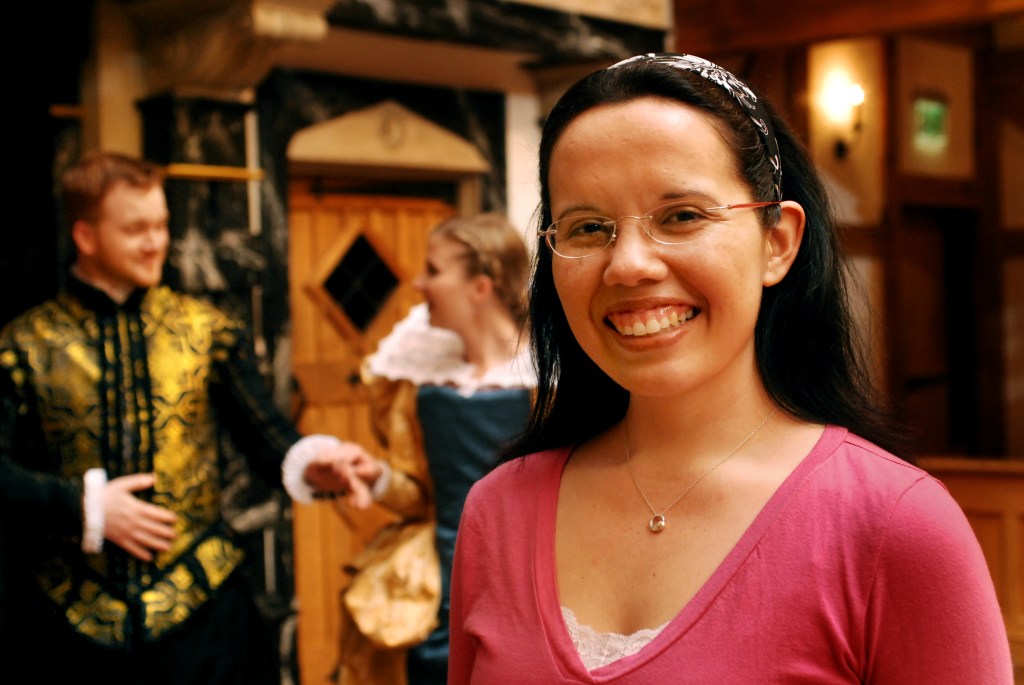
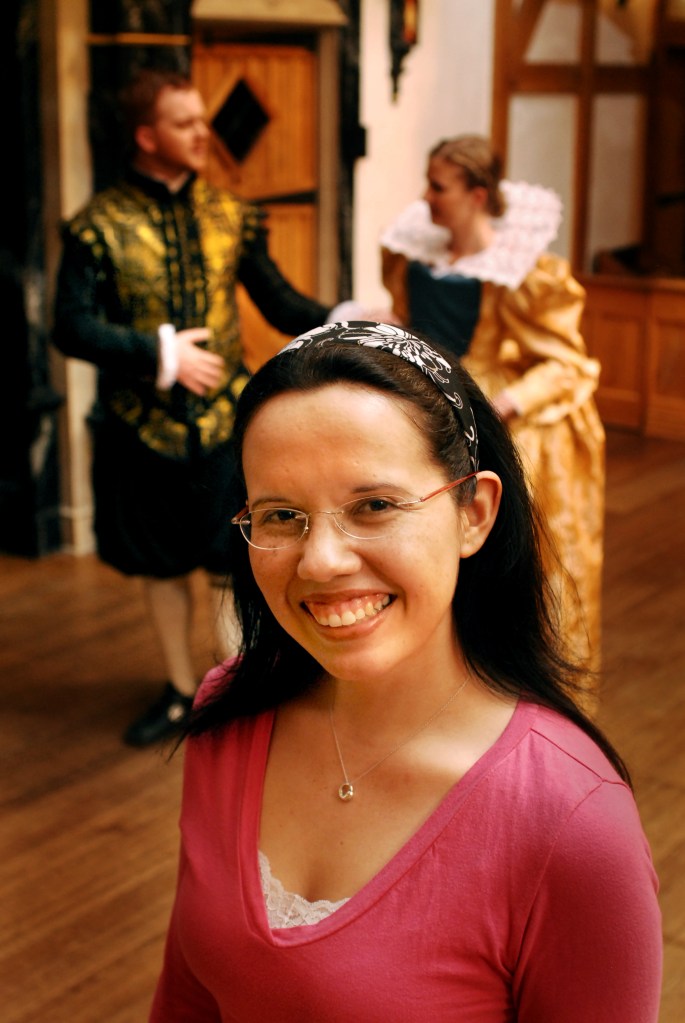
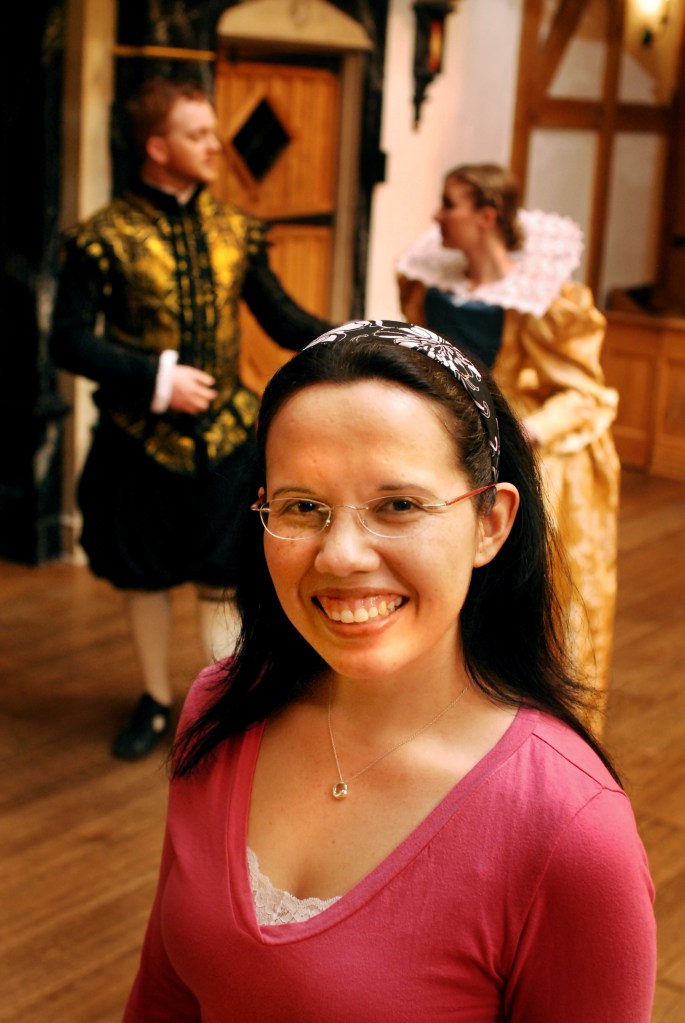
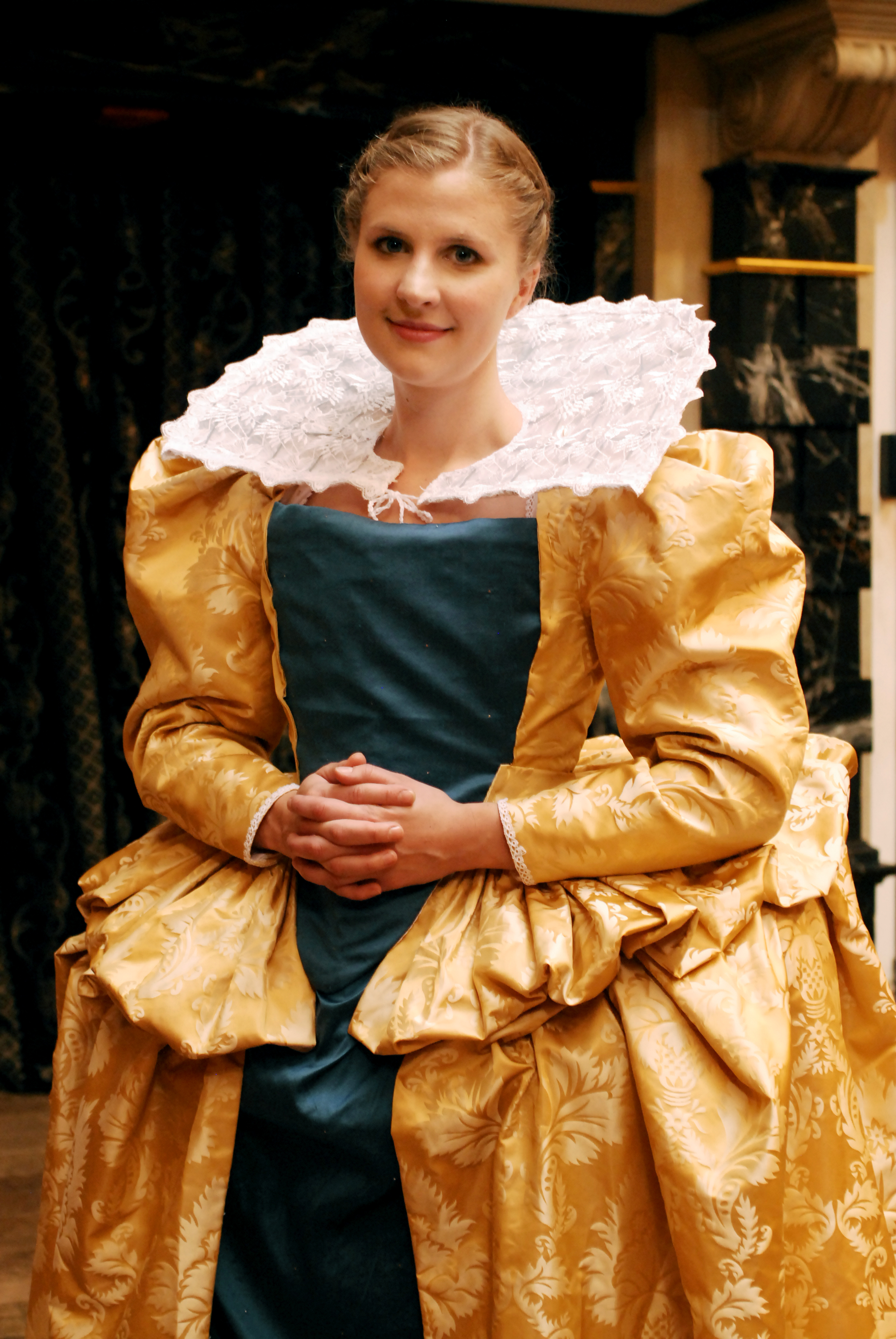
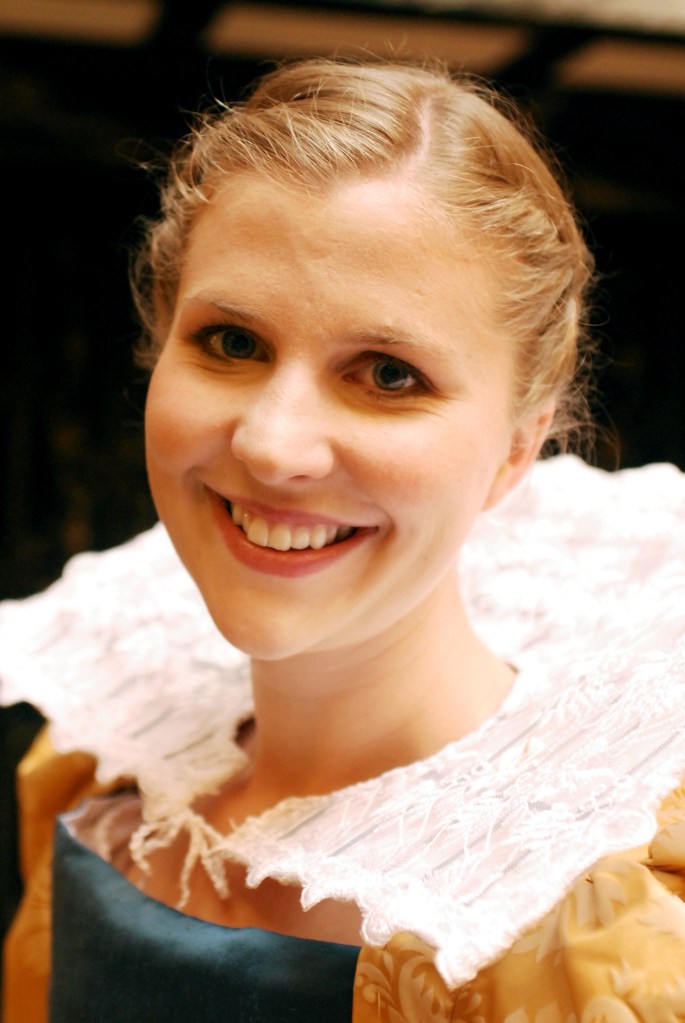
For this installment of this series on Elizabethan costumes, I am deeply privileged that in 2009, I filmed an MFA presentation by my friend and colleague Anna Gonzales. For her presentation at the Blackfriars Theater in Staunton VA, she created two authentic Elizabethan costumes from scratch, which took 900 hours!

In order to make these costumes as accurate as possible, Anna painstakingly researched Elizabethan fashions including period portraits, surviving records, and books of patterns that tailors later published in the mid-1600s. Sadly, no Elizabethan garments survive intact and no patterns. Elizabethan tailors probably felt no need to record their clothing patterns since almost everything they did was custom-made.

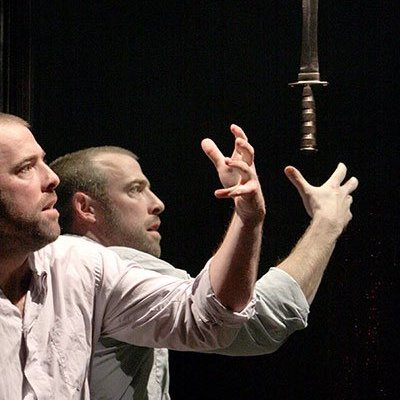
She then gave these costumes to two actors, Jeremiah and Dawn, and had them rehearse a short scene from Hamlet. As the video below shows, these costumes dramatically change not only how the actors look, but how they are able to move, which in turn, gives vital information as to how Elizabethan actors were able to perform onstage.

Garment References In Hamlet

‘Tis not alone my inky cloak, good mother,280
Nor customary suits of solemn black,
Together with all forms, moods, shapes of grief
‘That can denote me truly. “

Hamlet, Act I, Scene ii.

Out of all of Shakespeare’s characters, Hamlet is the only one who is explicitly stated as wearing black. As Anna says in the thesis presentation, black was a very expensive color to make, so only a prince like Hamlet could afford a black cloak. In addition, his black clothing reflects that he is in mourning for his father. Given that Shakespeare’s company were middle-class artisans, it’s entirely possible that they only owned one black garment and made sure Hamlet was the one who wore it. Therefore, he may very well have been the only character who wears mourning clothes in Act I, Scene ii, thus making an uncomfortable divide between himself, and the court.

Kenneth Branaugh in Hamlet, Act I, Scene ii. Notice that Hamlet is the only character in black.

Polonius Costly thy habit as thy purse can buy,
But not express’d in fancy; rich, not gaudy;
For the apparel oft proclaims the man,
And they in France of the best rank and station
Are most select and generous, chief in that

Act I, Scene iii.
Close up on the starched cuffs
Close up on the fine embroidered silk on Jeremiah’s Hamlet costume
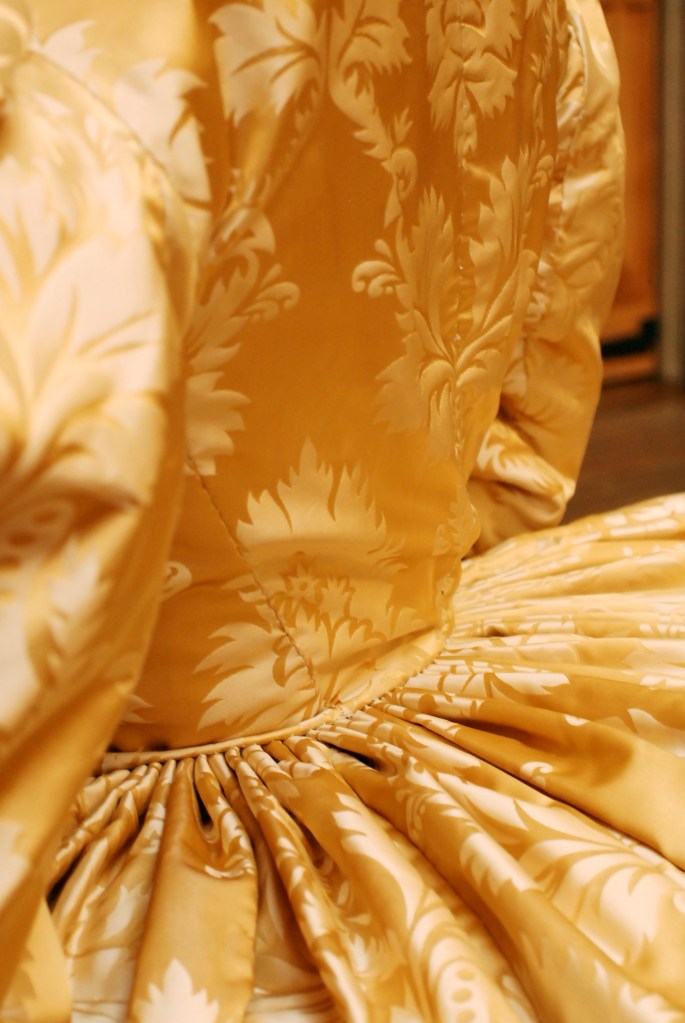
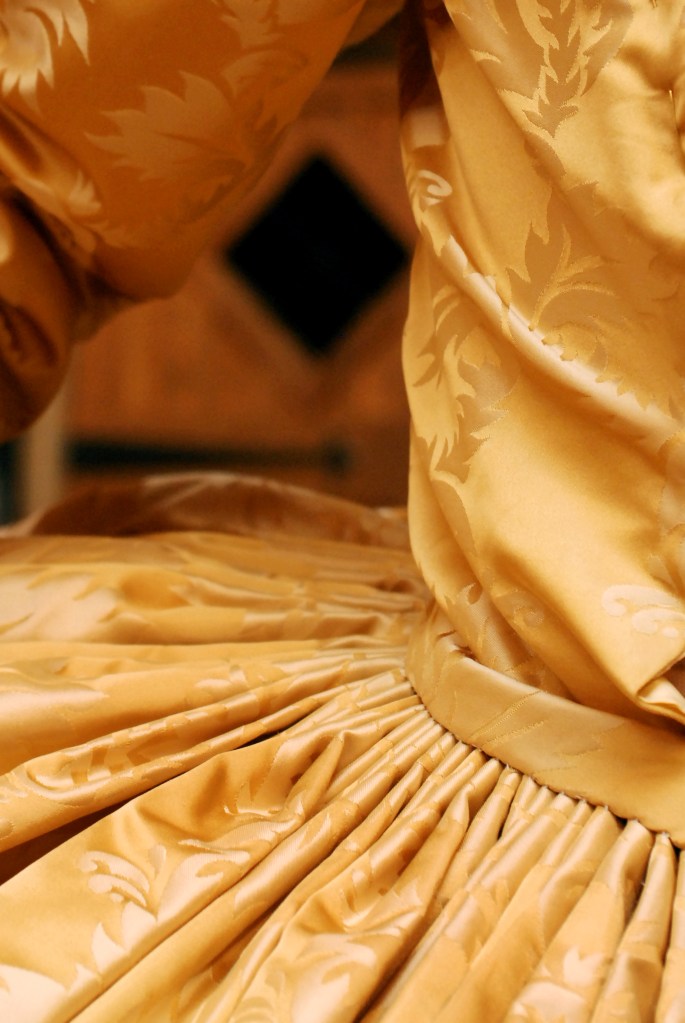
Close up on the fine silk on the bustle


Ophelia. My lord, as I was sewing in my closet,
Lord Hamlet, with his doublet all unbrac’d
No hat upon his head, his stockings foul’d,
Ungart’red, and down-gyved to his ankle;
Pale as his shirt, his knees knocking each other,
And with a look so piteous in purport
As if he had been loosed out of hell
To speak of horrors- he comes before me.

Act II, Scene i


“Early modern dressing was a social event,” that is, well to do men and women couldnt get dressed without the help of dressers, drapers milliners, haberdashers, and tailors.”

Anna Gonzalez

Gentlemen and Ladies Get Dressed

Scholars and Soldiers

Hamlet, (Michelle Terry) and the Ghost in the 2018 Globe Theater production.

The play opens with two soldiers strolling the battlement; then a ghost dressed in complete armor appears. Once Hamlet and all the other main characters die, the play ends with Fortinbras staging a violent coup. Therefore the soldiers’ costumes are very important for creating a mood.

In the 1590s, gunpowder made full plate armor unnecessary. Usually, soldiers only wore a padded coat, a helmet, and a breastplate. Higher ranking nobles who likely never saw combat would wear a gorget, a small armor collar to protect the chest. This video about the wars between early English settlers in America and Native Americans shows nicely the armor and weapons used by the English of this period (strong language ahead):

Elizabethan Fencing costumes

Image from Ein neu künstliches Fechtbuch im Rappier…, (artificial fencing book,) 1611.
De La Touche Les vrays principles de l’espée seule, 1670

Most productions like Olivier’s and Branaughs have Hamlet and Laertes in outfits approximating modern fencing outfits, but in 1600, when the play was written, the attire of fencers was less sophisticated. According to Malcolm Fare, early fencers mainly wore padded doublets and sometimes cloaks; outfits similar to what they would normally wear.

https://www.leonpaul.com/blog/the-development-of-fencing-kit/

Review: Kenneth Branaugh’s Hamlet

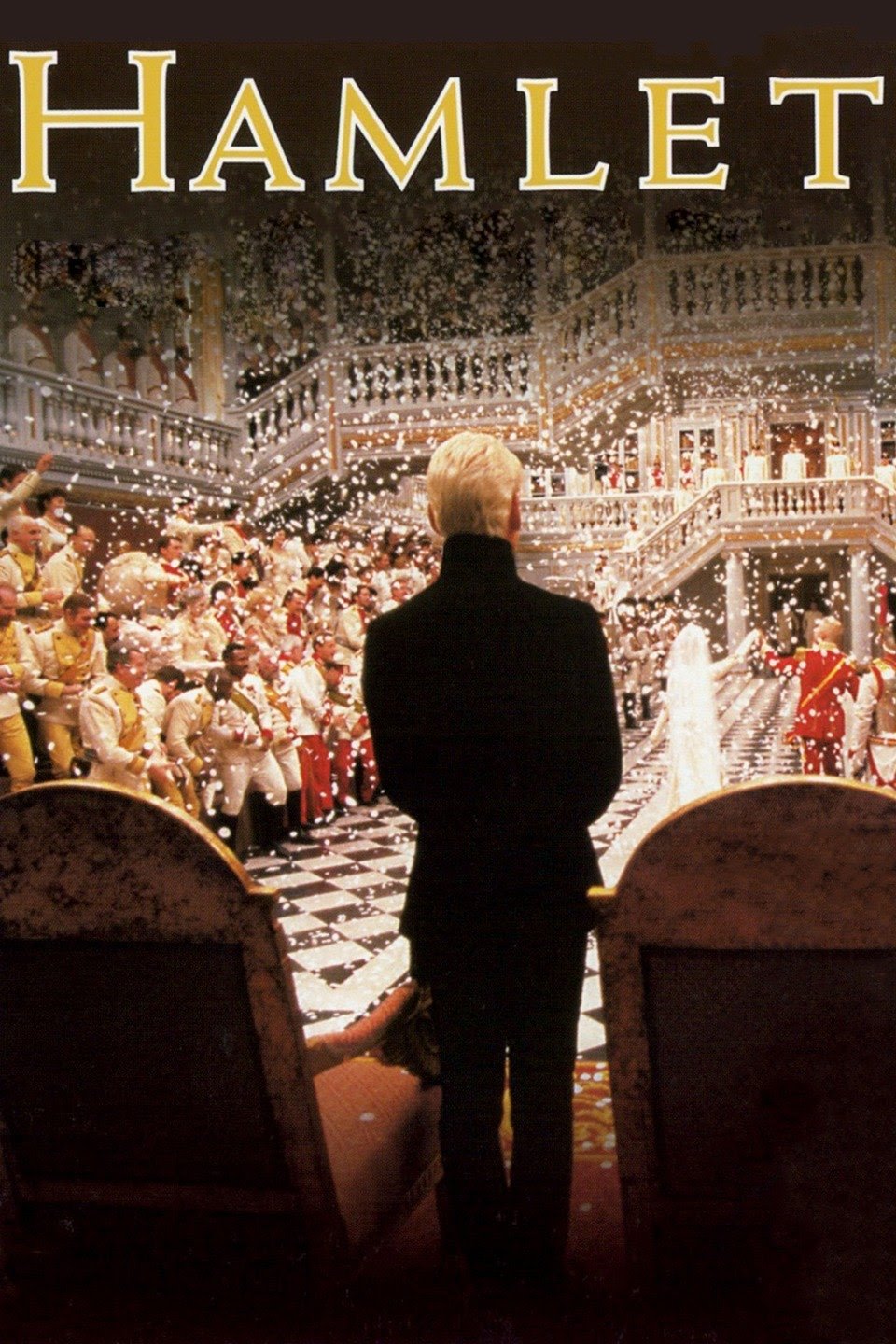
It’s hard for me to be objective about this film. I watched it when I was 16, and it started my lifelong love affair with Shakespeare. For the vast majority of people, I feel this movie will not appeal- it’s Shakespeare, it’s set in the past, and it’s FOUR HOURS LONG! That said, I ADORE this movie, and I probably always will.

The Concept

There is a long tradition of actors directing and starring in Hamlet from Irving to Garrick to Olivier and Guilgud. It’s very much an actor’s play and since the lead part also orchestrates much of the action, it’s understandable that he or she would also want to direct.

Once Kenneth Branaugh started filming this film, he had already played the part onstage and as a radio play. Branaugh’s director, Derek Jacobi, was himself a celebrated and acclaimed Hamlet of the 1970s, and Branaugh would later cast him as Claudius in the film. So, once he approached making the film, Branaugh had lots of experience behind him.

Clip from the documentary “Discovering Hamlet” which shows the whole process of Branaugh’s 1990 production, directed by Derek Jacobi.

Much like Antony Sher, Branaugh was aware that any film he made, would probably be compared to Laurence Olivier’s 1948 film. Sir Laurence’s film was dark, gothic, focused on dark, Freudian psychological disorders, and was mostly a star vehicle for Olivier himself.

Short review of Olivier’s Hamlet, (1948).

Branaugh’s concept was to do an inverse of Olivier- his castle Elsinore is bright, more modern, set in a sort of Napoleonic era, with cannons, muskets, and soldiers with mutton chops. While Oliver’s film was a contemplative look at the protagonist’s mind, Branaugh’s film focuses on intrigue and court drama. One of my favorite features of the film is Branaugh’s use of a hall of doors that contain two-way mirrors. In this castle, you never know who’s watching you.

Original theatrical trailer

The setting

While most of the castle was shot at Shepperdon Studious in England, Branaugh filmed most of the exterior shots at Blenheim Palace, the home of the Duke of Marlborough, and Sir Winston Churchill:

https://virtual.blenheimpalace.com/

The Plot Of the Play

https://study.com/academy/lesson/shakespeares-hamlet-character-analysis-description.html

The Controversy- the longest Hamlet ever filmed

Unlike every other Shakespeare movie, Branaugh chose not to cut a single line of Hamlet, which is why his version is four hours long. He chose to use the text of the second Quarto of 1603, the longest edition of the play.

https://www.bl.uk/treasures/shakespeare/playhamlet.html

I am deeply conflicted about this choice. On the one hand, the long run time makes it nearly impossible to show the whole movie in a classroom or a theater. On the other time, like Gone With the Wind or Dr. Zhivago, what Branaugh has done is created an epic full of lush settings, gorgeous music, and incredible performances that will at least always be remembered as an incredible artistic achievement.

The Cast

Hamlet is Shakespeare’s longest part and has 40% of the dialogue, which means Branaugh has the majority of the screen time. Yet, Branaugh isn’t the biggest star in the film. His casting choices emphasize the notion that, since anyone can enjoy Shakespeare, anyone can perform it too. With only two exceptions, I love every performance in the film. Here are some of my favorites:

Nicholas Farrell as Horatio

Nicholas Farell as Horatio

Horatio is a rather thankless part, since mostly what he does is give Hamlet someone to talk to. In one production I saw, they did away with the part entirely and made the audience Horatio. That said, Farell does a beautiful job portraying Horatio’s patience, boundless empathy, and his slow discovery of these “carnal, bloody, and unnatural acts.” Just watch how heartbroken he is as he watches Hamlet slowly die:

Clip of Nick Farell as Horatio from Act V, Scene iii of Hamlet.
Brian Blessed as “The Ghost”

Brian Blessed As “The Ghost”

As I said in my review of “Henry V,” Branaugh usually assigns the core of his cast to his Renaissance Acting Troupe. Accordingly, Branagh cast Brian Blessed as the Ghost of Hamlet’s Father. Brian already is a physically imposing man (he’s actually climbed Mount Everest), and we see through flashbacks that when he was alive, the former king was a powerful, warlike ruler, yet tender to his wife and son.

As the ghost, however, Blessed seems shaken to his core, which might be due to the pain he suffered as a result of the murder, or (as I mentioned in my Shakespeare On Ghosts Post), he might also suffer in the afterlife because Claudius killed him while he was sleeping. Seeing such a powerful man worn to a whisper and full of pain and fear, is a great way to spur Hamlet to his revenge.

Charlton Heston as the player king

When the company of players arrive in the middle of Act II, Scene ii, Hamlet is filled with joy and treats the Player King like an old friend and surrogate father. I’ve seen productions where the same actor plays the Ghost and the Player King, which helps drive this point home.

In the play, the Player King inspires Hamlet with a passionate speech. Hamlet muses how, while the Player is able to conjure emotion and tears when talking about the fictional Queen Hecuba, Hamlet has done nothing yet to revenge the Ghost. Then, thinking about the Player’s performance gives Hamlet the idea to stage a play-within-a-play, to test whether or not Claudius is guilty:

About, my brain! Hum, I have heard
That guilty creatures, sitting at a play,
Have by the very cunning of the scene1665
Been struck so to the soul that presently
They have proclaim'd their malefactions;
For murther, though it have no tongue, will speak
With most miraculous organ, I'll have these Players
Play something like the murther of my father1670
Before mine uncle. I'll observe his looks;
I'll tent him to the quick. If he but blench,
I know my course. Act II, Scene ii, lines 1663-1674

With all this in mind, The Player King is very important to Hamlet’s journey and Heston’s mighty delivery is inspiring and full of passion.

Robin Williams as Osric

Robin Williams as Osric

It seems like an insane idea; cast a stand-up comedian in a Shakespeare movie? Yet, in fact, the late Robin Williams was a classically-trained actor and studied at New York’s Julliard academy, so he must have done Shakespeare in the past.

Branaugh clearly loved working with Williams. Not only did he keep all of Osric’s lines (like all the other lines in the play), Branaugh gave Williams more to do, making him basically a second Horatio who cares for Laertes in the final act of the play.

Usually Osric is played as a classist-joke. He’s a sychophant, a social climber who, because he wasn’t born a noble, the nobles treat him as a suck-up and a fool. Williams gives Osric much more warmth and depth, in addition to his manic charm. Branaugh even gives him a tragic death, to make him stand out even more!

Kate Winslet as Ophelia

Five film versions of Ophelia compilation.
I summarize Ms. Winslet’s performance in one word: Heartbreaking. In Oliver’s version, she seems like an airhead, and Helena Bonham Carter plays the part as sort of a rebellious teenager. Winslet’s performance is just as if not even more tragic than Branaugh’s and it is truly heartbreaking to see her journey.

In the 1990 stage production of Hamlet, Jacobi decided to turn “To Be Or Not To Be” from a soliloquy into a speech that Hamlet says to Ophelia, which then plants into her mind the ideas of madness and suicide that she herself follows to their tragic conclusion. In Branaugh’s film, it seems very clear that he gave Winslet that same direction, (even though the speech is filmed like a soliloquy). Before “To Be” and the subsequent “Get Thee to A Nunnery” scene, Winslet’s Ophelia is happy, sweet, obedient to the men in her life, but still her own person. We see in flashbacks her sneaking off to be with Hamlet and she seems to enjoy her secret romance. Probably Branaugh pulled some ideas from her role in Titanic too. But Polonius and Laertes shut her down at every turn and keep her from being with Hamlet. Winslet shows beautifully Ophelia’s struggle to be an obedient daughter and Hamlet’s girlfriend.

In the “Get Thee To a Nunnery Scene,” it’s not clear whether Hamlet knows he’s being watched (at first), so when he speaks to her gently, he might be trying to get her to leave to protect her. But once Polonius audibly closes a door, Hamlet is full of mysogynistic fury. Again, he might be playing mad in order to deceive Claudius and Polonius, or he might be genuinely mad at Ophelia for going along with this attempt to spy on him, but in any case, It certainly breaks her heart, and Winslet plays that heartbreak with a great deal of skill and passion.

Billy Crystal as the Gravedigger

Billy Crystal as the Gravedigger

Again, it seems bizarre to cast an American comedian as a Shakespearean character, but Crystal did a great job making this 400 year old comic bit seem like he wrote it himself! Plus, Crystal listens very quietly and attentively during the “Alas Poor Yorrick” speech, and doesn’t pull focus.
Kenneth Branaugh as Hamlet

Even though this was a four-hour Shakespeare movie of a play I had not yet read, at 16 I was hooked by Branaugh’s performance. Like Olivier before him, Branaugh knows Shakespeare’s reputation as being boring and out-of-touch, so his film is full of violence, sex, and manic energy. This also comes across in his own performance. Branaugh lost weight and dyed his hair to appear younger and attractive (since he knows Hamlet is supposed to be just out of college). He fills the mad scenes with a dark and silly sense of humor, and he plays the angst of Hamlet in Act One very much like a grieving teenager, lashing out at his stepfather and his mother.

That said, Branaugh is also capable of great depth and gravitas in the soliloquies. I particularly love his delivery of “How All Occasions Do Inform Against Me…” soliloquy in Act IV.

The long tracking shot makes it look like Hamlet is expanding his worldview as he contemplates his role in the play, after failing to avenge his father’s death. It’s almost like this young man is growing up in the course of the movie; from a confused and angsty little rich kid, to a man who would make a good king if his life wasn’t tragically cut short.

For a more sober audience, Branaugh’s energy could probably be seen as annoying and lacking subtlety, but for 16 year old me- I ate it right up.

Notable Moments

  1. Branaugh’s interpretation of “To Be Or Not To Be.” Every actor who takes on Hamlet frets over the problem of how to make this speech engaging and fresh. Fortunately, Branaugh did a great job of staging and delivering this speech for the screen. He uses the two-way mirrors brilliantly creating an atmosphere of suspense where Claudius and Polonius are watching this speech, but it’s not quite clear whether Hamlet knows they’re there. His delivery is hushed but intense. It seems like he’s trying to unnerve Claudius without letting him know Hamlet plans to murder him. Everything from the performance, to the filming, to the setting is iconic, and no matter what people think of the film, this version of the speech should be remembered as an achievement in and of itself.

2. Kate Winslet In “The Mad Scene” Just as “To Be Or Not To Be” is the test for any Hamlet, Ophelia’s greatest challenge is the Mad Scene, Act IV, Scene v. After her brother leaves, and her boyfriend is banished for murdering her father, Ophelia has nothing left to lose, except her mind. Many actresses play the mad scene as a chance for Ophelia to let loose, and explode with all the pent-up emotions she’s been repressing- rage, sexual desire, grief, etc. Winslet plays all of them and is very distinct when and why they hit. She refuses to let the men in the court touch her, except for Laertes, and seems disgusted by Claudius. With her brother, she seems to regress into a childlike state, pretending to hold flowers to give to him. The only lucid moment she has is when she quotes songs (simmilar to the Fool in King Lear), where she expresses sorrow that Hamlet abandoned her, grief for her father, and a nihilistic sadness that her life no longer matters, much like the frustration Hamlet expresses in “To Be Or Not to Be.”

Kate Winslet in the mad scene, (Act IV, v)

3. All of Act II, Scene ii. I found myself rewatching this scene, the longest scene in the play. It’s the scene where Polonius claims Hamlet is mad for Ophelia’s love, where Rosencrantz and Guildenstern spy on Hamlet, the Player King delivers his aforementioned speech, and Hamlet has his “O what a rogue and peasant slave am I” soliloquy.

Every performance is fast-paced and entertaining. Even Don Warrington, as the often-cut character of Voltimand, who only gives one long speech about how Fortinbras is totally NOT GOING TO INVADE DENMARK, captivated my ear with his beautiful voice. The drama keeps coming as new characters keep coming in and interacting with Hamlet, and his mood changes drastically throughout the scene; he’s silly and condescending to Polonius, jovial to the players, guarded and brooding to Rosencrantz and Guildenstern, and tortured and full of grief and remorse once he’s finally alone.

Branaugh actually starts the soliloquy with Hamlet taking a series of huge, heaving breaths as if performing for all of these people is truly exhausting. It’s almost like a movie within a movie, and everyone is wonderful in it.

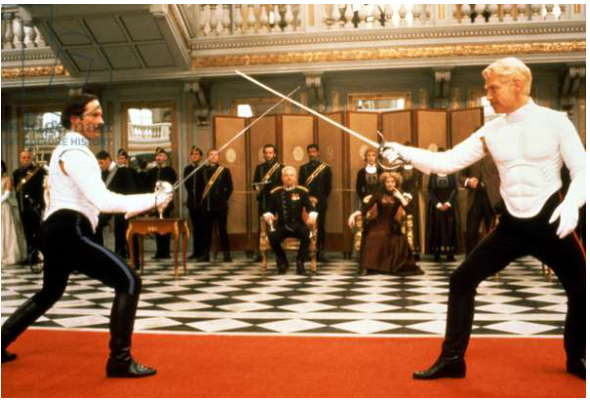
4. The Duel As I detailed in my post on the duel at the end of Hamlet, there are three separate bouts which each have a different feeling- ranging from a sporting fencing match to a deadly blood combat. Branaugh shows the character shift of the duel incredibly well, with his use of music, choreography, and costume. First, the combatants meet before the king, dressed in their white fencing uniforms. Their fight is quick and agressive, but not yet tense or lethal. Then, once Gertrude takes the poisoned cup, the action stops. Claudius is frozen and his voice is only a whisper. Laertes starts to ramp up the tension as he prepares to really attack Hamlet, which he does by slashing his uncovered shoulder!

The climactic duel between Hamlet and Laertes, with Hamlet, finally taking revenge on Claudius (Derek Jacobi).

From this moment in the duel, all Hell brakes loose. Branaugh chases Michael Maloney all around the castle, not stopping until he grabs Laertes’ sword. Meanwhile, Osric shouts for help as Gertrude is dying near the throne. A string quartet ramps the music up up to a wild, whilrling low-pitched tremulo, with the violins playing pizzicato on top. Plucking their strings like the lethal poison that plucks all the characters’ lives.

My Reaction

Even though this film is long, I adore every scene. Branaugh’s boundless energy and endless love of Shakespeare translate through his direction and performance. At the same time, he lets the other actors shine and takes to heart the lessons of Olivier, Gielgud, Jakobi, and others to create a Hamlet that is epic in scale, beautiful to the eye, and timeless in its handling of the material. Clearly, Branaugh wanted this film to be his masterpiece, and whether you like it or not, it certainly is that.

My advice is If you choose to watch it yourself, read a summary of the play first, then watch the film. Also, take some breaks in between the scenes and watch it in chunks. I actually taped it off of live TV so I could watch it in segments.

If you like this analysis, you might be interested in signing up for my Outschool Course on Shakespeare’s Tragedies. I also have a class on Shakespeare’s writing where I analyze “To Be Or Not to Be:”

The Fashion Is The Fashion 5: Richard III

Sketch I made for a production of Richard III.

Today I’m going to talk about the unique costume challenges in dressing the cast for a production of Shakespeare’s history play, “Richard III.”

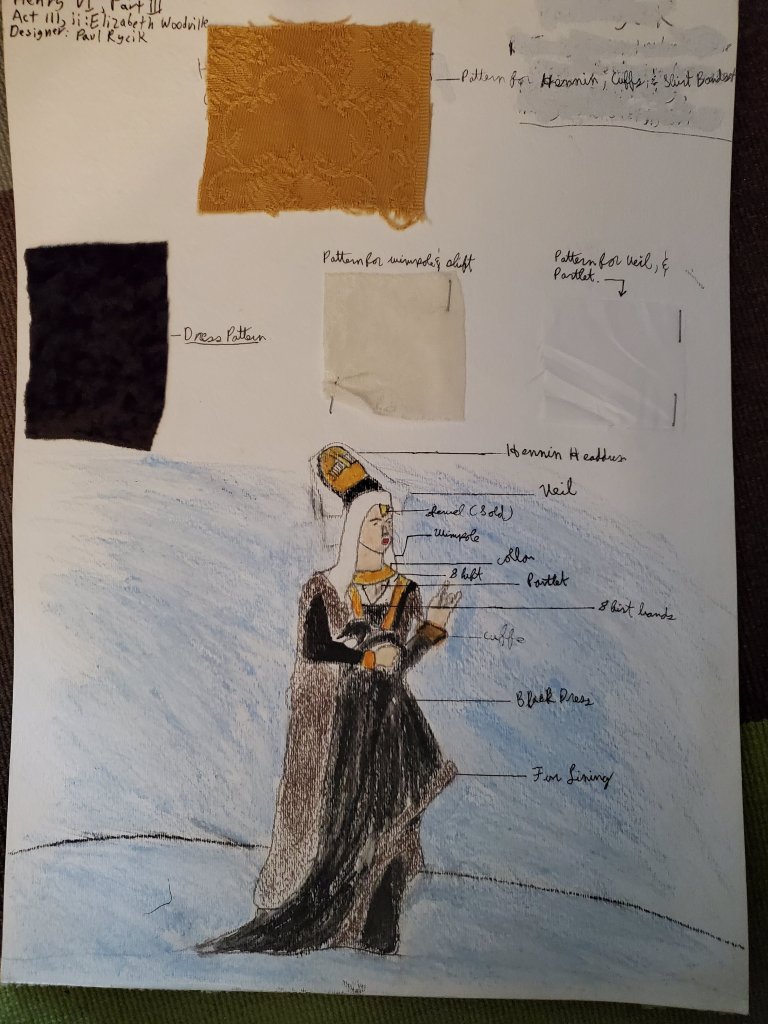
The play is set in 1483, a time period where, even though many European countries were at war, many nobles had sumptuous, more form-fitting clothes with fur, gold, leather, and other exotic fabrics. If you look at the sketch I did above, I gave Richard designs using velvet, leather, fur, and gold. After all, Richard is a powerful duke even before he takes the crown. For more information about this period, visit Fashion History.edu.

Design for Queen Elizabeth Woodville by me.

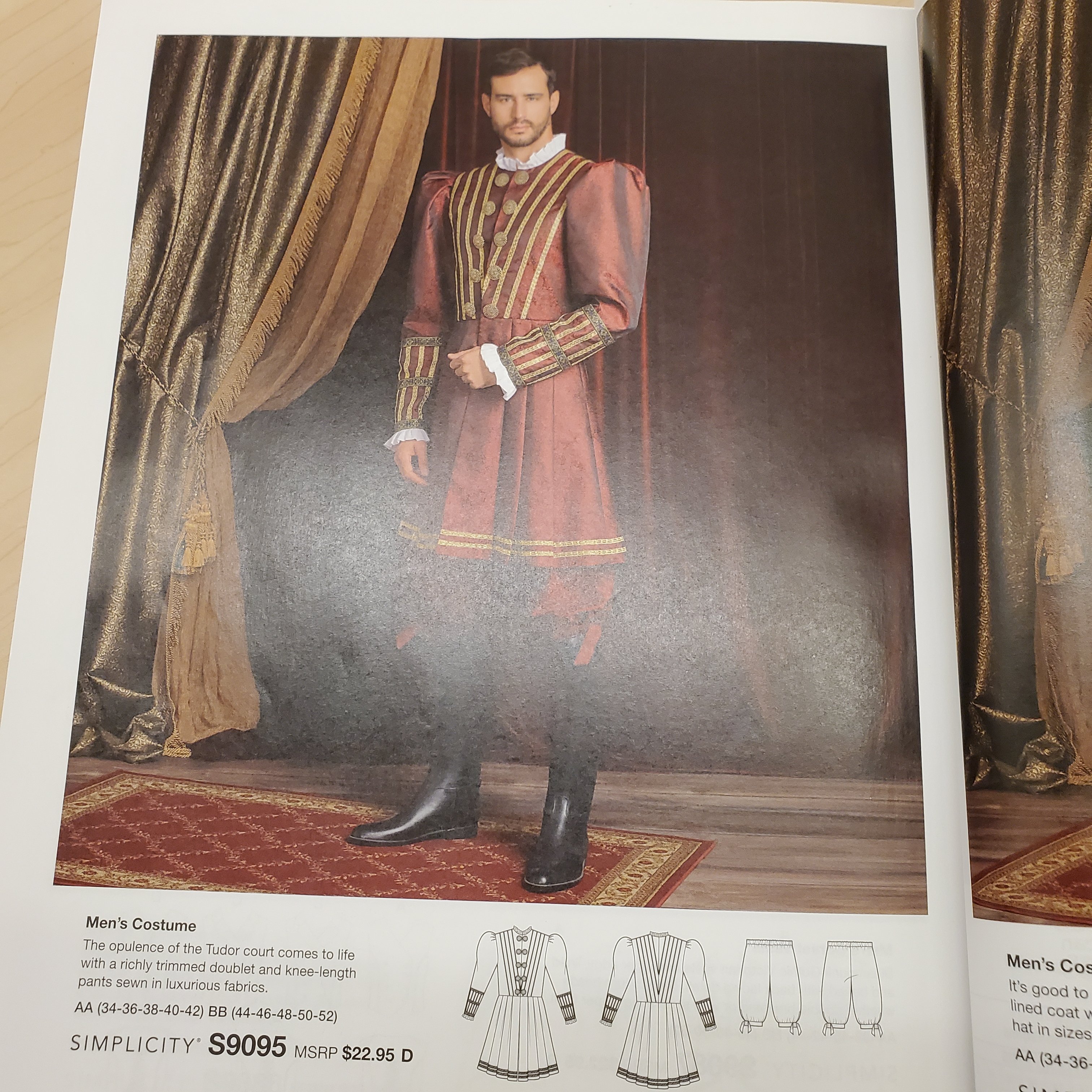
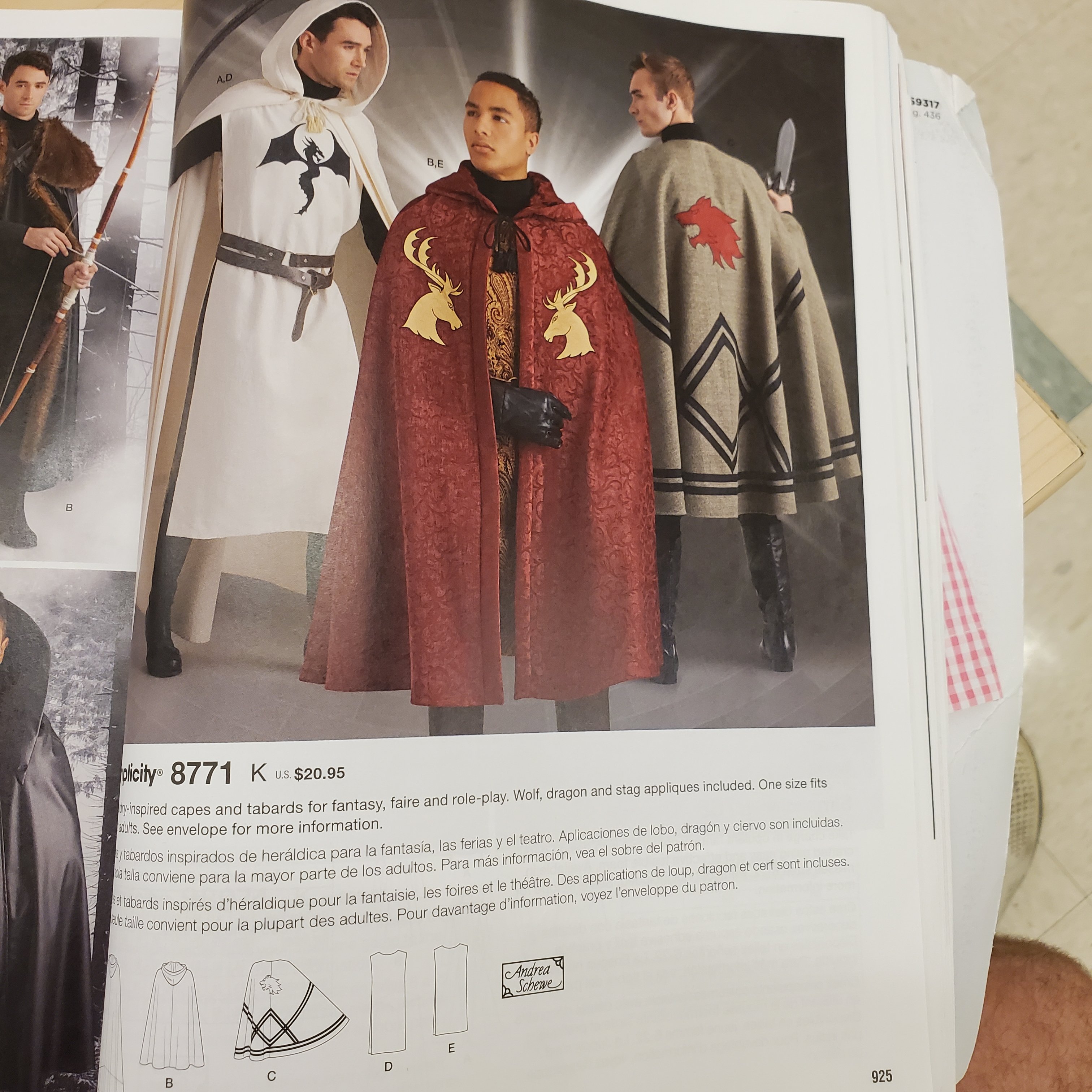
Further, if you’re interested in finding pre-made patterns of 15th century-inspired costumes, go to your fabric store and look for kits like the ones I photographed below.

My design was based on a drawing by the 19th century illustrator HC. Seleous, and the color were taken largely from Richard’s royal portrait in the National Portrait Gallery. I also used a royal portrait of Elizabeth Woodville, queen to Edward IV, (Richard’s brother).

Donning the Hump

Interestingly, x-ray photography has recently revealed that Richard’s alleged hump was added to his portrait after his death. In reality, the king only suffered from merely a curvature of the spine. Just like in Shakespeare’s play, the Tudor Chroniclers literally defaced Richard’s image to make him look like an evil, deformed maniac.

Costume designers are vital to help the actors realize the deformity when playing Richard III, and they have done so in many ways. Ian Holm wore a boot on his leg. John Harrel had a bowling ball fastened to his hand, and Antony Sher had a large hump in the center of his back, both a cloth one that was built into his clothes, and an elaborate makeup prosthetic for scenes where he was partially undressed. When I researched for my thesis, I consulted Sir Antony’s book “Year Of the King,” where the actor explained his research into real spinal deformities, and how he incorporated them into the performance. You can see how my actor Matthew figured out how the hump would impede his walk and other movements.

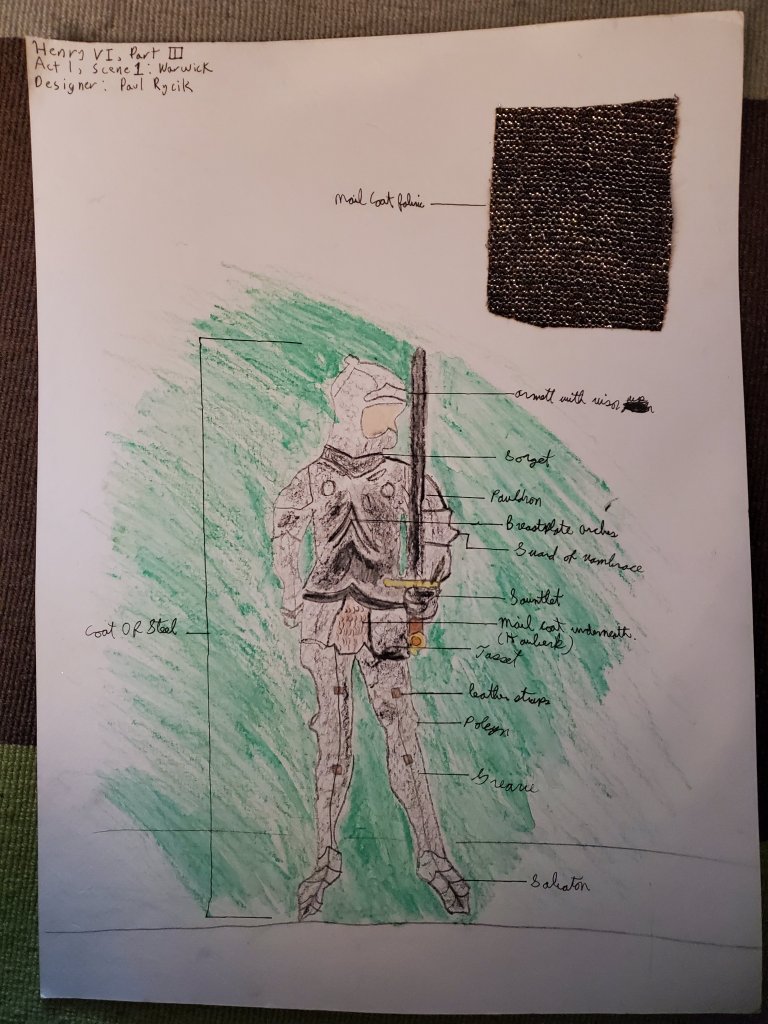
For the final battle between Richard and Richmond, one has to decide on the period and think carefully of the fitness of the actors. 1485 was at the height of the era of suits of armor, and many films have chosen to have Richard fight to the death, while encased in a heavy metal coat of plates.

Benedict Cumberbatch in the 2017 BBC TV mini-series “The Hollow Crown.”
Design for a suit of armour for Henry Tudor

However, this has not always been the case. Ian McKellen had Richard fight in a gas mask in a 1940s British military uniform, driving around on a jeep that gets stuck once Richard utters his most famous line:

Richard III is a play about political intrigue, mafia-like turf-wars, and literal backstabbing and the clothes need to reflect this brutal and Machiavellian world. The costumer needs to help all the actors, not just Richard realize their place in the corrupt medieval political landscape of The Wars Of The Roses, as these characters go from an uneasy peace, to the last gasp of civil war.

Ian Mckellen in the 1995 movie version of Richard III.

Shakespearean Tropes In Meow Wolf’s “Omega Mart” (Spoiler alert)

Giant Skull art as part of Area 15. Hamlet would be dazzled.

I just got back from Las Vegas where I had a simulating, terrifying, and extremely engaging trip to the Meow Wolf Area 15! If you haven’t heard of them, Meow Wolf is an arts and entertainment group which specializes in creating multimedia experiences, and their most popular and mysterious installation is their apocalyptic grocery store, Omega Mart.

Even if you’ve never been to Omega Mart, you might have seen their website, their ’employee training videos’, or the music videos that have been floating around the Internet. My journey began when I saw this video by the YouTube channel Food Theory. After seeing this video, I, like Matt Pat was compelled to go there myself and discover what Omega Mart was like.

My handwritten notes about the mysteries of Omega Mart that I wanted to explore once I got there.

“We take a lot from open world games [where] you can play the story lines or you can just mess around.  We like giving people that optionality (sic). If you’re a 5 year old kid and you aren’t into reading a bunch of material, you just want to run around and treat it like a playground, and that’s totally fine.”

Vince Cadleback, CEO of Meow Wolf
Video artwork that was projected on the wall of the Forked Earth room

A Note about the experience

Meow Wolf’s CEO has stated that the experience of Omega Mart is ultimately up to you. Similar to Sleep No More, this art installation (and it is an art installation) is much like an experiential theater experience in that there is no proscenium, and you do not sit down; it is not a passive watching experience but an active mystery. In Sleep No More, you followed various actors and watched them act out scenes in front of you. In Omega Mart, the story is more epistulary, meaning that there are no live performances, but you can unlock the story at your own pace through reading journal entries, corporate memos and websites, mini-games, and of course, actors performing in corporate videos, commercials, and even security footage. Like a modern video game, you can just walk around the open world and enjoy it, or you can unlock all the lore and piece together the mystery of Omega Mart yourself. This is story a story that is rife with greed, personal tragedy, family drama and maybe even murder. So of course my Shakespeare brain activated, and I wanted to see if I could find some Shakespearian tropes in the story of Omega Mart. I should mention that this kind of experience is often best when you let it become a surprise, so if you truly want to experience Omega Mart without spoilers, stop reading….

STOP RIGHT
NOWSTOP RIGHT
NOWSTOP RIGHT
NOWSTOP RIGHT
NOWSTOP RIGHT
NOWSTOP RIGHT
NOWSTOP RIGHT
NOW RIGHT RiGHT St0p R$GHT N00000W!

 OK well if you’ve continued reading grab your tattoo chicken, apply your whale song deodorant and let’s get going!

The Characters

The drama of Omega Mart focuses on a single family, the Dram family: Walter, Charlie, Cecilia and Marin Dram. As you go through the various exibits in the Meow Wolf installation (not just the OmegaMart store), you begin to piece together what happened to them, how this family broke apart, and what Shakespearian tropes can we see within this story.

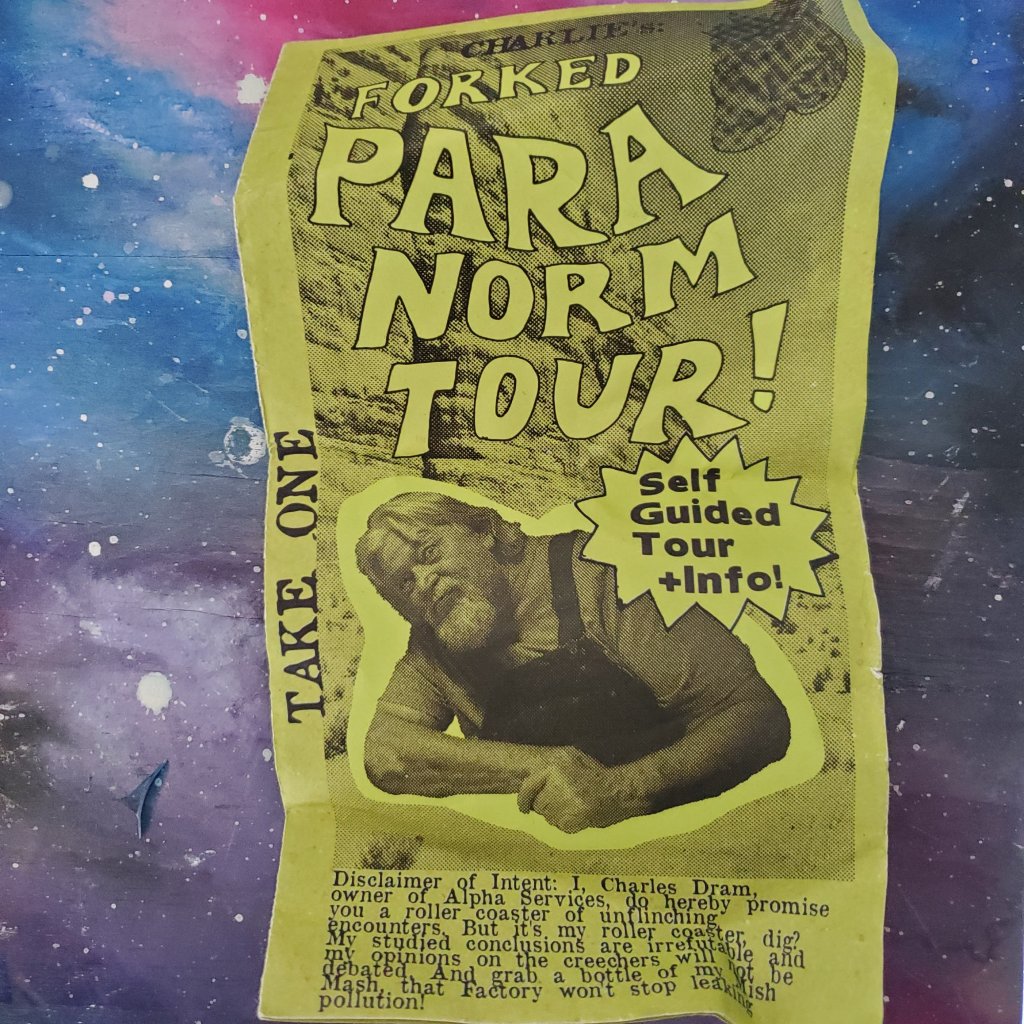
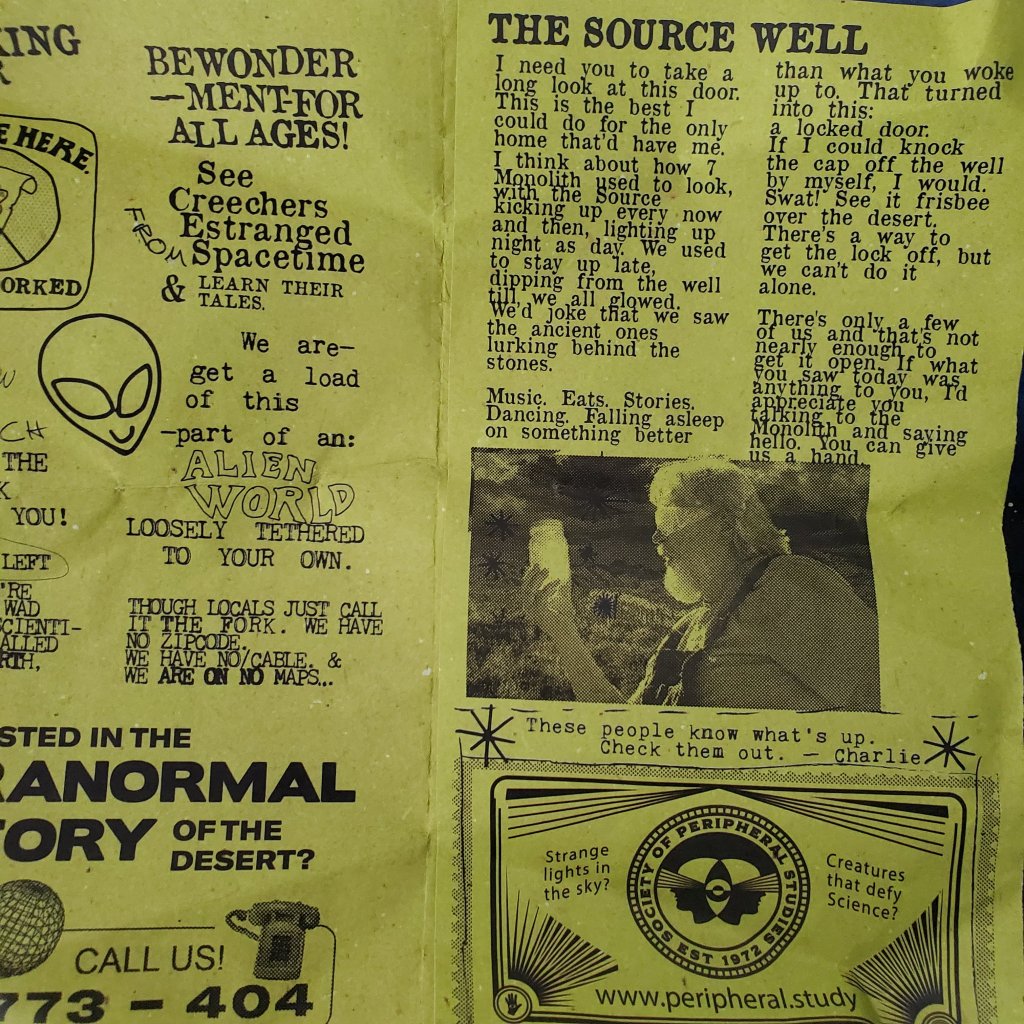
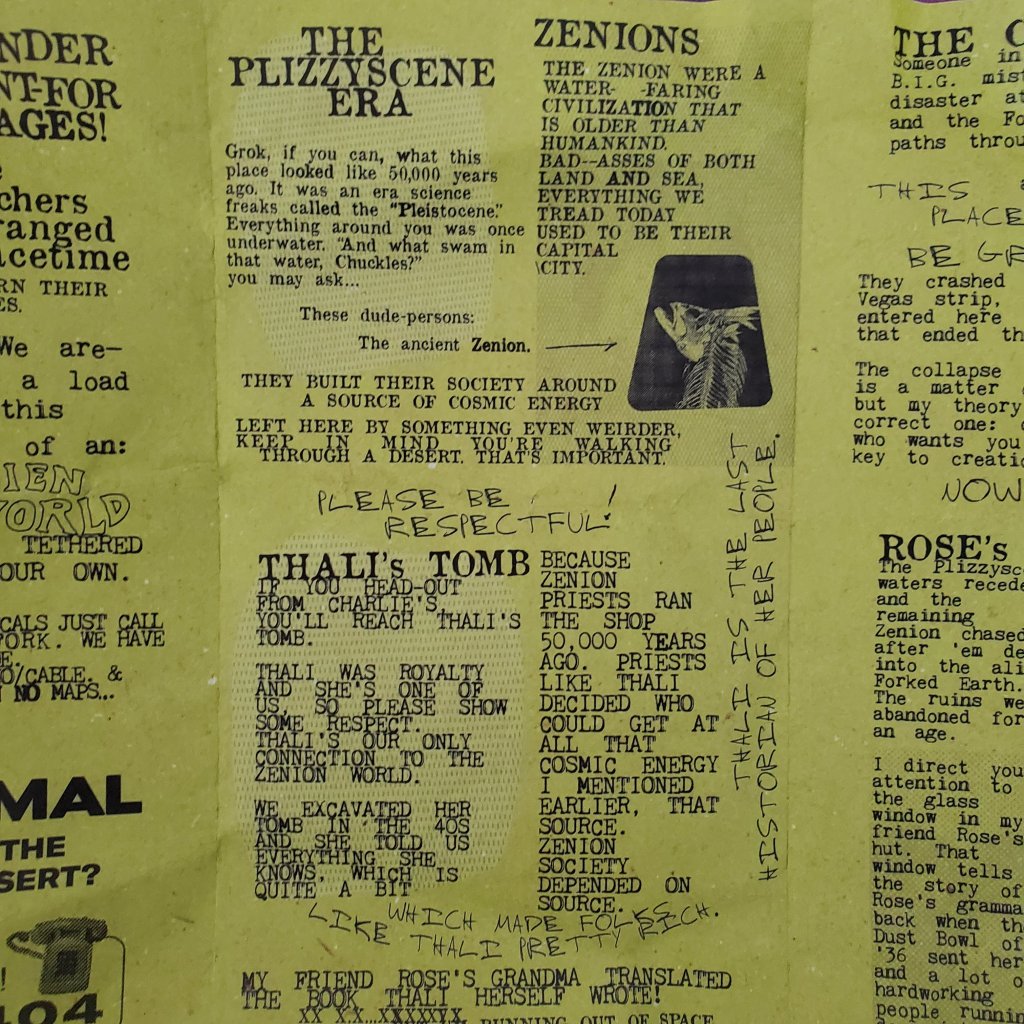
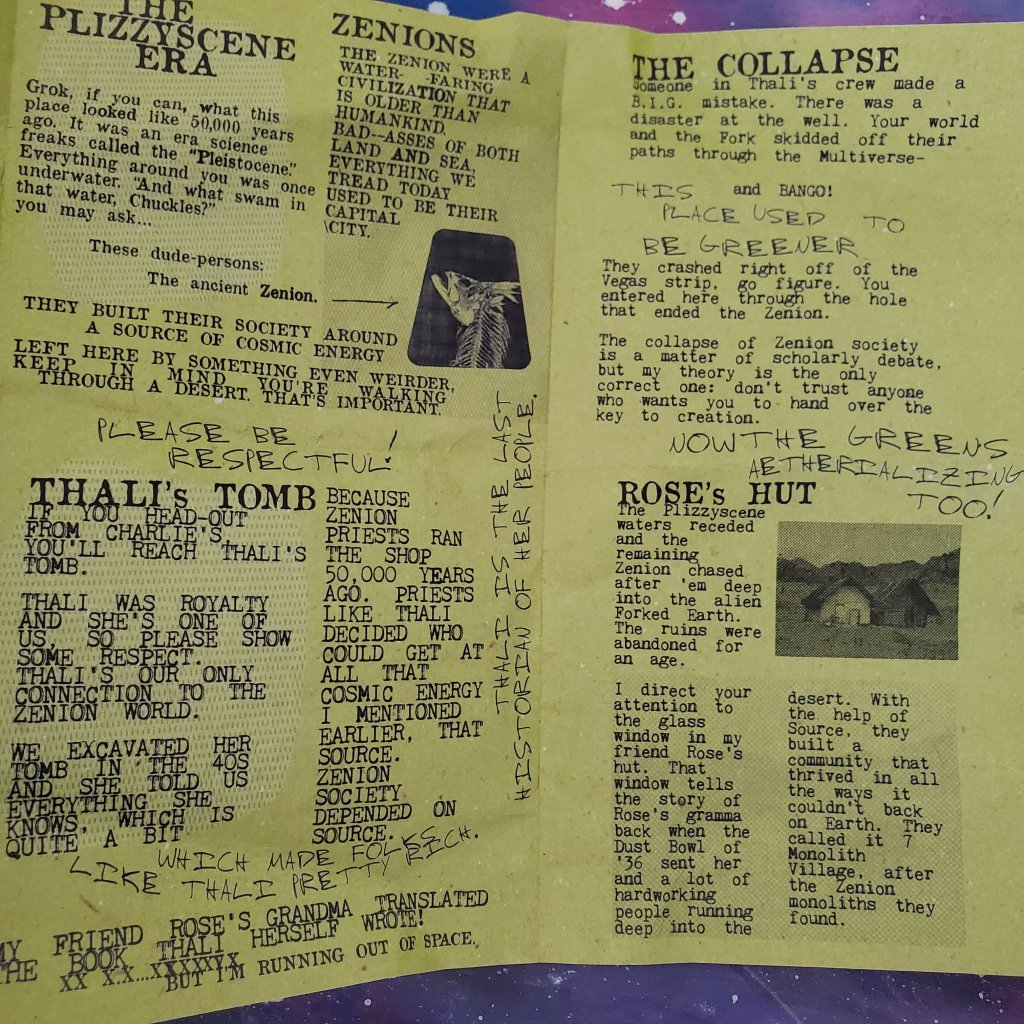
  1. Charlie Dram: Sir John Falstaff The whole story begins with Charlie Dram; an old garage attendant who lives in the fictional town of Seven Monolith Villiage in Nevada. As you can see in the brochure I photographed above, Charlie runs a small tourist attraction where he guides tours allowing people to see The Forked Earth- a dimensional rift between our world and an alien planet, that is also the fount of a powerful and dangerous place called The Source Well. At some point, Charlie goes into business with his family, who eventually cut him out of their lives.

Henry VI know thee not, old man. Fall to thy prayers.
How ill white hairs become a fool and jester!
For God doth know, so shall the world perceive,
That I have turn’d away my former self;
So will I those that kept me company.

  • King Henry IV, Part II, Act V, Scene 5.
Walter Dram, CEO of Dramcorp
2. Walter Dram: King Lear. This being America of course it was inevitable that somebody would try to capitalize on the Source Well, specifically Walter dram Charlie's brother Walter. Mr. Dram, the CEO of Dramcorp found a way to harness the source and use it. It's not explicitly stated but it's highly implied that he took the Source to a place called Plenty Valley and started using it to revitalize crops out in the Las Vegas desert.
After harnessing The Source, Walter found that he was able to create produce that had unusual properties and from there he opened his grocery store, Omega Mart. If you go to the store, the products seem just a little off- they all have peculiar names, seem to have peculiar properties and in some extreme cases they seem to have inhuman properties like like lemons that are alive!

Charlie calls these creatures  "mascots;" creatures that have that seem to be living cereal boxes. The source seems to have unpredictable and uncontrollable effects on natural products but because every Omegamart produce is doused with Additive S (which is Walter's addictive additive made from The Source), customers don't seem to care if they become addicted to any products that are laced with The Source.

Walter finds himself extremely rich and successful and opens up his corporation Dram Corp in 1977. Decades later in 2020, Walter promises to make his daughter Cecilia Dram his sucessor when he retires, but at some point, he must have reneged on that promise, proclaiming Kaz Matzumora the future CEO. What happened to accelerate the fallout between Walter and Cecilia, we're not sure, but it's quite possible that it has something to do with Cecilia's daughter Marin.

Better that thou hast not been born, then not to have pleased me better.

King Lear

So we have a rich and successful man, who, now that he’s getting old, desires to pass his empire on to younger people, including his daughter. At the same time, he refuses to let go of power, and is willing to throw family under the bus to get his way, as he did with Charlie, and would have done with Marin, (more on that later). Let’s just say, it is very easy to spot the parallels between Walter Dram, and King Lear. Look at this video below where Walter seems to repent for his greed and abandoning his family, though it takes place in an ethereal prison.

  • LearPray, do not mock me.
    I am a very foolish fond old man,
    Fourscore and upward, not an hour more nor less;
    And, to deal plainly,
    I fear I am not in my perfect mind.
    Methinks I should know you, and know this man;
    Yet I am doubtful; for I am mainly ignorant
    What place this is; and all the skill I have
    Remembers not these garments; nor I know not
    Where I did lodge last night. Do not laugh at me;
    For (as I am a man) I think this lady
    To be my child Cordelia.
King Lear Act IV, Scene vii.

When I watched the Film Theory about Omega Mart, I thought Walter was like King Duncan in Macbeth, and his daughter Cecelia was Lady Macbeth, killing Walter to gain his power. The truth though, is much more complicated, and it centers around Walter’s granddaughter, Marin.

2. Marin Dram: Cordelia from King Lear, Miranda from The Tempest

if you look at the videos in Charlie’s office you can see Cecilia Dram (Walter’s daughter), drinking the Source. Within a minute she starts having cramps, and convulsions; she has been literally impregnated by the Source! Her daughter Marin was conceived by Cecilia Dram and the Source. But, there’s a catch; Marin, because she was created from the Source, cannot be too far from the Source Well. So, rather than living with her her mother and grandfather at Dramcorp, she’s forced to live in a yurt in Seven Monolith Village, very close to the Source Well.

Tarot cards found in Marin’s desk.

Marin’s diary expresses a deep sense of loneliness and a desire to explore the world, not unlike Prospero’s daughter Miranda in The Tempest. She also expresses romantic feelings for Rose, a girl who lives in Seven Monolith, (who according to Charlie, is the granddaughter of a woman who successfully translated the language of the aliens who created the Source Well). The wonderful music video “Marin’s dream” playing below, shows cogent references to Marin having bisexual feelings for Rose and fear towards her mother. This is partly because, since Marin is connected to the Source and her family has been exploiting The Source for profit, she is fearful that her mother will exploit her for her Source-given powers .

We are such suff as dreams are made on, and our little life is rounded with a sleep

Prospero- The Tempest

It is further revealed that Marin is capable of creating living creatures with her own mind because of her connection to the Source. Below is a drawing by Marin of a hamster which then came to life in 7 Monolith! These powers make Marin highly desirable to both Celia and Walter. As Charlie mentions in the brochure, there are living product creatures called mascots and it seems likely that Marin is literally creating these creatures in her sleep!

At the end of the music video you can see Marin going through a portal in the wall. In Seven Monolith you can access numerous posters, emails, and phone calls that discuss and speculate about Marin’s disappearance. Some say she ran away from home, some say she was violently sucked into the portal, but the music video makes it very clear that Marin Dram chose to leave Seven Monolith Villiage, and to leave our universe as we know it. Why? It probably has to do with her mother, Cecilia Dram.

Cecilia’s letter to Charlie, May 2017

Cecelia Dram: Goneril and prosperO

Like I said before, I was expecting Cecelia to be the villain in the story- a power-hungry “thankless child,” (as King Lear puts it), who murdered her own father to take control of his empire. Now it’s possible that she did want to take the company at some point, but what also seems clear is that Cecelia is also seeking redemption for herself, and a reunion for her family.

Cecelia and Walter’s Disappearance

In a highly classified video that you can only access in the Dram Corp offices, Walter and Cecilia confront each other about Marin, and Walter seems to be intent on exploiting her gifts for profit. At this point, the video cuts out, but the audio tells us that Walter has fallen into the Source Well. It’s unclear whether he fell or if Cecilia or Marin pushed him, but what we do know is that Walter in every subsequent and email and communication with the board is referred to as “traveling.” When I first saw this, I thought that it meant that Cecilia had murdered Walter simply to gain control of the company, but it seems to be wilder than that; it seems that Cecilia might have thrown Walter into the source well to protect her daughter, but now wishes to get him back.

Once Walter falls into the Source Well, he actually absorbed so much Source that he no longer has a physical form; he seems to have ascended to a higher plane of existence and as you can see in this whiteboard, there’s a rumor that he is actually hiding somewhere in the Omega Mart facility. I won’t give away where he actually is though; you’ll have to discover it yourself.

Cecilia’s motives are the most interesting and ambiguous in the course of the Omegamart storyline. Her demeanor changes drastically after the disappearance of her father and daughter; it seems that she is trying to harness the power of the source not for profit but for but to cause her employees to “Ascend to a higher plan of existence.” Other members of the board in teleconferences seem frustrated with her, accusing her of no longer taking an interest in selling products anymore and that she seems to be coming down with strange cult-like behavior. Look at this highly confusing LED talk she gave one month after Walter’s disappearance:

So it’s ambiguous what Cecilia’s motives are- it could be that she’s attempting to create an army of Source-addicted zombies to do her bidding. It’s also possible that she is trying to figure out how to replicate the same experience as Walter and Marin. Maybe she wants to try and replicate what happened to them, so she can see them again.

Further evidence also supports that Cecelia is desperate to contact Marin and Walter by the fact that in addition to working on LAT, (her employee advancement program), Cecilia is also pushing her research team to create inter-dimensional portals. The clip above in which Cecilia talks to her DART scientists strongly implies what Cecilia really wants to do is to find her daughter in whatever dimension that she’s actually in. Notice that when the test subject mentions a teenage girl he sees in his dreams, Cecelia immediately drops everything to talk to him. Soon after that, DART starts working on DRAMNILATE, a technology that allows researchers to look inside people’s dreams, and test them on the exact same employee as before. Clearly Cecelia is hellbent on finding Marin anywhere, even in dreams!

Through the entire Omegamart storyline, it is ambiguous as to whether Cecilia is the hero or the villain. Her quest to find her family is noble, but she is hiding behind a mask of unbridled capitalism and exploiting a company that creates an addictive substance to do it. It seems almost Faustian that Cecelia has made a deal with the Devil to try and get her family back.

 Tell your piteous heart there’s no harm done. No harm.

I have done nothing but in care of thee,

Of thee, my dear one, thee, my daughter, who

Art ignorant of what thou art…

The Tempest , Act I, Scene ii.

So what does this have to do with Shakespeare? When I saw how Cecelia was protecting Marin I saw a king Lear trope; a greedy cruel old man who places his kingdom ahead of even his own family. Lear’s daughter Goneril lies to him and rejects him, but she does so to protect herself. Cecelia is alike a Goneril who protects Cordelia, the youngest and most innocent of Lear’s daughters, while Marin is like Cordelia herself.

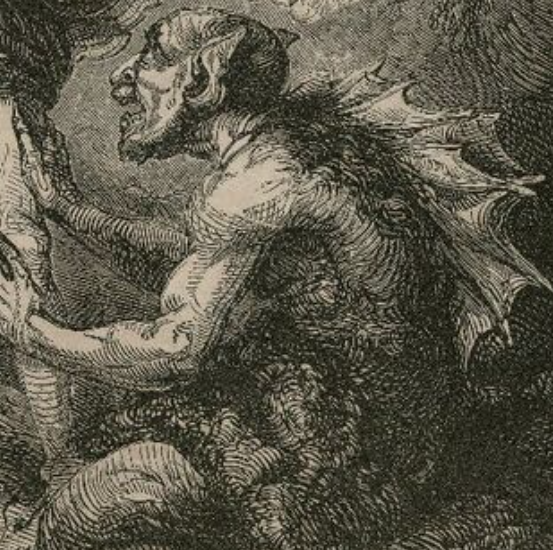
Zenion creature (left), and illustration of Caliban (right).

This island’s mine, by Sycorax my mother,
Which thou takest from me! When thou camest first,
I loved thee And show’d thee all the qualities o’ the isle,
Cursed be I that did so! All the charms
Of Sycorax, toads, beetles, bats, light on you!
For I am all the subjects that you have,
Which first was mine own king!

Caliban, Act I Scene ii.

Looking at the totality of the Omegamart story, there are several connections to the Tempest Calliban the creature that lives on Prospero’s island bears striking similarities to the Zenions. He is described as being man and fish, much like the Zenions. Further, Caliban is not a native inhabitant of the island; he was brought over by the witch Sycorax and Prospero exploited him after Sycorax died, much like how the Dram family, especially Walter, exploited The Zenion’s magical Source.

In both cases, the Prospero character has both noble and ingnoble goals- Prospero wants to get himself and his daughter home, but also to revenge his exile to the island. Walter and Cecilia seem like Prospero split in two: there is a light side that wishes to defend Marin and see her safely home,and the dark side that wishes to exploit The Source and addict unwitting consumers.

I won’t give away how the story of omegamart ends but let’s just say that Walter gets across the notion that he has repented for his greed, and wishes to free the Source from the factory, much like how Prospero frees Ariel at the end of The Tempest. In both cases, YOU are the necessary person to help free Walter. Both Walter and the Meow Wolf team have hinted that there are new areas of Omega Mart that guests haven’t unlocked yet. Perhaps you will be the one to unlock the secret to free Walter, and the Source!

  • ProsperoNow my charms are all o’erthrown,
    And what strength I have’s mine own,
    Which is most faint: Let me not,
    Since I have my dukedom got
    And pardon’d the deceiver, dwell
    In this bare island by your spell;
    But release me from my bands
    With the help of your good hands:
    And my ending is despair,
    Unless I be relieved by prayer,
    Which pierces so that it assaults
    Mercy itself and frees all faults.
    As you from crimes would pardon’d be,
    Let your indulgence set me free.
Prospero. Act V, Scene i

Thanks for reading this post. If you enjoyed reading it, leave a comment below. Please also relate any Omega Mart stories you had at Area 15!

Summer Shakespeare courses!

Trailer for my summer Shakespeare Courses!

I’m beyond excited that I am able to offer three multiple week courses through Outschool for kids aged 6-12. If you scan the QR code below, you can see class descriptions and individual trailers. You can also check out the “My classes,” Page on this blog. I hope you and your family will join me this summer!