I Made a Ghostbusters Shakespeare Parody!

The Concept

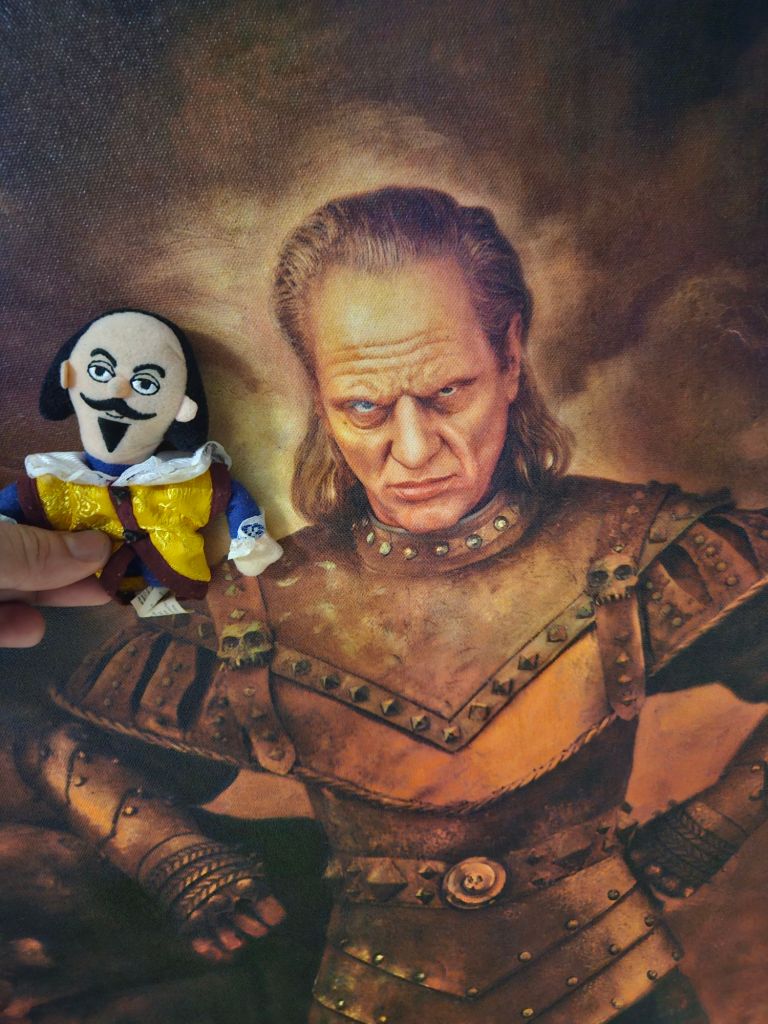
So, why Ghostbusters? Well, as William Shakespeare’s Star Wars has shown, it’s not only fun to adapt popular stories into Shakespearean parodies, it can also be educational. I knew I wanted to do a short play for my school’s fall festival, but I didn’t think to do “Ghostbusters” until I saw the final joke in the Simpson’s parody of Hamlet, where Homer says: “Son, [Hamlet] is not only a great play, but also became a great movie, called Ghostbusters!”

This joke got me thinking- Hamlet has a comic scene where the prince and his two friends are running around the stage away from a ghost, one that refuses to speak to them and then terrifies them. This reminds me of the moment where the ghost of the librarian shushes the heroes, and becomes a hideous creature:

From this realization. I took it as a personal challenge to adapt Ghostbusters into a one-act stage play with as much Shakespearean dialogue as possible.

My Process

Re-writing the script of a movie into a Shakespeare text required me to overhaul the story of Ghostbusters, as well as retrofitting Shakespearean lines and speeches from Hamlet, Macbeth, Henry IV & Henry V. I knew I wanted to freely cut-and-paste from Shakespeare, as if he’d written the original Ghostbusters. The result is a sort of stitched together blanket of Shakespeare lines, lines adapted from Ghostbusters, and some lines I created myself.

The Outline

Like I said, I kept the story limited to how the four Ghostbusters learn that ghosts are real, become professional ghost catchers, and then receive a call from a damsel in distress (Ms. Dana Barrett), who allows them to become heroes by defeating the ghost that has possessed her. I also decided to use the commercial in the movie as a framing device:

In my version, the Ghostbusters start by doing a commercial that then becomes a flashback where the heroes recap everything that has happened to them over the past week. I then ended the play by joking referring to the play as “A very long commercial.”

Scenes I Included/ Scenes I Cut

I only had 30 minutes allocated for my show, so I knew I’d have to pare down the story to its bare bones. This meant I had to eliminate a lot of subplots and characters and condense several scenes. As much as I love Walter Peck, Dean Jaeger, Louis Tully, Janine Melnitz, and the guy who gets electrocuted, they are not absolutely essential to the plot, so I cut them from my version. I also combined the characters of Dana and Gozer, eliminating the two terror dogs and limiting the antagonists to Gozer and the Stay Pufft Marshmallow Man. So I watched the film a few times, and created an outline of just 7 scenes.

Character Models

One thing I’ve said again and again is that Shakespeare’s characters are all based on archetypes that we see everywhere throughout literature, theater, and yes, movies. While I was watching Ghostbusters, I tried to find the Shakespearean archetypes that match the best with the characters in the movie:

Ray Stantz- Hamlet from Hamlet– Ray is a bookish man who is obsessed with death and with the occult, which makes him very much like the scholarly Prince Hamlet. He’s also a man on a mission to try and understand the supernatural and help keep it from destroying our world. Dr. Venkman describes him as “The heart of the Ghostbusters”, and that humorous heart gets him into trouble sometimes.

Egon Spangler- Horatio from Hamlet If Ray is the heart of the team, Egon is the brain. He is the no-nonsense scientist who provides the team with data and equipment to help them fight ghosts effectively, much like how Horatio reports to Hamlet that his father’s ghost has returned from the grave.

Dr. Venkman– Sir John Falstaff/ King Henry V

Dana Barret- Ophelia from Hamlet

Gozer– Hecate from Macbeth

The Stay Pufft Marshmallow Man- Snug the Joiner from A Midsummer Night’s Dream

Sneak Peak

Here’s one of the scenes I wrote, with the original scene for context


[The ghostbusters climb the stairway to the penthouse, where Gozer is sitting in a cloud. They have been going for a while and are clearly tired].
Venkman: Though I have not known fair Dana long, I know she must be a virtuous maid. Ascend this penthouse tower and let’s rescue she!
Like to the Knights of ancient chivalry!
Egon: These apparitions whizzing in the air
Give so much light that I may read by them.
[They reach the top and behold Gozer]
Ray: I am resolved to speak to Gozer. This is the latest parle we will admit.
Gozer: Art thou a god?
Ray: Nay.
Gozer: Then perish, half-man!
Winston: Enough Ray of thy diplomacy!
Speak, thou proton pack for me! [He fires, then the rest join in] Gozer disappears
Venkman: The sky hath bubbles as the water hath, and she be one of them!
Gozer [in Voice Over]: Sub creatures! Hark! Tis time! Pick the Destructor’s form
Be it a Goblin damned or angel bright!
Tornado or a earthy bright
Or greatest Monkey with an appetite!
Winson: Our thoughts contain the form that seals our doom?
Then make them blank as a new-made room! [They all gesture to their heads as if pushing thoughts out]
Gozer: Thy choice is made. Prepare to meet thy doom!
Venkman: Nay! I chose nothing
Winston: Nor I!
Egon: Nor I
[Pause]
All: Ray?
Ray: Twas not my fault! It popped into my mind
Venkman: What? What hast popped in?
Egon: LOOOK!!!
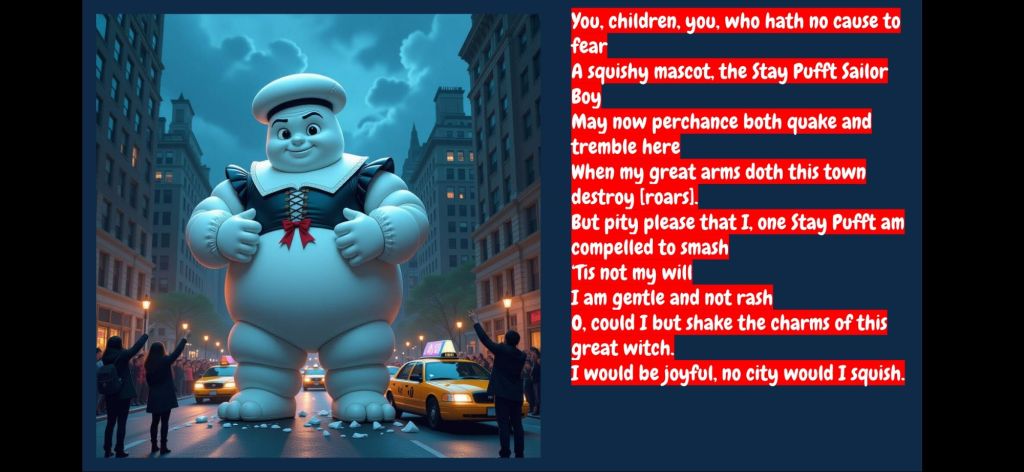
The speech of the Stay Pufft Marshmallow Man

The Fashion Is the Fashion: Antony and Cleopatra

Part I: Famous Cleopatras

Elizabethan Taylor

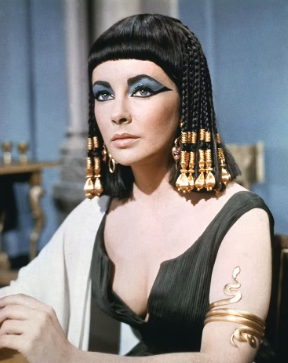
Elizabeth Taylor in her iconic portrayal in the film “Caesar and Cleopatra”

Part II: The Real Cleopatra

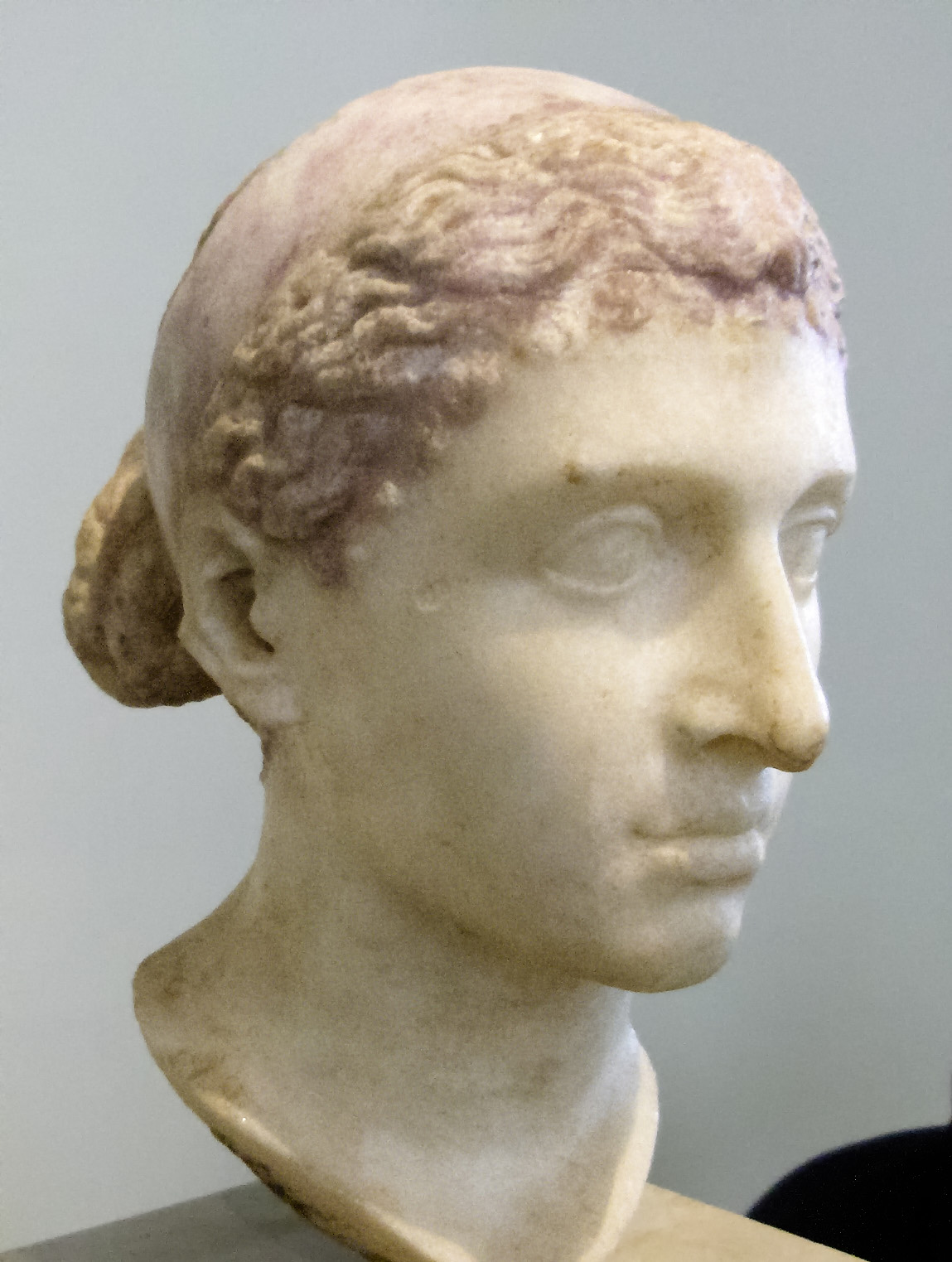
  1. Actually Greek, but assimilated into Egyptian Society
  2. Dressed as the Egyptian Goddess Isis (allegedly)
  3. Spoke egyptian
  4. Hosted elaborate parties where her dress conveyed the wealth of Egypt
  5. Beauty routine.

Part II DIY antony and Cleopatra

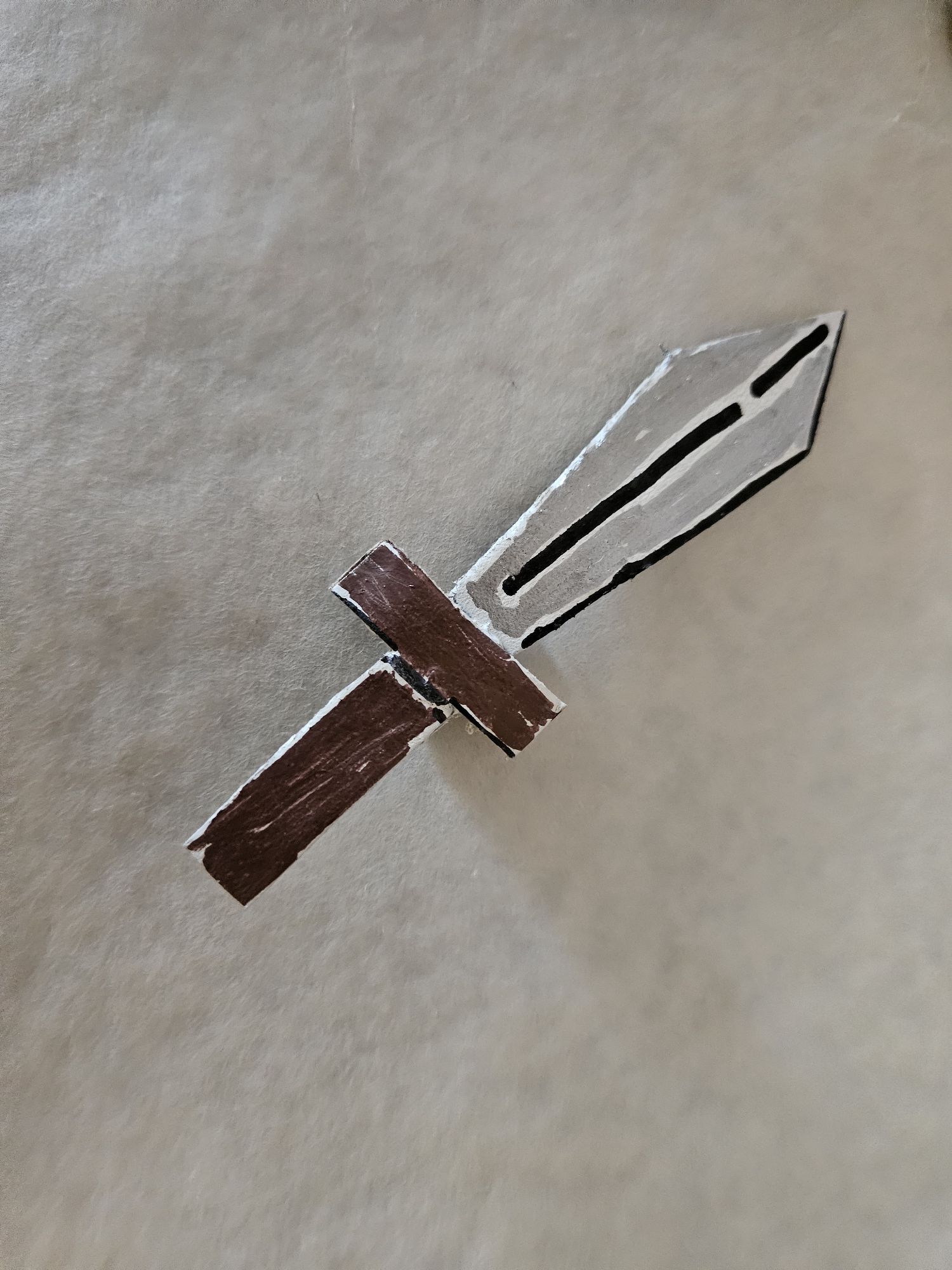
Roman Helmet/ Sword

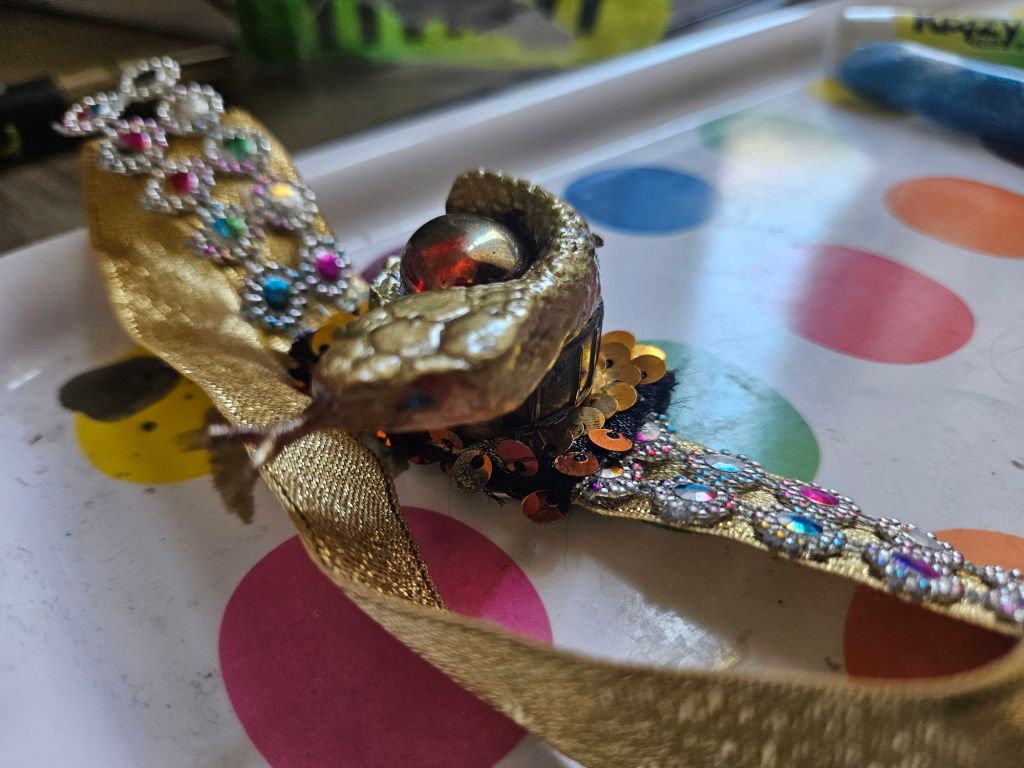
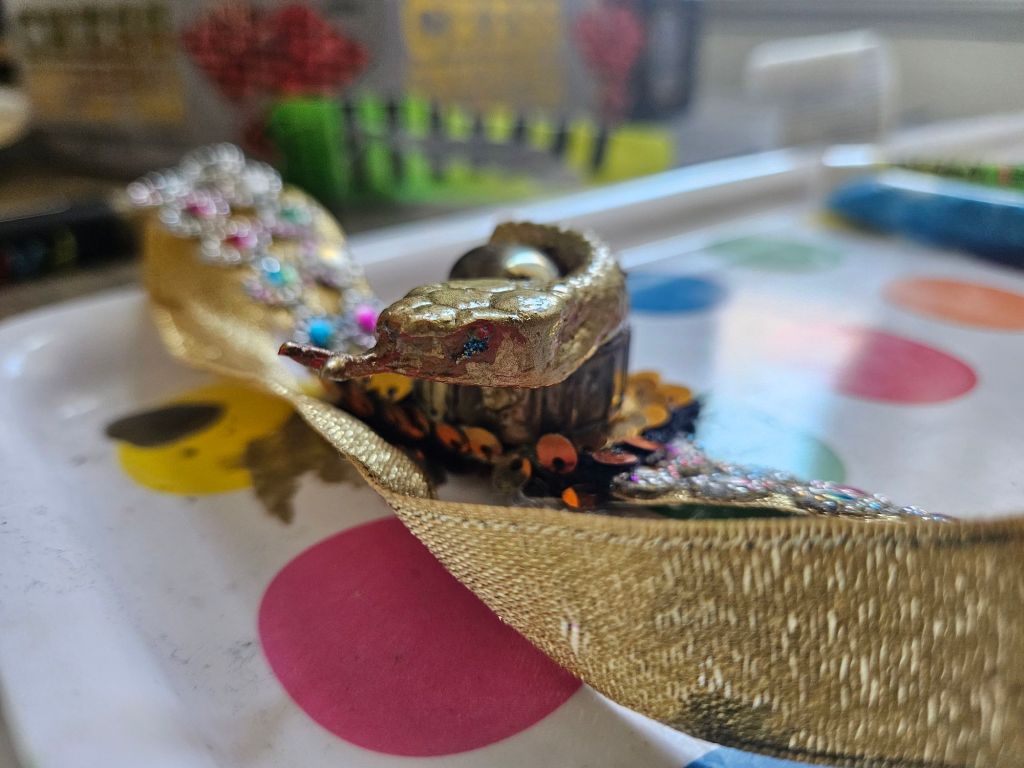
Jewelry

Dress

Crown

Hair

Makeup

Part III Staging antony and cleopatra

Egyptian Antony

Roman Anthony

Color blind casting

Works Cited:

https://theconversation.com/cleopatras-skin-colour-didnt-matter-in-ancient-egypt-her-strategic-role-in-world-history-did-205240

https://www.smithsonianmag.com/history/rehabilitating-cleopatra-70613486/

New Outschool Class: Shakespeare For Kids

I’m pleased to announce that I’ve created a fully online, interactive Shakespeare class for kids ages 6-11 to start them on a lifelong journey of Shakespeare! The course will include games, videos, webquest activities, and puppet shows!


Title: Shakespeare for Kids!

Purpose:

Video trailer

The goal of this class is to introduce Shakespeare to young children in a fun and interactive way. For example, each lesson starts with a fun and funny introduction to a Shakespearean topic by our friend Puppet Shakespeare. Each class will also feature interactive games and quizzes that break down the poetry, language, characters, and plots of Shakespeare to help kids lose their “Shakes-fear” and begin engaging with classic literature

Each class builds from learning about Shakespeare to learning about the language and poetry of his plays, to finally an in-depth analysis of one play: “A Midsummer Night’s Dream.” After watching videos, playing games, and filling out handouts about these topics, the student will go on a “webquest,” that is, a series of webpages that feature activities, outside websites, and a short- puppet show retelling of “Midsummer” for the student. The goal is that by the end of the course, the student will be able to understand the dialogue of the play, summarize the story, know the characters, and enjoy the poetry.


Format: Nearpod with video and web links.


Ages 6-10

Description:
2 week course, $10 per week.

Part I: Who Is Shakespeare?

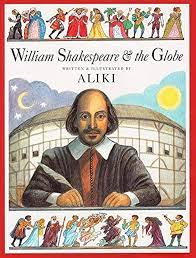
Learn about Shakespeare’s life and career with an interactive timeline, handouts, and an engaging puppet show! This section will include me reading from the excellent children’s book: William Shakespeare and the Globe by Aliki.

Part II: Words, Words, Words


WIlliam Shakespeare (Or Bill as I like to call him), wrote in a very special way. Back then playwrights were called poets, so not only did he have to make plays, he had to write them so they would sound like lines of poetry.


Part III: Shakespeak

Figure out how to translate all the “thees” and “thous” that make reading Shakespeare a challenge nowadays


Part IV The Play’s the Thing!

What kinds of plays did Shakespeare write? This handy lesson will teach you about the basic types of plays Shakespeare wrote, and give you a quick summary of each!


Part V: Disney vs. Shakespeare

Poster for Disney’s Elemental, which bears many similarities to Shakespeare’s Romeo and Juliet
Continue reading

Activities For Teachers and Students: Shakespeare Gingerbread Men (and Women)

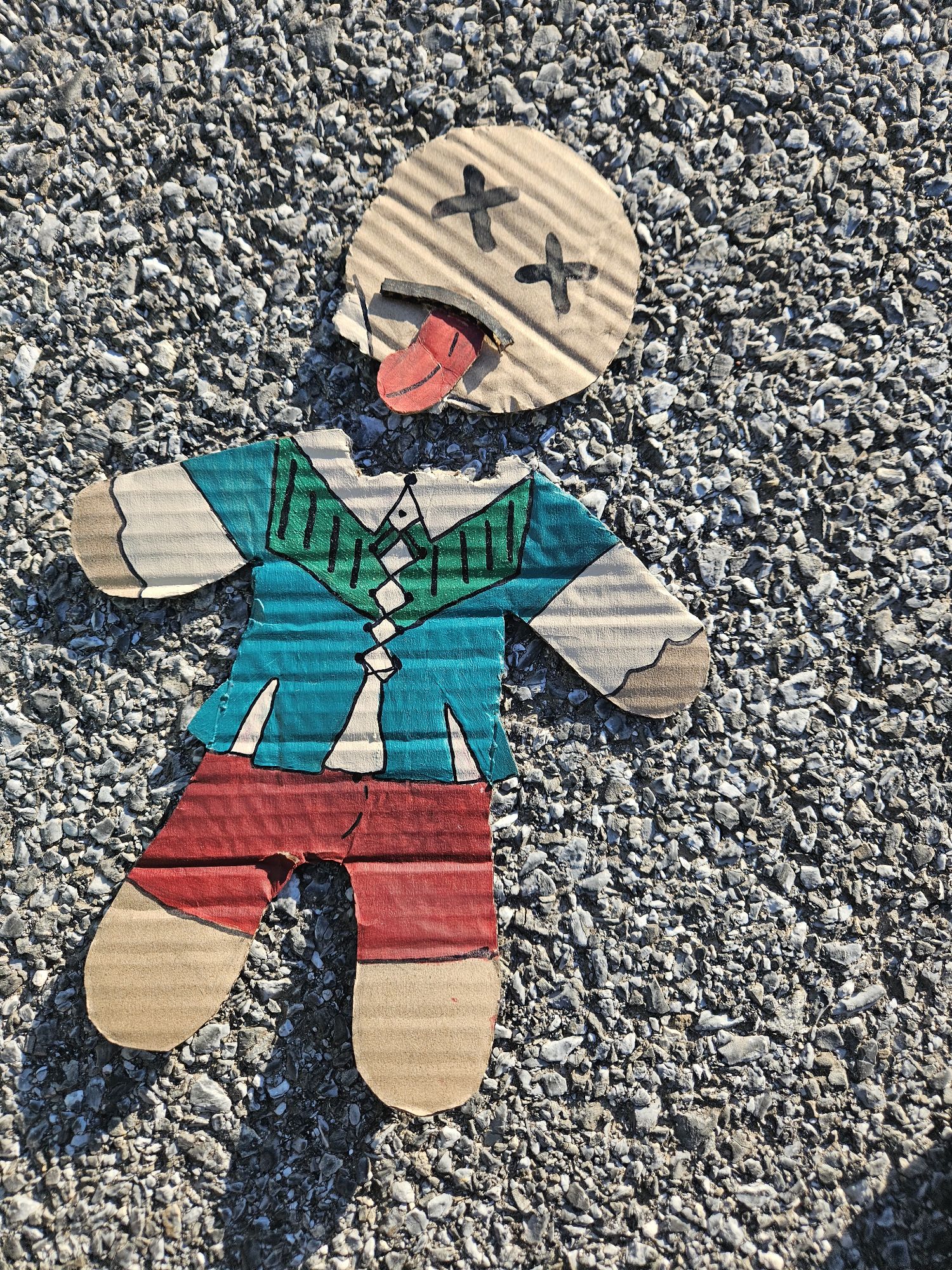
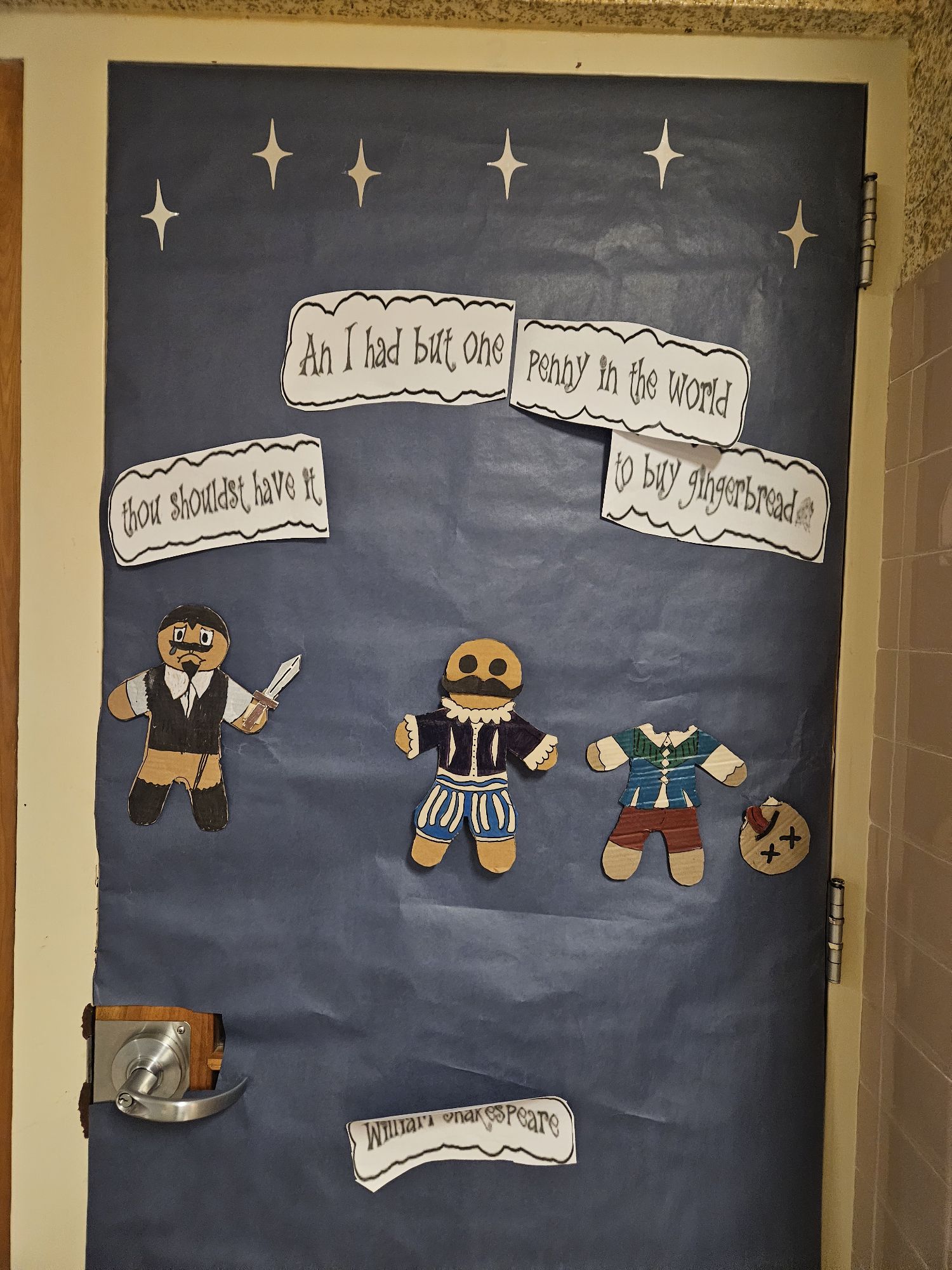
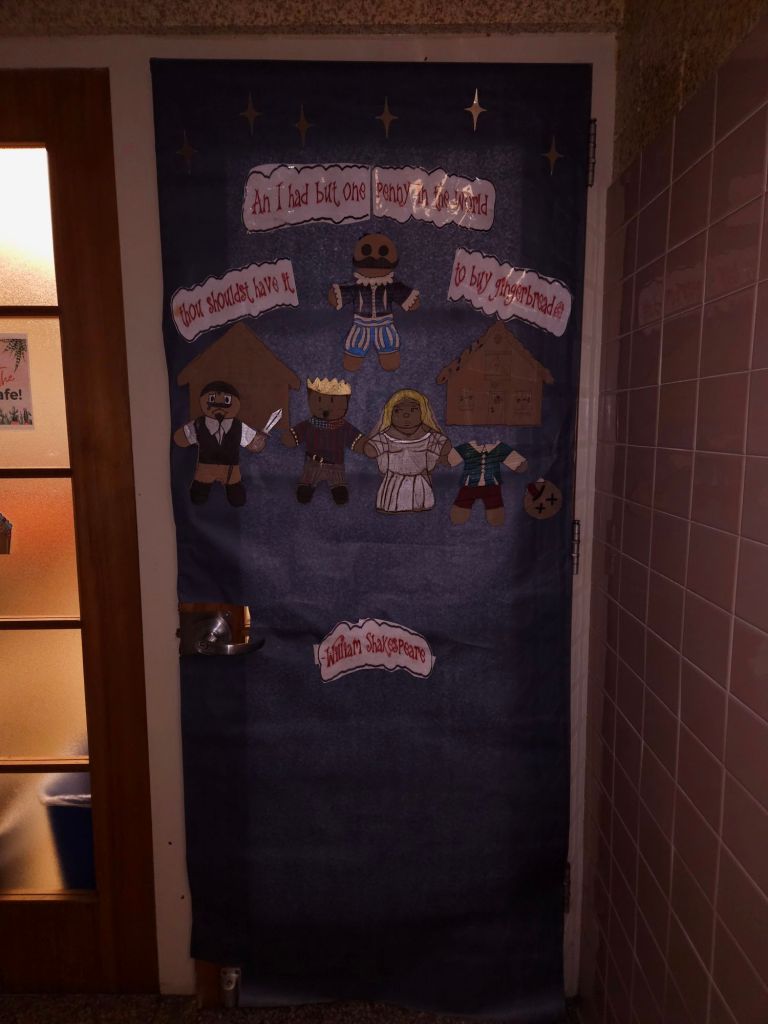
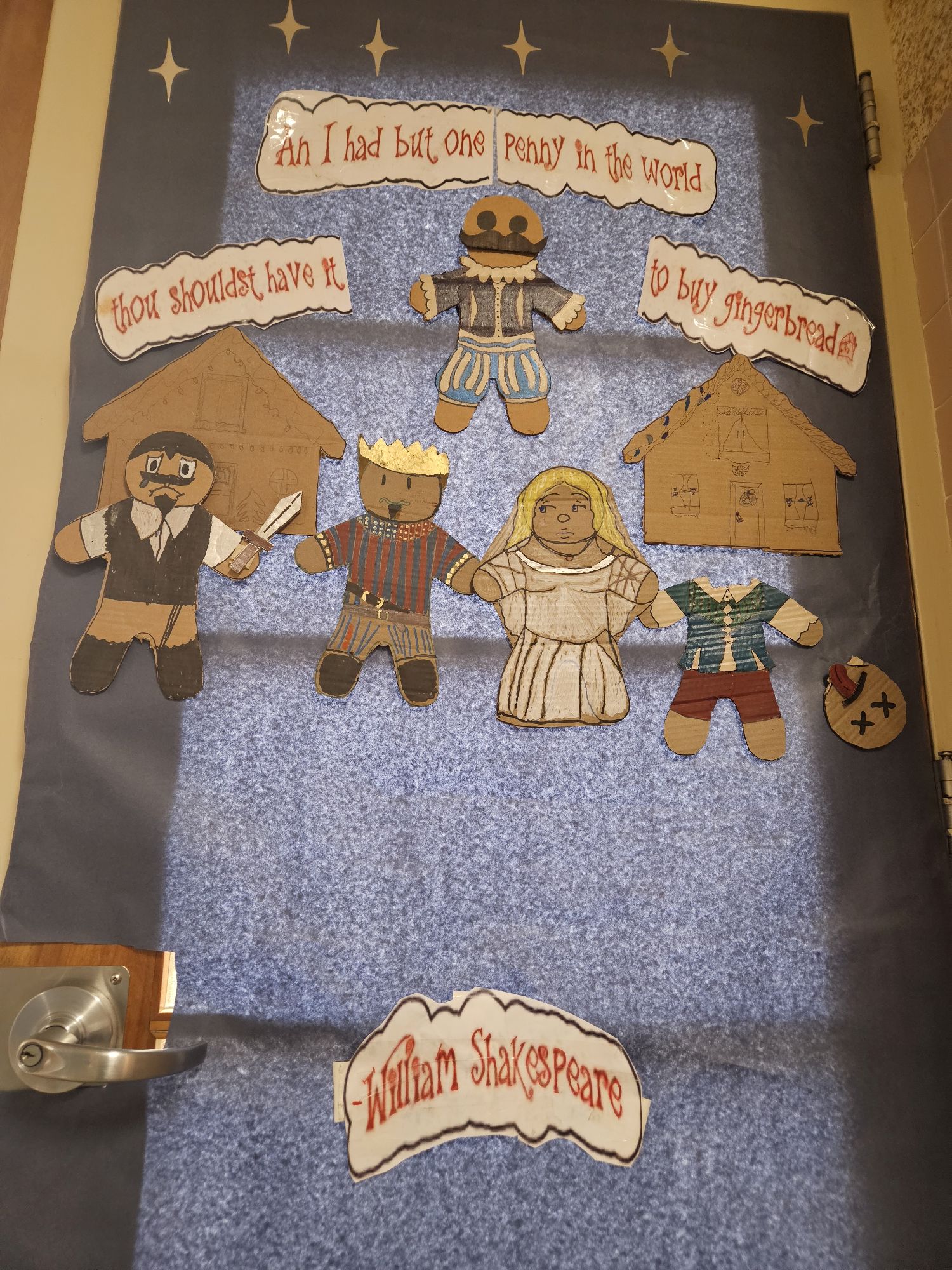
Every holiday season, my school likes to decorate the classroom doors in a festive way. I wanted to celebrate my Shakespeare Club and also teach the club members about Shakespearean fashion, Shakespearean characters, and maybe a little bit about engineering too. I’m very proud of the results, and I wanted to share this idea with you to maybe inspire you next holiday season!

The Concept

Hath I but one penny in the world, thou should’st have it to buy gingerbread. – Love’s Labors Lost

Since the theme had to be holiday-related, I looked at the above quote and decided to make Shakespearean gingerbread men! I knew I wanted to make the kids design a bunch of gingerbread men that would look like Shakespearean characters. While we were at it, I wanted gingerbread houses and maybe even a 3D element to go along with it. I knew it wouldn’t be easy, but I also knew my group was up to the task!

The plan

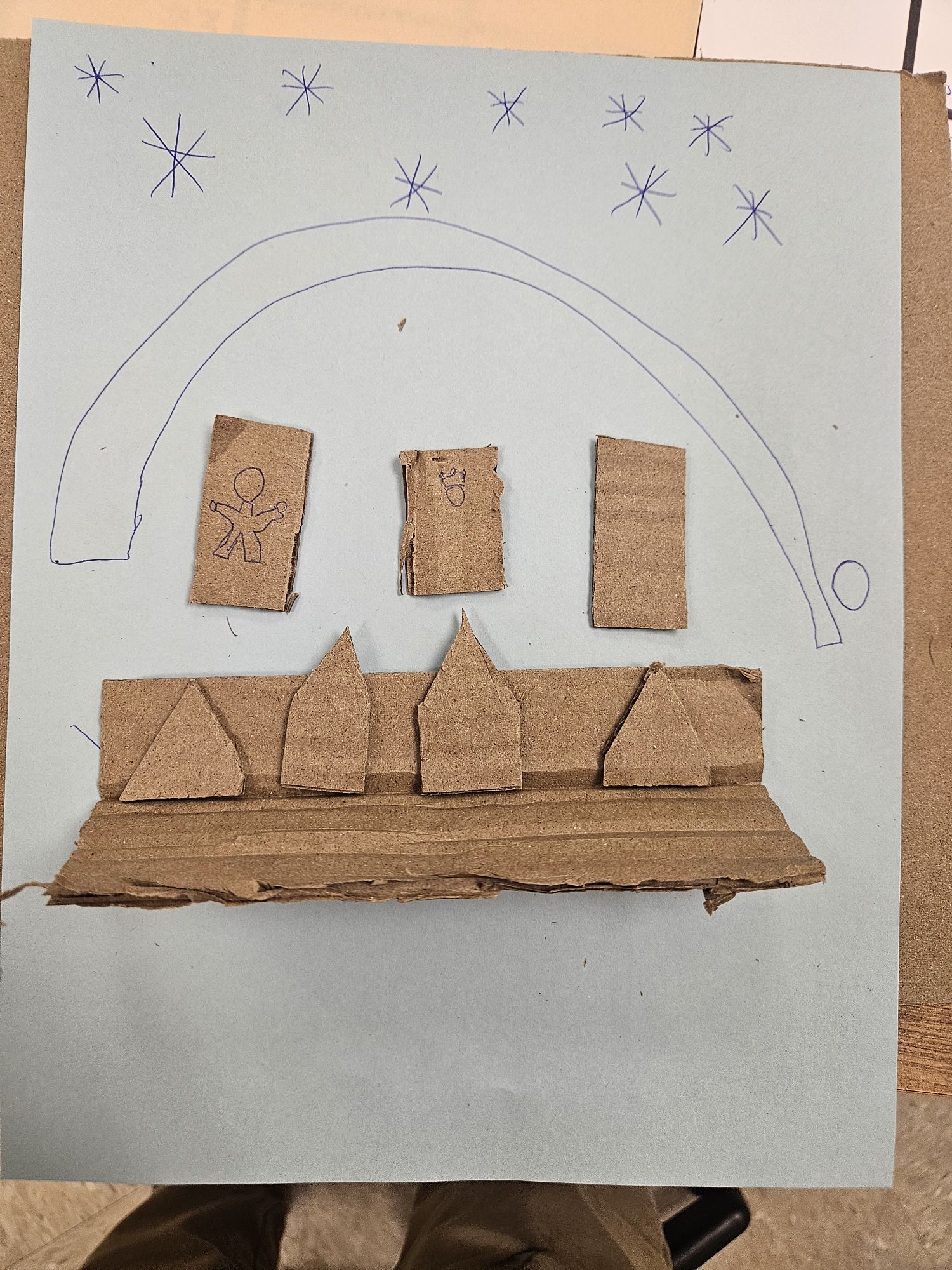
My concept drawing of how the door should look

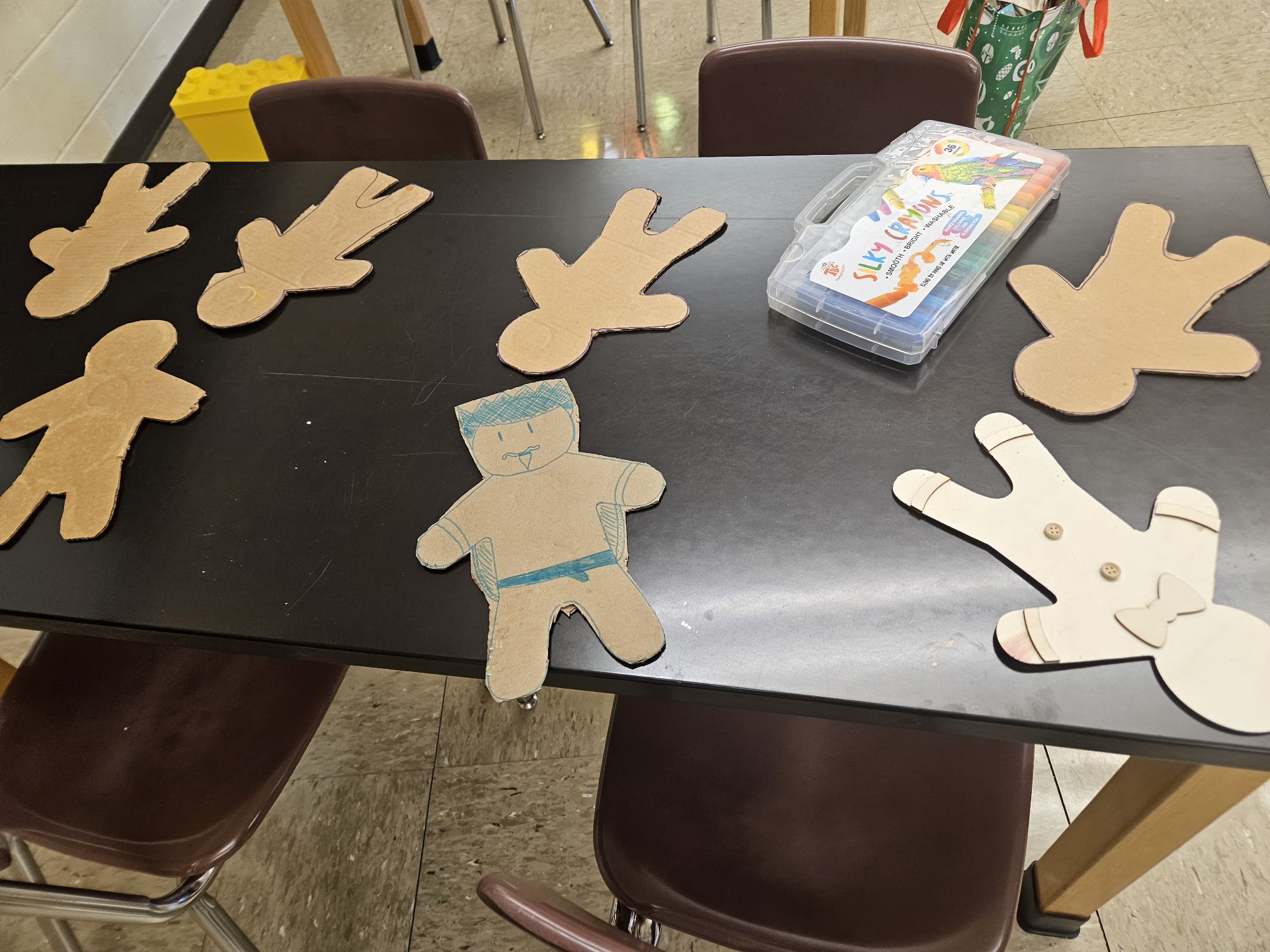
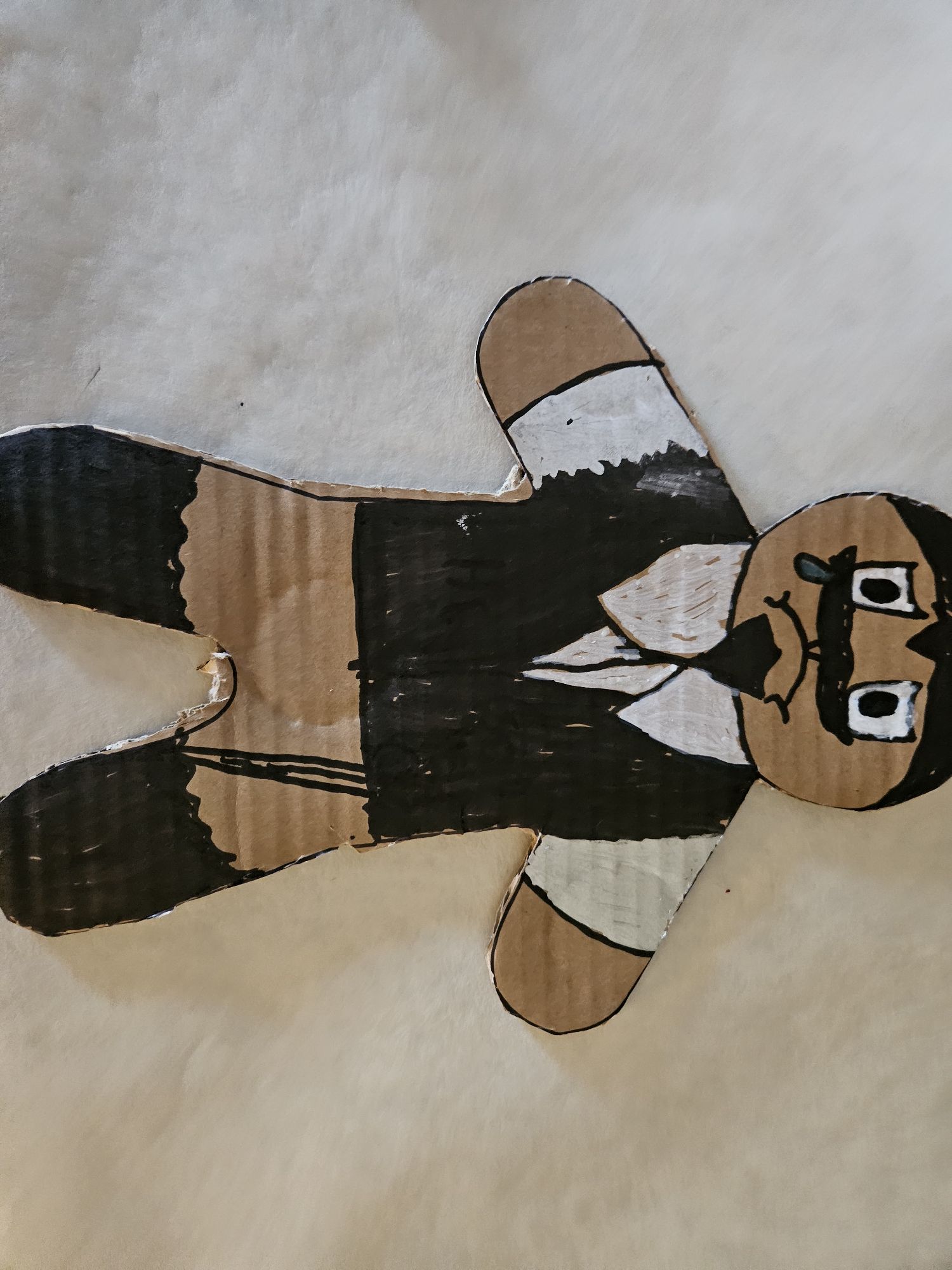
I knew I couldn’t use real gingerbread, so I chose the next best thing- cardboard! I made a cardboard plan of the door to show to my group. I then found a wooden gingerbread man at the local dollar store and used that as a template for the cardboard characters. Finally, I explained the concept to the group, and divided my group up into teams- one group would draw and color the gingerbread houses, one group would color the gingerbread men based on pictures of Shakespearean characters:

Gingerbread Hamlet
Gingerbread Henry V
Gingerbread Juliet

My final group created a 3D gingerbread house with a light in it to make the gingerbread village come to life. They even put my little puppet Shakespeare pal in there (I guess it’s his winter home).

Shakespeare in the time of Bridgerton

Period Overview

Georgian England

Shakespeare and the Regency Era

The popular Netflix show “Bridgerton”, takes place in England during the reign of King George III (reigned 1760-1820). This was a time of enormous cultural and political upheaval- less than one century after the monarchy was restored, with the American and French Revolutions taking place across the pond. This was an era of power and privilege for the aristocracy, but a time of great uncertainty for nearly everyone else.

Crash Course in Sentimental Comedies, the preferred theater of the late 18th century.

Shakespeare in this period was considered a bit old hat and too vulgar for the refined age of the 18th century. During the Regency, Sentimental Comedies were all the rage. These comedies and tragedies were designed to instill audiences with Catharsis or empathy with the characters, rather than get people to think or use their reason. Gone were the days of laughing at people’s humorous behaviors and more along the lines of pitying the poor fates of middle-class rustics. These poor characters remained good-natured at the cruelty of powerful aristocrats. This explains the popularity of such plays as Beaumarchais‘ The marriage of Figaro, or Mozart’s opera Don Giovanni, in which an evil aristocrat is ruining the lives of common people like the naive peasant Zerlina with his insatiable sex drive.

After the religious wars of the 16th century and the civil wars of the 17th century, early 19th century people were more disillusioned about the monarchy, especially after the seismic shifts of the French revolution and the American Revolution. This was the beginning of the end of the aristocracy, and even though we don’t see it in Bridgerton for comedy reasons, you can sense that the eponymous family is preserving their family and houses, rather than  crown and country, which is one reason why the show still resonates with young people.

The Bridgertons might be aristocratic but they have no illusions about their own self-importance. They’re rich, yes but, like modern rich people, they don’t believe that they deserve their riches because of God- they merely fight to preserve their riches for their children, to find their daughters good love matches, and to survive the complex social Laviathon of eighteenth Century and Nineteenth Century England.

Popular Productions Of the Georgian Era

Georgian Shakespeareans

The Georgian Era was the first time in history that Shakespeare started to have a Global audience. French and German writers like Goethe, Schiller and Voltaire helped to kick off the practice of Shakespeare being translated and performed in non English speaking countries in the 18th century. In addition, Empress Catherine the Great brought Shakespeare as far as Russia with her 1786 production of The Merry Wives of Windsor. By the end of the 19th century, Shakespeare had been translated into French, German, Hindi, Hungarian,  Italian,  Spanish, and Danish (Downer, 468).

In England, however, with the trend towards sentimentality and accessibility, (as the video above mentions), the idea of adapting and modernizing Shakespeare became more common in this type period. What’s interesting is that, just when Shakespeare seemed to be on the way out culturally, people like David Garrick began to rehabilitate Shakespeare (McDonald 358).

English writers of the 18th century were trying their best to use Shakespeare as a tool of moral instruction.

Not only did Garrick create popular adaptations of Shakespeare, he also successfully made Shakespeare a cultural icon. Garrick’s famous jubilee of enthroned Shakespeare as the perfect example of english writing and the common man (even though most of his characters are aristocrats), the fact that Shakespeare was a common writer a not an aristocrat or a University educated man, actually benefited his reputation in the 18th century.

Famous Shakespeareans

Shakespeare and Bridgerton: Balls vs Breeches

Even though Bridgerton prides itself on its colorblind casting and the black & white characters haven’t a shred of racial discrimination (except in the spin-off), this society is still plagued with sexism. What I find the most interesting about Bridgerton is that, like a Shakespearean comedy, the show’s conflicts center around how women navigate sexist patriarchal systems.

In Bridgerton, the London season and the annual balls are more than just a chance to to socialize and meet handsome young man, dance, and wear pretty dresses; they are the only hope that upper class women had for the future security of their houses. These systems were put in place because women were denied the ability to determine their own destinies. Though Queen Charlotte runs the social season, she is enforcing a patriarchal system; one that places a woman’s value entirely on her ability to charm and retain the affections of men.

the bridgerton ladies are extremely aware of this and you can see their anxiety every time they attend a ball. They know that their future depends on this and the show isn’t shy about that. So so like a Shakespearean heroine, the comedy and the central conflict is how these women will navigate this socio-economic gender-based political mindfield.

What Shakespeare frequently does in his comedies is have women deliberately challenge or abandon this strict social structure. Young Shakespearean heroines frequently omen disguise themselves as men and/ or go traveling abroad so that they can find husbands and determine their own destinies. Shakespeare won’t Go So Far as to abandon the notions of marriage and childbearing, but he does create a sort of Female Fantasy:  “wouldn’t it be nice to determine a one’s Future for oneself?”

Rosalind courts Orlando in As You Like It

In As You Like It, Rosalind, in disguise as a man, is able to dictate for herself the way that she marries and courts Orlando, which must have been shocking and hilarious for Elizabethans. Viola again disguised as a Man is able to criticize his outdated notions of women to his face, and disdains his repeated attempts to woo a woman who does not share his affections. Meanwhile Juliet, a woman whose arranged is dramatically portrayed from start to finish, abandons her father’s choice and marries for love. All these women have the same conflict as the bit bridgerton women they just confront them in more extreme way

References

Bedford

Brockett

Leslie Dunton-Downer

Worthen

Hamlets of the Theater

Six: Teen Edition

Last weekend I saw a wonderful production of “Six” The Musical at the Cab Calloway School Of the Arts in Wilmington DE. After seeing the professional production, I was worried that I wouldn’t enjoy these student performers but it was incredible! The young performers were all terrific and the director managed to use inventive, creative, and entertaining setpieces to both capture the essence of the Broadway show, and also make a version that is distinct and its own with student performers!

The Direction

DIRECTOR’S NOTE
I thought original I’d never Broadway get a show chance only to has direct six it at actors Cab. in AS the luck cast, would so/
have it, the teen edition came out this past summer, which allows
the addition of a singing and dancing ensemble. I immediately
applied for the rights and we were one of the lucky schools to
get them. This new teen edition is the perfect fit for our school
community and it highlights the talents of studentsfrom every
arts area.
I wanted to create a Beyoncé or Taylor Swift concert-type at-
mosphere, and I think we have achieved that with our show.
The fabulous lighting, the beautiful costumes and make-up, the
rocking pit band, the fabulous cast and crew and especially the
epic choreography have culminated into quite a spectacle! It has
always been a joy to work with my colleagues on these projects.
and I want to give a particular shout-out to my team of choreog-
raphers. They have taken my vision and turned it into something
amazing. The creativity in this team is fierce, and if ever there was
a group that fed off of each other’s ideas, it’s this one. We’ve had
a blast collaborating on this production
Also, I would like to acknowledge Brian Touchette, Peter Kuo and
Jared DeStafney for their tireless work on this production. With-
out them, this show would not be possible.

Marjorie Eldreth

As the director notes in the program, the challenge with doing a musical like “Six” at a high school or community setting is that there are only six major roles, which means it would be hard to find ways for the whole student body to participate. What I loved about this version is that, by utilizing dance, pantomime, and choruses, the director has found ways to not only involve more people, but help use the additional cast to tell the story in ways that the professional touring production I saw earlier didn’t!

My Favorite Moments

Normally I hate dance numbers in musicals. Don’t get me wrong, I admire the skill and athleticism that dancers have, but when I see a play or musical, I come for the story and the songs. Dance always seems like the black sheep in the musical theater trifecta to me. Not so with this production of “Six.” The dance numbers help tell the story in clever and moving ways! For instance, during Anne Boleyn’s “Don’t Lose Your Head,” a team of dancers with green sticks accompanied her. Their movements were cheeky and brash, which helps encapsulate her bubbly yet tart personality. During the choruses, the dancers and Anne rested their hands on the sticks, drawing attention to their heads moving back and forth, which reinforced both the title, and Anne’s air-headedness. Then, at the end of the number, the dancers got into a circle and pointed their sticks at Anne’s neck- pantomiming how she would eventually be beheaded! Thus, the dancers complimented Anne’s song perfectly, in a way that was not originally part of the show!

“My Heart Of Stone”

The most moving moment of dance was during Jane Seymore’s song “My Heart Of Stone.” When I saw this number in Hershey, it was by far my least favorite. I thought the lyrics were generic, that the song itself was bland, and that gave little depth to Jane character. All that changed this time around. While Jane belted her heart out about the son she never got to raise and the husband who mistreated her, we got to see elegant ballet dancers perform those moments for us. I particularly liked that the male dancers had red hair, (much like the real Henry VIII and his son). The dance actually helped me see Jane’s conflicting feelings for Henry- how she feels genuine love and affection one minute, and terror the next. How she and her son are both ghosts, now that they were denied the chance to live together on Earth. I don’t wish to diminish the wonderful singing and acting of the Hershey production, but Six: Teen Edition did a masterful job of showing, in addition to telling Jane’s story.

THe Cast

The Cab Calloway School of the Arts boasts some of the top young actors in the country, and all of them have tremendous chops as actors, dancers, and singers. Some of them already have professional acting credits. So it should come as no surprise that all the performances were incredible. It was very exciting, however to see a real 19-year-old play Catherine Howard, (since that was the real age she was when she died).

This production also took the bold leap of casting two men in the show. In one cast Anne of Cleaves was played by a man, and in the other (the one I watched), Katherine of Aragon was played by a man. I have no problem with this choice, (after all boys have been playing Katherine ever since Shakespeare’s Day), but I was a little disappointed that the actor had to modify the song to fit his range- I was looking forward to the extravagantly high Shakira and Beyonce inspired vocals that I’ve come to expect from the part. Nevertheless, the actor I saw was incredibly talented and his acting and dancing were completely appropriate for the part.

THe Dramaturg

For those of you who don’t know, a dramaturg’s responsibility is to help the actors, director, and production designer by doing research into the play’s historical or political context. It’s a role that is very important in period plays like Shakespeare. I’ve worked as a dramaturg myself and, though the work one does as a dramaturg is mostly unnoticed by the audience, the dramaturg can greatly contribute to the way the actors understand the text and give the director tools and ideas with which to explore themes and ideas present in it. I don’t know what the dramaturg did for this production, but I could tell based on the performances that every cast member was fully committed to their character. Each actor was able to clearly articulate their character’s emotional journey and that meant they must have learned the history and context of the Tudor period. Again, I don’t know if the dramaturg had any effect on this, but I’m going to assume they did a terrific job, because their end goal was accomplished- the actors and director gave a coherent and well thought out performance that captures the spirit of the Tudor period, so great job!

Brava/ Bravo

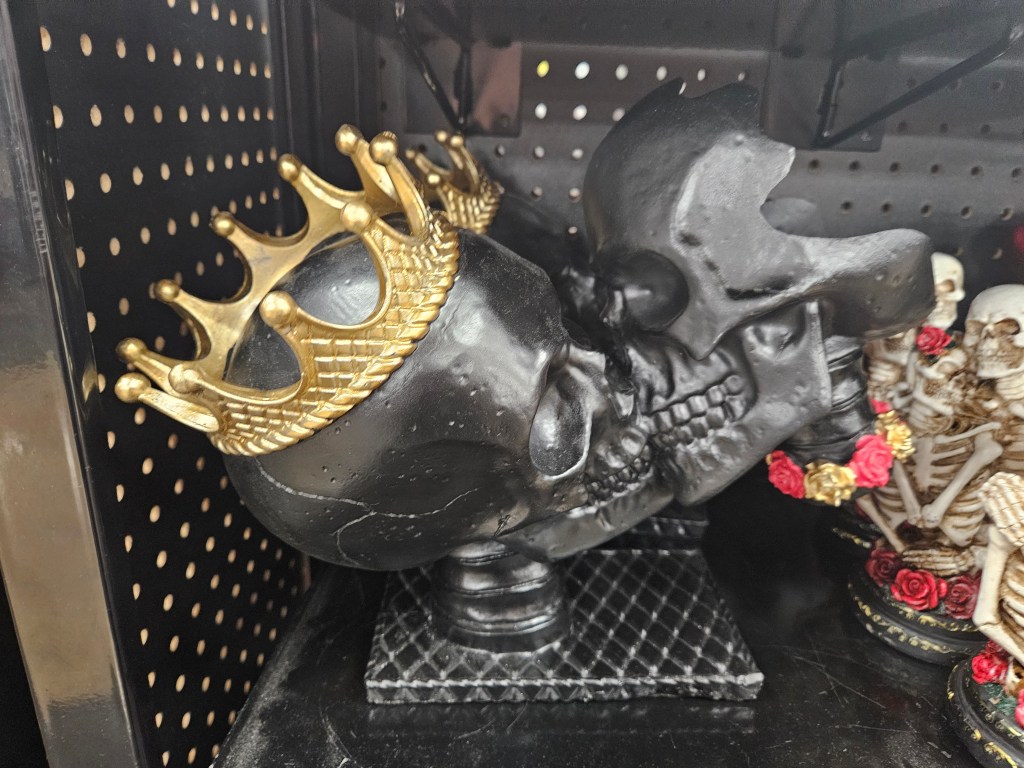
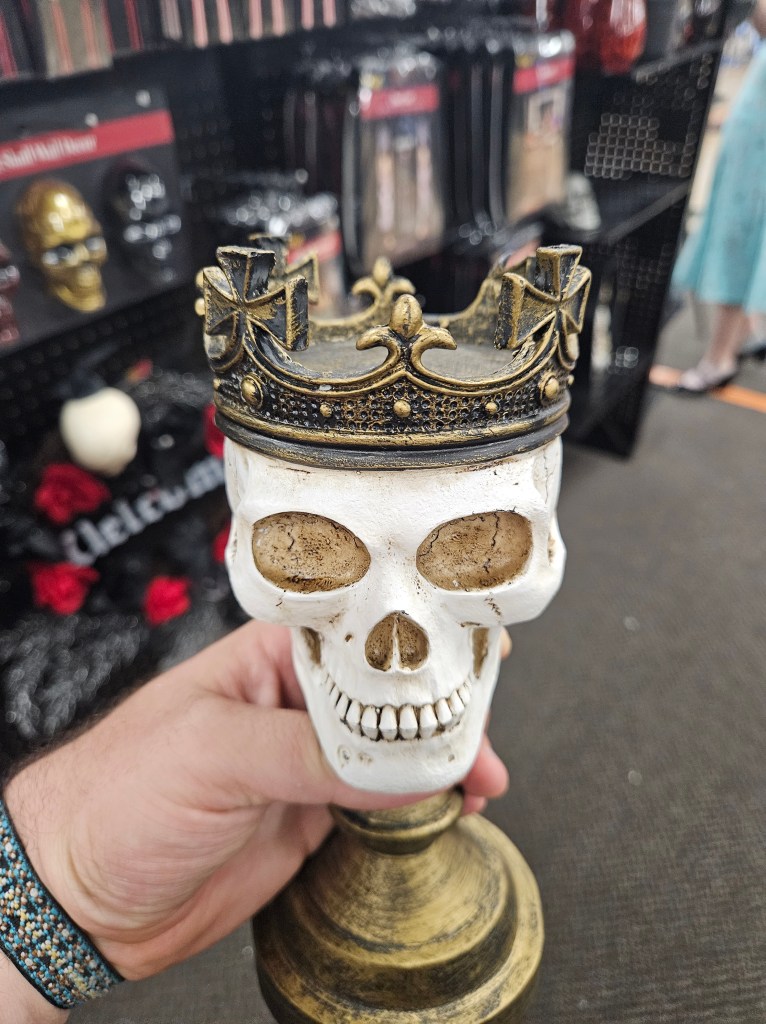
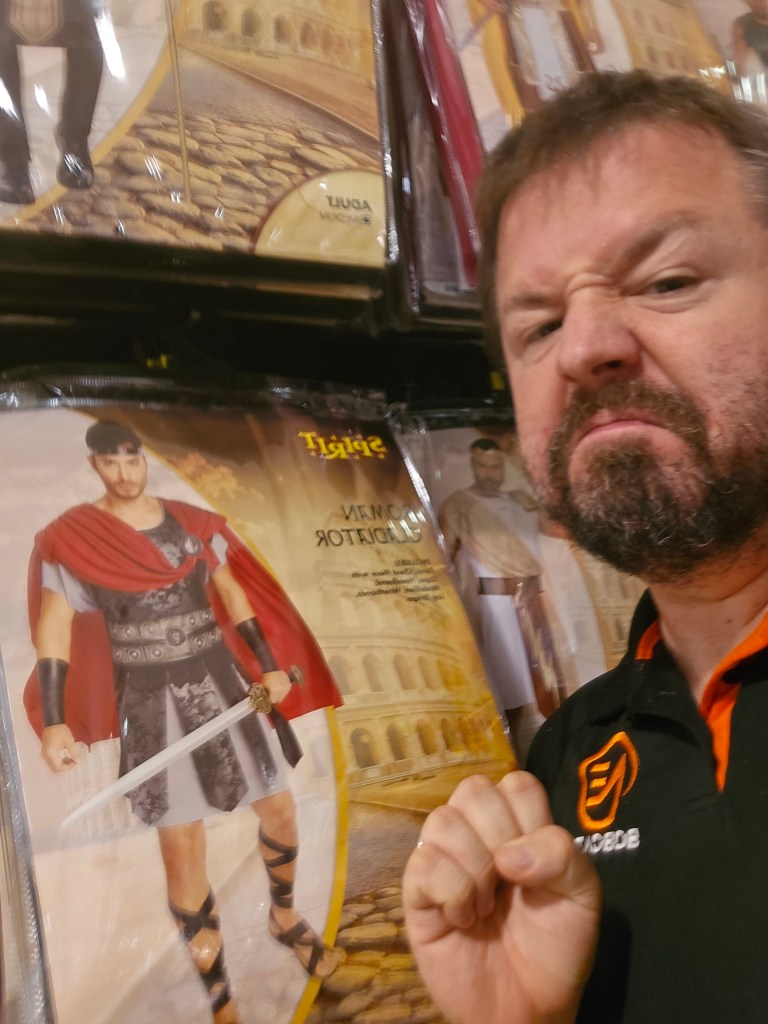
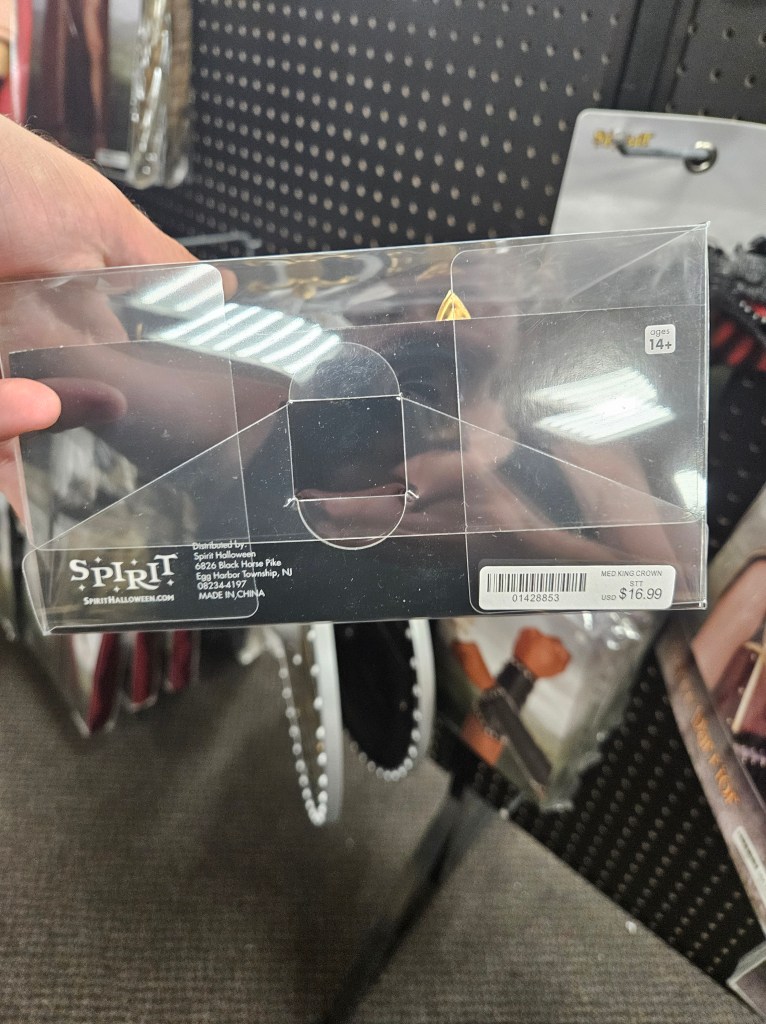
Spirit Halloween and Shakespeare

I’ve written before that Shakespeare helped influence Halloween as we know it- the images of holding skulls, witches chanting over a cauldron, and even ghosts coming back to plague their murderers all have Shakespearean roots. Exhibit A is how these images and tropes can even be found in beloved Halloween costume stores like Spirit Halloween!

If you like creepy Halloween activities and Shakespeare, please sign up for my fully online, fully asynchronous class: “An Immersive Guide To Shakespeare’s Macbeth!” The class features a digital escape room, an interactive quiz, and a special, undead guest!

Get $10 off my class “An Interactive Guide to Shakespeare’s “Macbeth” ” with coupon code HTHES4NHCN10 until Nov 3, 2023. Get started at https://outschool.com/classes/an-interactive-guide-to-shakespeares-macbeth-jp7TIh9B and enter the coupon code at checkout.

Activities For Students and Teachers: Make A Shakespeare Club!

Privacy Note

I’m not going to say where my club is or mention the names of the members for privacy’s sake. This post is to familiarize you with the idea, and hopefully inspire your school to do the same.

The Genesis

Like I said in my “Is Shakespeare Being Cancelled?” post, most teachers don’t have the time, training, or inclination to teach a really in-depth Shakespeare unit. Most classes I’ve worked in barely have enough time to cover the plot of Romeo and Juliet, before they need to work on another unit. This is why I started a Shakespeare club, to give kids time to engage with Shakespeare without having to worry about grades.

Mission Statement:

 Shakespeare was NOT meant to be read. In this club, we’ll engage with Shakespeare’s plays through games, sword fighting, dramatic readings, movies, and sometimes even recipes! The goal of the club is to have fun with classic works of theater.

Organization

Every month we will discuss a new play and try to explore different aspects of it each week. For each week we’ll do the following:

  1. Weekly questions such as: “What do you know about Shakespeare the man?” or, “Are Shakespeare’s plays still relevant today?”
  2. Group Close reading- Every month I’ll choose a different play to focus on. We’ll pick a scene or speech each month to look at and read aloud.
    1. I’ll provide some context, explaining what is happening in the play durin the speech, and any relevant historical context.
    2. There will be a dramatic reading, either by me (or a brave soul in the club).
    3. We’ll watch a recording and discuss their interpretation and what the students like and don’t like.
  3. Immersive activities such as:
    1. -Pool Noodle sword fights
    2. – Shakespeare’s arts and crafts and recipes such as gingerbread men contests and making costumes and props.
    3. – Shakespeare movie-watching party with such films as 10 Things I Hate About You, ‘O,’ “Gnomio and Juliet,” “Hamlet,” and others. 
  4. Weekly challenges like “Find a Shakespeare quote that you use in normal speech,” “Find a movie or character that’s based on Shakespeare,” or “Draw a picture of a Shakespearean character (stick figures are acceptable). Each challenge is rewarded with a digital badge, which the students can trade for Shakespeare swag at the end of the month!

Meeting RecapS

  • Meeting 1: I talked about Shakespeare’s life, using the same format as this video:
  • Meeting 2: To get the kids to connect with Shakespeare’s plays, I had them take a personality quiz to figure out which Shakespeare play they might want to read:

https://www.zoo.com/quiz/which-shakespeare-play-fits-you

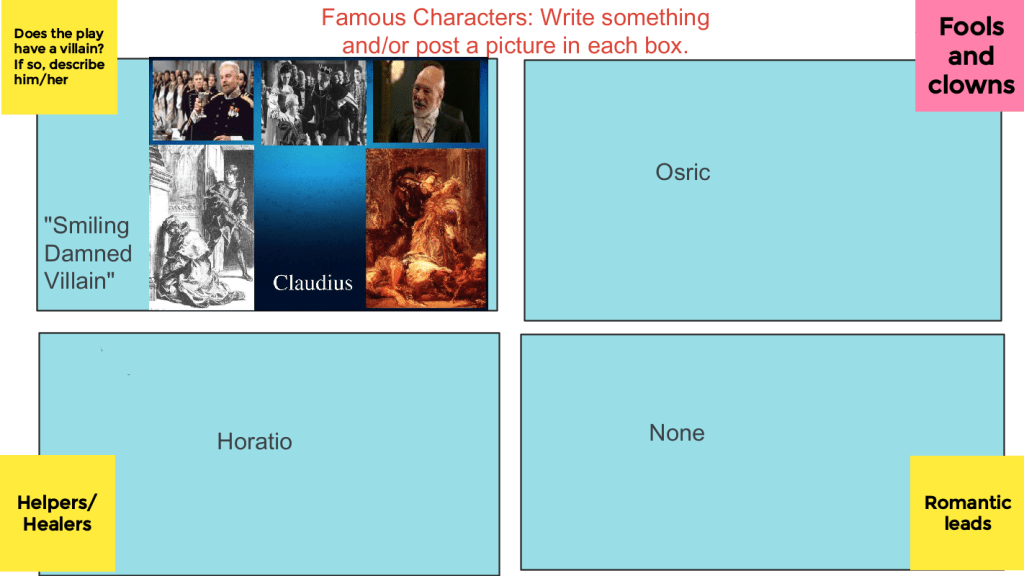
I then asked the students to research the play they got, then asked them to fill out a Jamboard, like the one I made below- using photos and short descriptors to get a general idea of their new favorite play!

So as the school year continues, I’ll create more recaps and post more discussions to let you know how this little experiment is coming. Since this is a new idea, I’d love to get your feedback because I want as many people as possible to help make this project a success!

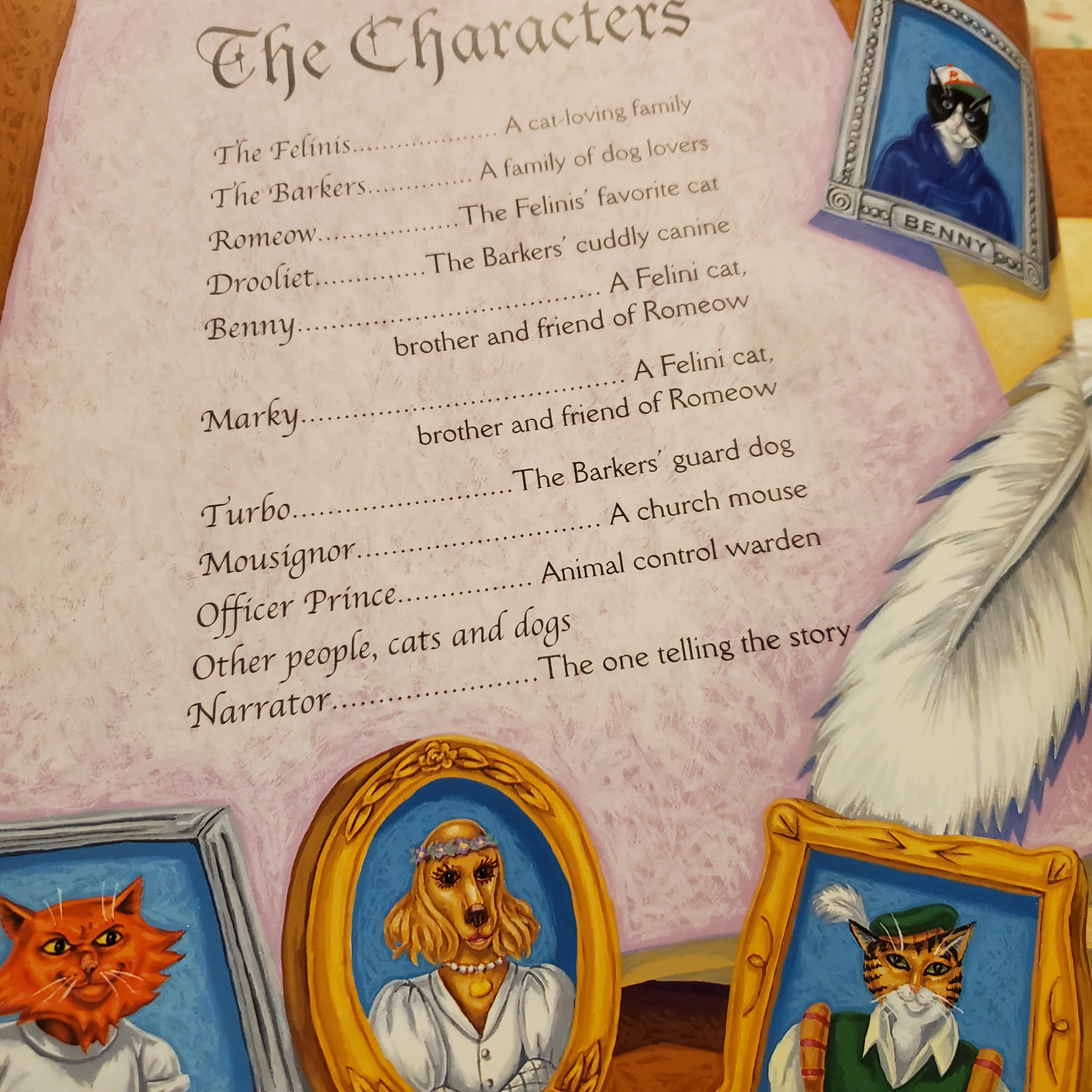
Review: Romeow and Drooliet by Nina Laden

The whole book, read by me!

As you probably know, I love to review children’s adaptations of Shakespeare (whether direct or indirect). “The Lion King,” (Hamlet), “Encanto” (King Lear), and of course, the many adaptations of “Romeo and Juliet,” are mainstays on this website: Gnomio and Juliet, Romeo and Juliet: Sealed With A Kiss, even Disney’s Pocahontas have their basic plot and characters firmly rooted in Verona Italy.

Then one day by chance, I found this book in a local park, and I knew I had to review it!

The Premise

This is a simple re-telling of the story of Shakespeare’s play that focuses on just the young lovers. You feel for these cute little animals and in a way, making them a kitty and a dog smitten with puppy love, makes them more understandable and sympathetic than Shakespeare’s youthful teenagers, who indulge in violent delights without using their human reason.

What It Keeps

The Story

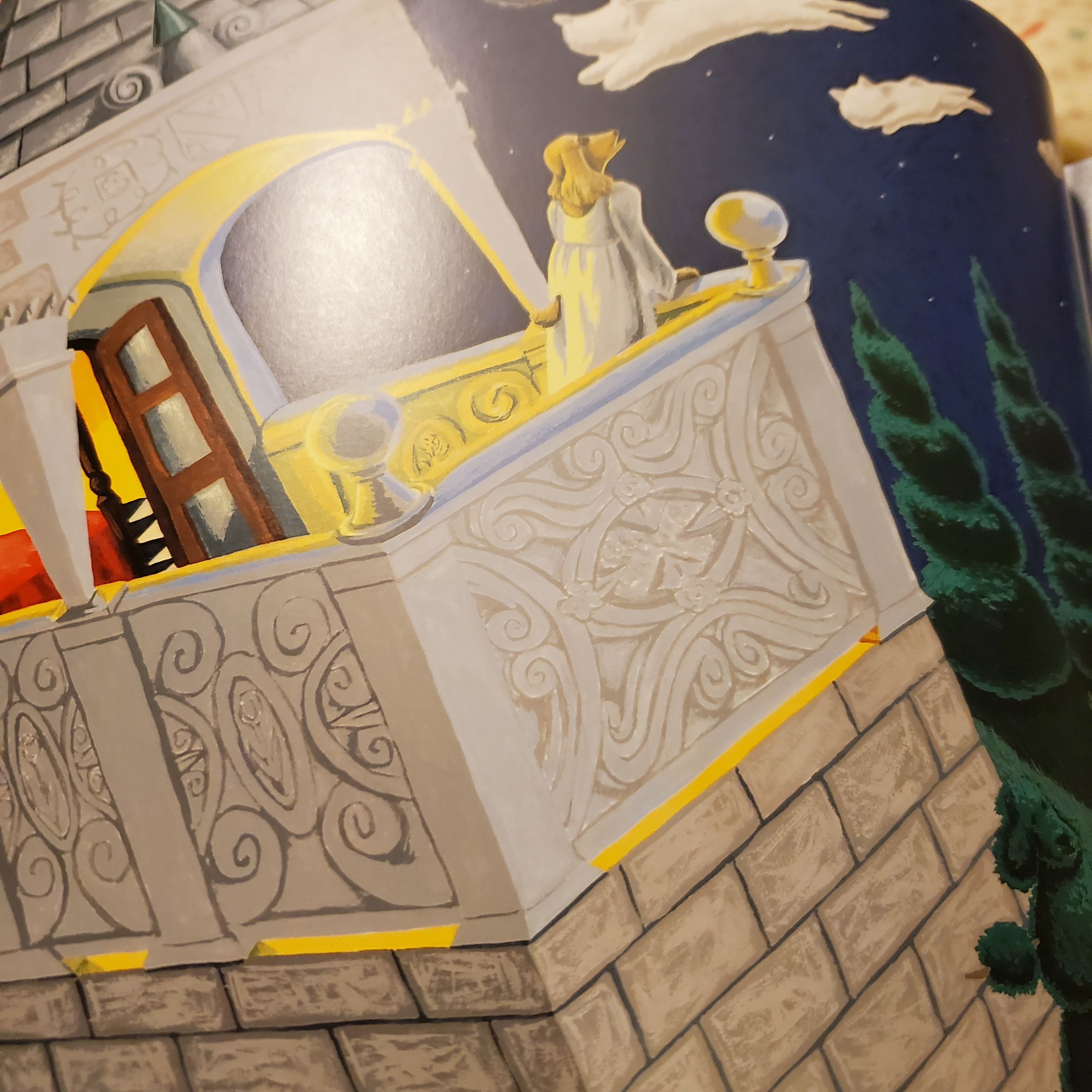
The book keeps the feud between the two families, has the young lovers meet in disguise at a ball, fall in love on a balcony, get married, and amazingly, DIE! Laden still manages to tell the story in a kid-friendly way, though giving it tragic weight.

The Language

The book opens with a rhyming prologue, which, although it isn’t in sonnet form, has the same function as Shakespeare’s prologue- to explain the plot before we see it played out in the book, thus giving the whole story a sense of dramatic irony. Plus, as you can see, Laden also imitates Shakespeare’s love of wordplay with metaphors and puns, (a tale of tails), and alliteration to give the dialogue some wit and effervescence. Reading it gave me giggles like I’d just popped open some champagne.

What it changes: Spoiler alert

All throughout, Laden makes small changes to simplify the plot and remove characters that don’t directly impact the main plot. The characters of Lord/Lady Capulet and Lord/Lady Montegue, The Nurse, Paris, Peter, the servants, and the friars are completely absent, turning an already brief play into an even more compressed story.

Like a lot of animal retellings I’ve seen of this story, the author recasts the human leads as animals that are natural enemies- in this case, cats and dogs. This makes the story easier for kids to understand. As I’ve said before, it’s often difficult to keep track of who belongs to which house in Shakespeare’s version. All you need to know is that Romeo and his brothers are cats and Juliet’s family are dogs.

Funnily enough, my daughter actually complained that the story would’ve been better if Juliet were a cat instead of Romeo, which I agree with for very specific reasons. The character of Tybalt is named after a character from a prose story called “Reynard the Fox,” who had the epithet, Prince of CATS. Mercutio annoys Tybalt by taunting him with this title before challenging him to a duel:

Tybalt: What would you with me?
Mercutio: Good Prince of Cats, nothing but one of your nine lives! Romeo and Juliet, Act III, Scene i.

It would’ve been a funny Shakespeare easter egg to have Juliet and Tybalt be portrayed as cats, but I understand why they went with dogs- Drooliet is a hilarious pun, and having Tybalt be a vicious, rabid dog helps set him up as a fearsome antagonist.

I suppose you’re wondering, how the author keeps Shakespeare’s tragic ending in a children’s book? Well, like Shroedinger’s cat, she manages to make Romeow die and not die at the same time. He gives Drooliet one of his 9 lives, allowing them both to ‘die’ and then come back for a happy ending. It’s a brilliant way to nod at the original, while also keeping the kid-friendly tone.

My Reaction

This book is really fun and very enjoyable for kids, parents, and teachers who want to introduce kids to Shakespeare at an early age!

Free teaching guide from the SAG-Aftra Foundation