
Watch “The truth about Shakespeare’s “Julius Caesar”” on YouTube


In honor of Roman Week, and in light of the recent passing of Monty Python’s Terry Jones, please watch this excellent documentary about the day to day life of Ancient Rome:

Since this Saturday is the Ides Of March, I am posting thoughtful posts about Shakespeare’s Roman plays, especially Julius Caesar.
To start with, here are two videos about Caesar’s life:
1. Epic Rap Battles Of History: Caesar vs. Shaka Zula: https://youtu.be/oOm_2dGzqp0
What I like about this video is that it fills some of the gaps of Caesar’s life that Shakespeare could not put on stage, like his kidnapping by pirates or his victories against the Gauls and the English. You also get to see some of his battle tactics that made his 13th Legion, one of the most feared in Rome.
2. History Buffs: Rome Season 1: https://youtu.be/oOm_2dGzqp0
Again, this review of the HBO TV show Rome helps explain details of Caesar’s life that Shakespeare didn’t cover, namely, why the Senate wanted him dead, and why he was arguably a threat to the republic.
That’s all for now, more to follow!


Let me begin by admitting that this post was harder to write than my Christmas post because pre Christian traditions are harder to pin down. In addition, to give you my standard disclaimer, I don’t believe it’s really possible to definitively know how or if Shakespeare celebrated Halloween, but since the history of Halloween is long and fascinating, and since Shakespeare’s plays influenced that history, I feel it’s worth exploring.
Part I: Origins of Halloween
Almost every culture on Earth has a middle fall celebration that calls to mind the bounty of the harvest, and the inevitable approach of winter. Most of our Halloween traditions are based on the ancient European festival of Samhuin.
What is Samhuin?
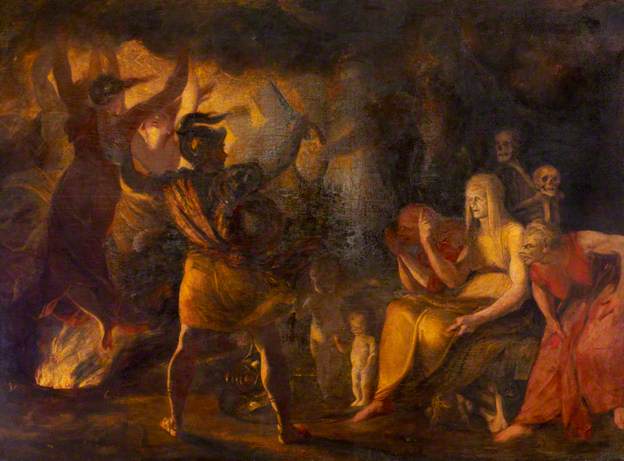
Over 2,000 years ago, the Celts inhabited much of the British Isles. They believed in many gods and spirits that controlled nature and the seasons. To thank the gods for the harvest the Celts gave them offerings like apples, and threw parties to celebrate the gods’ bounty.
When the Romans conquered the Celts, they co-opted some of their religious practices. For instance the tradition of giving apples as offerings to the Roman goddess Pomona. This tradition of course, evolved into our modern Halloween tradition of bobbing for apples. Honoring the harvest also went hand in hand with darker traditions; ones inspired by fear of death, decay, and evil spirits.
With the Sun dying and the Earth growing cold in late October, cultures like the Celts and the Romans feared that evil fairies and ghosts could cross over into our world. In particular the Celts believed that around the night of October 31st, the veil between the living and the dead was the thinnest.
Samhuinn was a liminal time between our world and the Otherworld. It’s a night when the souls of dead loved ones as well as spirits and fairies – the aos sí in Irish mythology and aes sídhe or sìth in Scottish mythology – could come through to visit. Deceased family members were honoured with seats at the evening feast, and offerings of milk and baked goods were left at the front door for the Fairies.
At some point people decided to dress up as the spirits to ward them off, and this evolved into our modern day trick or treating.
These traditions did not die once England became Christian, (after it was conquered by the Romans), they simply translated into a different form. Halloween actually translates as “All Hallows Eve,” a Catholic celebration of of dressing up as pagan spirits and giving offerings of the harvest to honor Catholic saints as well as departed love ones.
Part II: What might Shakespeare have Done on Halloween?
Although Shakespeare never directly mentions Halloween, he lived in a world that kept many of these folk traditions alive. Shakespeare was the grandson of a farmer and his father was a devout Catholic, so he probably was brought up in these ancient Halloween traditions. He probably would have attended some kind of harvest festival to celebrate the bounty of the summer, and might have put food out for his departed family members.
Samhain is still heralded by the baking of kornigou, cakes baked in the shape of antlers to commemorate the god of winter shedding his ‘cuckold’ horns as he returns to his kingdom in the otherworld. On the Isle of Man in the Irish sea, the Manx celebrate Hop-tu-Naa, which is a celebration of the original New Year’s Eve and children dress as scary beings, carry turnips and go from home to home asking for sweets or money.
Source: https://theancientweb.com/2010/10/the-origins-of-halloween-part-1/
Call me a softie but I really like the idea of Shakespeare baking treats like soul cakes for neighborhood kids or telling scary stories about a bonfire. The kornigou is more commonly known as the Soul Cake, and it’s still popular today. It’s even been immortalized in song:
You can even make it yourself: www.cardamomdaysfood.com/recipe/soul-cakes/
Another tradition was dancing around ancient Celtic burial mounds. According to tradition, these mounds were home to spirits and Fairies, and could be portals to the land of the dead. In Irish folklore, poets and storytellers had the power to pass between these two realms. Maybe Shakespeare himself visited such a mound in his youth and was inspired to write about the fairy queen Titania and the hobgoblin Robin Goodfellow. Archeologists are still learning about these ancient ruins today (source: Smithson.com)
• Theater
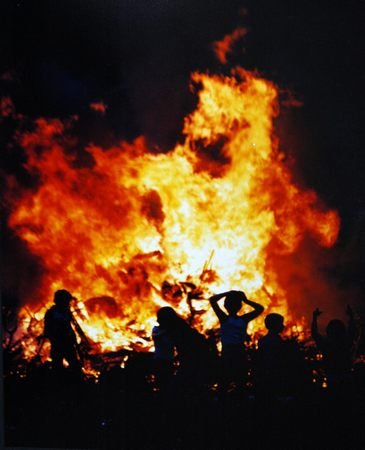
The most tantalizing ancient Halloween tradition is mumming, a kind of amateur theater practiced by the ancient Celts. Like modern Sunday school plays the plays were a religious ritual designed goal to honor the gods and the harvest.
Mumming, a type of folk play, was used to tell traditional Samhuinn stories about battles or the winter goddess Cailleach (meaning “old hag”), who began winter by washing her hair in the whirlpool of Corryvreck.
For a modern example of this of these traditions you can look at the Edinburgh fire festival which preserves the kind of mumming that the Celts might have done on Samhuin and Shakespeare might have seen. It’s highly ritualistic, immersive, and the characters have spooky similarities to some of Shakespeare’s plays.
To give you an idea of how mumming might have influenced Shakespeare, watch this trailer for the 2017 Edinburgh Fire Festival:
• What you can see in the trailer:
1. Keening- the wild women screaming as a way to lament, honor, and guide the dead. Characters like Constance in King John have many similar qualities.
2. The fight between the Summer King and the Winter Lord. Many Celtic stories dramatize the change of seasons from summer to winter as a battle. Even the duel between King Arthur and his young son Mordred could be seen in this context. In another interesting interpretation, Jennifer Lee Carroll in her book Haunt Me Still, interprets this mummers play as a pagan retelling of the story of Macbeth.
3. You can see brightly colored figures some designed to honor the changing of the seasons, and wild, animalistic people, presumably playing the roles of the Fairies, goblins, or other creatures that appear on Samhuin. It’s not much of a stretch to see these figures as the Fairies of Midsummer Night’s Dream, or the witches of Macbeth.
Part III: What did Shakespeare mention about Halloween?

Ghosts appear in five of Shakespeare’s plays. We see reference to all kinds of Fairies, goblins, and spirits and even a couple times people dressing up to ward off evil. In Titus Andronicus, the queen of the Goths disguises herself and her sons as spirits of revenge and go to Titus’ house to torment him, and then the old man Titus tricking them into coming to his house, where he takes his revenge.

One Shakespeare play that I think perfectly encapsulates the Halloween traditions of the English countryside is Merry Wives Of Windsor, specifically the scene in which Falstaff is tormented by a ghost story.
In the play, the fat, drunk knight Sir John Falstaff has been trying to seduce two married women, Mistress Page and Mistress Ford. Page devises a plan to scare and humiliate Falstaff, by dressing up her husband as the terrifying ghost of Herne the Hunter:
• 4.4 MISTRESS PAGE
• There is an old tale goes that Herne the hunter,
Sometime a keeper here in Windsor forest,
Doth all the winter-time, at still midnight,
Walk round about an oak, with great ragg’d horns;
And there he blasts the tree and takes the cattle
And makes milch-kine yield blood and shakes a chain
In a most hideous and dreadful manner:
You have heard of such a spirit, and well you know
The superstitious idle-headed eld
Received and did deliver to our age
This tale of Herne the hunter for a truth.
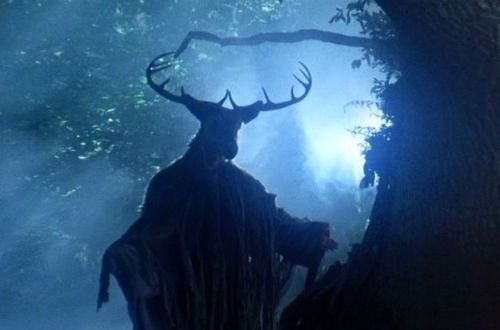
Herne the Hunter is a real medieval legend about a man who was hanged for poaching deer in Windsor park and now haunts the forest with horns on his head. Not only does Master Ford dress as Herne, The witty housewives dress the neighborhood children like Fairies and instruct them to pinch the fat knight and burn him with lit candles. Essentially this scene is a Shakespearean trick or treating moment with a ghost story to boot. Plus as Mistress Page mentioned, the ghost haunts Windsor towards the the oncoming of Winter, so it’s not entirely unlikely that it would be that this scene was originally played around the time of Halloween.

How did Shakespeare contribute?

Scholars describe Shakespeare’s mind like a magpie, taking myths, legends, history, and books to come up with his own plays. As you have seen, the ancient traditions of Halloween had a powerful effect on Shakespeare’s plays. But, did he contribute to those traditions himself? I would say yes in a big way. First of all the image of Hamlet holding a skull has inspired many other Halloween images:

David Tennant in Hamlet, RSC 2008
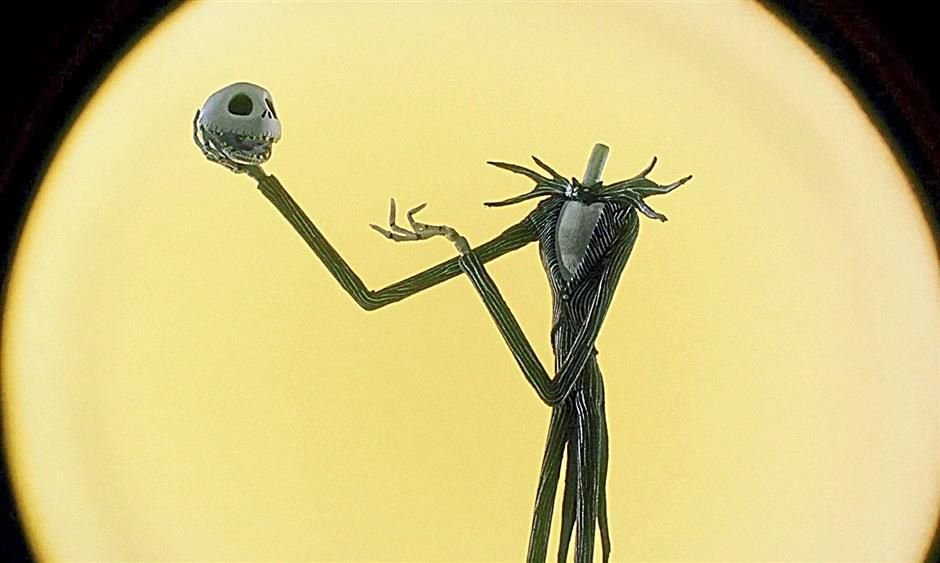
Jack Skellington in The Nightmare Before Christmas, 1993.
But I think Shakespeare’s greatest contribution to how we celebrate Halloween are centered within the witches of Macbeth.

Though Shakespeare by no means invented the concept of witchcraft, he did popularize the idea of the wicked witch, and helped form our modern view of what a witch is. The image he created in Macbeth

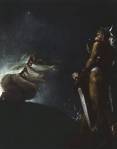
More than that, I would argue that the modern wicked witch would be all but silent without Shakespeare. When you think of what a witch might say, besides a series of high pitched cackling, what do you think of? Probably you think of this:

Or this:

Shakespeare’s bizarre and cryptic language helped inspire countless other interpretations of witches, and thus, a way for audiences to deal with the temptations that lurk in our hearts.



In conclusion, we don’t know how Shakespeare celebrated Halloween or even if he did to begin with; Halloween and Shakespeare’s life are both frought with mystery and legend, but one thing is dead certain; Halloween would not be the same without him. He absorbed the ancient rituals of the Celts and Romans and crafted some modern Halloween ideas and images that endure to this day.
Sources
https://www.historic-uk.com/CultureUK/Halloween/
https://www.bbc.co.uk/newsround/15169373
Thanks very much for reading! If you liked this post, please consider signing up for my new “Macbeth” online class via Outschool.com. One really fun part of the class will be an escape room where you use your knowledge of Macbeth to escape a cursed castle:

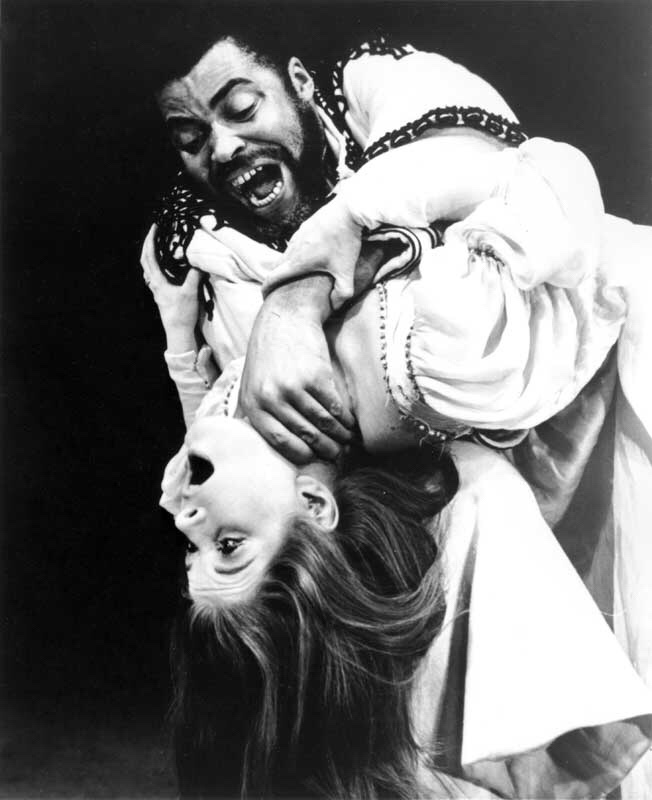

For February, I would like to give a shoutout to a wonderful article I read about famous black Shakespearean actors, and to link to a few of my old posts that detailed how Shakespeare approaches the issue of race. Enjoy:

Part I Before the Throne

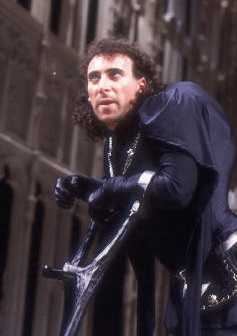 As I have written before, Richard claims the throne by manipulating everyone in the British political machine- stoking hatred among the nobles, while trying to appear as a pious, humble man to the common people. Because of his years on reality television and experience as a businessman, even I must admit Trump has a gift at manipulating people’s perceptions and playing the part of a man of the people:
Cannot a plain man live and think no harm? But his simple truth must be abused by silken, sly, insinuating jacks!- Richard III, Act I, Scene iii
As for Trump, even though he is a privileged billionaire with inherited wealth, he pretends to be an unpretentious, unapologetic common man, abused by the ‘mainstream media’ and his political opponents.
Richard is also a fan of the moral equivalence argument, (also known as whataboutism). He tries to offset his own murders by mentioning other people and their misdeeds during the Wars Of The Roses, making them seem as bad or worse than Richard:
Let me put in your mind if you forget what you have been ere this and what you are, withal what I have been and what I am. RIII Act I, Scene iii.
Part II: The descent

https://m.youtube.com/watch?v=mQP5FHq7hqs
What is an authoritarian? Basically an authoritarian regime concentrates power into the hands of one person, and tries to hold onto power by:
1. Projecting strength.
2. Demonizing opponents, both real and imagined.
3. Destroying institutions.
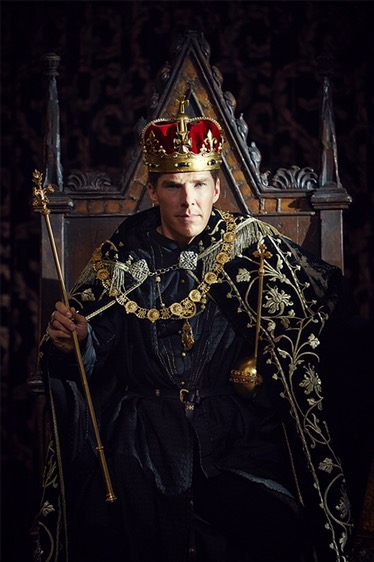
From the moment the crown is placed on his head, Richard starts to see threats to his power, and uses all his newfound resources to destroy every each and every threat. First he kills his nephews, (the legitimate heirs to the throne), then he kills his wife, so that he can remarry a princess to try and consolidate his power. And finally, when he faces his greatest threat the armies of Henry tutor Earl of Richmond, Richard goes full on dictator, calling himself a tower of strength, demonizing Richmond as a foreigner, and claiming that his soldiers will rape the English wives and daughters.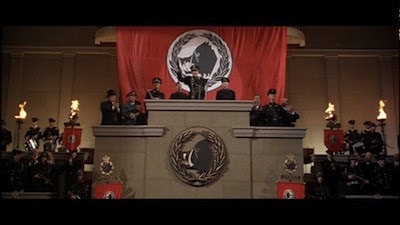
Trump is guilty of every one of these authoritarian strongman habits. He tries to convince people he is strong both physically and politically by having photo ops with doctors who claim that he is “the healthiest president ever”. He also attempted to project strength by misrepresenting the size of the crowds at his inauguration (which was a flat out lie), Furthermore, Trump demanded a military parade to emulate autocratic governments like North Korea. Then there’s his ultimate misguided show of American strength: the wall, which even Fox News has calculated will cost $25 billion dollars at least, and will do little to nothing to stop the flow of drugs and illegal immigration.
Trump also has from the beginning waged war on the Internet against any and all who oppose him. Let us not forget that Fox News is a 24 hour a day propaganda machine that exists almost entirely to condemn anyone who opposes the president and his agendas. And in terms of destroying institutions, his constant claims of “fake news“ seeks to destabilize the Free Press. America’s finding fathers guaranteed free press with the knowledge that if the government is corrupt, the only way the public can fight back is through the knowledge provided by a free and Independent press. But if the media is the enemy, we have no one to listen to except Trump himself.

Richard is even more comically trigger happy than Trump. Look at this scene where in less than 10 minutes, he sends a murderer to kill his nephews, plots to murder his wife and marry his niece, and completely throws off the Duke of Buckingham, his only supporter on his way to the crown!
https://m.youtube.com/watch?v=gD5afYxDc6g
Richard’s authoritarian tactics actually spring from one of the best political theorists of the renaissance, unfortunately it was Machiavelli. Niccolo Machiavelli saw how the crown heads of Italy consolidated power through violence and intimidation, and he came to realize that the power behind the throne is much less to do with divine right or royal bloodline, and more with who can play the game and project power and strength. In Shakespeare’s Henry the Sixth Part III, Richard brags that in his quest to the good for the crown he will send Machiavelli to school: https://m.youtube.com/watch?v=v6ji07tsI2M
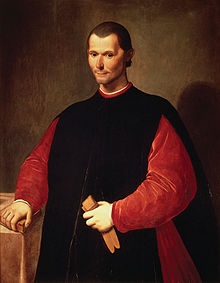
I unfortunately don’t have enough time to get into the connections between Machiavelli, Richard, and Trump. Suffice it to say that all three advocate rule by fear and have no interest in preserving democracy. Below are some quotes and articles that I have collected about Machiavelli and his connection to Shakespeare and Trump:
http://insights.som.yale.edu/insights/what-can-you-learn-machiavelli
https://www.google.com/amp/s/www.theatlantic.com/amp/article/354672/
https://www.bl.uk/shakespeare/articles/richard-iii-and-machiavelli
Part III: Who Lives, Who Dies, Who Tells Your Story
Sadly, the ultimate similarity between Shakespeare’s Richard III, the real King Richard, and Trump is that the actual human has been swallowed up by a narrative. Even though most of what Trump says is a lie, to his supporters he is the one person who ‘tells it like it is,’ not because they believe him, but because they want to believe in the narrative he constructs.
Not only are his lies compelling, Trump himself has become a powerful symbol to the disenfranchised that the system is broken and corrupt, so why not vote for someone like him? He brands himself as a ‘plain blunt man’ who isn’t afraid to offend or criticize people in power, even though he is much worse than they are at running the government. According to the testimony of his former lawyer Michael Cohen, Trump described his own campaign as the ” The greatest infomercial in political history.” His campaign was from the start, a scam, where the ultimate con man told people he was going to fix healthcare, fix the immigrants coming into the country, and fix everything they didn’t like about America.
Trump and Richard exploit what you and I want to believe. A New York Times article from 2016 made an interesting comparison between Trump’s odious political persona and that of one of the “heels” or bad guys in professional wrestling. These characters are unrepentantly evil, and love to stir up anger in the crowd, and everyone knows that their every word and action is fake, but they buy into the story. This kind of suspension of disbelief is of course, the central guiding principle of theater itself, and arguably Shakespeare created a villain who would make a very effective wrestling heel.
The real Richard’s devolution from a historical king into a villainous archetype is more tragic, but just as powerful. The lies that the Tudor chronicles told about him were more compelling and politically convenient than the truth, and Shakespeare’s genius just further distanced us from caring what the real man was like. In essence, Shakespeare was inventing fake news far before Trump was railing about it. Just as we as an audience are complicit in the pretend crimes of a fake king when we watch the play, we are also complicit in perpetuating a comfortable simplistic story of the 15th century War of the Roses king Richard Plantagenet.
Trump and Richard show that history can be distorted when we focus less on what is really happening and more on what we want to see. More people wanted to believe his lies than Hillary Clinton’s facts, the same way people were forced to believe the Tudor lies instead of the real truth of what happened from 1483-1485. Likewise Shakespeare’s Richard exploits people’s fear, greed, and gullibility to gain power for himself, but this is his only talent; eventually his supporters lose faith in him, his enemies mobilize, and he is taken from power.
Happy Veterans Day Everyone,
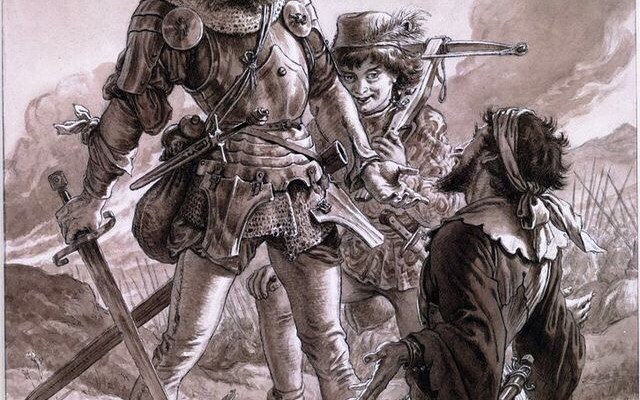
War and soldiers come up a lot in Shakespearean plays. After all, he wrote six plays about the Wars Of The Roses. Though most of his work is about the decisions about war made by powerful monarchs, occasionally he gives us some insight into the lives of common soldiers.
We don’t know if he ever fought, but warfare was very much on his mind at the beginning of his career, with good reason. In 1586 The Spanish armada attacked. Was Shakespeare enlisted? We don’t know.
His early plays are generally positive toward soldiers and it’s easy to see why. The growing nationalism in England resulting from the Tudor control over religion and language —was a direct and defensive reaction to the ex-communication of the Tudor monarchs (particularly Henry VIII and Queen Elizabeth. Shakespeare probably saw himself —
. He no doubt saw his role as building the epic sagas of England to remind his countrymen of England’s past victories, especially during the Spanish Armada and the later Irish Rebellion of 1599.
Shakespeare cashed in with 9 plays on English history that mainly take place on the battlefield. His plays were met with praise by audiences and critics:
“How would it have joyed brave Talbot (the terror of the French),” he wrote, “to think that after he had lain two hundred years in his tomb, he should triumph again on the stage and have his bones new embalmed with the tears of ten thousand spectators at least (at several times).” -Thomas Nashe, c. 1590.
In the first tetralogy, common soldiers don’t have any voice. Probably they were played by apprentices, and fencing masters. They were mainly set dressing. Shakespeare mainly focuses on the pivotal importance of leadership and his portrayal f leadership; he understood the consequences of the choices kings make during the war and its effect on millions of common people: like Talbott and King Henry the Fifth.
I want to analyze a short selection from Henry the Fifth, Act IV, Scene I. In this scene, the king is disguised as a commoner the night before a battle to see what his soldiers really think about him, and the impending fight with the French. An outspoken soldier named Williams tells him that if the fighting is wrong, the king is responsible for his soldiers’ deaths, and has to answer for the atrocities that happen during the war:
methinks I could not die any where so
contented as in the king’s company; his cause being
just and his quarrel honourable.
Ay, or more than we should seek after; for we know
enough, if we know we are the kings subjects: if
his cause be wrong, our obedience to the king wipes
the crime of it out of us.
But if the cause be not good, the king himself hath a heavy reckoning to make, when all those legs and arms and heads, chopped off in battle, shall join
together at the latter day and cry all ‘We died at such a place;’ some swearing, some crying for a
surgeon, some upon their wives left poor behind them, some upon the debts they owe, some upon their children rawly left. I am afeard there are few die
well that die in a battle; for how can they charitably dispose of any thing, when blood is their argument? Now, if these men do not die well, it will be a black matter for the king that led them to it. King Henry V, Act IV Scene I.
Many productions of Henry the Fifth interpret this speech as Shakespeare’s attitude towards war, (a tempting prospect, since the soldiers’ name is William), but in the very next speech King Henry completely changes Williams’ mind! Here’s the full scene from Kenneth Branaugh’s 1989 movie version of the play, which he directed and starred as King Henry:
https://m.youtube.com/watch?v=rv7NsGCDVDs
Next, here’s a fascinating article by psychotherapist Anthony King that attempts to diagnose one of Shakespeare’s most diabolical soldiers, Macbeth: https://warontherocks.com/2015/10/macbeth-as-a-ptsd-victim/
Evidence that Macbeth has PTSD:
Every generation recreates the Shakespeare it needs.” -Anthony King
Macbeth is a veteran dealing with atrocious behavior, his own, and those he’s privy to.
Found on AdAA.org
• Re-experiencing the trauma through intrusive distressing recollections of the event, flashbacks, and nightmares.
◦ Sees daggers 🗡, ghosts, and obsessed over infants 👶
• Emotional numbness and avoidance of places, people, and activities that are reminders of the trauma.
◦ Ignores people and isolated himself in the castle 🏰
• Increased arousal such as difficulty sleeping and concentrating, feeling jumpy, and being easily irritated and angered.
◦ “Macbeth shall sleep 😴 no more”
◦ the murder- in Macbett by Sartre, the soldier actually questions whether the man whom he swore to protect is really worth defending.


 For my upcoming play Of the Month page I am examining the influence of Shakespeare’s Macbeth in popular culture. Many people have compared the play to Breaking Bad, so I was delighted when I found this trailer on YouTube that perfectly illustrates the common threads in these two works.
 The Shakespearean Student