







“Adieu, Adieu, remember me.”

“Adieu, Adieu, remember me.”
I’m very excited! As some of you know, I wrote a piece about Orson Well’s 1936 Federal Theater Project production of “Macbeth,” set in Haiti. This was an important moment in theater history, and helped keep theater and African Americans employed during the Great Depression, so it deserves to be remembered. Imagine my joy when I found out that there’s an independent movie about the creation of this show! Below is the trailer. If you go to https://www.voodoomacbethfilm.com/, you can see the screening dates. Check it out when it comes to your town!

For THIS WEEK ONLY, I’m offering a $5 discount for my “Macbeth” course: Get $5 off my class “Macbeth: An Immersive Learning Experience” with coupon code HTHESUEQUG5 until Nov 5, 2021. Get started at https://outschool.com/classes/macbeth-an-immersive-learning-experience-xGKHeHgH and enter the coupon code at checkout.

What do you think of when you think of “Shakespeare?” What do you think of when you think of “A Midsummer Night’s Dream?”
Ruffs and Tights?
Mostly white dudes?
Elizabethan music?
Dark night and moon?

This production, directed by Michelle Terry, is gleefully throwing out every preconceived notion of what A Midsummer Night’s Dream can or should be. In terms of design, casting, music, and interpretation, it breaks all the rules, while still remaining true to the text. This allows the production to appeal to not only hard-core Shakespeare fans, but first time audiences and children too!


I got to see this production thanks to the Globe’s online streaming library. My mother kindly shared me a link to this recording from the summer of 2021. You can watch it yourself on: https://www.shakespearesglobe.com/watch/#full-length-productions
I would describe the concept behind the show as “Suggestive,” that is, it doesn’t belong to a literal time and place. Even though the play is set in Ancient Greece, the play refuses to be constrained by historical accuracy, which arguably, fits nicely with Shakespeare in particular, and the Globe itself; a modern building in a modern city, based on a 400-year-old building.
The music and costumes evoke a New Orleans Mardis Gras, a Pride parade, or a Spanish pinata with its bright colors, heavy use of fringes, and bright, energetic jazz music. The only people who don’t wear bright colors are the four lovers, which reflects their continuous frustration with being unable to marry the person they really want.

The show is also Color blind and gender blind, with women playing men’s parts and a cast with black, white, and mixed race actors. Terry’s direction also calls attention to the patriarchial, racist, and sexist elements of Athens which are often overlooked in other interpretations of Dream that I’ve seen or read about. Rather than being a hero, Theseus is a horny old man in a ludicrous pink uniform, looking like a cross between M. Bison and a Christmas nutcracker. To reinforce this point, the actor chose to perform one of Theseus’ most patriarchial speeches as a joke:
Theseus. What say you, Hermia? be advised fair maid:50
To you your father should be as a god;
One that composed your beauties, yea, and one
To whom you are but as a form in wax
By him imprinted and within his power
To leave the figure or disfigure it. -Midsummer Night's Dream, Act I, Scene i.
I’ve seen this speech heavily cut and played seriously, but never till now did I see it played to ridicule the ludicrous notion that women are in any way bound to worship their fathers.
In another nod to contemporary gender politics, the actress who plays Hippolyta and Titania chose to perform her role on crutches. As far as I can tell, this was a deliberate choice and not a result of real injury. There is a precedent for this: In 1984, Sir Antony Sher performed Richard iii on crutches because it highlighted the cruelty people with disabilities often suffer.
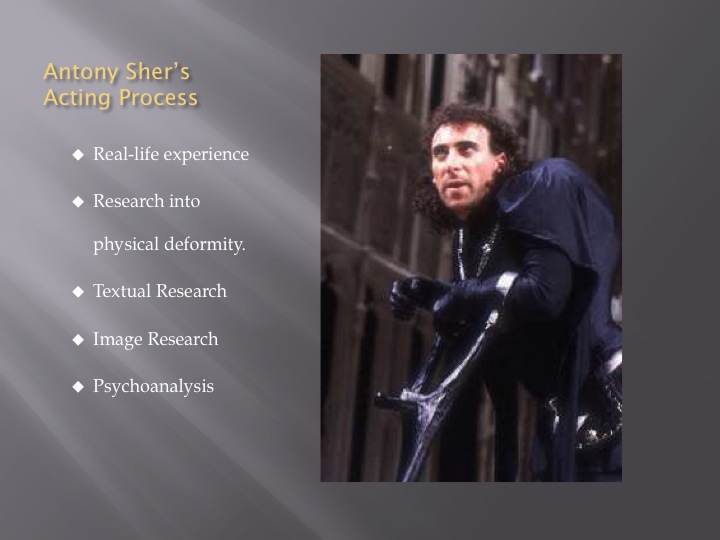
I could be wrong, but I think that the reason the actress was on crutches was a symbolic way of confronting the way gender politics can cripple women.
Many scholars have pointed out how Hippolyta rarely speaks despite the fact that she is supposed to be the powerful Queen of the Amazons, and Theseus’ fiance besides. Shakespeare makes it clear that their marriage was arranged as a political alliance after the Amazons lost to Athens in a war:
Hippolyta, I woo'd thee with my sword,
And won thy love, doing thee injuries;20
But I will wed thee in another key,
With pomp, with triumph and with revelling.
With this in mind, it makes sense to have Hippolyta on crutches as a result of her injuries. Those injuries might also explain her silence; she has lost her agency now that she is essentially Theseus’ prisoner. One might think of any number of war atrocious where women have been sold to powerful men over the centuries. In short, by putting Hippolyta on crutches, we see a glimpse into her tragic story that most productions just gloss over- that she has lost a war, been separated from her people, and is now her enemies’ prisoner through marriage.
I’ve come to expect high quality acting from The Globe Theater Company and this cast did not disappoint. As we watched it together, my family concluded that this was one of the best acted productions of Dream that we’ve ever seen, which between us has to be over 30 plus productions.
The delivery is crisp and fast paced. Every actor has taken these words and made them their own. They speak them as if they were written yesterday. One thing I love about the Globe is that the directors encourage this kind of fast paced delivery; with no distracting special effects or sets, the actors have to captivate the audience with their delivery of Shakespeare’s text, without being melodramatic or self-indulgent. I’m pleased to say that this cast does a fantastic job of telling this magical story in a compelling and very modern way.
I’ve shown my recording to kids, teens, adults, and my family, and everyone has a different reaction to the show. Maybe this isn’t quite your cup of tea, but the concept is sound, the acting is high caliber, and it utilizes the Globe’s unique qualities extremely well.
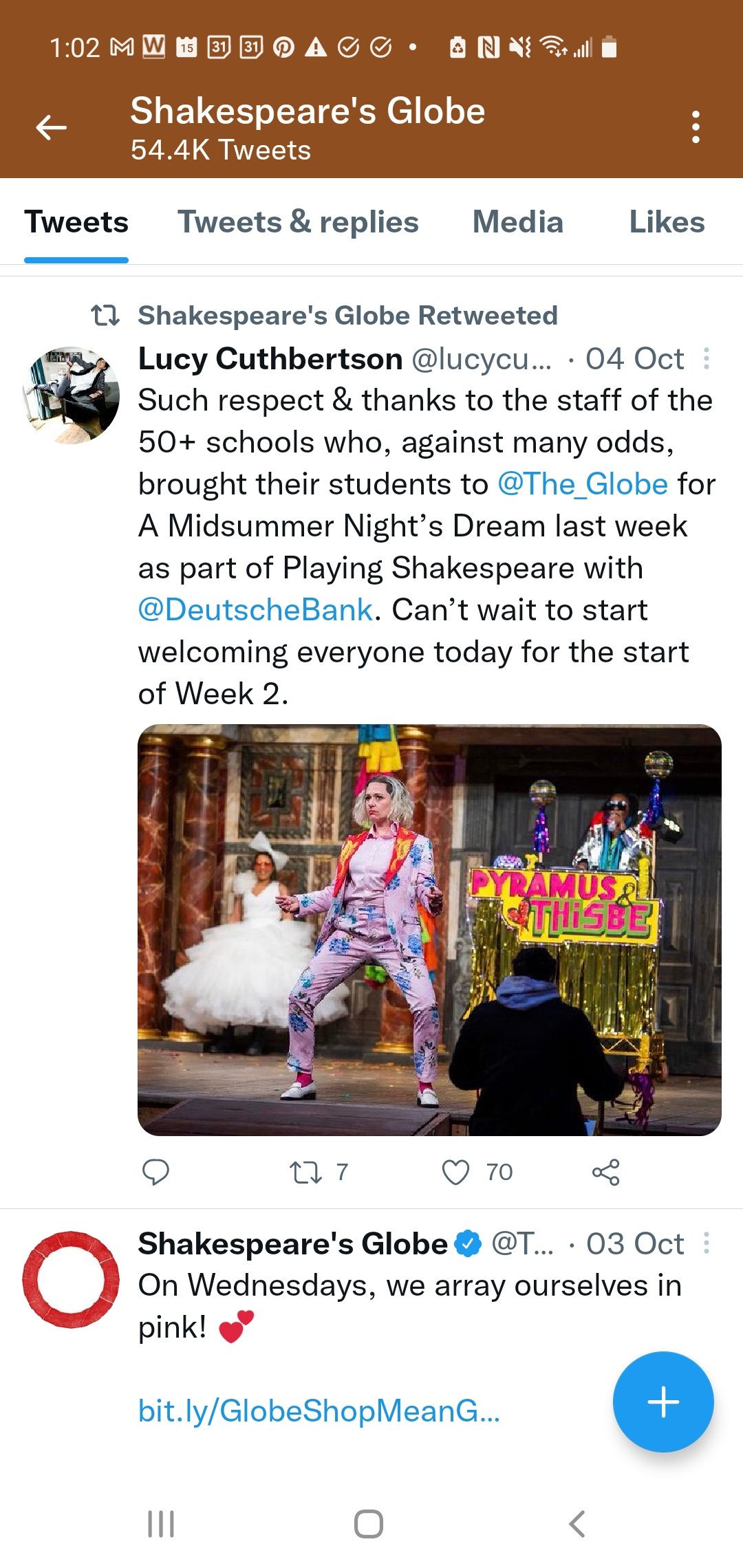
I personally didn’t care for Bottom just because I felt the actress was playing a very energetic part with too much sarcasm and tongue in cheek, but that’s mostly personal preference. I did however love Peter Quince, Snout, Snug, and the rest of the Mechanicals. Peter Quince is a rather thankless part but it’s great to see someone balance being a straight man trying to reign in Bottom’s antics. and an idiot who has no idea how to direct a company of actors, which the actress playing Quince did very well.
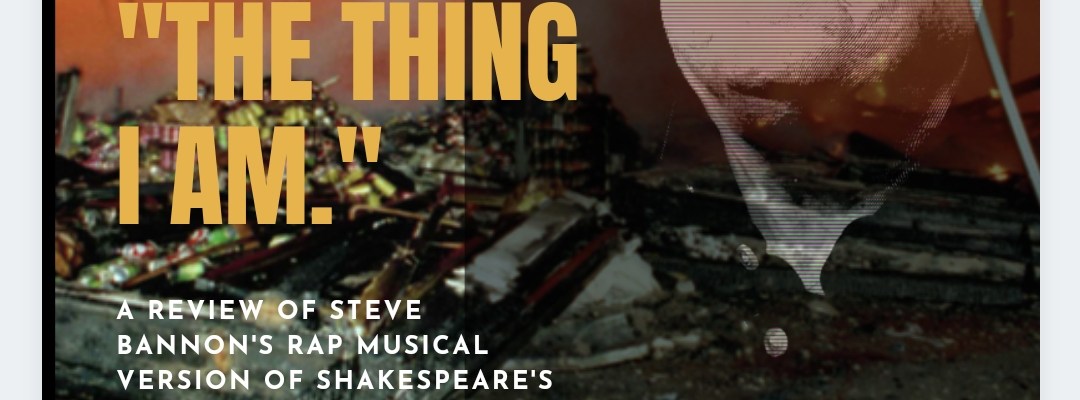
Steve Bannon, the man I’ve described in the past as Buckingham to Trump’s Richard III, is once again in the news. He’s been charged with criminal contempt for refusing to cooperate with the Senate with the January 6th commission.
Bannon, the former head of Breitbart news, and Former President Trump’s former chief strategist, has long been a controversial figure with his extreme right wing views on immigration, race, and politics in general.
One thing many people might not know about Bannon though, is that before he was a publisher and a politician, he was an aspiring writer in Hollywood, and in the late 1990s, Bannon wrote, “The Thing I Am,” a rap-musical version of Shakespeare’s Roman tragedy “Coriolanus.”
Coriolanus is one of Shakespeare’s most obscure tragedies, but arguably, one of his most fascinating ones. It’s the only play set in republican Rome, so it’s the only Shakespeare play that deals with issues of democracy. The play starts with a riot where poor Romans are complaining about grain shortages, loudly condemning rich landowners who are hoarding grain while they starve. Ironically, Shakespeare wrote this at the same time when he himself was guilty of hoarding grain during a shortage, and tensions were so high that some farmers called for people like him to be “hanged on their own gibbit.”
The play has been called fascist, communist, democratic, republican, and monarchist. It’s main character is a Roman general who wants to be consul, (a high governmental position in the Senate), despite the fact that he hates the common people. Like Julius Caesar, it raises interesting questions about who should be in charge of our society, without prescribing an answer, (which would have been impossible for Shakespeare living in Jacobean England). In the play’s most famous scene, Coriolanus finally bursts out and rails against the commoners for their ignorance and their distrust of other would-be millitary dictators:
Bannon updated the text and set it in Los Angelos during the riots of 1992, which if you remember, were protests to the earlier police brutality trial over the death of Rodney King.
The show was never produced, though a staged reading of the text was held in 2016. I was unable to find it on Youtube, but I did find a link to a video on Facebook under Now This Politics. The full reading is here:
https://nowthisnews.com/steve-bannon-hip-hop-rap-musical
Quotes:
They say! F#$% they! They hang out shooting pool and think they know what’s going down – who’s up, who’s out, who bounds, and if there’s crack enough. If I had my way, I’d make a quarry of these slaves.”
Whoever deserves greatness, wants their hate. Peep game, boy. To count on them for favors is to swim with fins of lead.”
“So f#$% you! Trust you? Ha! With each passing minute, you change your common mind. You call him noble that was once your enemy, then dis your king. You cry against the “other” – crackers, Blood, Crip, popo, Pol, the rich – it don’t matter, n!@$; awe keeps you feeding each another.”
I never knew the ‘racist Steve’ that’s being reported now,” Jones told The Daily Beast last year. “I never heard him make any racist jokes, and his best friend was an African-American who went to [college] with him… I never saw even a hint of racism.
“But I did see this elitism… He would always look down on poor people of any color. At one point, he told me that only people who own property should vote. -Julia Jones (Bannon’s Co writer)
The Cast included Rob Corddrey, Kate Berlant, Jordan Black, and Cedric Yarborough.
The subject matter is poorly handled and the way it treats the LA riots is at best, a historically inaccurate attempt for Bannon to play ‘white savior’ to a group he considers inferior, and at worst, a call to action for racists to imprison and oppress the black residents of LA.
The riots were not a war, they were a result of a protest. Instead of addressing the Rodney King trial which was the cause of the riots, Bannon focuses on the ‘war’ between the Crips and the Bloods, saying the riot was a result of this war.
If you read Breitbarts article about the riot, (and I don’t recommend it), it is described like a war. It’s the same war conservative pundits are continually trying to convince us is coming- a race war between ‘gangs’, ‘immigrants,’ and the politicians who enable them, who don’t want you to defend yourself.
The opinion piece I read found it ironic that Bannon makes Coriolanus the leader of the Crips, but if you look at his politics, It’s clear why- Bannon is attracted to masculine violence and his base of violent, predominantly white males see modern life as a culture war between them and the rest of the world. His Coriolanus is a BAMF who defends himself with his gun . A politician or a policeman ♂️ would have someone to answer to (more like Shakespeare’s Coriolanus,) but Bannon’s Martus has no restaint and can indulge his violent tendencies in the lawless hellscape of LA.
It should be noted that Bannon is clearly not speaking from experience or research, merely his ugly stereotypes of black gang members that he got from reading his biased Brietbart articles. Though the hero is black, the dog whistle racism is still there- these people are out to get you, and even though they have guts, they are a threat to “civilization.”
I’ve added more sections of my “Macbeth” class so more people can take it through the month of October. Here are the upcoming dates:
Saturday, October 23rd, 2PM EST
Sunday, October 24th, 3PM
Thursday, October 28th, 9PM EST
Saturday, October 30th, 2PM EST
Saturday, October 30th, 7PM EST
Saturday, October 30th, 9PM EST
Friday, November 5th, 8PM EST
Friday, November 5th, 9PM EST
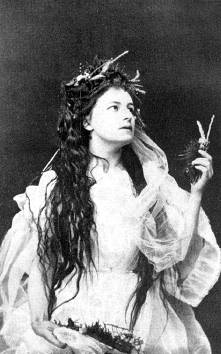
https://www.cnet.com/news/google-doodle-celebrates-polish-american-actress-helena-modrzejewska/
Not only am I thrilled that Google is honoring a Shakespearean actress, she also shares the name of my daughter! Here’s a bio of her via Youtube:
This video is part of my Outschool course “Macbeth: An Immersive Horror Experience.” I use it to explain the plot of the play before playing a game and an escape room to test the student’s knowledge. Let me know in the comments what you think of it, and if you like it, please consider signing up for the course on Outschool.com

