

I’m so excited! One of my favorite Youtube channels is doing a series of videos where they try Shakespeare for the first time! Zach Kornfield, Eugene Yang, and Keith Habersberger known collectively as “The Try Guys” are a group of friends who seek out new experiences and share them with the world. They thrive on taking themselves out of their comfort zone and learning about the world through experiencing it firsthand in a funny, lighthearted way.
So, what could be more adventurous, daring, informative, and out of YouTube’s comfort zone than doing Shakespeare? So in a series of videos they are going to explore Elizabethan clothing, stage combat, learning how to speak Shakespearean verse, and finally on August 10th, 2023, they will perform “Romeo and Juliet” live on Youtube, with suggestions from the audience!
This post will be a reaction to the humor and information on Elizabethan clothing from part one of the series with my notes on Elizabethan fashion, and the costumes worn by Shakespeare’s company
Background on Elizabethan Clothing

I’ve written a series of posts about Elizabethan fashions. If you’re unfamiliar with the period, Queen Elizabeth reigned from 1558 to 1603. This was one of the most prosperous and cosmopolitan times in English history and the fashions of the time reflected this.
Report of fashions in proud Italy,
Richard II, Act II, Scene i
Whose manners still our tardy apish nation
Limps after in base imitation.
Clothing of this period was very hierarchical- if you were lower class, the garments had drab colors, were functional rather than fashionable, and were not tailored for individual people. On the other hand, upper-class people literally wore their wealth and status on their sleeves- clothes were tailor-made, colors were bright and hard to produce, and fashion styles represented the far reach and sophistication of the English court. One way the court proclaimed this was by importing fashions from Italy, as the quote above indicates. This might be one reason why so many of Shakespeare’s plays are set in Italy; the public wanted to see the exotic upper-class fashions in this play set in romantic, sophisticated Italy. In a way, Shakespearean plays were sort of a fashion show in the 16th century.
If they [Elizabethans] saw a onesie, their heads would explode!
Keith

Keith’s remark is referencing the fact that nowadays our clothes are stitched together on the spot by machines. If you buy pants or a shirt, it comes as one complete garment, but this is a luxury the Elizabethans did not have. Costumes came in pieces like ruffled collars, sleeves, skirts, kirtles, foreskirts, etc. All these pieces would need to be assembled by a patient lady or gentleman in waiting, which is why Elizabethan nobles couldn’t get dressed by themselves, as you can see in this graduate thesis video by my friend Anna Gonzales:
Keith Habensburger as Juliet

One of the best parts of the video is Keith trying on various upper-class Elizabethan ladies’ garments from dresses to skirts. The Try Guys have a long history of trying on female garments so in a way, they’re perfectly suited to try Shakespearean costumes.

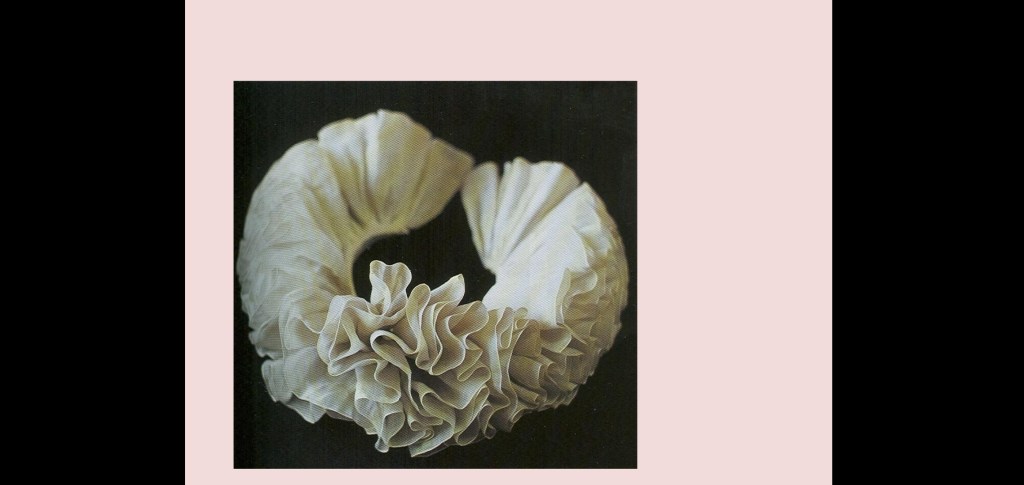
Keith’s favorite Elizabethan costume piece is the famous neck ruff- a piece of rolled linen that goes around the neck worn by men and women. Ruffs were very popular in the Tudor court, so it became a symbol of Elizabethan fashion.
“A Shirt and a Smock”
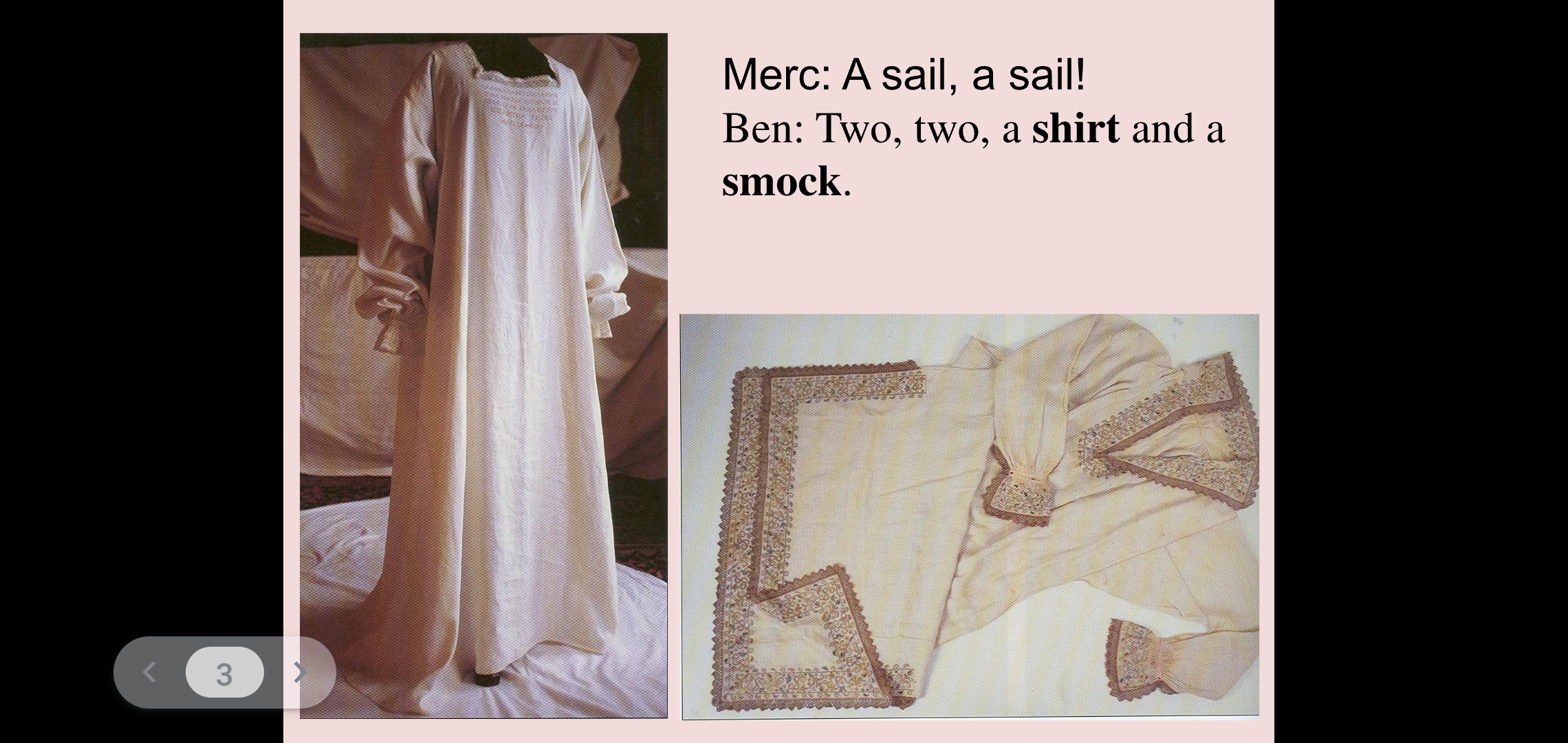
In Anna’s thesis, she points out how Elizabethan undergarments came in the form of long shirts for men and a long linen one called a smock for women. In the video, Keith is puzzled by the garments and wonders if it would be at all erotic to see an Elizabethan in their not-at-all revealing shirts or smocks. As Anna points out in her thesis, these garments were worn close to the body, coming into contact with all the sweat and grime of daily life. So NO Keith, it wasn’t sexy to see an Elizabethan in his or her shirt or smock.
“THe Devil Himself Could Invent such stuff”- Elizabethan Corsets.

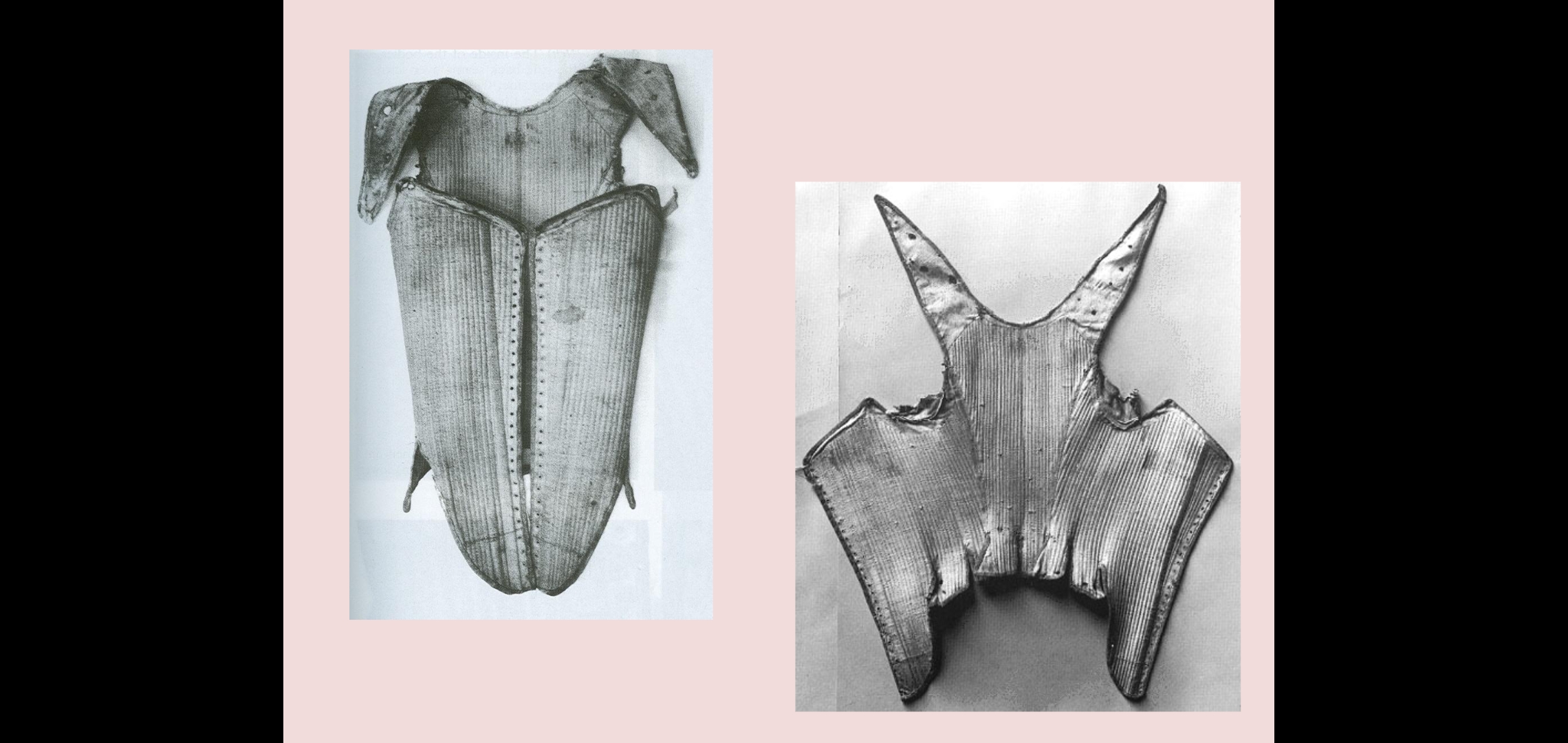
Every age has a new definition of the ‘ideal silhouette,’ that is, the figure that is most appealing in women that the clothes either create or accentuate. Elizabethan women were expected to have slim waists, small chests and wide hips. This look was accomplished through the use of a corset, which tightened the waist and compressed the chest.
Under the Hood- Farthingale, bum rolls, and petticoats
To create the wider hip look of Elizabethan women, bum rolls tied around the waist, and wooden farthingales created a bell shape for the hips and skirt. On top of that went the petticoat, kirtle, and skirt.


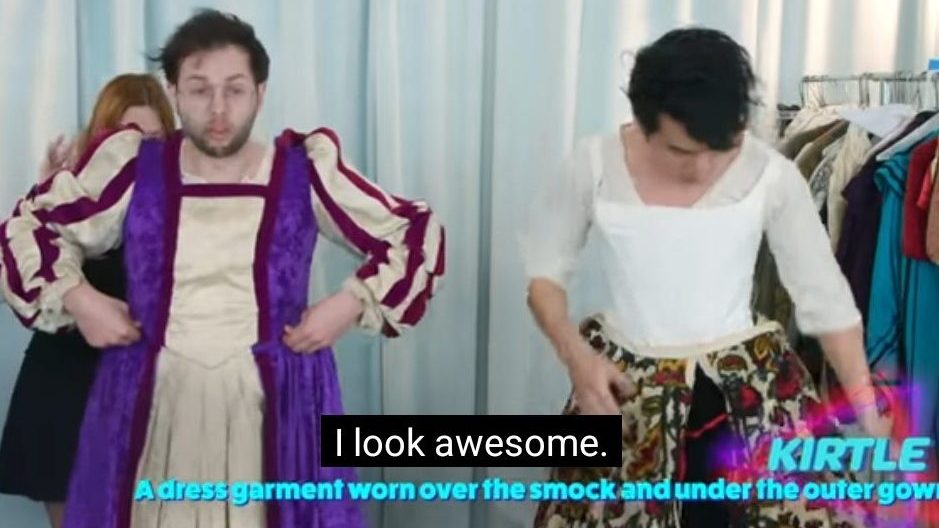

Eugene As THe Nurse

Eugene’s clothing as The Nurse, reflects the fact that lower-class people had fewer and fewer fancy options in terms of fabrics, styles, and colors. The costume is a simple linen shirt, a basic corset, and grey clothes. I suspect that The Nurse was also helping Juliet get dressed, like the ladies in this video:
Men’s fashion- Zach as Romeo or “Bros wearing Hose”
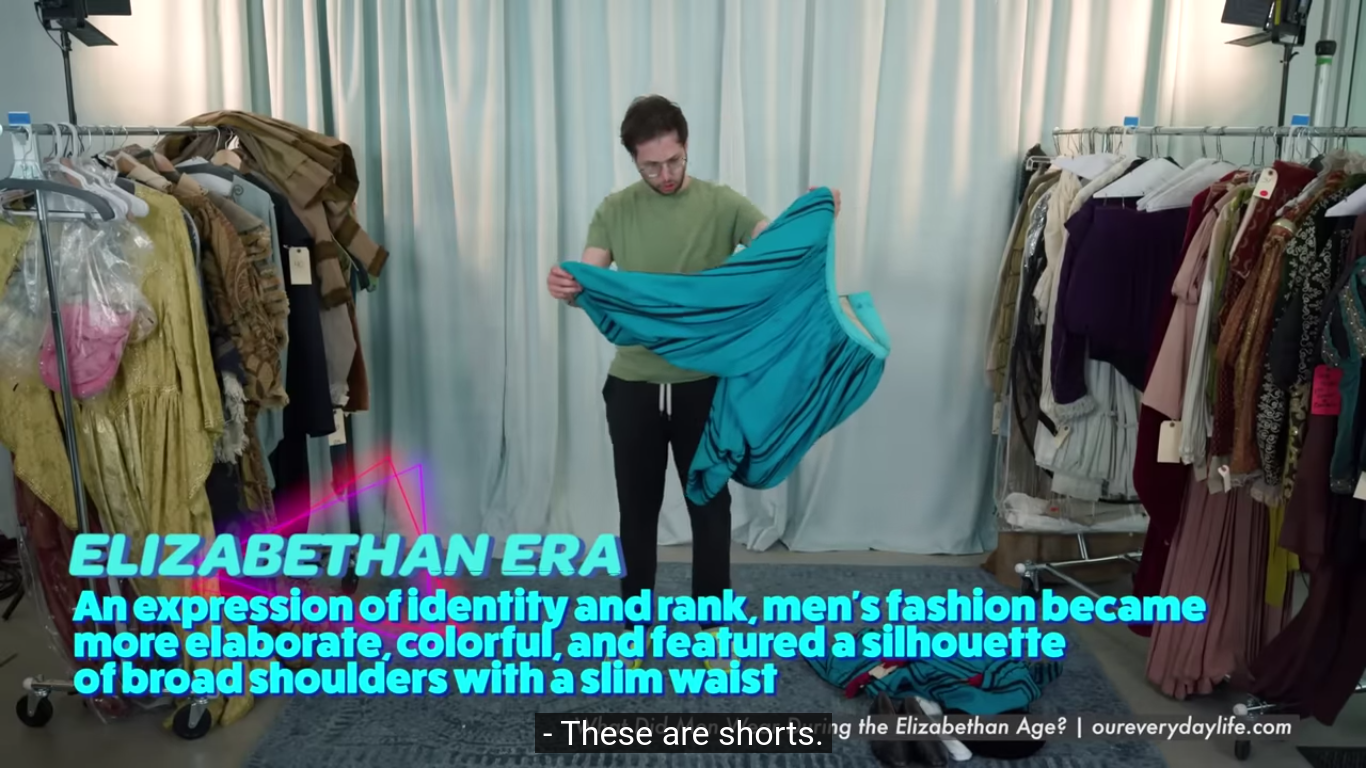


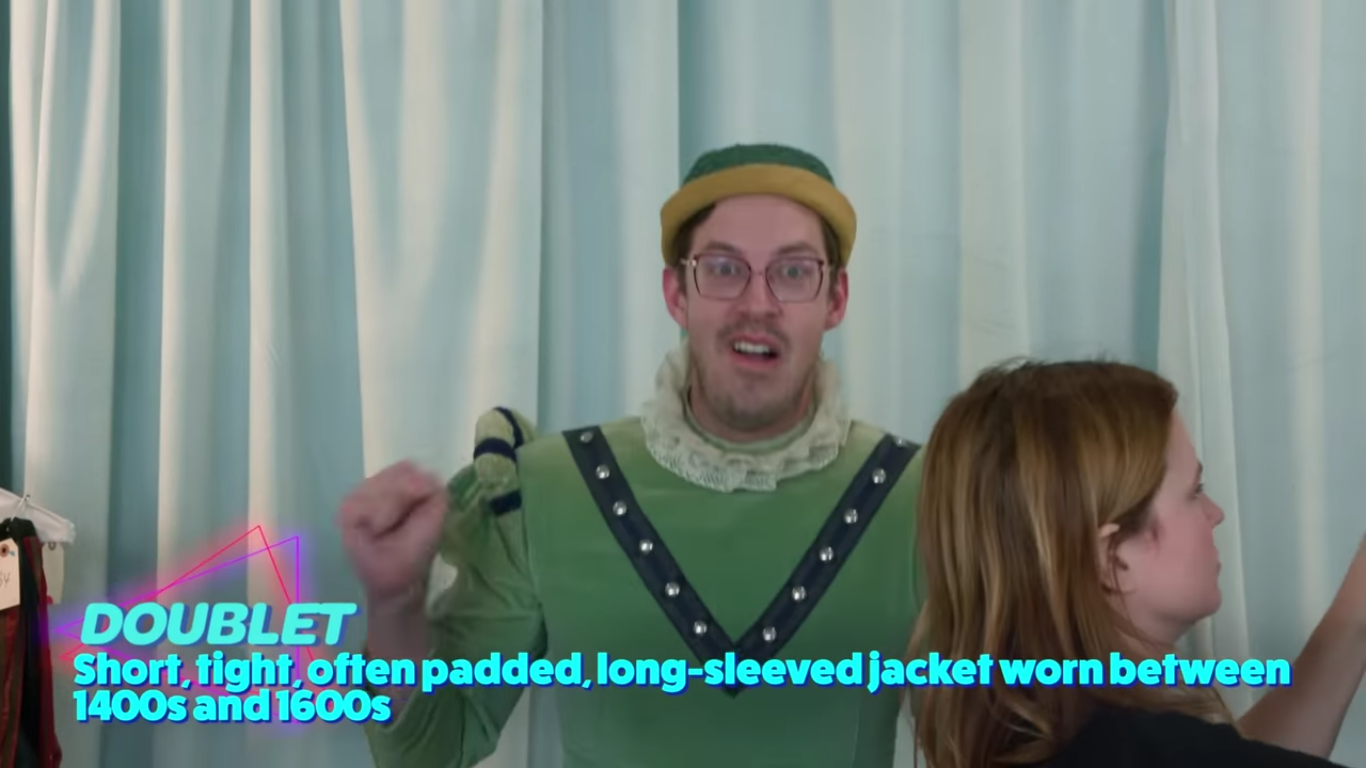
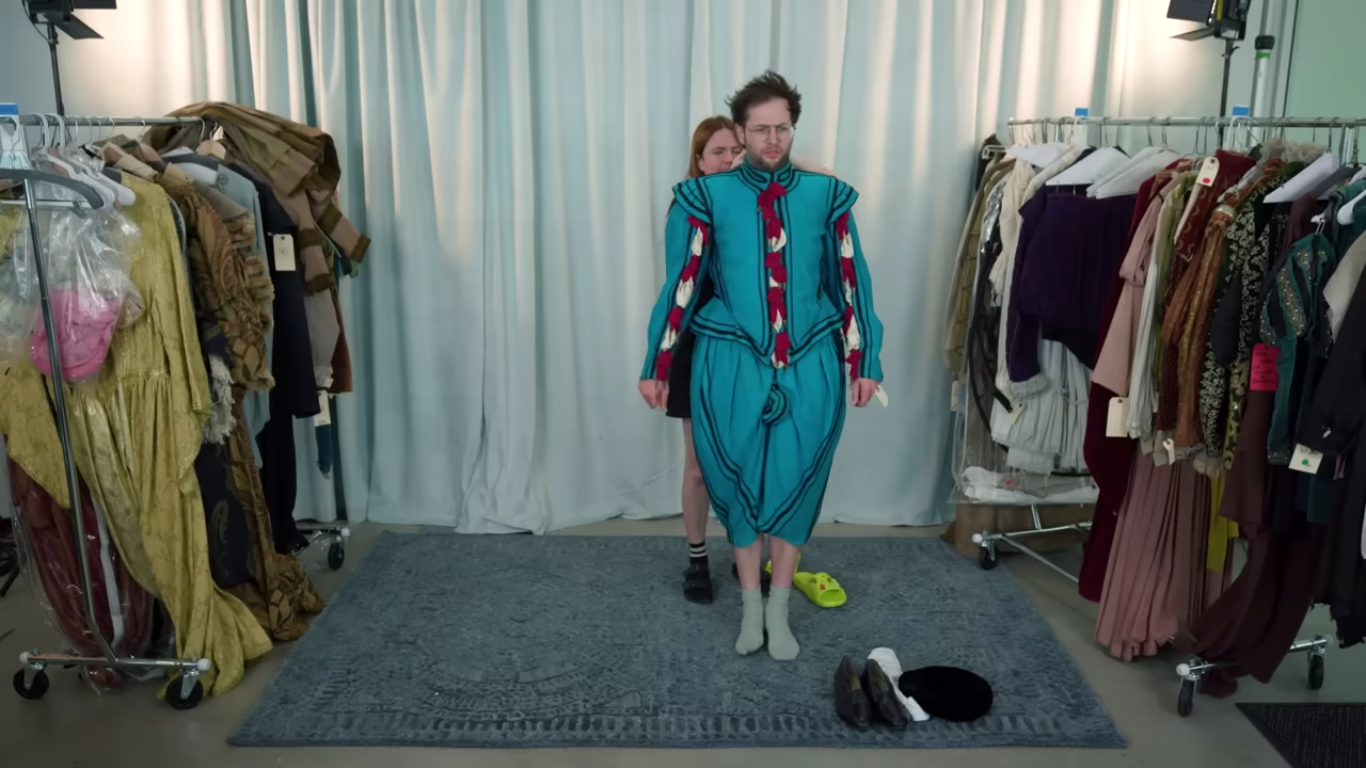
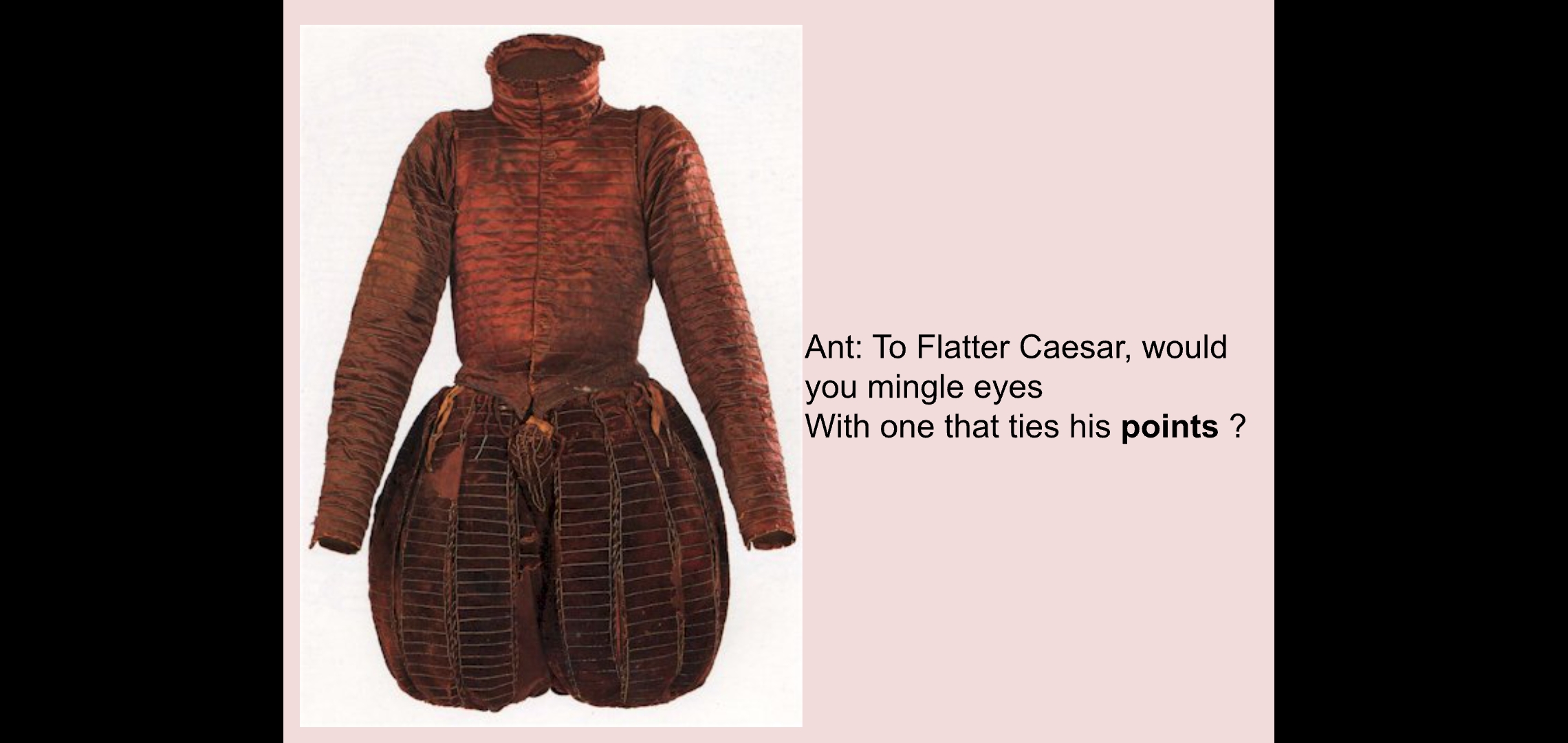
Men in this period also wore custom garments- the sleeves were added separately and the pants had to be attached at the points. Unlike women, young men didn’t cover their stockings (hose) and enjoyed showing off the shape of their legs. Stockings were often brightly colored and sometimes padded to make the man wearing it look more muscular.

 The Shakespearean Student
I enjoyed this post, Paul. It reminds me of a show I just watched
LikeLike