
Watch “The truth about Shakespeare’s “Julius Caesar”” on YouTube


Titus Andronicus is one of the most bloody, disgusting plays in Shakespeare. As this infographic from the Royal Shakespeare Company shows, there are tons of deaths and some of them are even the result of cannibalism!

One way to capture the macabre nature of this play in the classroom, (which some scholars see as a horror comedy), is to characterize it through cooking, after all, revenge is a dish best served cold.

Me in costume as Titus Androgynous, a crazy cooking show host who butchers two people in the same manner as Titus
So here are some ghoulish gourmet dishes and revolting recipes that you can share with your students to help them get into this tragic tale of violence, revenge, and cooking:
Idea 1: recipe cards

Idea 2: Create a menu that summarizes the play:
Act I:
Starter: Caesar Salad, toad in the hole

As the play begins, Caesar has died and Saturnine wants to devour his father’s empire. Enjoy this light salad in anticipation of far more bloody feasts to come.https://youtu.be/UxZ5NOkRwj0
Act II Scene 3: Breakfast:
Lamb Benedict

While on an early morning hunting trip, Bassianus is slaughtered like a lamb by his own nephews. Enjoy this sweet treachery with a golden egg in the hole.
Act II, Scene 4: Main course:
Roast venison with all the trimmings
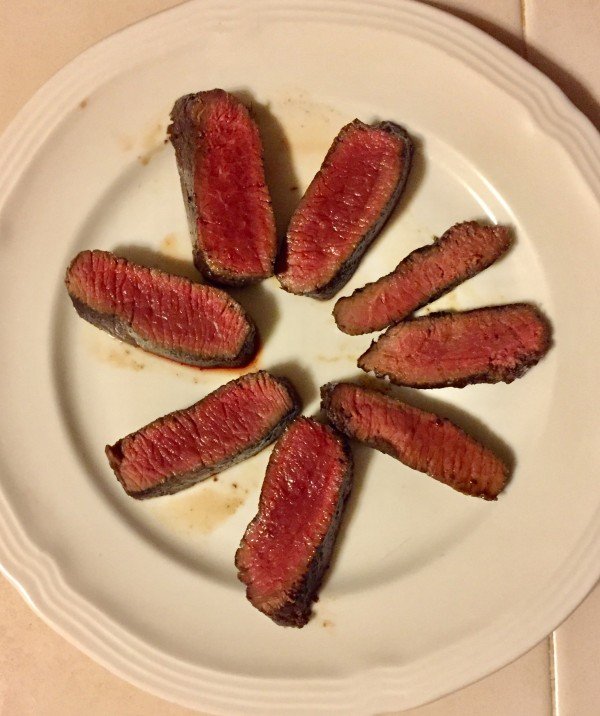
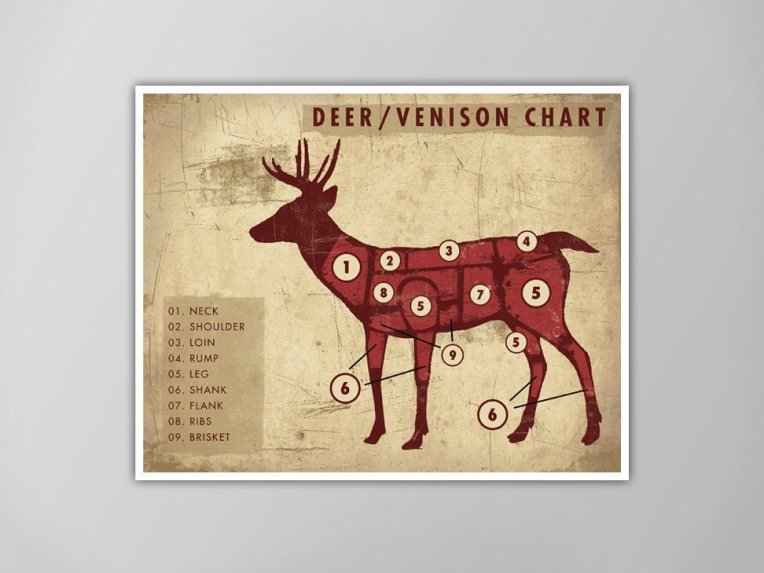
“As the deer that hath some unrecuring wound.”
“She was washed and cut and trimmed.”
Titus compares his daughter to a deer or welkin, and in the play’s most barbaric scene, the emperor’s sons ravish her and cut out her tongue. They enjoy the cruel rape and mutilation just like two starving lions enjoying their prey.
Act V:
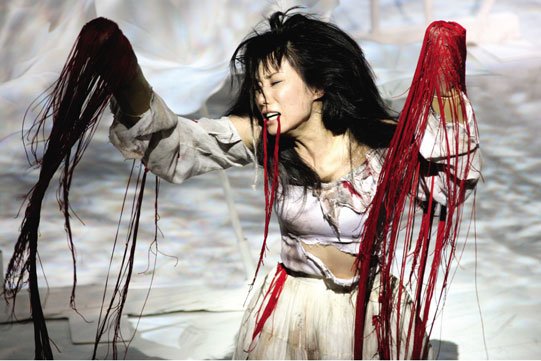
Just desserts: people pot pie.

“More stern and bloody than the centaur’s feast,” A truly unforgettable dessert for this feast of carnage. The cook, Titus, reinvents the term rich food by cooking two emperor’s sons into pies.
Served cold, like revenge!
“Set him breast deep in Earth and famish him.”
Idea 3: Real Titus foods inspired by my favorite Halloween diy recipes
1. Lavinia’s tongue and hands
• horrific Halloween punch with ice cold hand cubes: https://youtu.be/XLYwcX7Ud-E
• Bloody lady fingers https://pin.it/xbnfxcs4bxbhsq
2. Titus hand: Hot dog fingers for Titus’ hand.
Or this grisly appetizer: cheese hand in prosciutto
3.
People Pies:
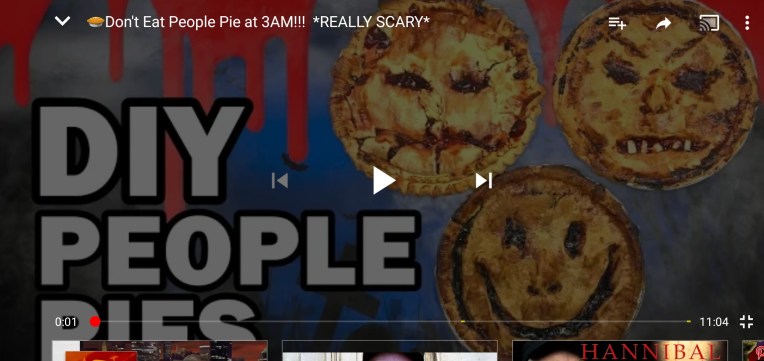
There are many horrific pie recipes on the internet, but for a busy teacher on a budget, I’m adapting this one from the YouTube channel Threadbanger: https://youtu.be/E6U6xUl3A5M. Don’t show this video to your students because there’s far too much cursing. That said this recipe is very cheap and it’s easy. He used only store bought items and no fancy cooking techniques, which means if you choose to bake it as a classroom activity, even your students can help make it. Here are some tips from the video to get the most horrible ppeople pie you can make:
• Use red filling like cherry or strawberry for filling.
• Use excess dough for a nose.
• Cut out little pieces of apple to make teeth
• Cut holes for the eyes and mouth
• The bloodier, the better!
Bone appetit!


Happy Halloween everybody!
Tonight I’d like to discuss some of the spookiest, most enigmatic, and above all WEIRDEST characters in Shakespeare: the Three Weird Sisters in Macbeth.
1. Who are they?
Every production has to answer who the witches are, and many have very different answers. Are they temptress? Are they evil agents controlling Macbeth?Furies trying to destroy Macbeth?
I would argue in their basic form the witches are harbingers of change. Their very name “Wyrd Sisters” refers to an old Anglo Saxon concept of fate or destiny. Whether or not they have any effect on Macbeth mind or soul, they point the finger at him and say “things are going to change for you.” Then, he either makes the choices that determine his fate, or they change his fate for him.
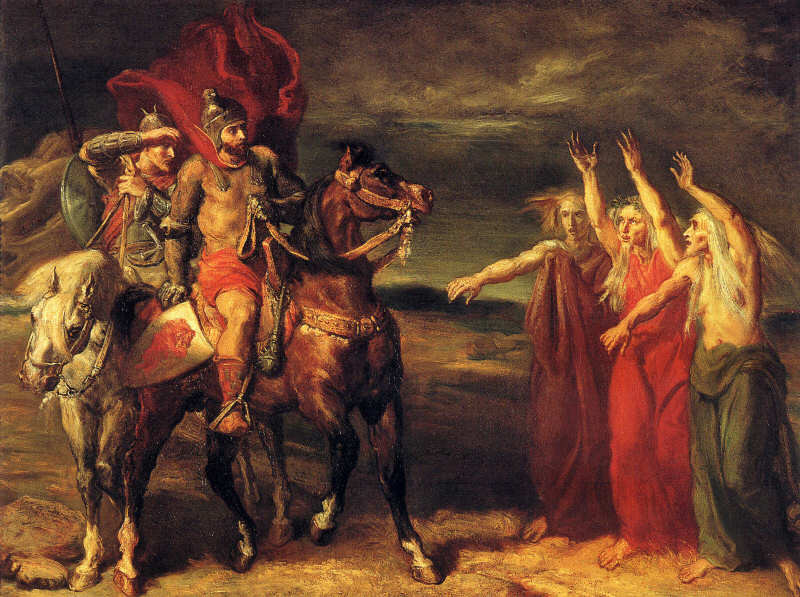
Macbeth meets the witches on a heath, which means land that is literally out of bounds– the wild, untamed wilderness, which the old Anglo Saxons believed was the lair of many cursed spirits and monsters. This could symbolize Macbeth’ sin or transgressions, slowly turning into a murderer, usurper, and a tyrant. It could also symbolize the chaos in Macbeth’s life.
What Do They Look Like?
Shakespeare’s descriptions of the witches are highly contradictory- they seem to be floating, yet on the ground, they seem to be women, but they have beards! They don’t look Earthly, but here they are on the Earth. This gives them an other worldly quality that keeps us guessing as to who they are, and helps them tempt Macbeth more easily.
BANQUO
What are these
So wither’d and so wild in their attire,
That look not like the inhabitants o’ the earth,
And yet are on’t? Live you? or are you aught
That man may question? You seem to understand me,
By each at once her chappy finger laying
Upon her skinny lips: you should be women,
And yet your beards forbid me to interpret
That you are so.
MACBETH
Speak, if you can: what are you? (Act I, Scene iii).
The Witches’ Language:
You know from my earlier posts that the norm for Shakespearean characters is to speak in iambic pentameter- 10 syllable lines of unrhymed poetry that sounds like a normal heartbeat. The witches break these norms- they generally speak in Trochaic Tetrameter- 8 syllable lines with the off beat emphasized. The witches are literally offbeat, and that’s why their speeches are unsettling. Look at the contrast between a normal iambic line like:
“In sooth I know not why I am so sad.” (Merchant Of Venice I,i).
and
“Dou-ble Dou-ble, Toil and Tro-ble.
Fire burn and Caul-dren Bu-ble. (Macbeth, Act IV, Scene i).
For more info on the verse forms of the Witches, click here:
The witches also speak their prophesies in a vague, ambiguous manner They like to play with obscuring their prophesies with lines that make Macbeth think one thing, but the opposite is true. The famous example here is when they claim Macbeth will never be vanquished “until Birnam Wood comes to Dunsinane Hill.” Macbeth assumes this means he’s invincible, but it actually means that the enemy carry wood from the forrest. This is called Equivocation.
Witches and mythology

1. During the reign of King James, the modern witch hunt began; the king was fascinated with witches and even wrote a book called Daemonology on how to identify and destroy them. This was the era where people believed that witchcraft, rather than a pagan religious practice, was a forbidden craft that could only come from a pact with the devil. However, Shakespeare borrows from both Satanic and early pagan ritual in the characters of his witches.
2. Shakespeare took a couple of details about witchcraft from ancient Celtic and Greek mythology. First of all, the use of a cauldron. In Celtic myth, a cauldron is a symbol of rebirth and was sometimes used to resurrect the dead, just as the witches do in IV i. Of course, the ideal time for raising the spirits was on the feast of the pagan god Samhain, at the point where the veil between the living and dead was the thinnest. The feast took place on October 31st, our modern day Halloween!

3. Familiar spirits In Act I, the witches speak to animal spirits called familiar spirits, which call to them and tell them where to go. King James himself wrote about how the witches found and communicated with these spirits.
Hecate.
In Act IV, Hecate, Ancient Greek goddess of magic appears. She is clearly the lord of all the witches, and is very displeased that they are riddling with Macbeth. Maybe not all witches believe in giving out prophesies that can destroy the Scottish monarchy. Hecate was always enigmatic in myths- she was born one of the Titans who opposed the gods, but frequently changed sides. More then being two faced, she was often portrayed as having three faces! Shakespeare refers to her frequently as “Triple Hecate.”

For more information on this mysterious goddess, consult the video below, (WARNING, ADULT-ONLY CONTENT).
In conclusion, the witches are meant to be ambiguous because the play examines the source of evil- whether it is inspired by other people, or if it comes from one’s own heart. The witches can be either or both, depending on how you want to tell the story, which is why they act and speak in contradictory ways.
Thanks for reading! If you enjoyed this posting, please consider signing up for my online class, “Macbeth: An Immersive Horror Experience.” I tell you the story of Macbeth and you get to play through an escape room, where you must solve the witches’ puzzles or be added to their Cauldron!

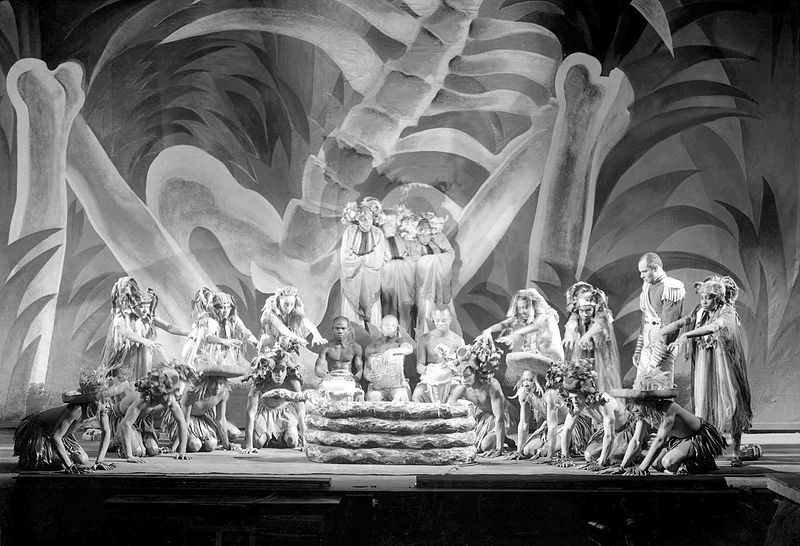
In 1936, famed director Orson Welles, (known for his iconic film Citizen Kane), produced an equally memorable production of Macbeth. At the time, Welles was a theater director, working with a government-funded theater group called The Federal Theater Project. The goal of the FTP was to help support the theater during the Great Depression. Welles also found a way to have his production help black actors by, and casting exclusively African Americans.

Although Welles kept Shakespeare’s text, he changed the setting to a tribe in Haiti instead of medieval Scotland, and changed the witches into Voodoo priestesses. Below is the only surviving footage of the production, the final scene in which (spoiler alert), Macduff carries Macbeth’s head and sets it on a pole, proclaiming Malcolm the new king. You can see the witches taking a wicked joy when Macbeth’s cursed head is impaled, implying that Welle’s witches had vengeance on their mind when they drove him to kill Duncan.
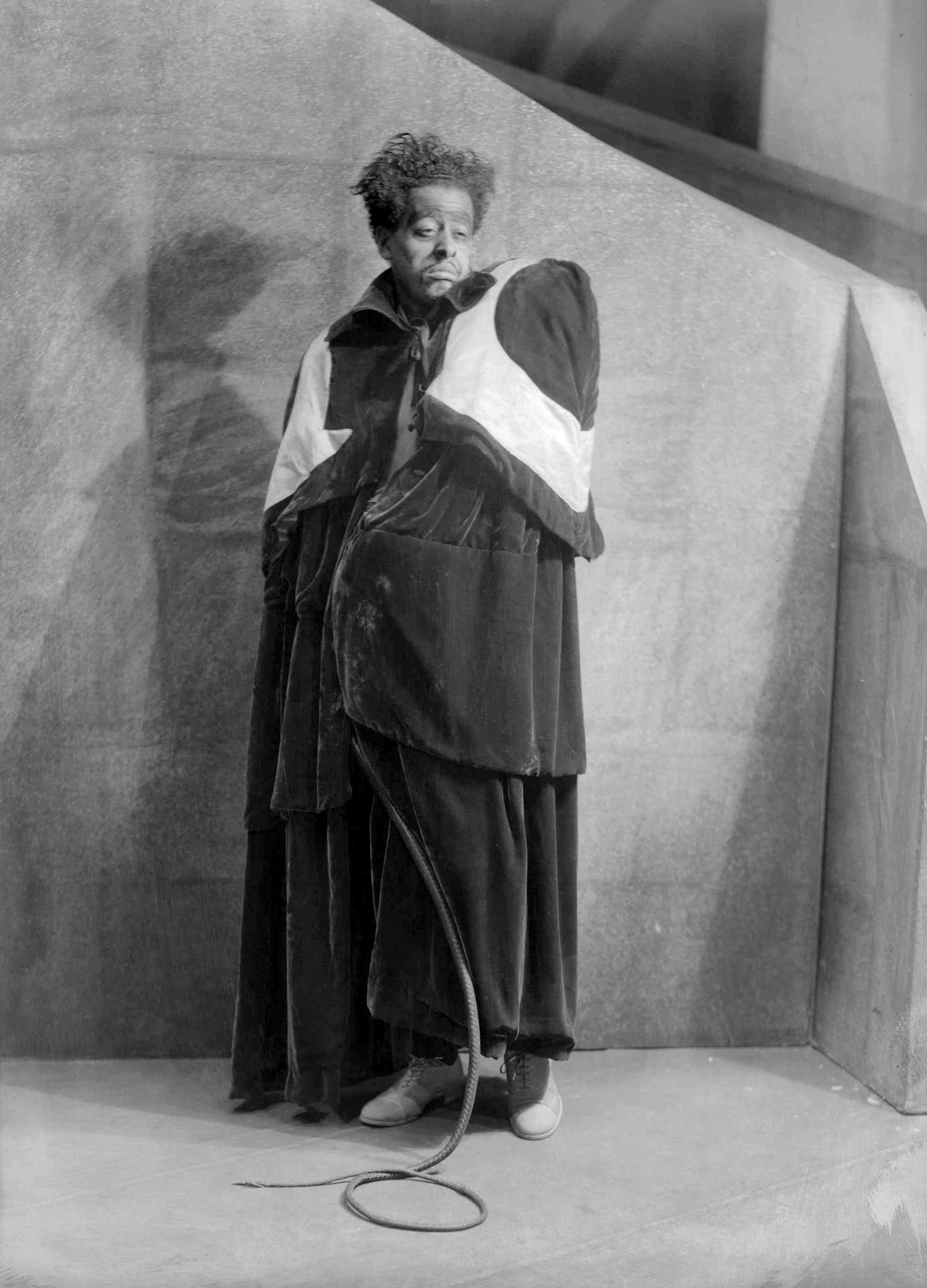
Notice also the actor who screams “Peace, the charm’s wound up,” at the end of the play. He is playing the part of Hecate, the goddess of magic who appears before Macbeth in Act IV. According to legend, Actor Eric Burroughs was a real Voodoo priest, as were the drummers Welles used to spectacular effect during the show. Many critics called the frenetic drumming that occurred during the show and in scene changes an experience that they’d never forget.
Welles’ innovations helped black actors and theater in general survive during the Depression, but not everyone praised his efforts. Journalist Percy Hammond criticized the merits of the performance, arguing that the government shouldn’t pay for artistic projects. The next day when he returned to the theater, he was greeted by a rhythmic thumping underneath the stage that intensified until the critic abandoned his seat and left the theater. The next day, he fell suddenly ill and died! Was his illness a voodoo curse? We may never know, but this story clearly illustrates the effectiveness of Welles’ staging, and the dark occult appeal that lurks beneath the text in any production of Macbeth.
Works Cited:
 The Shakespearean Student