New Course: Shakespeare’s Histories

Shakespeare’s History Class

Course trailer

Parent Description- A fully online, fully interactive course into Shakespeare’s histories taught by a professional text coach and actor. 

Students- Uncover the scandalous and gory history behind Shakespeare’s most action-packed plays! Shakespeare’s histories have inspired such works as “Empire,” “Game of Thrones,” “Hamilton” and even the “Star Wars” trilogy. This class will unlock for you why these stories of power and betrayal have been so popular for 400 years.

Format:

0. The class will have a Nearpod with slides, activities, and links to my other resources.  The class will be a combination of slides, activities, and videos. Each class will have 

  1. Weekly Discussion questions via Google Forms such as: “What do you know about Shakespeare the man?” or, “Are Shakespeare plays still relevant today?”
  2. Video Analysis- Every week I’ll discuss a different play with a short video.
    1. I’ll provide some context, explaining what is happening in the play durin the speech, and any relevant historical context.
    2. We’ll watch a recording and the students can write their impressions on what they like and don’t like.
  3. Immersive activities such as:
    1. – Shakespeare arts and crafts and recipes such as making costumes and props.
    2. – My online Shakespeare board game.
    3. Virtual tours of the Tower Of London,
  4. Weekly Web Quests like “find a Shakespeare quote that you use in normal speech,” “find a movie or character that’s based on Shakespeare,” or “Draw a picture of a Shakespearean character (stick figures are acceptable).

6 Week Course
Week 1 – Why Hamilton is Like A Shakespeare History Play Hamilton and Shakespearean History We’ll discuss what makes a history play a history play, why they were so popular in Shakespeare’s day, and draw parallels between Shakespeare and the Broadway Musical “Hamilton.”

  1. What is a history play?
  2. Song quest: Watch the Horrible histories king song
  3. Worksheet- which Shakespearean character reminds you most of Hamilton?
  4. Video- the 10 Duel commandments of Shakespeare

Week 2- Richard II

  1. The history of Richard Shakespeare’s Richard II | Animated short
  2. Watch the presentation and fill in the blanks of the story: Richard the Second Intro Presentation
  3. Web quest- go online and write down three things about the Wilton Diptych
    1. Wilton Diptych https://www.nationalgallery.org.uk/paintings/english-or-french-the-wilton-diptych
      1. Open ended question- if you were Richard, how would you feel about your role as king?
  4. John of Gaunt’s speech
    1. Watch Patrick Stewart reading this: Shakespeare: “This scepter’d isle”
    2. Now see John McInerny performing it in context
      1. What images were the most striking?
      2. Did you feel more sorry for Gaunt, or England?
      3. What would you call the tone of this speech? Patriotic? Mournful? Excited? Bitter? 
  5. The deposition Scene (video- 3 minutes)
    1. The danger of this scene:
      1. Though Queen Elizabeth I is now almost universally beloved, she wasn’t always in Shakespeare’s time. By 1601, she was 68 years old and had no male heir. Her government had also failed to put down a rebellion in Ireland. Some people in her government were getting restless.
      2. Robert Devereaux, Earl of Essex was one of those restless nobles. He’d been one of the Queen’s favorites, but after failing to crush the rebellion in Ireland, his relationship with her sourered. He then plotted to rebel against the Queen, and take the throne for himself.
      3. To do that though, Essex would need to get people on his side, so he recruited Shakespeare! One of Essex’s servants paid Shakespeare’s companies to perform a scene from Shakespeare’s Richard II; the scene where a handsome and charismatic nobleman convinces the king to willingly give up his power. 
      4. This scene was so dangerous that when the play was published, it was taken out by Elizabeth’s censors.
      5. Quotes from Richard II
        1. https://shakespearedocumented.folger.edu/resource/document/examination-augustine-phillips#:~:text=In%20his%20examination%20on%20February,fellows%20proposed%20an%20alternative%20play%2C  
        2. https://www.historic-uk.com/HistoryUK/HistoryofEngland/Shakespeare-Richard-II-Rebellion/ 
        3. https://www.elizabethi.org/contents/rebellions/essex/ 
  6. Playing Richard video: Fiona Shaw
    Questions
    What does making Richard female emphasize for an audience? What point does Shaw’s performance say about women in power?

Week 3 Henry V week

  1. Basic plot- Young king fights a war and conquers France proving himself to the world.
  2. Olivier vs. Branaugh

-Concept- what if the play was a Hockey movie?

  1. Henry is like the coach or team captain who gives inspirational speeches
  2. The underdogs win
  3. The snooty bad guys lose
  • How this translates to staging fights/ directing the characters (website/ youtube interviews)
  1. Activity= write a trailer or design a poster for Henry with a cool tag line.

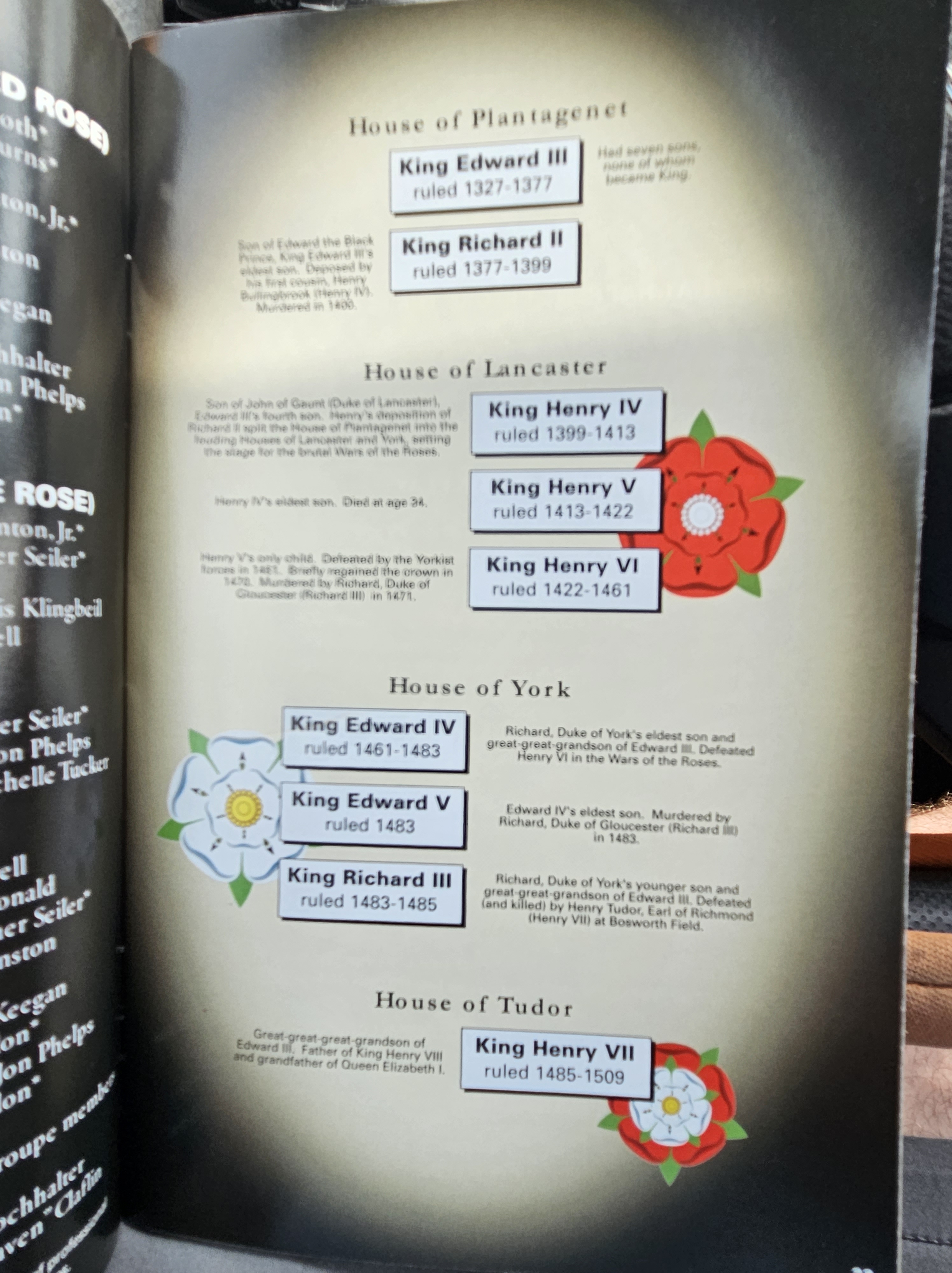
Week 4- The Wars of the Roses-

  1. Summary of the three Henry VI plays
    1. Wars of the Roses Horrible Histories
    2. Web quest- research one major character from the 3H6 ASC website:
      1. Richard of Gloucester
      2. Henry VI
      3. Margaret of Anjou
      4. Richard of York
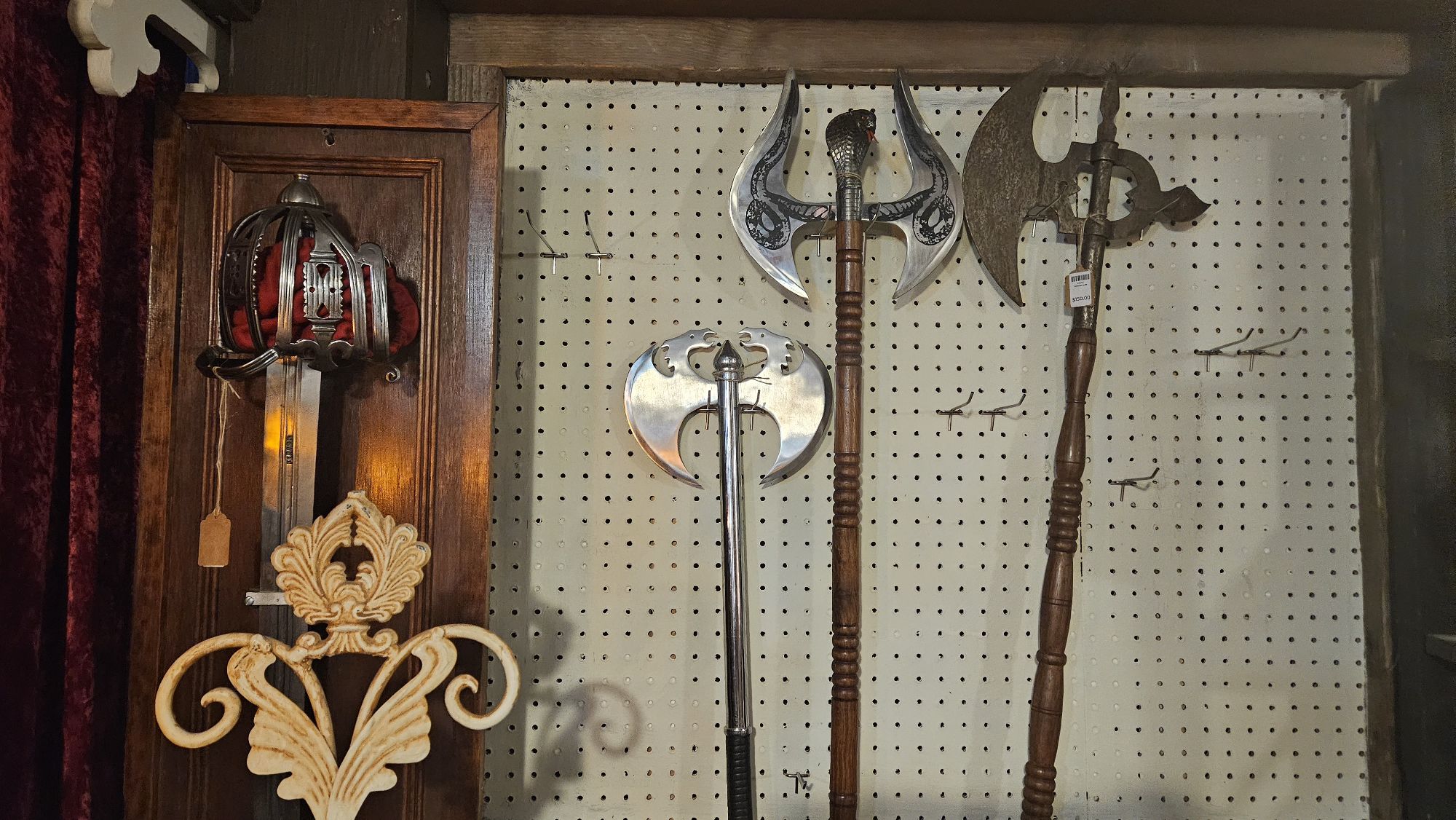
  2. Medieval warfare
    1. Watch one of the Weapons that Made Brittain videos and answer 5 questions.
    2. The battles of the Wars of the roses
  3. Costumes

Week 5- Richard III- The rise of the corrupt king

  1. Close reading- “Now Is the Winter of Our Discontent”
  2. Slides on Richard’s plot.
  3. Richard and Machiavelli
  4. Richard and Emperor Palpatine
  5. Richard and Modern Leaders
  6. Richard vs. the Amir of Gloucester
  7. Propaganda activity- make a campaign slogan/ poster for Richard.

Week 6 History Board Game/ Final Project

Richard the Second: “Non Sans Droit?”

Richard the Second: “Non sans Droit?” by Paul Rycik
The motto which I titled this post means “Not Without Right.” I chose it because it’s Shakespeare’s family motto, but also because in my view, Richard the Second is a play about the Divine right of kings; it asks whether kings are appointed by God, and if so, does that mean that they are free to do what they want, and whether or not they can be deposed. Today I want to examine how these questions are addressed in the play. I’ll do this by showing you passages from the text on video with a few notes by me. These recordings are by the Royal Shakespeare Company, England’s premiere acting troupe.

Picture #1- The Wilton Diptych
http://www.nationalgallery.org.uk/cgi-bin/WebObjects.dll/CollectionPublisher.woa/wa/work?workNumber=NG4451
 
This picture from the National Gallery in London illustrates admirably how Richard, who was the son of the Black Prince, the greatest warrior in English history, truly believed he was appointed by God. It depicts the 10 year-old king in full golden robes, being blessed by the Baby Jesus, the Virgin Mary, John the Baptist, Edward the Confessor, and St. Edmund. As I said before, Richard was only 10 when he was crowned; he believed he was God’s representative his whole life.


Video #1– Act IV, Scene I David Tennent playing Richard the Second

This is a recording of the famous Deposition Scene in which Richard must give his crown up to Henry Bolingbroke. It is clear from the text that Richard considers this not only treason but a form of blasphemy. This is evidenced in such passages where Richard compares himself to Jesus, another king betrayed by his followers.

 “So Judas did to Christ, but he in 12 found truth in all but one, I in 12,00 none,” 

Richard is in no doubt that he is appointed by God, and anyone who tries to question or depose him is damned. 

Other characters take differing views on the divine right- the gardeners don’t believe in divine right- to them, a kingdom is ruled by men, not divine incarnations. They are pragmatic and think Richard’s claims foolish

Video #2 Act II, scene I- Patrick Stewart speaking as John of Gaunt

John of Gaunt believed in divine right, that’s why he killed Woodstock. In this famous speech, Gaunt reveals his passion for England, how he believes it has a special place among nations, and that a king’s duty is to protect it. But, when Richard sells land, Gaunt is forced to question how can a king be divine if his actions are wrong. He even suggests that Richard is no longer worthy of his royal blood: “O, spare me not, my brother Edward’s son; that blood already, like the pelican, hast thou tapped out and drunkenly caroused.”
 
Picture #2 Henry Bolingbroke from the 1975 production of Richard II

Bolingbroke’s motives are secret throughout the play. We don’t know if he always intended to seize the crown, whether he was forced to by his followers, or if he was forced to because Richard put him in an impossible position- his father’s lands seized by the crown and himself an exile. Equally enigmatic is if Bolingbroke believes in divine right. If he does, Bolingbroke must feel unimaginable guilt, especially in the scene when Richard is deposed. (Act IV, i) In the scene, Richard warns Bolingbroke that God will damn him for betraying his king, “The deposing of a king and cracking the strong warrant of an oath, marked with a blot, damned in the book of heaven.”

 
 Once Richard is dead, Bolingbroke is forever shaken, paranoid, and fearful of assassination. My thinking is that Bolingbroke did believe that what he did was truly terrible and he spends the rest of his life mourning over it. This is why in the next play, Henry IV, Bolingbroke, now the king, says one of the most famous lines Shakespeare ever wrote: “Uneasy is the head that wears the crown.”
 
As you can see- there are several differing viewpoints on the issue of divine right- some people believe in it, some don’t. Thus the issue is never resolved because no one is proven right. I’ve written before that on controversial issues, Shakespeare never presents one view stronger than the other; he gives voice to every side of an issue and merely shows the conflict that happens when these characters fight with each other. It is up to the audience to choose sides.

Interesting Side note: The Deposition Scene I referred to earlier has a very disreputable history- it was considered anti-government because the censors claimed it favored the deposing of kings. One of the Queen’s favorite lords, the Earl of Essex ordered the scene played on February 7th, 1601 for that purpose. He planned to use it to rally the people and start an armed rebellion against the queen. Shakespeare’s entire company was arrested and interrogated as co-conspirators. Fortunately, they got away with it, as this document shows:

Document: Examination of Augustine Phillips, February 17, 1601

Examination of Augustine Phillips, February 17th, 1601

Shakespeare’s company claimed that the only reason they put on the play was that the lords offered more cash than the usual fee for performing at court. They got the government to buy their story, but, (as scholar Michael Wood claims), maybe the Queen wasn’t fooled- she asked them to perform the same play, right before Essex’s execution. When he died, she was reported as saying: “I am Richard the Second, know ye not that.” 

Outschool.com William Shakespeare’s Histories Poster

If you liked this post, you might enjoy signing up for my course on Shakespeare’s History Plays on Outschool.com. Click the link below to sign up:

https://outschool.com/teachers/The-Shakespearean-Student