
8 lessons from ‘King Lear’ as we head back to work or nights out after COVID-19


This book Demonology influenced Shakespeare’s Macbeth and Hamlet in ways I’ll get into later. It was written by King James himself, and it takes the form of a dialogue, that is, an intellectual conversation where the concept of witchcraft, sorcery, necromancy, etc is explained, debated, and questioned between two imaginary people.
In the video, Youtuber Andrew Rakich, known for his history series, Checkmate Linconites, (where he plays two characters who argue about the Civil War from a Union and Confederate perspective) has done a dramatic reading of the whole book in the accent of 1600s England. It’s part audio book, part history lesson, part linguistics lesson, and all great!
Here are some of my favorite quotes from the book:

Just like in Dr. Faustus, James theorizes that the Devil lets all so-called sorcerers and necromancers believe they have power over him, to deceive them later.
For as the humor of Melancholie in the selfe is blacke, heauie and terrene, so are the symptomes thereof, in any persones that are subject therevnto, leannes, palenes, desire of solitude: and if they come to the highest degree therof, mere folie and Manie:
Demonology, Chapter 1, p. 30,. Reprinted from Project Gutenberg
This passage echoes Hamlet’s description of his own meloncholy, and his fear that The Devil might be trying to use his melocholy to conjure up his father in order to damn him:
The spirit that I have seen
600May be the devil, and the devil hath power601To assume a pleasing shape; yea, and perhaps602Out of my weakness and my melancholy,603As he is very potent with such spirits,603. As . . . spirits: i.e., because he has great influence on those who have a temperament such as mine.
604Abuses me to damn me. I’ll have grounds604. Abuses: deludes. If the Ghost is deceiving Hamlet about King Claudius’ guilt, and Hamlet kills him, Hamlet would be a murderer, and therefore damned.
Hamlet, Act II, Scene ii, reprinted from Shakespeare Navigators.com.605More relative than this: the play’s the thing606Wherein I’ll catch the conscience of the king.
For that is the difference betuixt Gods myracles and the Deuils, God is a creator, what he makes appeare in miracle, it is so in effect. As Moyses rod being casten downe, was no doubt turned in a natural Serpent: [pg 023]where as the Deuill (as Gods Ape) counterfetting that by his Magicians, maid their wandes to appeare so, onelie to mennes outward senses: as kythed in effect by their being deuoured by the other. For it is no wonder, that the Deuill may delude our senses, since we see by common proofe, that simple juglars will make an hundreth thinges seeme both to our eies and eares otherwaies then they are. Now as to the Magicians parte of the contract, it is in a word that thing, which I said before, the Deuill hunts for in all men.
Demonology, Chapter 6, p. 23
It’s very useful to conceptualize what the early Jacobeans thought the difference was between God and the Devil, and thus the difference between divine miracles and hellish charms. In James’ eyes, all magic and demonic arts were mere illusions, designed to play upon men’s senses and draw the intended victim into the Devil’s power. Obviously, since all of theater rests upon such illusion, it’s no wonder Shakespeare portrays magic onstage in his most popular works. In particular, this passage calls to mind the magic of Prospero, who is able to conjure spirits fo a while, but they all eventually dissolve:
PROSPERO
146You do look, my son, in a mov’d sort,146. mov’d sort: troubled state.
147As if you were dismay’d: be cheerful, sir.148Our revels now are ended. These our actors,148. revels: festivity, entertainment.
149As I foretold you, were all spirits and150Are melted into air, into thin air:151And, like the baseless fabric of this vision,151. baseless fabric: structure without a physical foundation.
152The cloud-capp’d towers, the gorgeous palaces,153The solemn temples, the great globe itself,153. the great globe itself: all the world, [and the theater] >>>
154Yea, all which it inherit, shall dissolve154. all which it inherit: all who live on it.
155And, like this insubstantial pageant faded,155. insubstantial: without material substance.
156Leave not a rack behind. We are such stuff156. rack: wisp of cloud driven before the wind.
The Tempest, Act IV, Scene i.157As dreams are made on, and our little life158Is rounded with a sleep.

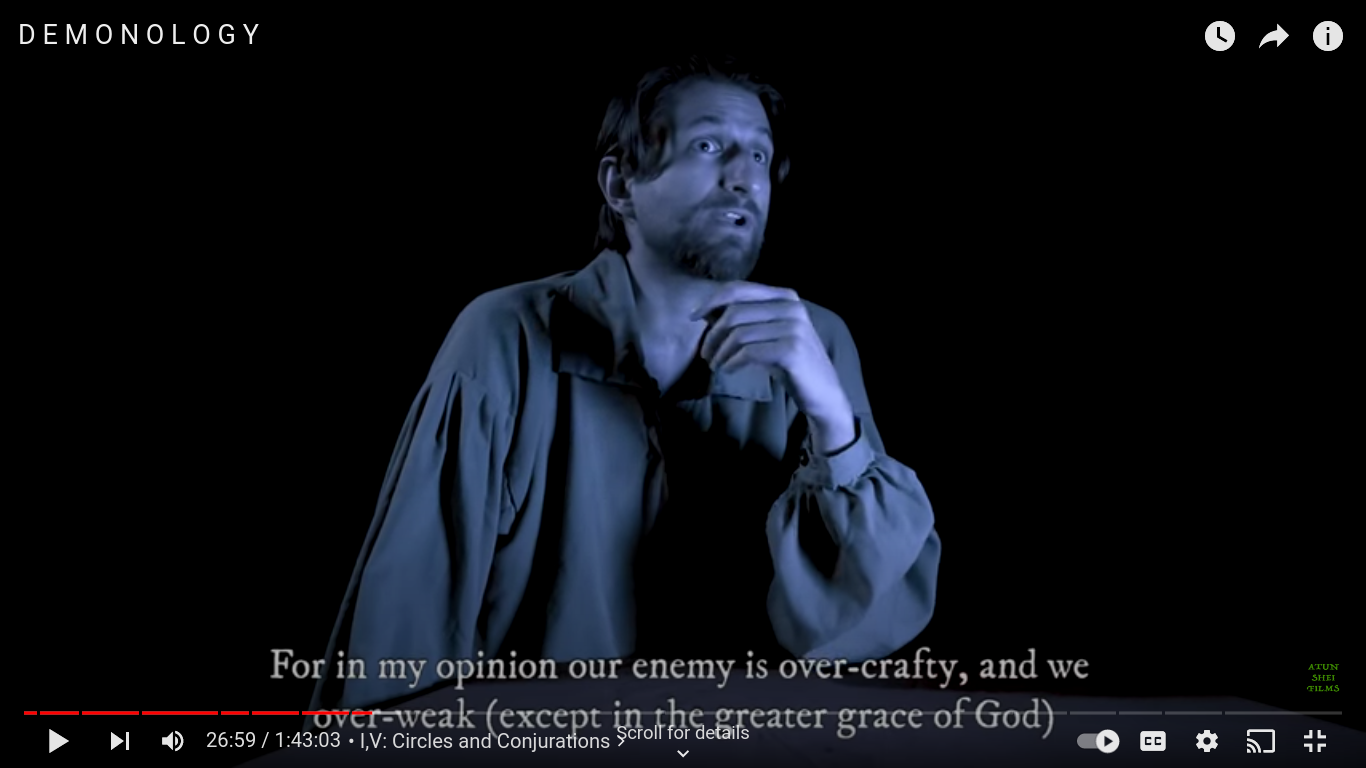
For although, as none can be schollers in a schole, & not be subject to the master thereof: so none can studie and put in practize (for studie the alone, and knowledge, is more perilous nor offensiue; and it is the practise only that makes the greatnes of the offence.) the cirkles and art of Magie, without committing an horrible defection from God: And yet as they that reades and learnes their rudiments, are not the more subject to anie schoole-master, if it please not their parentes to put them to the schoole thereafter; So they who ignorantly proues these practicques, which I cal the deuilles rudiments, vnknowing them to be baites, casten out by him, for trapping such as God will permit to fall in his hands: This kinde of folkes I saie, no doubt, ar to be judged the best of, in respect they vse no invocation nor help of him (by their knowledge at least) in these turnes, and so haue neuer entred themselues in Sathans seruice; Yet to speake truely for my owne part (I speake but for my selfe) I desire not to make so neere riding: For in my opinion our enemie is ouer craftie, and we ouer weake (except the greater grace of God) to assay such hazards, wherein he preases to trap vs.
Demonology Chapter 5, page 15.
It almost seems in this passage that James is covering his tracks against any detractors who might be wondering if he himself might be damned for knowing so much about witchcraft. Accordingly, he asserts that the knowledge of witchcraft is perfectly lawful, it’s the practice that damns the scholar.
If you’re like me, you are probably saddened by the loss of the great American actor, Sidney Poitier. He was part of the original cast of the great American play A Raisin In the Sun, and earned countless accolades for his roles on stage and screen like In the Heat Of the Night, Porgey and Bess, Guess Who’s Coming To Dinner? and The Greatest Story Ever Told.
In this interview, Poitier’s friend Denzel Washington talks about how Poitier was a beacon, not just for black actors but a gold standard for all actors.
Washington also discusses his role in the film Macbeth, in which he plays the title role. As I mentioned in my Much Ado About Nothing review, Denzel is a consummate performer of Shakespeare and I for one can’t wait to see him as Macbeth. This is nor just because he was an absolute joy in Much Ado, but because Denzel is famous for playing characters that start out as good men become violent and evil in films like Training Day, American Gangster, and Flight. I have high hopes that Denzel’s Macbeth will rank among his greatest performances.
Macbeth is now playing at selected theaters and streaming online on Apple+. I plan to see it and hope that you will too.
I know Halloween is over, but since I am doing a research project on the Salem Witch Trials, I thought I would trace the history of Witch Hunts from Shakespeare’s day to Salem:


For THIS WEEK ONLY, I’m offering a $5 discount for my “Macbeth” course: Get $5 off my class “Macbeth: An Immersive Learning Experience” with coupon code HTHESUEQUG5 until Nov 5, 2021. Get started at https://outschool.com/classes/macbeth-an-immersive-learning-experience-xGKHeHgH and enter the coupon code at checkout.
Just in time for October, I’m offering an online class for kids ages 13-18 about Shakespeare’s most spooky and cursed play:
If you follow this blog you know I’ve written a lot about this play before. Though this class will be more like a game where I teach the class using multimedia, games, and a digital escape room!
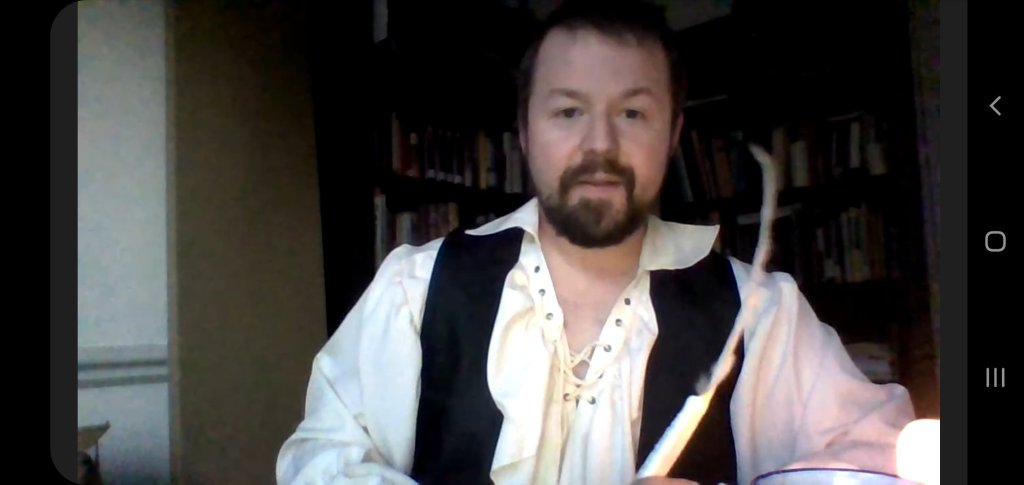
I’ll start by speaking to the students in character as Shakespeare, and tell them the story of Macbeth using a multimedia presentation.
I will then test the students’ knowledge with a fun quiz that was inspired by the popular mobile game Among Us. As you know, the game is similar to a scene from the play, so I thought it would be an appropriate way to test the kids’ knowledge.
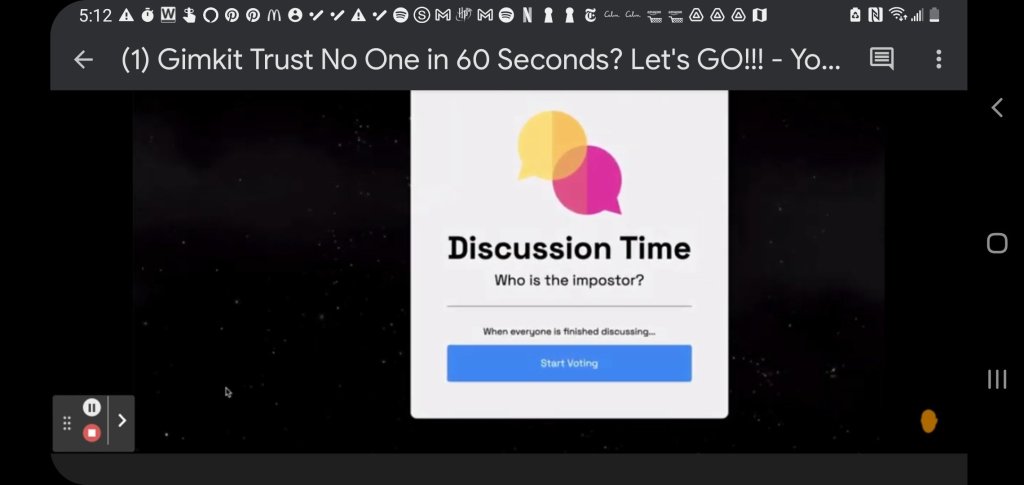
The final part of the class is a digital escape room I’ve created. I don’t want to give too much away, and you can’t play it unless you sign up for the class, but let’s just say it’s fun, spooky, educational, and challenging!
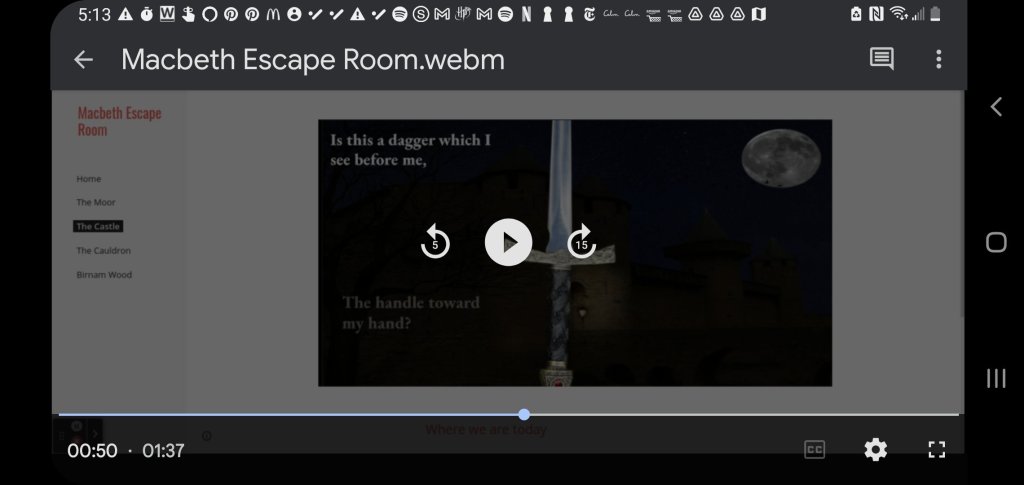
If you want to sign up now, the course is available every weekend in October, and then by request after that. Register now at Outschool.com. if you take the course, please leave me a good review.
Hope to see you soon!

Titus Andronicus is one of the most bloody, disgusting plays in Shakespeare. As this infographic from the Royal Shakespeare Company shows, there are tons of deaths and some of them are even the result of cannibalism!

One way to capture the macabre nature of this play in the classroom, (which some scholars see as a horror comedy), is to characterize it through cooking, after all, revenge is a dish best served cold.
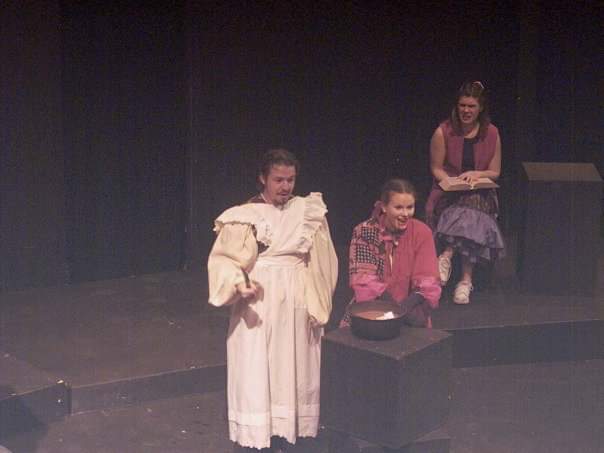
Me in costume as Titus Androgynous, a crazy cooking show host who butchers two people in the same manner as Titus
So here are some ghoulish gourmet dishes and revolting recipes that you can share with your students to help them get into this tragic tale of violence, revenge, and cooking:
Idea 1: recipe cards

Idea 2: Create a menu that summarizes the play:
Act I:
Starter: Caesar Salad, toad in the hole

As the play begins, Caesar has died and Saturnine wants to devour his father’s empire. Enjoy this light salad in anticipation of far more bloody feasts to come.https://youtu.be/UxZ5NOkRwj0
Act II Scene 3: Breakfast:
Lamb Benedict

While on an early morning hunting trip, Bassianus is slaughtered like a lamb by his own nephews. Enjoy this sweet treachery with a golden egg in the hole.
Act II, Scene 4: Main course:
Roast venison with all the trimmings


“As the deer that hath some unrecuring wound.”
“She was washed and cut and trimmed.”
Titus compares his daughter to a deer or welkin, and in the play’s most barbaric scene, the emperor’s sons ravish her and cut out her tongue. They enjoy the cruel rape and mutilation just like two starving lions enjoying their prey.

Act V:
Just desserts: people pot pie.

“More stern and bloody than the centaur’s feast,” A truly unforgettable dessert for this feast of carnage. The cook, Titus, reinvents the term rich food by cooking two emperor’s sons into pies.
Served cold, like revenge!
“Set him breast deep in Earth and famish him.”
Idea 3: Real Titus foods inspired by my favorite Halloween diy recipes
1. Lavinia’s tongue and hands
• horrific Halloween punch with ice cold hand cubes: https://youtu.be/XLYwcX7Ud-E
• Bloody lady fingers https://pin.it/xbnfxcs4bxbhsq
2. Titus hand: Hot dog fingers for Titus’ hand.
Or this grisly appetizer: cheese hand in prosciutto
3.
People Pies:
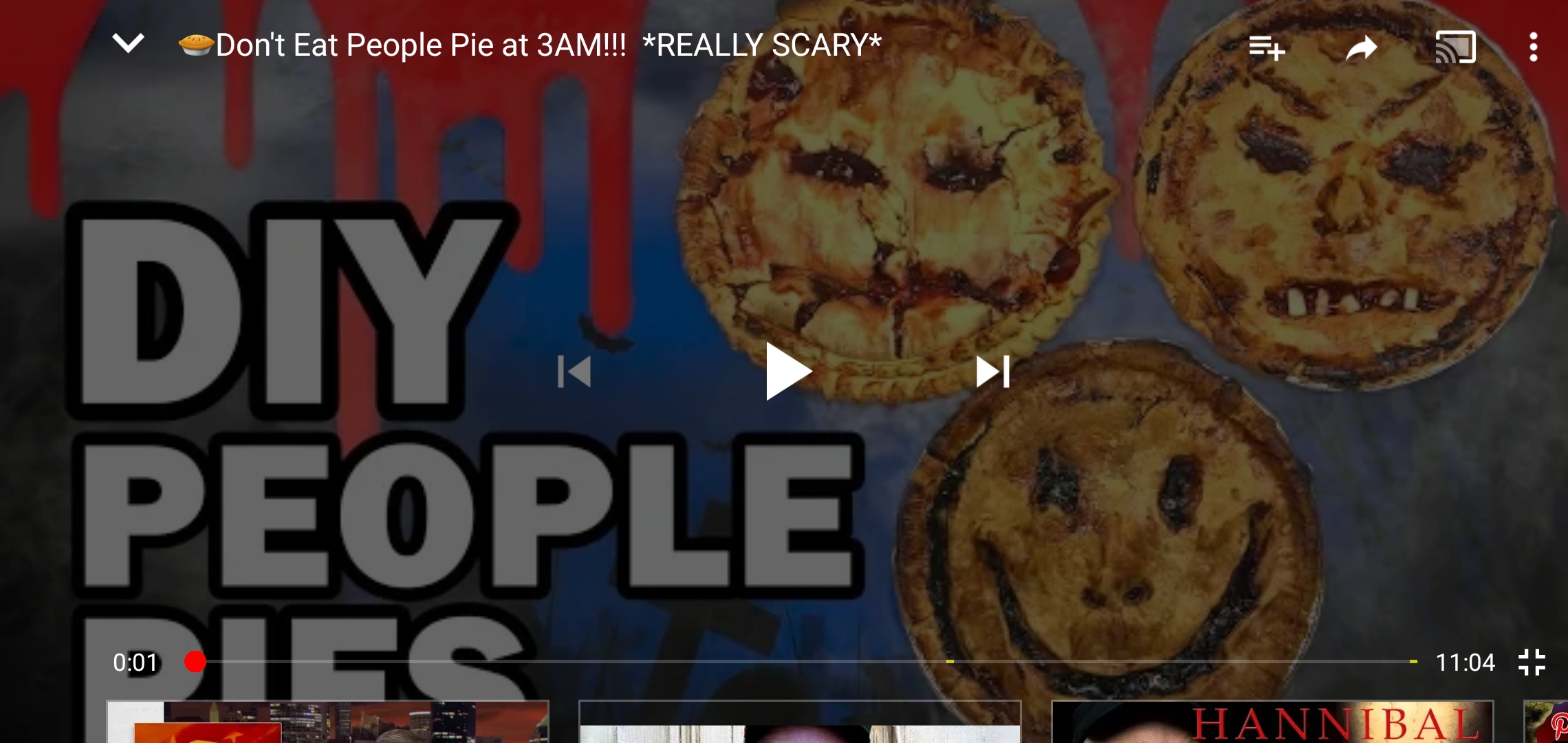
There are many horrific pie recipes on the internet, but for a busy teacher on a budget, I’m adapting this one from the YouTube channel Threadbanger: https://youtu.be/E6U6xUl3A5M. Don’t show this video to your students because there’s far too much cursing. That said this recipe is very cheap and it’s easy. He used only store bought items and no fancy cooking techniques, which means if you choose to bake it as a classroom activity, even your students can help make it. Here are some tips from the video to get the most horrible ppeople pie you can make:
• Use red filling like cherry or strawberry for filling.
• Use excess dough for a nose.
• Cut out little pieces of apple to make teeth
• Cut holes for the eyes and mouth
• The bloodier, the better!
Bone appetit!
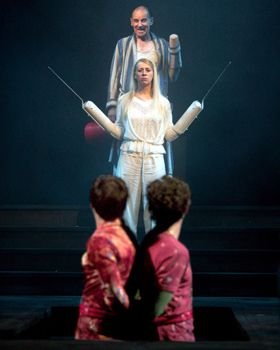

Happy Halloween everybody!
Tonight I’d like to discuss some of the spookiest, most enigmatic, and above all WEIRDEST characters in Shakespeare: the Three Weird Sisters in Macbeth.
1. Who are they?
Every production has to answer who the witches are, and many have very different answers. Are they temptress? Are they evil agents controlling Macbeth?Furies trying to destroy Macbeth?
I would argue in their basic form the witches are harbingers of change. Their very name “Wyrd Sisters” refers to an old Anglo Saxon concept of fate or destiny. Whether or not they have any effect on Macbeth mind or soul, they point the finger at him and say “things are going to change for you.” Then, he either makes the choices that determine his fate, or they change his fate for him.
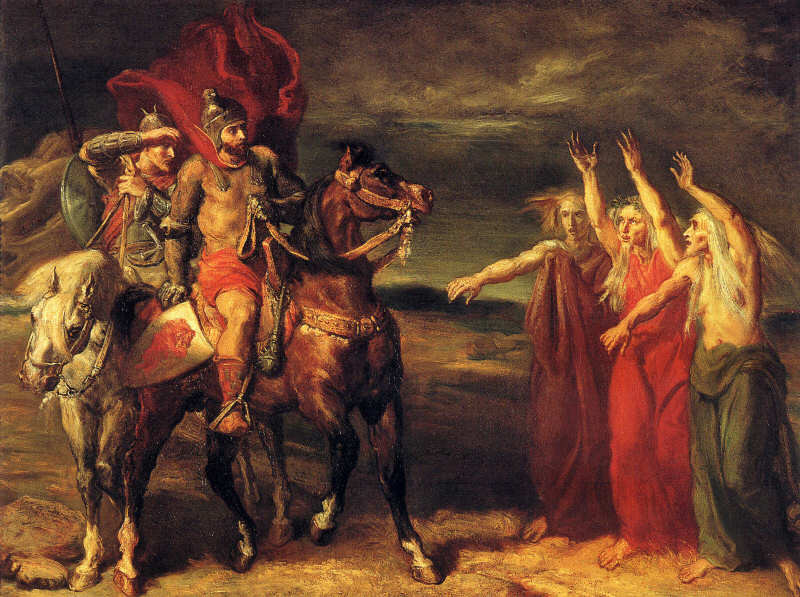
Macbeth meets the witches on a heath, which means land that is literally out of bounds– the wild, untamed wilderness, which the old Anglo Saxons believed was the lair of many cursed spirits and monsters. This could symbolize Macbeth’ sin or transgressions, slowly turning into a murderer, usurper, and a tyrant. It could also symbolize the chaos in Macbeth’s life.
What Do They Look Like?
Shakespeare’s descriptions of the witches are highly contradictory- they seem to be floating, yet on the ground, they seem to be women, but they have beards! They don’t look Earthly, but here they are on the Earth. This gives them an other worldly quality that keeps us guessing as to who they are, and helps them tempt Macbeth more easily.
BANQUO
What are these
So wither’d and so wild in their attire,
That look not like the inhabitants o’ the earth,
And yet are on’t? Live you? or are you aught
That man may question? You seem to understand me,
By each at once her chappy finger laying
Upon her skinny lips: you should be women,
And yet your beards forbid me to interpret
That you are so.
MACBETH
Speak, if you can: what are you? (Act I, Scene iii).
The Witches’ Language:
You know from my earlier posts that the norm for Shakespearean characters is to speak in iambic pentameter- 10 syllable lines of unrhymed poetry that sounds like a normal heartbeat. The witches break these norms- they generally speak in Trochaic Tetrameter- 8 syllable lines with the off beat emphasized. The witches are literally offbeat, and that’s why their speeches are unsettling. Look at the contrast between a normal iambic line like:
“In sooth I know not why I am so sad.” (Merchant Of Venice I,i).
and
“Dou-ble Dou-ble, Toil and Tro-ble.
Fire burn and Caul-dren Bu-ble. (Macbeth, Act IV, Scene i).
For more info on the verse forms of the Witches, click here:
The witches also speak their prophesies in a vague, ambiguous manner They like to play with obscuring their prophesies with lines that make Macbeth think one thing, but the opposite is true. The famous example here is when they claim Macbeth will never be vanquished “until Birnam Wood comes to Dunsinane Hill.” Macbeth assumes this means he’s invincible, but it actually means that the enemy carry wood from the forrest. This is called Equivocation.
Witches and mythology

1. During the reign of King James, the modern witch hunt began; the king was fascinated with witches and even wrote a book called Daemonology on how to identify and destroy them. This was the era where people believed that witchcraft, rather than a pagan religious practice, was a forbidden craft that could only come from a pact with the devil. However, Shakespeare borrows from both Satanic and early pagan ritual in the characters of his witches.
2. Shakespeare took a couple of details about witchcraft from ancient Celtic and Greek mythology. First of all, the use of a cauldron. In Celtic myth, a cauldron is a symbol of rebirth and was sometimes used to resurrect the dead, just as the witches do in IV i. Of course, the ideal time for raising the spirits was on the feast of the pagan god Samhain, at the point where the veil between the living and dead was the thinnest. The feast took place on October 31st, our modern day Halloween!

3. Familiar spirits In Act I, the witches speak to animal spirits called familiar spirits, which call to them and tell them where to go. King James himself wrote about how the witches found and communicated with these spirits.
Hecate.
In Act IV, Hecate, Ancient Greek goddess of magic appears. She is clearly the lord of all the witches, and is very displeased that they are riddling with Macbeth. Maybe not all witches believe in giving out prophesies that can destroy the Scottish monarchy. Hecate was always enigmatic in myths- she was born one of the Titans who opposed the gods, but frequently changed sides. More then being two faced, she was often portrayed as having three faces! Shakespeare refers to her frequently as “Triple Hecate.”

For more information on this mysterious goddess, consult the video below, (WARNING, ADULT-ONLY CONTENT).
In conclusion, the witches are meant to be ambiguous because the play examines the source of evil- whether it is inspired by other people, or if it comes from one’s own heart. The witches can be either or both, depending on how you want to tell the story, which is why they act and speak in contradictory ways.
Thanks for reading! If you enjoyed this posting, please consider signing up for my online class, “Macbeth: An Immersive Horror Experience.” I tell you the story of Macbeth and you get to play through an escape room, where you must solve the witches’ puzzles or be added to their Cauldron!


In 1936, famed director Orson Welles, (known for his iconic film Citizen Kane), produced an equally memorable production of Macbeth. At the time, Welles was a theater director, working with a government-funded theater group called The Federal Theater Project. The goal of the FTP was to help support the theater during the Great Depression. Welles also found a way to have his production help black actors by, and casting exclusively African Americans.

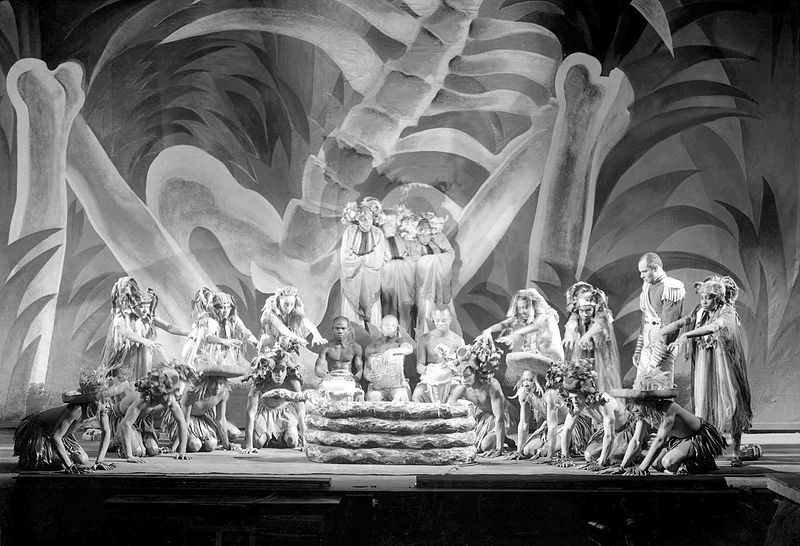
Although Welles kept Shakespeare’s text, he changed the setting to a tribe in Haiti instead of medieval Scotland, and changed the witches into Voodoo priestesses. Below is the only surviving footage of the production, the final scene in which (spoiler alert), Macduff carries Macbeth’s head and sets it on a pole, proclaiming Malcolm the new king. You can see the witches taking a wicked joy when Macbeth’s cursed head is impaled, implying that Welle’s witches had vengeance on their mind when they drove him to kill Duncan.
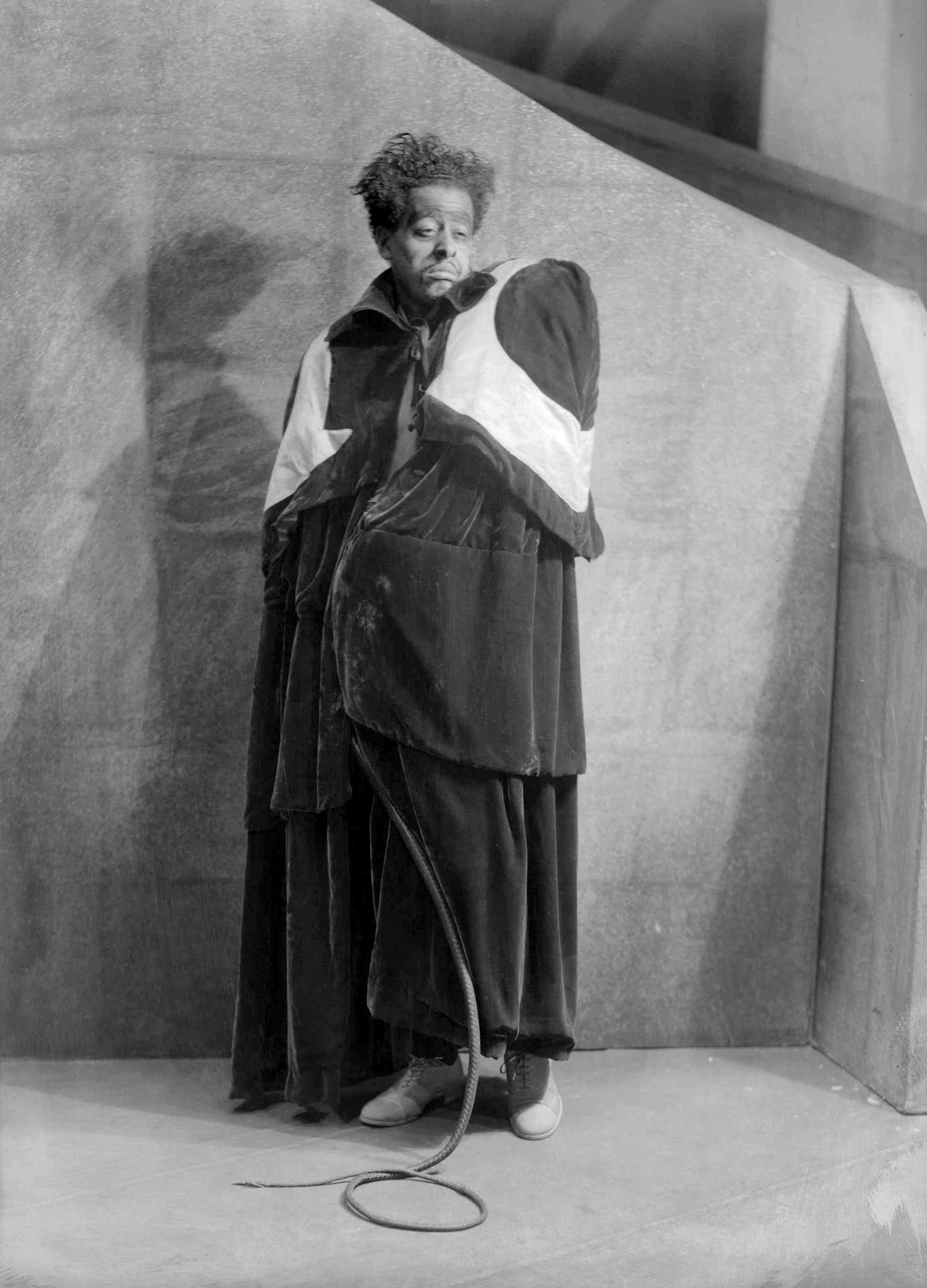
Notice also the actor who screams “Peace, the charm’s wound up,” at the end of the play. He is playing the part of Hecate, the goddess of magic who appears before Macbeth in Act IV. According to legend, Actor Eric Burroughs was a real Voodoo priest, as were the drummers Welles used to spectacular effect during the show. Many critics called the frenetic drumming that occurred during the show and in scene changes an experience that they’d never forget.
Welles’ innovations helped black actors and theater in general survive during the Depression, but not everyone praised his efforts. Journalist Percy Hammond criticized the merits of the performance, arguing that the government shouldn’t pay for artistic projects. The next day when he returned to the theater, he was greeted by a rhythmic thumping underneath the stage that intensified until the critic abandoned his seat and left the theater. The next day, he fell suddenly ill and died! Was his illness a voodoo curse? We may never know, but this story clearly illustrates the effectiveness of Welles’ staging, and the dark occult appeal that lurks beneath the text in any production of Macbeth.
Works Cited:
 The Shakespearean Student