So, why Ghostbusters? Well, as William Shakespeare’s Star Wars has shown, it’s not only fun to adapt popular stories into Shakespearean parodies, it can also be educational. I knew I wanted to do a short play for my school’s fall festival, but I didn’t think to do “Ghostbusters” until I saw the final joke in the Simpson’s parody of Hamlet, where Homer says: “Son, [Hamlet] is not only a great play, but also became a great movie, called Ghostbusters!”
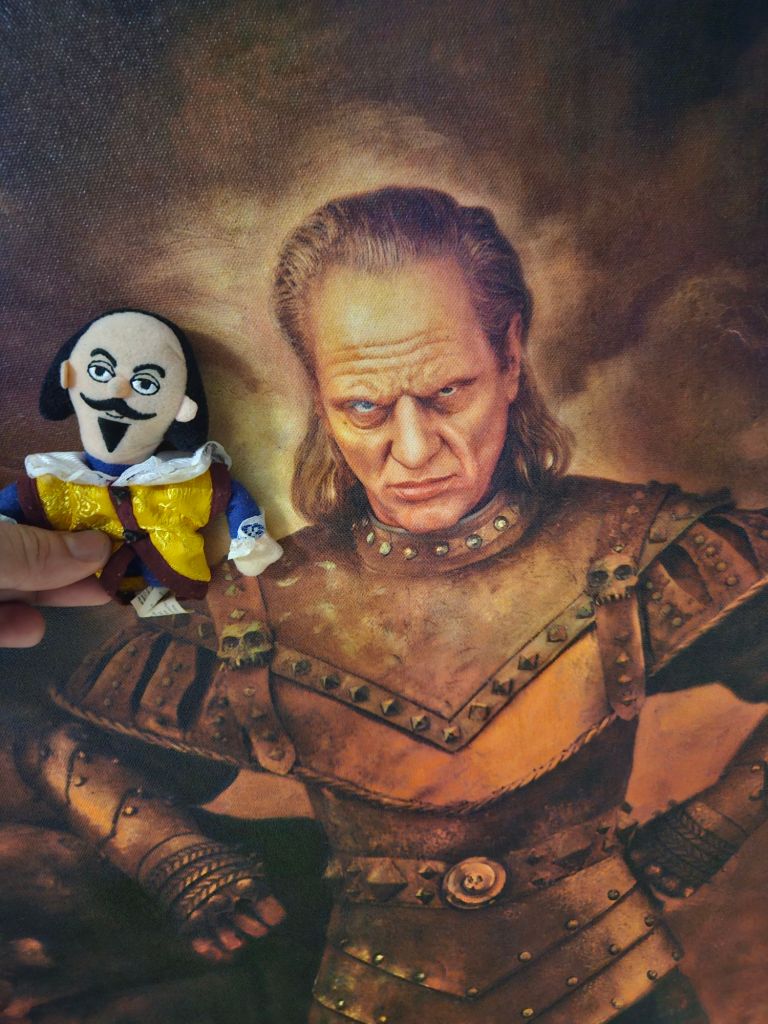
This joke got me thinking- Hamlet has a comic scene where the prince and his two friends are running around the stage away from a ghost, one that refuses to speak to them and then terrifies them. This reminds me of the moment where the ghost of the librarian shushes the heroes, and becomes a hideous creature:
The librarian in Ghostbusters is similar to the Ghost of Hamlet’s Father.
From this realization. I took it as a personal challenge to adapt Ghostbusters into a one-act stage play with as much Shakespearean dialogue as possible.
My Process
Re-writing the script of a movie into a Shakespeare text required me to overhaul the story of Ghostbusters, as well as retrofitting Shakespearean lines and speeches from Hamlet, Macbeth, Henry IV & Henry V. I knew I wanted to freely cut-and-paste from Shakespeare, as if he’d written the original Ghostbusters. The result is a sort of stitched together blanket of Shakespeare lines, lines adapted from Ghostbusters, and some lines I created myself.
The Outline
Like I said, I kept the story limited to how the four Ghostbusters learn that ghosts are real, become professional ghost catchers, and then receive a call from a damsel in distress (Ms. Dana Barrett), who allows them to become heroes by defeating the ghost that has possessed her. I also decided to use the commercial in the movie as a framing device:
In my version, the Ghostbusters start by doing a commercial that then becomes a flashback where the heroes recap everything that has happened to them over the past week. I then ended the play by joking referring to the play as “A very long commercial.”
Scenes I Included/ Scenes I Cut
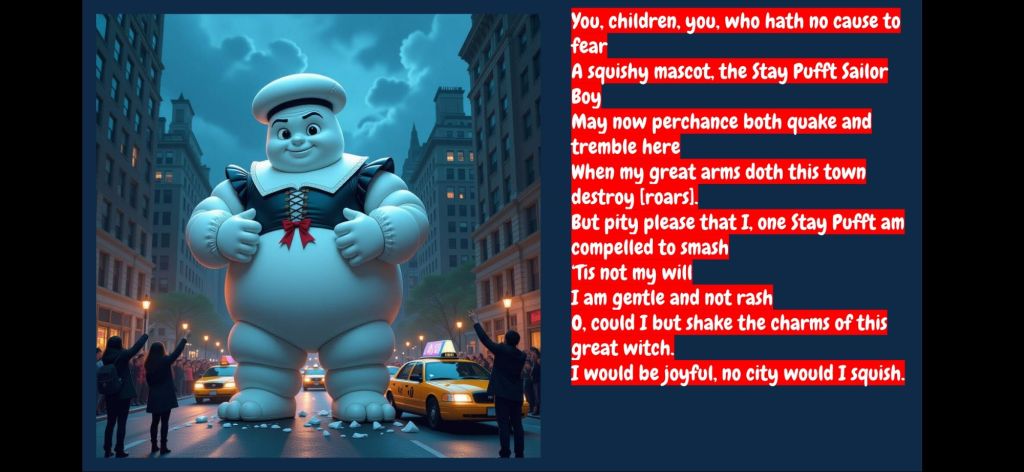
I only had 30 minutes allocated for my show, so I knew I’d have to pare down the story to its bare bones. This meant I had to eliminate a lot of subplots and characters and condense several scenes. As much as I love Walter Peck, Dean Jaeger, Louis Tully, Janine Melnitz, and the guy who gets electrocuted, they are not absolutely essential to the plot, so I cut them from my version. I also combined the characters of Dana and Gozer, eliminating the two terror dogs and limiting the antagonists to Gozer and the Stay Pufft Marshmallow Man. So I watched the film a few times, and created an outline of just 7 scenes.
Character Models
One thing I’ve said again and again is that Shakespeare’s characters are all based on archetypes that we see everywhere throughout literature, theater, and yes, movies. While I was watching Ghostbusters, I tried to find the Shakespearean archetypes that match the best with the characters in the movie:
Ray Stantz- Hamlet from Hamlet– Ray is a bookish man who is obsessed with death and with the occult, which makes him very much like the scholarly Prince Hamlet. He’s also a man on a mission to try and understand the supernatural and help keep it from destroying our world. Dr. Venkman describes him as “The heart of the Ghostbusters”, and that humorous heart gets him into trouble sometimes.
Egon Spangler- Horatio from Hamlet If Ray is the heart of the team, Egon is the brain. He is the no-nonsense scientist who provides the team with data and equipment to help them fight ghosts effectively, much like how Horatio reports to Hamlet that his father’s ghost has returned from the grave.
Dr. Venkman– Sir John Falstaff/ King Henry V
Dana Barret- Ophelia from Hamlet
Gozer– Hecate from Macbeth
The Stay Pufft Marshmallow Man- Snug the Joiner from A Midsummer Night’s Dream
Sneak Peak
Here’s one of the scenes I wrote, with the original scene for context
[The ghostbusters climb the stairway to the penthouse, where Gozer is sitting in a cloud. They have been going for a while and are clearly tired]. Venkman: Though I have not known fair Dana long, I know she must be a virtuous maid. Ascend this penthouse tower and let’s rescue she! Like to the Knights of ancient chivalry! Egon: These apparitions whizzing in the air Give so much light that I may read by them. [They reach the top and behold Gozer] Ray: I am resolved to speak to Gozer. This is the latest parle we will admit. Gozer: Art thou a god? Ray: Nay. Gozer: Then perish, half-man! Winston: Enough Ray of thy diplomacy! Speak, thou proton pack for me! [He fires, then the rest join in] Gozer disappears Venkman: The sky hath bubbles as the water hath, and she be one of them! Gozer [in Voice Over]: Sub creatures! Hark! Tis time! Pick the Destructor’s form Be it a Goblin damned or angel bright! Tornado or a earthy bright Or greatest Monkey with an appetite! Winson: Our thoughts contain the form that seals our doom? Then make them blank as a new-made room! [They all gesture to their heads as if pushing thoughts out] Gozer: Thy choice is made. Prepare to meet thy doom! Venkman: Nay! I chose nothing Winston: Nor I! Egon: Nor I [Pause] All: Ray? Ray: Twas not my fault! It popped into my mind Venkman: What? What hast popped in? Egon: LOOOK!!!
I’m sure I don’t need to tell you that one of the most iconic voices of our generation, James Earl Jones has passed away at the age of 93. I’m sure I also don’t need to mention his iconic film roles in such films as Field of Dreams, Coming To America, The LIon King, and of course, his (initially uncredited) role as the voice of Darth Vader in the Star Wars Trilogy. As I’ve written before, Jones had a powerful, authoritative voice that played kings, generals, knights, and even gods, which came directly from his training as a Shakespearean actor. So, instead of taking a look at his illustrious film career, I’d like to celebrate Jones’ contributions to Shakespeare, and how Shakespeare changed his life, and through him, changed mine.
Jones and Poetry
“I don’t mind talking about my stuttering because it’s just another example of you finding yourself with a weak muscle and you exercise it, and sometimes that becomes your strong muscle,” Jones told KCRA in 1986. “I was mute from grade one through freshman year in high school — mute because I just gave up on talking.”
-James Earl Jones in a TODAY Show interview, 1986
James Earl Jones was born in 1931 in Arkabutla, Mississippi. Not only did he struggle with racial discrimination at home and in his career, he also dealt with a debilitating stutter which, as you can see in the quote above, left him all but mute for years of his life. It was one of his teachers who helped Jones find his voice by giving him poetry to read, inspiring him to become an actor. As a Shakespearean actor who also struggles with a stutter, reading this about Jones helped me become an actor as well.
The New York Shakespeare Festival
Your voice has the power to inspire, motivate, and change lives. Don’t be afraid to use it.
James Earl Jones
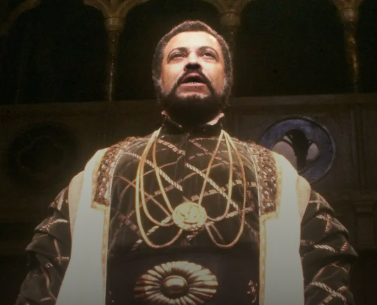
Before he became a star in the Hollywood firmament, Jones was a classically trained actor who starred in many contemporary and classic plays like The Iceman Cometh, The Great White Hope, and a title role in a drama about the great Shakespearean actor, Paul Robeson. In addition, Jones was a regular performer at the New York Shakespeare Festival, starring as King Claudius in Hamlet, Oedipus Rex, The Prince of Morocco in The Merchant of Venice, and like Paul Robeson, Jones was celebrated for his dignified and powerful portrayal of Othello.
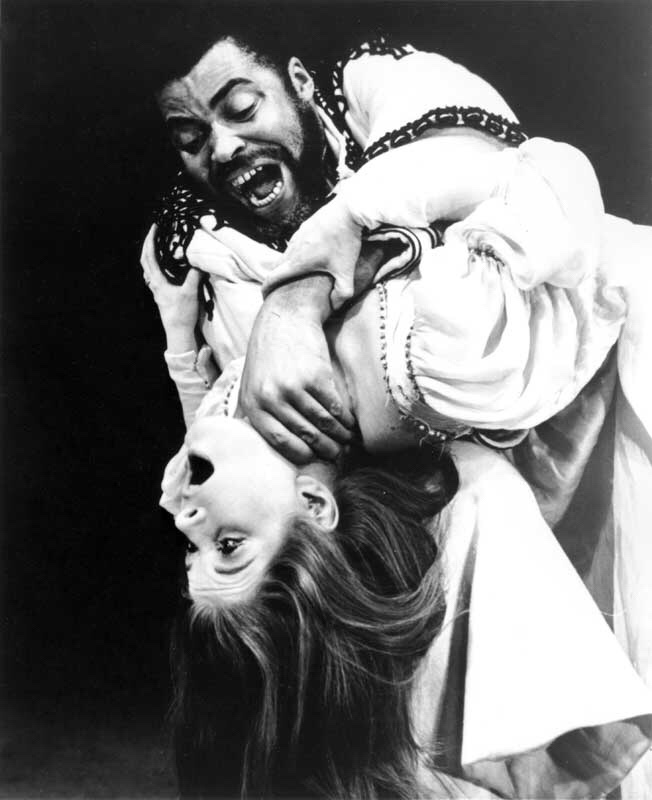
James Earl Jones as Othello and Cecilia Hart as Desdemona in a scene from the Broadway revival of the play “Othello.”
James Earl Jones as Othello and Christopher Plummer as Iago in a scene from the Broadway revival of the play “Othello” (New York 1982)
“Mr. Jones commands a full, resonant voice and a supple body, and his jealous rages and frothing frenzy have not only size but also emotional credibility,” .”
The Times wrote in a review in 1964
From Shakespeare to Strangelove
James Earl Jones made the leap from stage and TV (he was one of the first celebrity guests on Sesame Street among others), after a surprising performance. In 1964, he was playing the relatively minor role of the Prince of Morocco in Merchant of Venice at the New York Shakespeare Festival, while George C. Scott played the more iconic role of Shylock. Surprisingly, Director Stanley Kubrick saw both of them and cast them both in Dr. Strangelove, Or: How I Learned to Stop Worrying And Love the Bomb, Jones’ first film role.
This goes to show that success is often not a straight line, that sometimes it’s the people you know and the reputation you garner that gives you success in your field.
Success should not be measured by material possessions, but by the contentment and fulfillment we find within ourselves.
James Earl Jones
My Favorite Performance of Jones
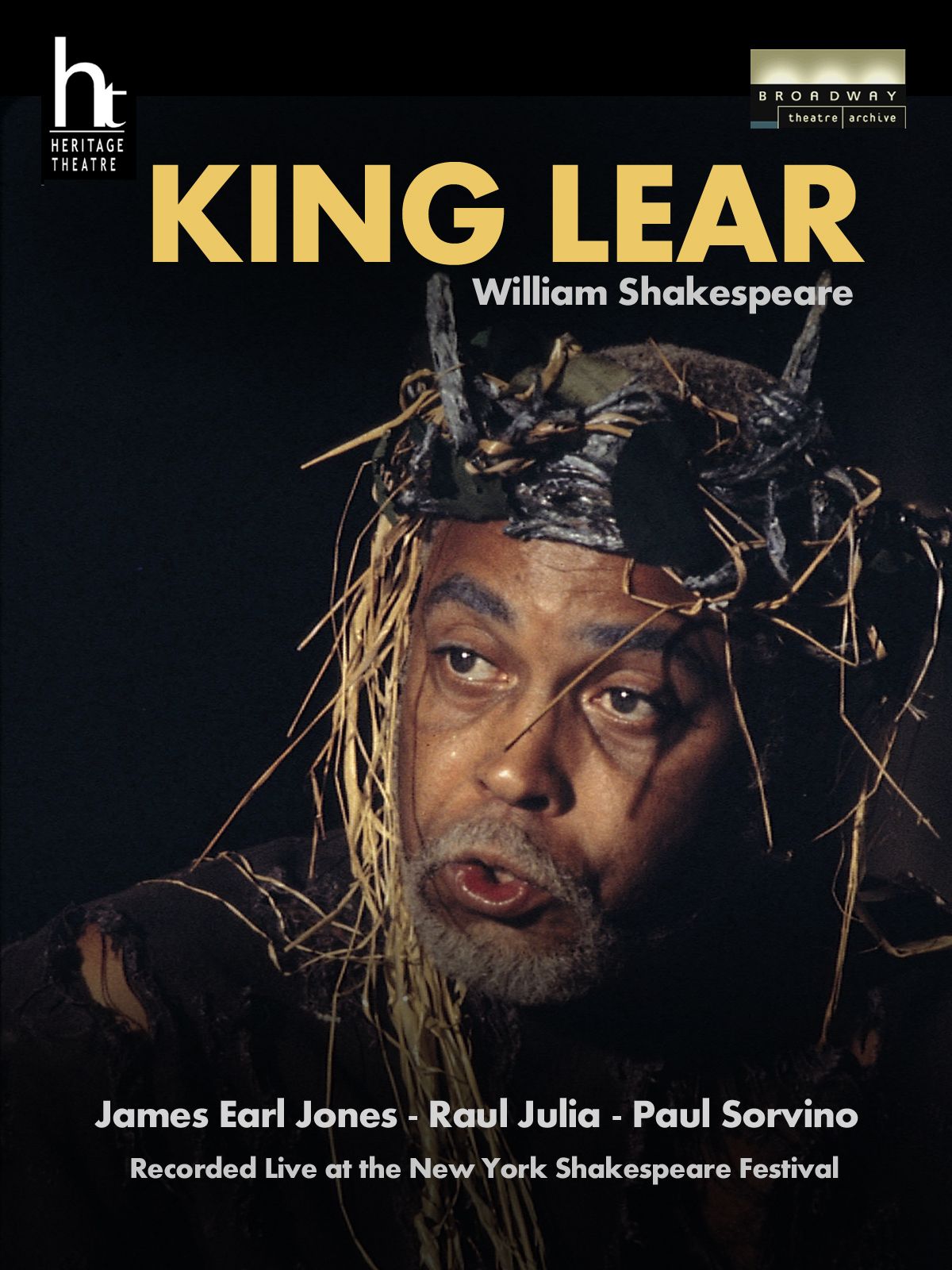
Though his film roles brought him international acclaim, James Earl Jones still performed onstage well into his 80s, including many more memorable performances at the New York Shakespeare Festival, including my favorite performance of all Jones’ stage roles- his role as King Lear. I’ve written before that Jones is still my favorite Lear- he plays the characters’ rage and commanding presence extremely well, but tempers it with the frailty and foolishness of age. You get the sense that this man was a force to be reckoned with, but is now unable to command himself, much less others. Jones’ interpretation apparently changed drastically in rehearsal, as he delved into Lear’s all-too-human flaws, playing him more like a king with dementia than like Mufasa.
Final thoughts
James Earl Jones would be the first to admit that Shakespeare and poetry changed his life. I would argue that the poetic qualities of his voice was what made him such a great actor. He could rumble and smash but also soothe and charm with a single sentence, and that is why I am glad that his voice is now preserved in the halls of Hollywood. Though he was a movie star, his voice was a Shakespearean through and through.
True strength is not in showing power over others, but in conquering your own fears and insecurities.
According to Branaugh, the idea behind the film was to emphasize beautiful things like tranquility and love, but preserve and heighten the danger of being hunted by a powerful warlord like the Duke
Interview with the director and cast at the Barbican
The Plot Of the Play
Historical Context
Branaugh set the film in 19th century Japan, at a time when English people came to Japan for the first time, and created small English communities in the country. I’ll discuss later that I have very conflicting feelings with this choice, but I will give Branaugh this- it does highlight the fish out of water journey that Rosalind and the other characters go through leaving their homes at court, and becoming enamored with a new country.
The Cast
The cast is full of veteran Shakespeareans and gifted Hollywood stars. Bryce Dallas Howard is charming as Rosalind, and has good chemistry with RSC actor David Oyelowo. I also enjoyed Brian Blessed’s dual role as Duke Senior and Duke Frederick. Kevin Klein is very sincere as Jaques but I wish he had a bit more fun with the over exaggerated melancholy that Jaques puts on. The overall effect of the performances is a sentimental, charming, beautiful, witty group of people who are having a fun time.
My Reaction
The cast is great, the cinematography is stunning, and the music is charming. Overall, Branaugh has done a great job of bringing the spirit of the play alive- that of a sweet, pastoral comedy about love, unrestrained by wealth or status. What I worry about though, is that Branaugh might inadvertently be celebrating colonialism. Yes, Japan is a beautiful country with a highly sophisticated and rich culture, so it makes sense that English people would be drawn to it. That does not justify the cruel way the English and Americans colonized parts of Japan, made the people mine for gold, and forced them to trade with the west. I worry that, like The Mikado, Branaugh celebrates Japan in a way that makes it seem like westerners were justified in taking so much away from it. I wish the plot had more of a “look but don’t touch” attitude to Japanese culture.
I also question the decision to cast barely any Asian actors. Given the story Branaugh wants to tell, it makes sense to cast non-asian actors as Thr Duke, Rosalind, Celia, and even Orlando, since they are the ones who come to the forest from an English-style court. But the roles of Corin, Silvius, Audry, Phoebe, and even Old Adam are people who are supposed to be familiar with the country, meaning it would make perfect sense to cast Asian actors in these roles. Frankly, there are very few well known Asian actors in Hollywood and I would love to give some of them a chance to shine, especially since Shakespeare has long been a way for actors to show their skills.
In conclusion, I can see why people like this movie and I too enjoy it, despite its questionable subtext. I don’t want to take away anyone’s enjoyment of the film, just to remind people not to be too seduced by the historical practice of taking something “As You Like It”
If you like this analysis, you might be interested in signing up for my Outschool Course on Shakespeare’s Comedies. Link down below. Share this class with a friend and you will get $20 USD off! You’ll also get $20 USD when you sign up with your link and take their first class!
Using self-paced online activities, your child(ren) will compare the plot and characters of Star Wars to Shakespeare’s plays. We will also discuss Shakespeare writing by looking at “William Shakespeare’s Star Wars” by Ian Doescher.
Course Description
Concept: To compare and contrast the plot, characters, themes, and language of Shakespeare’s plays with Star Wars
Student Description:
Epic battles, quests for revenge, pirates, funny characters, powerful warriors swinging swords. Star Wars has something for everyone. But did you know that in many ways, Star Wars is based on the ideas and writings of William Shakespeare? In this course we’ll peer beneath the veil of Shakespeare and Star Wars to find the universal stories of love, revenge, power, and growing up, using games, artwork, and dramatic readings by professional actors!
Did you know that Star Wars is based on the ideas and writings of William Shakespeare? This class will teach you about writing and characters though games, interactive activities and dramatic readings of both Star Wars and Shakespeare!
Course organization (the class is divided into 6 parts that students can complete at their own pace over a week-long period.
What parts of the Star Wars story are like Shakespeare’s plays?
Are Shakespeare and the Star Wars movies saying anything similar about war? Families? Growing up?
Lesson Objectives
To teach about the characters and plot of Star Wars by comparing them to Star Wars
To introduce the concept of archetypes, tropes,
Set the Scene
Star Wars is about an evil empire trying to take over the galaxy. They have more ships, more soldiers, and a fearsome weapon that can blow up planets. The rebels on the other hand, though fewer in number, are faster, smarter, and have the advantage of fighting for a good cause.
In addition, the story is about growing up- Luke becomes a Jedi Knight. He takes revenge on the man who destroyed his father.
The Players (slides)
Luke
Obi Wan/ Yoda
Vader
Leia
Han
R2D2 and C3PO
The Emperor
Words Words Words
Epic
Parody
Theme
Plot
Archetype
Character
Trope
Theme
Class 2: The Journey of Han and Leia
Han and Leia vs. Beatrice and Benedick
Show videos of Han before Leia
Plot summary of Much Ado
Clips of the bickering of Benedick and Beatrice
Read blog and look at the writing.
Activity- how would you write a love letter to Han or Leia?
Play the scene from Jedi
Unit 2- The Prequels and Shakespeare’s Histories
A Crash Course in Shakespeare’s Histories
The Rise of Palpatine/ Richard III
Emperor Palpatine in Star Wars rises to power through a combination of manipulation, intimidation, and by killing his opponents.
Bio of Richard III
Slide- Richard’s rise to power
Slide- Palpatine’s rise to power
Quizlet
Unit 3- The Verse of William Shakespeare’s Star Wars by Ian Doescher
What is William Shakespeare’s Star Wars
Introduce the plays
Explain how Shakespeare’s verse works
Look at the common verse elements
Sonnets
Show the chorus of “Verily a New Hope”
It is a period of civil war. The spaceships of the rebels, striking swift From base unseen, have gain’d a vict’ry o’er The cruel Galactic Empire, now adrift. Amidst the battle, rebel spies prevail’d And stole the plans to a space station vast,Whose pow’rful beams will later be unveil’d And crush a planet: ’tis the DEATH STAR blast. Pursu’d by agents sinister and cold,Now Princess Leia to her home doth flee, Deliv’ring plans and a new hope they hold:Of bringing freedom to the galaxy .In time so long ago begins our play,In star-crossed galaxy far, far away
Stychomichia
Half lines
Enjambment
Title Crawl (make a gif via Canva)
Side By Side Comparisons
Read/ watch segments of the play
To Be Or Not To Be
All the World’s a Stage
St. Crispin’s Day Speech
Try to turn a Star Wars line into verse, and then look at the reveal.
Unit 4- Literary Devices of William Shakespeare’s Star Wars
Using the educational guide, we’ll learn about the following literary devices:
Extended Metaphors (Luke’s green lightsaber)
Anaphora (Luke’s call to action in Jedi)
Premonatory Dreams (Calpurnia)
Stichomythia Richard III vs. Han and Leia
Unit5- The Hero’s Journey of Luke Skywalker
Class 1: What is a Hero’s Journey (Slides)
Learn a little about Joseph Campbell’s monomyth. using the Percy Jackson post, Crash course video about monomyth
Chart Luke’s monomyth journey
Activity- Mad libs- write a star wars movie!
Quiz on plot elements from the monomyth (Quizzes or Quizlet)
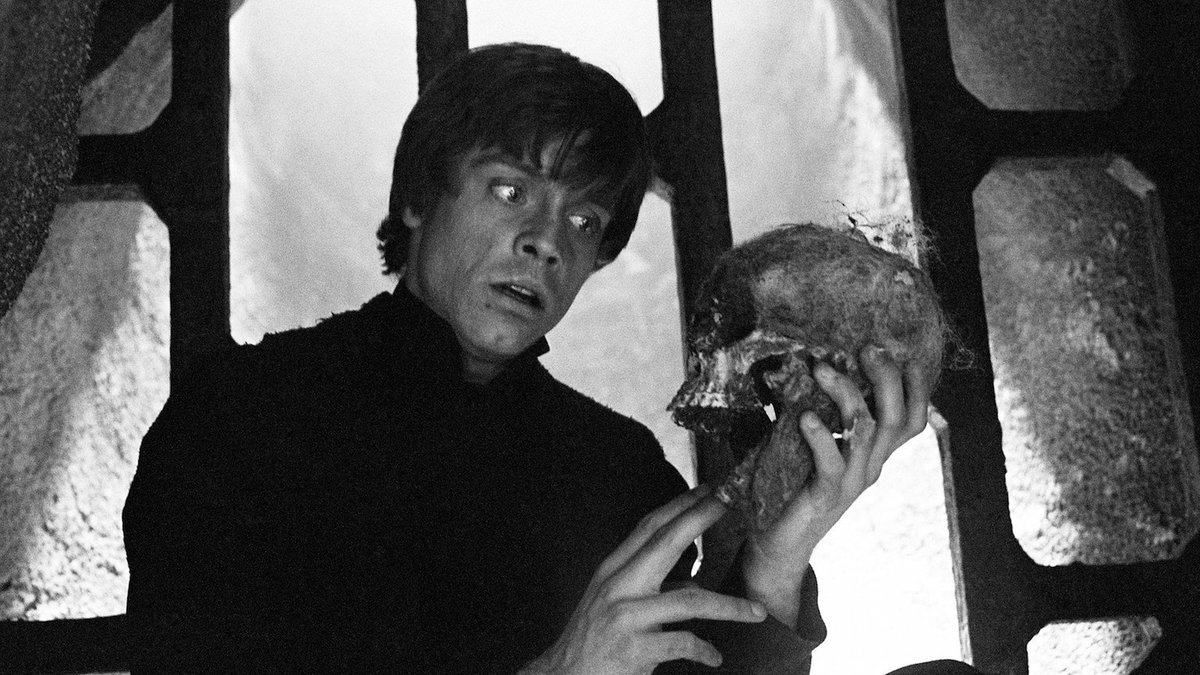
Class 2 : Hamlet and Luke Skywalker
Plot comparison
(use infographic)
Quote from Doescher:
Hamlet The Tragedy of Hamlet, Prince of Denmark is Shakespeare’s most famous play. It’s also the play I make the most references to in William Shakespeare’s Star Wars.
To Be Or Not to Be
Use my video about the speech to explain the structure
Note how Doescher repurpuses every line in the Star Wars Trilogy:
Sometimes it expresses fear:
Sometimes concern:
Frustration: “The whips and scorns of time”
Hope: “The undiscovered galaxy” “Tis a consummation devoutly to be wished.”
Activity: write your own paraphrase of Hamlet’s speech, using the 6 beats I provided.
For my Shakespeare club, I’m coaching two young actors on Viola’s celebrated soliloquy in Act II, Scene ii.I thought I’d share some of that work with you. In this speech, Viola has an epiphany; the lady she was sent to woo on her master Orsino’s behalf LOVES HER!
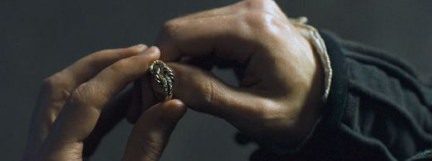
Viola has spent an unspecified amount of time disguised as a man. She has just tried (unsuccessfully) to woo Countess Olivia on behalf of her employer, Duke Orsino. Olivia seemed intrigued by her in her disguise as “Cesario,” and refused to hear any more words about Orsino, but asked Viola to come see her again. The Countess then sent her messenger Malvolio to give Viola a ring, which he claims she tried to give to Olivia as a gift. At first, Viola is confused and upset by the accusation, but slowly realizes that the ring is actually a gift for her; in fact, it’s a love token.
Traditional Interpretations
I think the comedy depends on how Viola reacts to the realization that Olivia loves her. I’ve seen some Violas that are embarrassed, some that are a little frightened (after all, hell hath no fury like a woman scorned), and others with sad sympathy. Viola is a good person, so she can’t laugh at the lovesick countess, but she can have a wry laugh at herself and how her disguise has caused all this trouble; making her unable to confess her love to him, while at the same time making Olivia think she is a handsome young man.
Michelle Terry In the Globe Theater (2021)
Michelle Terry as Viola in the 2021 production of “Twelfth Night”
Michelle Terry is very matter-of-fact in her portrayal. She doesn’t pause, she doesn’t drag out the lines. In fact, she seems more annoyed and scandalized than anything else. The comedy comes mainly from her gestures and movements as she talks to the audience as if they were one of her gal-pals- venting her frustration with this ridiculous situation.
Michelle Terry excels as Viola, straight-faced, tormented, only occasionally raising a conspiratorial eyebrow at the audience.
Judy Dench in the RSC TV show “Playing Shakespeare” is very sympathetic to “Poor Olivia, ” and plays the speech with a romantic sentimentality. She’s focused on Olivia, and feels awful for the false hope she’s given her.
Both these interpretations are valid, and they’re a good baseline for two sides of Viola’s personality- the sensitive genteel duke’s daughter who is sympathetic to Olivia, and the down-to-earth funny one who is willing to disguise herself as a boy to survive.
Literary Devices
Imagery
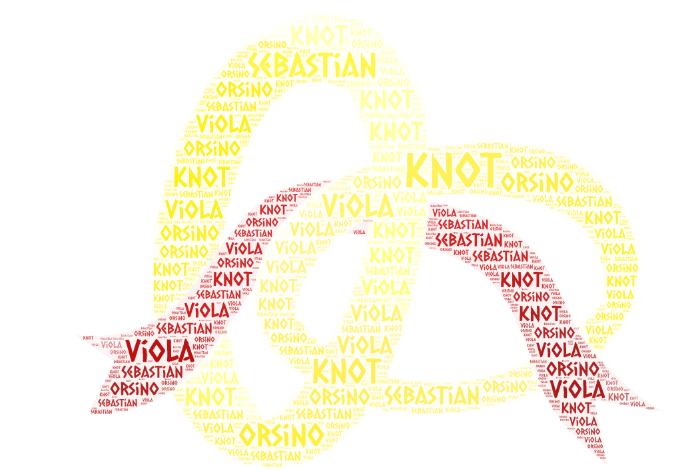
The main image here is the image of the knot- a central image of how convoluted this love triangle is.
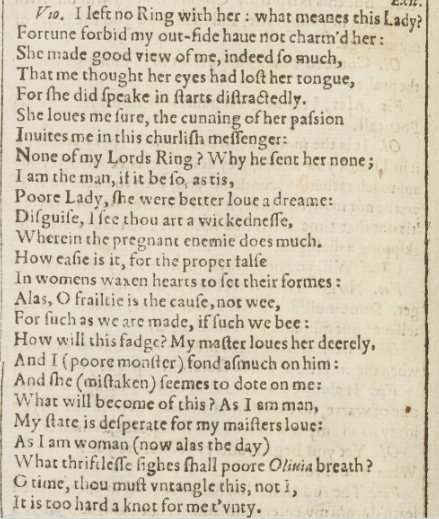
I left no Ring with her: what meanes this Lady?
Fortune forbid my out‑side haue not charm'd her:
[650]
She made good view of me, indeed so much,
That me thought her eyes had lost her tongue,
For she did speake in starts distractedly.
She loues me sure, the cunning of her passion
Inuites me in this churlish messenger:
[655]
None of my Lords Ring? Why he sent her none;
I am the man, if it be so, as tis,
Poore Lady, she were better loue a dreame:
Disguise, I see thou art a wickednesse,
Wherein the pregnant enemie does much.
[660]
How easie is it, for the proper false
In womens waxen hearts to set their formes:
Alas, O frailtie is the cause, not wee,
For such as we are made, if such we bee:
How will this fadge? My master loues her deerely,
[665]
And I (poore monster) fond asmuch on him:
And she (mistaken) seemes to dote on me:
What will become of this? As I am man,
My state is desperate for my maisters loue:
As I am woman (now alas the day)
[670]
What thriftlesse sighes shall poore Oliuia breath?
O time, thou must vntangle this, not I,
It is too hard a knot for me t'vnty.
It’s interesting to note that (in the First Folio text), the verse alternates between being regular, and using a run-on technique called enjabment, where the thoughts continue after the end of the lines, starting with lines three and four. Ironically, when Viola says that Olivia was distracted and confused when she visited her, her own thoughts are disjointed and fragmentary as she reaches the inevitable conclusion that Olivia is infatuated with Viola in her disguise.
Viola’s Emotional Journey
In the book “Shakespeare’s First Texts” by Neil Freeman he describes how the Folio prints the speech in four distinct sections. Freeman hypothesizes that Shakespeare organized this speech into four phrases that chart the stages of emotions Viola goes through:
Each stage has its own easily identifiable quality, reflecting the growing steps of Viola’s journey in what for her is a huge struggle not only to comprehend, but also to deal with the enormous complications of the dreadful love triangle- the potential results of which are now becomming only too clear.
Freeman, 175.
Stage 1: Introduction
In the first three and a half sentences, Viola goes through the facts- she gave no ring to Olivia, Olivia was eying her, and half paying attention to what Viola was saying. The phrase ends with Viola’s conclusion that Olivia must be in love with her.
Stage 2: Complications
The sentences are of very irregular length- sometimes six words per line, sometimes a few as four. According to Freeman, the irregularity of the verse shows how Viola’s emotions are getting the better of her. Viola could be gasping with remorse over the pain she’s caused Olivia, or shocked at how easily she was taken in by Viola’s disguise.
Stage 3: Crisis/ Catharsis
Each line of this section mentions the people in this love triagle: “My master,” “And I,” “And She,” etc. Viola might be thinking about the possible outcomes to this situation- getting fired, getting discovered, getting married, etc.
Stage 4: Summary: “O Time, Thou Must Untangle This, Not I.”
Like Hamlet before her and Macbeth after her, Viola ends her soliloquy by saying she has no conclusion. She has no idea how to solve this problem, but can only hope that Time will provide a solution.
Audience Interaction
As I said, this is a soliloquy, which is to say, a speech where the character is solo or alone onstage. Some people think this means that the characters are talking to themselves, but I firmly disagree with this notion. One reason why Shakespeare writes soliloquies is because they allow a character to share their thoughts and feelings with the audience. They are the ancestors of every aria or solo in opera and musical theater, and every Disney Princess/ Villain song. I’ve even said before that there are some similarities between Viola and a famous Disney Princess:
It’s a moment of tragic irony, worthy of King Lear himself that the actor who played Snape died before the actor who played Dumbledore, but here we are. I’m saddened to say that we’ve lost another beloved Shakespeare and Harry Potter actors.
Michael Gambon (
Gambon was born in Ireland in 1940. His first Shakespeare role was in a production of “Othello” at the Gates Theater in Dublin Ireland. He went on to win an Olivier Award, a BAFTA, several SAG awards, and was knighted in 1988.
Sir Michael became accomplished both on TV, in movies, and on stage. He played many of Shakespeare’s greatest roles, including a famous performance as King Lear with Antony Sher at the Royal Shakespeare Company. Here are some highlights of his stage work:
Now before I go on, I’d like to address the elephant in the room, or rather the MEME in the room:
I’ve never understood the animosity that Gambon got for changing the interpretation of this line, and no one seems to have a real explanation for why he changed it from the book. So this is all speculative, but as a Shakespeare actor myself, I want to provide some rational explanations that while you might not like his choice, you hopefully won’t come to the conclusion that it was the “Worst mistake ever.”
1. If You Don’t Change Something, You’re Not Doing Your JOb
a sufficiently entertaining, adamantly old-fashioned adaptation that follows the play’s general outline without ever rising to the passionate intensity of its star-cross’d crazy kids
Romeo and Juliet is still taught more than any other text in American high schools, and since it’s a play not a book, teachers will inevitably want to show a movie in class to show some of the action to the students. Since this is the most recent high-profile film version of Romeo and Juliet, it seems inevitable that this will be the one teachers will show to students, so I will try to review this film from the point of view of an educator, not a Shakespeare fan.
The Concept
This film was financed by the Swarosvski Crystal Company and in the words of their own chairperson, the film is an extension of the Swarosvki brand. So if I were to describe this film’s concept it would be to dazzle the viewers with expensive costumes, exotic locations, beautiful visuals, and young, attractive actors:
To be clear, I agree with the director that Shakespeare should be updated every few years to keep it fresh and relevant. However, I would argue that this film doesn’t go far enough to make this concept fresh, and this version is destined to age poorly. Without a unique view of the play other than- “love is pretty”, the film lacks vision and is not very distinct. That said, it perhaps is a good way to introduce young people to the play, as we’ll see below:
Changes to The Plot
The Act I Tournament
The film opens, not with two servants fighting (yet), but with a tournament between the Monaegues and Capulets, where they joust instead of fight to avoid bloodshed. It is a striking image to be sure, and it is less confusing than starting a fight over biting a thumb, but it is a little odd that the Prince has this tournament to avoid street fights, and then they wind up fighting anyway over the results of the tournament. It works within the story but it makes the Prince seem dumb and it adds little to the story other than spectacle.
The Dialogue
As you can see from this clip, the dialogue of this film is changed liberally. The writers change Shakespeare’s lines to make them sound less Shakespearean. They also heavily cut the speeches to shorten the duration of the film. Cutting long speeches and substituting a word here and there is pretty standard for most Shakespeare movies, but what I find really irritating in this film is the number of lines that they add. It’s generally understood in Shakespeare that a director or actor can subtly change a few lines in a play- change pronouns, change an archaic word or two to make it easier for an audience, but this movie has the dubious record for most lines added to a Shakespeare movie. Some of these lines are paraphrases of the Shakespearean text, like all the dialogue of Sampson and Friar Laurence’s speech explaining the sleeping drug plan to Juliet. Some of the additions are character lines, like the scene where Benvolio admits he wants to woo Rosaline, (which to be fair, is an interesting change and I don’t mind it). Finally, some of the lines are designed to summarize speeches that the script cuts.
I know I sound like a purist here, but I feel that if you’re going to do Romeo and Juliet, use the text of Romeo and Juliet, and don’t change it unless it’s absolutely necessary. If you’re going to do an adaptation like Gnomio and Juliet or Tromeo and Juliet, you can throw out the Shakespearean dialogue and play around with dialogue using the plot and characters Shakespeare wrote. This film does neither- it mangles Shakespeare’s text but rigidly adheres to the story and characters, so it fails to pick a lane between faithful depiction or creative adaptation.
Small changes:
Mercutio is a Montegue now. This matters because in Shakespeare’s version, he was related to the Prince, which is why the Prince takes pity on Romeo for avenging Tybalt’s death. Changing his allegiance robs his death of some of the tragedy that he was a neutral party who got caught up in other people’s quarrels.
Tybalt is in love with his cousin Juliet, (which admittedly I’ve seen in other productions). It gives him more motivation to hate Romeo and makes him even more distasteful to the audience.
Sampson and Gregory appear, but they are not named, nor do they bite a thumb.
Benvolio’s role is merged with Balthazar and the actor is the youngest person in the cast. I honestly like this change a lot- Balthazar is a great character but he is functionally identical to Benvolio in the plot, so merging the two parts makes a lot of sense. Both Balthazar and Benvolio spend the play looking out for Romeo yet Benvolio disappears once Tybalt dies, so giving the actor Balthazar’s lines is a welcome change. Now Benvolio is literally with Romeo to the end, which makes us feel sorry for Romeo and his best friend.
Benvolio is in love with Rosaline and makes a play for her after Romeo falls in love with Juliet. This might be a subtle nod to their relationship in the novel “Romeo’s Ex.”
Rosaline is Juliet’s cousin now, which is not mentioned in Shakespeare’s version.
Rosaline actually speaks, remarking on the foolish nature of silly Romeo, the Montague, and the Capulets. She still has no effect on the plot though, and her dialogue adds nothing.
Concerns for Teachers
If you are a teacher, I would recommend you show parts of the movie, specifically the fights and some of the action in the second half rather than the whole thing, but once you read the rest of this review, you can draw your own conclusions. As I mentioned before the Shakespearean dialogue is heavily cut, new ‘modern’ dialogue is added in, and even some of the action is also changed. Because of this, DO NOT TRY to read the play along with this film, as your students will get extremely frustrated. In my class, I actually played a game where the students write down what the movie changed from the play to try and get them to engage with it. I would also recommend asking questions or quizzing the students on the plot or the famous lines since those are more or less intact.
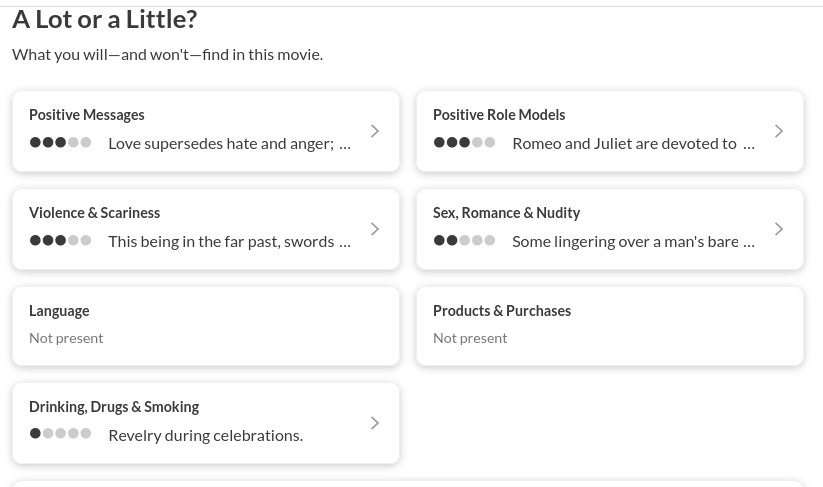
According to Common Sense Media, the film is relatively tame for students, (which of course was one of the goals of making it), so the violence is toned down, there is little nudity and little cursing (there actually is a little PG-13 language added near the beginning, but not much).
Though the film is populated with English and American actors, the majority of the crew is Italian and principal photography was done in Italy, both on-location in places like Verona, Mantua, Rome, and other Italian locations.
Historical Context
The original story of Romeo and Juliet is set in the 1400s but based on the references to Early Modern fashion and music, we can assume Shakespeare set his version around 1593- (the year it was probably written). This production, based on its fashion and architecture is probably set around the early Baroque period, (c. 1600).
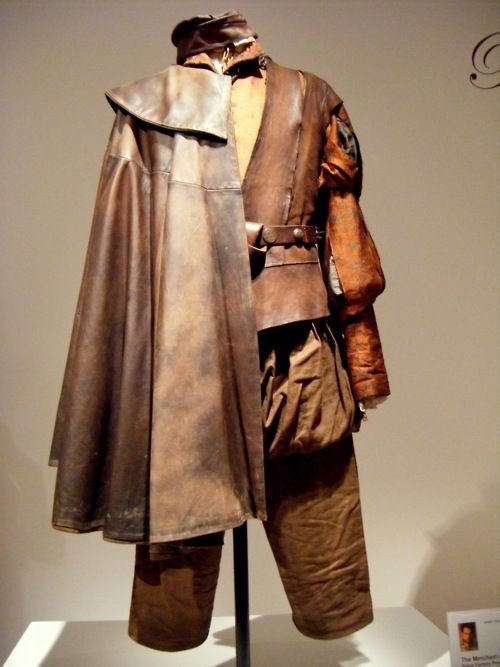
This time period was notable for abandoning neck and sleeve ruffs in favor of lace or linen collars (Source: https://fashionintherenaissance.weebly.com/fashion-timeline.html) . The famous pumpkin pants were also replaced with less fussy breeches as well. All these fashion choices are in the Romeo and Juliet movie and it’s fascinating to look at the choices they made for the film in behind-the-scenes documentaries. I shouldn’t be surprised here, but studying this period made me enjoy the film more- I lost myself in the spectacle and ignored their handling of the story.
The Costumes
Costume featurette from Romeo and Juliet (2013)
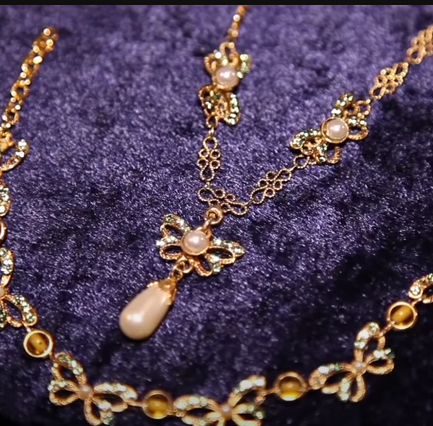
As you can see from the close-ups above, the Swarovski Crystal company definitely showed off some of their wares in Juliet’s costume. In fact, Swarovski sells a version of Juliet’s wedding ring.
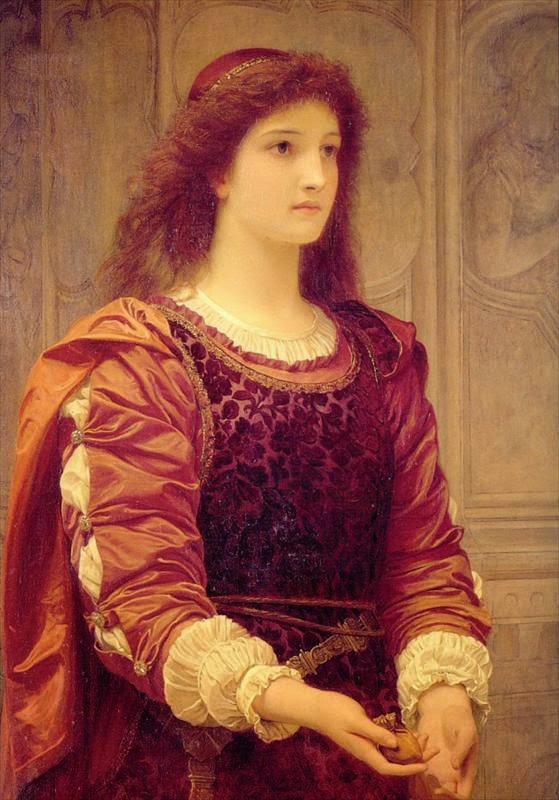
You can also see in these costume renderings the influence of Pre-Raphelite artwork on the costumes, like this famous painting by Francis Dicksee (1884).
The Sets
Many of the street locations for Romeo and Juliet were filmed at Cinecitta Studios in Italy, but as you can see from this behind-the-scenes footage, most of the film was filmed on location in beautiful real-life baroque buildings in Italy:
The Locations
Many of the locations remind me of the high baroque architecture of the celebrated Italian sculptor and architect Gian-Lorenzo Bernini (1598-1680), who had his own Romeo and Juliet-style drama in terms of sordid love affairs, duels, and exiles:
One location I found very interesting to research was the Grotto of Sacro Speco in Subiaco, which was the location for Friar Laurence’s cell. This is a very holy site to many Catholics- it is the celebrated Cave of St. Benedict, the founder of the Benedictine monks. Friar Laurence is a Franciscan monk so this isn’t entirely accurate, but it does provide some wonderful religious eye candy during the scenes at his cell, and it does beautify the wedding scene.
The Music (rant alert)
THE MUSIC NEEDS TO SHUT UP! Especially in the love scenes, the music is too loud and drowns out the dialogue. I personally find it irritating that the score makes so much use of the piano, which wasn’t invented until 1700, since the movie is trying to be historically accurate. To be fair, the loud piano is actually the sound department’s fault, but the fact that pianos didn’t exist at this time took me out almost as much as the overpowering score, (which somehow won two International Film Music Critics Awards (IFMCA)!
The Cast
Reviewers usually love to rag on whoever plays Romeo and Juliet. It’s kind of a no-win scenario here- If they’re young, they’re inexperienced and thus, don’t know how to speak Shakespeare. If they’re older, they’re too old and shouldn’t have been cast in such a youthful role. So rather than falling into that trap, I’ll be positive about the casting and say what I like about the performances, while criticizing the direction, because I feel that in general, the acting in this film is fine, but there are some odd choices that the director should’ve thought twice about.
Romeo (Douglas Booth)
Booth might actually be my favorite film Romeo- he’s beautiful to look at, sweet, impulsive, naive, everything Romeo should be. He also knows how to deliver Shakespeare and can convey complex ideas through poetry. I could argue that he lacks the rage that Romeo should have when killing Tybalt, but I don’t think that’s what he was going for this Romeo is a good guy who is too sheltered and lacks proper guidance, so he makes rash choices because nobody is there to tell him why they are.
Juliet (Hailiee Steinfeld)
I don’t fault Ms. Steinfeld for this, but her worst scenes are sadly, the most famous. Her delivery during the Act I dance and the famous balcony scene is monotonous and dull. I think the director told her to act as if love put her in a trance, but the effect is that she sounds like she’s half asleep. Again, I know she can do Shakespeare because her scenes with the Nurse and Lord Capulet are much better; she’s passionate, articulate, and full of emotion. I think the director failed to give her proper direction to play a love scene realistically, and intentionally slowed the scene down so the audience could pick out the famous lines.
Lord Capulet
Some people argue that Lord Capulet is actually a good dad, but not this film. As I’ll show you later, this film is trying to play up the forbidden love aspect of the story, and what is more classic than an angry, disapproving father? To this end, even though Damien Lewis starts out jovial and sweet to Juliet, by Act III he is full of resentment and rage:
Damien Lewis as Lord Capulet, in a scene from Act III, Scene v
Tybalt (Edward Westwick)
Ed Westwick steals the show every time he’s on screen. He knows how to speak the Shakespearean lines and he makes the added lines sound Shakespearean (which is to say, actually good). With his fiery gaze and his thick, deep voice, he reminds me of a young Mark Strong and is equally good at playing smarmy yet compelling antagonists. You love to hate this guy, yet you feel sorry when he dies.
Friar Laurence (Paul Giamatti)
Giamatti rivals Pete Postlethwaite for my favorite Friar Laurence. He was a perfect choice and he has an effortless Shakespearean delivery. I think it’s telling that his lines of dialogue are the least altered from Shakespeare- the director knew Giamatti could make them work without any alteration. He also has a great rapport with both Douglas Booth and Hailee Steinfeld.
Moments to Watch For:
This film does well at portraying the forces that rip Romeo and Juliet apart- Tybalt’s maniacal hatred of the Montagues, Lord Capulet’s scheme to marry Juliet, and the influence of maligning fate. For this reason, the film is actually better in the second half, once the romance is over and the tragedy sets in. Again, a lot of this is due to the excellent performances of Ed Westwick as Tybalt, and Paul Giamatti as Friar Laurence, who frantically strains his brain to help the lovers and is thwarted at every turn. I wonder if, since the film was adapted by the creator of Downton Abbey, in which Giamatti starred, the writer placed most of the success of the film on Giamatti’s shoulders, intentionally or not.
My Reaction: Shakespeare for Twi-hards.
Forgive me for getting a little conspiracy-theory-ey here but, since the Twilight saga concluded in 2012 and this film came out the next year, I suspect that thisRomeo and Juliet was partially produced to cash in on the success of Twilight. After all, Twilight: New Moon is full of references to Romeo and Juliet:
As the video below demonstrates, Twilight and Romeo and Juliet are both examples of Petrachian love, which is to say, love thwarted, so similar themes and tropes are baked into both stories.
There are also stylistic similarities to how this particular Romeo and Juliet are filmed, such as the lush landscapes, the prevalence of piano in the score, the heavy uses of glamour shots, and even some of the Italian locations evoke Twilight:
Worst of all, I feel that this film tried to make Hailee Steinfeld, an Academy Award-nominated actress, try to act like Bella Swan in the Balcony scene. I think this is why the first half of the film drags and seems slow and dull- it is trying to emulate Twilight’s visual style and forces the actors to adopt a “Twilight School of Acting.”
So in conclusion, the film is uneven- it has talented people working on it, but I think the studio and the company were a little preoccupied with selling the film to a specific group of young people. Does it work for classrooms? For now, but I worry that this version won’t connect with young people for long, and because of its lack of focus and clear direction, it will probably go the way of Twilight– a brief cultural blip that is pretty to look at, but that is quickly forgotten.
Title image for my online course on “Romeo and Juliet.”
If you like this analysis, you might be interested in signing up for one of my Outschool Course on Romeo and Juliet Link down below. Share this class with a friend and you will get $20 USD off!
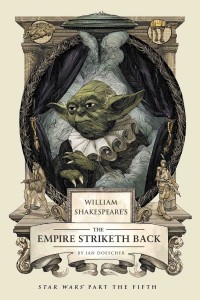
Book cover for Ian Doescher’s “The Empire Striketh Back,” a Shakespearean parody of Star Wars Episode 5.
Well today is May 4rth, when a lot of people have chosen to celebrate one of the most iconic movies of the 20th century: Star Wars! And why not? The story is full of conflict, introspection, love, change, the conflict between fathers and sons, and occasionally guidance from ghosts. Wait, that sounds familiar- it’s a lot like Shakespeare! Yes, the movie has a lot of parallels with the Shakespearean canon, and I’d like to share some of those similarities here. Below is a post I did for the American Shakespeare Center about how the Star Wars prequels parallel Shakespeare’s history saga of Henry the Sixth:

















 The Shakespearean Student