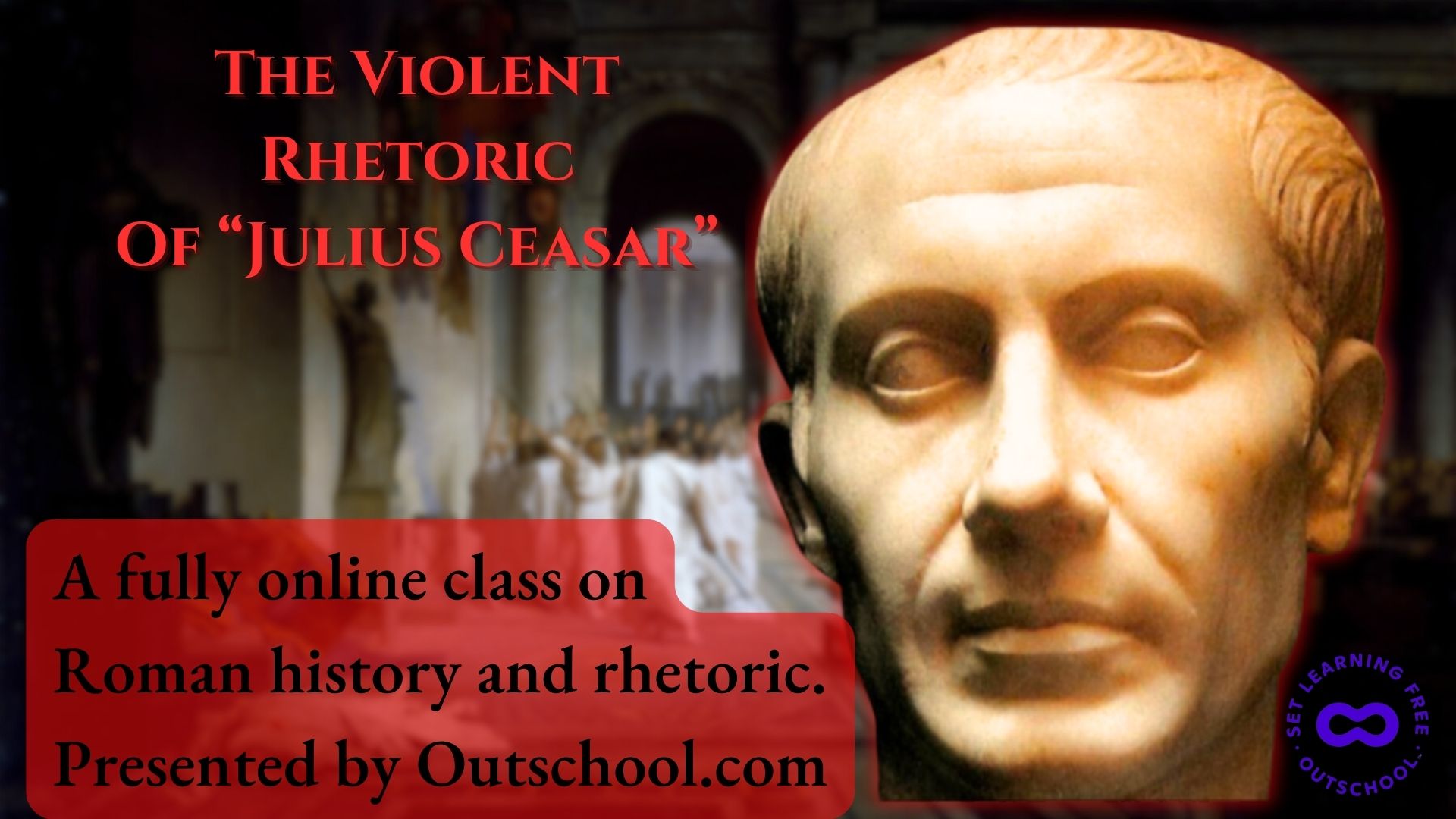
New Class: The Violent Rhetoric Of “Julius Caesar” (Flex Schedule Edition)

Course Description

  1. Concept: To explore the plot, characters, and themes of Shakespeare’s Julius Caesar while also gaining an insight into Ancient Roman history and culture.
  2. Student Description: Delve into the passionate speeches of Brutus and Antony in Shakespeare’s Julius Caesar, which led a whole country to revolution.
  3. Parent Description  Using self-paced online activities, and a helpful handout, your child(ren) will analyze the rhetoric and persuasive power in two speeches from Shakespeare’s “Julius Caesar.” The course will also cover the culture of Ancient Rome, and the circumstances that led to Julius Caesar’s assasination, which inadvertently led to the birth of the Roman Empire.
  4. Course Organizaiton (the class is divided into 4 parts that students can complete at their own pace over a week-long period
    1. Each lesson will have:
      1. “That Is the Question” (Essential Question)
      2. Lesson Objectives
      3. Set the Scene (Background and context)- 1-3 slides
      4. The Players (biography) 1-3 slides
      5. Go Deeper (Webquest)
        1. Explore military life and the lives of women in Rome using my blog and other websites as a guide.
        2. Post 3 things you learned to the Outschool page or send a photo of your completed handout.
      6. Words, Words Words (Vocabulary, famous lines) 
      7. A Taste of Your Quality (Independant Project)
      8. Show us your mettle (Test)
    2. So each class should be 14-15 slides long.

Outline

Class I- Background on Caesar and Roman Culture

  1. That is the Question: 
    1. Why did Brutus feel Julius Caesar had to die?
    2. What was the aftermath?
    3. Can one person’s speech effect an entire nation?
  2. Lesson Objectives
    1. To provide historical and political context to explain why Julius Caesar was assassinated, and how his death inadvertantly created the Roman Empire.
    2. To explain the Rhetorical Triangle, the building blocks of persuasive speech.
    3. To go through the story of Julius Caesar focusing on the effect of the speeches.
    4. To study the  famous “Friends, Romans Countrymen” speech.
    5. To contrast this speech with some more recent political speeches and you think critically about:
      1. What does the speaker want?
      2. What tactics does he use?
      3. How effective is it?
  3. Set the Scene
    1. History
      1. Government
        1. Horrible History
      2. Military
        1. https://www.livescience.com/ancient-roman-spike-defenses-made-famous-by-julius-caesar-found-in-germany 
        2. Caesar Cipher
        3. https://kids.kiddle.co/Julian_calendar 
    2. Culture
      1. Fashion: https://shakespeareanstudent.com/2022/03/11/the-fashion-is-the-fashion-ancient-roman-fashion-and-beauty/ 
      2. Role of Women: https://shakespeareanstudent.com/2021/03/29/i-lift-the-veil-on-shakespeares-celebrated-roman-female-characters-and-discuss-the-social-norms-they-embodied-and-challenged/ 
      3. The Lupercal- https://wordpress.com/post/shakespeareanstudent.com/4545 
  4. The Players (slides)
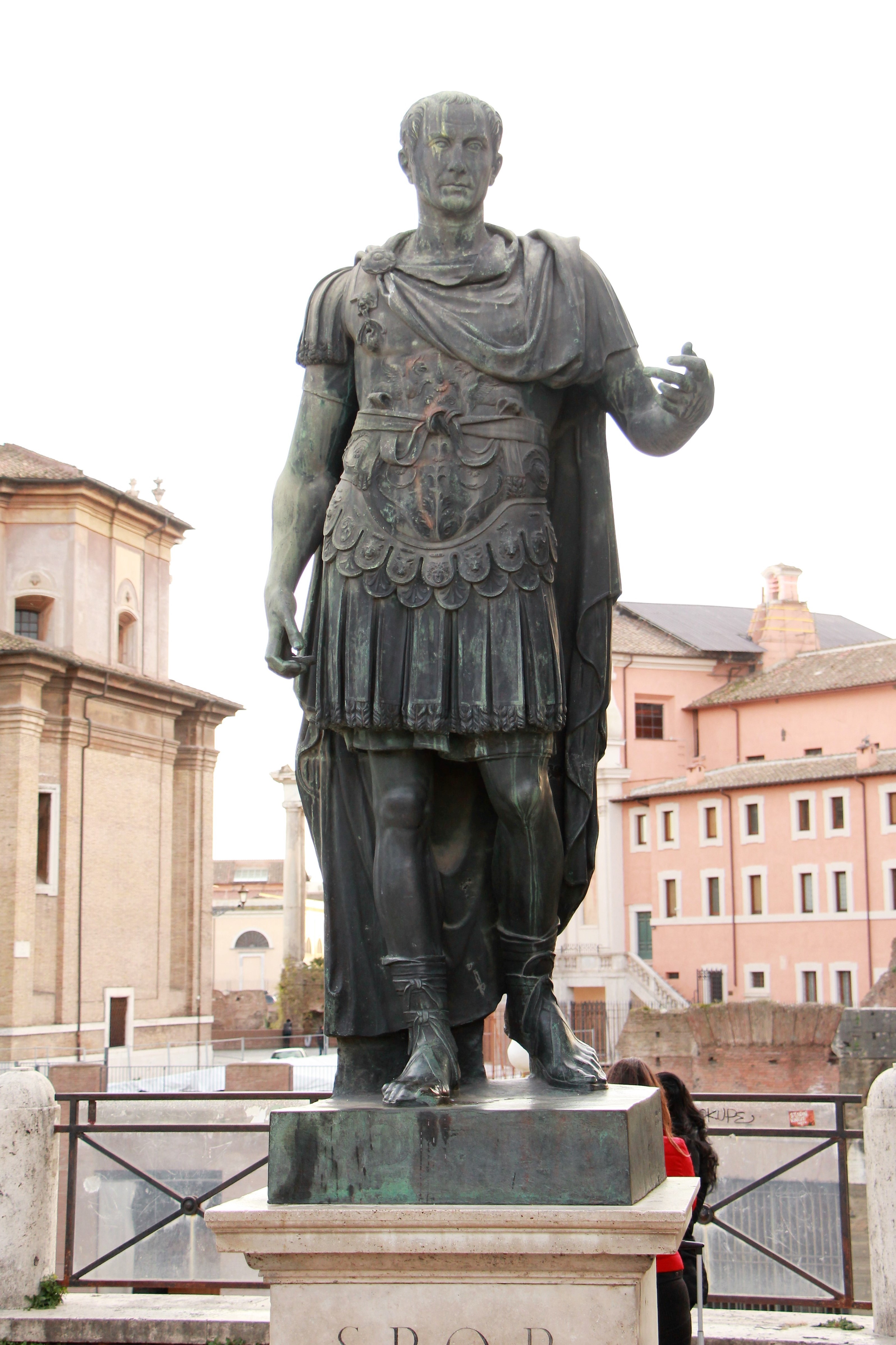
    1. Julius Caesar Julius Caesar – Greatest Conqueror Ever?
    2. Cassius Longinus
    3. Marcus Brutus
    4. Marc Antony
  5. Go Deeper- 
    1. Go to Google Arts and Culture and find 3 facts and 3 pictures of Caesar
    2. Answer the following Questions:
      1. Name 3 jobs Caesar had in the Roman Republic
      2. Was Caesar Deaf? Was he epileptic? 
      3. Name 3 things Caesar accomplished during his career.

Go to opensourceshakespeare.com and look at Caesar’s lines- how does Caesar view himself? Write 3 examples.

  1. Words Words Words
    1. Republic
    2. Dictator
    3. Lupercal
    4. Assassinate
    5. Senate
  2. A Taste Of Your Quality
    1. Make a news headline about Caesar’s triumph. How would you report on it? Would you be allowed to say anything bad about Caesar?
  3. Show Us Your Mettle
    1. Quizlet for the terms

Class 2- Cassius Manipulates Brutus

HC Selous Illustration, "Brutus and Cassius" 1830

That Is the Question- 

How does Cassius convince his brother-in-law Brutus to betray and assassinate Caesar, his friend and colleague?

Learning Objectives-

  1. To give historical context as to why the Senate in general, (and Cassius in particular), feared and hated Caesar.
  2. To examine Brutus’ character
  3. To demonstrate how Cassius uses persuasive speech 

Setting the Scene- The Plot

The Players-

Cassius- slide/ https://www.rsc.org.uk/shakespeare-learning-zone/julius-caesar/character/whos-who 

Write 3 facts we learn about Cassius at the start of the play:

Brutus:  

https://www.rsc.org.uk/shakespeare-learning-zone/julius-caesar/character/whos-who

Go Deeper- 

Brutus- Podcast episode. I posit in this episode that Brutus is 

Words, Words, Words- 

  1. Traitor
  2. Republic
  3. Dictator
  4. Revolution
  5. Ethos
  6. Pathos
  7. Logos
  8. Rhetoric
  9. Colossus
  10.  Aeneus

A Taste Of Your Quality: 

(Independent work): We’ll examine a painting of Brutus’ ancestor Lucius and learn why Brutus values Rome more than even family.

Show Us Your Mettle: 

Quizzes on Brutus

Class 3- Antony and Brutus’ Dueling Speeches

George Ed Robertson Antony
(c) Hartlepool Museums and Heritage Service; Supplied by The Public Catalogue Foundation

That Is the Question

  1. After Caesar’s Death, his friend Marc Antony held a funeral for him where he gives the famous “Friends, Romans, Countrymen” speech. How did Antony’s speech affect the crowd?
  2. Brutus has a speech where he explains why he killed Caesar. What does he say, and how effectively does he say it?
  3. Antony was secretly plotting to take power for himself, and get Brutus and Cassius killed. How did he do it?
  4. Do speeches have the power to change a nation?

Learning Objectives

  1. To explain the Rhetorical Triangle, the building blocks of persuasive speech.
  2. To study the famous “Friends, Romans Countrymen” speech, as well 
  3. To look at these speeches and get you to think critically about:
    1. What does the speaker want?
    2. What tactics does he use?
    3. How effective is it?

Setting the Scene

RSC Learning Zone- Act III, Scene 2 https://www.rsc.org.uk/shakespeare-learning-zone/julius-caesar/story/scene-by-scene

The Players (use the videos from the RSC)

Brutus- Man of Honour VS Man of Action | Julius Caesar | Royal Shakespeare Company

Antony Julius Caesar, Act 3 Scene 2 | 2012 | Royal Shakespeare Company

Go Deeper

Words, Words, Words

  • Irony
  • Antimetabole
  • Rhetoric
  • Countrymen
  • Lend
  • Interred
  • Noble
  • Hath
  • Grievous
  • Coffer
  • Honorable
  • Lupercal
  • Cause
  • Mourn

A Taste Of Your Quality

  • Watch the video of Antony’s speech:

Quizzes

Class 4- After Caesar-

We’ll talk about the consequences of violent revolutions and how Julius Caesar has inspired some of the greatest speeches in political history.

-Patrick Henry

– Gettysburg Address

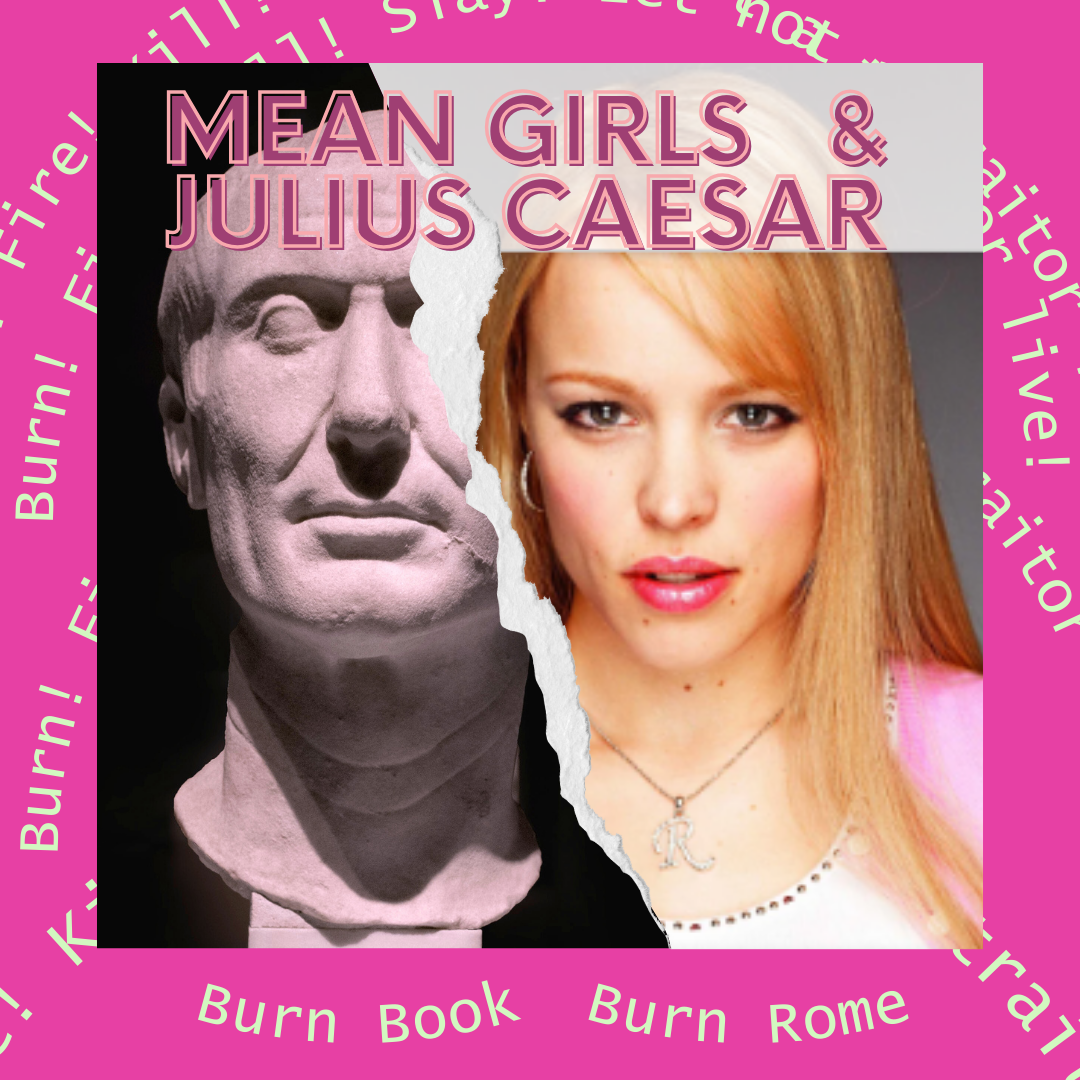
– Mean Girls

That Is the Question

  1. How have people interpreted the play “Julius Caesar” in America?
  2. Does this play promote violence?
  3. What kind of violent speech do we deal with in politics today?

Learning Objectives

  1. To show the link between American History and Julius Caesar
  2. To address the controversy and the misconception that the play promotes violent assassination.
  3. To end on a cautionary note people must think critically about what they hear in politics and not make rash decisions based on appeals to fear.

Setting the Scene- US History

  • America was founded using the principles of republican government that Ancient Rome used- with a senate, and a series of checks and balances to ensure no one has too much power.
  • America was founded in a violent revolution, and some of our country’s early leaders used Brutus as an inspiration- to overcome a tyrannical king.
  • In later years, however, some people have forgotten what happened to Brutus
  •  Today, we are often bombarded with speech that encourages fear and anger and we must think critically when we hear such speech in whatever forum- Roman, or Reddit.

The Players (use my JC lecture?)

  • Patrick Henry
  • Abraham Lincoln
  • John Wilkes Booth
  • Donald Trump

Go Deeper

-Watch the Caesar Video

– How does the play promote nonviolence?

– How did Brutus’ assassination fail to save the Roman Republic?

Words, Words, Words

Four-score

Dedicate

proposition

Civil War

Endure

Consecrate

Devotion

A Taste Of Your Quality (Night Cafe)

  • Use AI to create your own image for Julius Caesar
    • What time and place would you set the play in?
    • how do you see him- is he a hero, or a tyrant? 

https://outschool.com/classes/the-violent-rhetoric-of-julius-caesar-flex-schedule-edition-fwB3cwQM?refuid=MaRDyJ13

Funny Stuff for The Ides of March

Funny Sketches from “Horrible Histories”

Live Tweeting Caesar’s Funeral

This is an activity I’m doing with my Shakespeare Club. The idea is to paraphrase the lines of the Roman crowd in the language of social media. For example, I changed this:

Julius Caesar, Act III, ii

…. to this:

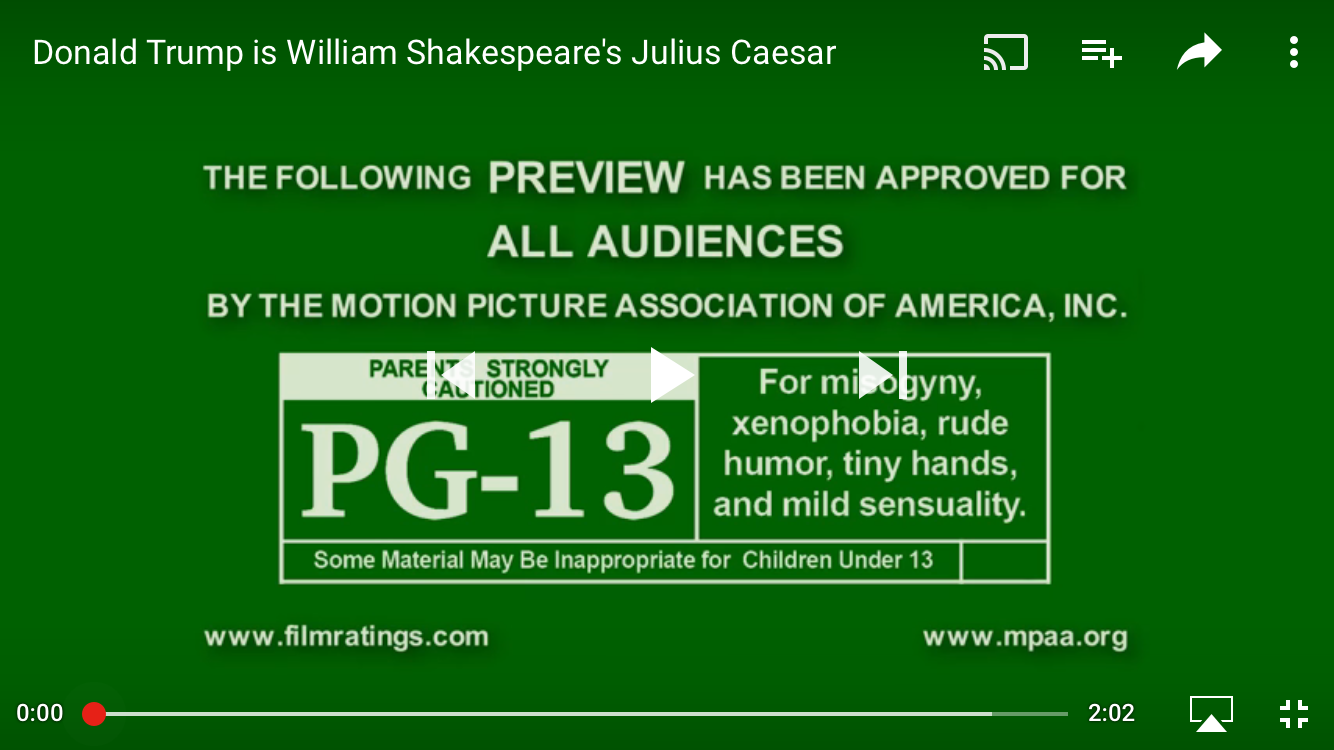
Julius Caesar as Donald Trump:

Good TIckle Brain

https://goodticklebrain.com/home/tag/julius+caesar

If you can’t get enough of “Julius Caesar, consider signing up for my online Julius Caesar class. The class is asynchronous, which means you can take it whenever you want. More details below:

https://outschool.com/classes/84ee847d-19f3-45f8-9f25-81e688b8497d

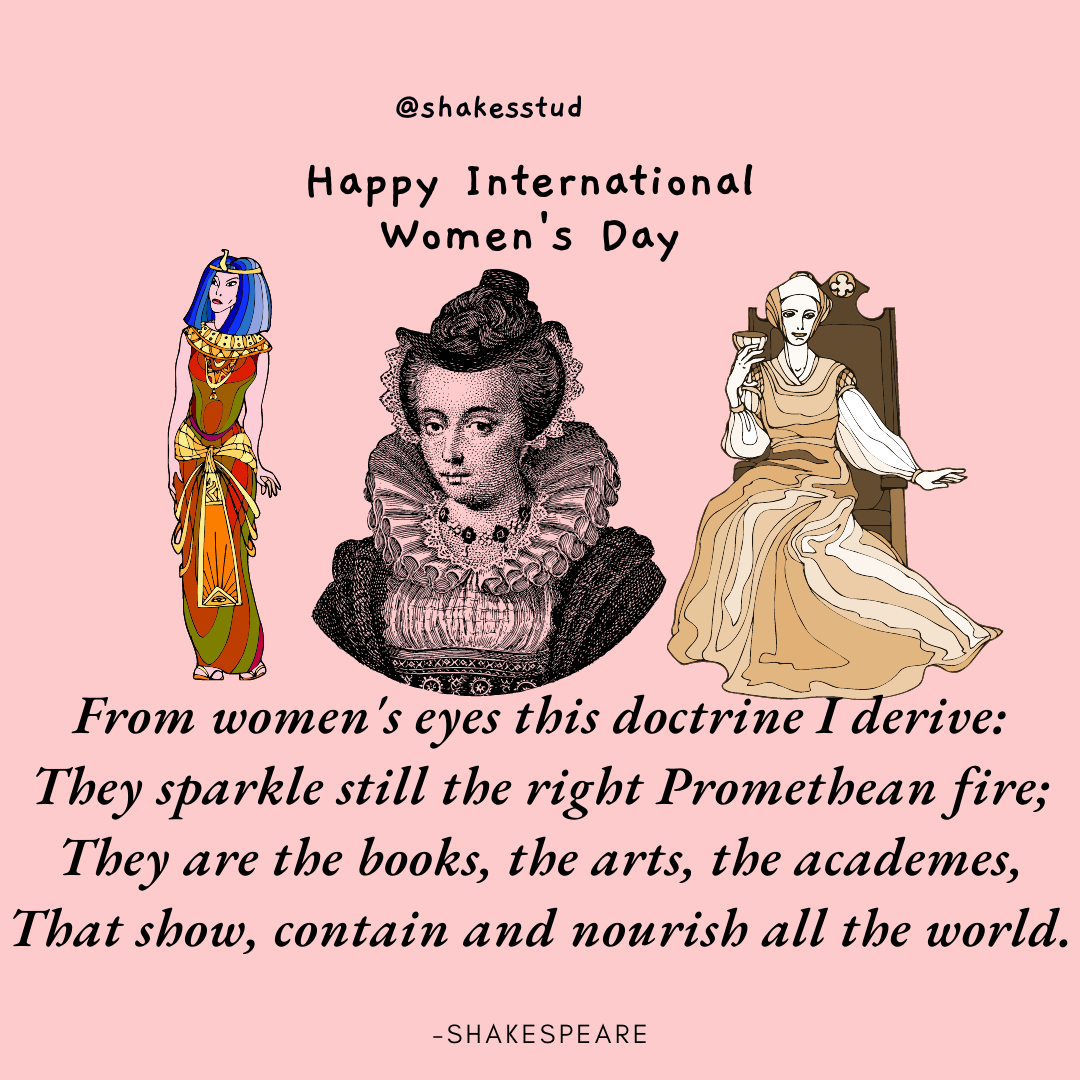
Happy International Women’s Day

Happy International Women’s Day! I would like to dedicate my posts today to my daughter, a wonderful strong girl, a Shakespeare fan, and a lifelong lover of the musical “Six”.

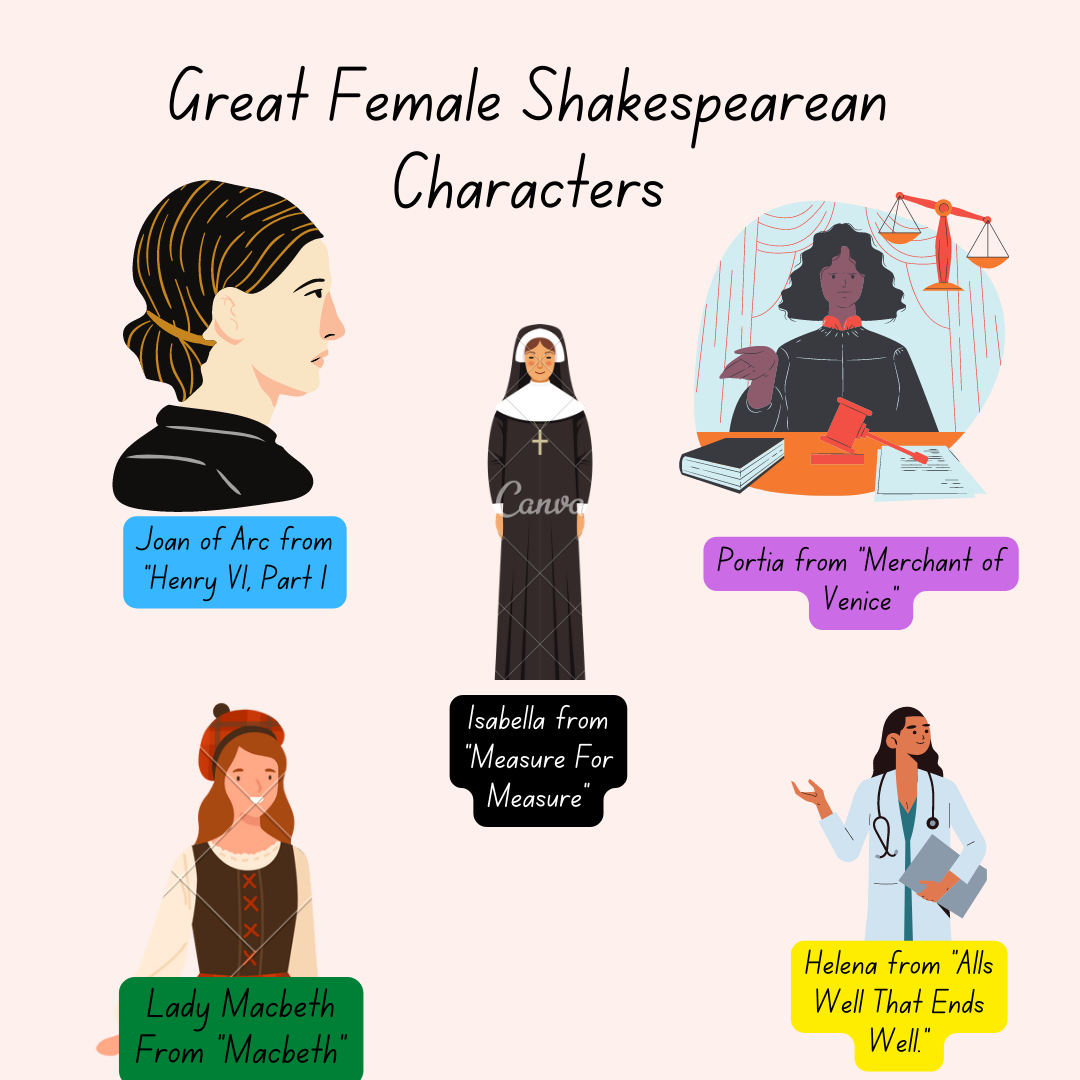
Some of Shakespeare’s Best Female Characters

I’ve discussed Shakespeare’s best Mother characters before, and his Roman characters as well, but I thought I should include some of the ones who are not mothers and/or unmarried (at least for most of the play). I don’t want to rank these characters since I detest ranking women in general, so here are some of Shakespeare’s best characters, and some of their immortal speeches:

CleoPatra

Katherine Of Aragon

Even though “Henry the Eighth” is my least favorite Shakespeare play, I love how strong Katherine is and how well she fights against the machinations of Cardinal Woosey and her husband. She is a courageous, virtuous, and strong-minded woman, who when Henry demands that she consent to a divorce, Katherine simply says: “No Way!”

Lady Macbeth

A fascinating and electrifying character. She seduces her husband and makes him fully commit to murdering the king. If you look at the post above, you can see the multiple potential readings for why she courts evil spirits to convince her husband to murder the king. Her strength and energy is highly attractive and it was easy for me to see how a man might do anything to make her happy.

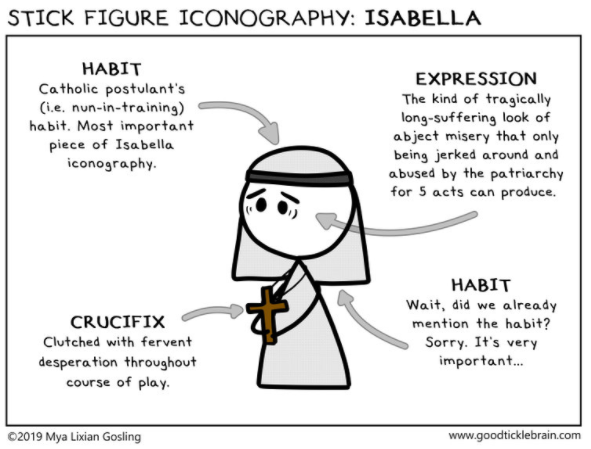
Isabella From “Measure For Measure”

I think Elizabethans would have seen the connection between the Virgin Queen who fought off assassination from the Pope, and Isabella, a virgin who fights off the advances of Angello, who seems pious, but who secretly is degenerate and cruel. Isabella even becomes a princess at the end of the play, (assuming she marries the Duke), which means she could literally become a Queen Elizabeth to English eyes.

https://www.rsc.org.uk/shakespeare-learning-zone/measure-for-measure/character/analysis

Stick figure version of Isabella from “Peace Good Tickle Brain.”

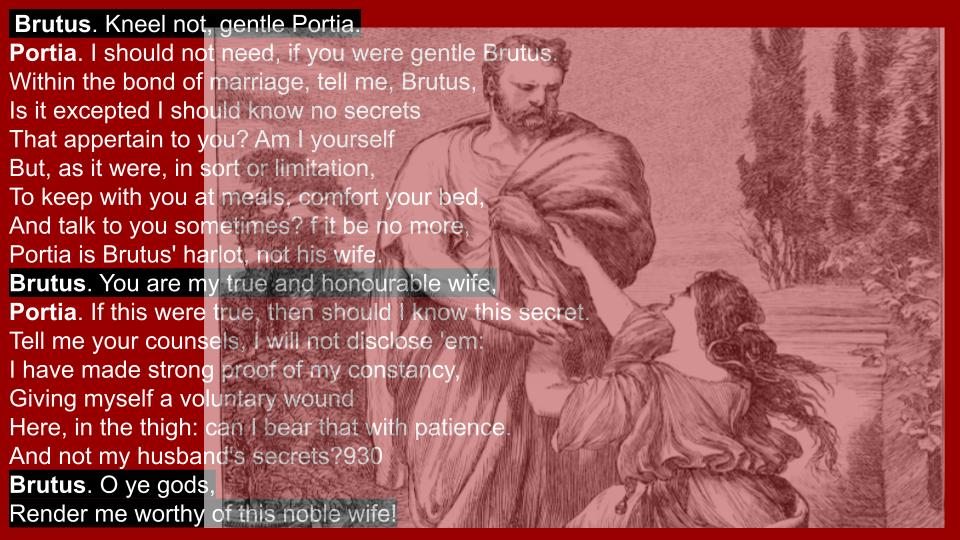
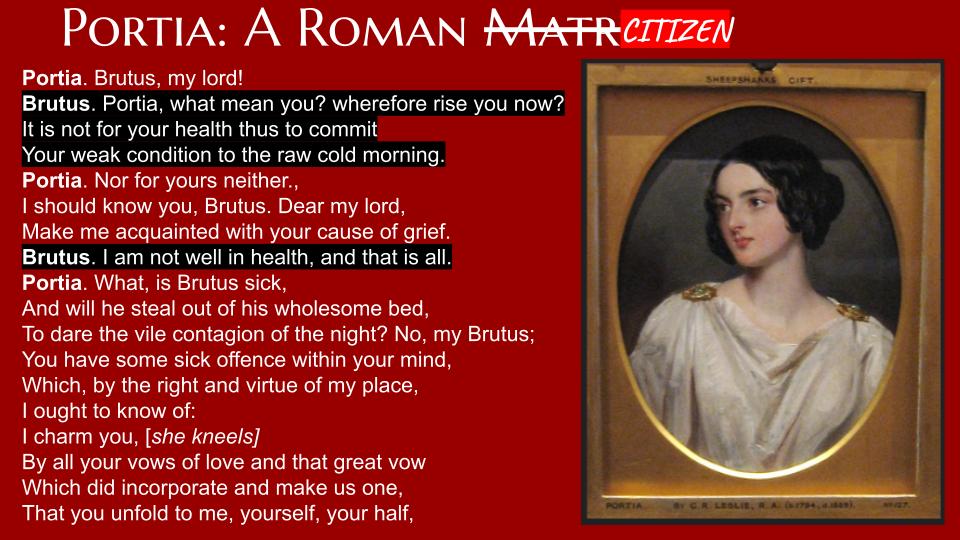
Portia Catonis (Wife of Brutus)

One of the best female characters in the Roman plays, Portia demands to be taken seriously as a wife and as a Roman citizen. In her one great scene we see her demand that Brutus tell her why he has been so distant and cold:

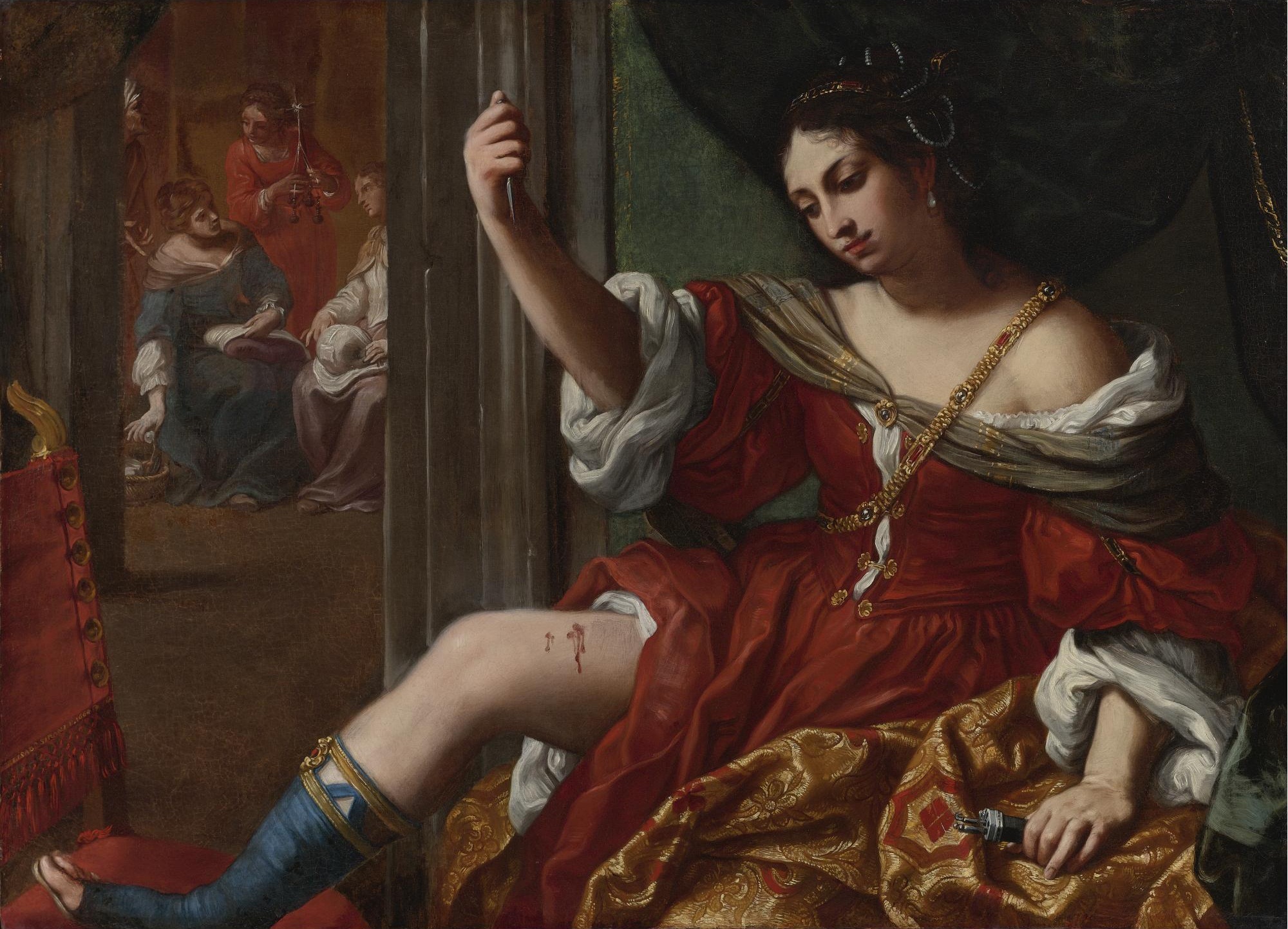
Elisabetta Sirani, Portia Wounding her Thigh, 1664, oil on canvas, 101 x 138 cm (Collezioni d’Arte e di Storia della Fondazione della Cassa di Risparmio, Bologna)
Some have speculated that in real life Portia helped Brutus with the conspiracy to assassinate Caesar, after all, she was the daughter of Caesar's great rival senator Cato, who was willing to die when he realized the Roman republic was finished.
Not only was the real Portia a great woman, she also inspired some great art. Below is the great masterpiece: Portia Wounding her Thigh, by Elisabetta Sirani (1664). According to Dr. DR. MAURA GLEESON, the painting was commissioned by a fabric merchant, which explains Portia's sumptuous outfit. Portia remains totally calm, yet focused and determined as the other women in the background idly spin clothes in the background. For more information on this masterpiece, click the link below:

If you’d like to learn more about Portia and Julius Caesar, sign up for my online class on the play via Outschool.com. Get a $5 discout with coupon code HTHES6Q5XA5 until Apr 2, 2024. Get started at https://outschool.com/classes/the-violent-rhetoric-of-julius-caesar-flex-schedule-edition-fwB3cwQM and enter the coupon code at checkout.


So happy International Women’s Day ladies! Hope you get some of the love and appreciation you deserve today! More posts coming soon!

Crafting a Character: Puck

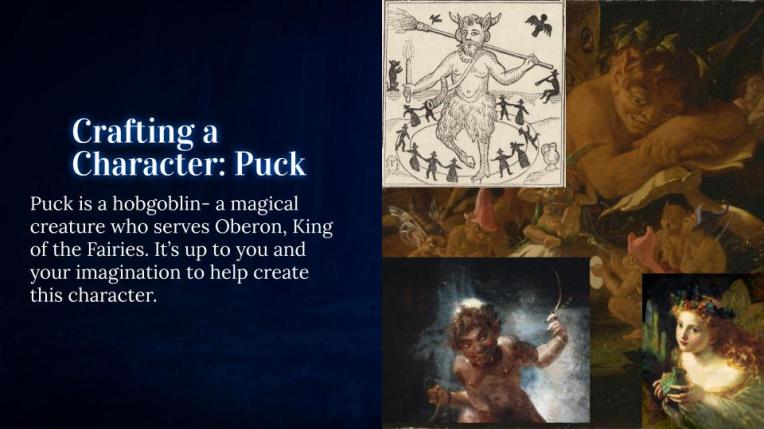
“Welcome Spirit, How Camest Thou hither?” The sources for Puck

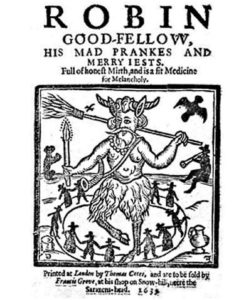
Puck, in medieval English folklore, a malicious fairy or demon. In Old and Middle English the word meant simply “demon.” In Elizabethan lore he was a mischievous, brownielike fairy also called Robin Goodfellow, or Hobgoblin. As one of the leading characters in William Shakespeare’s Midsummer Night’s Dream, Puck boasts of his pranks of changing shapes, misleading travelers at night, spoiling milk, frightening young girls, and tripping venerable old dames. The Irish pooka, or púca, and the Welsh pwcca are similar household spirits.

Britannica, The Editors of Encyclopaedia. “puck”. Encyclopedia Britannica, 21 Apr. 2016, https://www.britannica.com/topic/puck-fairy. Accessed 18 July 2023.

Shakespeare also took inspiration from English poet Edmund Spencer, who visited Ireland in the 1590s and adapted the folklore he picked up into his opera The Fairy Queen, which Shakespeare adapted into A Midsummer Night’s Dream

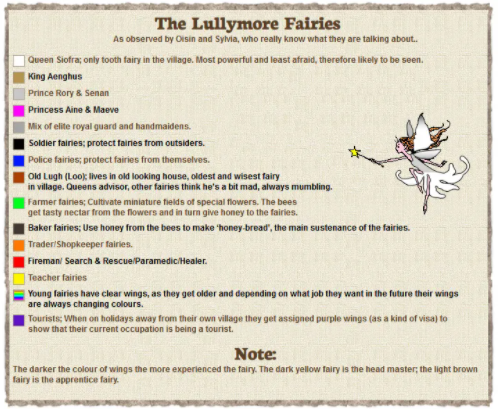
Types of fairies you can “spot” at the Lullymore Park in Ireland:

Puck/Robin’s Dual Nature

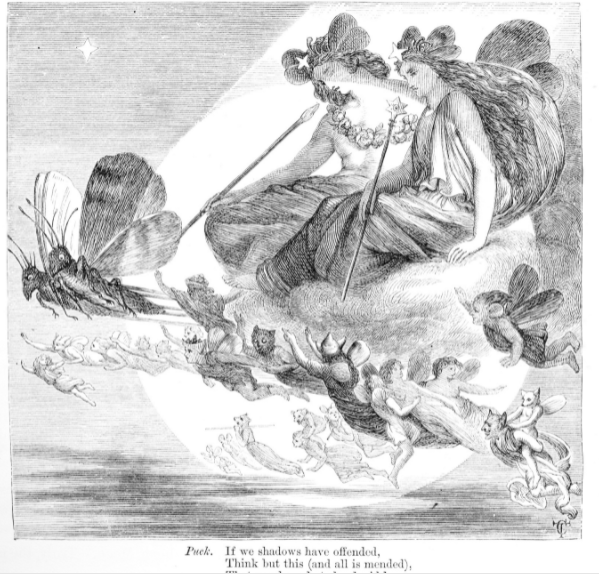
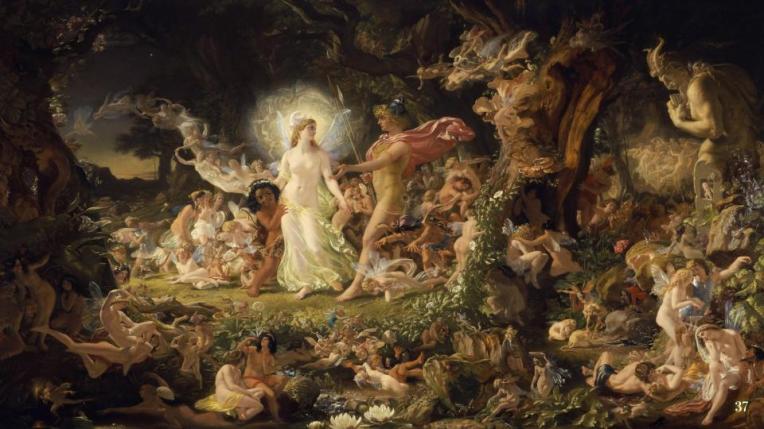
The old stories tell that Fairies are magical creatures who live in hollow places in the earth. Some are benevolent and help give rain and pleasant weather to the Earth, Like the king and Queen of the fairies, Oberon and Titania:

And the mazed world,
By their [the tides] increase, now knows not which is which:
And this same progeny of evils comes
From our debate, from our dissension;
We are their parents and original.

— Titania, (Queen of the Faries), A Midsummer Night’s Dream Act II, Scene i.

Titania in this speech shows great concern for nature, humanity, and the planet. She believes it is the responsibility of fairies, particularly herself and her husband Oberon, to control the elements and keep humans and fairies safe. Some fairies, however, are cruel and enjoy playing tricks on mortals, just like Puck in A Midsummer Night’s Dream, or Queen Mab in Romeo and Juliet.

.

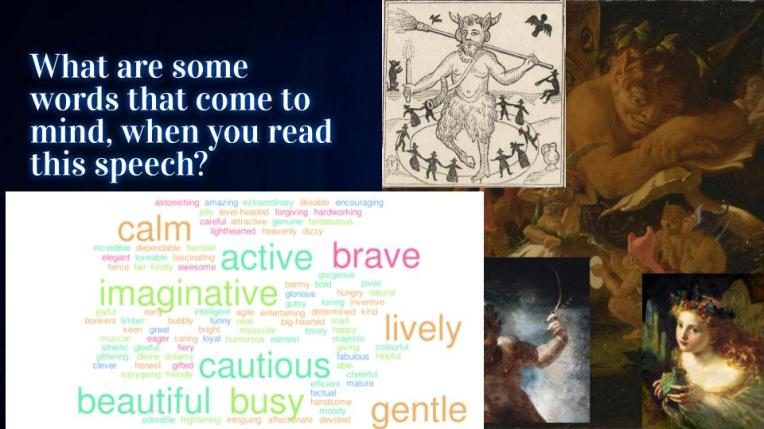
This is a short analysis I created of the tricks Puck plays on people in A Midsummer Night’s Dream, as part of my acting course on Ouschool.com. Note the different ways Puck is portrayed in photos as a satyr, a rotund elf, and sometimes as an almost- demon like figure.

Punishments or contracts with fairies formed a significant part of Goodfellow’s purpose on earth. While he could issue good fortune and support, this was always at the cost of those involved. As Reginald Scot commented, Goodfellow had a ‘standing fee’ of a ‘mess of white bread and milk’, which he expected after supporting housewives with their chores. If his payment was forgotten, Goodfellow was believed to steal from the home that owed him, often stealing grain and milk from the dairy.

Abigail Sparkes, Historic UK.com

Performing Puck

Because Puck is not human, and somewhat ambiguous in the text, an actor can play Puck in many different ways. Generally speaking, actors tend to explore Puck’s attitude toward humans, their love of mischief, and how to translate that physically and vocally

Puck. My mistress with a monster is in love.
Near to her close and consecrated bower,
While she was in her dull and sleeping hour,
A crew of patches, rude mechanicals,
Were met together to rehearse a play
The shallowest thick-skin of that barren sort,
Who Pyramus presented, in their sport
Forsook his scene and enter’d in a brake
When I did him at this advantage take,
An ass’s nole I fixed on his head:
Anon his Thisbe must be answered,
And forth my mimic comes.
So, at his sight, away his fellows fly;
And, at our stamp, here o’er and o’er one falls;
He murder cries and help from Athens calls.
I led them on in this distracted fear,
And left sweet Pyramus translated there:
When in that moment, so it came to pass,
Titania waked and straightway loved an ass!

slideshare id=52829293&doc=randj-150916030030-lva1-app6891]

References:

Shapiro, James. A Year In the Life Of William Shakespeare, 1599. Chapter 6: Things Dying and Things Reborn.

https://www.bbc.co.uk/programmes/articles/3fLDRSY7r9rJhrVFWy99Mly/transcript-shakespeares-restless-world-programme-7

https://www.independent.ie/entertainment/theatre-arts/is-shakespeare-responsible-for-the-stage-irishman-34638347.html

https://www.irishtimes.com/culture/stage/what-ish-my-nation-shakespeare-s-irish-connections-1.2619173

Announcing ROMAN MONTH!

Julius Caesar Immortal Longings

In honor of “The Ides Of March” and Women’s History Month, I’ve planned a series of posts, podcasts, activities, and videos all related to “Julius Caesar” and Shakespeare’s female characters. Here’s a preview:

Posts

Play of the Month: Julius Caesar

Why “Mean Girls” is like Julius Caesar

Close Reading: Friends, Romans, Countrymen

Shakespeare’s Roman Women

The Fashion is the Fashion- Julius Caesar- Togas, helmets, etc.

Mock Trial- Julius Caesar

Shakespeare Recipes- Roman Pies

Podcasts

Crafting A Character: Brutus

The turbulent history of “Julius Caesar” in America

Special Promo Event!

Be sure to subscribe for all the fun!

Get $5 off when you sign up for my online class “The Violent Rhetoric of Julius Caesar” with coupon code HTHESIIAW75 until Mar 28th.

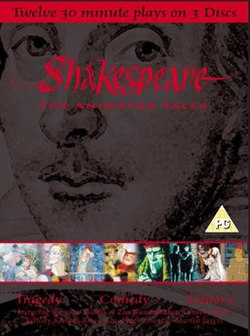
Shakespeare: The Animated Tales- “Macbeth”

This is a 30 minute cartoon version of Macbeth originally produced for the BBC in 1992. It features Brian Cox  as the voice of Macbeth (before he was the voice of McDonald’s), and Zoë Wanamaker as Lady Macbeth (before she was a witch who teaches at Hogwarts).

I like the way it portrays the horror imagery of the play in sort of a European-manga animation hybrid. Admittedly, there are better ones in the series, but this one is still pretty neat.

DVD box art for “Shakespeare the Animated Tales.”

To check out other episodes in the series, view this playlist:

New Course on Shakespeare’s Tragedies

In this 9 week course, students will discover Shakespeare’s greatest characters- Hamlet, Othello, Macbeth and others through games, dramatic readings, and interactive projects! -The class is designed to be ala carte- you can learn about all these plays, choose a specific play to focus on, or do the entire course. Each class will have a game of some kind, an engaging quiz, and a short explanation of the setting, characters, and motifs of one or more plays. Each class will also include a close reading of a famous speech.

Course Structure

Background on the Tragedies- the Wheel of Fortune

I will explain the basic structure of Elizabethan tragedies and the concept of Fortune, which is a motif Shakespeare uses in all of his tragedies. I will also debate the concept of “The Tragic Flaw:” the notion that otherwise good people are brought down by single character flaw. Finally, we will quickly summarize the premise behind all 11 of Shakespeare’s tragedies.

The Greek Plays

I will summarize Shakespeare’s two tragedies that are set in ancient Greece and provide commentary on their themes and ideas. I will also draw parallels between the Ancient Greek tragedies of Aeschylus and Euripides and Shakespeare, with a particular emphasis on the Greek philosopher Aristotle’s beliefs on the function of tragedy, which influenced every major drama for the last 2,000 years.

The Roman Plays- From Republic to Empire

We will take a bloody, backstabbing journey to ancient Rome, and discuss how Shakespeare shows through these four plays the dissolution of a republic into an empire. We will discuss the themes of democracy, dictatorship, mob rule, and savagery. Plays covered: Coriolanus, Julius Caesar, Antony and Cleopatra, and Titus Andronicus.

“Hamlet”- The man at the crossroads

We will explore the universality of this timeless tragedy, and do close readings of his famous soliloquies.

 “Macbeth: The Tower built on lies-

In addition to the character and his speeches, I’ll draw parallels to the history behind the play, including witchcraft in the Jacobean era, and the Gunpowder plot against the king!

“Othello”- The Lovers and the Devil

I will talk about how Shakespeare dramatizes race and prejudice in the context of Othello’s struggle with prejudice and his own jealousy.

“King Lear”- The Blind Fools and the Hermit

I will discuss the complex plot of Shakespeare’s tragedy about old age, blindness, betrayal, and families ripped apart by greed.

Think Like a Director

 I will teach the students to think like a director and develop a concept for the characters, set, lights, etc. I’ll also briefly take you through famous productions of these great tragedies by the Royal Shakespeare Company and others.

Special Offer

Get $10 off my class “Shakespeare’s Tragedies: The Fates of Men and Nations” with coupon code HTHESG5B2Q10 until Dec 31, 2022. Get started at https://outschool.com/classes/shakespeares-tragedies-the-fates-of-men-and-nations-xKCYUkC9 and enter the coupon code at checkout.

Shakespeare Week Is Coming at Outschool.com

Outschool.com will be honoring the contributions of Shakespeare during the very first Shakespeare Week on March 21-27th.

I’m honored to take part in this celebration, and I’m offering several aclasses which relate to Shakespeare in an engaging way. Here’s the schedule below:

If you want to sign up for one of my classes, please visit my Outschool page:

https://outschool.com/teachers/The-Shakespearean-Student

https://outschool.com/teachers/The-Shakespearean-Student

Hope to see you during Shakespeare Week!