

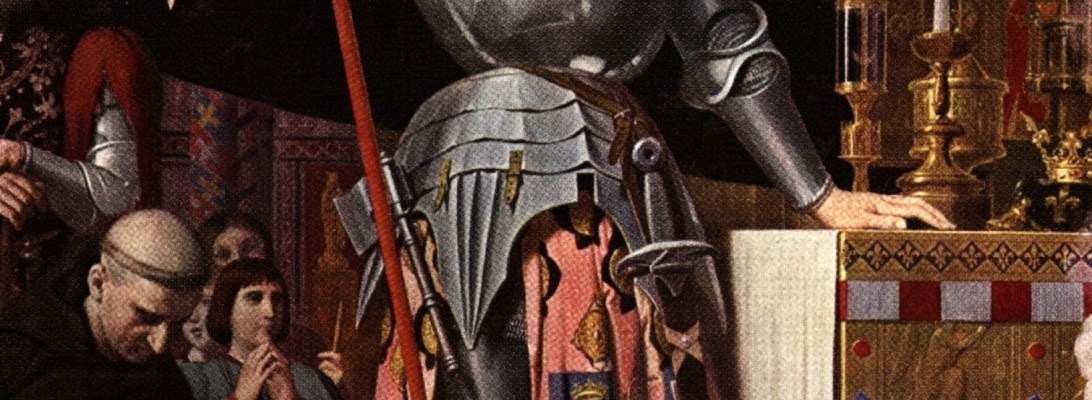
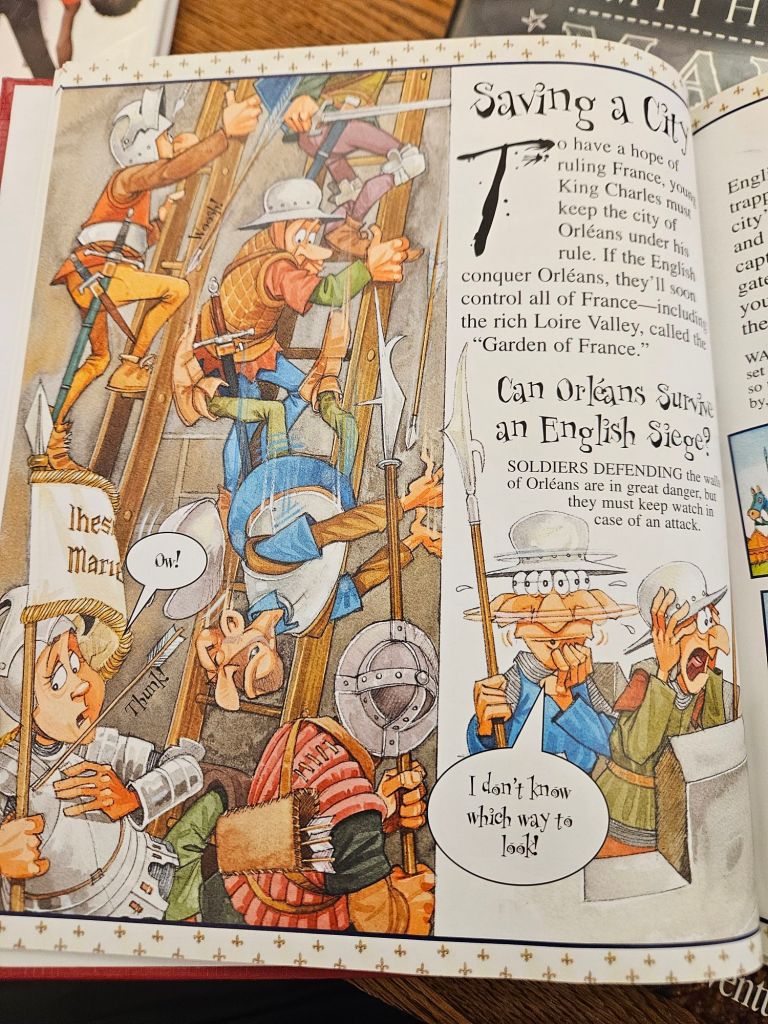


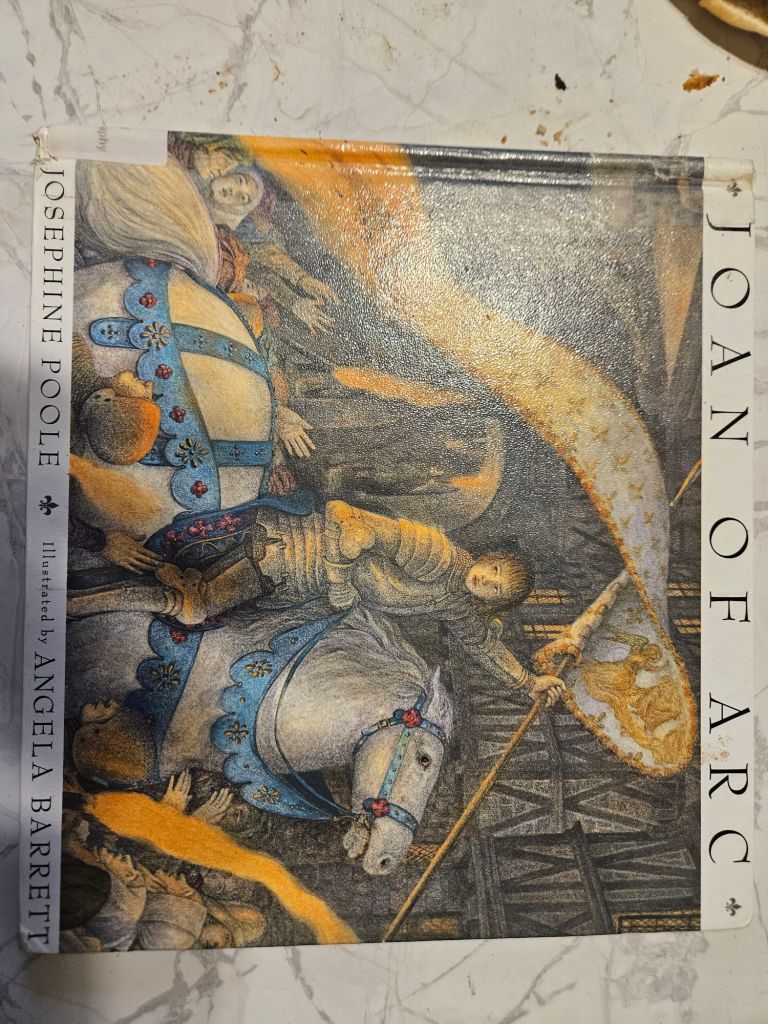
I’m coaching a young actress who is performing a monologue from one of Shakespeare’s histories, his play Henry VI, Part I. It’s likely you know the character, even if you don’t know the play- Joan LaPucelle, aka Joan of Arc. In this post, I will compare and contrast the historical Joan from Shakespeare’s version, and further attempt to separate the real woman from her legendary status as the patron Saint of France.
Shakespeare’s Joan
Shakespeare’s younger sister was also named Joan, and it’s possible she might have inspired Shakespeare’s decision to write about Joan the Maid. Recently, a document called A Spiritual Testimony, (long attributed to Shakespeare’s father), is now believed to be proof that Shakespeare’s little sister was a devout Catholic, at a time when doing so could incur ruinous fines and the risk of arrest for sedition and heresy. Given the courage of Joan’s convictions, perhaps her elder brother infused some of her zeal when writing the character of Joan in Henry VI, part I.
The Life of Joan
One life is all we have, and we live it as we believe in living it. But to sacrifice what you are and to live without belief, that is a fate more terrible than dying. -Joan of Arc
Joan LaPucelle, (Joan the Maid) was a controversial figure even in the 15th century. To the English, (and even some of the French), she was a witch, and a cruel warrior who took away rightful English territory. To others, she was a hero and a saint.
What I hope to do in this post is provide you with details about the life of Joan of Arc. Next I will compare and contrast the most iconic portrayals. I would argue that the success of each interpretation depends on how the writer, director, and of course, the actress playing Joan, answer these questions.
Shakespeare’s Version of Joan La Pucelle
Charles, King of France. Go, call her in.
[Exit BASTARD OF ORLEANS]255
But first, to try her skill,
Reignier, stand thou as Dauphin in my place:
Question her proudly; let thy looks be stern:
By this means shall we sound what skill she hath.
[Re-enter the BASTARD OF ORLEANS, with JOAN LA PUCELLE]

Reignier. Fair maid, is't thou wilt do these wondrous feats?
Joan la Pucelle. Reignier, is't thou that thinkest to beguile me?
Where is the Dauphin? Come, come from behind;
I know thee well, though never seen before.
Be not amazed, there's nothing hid from me:265
In private will I talk with thee apart.
Stand back, you lords, and give us leave awhile.
Reignier. She takes upon her bravely at first dash.
Joan appears in the first part of Shakespeare’s epic saga of four plays about the Wars of the Roses. It is King Henry’s inability to defend his lands in France against Joan’s valiant attacks that helped trigger the Civil War, where the House of York fight to take the crown away from the incompetent King Henry VI.
Joan la Pucelle. Dauphin, I am by birth a shepherd's daughter,
My wit untrain'd in any kind of art.270
Heaven and our Lady gracious hath it pleased
To shine on my contemptible estate:
Lo, whilst I waited on my tender lambs,
And to sun's parching heat display'd my cheeks,
God's mother deigned to appear to me275
And in a vision full of majesty
Will'd me to leave my base vocation
And free my country from calamity:
Her aid she promised and assured success:
In complete glory she reveal'd herself;280
And, whereas I was black and swart before,
With those clear rays which she infused on me
That beauty am I bless'd with which you see.
Ask me what question thou canst possible,
And I will answer unpremeditated:285
My courage try by combat, if thou darest,
And thou shalt find that I exceed my sex.
Resolve on this, thou shalt be fortunate,
If thou receive me for thy warlike mate. Act 1, Scene ii
In the play, Joan is a strong warrior, a clever tactician, and a gifted orator, yet her main function in the play is as the antagonist who goes toe to toe against the English warrior, Lord Talbott.
Naturally, since Shakespeare was trying to write for an English audience, Joan is portrayed as the antagonist, not the hero. The English make many snide comments that suggest Joan might not be as virtuous or as righteous as she appears. However, Shakespeare never outright calls Joan a witch or portrays her doing anything other than trying to fight for her country, by any means necessary.
Once Charles is crowned and Joan gets back Orléans for the French, the tide of battle turns against her. In Shakespeare’s version, this is because the English are united around John of Bedford, (King Henry’s uncle and Regent of France), as well as Lord Talbot, the great knight and “Terror of the French”. In Act V, scene iii, Joan calls upon spirits to fight the English:
The regent conquers, and the Frenchmen fly.
Now help, ye charming spells and periapts;
And ye choice spirits that admonish me
And give me signs of future accidents.
[Thunder]
You speedy helpers, that are substitutes
Under the lordly monarch of the north,
Appear and aid me in this enterprise.
[Enter Fiends]
This speedy and quick appearance argues proof
Of your accustom'd diligence to me.
Now, ye familiar spirits, that are cull'd
Out of the powerful regions under earth,
Help me this once, that France may get the field.
[They walk, and speak not]
O, hold me not with silence over-long!
Where I was wont to feed you with my blood,
I'll lop a member off and give it you
In earnest of further benefit,
So you do condescend to help me now.
[They hang their heads]
No hope to have redress? My body shall
Pay recompense, if you will grant my suit.
[They shake their heads]
Cannot my body nor blood-sacrifice
Entreat you to your wonted furtherance?
Then take my soul, my body, soul and all,
Before that England give the French the foil.
[They depart]
See, they forsake me! Now the time is come
That France must vail her lofty-plumed crest
And let her head fall into England's lap.
My ancient incantations are too weak,
And hell too strong for me to buckle with:
Now, France, thy glory droopeth to the dust.
[Exit]
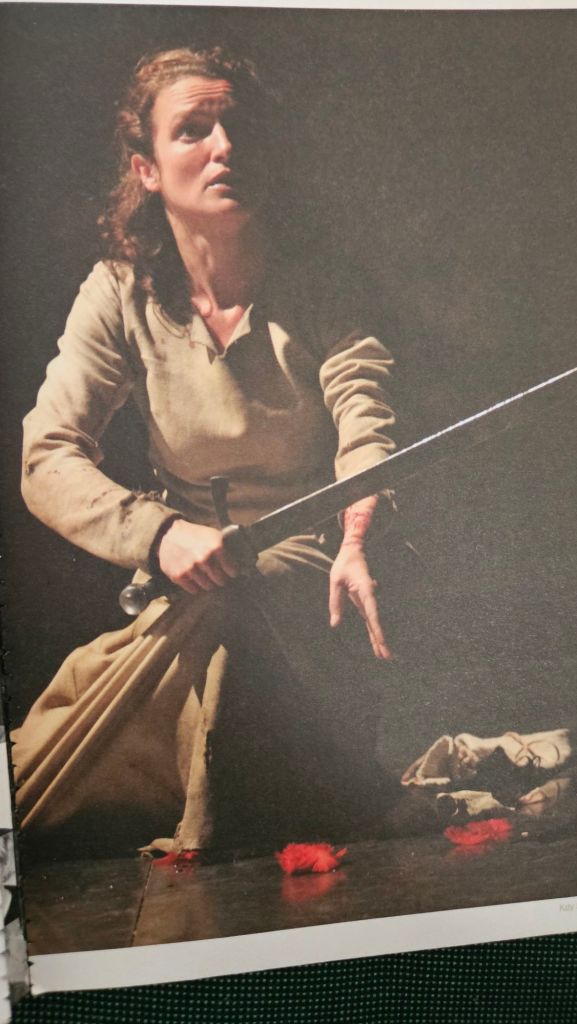
At first glance this passage seems shocking- Shakespeare appears to be accusing the patron saint of France of witchcraft. Even more bizarre, later when Joan is arrested by the English lords, she claims to be pregnant with King Charles’ child! And to confound the audience even further, Joan contradicts her own confession by denying any witchcraft or any relationship with any man:
Joan la Pucelle: First, let me tell you whom you have condemn'd:
Not me begotten of a shepherd swain,
But issued from the progeny of kings;
Virtuous and holy; chosen from above,
By inspiration of celestial grace,
To work exceeding miracles on earth.
I never had to do with wicked spirits:
But you, that are polluted with your lusts,
Stain'd with the guiltless blood of innocents,
Corrupt and tainted with a thousand vices,
Because you want the grace that others have,
You judge it straight a thing impossible
To compass wonders but by help of devils.
No, misconceived! Joan of Arc hath been
A virgin from her tender infancy,
Chaste and immaculate in very thought;
Whose maiden blood, thus rigorously effused, Will cry for vengeance at the gates of heaven.
Henry VI, Part I, Act V, Scene iv
I get the sense that Shakespeare is trying to make Joan’s character ambiguous- if you are an English patriot, you can see her as a witch, a liar, and a manipulative harlot. If you are French, you see these accusations as filthy lies, and Joan’s “confession,” as merely a desperate attempt to spare her own life, one that tragically backfires.
The Real Joan of Arc
Born: circa 1412 in Domrémy, France
Died: May 30 1431 (executed by burning)
Birth/ Childhood
Joan was born January 6th, 1412 to Isabelle and Jacques D’Arc, the mayor of the town of Domr’emy France. At the time, Domremy was right on the border between the Armeniacs (who supported Charles the Dauphin) and the Burgundians, who supported King Henry V of England as rightful king of all Frence. Because of this, Joan’s home was subject to English raids and she might have been raised to support Charles as her lawful king. In any case, the accounts we have describe her as very pious, intelligent, generous, and a lover of justice.She had no formal education nor any experience on the Battlefield. Yet, by all accounts, Joan was an extremely devout youth, devoted to God, and her lawful king.
Call to Arms
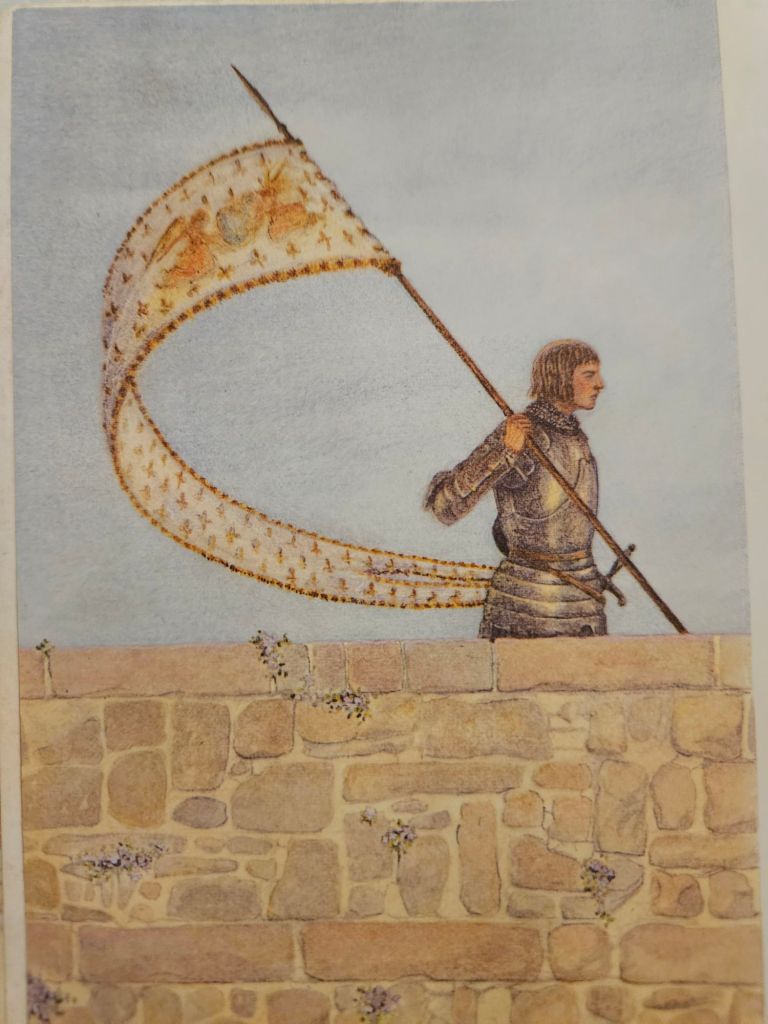
When she was 13, Joan went to pray in her father’s garden and believed that she saw the Archangel Michael, who prophesied that she would be the one to save France. In 1428, Joan approached Robert Baudricourt, Lord of Vaucouleurs. She demanded to join the French army and to bring Charles to Reims to be officially crowned king. Though she was turned away three times, Joan’s faith and courage attracted followers from the surrounding countryside, and Baudricourt eventually agreed to train Joan to fight, and allowed her and her enterage to talk to Charles the Dauphin about joining the troops defending the city of Orléans.
Once he met Joan at his palace in Chinon, the Dauphin agreed to let her take weapons and supplies to the troops who were already laying siege to the French town of Orléans. However, Joan insisted on leading the troops into battle, and quickly became a symbol of French resistance.
The Siege of Orléans
The city of Orléans was a vital town that the English had garrison. For six months, the French had attempted to starve out the English, destroy their defenses, and retake the city.
Joan la Pucelle. Advance our waving colours on the walls;
Rescued is Orleans from the English
Thus Joan la Pucelle hath perform’d her word.- Henry the Sixth, Part I



Joan’s Fall From Grace
Henry, by the grace of God, king of France and England, greeting. It is well known how for some time a woman calling herself Jeanne the Maid, putting off the habit and dress of the female sex (which is contrary to divine law, abominable to God, condemned and prohibited by every law), has dressed and armed herself in the state and habit of man, has wrought and occasioned cruel murders, and it is said, to seduce and deceive the simple people, has given them to understand that she was sent from God and that she had knowledge of His divine secrets, with many other dangerous dogmatizations most prejudicial and scandalous to our holy faith. Whilst pursuing these abuses and exercising hostilities against us and our people, she was captured in arms before Compiègne by certain of our loyal subjects and has subsequently been led prisoner towards us. And because she has been reputed, charged and defamed by many people on the subject of superstitions, false dogmas and other crimes of divine treason, we have been most urgently required by our well beloved and loyal counselor the bishop of Beauvais, the ecclesiastical and ordinary judge of the said Jeanne, who was taken and apprehended in the boundaries and limits of his diocese
- Letter from King Henry VI to the Bishop of Beauvais (Joan’s captor), January 3rd, 1431
Joan was captured in 1430, when King Henry of England was only 10 years old. Even though now France is united with pride for Joan and her defense of her country, back then there were plenty of factions that actually supported the English, and those French factions captured, and arrested her for heresy during the siege of Compiègne.
The Trial- January 9th, 1431
It has pleased divine Providence that a woman of the name of Jeanne, commonly called The Maid, should be taken and apprehended by famous warriors within the boundaries and limits of our diocese and jurisdiction. The reputation of this woman had already gone forth into many parts: how, wholly forgetful of womanly honesty, and having thrown off the bonds of shame, careless of all the modesty of womankind, she wore with an astonishing and monstrous brazenness, immodest garments belonging to the male sex.
As this excerpt from the trial transcripts demonstrates, Joan’s trial focused much more on her alleged heresy and witchcraft, rather than her defying British rule. In reality, Joan’s arrest and martyrdom was a political sacrifice for the French- they wanted to show political support for their English overlords, without alienating Joan’s supporters. Discrediting Joan by calling her a heretic was a calculated political move, and Joan probably knew it.
Execution

Joan was executed by burning on May 30th, 1431, six months before King Henry was formally crowned King of England. After her death, Henry was unable to maintain control of France and his incomplete, combined with a congenital mental illness, is why he later lost
Iconic portrayals:
Sources:
Books
- You Wouldn’t Want To Be Joan of Arc
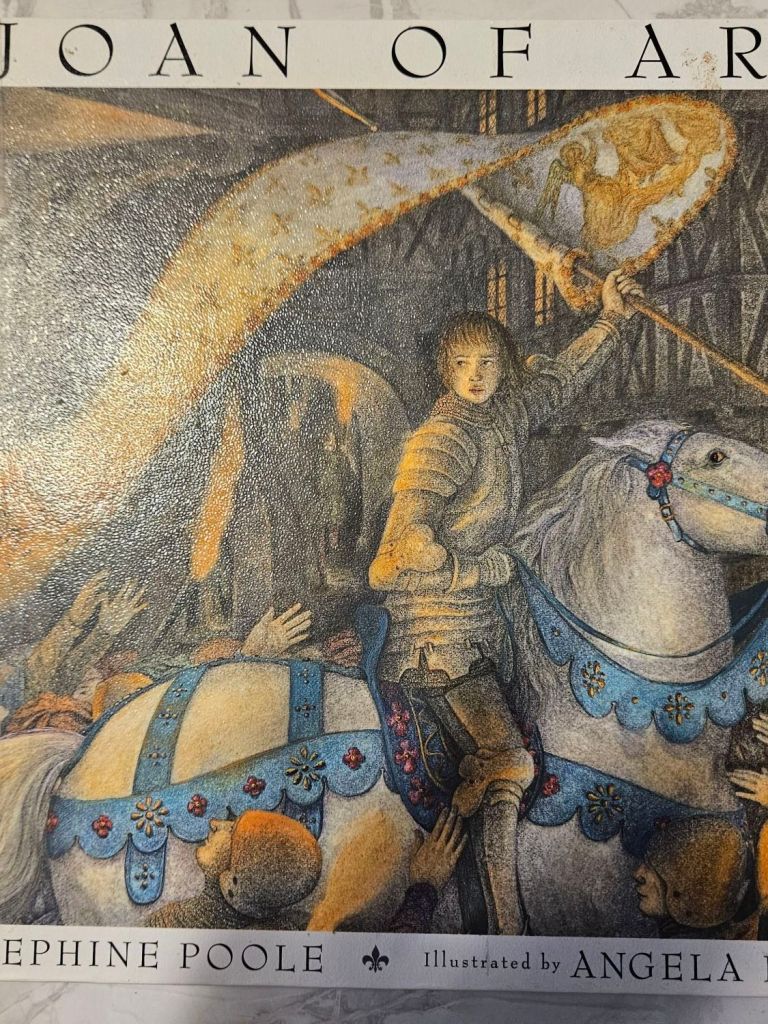
- Joan of Arc by Josephine Poole
Medieval Manuscripts: The Trial of Joan of Arc:
https://origin.web.fordham.edu/Halsall/basis/joanofarc-trial.asp

 The Shakespearean Student