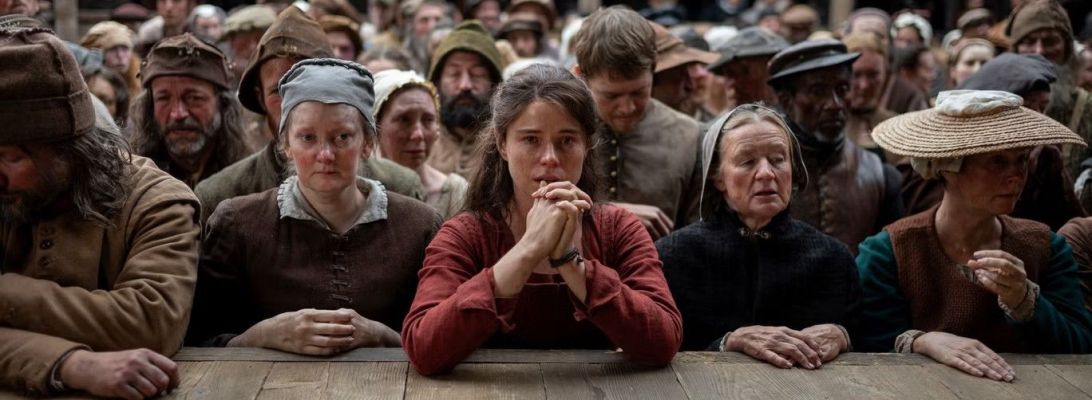
Let me begin with a special shout out to Jesse Buckley, the first Irish woman to win an Oscar for her portrayal of Shakespeare’s wife Anne ‘Agnes’ Hathaway in the movie Hamnet.
I promise I will write a full review soon, but for now here’s a behind the scenes look at the film:
In addition, here’s a link to my post on how Shakespeare depicts Irish culture in his plays
And finally, today is the anniversary of Marcus Brutus’ attempt to win over the Roman crowd, attempting to justify his tyrannicide. Here’s a scene from HBO’s Rome, in which Brutus surrenders to Caesar after the Battle of Pharsellus. In this scene, Caesar is played by Irish actor, Ciarán Hinds.
Every Year around this time, I like to draw attention to Shakespeare’s greatest heroines. You might have read my top 10 Shakespearean mother characters, or my post from last year, where I talked about some of Shakespeare’s best childless characters.This year, I’m putting together a squad of women you don’t want to mess with. So please enjoy (in no particular order because I refuse to rank women), – the best female fighters in all of Shakespeare:
Queen Margaret of Anjou
She defeats the York Army multiple times in the Wars Of The Roses, even killing the Duke of York himself. She was a powerful force on the battlefield and in the court.
Joan of Arc
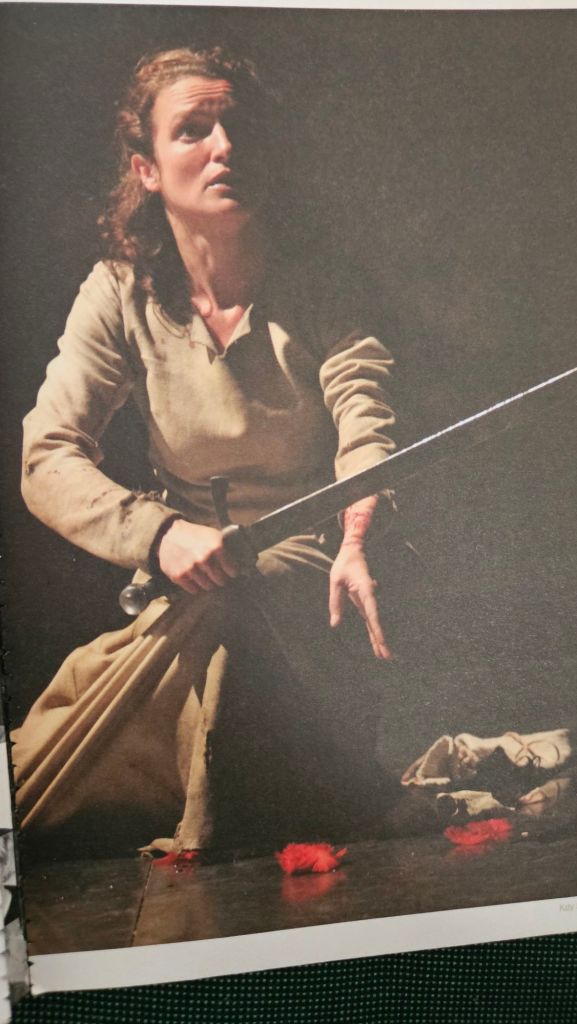
Joan la Pucelle from Henry VI, Part 1: (RSC, 2006)
I am prepared: here is my keen-edged sword, Deck’d with five flower-de-luces on each side; The which at Touraine, in Saint Katharine’s churchyard, Out of a great deal of old iron I chose forth.
And while I live, I’ll ne’er fly from a man.
The iconic female warrior who helped end English occupation of France. In Shakespeare’s play, she fights the French prince to prove her prowess in battle, then she retakes the towns of Orleans and Rouen from the English, and keeps fighting until the
Portia Catonis
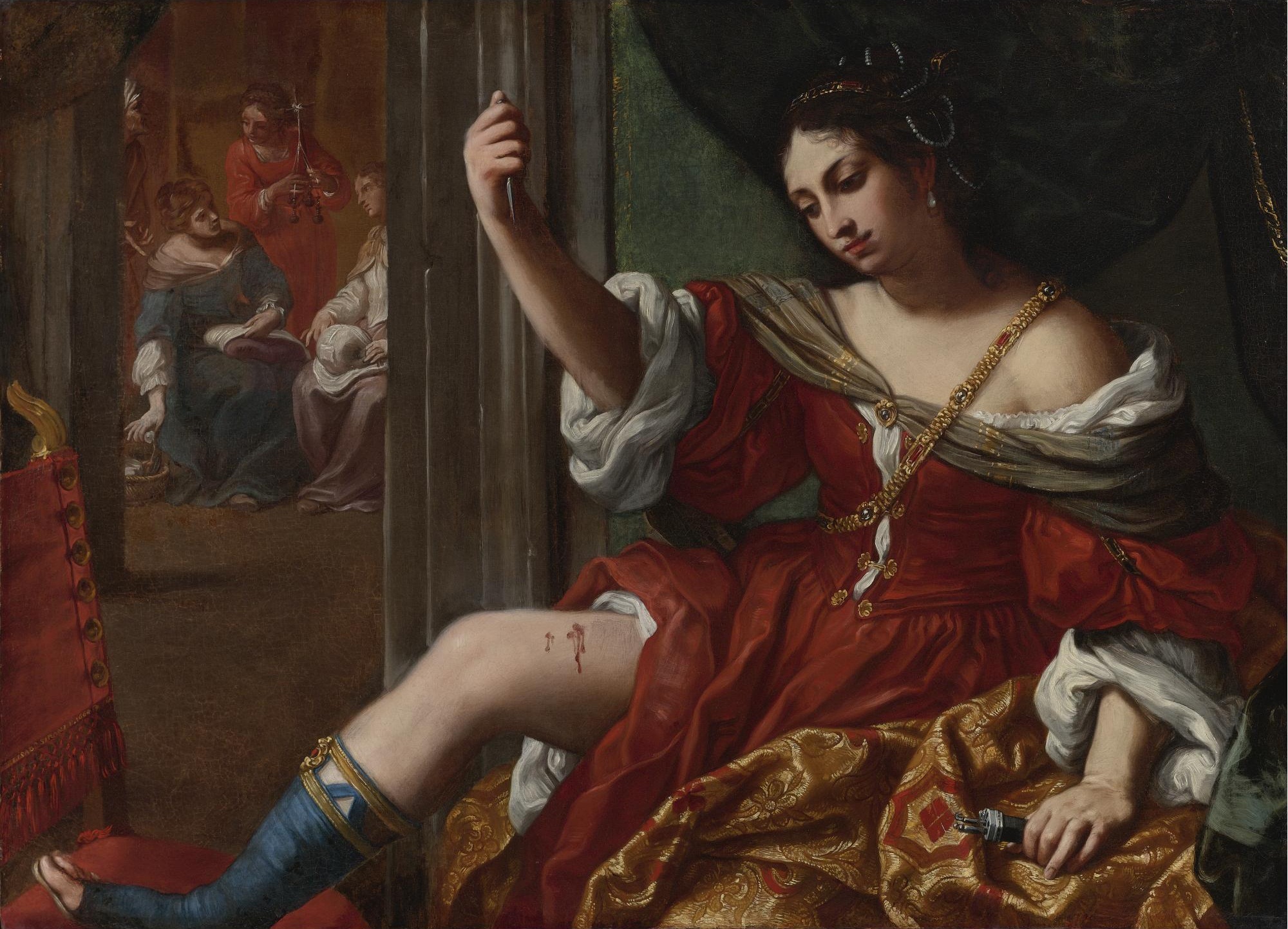
Portia preparing to “Swallow fire”
True, she doesn’t have much fighting experience, but clearly she can tolerate pain, has accute powers of perception, and is related to a long line of political and military patriarchs.
Volunnia
Valumnia comforts Coriolanus’ wife (AI art)
Dr Peter Saccio of Dartmouth College once said that this Roman matron talks to her son Caius Martias as if she’s his general, not his mother. She is totally devoted to Rome and she has trained her son since birth to fight for it.
Cordelia
AI artwork I created of Cordelia storming Goneril’s castle
Our preparation stands
In expectation of them. O dear father,
It is thy business that I go about.
Therefore great France
My mourning and important tears hath pitied.
No blown ambition doth our arms incite,
But love, dear love, and our ag'd father's right!
Cordelia shows her strength not through words, but through deeds- massing an army and invading England to put her father back on the throne, as the passage above shows. It’s true she didn’t succeed in saving the kingdom, but she did save her father through her love and bravery.
Elisabetta Sirani, Portia Wounding her Thigh, 1664, oil on canvas, 101 x 138 cm (Collezioni d’Arte e di Storia della Fondazione della Cassa di Risparmio, Bologna)The suicide of Porcia, Pierre Mignard. Museum of Fine Arts of Rennes, 1650.
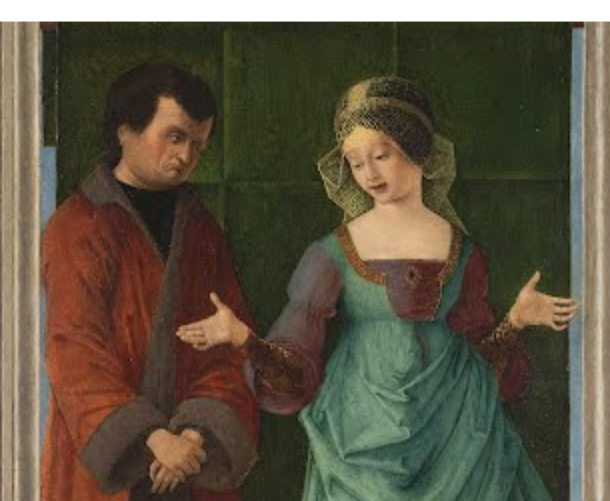
Portia (Or Porcia), was the wife of Marcus Brutus. Many ancient writers emphasize her courage, beauty, and devotion to her husband and Rome. Many painters and illustrators have chosen to depict her as a model of courage and grace.









 The Shakespearean Student