How Accurate Is Hamnet?

“She’s got…it, hasn’t she? The pestilence?” (O’Farrell, 105).
As this quote, (and the subtitle) suggests, Maggie O’Farrell’s novel Hamnet: A Novel About the Plague, focuses on the terror surrounding the plague and its devastating consequences on families. I really respect this book for its historical authenticity, it’s clever prose, and O’Farrell’s command of style, but I should warn you that this novel is definitely not for breezy summer reading.

If you are looking for a novel about William Shakespeare, this isn’t it; the Bard only appears in flashbacks. The action mainly concerns his wife and children. While Will was living and working in London for most of the year, his family lived in Stratford Upon Avon, along with the playwright’s mother and father. The novel has follows the characters across two times: 1582, when Shakespeare and his wife first met, courted and married, and around 1595, during an outbreak of plague that would (Spoiler Alert) eventually claim the life of Shakespeare’s son, Hamnet.

Drawing of Shakespeare and his family. Hamlet and Judith are on his right, his other daughter Susanna and his wife Anne are on his left.

The novel has a very dour tone, but that is by design. The author herself writes that the premise of the book was to create a realistic (albeit fictional) account of the Shakespeare family as their only son fell sick and died.
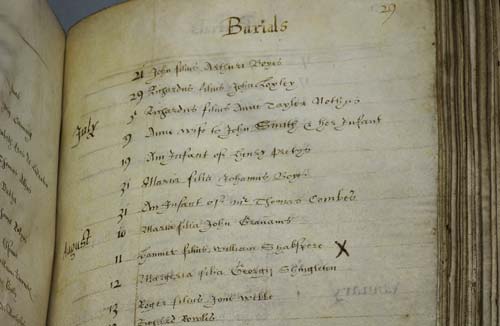
Burial records for the town of Stratford Upon Avon for 1596. On August 11, it records the death of Hamnet Shakespeare, William’s only son

The premise is intriguing from a historical point of view. We have no diaries or correspondence that express how the Shakespeares dealt with this catastrophic loss, but many scholars believe that Shakespeare’s play Hamlet was a direct homage to his son, since in Elizabethan England the names Hamlet and Hamnet were used interchangeably. Still, it must have effected Will in other ways, and it had to have had an effect on Hamnet’s mother and sisters, and that was O’Farrell’s focus when adapting this story as a novel.

I would describe the novel’s tone as ‘haunting,’ which is appropriate since it’s based around how a child’s death effected his family. It reminds me of a passage Shakespeare himself wrote about the death of a young boy in his play King John:

Grief fills the room up of my absent child,
Lies in his bed, walks up and down with me,
Puts on his pretty looks, repeats his words,
Remembers me of all his gracious parts,
Stuffs out his vacant garments with his form;
Then, have I reason to be fond of grief?
Fare you well: had you such a loss as I,
I could give better comfort than you do.
I will not keep this form upon my head,
When there is such disorder in my wit.
O Lord! my boy, my Arthur, my fair son!
My life, my joy, my food, my all the world!
My widow-comfort, and my sorrows' cure! King John Act III, Scene iv.


Like Constance in the quote above,, All the characters in Hamnet are haunted.
[Hamnet is pursued by plague. Will Shakespeare and Anne Hathaway are haunted by their abusive parents. Will’s father John by the loss of his business and social standing, and of course, everyone is haunted by Hamnet’s death.
https://youtu.be/kj240pJPpB8

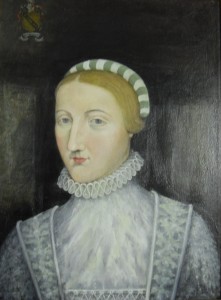
Artist’s restored version of a Elizabethan woman, believed to be Anne Hathaway.
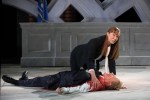
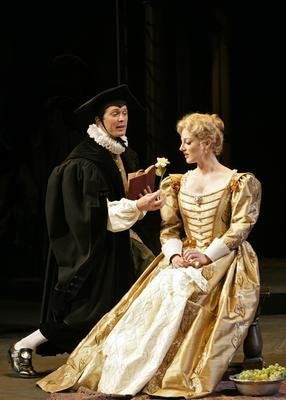
Lucentio and Bianca (The Taming of the Shrew, Oregon Shakespeare Festival, 2007)

Although the novel is mainly about Hamnet’s decline and death, my favorite parts of the book are flashbacks to the courtship and marriage of Will Shakespeare and Anne Hathaway. We know nothing about their real courtship, so O’Farrell borrows the plot from Shakespeare’s Taming Of the Shrew. Like Lucentio in Shrew,
The 18 year old William Shakespeare is a Latin tutor, (having not yet become a writer), who woos a misunderstood woman whom the town calls a shrew. In the book, Anne Hathaway is known as Agnes and (like many unmarried women of the period), is looked on as odd and somewhat wild. Many single women of this period would likely face discrimination, and sometimes. In this video, you can see how cunning women like Anne had an uneasy relationship with the local community; some saw them as an asset to the community, but others believed their abilities came from The Devil. For more information on Anne’s life, click here.

The History Guy- Witch Trials in the 16th and 17th centuries.

Anne is further isolated because of her strange abilities- in the book she owns a falcon, not a ladylike hobby for 1580s England. She is also skilled with medicinal plants and knows how to read palms. In essence, though the town ostracizes Anne, Shakespeare admires her cleverness, and the book implies that Shakespeare would later use her skills in characters like Kate from Shrew, Friar Lawrence (the skilled potion master), and maybe even the witches from Macbeth.

The reusing of Shakespeare’s plots doesn’t stop there- Before Anne and Will get married they are handfasted- that is they make a mutual promise to get married in front of witnesses. Anne knows that her family will not consent to their marriage given Shakespeare’s low economic prospects, so she convinces Will to get her pregnant. This mirrors Claudio and Juliet in Shakespeare’s Measure For Measure, who are publicly shamed and arrested for fornication, even though their only crime was not waiting until they had given a dowry to the groom’s parents before consumating the marriage.


One final master stroke of O’Farrel’s historical fictive tapestry is how she engineers the father son conflict between Will Shakespeare and his father John. Shakespeare loves to explore the power dynamic between boys on the cusp of manhood, and their already powerful fathers. In the case of John Shakespeare, O’ Farrell depicts him as a man who has worked, schemed, scammed, and clawed his way to the highest wealth his birth can allow him, but is now falling from grace, who has nothing but contempt for his son who seems like a worthless dreamer, incapable of hard work. This most closely echoes Shakespeare’s Prince Hal and King Henry, a son who must prove his fitness to be king to his father and to his nation. Watch this exchange from “The Hollow Crown” where the sick and aging John of Gaunt (Patrick Stuart), chastises his weak, effeminate nephew, King Richard II:

Historical Notes:

Infant mortality in Elizabethan England:

Even before Hamnet is born, his mother and mother in law are painfully aware that he might die young. Sadly this is very historically accurate. Infant mortality rates were high in Elizabethan England. According to Ian Mortimer in his book The Time Traveler’s Guide To Elizabethan England, mothers had to keep their children at arms length and not get too attached. Being a mother in this time meant dealing with the constant knowledge that your child might not survive:

In Stratford in the 1560s, there are on average, sixty-three children baptized every year- and forty-three children buried.

Mortimer, 27.

John Shakespeare’s fall John Shakespeare was more than a glover- he held a position in the Stratford Guild Hall- basically a city council position. He was in charge of hiring constables, keeping the peace, overseeing the brewing of ale, and approving theatrical entertainments for civic events. Probably John got his son interested in theater by letting him tag along to the sort of private performances he would have watched to determine whether a play or troupe was good enough for, for instance, the visit of a peer. However, by the 1580s, John was losing his business and selling off his land assets. Scholars suspect that either John was a closet Catholic, forced to pay fines every time he failed to attend protestant church, or he was avoiding church and his alderman council meetings because he knew his creditors would be there. In any case, O Farell takes this historical tidbit and turns John Shakespeare into a bitter, broken, abusive man whom Shakespeare can’t wait to get away from. Shakespeare and his wife bond over their abusive parents and dream of succeeding financially so they can get away from their parent’s influence.
Malt and wool The novel hints at John Shakespeare’s secret side business selling wool and malt, but never explicitly states that this practice was illegal. All wool was controlled by the Elizabethan government so it was illegal to sell it without special permission, and in 1570, John Shakespeare was caught selling wool illegally. He was also found guilty of money-lending, hoarding grain, and selling malt. This is why he tells his son to forget the wool he saw in the attic.
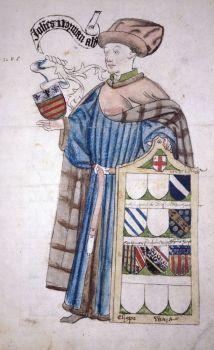
An Alderman in his official robe, the same kind John Shakespeare would have worn.

Historical Events Mentioned in Hamnet

  1. 1556 Anne Hathaway born. She’s referred to as Agnes in other court documents. Her father Richard owned a sheep farm in Hewland. At some point, her mother died and her father Richard married a woman named Joan, whom the novel portays as a bitter, controlling witch.

1564– Will Shakespeare born, third of 8 children. His father started out as a local glover, who quickly rose through the ranks of local government to become the mayor of the town. They owned a house in Henley street, which also doubled as the glove workshop. For more informaition on this fascinating building, visit the Shakespeare Birthplace trust: https://www.shakespeare.org.uk/visit/shakespeares-birthplace/
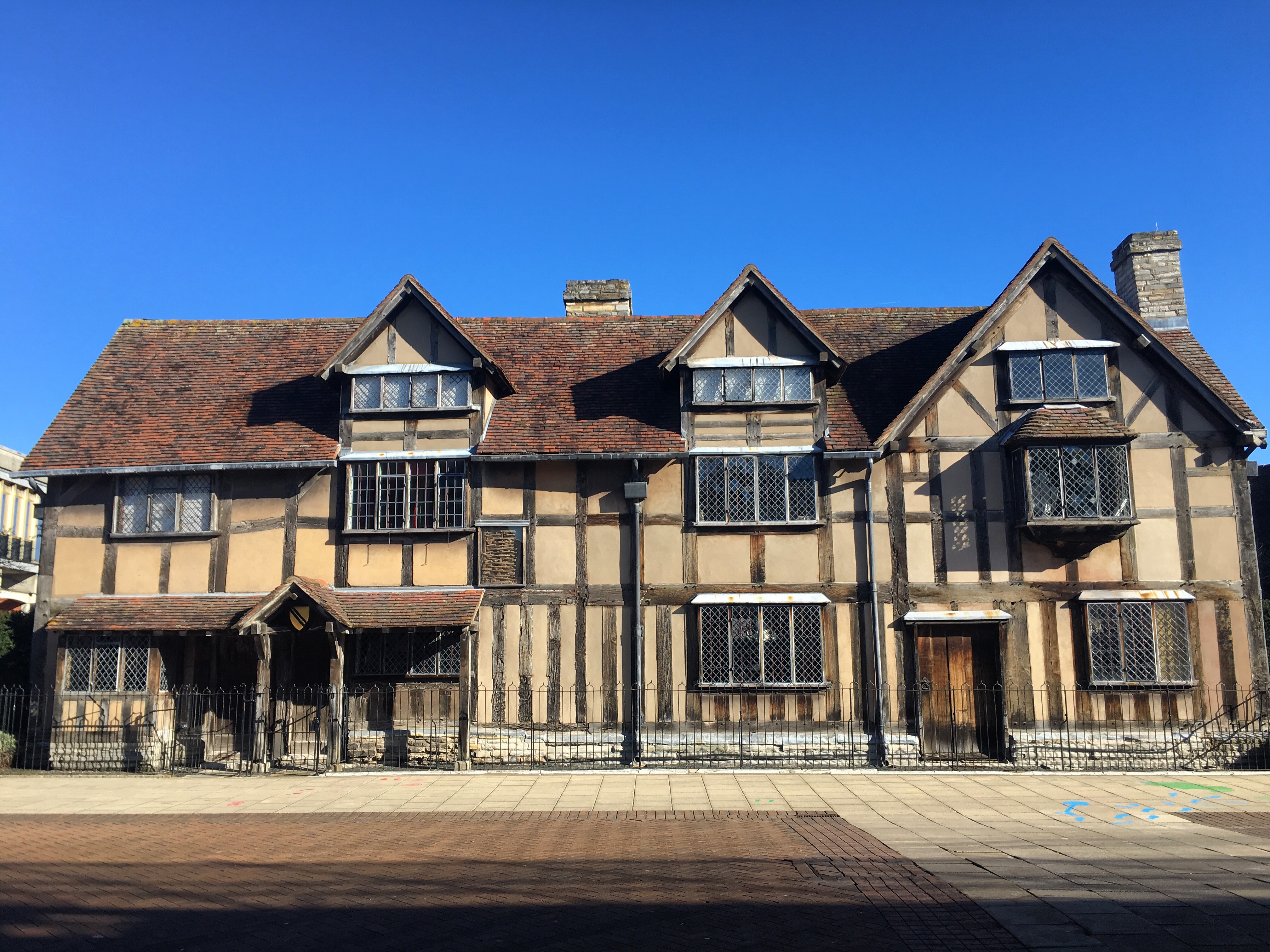
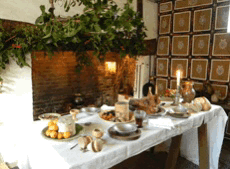
The Shakespeare’s house on Henley Street in Stratford Upon Avon, where Will, his wife, children, and parents lived until 1597.
Recreation of the Shakespeare’s dinner table.


1581– Anne’s father Richard dies,  bequeathing her “£6 13s 4d ‘atte the day of her maryage’.” Richard Hathaway owned a farmhouse in Shottery that still stands today! For more info, please visit the Shakespeare Birthplace Trust: https://www.shakespeare.org.uk/visit/shakespeares-birthplace/

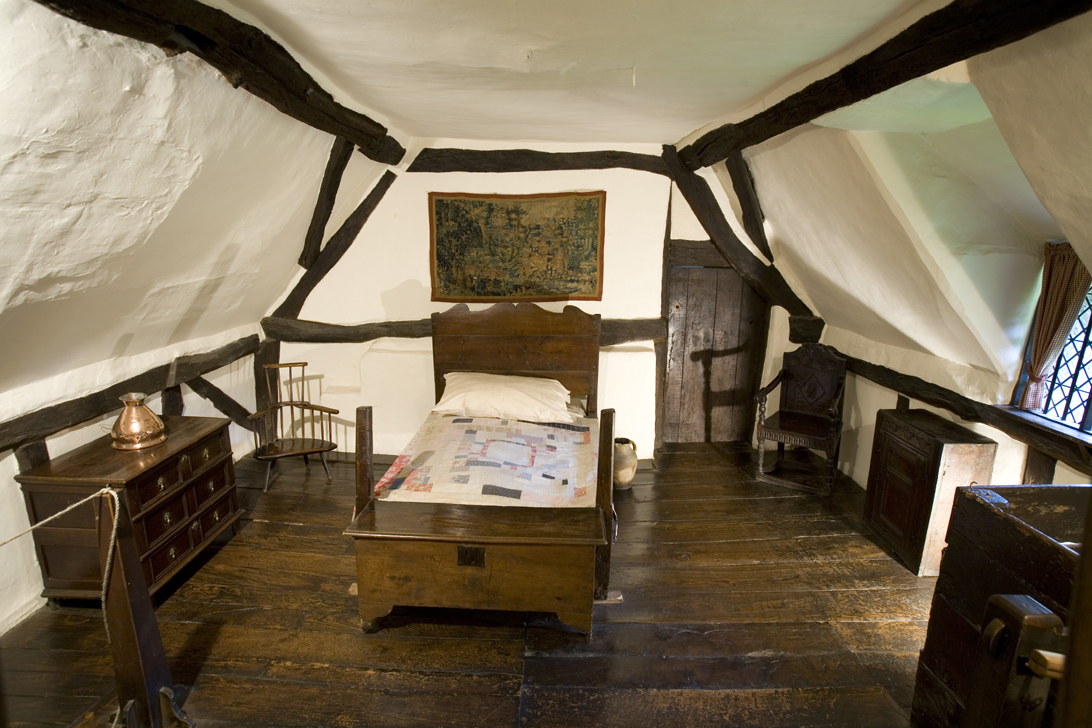
Anne Hathaway’s Cottage and Gardens, Stratford-upon-Avon, UK. June 2014.
Interior and exterior images of Ann Hathaways cottage, Shottery, Stratford upon Avon, Warwickshire.


1582– On November 27th, 1582, William married Anne Hathaway. He was 18, she was 26. It must have been a hasty and stressful situation. Shakespeare had no job, and based on the timeline, Anne was already pregnant with their daughter Susanna. For more information on marriage in the period, please visit my website on Elizabethan society:

The Shakespeares were granted a marriage licence by the Bishop of Worcester. They were married at Temple Grafton, a village approximately five miles (8 km) from Stratford.

Notes On Shakespeare’s Wedding Day:

  • We know that Anne’s family paid a dowry to Shakespeare’s family, which annoys Shakespeare in the book. He feels furious that his father uses the marriage to help his business interests.
  • According to Michael Wood, the priest left out the reading of the banns, and suspected the marriage was intentionally catholic. The book also makes it clear that this was a catholic ceremony, deep into the reign of the Protestant Queen Elizabeth I.
Robert Bearman, “The Shakespeare marriage bond,” Shakespeare Documented, https://shakespearedocumented.folger.edu/resource/document/shakespeare-marriage-bond

May 26, 1583– Susanna Shakespeare is baptized, which means she was probably born three days earlier.

February 2nd, 1585– Hamnet and Judith are baptized.The twins were named after two very close friends of William and Anne, the baker Hamnet Sadler and his wife, Judith. The Sadlers became the godparents of the twins and, in 1589, they in turn named their own son William.

1586– John Shakespeare is booted off the Stratford board of Aldermen for not attending meetings. Michael Wood suggests that John might have been avoiding the meetings because he was in debt, and the creditors knew where to find him. The novel seems to agree with this theory- the first time that we meet John Shakespeare, he is on the verge of beating his own grandson for sneaking up on him. If he was hiding from his creditors, he’d have a reason to be jumpy.
1592 – Shakespeare makes it in London?
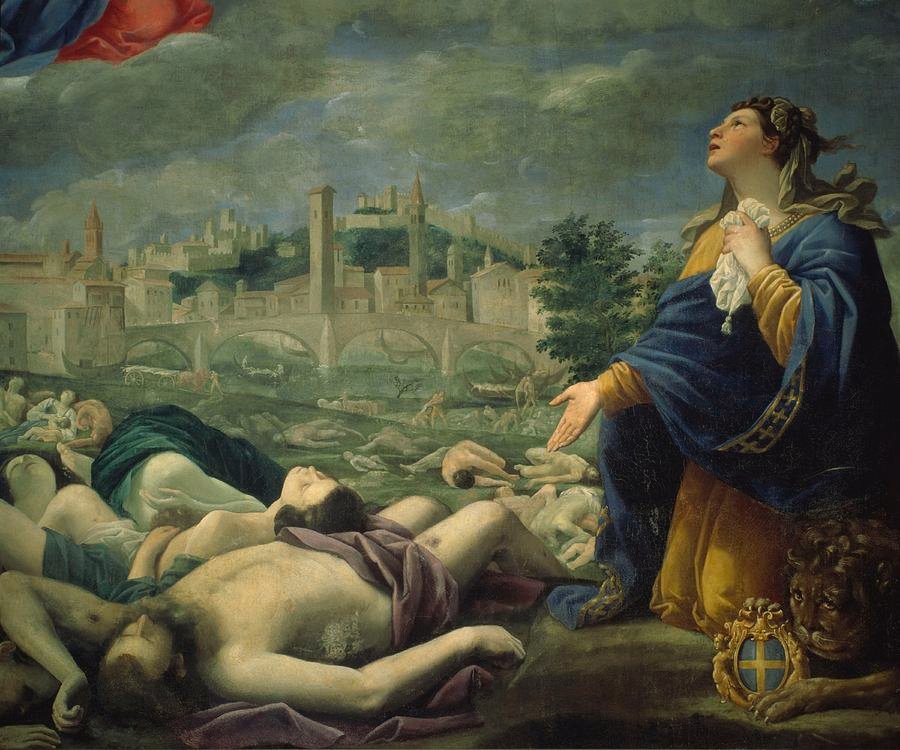
1593 Outbreak of Bubonic Plague- 15,000 people died in London alone. O Farrell does a great job of portraying the visceral terror people must have felt during an outbreak, the same terrified panic that gripped our world in 2020. As I’ve written before, not only did the disease itself instill fear, but also the Draconian measures of quarantines, and the grotesque and ineffective methods for treating the plague. To see how you might be treated for plague in the 1590s, take my quiz: https://sites.google.com/d/1iLSGjbllxU-ZwyrUya_xHtjojSCg9pd6/p/1xzNm37sGbHsQJgsnx4irZHJVp9YscVVJ/edit?authuser=2
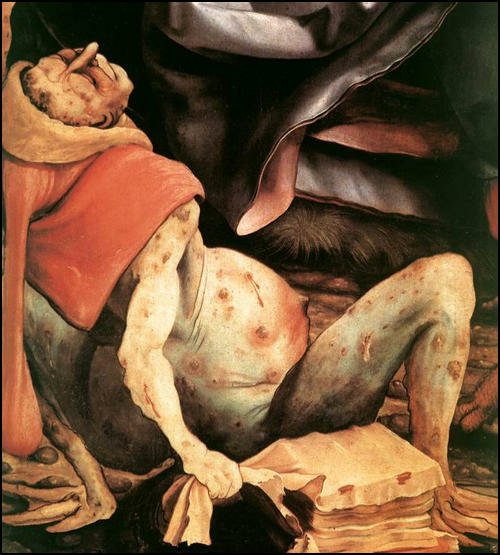
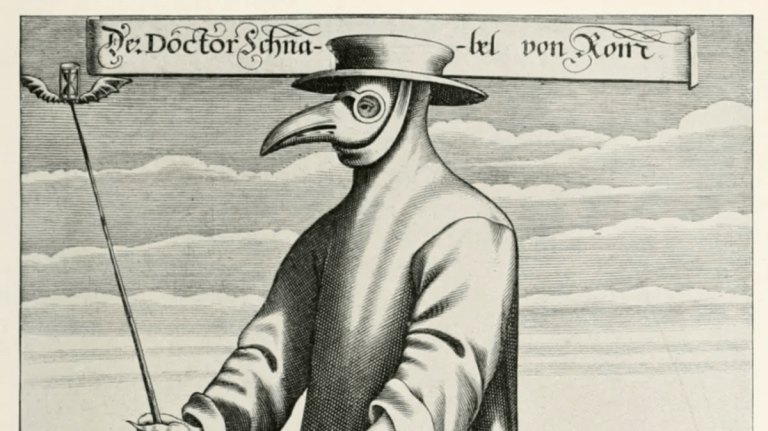
Because of the contagious nature of the disease, the theatres were closed, which forced Shakespeare to write poems instead of plays. Around this time he also probably wrote Romeo and Juliet, Richard III, and A Midsummer Night’s Dream.
Shakespeare published Venus and Adonis

1596 Hamnet dies

C. 1599– William Shakespeare writes Hamlet, his longest play, widely regarded as the greatest play ever written in the English language.
I hope this post helped increase your understanding and enjoyment of the book, and Elizabethan History in general.

For a fascinating look at the life of an Elizabethan woman, check out this documentary about Shakespeare’s mother Mary Arden, created by scholar Michael Wood:
Is Shakespeare Being Canceled?

Thanks to WordPress’ new interface, it’s easier for me to read what other bloggers have to say about the topics I write about. One trend I’ve noticed is the question that’s been boiling underneath the surface of a lot of people in our culture: “Should Shakespeare be ‘cancelled’?” It’s an interesting question and definitely merits discussion.

It is also a question that has some basis reality: Shakespeare was taken off the list of required reading of of schools in New Zealand. In 2007, The American Council Of Trustees and Allumni published a report called “The Vanishing Shakespeare,” about the number of colleges who no longer require English majors to take Shakespeare courses. If you read my post on Romeo and Juliet, you will recall that one of the main reasons why we have Shakespeare as a requirement in American high schools is that he is required reading in many colleges. So this could be part of a trend that extends to primary as well as secondary schools as well.

Many academics, (myself included), are wondering about Shakespeare’s status in education, and whether or not he will continue to be a staple of all English language curricula. So what I want to do with this essay is to ask the question, “Should Shakespeare be cancelled,” as well as”Should he not be cancelled? and “What even is cancelling and how does apply to somebody who is already long long dead now?”

First off, cards on the table: I am a white man, (with a beard), who has been studying Shakespeare for 20 years. I have a very clear bias; I would never advocate for Shakespeare being taken out of any schools. That said, I see merits to parts of the argument, and I do not believe that these teachers who are reexamining Shakespeare’s place in education are inherently wrong. Nor do I believe if that there is no merit to changing the way educators teach Shakespeare in our schools, (more on that later). My point is to write a thoughtful reflection about the nature of Shakespeare as a writer, his status within our culture, his status within the educational establishment, and how changing that is not necessarily a bad thing.

Part One: the arguments for cancelling Shakespeare

When I read the article “Why I am rethinking Teaching Shakespeare In My English Classroom,” by teacher Christina Torres, I noticed a lot of her arguments centered around diversity quotas and simply not having the class time to devote to Shakespeare. This is entirely understandable. Shakespeare has been dead for 400 years, which means language has changed a lot since his heyday.

Shakespeare poses several unique challenges in education. He wrote in an obscure form of poetry that is no longer fashionable. You have to read footnotes. Although 95% of the words he used are still used today, they are used in a very unique syntax. Furthermore, I come to teaching Shakespeare from the perspective of somebody who studied theater, acting, Elizabethan history, and everything that that is required to teach Shakespeare, but many teachers do not. My point is I can understand why a teacher feels that he or she does not have the time, energy, or the learning required to give Shakespeare the space that he so clearly demands.

The question of Shakespeare’s status in our classrooms also raises subtle questions about diversity. Many curricula these days emphasize diverse writers and try to highlight the cultural contributions of women, people of color, and LGBTQ people, and as far as we know, Shakespeare fit into none of these groups.

This educational initiative is a part of the anti racist initiative and I as an educator I am fully on board with this. I love to be in a classroom where Gabriel Garcia Marquez, Lorraine Hansberry, Mary Shelley, and Truman Capote share the same shelf is William Shakespeare, but ever since the 18th century Shakespeare and cultural nationalism have been inexorably linked.

Almost since the beginning of Shakespearean scholarship, American and British critics have sought to venerate Shakespeare as the peak of British culture, and thus the peak of human culture as well. It’s not a coincidence that we celebrate National Poetry Month the same month as Shakespeare’s birth and death. Also, even though we don’t know for sure when Shakespeare was born, we celebrate it on April 23rd, St. George’s Day, thus forever linking England’s greatest poet, with its patron saint. George Bernard Shaw, (an Irishman), coined the term ‘bardolotry,’ to describe the treatment of Shakespeare by the English as if he were a god and the evidence is quite damning:

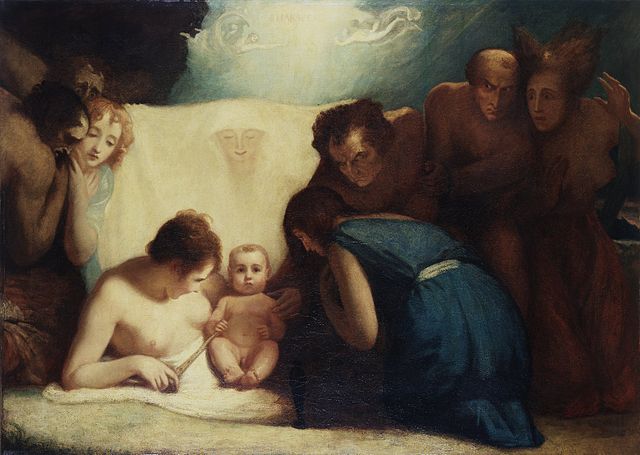
The infant Shakespeare attended by Nature and the Passions (Romney, c. 1791-1792)

Just look at this painting where Shakespeare is portrayed as in the same pose and with the same reverence as the baby Jesus. This reverence carried over to poetry, music, festivals, and of course, to the classroom. As I wrote in My Romeo and Juliet post, since the beginning of American public education, Shakespeare was an indispensable fixture in American schools, and thus, prompting American writers like Mark Twain to grumpily refer to Shakespeare and other classics as “Something everyone wants to have read, but nobody wants to read.”

Countless textbooks refer to Shakespeare as the greatest writer in the English language, and possibly the greatest writer ever. Ralph Waldo Emerson once preached that Shakespeare was: “Inconceivably wise.” The god-like aura around Shakespeare has made him nearly impervious to criticism and English speakers on both sides of the Atlantic have claimed Shakespeare as their gospel. Being an English speaker means having the God-Shakespeare on your side, and if you have God on your side historically speaking, you can justify anything.

“A Discovery Of the Bermudas,” 1610. Thought by many scholars to be Shakespeare’s inspiration for “The Tempest”

The British were keen to elevate Shakespeare to this godlike status partially because it showed that their culture was superior to others. Let’s not forget that Shakespeare’s last play The Tempest is about a man with book learning who goes off and colonizes an island whose inhabitants seem savage and uneducated. If our goal as educators with adding anti racist education is to show that all voices are valid, to highlight the contributions of every ethnic group, and to refute the notion that white culture is in any way superior to any other, then to a certain degree, we must knock Shakespeare off his literary pedestal.

Caliban, Prospero’s slave from “The Tempest”

We also should not a take a blind eye to the anti-POC and mysoginist language in some of Shakespeare’s plays. For instance one line I deeply despise in Romeo and Juliet is the line where Romeo refers to Juliet by saying she “Hangs upon the cheek of night like a rich jewel in Ethiop’s ear” (A black woman wearing an earring).

1583/5 – ANNIBALE CARRACCI, PORTRAIT OF A WOMAN HOLDING A CLOCK

This statement contrast beauty, specifically the beauty of white skin, with the “ugliness” of a black woman’s ear. Shakespeare uses this metaphor several times in several plays, establishing white as beauty and black as the aberration.

I bring this up not to say that Shakespeare should be cancelled and hated because of this racially insensitive language, because he’s not the only one who does it. All you have to do is Google “Who’s the fairest one of all?” to realize that for centuries, fair skin, beautiful skin, and white skin meant the same thing. As Dr. Grady says in the video above, having an honest discussion of Shakespeare’s language and his culture’s attitude towards race is an opportunity to teach critical race theory in the classroom, and to teach students to recognize and deplore dehumanizing language, which though poetic to white Elizabethans, is hurtful and dehumanizing to people of color. In short, banning or condemning Shakespeare is counter productive, but examining his language, culture, and politics with a critical eye is a very useful and important exercise.

Part 2 why Shakespeare doesn’t deserve to be cancelled

I’ve established that Shakespeare has connections with some very dark moments in a European history and he should not be celebrated merely because of he was white or because he was British. I believe that Shakespeare’s contributions to the English language as well as drama and the arts still makes him worthy of study by students. As this video from the New York Times shows, students need at least a basic understanding of Shakespeare to understand western culture:

There’s No Escaping Shakespeare: New York Times, 2016.

I believe that, as long as we educators don’t indulge our bardolotrous tendancies, and keep Shakespeare in the context of the period in which he lived, we can still teach him in a way that will benefit our students.

One small way to put Shakespeare in context is very simple: STOP USING THE TERM “RENAISSANCE.” Most scholars now refer to Shakespeare’s time period as the Early Modern Period, not The Renaissance, which was an honorific term that people used during Shakespeare’s time period. The term RENAISSANCE, meaning the rebirth of classical learning and by extention the rebirth of sophisticated European culture, can give the impression that it was only a period of study and artistic achievement, leaving out colonization and racial and political tension. I find Early Modern Period a very useful descriptor because like it or not, Shakespeare’s culture influenced ours, therefore an understanding of him is very much understanding of where we came from. Learning from Shakespeare is like learning from history- we cannot shy away from the mistakes of the past, nor should we flat out reject its benefits.

it should be noted that a lot of the good scholarship in the last to the last 50 or 60 years has been tasked with putting Shakespeare back into his historical context and trying to reclaim his staus as a man of his time. Dr. Stephen Greenblatt of Harvard University helped coin the term ‘new historicism’ which emphasizes learning about the culture of a writer’s time period. To New Historicists (such as myself), Shakespeare is no longer considered a great man of history, but a man shaped by the culture of his time, which is to say a man who had good parts and bad parts much like history itself. This is the approach that I think should be taught in American schools highlighting how Elizabethan culture shaped Shakespeare, and how he shaped our culture in turn.

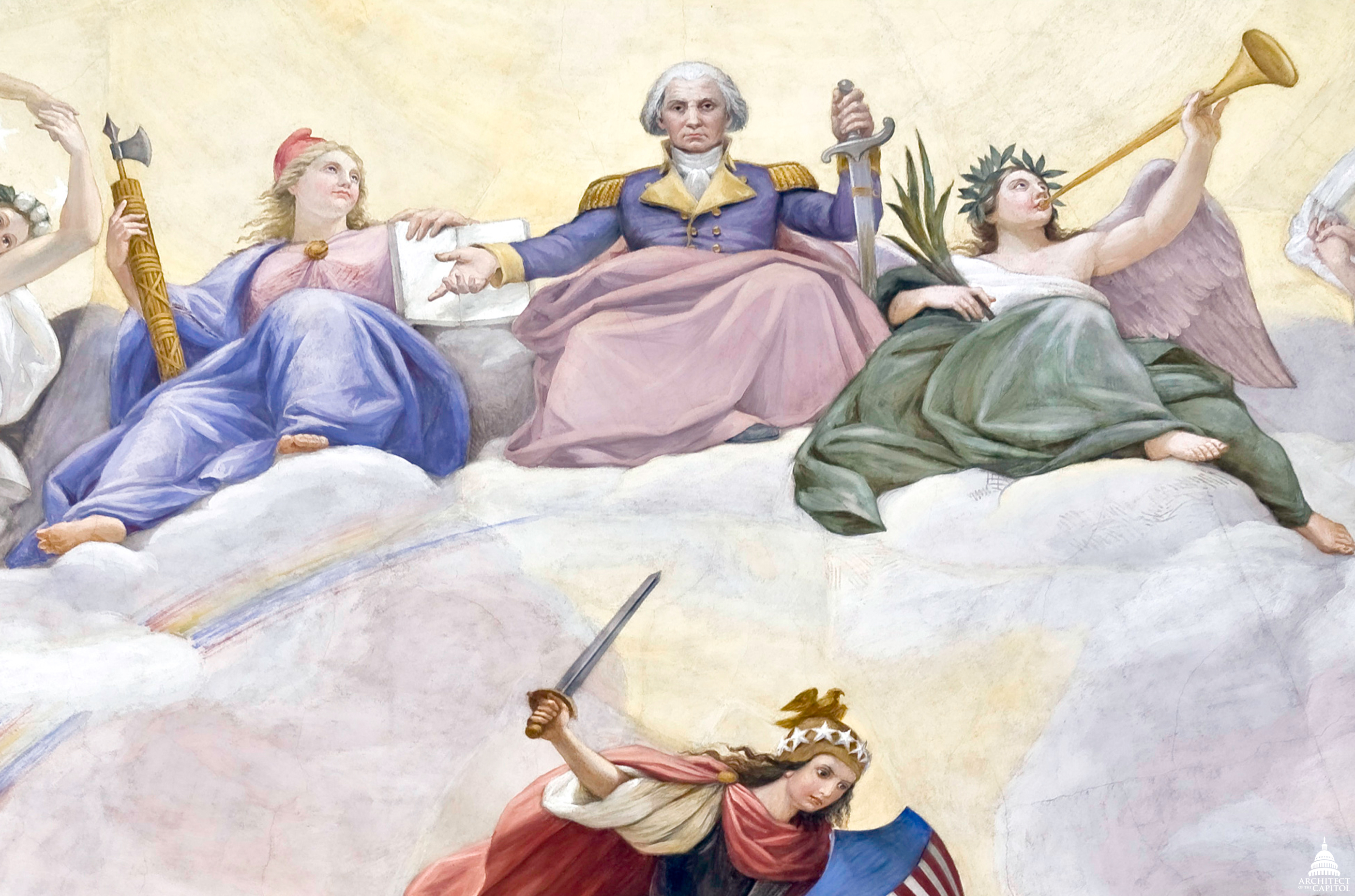
Comparing Shakespeare to history, especially American history, is very useful in American schools. Like the founding fathers Shakespeare reached towards an ideal. He wrote plays about ideal kingship, even though kingship is a cruel and autocratic system of government. He wrote romances about young lovers who follow the wonderful idea of love at first sight, even though in reality that concept is somewhat rare, and very often fraught with peril. And like Shakespeare, people often ignore the flaws and human failings of the founding fathers too. Look at this mural painting of The Apotheosis of Washington, which still looks down on mortals from the US capital building in Washington DC.

Deifying the First President in 'The Apotheosis of Washington' – Brewminate
The Apotheosis of Washington  Constantino Brumidi, 1865 .

Much like the founding fathers’ document that declares that all men are created equal, we can appreciate Shakespeare’s plays but also be aware of their flaws. Both documents were written by a flawed human being with a very narrow understanding of the wider culture and world in which he lived, but one who did his best to try and write works that would benefit all of mankind. As educators we can teach students to be inspired by this work, and seek to have a greater understanding of “The Great Globe Itself,” with the benefit of hindsight, so they may become enlightened citizens of the world, true Renaissance Men, Women, themselves.

So if I truly believe, (and I do), that Shakespeare is still relevant and has something to say to people regardless of their culture or cultural and racial backgrounds regardless of what time period they were born in and regardless of gender, how then can we teach him in classrooms in responsible and nuanced way?

What to do?

[  ]Give a cultural context to the play you study. A culture that is the direct ancestor of our own, but one that was frought with Colonialism, Casual racism, (especially in language), Sexism, Patriarchy, and Homosexual oppression. Not to toot my own horn, but this is what I tried to do with my Romeo and Juliet Website: https://sites.google.com/d/1iLSGjbllxU-ZwyrUya_xHtjojSCg9pd6/p/12GhgKdJr63wmTcm6TTvkZ-ROmUnALKQi/edit

-Give students the chance to rewrite or reword the more problematic elements, such as Romeo’s creepy stalking of Juliet,

-Highlight Shakespeare calling attention to patriarchial issues: Capulet in Act III, v, Friar Lawrence comparing love to gunpowder. Juliet raging against arranged marriage, etc.

  • Celebrate Shakespeare’s positive contributions to race relations: Othello was the first black hero on the London stage and the role helped generations of black actors get their start in theatre. There’s your modern bardolotry, Shakespeare not as “Inconceivably wise,” Inconceivably woke! You can also look at the proud tradition of color blind casting in Shakespeare’s performance history, such as Orson Wells’ “Voodoo Macbeth.”
  • Do some research on modern productions that translate the themes into a modern concept.
BOOKS : THE LOVERS, AFGHANISTAN'S ROMEO AND JULIET — Home | Afghan Culture  Unveiled
Book cover for “The Lovers,” the real-life story of Ali and Zakia, teenagers from Afghanastan, who fell in love in spite of their parent’s religious hatreds.

To sum up- cancelling Shakespeare doesn’t mean vilifying him. It means re-examining his role in our culture, and teaching students to appreciate the benefits, and try to correct the damages that his culture has brought to our own. We can’t change the past, but we can learn from it. As for Shakespeare himself, no amount of legitimate criticism will keep people like me from enjoying his plays. If anything, I appreciate even more the breadth and depth of his writing the more I learn about the culture in which he lived. I like to think that, if Shakespeare knew people would be talking about him in school, he’d echo the way Othello said he wanted to be remembered, to “Speak of me as I am, Nothing extenuate.” And that we heed the words of Ben Johnson in the dedication to the First Folio, when we think of treating Shakespeare as an icon.

Dedication by Ben Johnson in Shakespeare’s First Folio, 1623.

Close Reading: To Be Or Not To Be

For Shakespeare’s Birthday, I thought I would discuss his most famous speech what is arguably his greatest play. Hamlet, Prince of Denmark was written in 1600, the pinnacle/ middle of Shakespeare’s career, after Julius Caesar but before Macbeth.

David Tennent as Hamlet. Royal Shakespeare Company, 2010.

To Be Or Not To Be has intrigued and mystified people for centuries. It is full of ambiguous imagery, haunting images, and solemn contemplative ideas. I’m going to try and break the speech down first like an intellectual argument, but I will also give you some of my interpretation of Hamlet’s thoughts and feelings. Shakespeare’s genius is creating a speech that gives plenty for the reader to interpret,, but it’s up to the reader to decide what’s happening in the speech.

Just a refresher of the plot:

1. The king has died and been seen as a ghost 

2. He tells his son Hamlet that he was murdered by his brother Claudius, who killed him to become king and marry Hamlets mother, Gertrude.

Hamlet is trying to determine if the ghost is telling the truth and if so, how can Hamlet revenge the death of his father?

The speech occurs right in the middle of the play. Hamlet has been acting strange and the king is worried. He hides behind a tapestry right before Hamlet enters. He then delivers this famous and highly cryptic speech:

Ham. To be, or not to be, that is the Question:
Whether 'tis Nobler in the minde to suffer
The Slings and Arrowes of outragious Fortune,
Or to take Armes against a Sea of troubles,
And by opposing end them: to dye, to sleepe
No more; and by a sleepe, to say we end
The Heart-ake, and the thousand Naturall shockes
That Flesh is heyre too? 'Tis a consummation
Deuoutly to be wish'd. To dye to sleepe,
To sleepe, perchance to Dreame; I, there's the rub,
For in that sleepe of death, what dreames may come,
When we haue shufflel'd off this mortall coile,
Must giue vs pawse. There's the respect
That makes Calamity of so long life:
For who would beare the Whips and Scornes of time,
The Oppressors wrong, the poore mans Contumely,
The pangs of dispriz'd Loue, the Lawes delay,
The insolence of Office, and the Spurnes
That patient merit of the vnworthy takes,
When he himselfe might his Quietus make
With a bare Bodkin? Who would these Fardles beare
To grunt and sweat vnder a weary life,
But that the dread of something after death,
The vndiscouered Countrey, from whose Borne
No Traueller returnes, Puzels the will,
And makes vs rather beare those illes we haue,
Then flye to others that we know not of.
Thus Conscience does make Cowards of vs all,
And thus the Natiue hew of Resolution
Is sicklied o're, with the pale cast of Thought,
And enterprizes of great pith and moment,
With this regard their Currants turne away,
And loose the name of Action. Soft you now,

Now before I talk about the context of the speech, I want to deconstruct it as an intellectual argument. Hamlet is grappling with something huge, and he is weighing the consequences of his potential actions. Remember, Hamlet is a prince, but he is also a college student, so he turns his choice into an intellectual argument.

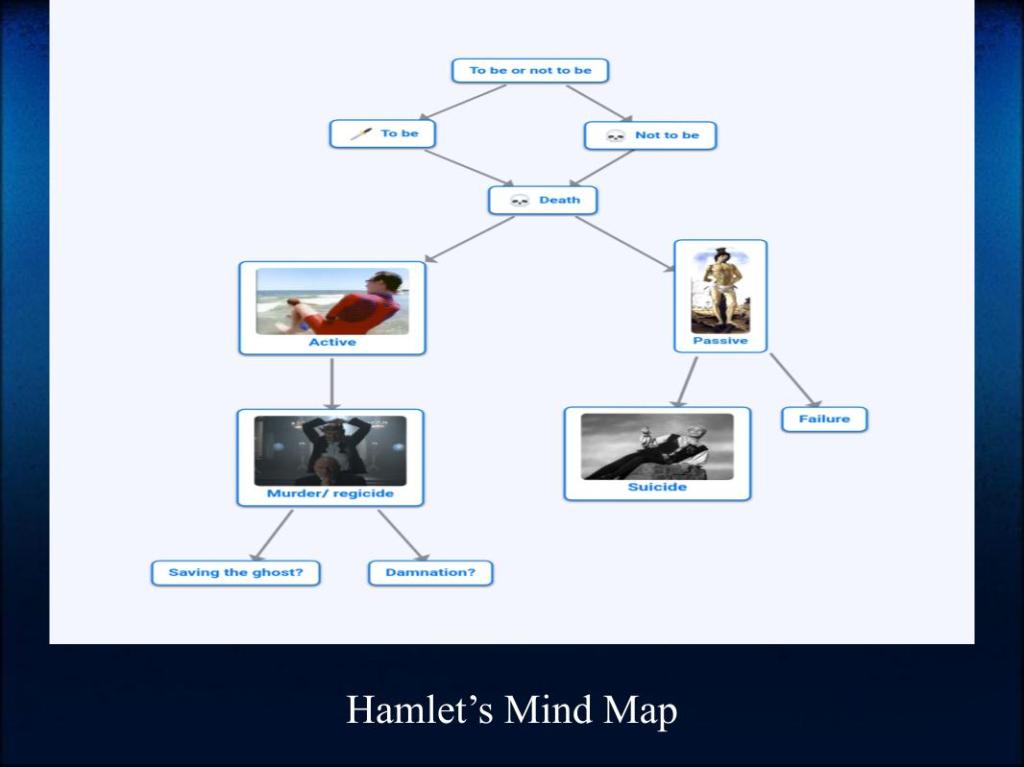
  • If you look at the speech as an argument, it hinges on two points- to be or not to be.
  • One is passive and one is active 
  • Both actions are potentially lethal, as evidenced by the two metaphors Hamlet describes later.

Contrary to popular belief, I believe that this speech is not just about suicide. It’s about the choice between suicide and murder, (in this case killing Claudius).

Three Speeches- Macbeth, and Hamlet 

Lets discuss the two central images at the start of this speech. One is active- fighting (“taking arms”), and one is passive (“to suffer…”). Both choices have a similar outcome- death. No one can fight the sea, and arrows are just as lethal.

Let’s look at the speech again, and turn it into a series of beats using the conjunctions “and, but, and or,” The speech has 6 beats. What he’s thinking about or feeling is open to interpretation, but the argument definitely changes at these points. First the thesis:

  • This beat sets up the two options (murder and suicide).  Why do I think this? Because it’s similar to two other speeches: https://youtu.be/nq3hcs1yFKw

https://youtu.be/NZSF5r9KEWE

It’s worth noting that about the same time, Shakespeare wrote three great soliloquis; Hamlet’s “To Be Or Not To Be,” Macbeth’s “If It Were Done,” and Brutus’ “It must be by his death.” All three speeches have some notable commonalities:

  • All three speeches are in passive voice; the would be murderer wishes he didn’t have to kill someone, but wants the victim dead nonetheless.
  • Refuse to mention the name of the man who will die.
  • Refuse to say ‘murder’
  • Personify death in abstract terms.

When I noticed the commonalities between the speeches, I came to realize that all of them are about murder, not just suicide. I think Hamlet alone contemplates suicide as well as murder, possibly because unlike Brutus and Macbeth, Hamlet is not at all sure he’s doing the right thing.


Beat 1 The Nerve:  Hamlet is working himself up for something; either murder or suicide. It’s ambiguous which one he starts with, and largely depends upon the actor’s interpretation.


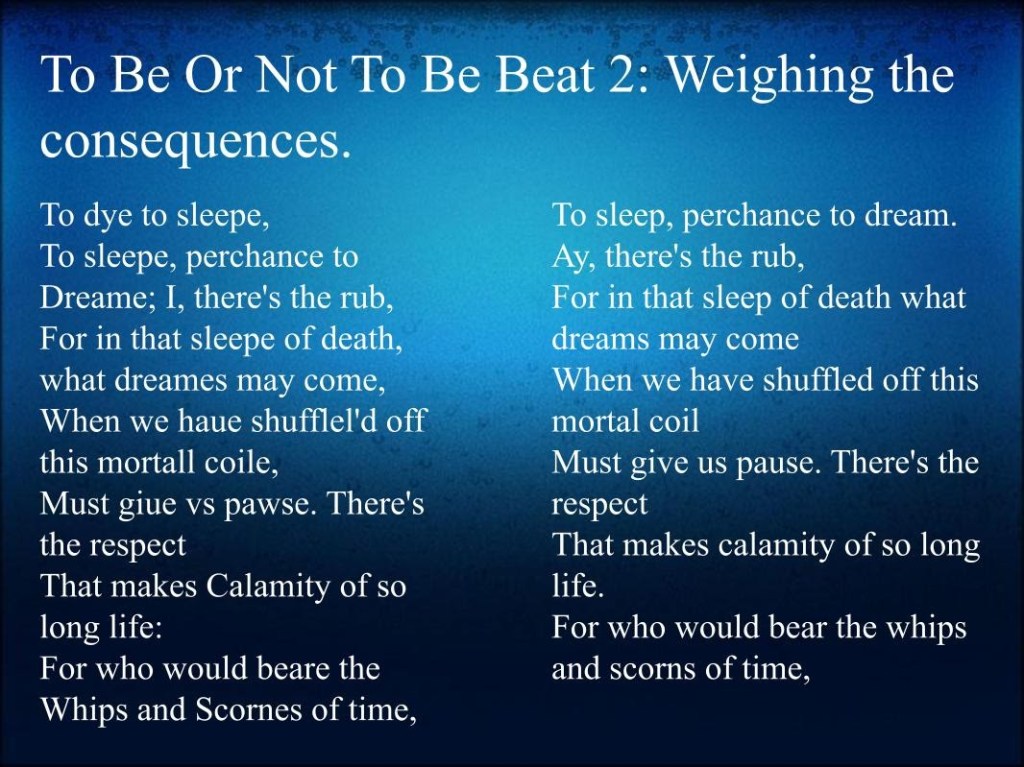
Beat 2 The Consequences
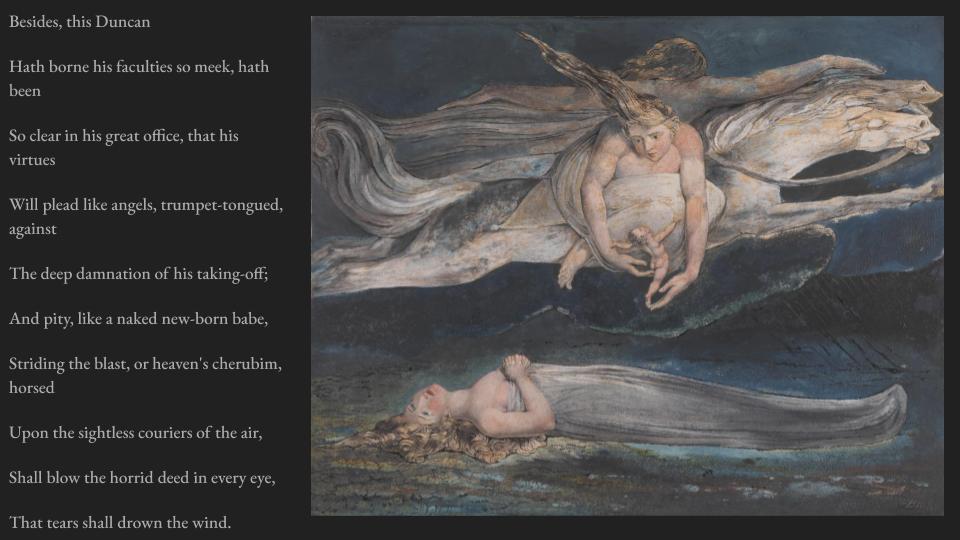
Whether Hamlet kills the king or himself, either way he could die and when he does, his soul will have to answer for his actions. This is similar to Macbeth, who worries that his foul murder will be exposed and judged by “Heaven’s cherubim, horses upon the sightless couriers of the air.”

“PITY,” by William Blake, alongside the text of Macbeth’s soliloquy from Act I, Scene 7.

“There’s the rub”- there’s the catch.

“Coil” refers to a snake skin. The line characterizes death as shedding an earthly body, something that seems all too easy to do. It’s an uncomfortable image because it makes death look all too easy. It also calls to mind the story of Gilgamesh, who had a flower that would grant him immortality, but a snake stole it, which is why snakes cam shed their skin, seemingly growing young again forever.

Beat 3: Smothering In Surmise: https://youtu.be/gFG91lXgNcs

This beat is where Hamlet seems smothered in his frustrations with life.. Rather than making a decision, he’s sidetracked with a laundry list of universal problems. His energy seems up, but it’s unclear why.

When I performed this portion of the speech, I realized that everything Hamlet refers to, Claudius has done: he has oppressed and wronged the kingdom, he has delayed the law, and he has hindered Hamlet’s love for Ophelia by letting Polonius deny Hamlet’s access to her. Perhaps the laundry list is designed to psych him up- listing all the reasons Claudius deserves to die, (without tipping him off).

Beat 4: The Downward Spiral

Once again Hamlet is thwarted by the concept of Death and divine judgment. He seems to imply that everyone is scared into compliance with the threat of death.

The Conclusion:

Hamlet’s conclusion is that he has no conclusion. He can’t kill himself because his conscience tells him that God is against it, and he cannot kill Claudius because of fear of death or damnation.

When he says “The native hue of resolution,” he means red, (as in blood), is curtailed, cut off by the very thought of Deaths pale scythe. 

Interpretations:

Mel Gibson plays Hamlet as a sort of man in mourning. He is as close to the action movie hero as Hamlet gets with his large, imposing physique and brutal looking medieval sword:
Speaking of action heroes, the whole movie Last Action Hero has a reoccurring motif of nodding to Hamlet. The avenging hero archetype is the prototype for every action movie, every superhero, (and most kung fu), and it began with Shakespeare’s Hamlet. This is  why it’s hilarious that Schwarzeneger portrays him in Last Action Hero- the movie is a loving parody of every single action star since the original- Hamlet.

Why Else might Hamlet be so cryptic?

Not all versions are about suicide or murder 

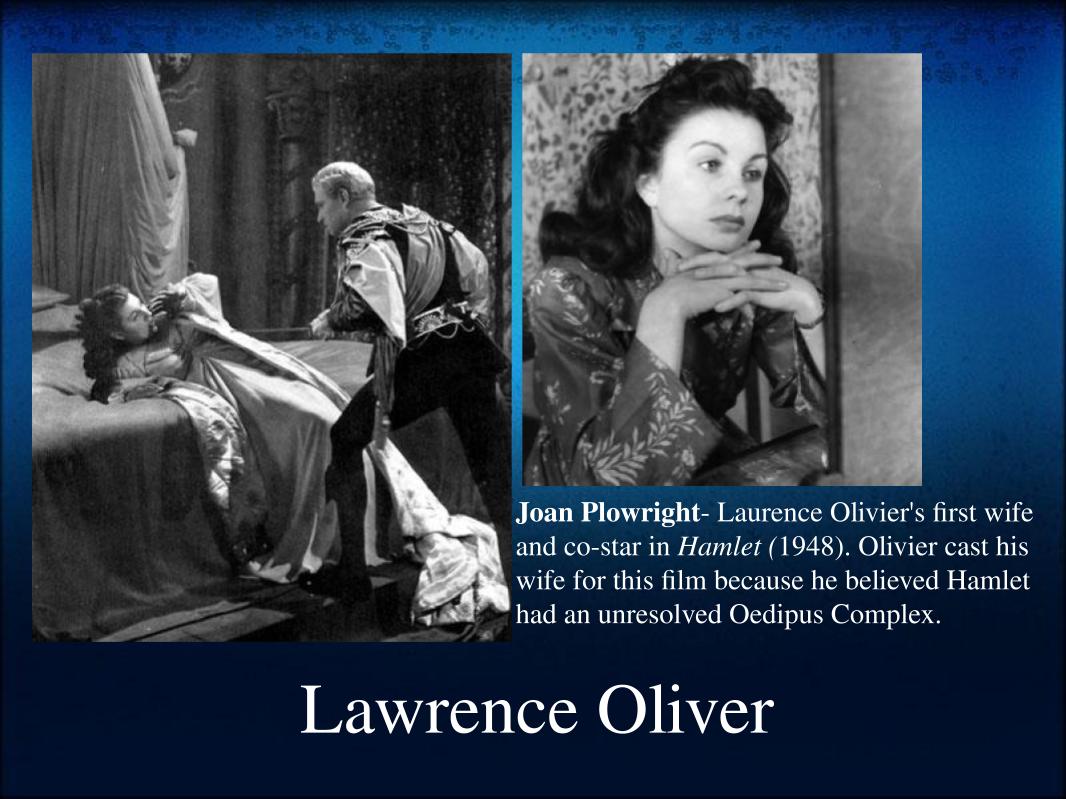
Lawrence Olivier believed that Hamlet has an Oedipus complex, and therefore has an unconscious desire to murder his father and sleep with this mother, which is why he considered himself unworthy to avenge his father’s death. In Olivier’s To Be, you can almost see his Hamlet aroused by his own Oedipal fantasies and then recoiling with disgust right before he says the line: “Perchance to dream.”

Kenneth Branaugh’s Hamlet centers  around court intrigue. In contrast with Oliver’s Gothic Elsinore, his is bright and baroque, but it’s full of two way mirrors. Half the film is either large shots with lots of people watching public performances  or POV shots of people being watched.

Branaugh’s interpretation of “To Be,” focuses on the possibility that Hamlet knows that Claudius is watching him through the  two way mirror- he frightens him, puzzles, him, but in the end, never gives Claudius a clue as to his true intentions.

Murder or suicide? 

the speech is not only famous for its universality but its evocative imagery, clear (albeit cryptic) construction, and heightened circumstances.

Shakespeare is able to give us a complete character without giving everything away, which allows anyone to reinterpret the character their own way. That is why Shakespeare’s characters endure.

Crafting a Character: Brutus

Happy Ides of March every one. I hope you have enjoyed all the posts for my Roman week. If I have time, I will try to post a few more, since I have not touched on Cymbaline or Titus Andronicus.This will not be an in depth character analysis. I won’t go into every scene and speech of Brutus’. My goal is to look at the history and the actions of Brutus in the play to show why he is such an amazing and ambigous character.

Marcus Brutus was born in 85 BC. Shakespeare’s source for the play, Plutarch’s lives of the Noble Greeks and Romans, mentions that his desire to kill Caesar might have been tied to his family: Brutus’ ancestor was Lucius Junius Brutus, the man who drove out the last king of Rome, and first consul. Below is the famous painting of Lucius foiling a plot to restore the monarchy, but to do so, he had to sentence his own sons to death:

Jaques Louis David, The Lictors Bring to Brutus the Bodies of His Sons, 1789.

https://www.khanacademy.org/humanities/monarchy-enlightenment/neo-classicism/v/david-the-lictors-returning-to-brutus-the-bodies-of-his-sons-1789

This was how seriously the Brutus family took defending the Roman Republic, they valued it even beyond their own family.

Brutus’ mother was Servilia, half sister of Caesar’s longtime critic, the senator Cato. He even married Cato’s daughter Portia! So you can see that once Caesar starts acting like a king, Brutus must have felt a tremendous amount of pressure from his Family to stay true to his Republican ideology. On the other hand, Servillia was actually Caesar’s mistress and Brutus owed his life to Caesar. After Brutus fought against Casesar, they reconciled after the Battle of Pharsalus in 48 BC:

Most of those who were taken alive Caesar incorporated in his legions, and to many men of prominence he granted immunity. One of these was Brutus, who afterwards slew him. Caesar was distressed, we are told, when Brutus was not to be found, but when he was brought into his presence safe and sound, was pleased beyond measure- Plutarch, retrieved from: http://penelope.uchicago.edu/Thayer/E/Roman/Texts/Plutarch/Lives/Caesar*.html

Despite his close ties to Caesar, Brutus chose to betray and assassinate him, so the question remains, why?

In the play and in Plutarch, Brutus is persuaded by Cassius Longinus, his brother in law and colleague in the Roman Senate. As you remember from my post on “Friends, Romans, Countrymen,” there are three basic kinds of persuasive speech, and Cassius uses all three:

1. Ethos “If you do know that I do fawn on men, and hold them hard, and after scandal them… then hold me dangerous.”

2. Logos- Cassius points out a series of embarrassing stories about Caesar that set up the following argument:

• Caesar is weak and frail

• Gods cannot be frail

• Why is Caesar treated like a god?

3. Pathos

• The people

• Fear of tyranny

• Brutus’ family honor- this is the real knife that kills any doubt Brutus had. Cassius reminds Brutus of his ancestor Lucius and how he would rather die than see a king in Rome again.

The soliloquy

Brutus. It must be by his death: and for my part,
I know no personal cause to spurn at him,

But for the general. He would be crown’d:
How that might change his nature, there’s the question.
It is the bright day that brings forth the adder;
And that craves wary walking. Crown him?—that;—
And then, I grant, we put a sting in him,
That at his will he may do danger with.
The abuse of greatness is, when it disjoins
Remorse from power: and, to speak truth of Caesar,
I have not known when his affections sway’d
More than his reason. But ’tis a common proof,
That lowliness is young ambition’s ladder,
Whereto the climber-upward turns his face;
But when he once attains the upmost round.
He then unto the ladder turns his back,
Looks in the clouds, scorning the base degrees
By which he did ascend. So Caesar may.
Then, lest he may, prevent. And, since the quarrel
Will bear no colour for the thing he is,
Fashion it thus; that what he is, augmented,
Would run to these and these extremities:
And therefore think him as a serpent’s egg
Which, hatch’d, would, as his kind, grow mischievous,
And kill him in the shell.

• This speech is a direct predecessor for “To be or not to be,” and Macbeth’s “If it were done,” soliloquy. https://youtu.be/IoDwXjKIenI

  • All three speakers are talking about murder and can’t bring themselves to say either the word murder, nor mention the name of the man who will die.

• All references to murder are in passive voice, as if Brutus wishes a lightning bolt would kill Caesar, so he doesn’t have to accept the responsibility of killing.

•Compared to Hamlet and Macbeth, Brutus’ text is flat, The speech depends on the actor to show the torment in his soul.

  • One question that the actor must answer for himself is, is Brutus really concerned for the well being of Rome, or does he want Caesar dead for another reason?

After the soliloquy, Brutus throws himself into the role of head conspirator: https://youtu.be/ibzqdoV-BcU https://youtu.be/ibzqdoV-BcU

You can see in this video that Brutus speaks eloquently about how just the cause is and how only Caesar will die. This illustrates that Brutus is well spoken but not pragmatic. As we all know, Marc Anthony eventually gets the crowd to turn on Brutus and will become part of the army that hunts him and Cassius down. The dramatic irony is what helps the argument that Brutus is the real tragic hero of this play.

The murder and its aftermath

The rest as they say, is history. On March 15th, 44 BC, Brutus and the conspirators stabbed Caesar 17 times. In the play, before Caesar dies, he utters the famous line, “Et tu, Brute? Then fall Caesar!”

The line stands out because it is the only time anyone in this Roman play speaks in Latin. Now, I have heard a compelling argument from Professor J. Rufus Fears, that this might actually be a misquote, and what Caesar really said will amaze you. As I have mentioned, Brutus’ mother was Caesar’s mistress and the two of them were very close. At the time of Caesar’s death he was 40, while Caesar was 16 years his senior. Why did Caesar forgive Brutus fighing against him? Is it not possible that what he actually said was: “Et tu, son?” That’s a question for directors and actors, but it does heighten Brutus’ emotional conflic. Much like his ancestor Lucius, Marcus Brutus is caught between his ideals and his family.

During the funeral, Brutus has a very well crafted speech where he lays out his reasons for killing Caesar. He sets himself up as the friend of Rome. This video from the Royal Shakespeare Company explores the techniques that Brutus uses to get the crowd on his side: https://youtu.be/nyPlvuv8SSk

After Antony makes his speech however, the mob burns Brutus’ house and even slaughters a man just because he shares a name with one of the conspirators. Brutus and Cassius take their armies and flee Rome, and prepare to take on Antony and Octavian. The adversity Cassius and Brutus go through pushes them together and they behave like brothers; they fight and reconcile constantly: https://youtu.be/K9EAxjVC22M

In a way, these men are two sides of the same coin: Cassius is fiery but pragmatic while Brutus is stoic and idealistic. It’s like a tragedy in and of itself that these men weren’t melded into one man with Brutus’ heart and Cassius’ mind.

Is Brutus A Traitor?

Unlike Macbeth, Shakespeare’s text leaves it ambiguous as to whether Brutus was right or wrong to kill Caesar. Even Antony, who leads an army against him, ends the play by calling Brutus “The noblest Roman of them all.” Shakespeare also gives us few clues to Brutus’ motivations other than the speech I quoted earlier. Mainly we have to go on Brutus’ actions and their consequences.

One moment that I think perfectly encapsulates the ambiguity of Brutus’ actions is the moment where he’s visited by Caesar’s ghost. In other tragedies like Macbeth and Richard III, the villain is tormented by the ghost or ghosts of people he murdered. The ghost serves as a manifestation of the murderer’s guilty conscience and torments him before his death. When Brutus sees Caesar, he does not follow this trope. He isn’t horrified, not struck by guilt, in fact, he wishes that the ghost would stay longer.

Julius Caesar by William Shakespeare

Julius Caesar book cover

MENU

In Act 4, why does Caesar’s ghost appear? I don’t understand why Caesar’s ghost shows up. I dont understand the significance of that scene.

Expert Answers info

JUANAMAC

eNotes educator

| CERTIFIED EDUCATOR

Shakespeare, as other Elizabethan writers, uses the idea of ghosts in his plays usually as a foreshadowing of events to come. In “Hamlet,” Hamlet has to deal with working out what to do with his father’s request for revenge, and also, whether the ghost is indeed his father. In “Macbeth“, Macbeth has to deal with the Ghost of Banquo showing up to dinner, literally haunting him. In “Richard III“, Richard deals with the ghosts of the men he has wronged right at the start of the play.

This haunting is significant also in “Julius Caesar“. The Ghost of Julius arrives on the eve of battle to literally haunt Brutus. Brutus had hoped that by killing Caesar he would enact change in Rome, however, the Roman Empire goes on, as does the reign of Caesar (albeit, a new Caesar).

As Brutus goes into battle, and the battle doesn’t go his way, he again turns to Julius Caesar, blaming him for the outcome of the battle,

O Julius Caesar, thou art mighty yet!
Thy spirit walks abroad, and turns our swords
In our own proper entrails. (5.3.94–96)

Shakespeare’s ghosts are visible to one person (as well as the audience, clearly) so those who react to the ghost are the ones who are supposed to learn from the arrival of the ghost, heeding the message from beyond the grave.

Enter the Ghost of CAESAR

How ill this taper burns! Ha! who comes here?
I think it is the weakness of mine eyes
That shapes this monstrous apparition.
It comes upon me. Art thou any thing?
Art thou some god, some angel, or some devil,
That makest my blood cold and my hair to stare?
Speak to me what thou art.

GHOST

Thy evil spirit, Brutus.

BRUTUS

Why comest thou?

GHOST

To tell thee thou shalt see me at Philippi.

BRUTUS

Well; then I shall see thee again?

GHOST

Ay, at Philippi.

BRUTUS

Why, I will see thee at Philippi, then.

Exit Ghost

Now I have taken heart thou vanishest.
Ill spirit, I would hold more talk with thee.

The ghost itself also resists the clearcut definition as a sign of a guilty conscience. It doesn’t accuse Brutus of murder, it doesn’t curse in fact, all the ghost says is that Brutus will see him at Philippi. Unlike Richard III or Macbeth, the ghost utters no curses or scare Brutus out of his mind.

The only conclusion that Brutus gleans is that his end is near. According to Dr. John Langdon, many Elizabethan ghosts serve as a shorthand to indicate that the play’s denouement is on its way. Brutus seems aware of this as well- he knows that if he sees a ghost, he’s likely to be one soon. Yet the reality of his impending death doesnt change Brutus; he doesn’t express remorse like Richard III or hopelessness like Macbeth, if anything his stocism and seeming world weariness makes him seem more like a hero like Hamlet during his “Not a whit, we defy augery,” speech. This passive embrace of fate is at the core Brutus and it illustrates how hard it is to truly decide if he is a villain or a hero.

Though Shakespeare wrote the character of Brutus as ambiguous, over the centuries many artists and cultures have passed judgment on Brutus. Dante in his book Inferno example places Brutus and Cassius in the lowest circle of Hell, who along with Judas Iscariot, are being forever devoured by Satan himself, imagined below in a medieval illustration as a three-headed beast. You can see the name Brut in the head on the right.

By contrast, during the French Revolution, many statesmen referred to Brutus as a hero for his noble attempt to destroy a corrupt monarchy.

One day men will be astonished by the fact that humanity in the eighteenth century was less advanced than in the time of Caesar. Then a tyrant was slain in the midst of the Senate with no formalities but thirty blows of a dagger and with no other law save the liberty of Rome Louis Antoine de Saint-Just, November 13th, 1792, (2 months before the execution of Louis XVI).

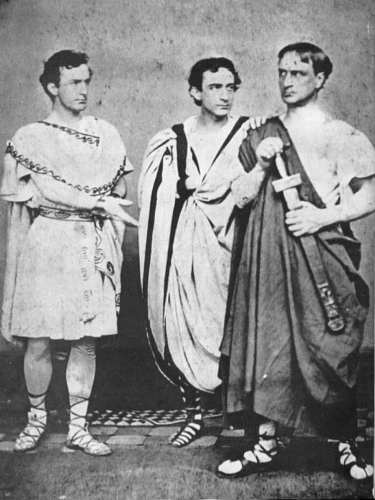
As I have written before, in the 20th and 21st centuries, America has a somewhat more complex relationship with the character of Brutus. On the one hand, America was founded on the principle of resisting tyranny; it’s even on the state flag of Virginia, which is why some early productions of the play make Brutus a hero. On the other hand, as you see above, rebels and traitors like John Wilkes Booth have also taken inspiration from Brutus. His father and brother’s middle name was Brutus and all three brothers performed in the play one year before John turned theater performance into American tragedy.

Like Brutus, Booth seemed amazed with the world’s reaction to his deed, for after he assassinated the president, he wrote this in his journal:

[W]ith every man’s hand against me, I am here in despair. And why; For doing what Brutus was honored for … And yet I for striking down a greater tyrant than they ever knew am looked upon as a common cutthroat.”

John Wilkes Booth, April 21, 1865.

The most recent controversy over Brutus’ actions is the 2017 Shakespeare in the Park production of Caesar directed by Oscar Eustis. As I wrote before, when portraying Caesar as an American president, it tends to anger the political party of his supporters, but the play shows how unplanned political violence can destabilize a country. In these productions, Brutus seems a bit of a well meaning dupe or an naive patsy acting out of fear. On the other hand in cultures that have suffered many violent uprisings, Brutus is a figure that is all to common in places like Uganda, Iran, and the Taliban controlled world: https://youtu.be/5HU8SA33j2w

Brutus is a great character because Shakespeare keeps enough of his motives in the dark to allow for new interpretations, but also showing a man with relatable desires and fears get swept up in a dangerous and unpredictable time.

The mystery of Shakespeare’s Sonnets 

We’ve discussed a little bit about how to create sonnets, now let’s talk about the creator of 154 of the greatest sonnets the world has ever known.

The sonnets are some of the most mysterious pieces of writing Shakespeare ever created. We don’t know when he wrote them, we don’t really know in what order he wrote them, we don’t know for whom he wrote them, and we certainly don’t know whom they are about. That hasn’t stopped many conspiracy theorists and many, many, many, writers from coming up with imaginative stories about these often tantalizing and mysterious pieces of writing.

Genesis:
the only thing we know for sure about Shakespeare sonnets is that they were first published in 1609, as “Shakespeare’s Sonnets, Never Before Imprinted.” A lot of scholars believe that the sonnets were actually published without Shakespeare’s permission. The main evidence for this comes from Shakespeare’s contemporary Francis Meres who referred to them as Shakespeare sonnets “distributed by his among his friends.” Scholars theorize that someone got a hold of these poems that Shakespeare meant to keep private, and published them without his consent or even his knowledge. All we know for a fact is that some of them already existed before 1609.

The Mysterious Young Man.

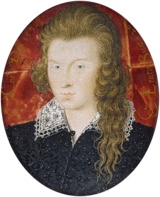
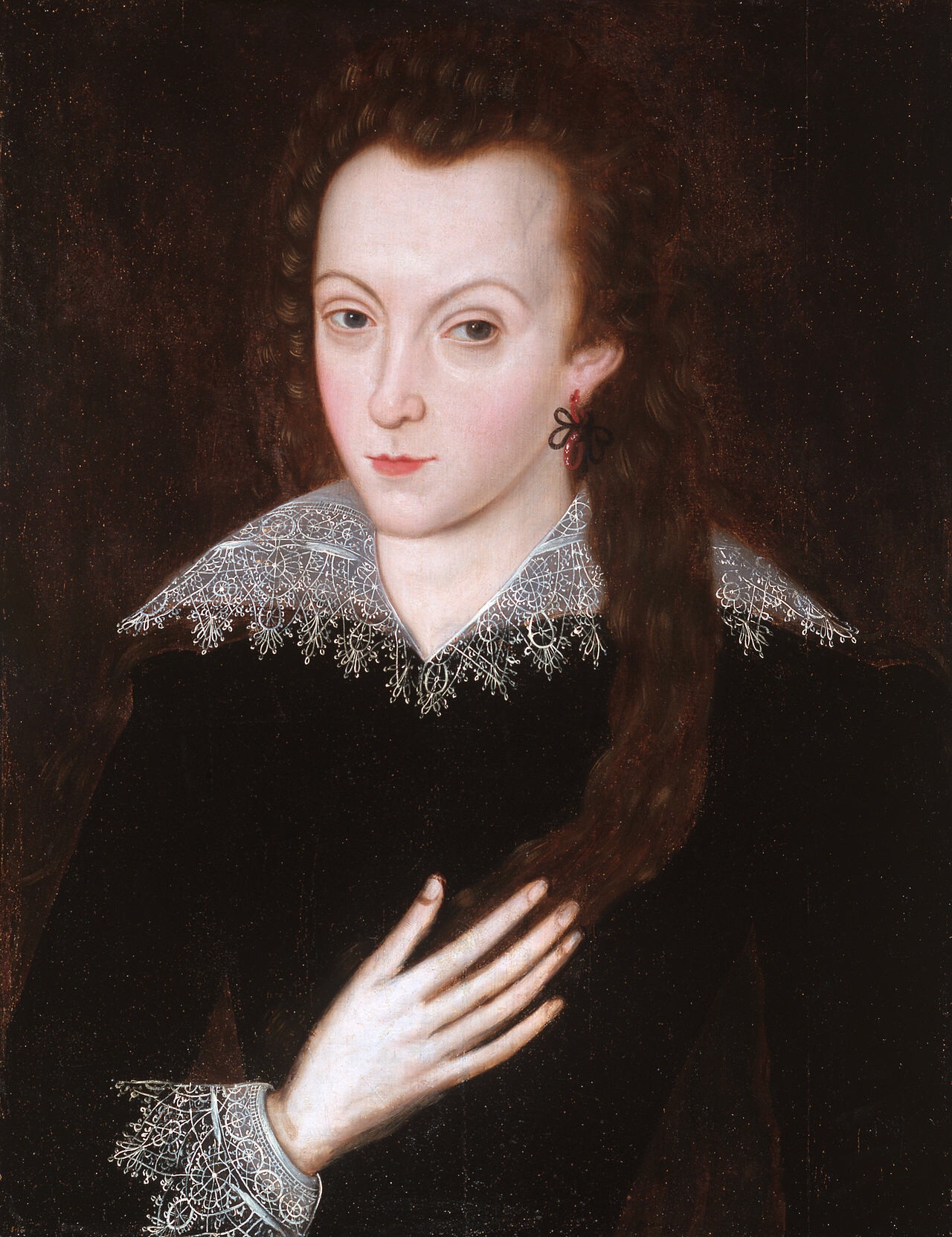
Henry Wriothesley, 3rd Earl of Southampton

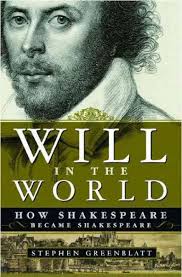
Scholar Steven Greenblatt in his wonderful book Will In the World, presents a more straightforward theory about where the sonnets came from: Shakespeare wrote them for some quick cash. As a writer, Shakespeare couldn’t always rely on the theater to make a living, especially since the theaters were often closed during times of plague, and religious holidays.

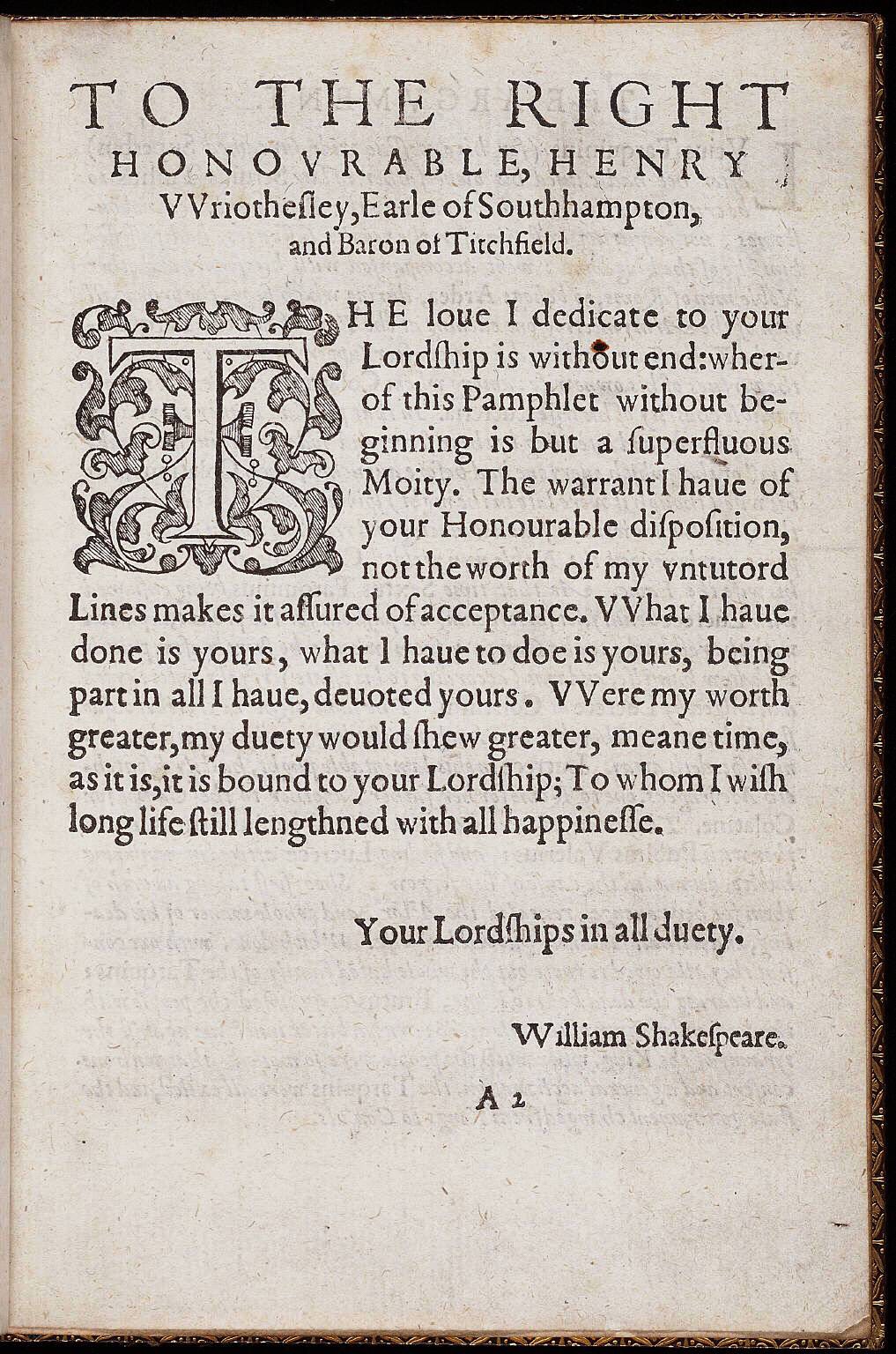
Greenblatt believes that in order to pay his bills in the mid-1590s, Shakespeare wrote poetry for Henry Wriothesley, 3rd Earl of Southampton. We know that The Bard dedicated two long poems to Southampton, Venus and Adonis, and TheRape Of Lucreece and the language Shakespeare uses on the dedication is very personal, even slightly flirty. Greenblatt believes that most if not all of the early sonnets were also written for Southampton. Greenblatt points out that Wriothesley was expected to get married and produce an heir, but he was in his late 20s and had not yet chosen a wife.

Greenblatt believes that Shakespeare was hired by someone in the Southampton family to write a series of love poems that would encourage the Earl to hurry up and get hitched. Indeed, the first 126 sonnets refer to a young, good looking blonde- haired man who has tragically remained single.

This theory works for most, but not all of the early sonnets Sonnet 33 seems to refer to a dead child. Many scholars believe that this sonnet was composed specifically for the death of Shakespeare’s own son Hamnet, who died in 1596 at the age of just eight years old. Obviously since Hamnet is so similar to Hamlet, Shakespeare might have given him a much more fitting tribute a few years later.

My favorite interpretation of the young man of the sonnets comes from the movie Shakespeare In Love. Since the love expressed in the sonnets between the speaker and the Fair Young Man seems to be somewhat sexual in nature, it kind of lends itself to the notion that Shakespeare might’ve been homosexual. What I find amusing is that in the film, since his lady love is his disguised as a boy, ( like so many of Shakespeare’s heroines ), the film answers the question of whether Shakespeare was gay or straight by having the young Shakespeare fall in love with a blonde woman disguised as a male actor, In the scene below, Shakespeare watches his mistress perform in disguise as Romeo, then dedicates a sonnet to her, while still referring to her as male in the sonnet! https://youtu.be/xpyTl3OMWrU

The DarkLady

In the next group of sonnets, the speaker refers to a woman that the speaker calls his mistress. We have no clues from the sonnets as to who she might be, except that her skin is dark. Many many people have wondered who this young woman might be. My favorite theory comes from scholar Michael Wood in his documentary In Search Of Shakespeare. Wood theorizes that it might’ve been in Emilia Lanier, who was the wife of Shakespeare’s patron. One of her descendants, Peter Bassano, has put forth the notion that Shakespeare could have been involved with Mrs. Lanier.

Of course, it also seems likely that The Dark Lady just could’ve been a literary exercise for Shakespeare, who was also writing Anthony and Cleopatra at the time. https://youtu.be/u0W9v9jVp04

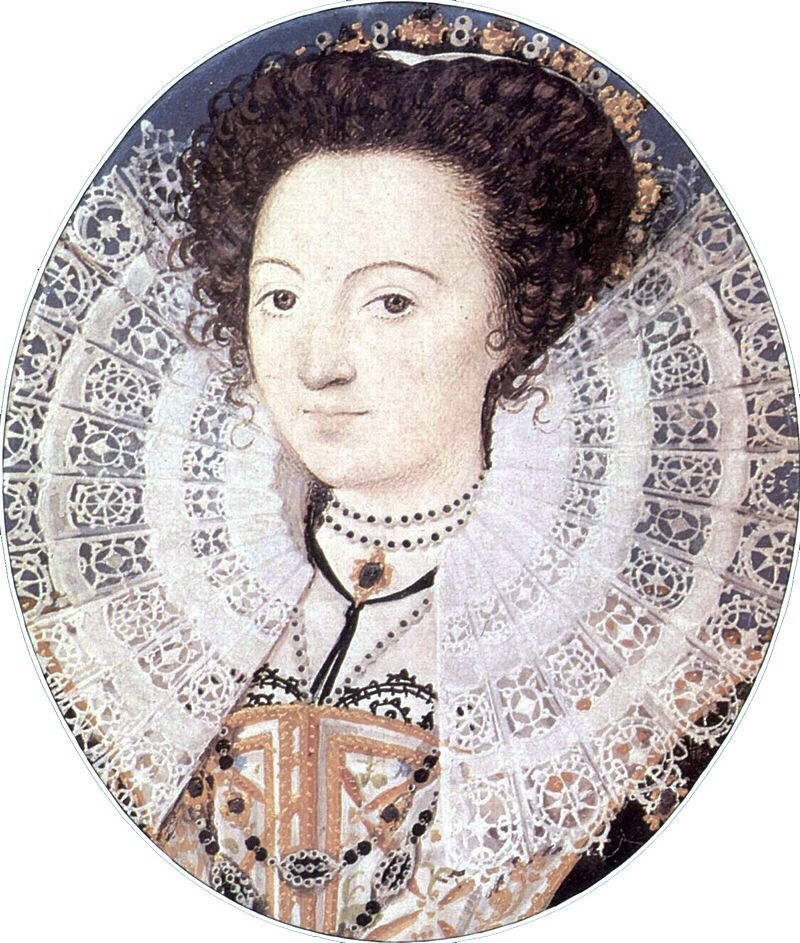
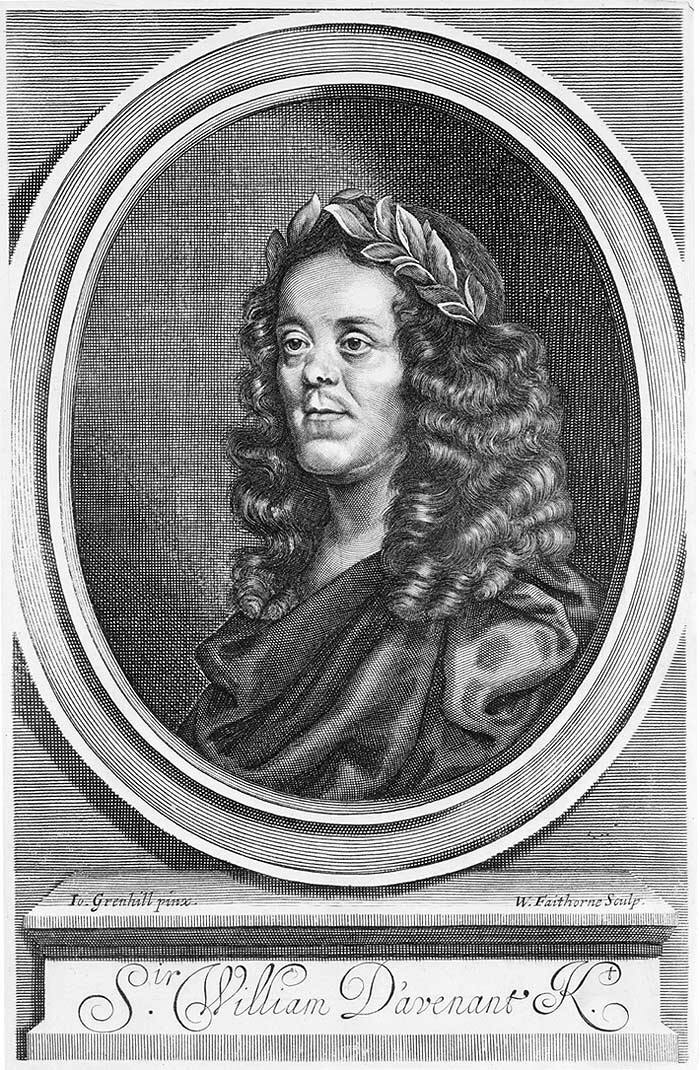
Other candidates for The Dark Lady have included the mother of celebrated 18th century playwright and actor, William Davenant.

Sir William himself claimed to be Shakespeare’s illegitimate son, and his parent’s tavern is midway between Stratford and London, so it’s not entirely impossible that Shakespeare at least knew the boy’s mother. The apocryphal story comes from John Audley’s biography of Shakespeare from 1693. Here is what he says about Shakespeare and Davenant:

Mr. William Shakespeare was wont to go into Warwickshire once a year, and did commonly in his journey lie at this house [the Crown] in Oxon, where he was exceedingly respected… Now Sir William [Davenant] would sometimes, when he was pleasant over a glass of wine with his most intimate friends–e.g. Sam Butler, author of Hudibras, etc., say, that it seemed to him that he writ with the very spirit that did Shakespeare, and seemed contented enough to be thought his Son. He would tell them the story as above, in which way his mother had a very light report, whereby she was called a Whore.[2]

My favorite interpretation of the Dark Lady Myth comes from Doctor Who, in an episode called The Shakespeare Code where The Doctor s companion Martha Jones, (who is black), meet Shakespeare and he immediately is smitten with her.

It is supremely naïve to assume that anybody can pin down a definitive Dark Lady. Adultery was just a serious back then as it is now, and admitting to it, even in a play or poem would have been suicide for Shakespeare, which is why the sonnets are vague enough so that they never conclusively point to any specific party, which helps keep this tantalizing mystery alive to this day.

References:

Books:

Web:

http://www.peterbassano.com/shakespeare

If you enjoyed this post, you might want to sign up for my Outschool class on Shakespeare’s love poems. We’ll discuss the mystery of the Dark Lady, and you’ll learn to create your own sonnets, just in time for Valentines Day!

O Fortuna!

Today, June 24rth, is the ancient Roman festival of Fortuna, the goddess of luck and worldly fortunes. I’ve chosen to use this opportunity to explain a little bit about the concept of Fortune, which Shakespeare uses frequently in his tragedies. But first, a short musical interlude:

Does this song sound familiar? You’ve probably heard it underscored in hundreds of commercials, TV shows, maybe even in concerts, it’s a song composed by composer Carl Orff called “O Fortuna.”

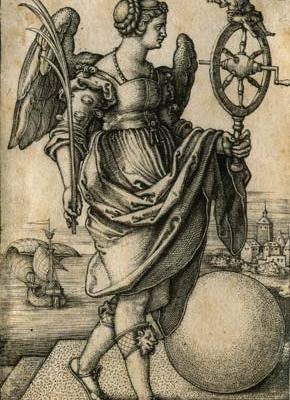
The Roman goddess Fortuna
The Roman goddess Fortuna with her wheel and orb.

In Roman mythology, Fortuna was the goddess of luck, wealth, and fertility. If you listen to the lyrics of the song above, you can see that for centuries, people chose to represent Fortune as a fickle, changeable, and irresponsible goddess. Unfortunately, one of the reasons she’s personified as a woman is the long-held prejudice that women are weak, have frequent changes of mind and mood, and can’t commit to one person, (a view of women that I and Shakespeare believe to not be true). However, based on his writing he does seem to think Fortune fits these characteristics:

“I am Fortune’s fool” –Romeo and Juliet

O fortune, fortune! all men call thee fickle:                If thou art fickle, what dost thou with him.   That is renown’d for faith? Be fickle, fortune; For then, I hope, thou wilt not keep him long, But send him back. –Romeo and Juliet

“When Fortune means to men most good,           She looks upon them with a threatening eye.” King John

Out, out, thou strumpet, Fortune! All you gods,       

In general synod ‘take away her power;       

Break all the spokes and fellies from her wheel,           

And bowl the round nave down the hill of heaven,        

As low as to the fiends! -Hamlet

In Dante’s Inferno, Fortuna lives in the Underworld with Plutus the god of gold, helping to distribute the god’s wealth to people above ground. In the Middle ages she was an explanation for why some people have good luck, some have bad, and why luck frequently changes.

The Wheel of Fortune. 

Fortuna’s most recognizable symbol is her wheel; the symbol of how luck can change; just when you think your life is perfect, the wheel turns and you find yourself on the bottom. Frequently in tragedy when things go wrong, the characters blame Fortune, such as when the Lord of Kent finds himself put in the stocks like a common thief and gripes: “Fortune good night, smile once more, turn thy wheel,” King Lear, Act II, Scene ii. And yes, the real game show was partially inspired by the goddess’ most famous symbol.

Fortuna In Tragedies

Shakespeare mentions fortune over 500 times in his plays and frequently in his tragedies. Characters in Shakespearean tragedy frequently single out Fortuna as the cause of their unhappiness and curse her as a liar and a strumpet. In a Christian society, it was a lot more appealing to blame a pagan goddess than a loving, Christian god, (which would probably be considered blasphemous). Now you see why she has become a popular scapegoat for misfortune in tragedy. At the same time, all tragedy raises questions about the nature of free will; how much of bad fortune is the result of fate, and how much is a direct result of the character’s bad choices? Edmund in King Lear laughs at the notion of any kind of fate, and accuses all of humanity of shirking responsibility in this speech:

EDMUND

This is the excellent foppery of the world, that,
when we are sick in fortune,–often the surfeit
of our own behavior,–we make guilty of our
disasters the sun, the moon, and the stars: as
if we were villains by necessity; fools by
heavenly compulsion; knaves, thieves, and
treachers, by spherical predominance; drunkards,
liars, and adulterers, by an enforced obedience of
planetary influence; and all that we are evil in,
by a divine thrusting on: an admirable evasion
of whoremaster man, to lay his goatish
disposition to the charge of a star! (King Lear, Act I, Scene ii).

At the same time, the audience also knows that Edmund was cursed by Fortune from the beginning, since he is the illegitimate child of the Duke of Gloucester, which might prove exactly the opposite point of his speech. He may act like he is absolute in his free will, but his behavior and his violent end suggests otherwise. So when characters curse Fortune or Fortuna in Shakespeare’s plays, take a look at the language they use to characterize this abstract concept. The way we think about luck or fate helps shape our perspective of our own lives, and therefore how playwrights depict this mysterious goddess helps us see the possibilities of human choice, and maybe help us make better choices than the tragic men who slander her in these plays!

For more insight into this topic: Click here to listen to my podcast about this week’s post:
https://www.buzzsprout.com/45002/284936-the-shakespearean-student-episode-6-o-fortuna

For Further Reading:

  1. Brittanica.com: Fortuna: http://www.britannica.com/topic/Fortuna-Roman-goddess
  2. Internet Shakespeare Editions: Fortuna in Medieval Drama: http://internetshakespeare.uvic.ca/Library/SLT/drama/early%20tragedies/medievaltragedy.html#boethius 
  3. Encyclopedia Mythica: Fortune: http://pantheon.org/areas/mythology/europe/roman/articles.html
  4. The Obscure Goddess Online Dictionary: http://www.thaliatook.com/OGOD/fortuna.html