How Accurate Is Hamnet?

“She’s got…it, hasn’t she? The pestilence?” (O’Farrell, 105).
As this quote, (and the subtitle) suggests, Maggie O’Farrell’s novel Hamnet: A Novel About the Plague, focuses on the terror surrounding the plague and its devastating consequences on families. I really respect this book for its historical authenticity, it’s clever prose, and O’Farrell’s command of style, but I should warn you that this novel is definitely not for breezy summer reading.

If you are looking for a novel about William Shakespeare, this isn’t it; the Bard only appears in flashbacks. The action mainly concerns his wife and children. While Will was living and working in London for most of the year, his family lived in Stratford Upon Avon, along with the playwright’s mother and father. The novel has follows the characters across two times: 1582, when Shakespeare and his wife first met, courted and married, and around 1595, during an outbreak of plague that would (Spoiler Alert) eventually claim the life of Shakespeare’s son, Hamnet.

Drawing of Shakespeare and his family. Hamlet and Judith are on his right, his other daughter Susanna and his wife Anne are on his left.

The novel has a very dour tone, but that is by design. The author herself writes that the premise of the book was to create a realistic (albeit fictional) account of the Shakespeare family as their only son fell sick and died.
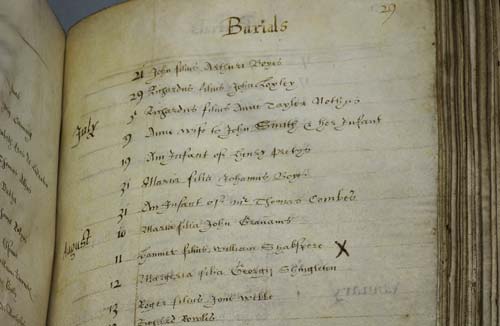
Burial records for the town of Stratford Upon Avon for 1596. On August 11, it records the death of Hamnet Shakespeare, William’s only son

The premise is intriguing from a historical point of view. We have no diaries or correspondence that express how the Shakespeares dealt with this catastrophic loss, but many scholars believe that Shakespeare’s play Hamlet was a direct homage to his son, since in Elizabethan England the names Hamlet and Hamnet were used interchangeably. Still, it must have effected Will in other ways, and it had to have had an effect on Hamnet’s mother and sisters, and that was O’Farrell’s focus when adapting this story as a novel.

I would describe the novel’s tone as ‘haunting,’ which is appropriate since it’s based around how a child’s death effected his family. It reminds me of a passage Shakespeare himself wrote about the death of a young boy in his play King John:

Grief fills the room up of my absent child,
Lies in his bed, walks up and down with me,
Puts on his pretty looks, repeats his words,
Remembers me of all his gracious parts,
Stuffs out his vacant garments with his form;
Then, have I reason to be fond of grief?
Fare you well: had you such a loss as I,
I could give better comfort than you do.
I will not keep this form upon my head,
When there is such disorder in my wit.
O Lord! my boy, my Arthur, my fair son!
My life, my joy, my food, my all the world!
My widow-comfort, and my sorrows' cure! King John Act III, Scene iv.


Like Constance in the quote above,, All the characters in Hamnet are haunted.
[Hamnet is pursued by plague. Will Shakespeare and Anne Hathaway are haunted by their abusive parents. Will’s father John by the loss of his business and social standing, and of course, everyone is haunted by Hamnet’s death.
https://youtu.be/kj240pJPpB8

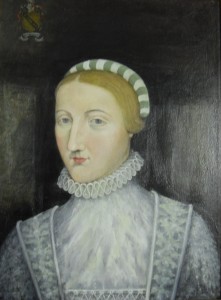
Artist’s restored version of a Elizabethan woman, believed to be Anne Hathaway.
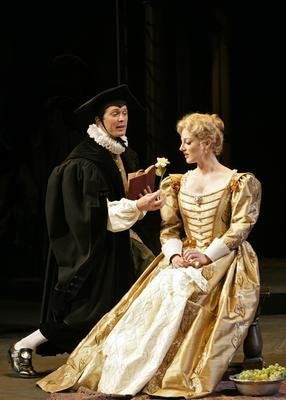
Lucentio and Bianca (The Taming of the Shrew, Oregon Shakespeare Festival, 2007)

Although the novel is mainly about Hamnet’s decline and death, my favorite parts of the book are flashbacks to the courtship and marriage of Will Shakespeare and Anne Hathaway. We know nothing about their real courtship, so O’Farrell borrows the plot from Shakespeare’s Taming Of the Shrew. Like Lucentio in Shrew,
The 18 year old William Shakespeare is a Latin tutor, (having not yet become a writer), who woos a misunderstood woman whom the town calls a shrew. In the book, Anne Hathaway is known as Agnes and (like many unmarried women of the period), is looked on as odd and somewhat wild. Many single women of this period would likely face discrimination, and sometimes. In this video, you can see how cunning women like Anne had an uneasy relationship with the local community; some saw them as an asset to the community, but others believed their abilities came from The Devil. For more information on Anne’s life, click here.

The History Guy- Witch Trials in the 16th and 17th centuries.

Anne is further isolated because of her strange abilities- in the book she owns a falcon, not a ladylike hobby for 1580s England. She is also skilled with medicinal plants and knows how to read palms. In essence, though the town ostracizes Anne, Shakespeare admires her cleverness, and the book implies that Shakespeare would later use her skills in characters like Kate from Shrew, Friar Lawrence (the skilled potion master), and maybe even the witches from Macbeth.

The reusing of Shakespeare’s plots doesn’t stop there- Before Anne and Will get married they are handfasted- that is they make a mutual promise to get married in front of witnesses. Anne knows that her family will not consent to their marriage given Shakespeare’s low economic prospects, so she convinces Will to get her pregnant. This mirrors Claudio and Juliet in Shakespeare’s Measure For Measure, who are publicly shamed and arrested for fornication, even though their only crime was not waiting until they had given a dowry to the groom’s parents before consumating the marriage.


One final master stroke of O’Farrel’s historical fictive tapestry is how she engineers the father son conflict between Will Shakespeare and his father John. Shakespeare loves to explore the power dynamic between boys on the cusp of manhood, and their already powerful fathers. In the case of John Shakespeare, O’ Farrell depicts him as a man who has worked, schemed, scammed, and clawed his way to the highest wealth his birth can allow him, but is now falling from grace, who has nothing but contempt for his son who seems like a worthless dreamer, incapable of hard work. This most closely echoes Shakespeare’s Prince Hal and King Henry, a son who must prove his fitness to be king to his father and to his nation. Watch this exchange from “The Hollow Crown” where the sick and aging John of Gaunt (Patrick Stuart), chastises his weak, effeminate nephew, King Richard II:

Historical Notes:

Infant mortality in Elizabethan England:

Even before Hamnet is born, his mother and mother in law are painfully aware that he might die young. Sadly this is very historically accurate. Infant mortality rates were high in Elizabethan England. According to Ian Mortimer in his book The Time Traveler’s Guide To Elizabethan England, mothers had to keep their children at arms length and not get too attached. Being a mother in this time meant dealing with the constant knowledge that your child might not survive:

In Stratford in the 1560s, there are on average, sixty-three children baptized every year- and forty-three children buried.

Mortimer, 27.

John Shakespeare’s fall John Shakespeare was more than a glover- he held a position in the Stratford Guild Hall- basically a city council position. He was in charge of hiring constables, keeping the peace, overseeing the brewing of ale, and approving theatrical entertainments for civic events. Probably John got his son interested in theater by letting him tag along to the sort of private performances he would have watched to determine whether a play or troupe was good enough for, for instance, the visit of a peer. However, by the 1580s, John was losing his business and selling off his land assets. Scholars suspect that either John was a closet Catholic, forced to pay fines every time he failed to attend protestant church, or he was avoiding church and his alderman council meetings because he knew his creditors would be there. In any case, O Farell takes this historical tidbit and turns John Shakespeare into a bitter, broken, abusive man whom Shakespeare can’t wait to get away from. Shakespeare and his wife bond over their abusive parents and dream of succeeding financially so they can get away from their parent’s influence.
Malt and wool The novel hints at John Shakespeare’s secret side business selling wool and malt, but never explicitly states that this practice was illegal. All wool was controlled by the Elizabethan government so it was illegal to sell it without special permission, and in 1570, John Shakespeare was caught selling wool illegally. He was also found guilty of money-lending, hoarding grain, and selling malt. This is why he tells his son to forget the wool he saw in the attic.
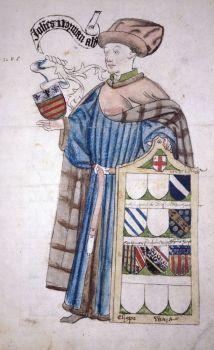
An Alderman in his official robe, the same kind John Shakespeare would have worn.

Historical Events Mentioned in Hamnet

  1. 1556 Anne Hathaway born. She’s referred to as Agnes in other court documents. Her father Richard owned a sheep farm in Hewland. At some point, her mother died and her father Richard married a woman named Joan, whom the novel portays as a bitter, controlling witch.

1564– Will Shakespeare born, third of 8 children. His father started out as a local glover, who quickly rose through the ranks of local government to become the mayor of the town. They owned a house in Henley street, which also doubled as the glove workshop. For more informaition on this fascinating building, visit the Shakespeare Birthplace trust: https://www.shakespeare.org.uk/visit/shakespeares-birthplace/
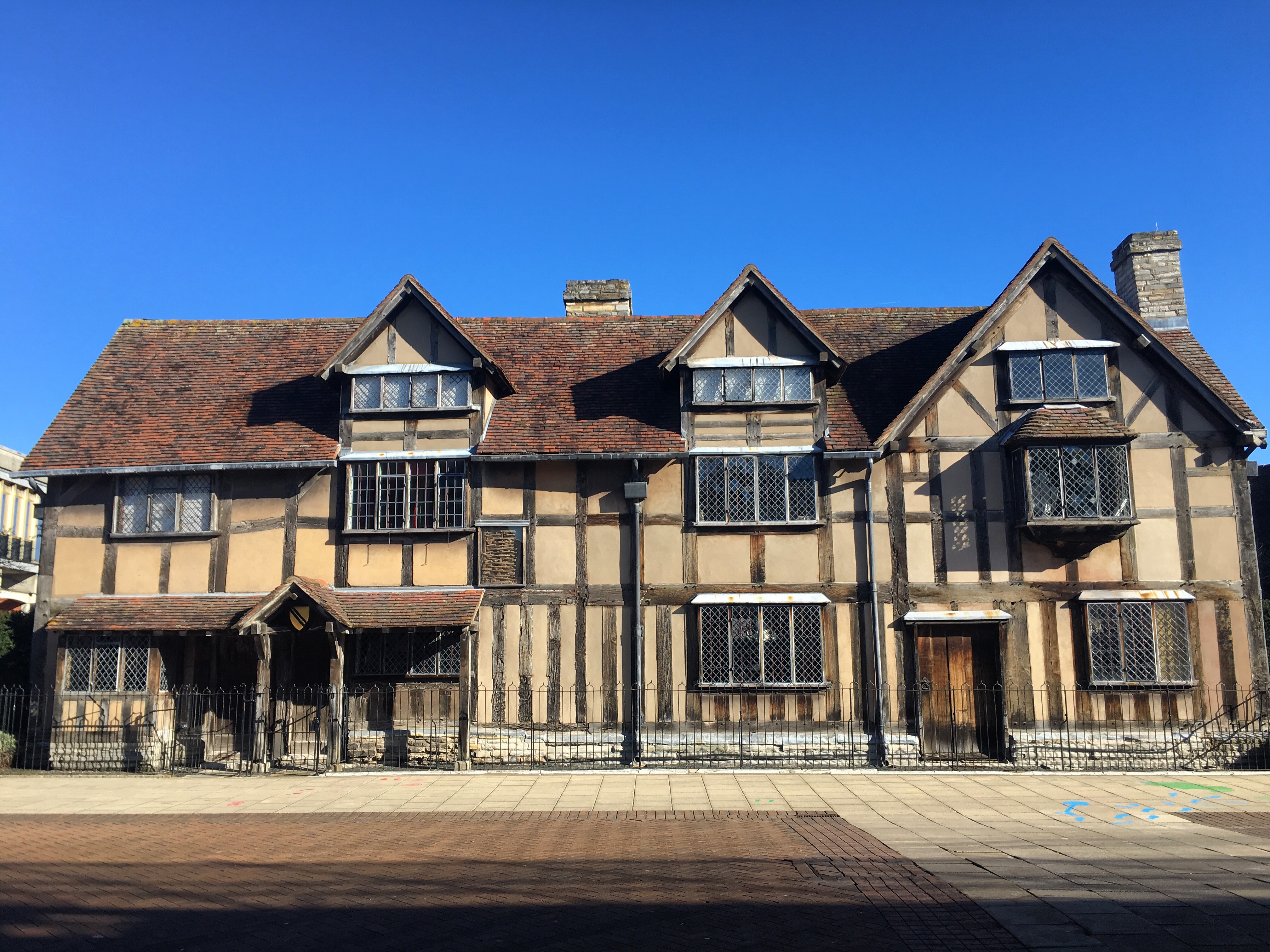
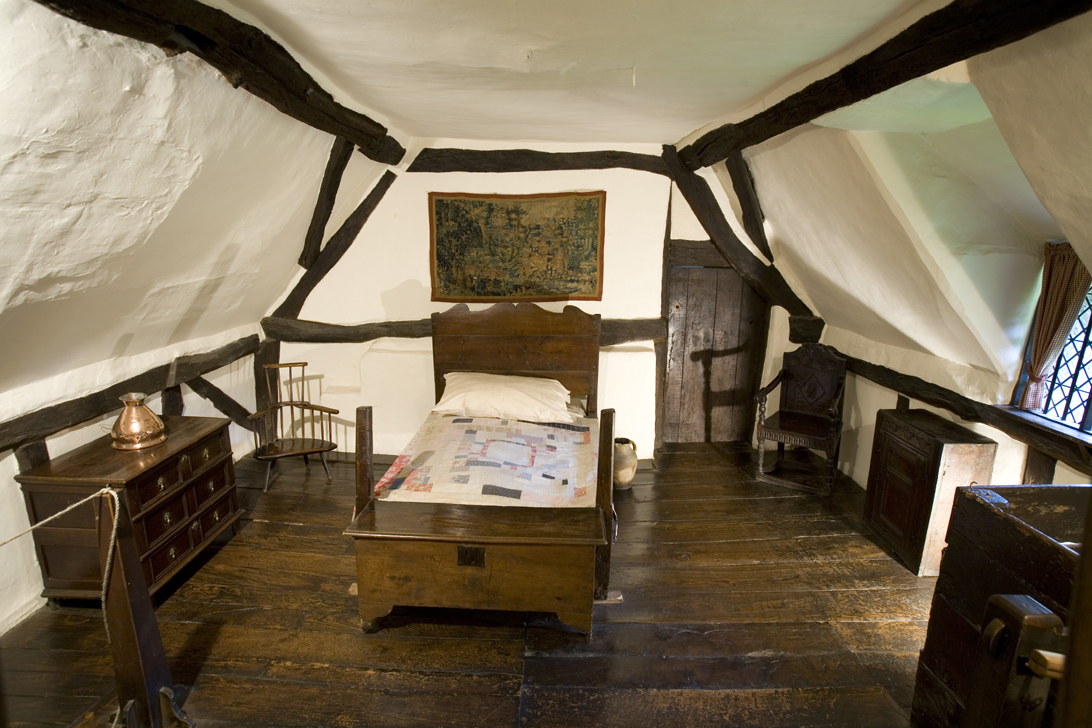
The Shakespeare’s house on Henley Street in Stratford Upon Avon, where Will, his wife, children, and parents lived until 1597.
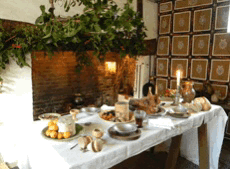
Recreation of the Shakespeare’s dinner table.


1581– Anne’s father Richard dies,  bequeathing her “£6 13s 4d ‘atte the day of her maryage’.” Richard Hathaway owned a farmhouse in Shottery that still stands today! For more info, please visit the Shakespeare Birthplace Trust: https://www.shakespeare.org.uk/visit/shakespeares-birthplace/

Anne Hathaway’s Cottage and Gardens, Stratford-upon-Avon, UK. June 2014.
Interior and exterior images of Ann Hathaways cottage, Shottery, Stratford upon Avon, Warwickshire.


1582– On November 27th, 1582, William married Anne Hathaway. He was 18, she was 26. It must have been a hasty and stressful situation. Shakespeare had no job, and based on the timeline, Anne was already pregnant with their daughter Susanna. For more information on marriage in the period, please visit my website on Elizabethan society:

The Shakespeares were granted a marriage licence by the Bishop of Worcester. They were married at Temple Grafton, a village approximately five miles (8 km) from Stratford.

Notes On Shakespeare’s Wedding Day:

  • We know that Anne’s family paid a dowry to Shakespeare’s family, which annoys Shakespeare in the book. He feels furious that his father uses the marriage to help his business interests.
  • According to Michael Wood, the priest left out the reading of the banns, and suspected the marriage was intentionally catholic. The book also makes it clear that this was a catholic ceremony, deep into the reign of the Protestant Queen Elizabeth I.
Robert Bearman, “The Shakespeare marriage bond,” Shakespeare Documented, https://shakespearedocumented.folger.edu/resource/document/shakespeare-marriage-bond

May 26, 1583– Susanna Shakespeare is baptized, which means she was probably born three days earlier.

February 2nd, 1585– Hamnet and Judith are baptized.The twins were named after two very close friends of William and Anne, the baker Hamnet Sadler and his wife, Judith. The Sadlers became the godparents of the twins and, in 1589, they in turn named their own son William.

1586– John Shakespeare is booted off the Stratford board of Aldermen for not attending meetings. Michael Wood suggests that John might have been avoiding the meetings because he was in debt, and the creditors knew where to find him. The novel seems to agree with this theory- the first time that we meet John Shakespeare, he is on the verge of beating his own grandson for sneaking up on him. If he was hiding from his creditors, he’d have a reason to be jumpy.
1592 – Shakespeare makes it in London?
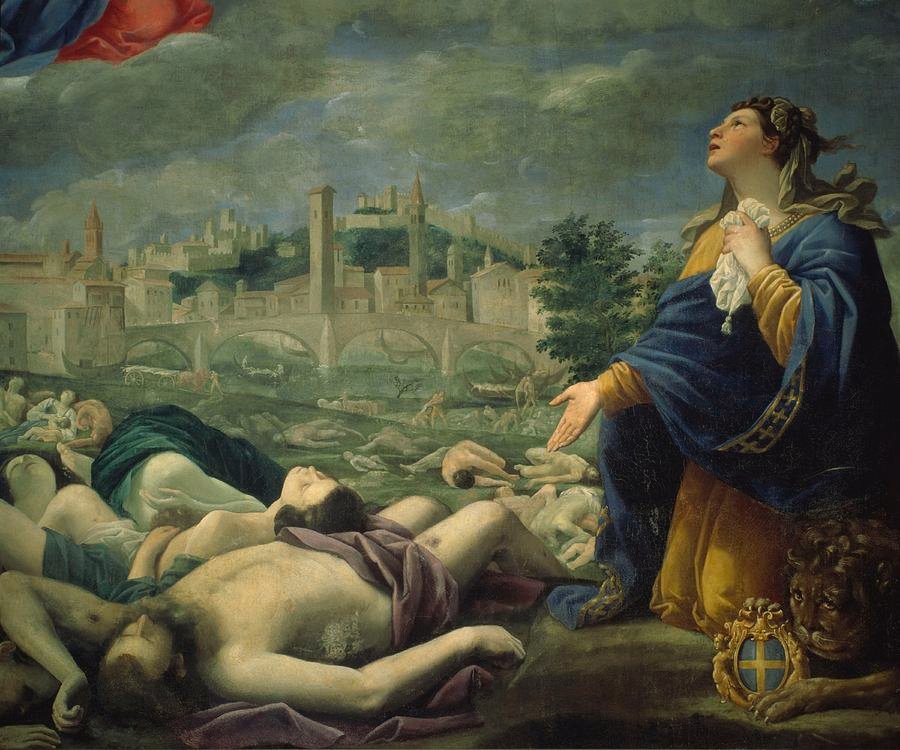
1593 Outbreak of Bubonic Plague- 15,000 people died in London alone. O Farrell does a great job of portraying the visceral terror people must have felt during an outbreak, the same terrified panic that gripped our world in 2020. As I’ve written before, not only did the disease itself instill fear, but also the Draconian measures of quarantines, and the grotesque and ineffective methods for treating the plague. To see how you might be treated for plague in the 1590s, take my quiz: https://sites.google.com/d/1iLSGjbllxU-ZwyrUya_xHtjojSCg9pd6/p/1xzNm37sGbHsQJgsnx4irZHJVp9YscVVJ/edit?authuser=2
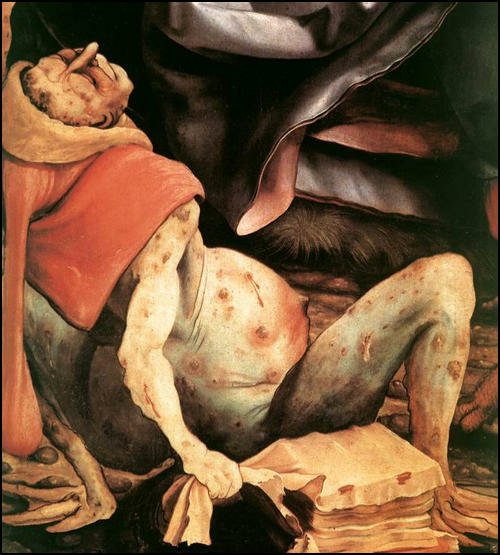
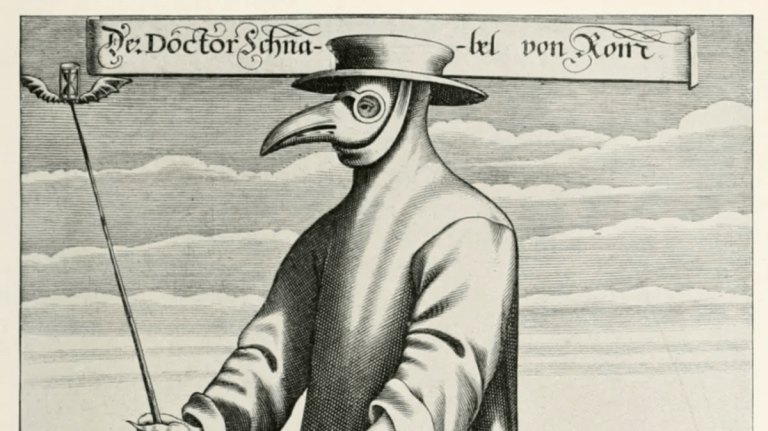
Because of the contagious nature of the disease, the theatres were closed, which forced Shakespeare to write poems instead of plays. Around this time he also probably wrote Romeo and Juliet, Richard III, and A Midsummer Night’s Dream.
Shakespeare published Venus and Adonis

1596 Hamnet dies

C. 1599– William Shakespeare writes Hamlet, his longest play, widely regarded as the greatest play ever written in the English language.
I hope this post helped increase your understanding and enjoyment of the book, and Elizabethan History in general.

For a fascinating look at the life of an Elizabethan woman, check out this documentary about Shakespeare’s mother Mary Arden, created by scholar Michael Wood:
Close Reading: To Be Or Not To Be

For Shakespeare’s Birthday, I thought I would discuss his most famous speech what is arguably his greatest play. Hamlet, Prince of Denmark was written in 1600, the pinnacle/ middle of Shakespeare’s career, after Julius Caesar but before Macbeth.

David Tennent as Hamlet. Royal Shakespeare Company, 2010.

To Be Or Not To Be has intrigued and mystified people for centuries. It is full of ambiguous imagery, haunting images, and solemn contemplative ideas. I’m going to try and break the speech down first like an intellectual argument, but I will also give you some of my interpretation of Hamlet’s thoughts and feelings. Shakespeare’s genius is creating a speech that gives plenty for the reader to interpret,, but it’s up to the reader to decide what’s happening in the speech.

Just a refresher of the plot:

1. The king has died and been seen as a ghost 

2. He tells his son Hamlet that he was murdered by his brother Claudius, who killed him to become king and marry Hamlets mother, Gertrude.

Hamlet is trying to determine if the ghost is telling the truth and if so, how can Hamlet revenge the death of his father?

The speech occurs right in the middle of the play. Hamlet has been acting strange and the king is worried. He hides behind a tapestry right before Hamlet enters. He then delivers this famous and highly cryptic speech:

Ham. To be, or not to be, that is the Question:
Whether 'tis Nobler in the minde to suffer
The Slings and Arrowes of outragious Fortune,
Or to take Armes against a Sea of troubles,
And by opposing end them: to dye, to sleepe
No more; and by a sleepe, to say we end
The Heart-ake, and the thousand Naturall shockes
That Flesh is heyre too? 'Tis a consummation
Deuoutly to be wish'd. To dye to sleepe,
To sleepe, perchance to Dreame; I, there's the rub,
For in that sleepe of death, what dreames may come,
When we haue shufflel'd off this mortall coile,
Must giue vs pawse. There's the respect
That makes Calamity of so long life:
For who would beare the Whips and Scornes of time,
The Oppressors wrong, the poore mans Contumely,
The pangs of dispriz'd Loue, the Lawes delay,
The insolence of Office, and the Spurnes
That patient merit of the vnworthy takes,
When he himselfe might his Quietus make
With a bare Bodkin? Who would these Fardles beare
To grunt and sweat vnder a weary life,
But that the dread of something after death,
The vndiscouered Countrey, from whose Borne
No Traueller returnes, Puzels the will,
And makes vs rather beare those illes we haue,
Then flye to others that we know not of.
Thus Conscience does make Cowards of vs all,
And thus the Natiue hew of Resolution
Is sicklied o're, with the pale cast of Thought,
And enterprizes of great pith and moment,
With this regard their Currants turne away,
And loose the name of Action. Soft you now,

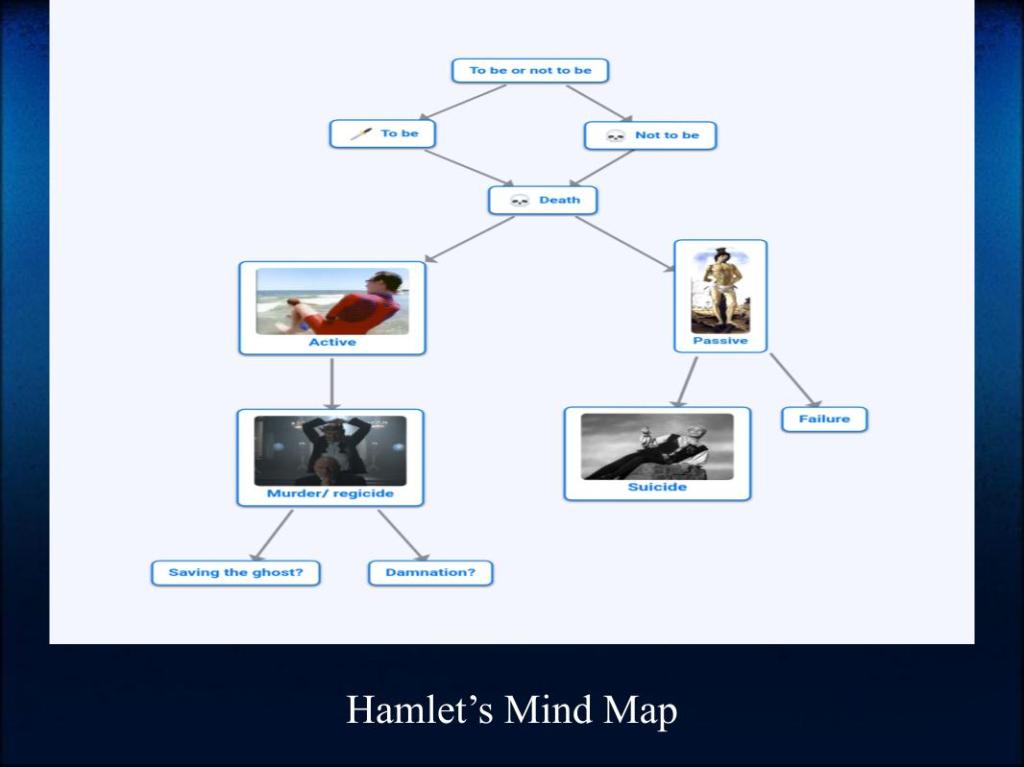
Now before I talk about the context of the speech, I want to deconstruct it as an intellectual argument. Hamlet is grappling with something huge, and he is weighing the consequences of his potential actions. Remember, Hamlet is a prince, but he is also a college student, so he turns his choice into an intellectual argument.

  • If you look at the speech as an argument, it hinges on two points- to be or not to be.
  • One is passive and one is active 
  • Both actions are potentially lethal, as evidenced by the two metaphors Hamlet describes later.

Contrary to popular belief, I believe that this speech is not just about suicide. It’s about the choice between suicide and murder, (in this case killing Claudius).

Three Speeches- Macbeth, and Hamlet 

Lets discuss the two central images at the start of this speech. One is active- fighting (“taking arms”), and one is passive (“to suffer…”). Both choices have a similar outcome- death. No one can fight the sea, and arrows are just as lethal.

Let’s look at the speech again, and turn it into a series of beats using the conjunctions “and, but, and or,” The speech has 6 beats. What he’s thinking about or feeling is open to interpretation, but the argument definitely changes at these points. First the thesis:

  • This beat sets up the two options (murder and suicide).  Why do I think this? Because it’s similar to two other speeches: https://youtu.be/nq3hcs1yFKw

https://youtu.be/NZSF5r9KEWE

It’s worth noting that about the same time, Shakespeare wrote three great soliloquis; Hamlet’s “To Be Or Not To Be,” Macbeth’s “If It Were Done,” and Brutus’ “It must be by his death.” All three speeches have some notable commonalities:

  • All three speeches are in passive voice; the would be murderer wishes he didn’t have to kill someone, but wants the victim dead nonetheless.
  • Refuse to mention the name of the man who will die.
  • Refuse to say ‘murder’
  • Personify death in abstract terms.

When I noticed the commonalities between the speeches, I came to realize that all of them are about murder, not just suicide. I think Hamlet alone contemplates suicide as well as murder, possibly because unlike Brutus and Macbeth, Hamlet is not at all sure he’s doing the right thing.


Beat 1 The Nerve:  Hamlet is working himself up for something; either murder or suicide. It’s ambiguous which one he starts with, and largely depends upon the actor’s interpretation.


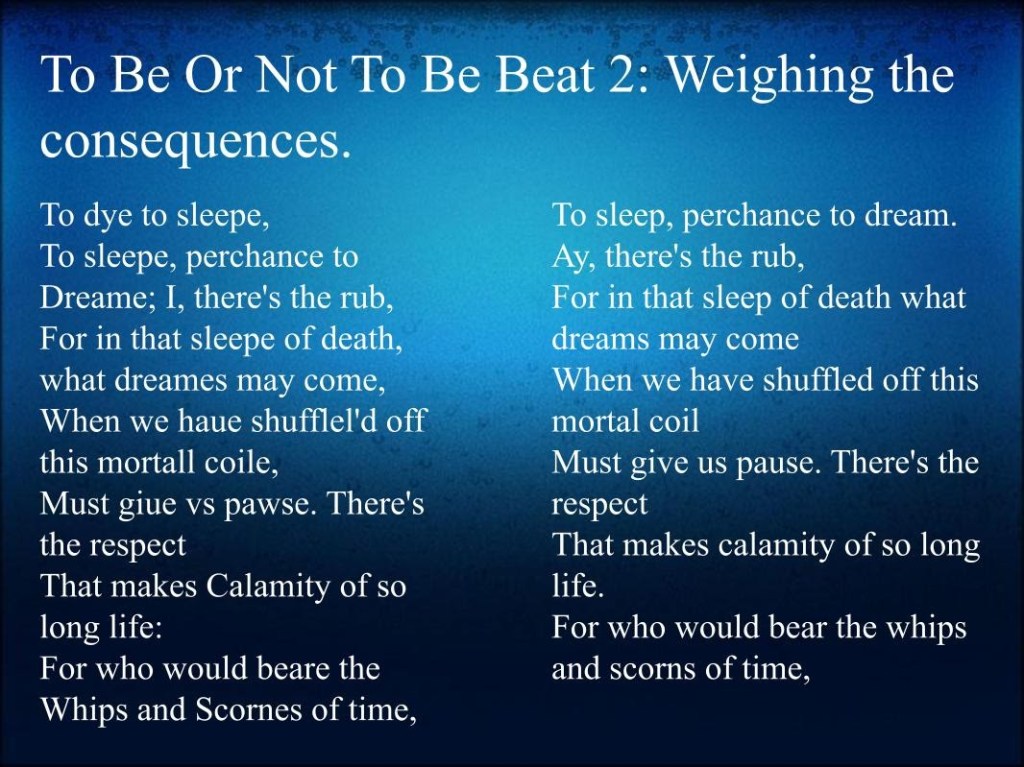
Beat 2 The Consequences
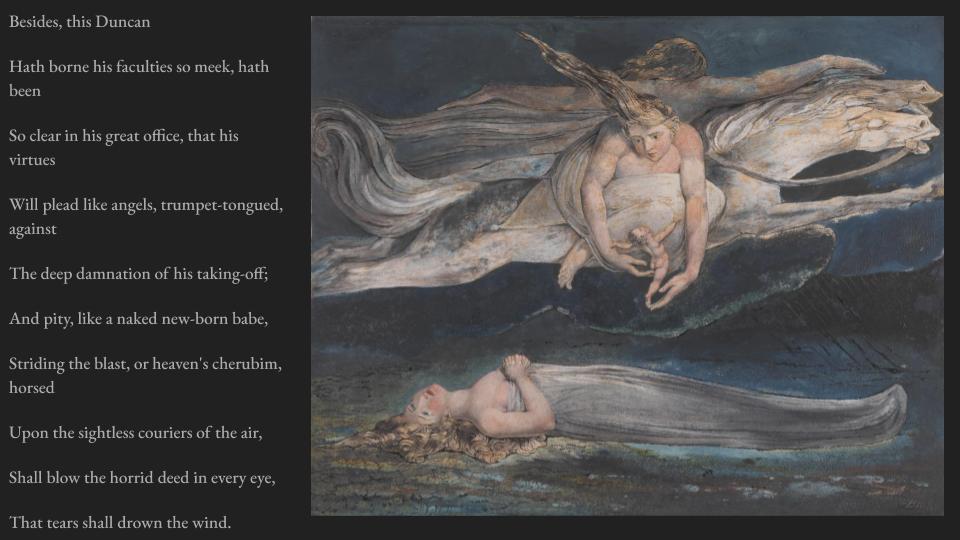
Whether Hamlet kills the king or himself, either way he could die and when he does, his soul will have to answer for his actions. This is similar to Macbeth, who worries that his foul murder will be exposed and judged by “Heaven’s cherubim, horses upon the sightless couriers of the air.”

“PITY,” by William Blake, alongside the text of Macbeth’s soliloquy from Act I, Scene 7.

“There’s the rub”- there’s the catch.

“Coil” refers to a snake skin. The line characterizes death as shedding an earthly body, something that seems all too easy to do. It’s an uncomfortable image because it makes death look all too easy. It also calls to mind the story of Gilgamesh, who had a flower that would grant him immortality, but a snake stole it, which is why snakes cam shed their skin, seemingly growing young again forever.

Beat 3: Smothering In Surmise: https://youtu.be/gFG91lXgNcs

This beat is where Hamlet seems smothered in his frustrations with life.. Rather than making a decision, he’s sidetracked with a laundry list of universal problems. His energy seems up, but it’s unclear why.

When I performed this portion of the speech, I realized that everything Hamlet refers to, Claudius has done: he has oppressed and wronged the kingdom, he has delayed the law, and he has hindered Hamlet’s love for Ophelia by letting Polonius deny Hamlet’s access to her. Perhaps the laundry list is designed to psych him up- listing all the reasons Claudius deserves to die, (without tipping him off).

Beat 4: The Downward Spiral

Once again Hamlet is thwarted by the concept of Death and divine judgment. He seems to imply that everyone is scared into compliance with the threat of death.

The Conclusion:

Hamlet’s conclusion is that he has no conclusion. He can’t kill himself because his conscience tells him that God is against it, and he cannot kill Claudius because of fear of death or damnation.

When he says “The native hue of resolution,” he means red, (as in blood), is curtailed, cut off by the very thought of Deaths pale scythe. 

Interpretations:

Mel Gibson plays Hamlet as a sort of man in mourning. He is as close to the action movie hero as Hamlet gets with his large, imposing physique and brutal looking medieval sword:

Speaking of action heroes, the whole movie Last Action Hero has a reoccurring motif of nodding to Hamlet. The avenging hero archetype is the prototype for every action movie, every superhero, (and most kung fu), and it began with Shakespeare’s Hamlet. This is  why it’s hilarious that Schwarzeneger portrays him in Last Action Hero- the movie is a loving parody of every single action star since the original- Hamlet.

Why Else might Hamlet be so cryptic?

Not all versions are about suicide or murder 

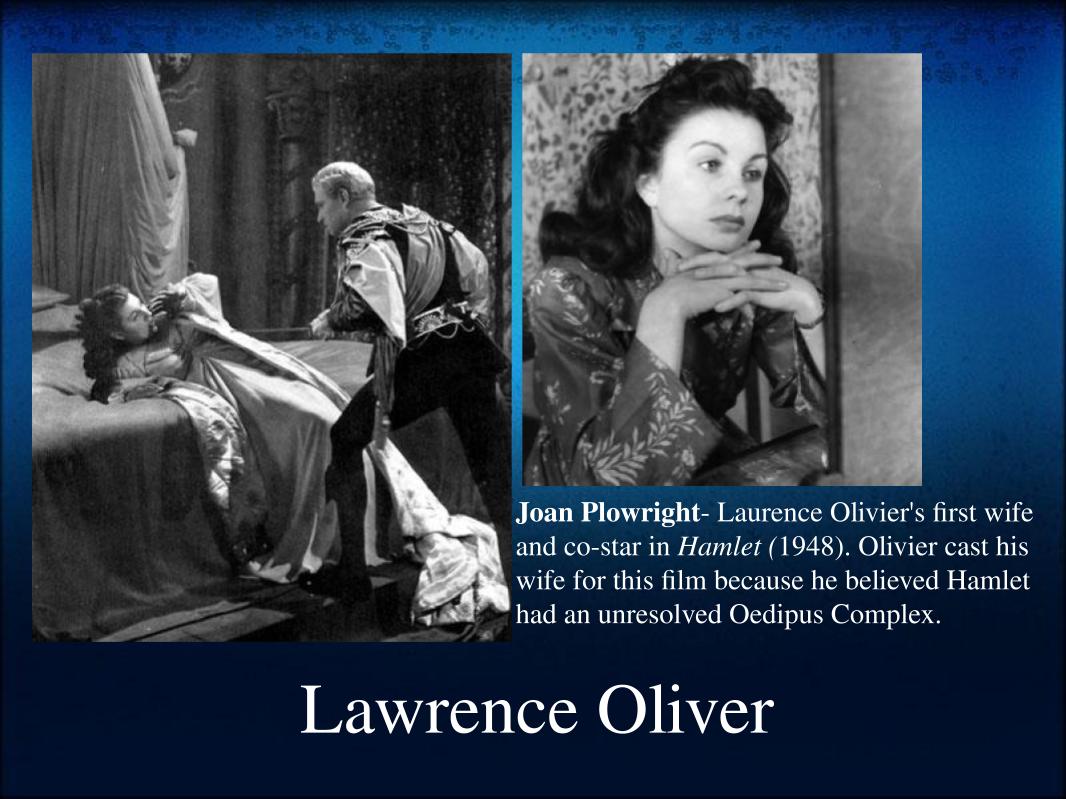
Lawrence Olivier believed that Hamlet has an Oedipus complex, and therefore has an unconscious desire to murder his father and sleep with this mother, which is why he considered himself unworthy to avenge his father’s death. In Olivier’s To Be, you can almost see his Hamlet aroused by his own Oedipal fantasies and then recoiling with disgust right before he says the line: “Perchance to dream.”

Kenneth Branaugh’s Hamlet centers  around court intrigue. In contrast with Oliver’s Gothic Elsinore, his is bright and baroque, but it’s full of two way mirrors. Half the film is either large shots with lots of people watching public performances  or POV shots of people being watched.

Branaugh’s interpretation of “To Be,” focuses on the possibility that Hamlet knows that Claudius is watching him through the  two way mirror- he frightens him, puzzles, him, but in the end, never gives Claudius a clue as to his true intentions.

Murder or suicide? 

the speech is not only famous for its universality but its evocative imagery, clear (albeit cryptic) construction, and heightened circumstances.

Shakespeare is able to give us a complete character without giving everything away, which allows anyone to reinterpret the character their own way. That is why Shakespeare’s characters endure.

Teaching Titus through creepy cooking

Titus Andronicus is one of the most bloody, disgusting plays in Shakespeare. As this infographic from the Royal Shakespeare Company shows, there are tons of deaths and some of them are even the result of cannibalism!

One way to capture the macabre nature of this play in the classroom, (which some scholars see as a horror comedy), is to characterize it through cooking, after all, revenge is a dish best served cold.

Me in costume as Titus Androgynous, a crazy cooking show host who butchers two people in the same manner as Titus

So here are some ghoulish gourmet dishes and revolting recipes that you can share with your students to help them get into this tragic tale of violence, revenge, and cooking:

Idea 1: recipe cards

Design a recipe card like the ones in cooking magazines based on Titus speech where he murders Chiron and Demetrius

Idea 2: Create a menu that summarizes the play:

Act I:

Starter: Caesar Salad, toad in the hole

As the play begins, Caesar has died and Saturnine wants to devour his father’s empire. Enjoy this light salad in anticipation of far more bloody feasts to come.https://youtu.be/UxZ5NOkRwj0

Act II Scene 3: Breakfast:

Lamb Benedict

Lamb Benedict recipe I found on Reddit

While on an early morning hunting trip, Bassianus is slaughtered like a lamb by his own nephews. Enjoy this sweet treachery with a golden egg in the hole.

Act II, Scene 4: Main course:

Roast venison with all the trimmings

“As the deer that hath some unrecuring wound.”

“She was washed and cut and trimmed.”

Titus compares his daughter to a deer or welkin, and in the play’s most barbaric scene, the emperor’s sons ravish her and cut out her tongue. They enjoy the cruel rape and mutilation just like two starving lions enjoying their prey.

Act V:

Just desserts: people pot pie.

“More stern and bloody than the centaur’s feast,” A truly unforgettable dessert for this feast of carnage. The cook, Titus, reinvents the term rich food by cooking two emperor’s sons into pies.

Served cold, like revenge!

“Set him breast deep in Earth and famish him.”

Idea 3: Real Titus foods inspired by my favorite Halloween diy recipes

1. Lavinia’s tongue and hands

• horrific Halloween punch with ice cold hand cubes: https://youtu.be/XLYwcX7Ud-E

• Bloody lady fingers https://pin.it/xbnfxcs4bxbhsq

2. Titus hand: Hot dog fingers for Titus’ hand.

https://pin.it/ofn6cotybnvn4n

Or this grisly appetizer: cheese hand in prosciutto

3.

People Pies:

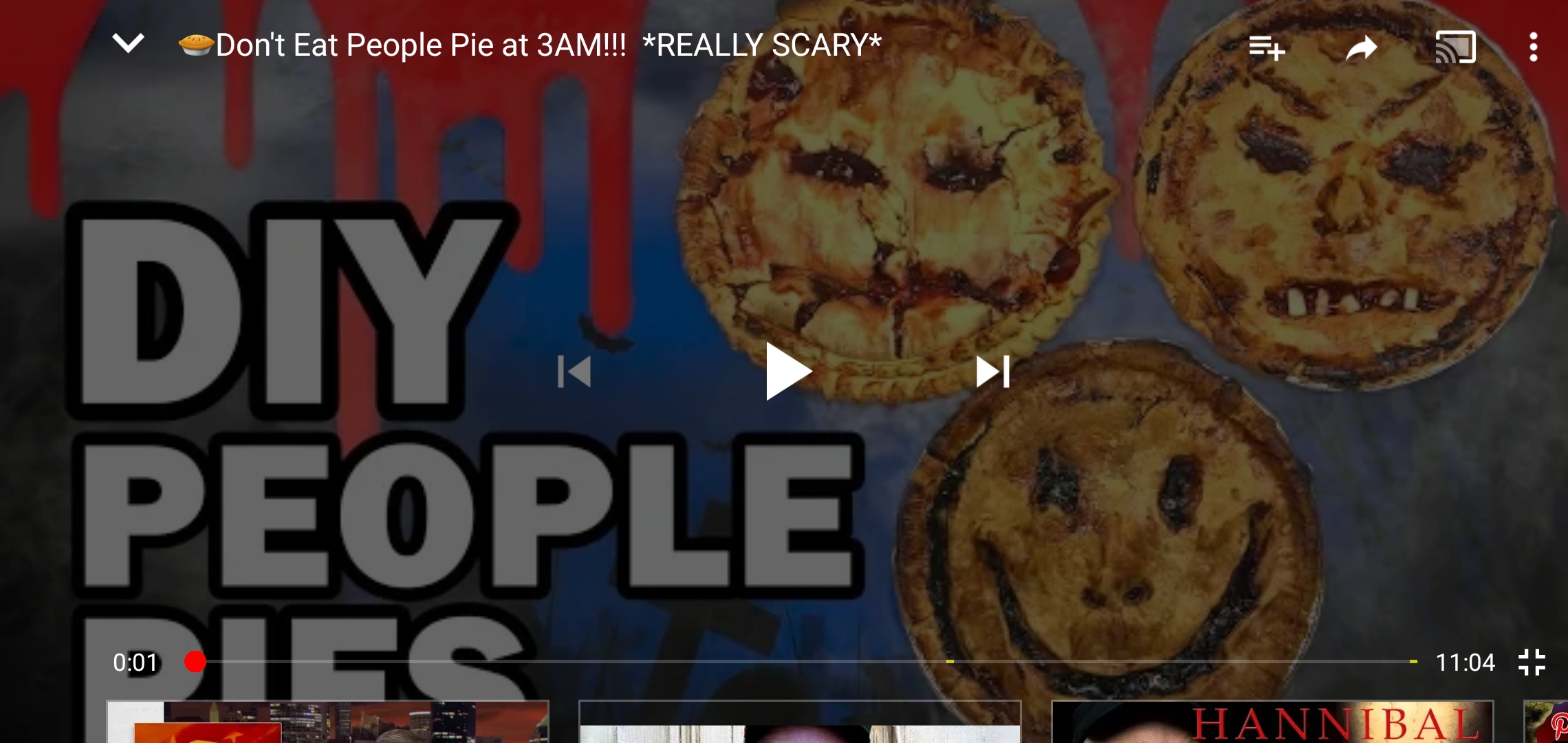
There are many horrific pie recipes on the internet, but for a busy teacher on a budget, I’m adapting this one from the YouTube channel Threadbanger: https://youtu.be/E6U6xUl3A5M. Don’t show this video to your students because there’s far too much cursing. That said this recipe is very cheap and it’s easy. He used only store bought items and no fancy cooking techniques, which means if you choose to bake it as a classroom activity, even your students can help make it. Here are some tips from the video to get the most horrible ppeople pie you can make:

• Use red filling like cherry or strawberry for filling.

• Use excess dough for a nose.

• Cut out little pieces of apple to make teeth

• Cut holes for the eyes and mouth

• The bloodier, the better!

Bone appetit!

Shakespeare on Ghosts

Since Halloween is right around the corner, and since this is a huge topic in Shakespeare, I would like to talk a little bit about Shakespeare’s treatment of the living impaired, specters, spirits, in a word GHOSTS.

Ghosts appear in five Shakespearean plays: Julius Caesar, Hamlet, Richard the Third, Macbeth and Cymbeline. In all but one of these plays, and in many other Elizabethan and Jacobean dramas, a ghost is a murdered person who needs someone to avenge their deaths. Their function is to warn the hero of the play to revenge their deaths, and/ or to torment their murderers.

Ghosts have been part of western drama almost as long as there have been ghost stories. After all, the Greek and Roman plays that Shakespeare emulated often mention ghosts as warnings from above and below the world is in some kind of chaos. Most of the time, the kind of play in which you see a ghost is a Revenge Tragedy, plays like The Spanish Tragedy, Locrine, Shakespeare’s Hamlet, and even the Disney movie of The Lion King.


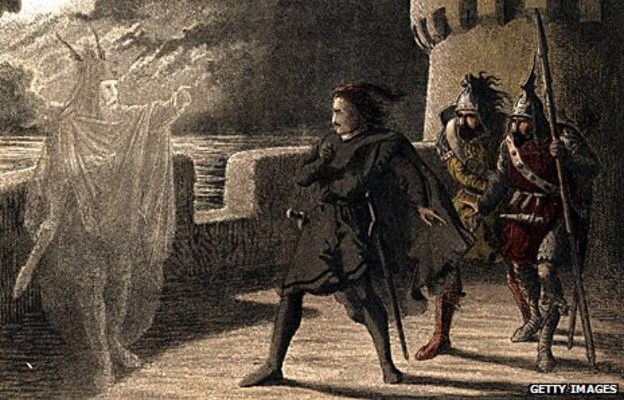
The most potent example of a Shakespearean ghost is definitely the ghost of Hamlet’s father. I actually played this role and, rumor has it, so did Shakespeare himself! Hamlet’s father appears as a ghost two months after his death, and soon after his brother Claudius marries his widow Gertrude. The ghost’s purpose in the play is to get his son’s attention so that he can correct the terrible regicide that Claudius committed, allowing the Ghost to Rest In Peace.

Shakespeare describes the ghost as a pale, sorrowful figure, dressed in full armor. The ghost only speaks to his son in the play, and he begins with a strange and terrifying description of the afterlife:

Ghost: I am thy father’s spirit,

Doom’d for a certain term to walk the night,

And for the day confin’d to fast in fires,

Till the foul crimes done in my days of nature

Are burnt and purg’d away. But that I am forbid

To tell the secrets of my prison house,

I could a tale unfold whose lightest word

Would harrow up thy soul, freeze thy young blood,

Make thy two eyes, like stars, start from their spheres,

Thy knotted and combined locks to part,

And each particular hair to stand on end

Like quills upon the fretful porcupine.

But this eternal blazon must not be

To ears of flesh and blood Hamlet Act I, Scene v.

Many scholars believe that the tormenting realm of fire that the ghost describes is actually Purgatory, an old Catholic concept that explains where the souls of the dead go if they are neither evil enough for Hell, or good enough for Heaven. It’s also the place where people go who didn’t confess their sins before death, which was the ghost’s fate since Claudius poisoned him while sleeping.

Though neither Hamlet nor his father explicitly say it, there is a strong implication that Hamlet must avenge his father by killing Claudius, which will presumably release the Ghost from Purgatory allowing it to ascend to Heaven.

Some suggest that the ghost is a manifestation of Hamlet’s superego:

Psychologist Ernest Jones (who studied under Signund Freud) in his book Hamlet And Oedipusbelieved Hamlet had an unresolved Oedipus complex and couldn’t bring himself to revenge because Claudius had achieved the very goals Hamlet himself secretly desires to kill his father and marry his mother

Faced with his guilt and lack of moral integrity Hamlet could have created a supernatural superego to spur him to revenge. As Freud describes it, the superego

The superego is the ethical component of the personality and provides the moral standards by which the ego operates. The superego’s criticisms, prohibitions, and inhibitions form a person’s conscience, and its positive aspirations and ideals represent one’s idealized self-image, or “ego ideal.”

In essence, since (in Jones’ view), Hamlet is too morally corrupt to be an effective avenger for his father, Hamlet imagines the ghost to help justify his revenge to himself. This is of course, only one way of interpreting the ghost and Hamlet as a whole. There is no right or wrong interpretation for any of Shakespeare’s characters, but it is a testament to Shakespeare’s genius that, 400 years after his own death, his ghostly writings helped inspire one the architects of modern psychology.

Ghosts Of Torment

The ghost of Banquo in Macbeth and the ghosts that plague Richard the Third the night before his battle help quicken the murderous kings’ his downward spiral. Macbeth becomes more and more paranoid, and therefore easier for his foes to defeat.

When Julius Caesar’s Ghost appears to Brutus, he does so the night before his final battle- the battle of Philippi, where Brutus was defeated and committed suicide.

When Richard III sees the ghosts of all the people he murdered, it not only terrifies him, it splits his soul in half! According to Sir Thomas More, Richard couldn’t sleep the night before his final battle at Bosworth Field. Shakespeare gives Richard a strange soliloquy where the ghosts awaken his conscience and awaken him from a fearful dream:

[The Ghosts vanish]

[KING RICHARD III starts out of his dream]

Richard III (Duke of Gloucester). Give me another horse: bind up my wounds.

Have mercy, Jesu!—Soft! I did but dream.

O coward conscience, how dost thou afflict me!

The lights burn blue. It is now dead midnight.

Cold fearful drops stand on my trembling flesh.

What do I fear? myself? there’s none else by:

Richard loves Richard; that is, I am I.

Is there a murderer here? No. Yes, I am:

Then fly. What, from myself? Great reason why:

Lest I revenge. What, myself upon myself?

Alack. I love myself. Wherefore? for any good

That I myself have done unto myself?

O, no! alas, I rather hate myself

For hateful deeds committed by myself!

I am a villain: yet I lie. I am not.

Fool, of thyself speak well: fool, do not flatter.

My conscience hath a thousand several tongues,
And every tongue brings in a several tale,

And every tale condemns me for a villain.

Perjury, perjury, in the high’st degree

Murder, stem murder, in the direst degree;

I shall despair. There is no creature loves me;

And if I die, no soul shall pity me:

Nay, wherefore should they, since that I myself

Find in myself no pity to myself? Richard III, Act V, Scene iii.

In these plays, the ghosts are a form of spectral punishment; the punishment of a guilty Conscience.

Shakespearean Friendly Ghosts

The only friendly Shakespearean ghosts appear in Shakespeare’s play Cymbeline and these ghosts appear before the god Jupiter to plead for their descendant, Posthumous Leonidas. They beg Jupiter, the most powerful Roman god, to end Posthumous’ suffering.

Like the witches in Macbeth, ghosts in Shakespeare are mysterious and sometimes frightening – they are sort of a mirror for how we see ourselves, our lives, and our hopes to be remembered after death; the final words Hamlet’s father utters before disappearing into the morning mist are: “Adieu, adieu, remember me.”

Thanks for reading! If you enjoyed this post, please consider signing up for my Outschool class: “Macbeth: An Immersive Horror Experience.” I perform live as the ghost of William Shakespeare and tell the story of Macbeth in an entertaining and spooky way.

For More Information:

https://www.bl.uk/shakespeare/articles/ghosts-in-shakespeare

https://www.bard.org/study-guides/ghosts-witches-and-shakespeare

Animated Richard III, 20:00 the ghosts appear:

References:

Greenblatt, Steven Hamlet In Purgatory 2001. Princeton University Press. Link: file:///Users/jrycik/Downloads/Hamlet-in-Purgatory-Princeton-Classics.pdf

Jones, Earnest, Hamlet and Oedipus.

https://people.ucsc.edu/~vktonay/migrated/psyc179d/HamletOedipus.pdf

Open Source Shakespeare, Cymbeline:

https://www.opensourceshakespeare.org/views/plays/play_view.php?WorkID=cymbeline&Act=5&Scene=4&Scope=scene&LineHighlight=3243#3243

http://www.markedbyteachers.com/gcse/english/which-version-of-the-hamlet-ghost-scene-act-1-scene-5-was-the-most-effective-and-why.html

Pearlman, E. Hamlet: Critical Essays: The Invention Of the Ghost. https://books.google.com/books?id=jdfWAQAAQBAJ&pg=PA71&lpg=PA71&dq=ghost+that+shrieked+hamlet+revenge&source=bl&ots=KY68gIrh2V&sig=MjEr2NxLQ7T4c2xW1QscrmdeMkc&hl=en&sa=X&ved=0ahUKEwiR5o6M4I_XAhUK0oMKHQIJBeAQ6AEIKDAA#v=onepage&q=ghost%20that%20shrieked%20hamlet%20revenge&f=false

https://www.shmoop.com/hamlet/ghost.html

https://www.jstor.org/stable/pdf/456606.pdf?refreqid=excelsior%3A3f62aed88fb9e9b9a8f8e462186ff95c

The Witches Of Macbeth

Happy Halloween everybody!

Tonight I’d like to discuss some of the spookiest, most enigmatic, and above all WEIRDEST characters in Shakespeare: the Three Weird Sisters in Macbeth.

1. Who are they?

Every production has to answer who the witches are, and many have very different answers. Are they temptress? Are they evil agents controlling Macbeth?Furies trying to destroy Macbeth?

I would argue in their basic form the witches are harbingers of change. Their very name “Wyrd Sisters” refers to an old Anglo Saxon concept of fate or destiny. Whether or not they have any effect on Macbeth mind or soul, they point the finger at him and say “things are going to change for you.” Then, he either makes the choices that determine his fate, or they change his fate for him.

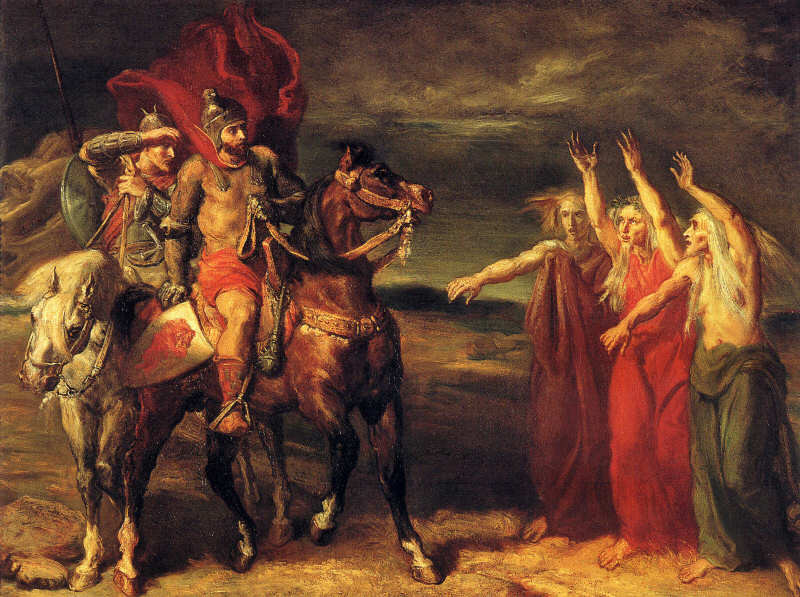
“Macbeth and Banquo First Encounter the Witches,” Théodore Chassériau, 1854.

Macbeth meets the witches on a heath, which means land that is literally out of bounds– the wild, untamed wilderness, which the old Anglo Saxons believed was the lair of many cursed spirits and monsters. This could symbolize Macbeth’ sin or transgressions, slowly turning into a murderer, usurper, and a tyrant. It could also symbolize the chaos in Macbeth’s life.

What Do They Look Like?

Shakespeare’s descriptions of the witches are highly contradictory- they seem to be floating, yet on the ground, they seem to be women, but they have beards! They don’t look Earthly, but here they are on the Earth. This gives them an other worldly quality that keeps us guessing as to who they are, and helps them tempt Macbeth more easily.

BANQUO
What are these
So wither’d and so wild in their attire,
That look not like the inhabitants o’ the earth,
And yet are on’t? Live you? or are you aught
That man may question? You seem to understand me,
By each at once her chappy finger laying
Upon her skinny lips: you should be women,
And yet your beards forbid me to interpret
That you are so.

MACBETH
Speak, if you can: what are you? (Act I, Scene iii).

The Witches’ Language:
You know from my earlier posts that the norm for Shakespearean characters is to speak in iambic pentameter- 10 syllable lines of unrhymed poetry that sounds like a normal heartbeat. The witches break these norms- they generally speak in Trochaic Tetrameter- 8 syllable lines with the off beat emphasized. The witches are literally offbeat, and that’s why their speeches are unsettling. Look at the contrast between a normal iambic line like:

“In sooth I know not why I am so sad.” (Merchant Of Venice I,i).

and

Dou-ble Dou-ble, Toil and Tro-ble.

Fire burn and Caul-dren Bu-ble. (Macbeth, Act IV, Scene i).

For more info on the verse forms of the Witches, click here:

The witches also speak their prophesies in a vague, ambiguous manner They like to play with obscuring their prophesies with lines that make Macbeth think one thing, but the opposite is true. The famous example here is when they claim Macbeth will never be vanquished “until Birnam Wood comes to Dunsinane Hill.” Macbeth assumes this means he’s invincible, but it actually means that the enemy carry wood from the forrest. This is called Equivocation.

Witches and mythology

Illustration from William Blake's
Illustration from William Blake’s “Europe a Prophecy,” 1794.

1. During the reign of King James, the modern witch hunt began; the king was fascinated with witches and even wrote a book called Daemonology on how to identify and destroy them. This was the era where people believed that witchcraft, rather than a pagan religious practice, was a forbidden craft that could only come from a pact with the devil. However, Shakespeare borrows from both Satanic and early pagan ritual in the characters of his witches.

2. Shakespeare took a couple of details about witchcraft from ancient Celtic and Greek mythology. First of all, the use of a cauldron. In Celtic myth, a cauldron is a symbol of rebirth and was sometimes used to resurrect the dead, just as the witches do in IV i. Of course, the ideal time for raising the spirits was on the feast of the pagan god Samhain, at the point where the veil between the living and dead was the thinnest. The feast took place on October 31st, our modern day Halloween!

Illustration of witches and their familiar spirits, 1647.

3. Familiar spirits In Act I, the witches speak to animal spirits called familiar spirits, which call to them and tell them where to go. King James himself wrote about how the witches found and communicated with these spirits.

Hecate.
In Act IV, Hecate, Ancient Greek goddess of magic appears. She is clearly the lord of all the witches, and is very displeased that they are riddling with Macbeth. Maybe not all witches believe in giving out prophesies that can destroy the Scottish monarchy. Hecate was always enigmatic in myths- she was born one of the Titans who opposed the gods, but frequently changed sides. More then being two faced, she was often portrayed as having three faces! Shakespeare refers to her frequently as “Triple Hecate.”

“The Triple Hecate,” by William Blake, 1794.

For more information on this mysterious goddess, consult the video below, (WARNING, ADULT-ONLY CONTENT).

In conclusion, the witches are meant to be ambiguous because the play examines the source of evil- whether it is inspired by other people, or if it comes from one’s own heart. The witches can be either or both, depending on how you want to tell the story, which is why they act and speak in contradictory ways.

Thanks for reading! If you enjoyed this posting, please consider signing up for my online class, “Macbeth: An Immersive Horror Experience.” I tell you the story of Macbeth and you get to play through an escape room, where you must solve the witches’ puzzles or be added to their Cauldron!