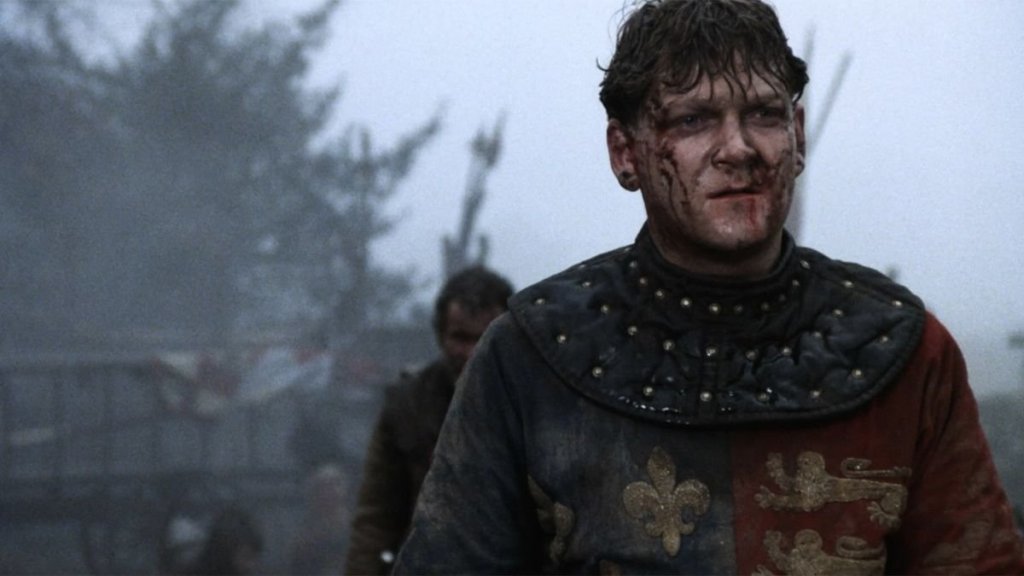
Kenneth Branaugh as Henry V Laurence Oliver as Henry V
The Characters
Katharine of Valois
King Henry V
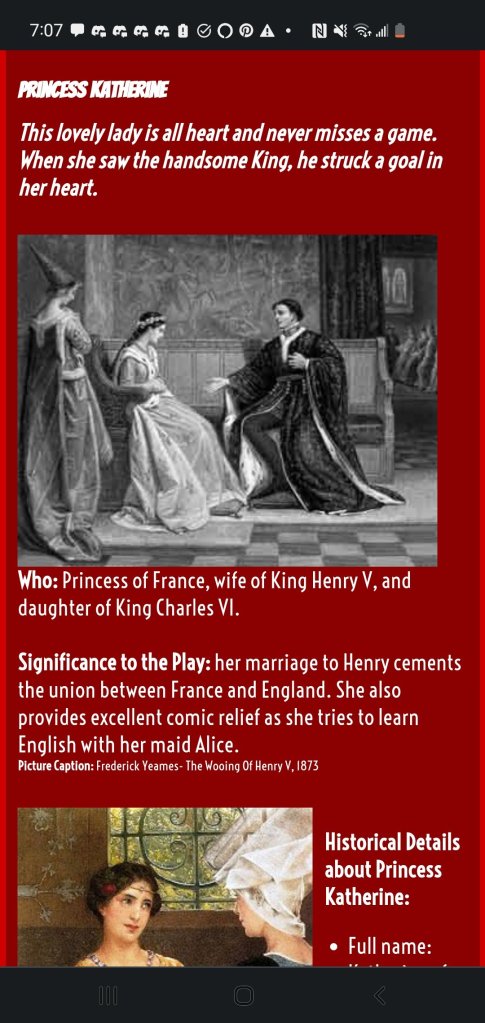
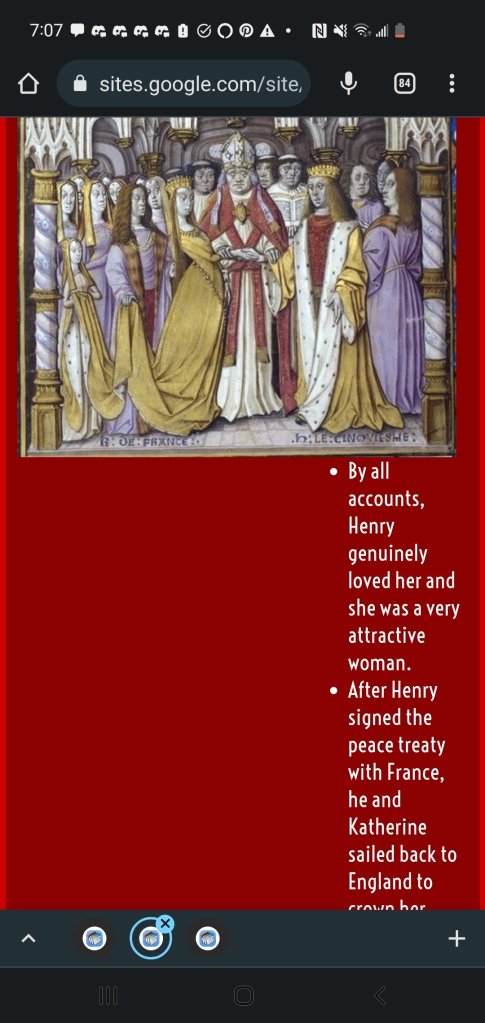
King Henry has just won a decisive victory at the Battle of Agincourt. He is now claiming the crown of France, and Katherine’s hand in marriage. Though he’s proven himself an able soldier and a wise king, he repeatedly stumbles when trying to win Katherine’s heart.
The Text:
Henry V: Fair Katharine, and most fair, Will you agree to teach a soldier terms Such as will enter at a lady’s ear And plead his love-suit to her gentle heart?
Katharine: Your majesty shall mock at me; I cannot speak your England.
Henry V: O fair Katharine, if you will love me soundly with your French heart, I will be glad to hear you confess it brokenly with your English tongue. Do you like me, Kate?
Katharine: Pardonnez-moi, I cannot tell vat is ‘like me.’
Henry V: An angel is like you, Kate, and you are like an angel.
Katharine: O bon Dieu! les langues des hommes sont pleines de tromperies.
Henry V: What say you, fair one? that the tongues of men are full of deceits?
Katherine: Oui, dat de tongues of de mans is be full of deceits:
Henry V: Kate, my wooing is fit for thy understanding: I am glad thou canst speak no better English; for, if thou couldst, thou wouldst find me such a plain king that thou wouldst think I had sold my farm to buy my crown. I know no ways to mince it in love, but directly to say ‘I love you:’ I have no strength in measure, yet a reasonable measure in strength. If I could win a lady at leap-frog, or by vaulting into my saddle with my armour on my back, I should quickly leap into a wife. I speak to thee plain soldier: If thou canst love me for this, take me: take me; and take me, take a soldier; take a soldier, take a king. And what sayest thou then to my love? speak, my fair, and fairly, I pray thee.
Katharine: Is it possible dat I sould love de enemy of France?
Henry V: No; it is not possible you should love the enemy of France, Kate: but, in loving me, you should love the friend of France; for I love France so well that I will not part with a village of it; I will have it all mine: and, Kate, when France is mine and I am yours, then yours is France and you are mine.
Katharine: I cannot tell vat is dat.
Henry V: No, Kate? I will tell thee in French; Je quand sur le possession de France, et quand vous avez le possession de moi,—let me see, what then? Saint Denis be my speed!—donc votre est France et vous etes mienne. It is as easy for me, Kate, to conquer the kingdom as to speak so much more French: I shall never move thee in French, unless it be to laugh at me!
Katharine: Sauf votre honneur, le Francois que vous parlez, il est meilleur que l’Anglois lequel je parle.
Henry V: No, faith, is’t not, Kate: But, Kate, dost thou understand thus much English: canst thou love me?
Katharine: I cannot tell.
Henry V: How answer you, la plus belle Katharine du monde, mon tres cher et devin deesse?
Katharine: Your majestee ave fausse French enough to deceive de most sage demoiselle dat is en France.
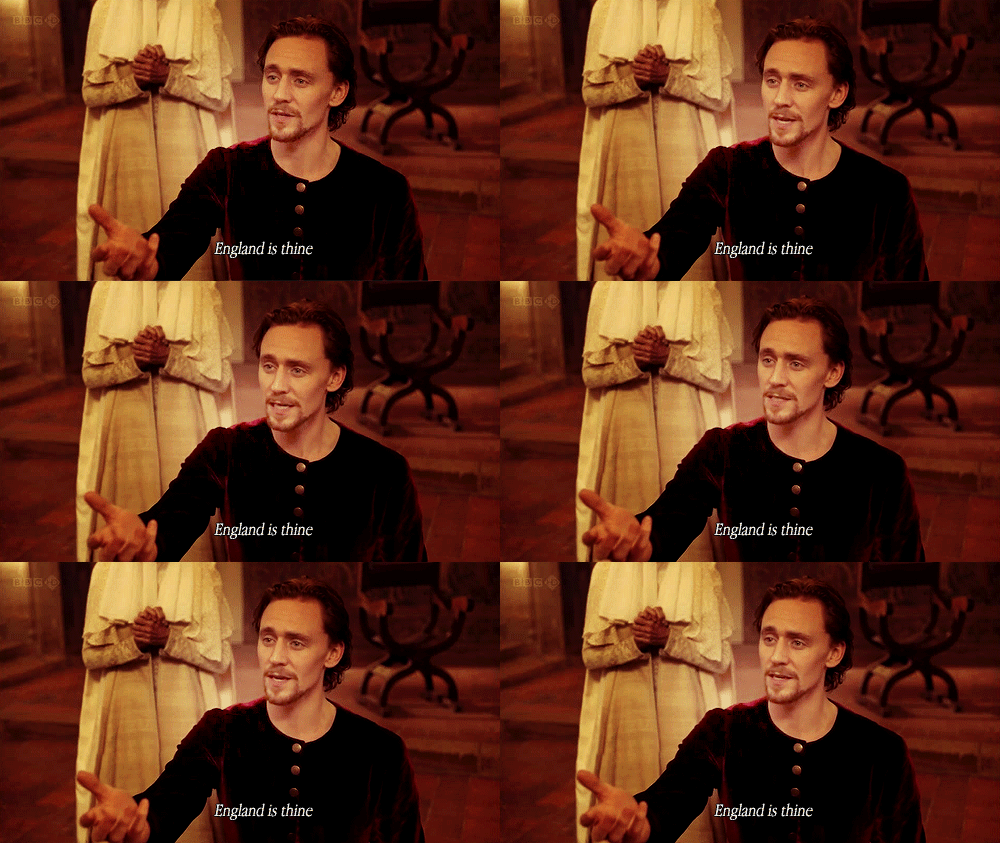
Henry V: Now, fie upon my false French! By mine honour, in true English, I love thee, Kate: by which honour I dare not swear thou lovest me; yet my blood begins to flatter me that thou dost, Put off your maiden blushes; avouch the thoughts of your heart with the looks of an empress; take me by the hand, and say ‘Harry of England I am thine:’ I will tell thee ‘England is thine, Ireland is thine, France is thine, and Harry Plantagenet is thine;’ Come, your answer in broken music; for thy voice is music and thy English broken; therefore, queen of all, Katharine, break thy mind to me in broken English; wilt thou have me?
Katharine: Dat is as it sall please de roi mon pere.
Henry V: Nay, it will please him well, Kate it shall please him, Kate.
Katharine: Den it sall also content me.
Henry V: Upon that I kiss your hand, and I call you my queen. [she shakes her head ‘no’ and kisses him on the lips] You have witchcraft in your lips, Kate: there is more eloquence in a sugar touch of them than in the tongues of the French council; Here comes your father.
Context
The initial awkwardness between Henry and Katherine is what makes the scene endearing; the notion that to Henry, conquering France is easier than wooing Kate. He’s repeatedly at a loss for words, and refuses to flatter or flirt with Katherine. He either is incapable of wooing in “festival terms,” or he wants Katherine to love him for who he is.
For Katherine’s part, at first, she seems indifferent to Henry, if not outright resistant to his love suit. As she says, “Is it possible that I should love the enemy of France?” Henry’s awkward wooing is not the only barrier to Katherine’s heart – he also killed hundreds of her countrymen and aims to take her father’s crown. It’s entirely possible that Katherine sees Henry as her enemy. The biggest question is- does she actually fall in love with him? Henry is charming, so it’s not impossible that Katherine’s feelings are genuine. It’s also possible that Katherine is actually interested in becoming queen to keep her father’s lands and titles in the family through marriage.
Interpretations
Questions To Ask:
Is Henry really being awkward, or is this a front?
Does Henry love Kate, or is he being political?
Is Kate in love with him? If so, when and why does she fall for him?
If Kate never falls for Henry, why does she agree to marry him?
LADY CAPULET  Good night.
Get thee to bed and rest, for thou hast need.
Lady Capulet and the Nurse exit.
JULIET
Farewell.—God knows when we shall meet again.
I have a faint cold fear thrills through my veins
That almost freezes up the heat of life.
I’ll call them back again to comfort me.—
Nurse!—What should she do here?
My dismal scene I needs must act alone.
Come, vial. She takes out the vial.
What if this mixture do not work at all?
Shall I be married then tomorrow morning?
She takes out her knife
and puts it down beside her.
No, no, this shall forbid it. Lie thou there.
What if it be a poison which the Friar
Subtly hath ministered to have me dead,
Lest in this marriage he should be dishonored
Because he married me before to Romeo?
I fear it is. And yet methinks it should not,
For he hath still been tried a holy man.
How if, when I am laid into the tomb,
I wake before the time that Romeo
Come to redeem me? There’s a fearful point.
Shall I not then be stifled in the vault,
To whose foul mouth no healthsome air breathes in,
And there die strangled ere my Romeo comes?
Or, if I live, is it not very like
The horrible conceit of death and night,
Together with the terror of the place—
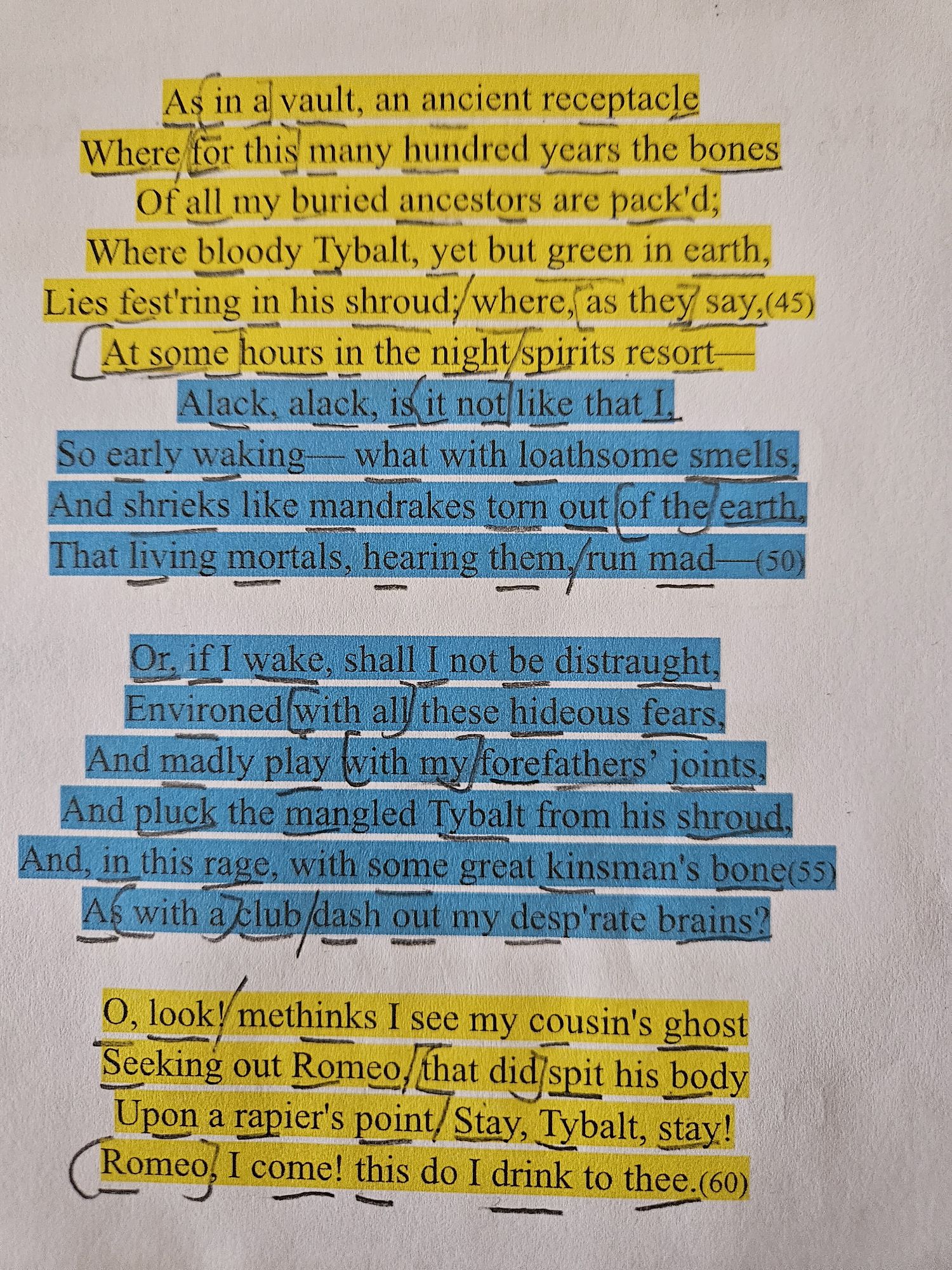
As in a vault, an ancient receptacle
Where for this many hundred years the bones
Of all my buried ancestors are packed;
Where bloody Tybalt, yet but green in earth,
Lies fest’ring in his shroud; where, as they say,
At some hours in the night spirits resort—
Alack, alack, is it not like that I,
So early waking, what with loathsome smells,
And shrieks like mandrakes torn out of the earth,
That living mortals, hearing them, run mad—
O, if I wake, shall I not be distraught,
Environèd with all these hideous fears,
And madly play with my forefathers’ joints,
And pluck the mangled Tybalt from his shroud,
And, in this rage, with some great kinsman’s bone,
As with a club, dash out my desp’rate brains?
O look, methinks I see my cousin’s ghost
Seeking out Romeo that did spit his body
Upon a rapier’s point! Stay, Tybalt, stay!
Romeo, Romeo, Romeo! Here’s drink. I drink to
thee.
She drinks and falls upon her bed
within the curtains.
The Given Circumstances
This famous soliloquy comes from Act IV, Scene iii. In this speech, Juliet grapples with her fears and anxieties about taking the Friar’s sleeping potion.
Traditional Interpretations
Ellen Terry (Vinal Record Recording, C. 1911)
Ms. Terry, like her famous grandson John Gielgud, is more interested in delivering the text clearly, beautifully, and strongly than getting Juliet’s character across. Consequently, by our standards, her reading of the speech is slow, declamatory, and maybe a bit over-the-top. However, this kind of delivery really brings out the rhythm of the verse, the beauty of the individual words, and the structure of the speech itself, so I recommend actors listen to it as a jumping off point. In my opinion, having a good technical grasp of the speech will keep an actor from going too far with the emotion, (making it hard for the audience to hear and understand them). This is why there’s still value in these dusty old recordings.
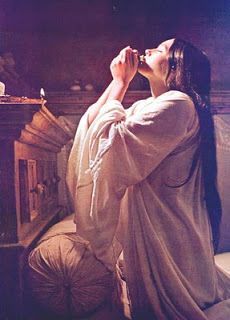
Olivia Hussey (Romeo and Juliet directed by Franco Zephirelli, 1966)
Zephirelli was very sparing with the dialogue- choosing to condense this entire speech to one line “Love, give me strength.” Hussey has a great deal of passion in the speech, as if she is absolutely certain that taking the potion will re-unite her with Romeo.
Claire Danes (Romeo +Juliet, 1996)
Claire Danes contemplating the vial in Romeo + Juliet
Danes has a sense of almost macabe trance-like energy when she delivers the speech. Like all the edged weapons in the movie, the dagger is replaced by a gun. Most of the speech is cut because Luhrman wanted to emphasize the character’s obsession with violence, rather than fears about ghosts and arranged marriages. Consequently, Danes does little other than put the gun under her pillow, take out the vial, and drink it.
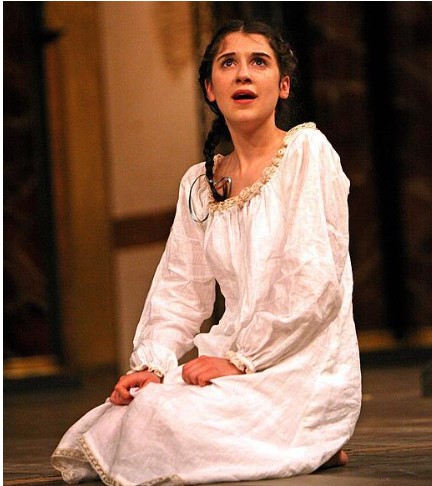
Ellie Kendrick (Globe Theater, 2009)
Ms. Kendrick is one of my favorite Juliets ever! She is a wonderful blend of sweetness and naivety, tempered with anxiety and practical thinking. She delivers the whole speech to different parts of the audience and makes sure every idea and every horrible thought of Juliet lands. Furthermore, her fast pacing around the stage helps her not only connect with the audience, but to use the Globe theater to make them imagine the Capulet vault.
Verse
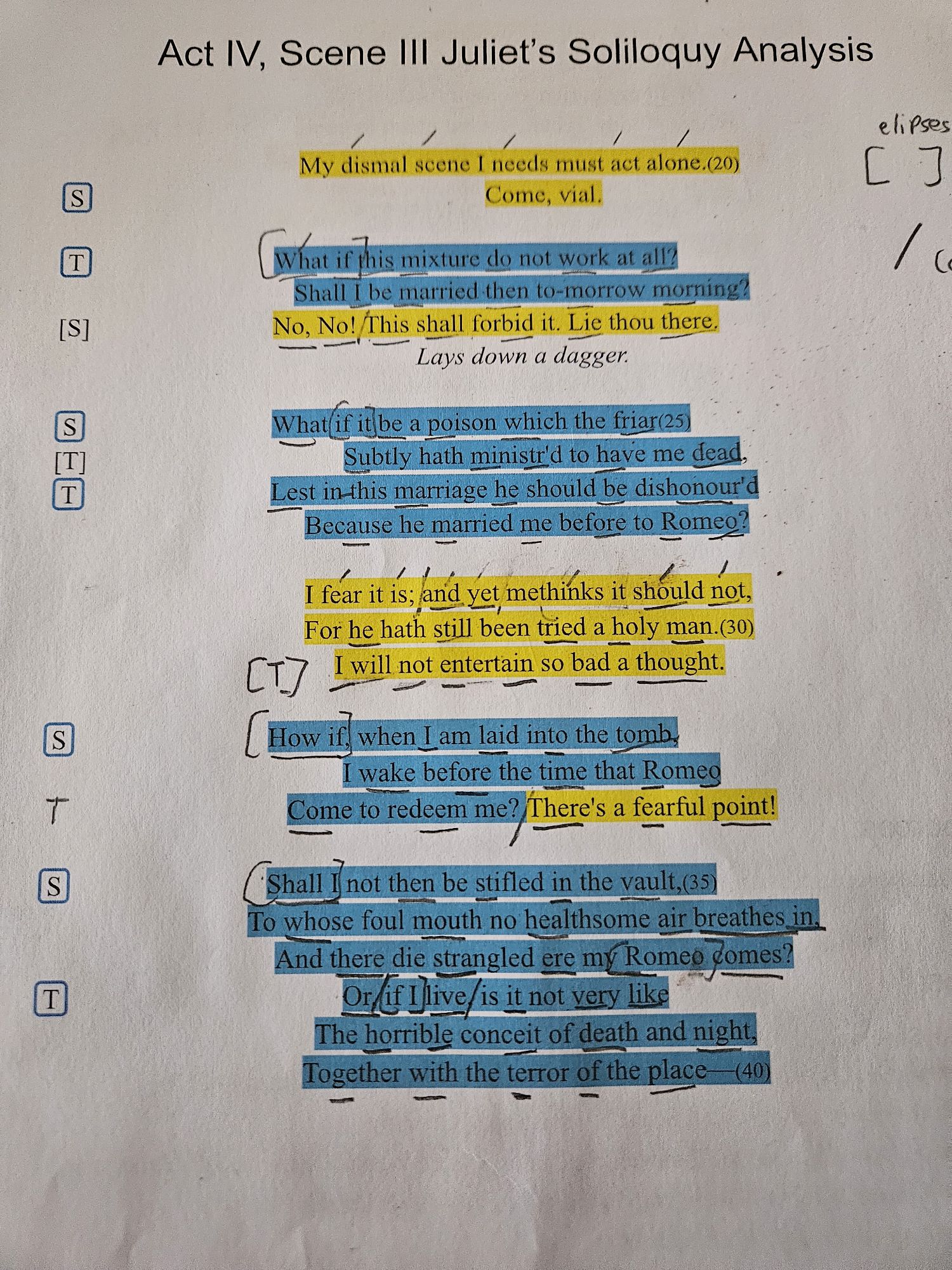
As I always say, verse is the heartbeat of a character, and based on this, Juliet’s heart is beating a mile a minute. You’ll notice that five of these lines start with a trochee (T), and five of them have trochees. This means Juliet is unsettled, she’s literally off-beat. In addition, there are frequently pauses in the middle of the lines called cesuras, which might indicate that either Juliet is trying to answer her own questions, or that she is so worried, that she’s gasping for breath.
In this second part of the speech, the lines start running together. Juliet’s pace is quickening and she breathes every 2-3 lines instead of at the end of each line.
Structure
The speech is organized as a series of questions:
“What if…”
“What if…”
“How if…”
“Or if I live…”
“O, if I wake, shall I not…”
and then the terrifying statement: “O look…”
So, with this in mind, the actress needs to convey Juliet’s overactive imagination, her fears, and her ability to answer these fears with inner calm and inner strength.
Imagery
It’s a horrific idea being shut up alive with the dead. Shakespeare gives us the sights and smells and the grim reality of feeling “stifled” in a vault. I created this image to demonstrate the smells, the fear, and the claustrophobic nature of the vault.
I chose to have the vault lit with candles, and to use green smoke to represent decay and possibly noxious gas, like the nitre that sometimes dips from walls of tombs. I also added some stone faces of ancestors to stare down at Juliet.
Historical Research
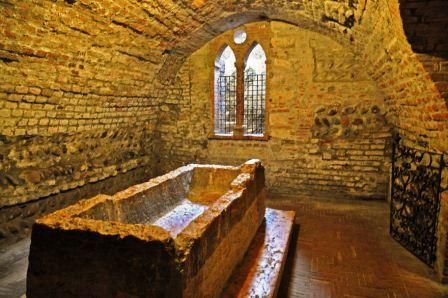
Sarcophagus in church of San Francesco al Corso, an old Franciscan monastery in Verona.
The plain stone sarcophagus above has become a tourist attraction as the traditional ‘resting place’ of Juliet. As I mentioned in my Friar Lawrence post, the Friar who marries Juliet is a Franciscan, which is probably why they chose this church in Verona as the ‘site’ for Juliet’s grave.
It is a plain, open, and partly decayed sarcophagus, in a wild and desolate conventual garden once a cemetery now ruined to the very graves. The situation struck me as very appropriate to the legend, being blighted as their love.
– Lord Byron, Letters and Journals Vol. III
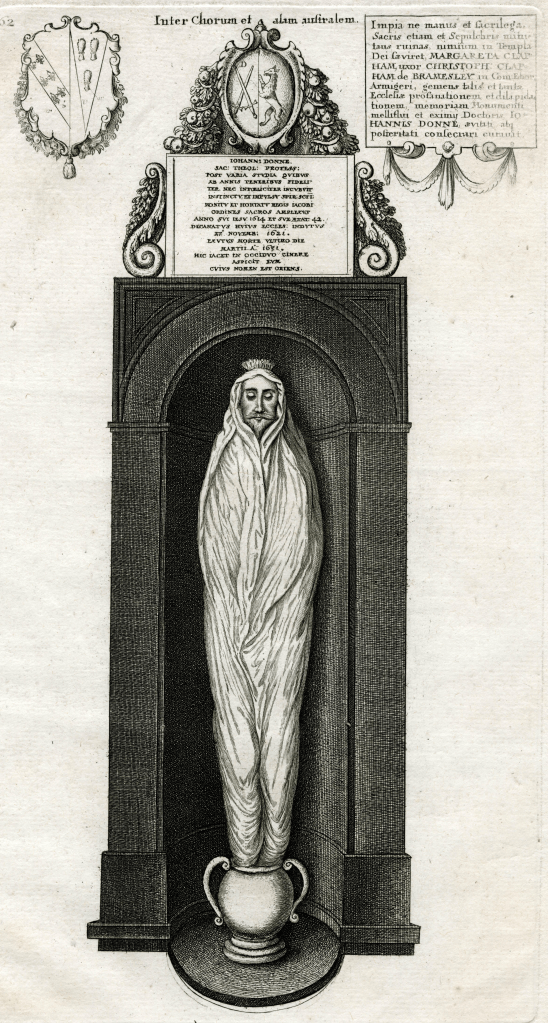
Since Italy is a small, hot country, bodies in the 16th century were buried almost immediately. First, the body would be wrapped up in a shroud or winding sheet, as Juliet mentions at the end. The corpses might be decorated with Rosemary or other sweet-smelling herbs.
A winding sheet for a corpse
Wealthy families like the Capulets or the church, would store all the bodies of their ancestors in burial vaults or crypts. Some bodies would be anointed with oil or preserved with vinegar.
Literary Inspiration: The Cask of Amontillado
Montressor and Fortunato move through the burial crypt in “The Cask of Amontillado”
When I think of the dark, macabre atmosphere of a family tomb, I think of The Cask of Amontillado, a short story by Edgar Allen Poe where the anti-hero Montressor, tricks his enemy Fortunato into going into his family crypt and buries him alive! There are some interesting parallels between Montressor and Tybalt from Romeo and Juliet- both men belong to ancient families, both men are violent, and both refuse to let any kind of insult stand. I think Juliet sees the vault as a hostile place, where her ancestors are angry at her for “betraying the Capulet name,” after marrying a Montague.
Image Research 4: Tybalt’s Angry Ghost
AI image of Tybalt’s Ghost
Like Montressor in The Cask of Amontillado, Tybalt embodies the Capulet feud, and it makes sense that Juliet would see him when she thinks of being shut up in the vault. The real question is, what does seeing him do to her? Is she terrified? Is she remorseful? Is she moved to protect Romeo? How does seeing Tybalt’s ghost motivate her to take the potion?
Other Questions to consider
Why is Juliet so nervous?
How does Juliet feel about running away from home?
Do the ghosts represent something? Guilt? Judgement? Some kind of ticking clock?
What does she see Tybalt’s ghost doing?
How does Juliet pull it together at the end?
Emotional
Not only is Juiet worried about her health, (mental and physical), I get a sense that she might also be experiencing guilt. The notion of her being tormented by spirits that shriek like mandrakes, suggests that maybe the ancient Capulets aren’t very pleased with Juliet. This makes sense because she married a Montegue. I get the sense that maybe, for the first time, Juliet actually feels guilty, as if she’s failed her ancestors. However, for whatever reason, she definitely re-focuses and thinks about Romeo. Either she rejects her ancestors and Tybalt, or maybe she sees the potion as a way of protecting Romeo, or possibly Juliet just wants these fears and anxieties to end, and takes the potion as a release. My actor and I will no doubt try these ideas out and figure out what works within the structure and within her interpretation of the character.
Our Interpretation
Again, it’s a little too early for me to tell you our interpretation yet, but I’ll post it later.
Resources:
Myshakespeare.com. This website will allow you to look up unfamilliar words, download pictures and videos of the scene, and even watch an ‘interview’ with Juliet, where, just as in this speech, she becomes more and more anxious and fearful until the very end.
For my Shakespeare club, I’m coaching two young actors on Viola’s celebrated soliloquy in Act II, Scene ii.I thought I’d share some of that work with you. In this speech, Viola has an epiphany; the lady she was sent to woo on her master Orsino’s behalf LOVES HER!
Viola has spent an unspecified amount of time disguised as a man. She has just tried (unsuccessfully) to woo Countess Olivia on behalf of her employer, Duke Orsino. Olivia seemed intrigued by her in her disguise as “Cesario,” and refused to hear any more words about Orsino, but asked Viola to come see her again. The Countess then sent her messenger Malvolio to give Viola a ring, which he claims she tried to give to Olivia as a gift. At first, Viola is confused and upset by the accusation, but slowly realizes that the ring is actually a gift for her; in fact, it’s a love token.
Traditional Interpretations
I think the comedy depends on how Viola reacts to the realization that Olivia loves her. I’ve seen some Violas that are embarrassed, some that are a little frightened (after all, hell hath no fury like a woman scorned), and others with sad sympathy. Viola is a good person, so she can’t laugh at the lovesick countess, but she can have a wry laugh at herself and how her disguise has caused all this trouble; making her unable to confess her love to him, while at the same time making Olivia think she is a handsome young man.
Michelle Terry In the Globe Theater (2021)
Michelle Terry as Viola in the 2021 production of “Twelfth Night”
Michelle Terry is very matter-of-fact in her portrayal. She doesn’t pause, she doesn’t drag out the lines. In fact, she seems more annoyed and scandalized than anything else. The comedy comes mainly from her gestures and movements as she talks to the audience as if they were one of her gal-pals- venting her frustration with this ridiculous situation.
Michelle Terry excels as Viola, straight-faced, tormented, only occasionally raising a conspiratorial eyebrow at the audience.
Judy Dench in the RSC TV show “Playing Shakespeare” is very sympathetic to “Poor Olivia, ” and plays the speech with a romantic sentimentality. She’s focused on Olivia, and feels awful for the false hope she’s given her.
Both these interpretations are valid, and they’re a good baseline for two sides of Viola’s personality- the sensitive genteel duke’s daughter who is sympathetic to Olivia, and the down-to-earth funny one who is willing to disguise herself as a boy to survive.
Literary Devices
Imagery
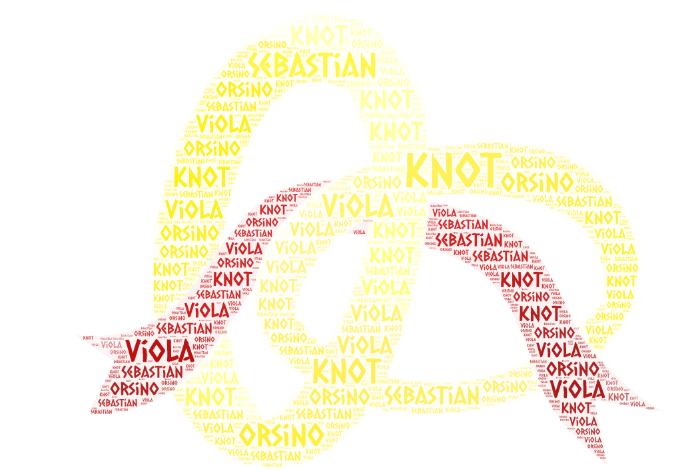
The main image here is the image of the knot- a central image of how convoluted this love triangle is.
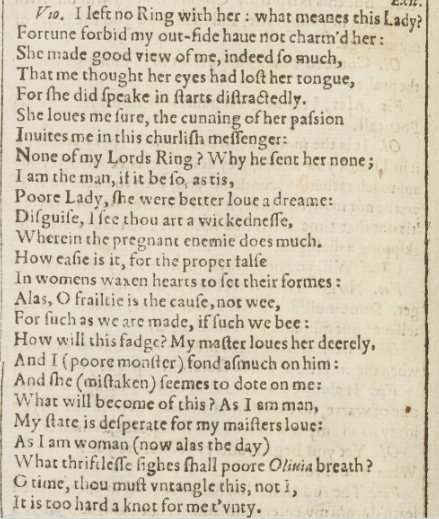
I left no Ring with her: what meanes this Lady?
Fortune forbid my out‑side haue not charm'd her:
[650]
She made good view of me, indeed so much,
That me thought her eyes had lost her tongue,
For she did speake in starts distractedly.
She loues me sure, the cunning of her passion
Inuites me in this churlish messenger:
[655]
None of my Lords Ring? Why he sent her none;
I am the man, if it be so, as tis,
Poore Lady, she were better loue a dreame:
Disguise, I see thou art a wickednesse,
Wherein the pregnant enemie does much.
[660]
How easie is it, for the proper false
In womens waxen hearts to set their formes:
Alas, O frailtie is the cause, not wee,
For such as we are made, if such we bee:
How will this fadge? My master loues her deerely,
[665]
And I (poore monster) fond asmuch on him:
And she (mistaken) seemes to dote on me:
What will become of this? As I am man,
My state is desperate for my maisters loue:
As I am woman (now alas the day)
[670]
What thriftlesse sighes shall poore Oliuia breath?
O time, thou must vntangle this, not I,
It is too hard a knot for me t'vnty.
It’s interesting to note that (in the First Folio text), the verse alternates between being regular, and using a run-on technique called enjabment, where the thoughts continue after the end of the lines, starting with lines three and four. Ironically, when Viola says that Olivia was distracted and confused when she visited her, her own thoughts are disjointed and fragmentary as she reaches the inevitable conclusion that Olivia is infatuated with Viola in her disguise.
Viola’s Emotional Journey
In the book “Shakespeare’s First Texts” by Neil Freeman he describes how the Folio prints the speech in four distinct sections. Freeman hypothesizes that Shakespeare organized this speech into four phrases that chart the stages of emotions Viola goes through:
Each stage has its own easily identifiable quality, reflecting the growing steps of Viola’s journey in what for her is a huge struggle not only to comprehend, but also to deal with the enormous complications of the dreadful love triangle- the potential results of which are now becomming only too clear.
Freeman, 175.
Stage 1: Introduction
In the first three and a half sentences, Viola goes through the facts- she gave no ring to Olivia, Olivia was eying her, and half paying attention to what Viola was saying. The phrase ends with Viola’s conclusion that Olivia must be in love with her.
Stage 2: Complications
The sentences are of very irregular length- sometimes six words per line, sometimes a few as four. According to Freeman, the irregularity of the verse shows how Viola’s emotions are getting the better of her. Viola could be gasping with remorse over the pain she’s caused Olivia, or shocked at how easily she was taken in by Viola’s disguise.
Stage 3: Crisis/ Catharsis
Each line of this section mentions the people in this love triagle: “My master,” “And I,” “And She,” etc. Viola might be thinking about the possible outcomes to this situation- getting fired, getting discovered, getting married, etc.
Stage 4: Summary: “O Time, Thou Must Untangle This, Not I.”
Like Hamlet before her and Macbeth after her, Viola ends her soliloquy by saying she has no conclusion. She has no idea how to solve this problem, but can only hope that Time will provide a solution.
Audience Interaction
As I said, this is a soliloquy, which is to say, a speech where the character is solo or alone onstage. Some people think this means that the characters are talking to themselves, but I firmly disagree with this notion. One reason why Shakespeare writes soliloquies is because they allow a character to share their thoughts and feelings with the audience. They are the ancestors of every aria or solo in opera and musical theater, and every Disney Princess/ Villain song. I’ve even said before that there are some similarities between Viola and a famous Disney Princess:
This list is not about skill or the talent of the actor. This is to honor the contributions of Shakespearean actors who also appeared in one of my favorite film and book franchises of all time: Harry Potter. Accordingly, some of the actors who weren’t essential to either Harry Potter or Shakespeare or both are placed lower on the list even if I personally love the actor or the character they portrayed.
#10: Richard Harris- Albus Dumbledore
The Irish-born actor has been a veteran of stage and screen for decades before his death in 2002, after the second Harry Potter film. Here is him on Johnny Carson, telling a funny story about a production of Macbeth he did early in his career:
#9: Kenneth Branaugh- Gilderoy Lockheart
If you visit this website regularly, you know I’m a fan of Kenneth Branaugh– I’ve reviewed three of his Shakespeare movies and he’s my all-time favorite Hamlet. I’m also aware that he has a reputation of being a bit of an egotist and a womanizer, (since he had affairs with two women on this list), so even though he was a bit too old to play the part, it was nice to see him have a laugh at his own expense as the attention-hogging Gilderoy Lockheart. The humbug professor’s name actually Gilderoy (as in a man painted with false gold), gives away the twist that he takes credit for other witches and wizards’ work and Branaugh shamelessly mugs to the camera whenever he’s on screen. My favorite scene of his though, is the one serious scene where he teaches dueling with the help of the much more competent Professor Snape:
Kenneth Branaugh and Alan Rickman in Harry Potter and the Chamber of Secrets, (2002).
If you saw my post on the duel at the end of Hamlet, you can see that the way wizards duel is directly inspired by the way fencers fought in Hamlet, right down to the flashy salute and bow beforehand, and it’s neat to see two legendary Hamlets fight in it.
I couldn’t decide between these fabulous actors, so I grouped them together. After seeing Timothy Spall as the cowardly, foolish incompetent spy and traitor Rosencrantz in Hamlet, I knew that the only Harry Potter role for him would be as Lord Voldemort’s toady and pathetic rat, Peter Pettigrew, aka Wormtail.
Broadbent on the other hand, is completely different and unrecognizable during his excellent portrayal of Lord Buckingham in Ian McKellen’s 1995 film version of Shakespeare’s Richard III. Unlike the meek and easily broken Horace Slughorn, Broadbent as Buckingham is an oily politician who very nearly sells his soul to McKellen’s diabolical Richard:
What unites these two portrayals is that both characters are corrupted by a figure of pure evil, but both have a breaking point- Buckingham, (as you see in the clip above), refuses to be a party to child murder, while Slughorn eventually helps Harry Potter destroy Voldemort. In a way, they’re two sides of a very flawed coin.
#7 Michael Gambon (Albus Dumbledore 2)
Like Richard Harris, Michael Gambon, (who passed away in September of 2023) was an accomplished stage and screen actor, famous for playing King Lear multiple times, including a famous performance with Antony Sher at the Royal Shakespeare Company. Here are some highlights of his stage work:
I feel I have to give Fiona Shaw a good spot on this list, though I think her talent was wasted in the role of Petunia Dursley. She is an icon of British theater and her work in Shakespeare is superb. She famously played Richard II back in 1995, and in the short film below, she talks about her amazing interpretation of Measure For Measure, with fellow Harry Potter alumn, David Tennant.
I’d also like to include the best-deleted scene from Deathly Hallows with Shaw in it, where she admits to Harry for the first time that she misses her sister Lilly.
#5: Ralph Fiennes (Lord Voldemort)
In a way, Lord Voldemort was a role that Fiennes had trained for all his life. He has played smarmy, serpentine characters before in films like Red Dragon and Schindler’s List. But Fiennes’ Shakespeare training allowed him to tap into the evil megalomaniac at the heart of Voldemort when he played roles like Richard III, (another deformed autocrat), and Coriolanus, the Roman general who is himself compared to a dragon. In the video above, YouTube critic Kyle Kalgren analyzes how Fiennes’ past roles and experience with Shakespeare translated well in his performance and his direction of the 2011 film Coriolanus.
#4 Imelda Stanton (Delores Umbridge)
By contrast, I give more credit to Imelda Stanton, who mainly plays sweet mom-like characters (or nurse-like in the case of Shakespeare In Love), for embodying the utterly loathsome Delores Umbridge. Reportedly, the role made Stanton feel physically ill and unlike Richard III, people hate her character with a passion. By contrast, look at her sweet and charming portrayal of Maria in the 1996 film Twelfth Night, (which also starred Helena Bonham Carter):
#3 Helena Bonham Carter (Bellatrix Lestrange)/ Emma Thompson (Sybyl Trelawney)
Again, I had to give credit to both of these women for the startling transformations they did for their Harry Potter characters, as well as their stellar work in Shakespeare. Helena Bonham Carter mainly plays apealing aristocratic characters such as Olivia in Twelfth Night, and Ophelia in Hamlet:
Seeing Ms. Carter as the demented Bellatrix Lestrange was quite a shock for me, yet the performance was no less impressive. I especially love this scene in Deathly Hallows where she has to act like a 17 year old girl, TRYING TO BE BELLATRIX LESTRANGE
#2: Alan Rickman (Severus Snape)
I already wrote a tribute to Alan Rickman after his death in 2016, so I don’t wish to repeat myself. Suffice it to say that Mr. Rickman was always a consummate professional, and his iconic portrayal of Severus Snape was the performance of a lifetime.
Alan Rickman as Achilles in Troilus and Cressida, Royal Shakespeare Company.
Honorable Mention: David Tennent (Barty Crouch)
To be honest, I thought Tennant was miscast in Harry Potter- he can play villains, (as Good Omens fans know well), but he just isn’t great at being maniacal and evil. That said, Tennant is a rising Shakespearean star and has created many memorable performances from Richard II, to Benedick in Much Ado About Nothing, to Hamlet.
#1: Dame Maggie Smith (Professor McGonigal)
Say it with me… you probably saw this coming. No one can deny that Dame Maggie’s contributions to Shakespeare, as well as her ubiquitous portrayal of Hogwarts’ current Headmistress Minerva McGonigal, stand the test of time as strongly as the animated chess pieces she placed in the school basement. Let’s look at some of her greatest Shakespearean moments.
Plug for my Acting Class
If you enjoyed this list, you might want to sign up for my Intro to Acting class or my extended acting course, where I delve into Shakespearean acting techniques, and answer the big question, “WHY DO SHAKESPEAREAN ACTORS KEEP GETTING CAST AS WITCHES AND WIZARDS?” To sign up, click the link below: https://outschool.com/classes/609658d1-3f9f-4371-8af2-4fe81ad13d8c
Cover art for my Outschool Beginning Acting Class.
For the final class of my course on Shakespeare’s Tragedies, I’m coaching two young actors on a pair of tragic speeches I’ve selected, and I thought I’d share some of that work with you. The first is a speech by Lady Macbeth that comes from Act I, Scene v, which I discussed in another post. But today, I’m going to talk about the second one, Iago’s soliloquy in Act II, Scene iii.
The Text
Iago. And what’s he then that says I play the villain? When this advice is free I give and honest, Probal to thinking and indeed the course1490 To win the Moor again? For ’tis most easy The inclining Desdemona to subdue In any honest suit: she’s framed as fruitful As the free elements. And then for her To win the Moor—were’t to renounce his baptism,1495 All seals and symbols of redeemed sin, His soul is so enfetter’d to her love, That she may make, unmake, do what she list, Even as her appetite shall play the god With his weak function. How am I then a villain1500 To counsel Cassio to this parallel course, Directly to his good? Divinity of hell! When devils will the blackest sins put on, They do suggest at first with heavenly shows, As I do now: for whiles this honest fool1505 Plies Desdemona to repair his fortunes And she for him pleads strongly to the Moor, I’ll pour this pestilence into his ear, That she repeals him for her body’s lust; And by how much she strives to do him good,1510 She shall undo her credit with the Moor. So will I turn her virtue into pitch, And out of her own goodness make the net That shall enmesh them all. Othello, Act II, Scene iii Lines 1488- 1513.
The Given Circumstances
Iago has begun his plan to humiliate Cassio and destroy Othello and Desdemona by getting Cassio drunk and sending Roderigo to fight with him. Alone in soliloquy, Iago explains how his advice to Cassio, to ask Desdemona to plead Othello on his behalf, is in reality the pin that will set off an explosion of distrust and pain for all of them:
Traditional Interpretations
Slide from my course on Shakespeare’s tragedies. Outschool, 2022
Iago poisons Othello’s mind by deceiving him into thinking his wife is unfaithful. He also manipulates the lusts and prejudices of those around him. These actions, coupled with a number of passages where he brings up Satanic or hellish imagery, are why many productions portray Iago as if he were The Devil himself, and explain his hatred for Othello as nothing more than desire to do evil for its own sakee; what the poet Colridge called: “Motiveless malignity.”
It is true that Iago speaks and acts like The Devil through the course of the play, but that doesn’t mean he thinks like a devil. Any actor will tell you that ‘motive-less malignity,’ is impossible to play. An actor has to construct a reason for why his character behaves this way. Below are some interviews and quotes from great Iagos who explain how they justified Iago’s evil and tried their best to find the man within the monster.
Iago is an easy part to bring off and rarely fails to impress. I am not the first to realise that there is no need to act the underlying falsity of the man rather to play “honest Iago” on all occasions. “Do not smile or sneer or glower — try to impress even the audience with your sincerity”: Edwin Booth. As Iago confides the truth to the audience (as always in Shakespeare), they are privy to his deceit and the gulling of Roderigo, Cassio, Desdemona and Othello himself. It is an unfair advantage and early on Willard accused me of trying to get the audience on my side against him. I explained that I didn’t need to try — Shakespeare had organised it that the villain’s part should be the audience’s portal into the action. The history of the play records many more serious misunderstandings between the Moor and his Ancient.
Iago loves to turn holy things on their head, and he revels in it with phrases like: “Divninity of Hell,”
“Do and Undo” and the notion of turning virtue into pitch, a substance that defiles what it touches.
Puns, Assonence, and Alliteration
In this speech especially, Iago likes to play with similar-sounding words “Fool” and “Fortune,” as well as sounds within those words like “Plied/Plead” and “Pour/Moor.” Iago’s soliloquy shows off that his ability to manipulate language as well as his ability to manipulate people.
Iago. And what's he then,
That saies I play the Villaine?
When this aduise is free I giue, and honest,
Proball to thinking, and indeed the course
To win the Moore againe.
For 'tis most easie
Th'inclyning Desdemona to subdue
In any honest Suite. She's fram'd as fruitefull
As the free Elements. And then for her
To win the Moore, were to renownce his Baptisme,
All Seales, and Simbols of redeemed sin:
His Soule is so enfetter'd to her Loue,
That she may make, vnmake, do what she list,
Euen as her Appetite shall play the God,
With his weake Function. How am I then a Villaine,
To Counsell Cassio to this paralell course,
Directly to his good? Diuinitie of hell,
When diuels will the blackest sinnes put on,
They do suggest at first with heauenly shewes,
As I do now. For whiles this honest Foole
Plies Desdemona, to repaire his Fortune,
And she for him, pleades strongly to the Moore,
Ile powre this pestilence into his eare:
That she repeales him, for her bodies Lust'
And by how much she striues to do him good,
She shall vndo her Credite with the Moore.
So will I turne her vertue into pitch,
And out of her owne goodnesse make the Net,
That shall en-mash them all. First Folio Transcription from Internet Shakespeare Editions
For the first 13 lines, Iago’s verse is uneven and has a lot of run on lines. It almost seems like he’s speaking in prose, which is to say, that he is speaking from his mind, but not his heart. Then, right at the line: “Divinity of Hell,” the tone changes, the verse is slower and more deliberate. Now Iago is letting his real feelings out- his narcisism, his sadistic glee, his mysogyny and his utter hatred of everyone in the play.
Questions to consider
Again, what is the real reason Iago hates Othello? Jealousy? Lust? Envy?
How does Iago feel about this plot? Does it give him pleasure? Pain? What will destroying Othello accomplish for him?
Our Interpretation
The Moor, howbeit that I endure him not, Is of a constant, loving, noble nature,1090 And I dare think he’ll prove to Desdemona A most dear husband. Now, I do love her too; Not out of absolute lust, though peradventure I stand accountant for as great a sin,
In this interpretation, I believe Iago really actually loves Desdemona and hates Othello for taking her away from him. His unrequited love also manifests itself as a bitter hatred toward her. In our culture, men who love women but are unable to possess them are demeaned and mocked with terms like ‘simp,’ ‘incel,’ ‘loser,’ or even ‘cuck.’ With this in mind, I think Iago’s devilish imagery is based on being denied love. Like Lucifer, I feel Iago lost paradise when he lost Desdemona, and now hates everyone who takes her away from him, including himself.
For the final class of my course on Shakespeare’s Tragedies, I’m coaching two young actors on a pair of tragic speeches I’ve selected, and I thought I’d share some of that work with you. The first is a speech by Lady Macbeth that comes from Act I, Scene v. In this speech, Lady Macbeth prays to dark spirits to make her cold and remorseless, so that she can convince her husband to kill the king, and take the throne.
The Text
Lady Macbeth. The raven himself is hoarse That croaks the fatal entrance of Duncan Under my battlements. Come, you spirits390 That tend on mortal thoughts, unsex me here, And fill me from the crown to the toe top-full Of direst cruelty! make thick my blood; Stop up the access and passage to remorse, That no compunctious visitings of nature395 Shake my fell purpose, nor keep peace between The effect and it! Come to my woman’s breasts, And take my milk for gall, you murdering ministers, Wherever in your sightless substances You wait on nature’s mischief! Come, thick night,400 And pall thee in the dunnest smoke of hell, That my keen knife see not the wound it makes, Nor heaven peep through the blanket of the dark, To cry ‘Hold, hold!’ Macbeth, Act I, Scene v, Lines 388-403.
The Given Circumstances
Lady Macbeth has just received a letter from her husband. That letter informs her the witches prophesied he would be king. Soon after she’s finished reading it, another messenger, (hoarse and out of breath), tells her that King Duncan will be staying at her castle tonight! Lady Macbeth immediately sees this as the perfect opportunity to make her husband king, by plotting to murder Duncan as he sleeps under her roof.
Traditional Interpretations
I’ve seen at least six productions of “Macbeth” and when it comes to this scene I think the main interpretations I see are either that Lady Macbeth is gleefully evil, or highly sexual. While it is true that she is praying to dark spirits, and her language when she speaks to Macbeth is sexually charged, I feel that these are not the only options when playing this character.
Francis McDormad
I love the regal poise of Francis in this 2021 movie. She is utterly in control and has absolutely no qualms about murder. I get the sense that she’s more praying to Mercury to get her to speak daggers to her husband, instead of to Lucifer to help her use one. She even has knives coming out of her ears (look at those earings!) This Lady Macbeth doesn’t seem evil in the sense of a cartoon villain. She’s just a woman in a violent society who believes that regicide is an acceptable way to sieze power. I think in this world, might makes right.
By contrast, Judy Dench in the 1979 RSC production is also very human. Her spirits are like… well spirits. You get the sense that she’s taking a swig of liquid courage to get her to go through with these actions which SHE KNOWS ARE WRONG.
Literary Devices
Imagery
“The Triple Hecate,” by William Blake, 1794.
Ravens in Greek and Norse myths were birds of prophecy and associated with the goddess of magic, Hecate (who appears in the play in Act IV). Ravens often appeared to announce deaths or execution. The speech is also full of imagery that rejects traditionally ‘feminine’ virtues. Lady Macbeth seems to associate womanhood with kindness, mercy, pity, and remorse and thus attempts to shed her femininity to accomplish her cruel objective of killing Duncan.
Verse
The Rauen himselfe is hoarse,
That croakes the fatall entrance of Duncan
Vnder my Battlements. Come you Spirits,
That tend on mortall thoughts, vnsex me here,
And fill me from the Crowne to the Toe, top-full
Of direst Crueltie: make thick my blood,
Stop vp th'accesse, and passage to Remorse,
That no compunctious visitings of Nature
Shake my fell purpose, nor keepe peace betweene
Th'effect, and hit. Come to my Womans Brests,
And take my Milke for Gall, you murth'ring Ministers,
Where-euer, in your sightlesse substances,
You wait on Natures Mischiefe. Come thick Night,
And pall thee in the dunnest smoake of Hell,
That my keene Knife see not the Wound it makes,
Nor Heauen peepe through the Blanket of the darke,
To cry, hold, hold. Macbeth, Act I, Scene v, First Folio Reprint from Internet Shakespeare Editions.
It’s interesting to note that (in the First Folio text) this speech is only three sentences long. It is a constant build up of energy with only three stops. In addition, Shakespeare puts the most important words, at the end of each line. Almost every line ends with something Lady M wants to kill, such as Duncan, or wants to kill within herself (peace, remorse, nature, Woman(hood). The verse also has commands strewn about in the beginnings and ends of lines. The question is, how confident does Lady Macbeth feel while giving them?
Questions to consider
One of the biggest questions I have with this play is why Lady Macbeth and her husband want to be king and queen anyway? After all, Shakespeare has written plenty of plays that detail how hard and stressful (uneasy) it is to be king. Plus, Macbeth is already a trusted lord and friend of the king, why would he want to damn himself to get a job he knows isn’t his to take? I think that, especially now in the 21st century, it’s very important to have a coherent motive for why the Macbeths are willing to kill for the crown.
Our Interpretation
Looking over the text, my actress sensed a deep loneliness in Lady Macbeth and a haunted feeling that makes her seem desperate to change her life. I thought about how insomnia and paranoid fears are repeated motifs in the play, as well as character traits found in both Macbeth and later Lady Macbeth. Then I thought- Macbeth is a soldier; his wife has probably had to spend years wondering if he is going to come home and imagining what kind of terrible death he might suffer on the battlefield While the king sits safely at home. Perhaps she sees killing the king as a form of revenge for all the fear and sleepless nights she’s experienced, and an attempt to protect her husband from war, by safely placing him on the throne. Maybe she sees this as the only way to make sure her beloved husband never dies in battle. Therefore, instead of watching an evil woman become more evil, you’re watching a good woman, (with good intentions), damn herself for love, which I would argue is a much more active and dynamic choice.
This list is not about skill or the talent of the actor. This is to honor the contributions of Shakespearean actors who also appeared in one of my favorite film and television franchises of all time: Star Trek. Accordingly, some of the actors who weren’t essential to either Star Trek or Shakespeare or both are placed lower on the list even if I personally love the actor or the character they portrayed.
#10: Marina Sirtis
The English actress played Counselor Troi on Star Trek: TNG. Like John DeLancie, however, aside fromplaying Ophelia inHamlet, I was unable to find much Shakespeare in her credits, which is a shame because she has an incredible speaking voice. I frankly think the creators of the show spent way too much of the series trying to sexualize her and didn’t create enough opportunities for her to use her telepathic abilities or her empathic abilities.
#9: John Delancie
Like I said before, I am judging these actors for their cumulative contributions to Shakespeare, and unfortunately, I didn’t find many Shakespeare credits for Mr. DeLancie. That said, he is one of my all-time favorite Star Trek actors and was part of Star Trek The Next Generation all the way through the series. As the omnipotent entity Q, Mr. DeLancie plays a Richard III-like villain who manipulates the poor humans around him for his own amusement. He is also very interested in human nature and engages in many debates with Picard on the virtues of humans, like in this epic scene:
Q (John DeLancie) and Picard (Patrick Stewart) debate the virtues of the human race (Hide and Q, episode 10).
John DeLancie actually started acting in a high school production of Shakespeare’s Henry V, and later performed at the American Shakespeare Center in Connecticut: (Source: https://www.johndelancie.com/pages/my-past-work) ,
Gene Roddenberry, the creator of Star Trek envisioned the 23rd century as a time when mankind would be united in purpose but all people would keep their cultures and racial identities. Accordingly, a lot of the cast came from a diverse cultural background; African Americans, Russians, and very notably, Jews. One man who brought his own Jewish background into the core of Star Trek was Leonard Nimoy- son of Russian Jews who spoke Yiddish. In the article above, Nimoy mentions how he incorporated the famous Vulcan hand gesture of “Live Long And Prosper,” from the blessing his rabbi gave his congregation, which Nimoy saw as a boy:
Nimoy started out as a theater actor, starting with Yiddish theaters in Boston and New York, and he continued to work in theater and radio before and after Star Trek. His first foray into Shakespeare happened in 1975 when he was cast as Malvolio in Twelfth Night.
“I’ve been studying and reading and watching Shakespeare long enough to feel excited and positive about it. The biggest problem an actor has is finding good material. With Shakespeare, you know that not only do you have good material, you have a proven piece that has been staged successfully many times.”
— Leonard Nimoy, Pittsburgh Post-Gazette, 1975.
Though Nimoy is now internationally beloved for his work on stage, screen, and radio, as a child had to overcome prejudice because of his Jewish roots. I wish Nimoy had played Shylock in theMerchant of Venice since he had the potential to play the role with a lot of passion and pathos. Just goes to show that Mr. Nimoy was a man of great accomplishment and creativity, and a Renaissance Man to boot.
#7 George Takei
I studied at the Shakespeare Institute at Stratford Upon Avon in 60s. So it is with great joy that I will be making my London stage debut this January!
George Takei
With his iconic deep, smooth voice and skill as a fencer I wasn’t surprised to find out that the actor who played Hikaru Sulu was a classically trained actor. Sadly, I was unable to find many Shakespeare credits for Mr. Takei, which is a shame since I wanted to find some clips of him performing Shakespeare to put here. The best I could find was this clip from TOS.
I was able to find this interview where the actor shares his thoughts on Shakespeare. I’m actually going to see Mr. Takei in a live show in April of 2023, and I suggest you do too if you can. He’s a fascinating guy and a great activist for Asian Americans and the LGBTQ+ community. Like Leonard Nimoy, he has overcome discrimination and oppression and spread his wings creatively through many different media. Hopefully, I can update this list once I see him live to include more quotes and thoughts about Shakespeare from the man himself.
#6: Brett Spiner
Fan art of Data (Brett Spiner) holding the head of his evil brother Lore. 2017 by Kaylen M Bennett
Brett Spiner is a multi-talented veteran of film, stage, screen, and radio, so it makes sense that he has a grounding in Shakespeare. More than that, Spiner’s character, the andriod Lt. Commander Data, (one of the best characters of Star Trek: The Next Generation), faces a Shakespearean dilemma- he wants to understand what it’s like to be human, though he isn’t. He is not only mechanical but he doesn’t have emotions. Therefore he offers an objective commentary on the way the human characters interact, not unlike Horatio in Hamlet or the Fool characters in many other Shakespeare plays.
Data’s struggle to understand humanity even extends to reading and performing Shakespeare himself, as this clip shows:
Data even impersonates a Shakespearean actor playing Puck in the episode Time’s Arrow, (a preview of Spiner’s role as Puck in Gargoyles):
I might be cheating a little by putting Spiner this high on the list, since technically he hasn’t done many full Shakespeare plays, but doing these little snippets as Data on Star Trek, or as Puck on Gargoyles was a way to introduce Shakespeare to younger viewers, which as I will discuss later, is one of the great gifts Star Trek gave Shakespeare fans like me.
#5: William Shatner
To be honest, I don’t care much for William Shatner as an actor or a person. He drove away a lot of his fellow cast members on Star Trek, his ego is infamous, and his delivery of Shakespeare is clipped, slow, and I would argue, lazy. That said, Shatner is very good at playing characters who are arrogant, and he does know a lot about how to deliver Shakespeare for TV.
I will give credit to Shatner; he’s good at playing smarmy or arrogant characters which is why Captain Kirk was a good role for him. He was also surprisingly good as Marc Antony- he really sells the verbal irony as he subtly attacks Brutus in the “Friends, Romans, Countrymen” speech. Like Kirk, Antony is (to quote General Chang in Star Trek VI), “An insubordinate, unprincipled, career-minded opportunist,” and Shatner plays both of them with skill and relish.
Shatner actually got his first break in the theater as an understudy in a production of Henry V, where he got to take on the title role when Christopher Plummer got sick (more on that later). As this video above shows, Shatner continued to play Shakespeare throughout his career, and as Kirk, he explored the ‘brave new worlds of Star Trek with a Shakespearean curiosity.
#4 Benedict Cumberbatch
Though his contribution to Star Trek is comparatively small- playing the villain Khan in Star Trek: Into Darkness, Benedict Cumberbatch is quickly becoming the best of the new generation of Shakespearean actors who have made the leap to the Final Frontier. I covered his Shakespeare work in other posts such as my review of his Hamlet. So let’s just enjoy the Machiavellian villainy in this clip, where he taunts Spock with Richard III-like glee.
#3 Christopher Plummer
[William] Shatner was Plummer’s understudy in a 1956 production of Henry V at the Stratford Shakespeare Festival. Plummer could not go on one evening due to illness, which led to Shatner’s big break. “He didn’t do what I did at all,” Plummer recalled in a separate interview. “Where I stood up to make a speech, he sat down. He did the opposite of everything I did. And I knew that son of a $%*# was going to be a star.”
Christopher Plummer, who tragically died last year, was a loss to both stage, screen, and by all accounts, everyone he knew or worked with. He was a dear man a consummate professional, and he brought that skill with Shakespeare and a love of Star Trek to create one of the greatest villains in Star Trek history.
General Chang, the war-mongering Klingon in “Star Trek VI”, who assassinates his own Chancellor Gorkon to start a war with the Federation, is a great antagonist, especially considering that Kirk was tempted to do the same thing himself. Kirk hates the Klingons and wishes death and destruction on the whole race. This film came out just two years after the fall of the Berlin Wall, and the blind hatred between the Klingons and the Federation is a brilliant metaphor for the last days of the Cold War.
Shakespeare appears at the center of this metaphor- Chang assassinates Gorkon like Brutus killed Caesar, fearing that his peace talks with the Federation would destroy the Klingon Empire. Chang hates The Federation and Kirk in particular. The only human he has any affection for is Shakespeare, (whom he himself believes is Klingon), and he taunts Kirk with Shakespeare quotes relentlessly. Chang’s character also has echoes of Macbeth- killing his king and then blaming someone else in a show trial where he serves as the prosecution. Finally, just like Macbeth, Chang dies fighting when the Enterprise figures out how to shoot at his ship while it’s cloaked.
As the quote above indicates, it’s fitting that Plummer played Chang since the two of them have had a friendly rivalry ever since they played opposite each other in Henry V. He’s a great antagonist onstage and a towering, dignified presence offstage. In a way, the two men were two sides of a coin- Shatner being a loud and boisterous movie/ TV star, Plummer being a dignified, matinee-idol type. These big egos tussle extremely well in Star Trek VI, yet, as even Shatner admitted, they admired each other a lot:
Before I move on, I’d like to show you my favorite performance of Plummer’s. It’s a short monologue from Long Day’s Journey Into Night, where Plummer plays a washed-up Shakespearean actor, who ruined his career doing populist trash. One can see some of Plummer’s antipathy toward The Sound Of Music in his performance. Still, thankfully, Plummer didn’t meet the same fate as James Tyronne:
#2: David Warner
It’s appropriate that Star Trek VI: The Undiscovered Country, which is a film named after a quote from Hamlet cast a beloved Hamlet, David Warner. Like Patrick Stewart and Benedick Cumberbatch, Warner was a veteran of the Royal Shakespeare Company, and he played Hamlet back in 1975:
Warner’s character in Star Trek VI thinks that this speech is about the future, and like MLK, Gorbechav or Gandhi, he tries to bring a “brave new world” to fruition by making peace with his enemies through nonviolent means. This includes sharing his love for Shakespeare. I like to think that Gorkon knows that Shakespeare was actually human, and when he quotes him to the Enterprise crew, it’s a means to ingratiate himself to the humans by finding common ground.
Sadly though, Gorkon in his idealism forgets that the speech is actually about death (or possibly it was translated incorrectly into Klingon). Indeed, this misunderstanding of humans and Klingons is what costs Gorkon his life. The situational and verbal irony of this quote from Hamlet is worthy of Shakespeare himself and it helps Warner’s performance become one of the most memorable in the movie.
Amazingly though, as if one incredible Star Trek performance wasn’t enough, Warner came back again. Ignoring his performance in the infamous Star Trek V, Warner gave a truly chilling performance as the sadistic Cardassian Gul Navek in the two-part episode “Chain Of Command,” where he captures and tortures Captain Picard!
Like the Klingons, the Cardassians are a warlike race of conquerors who use their war machine to better their society through conquest. In subsequent portrayals, they seem like a metaphor for the Nazis since they attempted to exterminate the Bajoran race, and their military philosophy seems to be inspired by fascism. In this episode, Warner’s cruelty echoes many horror stories of POWs enduring sadistic torture at the hands of the likes of Adolph Eichman, Heinrich Himmler, and many other monsters who told their torturers to “On no account show the slightest mercy.”
The chilling way Warner plays Gul Madred is one of the high points of the series. He and Stewart worked before on a production of Hamlet in 1965, and the way these two play off each other is masterful. Warner is powerful, in command, dangerous, and sly. Picard never knows when he is telling the truth, and as time goes on, Madred revels in how much closer he is to breaking the pitiful human. Still, Picard in his wonderful stoicism never breaks, and briefly manages to turn the tables on Gul Madred, when he makes the mistake of opening up to Picard about how in reality, he is a scared and miserable soul, trying to fill the emptiness of his heart with power and sadistic pleasure. Again, these two actors are so powerful that all you need is them, and a dark room to create compelling drama.
#1: Sir Patrick Stewart
Patrick Stewart as King ClaudiusStewart as The Ghost in HamletSir Patrick Stewart as Jean Luc PicardStewart as ShylockStewart as Cassius in “Julius Caesar”
You probably saw this coming. Not only is Stewart the most important character on Star Trek: The Next Generation, but he’s also one of the greatest living Shakespeareans, and has become a sort of icon for Shakespearean acting himself.
Stewart has given so many memorable performances over the years, but one of my favorites was fairly recent- when he played Marc Antony in Antony and Cleopatra. I mentioned how, in Julius Caesar, Antony is essentially the Captain Kirk of his time- brash, cunning, arrogant, and unprincipled. In the play that bears his name though, Antony is a shadow of his former self- a drunk, foolish old man who is completely blinded to the threat Octavian poses to him. Stewart said that he based his portrayal on his own father, who was himself a soldier and an alcoholic, who was very abusive to the young Stewart and his mother. With this in mind, the portrayal has a poetic justice to it that the man who lied and cheated so many Romans finally gets cheated by the foremost man of Rome. At the same time, Stewart makes us feel for him; since so many people admire Stewart (myself included), seeing him play a man who is bringing himself low, makes us all want to save him from himself. It’s the definition of catharsis.
I’m delighted to share with you my recommendations for the best Hamlets committed to film! I was pretty strict with my criteria which left a few Hamlets out, so if I missed yours, let me know in the comments.
In order to make this list:
I have to have seen the whole thing. Sadly that excludes a lot of unfilmed productions or films I haven’t got around to seeing.
The interpretation has to take a unique stance on the play.
The actor has to have a clear grasp of the part.
I personally have to like it. This is subjective, and I will make it clear if something is my opinion, or if I think this interpretation works for classes or private viewing.
By the way, if you’re a teacher, I’ll be sure to mention which productions work for classes, and which, for whatever reason, do not. I also can recommend Common Sense Media to give you a good idea what age group this film works best for:
So, without any further adieu (get it?):
The Good Hamlets
#10: Arnold SChwarzenegger in “Last Action Hero”
I would love to do a full review of this movie. When it works, it is actually a thoughtful deconstruction of the action movie genre, and as this clip shows, the movie concedes that Hamlet was actually the first great action hero. Schwarzenegger is really funny as an action movie parody of “Hamlet,” and everything he does is pretty cathartic for bored school boys who have to read the play in class. Plus, as a funny easter egg, the teacher in the scene who is showing Olivier’s Hamlet on the screen is played by Joan Plowright, who played Gertrude IN THAT FILM, and was married to Olivier in real life!
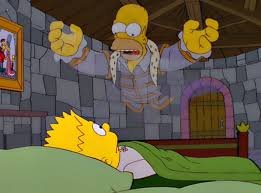
#9: Bart Simpson in “Tales from the Public Domain”
It’s absolutely astonishing how many Shakespeare easter eggs are in this little episode! How they make fun of medieval history, (the Danes were in fact Vikings in the early middle ages), Elizabethan theater, (when Bart does a soliloquy and is surprised that Claudius can hear him), and the way they compress Shakespeare’s longest play into a five minute episode is masterful satire.
In addition, the cast is perfectly chosen among the Simpsons’ core cast. Long-time viewers know that Moe has wanted to sleep with Homer’s wife for years, so making him Claudius is a brilliant choice. Plus, Dan Castellaneta steals the show with his over-the-top performance as the ghost, which actually reminds me of a 1589 review of Hamlet by Thomas Lodge:
“[He] walks for the most part in black under cover of gravity, and looks as pale as the vizard [mask] of the ghost who cried so miserably at the Theatre like an oyster-wife, Hamlet, revenge!”
THOMAS NASHE, “PREFACE” TO ROBERT GREENE, MENAPHON, (1589)
In any case, this clip is a great way to introduce anyone to Hamlet and I highly recommend it.
#8: Austin Tichenor in “The Complete Works of Shakespeare- Abridged”
Part 1 of a 4 part series of clips from “The Complete Works Of Shakespeare (Abridged)” Starring Austin Tichenor, Reed Martin, and Adam Long.
This show is very special to me- in around 1997 my parents went to England and brought home a copy of The Complete Works of Shakespeare (Abridged). I’d only read “Romeo and Juliet” previously and through this show, I gained an appreciation for all of Shakespeare’s plays. Seeing the plays through parody made them seem less lofty and stuffy, and made me want to see and read the original works. This is especially true for “Hamlet,” which occupies the second half of the show, where Hamlet is portrayed by Austin Tichenor.
Tichenor wins my award for “Hammiest Hamlet,” which is just delightful to watch. He clearly takes the part WAAAY too seriously, as evidenced by how emphatically he demands solemn silence from the audience while he attempts to do “To Be Or Not To Be.” Tichenor also serves as the pedantic straight man who tries to keep the show moving and academic, while mediating between his bickering co-stars Adam and Reed. This wonderful Three-stooges dynamic makes every minute of the show fun and frenetic. However, the cast makes it very clear that they are making fun of Shakespeare with love; they never mock the play, they inform as well as entertain, and occasionally they even move the audience as Adam does at the end. In short, this show helped me form my approach to Shakespeare, and it’s largely through Tichenor that I read Hamlet at all, so he’s to blame for this website.
#7: Richard Burton, 1964 (stage production directed by John Gielgud).
With the advent of TV and film making theater seem obsolete, directors knew they had to do something drastic in order to get people to come to the playhouses. Enter John Gielgud, one of the greatest Hamlets of the early 20th century, who directed Richard Burton in a highly-acclaimed production with minimum sets and with actors wearing rehearsal clothes. The idea was to let Shakespeare’s words and the actors’ performances be the focus, and save spectacle for film and TV. This approach has been adopted by many theater companies since, including a few I’ve been a pat of.
Burton has a lot of energy and manic physicality in his portrayal and it makes his Hamlet engaging to watch. Plus Gielgud himself as the ghost is almost operatic to hear. I highly recommend any theater fan to watch it, though it might not translate in a classroom much.
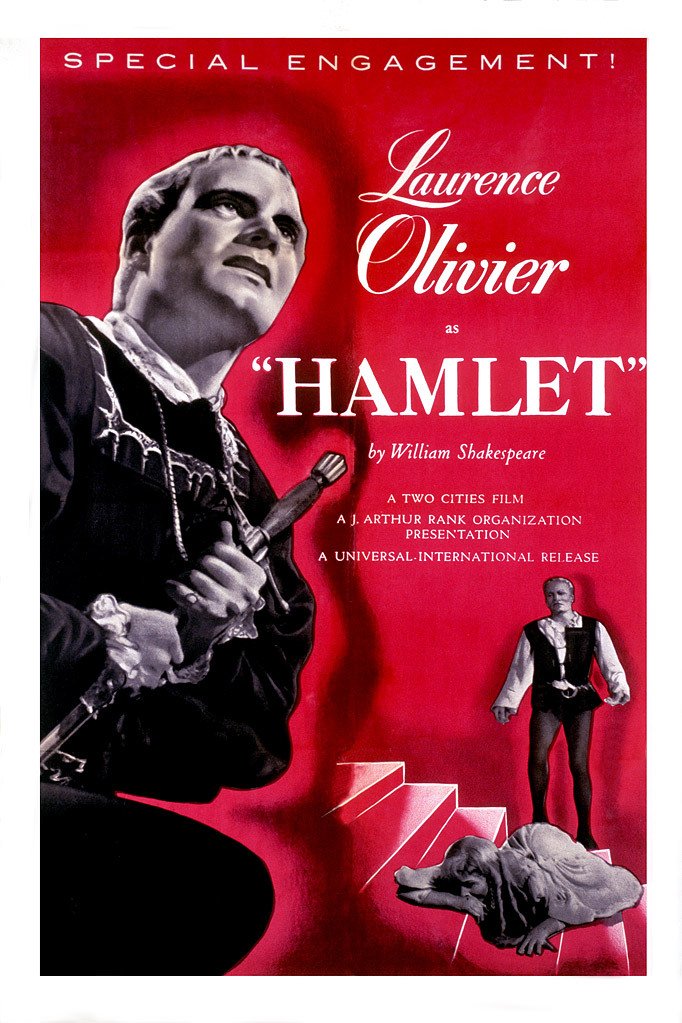
# 6: Laurence Olivier, (Film 1948)
I have my issues with Olivier as an actor and apparently I’m not alone:
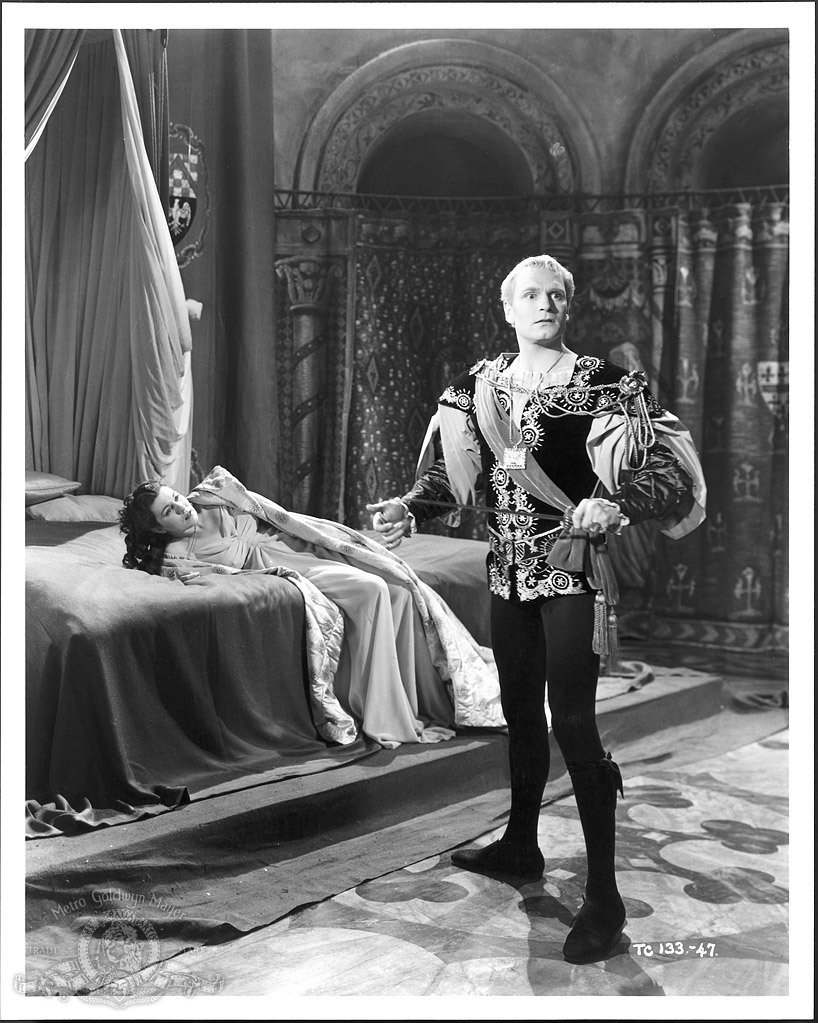
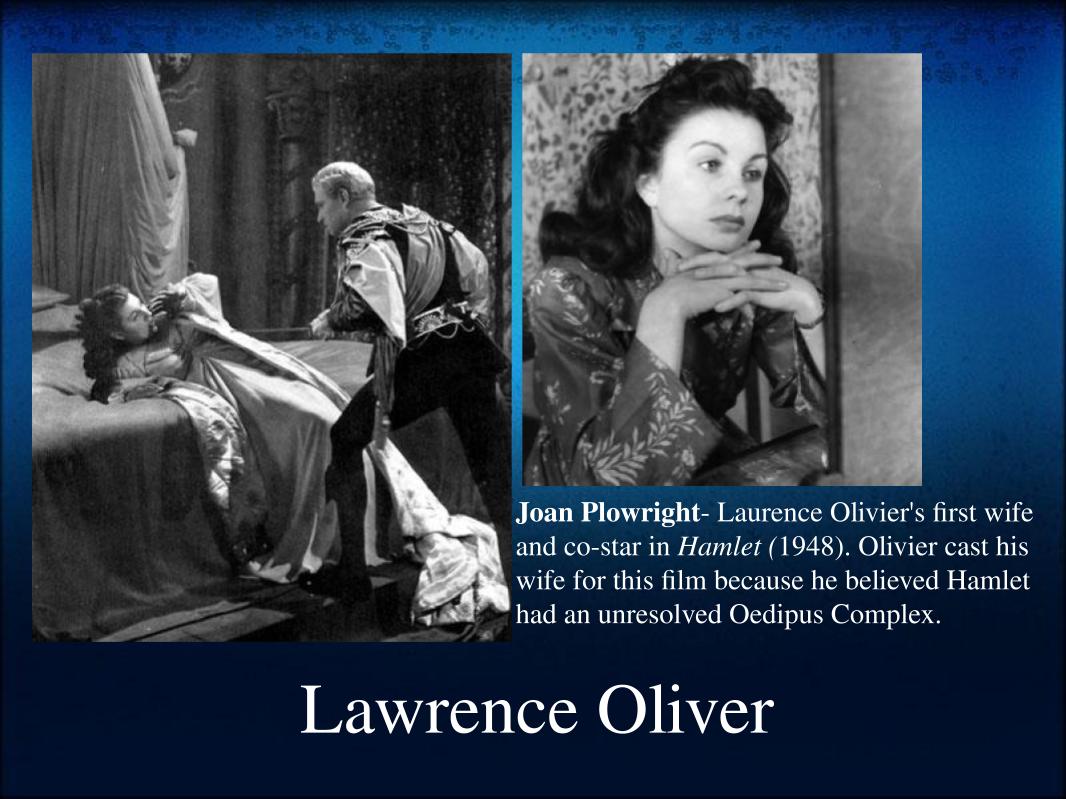
I find Olivier’s acting over-the-top, lacking in emotion and subtlety, and I think his directing is generally self-centered. He rarely deigns to give close-ups to anyone but himself and a lot of the scenes he directs are filmed like stage plays. That said, Olivier’s Hamlet is really good. SIr Laurence talked to Ernest Jones about the theory that Hamlet might have had an Oedipus Complex and created a unique and well-thought-out interpretation for his Hamlet. First off, casting his real-life wife Joan Plowright as Gertrude, fills the Closet scene with uncomfortable tension. He also did a great job making the ghost seem as imposing and accusatory as possible, as well as making Claudius as disgusting as possible.
You get the idea that this film is how Hamlet sees the world with its dark and shadowy towers, representing Hamlet’s melancholic mind, his imprisoned spirit, and his dark desires. Also as many people have pointed out, Gertrude’s bed chamber looks like a female organ, making the Oedipus theory even more explicit.
Even I have to admit that Olivier nailed the “To Be Or Not To Be,” Speech. He squirms at his own Oedipal fantasies, and contemplates jumping off the battlements in a captivating and subtle way. The performance and cinematography is iconic, and it makes me grudgingly admit Olivier, for all his faults, is still one of the best Hamlets of all time.
I would recommend this film to every Shakespeare film fan and any hardcore Shakespeare scholars. I would caution against showing the whole thing in a class however, since it’s black and white, and again, I find Oliver’s delivery very old-fashioned.
#5: Paul Gross, (StratforD Festival, 2000)
Thus far, I’ve mainly reviewed British and American Hamlets. Paul Gross is one of Canada’s most celebrated actors who gained fame as one of the best Hamlets at Toronto’s Stratford Festival. Unlike most Hamlets who go for the humanistic prince version of Hamlet, Gross plays him with sort of an animal intensity, like a wounded bear who will growl at you if you get in his way.
I have to admit I broke my own rule with this one- I haven’t really seen Gross’ portrayal, but I believe I saw it well-represented in his role as Geoffery Tennent, the Shakespearean Actor-turned madman-turned director in the Canadian TV show “Slings and Arrows.” This amazing dark comedy portrays the ins and outs of a Shakespeare Company from the normal problems of mounting a play to backstage drama, even the funding and marketing gets focus! Basically, the show is The Office for Shakespeare nerds, except for one ghostly cast member (no spoilers).
4. Benedick Cumberbatch / John Harrell
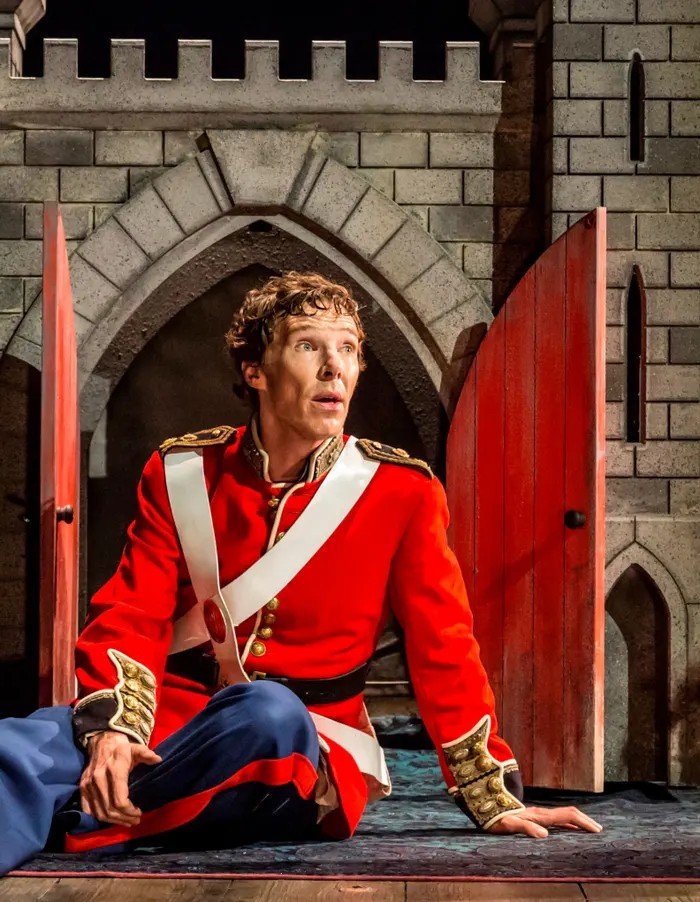
I couldn’t make up my mind between these two Hamlets, so I’m listing them together (guess that makes me Hamlet too). One is one of the most accomplished Shakespearean actor in recent memory, an RSC alumn, and a Hollywood star to boot, Benedick Cumberbatch.
Left- Benedick Cumberbatch as Hamlet, National Theater. Right- John Harrell at the Blackfriars Playhouse, Staunton VA.
Both these actors have similar strengths- they’re both tall and imposing with aquiline features. They are also highly physical performers. I talked in my lecture on Richard III about how Harrell performed the role of Gloucester with his legs tied together and a bowling ball strapped to his hand. Appearance-wise- Harrell and Cumberbatch are so similar, that it’s actually a joke at the ASC that they must be long-lost twins.
That said, when it comes to their approach to Hamlet, these two actors couldn’t be more different. Cumberbatch focused on Hamlet’s emotional turmoil- he was tortured and angry, full of youthful angst and volatility. This particular production is sort of an anachronistic mash-up of modern and period, which gives it a sort of dream-like quality that I really enjoy. Like Richard Burton, the director knows how to stage a play differently from a movie or TV show, which is especially important with this actor, since we can see him on all those platforms.
Nor should they have. Full of scenic spectacle and conceptual tweaks and quirks, this “Hamlet” is never boring. It is also never emotionally moving — except on those occasions when Mr. Cumberbatch’s Hamlet is alone with his thoughts, trying to make sense of a loud, importunate world that demands so much of him.
John Harrell on the other hand is a more mature and subtle Hamlet, more interested in saving his hide than contemplating his navel. This Hamlet masks pain with humor and sardonic wit and it translates to all his relationships with the King, Queen, and courtiers.
John Harrell as Hamlet, American Shakespeare Center, 2011
Rather than a sour, dour, morose, obtuse, naval-gazing Hamlet, this prince was cunning, cynical, devious, sarcastic, and very much enjoying his feigned madness, his chess game with the king, and his fencing bout with Laertes.
OK, I have to admit that I didn’t see this whole production either, but it’s so cool and the acting is so good I wish I had! Papaa Essiedu is an electrifying blend of wit, sadness, manic excitement, and rage. His fresh take on a role that can be rather dour is why even the little I’ve seen of his performance makes it one of my favorites!
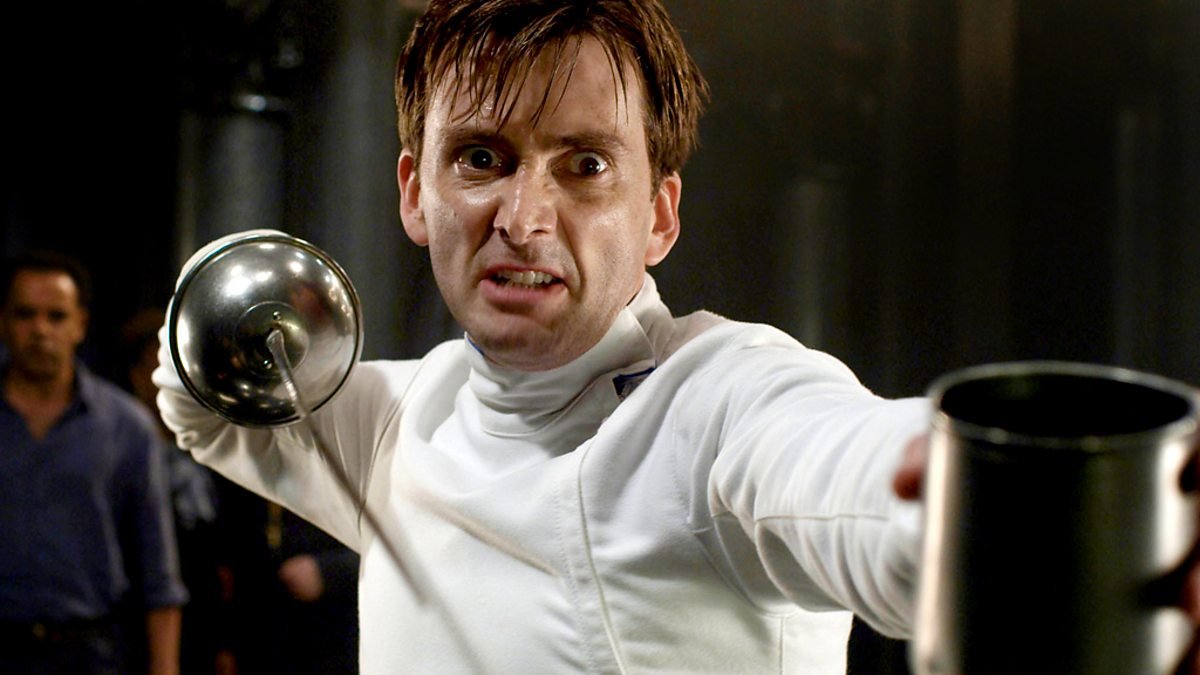
#2: David Tennet, RSC 2009
Tennet does an incredible job of encapsulating Hamlet’s quick wit, giddy excitement, frailty, fury, and frustration, especially with himself. I love the fact that he does “To Be Or Not To Be” in a superhero T-Shirt. In a way, this Hamlet is constantly wishing he was more of the action-movie type that Schwartzenegger parodies at the top of this list. Like Harrell, Tennent’s Hamlet masks his pain with humor, but you can see him struggle with it and try to pull himself out of despair. All these Hamlets find a way to nail at least one aspect of the character, but Tennet in his short 3 hours on the stage, manages to highlight all of them.
I recommend this version for any viewer in any classroom. It’s beautifully shot, extremely well acted, fast-paced, funny, and exciting. I cannot recommend it highly enough.
Honorable mentions: Anton Lester, Ian McKellen, MiChelle Terry, and Sir John Gielgud
I haven’t seen any of these Hamlets and have been unable to locate any clips, but I have the deepest respect for all of these actors, so I thought I’d highlight them here.
I’d also like to give special mention to Michelle Terry. Gender-blind productions of Shakespeare get a lot of flack that is undeserved, and there’s nothing wrong with a female Hamlet. To quote Geoffrey Tennet in Slings and Arrows: “Shakespeare didn’t care about anachronism, and neither should we.”
I didn’t include Ms. Terry in this list, simply because I wasn’t able to get to the Globe, and I wanted to focus on productions that people can watch for free. If you wish, you can watch her 2018 performance on the Globe Theater’s steaming website:
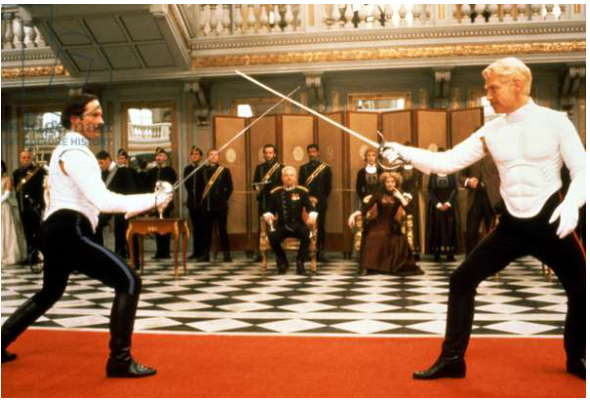
Hamlet (Kenneth Branaugh) duels with Laertes (Michael Maloney) in Branaugh’s 1996 film.Stills from Kenneth Branaugh’s Hamlet (1996).
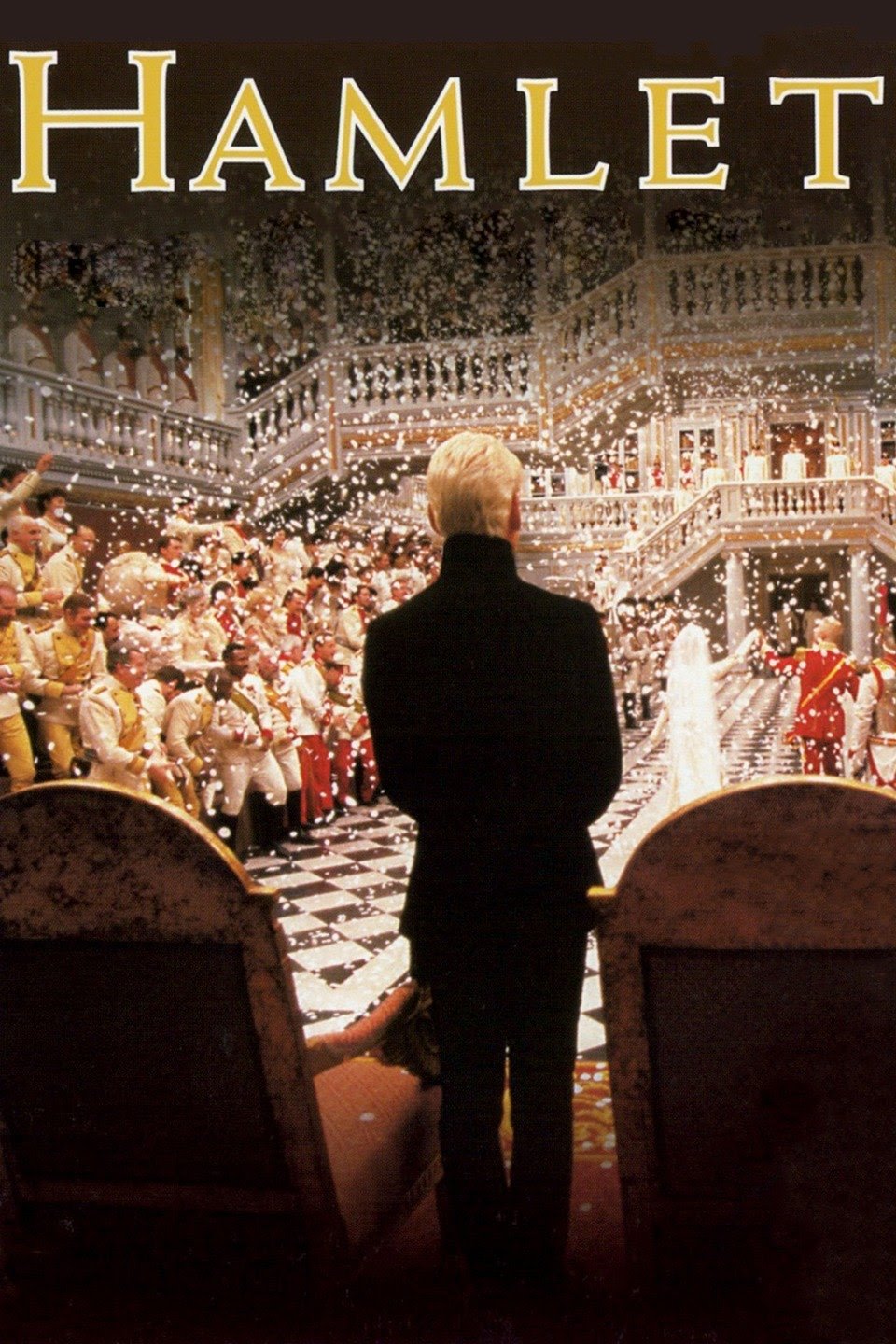
You probably saw this coming. I’ve made it clear in other posts that I absolutely love Branaugh’s Hamlet, after all his film was one of the first Shakespeare movies I ever saw and the first one I really enjoyed. I discuss in detail why I love this movie the best in my review of the film, but to summarize, I think the direction is incredible, the music is excellent, the cast is nearly perfect, and Branaugh himself puts a huge amount of love, craft, skill, experience, and maybe a little madness into his portrayal of the character. I know Branaugh isn’t everyone’s cup of tea; other Hamlets on this list might be more enjoyable, fun, or subtle, for you. But for me, Branaugh’s will always be my favorite.



























 The Shakespearean Student