The Shakespeare Authorship Controversy and Conspiracy Theories

“There is a tendency for us to view Shakespeare as this unquestionable monolithic genius. But there is also in us all that iconoclast that wants to tear him off his pillar or plinth.”

Dr. Katrina Marchant

There are few things that will drive a Shaespeaeran scholar more skull-shatteringly livid than when someone asks them if Shakespeare wrote the plays attributed to him. There are dozens of YouTube rants, bile-dripping academic papers, tinfoil-hat Tweets, and of course, centuries of anti-academic book bashing and counter-bashing research on the subject. So I won’t try to settle this debate, but I think the debate itself is worth looking at.

The authorship controversy is essentially a conspiracy theory- Was some unknown writer sending scripts to Shakespeare’s company and using the actor from Stratford as a patsy, or a pen name? Is there a massive cover-up to disguise the author of the most celebrated works in the English language? If so, why? How? and what else are they hiding?

The Malleus Malefecarum, “The Witch’s Hammer,” a 15th century book that posits that there is a vast conspiracy of witches living among us.

Now if there’s one thing I’ve learned over the past four years is that it’s extremely rare to change anyone’s mind about any kind of conspiracy theory, and there are hundreds! Ancient Aliens, Bill Gates, Covid vaccine microchips, Elvis isn’t dead, The Illuminati, Kennedy Assassination, Pizzagate, Q-Anon, Trump’s Russia connections, the list goes on. Several recent studies show that the majority of Americans have heard at least one conspiracy theory, and many of us believe these theories to varying degrees. Sadly, the internet, which was designed to share information, is extremely good at sending misinformation as well.

So as an en educator and a father, I want to focus on the Shakespeare conspiracy not just because it gets my dander up, but also because, compared to these other theories, it is actually one of the least harmful. Conspiracies like the Plandemic hoax are extremely dangerous because they dissuade people from getting a life-saving treatment, and allow this pandemic to continue. By contrast, ultimately it doesn’t really matter who wrote Shakespeare’s plays, so I think this kind of exercise is useful for educators to challenge students to think critically about this low-stakes theory, and then applying the same skill to others to become better-informed thinkers.

How to break down the Shakespeare conspiracy theory

First, let’s summarize the most compelling points of the theory that Shakespeare didn’t write his plays. This is a video by director Roland Emmerich, which he made to help promote his film “Anonymous.” Emmerich dramatizes the controversy by portraying the Earl of Oxford writing the plays of Shakespeare anonymously, and sending them to Shakespeare’s company, giving the man from Stratford credit for writing them.

There’s an old saying in science that “Extraordinary claims require extraordinary proof,” and, aside from the fact that the Earl of Oxford wrote poems, there is no evidence that Oxford ever even spoke to Shakespeare’s company. In fact, almost none of this video is supported by any historical evidence. Now it would be a lot of work to refute each argument of this video point by point right? And surely I have better things to do than do a point-by-point refutation, but…

A Point-by Point refutation of the Roland Emmerich video:

– Shakespeare did leave evidence of his handwriting, just not evidence of his dramatic writing. The fact that his correspondence didn’t survive doesn’t mean there wasn’t any. The kind of cheap parchment that writers of the period used dissolved very easily, especially when they used ink with high iron content. The examples we have of Shakespeare’s writing are mainly legal records and books that were designed to last. In short, there’s no conspiracy to hide Shakespeare’s manuscripts, they simply didn’t survive.

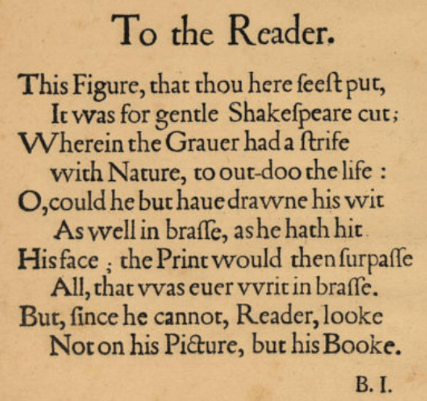
The dedication page of the 1623 First Folio.

We don’t know for sure that his parents were illiterate, or that his daughters were. That is based on an urban legend, not actual proof. Also, plays were not written to be read, that’s why TV viewers are viewers and the grounding are called an audience.

A. Shakespeare wrote about aristocratic people because they were paying his rent. His company was literally named “The Lord Chamberlain’s Men.” One reason why Shakespeare was more successful than Ben Johnson was that he was deferential and obsequious to the English aristocracy; he had to sing their praises to stay in business.

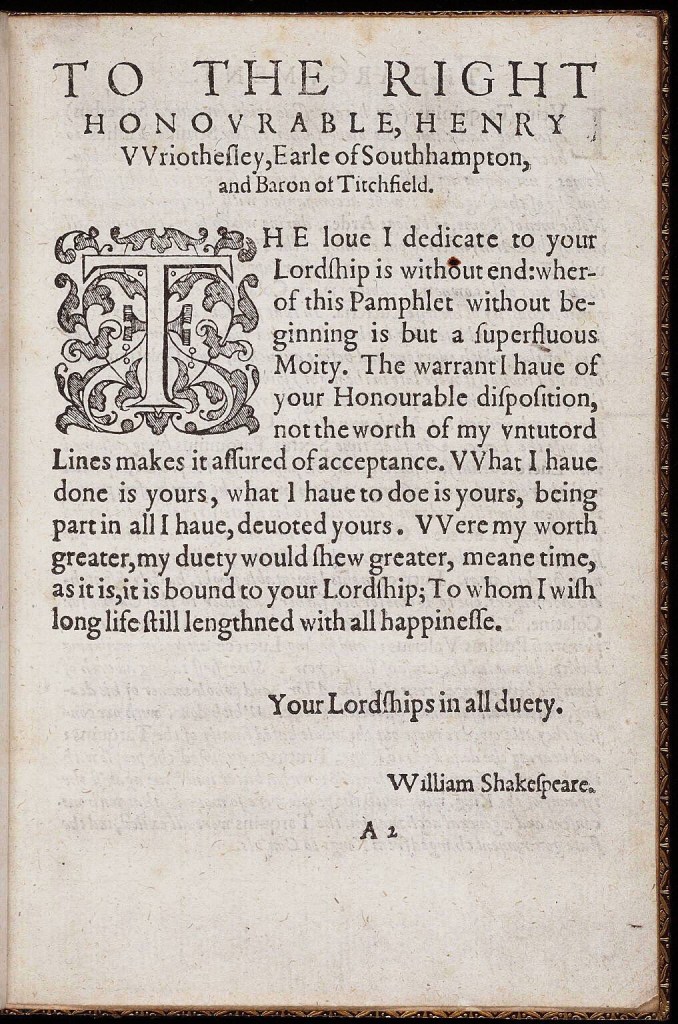
Dedication page of Venus and Adonis, which Shakespeare wrote to the Earl Of Southampton.

B. Every character that Emmerich mentions is not an aristocrat- Bottom is a lower-class weaver, Mistress Overdon is an inn-keeper. The only aristocrats Shakespeare ever insults are Polonius (who isn’t real), and Sir John Oldcastle in the early draft of King Henry IV, which he immediately changed to Sir John Falstaff once Oldcastle’s family members complained about it to Shakespeare’s company. Emmerich is flat-out lying when he says Shakespeare mocks the English upper class like an equal.

C. There’s a very simple explanation of how Shakespeare was able to write about the manners and lives of the English aristocratic class: he didn’t. All of Shakespeare’s comedies (except for Merry Wives which has the aforementioned Falstaff as a character), and tragedies take place in other countries like Italy, France, Sicily, or Greece. His History plays are set in England, but they dramatize events that happened 100-200 years before Shakespeare was born, meaning that he didn’t need to know too much about contemporary court politics. Furthermore, the majority of the plots he used were recycled from history books, poems, and prose romances.

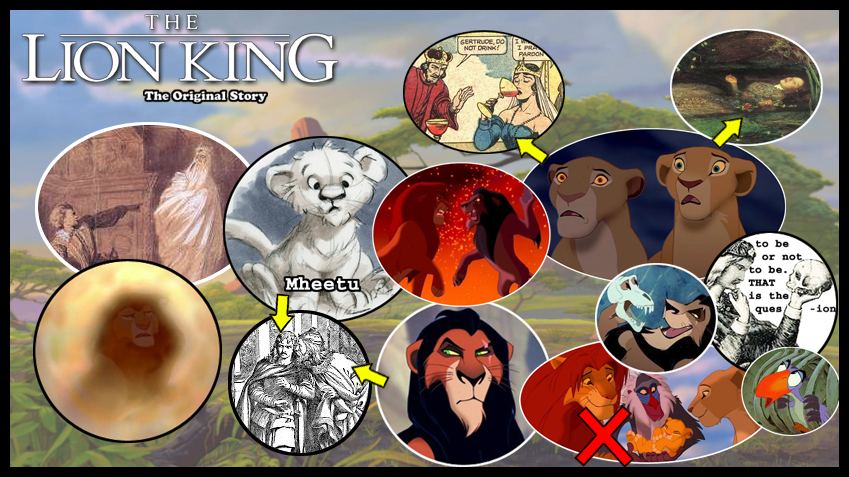
It’s useful to think of Shakespeare not as a novelist like Dickens or Tolstoy and more like a TV or film screenwriter like George Lucas or Aaron Sorkin. He didn’t write based on real-life experiences or conjure new ideas out of thin air. He was a popular dramatist who adapted existing works of literature to be dramatized onstage. This is why I created my YouTube comedy series “If Shakespeare worked for Disney.” Emmerich, like many Anti-Stratfordians, is assuming that Shakespeare couldn’t have written plays about the nobility without being one himself, but that’s not what Elizabethan dramatists did- they adapted pre-existing work to fit on the public stage, which means anyone with a good education and knowledge of the theater could have written them, regardless of his or her upbringing.

If you are wondering how I could possibly know Shakespeare’s writing process,, the answer is simple: All of Shakespeare’s sources have survived, which means that I can prove that his plays are adaptations. This is a common problem with most conspiracy theories- they never take the straightforward way to explain something. Instead, they take a theory and twist facts to suit that theory. In this case, they twisted the facts about the Earl of Oxford’s life to make him look like Hamlet and based on that, they made him look like the true author of Shakespeare.

D. Honestly the handwriting is the weakest point- yes Shakespeare spelled his name differently in documents but this was before standard English spelling. The first English dictionary was at least 100 years after Shakespeare’s death. This point is clearly designed to discredit Shakespeare and make him seem uneducated. But again, this point is irrelevant when you consider that Shakespeare wrote for theater, where standard spelling is completely unnecessary.

By the way, Ben Johnson spelled his name differently in his manuscripts.

The Debate- Feelings vs. Facts. Modern vs. early modern

When I was in high school, taking my first class on Shakespeare, I watched this documentary which almost convinced me that Oxford was the true author of Shakespeare. The researcher they interviewed seemed so passionate and I wanted to believe what he said was true. But that was before I started reading about Shakespeare’s life for myself, and looked at the evidence myself.

How to Spot a Conspiracy Theory

https://allianceforscience.cornell.edu/conspiracy-theory-handbook/

The common traits of Conspiracy Theories from the Conspiracy Theory Handbook

If you look at many different conspiracy theories, they often exist in a form outside of normal reality, to the point where the believers have no interest in any kind of contrary evidence, logic, or any person who even questions it. Essentially the conspiracy becomes their identity, and they will virulently defend this conspiracy from anyone and anything that opposes it. Below is an explanation of the basic parts of a Conspiracy theory, with some points on how they all apply to the Shakespeare Authorship Controversy

Contradictory Beliefs:

Believers in conspiracies are motivated by feelings, not facts, and they don’t care how inconsistent those theories are. For example, the same people who believe Joe Biden lost the presidential election, also believe that the president (Joe Biden) is also being played by an actor. This might explain why many people believe that people like Christopher Marlowe wrote the works of Shakespeare, despite the fact that he died 9 years before Shakespeare started writing.

Overriding suspicion:

Again, since the believer is motivated by feelings, they are naturally suspicious of any contrary evidence and just assume anyone who contradicts them is in on the conspiracy. This is called self-sealing the conspiracy.

Nefarious intent:

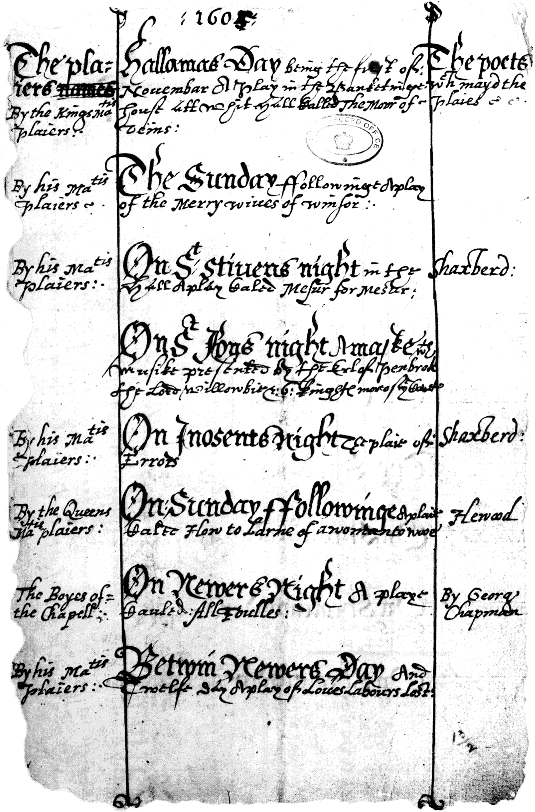
One question that inevitably comes up with the Shakespeare Authorship debate is: “Who cares?” Usually, this means “Does it really matter who wrote the plays?” However, I want to use this question in this context: “Why go through the trouble to conceal who wrote these plays?” As I mentioned earlier, though Shakespeare is very famous and culturally important now, he certainly wasn’t back in his lifetime. Playwriting was not a venerated profession, and socioeconomically, Shakespeare was little better than a tailor. Why would it be worth it to conceal who wrote a few, fairly popular plays in 1616?

It would take an enormous amount of effort to conceal who wrote these plays for 400 years- you’d have to pay off publishers, fake court records (like the one I showed you above), keep an entire court quiet, and make sure nobody ever wrote down the truth for 400 years. Why would it be worth it? This kind of logic is why the Moon Landing and the Flat Earth conspiracies don’t hold up to rational thought- there’s simply no reason to go through the effort of concealing the alleged truth. The truth itself is just easier to defend.

Something Must be wrong:

As the name implies, Anti-Stratfordians don’t so much believe in Bacon, Pembroke, Oxford, etc, so much as they actively choose not to believe in William Shakespeare of Stratford. This means they will use every bit of their energy trying to prove that theory, and won’t stop until they find something, no matter how nonsensical, to prove their Shakespeare is the real Shakespeare.

Persecuted victim:

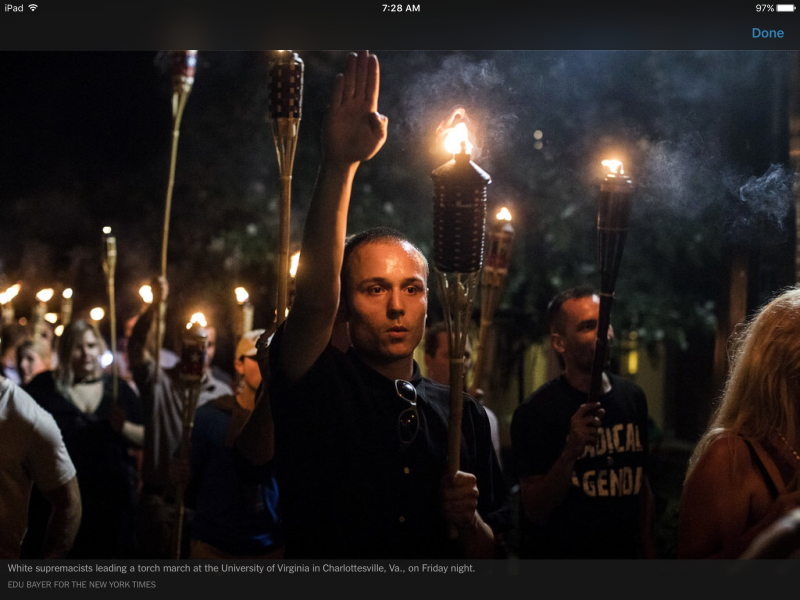
Let me be blunt- a conspiracy is very simmilar to a delusion, and any attempt to shatter that delusion is a form of persecution for the conspiracist. The most infamous example of how conspiracy theorists can feel persecuted and empowered at the same time is the way it permeated Nazi Germany and neo-Nazi units. Hitler came to power by spreading the theory that the Jews were secretly controlling the world and Germany was persecuted, while at the same time, Germany was destined to control the world in the eyes of the Nazis. I mention this not because I think Anti-Stratfordians are Nazis (how could I watch I Claudius otherwise?), but that conspiracy theories are potentially very dangerous because they foster a self-serving victim mentality where people are constantly looking for someone to blame for their problems and they will sometimes become violent against anyone who challenges them.

Immune to Evidence

One of the most important concepts in law is the notion that someone is ixznnocent until proven guilty. Along those lines, the prima facie, the accepted truth is accepted as truth, until new evidence contradicts it. If you look at the Supreme Court mock trial for the Authorship question back in 1987, that was the conclusion they came to in the end. Though little historical evidence for Shakespeare has survived, there is NO PHYSICAL evidence that contradicts it, so in the interest of prima facie evidence, they ruled for Shakespeare.

Now real conspiracy believers never believe in the merits of contrary evidence. They will just assume it is manufactured or faulty; part of the attempts of those nefarious truth concealers to pull the wool over their eyes.

Re-Interpreting Randomness

I’ve seen many people claim that the evidence for conspiracies is not found in documents or in scientific explanation, it’s in some kind of code or cipher or series of clues that only the believers understand. As you’ll see below, some of the most famous Anti-Stratfordians claimed to find hidden codes and ciphers in Shakespeare’s plays that prove that he was concealing his true identity. They will also cite coincidental details like the fact that the crest of Edward DeVere was an eagle shaking a spear, and claim this proves his identity as the true author of the plays. When you see a theory like like this, remember, correlation is not causation. Just because a few bad things happened when a few people said “Macbeth,” does not mean Macbeth is cursed. Some things actually are coincidences and not everything has a dramatic or sinister cause. This brings me to my next point:

The real enemy of conspiracies: Disappointing facts (Spoilers ahead for the movie “Coco”)

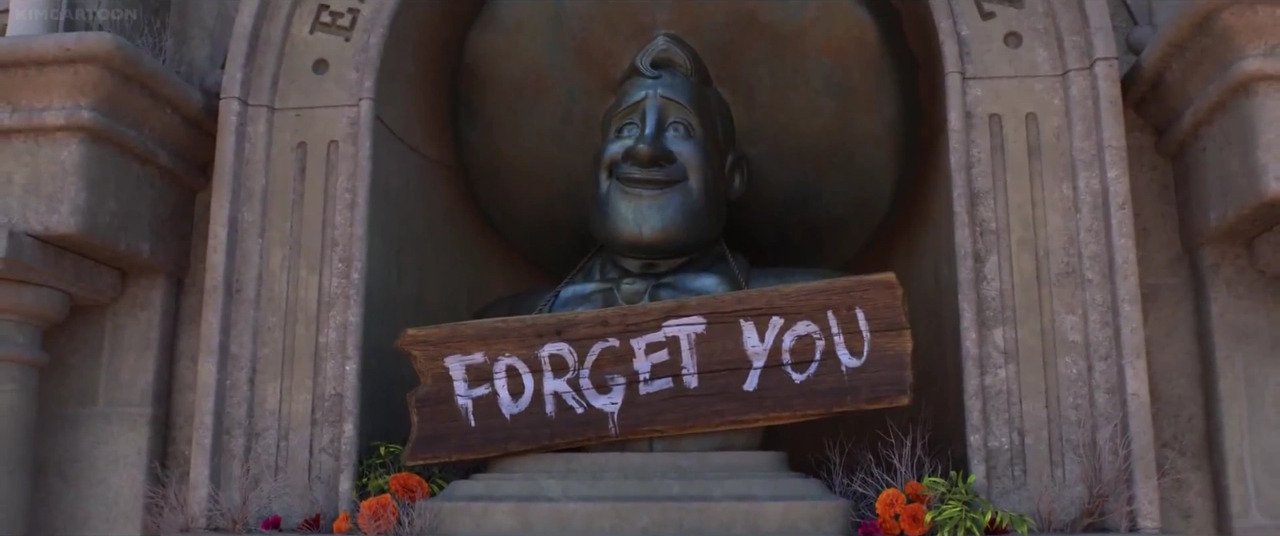
Let’s do a little thought experiment: Let’s imagine that you were Miguel from Disney’s Coco, and you discovered that your hero Ernesto Dela Cruz murdered your grandfather Hector, but (unlike in the movie), he actually DID write the songs he said he did. How would you feel about Hector? Would you hope and pray that Ernesto lied and your virtuous grandfather was the real author? Might you even concoct a conspiracy theory to rewrite Ernesto’s history and get Hector celebrated as the real author of “Remember Me?”

I’m not suggesting that Shakespeare is guilty of murder, or any other crime (apart from usury, hoarding grain, and a few minor tax violations). What I’m trying to do is to draw parallels between two men who are icons that are beloved by their hometowns, who created work that resonates with a lot of people.

We all have a tendency to take people we admire and put them on pedestals, (like the quote at the beginning mentions), and many people try to identify with their heroes. This is really easy with Shakespeare because most of the personal details of his life have vanished, so we can imbue him with our own sensibilities. Case in point- when Mya Angelou read Shakespeare’s sonnets as a little girl, she initially thought that he was a black girl. Likewise, Eugene O’Neill and other Irish and Irish American writers have thought he might be been Irish.

Some of the most outrageous anti-Stratfordians clearly have an axe to grind because they have a family connection (real or imagined) to the man they believe to be Shakespeare. In the 19th century, Delia Bacon wanted to prove that the real author of Shakespeare’s plays was the 17th-century poet, philosopher, and essayist, SIR FRANCIS BACON. Ms. Bacon hated Shakespeare because she thought he was an illiterate sheep-poaching commoner. She, therefore, used her theory to hoist Shakespeare off his literary pedestal, and therefore elevate herself because she believed she was descended from Sir Francis (though in reality, she wasn’t).

Rather than using any kind of historical evidence to prove her theory, Ms. Bacon claimed there was an elaborate code hidden in the iambic pentameter. Subsequent literary pseudo-scholars have attempted to hack the code and prove that they can prove that Sir Francis was the real author of the plays. In the late 1800s, American politician and author Ignatius Donnelly appropriated Ms. Bacon’s theory and claimed he had found the code, which rested on the pagination of the First Folio.

Donnelly had a knack for spreading conspiracy theories; as the title page of his book shows, he also authored a book where he claimed he correctly identified the location of the lost city of Atlantis. He also hated Shakespeare because Donnelly believed he was nothing more than a businessman, exploiting the talent of others, so like Bacon, he cooked up these ‘facts’ to suit his theory in order to take Shakespeare down.

Like many conspiracy theories, Anti-Stratfordians don’t have any factual basis for the ideas they hold, they are responding to an emotional need or desire. Donnelly and Bacon wanted fame, recognition, and revenge against a man they hated. J. Thomas Looney, who proposed that the Earl of Oxford wrote Shakespeare, wanted a ‘fairy prince’ that is, a semi-mythical Bard who would lead England into a golden age. All these people were dissatisfied with the man from Stratford, so they created a Shakespeare of their own, and tried to justify his existence.

Title page of the 1623 Folio, the first complete edition of Shakespeare's plays.
Title page of the 1623 Folio, the first complete edition of Shakespeare’s plays.

To briefly sum up why the Bacon/ Donnelly theory is false, it hinges on the page numbers of the Folio, but Shakespeare didn’t print the first Folio. If you look at the title page, it was assembled by two actors from Shakespeare’s company- Henry Condell and John Hemmings, and it was printed by Isaac Jaggard, the same man who printed Shakespeare’s Sonnets in 1609. Writers had no say in how their work was printed and in fact Jaggard actually printed the sonnets without Shakespeare’s permission! The notion that Jaggard had any interest in properly printing a secret code in the pages of his posthumous book seems to me, incredibly unlikely at best.

Lesson plan

I’ve adapted a lesson plan about conspiracy theories to include a discussion of the Shakespeare authorship question. I’ll also include a worksheet that you can use in your classroom to distribute among your students if you choose to use it as well. I think it’s a good way to foster critical thinking, scientific reasoning, and historical curiosity, and if it prevents more people from joining Q-Anon, so much the better!

This lesson plan makes use of the Conspiracy Theory Handbook, and it has great, easy to read activities about how to spot a conspiracy theory, how to talk to a conspiracy theorist, and how to avoid being taken in by a conspiracy.

Sources:

https://www.americanprogress.org/press/release/2020/10/13/491521/release-new-survey-shows-conspiracy-theories-thriving-u-s-election-nears/:

https://www.forbes.com/sites/rainerzitelmann/2020/06/29/how-many-americans-believe-in-conspiracy-theories/?sh=62b9725d5e94

https://www.c-span.org/video/?618-1/shakespeare-author-pseudonym#

What Shakespeare play are you?

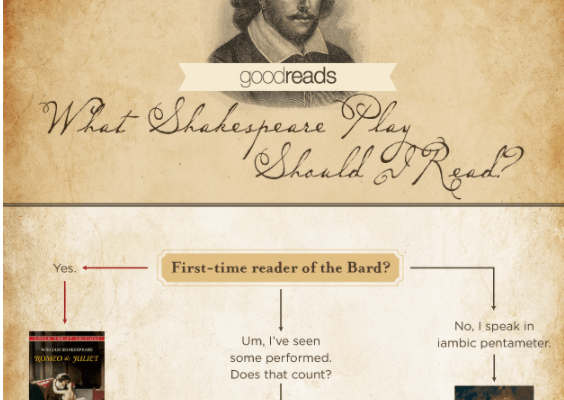
I found this awesome flowchart/ personality quiz on the website goodreads.com that helps you determine what is your perfect Shakespeare play:

Which Shakespeare play Should I Read from Goodreads.org

https://www.goodreads.com/blog/show/415-what-shakespeare-play-should-i-read-an-infographic

So now I want to hear from you! I want you to take the quiz and tell me what play you get! You can respond to me via the comments on www.shakespeareanstudent.com, or on Twitter at @shakestud. Can’t wait to hear from you!

The Ides of March

A historical Account

However, the Romans gave way before the good fortune of the man and accepted the bit, and regarding the monarchy as a respite from the evils of the civil wars, they appointed him dictator for life. This was confessedly a tyranny, since the monarchy, besides the element of irresponsibility, now took on that of permanence

Patrick Stewart (Cassius), convinces Brutus (Ian Richardson), to betray Caesar, RSC, 1970

Under these circumstances the multitude turned their thoughts towards Marcus Brutus, who was thought to be a descendant of the elder Brutus on his father’s side, on his mother’s side belonged to the Servilii, another illustrious house, and was a son-in‑law and nephew of Cato. 2 The desires which Brutus felt to attempt of his own accord the abolition of the monarchy were blunted by the favours and honours that he had received from Caesar. 3 For not only had his life been spared at Pharsalus after Pompey’s flight, and the lives of many of his friends at his entreaty, but also he had great credit with Caesar. 4 He had received the most honourable of the praetorships for the current year, and was to be consul three years later, having been preferred to Cassius, who was a rival candidate. 5 For Caesar, as we are told, said that Cassius urged the juster claims to the office, but that for his own part he could not pass Brutus by.105 6 Once, too, when certain persons were actually accusing Brutus to him, the conspiracy being already on foot, Caesar would not heed them, but laying his hand upon his body said to the accusers: “Brutus will wait for this shrivelled skin,”106 implying that Brutus was worthy to rule because of his virtue, but that for the sake of ruling he would not become a thankless villain. 7 Those, however, who  p589 were eager for the change, and fixed their eyes on Brutus alone, or on him first, did not venture to talk with him directly, but by night they covered his praetorial tribune and chair with writings, most of which were of this sort: “Thou art asleep, Brutus,” or, “Thou art not Brutus.”107 8 When Cassius perceived that the ambition of Brutus was somewhat stirred by these things, he was more urgent with him than before, and pricked him on, having himself also some private grounds for hating Caesar; 

So far, perhaps, these things may have happened of their own accord; the place, however, which was the scene of that struggle and murder, and in which the senate was then assembled, since it contained a statue of Pompey and had been dedicated by Pompey as an additional ornament to his  p597 theatre, made it wholly clear that it was the work of some heavenly power which was calling and guiding the action thither.

Well, then, Antony, who was a friend of Caesar’s and a robust man, was detained outside by Brutus Albinus,110 who purposely engaged him in a lengthy conversation; 5 but Caesar went in, and the senate rose in his honour. Some of the partisans of Brutus took their places round the back of Caesar’s chair, while others went to meet him, as though they would support the petition which Tulliusº Cimber presented to Caesar in behalf of his exiled brother, and they joined their entreaties to his and accompanied Caesar up to his chair. 6 But when, after taking his seat, Caesar continued to repulse their petitions, and, as they pressed upon him with greater importunity, began to show anger towards one and another of them, Tullius seized his toga with both hands and pulled it down from his neck. This was the signal for the assault. 7 It was Casca who gave him the first blow with his dagger, in the neck, not a mortal wound, nor even a deep one, for which he was too much confused, as was natural at the beginning of a deed of great daring; so that Caesar turned about, grasped the knife, and held it fast. p599 8 At almost the same instant both cried out, the smitten man in Latin: “Accursed Casca, what does thou?” and the smiter, in Greek, to his brother: “Brother, help!”

9 So the affair began, and those who were not privy to the plot were filled with consternation and horror at what was going on; they dared not fly, nor go to Caesar’s help, nay, nor even utter a word. 10 But those who had prepared themselves for the murder bared each of them his dagger, and Caesar, hemmed in on all sides, whichever way he turned confronting blows of weapons aimed at his face and eyes, driven hither and thither like a wild beast, was entangled in the hands of all; 11 for all had to take part in the sacrifice and taste of the slaughter. Therefore Brutus also gave him one blow in the groin. 12 And it is said by some writers that although Caesar defended himself against the rest and darted this way and that and cried aloud, when he saw that Brutus had drawn his dagger, he pulled his toga down over his head and sank, either by chance or because pushed there by his murderers, against the pedestal on which the statue of Pompey stood. 13

And the pedestal was drenched with his blood, so that one might have thought that Pompey himself was presiding over this vengeance upon his enemy, who now lay prostrate at his feet, quivering from a multitude of wounds. 14 For it is said that he received twenty-three; and many of the conspirators were wounded by one another, as they struggled to plant all those blows in one body.

-Plutarch’s Life Of Caesar

Artwork

Video 📹

Commentary

James Shapiro in his book 1599, addresses the common complaint that in the play that bears his name, Julius Caesar dies halfway through the play and has little time onstage to make a connection with the audience. The play is about tyrananicide, what causes it, what it looks like, and especially its aftermath. In a time when Jesuits and Catholic radicals threatened to assassinate Queen Elizabeth, Shakespeare wrote a powerful story about how fragile government systems can be; how striking the head off Rome leads to anarchy and sometimes tyranny.

Shakespeare Week Is Coming at Outschool.com

Outschool.com will be honoring the contributions of Shakespeare during the very first Shakespeare Week on March 21-27th.

I’m honored to take part in this celebration, and I’m offering several aclasses which relate to Shakespeare in an engaging way. Here’s the schedule below:

If you want to sign up for one of my classes, please visit my Outschool page:

https://outschool.com/teachers/The-Shakespearean-Student

https://outschool.com/teachers/The-Shakespearean-Student

Hope to see you during Shakespeare Week!

The Roman Army Under Julius Caesar

Julius Caesar’s success as a politician was deeply tied to his success as a military leader. Therefore studying the Roman army during Caesar’s life helps one understand why he was so popular and why the Senate wanted him dead.

With The Seventh, Eighth, And Ninth Legions, The Tenth - Military Uniform (1000x475), Png Download
Uniforms of the 10th Legion (Julius Caesar’s Legion) during Caesar’s life, the reign of Augustus, and afterwards.

Caesar was commander (or legatus legionis) of the 10th mounted legion, which means his soldiers were mounted on horseback. Caesar was in charge of maintaining control over the warring tribes in Gaul (modern day France). Each legion was organized into 6 companies (cohorts) of 100 men, led by a Centurian, Source : http://thedioscuricollection.com/ejercito_romano_en.php

Organization of the 10th Legion. As you can see from the key below, each company of 80 to 100 men is led by a Centurian, and each company has 3 Tesserarius (watch commanders)

According to Imperiumromium.com, Caesar helped reform his army, and his Centurians carried out many different campaigns in Gaul:

As you can see, his soldiers were mainly armed with helmets, leather armor, and their large shields and Gladius swords. Below is an exploration of the different parts of the Roman uniform:

https://costumes.lovetoknow.com/roman-soldier-uniform

“What Lenten Entertainment”

Shakespeare, Shrove Tuesday, and lent

What is Shrove Tuesday?

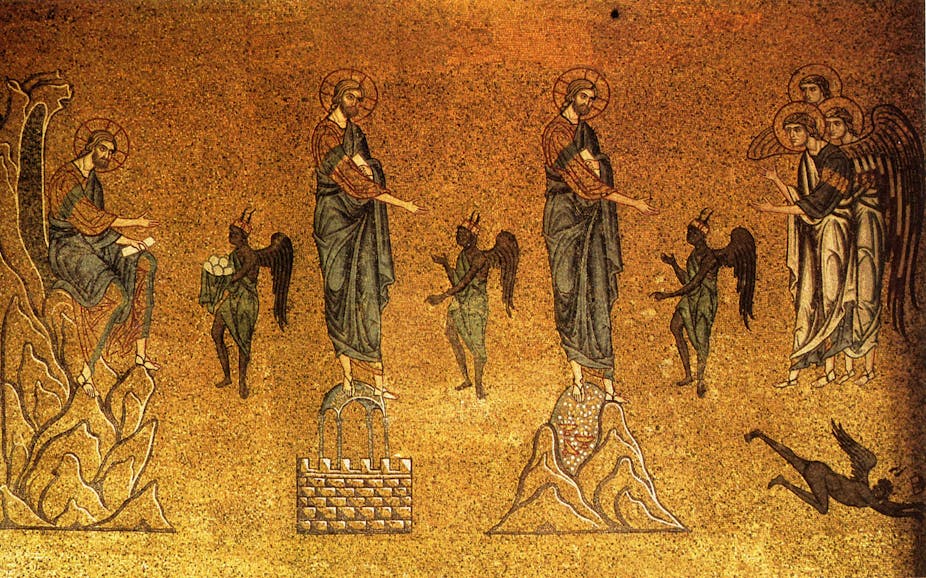
Forty days in the wilderness: Temptations of Christ, St Mark’s Basilica.

According to the Christian calendar, today (Tuesday) is Shrove Tuesday AKA fat Tuesday, AKA pancake day, AKA Fasnacht Day, (if you live in Pennsylvania ) It is the season that commemorates the time in Jesus Christ fasted in the desert for 40 days, then he then entered Jerusalem with his followers, had his last meal the last supper was betrayed by Judas. was crucified, died and ascended to heaven on Easter Sunday.

Every aspect of the Easter story from Christ’s entry to Jerusalem to the Holy Thursday celebration of the Last Supper, to his death and the cross on Good Friday has been ritualized by the Catholic and many Protestant churches. Incidentally, Holy Thursday is determined by the Jewish calendar, which is in itself coordinated by the Paschal moon, the last full moon before the Vernal Equinox.

Growth and fertility; pain and pleasure, privation, and excess, things dying and things born. These extreme states of being and the dramatic stories of Christ’s passion are, of course, very good theater, so it’s no wonder that Shakespeare would choose to incorporate the themes and motifs of Shrove Tuesday into his plays.

Shakespeare and Shrove Tuesday

Pieter Bruegel the Elder- The Fight between Carnival and Lent detail 3.jpg
Peter Bruegel the Elder- The Fight Between Shrove Tuesday and Lent, 1559. Notice on the left there is a pancake supper and a rotund man playing a song on a stringed instrument, while on the right there is an emaciated woman wearing an austere head covering.

Shakespeare loved pancakes!

Shakespeare uses a lot of Christian imagery and theology in all of his plays but he also specifically refers to Shrove Tuesday, with its pancake suppers, use of theatrical disguise, and carefree attitude. He also refers to Lent, and the threadbare and lean times it represents. In a general sense, a lot of his plays deal with the swinging back-and-forth of Time, where society is simultaneously getting ready to purge itself of sin and deny itself of pleasure. I thought I’d explore that by taking a look at some examples of text Shakespeare that deal with these themes.

First, let’s talk about Shrove Tuesday; in As You Like It, Touchstone makes reference to eating pancakes, traditional food for Shrove Tuesday in a lot of Christian communities. There are variations like donuts and fasnachts, but the idea is to eat up the fat and oil in your house. This is because to begin the start of length a time when Christians are supposed to abstain from fat, people would use the remaining oil and butter in their houses to have pancake suppers.

This modest pancake supper is one tradition of Shrove Tuesday, but there are many more elaborate ones. As I mentioned Shrove Tuesday goes by many names but the most extreme and extravagant celebration of the purging of sin in preparation for Lent is, of course, Mardi Gras. The celebration of Mardi gras in New Orleans is an offshoot of the Shrove Tuesday tradition which is why it is often celebrated as an extravagant party with food, drink, and sometimes lewd behavior. Sometimes, Mardi Gras celebrations even incorporate Shakespeare plays as a theme:

Masks and Mardi Gras

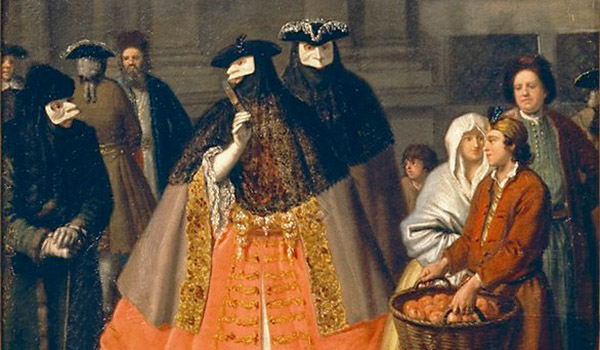
As you can imagine getting the chance to purge yourself from sin and do things that you wish you wanted to do might make you a bit self-conscious which is why traditionally in a lot of cultures mardi gras is celebrated by the wearing of masks where people can hide their faces, and adopt an extreme personality, and indulge in dancing and drinking. Venice is another city famous for its Mardi Gras celebrations and Shakespeare uses this tradition heavily in his play The Merchant Of Venice.

Shakespeare’s debt to Italy

First of all, credit where credit is due, many of Shakespeare’s comic characters are directly inspired from character types created in a form of Italian comedy called “Commedia Del’Arte-” The Comedy of Art. These were short improvised vignettes where performers donned masks and acted out a sort of improvised skit. Each actor spent years learning the voices and mannerisms of these stock characters like the scheming maid, (Columbina) the crafty servant (Arlequinno or Harlequin), or the greedy, dishonest innkeeper Brighella, who might have influenced Shylock himself. If you click on this website, there are some great scholarly articles about Commedia’s influence on Shakespeare, and how these characters helped forge all of his comedies, not just Merchant Of Venice.

Masks and Venetian culture

As this video from the Youtube historian Metatron explains, Commedia masks were just one of the masks that were front and center in Merchant Of Venice. Masks were part of Venetian society, not just during Carnival, which allowed Shakespeare to make masks part of the plot of Merchant Of Venice.

It’s not explicitly said, but I believe Shakespeare sets Act II of The Merchant Of Venice during a Carnival masquerade revel, where young men danced through the streets wearing masks. This might very well be during a carnival celebration, which means the play might very well be taking place during the twin seasons of Easter for Christians and Passover for Jews. This might very well be what Shakespeare was intending, as this clashing of religious dogman is at the heart of the play.

First, there’s Graziano, Bassanio’s wild and raunchy friend. In this speech, he deftly parodies the duelling concepts of Shrove Tuesday and Lent, by promising to be austere, wise, and virtuous tomorrow, but not tonight, when he and his friend Lorenzo will be walking through the streets in their masks.

Bassanio. Why then you must. But hear thee, Gratiano;745
Thou art too wild, too rude and bold of voice;
Parts that become thee happily enough
And in such eyes as ours appear not faults;
But where thou art not known, why, there they show
Something too liberal. Pray thee, take pain750
To allay with some cold drops of modesty
Thy skipping spirit, lest through thy wild behavior
I be misconstrued in the place I go to,
And lose my hopes.
Gratiano. Signior Bassanio, hear me:755
If I do not put on a sober habit,
Talk with respect and swear but now and then,
Wear prayer-books in my pocket, look demurely,
Nay more, while grace is saying, hood mine eyes
Thus with my hat, and sigh and say 'amen,'760
Use all the observance of civility,
Like one well studied in a sad ostent
To please his grandam, never trust me more.
Bassanio. Well, we shall see your bearing.
Gratiano. Nay, but I bar to-night: you shall not gauge me765
By what we do to-night.
Bassanio. No, that were pity:
I would entreat you rather to put on
Your boldest suit of mirth, for we have friends
That purpose merriment. But fare you well:770
I have some business.
Detail, Conversation between Baute Masks, by Pietro Longhi (1701-1785); Museo Del Settecento Veneziano

While Gratziano and his friends are playing masquerade outside, Shylock instructs his daughter Jessica to shut up his doors and do not let the maskers in, or even look at them.

Merchant of Venice, Act II, Scene v.

It’s entirely possible that the play itself might very well conclude around the time of Easter which is especially significant considering that it ends with a scene that inverts, subverts, and questions the Passion story of Jesus.

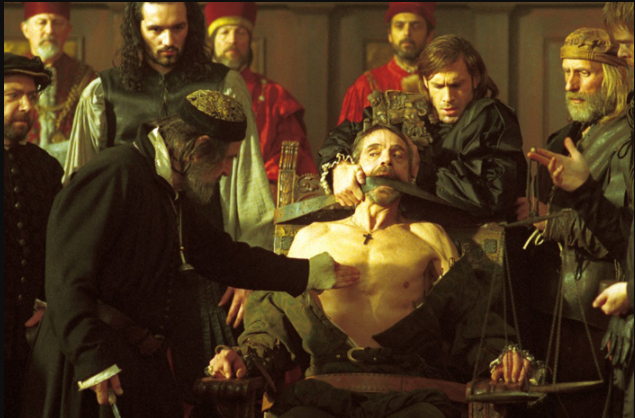
The courtroom scene from Merchant of Venice is almost a Passion Play in itself, where Shylock attempts to take a pound of flesh from the Christian Antonio, (who gives it as willingly as if he were Christ himself). Even though Jesus was crucified by Romans, for millennia the Jews were blamed for his death, and Shakespeare uses this anti-semetic imagery where Shylock stands in for the austerity of Mosaic law, rejecting the concept of divine Grace. Meanwhile, Portia is playing the judge, and she utters a poignant speech about mercy with almost God-like eloquence. This scene illustrates the established theological basis of Lent and Easter. According to Christian theology, the whole point of Lent is to remember and celebrate Christ’s sacrifice where we are redeemed from our sins. As she says, “We do pray for mercy, and that same prayer teaches us to render the deeds of mercy.” In a way, the sinful nature of mardi gras is not just a purging of human sin, it is also a way of acknowledging how far we fall short of God’s perfect ideals.

In that sense, Mardi Gras and Carnival are not a flouting or a rejection of Christian theology; it’s a reinforcement of it. Christians indulge in sin and acknowledge their sins the next day on Ash Wednesday, where they don black clothes and become contrite and this is our way of remembering Christ’s sacrifice and how necessary it was.

However, Shakespeare doesn’t have Antonio die like Christ, instead, it is Shylock the Jew who will metaphorically die and be reborn; he will convert to Christianity (and thus be dead to his former community), and his riches will give stability to Jessica and Lorenzo when Shylock dies. Shylock’s punishment at the end of the play is intentionally harsh and cruel, and many scholars have shown it as a demonstration of the limits of Christian mercy. Like the masks they put on every day, Venetian Christians seem pure and pious, but are inwardly corrupt and degenerate.

Shakespeare and Lent

You might have noticed that I used the word “purge” repeatedly in reference to what people do on carnival and mardi gras as a way of releasing their sins. The Purge movies do in fact have a basis in this concept. Traditionally the flowers that are part of purge days are actually given at Shrove tide. The Purge is also traditionally celebrated in mid March around the time of the vernal equinox, so the purge movies are a more extreme version of mardi gras, with the belief that the one illegal tendency people would indulge in alloed, would be murder, (which is a very bleak comment on human society).

What’s interesting is that Shakespeare creates his own sort of purging of society in his play Measure For Measure, and he creates a villain who is very much like an embodiment of um of lentin But

no man can is without sin and no and it is incredibly dangerous to assume that 1 Possibly making fun of her clothing and possibly also calling her a whore or a prostitute that that um you see it was traditional to eat Is the food a drink length until It’s a sexual It’s not as enjoyable and probably lower quality than the norm normal because of course the tradition of lent is a tradition of self denial and and in measure for measure he creates a character who is obsessed with his own piety and self denial the character of the judge Angelo in measure for measure he is a judge who is known for his piety and a society that is that it’s become too loose too loose to carnival ish and he is charged by the Duke who has chosen to Leave Vienna to with to become more dracodian to become more our strict and and legalistic and punish people use the fear of the law in order to command good behavior he sets the same standards for everybody else that he does for himself and that’s why the central conflict of the play is between him and Isabella whose brother who hasn’t committed any sins on stage but her brother Claudio is guilty of adultery well not no not guilty of adultery hes technically guilty of fornication in that he has consummated his marriage with the Woman before proceeding with the marriage rituals that I mentioned in my most recent Romeo Juliette portpost so hes being punished by 4 and a Kate for fornication fornication in in the the strictest and most technical definition of fornication he loves this woman he has made a pledge for her to be his wife legally they are married but it’s not good enough unless they make a formal request they get the consent of the parents and they and they are and they have a marriage ceremony performed in a church unless he does all of those things in Angelo’s mind he is guilty of fornication So you can see that Angelo has a stricter nature than most people would permit themselves and he is utterly and the concept of mercy is just as alien to hit him as it was to Shylock the main difference between the 2 characters that’s Angelo heights behind Christian piety not Jewish piety Ione and he turns out to be even more morally degenerate than Shylock because he is it is he is trying to manipulate uh manipulate Isabella in order to get her to sleep with him he wants to sleep with a nun because he thinks he deserves her he thinks that she is a reward for his piety

Angelo forgot what any person who celebrates mardi gras and ash Wednesday does that the purpose of lent is to remind ourselves that we are human know that we need mercy and to celebrate the sacrifice the Christ made so that we can continue to be human and not try to utter utterly lady destroy our imperfections that make us human so measure for meta The diconomy between Lynton and and a boccanelli or carnum Leonora carnival’s morals morals and in the end Isabella emerges from that crucible Victorious she defeats Angelo she exposes him as a failure as a failure she failure she ransoms her brother almost as definitely as Christ renziming humanity humanity and in the end she is offered the chance to either become a nun as she wanted or to become the Duke’s wife and therefore Queen of the whole country Taking a face value it looks like it seems like a fairy tale ending where this is the sort of person who should be governing somebody whose morality is tempered with mercy but but Shakespeare’s play is much Messier than that if you actually read it or see it performed formed it has Siri it’s a racist serious questions about how helpful oh helpful this this particular concept the concept is to women especially since Particularly when it comes to failings of the Flash in most productions I’ve seen you’ve Jew seen Juliet in measure for measure to for measure is as mocked and as disdained and is the and abused it’s viewed as Claudio is and Is life a reputation which is really all a woman had back in this period so Shakespeare does a good job of of showing the virtues of letting and carnival in Is illings of such rules it’s all very well and good to say we are allowed to be human man but very often women are set to higher standards than the men when it comes to if comes to standards of purity and piety

No hare, sir; unless a hare, sir, in a lenten pie,
that is something stale and hoar ere it be spent.
[Sings]
An old hare hoar,
And an old hare hoar,
Is very good meat in lent
But a hare that is hoar
Is too much for a score,
When it hoars ere it be spent.
Romeo, will you come to your father’s? we’ll
to dinner, thither.

–Mercutio, Romeo and Juliet

Lent and Measure FOr Measure

Conclusion

the Lenten season probably appealed to Shakespeare because much like “Twelfth Night” it is a season that momentarily subverts and then enforces the status quo. People indulge themselves in debauchery briefly, then commit themselves whole-heartedly to sobriety and piety. It shows the tendency towards the extreme in human nature, whether it be the grotesque, the sinful, the lusty, or even the austere. Like the masks at Carnival, we find these extremes of nature fascinating to watch as they dance before us and therefore, they also make for very good drama.