“Welcome Spirit, How Camest Thou hither?” The sources for Puck
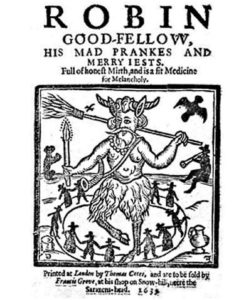
Puck, in medieval English folklore, a malicious fairy or demon. In Old and Middle English the word meant simply “demon.” In Elizabethan lore he was a mischievous, brownielike fairy also called Robin Goodfellow, or Hobgoblin. As one of the leading characters in William Shakespeare’s Midsummer Night’s Dream, Puck boasts of his pranks of changing shapes, misleading travelers at night, spoiling milk, frightening young girls, and tripping venerable old dames. The Irish pooka, or púca, and the Welsh pwcca are similar household spirits.
Shakespeare also took inspiration from English poet Edmund Spencer, who visited Ireland in the 1590s and adapted the folklore he picked up into his opera The Fairy Queen, which Shakespeare adapted into A Midsummer Night’s Dream
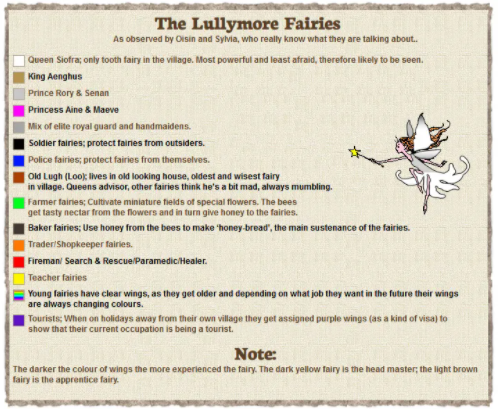
Types of fairies you can “spot” at the Lullymore Park in Ireland:
Puck/Robin’s Dual Nature
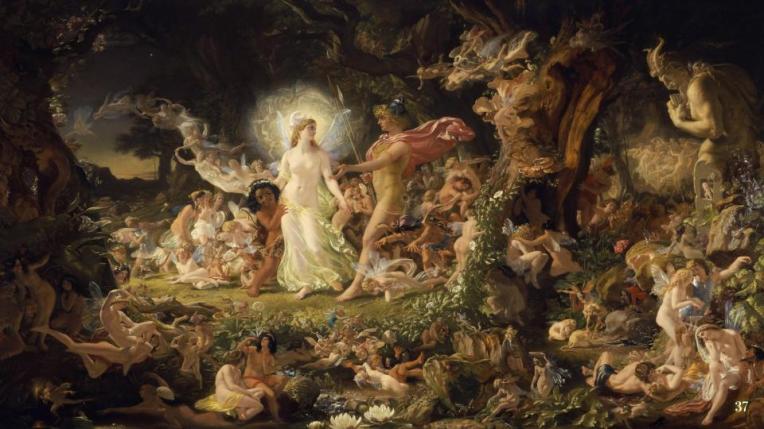
The old stories tell that Fairies are magical creatures who live in hollow places in the earth. Some are benevolent and help give rain and pleasant weather to the Earth, Like the king and Queen of the fairies, Oberon and Titania:
And the mazed world, By their [the tides] increase, now knows not which is which: And this same progeny of evils comes From our debate, from our dissension; We are their parents and original.
— Titania, (Queen of the Faries), A Midsummer Night’s Dream Act II, Scene i.
Titania in this speech shows great concern for nature, humanity, and the planet. She believes it is the responsibility of fairies, particularly herself and her husband Oberon, to control the elements and keep humans and fairies safe. Some fairies, however, are cruel and enjoy playing tricks on mortals, just like Puck in A Midsummer Night’s Dream, or Queen Mab in Romeo and Juliet.
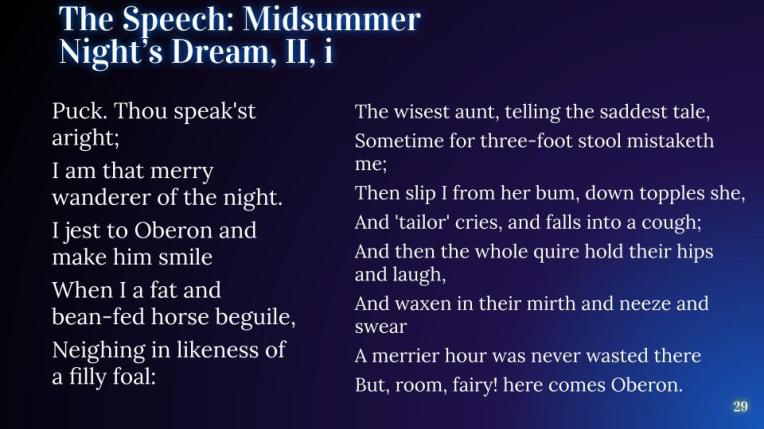
Close reading of Puck’s speech (MND II, i)
Close reading of Puck’s speech (MND II, i)
Close reading of Puck’s speech (MND II, i)
Close reading of Puck’s speech (MND II, i)
Close reading of Puck’s speech (MND II, i)
.
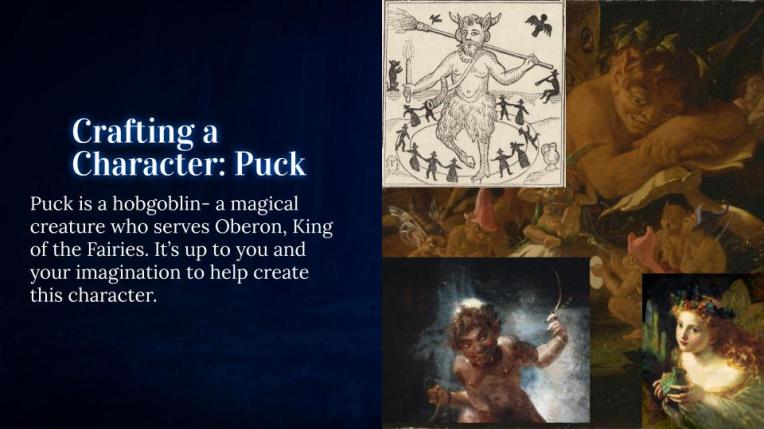
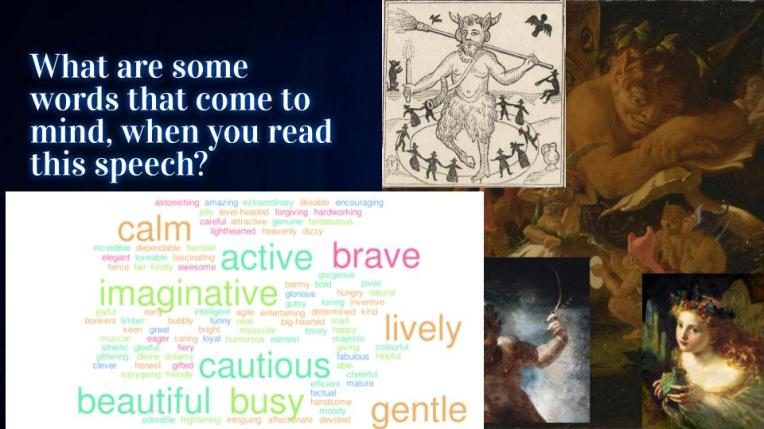
This is a short analysis I created of the tricks Puck plays on people in A Midsummer Night’s Dream, as part of my acting course on Ouschool.com. Note the different ways Puck is portrayed in photos as a satyr, a rotund elf, and sometimes as an almost- demon like figure.
Punishments or contracts with fairies formed a significant part of Goodfellow’s purpose on earth. While he could issue good fortune and support, this was always at the cost of those involved. As Reginald Scot commented, Goodfellow had a ‘standing fee’ of a ‘mess of white bread and milk’, which he expected after supporting housewives with their chores. If his payment was forgotten, Goodfellow was believed to steal from the home that owed him, often stealing grain and milk from the dairy.
Abigail Sparkes, Historic UK.com
Performing Puck
Because Puck is not human, and somewhat ambiguous in the text, an actor can play Puck in many different ways. Generally speaking, actors tend to explore Puck’s attitude toward humans, their love of mischief, and how to translate that physically and vocally
Puck. My mistress with a monster is in love. Near to her close and consecrated bower, While she was in her dull and sleeping hour, A crew of patches, rude mechanicals, Were met together to rehearse a play The shallowest thick-skin of that barren sort, Who Pyramus presented, in their sport Forsook his scene and enter’d in a brake When I did him at this advantage take, An ass’s nole I fixed on his head:
Anon his Thisbe must be answered, And forth my mimic comes. So, at his sight, away his fellows fly; And, at our stamp, here o’er and o’er one falls; He murder cries and help from Athens calls. I led them on in this distracted fear, And left sweet Pyramus translated there: When in that moment, so it came to pass, Titania waked and straightway loved an ass!
Playing a Disney princess is akin to playing a character in a William Shakespeare play. You’re not going to be the only one inhabiting the role, and chances are, you’re not even the first one to take on the part. These are characters that are bigger than one human being and that includes the people who wrote them in the first place. Figures like Ariel, Snow White, or Elsa endure for so long that they could never be tied down to just one performer.
Quote from DOUGLAS LAMAN ” The Untold Truth Of Brave.” Looper 2022
As I have done several times before on this site, I’m going to compare a Disney princess to a Shakespearean character, and if you’ve been paying attention, you can probably guess to whom I’m going to compare Merida, a Scottish woman who seeks counsel from a witch. That’s right, Lady Macbeth! But I’m not just going to write about how Macbeth is similar to Brave. In fact, I’m going to primarily focus on how they are not similar. I would argue that the film’s greatest strengths occur when it parallels and subverts a lot of the elements of Macbeth. I would further argue that the film’s greatest weakness is that it didn’t go far enough with these themes and ideas, and due to the film’s troubled (dare I say… CURSED) production history, it is frankly a bit unfocused and doesn’t have a successful conclusion because it didn’t commit to the ideas it set up at the beginning of the film.
Plot Summary
In medieval Scotland, a young princess named Merida (Kelly MacDonald), is strong, a skilled fighter, and a superlative archer. Yet, these skills are irrelevant and invisible to her mother Queen Elinor (Emma Thompson), who believes that a princess should strive to be beautiful, poised, diplomatic, and willing to sacrifice her own freedom for the good of the realm. This is why she has positioned her daughter, the heir to the throne, to marry one of her father’s allies, which she has no interest in doing.
Merida chafes at her mother’s controlling nature and wishes to change her fate. First, she defies her mother openly by challenging her suitors to an archery contest, and (in a glorious mash-up of Robin Hood and Odysseus), she defeats them all with three excellent bullseyes!
Faced with her child’s rebellion and the diplomatic disaster that her behavior caused, Ellinor is of course furious. Earlier in the film, Ellinor mentions that a selfish prince brought his whole kingdom into bloodshed and war because of an act of defiance like this. Mother and daughter have a bitter argument that causes Merida to leave home and try to change her fate a different way.
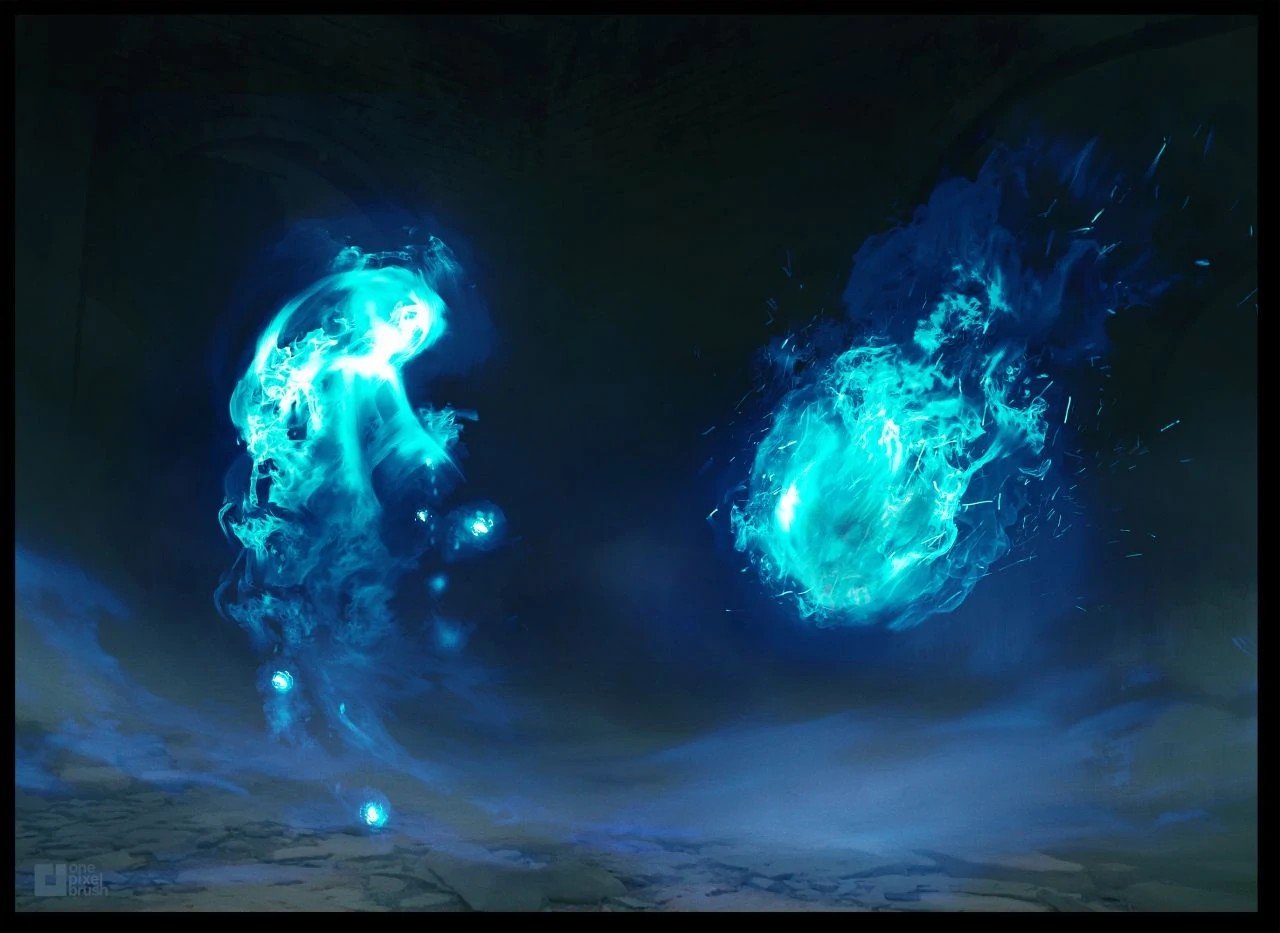
Merida follows the legendary Will O’the Wisp into the forest and meets a witch, who promises to brew her a potion to change her fate and….
Cover art for “Brother Bear”
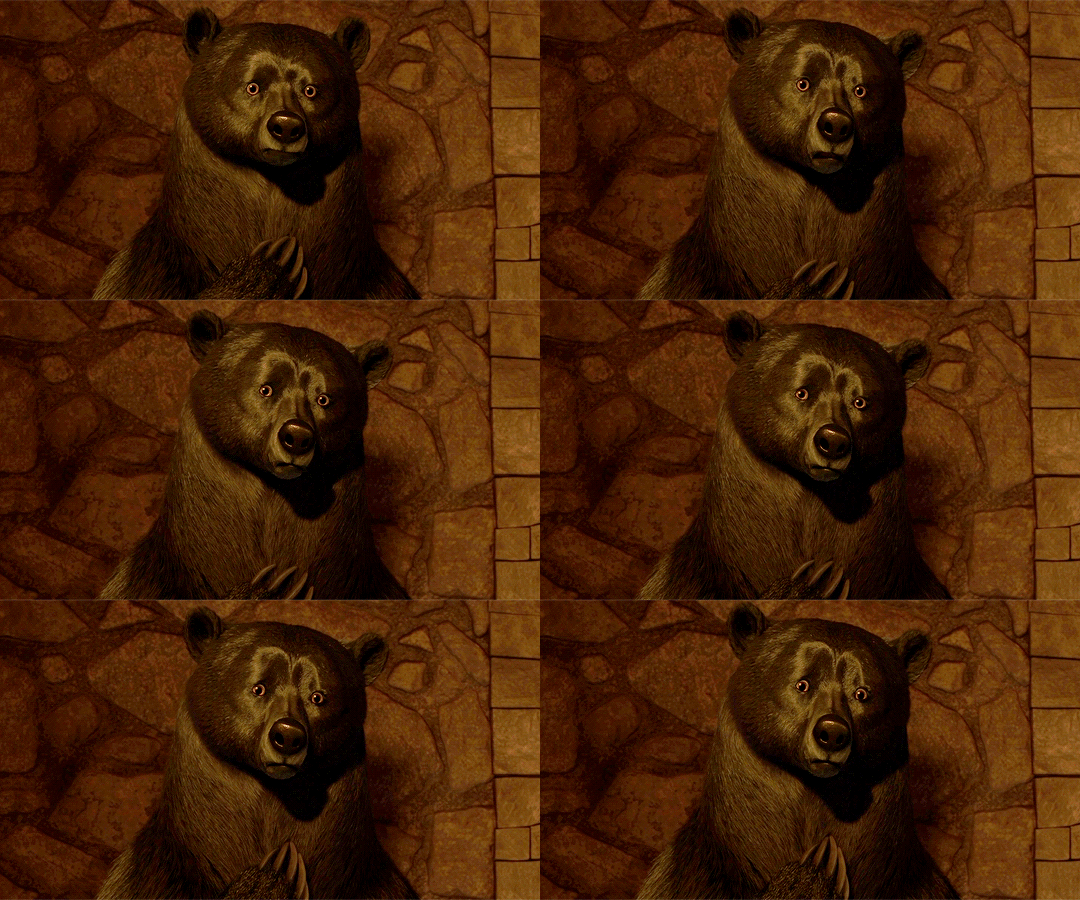
[Spoiler alert] This is where the story gets ridiculous. It turns out that the potion changes Merida’s mother into a bear. The second half of the movie is basically a Brother Bear ripoff where a character turned into a bear has to learn the error of their ways, and deal with being an animal. Yes, there’s conveniently a monster bear called M’ordu who Elinor has to fight as a bear to protect Merida, and with her mother unable to speak, Merida finally has to speak to the lords like a princess, which is all well and good, but the drama and character arcs set up in the first half are completely muddled once Elinor consumes that potion.
The cursed production
I was completely baffled by the choice to make Ellinor turn into a bear, especially given how grounded the first half of the movie was, but I want to make it clear- I do not blame the creator. Brenda Chapman, the original writer/ director had a very personal and clear vision for the story, as you can see in the quote below.
[I was inspired by] My love of Scotland, the old Grimms and Hans Christian Andersen fairy tales, but mostly my relationship with my daughter. She has been quite a challenge to my “authority” since she was five years old. I love that she is so strong, but it sure doesn’t make my job easy! She is my Merida … and I adore her.
Brenda Chapman, Ms. Magazine 2012
Chapman, who also directed The Prince Of Egypt, is clearly a very talented writer and director. It’s hard to know what the original story Chapman envisioned was, but as the quote above indicates, it was always intended to be a fantasy story that explores the relationship between a mother and daughter. Maybe the bear transformation was part of Chapman’s original idea, but I have to believe it would have been handled better than this.
In any case, the production suffered because Chapman found herself at odds with John Lasseter, Pixar’s CEO. Their clashes no doubt made it harder to develop the story in a productive way. Chapman points out that her being a female director, trying to tell the story of the first-ever female Pixar protagonist was in itself a ‘hard sell’ to the higher-ups at Pixar.
“I hit a lot of the issues with being a woman and also trying to put forward a female-led story.” She also claimed that her conflicts with former Pixar chief creative officer John Lasseter related to her being let go as the director of “Brave.” Chapman further remarked that plans to shift “Brave” to a father-daughter narrative didn’t work out and the film circled closer back to her original mother-daughter vision.
Brenda Chapman, writer and original director of “Brave”
By contrast, look at how the second director Mark Andrews describes the experience:
So it’s kind of like we are all pals and there’s a really good camaraderie and support system here, so if I’m sitting there going “I’m drowning! I’m drowning! I’m failing and I don’t know what’s going on, I need help!” they are there to help.
“I will not trust you, aye, nor no longer stay in your cursed company, DISNEY!”
So you can see that the decision to sack both Chapman and her original idea for the script probably cost Pixar precious time that they couldn’t use to develop the film; they must have grudgingly realized that throwing the mother-daughter relationship story aspect away wouldn’t work, and had to rescue that idea instead of developing it through the rest of the script.
So when I came on, I looked at it and I go “Okay, I just need to strip this down to who’s story is it? It’s Merida’s. Let’s go back to the basics with Merida and clean everything out. What does she need to learn? What is her arc? How is she going to go through this story? Who are the characters around her? Who is her biggest foil? Well that’s her mom, right? Why?” I had to just take all of these elements that they already had, but focus them down and clear a lot of the clutter away. There was a lot more magic involved and the magic was affecting the environment. “Do I actually need that to tell the story?” So there were those things.
In addition, the new director probably didn’t have a personal connection to the story, nor the support of the studio. I think it’s fair to say that based on Andrew’s description, Pixar was a bit of a boy’s club (at least in 2012), and I get the feeling based on the results of the film, that they weren’t putting as much effort into this story that features a female protagonist. If I were making this film, I’d probably connect the two halves of the story and borrow liberally from tropes in the story of Macbeth.
Shakespearean tropes in “Brave”
First of all, I’d like to mention that there are veteran Shakespeareans in the cast and creative team- Elinor is voiced by Emma Thompson, one of the greatest Shakespeareans of our time. Further, the movie is scored by Patrick Doyle, who did the music for every one of Kenneth Branaugh’s Shakespeare films. You can read about both of them in my review of Branaugh’s Henry V.
Trope 1: Fate vs. Responsibility
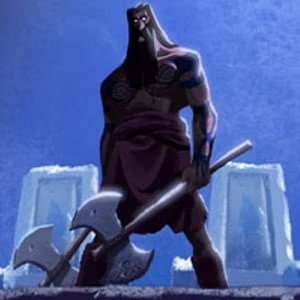
As in my review of Encanto, the title character of Macbeth is not the protagonist of Brave. In fact, he’s barely seen in the film at all, but he is mentioned many times; the wicked prince who eventually becomes the fearsome bear Mor’du.
Obviously, there are also parallels with King Lear, where the patriarch splits his kingdom between his children, and their cruelty and selfishness lead to civil war. However, I feel the Macbeth parallel is even more pronounced. Not only is the story set in Scotland, but the wicked prince feels entitled to the throne, and uses witchcraft to try and obtain it.
Both Banquo and Macbeth encounter the witches, but only Mabeth takes their prophecies to mean he must kill the king. He and his wife choose a dark fate and show themselves to be lacking in morals. Macbeth becomes an internal monster, while Mor’du becomes monstrous in every way.
What makes Mor’du work is that he is literally a cautionary tale for what Merida may become- her mother tells his story to warn her that if she continues to selfishly value herself above her kingdom, she may cause chaos and bloodshed, which she nearly does when she humiliates the lords at the archery contest.
Trope 2: Magic as forbidden desire
The film centers around the ancient Scottish myth of the will-o-‘the-wisp, which guides characters to their destinies. Like The Force, there is a dark and light aspect to the wisp. Sometimes they help people improve their fates, while sometimes they tempt people to their doom.
Both Merida and the wicked prince follow the wisp to a witch’s cottage and they both ask for the same thing- to change their fate. The prince asks for strength so he can win the civil war and become king, while Merida asks for the ability to change her mother’s mind.
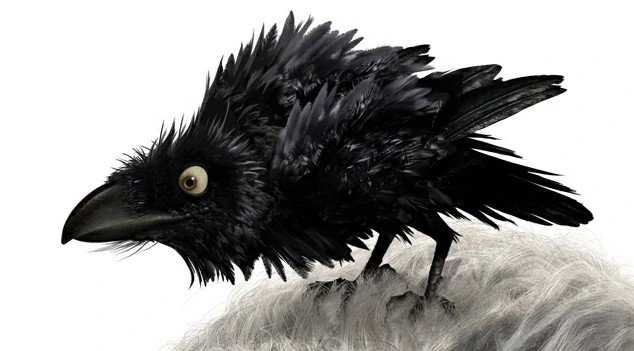
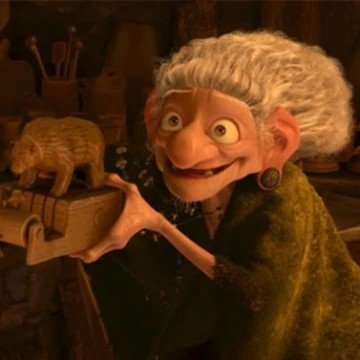
The Witch and her ravenRaven- a symbol of bad news and bad omens.The witch hands Merida a wooden bear.
It’s also interesting that everything in the witch’s shop is bear themed. This could be a weird quirk of hers, or it might be another subtle way to thematically bind these two characters together. Maybe the old witch can sense these characters have similar spirits. It’s also interesting that the witch keeps carving bears when she gives up witchcraft, perhaps out of guilt for creating the monster Mor’du. As I mentioned in my post on the witches, they might not necessarily be evil, they merely facilitate the fate of the characters.
Trope 3: Toxic Masculinity and patriarchy
Witchcraft has long been a shorthand in theater and film for female power. Sadly, in Macbeth, it is framed as monstrous, that is, both attractive and morally wrong. When Lady Macbeth prays to dark spirits, it is because she seems unable to find any kind of power for herself, and resorts to witchcraft.
The raven himself is hoarse That croaks the fatal entrance of Duncan Under my battlements. Come, you spirits That tend on mortal thoughts, unsex me here, And fill me from the crown to the toe top-full Of direst cruelty!
Lady Macbeth, Act I, Scene 5.
As this funny sketch from Second City indicates, in a modern context, Lady Macbeth’s problem isn’t that she wants power or wants to make herself queen, it’s that she goes about it the wrong way. I absolutely love the way the actress says: “I really need a job.” It’s hilariously tragic the way the sketch sums up how useless and isolated this character feels.
Sorry about the ad, but again, this sketch is useful to contextualize Lady Macbeth’s frustrations with a patriarchial society- if female power is considered abhorrent, she feels she has no choice but to use abhorrent means, which begs the question- which is more evil- dark magic, or the patriarchy?
Merida and Lady Macbeth have the same problem; society has pre-determined their fate as nothing more than wives and mothers which is why they both seek out magic to change that fate. Likewise, Macbeth and Mor’du are driven by toxic masculinity to change their fates by violently seizing power.
Ian McKellen as Macbeth performing the Dagger Speech (Act II, Scene i).
What’s great about this film is that it has buried within all its silly bear comic subplot, a clever spin on a classic tale that touches on patriarchy, ambition, and greed. Like Encanto and Lear, what I like about Brave is that it takes Shakespearean tragedy as an example of what almost happened to the main character. I wish that some of the fluff and fur was trimmed off this story and that Brenda Chapman’s vision for the film was truly realized, to make the film a true masterpiece.
For THIS WEEK ONLY, I’m offering a $5 discount for my “Macbeth” course: Get $5 off my class “Macbeth: An Immersive Learning Experience” with coupon code HTHESUEQUG5 until Nov 5, 2021. Get started at https://outschool.com/classes/macbeth-an-immersive-learning-experience-xGKHeHgH and enter the coupon code at checkout.
Just in time for October, I’m offering an online class for kids ages 13-18 about Shakespeare’s most spooky and cursed play:
If you follow this blog you know I’ve written a lot about this play before. Though this class will be more like a game where I teach the class using multimedia, games, and a digital escape room!
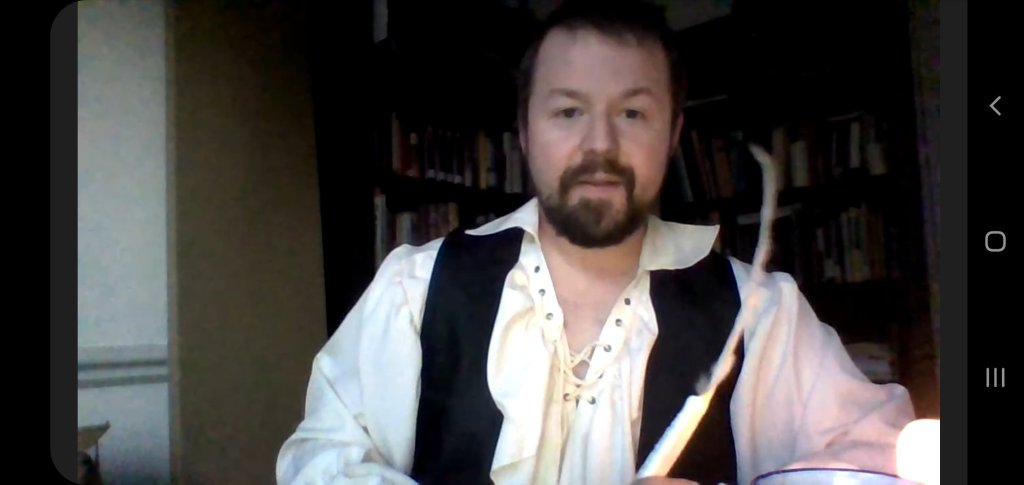
Me in my Shakespeare gatb
I’ll start by speaking to the students in character as Shakespeare, and tell them the story of Macbeth using a multimedia presentation.
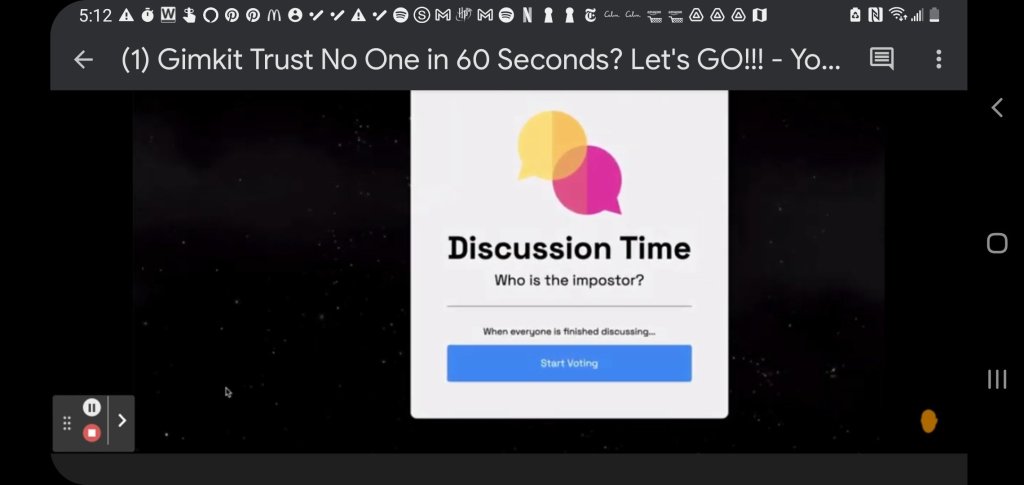
I will then test the students’ knowledge with a fun quiz that was inspired by the popular mobile game Among Us. As you know, the game is similar to a scene from the play, so I thought it would be an appropriate way to test the kids’ knowledge.
Screenshot from the Gimkit game “Trust No One.” Like Among Us, players need to figure out who the Imposter is, but they greatly increase the chances of surviving if they answer the quiz questions correctly.
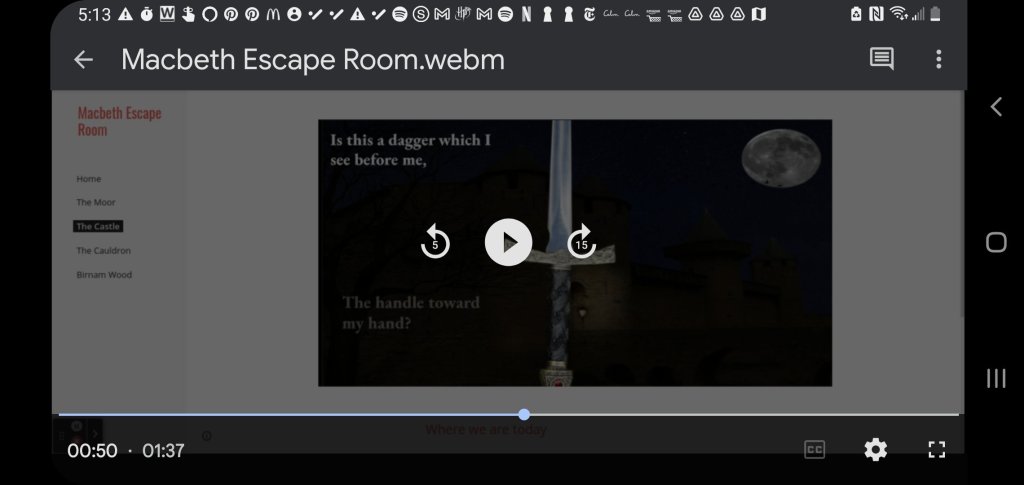
The final part of the class is a digital escape room I’ve created. I don’t want to give too much away, and you can’t play it unless you sign up for the class, but let’s just say it’s fun, spooky, educational, and challenging!
Screenshot from my Macbeth Escape Room.
If you want to sign up now, the course is available every weekend in October, and then by request after that. Register now at Outschool.com. if you take the course, please leave me a good review.
Happy St. Patrick’s Day! The Emerald Isle has long been a source of illumination for poet’s pens and Shakespeare was no exception. The Bard of Avon is indebted to Mother Ireland not only for the inspiration he took, but sadly for the pain he gave her back.
None of Shakespeare’s plays are set in Ireland, but he freely adapted elements from Irish folklore. English poet Edmund Spencer visited Ireland in the 1590s and adapted the folklore he picked up into his opera The Fairy Queen, which Shakespeare adapted into A Midsummer Night’s Dream
The Irish created and continue to tell many of the fairy legends and stories that we retell and adapt today. If you go to Lullymore park in Ireland, you can see a place that is essentially a “Fairy preserve.”
Types of fairies you can “spot” at the Lullymore Park in Ireland:
The old stories tell that Fairies are magical creatures who live in hollow places in the earth. Some are benevolent and help give rain and pleasant weather to the Earth, Like the king and Queen of the fairies, Oberon and Titania:
And the mazed world, By their [the tides] increase, now knows not which is which: And this same progeny of evils comes From our debate, from our dissension; We are their parents and original.
— Titania, (Queen of the Faries), A Midsummer Night’s Dream Act II, Scene i.
Titania in this speech shows great concern for nature, humanity, and the planet. She believes it is the responsibility of fairies, particularly herself and her husband Oberon, to control the elements and keep humans and fairies safe. Some fairies, however, are cruel and enjoy playing tricks on mortals, just like Puck in A Midsummer Night’s Dream, or Queen Mab in Romeo and Juliet.
Close reading of Puck’s speech (MND II, i)
Close reading of Puck’s speech (MND II, i)
Close reading of Puck’s speech (MND II, i)
Close reading of Puck’s speech (MND II, i)
Close reading of Puck’s speech (MND II, i)
.
This is a short analysis I created of the tricks Puck plays on people in A Midsummer Night’s Dream, as part of my acting course on Ouschool.com. Note the different ways Puck is portrayed in photos as a satyr, a rotund elf, and sometimes as an almost- demon like figure.
Cringe-worthy Shakespeare: Shakespeare’s only Irish character, captain mcmorris in “Henry V”
When Shakespeare is racially insensitive towards people of color, the cringe-worthy writing is mercifully few and far between. With the exception of Aaron the Moor and Don Armada, there are only a few sporadic derogatory references to non-White Anglo-Saxon Protestants. Sadly though, Shakespeare might have permanently harmed the Irish through his character the Irish captain Macmorris in Henry the Fifth, his only Irish character.
According to The Irish Times, there is a longstanding stereotype that still exists in the British Isles that Irish people are violent, short-tempered, and essentially savages and Shakespeare might have invented this stereotype (or at least popularized it) when he wrote this scene from Henry the Fifth, Act III, Scene ii:
FLUELLEN
 To the mines! tell you the duke, it is not so good
 to come to the mines; for, look you, the mines is
 not according to the disciplines of the war: the
 concavities of it is not sufficient; for, look you,
 the athversary, you may discuss unto the duke, look
 you, is digt himself four yard under the
 countermines: by Cheshu, I think a' will plough up
 all, if there is not better directions.
 GOWER
 The Duke of Gloucester, to whom the order of the
 siege is given, is altogether directed by an
 Irishman, a very valiant gentleman, i' faith.
 FLUELLEN
 It is Captain Macmorris, is it not?
 GOWER
 I think it be.
 FLUELLEN
 By Cheshu, he is an ass, as in the world: I will
 verify as much in his beard: be has no more
 directions in the true disciplines of the wars, look
 you, of the Roman disciplines, than is a puppy-dog.
 Enter MACMORRIS and Captain JAMY
 GOWER
 Here a' comes; and the Scots captain, Captain Jamy, with him.
 FLUELLEN
 Captain Jamy is a marvellous falourous gentleman,
 that is certain; and of great expedition and
 knowledge in th' aunchient wars, upon my particular
 knowledge of his directions: by Cheshu, he will
 maintain his argument as well as any military man in
 the world, in the disciplines of the pristine wars
 of the Romans.
 JAMY
 I say gud-day, Captain Fluellen.
 FLUELLEN
 God-den to your worship, good Captain James.
 GOWER
 How now, Captain Macmorris! have you quit the
 mines? have the pioneers given o'er?
 MACMORRIS
 By Chrish, la! tish ill done: the work ish give
 over, the trompet sound the retreat. By my hand, I
 swear, and my father's soul, the work ish ill done;
 it ish give over: I would have blowed up the town, so
 Chrish save me, la! in an hour: O, tish ill done,
 tish ill done; by my hand, tish ill done!
 FLUELLEN
 Captain Macmorris, I beseech you now, will you
 voutsafe me, look you, a few disputations with you,
 as partly touching or concerning the disciplines of
 the war, the Roman wars, in the way of argument,
 look you, and friendly communication; partly to
 satisfy my opinion, and partly for the satisfaction,
 look you, of my mind, as touching the direction of
 the military discipline; that is the point.
 JAMY
 It sall be vary gud, gud feith, gud captains bath:
 and I sall quit you with gud leve, as I may pick
 occasion; that sall I, marry.
 MACMORRIS
 It is no time to discourse, so Chrish save me: the
 day is hot, and the weather, and the wars, and the
 king, and the dukes: it is no time to discourse. The
 town is beseeched, and the trumpet call us to the
 breach; and we talk, and, be Chrish, do nothing:
 'tis shame for us all: so God sa' me, 'tis shame to
 stand still; it is shame, by my hand: and there is
 throats to be cut, and works to be done; and there
 ish nothing done, so Chrish sa' me, la!
 JAMY
 By the mess, ere theise eyes of mine take themselves
 to slomber, ay'll de gud service, or ay'll lig i'
 the grund for it; ay, or go to death; and ay'll pay
 't as valourously as I may, that sall I suerly do,
 that is the breff and the long. Marry, I wad full
 fain hear some question 'tween you tway.
 FLUELLEN
 Captain Macmorris, I think, look you, under your
 correction, there is not many of your nation--
 MACMORRIS
 Of my nation! What ish my nation? Ish a villain,
 and a bastard, and a knave, and a rascal. What ish
 my nation? Who talks of my nation?
 FLUELLEN
 Look you, if you take the matter otherwise than is
 meant, Captain Macmorris, peradventure I shall think
 you do not use me with that affability as in
 discretion you ought to use me, look you: being as
 good a man as yourself, both in the disciplines of
 war, and in the derivation of my birth, and in
 other particularities.
 MACMORRIS
 I do not know you so good a man as myself: so
 Chrish save me, I will cut off your head.
 GOWER
 Gentlemen both, you will mistake each other.
 JAMY
 A! that's a foul fault.
 A parley sounded
 GOWER
 The town sounds a parley.
 FLUELLEN
 Captain Macmorris, when there is more better
 opportunity to be required, look you, I will be so
 bold as to tell you I know the disciplines of war;
 and there is an end.
 Exeunt
Irish History and Shakespeare: The tempestous relationship between england and Ireland
The mayor and all his brethren in best sort, Like to the senators of the antique Rome, With the plebeians swarming at their heels, Go forth and fetch their conquering Caesar in: As, by a lower but loving likelihood, Were now the general of our gracious empress, As in good time he may, from Ireland coming, Bringing rebellion broached on his sword,
Henry V, Act V Chorus
Robert Devereax, 2nd Earl of Essex (National Portrait Gallery)Hugh, O’Neill, Earl of Tyronne
James Shapiro in his excellent book, A Year In The Life Of William Shakespeare, 1599, posits that contemporary affairs in Ireland might have inspired some of Shakespeare’s greatest plays in including Richard II, Henry V, and Julius Caesar. In 1594 the Earl of Tyrone began a rebellion in Ireland against the English, and in 1599, Queen Elizabeth dispatched the ambitious and chivalrous Earl of Essex to quell it. As you can see in the quote above, Shakespeare mentions Essex’s fight in his play of Henry V, which probably premiered at around the same time Essex was in Ireland.
The audience may have been watching Henry conquer France, but many would have been thinking about Elizabeth’s struggle to conquer Ireland.
BBC Radio 4 Extra – Shakespeare’s Restless World, Ireland: Failures in the Present – Transcript – Shakespeare’s Restless World – Programme 7
Though King Henry successfully conquered and united England and France, Essex failed spectacularly, and Elizabeth was deeply embarrassed by the whole scenario. She was also deeply alarmed by the popularity of Shakespeare’s tragedy Richard II, which shows onstage the deposing and killing of a king who had no children and failed to quell a rebellion in Ireland.
Elizabeth was worried about her subjects but she was also very worried about Essex overseas. Everyone, (including Shakespeare), remembered that 2,000 years ago, Julius Caesar went from him the Senate’s Consul General to dictator by amassing an army, then threatening to invade Rome under the pretense of helping to quell a foreign invasion. Caesar made his name by subjugating tribes in Gaul (modern-day France), and the Senate was worried that he would come home and use his army for a military coup. Look at the expressions on the faces of Cicero and Brutus when they see Caesar coming home in triumph in this scene from the HBO series Rome.
Elizabeth repeatedly attempted to curb Essex’s power while he was fighting in Ireland; she refused to give the Earl more troops for fear that he might be staging a potential coup. Her fears would later be proven right when in 1602, Essex attempted to head a rebellion and take the Crown for himself, but not before one of Essex’s friends commissioned Shakespeare’s company to portray the deposing and killing of King Richard II. Essex was trying to turn himself from a failed Henry V to a victorious Henry IV, and his queen into Richard II.
Left- deposition form the interrogation of Augustine Phillips, one of the actors in Shakespeare’s company about his company’s potential involvement with the Essex rebellion. Right- the hanging of Cinna the poet from Julius Caesar.
Shakespeare might have been inspired to write Julius Caesar after being an unwitting pawn in the political drama between Essex and the queen, and might have even created the character of Cinna the Poet as an analog for Shakespeare himself. In the play, Cinna the poet is mistaken for one of the conspirators by an angry mob and is murdered in the street. Perhaps Shakespeare created Cinna the Poet as a way of coping with the fear he must have had that people might mistake him for a radical, after his play Richard II briefly made him a walking target for those opposed to Essex’s rebellion. In any case, Julius Caesar eloquently documents the kind of anxiety of not knowing who could be trusted when it comes to politics, whether it be a populist warrior like Julius Caesar or Essex, or the Queen, privy council, or indeed Roman senate, and the whole thing started from a failed attempt to quell a rebellion in Ireland.
In summation, even though Shakespeare sets no plays in Ireland, Irish history and Irish culture are everywhere in his plays. England and Ireland are I are indeed separate islands but the cultural exchange between England and Ireland has inspired Shakespeare and many other great writers for centuries. After all Shakespeare’s most famous honorific, ‘the Bard of Avon’ comes from an ancient Irish tradition of semi-mystical poets, who in Irish folklore, were able to see the future and glimpse worlds that are unseen to ordinary mortals. What Shakespeare really felt about Ireland we don’t know but we do him but he does owe the Irish people a lot of thanks, and on this Saint Patrick’s day, I honor their contribution to him and to him all the world
References:
Shapiro, James. A Year In the Life Of William Shakespeare, 1599. Chapter 6: Things Dying and Things Reborn.
Happy Midsummer everyone! Wednesday June 24rth is the Midsummer festival, which means as you go to sleep that night, I wish you all Midsummer Night Dreams! Before that though, I welcome you to party like it’s the court of King Oberon, and here are some ideas:
Background: What Are Fairies?
The story of Fairies has many authors that come from multiple folkloric traditions. The Greeks had nymphs, the Romans had cupid, and the English and Germans had…
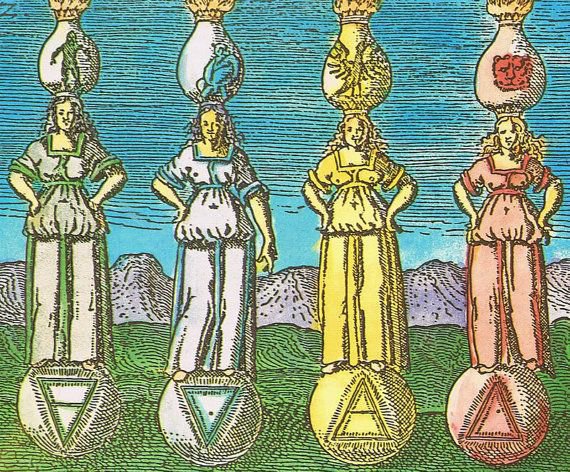
1. According to Paracelsus, fairies are elemental spirits that help control the Earth’s four elements: Silfs (air), gnomes (Earth), Salamanders (fire), and Undines (water). 2. In some versions, they are household creatures that interact with humans 3. Some cultures call them demoted Angels, not good enough for Heaven, but not bad enough for Hell.
So you can see there are lots of traditions that contribute to our modern concept of the fairy, and plenty of ideas to adapt into your party!
Part One: The Invitation:
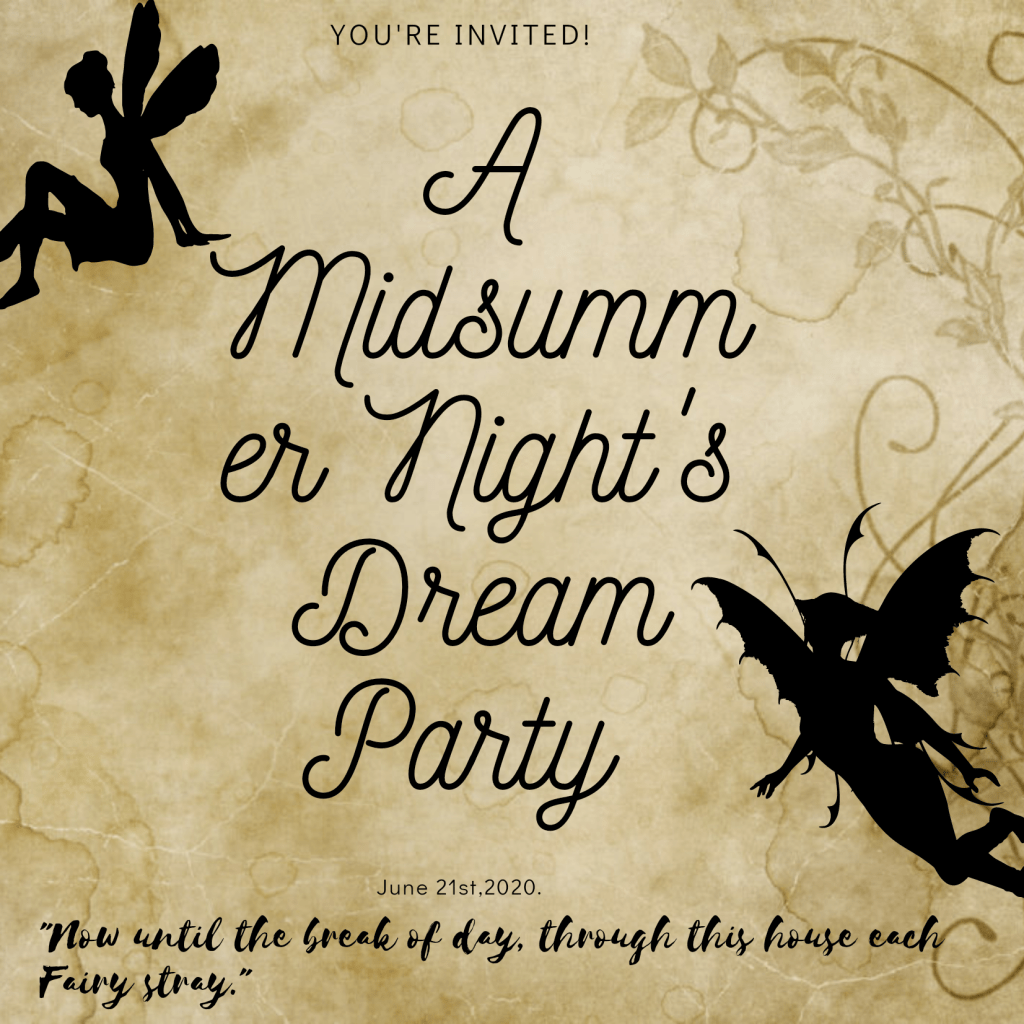
There’s a ton of free fairy clip art and fairy designs online. Below is an invitation I created for free with an app called Canva and a parchment background picture I found online.
1. Pixie invitations 2. Immortal Longings
Second card design I created on Canva.
You probably also know that I am a huge fan of the website Immortal Longings because of their excellent Shakespearean art and they sell cards too. You can buy the cards or download the pictures on their website.
Shakespearean Greeting Cards from Immortal Longings.com
Part Two: Decorations Fairy
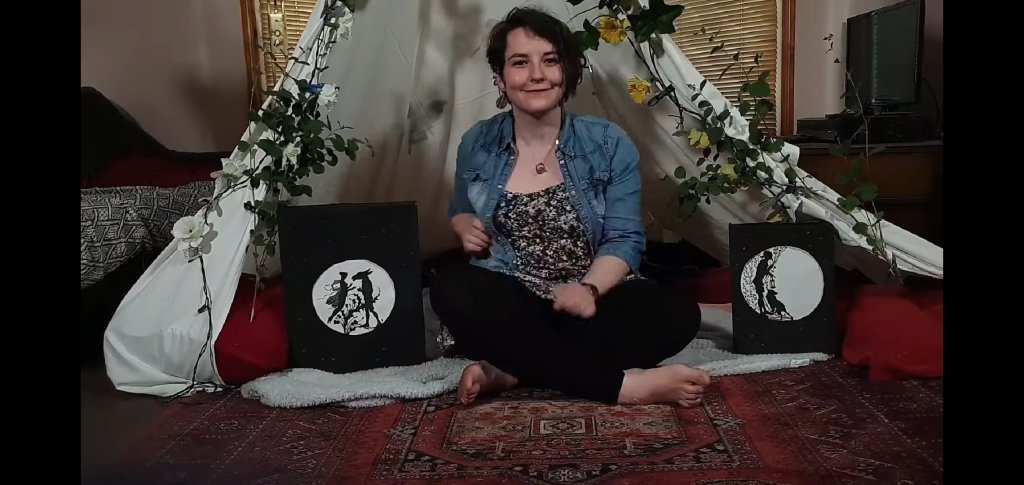
Fairy Dens Right now the Royal Shakespeare Company is making DIY Fairy decorations including a Fairy Den that you can share with your family and friends:
What is a Fairy Den? Fairies in folklore are closely tied to the Ancient Celts and Druids, who believed that Fairies live in hollow places underground. A fairy den is a homemade den that imitates the ancient fairy hollows.
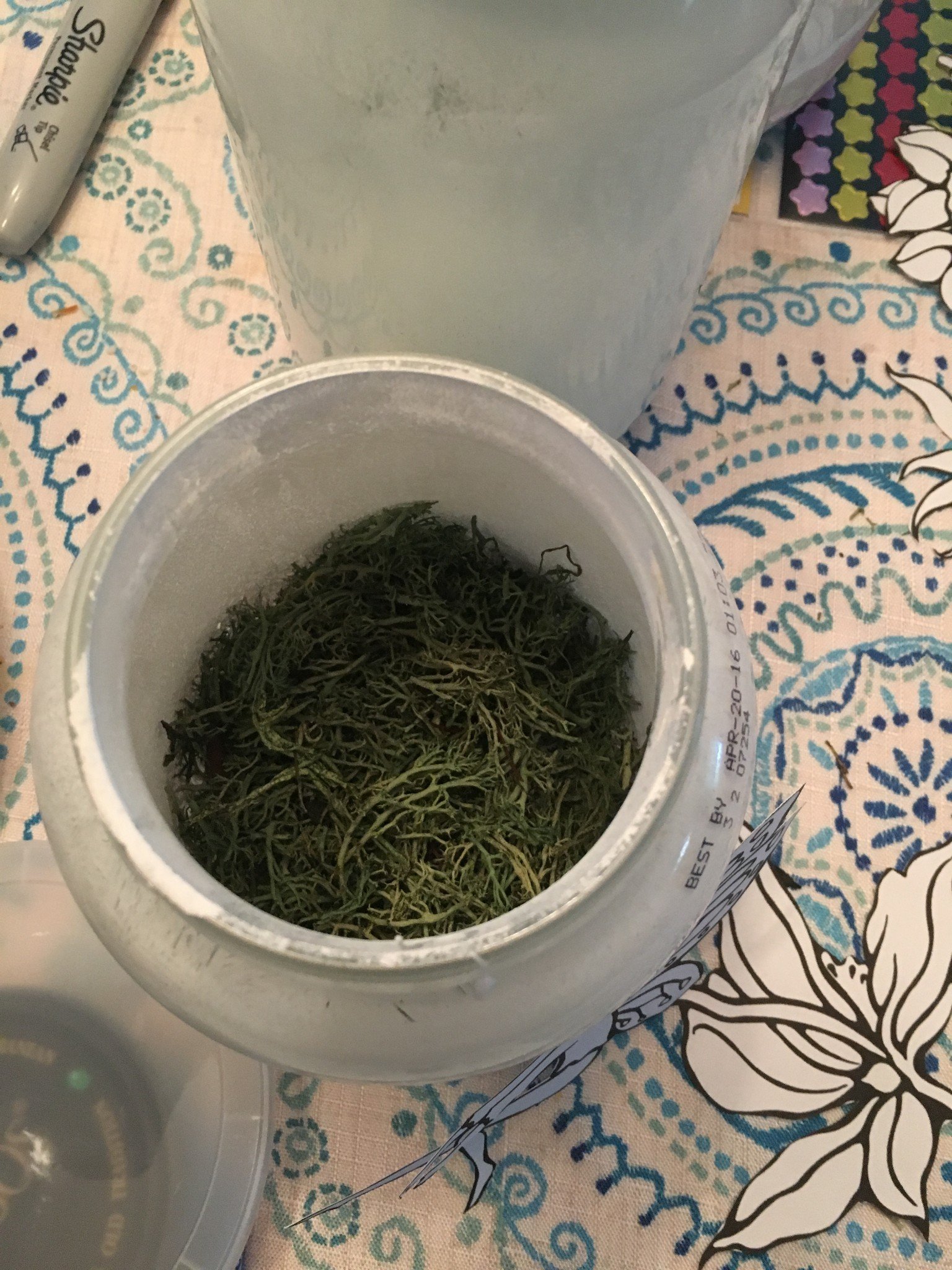
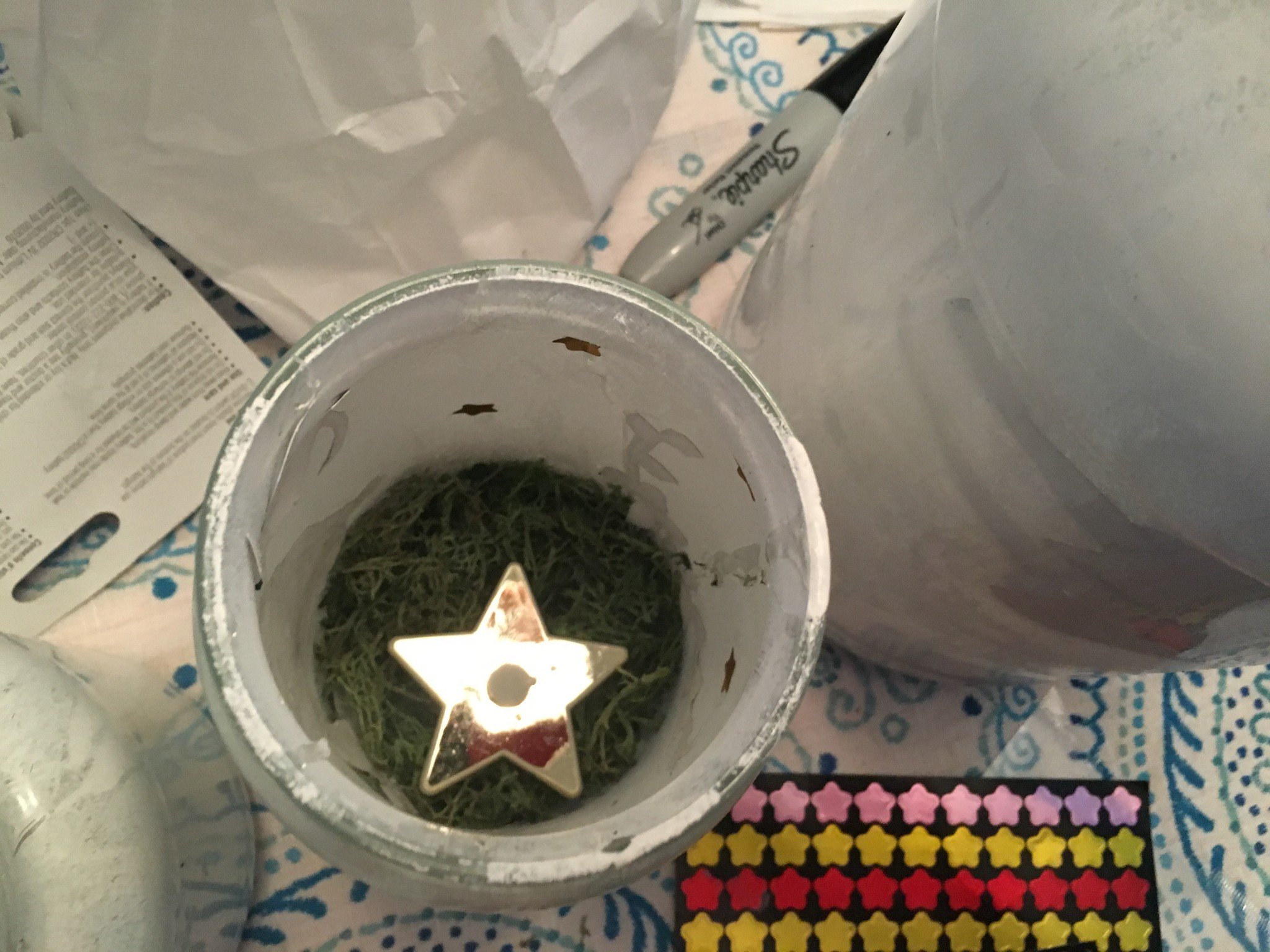
In addition to fairy dens, there are tons of fairy lights, fairy coloring books, and other fairy crafts you can find. Here is a fairy lantern my wife made using pickle jars!
First paint the jars with white paint and cut out paper fairies to paste around the inside of the jar (we used tackey glue). You can also stick star stickers on the inside of the jars.For added realism, you can glue fake moss to the bottom of the jar. We got this from our local dollar store.Put a small battery powered LED light inside.Turn on the LED lights and take the lanterns somewhere dark.Detail of the fairy lights.
Part Three: The Feast
Since the Fairies in Midsummer are woodland spirits, almost any forest or camping themed recipes can be adapted. Here are some ideas that my wife and I made for our own fairy themed party.
2. Love potion: Similar to follow the leader or musical chairs. A group of people lie down and pretend to sleep. Then someone plays Puck by putting a real or pretend flower in one of the player’s hands. The Puck then yells “Awake,” and sets a timer or plays some music. The object of the game is for everyone to chase after the flower and get it before time runs out.
Costumes:
Make some printable donkey masks for Bottom, flower crowns for the fairies, and don’t forget your wings!
Not only is it the first day of this month, it’s also a Shakespearean holiday! According to this passage from “Romeo and Juliet,” today is Juliet’s Birthday!
NURSE: Even or odd, of all days in the year,
Come Lammas Eve at night shall she be fourteen.
–Romeo and Juliet, Act I, Scene ii.
Lammas Eve, is a pagan holiday, also known as Lughnasa, a Celtic holiday traditionally held on August 1st, or the midway point between the summer solstice and the Equinox. It was a day celebrating harvests and the beginning of fall, and was celebrated through eating wheat, drinking wine and burning a giant wicker man in effigy, (the inspiration of the film of the same name, and the festival of Burning Man). By the way, not everyone appreciates this holiday, click here to see what I mean.
There is also another significance to Juliet’s birthday. It makes her a Leo, a star sign traditionally associated with the Sun. So, when Romeo calls her “The Sun,” there is a literal connection to her birth. Shakespeare makes many allusions to astrology in Romeo and Juliet, as a metaphor for fate.
In the next few days I’ll be talking about what these allusions mean and how they help people understand the play.




















 The Shakespearean Student