Is Percy Jackson Hamlet?

I’m really excited about the Disney Plus release of the Percy Jackson TV show. My family and I are really enjoying it and I think it’s a very good adaptation, (much more faithful than the previous movie versions). The tone is darker, the characters are better fleshed out, and also there’s a much more nuanced take on Percy’s character, which I believe is at the core of the series. The movie is essentially just a fetch quest where Percy is going from location A to location B looking for various magic items and fighting monsters. Movie Percy is a very static character but in the books and the show, they keep all of those journeys but also delve into his complicated relationship with the gods, his own insecurities growing up without a father, and his overwhelming feeling that this world of gods and mortals is fundamentally flawed and that he is the one to fix it.

“Families are messy. Immortal families are eternally messy. Sometimes the best we can do is to remind each other that we’re related for better or for worse…and try to keep the maiming and killing to a minimum.”

-Percy Jackson, The Sea of Monsters


In short, what makes the show great is that it emphasizes the elements of the book that make it a classic story of a young man who is trying to find his place in the world and complete the quest that his father set for him. Of course, once I started watching it, my Shakespeare Brain activated, and I immediately compared him to Shakespeare’s ultimate example of a hero trying to complete a quest given to him by an absent father- Hamlet.
So today I’ll Talk about why I think Percy Jackson is actually a descendant of Hamlet or rather that Hamlet and Percy Jackson are both descendants of the same common ancestor in Greek mythology and touch on what these classic stories can say to us today.

1. The Plot

AI Art I created of Percy Jackson. Nightcreator.com.

As I touched on earlier, there are some glaring similarities between the plots of Percy Jackson and Hamlet- we have a young man who has who hates his stepfather, who is deeply protective of his mother, who goes on a magical quest given to him by his father, (who cannot directly aid him because he’s not physically there). In Percy Jackson, his father is a god- the ancient Greek water god Poseidon, while Hamlet’s father is a ghost. Both heroes have to deal with treachery, uncover a plot, avert potential wars, and get caught up in great military and political power schemes. While Hamlet is trying to restore the rightful heir to the throne (himself), Percy is trying to avoid a war between the gods. Both heroes have stoic sidekicks- Hamlet has Horatio whereas Percy has Annabeth and his friend Grover the Satyr. Hamlet’s friend l Horatio is kind of like a combination of Annabeth’s intelligence and Grover’s kindness and empathy. Finally, both stories conclude in a duel (spoiler alert) where they fight against a near-impossible adversary, and in the end, succeed in their quest, although in Hamlet’s case, he does so at the cost of his own life.

The main difference between these stories is connected to tone and genre- Hamlet is a revenge play, and most Revenge tragedies end in the death of the avenger. Percy Jackson is an adventure quest so based on the conventions, he can succeed, survive, and go off to fight another day. Nevertheless, in terms of the broad outline, the plots are very similar. I would argue this is probably because Hamlet has its roots in many ancient mythological stories like Oedipus, Orestes, and of course, the Danish Viking myth of Amleth. I would argue that both Percy Jackson and Hamlet have a very clear direct common ancestor: the ancient Greek myth of …

2. A Common Ancestor- Perseus

https://prezi.com/btk3m_bamkmh/hamlets-monomyth/

As this funny cartoon illustrates, the plots of Percy Jackson and Hamlet can be seen as a modern incarnation of the Perseus myth, from the villainous stepfather to the hero’s protective feelings to the mother to the magical quest to get rid of a stepfather who takes away his birthright. These plot elements follow a very similar formula; as Jake also alluded to, all three of these stories are part of what writers and scholars like to call the monomyth or the “Hero’s journey,” a concept in mythology and storytelling that has inspired works such as Percy Jackson, Star Wars, and many others.

What Is the Monomyth?

Crash Course Mythology- The Monomyth

In 1949, scholar Joseph Campbell wrote a book called “The Hero With a Thousand Faces,” which posited that every culture has stories that fit into universal archetypes- that essentially all human cultures have unique stories, but also call to mind universal truths about humanity. He then distilled the common archetypes and plot tropes of these myths into something called “The monomyth” or “The Hero’s Journey,” a 17-step process that is at the core of many ancient myths, modern adventure stories, or revenge stories such as Hamlet. Below are some of the common tropes of the Hero’s Journey. When you see it spelled out like this, it is very clear that both Hamlet, Percy Jackson, and Perseus follow the Monomyth formula:

Infographic of the Monomyth from David R. Jolly.com

Part I: The Call To Adventure:

Where’s the glory in repeating what others have done?

The Lightining Thief

Every Greek hero starts with a call to adventure- Theseus finds his father’s sword and sets out to find him. Oedipus needs to lift the plague on Thebes, and Hamlet needs to find out why his father’s ghost has returned.

A Half-Blood of the eldest gods, Shall reach sixteen against all odds
And see the world in endless sleep
The Hero’s soul, cursed blade shall reap
A single choice shall end his days
Olympus to preserve or raze.

The Oracle- Sea of Mosters

Part II: Refusing the Call

If my life is going to mean anything, I have to live it myself.

The Lighting Thief

I won’t go looking for trouble. I usually don’t have to

Neither Hamlet nor Percy outright refuse to go on their quests, but both experience doubts. Percy, looking at how the gods have cursed and fought and betrayed each other, wonders whether or not they deserve his help:

Percy watches the story of the gods in the Tunnel of Love (Episode 5, Disney Plus 2024.)

Hamlet on the other hand, is so worried that the ghost is trying to deceive him into killing an innocent man, that he nearly kills himself in the most famous speech in all of Shakespeare.

Part III: Supernatural Aide

Supernatural Aid – A magical helper appears or becomes known

Go on with what your heart tells you, or you will lose all.

The Nereiads, Lighting Thief Chapter 17

Both Percy and Perseus get help from the gods- magical weapons, advice, etc. Hamlet gets the revelation from his father that his uncle killed him and how. What sets Hamlet apart from any number of myths is that, since there’s no tangible evidence that his father was there, Hamlet is not sure if his father helped him, or if he is going insane.

Suspecting and knowing are not the same.

-The Lighting Thief

Crossing the first threshold

In Perseus, the first threshold would be when he leaves Acrisius’ palace and sails to the island of Cerebos. In Percy Jackson, this would be when he leaves Yancy Academy and goes to Camp Half-Blood, and in Hamlet, it would be when he meets the ghost.

My fate cries out, and makes each petty artery in this body as hardy as the Nemian Lion’s mane. Still am I called!

Hamlet, Act I, Scene iii.

Belly of THe BEast

There’s always a part of the story when a character feels they are in too deep. Sometimes it’s a literal belly of the beast- Pinocchio and the whale, Luke Skywalker and the Sarlaac pit, Frodo when he reaches Mordor, and Agent K in Men In Black when he literally gets eaten by the Bug. In Percy Jackson, it would definitely be when he journeys to Hades, like many Greek heroes like Orpheus or Hercules.

I’d love to tell you I had some deep revelation on my way down, that I came to terms with my own mortality, laughed in the face of death, et cetera.

The truth? My only thought was: Aaaaggghhhhh!.

Usually, the belly of the beast occurs near the climax of the story- the ultimate test of the hero’s courage and resolve. For Hamlet, this would be the duel with Laertes- he’s in a situation where Claudius has total control of what he does.

“You weren’t able to talk sense into him?”
“Well, we kind of tried to kill each other in a duel to the death.”
“I see. You tried the diplomatic approach.” (The Sea of Monsters)

I’ll get into a deeper summary of the steps of the Hero’s journey on my podcast later this month, but to summarize, the Hero’s Journey is essentially a story of growth, maturity, and enlightenment. It’s not a coincidence that all three of these heroes are young men who leave home and then return to confront an evil stepfather or uncle. Campbell regarded the Hero’s journey as a metaphor for young men growing up, learning about themselves, gaining confidence in themselves and their abilities, and taking their rightful place in society by displacing a corrupt older authority figure. This is also why these stories often resonate with young people, and why storytellers like Disney often use the Hero’s Journey as a template for children’s movies.

These universal stories of growing up, maturity, and a life worth living have always inspired people and even though the stories have different purposes and the plots take different forms, the core of what makes them universal remains the same.

Activities For Students and Teachers: Make A Shakespeare Club!

Privacy Note

I’m not going to say where my club is or mention the names of the members for privacy’s sake. This post is to familiarize you with the idea, and hopefully inspire your school to do the same.
The Genesis

Like I said in my “Is Shakespeare Being Cancelled?” post, most teachers don’t have the time, training, or inclination to teach a really in-depth Shakespeare unit. Most classes I’ve worked in barely have enough time to cover the plot of Romeo and Juliet, before they need to work on another unit. This is why I started a Shakespeare club, to give kids time to engage with Shakespeare without having to worry about grades.

Mission Statement:

 Shakespeare was NOT meant to be read. In this club, we’ll engage with Shakespeare’s plays through games, sword fighting, dramatic readings, movies, and sometimes even recipes! The goal of the club is to have fun with classic works of theater.

Organization

Every month we will discuss a new play and try to explore different aspects of it each week. For each week we’ll do the following:

  1. Weekly questions such as: “What do you know about Shakespeare the man?” or, “Are Shakespeare’s plays still relevant today?”
  2. Group Close reading- Every month I’ll choose a different play to focus on. We’ll pick a scene or speech each month to look at and read aloud.
    1. I’ll provide some context, explaining what is happening in the play durin the speech, and any relevant historical context.
    2. There will be a dramatic reading, either by me (or a brave soul in the club).
    3. We’ll watch a recording and discuss their interpretation and what the students like and don’t like.
  3. Immersive activities such as:
    1. -Pool Noodle sword fights
    2. – Shakespeare’s arts and crafts and recipes such as gingerbread men contests and making costumes and props.
    3. – Shakespeare movie-watching party with such films as 10 Things I Hate About You, ‘O,’ “Gnomio and Juliet,” “Hamlet,” and others. 
  4. Weekly challenges like “Find a Shakespeare quote that you use in normal speech,” “Find a movie or character that’s based on Shakespeare,” or “Draw a picture of a Shakespearean character (stick figures are acceptable). Each challenge is rewarded with a digital badge, which the students can trade for Shakespeare swag at the end of the month!

Meeting RecapS

  • Meeting 1: I talked about Shakespeare’s life, using the same format as this video:
  • Meeting 2: To get the kids to connect with Shakespeare’s plays, I had them take a personality quiz to figure out which Shakespeare play they might want to read:

https://www.zoo.com/quiz/which-shakespeare-play-fits-you

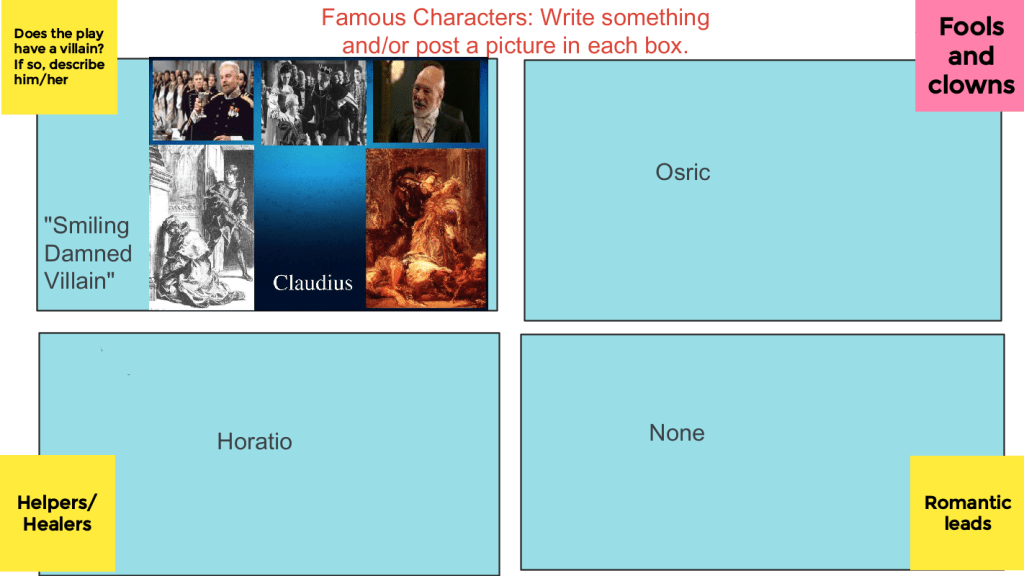
I then asked the students to research the play they got, then asked them to fill out a Jamboard, like the one I made below- using photos and short descriptors to get a general idea of their new favorite play!

So as the school year continues, I’ll create more recaps and post more discussions to let you know how this little experiment is coming. Since this is a new idea, I’d love to get your feedback because I want as many people as possible to help make this project a success!

Crafting a Character: Puck

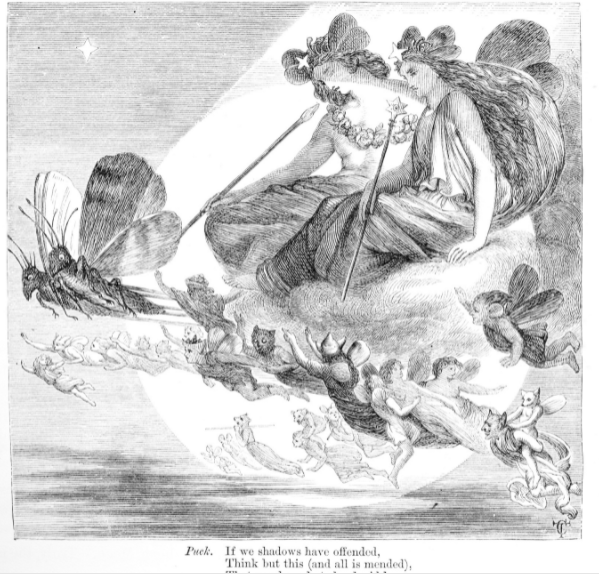
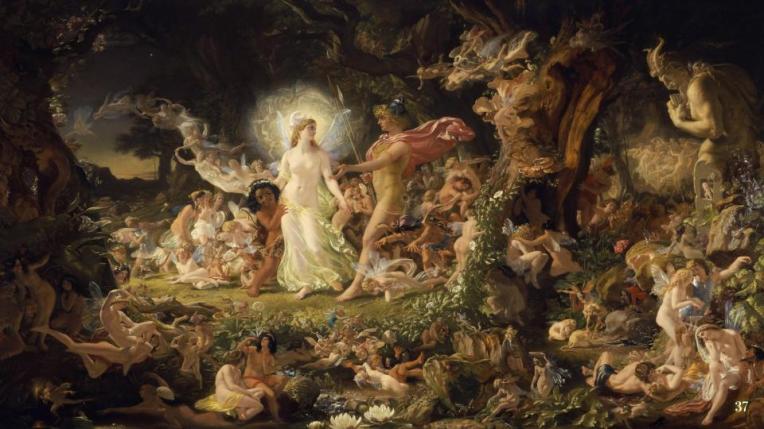
“Welcome Spirit, How Camest Thou hither?” The sources for Puck

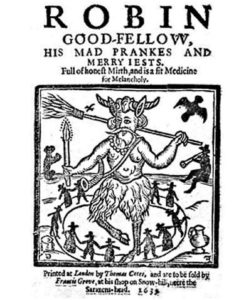
Puck, in medieval English folklore, a malicious fairy or demon. In Old and Middle English the word meant simply “demon.” In Elizabethan lore he was a mischievous, brownielike fairy also called Robin Goodfellow, or Hobgoblin. As one of the leading characters in William Shakespeare’s Midsummer Night’s Dream, Puck boasts of his pranks of changing shapes, misleading travelers at night, spoiling milk, frightening young girls, and tripping venerable old dames. The Irish pooka, or púca, and the Welsh pwcca are similar household spirits.

Britannica, The Editors of Encyclopaedia. “puck”. Encyclopedia Britannica, 21 Apr. 2016, https://www.britannica.com/topic/puck-fairy. Accessed 18 July 2023.

Shakespeare also took inspiration from English poet Edmund Spencer, who visited Ireland in the 1590s and adapted the folklore he picked up into his opera The Fairy Queen, which Shakespeare adapted into A Midsummer Night’s Dream

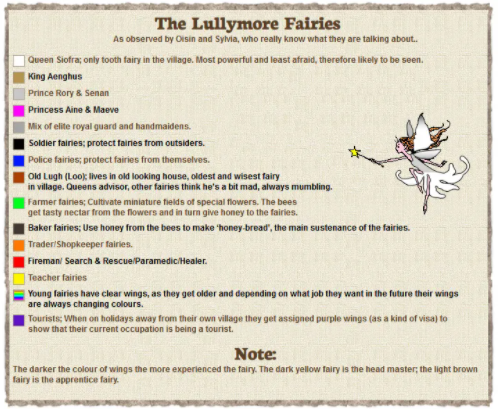
Types of fairies you can “spot” at the Lullymore Park in Ireland:

Puck/Robin’s Dual Nature

The old stories tell that Fairies are magical creatures who live in hollow places in the earth. Some are benevolent and help give rain and pleasant weather to the Earth, Like the king and Queen of the fairies, Oberon and Titania:

And the mazed world,
By their [the tides] increase, now knows not which is which:
And this same progeny of evils comes
From our debate, from our dissension;
We are their parents and original.

— Titania, (Queen of the Faries), A Midsummer Night’s Dream Act II, Scene i.

Titania in this speech shows great concern for nature, humanity, and the planet. She believes it is the responsibility of fairies, particularly herself and her husband Oberon, to control the elements and keep humans and fairies safe. Some fairies, however, are cruel and enjoy playing tricks on mortals, just like Puck in A Midsummer Night’s Dream, or Queen Mab in Romeo and Juliet.

.

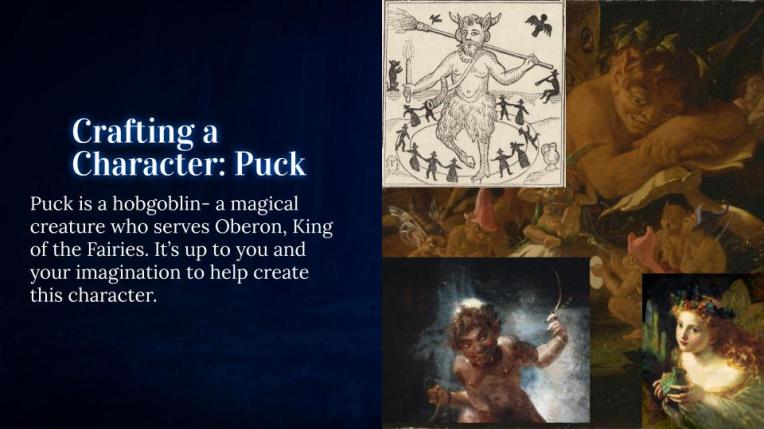
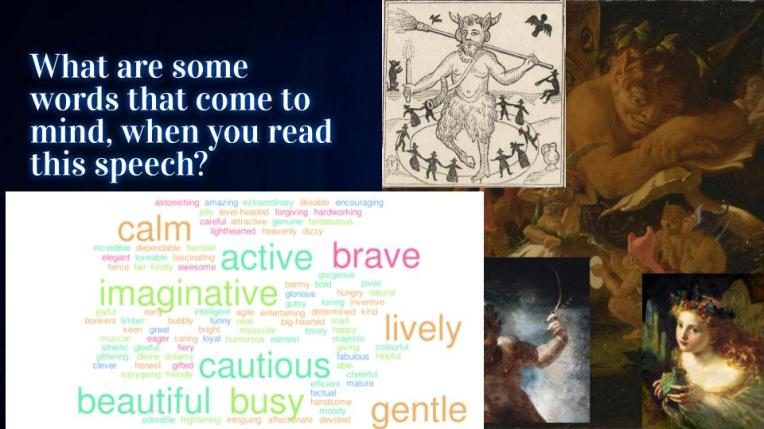
This is a short analysis I created of the tricks Puck plays on people in A Midsummer Night’s Dream, as part of my acting course on Ouschool.com. Note the different ways Puck is portrayed in photos as a satyr, a rotund elf, and sometimes as an almost- demon like figure.

Punishments or contracts with fairies formed a significant part of Goodfellow’s purpose on earth. While he could issue good fortune and support, this was always at the cost of those involved. As Reginald Scot commented, Goodfellow had a ‘standing fee’ of a ‘mess of white bread and milk’, which he expected after supporting housewives with their chores. If his payment was forgotten, Goodfellow was believed to steal from the home that owed him, often stealing grain and milk from the dairy.

Abigail Sparkes, Historic UK.com

Performing Puck

Because Puck is not human, and somewhat ambiguous in the text, an actor can play Puck in many different ways. Generally speaking, actors tend to explore Puck’s attitude toward humans, their love of mischief, and how to translate that physically and vocally

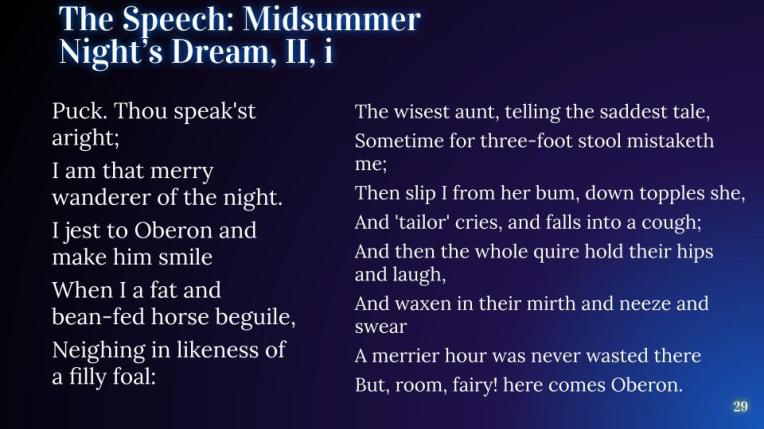
Puck. My mistress with a monster is in love.
Near to her close and consecrated bower,
While she was in her dull and sleeping hour,
A crew of patches, rude mechanicals,
Were met together to rehearse a play
The shallowest thick-skin of that barren sort,
Who Pyramus presented, in their sport
Forsook his scene and enter’d in a brake
When I did him at this advantage take,
An ass’s nole I fixed on his head:

Anon his Thisbe must be answered,
And forth my mimic comes.
So, at his sight, away his fellows fly;
And, at our stamp, here o’er and o’er one falls;
He murder cries and help from Athens calls.
I led them on in this distracted fear,
And left sweet Pyramus translated there:
When in that moment, so it came to pass,
Titania waked and straightway loved an ass!

slideshare id=52829293&doc=randj-150916030030-lva1-app6891]

References:

Shapiro, James. A Year In the Life Of William Shakespeare, 1599. Chapter 6: Things Dying and Things Reborn.

https://www.bbc.co.uk/programmes/articles/3fLDRSY7r9rJhrVFWy99Mly/transcript-shakespeares-restless-world-programme-7

https://www.independent.ie/entertainment/theatre-arts/is-shakespeare-responsible-for-the-stage-irishman-34638347.html

https://www.irishtimes.com/culture/stage/what-ish-my-nation-shakespeare-s-irish-connections-1.2619173

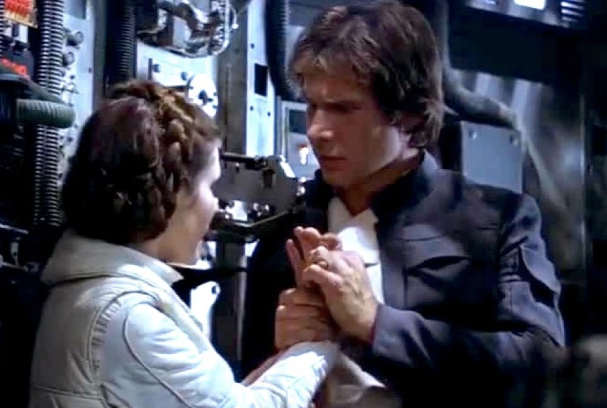
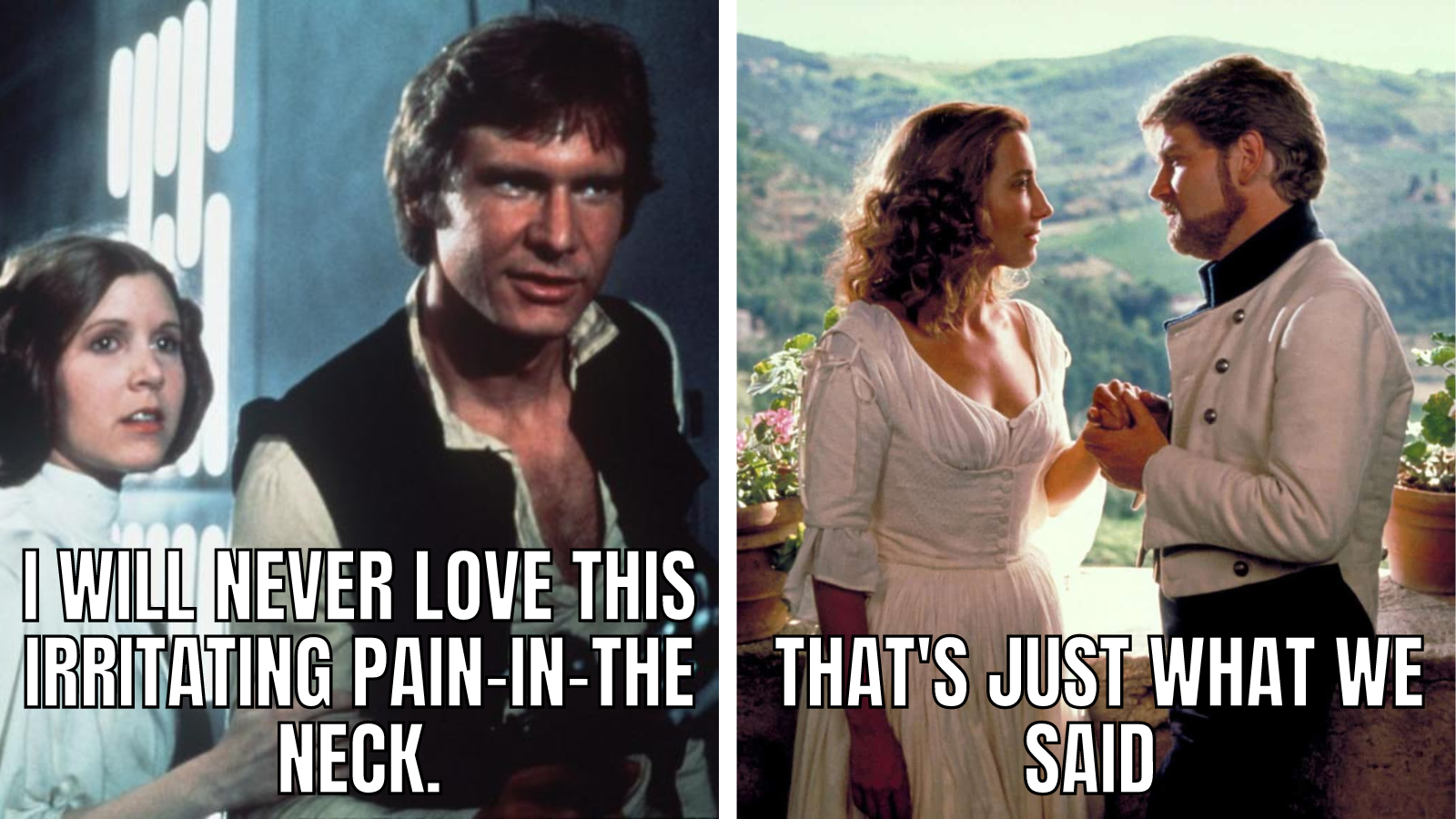
New Podcast: William Shakespeare’s Star Wars Part II: THe Journey of Han and Leia

Greetings and welcome to part 2 of my podcast on The Empire Striketh back, the 5th installment in the William Shakespeare’s Star Wars Series.

Last time I mentioned Luke’s journey and how Droesher adapts the cinematic quality into Elizabethan drama through soliloquies.This time, I’m going to talk about the other main characters, Han and Leia. In my opinion, Doescher writes their journey much better and gives them lots of good romantic and comedic dialogue. I am also privileged that this time I will have some help with the voices- two professional actors, Hal Jourdan and Janine Ashley have graciously agreed to be part of this podcast, lending their voices to Han, Leia, the Wampa, and Luke. I’m grateful for their involvement and would love for you to check out their other work onstage. Below are some Youtube clips I made using their voices. Enjoy!

Review: Edward II by Christopher Marlowe

For Pride Month, I’d like to draw some focus to a celebrated LGBTQ film, based on a play that, while not Shakespearean, it was by one of Shakespeare’s contemporaries and one who influenced Shakespeare a lot. This film, Edward II, directed by Derek Jarman, was based on the play of the same name by Christopher Marlowe (1564-1593). The film came out in 1991, during the AIDS crisis, when gay and lesbian people were not only fighting for their lives against a devastating epidemic but also for acceptance from the heterosexual community. This film is not only a striking, well-acted, well-directed adaptation of Marlowe’s play; it is also an encapsulation of the fears, struggles, and anxieties of the LGBTQ+ community at the time.
Plot Summary/ Great Quotes

Biography Of King Edward II

Edward II was the son of the infamous King Edward I, aka, Edward the Longshanks, the Scottish Hammer. He lived from 1307-1327 – until he was assassinated.

Fact Vs. Fiction

Peter Hanley as Prince Edward in “Braveheart” (1995) directed by Mel Gibson.

Aside from a few historical footnotes, I’m betting that when we think of Edward II, we mostly think of this portrayal in the 1995 film Braveheart. Frankly, most contemporary accounts of Edward II’s reign are similar to this portrayal- vain, spoiled, weak, deluded, and an utter disgrace to his warrior father. One of his greatest embarrassments was his army’s catastrophic defeat at the Battle of Bannockburn in 1314. Edward’s sources mainly portray him as weak and feeble compared to his father, but we have to remember that this was a cruel, warlike society with very little place for anyone who didn’t conform to stereotypical masculine virtues. Probably in the minds of the English court, Edward’s homosexuality was linked with his failures as a king. It was up to Jarman’s production to make Edward feel more like a real man, and not just a gay stereotype.

Play Vs. Movie

In the play, it’s ambiguous whether Galveston really loves Edward, or if he’s using him for the king’s power and protection. In the movie, Galveston is definitely using Edward, making the king’s fawning all the more pathetic and tragic. As his son asks: “Why do you love him when all the world hates him?” This makes our sympathies teter between Edward and his court- we wish Edward would open his eyes and get rid of Galveston, but at the same time, who hasn’t been blinded by love? At the same time, Galveston has been hurting the country, and taking Edward away from his court and his queen. Like many other stories of monarchs in love, including the real-life story of our current king, there is a constant tension in the court between the monarch’s personal desires, and his or her responsibilities to the country.

Biography of Marlowe

Edward II and Richard II

Many scholars believe that Marlowe’s play helped influence Shakespeare’s Richard II, as they both center around weak, sometimes effeminate kings that fall prey to the machinations of other lords. In Shakespeare’s play, it is possible to play Richard as being in love with some of his favorite courtiers, but nothing is explicit. Obviously, Marlowe was much more overt in Edward’s love for Gaveston. To demonstrate how these plays are similar, here’s Ian McKellen playing Richard II:

Is this play Homophobic?

On the one hand, the story shows Edward as effeminate, weak-willed, and poor in judgment which does align with offensive homosexual stereotypes. On the other hand, the other lords of the court are portrayed as cruel and intolerant, and Jarman definitely makes Mortimer a cruel and homophobic individual. In addition, when Edward’s son Edward III, who famously conquered England and France, he is shown in the movie wearing drag, which clearly shows that a member of the LGBTQ community need not be weak or ineffective. It also shows that Edward III has inherited his mother’s strength, not his father’s weakness.

Sources

https://www.luminarium.org/encyclopedia/edward2.htm

New Video: Yoda Speaks Shakespearean QUotes!

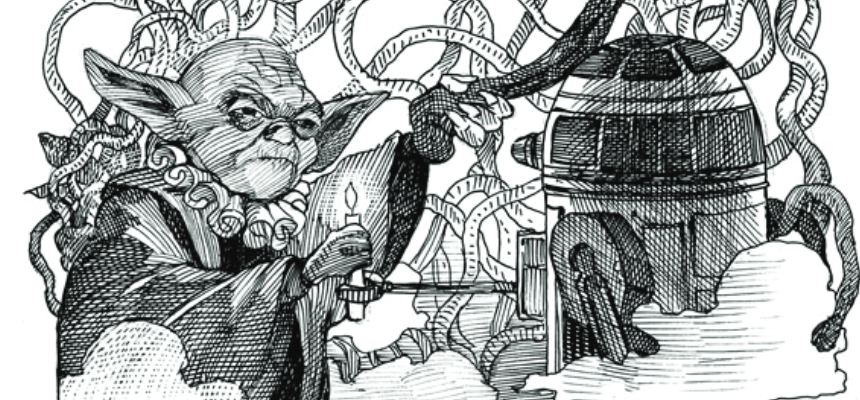
This is part of my upcoming podcast where I demonstrate how similar Yoda’s speech is to some Shakespearean dialogue. Actor and puppeteer Frank Oz, who puppeteered the character and supplied the voice explained that the idea behind the character’s iconic speech pattern was a discovery he made reading through the script:

“It’s funny you ask about [Yoda] because I was just looking at the original script of The Empire Strikes Back the other day and there was a bit of that odd syntax in it, but also it had Yoda speaking very colloquially. So I said to George [Lucas]: ‘Can I do the whole thing like this?’ And he said: ‘Sure!’ It just felt so right.”  

https://screenrant.com/star-wars-yoda-speak-speech-pattern-frank-oz-response/

There are a lot of in-universe theories as to why Yoda speaks like this. David Adger, from Queen Mary University of London has a theory that, much like many Latin languages have a different syntax than English, perhaps Yoda is speaking in the syntax of his language while speaking English:

He’s speaking English but changed the structure of it to be like his native language,” Adger points out. “We can find out something about Yoda’s native language by looking at how he speaks English, in the same way as I can find out about a French person’s native language by looking at how that French person speaks English. Yoda says things like ‘the greatest teacher failure is’… If you were to say that in a language like Hawaiian … it would be almost exactly the same … putting the predicate before the subject,” the professor used as an example.

David Adger, qtd in Comic Book.com, https://comicbook.com/starwars/news/star-wars-yoda-frank-oz-empire-strikes-back-dialogue-lines/
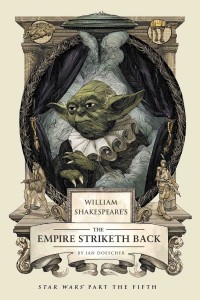
Book cover for Ian Doescher’s “The Empire Striketh Back,” a Shakespearean parody of Star Wars Episode 5.

Why Do Shakespeare and Yoda speak like this?

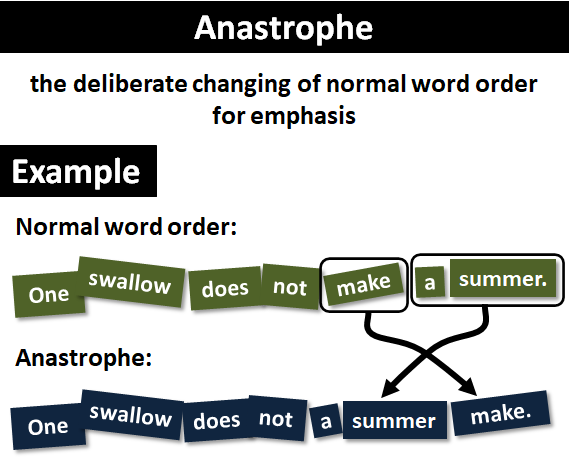
Example of Anastrophe from https://www.grammar-monster.com/glossary/anastrophe.htm.

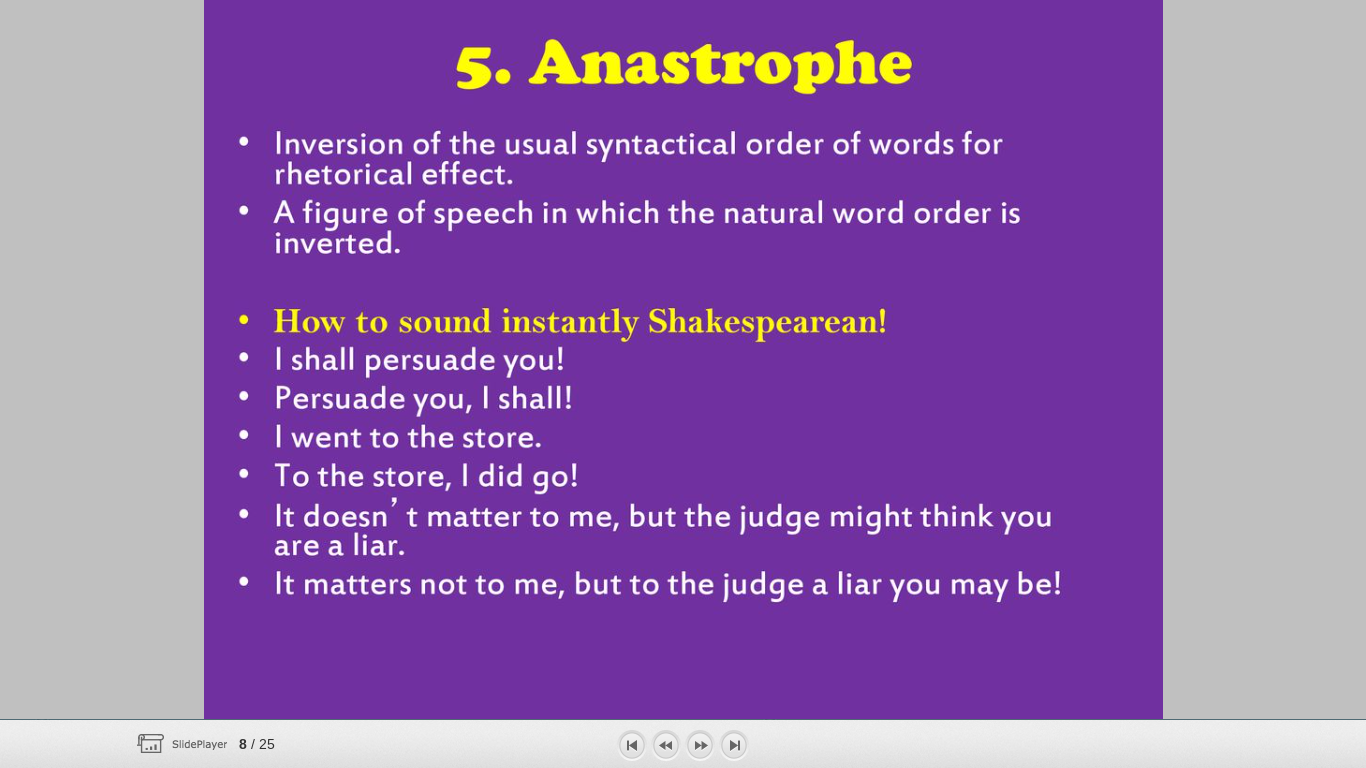
From a Shakespearean perspective, what Yoda is doing is called anastrophe, a rhetorical technique that is used for emphasis. Instead of the familiar- Subject-Verb-Object syntax of English, the order is flipped to grab the reader/ listener’s attention:

http://rhetoric.byu.edu/

According to Silvae Rhetorica (The Forest of Rhetoric), the word Anastrophe is Greek for “backward turning,” where the writer twist the word order around. As I said before, this creates a surprising effect, much like this painting by Picasso:

“People take the eye for granted. If I paint an eye in an eye socket, they take it for granted. If I take it out of the eye socket and stick it somewhere else, it comes as a shock, and they see the eye anew.”

— Pablo Picasso

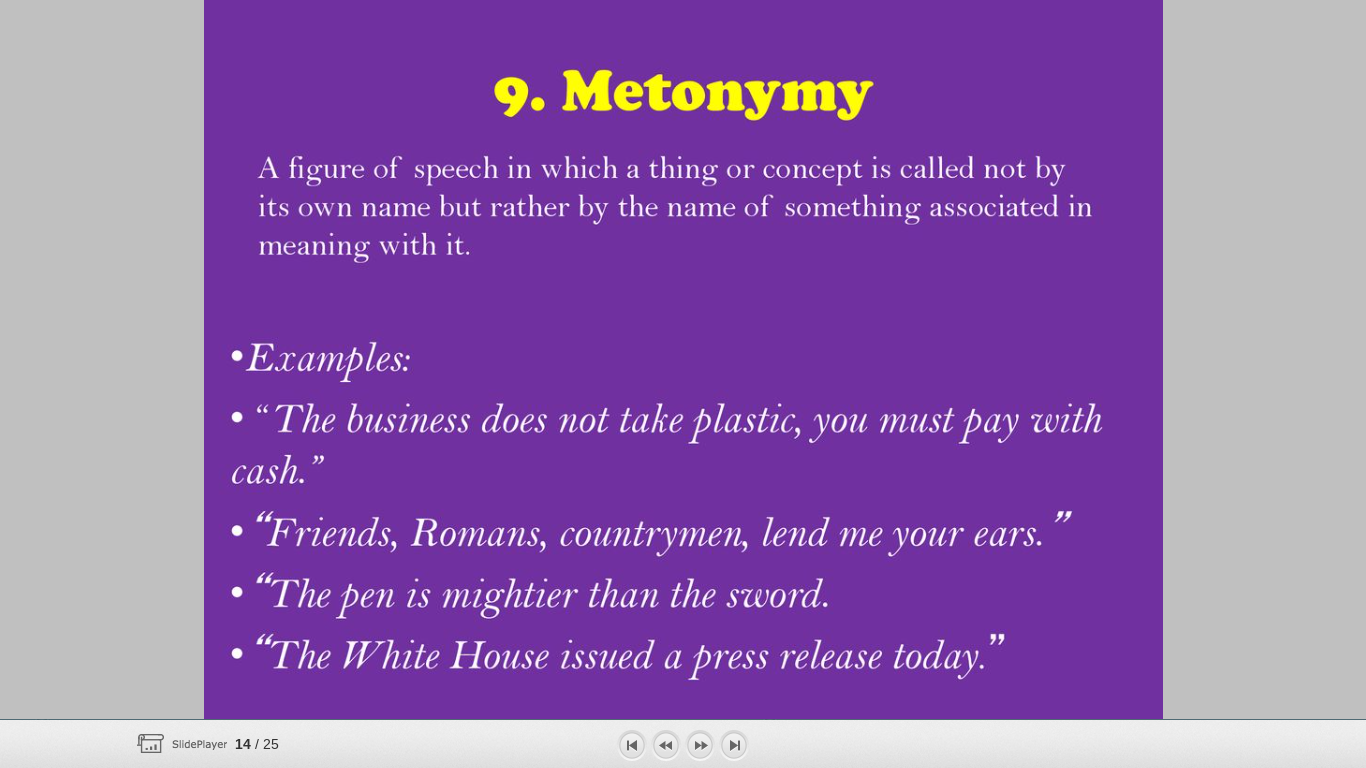
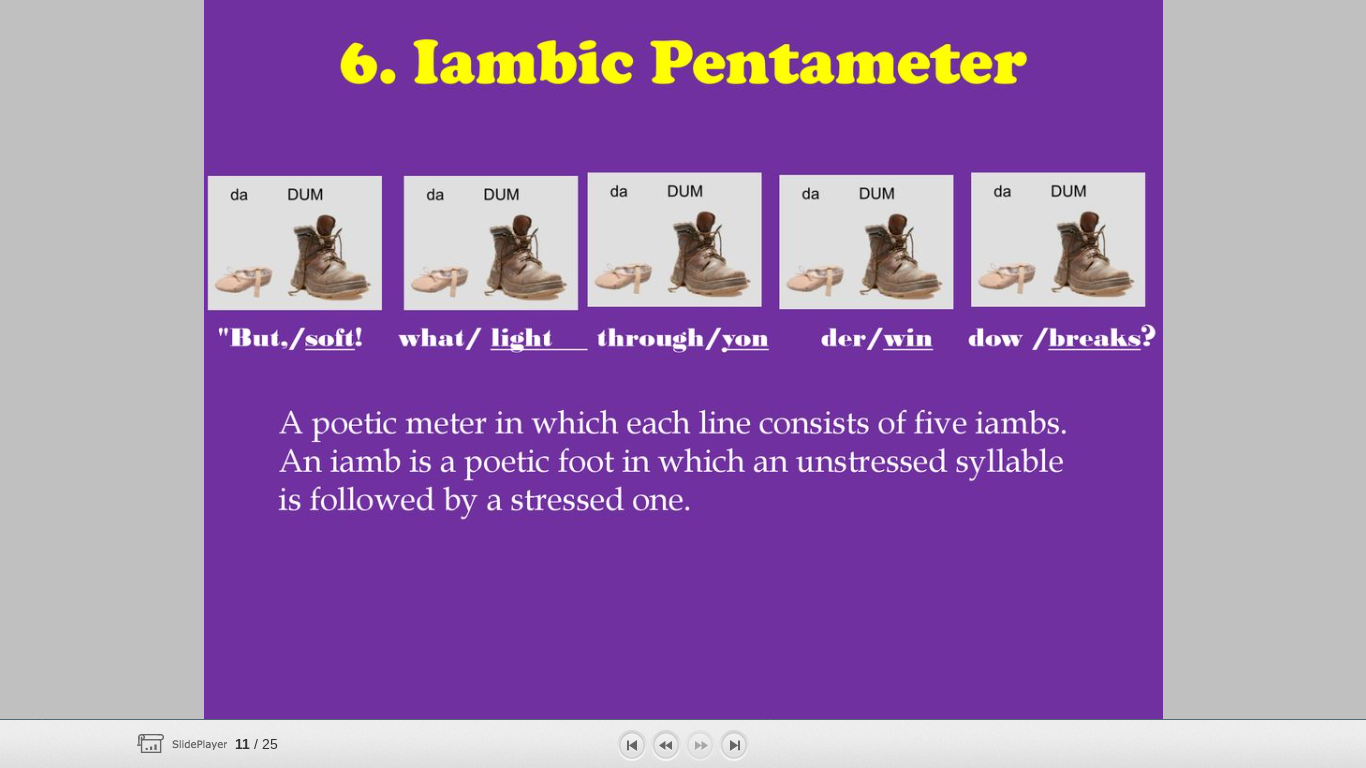
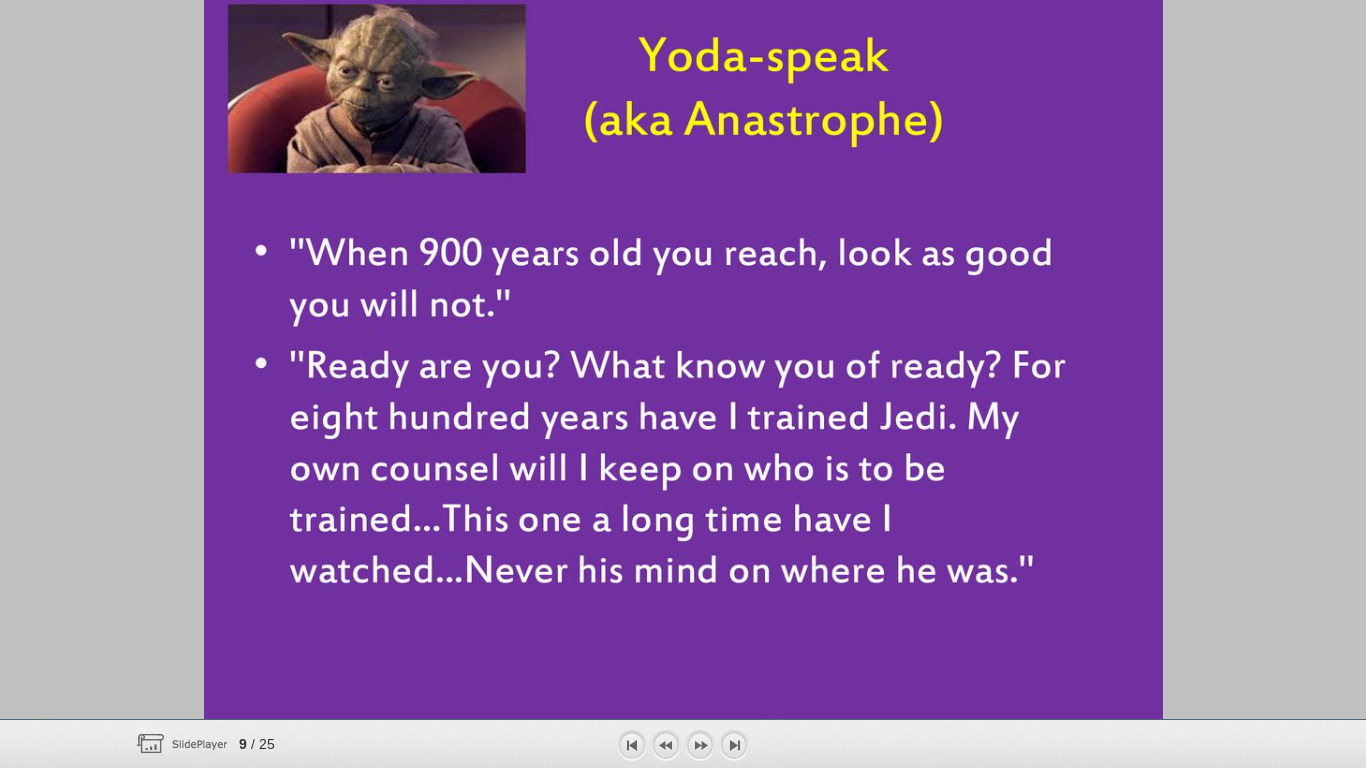
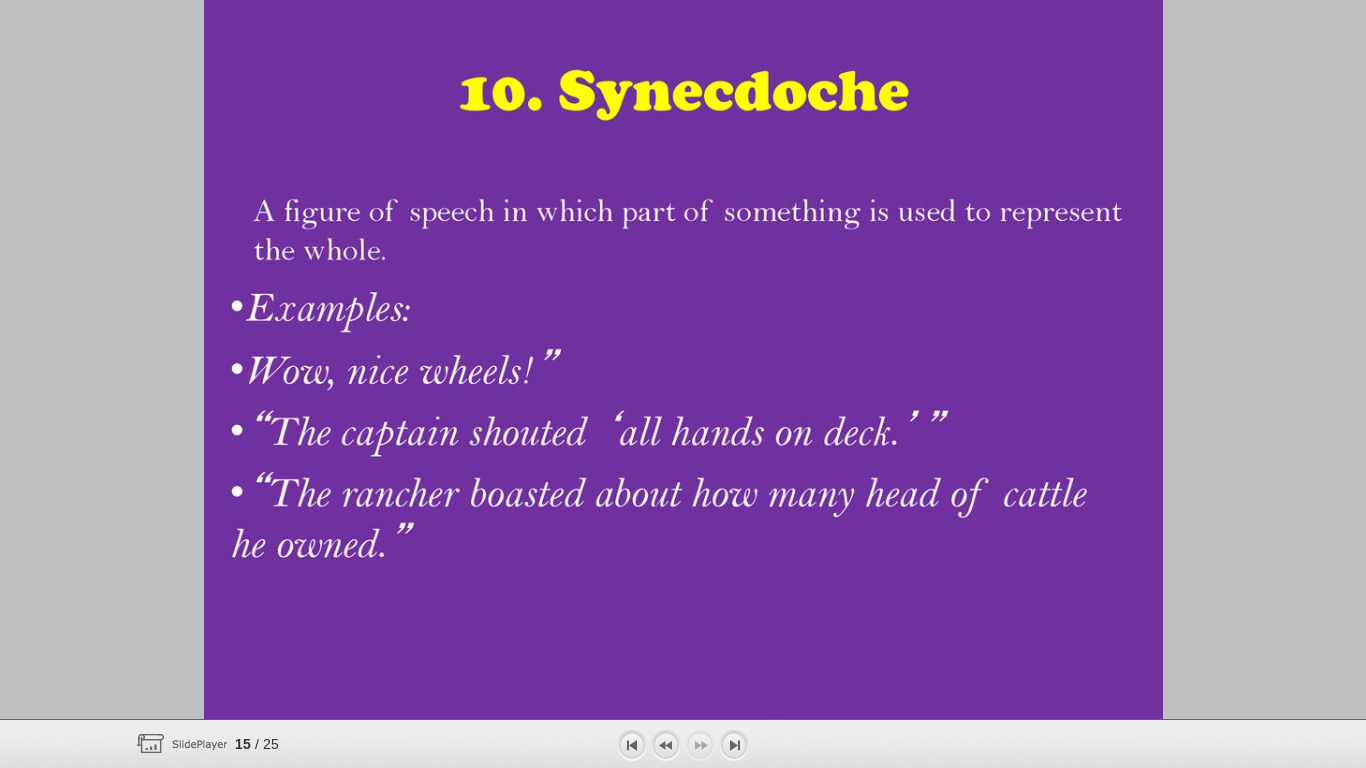
In the following slides, (which I found from Slideplayer.com), you can see examples of how Shakespeare and Yoda use anastrophe.

https://slideplayer.com/slide/13750257/

So I hope this post has helped you understand the force of Yoda’s unique style of speaking that was first used by The Bard!

anastrophe - Phocabulary word - Photo Word of the Day to improve and  enhance word memory. Beginner, intermediate, advanced words including  definition, synonyms, and antonyms.

If you liked this post, please listen to my new podcast about Ian Doescher’s Shakespearean parody of Star Wars: The Empire Strikes Back, which I’ll publish on May 4rth (hopefully)

https://open.spotify.com/show/65BtDNOfX5Ls5yPoepwHHM .

Shout Out to William Shakespeare In Media: William Shakespeare’s Star Wars

While researching for my upcoming podcast on Shakespeare’s Star Wars, I found this great article by fellow Shakespeare blogger William Shakespeare In Media. They have a great analysis of Ian Doescher’s parody “William Shakespeare’s Star Wars,” with some details I didn’t know the first time around! So please show them your support, and tell them Shakespearean Student sent you!

Also, feel free to peruse my podcast and post on “Verily: A New Hope.”

I’m very excited for the content I have coming up, BEGUN STAR WARS WEEK HAS!!!

Special Discount For My Online Class:

Scan the QR code to see my list of classes.

This Friday is the grand premiere of my new online class: “Shakespeare: The Lost Play,” where you discover who stole Shakespeare’s play. Below is the latest trailer.

Since I want as many people to play as possible, I’m creating a coupon: Get $10 off my class “Shakespeare’s Lost Play Mystery Game” with coupon code HTHES4OXNY10 until May 8, 2023. Get started at https://outschool.com/classes/shakespeares-lost-play-mystery-game-ny9HhlxI and enter the coupon code at checkout.

New Outschool Class: Shakespeare- The Lost Play

This is an interactive game that teaches the craft of Shakespeare’s writing and stagecraft in the form of an Elizabethan escape room. You must find the lost play of William Shakespeare before a mystery thief destroys it! Solve the clues and learn about Shakespeare’s writing and theater to uncover a historical mystery!

Course Description

In this fully online, fully interactive game, you play as a member of Shakespeare’s company. You’ve just discovered that someone has stolen Shakespeare’s new play “Love’s Labors Won,” and you need to find it before the show tonight! In the course of the game, you search the Globe Theater and Shakespeare’s study. Then a mysterious note reveals that someone has stolen the play! You must figure out who it is, and find the play before the thief burns it! Through the course of the game, you will learn about Shakespeare’s theater, the secrets of how he wrote some of his great plays and beautiful poetry, and the work of his contemporaries in a fun, interactive way.

The class is organized into four parts, based on four locations where you will search for the missing play:

Part I- Search the Theater

Part I- Search the theater (website/ Slides/ Jamboard)
You learn the basic parts of an Elizabethan stage (Google slides)
You label the parts of the theater (Google Forms)
You do a virtual tour of the theater (via Globe Theater.com)
Web quest- answer 3 questions about Shakespeare’s Globe: https://www.shakespearesglobe.com/ (handout)
You search the tiring house (the backstage area of the Globe), and find the letter from the thief (Sites).

Part II- THe Crime


A video plays where the thief declares that he’s stolen Shakespeare’s play for money and revenge.
After the video, you will learn about plays, printing, and theft in Shakespeare’s day through a series of Google Slides
Activity- make a folio, quarto, and octavio with just a piece of paper (handout)
Web Quest- answer 3 questions about how Shakespeare’s plays were printed and the first folio (Slides)
Activity 2: make an actors’ scroll or roll the way that Elizabethans might use (video)
Easter egg- find a pair of gloves in the print shop and answer questions.

https://www.shakespeare.org.uk/explore-shakespeare/blogs/shakespeare-100-objects-pair-gloves/

Part III: Write a New Play

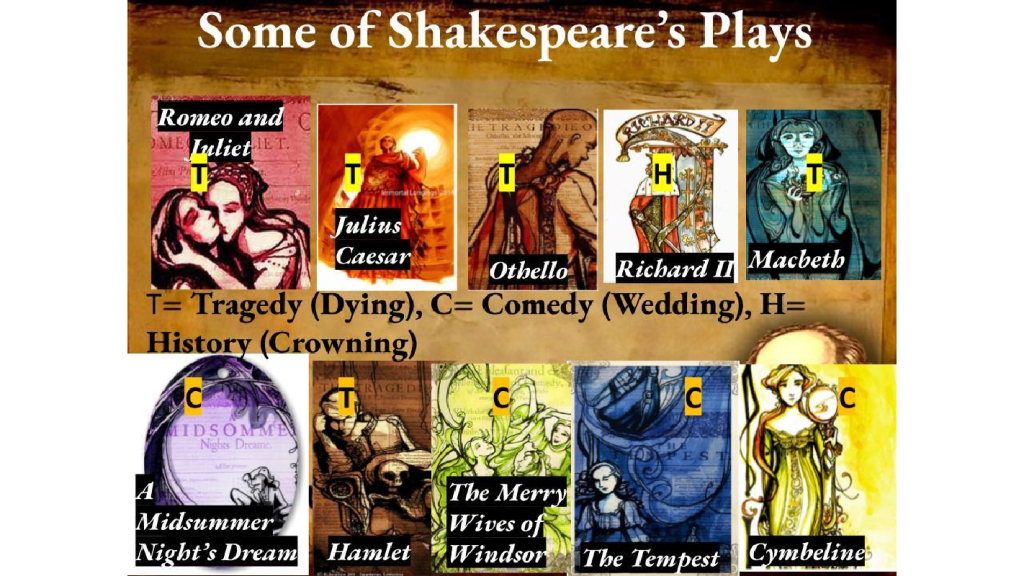
You’ll gain new understanding of the types of plays Shakespeare wrote and their basic plot structure via Google Slides. You’ll then take a short quiz to confirm what you learned.

-Plot Structure
You’ll learn about the basic structure of Elizabethan plays via Google Slides.
A second set of slides will demonstrate the plot structure of Romeo &Juliet
You’ll mix and match a series of plot elements to create your own Elizabethan play via Jamboard

Tragedy:

  • A hero is given some unwelcome news
  • He feels betrayed by those close to him
  • He agonizes about the ethics of killing someone close to him.
  • He kills someone (or banishes an honest man) and immediately falls into a downward spiral.
  • The hero does (this will be a mandatory choice)

Comedy:

  • The heroine disguises herself as a boy
  • A hero or heroine swears (s)he will never fall in love and immediately falls in love
  • The heroine pretends not to be interested in the hero, (but secretly loves him).
  • A loyal best friend is captured, sent to prison, or bewitched
  • The hero and heroine hate each other due to a series of misunderstandings.
  • The hero and heroine get married (this will be a mandatory choice).

History:

  • An ambitious young man arises to challenge the king for the throne.
  • The old king dies, (or is murdered)
  • A new king becomes king
  • Duels and or battles
  • Someone dies in battle
  • Someone is murdered, assassinated, or sentenced to death.
  • New King gets married
  • King and Queen reign peacefully (at least for now)

Romance ( if students pick this option, they can mix and match everything (except the main character dying)

Verse practice-
You’ll learn about the verse Shakespeare wrote, through a series of slides and a jam board.
Activity- You will be given a series of famous lines from plays and movies, (such as a quote from a Disney Movie, a Star Wars film, or a song). You will then determine if it is an iambic pentameter line (Google Slides).
Easter egg- you find a second note from the thief (Google Sites).

Part IV- THe Tavern

You will look at a series of pictures and videos about Shakespeare’s contemporaries and try to figure out which of them stole the play. Through the handout, you will conclude who the thief is.
You find a dagger in the tavern and take it. Outside the tavern, you will fight the thief in a short animation. GAME OVER.

THe FIrst Class starts April 28th, 2023. CLick here to register!