How Accurate Is Medieval Times?

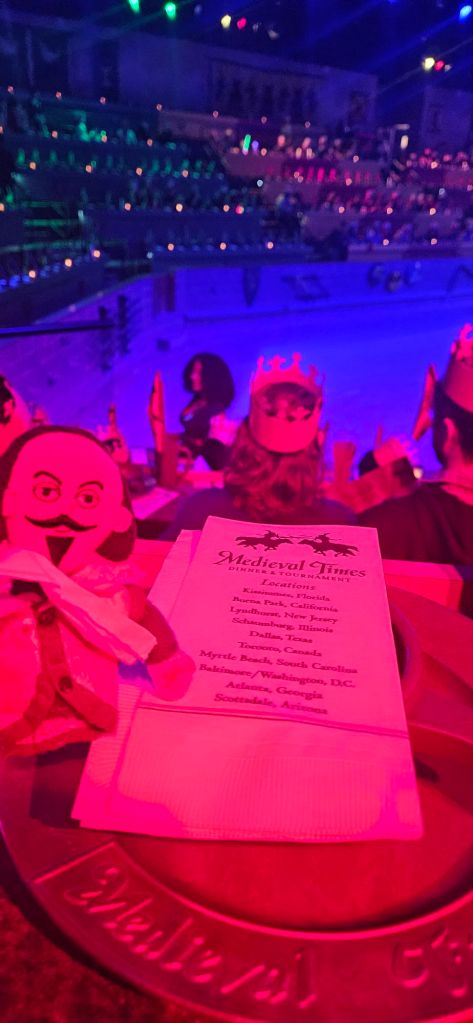
In many ways, Medieval Times is a campy, theme park-esque place. Done’t get me wrong, I love this place and puppet Shakespeare and I enjoyed it immensely, but from a historical perspective, Medieval Times has more in common with Disney Land than British history. That said, it still contains a nod to this ancient culture that praised and highly ritualized the concept of judicial combat.


The Court

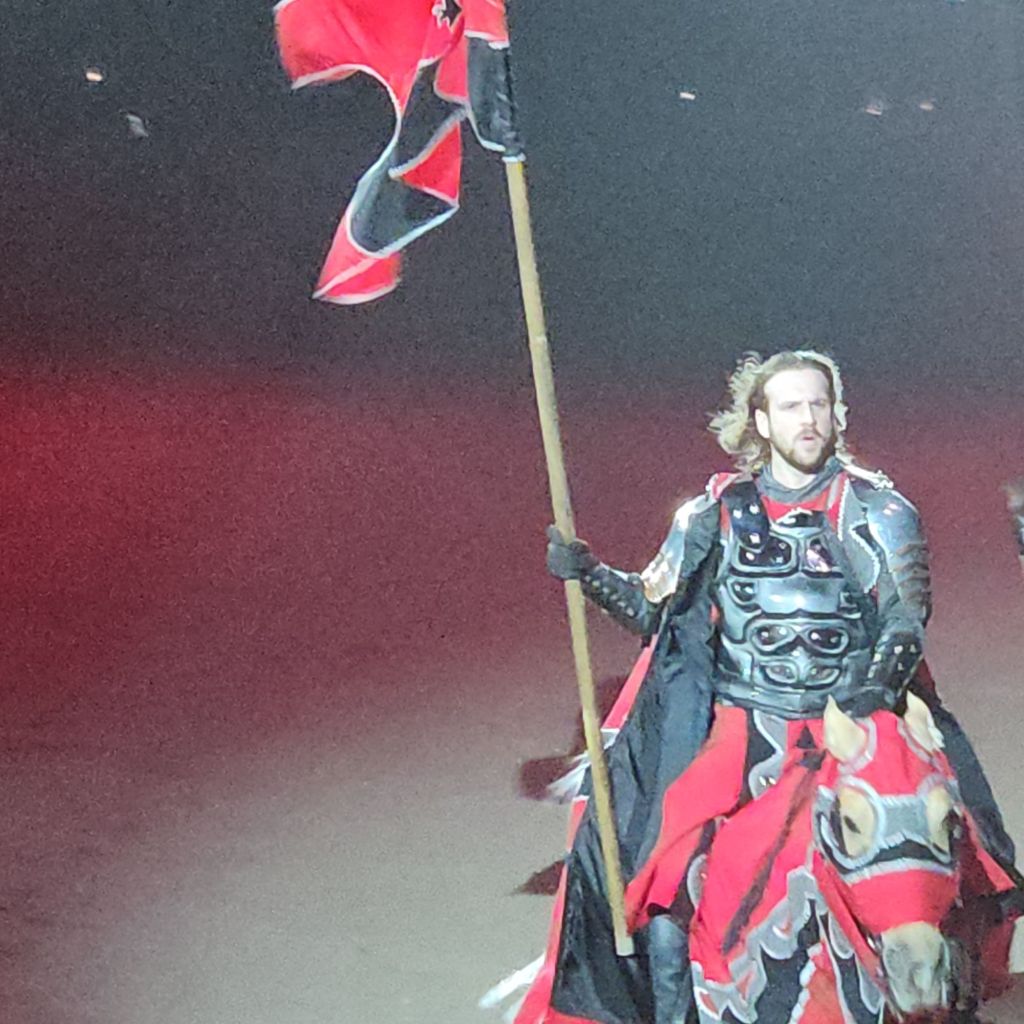
You are cast as a lord or lady, representing a fantasy kingdom (which corresponds to the color of the crown you wear). I was fortunate to get the Red crown for Valentines Day, and was seated right next to the King and Queen (more on that later). The hall was decorated with colored banners and each kingdom was introduced with trumpets and flags. The feast was a celebration of the uniting of all the surrounding kingdoms under the King and Queen. As the king and queen came out, everyone cheered and the royals toasted each kingdom and praised and thanked them all for their service to the crown. The monarchs then promised each lord and lady there a greater reward with sports, games, spectacles, and of course, the feast itself.

Feudalism

Map of the kingdoms in England during the Wars of the Roses

As I mentioned in my Game of Thrones post, a king’s main job was to unite all the lords in the land and get them swear fealty to him, binding the whole country under the crown. It was King Henry VI’s failure to keep the lords in line that resulted in the civil war known as the Wars of the Roses. Feasts like the one in Medieval Times, were essentially propaganda to keep the lords allied with the king. They demonstrated the power of the king and communicated loudly and clearly that the lands would be stronger together, as opposed to endless war. So, this kind of pageantry was political as well as entertaining, and the king and queen’s dialogue preserves the purpose of this kind of feast, which as a history nerd, I deeply appreciated.

Court Sport
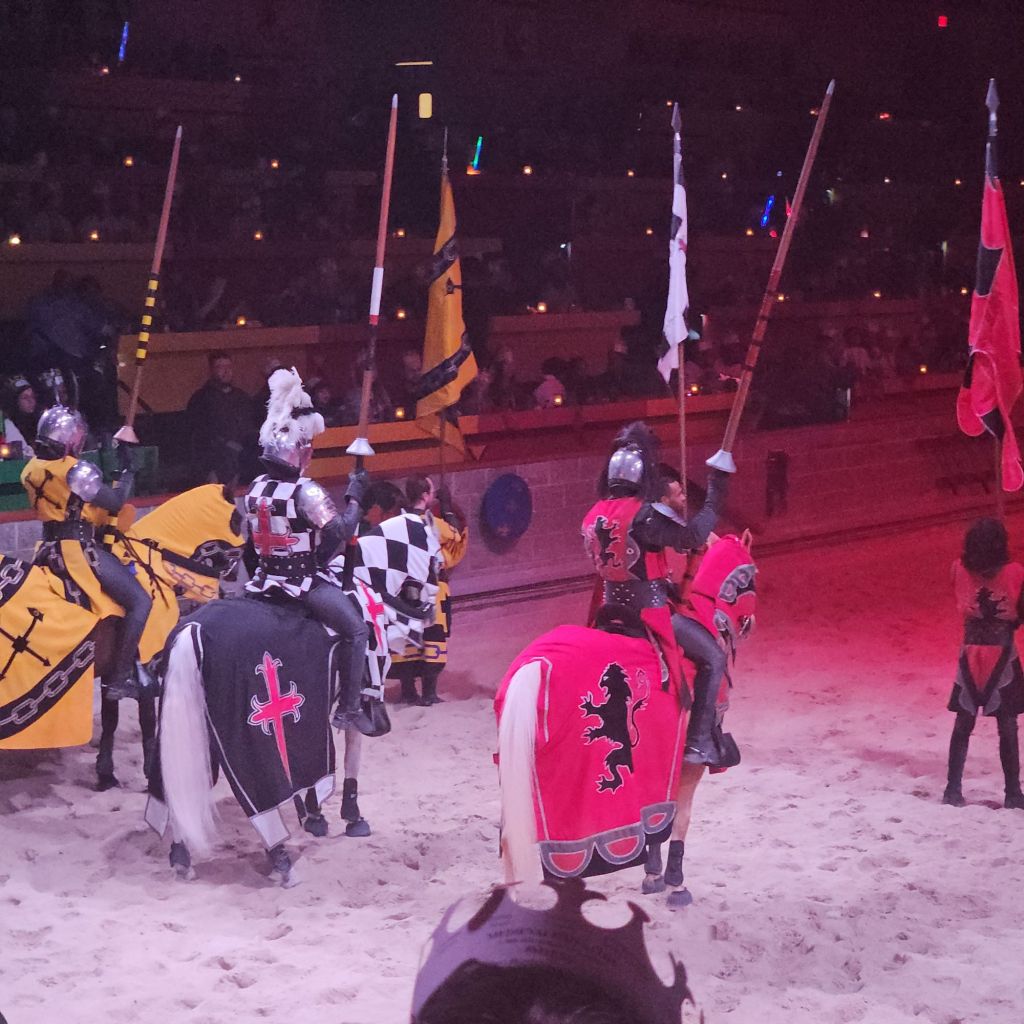

While we waited for the feast, the knights entertained the court with displays of their skills and strength. They rode towards the quintain and hit it with their lances, threw spears at a target, and even their horses got a chance to trot without riders, showing how well trained they were.
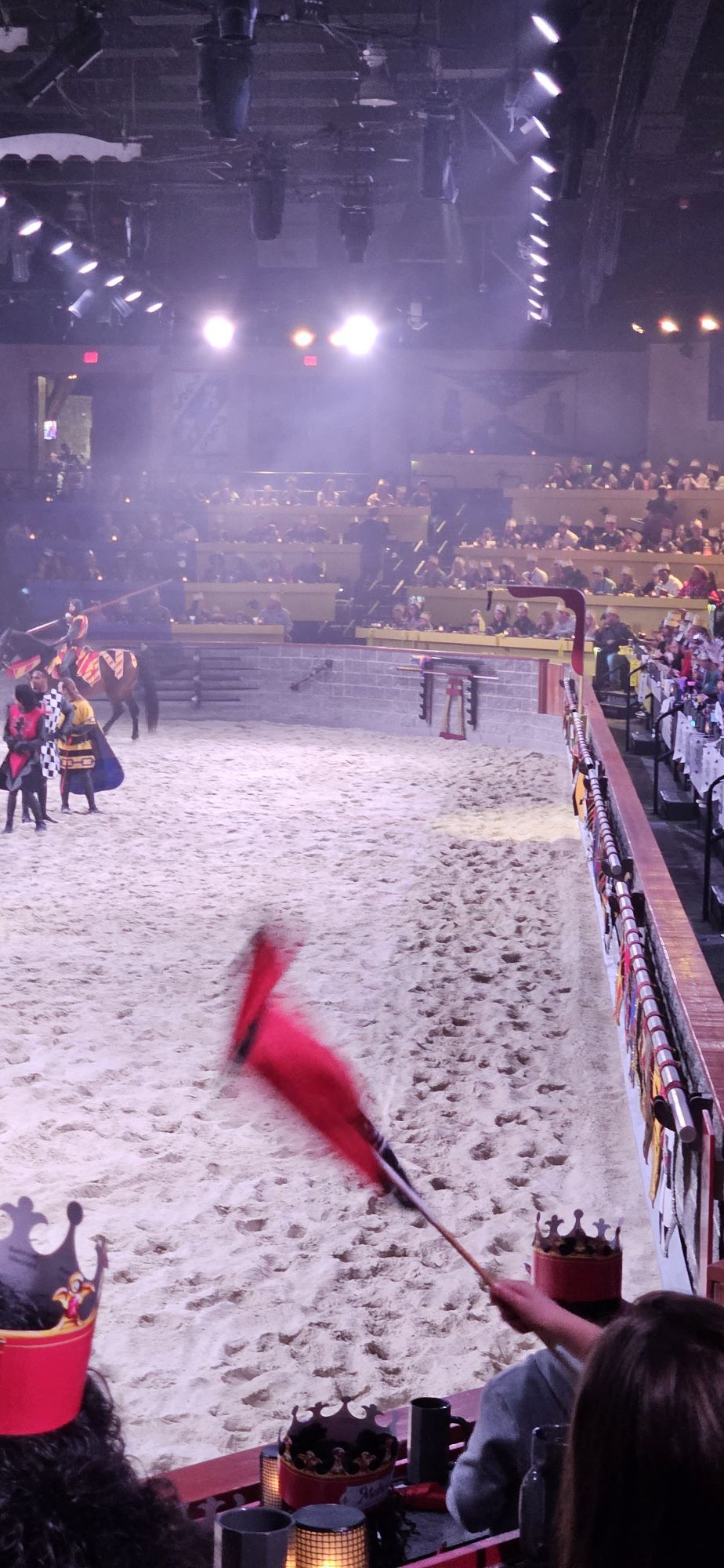
The knights practice throwing spears at the target

The Joust

Shakespeare’s Pericles, Prince Of Tyre has a very elaborate and detailed depiction of how jousts worked in the Medieval and Renaissance eras. Shakespeare knew that the joust was the ultimate display of skill, chivarly, and the ideals of courtly love. Knights were portrayed as romantic heroes who fought for a simple favor from a lady such as a rose or handkerchief and each one defined himself by his strict code of honor and virtue. All these traditions are hightlighted in the scene where Pericles fights in a tournament to gain the love of the princess Taisa:

Enter A pavilion for the [p]reception of King, Princess, Lords, &c.

[Enter SIMONIDES, THAISA, Lords, and Attendants]

Simonides. Are the knights ready to begin the triumph?
First Lord. They are, my liege;750
And stay your coming to present themselves.
Simonides. Return them, we are ready; and our daughter,
In honour of whose birth these triumphs are,
Sits here, like beauty's child, whom nature gat
For men to see, and seeing wonder at.755
[Exit a Lord]

Thaisa. It pleaseth you, my royal father, to express
My commendations great, whose merit's less.
Simonides. It's fit it should be so; for princes are
A model which heaven makes like to itself:760
As jewels lose their glory if neglected,
So princes their renowns if not respected.
'Tis now your honour, daughter, to explain
The labour of each knight in his device.
Thaisa. Which, to preserve mine honour, I'll perform.765
[Enter a Knight; he passes over, and his Squire]
presents his shield to the Princess]
Simonides. Who is the first that doth prefer himself?
Thaisa. A knight of Sparta, my renowned father;
And the device he bears upon his shield770
Is a black Ethiope reaching at the sun
The word, 'Lux tua vita mihi.'
Simonides. He loves you well that holds his life of you.
[The Second Knight passes over]

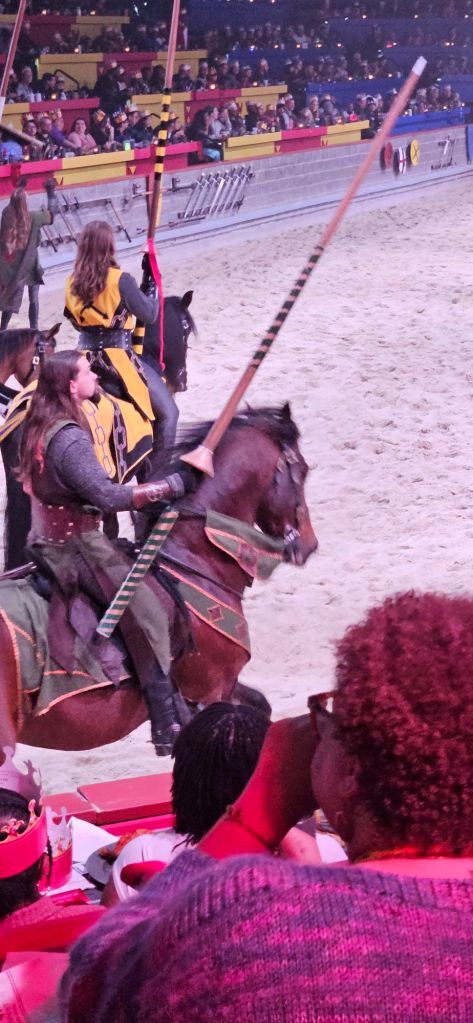
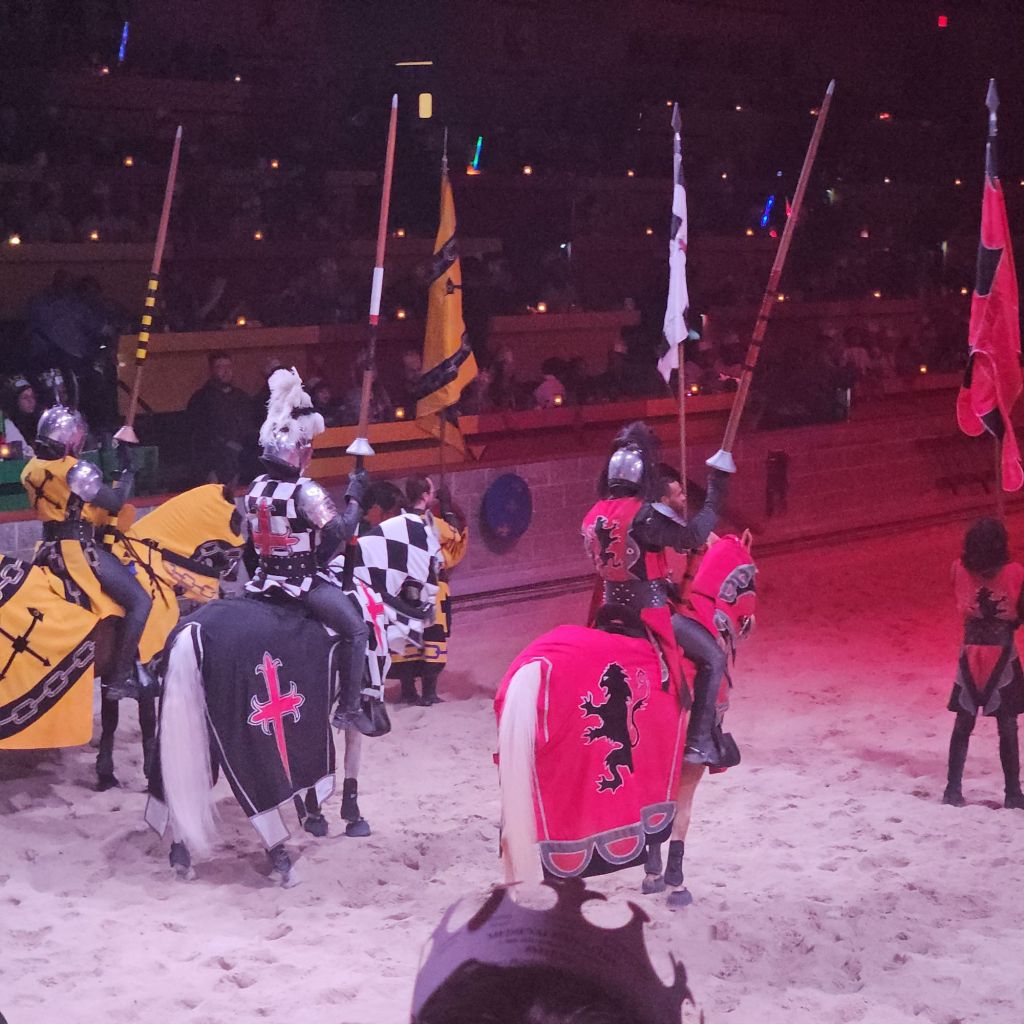
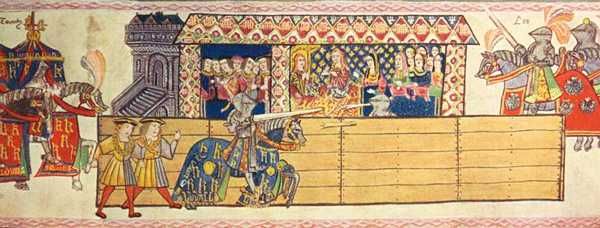
Chivalric ideals aside, the joust also had a practical purpose- it was a way for knights to train for war, an a way for them to win fame, money, and good reputations at court. As you can see in the photos above, the knights were separated by a wooden barrier called “the tilt wall.” Each knight was identified by the colorful designs on their banners, shields, and the blanket draped over the horse. Once the king or marshal threw down the warder, the knights charged headfirst at their opponents, armed with shields, lances, and full armor. Knights scored points for breaking lances and shields or by knocking other knights off their horses. Naturally, to create the most impressive display possible, all the knights at Medieval Times fell off their horses and no lances broke.


First, and most important, was the Joust Royal, or "tilting," in which mounted knights armed with lances charged at their opponents across a barrier.
This was followed by a "tourney" in which mounted knights ran at each other without a tilt barrier (as pictured here).>
Combatants armed with spears and swords also fought on foot over a barrier
Best, Michael. "Chivalry and Duels." Internet Shakespeare Editions, University of Victoria, 28 Sept. 2016, ise.uvic.ca/Foyer/citing. Accessed 30 Sept. 2016.
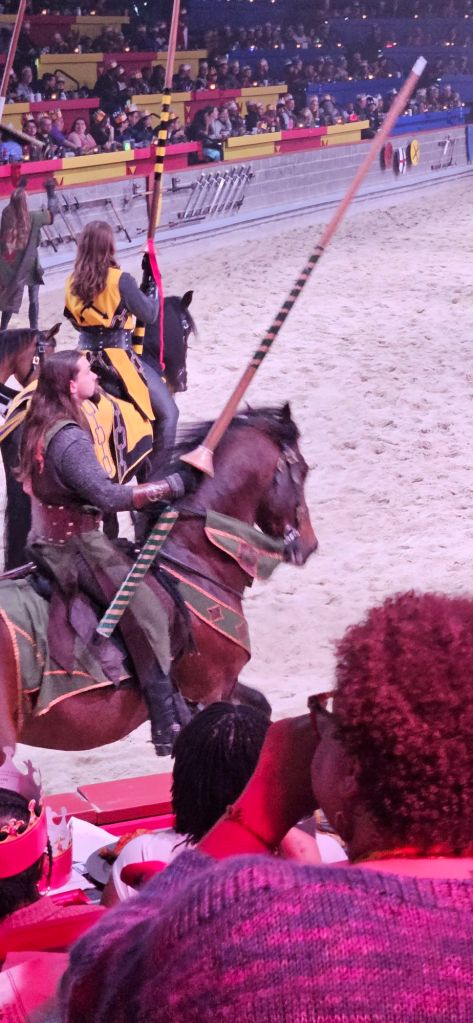
The Lance

The video above is from Weapons That Made Brittain, in which historian and reinactor Mike Loads, explains with vivid details, how Knights learned how to master the art of the Lance, and how the Lance became one of the most important weapons of the knight.

Duels
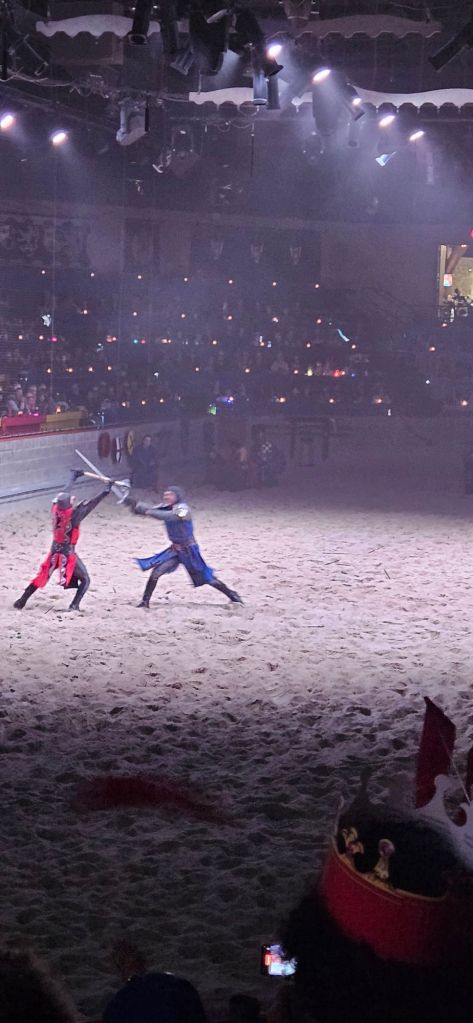
In the climax of the evening, the knights stopped fighting for sport, and started fighting for power! The Green Knight (as green with envy as his armor and horse), suddenly refused to dismount from his horse and began striking knights left and right. He then challenged the leadership of the king, threatening to rebel from the kingdom, along with his fellow knights! The king then decided to choose a champion to fight the Green Knight to the death! The Red Knight, (who as I mentioned before, represented my kingdom, and threw a rose as a favor to my family), picked up the glove of the envious Green Knight, thus signifying that he would be the champion, and fight for the fate of the kingdom!

Why the Green Knight?
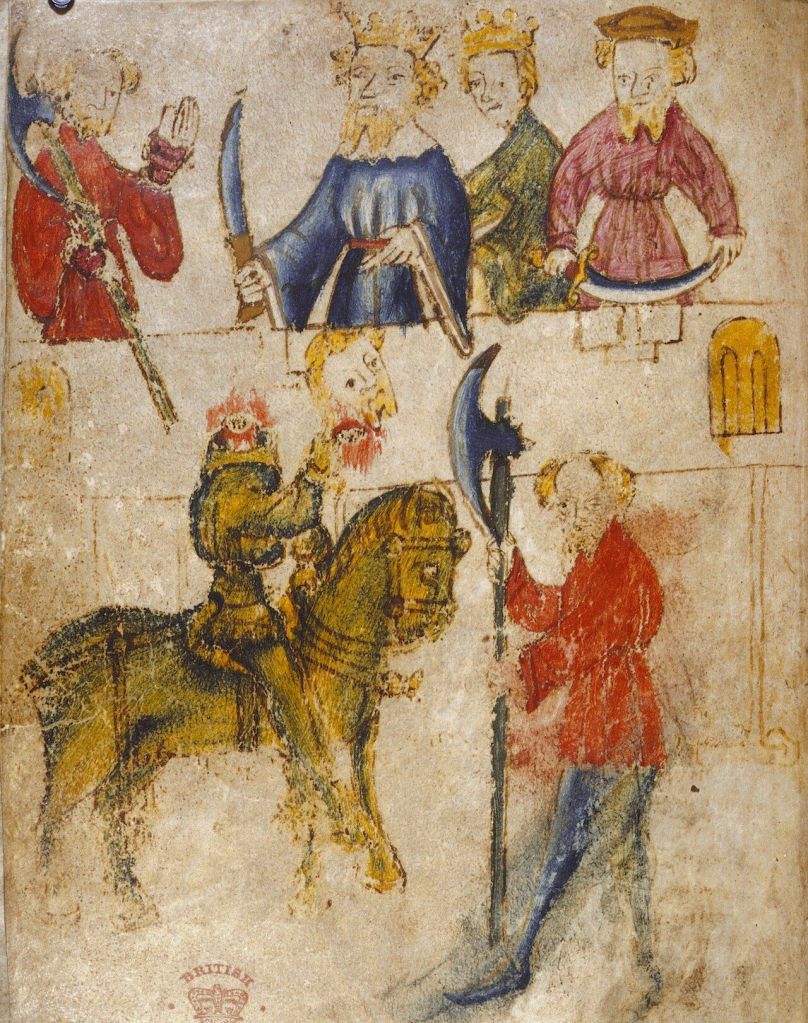
Illustration from Sir Gawain and the Green Knight, 14th century.

At the hall door comes a frightening figure,
He must have been taller than anyone in the world:
From the neck to the waist so huge and thick,
And his loins and limbs so long and massive,
That I would say he was half a giant on earth.
But more than anything
His color amazed them:
A bold knight riding,
The whole of him bright green. Sir Gawain and the Green Knight

In most (but not all) interviews and clips I’ve seen, the Green Knight is the bad guy- the one Knight whom almost everyone is supposed to root against. When I got home, I wondered why this was. After all, isn’t the black knight usually associated with villainy? My personal theory is that this is a subtle reference to the classic medieval story, Sir Gawain and the Green Knight. The eponymous Knight is supernaturally strong and able to even survive decapitation! He serves in the story, as the ultimate test for our young hero, Sir Gawain. I think the writers of Medieval Times definitely did their homework, making this Knight the antagonist.

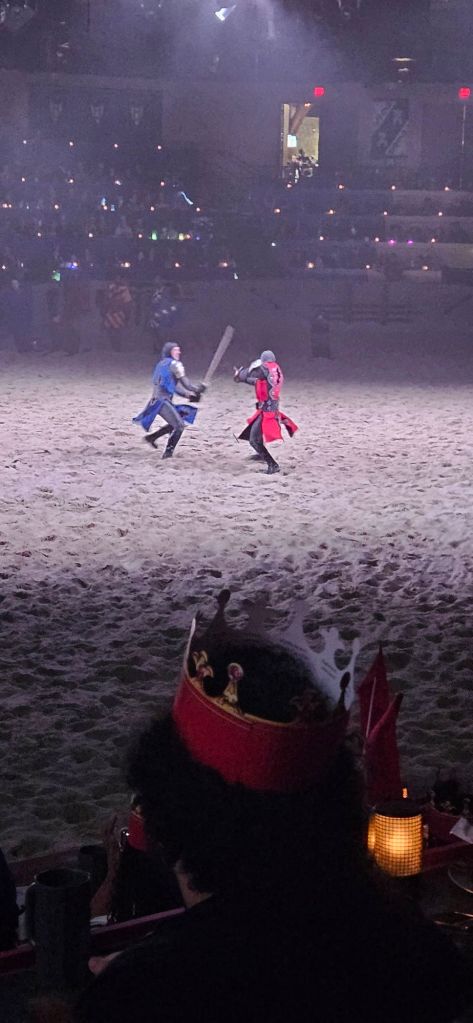
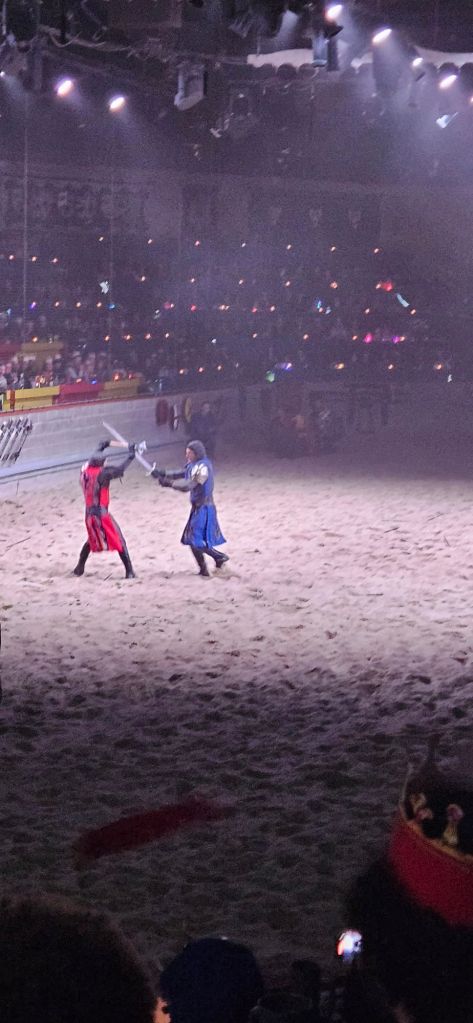
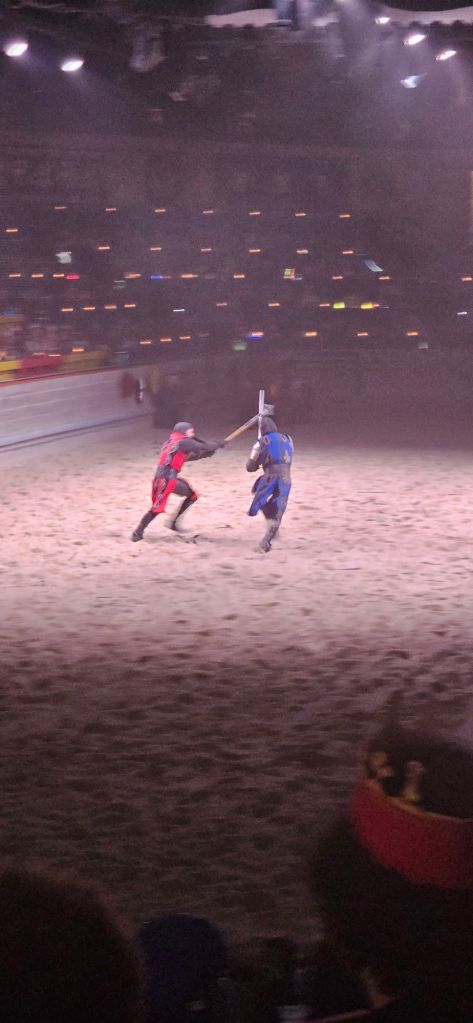
The duel began on horses, but quickly changed to single combat on foot. They fought with axes, maces, and of course swords.

Even though dueling was a bloody and dangerous pastime, it has a long history that even kings couldn’t erase. Back in Anglo-Saxon times, private disputes, (such as the murder of one’s father) could be settled through means of a duel. In this period, England was occupied by the Danes, (which we would now call Vikings), and several Viking practices of judicial combat survive. For example, the Hólmgangan, an elaborate duel between two people who fight within the perimeter of a cloak. These kinds of fights continued throughout medieval Europe and, like Medieval Times Shakespeare knew their devastating dramatic potential.

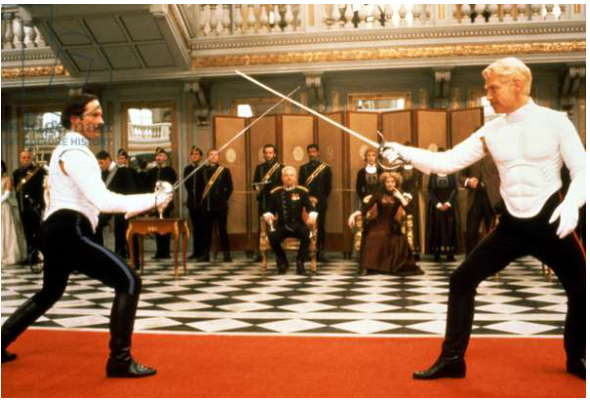
At the end of Shakespeare’s Hamlet, the revenge cycle between Hamlet, Leartes, and Fortinbras, comes to a close using a duel. Hamlet has murdered Leartes’ father but Hamlet did not intentionally kill him. This kind of legal dispute would certainly have been settled with a duel in Saxon times. This is one reason why Leartes scorns Hamlet’s offer of forgiveness at the beginning of the scene, and instead trusts in the outcome of the fight to prove his cause. Hamlet and Leartes begin fighting officially under the terms of a friendly fencing match, but it becomes clear early on that at least in the mind of Leartes, this is actually a blood-combat. Laertes is demanding blood for the death of his father, and like the Green Knight, his fight will decide the fate of the Danish throne.

  • HamletCome for the third, Laertes! You but dally.
    Pray you pass with your best violence;
    I am afeard you make a wanton of me.
  • LaertesSay you so? Come on. Play.
  • OsricNothing neither way.
  • LaertesHave at you now!

[Laertes wounds Hamlet; then] in scuffling, they change rapiers, [and Hamlet wounds Laertes].

[Laertes falls.]

By the Renaissance, dueling was highly controlled by traditions of honor and fair play. As Laertes admits, poisoning Hamlet and fighting him to the death without his knowledge would be considered treason, and highly dishonorable. The Green Knight does every possible thing to make the audience see him as the villain with his lack of courtesy, dirty tricks, and disdain for the king and queen. He is so dishonorable that, even Americans, who have nothing but disdain for monarchy and in real life, value independence and self-sovereignty, would rather take the side of the monarch and his stooge the Red Knight over the Green Knight, just because he refuses to play fair.

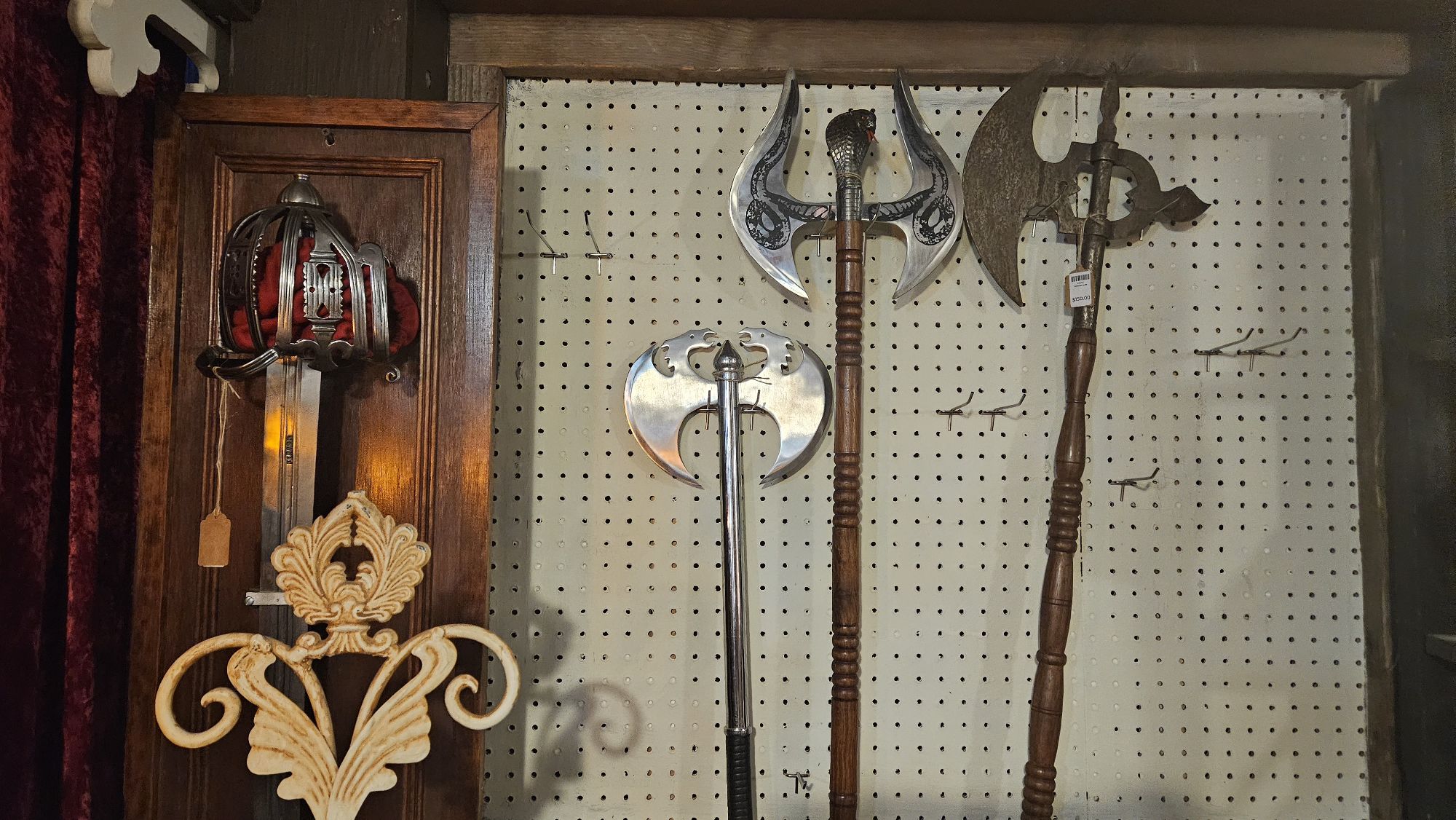
The Weapons

What Would I Do Differently?

Sources:

Sources-

  1. Ur- Hamlet
  2. Lear source- Hollinshed’s Chronicles
  3. Tony Robinson’s Crime and Punishment: http://www.youtube.com/watch?v=2yz9VLkNHJU&feature=youtu.be
  4. Truth Of the Swordhttps://www.youtube.com/watch?v=vFL2ghH0RLs
  5. Secrets Of the VIking Sword http://youtu.be/nXbLyVpWsVM
  6. Ancient Inventions- War and Conflict http://youtu.be/IuyztjReB6A
  7. Terry Jones- Barbarians (the Savage Celts) https://www.youtube.com/watch?v=PSuizSkHpxI
  8.  Joe Martinez book

If you enjoyed this post, and would like to do some stage combat of your own, sign up for one of my history and stage combat classes on Outschool.com!

Title image for my Stage Combat Course

Close Reading: Henry V Wooing Scene

The Characters

Katharine of Valois

King Henry V

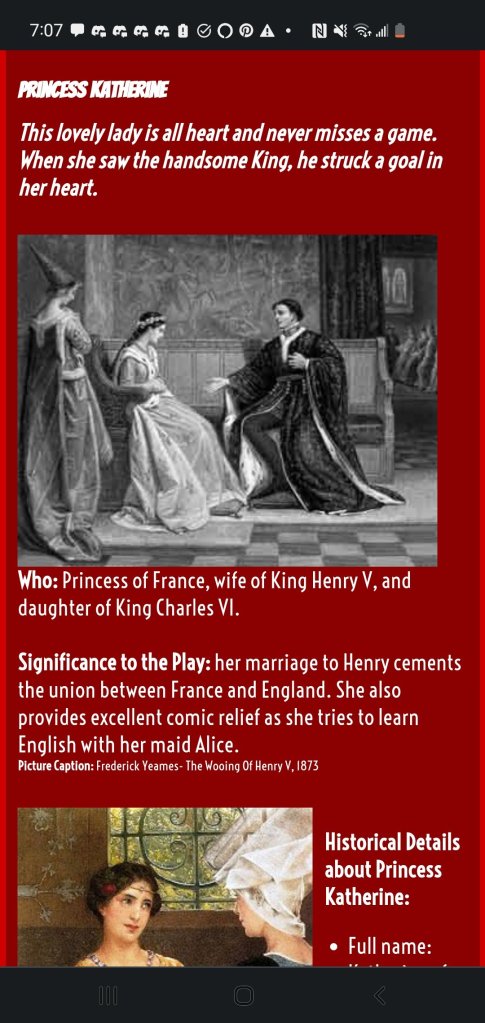
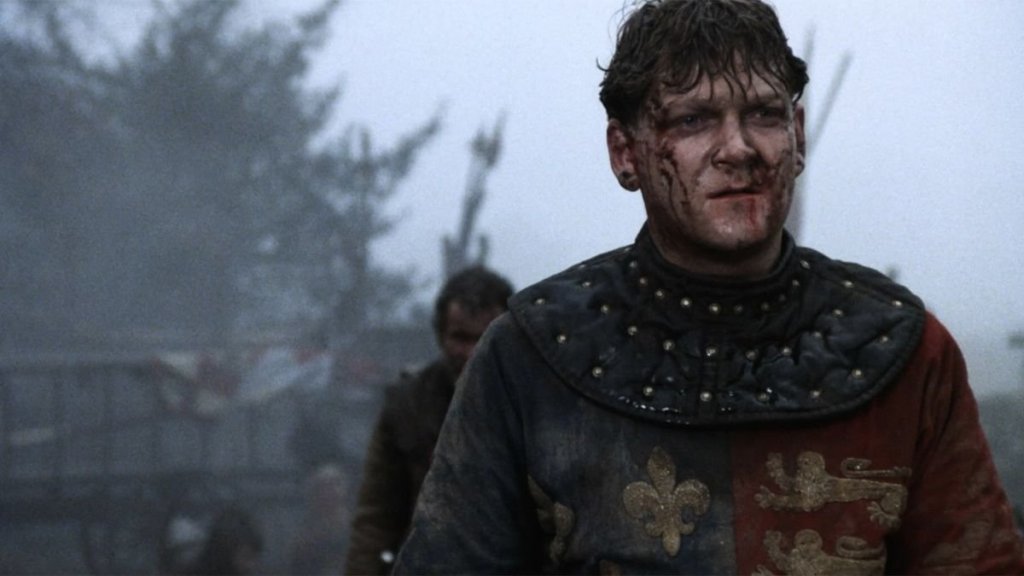
King Henry has just won a decisive victory at the Battle of Agincourt. He is now claiming the crown of France, and Katherine’s hand in marriage. Though he’s proven himself an able soldier and a wise king, he repeatedly stumbles when trying to win Katherine’s heart.

The Text:

Henry V: Fair Katharine, and most fair,
Will you agree to teach a soldier terms
Such as will enter at a lady’s ear
And plead his love-suit to her gentle heart?


Katharine: Your majesty shall mock at me; I cannot speak your England.

Henry V: O fair Katharine, if you will love me soundly with
your French heart, I will be glad to hear you
confess it brokenly with your English tongue. Do
you like me, Kate?

Katharine: Pardonnez-moi, I cannot tell vat is ‘like me.’

Henry V: An angel is like you, Kate, and you are like an angel.

Katharine: O bon Dieu! les langues des hommes sont pleines de
tromperies.

Henry V: What say you, fair one? that the tongues of men
are full of deceits?

Katherine: Oui, dat de tongues of de mans is be full of
deceits:


Henry V: Kate, my wooing is fit for thy understanding: I am
glad thou canst speak no better English; for, if
thou couldst, thou wouldst find me such a plain king that thou wouldst think I had sold my farm to buy my crown. I know no ways to mince it in love, but directly to say ‘I love you:’ I have no strength in measure, yet a reasonable
measure in strength. If I could win a lady at
leap-frog, or by vaulting into my saddle with my
armour on my back, I should quickly leap into a wife.
I speak to thee plain soldier: If thou canst
love me for this, take me: take
me; and take me, take a soldier; take a soldier,
take a king. And what sayest thou then to my love?
speak, my fair, and fairly, I pray thee.

Katharine: Is it possible dat I sould love de enemy of France?

Henry V: No; it is not possible you should love the enemy of
France, Kate: but, in loving me, you should love
the friend of France; for I love France so well that
I will not part with a village of it; I will have it
all mine: and, Kate, when France is mine and I am
yours, then yours is France and you are mine.

Katharine: I cannot tell vat is dat.

Henry V: No, Kate? I will tell thee in French; Je quand sur le possession de France, et quand
vous avez le possession de moi,—let me see, what
then? Saint Denis be my speed!—donc votre est
France et vous etes mienne. It is as easy for me,
Kate, to conquer the kingdom as to speak so much
more French: I shall never move thee in French,
unless it be to laugh at me!

Katharine: Sauf votre honneur, le Francois que vous parlez, il
est meilleur que l’Anglois lequel je parle.

Henry V: No, faith, is’t not, Kate: But, Kate, dost thou
understand thus much English: canst thou love me?

Katharine: I cannot tell.

Henry V: How answer you, la plus belle Katharine du monde, mon tres cher
et devin deesse?

Katharine: Your majestee ave fausse French enough to deceive de
most sage demoiselle dat is en France.

Henry V: Now, fie upon my false French! By mine honour, in true English, I love thee, Kate: by which honour I dare not swear thou lovest me; yet my blood begins to flatter me that thou dost, Put off your maiden blushes; avouch the
thoughts of your heart with the looks of an empress;
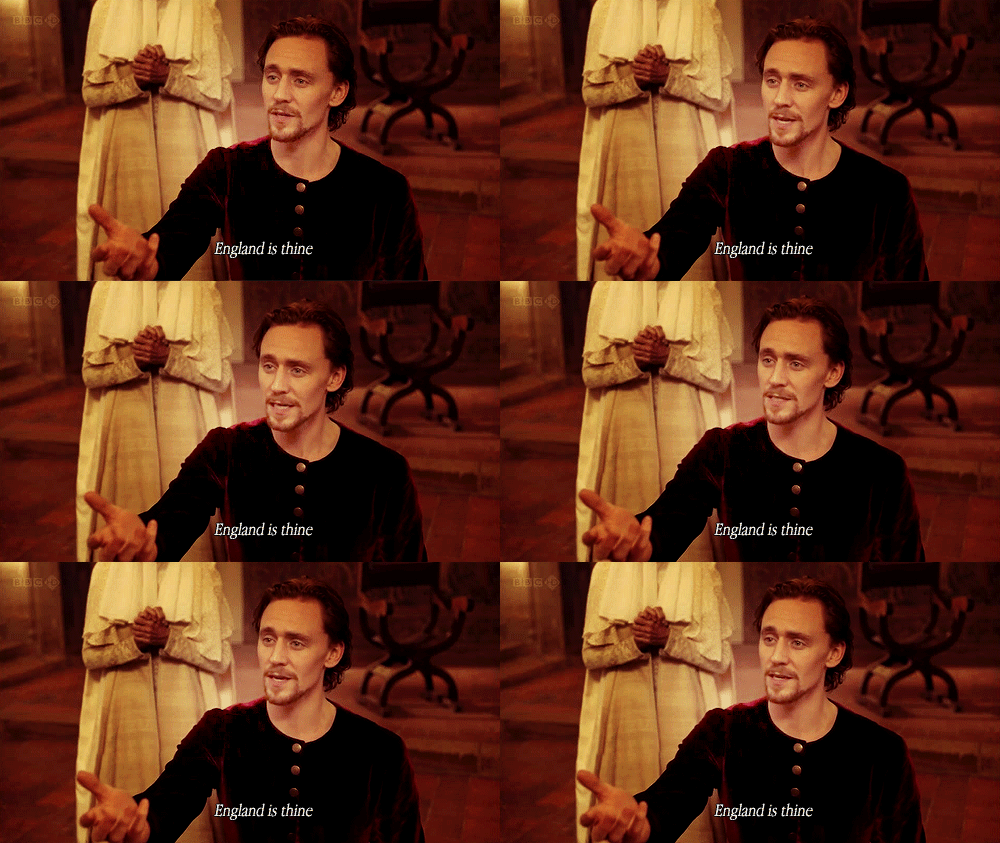
take me by the hand, and say ‘Harry of England I am thine:’ I will tell thee ‘England is
thine, Ireland is thine, France is thine, and Harry
Plantagenet is thine;’
Come, your answer in broken music; for thy voice is music and thy English broken; therefore, queen of all, Katharine, break thy mind to me in broken
English; wilt thou have me?

Katharine: Dat is as it sall please de roi mon pere.

Henry V: Nay, it will please him well, Kate it shall please
him, Kate.

Katharine: Den it sall also content me.

Henry V: Upon that I kiss your hand, and I call you my queen. [she shakes her head ‘no’ and kisses him on the lips]
You have witchcraft in your lips, Kate: there is
more eloquence in a sugar touch of them than in the
tongues of the French council; Here comes your father.

Context

The initial awkwardness between Henry and Katherine is what makes the scene endearing; the notion that to Henry, conquering France is easier than wooing Kate. He’s repeatedly at a loss for words, and refuses to flatter or flirt with Katherine. He either is incapable of wooing in “festival terms,” or he wants Katherine to love him for who he is.

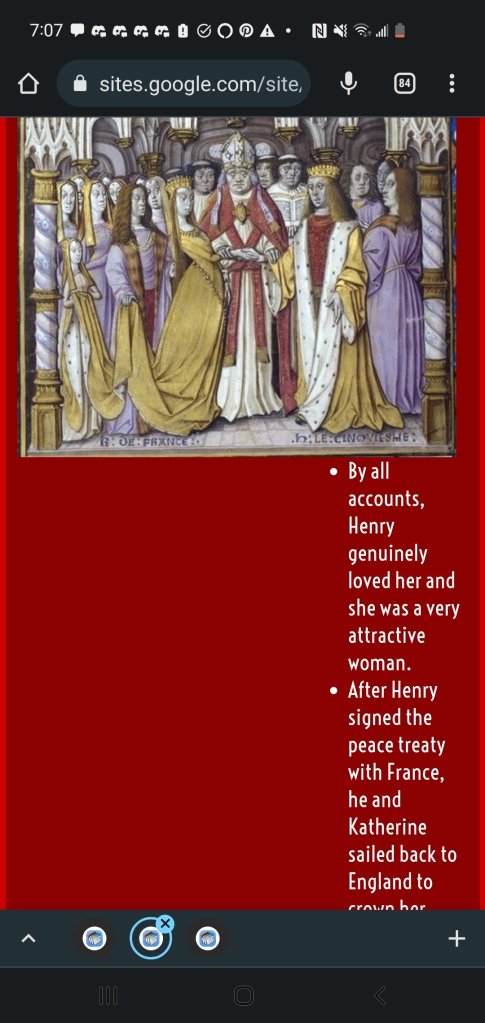
For Katherine’s part, at first, she seems indifferent to Henry, if not outright resistant to his love suit. As she says, “Is it possible that I should love the enemy of France?” Henry’s awkward wooing is not the only barrier to Katherine’s heart – he also killed hundreds of her countrymen and aims to take her father’s crown. It’s entirely possible that Katherine sees Henry as her enemy. The biggest question is- does she actually fall in love with him? Henry is charming, so it’s not impossible that Katherine’s feelings are genuine. It’s also possible that Katherine is actually interested in becoming queen to keep her father’s lands and titles in the family through marriage.

Interpretations

Questions To Ask:

  1. Is Henry really being awkward, or is this a front?
  2. Does Henry love Kate, or is he being political?
  3. Is Kate in love with him? If so, when and why does she fall for him?
  4. If Kate never falls for Henry, why does she agree to marry him?

Shakespeare’s Awesome Heroines: Joan of Arc

I’m coaching a young actress who is performing a monologue from one of Shakespeare’s histories, his play Henry VI, Part I. It’s likely you know the character, even if you don’t know the play- Joan LaPucelle, aka Joan of Arc. In this post, I will compare and contrast the historical Joan from Shakespeare’s version, and further attempt to separate the real woman from her legendary status as the patron Saint of France.

Shakespeare’s Joan

Shakespeare’s younger sister was also named Joan, and it’s possible she might have inspired Shakespeare’s decision to write about Joan the Maid. Recently, a document called A Spiritual Testimony, (long attributed to Shakespeare’s father), is now believed to be proof that Shakespeare’s little sister was a devout Catholic, at a time when doing so could incur ruinous fines and the risk of arrest for sedition and heresy. Given the courage of Joan’s convictions, perhaps her elder brother infused some of her zeal when writing the character of Joan in Henry VI, part I.

The Life of Joan

One life is all we have, and we live it as we believe in living it. But to sacrifice what you are and to live without belief, that is a fate more terrible than dying. -Joan of Arc

Joan LaPucelle, (Joan the Maid) was a controversial figure even in the 15th century. To the English, (and even some of the French), she was a witch, and a cruel warrior who took away rightful English territory. To others, she was a hero and a saint.

What I hope to do in this post is provide you with details about the life of Joan of Arc. Next I will  compare and contrast the most iconic portrayals. I would argue that the success of each interpretation depends on how the writer, director, and of course, the actress playing Joan, answer these questions.

Shakespeare’s Version of Joan La Pucelle

Charles, King of France. Go, call her in.
[Exit BASTARD OF ORLEANS]255
But first, to try her skill,
Reignier, stand thou as Dauphin in my place:
Question her proudly; let thy looks be stern:
By this means shall we sound what skill she hath.
[Re-enter the BASTARD OF ORLEANS, with JOAN LA PUCELLE]

Reignier. Fair maid, is't thou wilt do these wondrous feats?
Joan la Pucelle. Reignier, is't thou that thinkest to beguile me?
Where is the Dauphin? Come, come from behind;
I know thee well, though never seen before.
Be not amazed, there's nothing hid from me:265
In private will I talk with thee apart.
Stand back, you lords, and give us leave awhile.
Reignier. She takes upon her bravely at first dash.

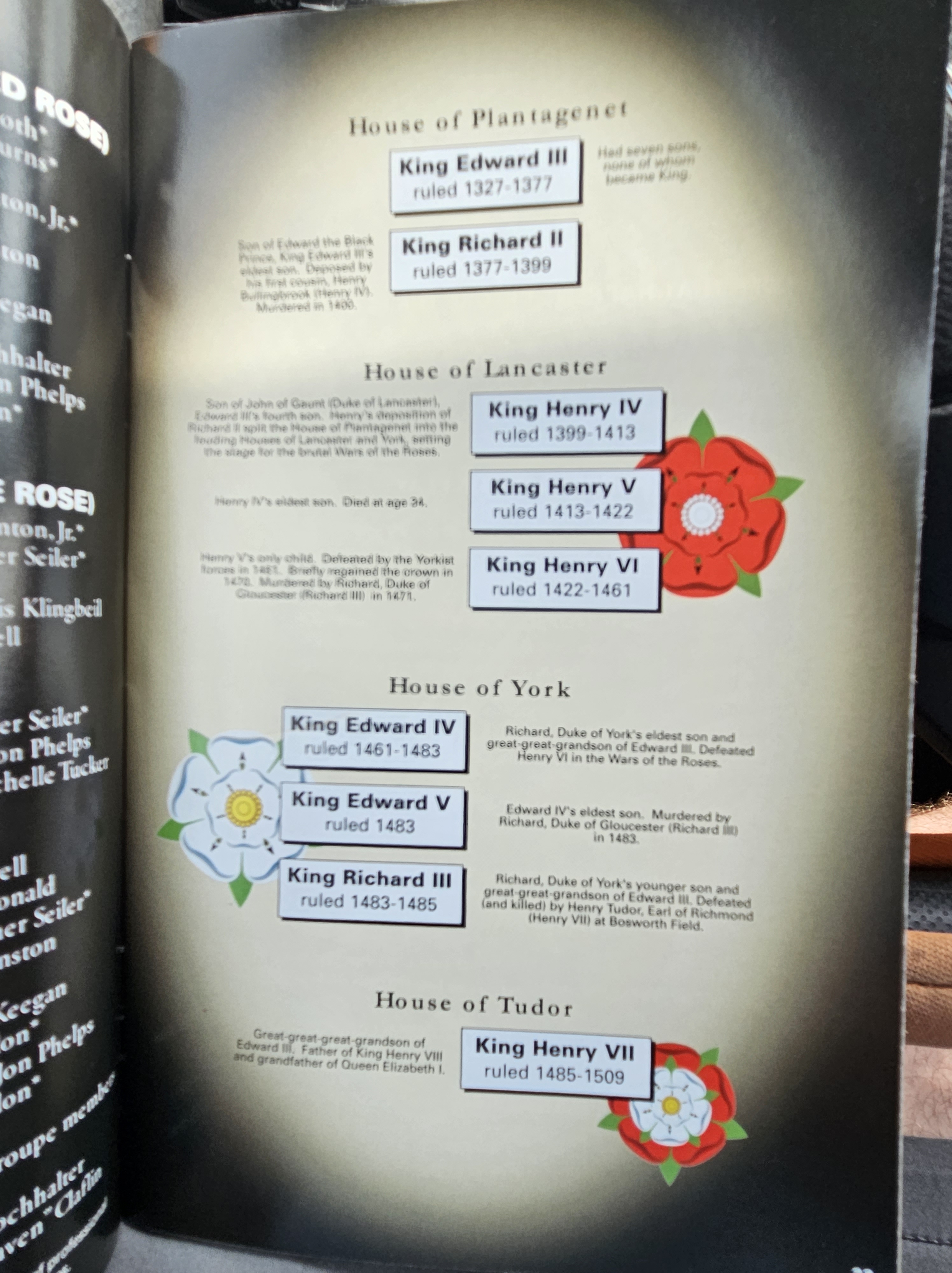
Joan appears in the first part of Shakespeare’s epic saga of  four plays about the Wars of the Roses. It is King Henry’s inability to defend his lands in France against Joan’s valiant attacks that  helped trigger the Civil War, where the House of York fight to take the crown away from the incompetent King Henry VI.

Joan la Pucelle. Dauphin, I am by birth a shepherd's daughter,
My wit untrain'd in any kind of art.270
Heaven and our Lady gracious hath it pleased
To shine on my contemptible estate:
Lo, whilst I waited on my tender lambs,
And to sun's parching heat display'd my cheeks,
God's mother deigned to appear to me275
And in a vision full of majesty
Will'd me to leave my base vocation
And free my country from calamity:
Her aid she promised and assured success:
In complete glory she reveal'd herself;280
And, whereas I was black and swart before,
With those clear rays which she infused on me
That beauty am I bless'd with which you see.
Ask me what question thou canst possible,
And I will answer unpremeditated:285
My courage try by combat, if thou darest,
And thou shalt find that I exceed my sex.
Resolve on this, thou shalt be fortunate,
If thou receive me for thy warlike mate. Act 1, Scene ii

In the play, Joan is a strong warrior, a clever tactician, and a gifted orator, yet her main function in the play is as the antagonist who goes toe to toe against the English warrior, Lord Talbott.

Naturally, since Shakespeare was trying to write for an English audience, Joan is portrayed as the antagonist, not the hero. The English make many snide comments that suggest Joan might not be as virtuous or as righteous as she appears. However, Shakespeare never outright calls Joan a witch or portrays her doing anything other than trying to fight for her country, by any means necessary.

Once Charles is crowned and Joan gets back Orléans for the French, the tide of battle turns against her. In Shakespeare’s version, this is because the English are united around John of Bedford, (King Henry’s uncle and Regent of France), as well as Lord Talbot, the great knight and “Terror of the French”. In Act V, scene iii, Joan calls upon spirits to fight the English:

The regent conquers, and the Frenchmen fly.
Now help, ye charming spells and periapts;
And ye choice spirits that admonish me
And give me signs of future accidents.
[Thunder]
You speedy helpers, that are substitutes
Under the lordly monarch of the north,
Appear and aid me in this enterprise.
[Enter Fiends]
This speedy and quick appearance argues proof
Of your accustom'd diligence to me.
Now, ye familiar spirits, that are cull'd
Out of the powerful regions under earth,
Help me this once, that France may get the field.
[They walk, and speak not]
O, hold me not with silence over-long!
Where I was wont to feed you with my blood,
I'll lop a member off and give it you
In earnest of further benefit,
So you do condescend to help me now.
[They hang their heads]
No hope to have redress? My body shall
Pay recompense, if you will grant my suit.
[They shake their heads]
Cannot my body nor blood-sacrifice
Entreat you to your wonted furtherance?
Then take my soul, my body, soul and all,
Before that England give the French the foil.
[They depart]
See, they forsake me! Now the time is come
That France must vail her lofty-plumed crest
And let her head fall into England's lap.
My ancient incantations are too weak,
And hell too strong for me to buckle with:
Now, France, thy glory droopeth to the dust.
[Exit]
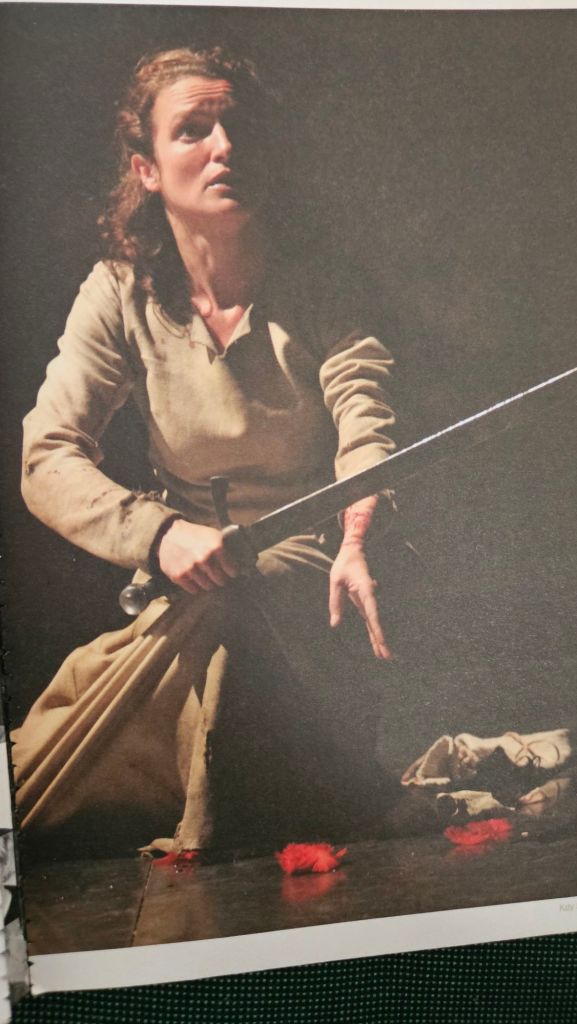
Joan LaPucelle in the 2010 RSC production of “Henry VI, Part 1

At first glance this passage seems shocking- Shakespeare appears to be accusing the patron saint of France of witchcraft. Even more bizarre, later when Joan is arrested by the English lords, she claims to be pregnant with King Charles’ child! And to confound the audience even further, Joan contradicts her own confession by denying any witchcraft or any relationship with any man:

Joan la Pucelle: First, let me tell you whom you have condemn'd:
Not me begotten of a shepherd swain,
But issued from the progeny of kings;
Virtuous and holy; chosen from above,
By inspiration of celestial grace,
To work exceeding miracles on earth.
I never had to do with wicked spirits:
But you, that are polluted with your lusts,
Stain'd with the guiltless blood of innocents,
Corrupt and tainted with a thousand vices,
Because you want the grace that others have,
You judge it straight a thing impossible
To compass wonders but by help of devils.
No, misconceived! Joan of Arc hath been
A virgin from her tender infancy,
Chaste and immaculate in very thought;
Whose maiden blood, thus rigorously effused, Will cry for vengeance at the gates of heaven.
Henry VI, Part I, Act V, Scene iv

I get the sense that Shakespeare is trying to make Joan’s character ambiguous- if you are an English patriot, you can see her as a witch, a liar, and a manipulative harlot. If you are French, you see these accusations as filthy lies, and Joan’s “confession,” as merely a desperate attempt to spare her own life, one that tragically backfires.

The Real Joan of Arc

Born: circa 1412 in Domrémy, France

Died: May 30  1431 (executed by burning)

Birth/ Childhood

Joan was born January 6th, 1412 to Isabelle and Jacques D’Arc, the mayor of the town of Domr’emy France. At the time, Domremy was right on the border between the Armeniacs (who supported Charles the Dauphin) and the Burgundians, who supported King Henry V of England as rightful king of all Frence. Because of this, Joan’s home was subject to English raids and she might have been raised to support Charles as her lawful king. In any case, the accounts we have describe her as very pious, intelligent, generous, and a lover of justice.She had no formal education nor any experience on the Battlefield. Yet, by all accounts, Joan was an extremely devout youth, devoted to God, and her lawful king.

Call to Arms

When she was 13, Joan went to pray in her father’s garden and believed that she saw the Archangel Michael, who prophesied that she would be the one to save France. In 1428, Joan approached Robert Baudricourt, Lord of Vaucouleurs. She demanded to join the French army and to bring Charles to Reims to be officially crowned king. Though she was turned away three times, Joan’s faith and courage attracted followers from the surrounding countryside, and Baudricourt eventually agreed to train Joan to fight, and allowed her and her enterage to talk to Charles the Dauphin about joining the troops defending the city of Orléans.

Once he met Joan at his palace in Chinon, the Dauphin agreed to let her take weapons and supplies to the troops who were already laying siege to the French town of Orléans. However, Joan insisted on leading the troops into battle, and quickly became a symbol of French resistance.

The Siege of Orléans

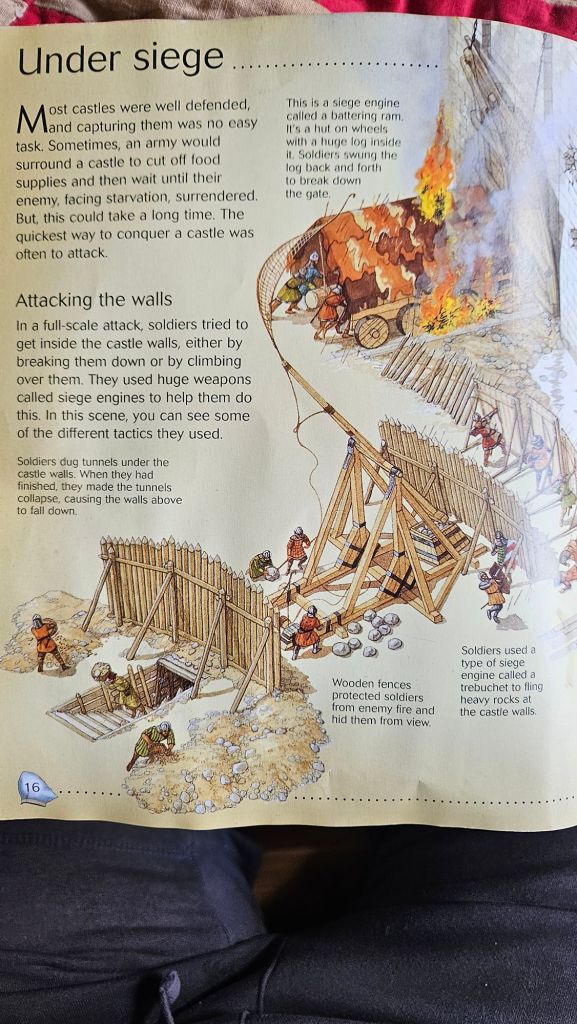
The city of Orléans was a vital town that the English had garrison. For six months, the French had attempted to starve out the English, destroy their defenses, and retake the city.

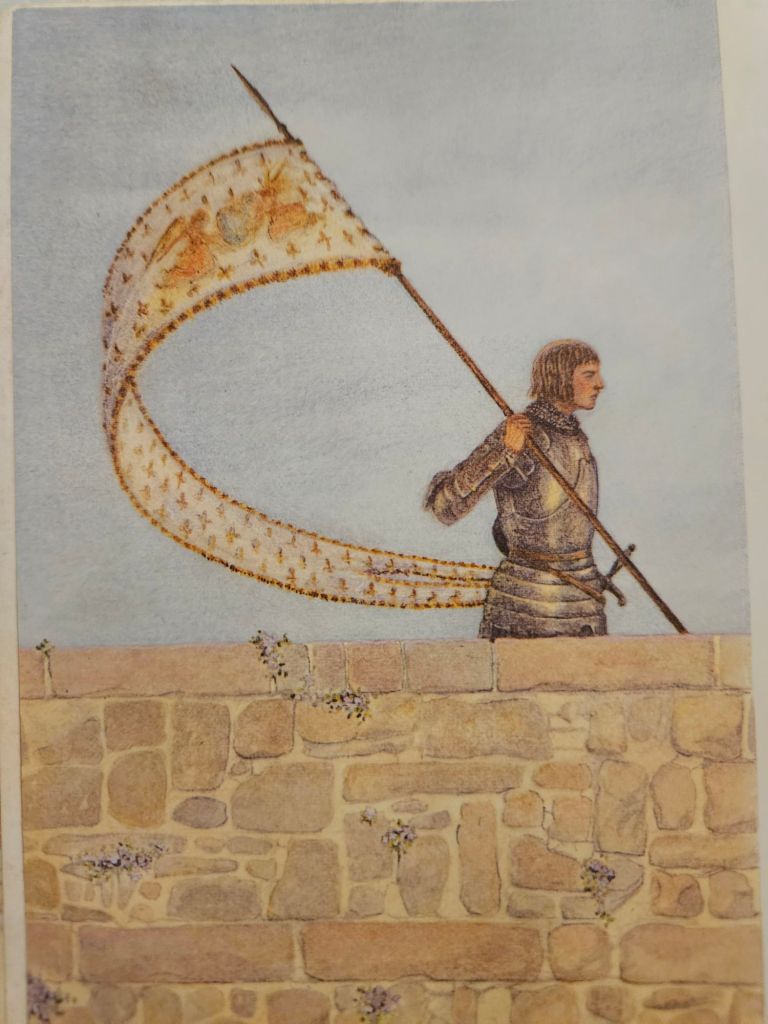
Joan la Pucelle. Advance our waving colours on the walls;
Rescued is Orleans from the English
Thus Joan la Pucelle hath perform’d her word.- Henry the Sixth, Part I

Joan’s Fall From Grace

Henry, by the grace of God, king of France and England, greeting. It is well known how for some time a woman calling herself Jeanne the Maid, putting off the habit and dress of the female sex (which is contrary to divine law, abominable to God, condemned and prohibited by every law), has dressed and armed herself in the state and habit of man, has wrought and occasioned cruel murders, and it is said, to seduce and deceive the simple people, has given them to understand that she was sent from God and that she had knowledge of His divine secrets, with many other dangerous dogmatizations most prejudicial and scandalous to our holy faith. Whilst pursuing these abuses and exercising hostilities against us and our people, she was captured in arms before Compiègne by certain of our loyal subjects and has subsequently been led prisoner towards us. And because she has been reputed, charged and defamed by many people on the subject of superstitions, false dogmas and other crimes of divine treason, we have been most urgently required by our well beloved and loyal counselor the bishop of Beauvais, the ecclesiastical and ordinary judge of the said Jeanne, who was taken and apprehended in the boundaries and limits of his diocese

  • Letter from King Henry VI to the Bishop of Beauvais (Joan’s captor), January 3rd, 1431

Joan was captured in 1430, when King Henry of England was only 10 years old. Even though now France is united with pride for Joan and her defense of her country, back then there were plenty of factions that actually supported the English, and those French factions captured, and arrested her for heresy during the siege of Compiègne.

The Trial- January 9th, 1431

It has pleased divine Providence that a woman of the name of Jeanne, commonly called The Maid, should be taken and apprehended by famous warriors within the boundaries and limits of our diocese and jurisdiction. The reputation of this woman had already gone forth into many parts: how, wholly forgetful of womanly honesty, and having thrown off the bonds of shame, careless of all the modesty of womankind, she wore with an astonishing and monstrous brazenness, immodest garments belonging to the male sex.

As this excerpt from the trial transcripts demonstrates, Joan’s trial focused much more on her alleged heresy and witchcraft, rather than her defying British rule. In reality, Joan’s arrest and martyrdom was a political sacrifice for the French- they wanted to show political support for their English overlords, without alienating Joan’s supporters. Discrediting Joan by calling her a heretic was a calculated political move, and Joan probably knew it.

Execution

Joan was executed by burning on May 30th, 1431, six months before King Henry was formally crowned King of England. After her death, Henry was unable to maintain control of France and his incomplete, combined with a congenital mental illness, is why he later lost

Iconic portrayals:

Trailer for Carl Dryer’s Passion of Joan of Arc (1928)
Mila Jovavich in Luc Besson’s “The Messanger”, 1999

Sources:

Books

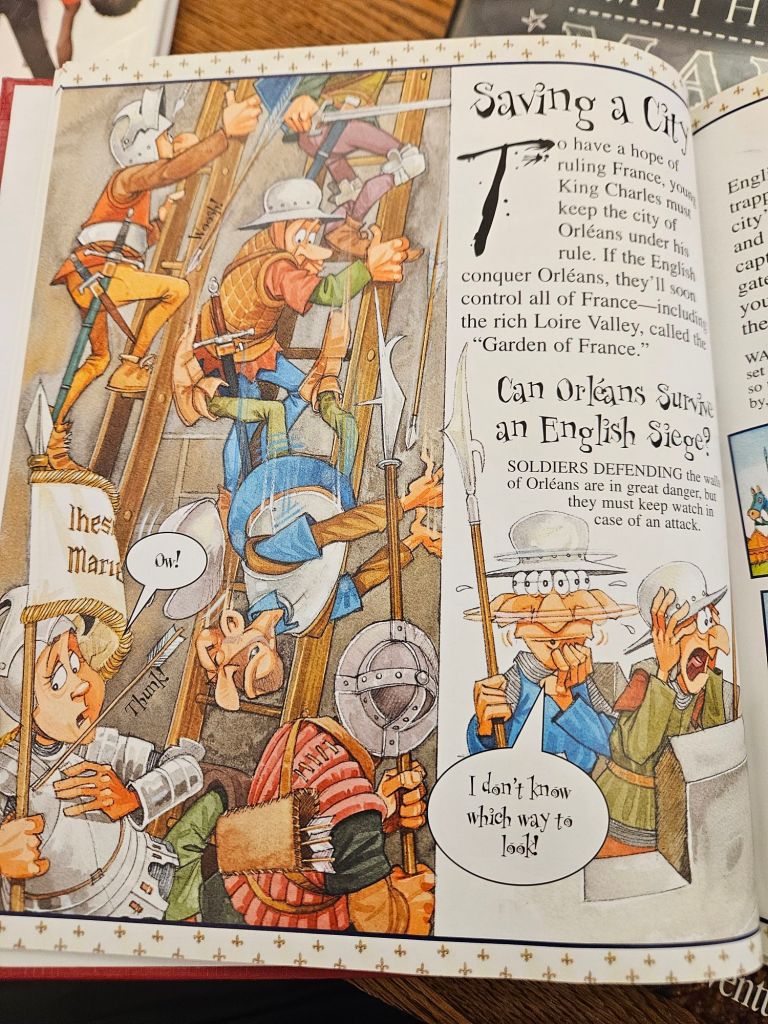
  1. You Wouldn’t Want To Be Joan of Arc
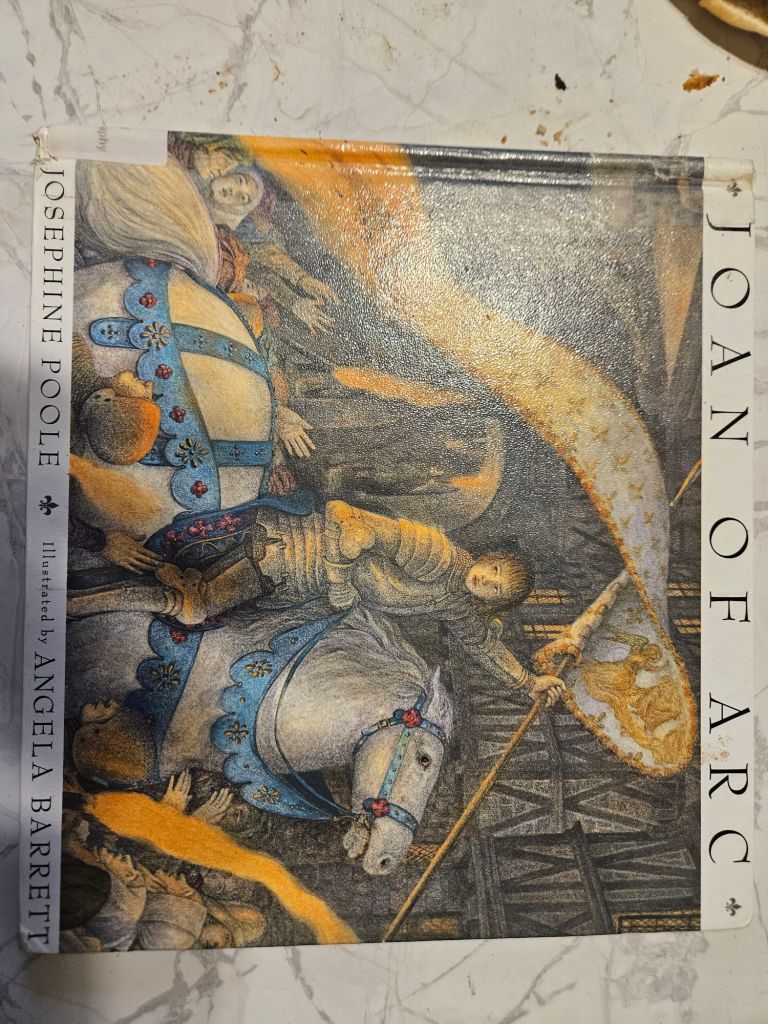
  1. Joan of Arc by Josephine Poole
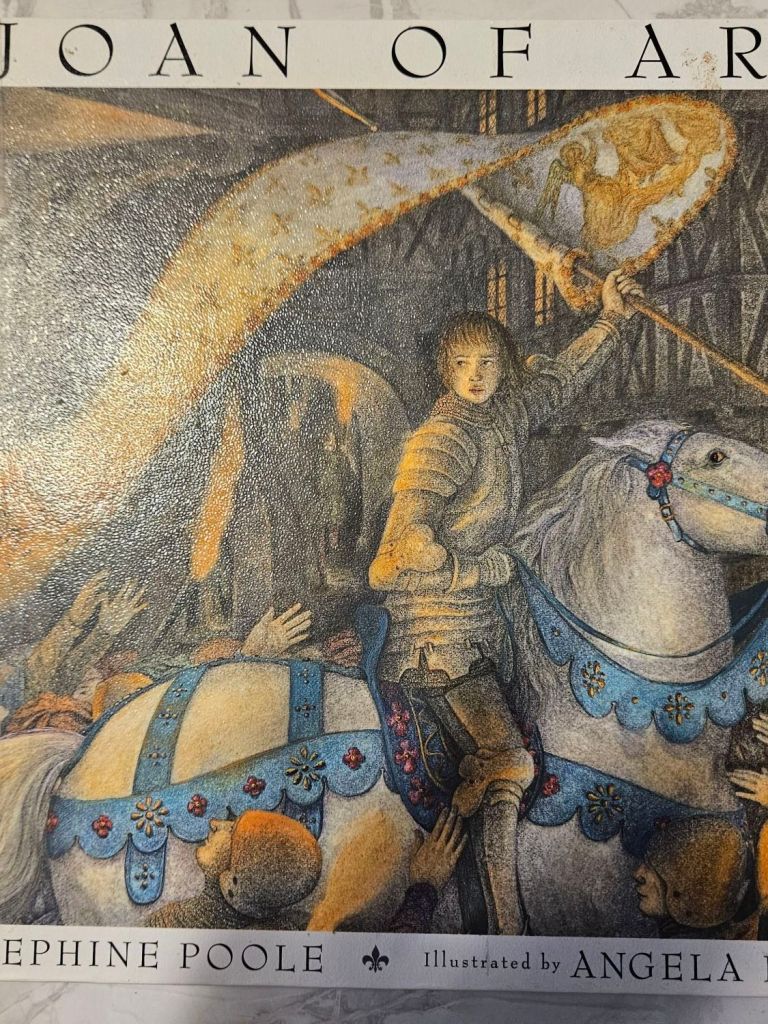
Title Page of Joan of Arc by Josephine Poole, illustrated by Angela Barrett

Medieval Manuscripts: The Trial of Joan of Arc:

https://origin.web.fordham.edu/Halsall/basis/joanofarc-trial.asp

https://dailygalaxy.com/2025/09/shakespeare-a-rediscovered-manuscript-flips-the-familys-legacy-on-its-head-more-than-400-years-after-it-was-written/

New Course: Shakespeare’s Histories

Shakespeare’s History Class

Course trailer

Parent Description- A fully online, fully interactive course into Shakespeare’s histories taught by a professional text coach and actor. 

Students- Uncover the scandalous and gory history behind Shakespeare’s most action-packed plays! Shakespeare’s histories have inspired such works as “Empire,” “Game of Thrones,” “Hamilton” and even the “Star Wars” trilogy. This class will unlock for you why these stories of power and betrayal have been so popular for 400 years.

Format:

0. The class will have a Nearpod with slides, activities, and links to my other resources.  The class will be a combination of slides, activities, and videos. Each class will have 

  1. Weekly Discussion questions via Google Forms such as: “What do you know about Shakespeare the man?” or, “Are Shakespeare plays still relevant today?”
  2. Video Analysis- Every week I’ll discuss a different play with a short video.
    1. I’ll provide some context, explaining what is happening in the play durin the speech, and any relevant historical context.
    2. We’ll watch a recording and the students can write their impressions on what they like and don’t like.
  3. Immersive activities such as:
    1. – Shakespeare arts and crafts and recipes such as making costumes and props.
    2. – My online Shakespeare board game.
    3. Virtual tours of the Tower Of London,
  4. Weekly Web Quests like “find a Shakespeare quote that you use in normal speech,” “find a movie or character that’s based on Shakespeare,” or “Draw a picture of a Shakespearean character (stick figures are acceptable).

6 Week Course

Week 1 – Why Hamilton is Like A Shakespeare History Play Hamilton and Shakespearean History We’ll discuss what makes a history play a history play, why they were so popular in Shakespeare’s day, and draw parallels between Shakespeare and the Broadway Musical “Hamilton.”

  1. What is a history play?
  2. Song quest: Watch the Horrible histories king song
  3. Worksheet- which Shakespearean character reminds you most of Hamilton?
  4. Video- the 10 Duel commandments of Shakespeare

Week 2- Richard II

  1. The history of Richard Shakespeare’s Richard II | Animated short
  2. Watch the presentation and fill in the blanks of the story: Richard the Second Intro Presentation
  3. Web quest- go online and write down three things about the Wilton Diptych
    1. Wilton Diptych https://www.nationalgallery.org.uk/paintings/english-or-french-the-wilton-diptych
      1. Open ended question- if you were Richard, how would you feel about your role as king?
  4. John of Gaunt’s speech
    1. Watch Patrick Stewart reading this: Shakespeare: “This scepter’d isle”
    2. Now see John McInerny performing it in context
      1. What images were the most striking?
      2. Did you feel more sorry for Gaunt, or England?
      3. What would you call the tone of this speech? Patriotic? Mournful? Excited? Bitter? 
  5. The deposition Scene (video- 3 minutes)
    1. The danger of this scene:
      1. Though Queen Elizabeth I is now almost universally beloved, she wasn’t always in Shakespeare’s time. By 1601, she was 68 years old and had no male heir. Her government had also failed to put down a rebellion in Ireland. Some people in her government were getting restless.
      2. Robert Devereaux, Earl of Essex was one of those restless nobles. He’d been one of the Queen’s favorites, but after failing to crush the rebellion in Ireland, his relationship with her sourered. He then plotted to rebel against the Queen, and take the throne for himself.
      3. To do that though, Essex would need to get people on his side, so he recruited Shakespeare! One of Essex’s servants paid Shakespeare’s companies to perform a scene from Shakespeare’s Richard II; the scene where a handsome and charismatic nobleman convinces the king to willingly give up his power. 
      4. This scene was so dangerous that when the play was published, it was taken out by Elizabeth’s censors.
      5. Quotes from Richard II
        1. https://shakespearedocumented.folger.edu/resource/document/examination-augustine-phillips#:~:text=In%20his%20examination%20on%20February,fellows%20proposed%20an%20alternative%20play%2C  
        2. https://www.historic-uk.com/HistoryUK/HistoryofEngland/Shakespeare-Richard-II-Rebellion/ 
        3. https://www.elizabethi.org/contents/rebellions/essex/ 
  6. Playing Richard video: Fiona Shaw
    Questions
    What does making Richard female emphasize for an audience? What point does Shaw’s performance say about women in power?

Week 3 Henry V week

  1. Basic plot- Young king fights a war and conquers France proving himself to the world.
  2. Olivier vs. Branaugh

-Concept- what if the play was a Hockey movie?

  1. Henry is like the coach or team captain who gives inspirational speeches
  2. The underdogs win
  3. The snooty bad guys lose
  • How this translates to staging fights/ directing the characters (website/ youtube interviews)
  1. Activity= write a trailer or design a poster for Henry with a cool tag line.

Week 4- The Wars of the Roses-

  1. Summary of the three Henry VI plays
    1. Wars of the Roses Horrible Histories
    2. Web quest- research one major character from the 3H6 ASC website:
      1. Richard of Gloucester
      2. Henry VI
      3. Margaret of Anjou
      4. Richard of York
  2. Medieval warfare
    1. Watch one of the Weapons that Made Brittain videos and answer 5 questions.
    2. The battles of the Wars of the roses
  3. Costumes

Week 5- Richard III- The rise of the corrupt king

  1. Close reading- “Now Is the Winter of Our Discontent”
  2. Slides on Richard’s plot.
  3. Richard and Machiavelli
  4. Richard and Emperor Palpatine
  5. Richard and Modern Leaders
  6. Richard vs. the Amir of Gloucester
  7. Propaganda activity- make a campaign slogan/ poster for Richard.

Week 6 History Board Game/ Final Project

Shakespeare and “Five Nights At Freddie’s.”

The global phenomenon “Five Nights At Freddie’s” (FNAF) has spawned 11 major games, spinoff games, 19 books, countless comics, and a big Hollywood movie premiering this week:

My video podcast on FNAF

One other thing this franchise has spawned is ENDLESS FAN THEORIES. I admit, when I first heard of this jump-scare-based game with haunted animatronics, I viewed it as a silly novelty- a clever way to create cheap horror using monsters who jump out at you in a dark room… then I saw this:

2023- The Game Theorist Youtube show tells the entire chronology of the FNAF saga.

The YouTube channel Game Theory, which has been analyzing and dissecting the games for the last 8 years finally created a complete chronology of the games’ lore. Like a lot of the best horror stories like Dracula and “Sleep No More,” the game scatters a lot of its lore throughout the game in the form of mini-games, security guard notebooks, newspaper clippings, and of course, the iconic, nervous late-night phone calls that your character (a nameless night watchman) receives from a mysterious character known only as THE PHONE GUY.

This story is truly the stuff of nightmares- serial killers, murdered children, ghosts, possessed robots, broken families, and unending quests for revenge from beyond the grave. Of course, a few of these tropes Mr. Shakespeare would be very familiar with, so I thought I’d delve into some of the themes, tropes, and ideas that link these two franchises. My goal is to get fans of the video game to understand that, since Shakespeare and Scott Cawthorne (the creator of the game) use a lot of the same horror plots and ideas, that, if you can understand FNAF you can understand Shakespeare!

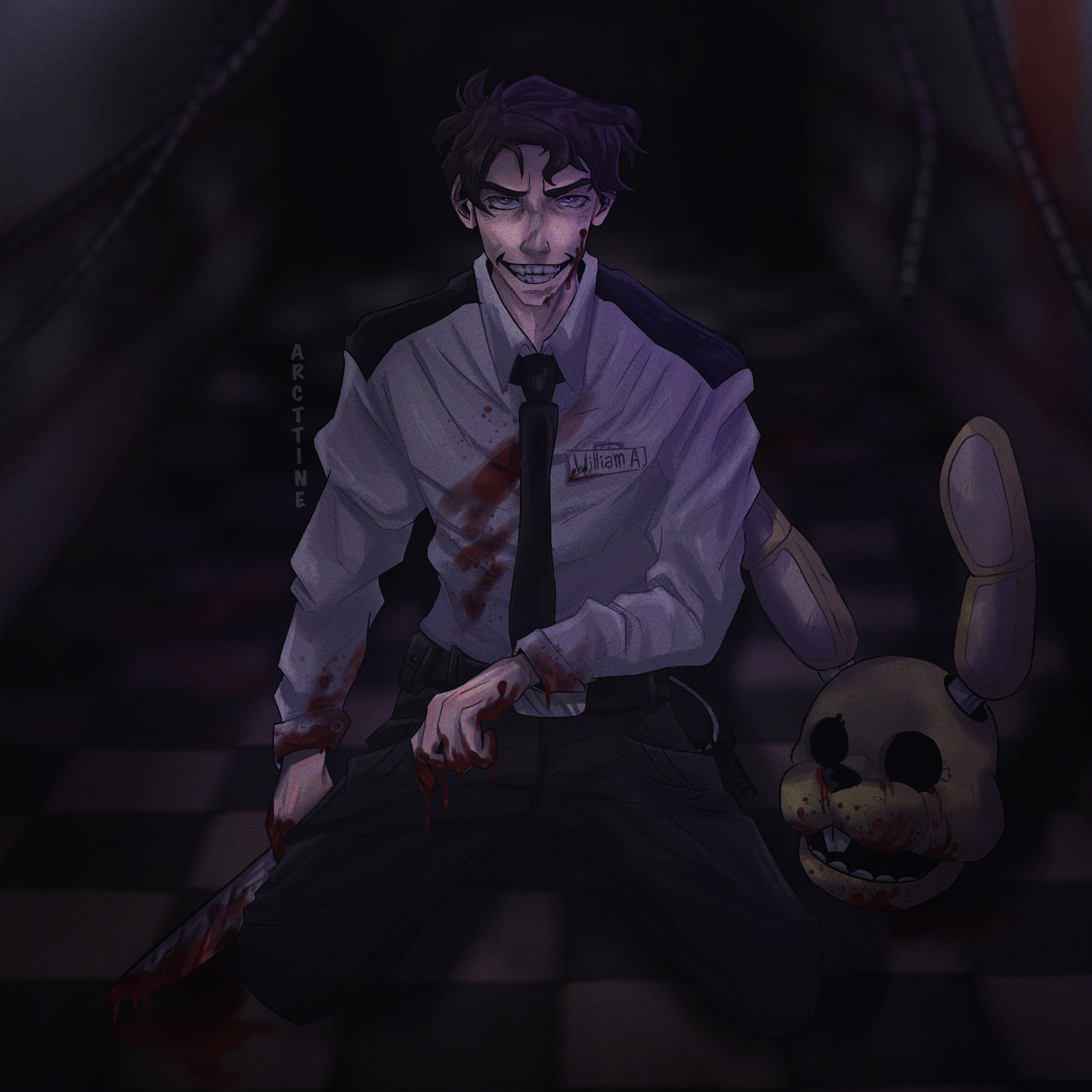
Part I: The mad scientist- William Afton Vs. William Shakespeare’s Prospero

The story of Five Nights At Freddie’s revolves around its main antagonist- a genius roboticist-turned-serial killer named William Afton, who starts out as a successful businessman and children’s entertainer obsessed with bringing his creations to life. Any horror fan will tell you that this is an automatic sign of a villain because he is trying to master the skill that only God possesses- the ability to create life.

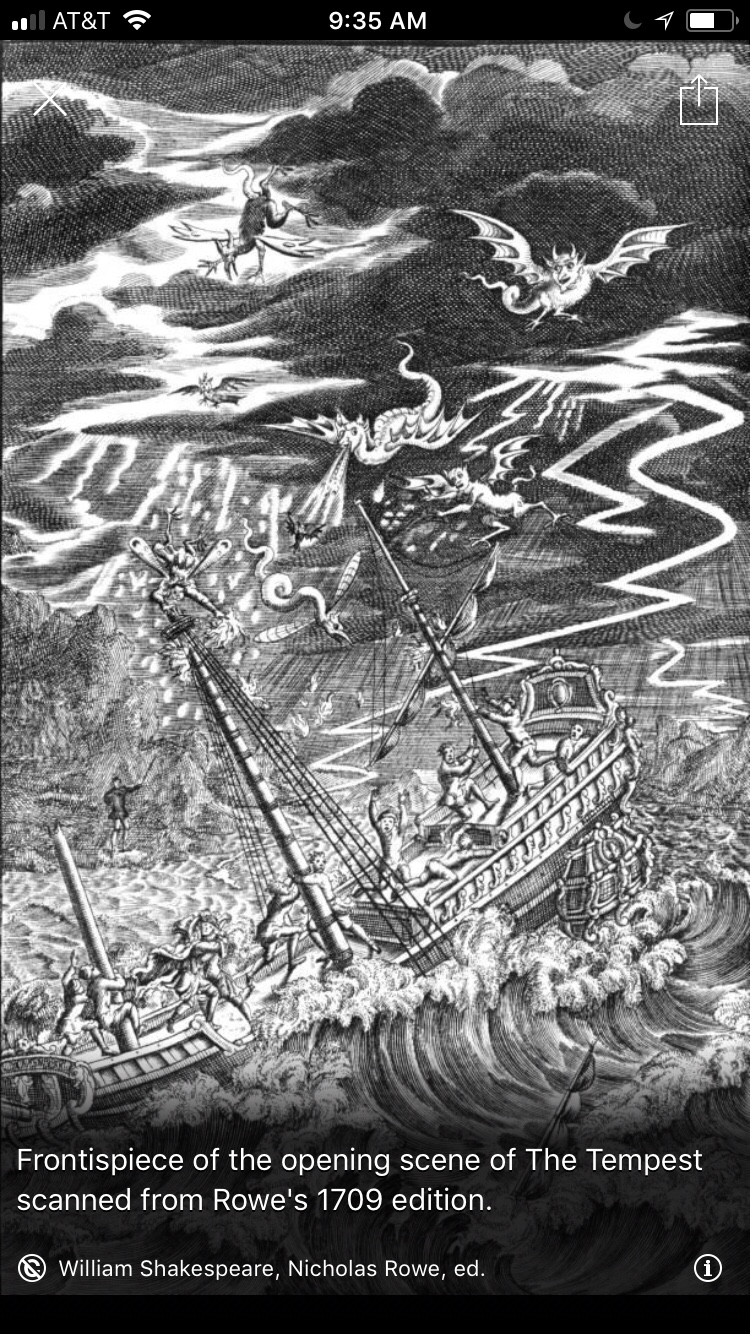
In Shakespeare’s final play, The Tempest, the hero is a brilliant magician who, after his brother exiles him to a desert island, masters many crafts considered unnatural for the 1600s:

I have bedimm'd
The noontide sun, call'd forth the mutinous winds,
And 'twixt the green sea and the azured vault
Set roaring war: to the dread rattling thunder
Have I given fire and rifted Jove's stout oak
With his own bolt; the strong-based promontory
Have I made shake and by the spurs pluck'd up
The pine and cedar: graves at my command
Have waked their sleepers, oped, and let 'em forth
By my so potent art.
The Tempest, Act V, Scene i, Lines 2063-

Like I discussed in my post on Shakespeare and Star Trek, Prospero’s magic is both benevolent and terrifying. He uses it to rescue himself and his daughter Miranda from the island, and he creates beautiful visions of gods and angelic music for Miranda and her young lover Sebastian, but he also creates nightmarish visions to torment his enemies:

Both Afton and Prospero are motivated by revenge against the men who betrayed them. In Afton’s case it’s his rival/ partner Henry Emily who bankrupted his business and later got him fired from his own company. Afton torments Henry by murdering his daughter and ruining his business by luring kids to their death inside the pizzeria, disguised as one of the animatronic characters. Afton also figures out how to torment people using sound alone, like Prospero does to his slave Caliban:

Caliban. All the infections that the sun sucks up
From bogs, fens, flats, on Prosper fall and make him
By inch-meal a disease! His spirits hear me
And yet I needs must curse.
For every trifle are they set upon me;
Sometime like apes that mow and chatter at me
And after bite me, then like hedgehogs which
Lie tumbling in my barefoot way and mount
Their pricks at my footfall; sometime am I
All wound with adders who with cloven tongues
Do hiss me into madness.
Here comes a spirit of his, and to torment me! The Tempest, Act II, Scene ii.

Prospero isn’t a killer, but like Afton, he has learned the secret to life after death, which makes him powerful and dangerous. Even more unsettling, both men are on an endless quest for revenge and torment men whom they saw as brothers. Other Shakespearean characters take their lust for revenge to the same dark place Afton did- the murder of children.

Part II: The Purple Killer

https://mriquestions.com/why-are-veins-blue.html

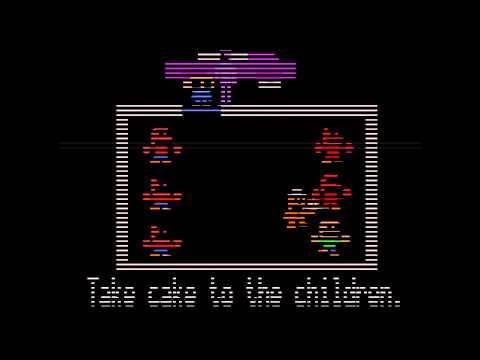
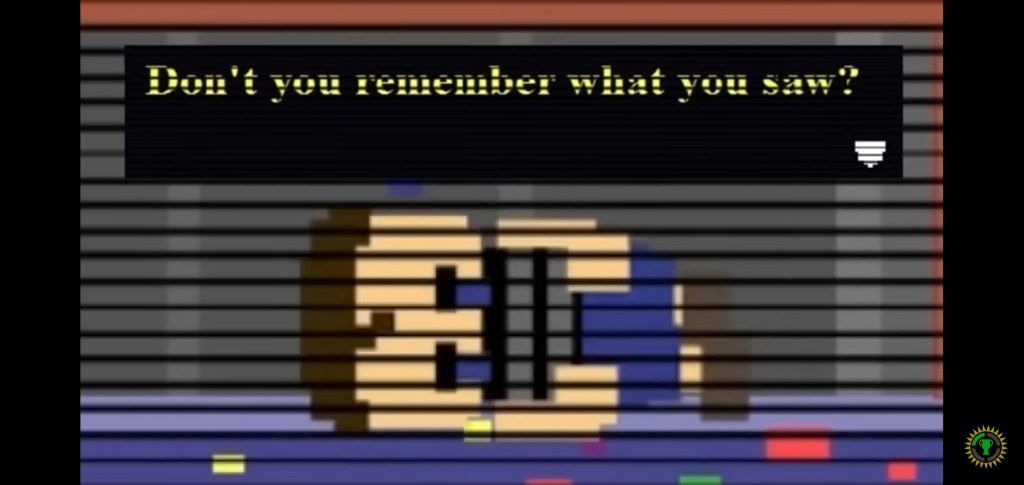
For the first four games, Afton isn’t directly part of the game- he’s merely mentioned in pieces of the lore. Frequently we see 8- bit re-enactments of his crimes in a series of mini-games, where he appears as a faceless, purple killer.

Screenshot of William’s first murder of Henry’s daughter Charlie outside of the pizzeria.

Why purple though? It’s true that purple is associated with royalty, and sometimes associated with villainy, (since it isn’t a color found much in nature). I think though, there might be a deeper, more macabre meaning to this color associated with this killer: It is a scientific fact that human blood, when it is shed and deprived of oxygen, actually turns purple:

The colors of arterial and venous blood are different. Oxygenated (arterial) blood is bright red, while dexoygenated (venous) blood is dark reddish-purple

https://mriquestions.com/why-are-veins-blue.html

Shakespeare’s Purple Poetry

Shakespeare was very aware of this medical fact. He lived in an age where traitors’ heads were placed on spikes on London Bridge, and people would pay to watch wild dogs attack bears (the FNAF of his time). Shakespeare makes many gory references to murderers watching red blood turn purple:

I make as good use of it as many
a man doth of a Death’s-head or a memento mori: I
never see thy face but I think upon hell-fire and
Dives that lived in purple;

Henry IV, Part I, Act III, Scene iii.

Woe above woe! grief more than common grief!
O that my death would stay these ruthful deeds!
O pity, pity, gentle heaven, pity!
The red rose and the white are on his face,
The fatal colours of our striving houses:
The one his purple blood right well resembles;

Henry VI, Part III, Act II, Scene v.

Now, whilst your purpled hands do reek and smoke,

Julius Caesar Act III, Scene i.

With purple falchion, painted to the hilt
In blood of those that had encounter’d him:

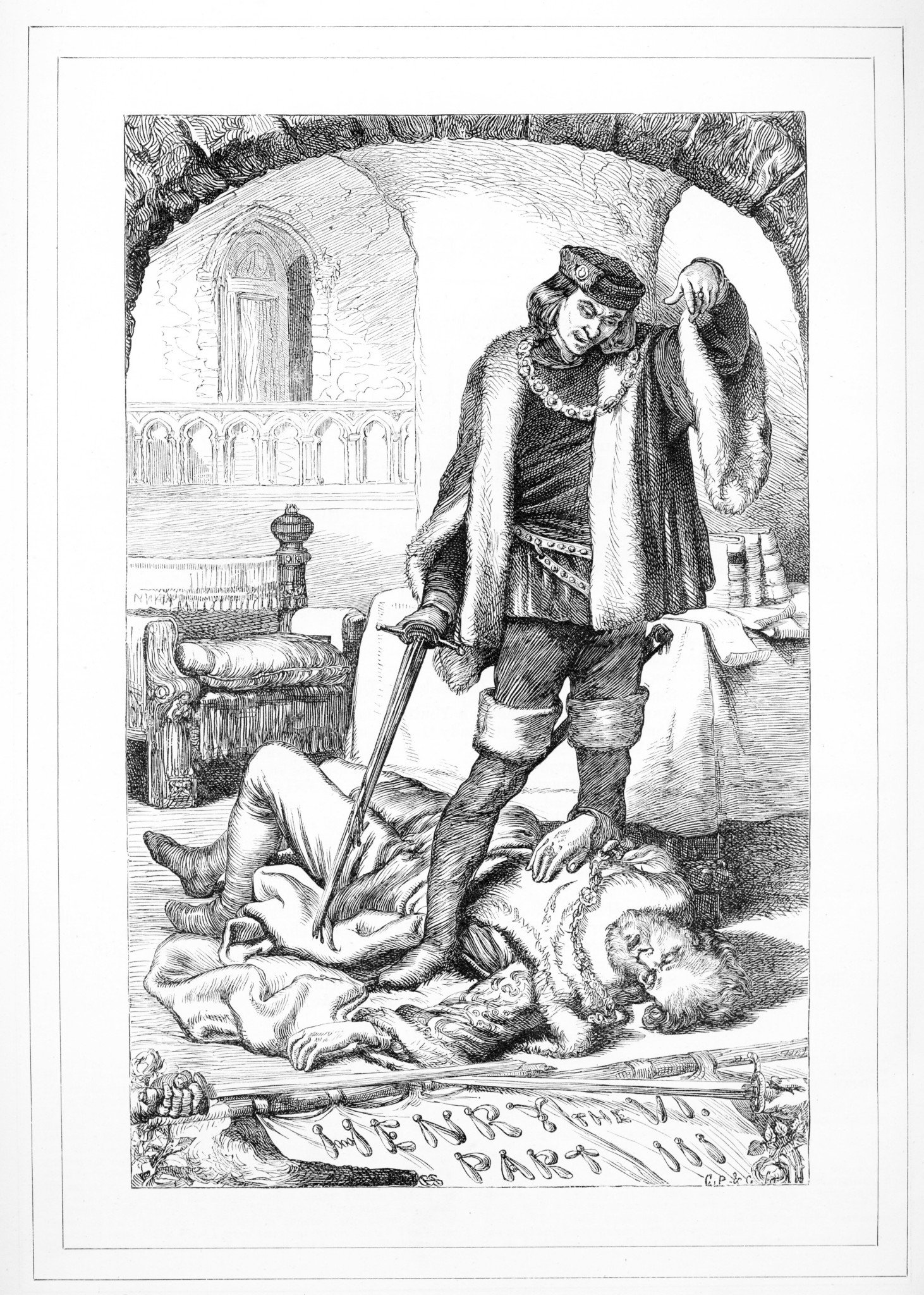
Henry VI, Part III, Act II, Scene v (Richard of Gloucester)

This last quote is spoken by Richard of Gloucester, who, in the play that bears his name, becomes King Richard III, Shakespeare’s most irredeemable villain. Just like William Afton, he kills without remorse and dispatches anyone who gets in his way on the path to the crown. In addition, like many of Shakespeare’s villains,  his turn to pure evil occurs right after he does the unthinkable- when he murders children.

Richard (Ian McKellen), orders the secret murder of his nephews in the tower in order to keep his crown.

Throughout the rest of the play, Richard kills a lot of his political and personal enemies and we go along with them because he’s the protagonist. But once he murders the princes, who have done nothing to harm him or anyone else, Richard crosses the line from anti-hero to monstrous villain. It is also at this part of the play when his victims begin to take their revenge… FROM BEYOND THE GRAVE!

Part III: The ghostly revenge story

I’ve written before that in Shakespeare, ghosts are usually murder victims either out for revenge, or trying to convince a living person to avenge their death. Likewise, in the subsequent games, Affton’s victims possess the animatronics, seeking to kill their murderer!

One of the creepiest scenes in Shakespeare comes when Richard III is visited the night before his final battle by the ghosts of all the people he’s killed:

Similarly, when Macbeth murders his friend Banquo (and attempts to murder his young son Fleance), he is visited by Banquo’s ghost, during a party, no less! Even more ironic, look at the language Macbeth uses when he sees the ghost:

Approach thou like the rugged Russian bear,
The arm’d rhinoceros, or the Hyrcan tiger;
Take any shape but that, and my firm nerves
Shall never tremble: or be alive again.

It’s truly ironic that, while in FNAF, the ghosts of Afton’s slaughtered children appear in the forms of angry animatronics, shaped like fearsome animals, Macbeth would rather see the fearsome animal, than the ghost of the man he murdered! Though Macbeth himself doesn’t fear bears, in both FNAF and Shakespeare, bears and other animals have long had a symbolism associated with wrath, anger, and taking bitter vengeance on the wicked.

Part IV: The Forrest of Beasts

1930s-style ad for the original Fredbear’s Singin’ Show, where a real dancing bear entertained travelers.

Bear Baiting

Even the animals in FNAF have some significance that Shakespeare has touched on in some of his plays, especially bears. In many renaissance and medieval sources, bears are symbols of wrath, revenge, and fierce protectors of children. Both Shakespeare and FNAF exploit this symbolism, and both the game and Shakespearean plays create horrifying beastly images in stories of revenge.

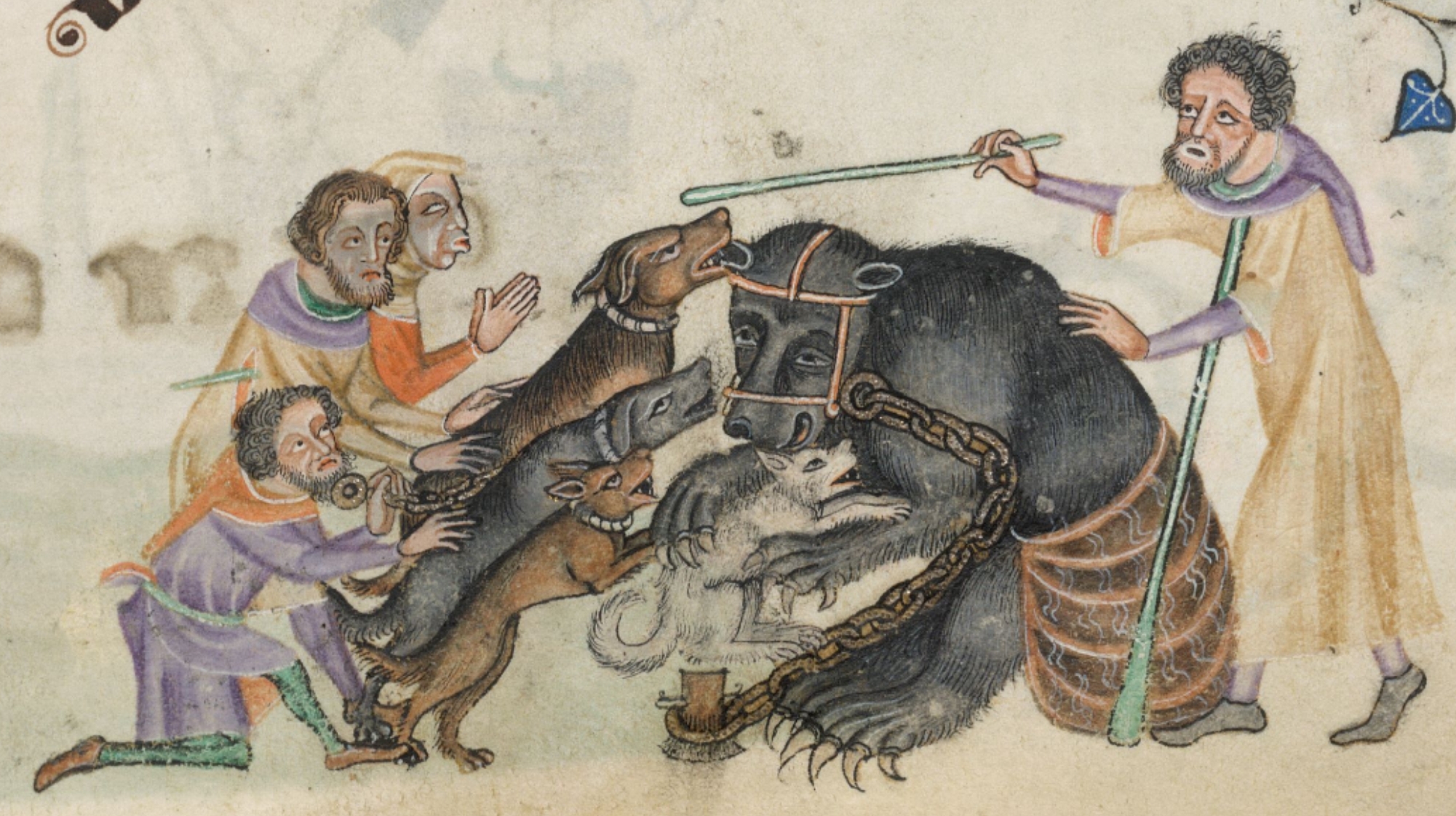
Just like the Fredbear singin’ show, Elizabethans liked to watch real bears perform onstage, sometimes as dancers, but also IN BLOODY FIGHTS TO THE DEATH. In the 1590s, there was a popular sport called “Bear baiting,” where bears would be chained, sometimes to a pole, and set on by vicious dogs. The ‘sport’ was watching to see who would prevail- the fierce and free dogs, or the powerful, bound bear.

As you can see from this close-up of Wenceslaus Hollar’s famous Panorama Of London (1647), we know that Shakespeare had to pass bear beating pits on his way to the Globe all the time, (you can see ‘Beer bayting’ or bear beating, written on the playhouse on the left, and Shakespeare’s Globe Theater on the right). Not only that, Shakespeare writes about the bloody sport frequently in his plays. When Macbeth knows he’s losing the battle with Malcolm, he compares himself to a bear, tied to a stake, forced to fight until his last breath. It calls to mind the moment in the game when the ghosts shed their animatronic skins and attack William directly, while he’s trapped in the Springtrap suit.

The ghosts of Afton’s original five victims gang up on him, possibly causing his golden Bonnie suit to malfunction, and kill him… for now.

It’s worth noting that when the ghosts kill Afton, he’s wearing his Golden Bonnie suit. As Mat Pat mentioned, yes it is the disguise he wore to commit his crimes, but it is also symbolic of who Afton has become- a beastly, inhuman creature who looks friendly on the outside, but inside is cold and robotic on the inside. This also calls to mind the beast symbolism in the aforementioned ghost scene from Richard III. The real King Richard III used a boar as his royal sigil, and Shakespeare exploits that beast imagery by comparing Richard to a bloody, rooting hog, grown fat on the blood of his victims. Richard doesn’t wear a pig suit, but he does wear his cruelty and bloodlust literally as a badge of honor!

In both the games and the plays, the ghosts become a manifestation of the murderer’s guilty conscience, and beast-like imagery is used to convey how cruel and beast-like the murderer has become. Macbeth and Richard don’t dress like beasts, but they do kill like them.

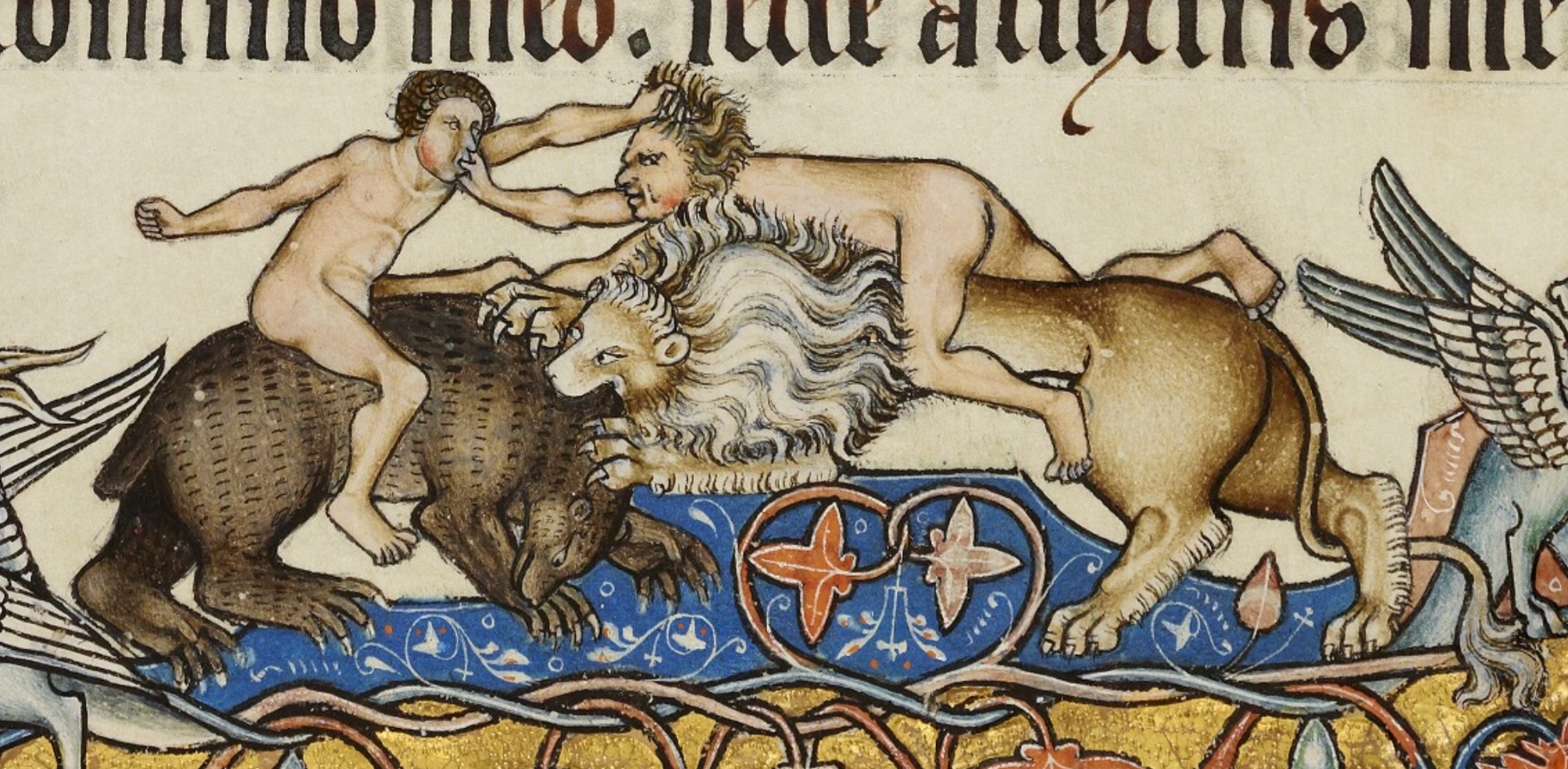
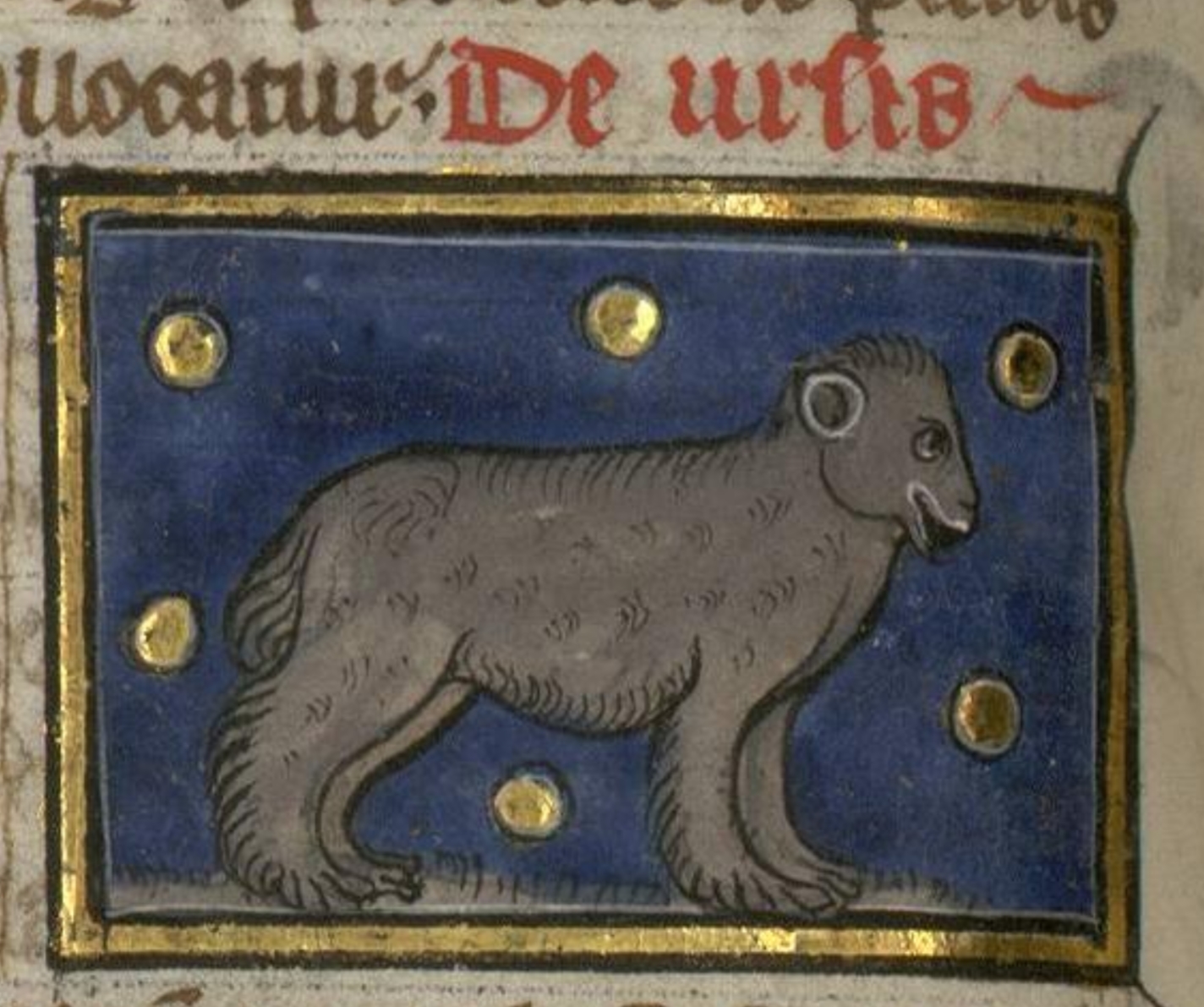
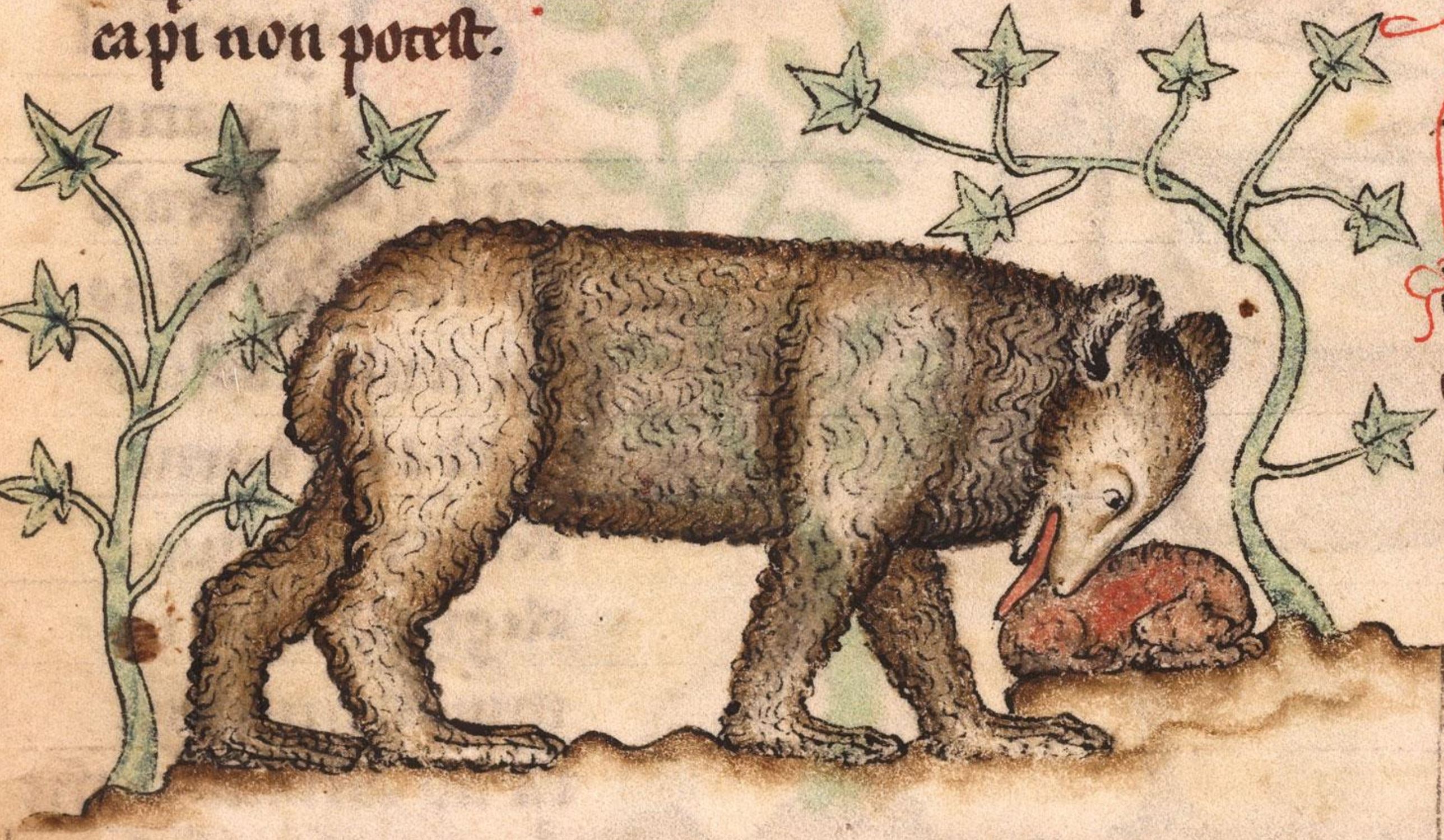
The beast imagery also extends to the concept of revenge. One big theme in Five Nights At Freddie’s is the concept that revenge, (whether justified or not), is blind and indiscriminately destructive. Even though the five ghosts that possess the animatronics are justifiably angry for being murdered, they don’t just try to kill Afton- they attack any poor soul who sticks around the pizzeria at night. Like Hamlet, who wants to avenge his father’s murder, but kills the wrong people, the five souls trapped in their metal cages have a noble goal- protect the children in the pizzeria, and destroy Afton, but they are full of beastlike rage and are unable to see friends from foes. This kind of blind rage reminds me of how real bears will fight off anyone whom they perceive as a threat. In medieval manuscripts, bears are tender to their cubs and literally form them out of little hairy lumps by licking them into shape. At the same time, they are powerful, deadly, and violent to anyone that threatens the cubs.

This kind of blind violence is something Shakespeare explores a lot in his history plays and his tragedies. Every time he talks about a society going wrong, he describes it as if it were populated with beasts, not humans. In Timon of Athens, the titular character, having left Athens to go live in the woods, laments to his frenemy, the cynical philosopher Apemantus, how his city has become like a collection of beasts:

  • TimonWhat wouldst thou do with the world,
    Apemantus, if it lay in thy power?
  • ApemantusGive it the beasts, to be rid of the men.
  • TimonWouldst thou have thyself fall in the confusion of2025
    men, and remain a beast with the beasts?
  • ApemantusAy, Timon.
  • Timon. A beastly ambition, which the gods grant thee t’
    attain to! If thou wert the lion, the fox would
    beguile thee; if thou wert the lamb, the fox would
    eat three: if thou wert the fox, the lion would
    suspect thee, when peradventure thou wert accused by
    the ass: if thou wert the wolf, thy
    greediness would afflict thee, and oft thou shouldst
    hazard thy life for thy dinner: wert
    thou a bear, thou wouldst be killed by the horse:
    What beast couldst thou be, that2045
    were not subject to a beast? and what a beast art
    thou already, that seest not thy loss in
    transformation!
  • ApemantusIf thou couldst please me with speaking to me, thou
    mightst have hit upon it here: the commonwealth of2050
    Athens is become a forest of beasts.
  • TimonHow has the ass broke the wall, that thou art out of the city? Timon Of Athens, Act IV, Scene iii.

In short, the history of horror, which Shakespeare helped shape in plays like Macbeth, Richard III, Hamlet, and others, has a lot of classic tropes and the Five Nights At Freddie’s games exploit them quite well; tropes like supernatural vengeance, the death of innocents, beast-like killers, and unquiet ghosts. What works the best about this franchise is that it tells its lore like a mystery, slowly revealing Afton’s gruesome crimes over multiple installments. I wonder if someone has ever applied this to Shakespeare…

Shameless plug: Romeo and Juliet Murder Mystery

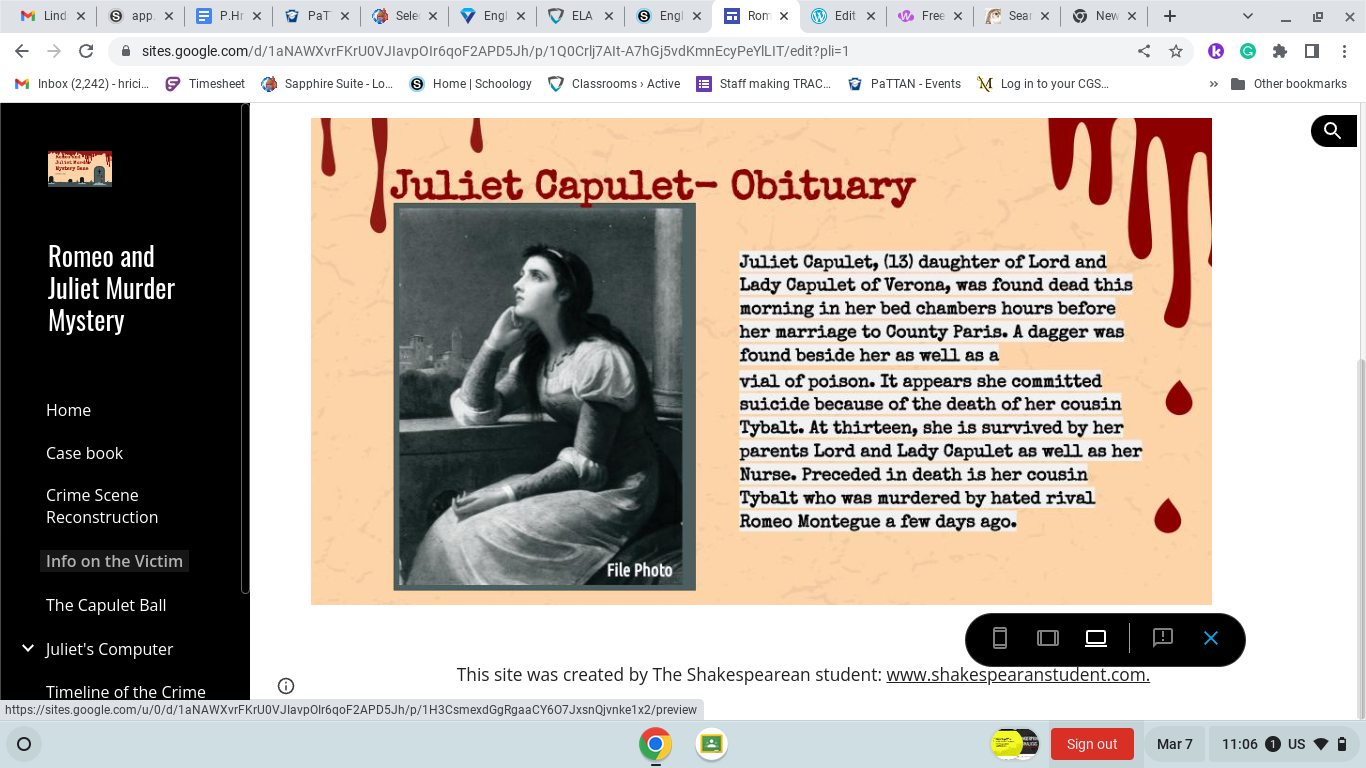
I’m proud to announce that I’ve just been approved to present a fully online, fully immersive murder mystery-style game, where you play as a detective trying to solve the mysterious death of Juliet Capulet! This is a really cool mixture of Shakespeare and forensics science as you examine crime scenes, look for clues, interrogate suspects, and untangle the story of Romeo and Juliet, and it even takes place over the course of five nights! Classes start March 17th. Register now at www.outschool.com!

Would Shakespeare enjoy playing FNAF well, who knows, but I do like to think he would appreciate the lore, if not the jump scares……

https://www.google.com/amp/s/www.history.com/.amp/news/7-early-robots-and-automatons

The Weirdest History Show on YouTube

No, you aren’t hallucinating. This is a clip from the short-lived Warner Brothers kids cartoon show “Histeria,” an educational variety show, sort of like Horrible Histories or “Who Was.” This clip is a song about the life of Henry VIII.

The show was produced by Worner Brothers for the WB back in 1996. It starred many successful voice actors from other WB projects like Billy West (Renn and Stimpy), Tess McNeill (Tiny Toon Adventures), and Frank Welker (The current voice of Curious George). In addition, the show was created by Tom Ruegger, Executive Producer of Warner Animation, who also created Tiny Toons, Animaniacs, and Pinky and the Brain. Those of you who grew up in the 90s know that the WB occasionally sprinkled their shows with educational sketches especially with Animaniacs:

So the idea of using these creative people to create a show about history was not a bad one in and of itself. It could have been a modern-day Schoolhouse Rock. The problem is that the characters are TERRIBLE.While Tiny Toons had likeable characters who were the modern-day successors to classic Warner characters like Buster Bunny, Plucky Duck, and Hampton pig, Histeria has lame characters nobody knows or has any interest in like Froggo, World’s Oldest Woman, and Big Fat Baby. In addition, there is no through line to any of these sketches so it seems like a bunch of random skits. While the Animaniacs was about crazy weird characters trying to escape from the Warner Bros. lot, it seems unclear as to why these characters are talking to me about history.

In short, Histeria feels like a bunch of talented people were forced to make it, and they gave little thought to how to make it a popular series. Still, the animation is good, the voice acting is top-notch, and occasionally, the jokes land very well, and the songs are very catchy. Not surprisingly, my favorite song is this one, where the cast summarizes in song, all 37 plays of William Shakespeare:

https://tvtropes.org/pmwiki/pmwiki.php/WesternAnimation/Histeria

This video, of course, is about the life of Henry VIII.

My Top 10 FAVORITE Hamlets

I’m delighted to share with you my recommendations for the best Hamlets committed to film! I was pretty strict with my criteria which left a few Hamlets out, so if I missed yours, let me know in the comments.

In order to make this list:

  1. I have to have seen the whole thing. Sadly that excludes a lot of unfilmed productions or films I haven’t got around to seeing.
  2. The interpretation has to take a unique stance on the play.
  3. The actor has to have a clear grasp of the part.
  4. I personally have to like it. This is subjective, and I will make it clear if something is my opinion, or if I think this interpretation works for classes or private viewing.

By the way, if you’re a teacher, I’ll be sure to mention which productions work for classes, and which, for whatever reason, do not. I also can recommend Common Sense Media to give you a good idea what age group this film works best for:

So, without any further adieu (get it?):

The Good Hamlets

#10: Arnold SChwarzenegger in “Last Action Hero”

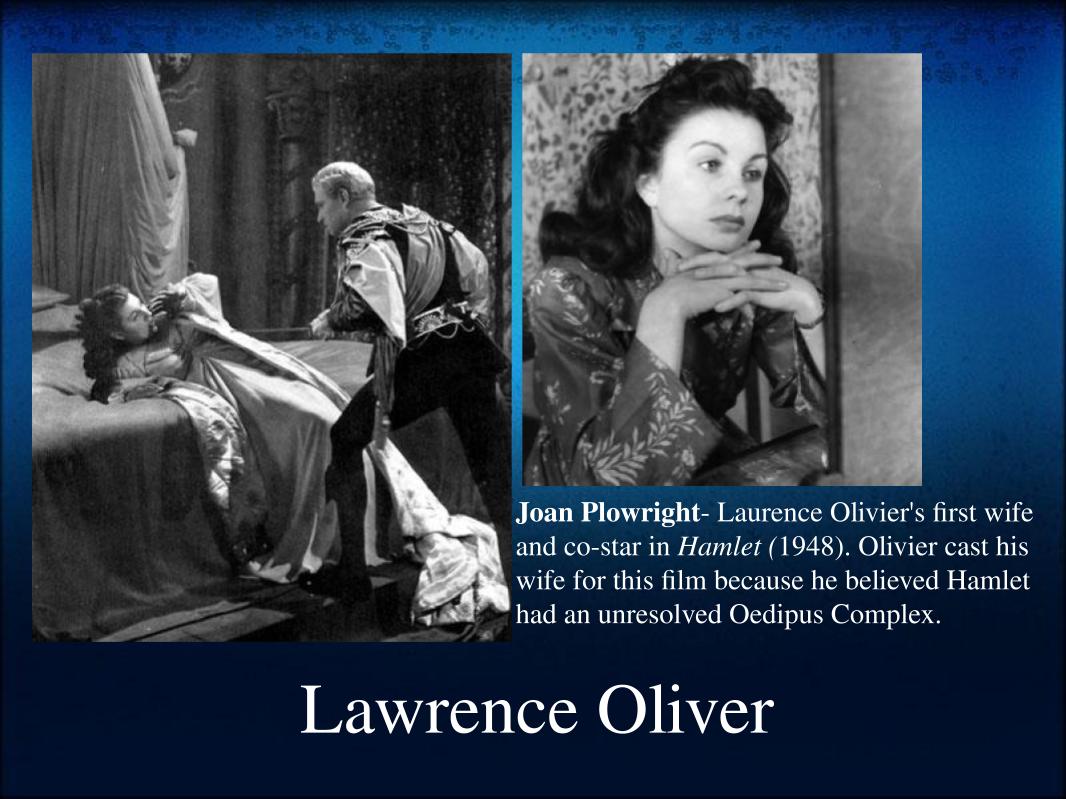
I would love to do a full review of this movie. When it works, it is actually a thoughtful deconstruction of the action movie genre, and as this clip shows, the movie concedes that Hamlet was actually the first great action hero. Schwarzenegger is really funny as an action movie parody of “Hamlet,” and everything he does is pretty cathartic for bored school boys who have to read the play in class. Plus, as a funny easter egg, the teacher in the scene who is showing Olivier’s Hamlet on the screen is played by Joan Plowright, who played Gertrude IN THAT FILM, and was married to Olivier in real life!

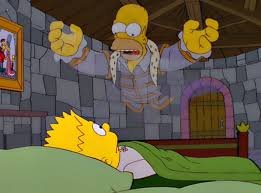
#9: Bart Simpson in “Tales from the Public Domain”

It’s absolutely astonishing how many Shakespeare easter eggs are in this little episode! How they make fun of medieval history, (the Danes were in fact Vikings in the early middle ages), Elizabethan theater, (when Bart does a soliloquy and is surprised that Claudius can hear him), and the way they compress Shakespeare’s longest play into a five minute episode is masterful satire.

In addition, the cast is perfectly chosen among the Simpsons’ core cast. Long-time viewers know that Moe has wanted to sleep with Homer’s wife for years, so making him Claudius is a brilliant choice. Plus, Dan Castellaneta steals the show with his over-the-top performance as the ghost, which actually reminds me of a 1589 review of Hamlet by Thomas Lodge:

“[He] walks for the most part in black under cover of gravity, and looks as pale as the vizard [mask] of the ghost who cried so miserably at the Theatre like an oyster-wife, Hamlet, revenge!”

THOMAS NASHE, “PREFACE” TO ROBERT GREENE, MENAPHON, (1589)

In any case, this clip is a great way to introduce anyone to Hamlet and I highly recommend it.

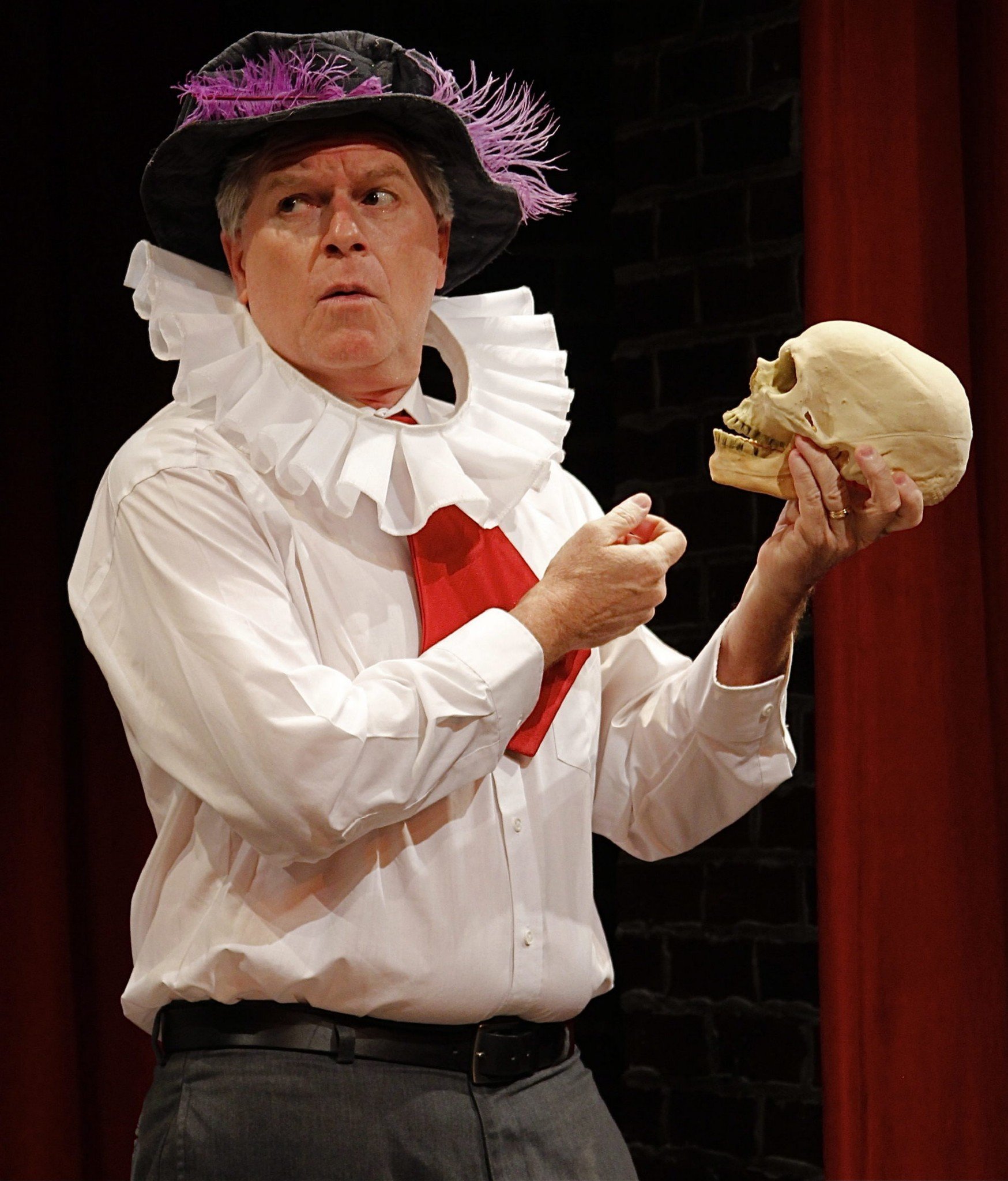
#8: Austin Tichenor in “The Complete Works of Shakespeare- Abridged”

Part 1 of a 4 part series of clips from “The Complete Works Of Shakespeare (Abridged)” Starring Austin Tichenor, Reed Martin, and Adam Long.

This show is very special to me- in around 1997 my parents went to England and brought home a copy of The Complete Works of Shakespeare (Abridged). I’d only read “Romeo and Juliet” previously and through this show, I gained an appreciation for all of Shakespeare’s plays. Seeing the plays through parody made them seem less lofty and stuffy, and made me want to see and read the original works. This is especially true for “Hamlet,” which occupies the second half of the show, where Hamlet is portrayed by Austin Tichenor.

Tichenor wins my award for “Hammiest Hamlet,” which is just delightful to watch. He clearly takes the part WAAAY too seriously, as evidenced by how emphatically he demands solemn silence from the audience while he attempts to do “To Be Or Not To Be.” Tichenor also serves as the pedantic straight man who tries to keep the show moving and academic, while mediating between his bickering co-stars Adam and Reed. This wonderful Three-stooges dynamic makes every minute of the show fun and frenetic. However, the cast makes it very clear that they are making fun of Shakespeare with love; they never mock the play, they inform as well as entertain, and occasionally they even move the audience as Adam does at the end. In short, this show helped me form my approach to Shakespeare, and it’s largely through Tichenor that I read Hamlet at all, so he’s to blame for this website.

#7: Richard Burton, 1964 (stage production directed by John Gielgud).

With the advent of TV and film making theater seem obsolete, directors knew they had to do something drastic in order to get people to come to the playhouses. Enter John Gielgud, one of the greatest Hamlets of the early 20th century, who directed Richard Burton in a highly-acclaimed production with minimum sets and with actors wearing rehearsal clothes. The idea was to let Shakespeare’s words and the actors’ performances be the focus, and save spectacle for film and TV. This approach has been adopted by many theater companies since, including a few I’ve been a pat of.

Burton has a lot of energy and manic physicality in his portrayal and it makes his Hamlet engaging to watch. Plus Gielgud himself as the ghost is almost operatic to hear. I highly recommend any theater fan to watch it, though it might not translate in a classroom much.

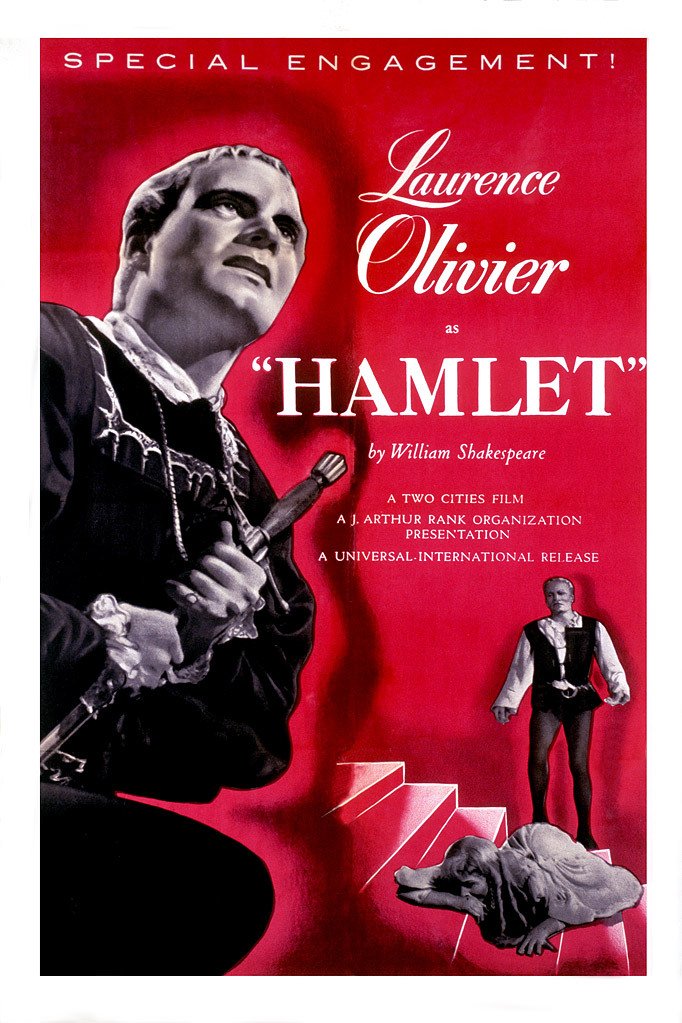
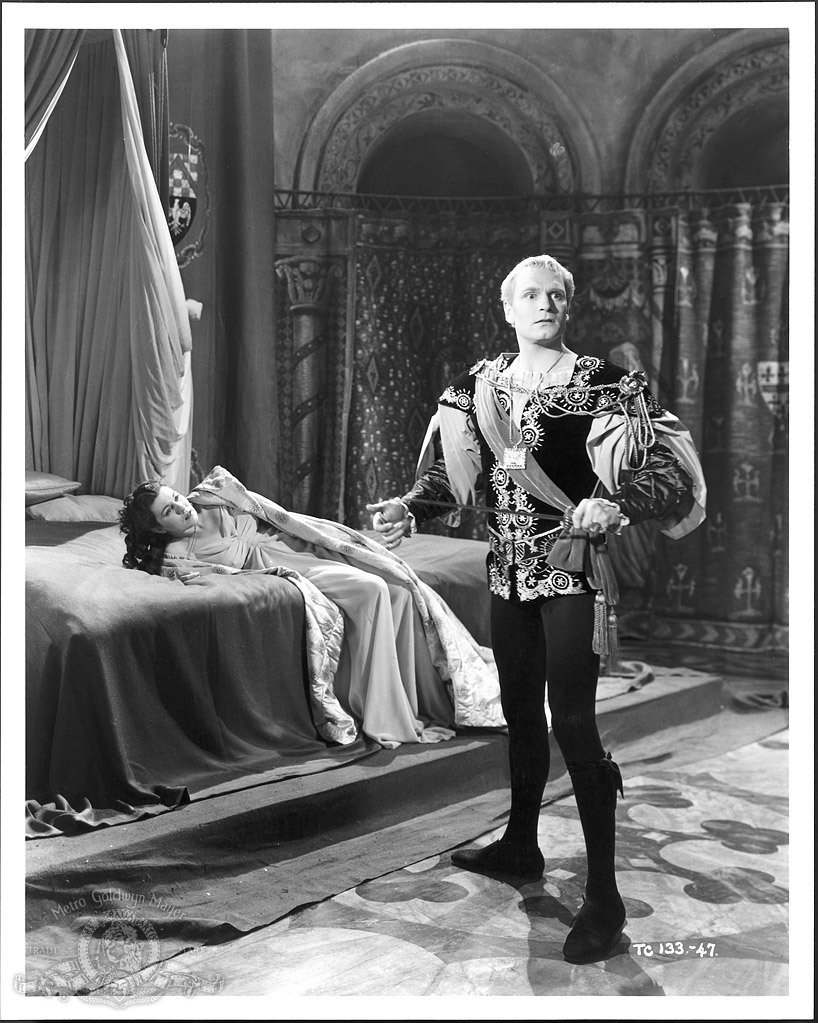
# 6: Laurence Olivier, (Film 1948)


I have my issues with Olivier as an actor and apparently I’m not alone:

I find Olivier’s acting over-the-top, lacking in emotion and subtlety, and I think his directing is generally self-centered. He rarely deigns to give close-ups to anyone but himself and a lot of the scenes he directs are filmed like stage plays. That said, Olivier’s Hamlet is really good. SIr Laurence talked to Ernest Jones about the theory that Hamlet might have had an Oedipus Complex and created a unique and well-thought-out interpretation for his Hamlet. First off, casting his real-life wife Joan Plowright as Gertrude, fills the Closet scene with uncomfortable tension. He also did a great job making the ghost seem as imposing and accusatory as possible, as well as making Claudius as disgusting as possible.

You get the idea that this film is how Hamlet sees the world with its dark and shadowy towers, representing Hamlet’s melancholic mind, his imprisoned spirit, and his dark desires. Also as many people have pointed out, Gertrude’s bed chamber looks like a female organ, making the Oedipus theory even more explicit.

Even I have to admit that Olivier nailed the “To Be Or Not To Be,” Speech. He squirms at his own Oedipal fantasies, and contemplates jumping off the battlements in a captivating and subtle way. The performance and cinematography is iconic, and it makes me grudgingly admit Olivier, for all his faults, is still one of the best Hamlets of all time.


I would recommend this film to every Shakespeare film fan and any hardcore Shakespeare scholars. I would caution against showing the whole thing in a class however, since it’s black and white, and again, I find Oliver’s delivery very old-fashioned.

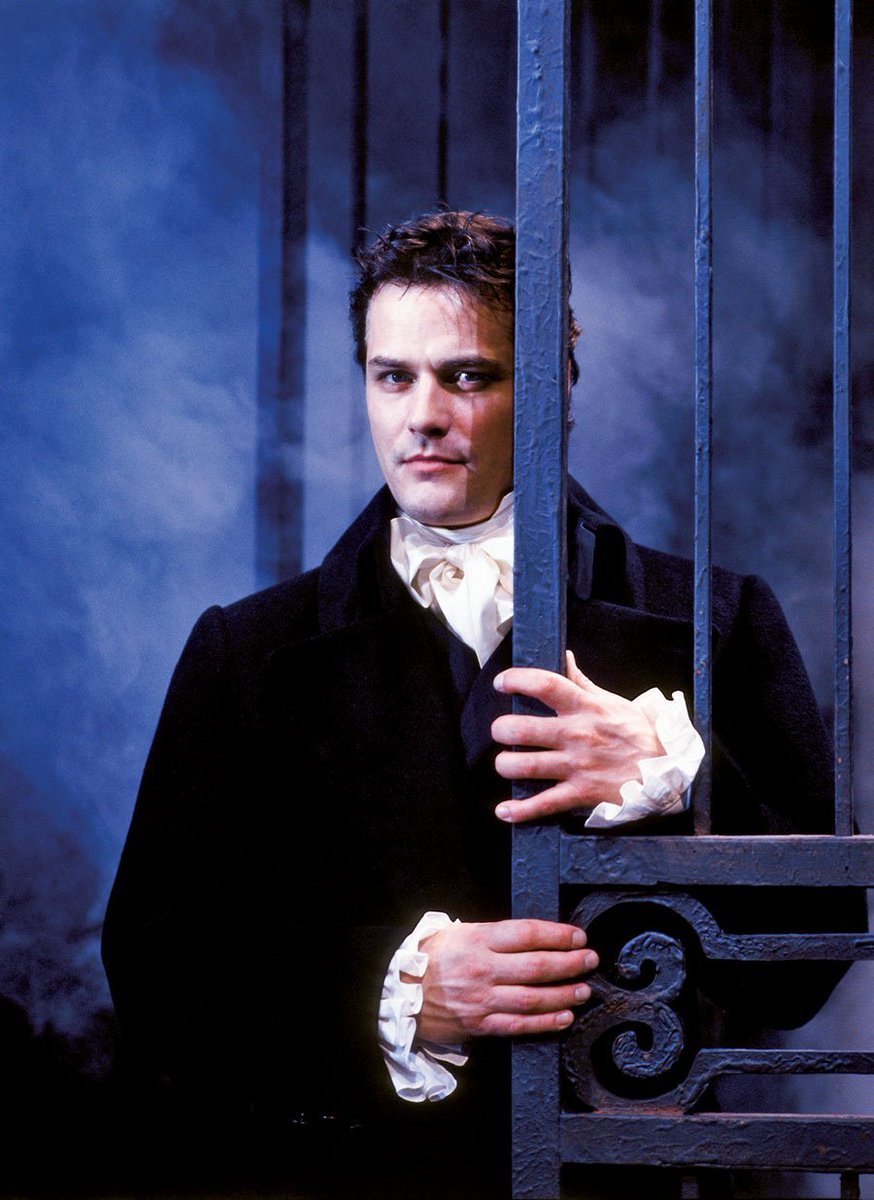
#5: Paul Gross, (StratforD Festival, 2000)

Thus far, I’ve mainly reviewed British and American Hamlets. Paul Gross is one of Canada’s most celebrated actors who gained fame as one of the best Hamlets at Toronto’s Stratford Festival. Unlike most Hamlets who go for the humanistic prince version of Hamlet, Gross plays him with sort of an animal intensity, like a wounded bear who will growl at you if you get in his way.

I have to admit I broke my own rule with this one- I haven’t really seen Gross’ portrayal, but I believe I saw it well-represented in his role as Geoffery Tennent, the Shakespearean Actor-turned madman-turned director in the Canadian TV show “Slings and Arrows.” This amazing dark comedy portrays the ins and outs of a Shakespeare Company from the normal problems of mounting a play to backstage drama, even the funding and marketing gets focus! Basically, the show is The Office for Shakespeare nerds, except for one ghostly cast member (no spoilers).

4. Benedick Cumberbatch / John Harrell

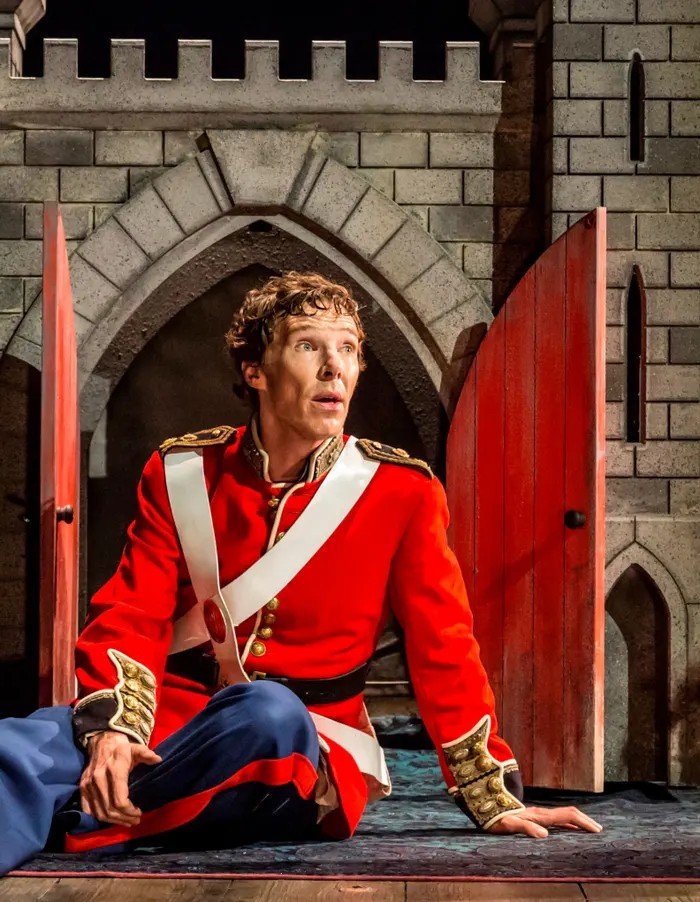
I couldn’t make up my mind between these two Hamlets, so I’m listing them together (guess that makes me Hamlet too). One is one of the most accomplished Shakespearean actor in recent memory, an RSC alumn, and a Hollywood star to boot, Benedick Cumberbatch.

Left- Benedick Cumberbatch as Hamlet, National Theater. Right- John Harrell at the Blackfriars Playhouse, Staunton VA.

Both these actors have similar strengths- they’re both tall and imposing with aquiline features. They are also highly physical performers. I talked in my lecture on Richard III about how Harrell performed the role of Gloucester with his legs tied together and a bowling ball strapped to his hand. Appearance-wise- Harrell and Cumberbatch are so similar, that it’s actually a joke at the ASC that they must be long-lost twins.

That said, when it comes to their approach to Hamlet, these two actors couldn’t be more different. Cumberbatch focused on Hamlet’s emotional turmoil- he was tortured and angry, full of youthful angst and volatility. This particular production is sort of an anachronistic mash-up of modern and period, which gives it a sort of dream-like quality that I really enjoy. Like Richard Burton, the director knows how to stage a play differently from a movie or TV show, which is especially important with this actor, since we can see him on all those platforms.

Nor should they have. Full of scenic spectacle and conceptual tweaks and quirks, this “Hamlet” is never boring. It is also never emotionally moving — except on those occasions when Mr. Cumberbatch’s Hamlet is alone with his thoughts, trying to make sense of a loud, importunate world that demands so much of him.

By Ben Brantley
New York Times, Aug. 25, 2015

John Harrell on the other hand is a more mature and subtle Hamlet, more interested in saving his hide than contemplating his navel. This Hamlet masks pain with humor and sardonic wit and it translates to all his relationships with the King, Queen, and courtiers.

John Harrell as Hamlet, American Shakespeare Center, 2011

Rather than a sour, dour, morose, obtuse, naval-gazing Hamlet, this prince was cunning, cynical, devious, sarcastic, and very much enjoying his feigned madness, his chess game with the king, and his fencing bout with Laertes.

Eric Minton

https://www.shakespeareances.com/willpower/onstage/Hamlet-11-ASC11.html

#3: Papaa Essiedu, Royal Shakespeare company

Trailer for Hamlet at the Kennedy Center

OK, I have to admit that I didn’t see this whole production either, but it’s so cool and the acting is so good I wish I had! Papaa Essiedu is an electrifying blend of wit, sadness, manic excitement, and rage. His fresh take on a role that can be rather dour is why even the little I’ve seen of his performance makes it one of my favorites!

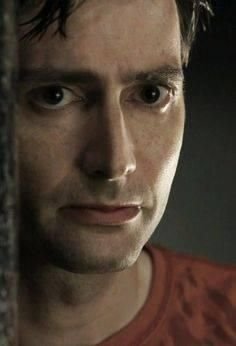
#2: David Tennet, RSC 2009

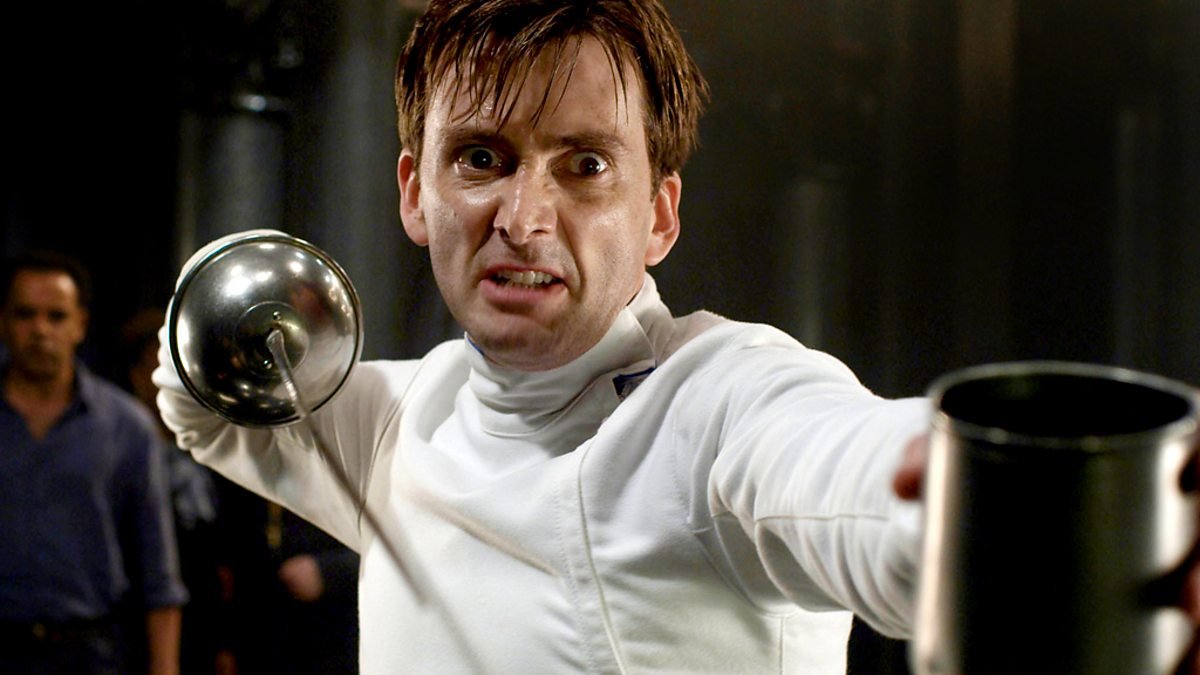
Tennet does an incredible job of encapsulating Hamlet’s quick wit, giddy excitement, frailty, fury, and frustration, especially with himself. I love the fact that he does “To Be Or Not To Be” in a superhero T-Shirt. In a way, this Hamlet is constantly wishing he was more of the action-movie type that Schwartzenegger parodies at the top of this list. Like Harrell, Tennent’s Hamlet masks his pain with humor, but you can see him struggle with it and try to pull himself out of despair. All these Hamlets find a way to nail at least one aspect of the character, but Tennet in his short 3 hours on the stage, manages to highlight all of them.

I recommend this version for any viewer in any classroom. It’s beautifully shot, extremely well acted, fast-paced, funny, and exciting. I cannot recommend it highly enough.

Honorable mentions: Anton Lester, Ian McKellen, MiChelle Terry, and Sir John Gielgud

I haven’t seen any of these Hamlets and have been unable to locate any clips, but I have the deepest respect for all of these actors, so I thought I’d highlight them here.

I’d also like to give special mention to Michelle Terry. Gender-blind productions of Shakespeare get a lot of flack that is undeserved, and there’s nothing wrong with a female Hamlet. To quote Geoffrey Tennet in Slings and Arrows: “Shakespeare didn’t care about anachronism, and neither should we.”

I didn’t include Ms. Terry in this list, simply because I wasn’t able to get to the Globe, and I wanted to focus on productions that people can watch for free. If you wish, you can watch her 2018 performance on the Globe Theater’s steaming website:

https://player.shakespearesglobe.com/productions/hamlet-2018/

#1: Kenneth Branaugh


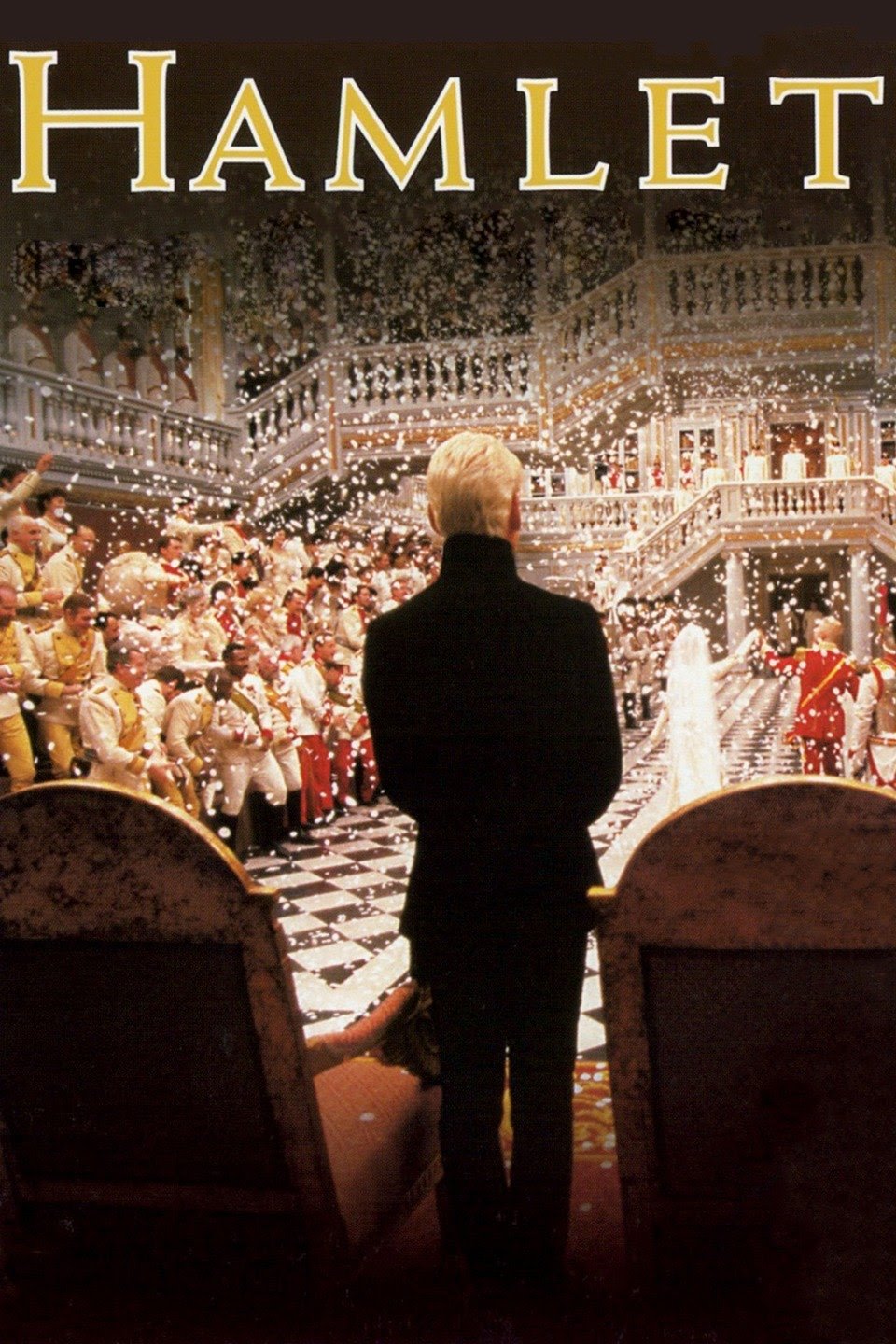
You probably saw this coming. I’ve made it clear in other posts that I absolutely love Branaugh’s Hamlet, after all his film was one of the first Shakespeare movies I ever saw and the first one I really enjoyed. I discuss in detail why I love this movie the best in my review of the film, but to summarize, I think the direction is incredible, the music is excellent, the cast is nearly perfect, and Branaugh himself puts a huge amount of love, craft, skill, experience, and maybe a little madness into his portrayal of the character. I know Branaugh isn’t everyone’s cup of tea; other Hamlets on this list might be more enjoyable, fun, or subtle, for you. But for me, Branaugh’s will always be my favorite.