
I’m working on a new class where I teach children to write Elizabethan love poems called sonnets! Check my Outschool profile for new updates.
Teaser Trailer: Shakespearean Love Poetry

I’m working on a new class where I teach children to write Elizabethan love poems called sonnets! Check my Outschool profile for new updates.
I created this video as part of my “What Was Christmas Like For William Shakespeare?” class on Outschool.com. It should be a really fun class with lots of games, facts, fun, and recipes from Christmas Past! If you want to sign up, go to my Outschool profile page.
I’m offering a $5 discount off this class and many others with coupon code until Jan 13, 2022. Get started at https://outschool.com/classes/stars-and-constellations-for-kids-pd2zSp6P and enter the coupon code HTHESNIF6B5 at checkout.


The goal of this class is to learn about both Shakespeare and the Elizabethan period through the lens of Christmas. I will begin by asking the class "What traditions do you think of when you think of Christmas? We will then contrast the traditions of Christmas from the 17th century and now, including a brief period when Christmas itself was illegal.
Once I have contextualized this period, we will then go through the plot, characters, and themes of Shakespeare’s most famous Christmas play- “Twelfth Night.”
The class will include videos, multimedia presentations, virtual tours, interactive quizzes, and online activities. The students will play games inspired by real Elizabethan Christmas traditions, get some festive recipes, and learn what it was like to be an actor in Shakespeare's company, when they performed "Twelfth Night" and other plays before Queen Elizabeth and King James.

What do you think of when you think of “Shakespeare?” What do you think of when you think of “A Midsummer Night’s Dream?”
Ruffs and Tights?
Mostly white dudes?
Elizabethan music?
Dark night and moon?

This production, directed by Michelle Terry, is gleefully throwing out every preconceived notion of what A Midsummer Night’s Dream can or should be. In terms of design, casting, music, and interpretation, it breaks all the rules, while still remaining true to the text. This allows the production to appeal to not only hard-core Shakespeare fans, but first time audiences and children too!


I got to see this production thanks to the Globe’s online streaming library. My mother kindly shared me a link to this recording from the summer of 2021. You can watch it yourself on: https://www.shakespearesglobe.com/watch/#full-length-productions
I would describe the concept behind the show as “Suggestive,” that is, it doesn’t belong to a literal time and place. Even though the play is set in Ancient Greece, the play refuses to be constrained by historical accuracy, which arguably, fits nicely with Shakespeare in particular, and the Globe itself; a modern building in a modern city, based on a 400-year-old building.
The music and costumes evoke a New Orleans Mardis Gras, a Pride parade, or a Spanish pinata with its bright colors, heavy use of fringes, and bright, energetic jazz music. The only people who don’t wear bright colors are the four lovers, which reflects their continuous frustration with being unable to marry the person they really want.

The show is also Color blind and gender blind, with women playing men’s parts and a cast with black, white, and mixed race actors. Terry’s direction also calls attention to the patriarchial, racist, and sexist elements of Athens which are often overlooked in other interpretations of Dream that I’ve seen or read about. Rather than being a hero, Theseus is a horny old man in a ludicrous pink uniform, looking like a cross between M. Bison and a Christmas nutcracker. To reinforce this point, the actor chose to perform one of Theseus’ most patriarchial speeches as a joke:
Theseus. What say you, Hermia? be advised fair maid:50
To you your father should be as a god;
One that composed your beauties, yea, and one
To whom you are but as a form in wax
By him imprinted and within his power
To leave the figure or disfigure it. -Midsummer Night's Dream, Act I, Scene i.
I’ve seen this speech heavily cut and played seriously, but never till now did I see it played to ridicule the ludicrous notion that women are in any way bound to worship their fathers.
In another nod to contemporary gender politics, the actress who plays Hippolyta and Titania chose to perform her role on crutches. As far as I can tell, this was a deliberate choice and not a result of real injury. There is a precedent for this: In 1984, Sir Antony Sher performed Richard iii on crutches because it highlighted the cruelty people with disabilities often suffer.
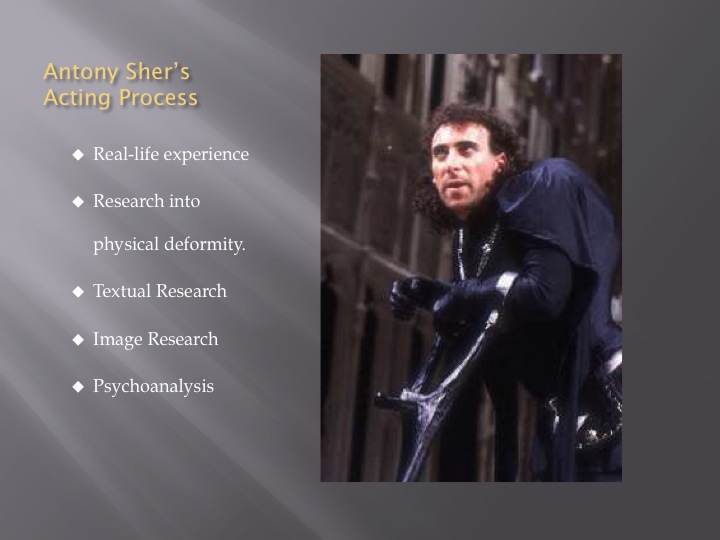
I could be wrong, but I think that the reason the actress was on crutches was a symbolic way of confronting the way gender politics can cripple women.
Many scholars have pointed out how Hippolyta rarely speaks despite the fact that she is supposed to be the powerful Queen of the Amazons, and Theseus’ fiance besides. Shakespeare makes it clear that their marriage was arranged as a political alliance after the Amazons lost to Athens in a war:
Hippolyta, I woo'd thee with my sword,
And won thy love, doing thee injuries;20
But I will wed thee in another key,
With pomp, with triumph and with revelling.
With this in mind, it makes sense to have Hippolyta on crutches as a result of her injuries. Those injuries might also explain her silence; she has lost her agency now that she is essentially Theseus’ prisoner. One might think of any number of war atrocious where women have been sold to powerful men over the centuries. In short, by putting Hippolyta on crutches, we see a glimpse into her tragic story that most productions just gloss over- that she has lost a war, been separated from her people, and is now her enemies’ prisoner through marriage.
I’ve come to expect high quality acting from The Globe Theater Company and this cast did not disappoint. As we watched it together, my family concluded that this was one of the best acted productions of Dream that we’ve ever seen, which between us has to be over 30 plus productions.
The delivery is crisp and fast paced. Every actor has taken these words and made them their own. They speak them as if they were written yesterday. One thing I love about the Globe is that the directors encourage this kind of fast paced delivery; with no distracting special effects or sets, the actors have to captivate the audience with their delivery of Shakespeare’s text, without being melodramatic or self-indulgent. I’m pleased to say that this cast does a fantastic job of telling this magical story in a compelling and very modern way.
I’ve shown my recording to kids, teens, adults, and my family, and everyone has a different reaction to the show. Maybe this isn’t quite your cup of tea, but the concept is sound, the acting is high caliber, and it utilizes the Globe’s unique qualities extremely well.
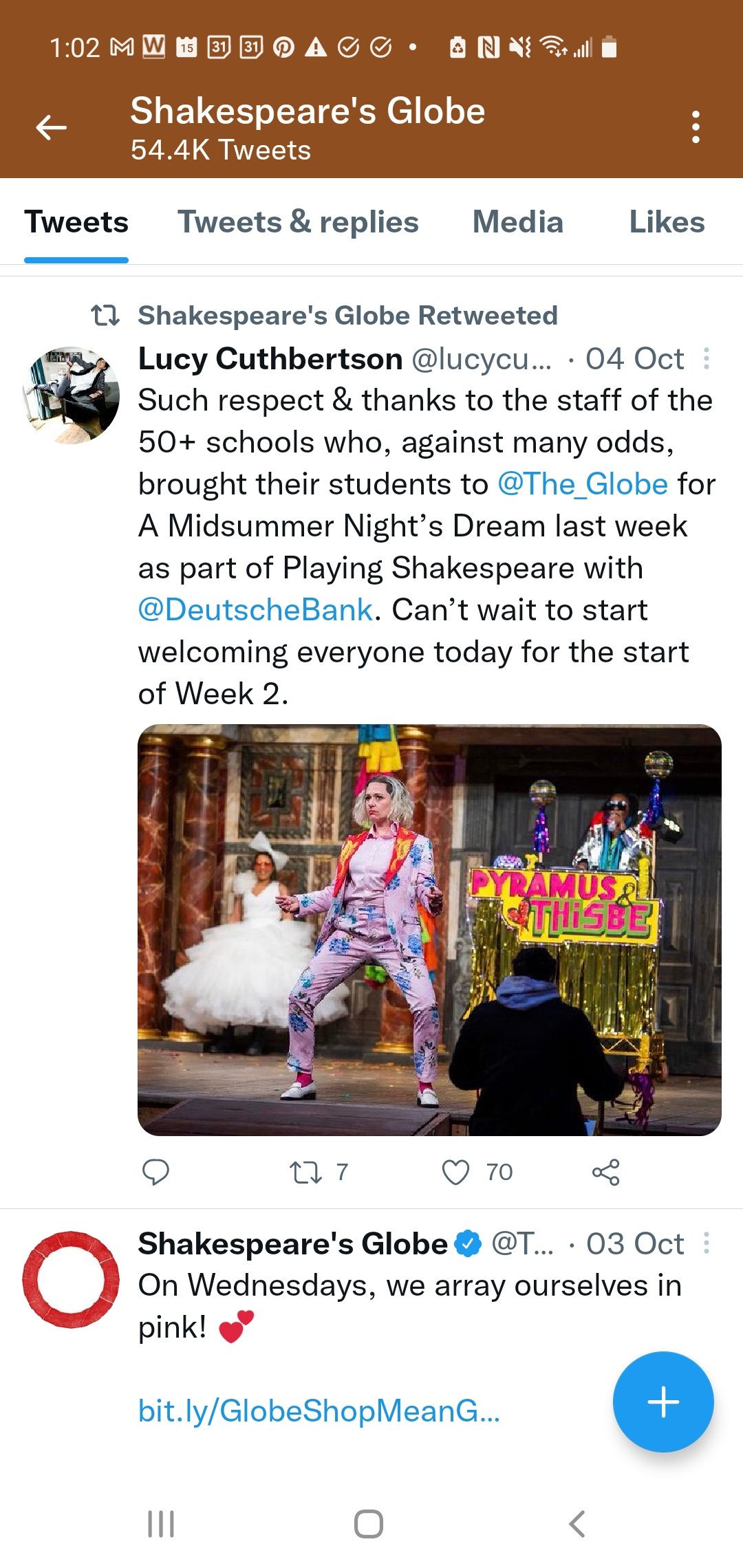
I personally didn’t care for Bottom just because I felt the actress was playing a very energetic part with too much sarcasm and tongue in cheek, but that’s mostly personal preference. I did however love Peter Quince, Snout, Snug, and the rest of the Mechanicals. Peter Quince is a rather thankless part but it’s great to see someone balance being a straight man trying to reign in Bottom’s antics. and an idiot who has no idea how to direct a company of actors, which the actress playing Quince did very well.

Just in time for October, I’m offering an online class for kids ages 13-18 about Shakespeare’s most spooky and cursed play:
If you follow this blog you know I’ve written a lot about this play before. Though this class will be more like a game where I teach the class using multimedia, games, and a digital escape room!
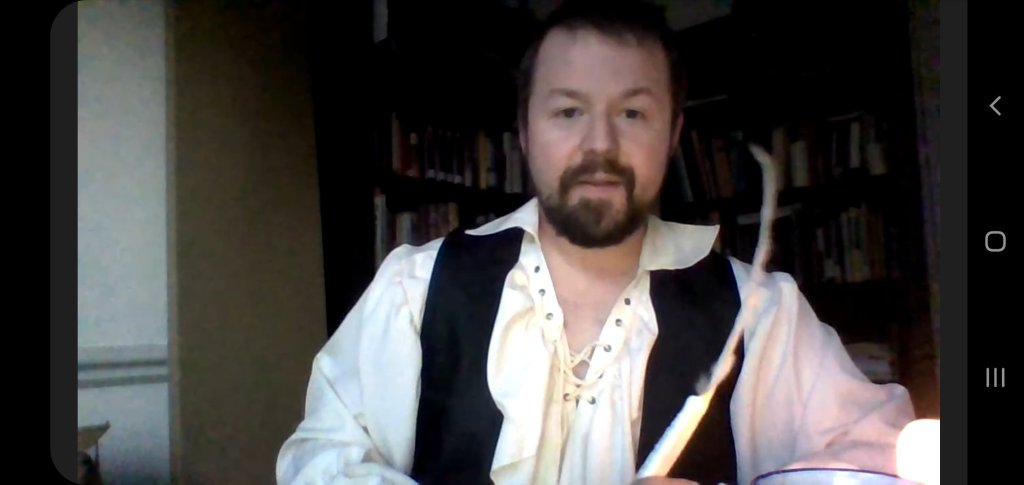
I’ll start by speaking to the students in character as Shakespeare, and tell them the story of Macbeth using a multimedia presentation.
I will then test the students’ knowledge with a fun quiz that was inspired by the popular mobile game Among Us. As you know, the game is similar to a scene from the play, so I thought it would be an appropriate way to test the kids’ knowledge.
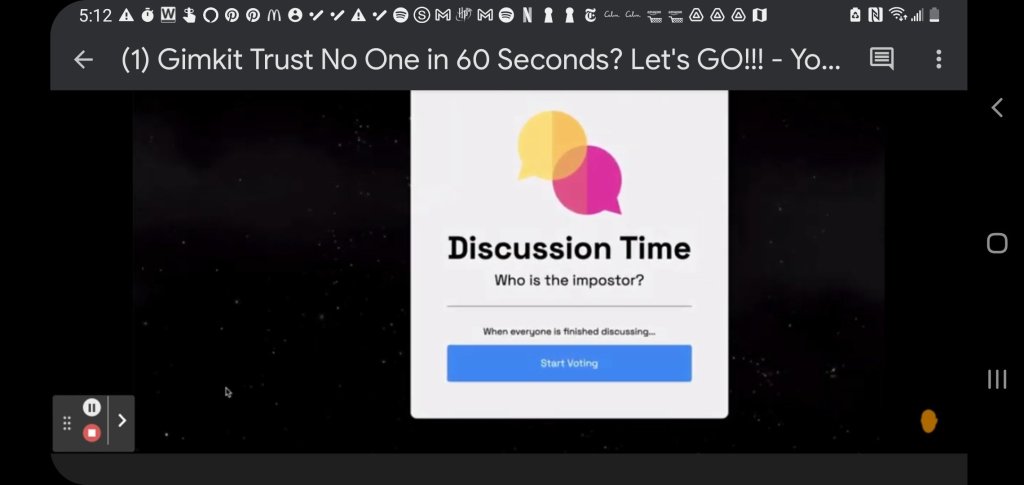
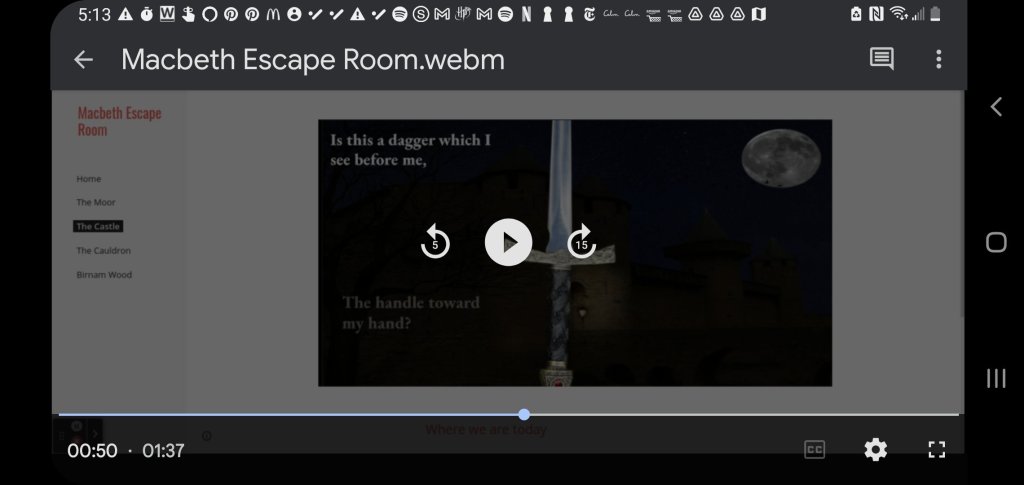
The final part of the class is a digital escape room I’ve created. I don’t want to give too much away, and you can’t play it unless you sign up for the class, but let’s just say it’s fun, spooky, educational, and challenging!
If you want to sign up now, the course is available every weekend in October, and then by request after that. Register now at Outschool.com. if you take the course, please leave me a good review.
Hope to see you soon!
https://www.bbc.com/news/uk-england-coventry-warwickshire-58517401
I am deeply saddened to report that one of the greatest Shakespearean actors of our day, Sir Antony Sher has been diagnosed with a terminal illness. Sir Antony has been responsible for generation-defining portrayals of Richard III, Falstaff, and others. I myself got to see him onstage in a production of Jean Paul Sartre’s Kean, where he played another legendary actor, Edmund Kean. My thoughts and prayers are with Sir Antony and his husband, Royal Shakespeare Company Artistic Director Greg Doran.


If you want a little insight into this wonderful actor and his process behind one of his greatest theatrical triumphs, read his book Year Of The King, where he chronicles in detail his work in creating Richard III in the picture above.

I’ve been working on a remote learning class for Outschool.com where I take some of the audition advice I wrote in Creating A Character: Macbeth, and some of the other acting posts I’ve published over the years. This will be a weekly virtual acting course for kids ages 13-18, starting September 12th at 10AM EST.
This class will outline the tools and techniques of Shakespearean acting such as projection, articulation, and imagination. Each We’ll also go over Shakespeare’s own advice on acting in his play “Hamlet: Prince of Denmark.” The course will culminate with the students choosing their own Shakespearean monologues and scenes, which they can use going forward in auditions, school plays, and classes.
The best thing about the course is that each week builds on the previous week’s experience, but you don’t need to go to all of them. I’ll be flexible and work with the student’s schedule so everyone gets as much out of the class as possible.
If you’re interested in signing up, go to Outschool.com. If you have any questions, email me by clicking here:
Hope to see you online soon!


 The Shakespearean Student