

Here’s a link to the entire video: http://www.pbs.org/wnet/shakespeare-uncovered/uncategorized/macbeth-with-ethan-hawke/
Shakespeare Spooky Stories 2: The Voodoo Macbeth

In 1936, famed director Orson Welles, (known for his iconic film Citizen Kane), produced an equally memorable production of Macbeth. At the time, Welles was a theater director, working with a government-funded theater group called The Federal Theater Project. The goal of the FTP was to help support the theater during the Great Depression. Welles also found a way to have his production help black actors by, and casting exclusively African Americans.

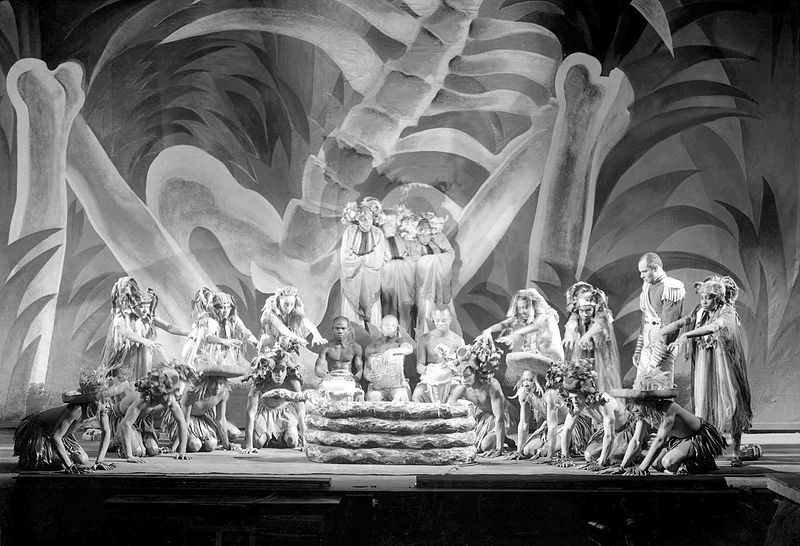
Although Welles kept Shakespeare’s text, he changed the setting to a tribe in Haiti instead of medieval Scotland, and changed the witches into Voodoo priestesses. Below is the only surviving footage of the production, the final scene in which (spoiler alert), Macduff carries Macbeth’s head and sets it on a pole, proclaiming Malcolm the new king. You can see the witches taking a wicked joy when Macbeth’s cursed head is impaled, implying that Welle’s witches had vengeance on their mind when they drove him to kill Duncan.
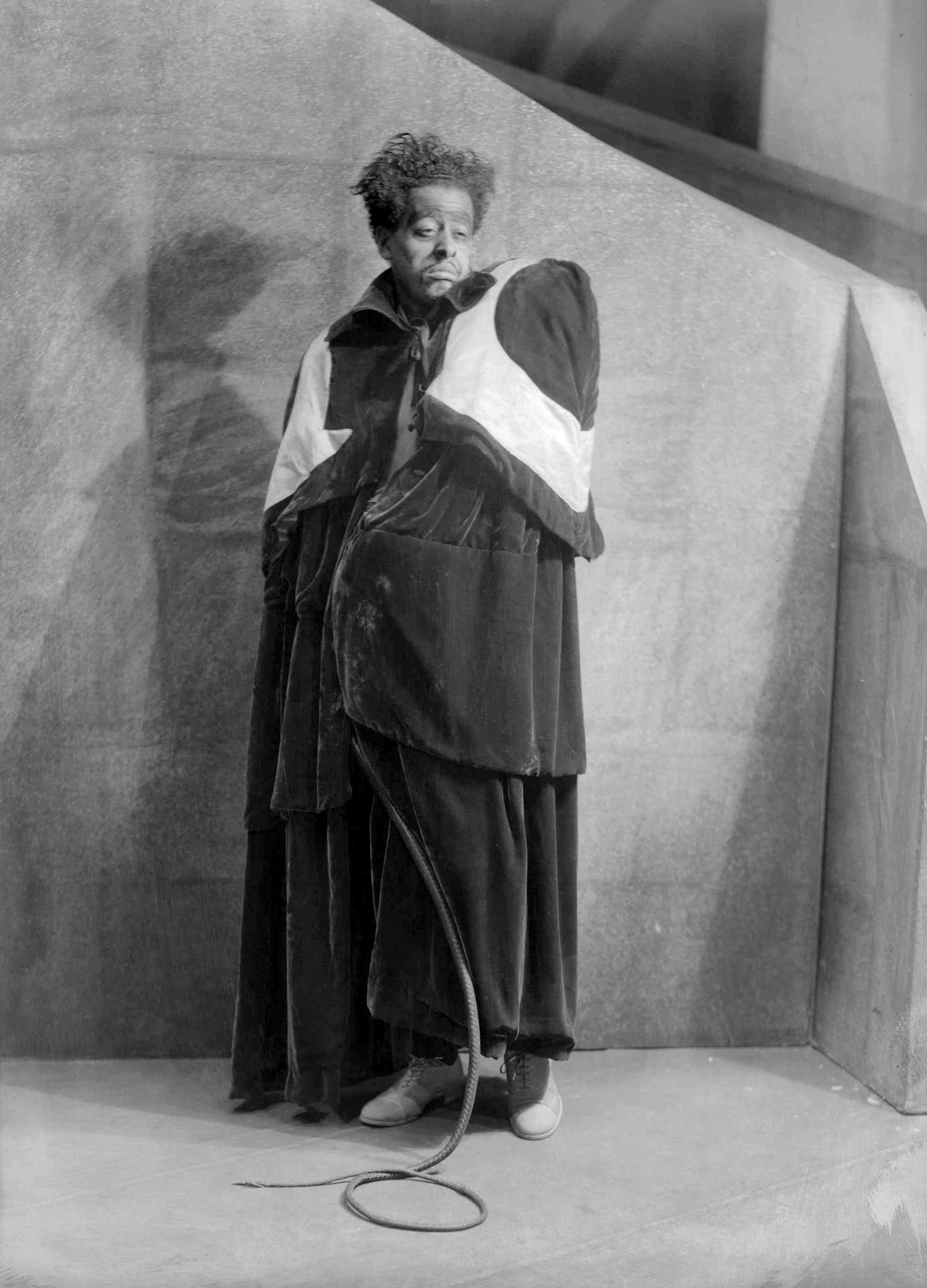
Notice also the actor who screams “Peace, the charm’s wound up,” at the end of the play. He is playing the part of Hecate, the goddess of magic who appears before Macbeth in Act IV. According to legend, Actor Eric Burroughs was a real Voodoo priest, as were the drummers Welles used to spectacular effect during the show. Many critics called the frenetic drumming that occurred during the show and in scene changes an experience that they’d never forget.
Welles’ innovations helped black actors and theater in general survive during the Depression, but not everyone praised his efforts. Journalist Percy Hammond criticized the merits of the performance, arguing that the government shouldn’t pay for artistic projects. The next day when he returned to the theater, he was greeted by a rhythmic thumping underneath the stage that intensified until the critic abandoned his seat and left the theater. The next day, he fell suddenly ill and died! Was his illness a voodoo curse? We may never know, but this story clearly illustrates the effectiveness of Welles’ staging, and the dark occult appeal that lurks beneath the text in any production of Macbeth.
Works Cited:
1. Dunton-Downer Leslie and Alan Riding.The Essential Shakespeare Handbook: Macbeth p.367. New York: DK Publising Inc, 2004.
2. Rippy, Marguerite. Orson Welles and the Unfinished RKO Projects: A Postmodern Perspective pp 75-76. Retrieved 10/21/15 from Google Books.
3. Smith, Wendy. The Play That Electrified Harlem. The Library of Congress. Retrieved 10/21/15 from http://memory.loc.gov/ammem/fedtp/ftsmth00.html
4. Digital Public Library: The Show Must Go On! American Theater In the Great Depression: Impact On African American Theater. Retrieved 10/21/15 from http://dp.la/exhibitions/exhibits/show/the-show/african-american-theatre-impac
5. The Juggler (online publication): “The Voodoo Macbeth.” Retrieved 10/21/15 from http://culture.pagannewswirecollective.com/2011/04/orson-welles-and-the-voodoo-macbeth/
Scary Shakespearean Stories!

“Let us sit upon the ground, and tell… THE MOST MESSED UP, MACABRE, EVIL SHAKESPEARE STORIES EVER!”
I have three macabre stories that are 100% true relating to Shakespearean plays, just in time for Halloween!

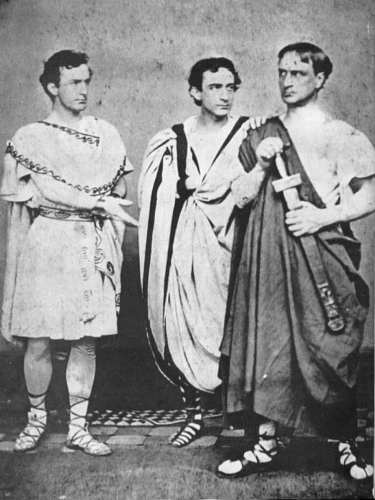
The whole Booth family were a Shakespearean theatrical dynasty; John Wilkes and his two brothers, Edwin and Junius-Brutus Booth Jr were professional actors. The three brothers only appeared together onstage once: in a benefit performance of Julius Caesar- which as you know from my previous posts, is a play where the noble Roman Brutus becomes the head of a conspiracy to assassinate a dictator in the name of peace and freedom. Booth’s father coincidentally was Junius Brutus Booth, and many scholars suspect that Brutus’ son might have taken inspiration from this ancient Roman assassin. In John Wilkes Booth’s mind, Lincoln was a tyrant oppressing the south, and it was up to him to “nobly” sacrifice himself for the good of the Republic.
And the Julius Caesar parallels don’t stop there: just as Caesar’s wife had dreams predicting his murder, President Lincoln was haunted by dreams that warned him of his own death which he told his own wife, Mary Todd Lincoln. Days before the assassination, Lincoln himself had a terrifying vision:
“About ten days ago, I retired late. I soon began to dream. There seemed to be a death-like stillness about me. Then I heard subdued sobs, as if a number of people were weeping. I thought I left my bed and wandered downstairs. There the silence was broken by the same pitiful sobbing, but the mourners were invisible. I went from room to room; no living person was in sight, but the same mournful sounds of distress met me as I passed along.
“It was light in all the rooms; every object was familiar to me, but where were all the people who were grieving as if their hearts would break? I was puzzled and alarmed. What could be the meaning of all this? Determined to find the cause of a state of things so mysterious and so shocking, I kept on until I arrived at the East Room, which I entered. Before me was a catafalque, on which rested a corpse wrapped in funeral vestments. Around it were stationed soldiers who were acting as guards; and there was a throng of people, some gazing mournfully upon the corpse, whose face was covered, others weeping pitifully.
” ‘Who is dead in the White House?’, I demanded of one of the soldiers.
” ‘The President’, was his answer, ‘He was killed by an assassin.’
“Then came a loud burst of grief from the crowd, which awoke me from my dream. I slept no more that night; and although it was only a dream, I have been strangely annoyed by it ever since.” (reprinted from http://www.prairieghosts.com/a_lincoln.html).
The tragic tale of Lincoln mirrors in many ways the assassination of Caesar, a man who to some was a tyrant and to many was a savior. Surely few other moments from history demonstrate Shakespeare’s poignancy, in a more gruesome and macabre way.
Works Cited:
- Andrews, John F. “Was the Bard Behind it,” The Atlantic. Accessed from http://www.theatlantic.com/magazine/archive/1990/10/was-the-bard-behind-it/308480/
- http://shakespearestaging.berkeley.edu/index.php?option=com_g2bridge&view=gallery&Itemid=256&g2_view=core%3AShowItem&g2_itemId=15120&g2_imageViewsIndex=1
- http://www.loc.gov/pictures/item/2003689283/
- http://www.prairieghosts.com/a_lincoln.html
Why We’re Translating Shakespeare | AMERICAN THEATRE
http://www.americantheatre.org/2015/10/14/bill-rauch-why-were-translating-shakespeare/
A controversial project is going on at the Oregon Shakespeare Festival: they’re commissioning playwrights to translate Shakespeare for a new festival called “Play On.” While the article is mostly the artistic director going on the defensive, he makes a lot of good points. Chiefly he argues that these plays are companions to Shakespeare, not replacements. In the same way West Side Story isn’t a replacement for Romeo and juliet, these plays won’t be the ones everybody reads forever, they will be a way of illustrating our own time through the timeless characters and stories of William Shakespeare. That’s why I happily support the OSF initiative!
Tomorrow: Globe Theater’s Production of “Macbeth” hits the screen!

For those of us who don’t live in England, I’m happy to say there’s a way to see productions at Shakespeare’s Globe without having to travel hundreds of miles. You can see the shows broadcast to your local movie theater, and for this October, they’re doing “Macbeth!” Click here to find tickets at a theater near you: http://onscreen.shakespearesglobe.com/productions/macbeth/
If Shakespeare were vegan..

Macbeth would have started very differently. Also Macbeth would stay away from “the milk of human kindness.”
New Play of the Month: MACBETH

Just in time for Halloween, I’ve decided to abandon the Julius Caesar posts and spend the rest of the month talking about the most mysterious, most bloody, and most occult play Shakespeare ever wrote- MACBETH.
As you probably know, I already wrote a review of an amazing adaptation of Macbeth called “Sleep No More,” which you can read here. I also mentioned that there’s a new movie adaptation of this play, starring Michael Fassbender, (look at my last post to see the trailer). In future weeks, I’ll create a new play of the month page, and delve into the magic and curses associated with the play.
But for now, here are some nice tidbits from around the internet.
First, a funny comic from “Zounds, Alack, and By My Troth.”

Next, a short recap of the play from 60 Second Recap.
Third, a feminist interpretation of the play:
And finally, a modern retelling of the play from a BBC series called: “Shakespeare Retold,” starring James Macavoy:
Enjoy (devilish last).
A Few More Updates
Hi folks!
I’ve now finished my work on Romeo and Juliet, and this October, I’m taking a little time to talk about two of Shakespeare’s spookiest plays- Macbeth, and Julius Caesar. Right now, the Royal Shakespeare Company is putting on a very inventive production of the play, and I’d like to talk a little about this interpretation. You can read about it here: http://www.telegraph.co.uk/culture/theatre/theatre-reviews/9317659/Julius-Caesar-Royal-Shakespeare-Theatre-Stratford-upon-Avon-review.html
You can read my analysis of Julius Caesar here.
Here are some posts I’ve got waiting in the wings:
- A spooky Shakespeare Stories related to Julius Caesar, and the assassination of President Lincoln!
- Analysis of the speeches in Julius Caesar (podcast, hopefully).
- Play of the Month for Macbeth.
- Explanation of the curse of Macbeth.
- Review of “Haunt Me Still,” the sequel to “Interred WIth Their Bones” by Jennifer Lee Carrel.
Stay tuned!
A Few Quick Updates

Hi everyone!
I know it’s been a while, but I’ve been moving into my new place so it’s been hard to find time for blogging. Anyway, some exciting Shakespeare news out in cyberspace, and I’d like to report on some of the ones that make me really excited!
-
Sir Kenneth Branaugh, Shakespearean actor, director, and founder of the Renaissance Theater company, is putting on a series of productions, including a production of “The Winter’s Tale” with…. DAME JUDY DENCH! This production will be broadcast in theaters around the country, look for theaters in your area! Here is the official trailer:https://embed.theguardian.com/embed/video/culture/video/2015/sep/10/kenneth-branaghs-the-winters-tale-watch-the-trailer-video
- There is a new movie version of Shakespeare’s “Macbeth” coming out in the next few months, starring Michael Fassbender (now he and Ian McKellen have shared 2 big film roles!)
-

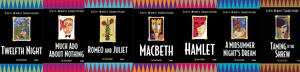
Title pages of books in the 60 Second Shakespeare series. For teachers, there are now condensed versions of Shakespeare plays that might be easier for some students to read: http://www.fivestarpublications.com/shakespeare/sixty.html
- You might have heard of this trend of actors speaking lyrics to pop songs like Shakespearean actors. I’d like to say that, for the record, most good Shakespearean actors know not to talk like prissy weirdos, but that this is absolutely hilarious, especially the one for Gangam Style! http://mashable.com/2015/09/24/15-second-shakespeare/?utm_cid=mash-com-fb-main-link#a6zKE_iemmqn
Ok, that’s it for now. Tune in for a new podcast, new play of the month, and some new reviews.
 The Shakespearean Student