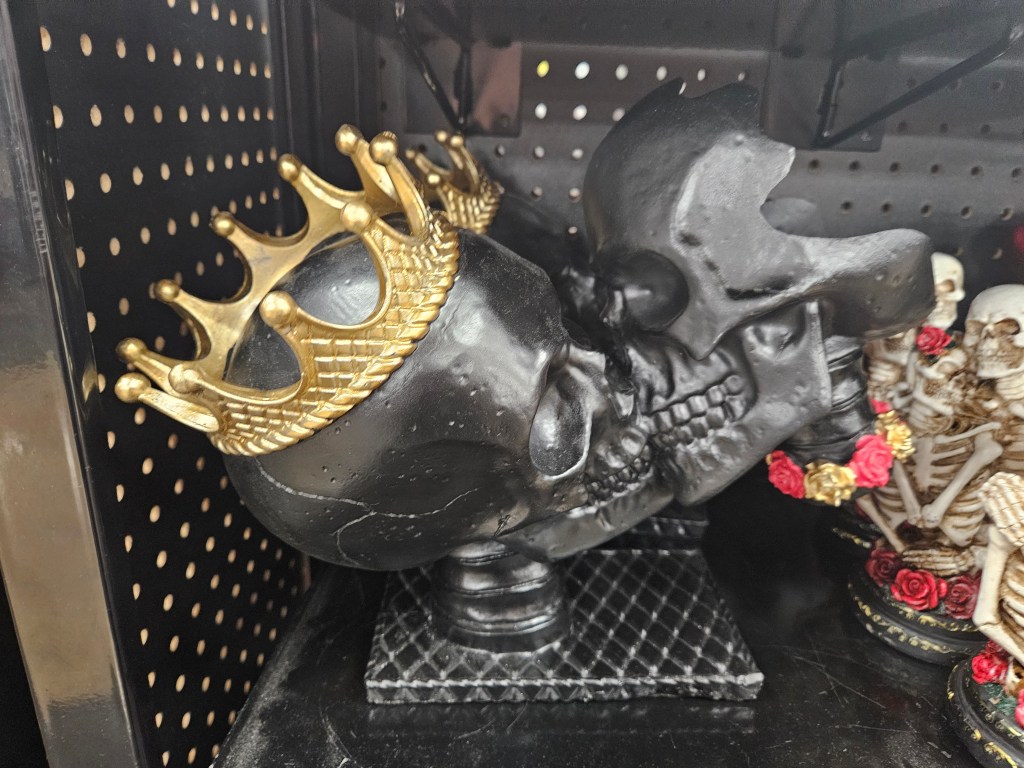
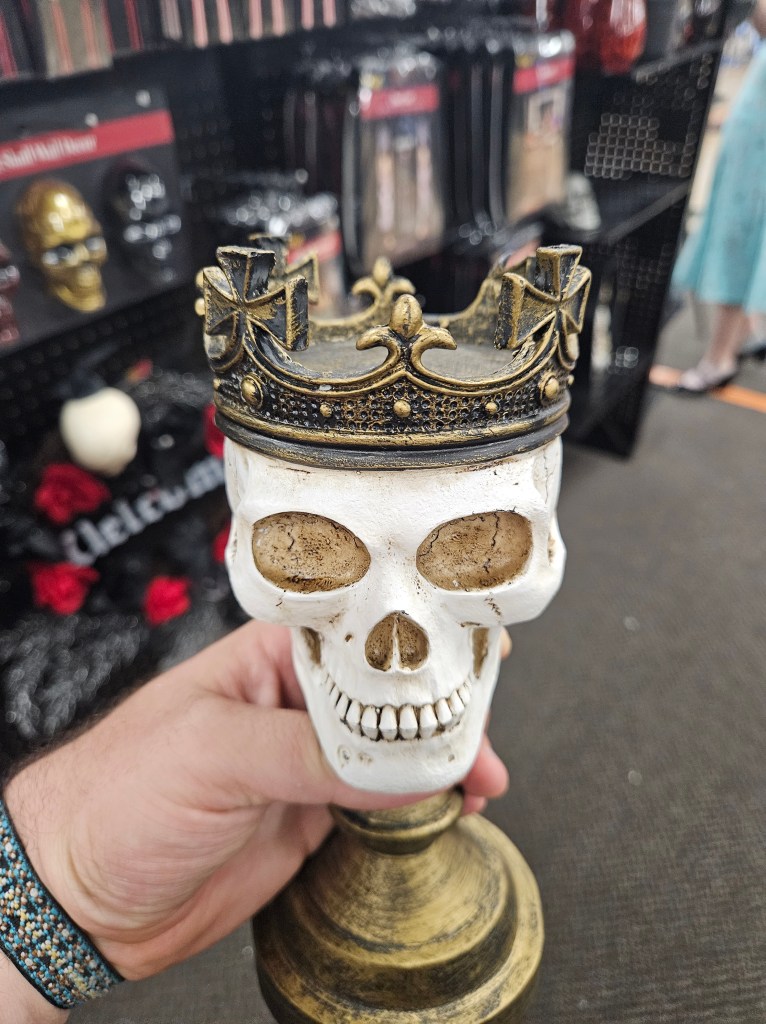
I’ve written before that Shakespeare helped influence Halloween as we know it- the images of holding skulls, witches chanting over a cauldron, and even ghosts coming back to plague their murderers all have Shakespearean roots. Exhibit A is how these images and tropes can even be found in beloved Halloween costume stores like Spirit Halloween!
If you like creepy Halloween activities and Shakespeare, please sign up for my fully online, fully asynchronous class: “An Immersive Guide To Shakespeare’s Macbeth!” The class features a digital escape room, an interactive quiz, and a special, undead guest!
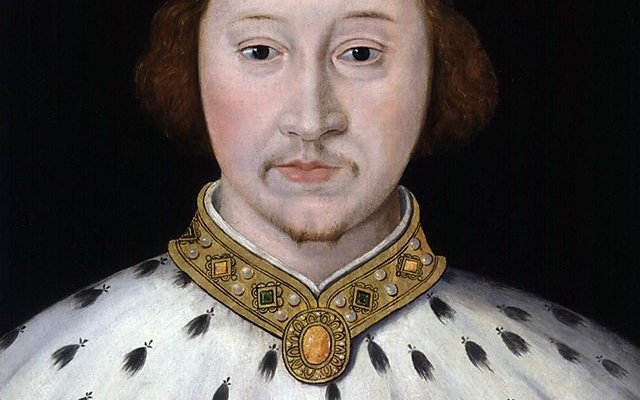
With the current political climate with leaders voluntarily giving up power and factions rising up within factions, I thought I might give you some historical perspective with Shakespeare’s play about a monarch who stole from his people, caused an insurrection, and whose supporters gave up their own power- Richard II.
Richard is a classic story of hubris. Richard literally believed he was appointed by god, and thus he could act with impunity. He, therefore, stole lands, taxed his people, and even gave land away to pay for his wars in Ireland. His actions offended his nobles, especially the house of Lancaster, who rose up and eventually deposed him. This play, therefore, has many lessons on how leaders cannot survive without their supporters, and nobles need to put the good of the people first.
Shakespeare’s version is not a dry chronicle with painstaking historical accuracy. For starters, every single line is in verse, and I don’t think even the real Richard spoke in iambic pentameter all the time. For a history play, this Richard has Shakespeare’s most poetic language:
Shakespeare’s Richard is full of self-pity, bewilderment, and a narcissistic desire for attention with a borderline God-complex. He even art-directs his own deposition with all the tragic solemnity of a passion play, casting himself as Christ, and everyone else as Pontius Pilate:
Shakespeare is very cogent about whether or not it was a good idea to depose Richard, especially since Queen Elizabeth was also an aging monarch who failed to produce an heir or quell a rebellion in Ireland (Shapiro: 1599). Nonetheless, the Queen was aware of the connection and famously declared: “I am Richard the Second, know ye not that?” Some productions have blatantly connected the two monarchs, and even dressed Richard as the Queen.
This play’s strength depends on the casting. Not much happens onstage except for lots of talking, planning, speechifying, and cursing. It depends on actors who can deliver these great lines with beauty but also sincerity:
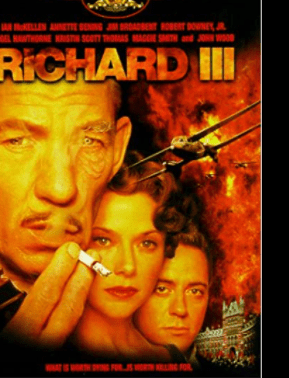
Introducing our new Play of the Month: Shakespeare’s dark history play about murder and corruption, Richard III. First, a short presentation I made that introduces the characters and themes of the play.
Second, a quick, funny summary of the play from the Reduced Shakespeare Company
And finally, this incredible animated version of the play, which looks like a stained-glass window come to life!










 The Shakespearean Student