Enjoy this video trailer and a podcast episode to see some of the ways I’ve traveled to a Galaxy Far Far Away, with Shakespeare’s ghost as my Jedi Master:
I’m sure I don’t need to tell you that one of the most iconic voices of our generation, James Earl Jones has passed away at the age of 93. I’m sure I also don’t need to mention his iconic film roles in such films as Field of Dreams, Coming To America, The LIon King, and of course, his (initially uncredited) role as the voice of Darth Vader in the Star Wars Trilogy. As I’ve written before, Jones had a powerful, authoritative voice that played kings, generals, knights, and even gods, which came directly from his training as a Shakespearean actor. So, instead of taking a look at his illustrious film career, I’d like to celebrate Jones’ contributions to Shakespeare, and how Shakespeare changed his life, and through him, changed mine.
Jones and Poetry
“I don’t mind talking about my stuttering because it’s just another example of you finding yourself with a weak muscle and you exercise it, and sometimes that becomes your strong muscle,” Jones told KCRA in 1986. “I was mute from grade one through freshman year in high school — mute because I just gave up on talking.”
-James Earl Jones in a TODAY Show interview, 1986
James Earl Jones was born in 1931 in Arkabutla, Mississippi. Not only did he struggle with racial discrimination at home and in his career, he also dealt with a debilitating stutter which, as you can see in the quote above, left him all but mute for years of his life. It was one of his teachers who helped Jones find his voice by giving him poetry to read, inspiring him to become an actor. As a Shakespearean actor who also struggles with a stutter, reading this about Jones helped me become an actor as well.
The New York SHakespeare Festival
Your voice has the power to inspire, motivate, and change lives. Don’t be afraid to use it.
James Earl Jones
Before he became a star in the Hollywood firmament, Jones was a classically trained actor who starred in many contemporary and classic plays like The Iceman Cometh, The Great White Hope, and a title role in a drama about the great Shakespearean actor, Paul Robeson. In addition, Jones was a regular performer at the New York Shakespeare Festival, starring as King Claudius in Hamlet, Oedipus Rex, The Prince of Morocco in The Merchant of Venice, and like Paul Robeson, Jones was celebrated for his dignified and powerful portrayal of Othello.
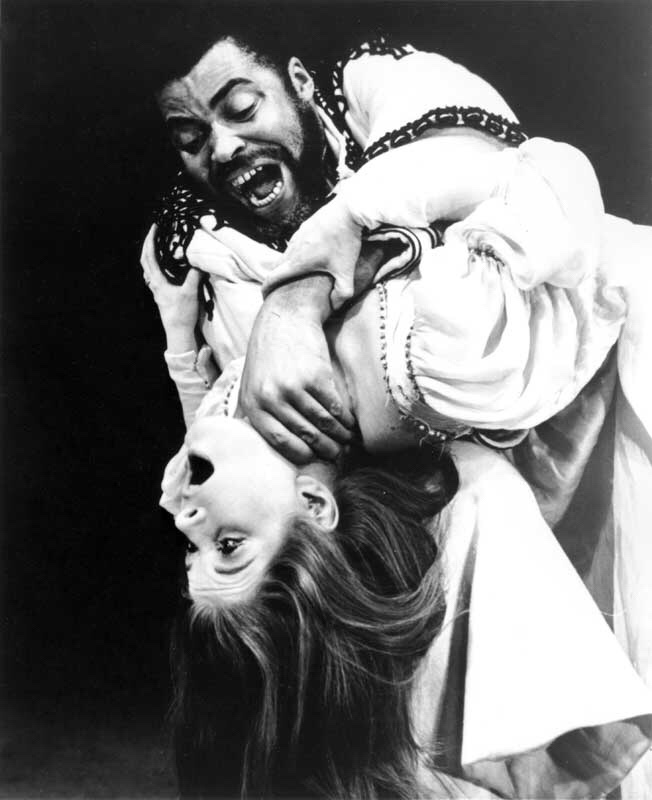
James Earl Jones as Othello and Cecilia Hart as Desdemona in a scene from the Broadway revival of the play “Othello.”
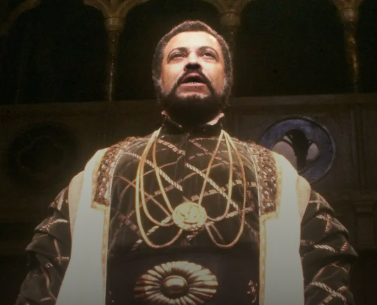
James Earl Jones as Othello and Christopher Plummer as Iago in a scene from the Broadway revival of the play “Othello” (New York 1982)
“Mr. Jones commands a full, resonant voice and a supple body, and his jealous rages and frothing frenzy have not only size but also emotional credibility,” .”
The Times wrote in a review in 1964
From Shakespeare to Strangelove
James Earl Jones made the leap from stage and TV (he was one of the first celebrity guests on Sesame Street among others), after a surprising performance. In 1964, he was playing the relatively minor role of the Prince of Morocco in Merchant of Venice at the New York Shakespeare Festival, while George C. Scott played the more iconic role of Shylock. Surprisingly, Director Stanley Kubrick saw both of them and cast them both in Dr. Strangelove, Or: How I Learned to Stop Worrying And Love the Bomb, Jones’ first film role.
This goes to show that success is often not a straight line, that sometimes it’s the people you know and the reputation you garner that gives you success in your field.
Success should not be measured by material possessions, but by the contentment and fulfillment we find within ourselves.
James Earl Jones
My Favorite Performance of Jones
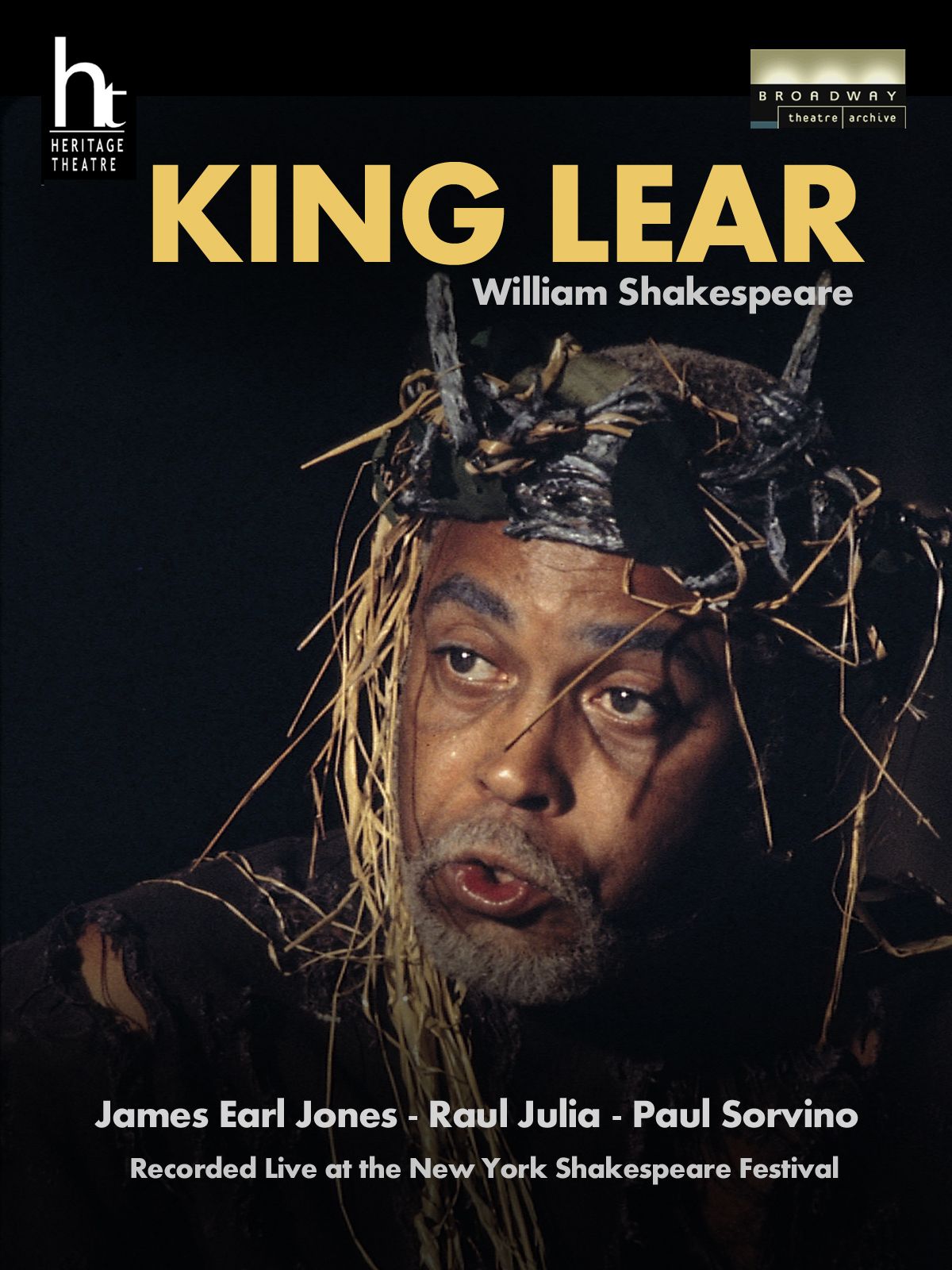
Though his film roles brought him international acclaim, James Earl Jones still performed onstage well into his 80s, including many more memorable performances at the New York Shakespeare Festival, including my favorite performance of all Jones’ stage roles- his role as King Lear. I’ve written before that Jones is still my favorite Lear- he plays the characters’ rage and commanding presence extremely well, but tempers it with the frailty and foolishness of age. You get the sense that this man was a force to be reckoned with, but is now unable to command himself, much less others. Jones’ interpretation apparently changed drastically in rehearsal, as he delved into Lear’s all-too-human flaws, playing him more like a king with dementia than like Mufasa.
Final thoughts
James Earl Jones would be the first to admit that Shakespeare and poetry changed his life. I would argue that the poetic qualities of his voice was what made him such a great actor. He could rumble and smash but also soothe and charm with a single sentence, and that is why I am glad that his voice is now preserved in the halls of Hollywood. Though he was a movie star, his voice was a Shakespearean through and through.
True strength is not in showing power over others, but in conquering your own fears and insecurities.
The popular Netflix show “Bridgerton”, takes place in England during the reign of King George III (reigned 1760-1820). This was a time of enormous cultural and political upheaval- less than one century after the monarchy was restored, with the American and French Revolutions taking place across the pond. This was an era of power and privilege for the aristocracy, but a time of great uncertainty for nearly everyone else.
Crash Course in Sentimental Comedies, the preferred theater of the late 18th century.
Shakespeare in this period was considered a bit old hat and too vulgar for the refined age of the 18th century. During the Regency, Sentimental Comedies were all the rage. These comedies and tragedies were designed to instill audiences with Catharsis or empathy with the characters, rather than get people to think or use their reason. Gone were the days of laughing at people’s humorous behaviors and more along the lines of pitying the poor fates of middle-class rustics. These poor characters remained good-natured at the cruelty of powerful aristocrats. This explains the popularity of such plays as Beaumarchais‘ The marriage of Figaro, or Mozart’s opera Don Giovanni, in which an evil aristocrat is ruining the lives of common people like the naive peasant Zerlina with his insatiable sex drive.
After the religious wars of the 16th century and the civil wars of the 17th century, early 19th century people were more disillusioned about the monarchy, especially after the seismic shifts of the French revolution and the American Revolution. This was the beginning of the end of the aristocracy, and even though we don’t see it in Bridgerton for comedy reasons, you can sense that the eponymous family is preserving their family and houses, rather than crown and country, which is one reason why the show still resonates with young people.
The Bridgertons might be aristocratic but they have no illusions about their own self-importance. They’re rich, yes but, like modern rich people, they don’t believe that they deserve their riches because of God- they merely fight to preserve their riches for their children, to find their daughters good love matches, and to survive the complex social Laviathon of eighteenth Century and Nineteenth Century England.
Popular Productions Of the Georgian Era
Georgian Shakespeareans
The Georgian Era was the first time in history that Shakespeare started to have a Global audience. French and German writers like Goethe, Schiller and Voltaire helped to kick off the practice of Shakespeare being translated and performed in non English speaking countries in the 18th century. In addition, Empress Catherine the Great brought Shakespeare as far as Russia with her 1786 production of The Merry Wives of Windsor. By the end of the 19th century, Shakespeare had been translated into French, German, Hindi, Hungarian, Italian, Spanish, and Danish (Downer, 468).
In England, however, with the trend towards sentimentality and accessibility, (as the video above mentions), the idea of adapting and modernizing Shakespeare became more common in this type period. What’s interesting is that, just when Shakespeare seemed to be on the way out culturally, people like David Garrick began to rehabilitate Shakespeare (McDonald 358).
English writers of the 18th century were trying their best to use Shakespeare as a tool of moral instruction.
Not only did Garrick create popular adaptations of Shakespeare, he also successfully made Shakespeare a cultural icon. Garrick’s famous jubilee of enthroned Shakespeare as the perfect example of english writing and the common man (even though most of his characters are aristocrats), the fact that Shakespeare was a common writer a not an aristocrat or a University educated man, actually benefited his reputation in the 18th century.
Even though Bridgerton prides itself on its colorblind casting and the black & white characters haven’t a shred of racial discrimination (except in the spin-off), this society is still plagued with sexism. What I find the most interesting about Bridgerton is that, like a Shakespearean comedy, the show’s conflicts center around how women navigate sexist patriarchal systems.
In Bridgerton, the London season and the annual balls are more than just a chance to to socialize and meet handsome young man, dance, and wear pretty dresses; they are the only hope that upper class women had for the future security of their houses. These systems were put in place because women were denied the ability to determine their own destinies. Though Queen Charlotte runs the social season, she is enforcing a patriarchal system; one that places a woman’s value entirely on her ability to charm and retain the affections of men.
the bridgerton ladies are extremely aware of this and you can see their anxiety every time they attend a ball. They know that their future depends on this and the show isn’t shy about that. So so like a Shakespearean heroine, the comedy and the central conflict is how these women will navigate this socio-economic gender-based political mindfield.
Cleopatra and her son CesareanPortia, wife of Brutus, swallow coals rather than be captured by Octavius.Beatrice from “Much Ado About Nothing”Cordelia Disenherited Jessica prepares to elope with Lorenzo Rosalind in “As You Like It”
What Shakespeare frequently does in his comedies is have women deliberately challenge or abandon this strict social structure. Young Shakespearean heroines frequently omen disguise themselves as men and/ or go traveling abroad so that they can find husbands and determine their own destinies. Shakespeare won’t Go So Far as to abandon the notions of marriage and childbearing, but he does create a sort of Female Fantasy: “wouldn’t it be nice to determine a one’s Future for oneself?”
Rosalind courts Orlando in As You Like It
In As You Like It, Rosalind, in disguise as a man, is able to dictate for herself the way that she marries and courts Orlando, which must have been shocking and hilarious for Elizabethans. Viola again disguised as a Man is able to criticize his outdated notions of women to his face, and disdains his repeated attempts to woo a woman who does not share his affections. Meanwhile Juliet, a woman whose arranged is dramatically portrayed from start to finish, abandons her father’s choice and marries for love. All these women have the same conflict as the bit bridgerton women they just confront them in more extreme way
Using self-paced online activities, your child(ren) will compare the plot and characters of Star Wars to Shakespeare’s plays. We will also discuss Shakespeare writing by looking at “William Shakespeare’s Star Wars” by Ian Doescher.
Course Description
Concept: To compare and contrast the plot, characters, themes, and language of Shakespeare’s plays with Star Wars
Student Description:
Epic battles, quests for revenge, pirates, funny characters, powerful warriors swinging swords. Star Wars has something for everyone. But did you know that in many ways, Star Wars is based on the ideas and writings of William Shakespeare? In this course we’ll peer beneath the veil of Shakespeare and Star Wars to find the universal stories of love, revenge, power, and growing up, using games, artwork, and dramatic readings by professional actors!
Did you know that Star Wars is based on the ideas and writings of William Shakespeare? This class will teach you about writing and characters though games, interactive activities and dramatic readings of both Star Wars and Shakespeare!
Course organization (the class is divided into 6 parts that students can complete at their own pace over a week-long period.
What parts of the Star Wars story are like Shakespeare’s plays?
Are Shakespeare and the Star Wars movies saying anything similar about war? Families? Growing up?
Lesson Objectives
To teach about the characters and plot of Star Wars by comparing them to Star Wars
To introduce the concept of archetypes, tropes,
Set the Scene
Star Wars is about an evil empire trying to take over the galaxy. They have more ships, more soldiers, and a fearsome weapon that can blow up planets. The rebels on the other hand, though fewer in number, are faster, smarter, and have the advantage of fighting for a good cause.
In addition, the story is about growing up- Luke becomes a Jedi Knight. He takes revenge on the man who destroyed his father.
The Players (slides)
Luke
Obi Wan/ Yoda
Vader
Leia
Han
R2D2 and C3PO
The Emperor
Words Words Words
Epic
Parody
Theme
Plot
Archetype
Character
Trope
Theme
Class 2: The Journey of Han and Leia
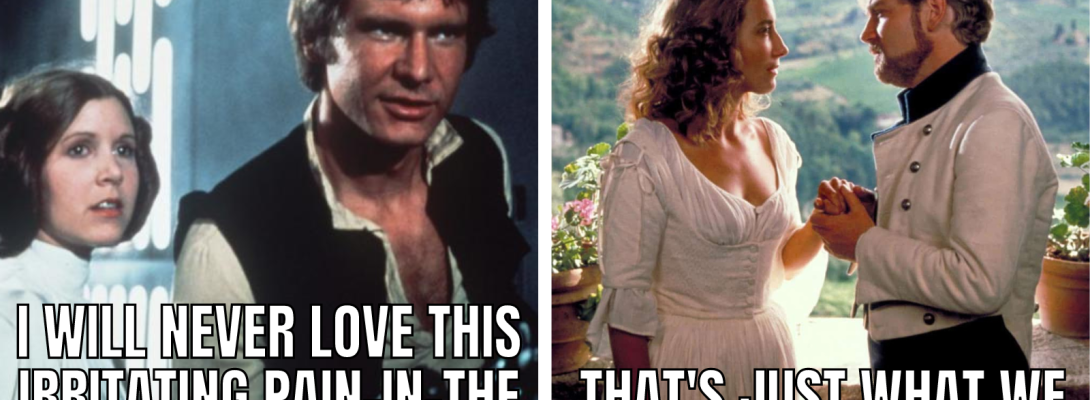
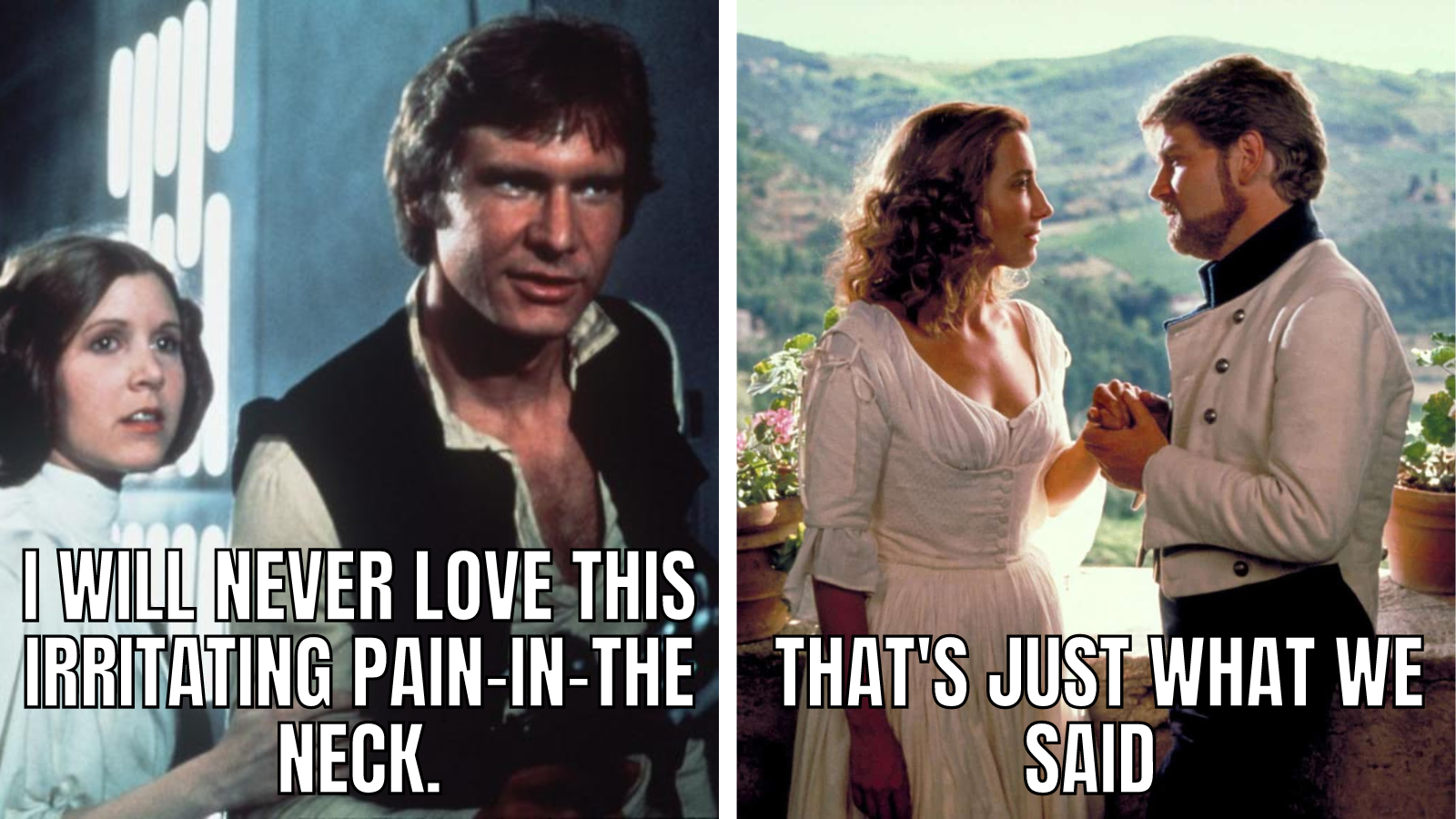
Han and Leia vs. Beatrice and Benedick
Show videos of Han before Leia
Plot summary of Much Ado
Clips of the bickering of Benedick and Beatrice
Read blog and look at the writing.
Activity- how would you write a love letter to Han or Leia?
Play the scene from Jedi
Unit 2- The Prequels and Shakespeare’s Histories
A Crash Course in Shakespeare’s Histories
The Rise of Palpatine/ Richard III
Emperor Palpatine in Star Wars rises to power through a combination of manipulation, intimidation, and by killing his opponents.
Bio of Richard III
Slide- Richard’s rise to power
Slide- Palpatine’s rise to power
Quizlet
Unit 3- The Verse of William Shakespeare’s Star Wars by Ian Doescher
What is William Shakespeare’s Star Wars
Introduce the plays
Explain how Shakespeare’s verse works
Look at the common verse elements
Sonnets
Show the chorus of “Verily a New Hope”
It is a period of civil war. The spaceships of the rebels, striking swift From base unseen, have gain’d a vict’ry o’er The cruel Galactic Empire, now adrift. Amidst the battle, rebel spies prevail’d And stole the plans to a space station vast,Whose pow’rful beams will later be unveil’d And crush a planet: ’tis the DEATH STAR blast. Pursu’d by agents sinister and cold,Now Princess Leia to her home doth flee, Deliv’ring plans and a new hope they hold:Of bringing freedom to the galaxy .In time so long ago begins our play,In star-crossed galaxy far, far away
Stychomichia
Half lines
Enjambment
Title Crawl (make a gif via Canva)
Side By Side Comparisons
Read/ watch segments of the play
To Be Or Not To Be
All the World’s a Stage
St. Crispin’s Day Speech
Try to turn a Star Wars line into verse, and then look at the reveal.
Unit 4- Literary Devices of William Shakespeare’s Star Wars
Using the educational guide, we’ll learn about the following literary devices:
Extended Metaphors (Luke’s green lightsaber)
Anaphora (Luke’s call to action in Jedi)
Premonatory Dreams (Calpurnia)
Stichomythia Richard III vs. Han and Leia
Unit5- The Hero’s Journey of Luke Skywalker
Class 1: What is a Hero’s Journey (Slides)
Learn a little about Joseph Campbell’s monomyth. using the Percy Jackson post, Crash course video about monomyth
Chart Luke’s monomyth journey
Activity- Mad libs- write a star wars movie!
Quiz on plot elements from the monomyth (Quizzes or Quizlet)
Class 2 : Hamlet and Luke Skywalker
Plot comparison
(use infographic)
Quote from Doescher:
Hamlet The Tragedy of Hamlet, Prince of Denmark is Shakespeare’s most famous play. It’s also the play I make the most references to in William Shakespeare’s Star Wars.
To Be Or Not to Be
Use my video about the speech to explain the structure
Note how Doescher repurpuses every line in the Star Wars Trilogy:
Sometimes it expresses fear:
Sometimes concern:
Frustration: “The whips and scorns of time”
Hope: “The undiscovered galaxy” “Tis a consummation devoutly to be wished.”
Activity: write your own paraphrase of Hamlet’s speech, using the 6 beats I provided.
For my Shakespeare club, my actors and I are reading William Shakespeare’s Star Wars: The Empire Striketh Back. We started staging the scene today and I’d like to publish some of our work and our discoveries going through the text.
The Scene In Context
Han and Leia have a fight before he leaves in “The Empire Strikes Back”
The scene is the first moment where Han Solo and Princess Leia display their repressed feelings for each other. Han wants to stay with Leia, but he has a bounty hunter trying to hunt him down. Also, Leia has not directly given him any sign of affection, (though Han suspects that she does have feelings for him). He wants her to ask him to stay, not because of his service to the rebellion, but because she loves him back.
Ian Doescher’s Version
Leia And Han, Act I, Scene ii [Enter Han SL, Leia enters after. stops. L: Han, halt! H:[Turn to her, bows] What is thy pleasure, Highness? L: I did believe that thou had chos’n to stay. H: [Center Stage turn out] The bounty hunter we did meet on Ord Mantell hath chang’d my mind L: -We need thee Han. H: [Turn to her] What “we?” Why speakest thou of “we?” (circling her) Dost thou in royal terms speak her of “we?” (Hands on shoulders) Hast thou a rodent in thy pocket such That thou and he are “we? (holding her hands)” What meanest thou? What need is there that thou dost share with all? [moving her center stage] [Turning to audience] Speak not of “we,” but “I.” O princess, what Dost thou most need? Not “we,” not “they,” but thou? L: [Turning to him] I know not what thou speakest of. H: [pointing at her] - ‘Tis true. Most probably thou dost not know thyself. L: Thy vanity [takes his pointer finger and points it to the sky] Hath puffed up thine imagination. H: -Aye? (Smiling) Then why doest thou yet follow me? Wert thou Afraid I would depart without a kiss? [He stands behind her, looking at her as if he's about to kiss her cheek. She steps on his foot] L: I would as eagerly kiss Wookie lips. H: That can arran`ed be. [He turns SR, starts to leave, then turns back to her.] By heaven’s breath, A kiss would suit thee well! [Exits SR}
My podcast episode about the scene
Like Han in the original script, Doescher latches on to the fact that Leia says “We need you Han,” instead of “I need you,” (which would confirm Han’s suspicions that she has feelings for him). Doescher’s Han has a mocking speech where he tries to coax Leia into saying what she truly wants from him. In both versions Leia, (annoyed with Han’s childish behavior), retorts by saying that she would rather kiss a Wookie, but in Doescher’s version, she also has a soliloquy where, like Beatrice in Much Ado About Nothing, she laments that she would admit her affections if Han could put his ego aside and woo her gently, instead of his accustomed taunts and mockery.
The Verse
If you read my review of the first Shakespeare’s Star Wars play, you know that Doescher put almost every line in iambic pentameter- the standard verse for Shakespeare that has 10 beats per line. I like to call verse the heartbeat of a character and iambic pentameter is sort of a baseline for a character who is calm or in control of their emotions. What’s great about this scene is that Doescher intentionally breaks from the norm of iambic pentameter, which is appropriate because these characters are bubbling with emotions; anger, jealousy, fear, and of course, love.
Leia’s Verse
Leia only has two regular verse lines- right after she enters and right before she leaves:
L: I did believe that thou had chos’n to stay. Leia is a princess, used to giving orders and being obeyed. Accordingly her first line is a simple two word command "Han halt." Then Leia clearly. simply, and in standard iambic pentameter, asks Han to explain why he is going. From that point on, none of her lines are 10 syllables long- they either complete his or his lines complete hers. This kind of rapid-fire call and response is called Stichomythia, and it indicates how intelligent these characters are, how passionate they are, and how impatient they are with each other. It's not unlike some of Shakespeare's other great lovers like Beatrice and Benedick, or characters who dispise each other like Richard III and Lady Anne:
Notice that in this “keen encounter of wits,” the characters talk on top of each other. The verse lines indicate that Han and Leia need to keep topping each other and pick up the tempo. This helps convey how frustrated Leia is with Han and is trying to get him to get to the point! The only other regular verse line is her coup-de-gras at the end where she says “I would as soon kiss Wookie lips!” At that point, she’s done talking to Han and just wants him to go, and the verse reflects her decisive choice.
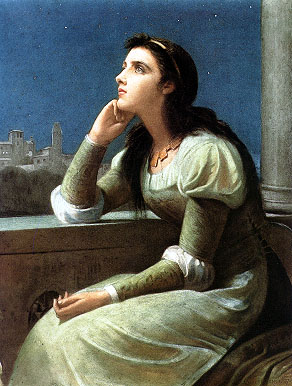
Left- Ruiz Burgos “Princess Leia & Han Solo” Right- Juliet by Philip H. Calderon (1888)
However, as you can hear in the podcast, alone in soliloquy, Leia reveals to the audience that she is still conflicted with her feelings for Han- listing all his best qualities like his hands, his face, his eyes, etc. This rhetorical technique is called anaphora, and it helps Leia build in excitement getting lost in Han’s attractive qualities. For my staging of the scene, Leia puts her hand on her cheek while standing under a balcony to emulate Juliet’s famous musings on Romeo:
Juliet. ‘Tis but thy name that is my enemy; Thou art thyself, though not a Montague. What’s Montague? it is nor hand, nor foot, Nor arm, nor face, nor any other part Belonging to a man. O, be some other name! What’s in a name? That which we call a rose By any other name would smell as sweet; So Romeo would, were he not Romeo call’d, Retain that dear perfection which he owes Without that title. Romeo, doff thy name, And for that name which is no part of thee Take all myself. – Romeo and Juliet, Act II, Scene ii.
Han’s Verse
While Leia’s verse is quick and direct, Han’s is slower and longer. His sentences spill over from one verse line to another because he’s taking his time. Again, his objective is to basically “neg” Leia into admitting that she loves him, so he’s enjoying goading her. He’s sort of like Benedick in Much Ado About Nothing, though Han speaks verse and Benedick speaks prose:
Han’s Extended Metaphor
Again, Han’s goal is to tease Leia into admitting that she loves him, so when she says: “We need thee Han,” he feigns ignorance and asks her to clarify her phrasing- going through all the permutations of “we” (including the colloquial, “Do you have a mouse in your pocket?”) to get her to specify what she means by “we.” If you look at Doescher’s official education guide for the William Shakespeare’s Star Wars series, you can see how Shakespearean characters often go into lengthy metaphors or comparisons to explore an idea or theme:
As I was writing William Shakespeare’s The Empire Striketh Back, I was surprised to realize I had made more references to Shakespeare’s Much Ado About Nothing than any other play. Much Ado is a comedy—probably my favorite of Shakespeare’s comedies—so it was strange that lines from it kept popping up in the darkest of the original Star Wars® trilogy. –
Both of my actors are female and obviously, they aren’t Carrie Fisher or Harrison Ford. Since this play is a parody of the original Star Wars, I wanted to incorporate some physicality and vocal elements, without telling them to impersonate the Star Wars actors.
Han
Harrison Ford is much taller than Carrie Fisher and he uses his height to mock and irritate her. He also crosses his arms and points his index finger at her frequently in this movie, so I used that in the blocking. He also has a “cowboy stance”- legs apart, slight bend in the knees, slow, deliberate gait. Ironically, another man who has this kind of walk is David Tennant in his performance as Benedick in “Much Ado About Nothing.”
David Tennant and Catherine Tate in “Much Ado About Nothing,” Act I, Scene ii.
As for Carrie Fisher, she has a faster pace and keeps her arms close to her body. She looks like a ball of stress and anxiety, which is appropriate. After all, not only is she going to lose the man she loves, she’s under attack from an empire and living on a cold, dark planet made of ice! I told my actor to put these characterizations into her performance to not imitate Carrie Fisher, but to get the essence of how her emotions affect how the character moves and speaks. That’s the difference between acting this scene, and just doing impressions of the original actors.
I’m excited to see how my actors bring these techniques to life, and I hope you have enjoyed this little insight into how Doescher’s writing once again pulls back the curtain on how Shakespeare used his verse to show the hearts of his characters!
I’m really excited about the Disney Plus release of the Percy Jackson TV show. My family and I are really enjoying it and I think it’s a very good adaptation, (much more faithful than the previous movie versions). The tone is darker, the characters are better fleshed out, and also there’s a much more nuanced take on Percy’s character, which I believe is at the core of the series. The movie is essentially just a fetch quest where Percy is going from location A to location B looking for various magic items and fighting monsters. Movie Percy is a very static character but in the books and the show, they keep all of those journeys but also delve into his complicated relationship with the gods, his own insecurities growing up without a father, and his overwhelming feeling that this world of gods and mortals is fundamentally flawed and that he is the one to fix it.
“Families are messy. Immortal families are eternally messy. Sometimes the best we can do is to remind each other that we’re related for better or for worse…and try to keep the maiming and killing to a minimum.”
-Percy Jackson, The Sea of Monsters
In short, what makes the show great is that it emphasizes the elements of the book that make it a classic story of a young man who is trying to find his place in the world and complete the quest that his father set for him. Of course, once I started watching it, my Shakespeare Brain activated, and I immediately compared him to Shakespeare’s ultimate example of a hero trying to complete a quest given to him by an absent father- Hamlet. So today I’ll Talk about why I think Percy Jackson is actually a descendant of Hamlet or rather that Hamlet and Percy Jackson are both descendants of the same common ancestor in Greek mythology and touch on what these classic stories can say to us today.
1. The Plot
AI Art I created of Percy Jackson. Nightcreator.com.
As I touched on earlier, there are some glaring similarities between the plots of Percy Jackson and Hamlet- we have a young man who has who hates his stepfather, who is deeply protective of his mother, who goes on a magical quest given to him by his father, (who cannot directly aid him because he’s not physically there). In Percy Jackson, his father is a god- the ancient Greek water god Poseidon, while Hamlet’s father is a ghost. Both heroes have to deal with treachery, uncover a plot, avert potential wars, and get caught up in great military and political power schemes. While Hamlet is trying to restore the rightful heir to the throne (himself), Percy is trying to avoid a war between the gods. Both heroes have stoic sidekicks- Hamlet has Horatio whereas Percy has Annabeth and his friend Grover the Satyr. Hamlet’s friend l Horatio is kind of like a combination of Annabeth’s intelligence and Grover’s kindness and empathy. Finally, both stories conclude in a duel (spoiler alert) where they fight against a near-impossible adversary, and in the end, succeed in their quest, although in Hamlet’s case, he does so at the cost of his own life.
The main difference between these stories is connected to tone and genre- Hamlet is a revenge play, and most Revenge tragedies end in the death of the avenger. Percy Jackson is an adventure quest so based on the conventions, he can succeed, survive, and go off to fight another day. Nevertheless, in terms of the broad outline, the plots are very similar. I would argue this is probably because Hamlet has its roots in many ancient mythological stories like Oedipus, Orestes, and of course, the Danish Viking myth of Amleth. I would argue that both Percy Jackson and Hamlet have a very clear direct common ancestor: the ancient Greek myth of …
As this funny cartoon illustrates, the plots of Percy Jackson and Hamlet can be seen as a modern incarnation of the Perseus myth, from the villainous stepfather to the hero’s protective feelings to the mother to the magical quest to get rid of a stepfather who takes away his birthright. These plot elements follow a very similar formula; as Jake also alluded to, all three of these stories are part of what writers and scholars like to call the monomyth or the “Hero’s journey,” a concept in mythology and storytelling that has inspired works such as Percy Jackson, Star Wars, and many others.
What Is the Monomyth?
Crash Course Mythology- The Monomyth
In 1949, scholar Joseph Campbell wrote a book called “The Hero With a Thousand Faces,” which posited that every culture has stories that fit into universal archetypes- that essentially all human cultures have unique stories, but also call to mind universal truths about humanity. He then distilled the common archetypes and plot tropes of these myths into something called “The monomyth” or “The Hero’s Journey,” a 17-step process that is at the core of many ancient myths, modern adventure stories, or revenge stories such as Hamlet. Below are some of the common tropes of the Hero’s Journey. When you see it spelled out like this, it is very clear that both Hamlet, Percy Jackson, and Perseus follow the Monomyth formula:
Where’s the glory in repeating what others have done?
The Lightining Thief
Every Greek hero starts with a call to adventure- Theseus finds his father’s sword and sets out to find him. Oedipus needs to lift the plague on Thebes, and Hamlet needs to find out why his father’s ghost has returned.
A Half-Blood of the eldest gods, Shall reach sixteen against all odds And see the world in endless sleep The Hero’s soul, cursed blade shall reap A single choice shall end his days Olympus to preserve or raze.
The Oracle- Sea of Mosters
Part II: Refusing the Call
If my life is going to mean anything, I have to live it myself.
The Lighting Thief
I won’t go looking for trouble. I usually don’t have to
Neither Hamlet nor Percy outright refuse to go on their quests, but both experience doubts. Percy, looking at how the gods have cursed and fought and betrayed each other, wonders whether or not they deserve his help:
Percy watches the story of the gods in the Tunnel of Love (Episode 5, Disney Plus 2024.)
Hamlet on the other hand, is so worried that the ghost is trying to deceive him into killing an innocent man, that he nearly kills himself in the most famous speech in all of Shakespeare.
Part III: Supernatural Aide
Supernatural Aid – A magical helper appears or becomes known
Go on with what your heart tells you, or you will lose all.
The Nereiads, Lighting Thief Chapter 17
Both Percy and Perseus get help from the gods- magical weapons, advice, etc. Hamlet gets the revelation from his father that his uncle killed him and how. What sets Hamlet apart from any number of myths is that, since there’s no tangible evidence that his father was there, Hamlet is not sure if his father helped him, or if he is going insane.
Suspecting and knowing are not the same.
-The Lighting Thief
Crossing the first threshold
In Perseus, the first threshold would be when he leaves Acrisius’ palace and sails to the island of Cerebos. In Percy Jackson, this would be when he leaves Yancy Academy and goes to Camp Half-Blood, and in Hamlet, it would be when he meets the ghost.
My fate cries out, and makes each petty artery in this body as hardy as the Nemian Lion’s mane. Still am I called!
Hamlet, Act I, Scene iii.
Belly of THe BEast
There’s always a part of the story when a character feels they are in too deep. Sometimes it’s a literal belly of the beast- Pinocchio and the whale, Luke Skywalker and the Sarlaac pit, Frodo when he reaches Mordor, and Agent K in Men In Black when he literally gets eaten by the Bug. In Percy Jackson, it would definitely be when he journeys to Hades, like many Greek heroes like Orpheus or Hercules.
I’d love to tell you I had some deep revelation on my way down, that I came to terms with my own mortality, laughed in the face of death, et cetera.
The truth? My only thought was: Aaaaggghhhhh!.
Usually, the belly of the beast occurs near the climax of the story- the ultimate test of the hero’s courage and resolve. For Hamlet, this would be the duel with Laertes- he’s in a situation where Claudius has total control of what he does.
“You weren’t able to talk sense into him?” “Well, we kind of tried to kill each other in a duel to the death.” “I see. You tried the diplomatic approach.” (The Sea of Monsters)
I’ll get into a deeper summary of the steps of the Hero’s journey on my podcast later this month, but to summarize, the Hero’s Journey is essentially a story of growth, maturity, and enlightenment. It’s not a coincidence that all three of these heroes are young men who leave home and then return to confront an evil stepfather or uncle. Campbell regarded the Hero’s journey as a metaphor for young men growing up, learning about themselves, gaining confidence in themselves and their abilities, and taking their rightful place in society by displacing a corrupt older authority figure. This is also why these stories often resonate with young people, and why storytellers like Disney often use the Hero’s Journey as a template for children’s movies.
These universal stories of growing up, maturity, and a life worth living have always inspired people and even though the stories have different purposes and the plots take different forms, the core of what makes them universal remains the same.
This Friday is the grand premiere of my new online class: “Shakespeare: The Lost Play,” where you discover who stole Shakespeare’s play. Below is the latest trailer.
Since I want as many people to play as possible, I’m creating a coupon: Get $10 off my class “Shakespeare’s Lost Play Mystery Game” with coupon code HTHES4OXNY10 until May 8, 2023. Get started at https://outschool.com/classes/shakespeares-lost-play-mystery-game-ny9HhlxI and enter the coupon code at checkout.