Graphic Novel Review: “Kill Shakespeare: VOl 4.” a Dark and angsty Shakespeare fanfic.

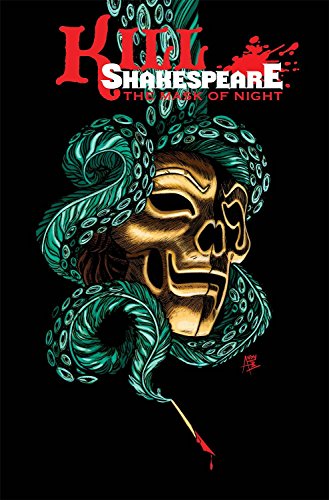
  • Cover art for Volume 4
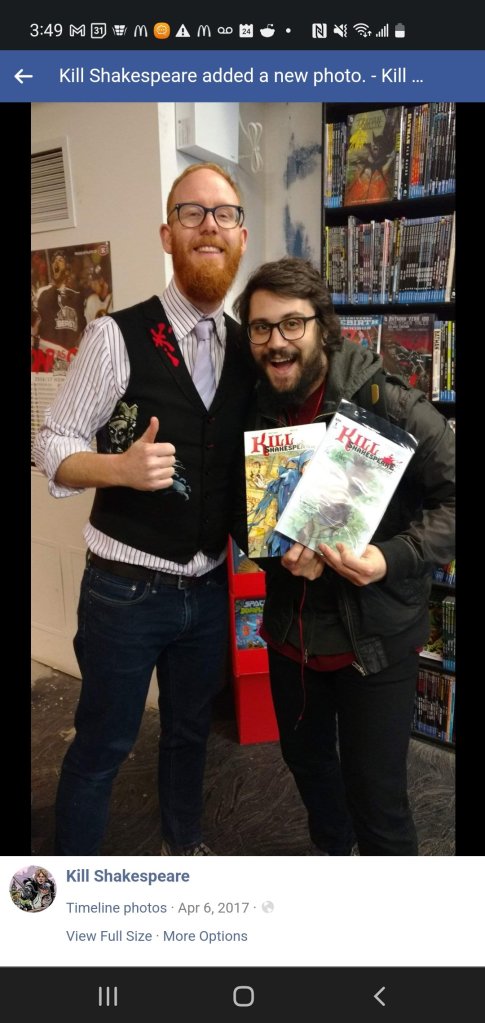
  • Kill Shakespeare Comic

In this section, I review a Shakespeare book, movie, or TV show that I feel has some kind of value, either as an interpretation of Shakespeare, or a means to learn more about the man and his writing.

  1. Name: Kill Shakespeare (Vol. 4) by Connor McCreery and Anthony Del Col
  2. Media: Graphic Novel compilation, with accompanying website https://www.killshakespeare.com/ 
  3. Ages: Adult/ Teen. There’s some PG-13 language and a lot of fighting and gore, so it’s not really for kids
  4. Premise: William Shakespeare is more than just a simple playwright- he has a magic quill that brings his characters to life. Some of the characters worship him like a god or like a father. Many others, (as the title implies), want him dead. A faction of outlaw heroes who call themselves The Prodigals are trying to protect Shakespeare, including Juliet and Hamlet, but in this volume, they’ll have to face raging seas, bloodthirsty pirates, and the mind-altering effects of the island in Volume 3, which has pushed them all to near-madness.

   My reaction: Volumes 1&2 were framed as a civil war between the heroes and villains of the Shakespeare canon- basically an Infinity War for Shakespeare nerds. This volume is in the context of a high-seas pirate adventure. It has a lot of cool fights and the drama between Cesario and Viola is great, but honestly, I thought it was poorly paced. Maybe it’s my personal taste, but it’s hard to keep myself invested in the story when everyone is stuck on a boat.

Basic Details:

As I said in my review of Volume 2, what I like the most about this graphic novel is that the characters are consistent with how the real Shakespeare wrote him, yet they make different choices in the graphic novel. They also grow and play off each other in many interesting ways. Here are some examples:

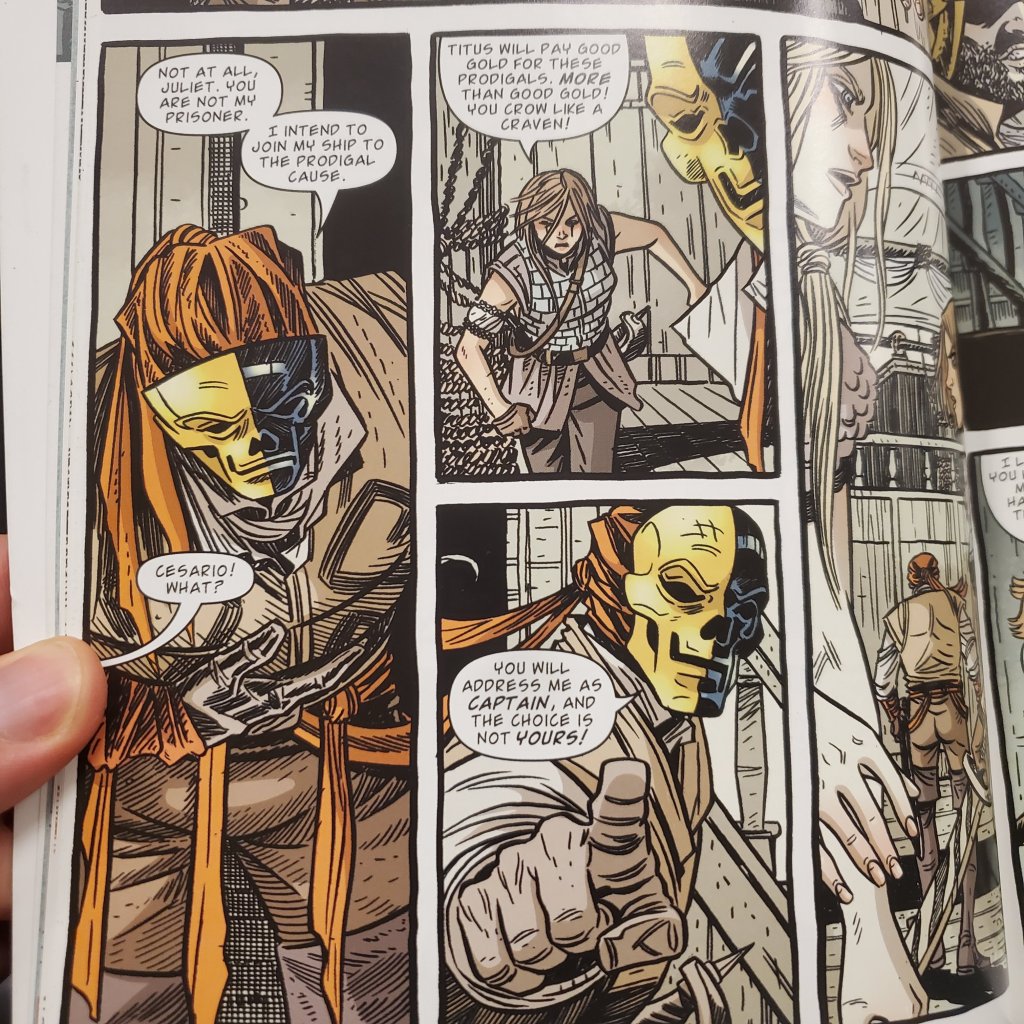
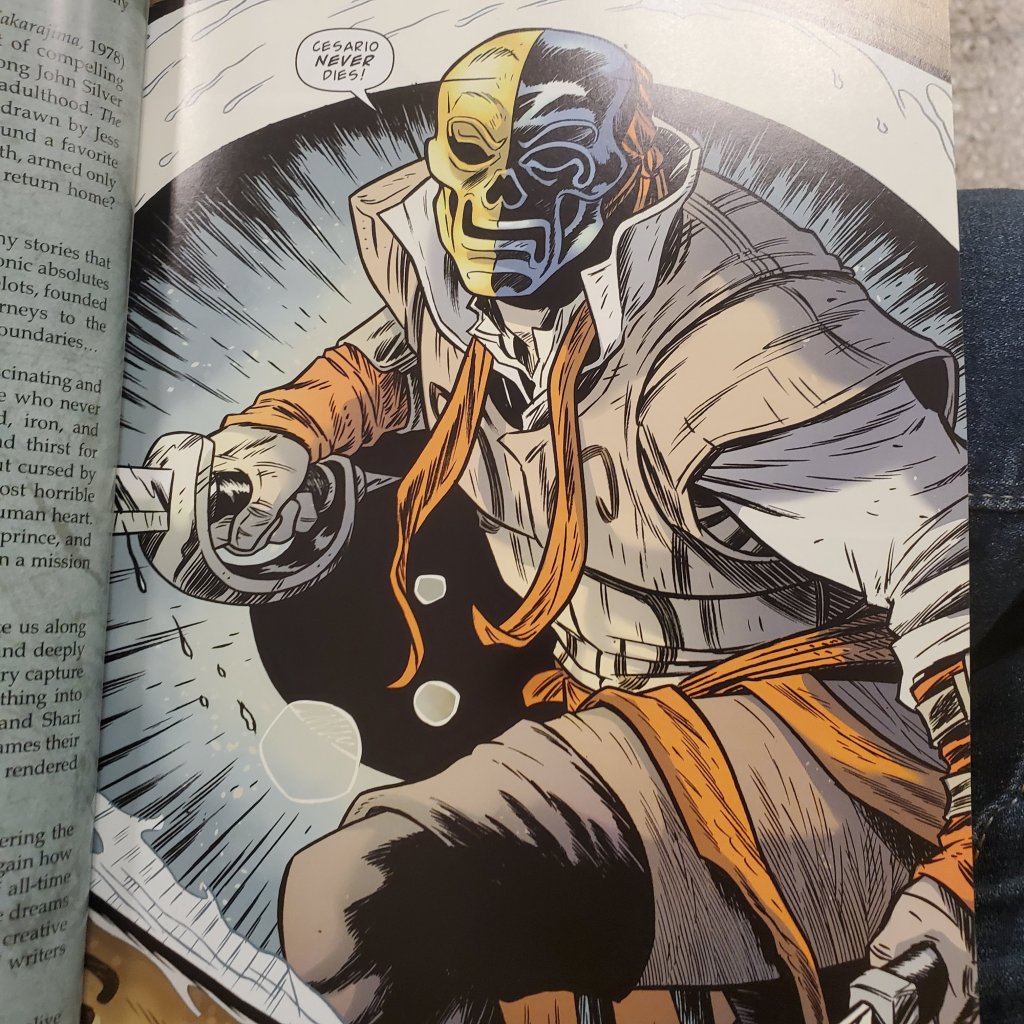
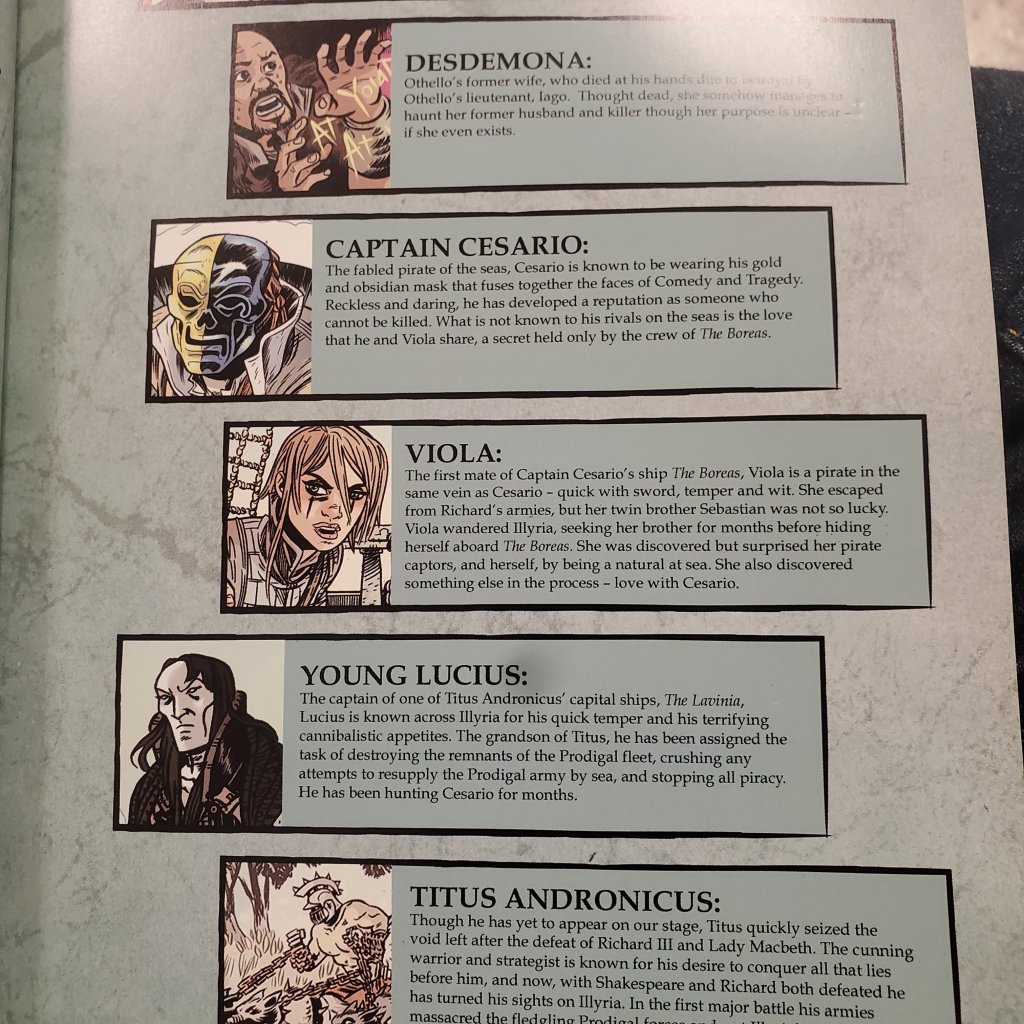
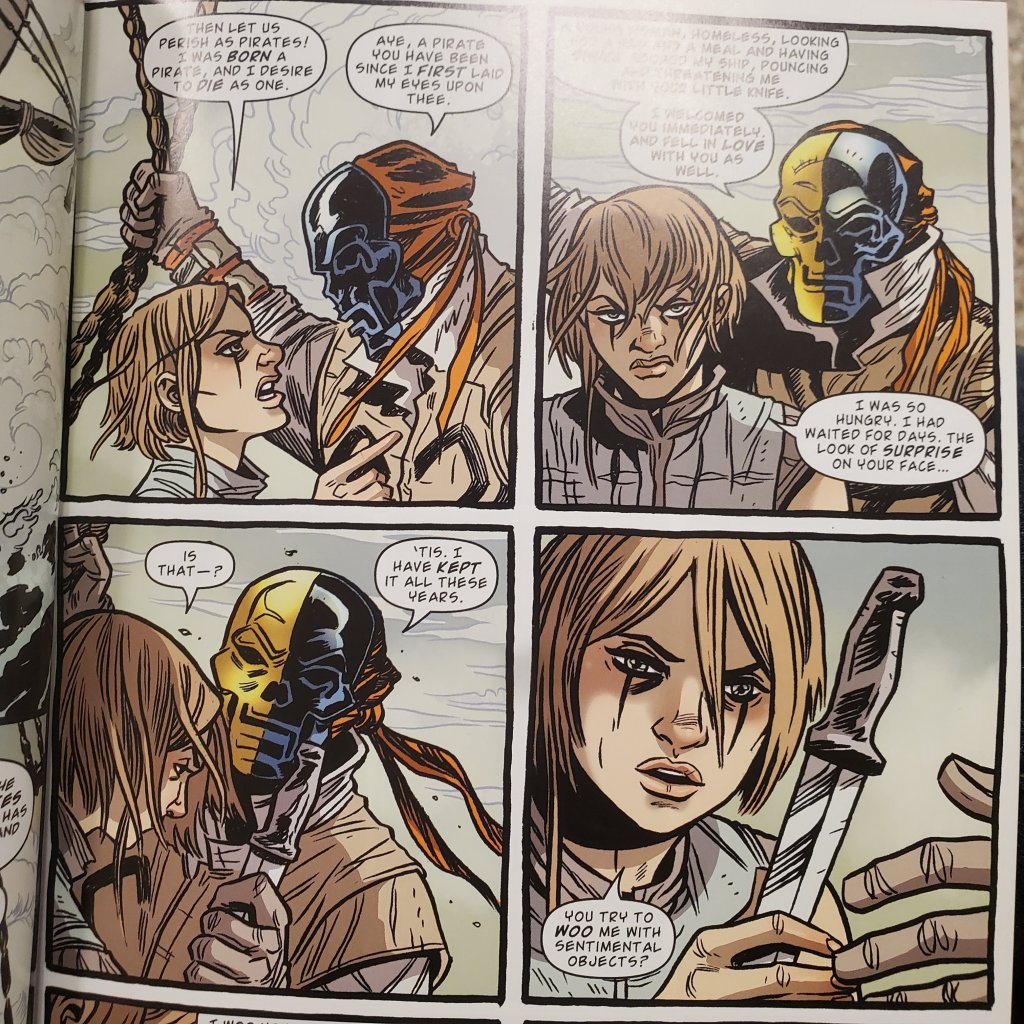
Most of the drama of the graphic novel centers around Captain Cesario, a dashing rogue pirate, and his first mate/ girlfriend Viola. The main characters from Volume 2, (Shakespeare, Hamlet, Juliet, and Othello), have escaped the effects of the island run by the mad wizard Prospero, but are still shell-shocked at feeling the terrifying psychic effects of that island. This is a clever plot device that basically makes it makes all the characters unnecessary except for Hamlet and Juliet. You could look at this installment as the story of 2 couples, (dare I say twin couples) where Viola and Cesario are fighting over whether or not to join Shakespeare and the other Prodigals, to remain on the high sea as pirates, or to betray them and become ingratiated with the fearsome cannibal-pirate Lucius Andronicus.

I won’t give too much away (there are some spoilers), but let’s just say that the relationships in Volume 2 have been tested to the breaking point; Hamlet and Juliet are having extreme problems, (almost as bad as Hamlet and Ophelia). Viola and Cesario are also fighting constantly. In addition, the ship is constantly under threat from the feared pirate Lucius Andronicus. Will the characters solve their internal conflicts before a mutiny breaks out? Or will they all be cut to pieces by the cannibal Lucius? On this boat, tempests are not kind, and salt waves are fresh with DEATH!

Shakespeare Easter Eggs
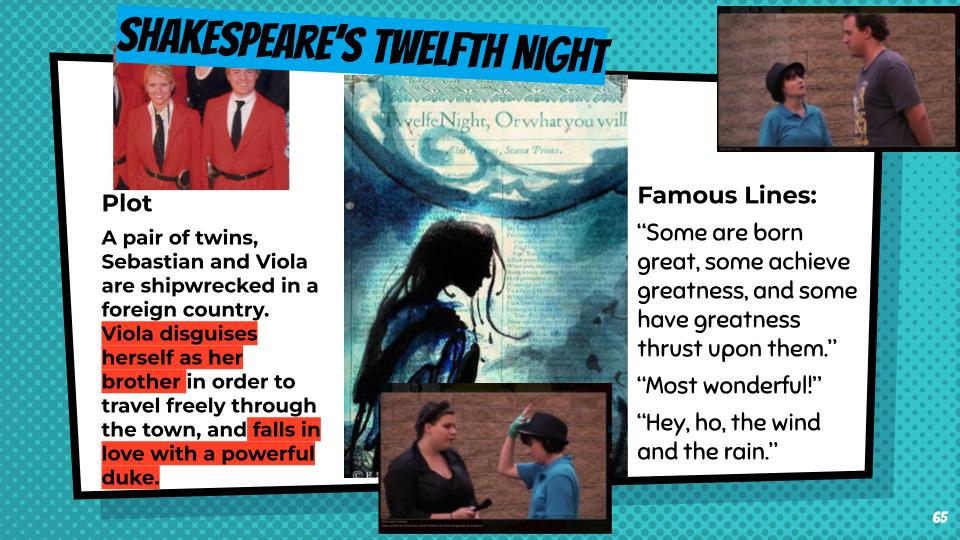
Kill Shakespeare, Volume 4 is largely based on Shakespeare’s Twelfth Night, which, although it mainly focuses on the courts of Duke Orsino and Countess Olivia, does have aspects of pirates, deception, and lovers quarreling. It is interesting (and I give the writers credit) for taking a light-hearted comedy with songs and dances and turning it into a swashbuckling pirate adventure; that takes real imagination, yet it works with the text; the first time we see Viola she is shipwrecked and the captain that saves her life is arrested offstage. This prompts Viola to disguise herself by wearing her twin brothers’ clothes and donning the non-de-plume Cesario, to freely behave like a man in a man’s world. Shakespeare already made Viola’s fate intertwined with the sea, so it makes sense that she might want to be a pirate. Kill Shakespeare takes Viola’s two identities and makes them two separate people, both intertwined with a love of the sea.
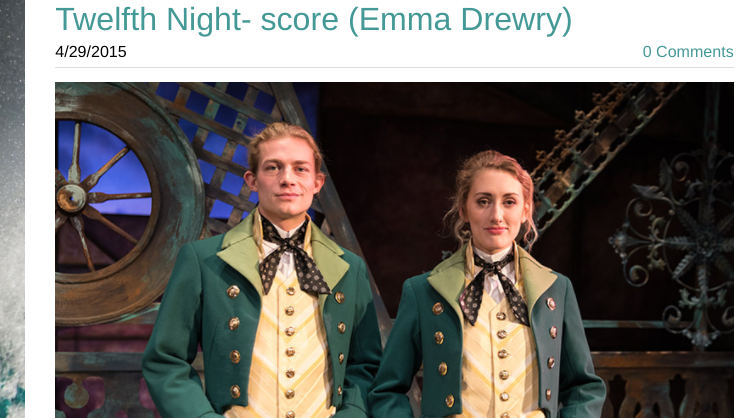
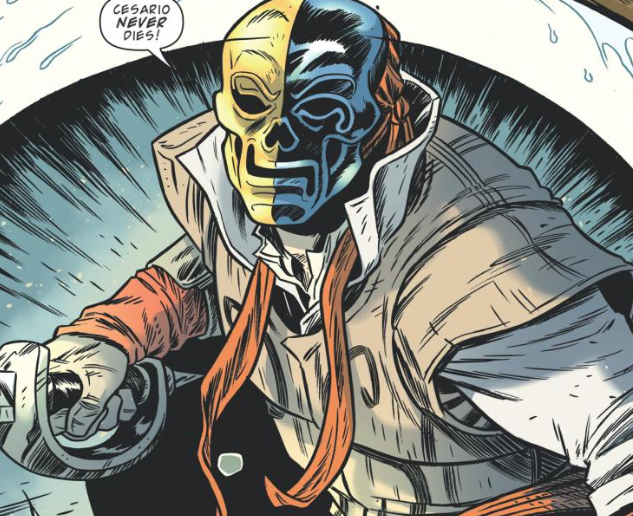
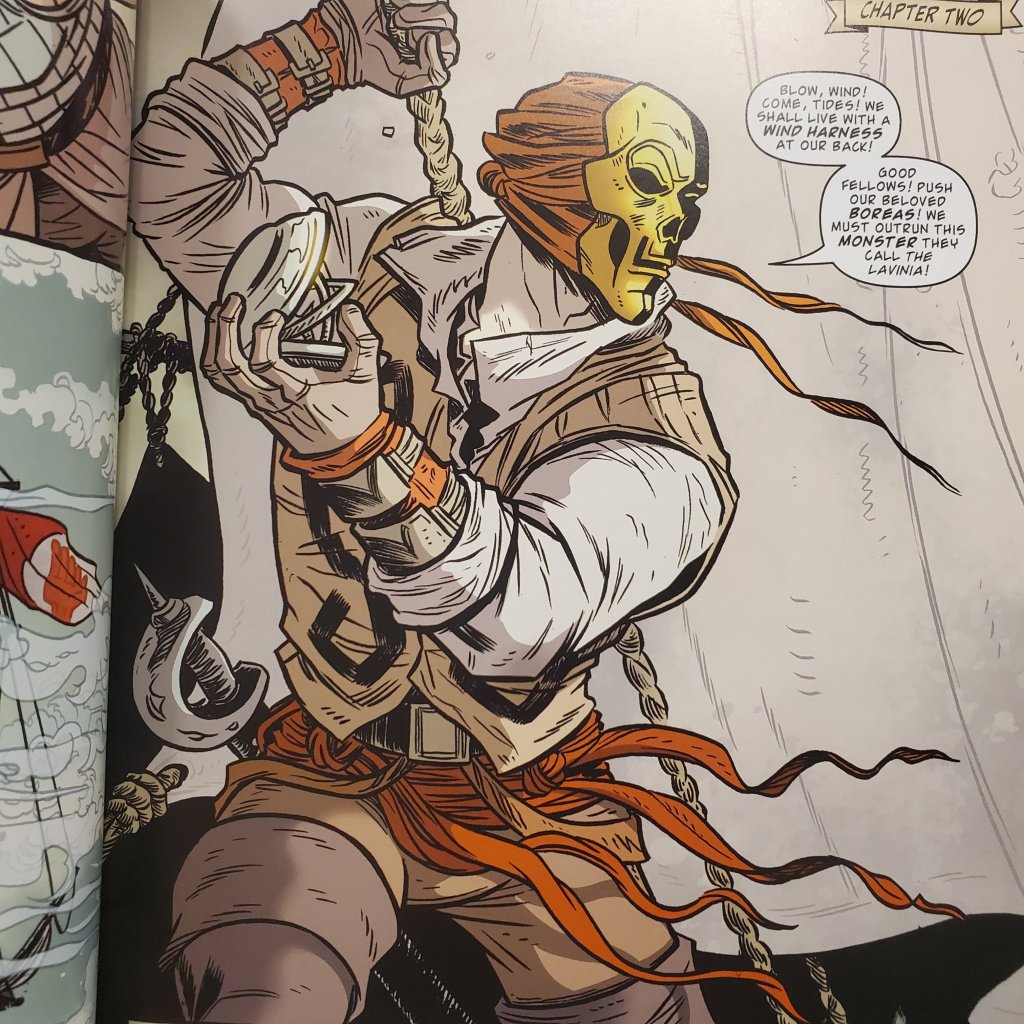
The graphic novel also conflates and expands other pirate characters from the play; there’s another captain in the play named Antonio who saves Viola’s brother Sebastian and is accused of being a pirate, While Viola in Twelfth Night is a noblewoman who out of necessity disguises herself as a man and becomes a servant to a Duke, Viola in this version is trying to escape being a noblewoman and becomes a pirate by choice. Meanwhile, Antonio, who denies being a pirate, is changed into the roguish Cesario, who loves Viola as much as Antonio loves her brother Sebastian in the play. Like Antonio, Cesario cares about Viola’s well-being and is willing to sacrifice everything to keep her safe, even being a pirate. This causes friction between the two since again, Viola wants to continue to be a pirate and would rather die than give it up. Their conflicting roles as shipmates and soulmates keep them at odds during the play, sort of like how Cesario’s mask is split down the middle; half tragic, and half comic.

Critique

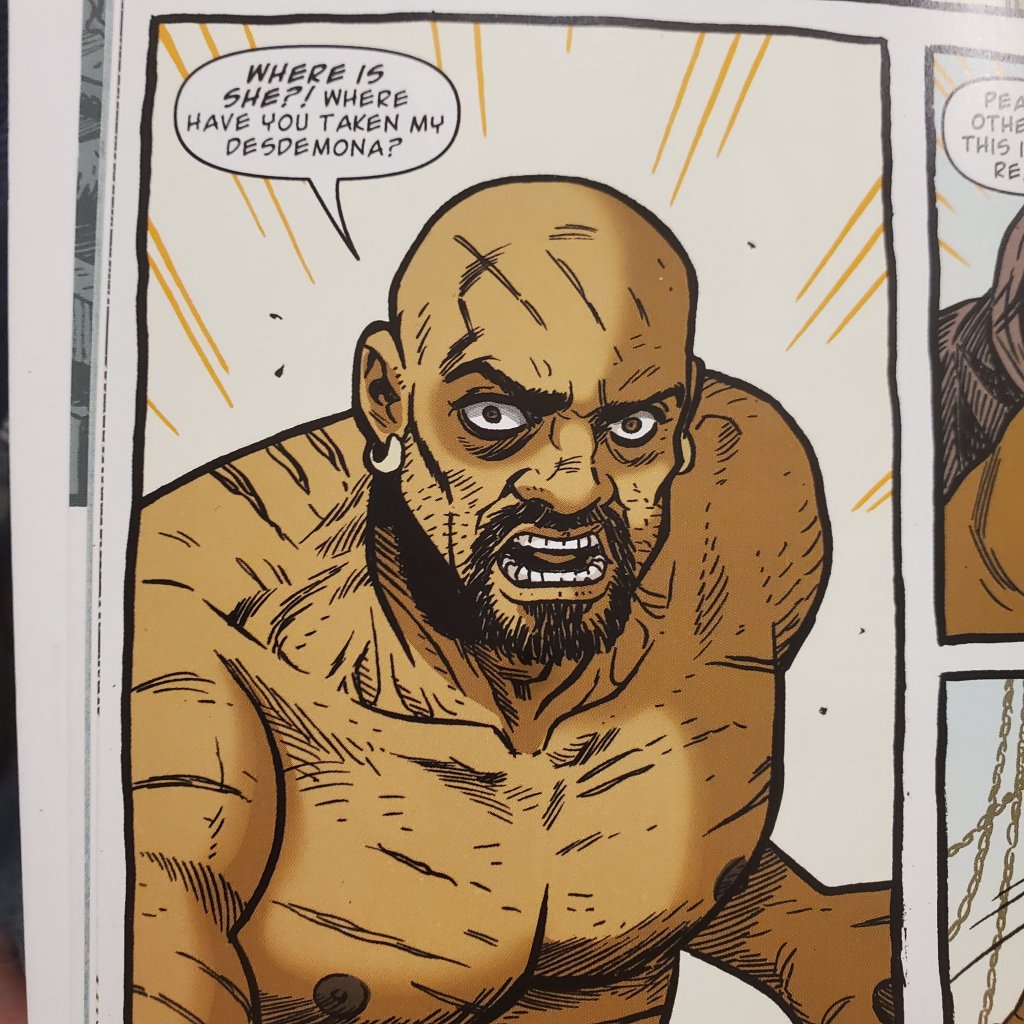
I think this graphic novel is poorly paced. Most of the first half consists of Cesario and Viola arguing about what to do with Shakespeare and the rest of the Prodigals. Their drama is good, but it supersedes everybody else, and I found myself wondering what was going to happen to Shakespeare and the rest, and wishing that they’d got more focus. Othello is reduced to a plot device because he is madly searching for Desdemona, whom he killed during the events of Shakespeare’s play. Othello is no longer the honest, loyal friend to Juliet that he was in the previous editions; now he’s more like The Incredible Hulk, filled with animalistic rage and unable to be controlled except by the love of his friend Juliet. In some ways, Othello was the most likable character in the previous volumes so I hated to see him like this.

In addition, the constant couples’ bickering gets a little bit tedious; I suppose that’s inevitable when you take all the comic elements out of Twelfth Night, (Sir Toby and Feste are back in Volume One, and Malvolio, Fabian, and Olivia are nowhere to be seen). I did enjoy the ending where Viola resolves her conflict with Cesario much the same way Viola solves the problem of her being Cesario in the play. I also like the way that they built up the antagonist Lucius from Titus Andronicus. Lucius is a good choice for a villain in this world because he’s seen some truly horrible things in his own play like his father mutilating people, his brothers and sister murdered, and the worst pie recipe of all time. Making Lucius a bloodthirsty, cannibalistic pirate is a great choice. Still, I wish they spent more time fighting with him instead of sailing away from him. In short, the characters are as compelling as ever but the action is lagging and the drama is reduced to mostly petty couple squabbling. I would like to see this series pick up in a more action-packed version more in keeping with a graphic novel.

Recommendation: I’d recommend this book to all mature fans of Shakespeare, anime, Manga, D&D, or any kind of nerd stuff!

url
url

Grade: 2 Shakespeare globes.

  • Official Website:
  1. www.killshakespeare.com

Play Review: Othello 2007

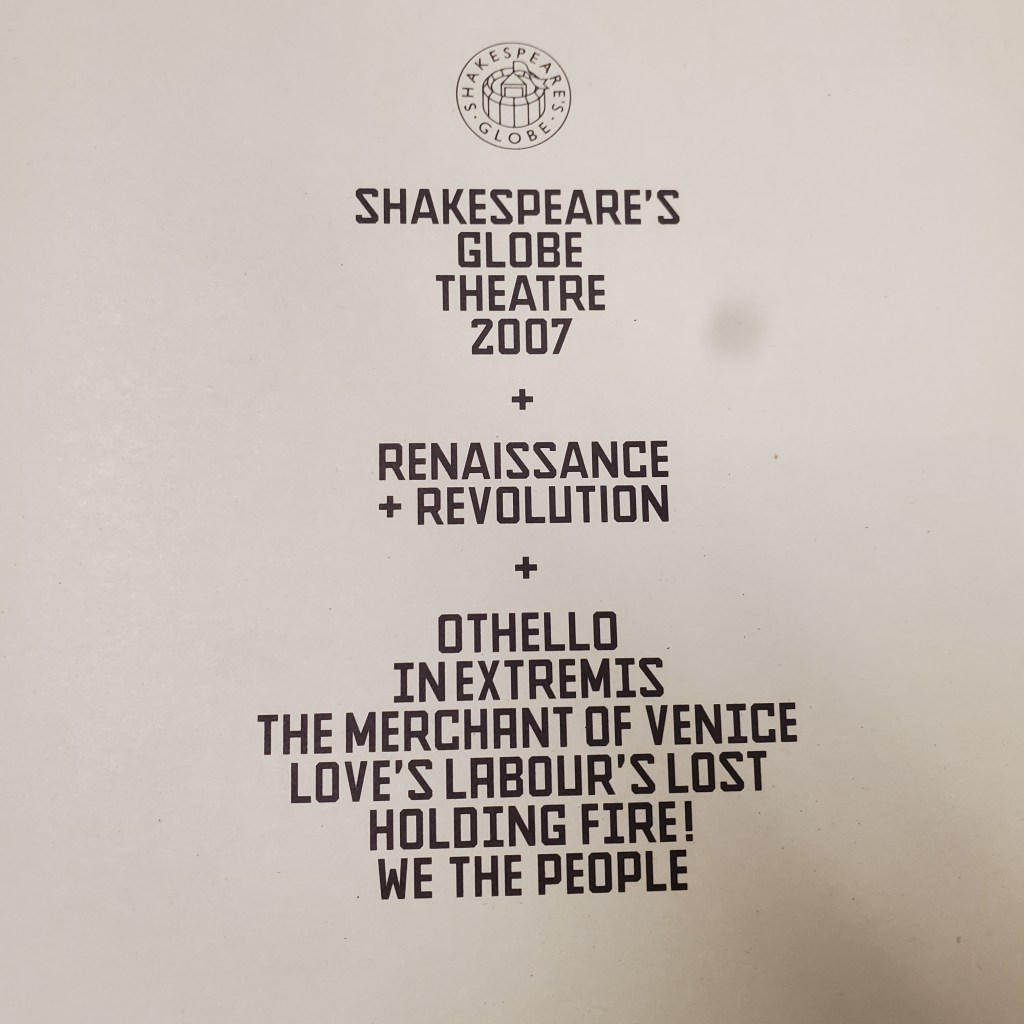
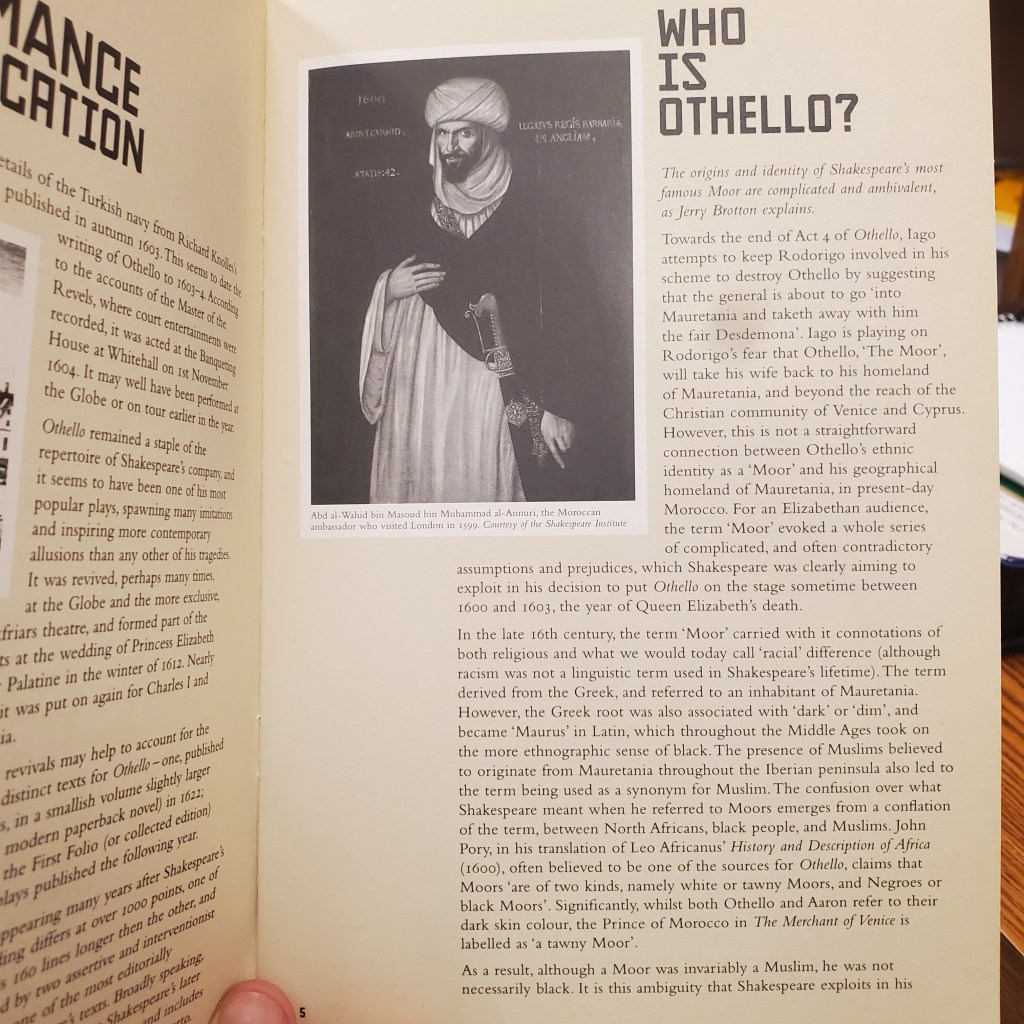
For Throwback Thursday, I’m talking about my first-ever experience going to the Globe Theater. Back in 2007, I saw a production of “Othello” starring Eamon Walker as Othello, and Tim McInerney as Iago. Below are some images from the excellent souvenir program I purchased:

The experience was very special to me I went to London for the second time with my classmates in a college theater class, many of whom I’d also performed with earlier that year in Romeo and Juliet. I got to see over 15 shows in London’s west end , but going to the Globe was definitely a highlight. It felt like a pilgrimage and the icing on the cake after studying Shakespeare’s plays all year long. It was also very serendipitous that the play we saw was Othello, since, as you can see in the video below, I noticed that Sam Wannamaker, the founder of the Globe, performed in the play himself as Iago:

THe concept

Again, since this was my first time seeing a play at the Globe, I appreciated that they played it straight- Elizabethan costumes, no bizarre staging. This felt very much like stepping back in time. Some critics in recent years say that all Globe Productions should be staged like this, and decry more experimental productions. I see an argument for both camps. The Globe is both a temple to Shakespeare’s life and work, and a modern theater that tries to push the boundaries of live performances, and I think this kind of variety is good. That said, I’m glad that every once in a while, they just let a Shakespeare play be classic.

The Cast

https://www.shutterstock.com/editorial/image-editorial/eamonn-walker–othello-zoe-tapper-desdemona-663679e

https://www.photostage.co.uk/shakespeare/othello/2007-shakespeare-s-globe.html

Eamonn Walker as Othello

Yes, this is one of the first ever Othellos I saw, and the first one I ever saw live, but Mr. Walker will always be one of my favorites. He really nails the complexities of Othello’s emotions- from powerful and stoic, to sweet and romantic, to rage-filled and abusive. I really felt for him and truly hated Iago for taking such a worthy person and turning him into a monster.

What Mr. Walker does incredibly well is show Othello’s journey to fight the simmering hatred and jealousy he feels towards Desdemona. You can see it in his face when Desdamona casually mentions that Cassio (the man Othello suspects is sleeping with his wife), has just been in the room with her.

I’ve heard critics claim that Mr. Walker’s voice is hard to hear, and I have to admit, his voice is a little hard to hear in an outdoor amphitheater like the Globe, but his physicality and his sublime characterizations of the role of Othello more than makeup for it. In addition, his great portrayal of Othello was also immortalized in a great TV (which I’ll talk about another time), which makes the aforementioned critique of his voice irrelevant.

In 2000, Mr. Walker starred in a made-for-TV movie modern-day Othello which has this heartbreaking scene at a restaurant (1:12:00- 1:15:00) where John Othello, (the first black police chief in England), talks about how his people left Africa, came to England and were given “Other men’s leavings.” He also makes it clear that for years he wanted to be white. This Othello is very clearly not healed from his generational trauma, and it comes out in violent ways: 

I honestly liked Tim McInerney less as Iago than in other roles, such as his film role in Ian McKellen’s Richard III. I thought his character voice was too gruff to be understood, and though his physicality is good, I didn’t get much of a sense of his concept for the character. As I’ve written before, Iago is a compelling part, but the actor has to have a clear objective to help us in the audience understand why he feels the need to destroy Othello.

These minor nitpicks aside, this was an excellent production, and I’m really pleased to retell my experience to you. Below are links to reviews and photo slideshows.

Adieu for now!

https://www.theguardian.com/stage/2007/may/26/theatre2

https://bbashakespeare.warwick.ac.uk/productions/othello-2007-shakespeares-globe-theatre-globe-theatre-bankside

New Class: An Interactive Guide to “Macbeth”

Class Experience

In this virtual version of my popular “Macbeth” course, you will engage with William Shakespeare himself and learn about his play in a fun, spooky, and interactive way!

Unlike my previous “Macbeth” course, all teacher interactions will be done through the use of pre-recorded video.
Through a combination of multimedia lectures, online games, and a digital escape room, students will delve into the plot, characters, and themes of “Macbeth.” The class is designed to be interactive, fun, smart, and spooky.

Class organization

The class is organized into five parts using a combination of Nearpod, online games, videos, and a digital escape room.

Part I: The Plot of “Macbeth”

You will play a video where William Shakespeare (played by me), will introduce the plot, characters, and literary terms in the play, “Macbeth,” The video will feature graphics, video, and recordings that will explain the plot and who the characters are, and their significance to the plot. Shakespeare will also take time to define a series of vocabulary terms like “soliloquy” and “tragic flaw,” terms that explain his unique writing style and how he constructed his tragedies.
After the video, students will participate in a group quiz via Nearpod. The quiz will cover the vocabulary words the students just learned, as well as the characters. and see their scores that will show how well they applied their knowledge from Part I.

Part Two: Jacobean England

Students will learn via Nearpod and Youtube about the English King James I, the monarch for whom Shakespeare wrote “Macbeth.” First, the students will read 1-3 slides with some historical details about the king. Then the students will watch a funny parody song about the life of the Stuart monarchs and answer questions about King James’ life. The section will conclude with slides and a virtual tour of Parliament about the infamous Gunpowder Plot, where an assassin tried to blow up the English government!

Part THree: The Curse Of Macbeth

Using Nearpod, students will delve into the tragic history of the persecution of witches, which Shakespeare incorporated into “Macbeth.” The students will then read an article about the characters of the witches and answer open-ended questions on Nearpod. Next, the students will read an article about the alleged ‘Curse of Macbeth,’ and learn about the long-standing theater superstition. The class will conclude with an online game via Scratch, where you play as Macbeth and deliver the famous Dagger Speech before going to kill the king.

Part Four: Acting Shakespeare

As you know, I’ve played Macbeth professionally and have written articles about the experience. Using Nearpod slides, online articles, and a Youtube video of Sir Ian McKellen, students will deconstruct the process of creating a Shakespearean character, and how actors make famous speeches fresh and alive.


Part Five: Digital Escape Room

Part V: The Digital Escape Room (Spoiler Free Version)


In a combination video/ website, Shakespeare will direct the students to a digital Escape Room, a game where students pretend that the witches from Macbeth have trapped them and Shakespeare in a cursed castle, and the only way to get out is to finish a series of puzzles that cover the characters and vocabulary they learned. The Escape Room will include word searches, decoding ciphers, a sinister forest, and a clever interpretation of the famous dagger speech. The video is designed so Shakespeare allows you to solve the problems independently, or with him guiding you through them. Each puzzle you solve, you enter in a Google Form, getting you one step closer to escaping the cursed castle.

Special holiday offer!

My Visit to a Twelfth Night Party!

I can think of no better wrapup to my play of the month “Twelfth Night,” than by reporting on my visit to an actual Twelfth night Party, presented by the Society For Creative Anachronism.

What’s a Twelfth Night Party?

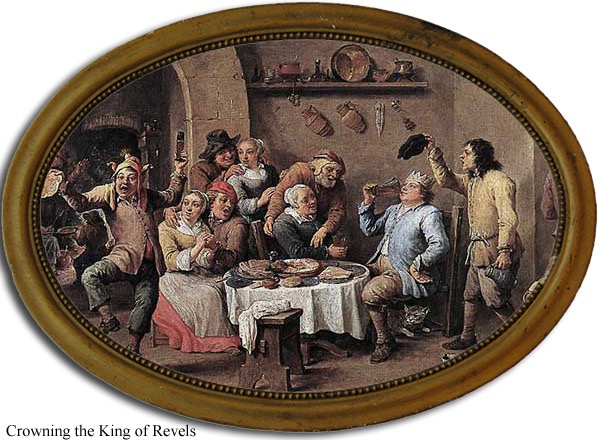
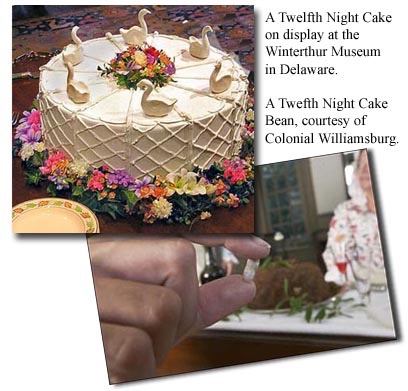
If you took my class on Shakespearean Christmas traditions or read my blog posts, you know that, back in Shakespeare’s day, Twelfth Night was a party to end the Christmas season. It was presided over by a Lord of Misrule, who would lead people in games and songs. The party would also have a Twelfth Night Cake with a bean in the center. If you found the bean, you’d have good luck for the year! So I was pleased to come to a real-life Twelfth Night party and see these traditions come to life!

What is the society for Creative anachronism?

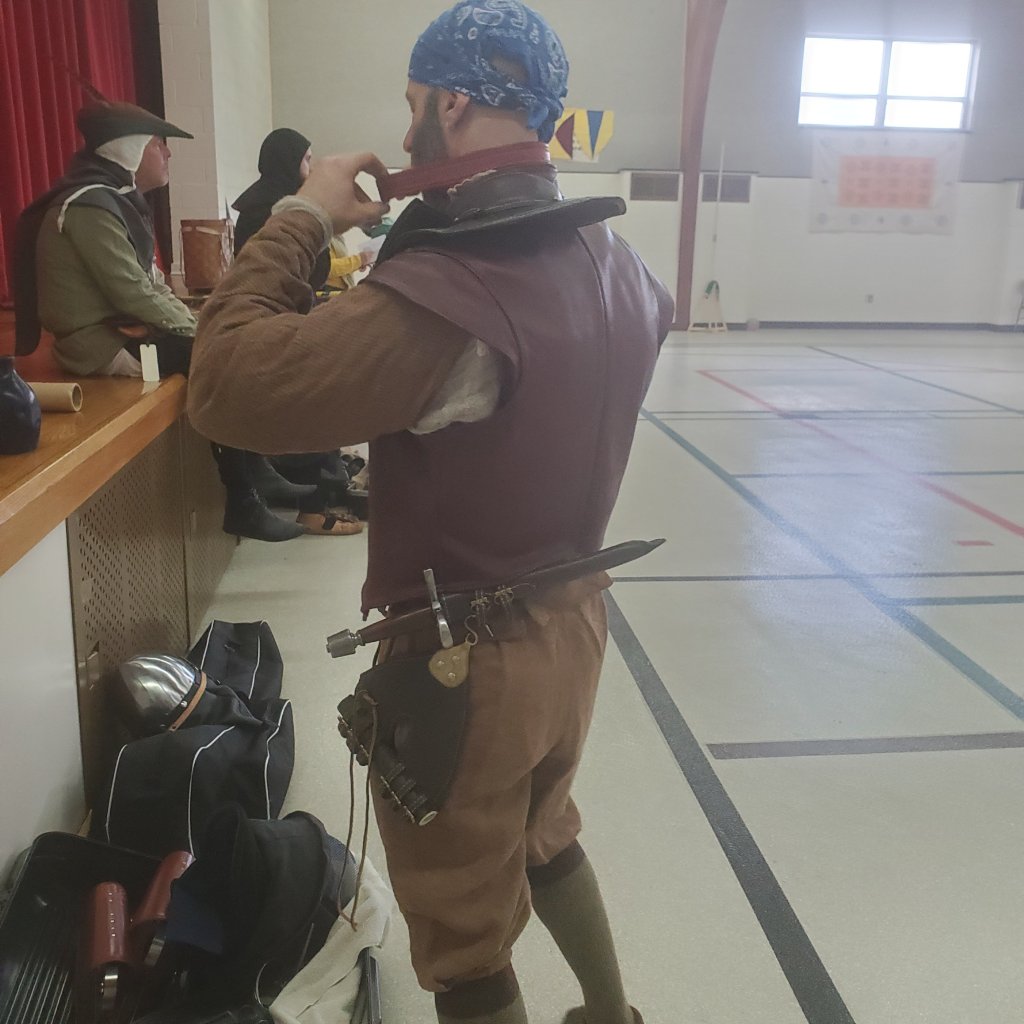
The short answer is- it’s LARPING for history nerds. Rather than creating a D&D persona and then getting arms and armor to play-fight in the backyard, SCA members create personas based on real medieval history, make or buy real historical arms and armor, (or arts and crafts as the case may be) and spend years of their lives studying and perfecting their immersion in that character’s life. SCA-ers learn how to fight with swords, daggers, spears, etc, how to sing medieval songs, medieval dances, and many other medieval ‘mysteries,’ which in this case means arts, crafts, and professions.

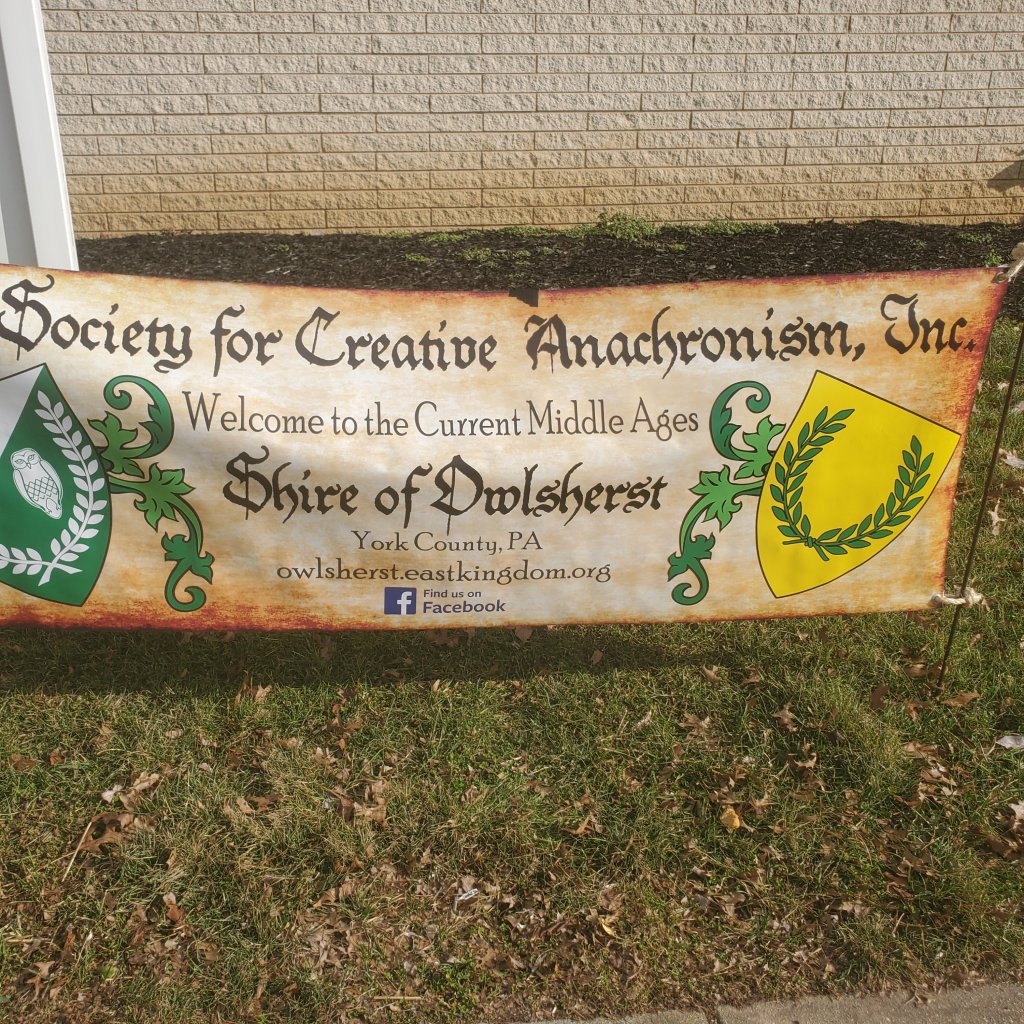
The Shire of Owlsherst

Owlsherst is the SCA’s local chapter in York PA. They have a number of dedicated members who specialize in textiles to rapier-dagger fighting. I’ve posted some videos of their fighting demonstrations on Youtube and Tiktok and their archery master has his own Tiktok channel. They hosted this year’s Twelfth Nigh party and have many other events throughout the year. For more information on this chapter, go to https://owlsherst.eastkingdom.org/

My reaction

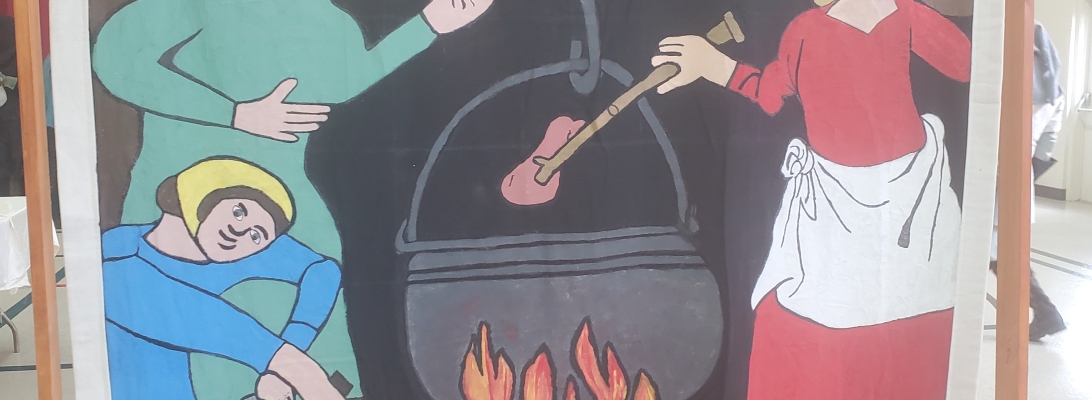
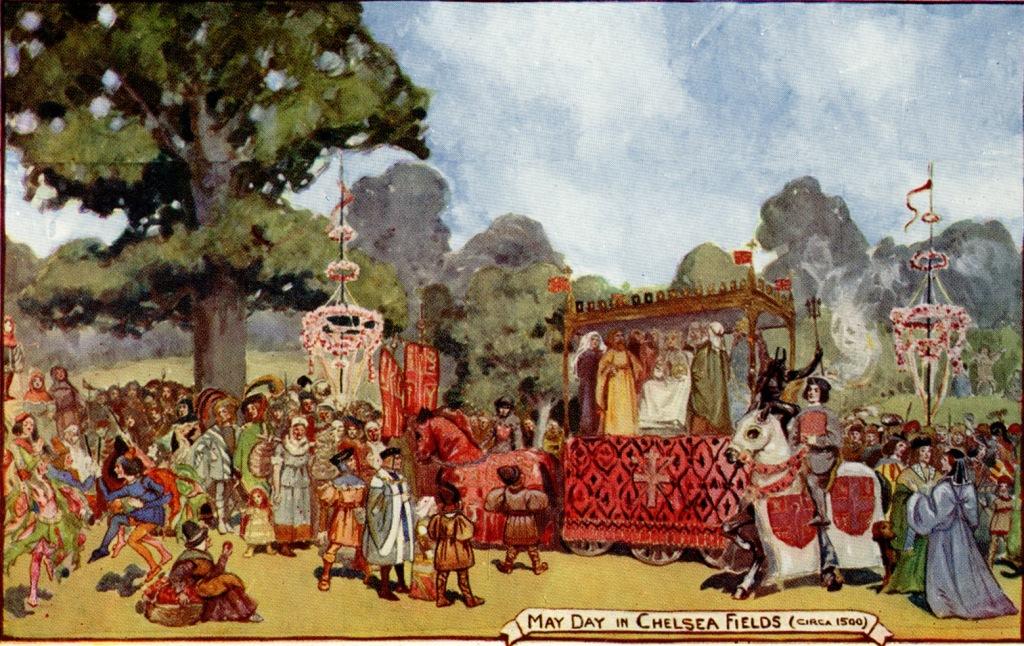
Every SCA event is a great way to celebrate people who are passionate about history and have talents for arts and crafts. Everything from the tapestries to the to the food, to the adorable owl toys, was made by hand by these dedicated people (most of whom brought their own medieval costumes). More members were doing live demonstrations of rapier/ dagger fights, binding books in cow leather, and singing medieval Christmas songs. I was inspired by everyone’s dedication and hard work to put this together. I also wonder if this is how Shakespeare himself felt when, as a child, he went to sheep shearing fairs and saw his friends and fellow artisans put on amateur bible plays on medieval pageant wagons.

That said…

I should warn you that, like a lot of historical reenacting societies like Civil War reenactors, etc, this society is more aimed at hardcore history nerds, than anyone else. This isn’t Medieval Times or a big-budget renaissance fair which is aimed at children and casual fun seekers. As such, it wasn’t really family-friendly. There aren’t many activities for kids and many of the arts and crafts are too delicate for toddlers and young kids. Also, this event isn’t particularly immersive or organized. People mostly just mingled, ate, and watched the various demonstrations. Keep in mind, this is just one chapter and just one event, which means your experience may vary. Nevertheless, because of the organization’s amateur historical nature, I would caution you to manage your expectations. Like I said before, this isn’t some big-budget Disney theme-park ride, but it is a chance for hardcore history nerds to get together, share their knowledge, and celebrate the traditions of a bygone era. If that’s your thing, I highly recommend it!

Watch “Shakespeare Made You Die (Dumb Ways to Die Parody)” on YouTube

Tomorrow is the first session of my course on Shakespeaere’s tragedies! I’m so excited to teach this great group whom I’ve worked with before. To mark this occasion, I present this silly, catchy, and informative song about the tragic fates of Cleopatra, Juliet, Hamlet, and others.

Title page for my course on Shakespeare’s Tragedies

If you want to sign up for this course or request a private session, you can do so at http://www.outschool.com, or by scanning the QR code below:

The trailer for my course.

Thanks for reading and have a good weekend!

Special Discount for My online “Macbeth” course

Since “Macbeth” is my Play of the Month, I’m offering a discount for my online class on the play. You can get $5 off my class “Macbeth: An Immersive Learning Experience” with coupon code HTHES6G3YH5 until Nov 4, 2022. Get started at https://outschool.com/classes/macbeth-an-immersive-learning-experience-xGKHeHgH and enter the coupon code at checkout.

To learn more about the class, watch the trailer above, and read my description of the escape room:

Remembering Kevin Conroy or: Is Batman “Hamlet?”

I was saddened to hear of the recent passing of actor Kevin Conroy, world-renowned as the voice of Batman and Bruce Wayne on Batman The Animated Series, the Arkham Asylum games, and many others. Conroy is definitely my favorite Batman, and as I and many others have said before, there are Shakespearean tropes in the Caped Crusader. From the very beginning, Conroy drew inspiration from a particular Shakespearean play, the melancholy prince, dressed in black, who seeks to revenge his father’s murder: Hamlet, Prince of Denmark:

I did a cold audition, I had never done an animated voice before. I said the only exposure I’ve had is the Adam West show from the 60’s and they said “NO! NO! NO! That’s not it.” I said ZIP POW POP and they said “NO! It’s, think film noir, think the 40’s New York. Think dark, think a kid who just watched his parents get murdered and spends his life avenging their deaths and he lives in the shadows. He’s got this dual personality and he’s never resolved this torture of his youth. I said you are telling the Hamlet story, this is heavy stuff. And he said yeah, no one has ever said that before, but yeah I guess it is. This is like a classic archetypal, Shakespearian tragedy. So I just used my theater training and put myself into that head (Batman voice) And I got into this very dark place and came up with this voice. (Regular Voice) And as I did it I saw them all running around in the booth. And I thought well either I did something really bad or something really good because I hit a nerve, I know I hit a nerve. And they came out and they said well we’ve seen about over 600 people and how would you like to do the part?

Kevin Conroy

It makes sense that Conroy would use Shakespeare to flesh out Batman. He was a veteran of the Old Globe Theater in San Diego, and performed in Hamlet several times. He even played the prince himself for the New York Shakespeare Festival in 1984. Yet I don’t think Conroy’s decision to make Batman a sort of modern-day Hamlet was entirely based on just his past experiences with Hamlet.

“Batman is basically the American version of Hamlet,” Affleck said. “We accept that he’s played by actors with different interpretations.”

Ben Afleck, Entertainment Weekly, 2015.

Batman and Hamlet are basically Revenge Tragedies; age-old stories that began with Oedipus Rex and the Orestia in ancient Greek plays, where a hero must lift a plague on his society by avenging the death of a parent (usually the father). This kind of play was very popular in Shakespeare’s day and included a host of others such as Shakespeare’s Titus Andronicus, The Spanish Tragedy, Locrine, The Dutchess of Malfi, and later The Revenger’s Tragedy.

But Hamlet, like Batman, is an avenger. He didn’t make Denmark rotten. That was Claudius, and if Claudius self-punished like Oedipus, Claudius would be a tragic hero too. But Claudius is just a garden-variety villain, and so Denmark needs a hero to set things right. Enter Hamlet. He’s “tragic” only in the sense that he dies, and since he dies after completing his heroic mission, he dies triumphant. But unlike the deaths of Claudius, Oedipus, and Macbeth, his death isn’t necessary to restore order. It’s just an epilogue.

Chris Gavaler, The Patron Saint Of Superheroes. “Something is Rotten In the State Of Gotham.”

As this clip above indicates Hamlet is unique among revengers because his conflict doesn’t come from the machinations of his villain; he’s stopped by his own internal conflicts. Batman is more active than Hamlet, but he also wrestles with internal conflicts and Conroy plays these conflicts with a lot of subtlety and nuance. To illustrate this conflict, let’s look at some great clips from the series!

Batman admits he wanted Revenge: “The Curious case of Hugo Strange”

In this episode, Dr. Strange (not the Marvel Superhero), uses a dream-reading machine to try and blackmail Bruce Wayne, and inadvertently discovers his secret identity. Not only does this episode dramatize Wayne’s literal worst nightmare, (someone figuring out who he is), it also touches on the pain of his past and how even though now Batman is a deputized agent of the law who never kills, he began as an angry, vengeful vigilante, like Hamlet:

I am myself indifferent honest, but yet I could accuse
me of such things that it were better my mother had not borne me.
I am very proud, revengeful, ambitious; with more offences at my
beck than I have thoughts to put them in, imagination to give
them shape, or time to act them in.

Hamlet, Act III, Scene i.

Batman’s Conflict With His parents.

In this clip from the animated movie Mask Of the Phantasm (1993), a pre-Batman Bruce Wayne feels a conflict between his obligation to avenge his parent’s death, and his budding romance with Ms. Andrea Beaumont:

One can almost sense an Ophelia- Hamlet-like conflict where Bruce knows his quest to avenge will consume him, and leave no time to pursue romance. In all revenge tragedies, the hero has to avenge alone, or at least without the support of a spouse or partner. Hamlet also makes the choice to cut Ophelia out of his life, though it’s not clear why. It could be he’s worried that Claudius will harm her, it could be he’s worried she’s compromised since her father tried to spy on him, or it could simply be that he doesn’t trust her. It’s up to the actor and director to “Pluck the heart of Hamlet’s mystery.”

Royal Shakespeare Company Text Detectives discuss the possible interpretations behind the “Get Thee To a Nunnery Scene.”

Eventually though, the choice is made for him, and Bruce Wayne completely commits to his quest to battle the crime in Gotham, as this epic scene from “Mask of The Phantasm” shows:

Haste me to know’t, that I, with wings as swift
As meditation or the thoughts of love,
May sweep to my revenge.

Hamlet, Act I, Scene v.

Hamlet and Batman’s Demons

The spirit that I have seen
May be a devil; and the devil hath power
T’ assume a pleasing shape; yea, and perhaps
Out of my weakness and my melancholy,
As he is very potent with such spirits,
Abuses me to damn me.

Hamlet, Act II, Scene ii.

What’s truly unique about the animated version of Batman is that it’s the only one that takes time to show Batman’s complex relationship with the ghosts of his parents. As previously discussed, Bruce Wayne’s desire to revenge their death and to punish the wickedness of Gotham is what spurs him to keep fighting as Batman, but he also wonders many times if he’s doing more harm than good. He’s also tempted to forget them and try to lead a normal life, like in the episode “Perchance to Dream,” (which itself is a quote from Hamlet). Above all, the animated show knows that, since children are watching this show, they will connect with Batman’s fear of not living up to his parent’s expectations, a fear to which every child can relate.

In the first season episode “Nothing To Fear,” the villainous Scarecrow exploits Batman’s fear of disappointing his parents by drugging him with a fear toxin, causing Bruce to hallucinate that his father is berating him and calling him a failure. Hamlet gets a similar ghostly chewing out in The Closet Scene:

Father’s GhostDo not forget. This visitation
Is but to whet thy almost blunted purpose.

Hamlet, Act III, Scene iv

While The Ghost of Hamlet’s Father is mostly supportive in this scene, Hamlet worries many times in the play if Claudius is in fact innocent, and the Ghost is a demon sent by the Devil to get him to kill an innocent man, and thus damn him for eternity. This uncertainty is the same that Batman wrestles with, as he confronts his own demon-like apparition. Batman then defiantly responds to this fiendish hallucination with one of the most iconic lines in the series:

Only a consummate professional like Conroy with his grounding in Shakespeare in general and Hamlet in particular could portray such an iconic character. Many fans of Batman like me believe that Conroy’s portrayal was the peak of the franchise, and I feel fortunate that it came out when I was a child. I mourn Conroy’s loss, yet as Mr. Affleck mentioned in the quote above, like Hamlet, the character of Batman has many possible interpretations, and though Conroy will always be my favorite, I hope new and exciting interpretations will arise from the shadows in time, bringing this complex, Shakespearean character to a new audience.

“Good Night, Sweet Prince and flights of bat wings fly thee to thy rest.”

References

https://gizmodo.com/the-batman-hamlet-crossover-that-never-was-5876735

https://www.theguardian.com/film/filmblog/2008/jul/23/thedarkknightbatmanisaha

https://bleedingcool.com/movies/batman-as-hamlet-with-kevin-conroy-and-loren-lester/#google_vignette

Hamlet (2000)

I’ve talked about some great Hamlets and some awful Hamlets. Now I want to talk about one that I find very much a mixed bag. The direction is incredible, for the most part it’s very well cast, and it has some truly memorable visuals, even though they’re very much rooted in the world-weary pre-9/11 New York of Y2K.

The mid 90s were the golden age for teenage Shakespeare adaptations with films like “Romeo+Juliet,” “10 Things I Hate About You,” and “O.” All of these films chose to do Shakespeare in modern day, and use youthful actors in the main parts. Since many teen novels and stories feature a brooding young protagonist dealing with the loss of a parent, while trying to find his/her place in the world, it makes sense Hollywood would continue this trend with Hamlet.

The trailer markets this as a sort of “cool Hamlet,” which is more about drama and exciting visuals then long-winded speeches. Director / screenwriter Michael Almereyda has a lot of interesting experience that translates well in this film., in addition to making films he also makes documentaries and short films. I think he wanted to tell this story like a documentary of a high-profile murder case, one where one of the victims happens to be an amateur short-film maker

The Acting

I actually really liked Ethan Hawke as Hamlet. He has a real effortless delivery of Shakespeare and he plays Hamlet as a troubled art-student type of kid who wants to see life through a film lens instead of dealing with the chaos of real life. The film also has some creative staging choices for Hake’s soliloquies. Look at how they staged “To Be Or Not To Be,” in a way that though dated, is a clever way of establishing Hamlet’s worldview. This Hamlet wants to be an action hero like Schwartzenegger, but is cursed with a conscience, anxiety, and fear of the unknown:

Sam Shepherd as the Ghost

Before he was a movie star, Ethan Hawke was an accomplished stage actor appearing frequently in the gritty western-inspired dramas of playwright Sam Shepherd. It seems appropriate that for Hamlet, the ghost of his father was played by one of Hawke’s theatrical mentors, plus as I said in my post on ghosts, it’s very true to form having the ghost played by a playwright

Sam Shepherd as the Ghost in Hamlet

Shepherd is my favorite incarnation of The Ghost. He’s simultaneously fatherly and terrifying, he’s mournful and hopeful. He doesn’t have any special effects to detract from his performance, nor is he just a disembodied voice. The understated nature of Shepherd’s performance works perfectly for film!

Polonius and his family

I have to give special mention to Julia Styles (Ophelia), Liev Schrieber (Laertes), and Bill Murray (Polonius). All their scenes are great and they play off each other very well. You really feel bad for this family which winds up broken by Hamlet and the king, even though they did nothing wrong.

I particularly love this staging of Act I, Scene iii, where Laertes gives his sister Ophelia some advice before leaving for France. Their father Polonius in turn, gives Laertes some fatherly advice, concluding in the famous line: “This above all, to thine own self be true.”

Liev Schrieber as Laertes Shrieber was a great choice for a more movie -like American Laertes. He has a distinguished way of talking and a no-nonsense air about him that works well for the son of a corporate executive like Murray’s Polonius. At the same time, you can sense his boiling hatred of Hamlet, even in this first scene. He’s a great antagonist and plays well with Murray and Hawke.

Bill Murray As Polonius If you read my review of Branaugh’s Hamlet, you noticed I said that I thought his casting was terrific with two exceptions. One of which was casting Richard Briars as Polonius. Branaugh, (and Derek Jacobi in the stage production that inspired the movie), chose to direct Polonius as having no humor whatsoever- to play him as Claudius’ right-hand man. A controlling and micromanaging father who is obsessed with keeping up appearances. While Briars is a fantastic actor, you lose a lot of Polonius without giving him at least a little comic pedantry.

Bill Murry has no problem balancing the funny and business-like aspects of Polonius’ character. Like Peter Venkmen in Ghostbusters, he takes himself too seriously and loves to hear himself talk, and lke his character in Lost In Translation, he has a great deal of fatherly tenderness with Julia Styles. I also love the bit where he puts some extra money in Laertes’ backpack. This Polonius isn’t a fool, but he’s also a bit of a worry wart- and his fretting over his kids blinds him to what Hamlet is really up to.

Julia Styles as Ophelia As I mentioned, Ms. Styles did a number of great Shakespeare movies in the mid 90s, including her iconic portrayal of Kat Stratford in “10 Things I hate About You.” Sadly, the director didn’t give her much to do in the fisrt half of this movie. Her Ophelia mostly looks pretty and does as little as possible. The only moment that stood out to me was the look of guilt on her face after Hamlet discovers she’s wearing a wire in the “Get Thee To A Nunnery” scene.

Styles shines however in The Mad scene. I think her strong personality clashed in the first half of the film with the rather weak and docile Ophelia they were going for. Thankfully, during the Mad Scene, she screams, gets in people’s faces, and has a lot of fury towards the men in the scene. Also, putting the scene in the famous Guggenheim Art Museum works very well- it’s a public place, so anything Ophelia says makes Claudius look bad. Also, the spiral design of the museum feeds into the disorientation Ophelia feels without her father. Finally, the art itself calls back her love of photography and Hamlet’s love of film.

The BEST MOUSETRAP EVER!

A lot of the scenes and soliloquies of this film are very hit-and-miss, but the one moment of the play Almereyda absolutely nails is the play-within-a-play in Act III, Scene i. First of all, the director cuts all the intentionally bad dialogue and turns the play into a silent film-within-a-film, with lots of homemade charm and disturbing imagery. Mr. Almereyda carefully adapted the often-cut dumb show that happens before the play, and used that to fashion Hamlet’s short film:

  • [Hautboys play. The dumb show enters.]2015
    Enter a King and a Queen very lovingly; the Queen embracing
    him and he her. She kneels, and makes show of protestation
    unto him. He takes her up, and declines his head upon her
    neck. He lays him down upon a bank of flowers. She, seeing
    him asleep, leaves him. Anon comes in a fellow, takes off his
    crown, kisses it, pours poison in the sleeper’s ears, and
    leaves him. The Queen returns, finds the King dead, and makes
    passionate action. The Poisoner with some three or four Mutes,
    comes in again, seem to condole with her. The dead body is
    carried away. The Poisoner wooes the Queen with gifts; she
    seems harsh and unwilling awhile, but in the end accepts
    his love.

Not only does this film fulfill its dramatic function, (making Claudius betray his guilt), but we also get a window into Hamlet’s mind. We see how he sees his father, his mother, and his life before his father’s death. As an added bonus, the film is subtle enough that Claudius would’ t be able to make sense of it unless he had actually murdered Hamlet’s father.

My problems with the film:

Like I said, my problem isn’t with Hawke. My problem is the rest of the film. Some actors just mumble their lines. Sometimes the director wastes time with pointless film clips which only seem to exist to remind you that “This Hamlet is artsy.” But my biggest problem with the film is the pace. Almereyda does a great job paring down Hamlet to its core drama- Hamlet vs Claudius and the poor people who get caught in the crossfire. Though he is sparing with dialogue, he wastes time with silence. A lot of the film is the characters sitting around watching TVs, looking at photos, sleeping, or just staring off into space. In addiiton, the delivery is very mixed. Like I said, Hawke’s quiet, understated delivery works very well, but not for every character. To varying degrees, everyone in the film is guilty of what I call “movie Shakespeare acting,” which is to say, being so afraid of sounding like Oliver and Branaugh, that they mumble their lines, slow the pace down, and turn the emotion down to nearly zero, because they don’t want their performances to appear over-the-top. The thing is, Hamlet is a tragedy about people who are fighting for their lives and souls. A little quiet introspection is important, but too much of it drags the play or the movie down.

The STUPID ENDING

As you read in my post on the duel in Hamlet, Shakespeare’s play, ends in a fencing match where Laertes betrays Hamlet by fighting with a poisoned sword, which Hamlet eventually uses to kill Laertes and Claudius. It’s a powerful moment of poetic justice. In Almereyda’s version, LAERTES JUST SHOOTS HAMLET.

To be fair, the whole scene doesn’t work well in a 21st-century context. Laertes just told Hamlet to literally “Go to Hell,” but then in the very next scene Hamlet agrees to play against him in a friendly fencing match? Only a complete idiot wouldn’t know that something suspicious is up. In every good production I’ve seen, Hamlet knows this is a trap, but he does it anyway. I think he intends to let God decide their quarrel like in old-fashioned judicial combat.

Since dueling isn’t practiced anymore (except in episodes of The Office), it seems bizarre that Hawke’s Hamlet would agree to be in the same room with Laertes, let alone fight with him. I wish the director had done something, anything to justify Hamlet’s choice to fence with Laertes, or just do away with the fencing entirely and have them fight over Ophelia’s grave.

The other thing I hate about this scene is that it isn’t a fight; it’s a murder and a very stupid one. Laertes shoots Hamlet but instead of shooting him at a distance, he walks right over and shoots Hamlet, close enough for Hamlet to turn the gun on Laertes. This makes Shreiber’s character seem incredibly stupid and completely unsympathetic. Not only is it stupid, but it’s also cowardly. Hamlet is unarmed, and can’t defend himself against a bullet. If Laertes had a knife, Hamlet would’ve at least have had a fighting chance. As it is, we get a pointless, bloody end to a great character, and Laertes does it in a cowardly ignoble way.

The Film’s Influence

Whether or not you’ve seen and liked this film, it definitely influenced one of the most well-received Hamlets of recent memory.The Royal Shakespeare Company’s 2009 TV movie of Hamlet takes a lot of cues from Michael Almereyda’s film.

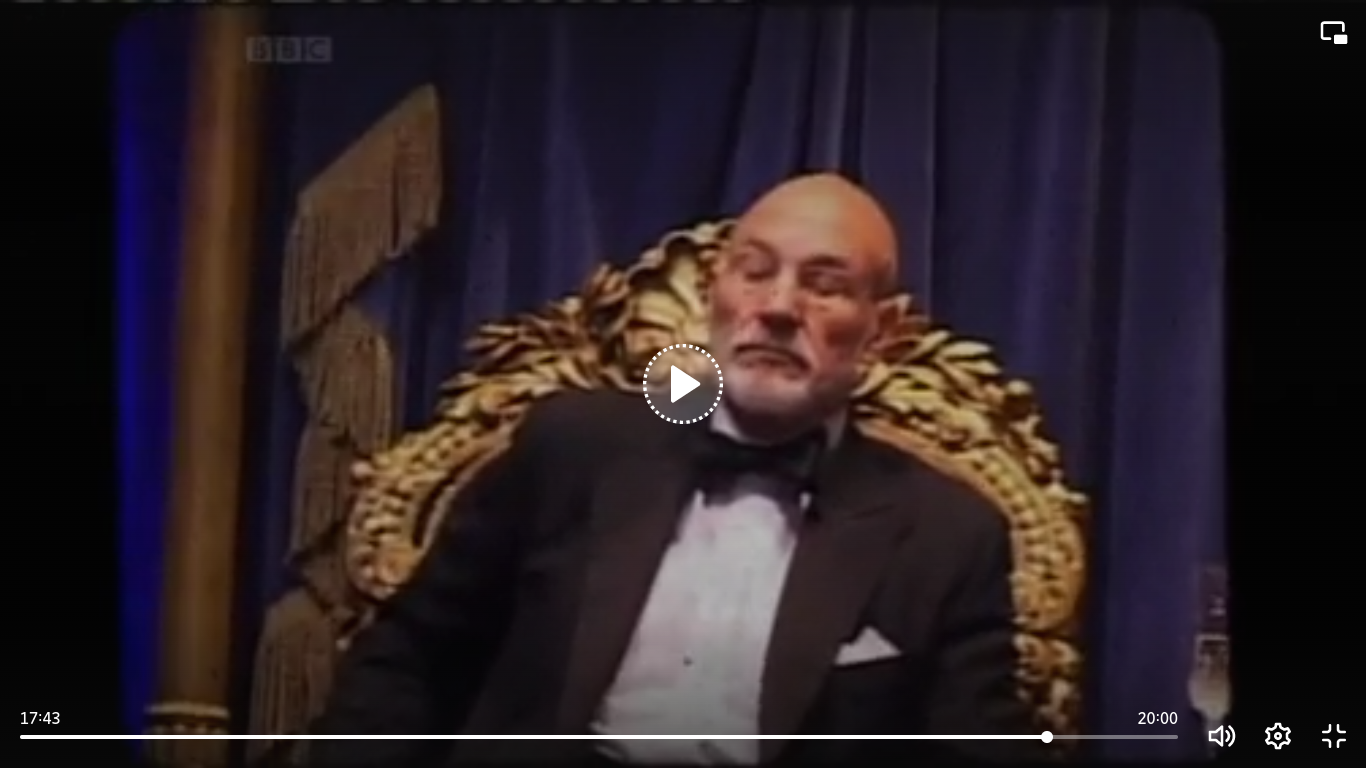
  1. The Concept- Court intrigue Both films immerse themselves in the trappings of wealth and status in American and British society. In Act I, Scene iii Kyle Mcglaughlin as Claudius holds large press conferences, surrounds himself with bodyguards, security cameras, and lives in the luxury Hotel Elsinore. Patrick Stewart in the same scene holds an exclusive black-tie soiree attended by bishops, men in tails and women in ballgowns. Plus the British version keeps the monarchy, it just updates it with marble pillars, spotless floors, and golden chains and thrones.
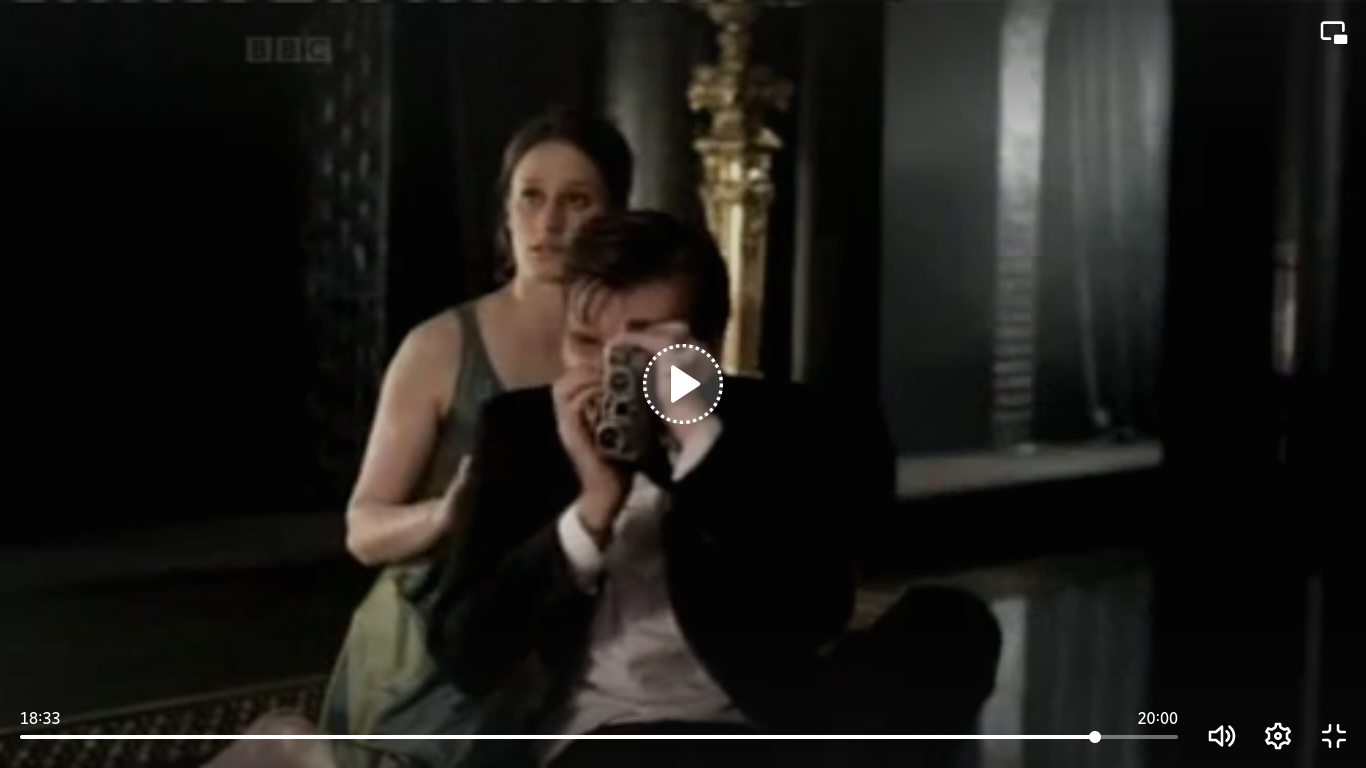
  2. Watching and being watched– Both films start off with security camera footage, and shots of security cameras become a running motif that demonstrates Claudius’ control over Hamlet’s life. Also in both films Hamlet defies his uncle by filming him back with his own camera.
  3. Updating Gertrude One of the flaws of Shakespeare’s text is that he judges Gertrude far too harshly. To Hamlet, it is incomprehensible that his mother could fall in love and marry anyone else. I like that in both versions, Gertrude is still relatively young, and the Claudius figure is relatively charming and handsome, while the ghost seems warlike and cold. You get the sense that Hamlet’s father was a good king, but a lousy husband. Little touches like this flesh out her character, and make us compelled to see what happens to her.
  4. You cannot call it love; for at your age2460
    The heyday in the blood is tame, it’s humble,
    And waits upon the judgment; 

So, to be brief, this version isn’t the best, but it has plenty of clever set pieces, good performances, and early 2000s angst to trigger any millennial’s nostalgia goggles. More than that, I think later productions are indebted to this little movie for paving the way to bring Hamlet into the 21st century.