How Accurate Is Medieval Times?

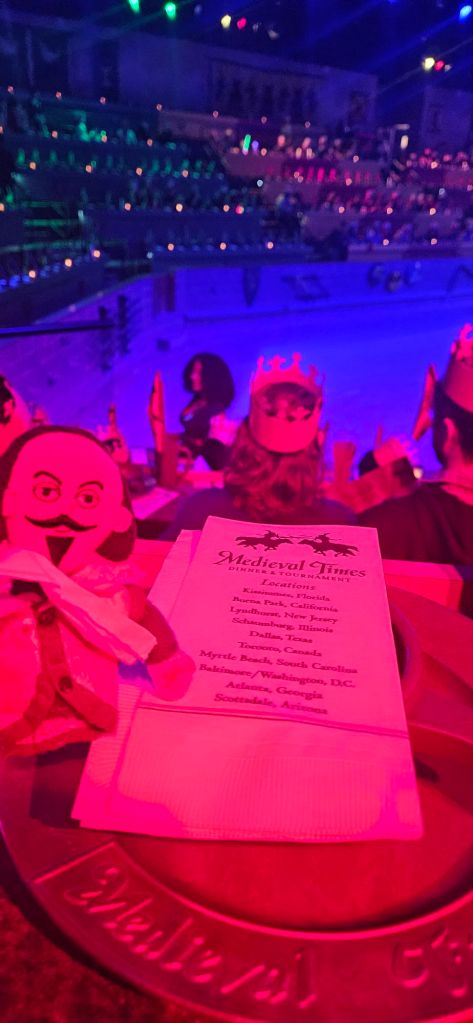
In many ways, Medieval Times is a campy, theme park-esque place. Done’t get me wrong, I love this place and puppet Shakespeare and I enjoyed it immensely, but from a historical perspective, Medieval Times has more in common with Disney Land than British history. That said, it still contains a nod to this ancient culture that praised and highly ritualized the concept of judicial combat.


The Court

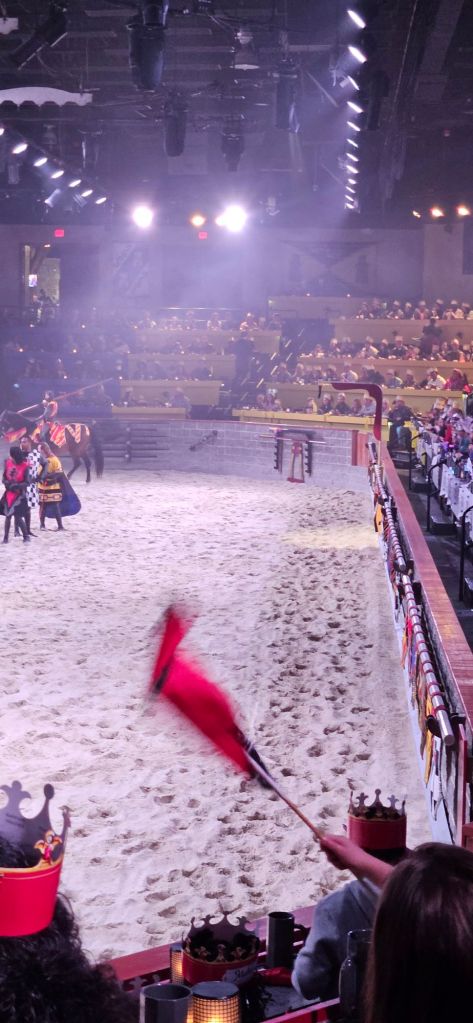
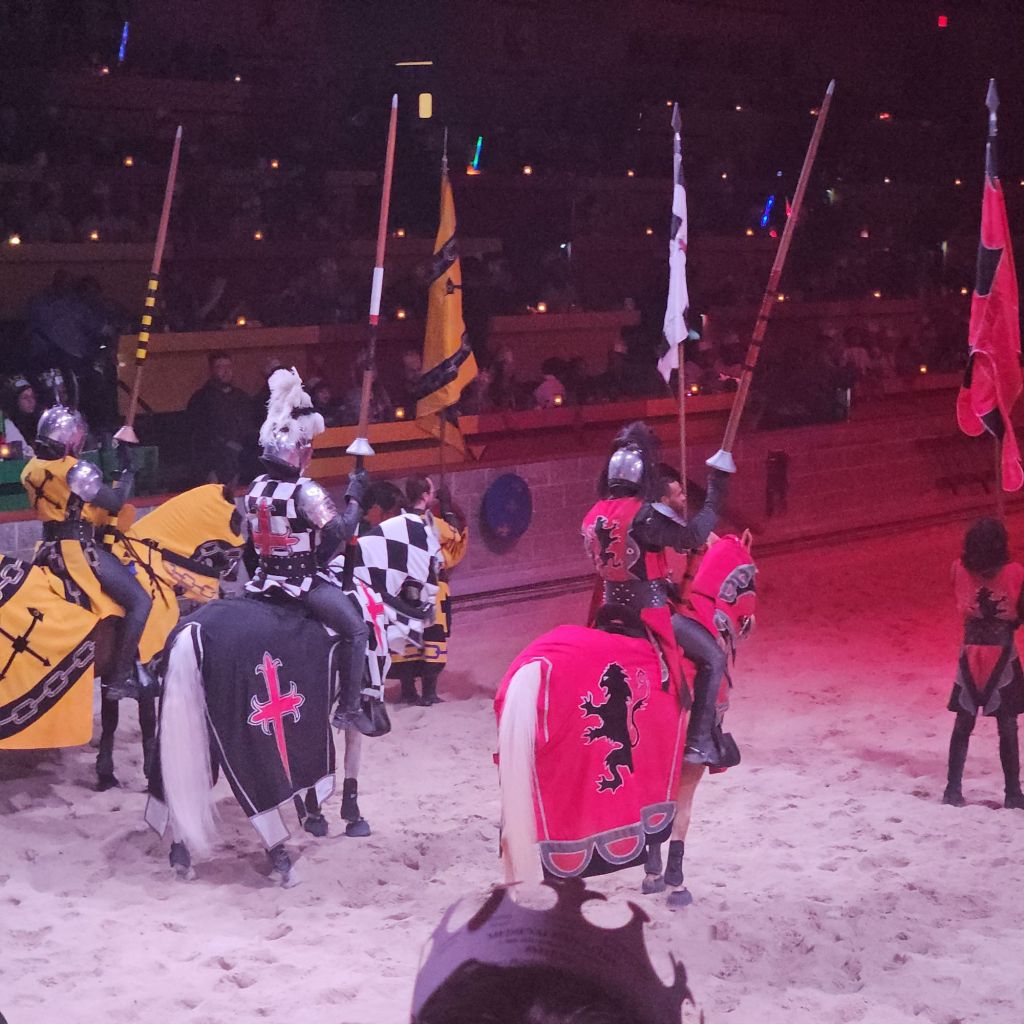
You are cast as a lord or lady, representing a fantasy kingdom (which corresponds to the color of the crown you wear). I was fortunate to get the Red crown for Valentines Day, and was seated right next to the King and Queen (more on that later). The hall was decorated with colored banners and each kingdom was introduced with trumpets and flags. The feast was a celebration of the uniting of all the surrounding kingdoms under the King and Queen. As the king and queen came out, everyone cheered and the royals toasted each kingdom and praised and thanked them all for their service to the crown. The monarchs then promised each lord and lady there a greater reward with sports, games, spectacles, and of course, the feast itself.

Feudalism

Map of the kingdoms in England during the Wars of the Roses

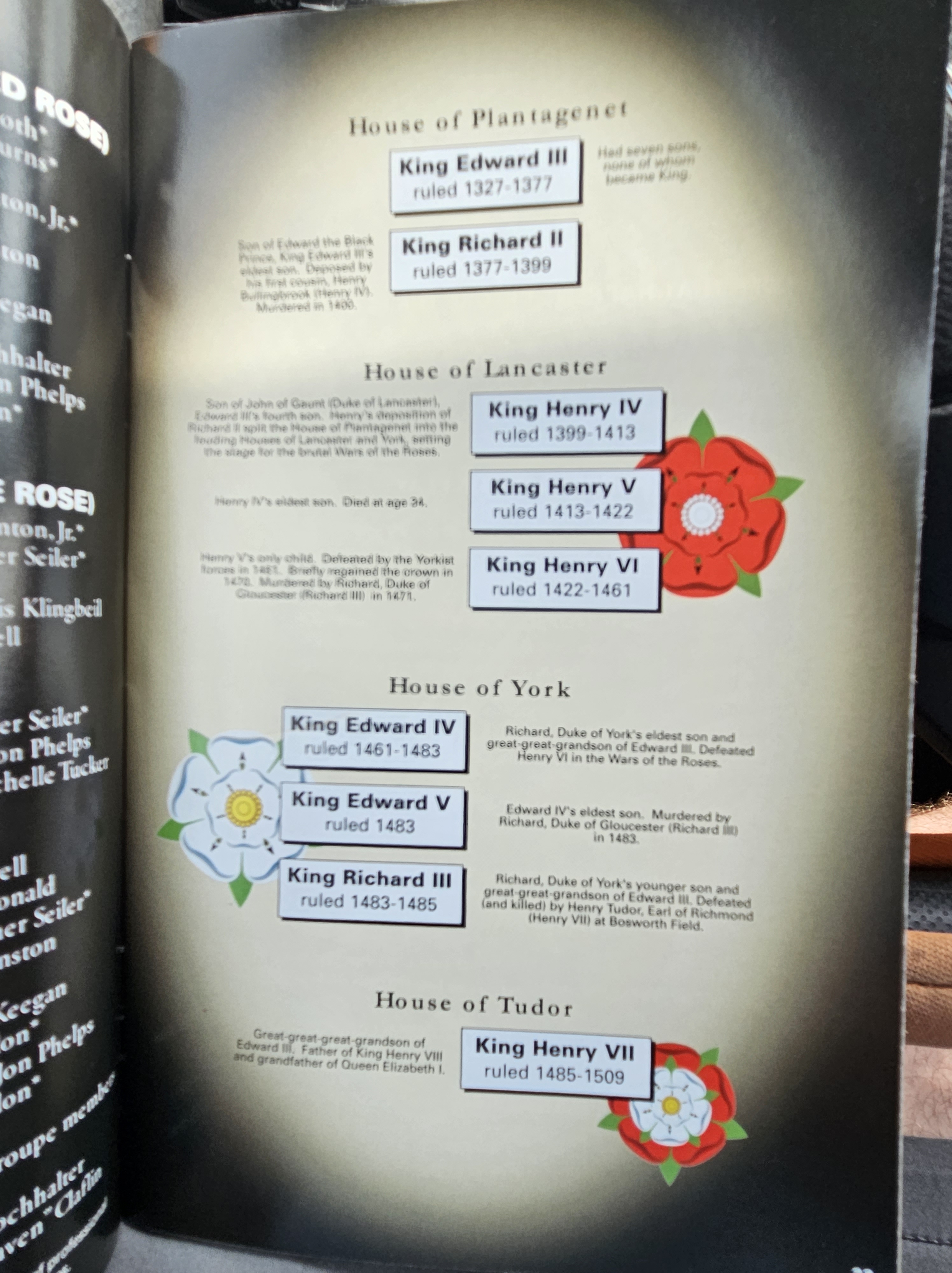
As I mentioned in my Game of Thrones post, a king’s main job was to unite all the lords in the land and get them swear fealty to him, binding the whole country under the crown. It was King Henry VI’s failure to keep the lords in line that resulted in the civil war known as the Wars of the Roses. Feasts like the one in Medieval Times, were essentially propaganda to keep the lords allied with the king. They demonstrated the power of the king and communicated loudly and clearly that the lands would be stronger together, as opposed to endless war. So, this kind of pageantry was political as well as entertaining, and the king and queen’s dialogue preserves the purpose of this kind of feast, which as a history nerd, I deeply appreciated.

Court Sport
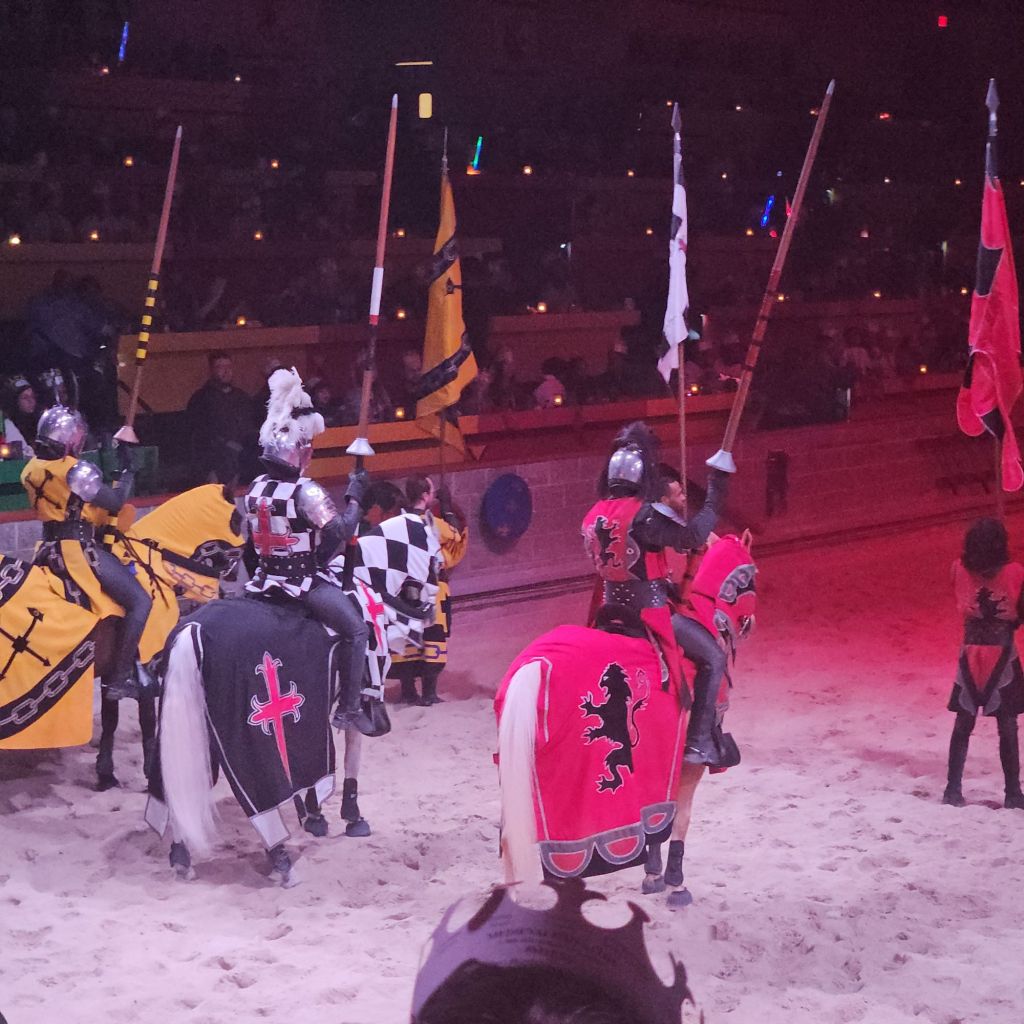

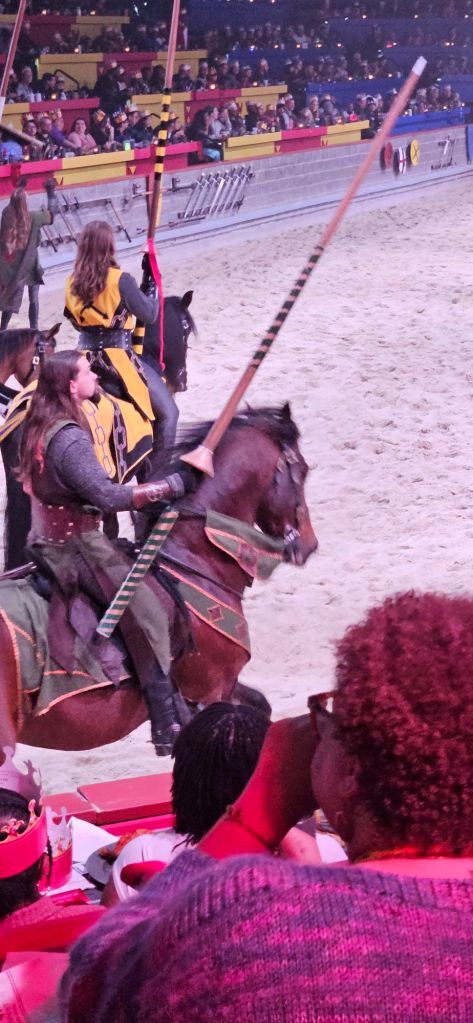
While we waited for the feast, the knights entertained the court with displays of their skills and strength. They rode towards the quintain and hit it with their lances, threw spears at a target, and even their horses got a chance to trot without riders, showing how well trained they were.
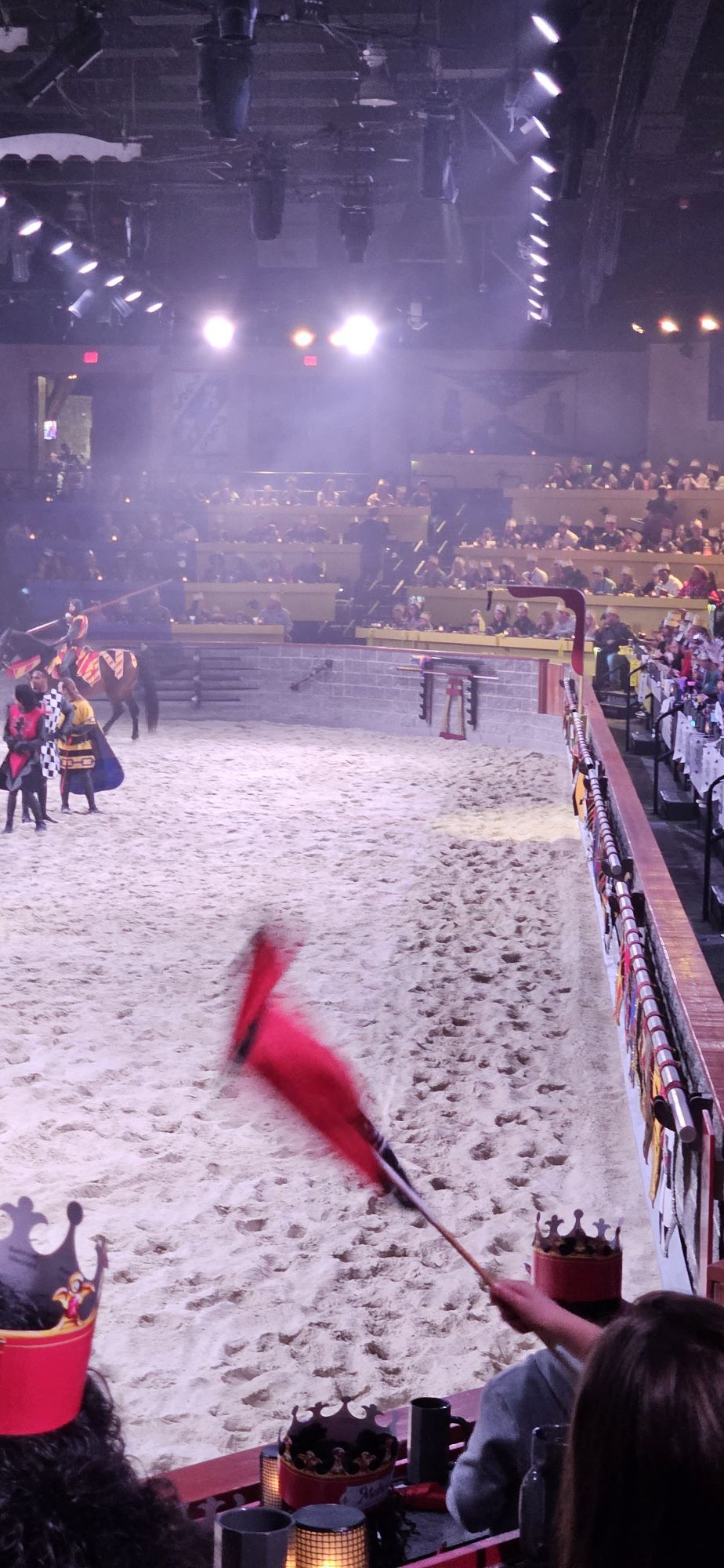
The knights practice throwing spears at the target

The Joust

Shakespeare’s Pericles, Prince Of Tyre has a very elaborate and detailed depiction of how jousts worked in the Medieval and Renaissance eras. Shakespeare knew that the joust was the ultimate display of skill, chivarly, and the ideals of courtly love. Knights were portrayed as romantic heroes who fought for a simple favor from a lady such as a rose or handkerchief and each one defined himself by his strict code of honor and virtue. All these traditions are hightlighted in the scene where Pericles fights in a tournament to gain the love of the princess Taisa:

Enter A pavilion for the [p]reception of King, Princess, Lords, &c.

[Enter SIMONIDES, THAISA, Lords, and Attendants]

Simonides. Are the knights ready to begin the triumph?
First Lord. They are, my liege;750
And stay your coming to present themselves.
Simonides. Return them, we are ready; and our daughter,
In honour of whose birth these triumphs are,
Sits here, like beauty's child, whom nature gat
For men to see, and seeing wonder at.755
[Exit a Lord]

Thaisa. It pleaseth you, my royal father, to express
My commendations great, whose merit's less.
Simonides. It's fit it should be so; for princes are
A model which heaven makes like to itself:760
As jewels lose their glory if neglected,
So princes their renowns if not respected.
'Tis now your honour, daughter, to explain
The labour of each knight in his device.
Thaisa. Which, to preserve mine honour, I'll perform.765
[Enter a Knight; he passes over, and his Squire]
presents his shield to the Princess]
Simonides. Who is the first that doth prefer himself?
Thaisa. A knight of Sparta, my renowned father;
And the device he bears upon his shield770
Is a black Ethiope reaching at the sun
The word, 'Lux tua vita mihi.'
Simonides. He loves you well that holds his life of you.
[The Second Knight passes over]

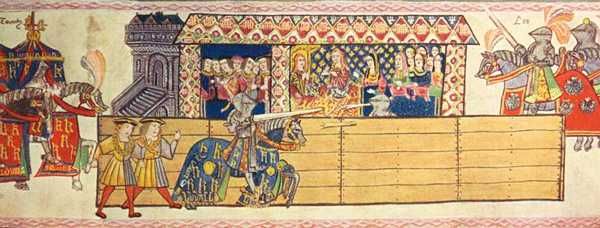
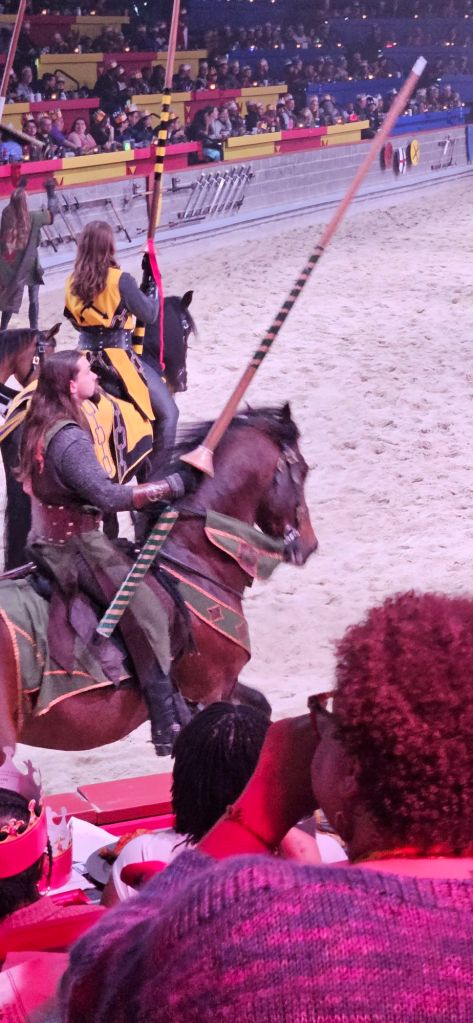
Chivalric ideals aside, the joust also had a practical purpose- it was a way for knights to train for war, an a way for them to win fame, money, and good reputations at court. As you can see in the photos above, the knights were separated by a wooden barrier called “the tilt wall.” Each knight was identified by the colorful designs on their banners, shields, and the blanket draped over the horse. Once the king or marshal threw down the warder, the knights charged headfirst at their opponents, armed with shields, lances, and full armor. Knights scored points for breaking lances and shields or by knocking other knights off their horses. Naturally, to create the most impressive display possible, all the knights at Medieval Times fell off their horses and no lances broke.


First, and most important, was the Joust Royal, or "tilting," in which mounted knights armed with lances charged at their opponents across a barrier.
This was followed by a "tourney" in which mounted knights ran at each other without a tilt barrier (as pictured here).>
Combatants armed with spears and swords also fought on foot over a barrier
Best, Michael. "Chivalry and Duels." Internet Shakespeare Editions, University of Victoria, 28 Sept. 2016, ise.uvic.ca/Foyer/citing. Accessed 30 Sept. 2016.
The Lance

The video above is from Weapons That Made Brittain, in which historian and reinactor Mike Loads, explains with vivid details, how Knights learned how to master the art of the Lance, and how the Lance became one of the most important weapons of the knight.

Duels
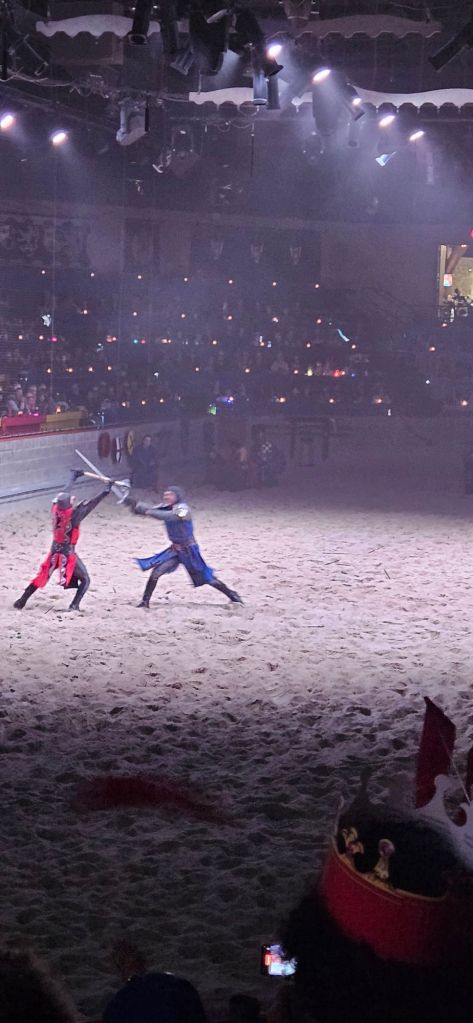
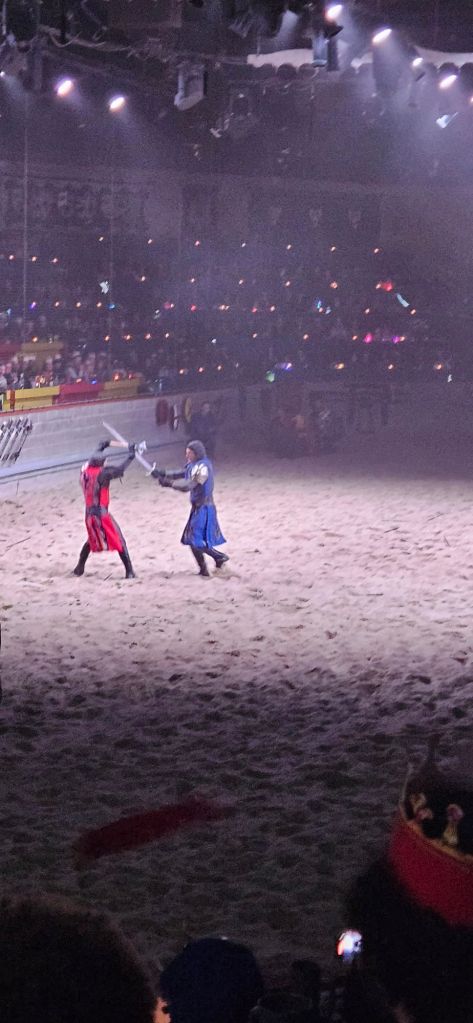
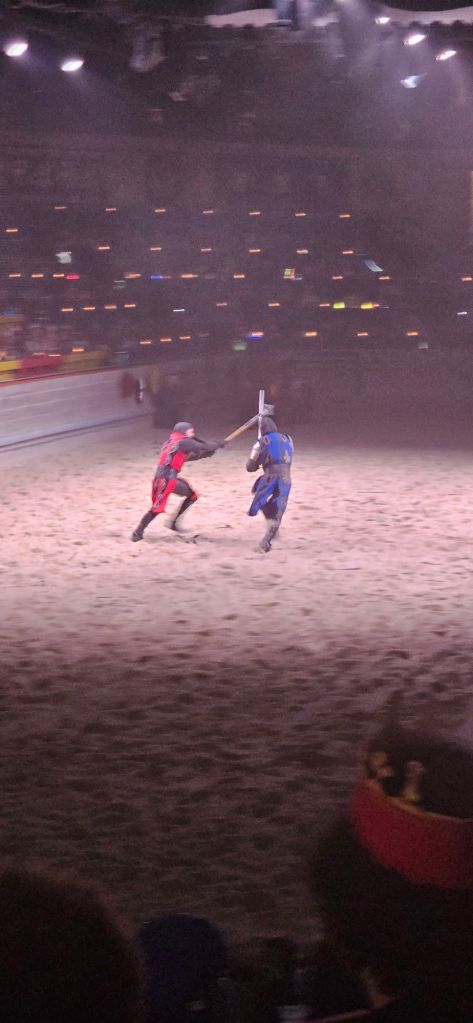
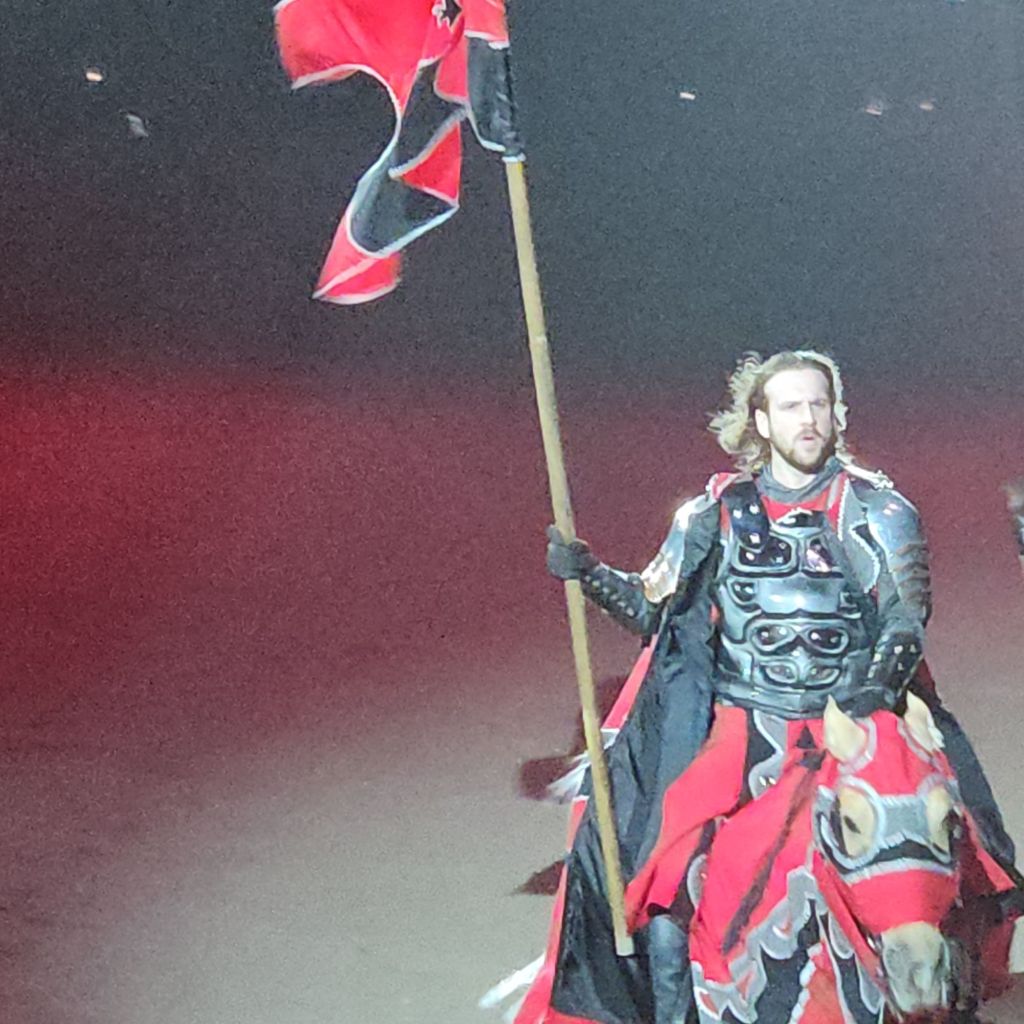
In the climax of the evening, the knights stopped fighting for sport, and started fighting for power! The Green Knight (as green with envy as his armor and horse), suddenly refused to dismount from his horse and began striking knights left and right. He then challenged the leadership of the king, threatening to rebel from the kingdom, along with his fellow knights! The king then decided to choose a champion to fight the Green Knight to the death! The Red Knight, (who as I mentioned before, represented my kingdom, and threw a rose as a favor to my family), picked up the glove of the envious Green Knight, thus signifying that he would be the champion, and fight for the fate of the kingdom!

Why the Green Knight?
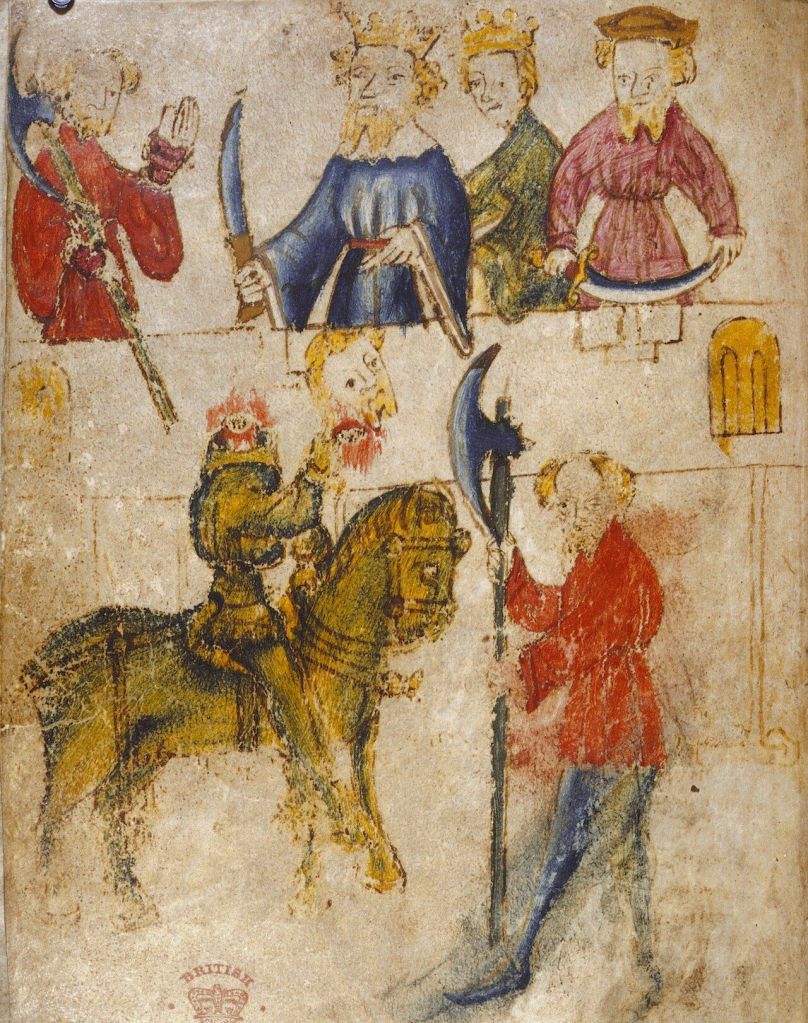
Illustration from Sir Gawain and the Green Knight, 14th century.

At the hall door comes a frightening figure,
He must have been taller than anyone in the world:
From the neck to the waist so huge and thick,
And his loins and limbs so long and massive,
That I would say he was half a giant on earth.
But more than anything
His color amazed them:
A bold knight riding,
The whole of him bright green. Sir Gawain and the Green Knight

In most (but not all) interviews and clips I’ve seen, the Green Knight is the bad guy- the one Knight whom almost everyone is supposed to root against. When I got home, I wondered why this was. After all, isn’t the black knight usually associated with villainy? My personal theory is that this is a subtle reference to the classic medieval story, Sir Gawain and the Green Knight. The eponymous Knight is supernaturally strong and able to even survive decapitation! He serves in the story, as the ultimate test for our young hero, Sir Gawain. I think the writers of Medieval Times definitely did their homework, making this Knight the antagonist.

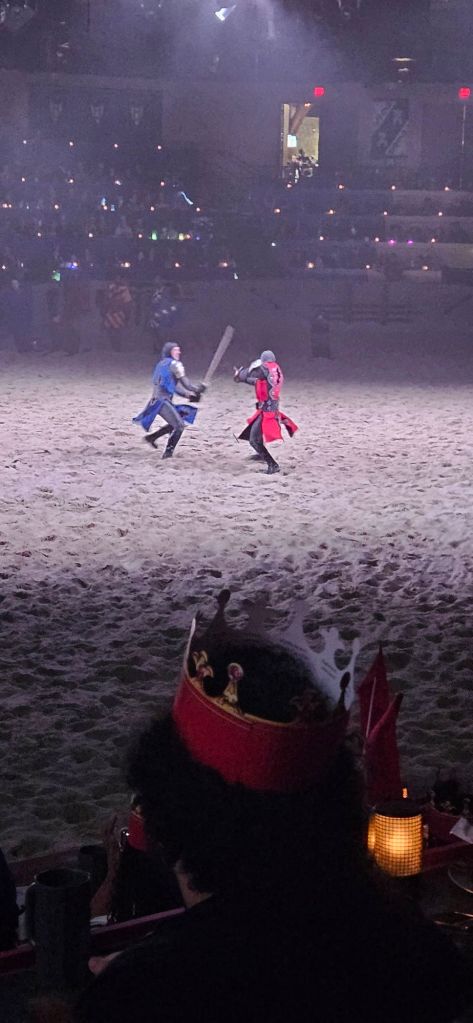
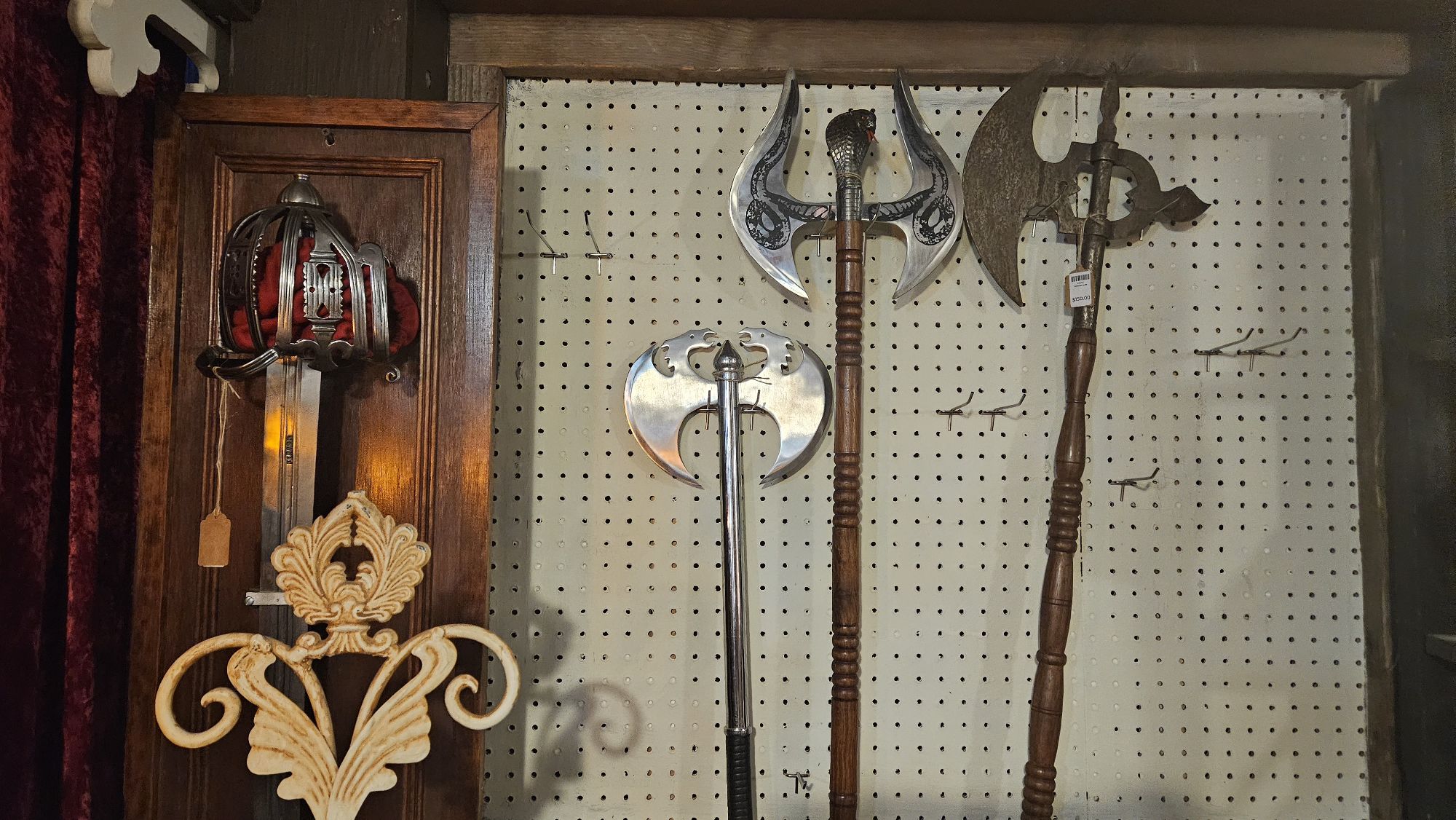
The duel began on horses, but quickly changed to single combat on foot. They fought with axes, maces, and of course swords.

Even though dueling was a bloody and dangerous pastime, it has a long history that even kings couldn’t erase. Back in Anglo-Saxon times, private disputes, (such as the murder of one’s father) could be settled through means of a duel. In this period, England was occupied by the Danes, (which we would now call Vikings), and several Viking practices of judicial combat survive. For example, the Hólmgangan, an elaborate duel between two people who fight within the perimeter of a cloak. These kinds of fights continued throughout medieval Europe and, like Medieval Times Shakespeare knew their devastating dramatic potential.

At the end of Shakespeare’s Hamlet, the revenge cycle between Hamlet, Leartes, and Fortinbras, comes to a close using a duel. Hamlet has murdered Leartes’ father but Hamlet did not intentionally kill him. This kind of legal dispute would certainly have been settled with a duel in Saxon times. This is one reason why Leartes scorns Hamlet’s offer of forgiveness at the beginning of the scene, and instead trusts in the outcome of the fight to prove his cause. Hamlet and Leartes begin fighting officially under the terms of a friendly fencing match, but it becomes clear early on that at least in the mind of Leartes, this is actually a blood-combat. Laertes is demanding blood for the death of his father, and like the Green Knight, his fight will decide the fate of the Danish throne.

  • HamletCome for the third, Laertes! You but dally.
    Pray you pass with your best violence;
    I am afeard you make a wanton of me.
  • LaertesSay you so? Come on. Play.
  • OsricNothing neither way.
  • LaertesHave at you now!

[Laertes wounds Hamlet; then] in scuffling, they change rapiers, [and Hamlet wounds Laertes].

[Laertes falls.]

By the Renaissance, dueling was highly controlled by traditions of honor and fair play. As Laertes admits, poisoning Hamlet and fighting him to the death without his knowledge would be considered treason, and highly dishonorable. The Green Knight does every possible thing to make the audience see him as the villain with his lack of courtesy, dirty tricks, and disdain for the king and queen. He is so dishonorable that, even Americans, who have nothing but disdain for monarchy and in real life, value independence and self-sovereignty, would rather take the side of the monarch and his stooge the Red Knight over the Green Knight, just because he refuses to play fair.

The Weapons

What Would I Do Differently?

Sources:

Sources-

  1. Ur- Hamlet
  2. Lear source- Hollinshed’s Chronicles
  3. Tony Robinson’s Crime and Punishment: http://www.youtube.com/watch?v=2yz9VLkNHJU&feature=youtu.be
  4. Truth Of the Swordhttps://www.youtube.com/watch?v=vFL2ghH0RLs
  5. Secrets Of the VIking Sword http://youtu.be/nXbLyVpWsVM
  6. Ancient Inventions- War and Conflict http://youtu.be/IuyztjReB6A
  7. Terry Jones- Barbarians (the Savage Celts) https://www.youtube.com/watch?v=PSuizSkHpxI
  8.  Joe Martinez book

If you enjoyed this post, and would like to do some stage combat of your own, sign up for one of my history and stage combat classes on Outschool.com!

Title image for my Stage Combat Course

New Course: Shakespeare’s Histories

Shakespeare’s History Class

Course trailer

Parent Description- A fully online, fully interactive course into Shakespeare’s histories taught by a professional text coach and actor. 

Students- Uncover the scandalous and gory history behind Shakespeare’s most action-packed plays! Shakespeare’s histories have inspired such works as “Empire,” “Game of Thrones,” “Hamilton” and even the “Star Wars” trilogy. This class will unlock for you why these stories of power and betrayal have been so popular for 400 years.
Format:

0. The class will have a Nearpod with slides, activities, and links to my other resources.  The class will be a combination of slides, activities, and videos. Each class will have 

  1. Weekly Discussion questions via Google Forms such as: “What do you know about Shakespeare the man?” or, “Are Shakespeare plays still relevant today?”
  2. Video Analysis- Every week I’ll discuss a different play with a short video.
    1. I’ll provide some context, explaining what is happening in the play durin the speech, and any relevant historical context.
    2. We’ll watch a recording and the students can write their impressions on what they like and don’t like.
  3. Immersive activities such as:
    1. – Shakespeare arts and crafts and recipes such as making costumes and props.
    2. – My online Shakespeare board game.
    3. Virtual tours of the Tower Of London,
  4. Weekly Web Quests like “find a Shakespeare quote that you use in normal speech,” “find a movie or character that’s based on Shakespeare,” or “Draw a picture of a Shakespearean character (stick figures are acceptable).

6 Week Course

Week 1 – Why Hamilton is Like A Shakespeare History Play Hamilton and Shakespearean History We’ll discuss what makes a history play a history play, why they were so popular in Shakespeare’s day, and draw parallels between Shakespeare and the Broadway Musical “Hamilton.”

  1. What is a history play?
  2. Song quest: Watch the Horrible histories king song
  3. Worksheet- which Shakespearean character reminds you most of Hamilton?
  4. Video- the 10 Duel commandments of Shakespeare

Week 2- Richard II

  1. The history of Richard Shakespeare’s Richard II | Animated short
  2. Watch the presentation and fill in the blanks of the story: Richard the Second Intro Presentation
  3. Web quest- go online and write down three things about the Wilton Diptych
    1. Wilton Diptych https://www.nationalgallery.org.uk/paintings/english-or-french-the-wilton-diptych
      1. Open ended question- if you were Richard, how would you feel about your role as king?
  4. John of Gaunt’s speech
    1. Watch Patrick Stewart reading this: Shakespeare: “This scepter’d isle”
    2. Now see John McInerny performing it in context
      1. What images were the most striking?
      2. Did you feel more sorry for Gaunt, or England?
      3. What would you call the tone of this speech? Patriotic? Mournful? Excited? Bitter? 
  5. The deposition Scene (video- 3 minutes)
    1. The danger of this scene:
      1. Though Queen Elizabeth I is now almost universally beloved, she wasn’t always in Shakespeare’s time. By 1601, she was 68 years old and had no male heir. Her government had also failed to put down a rebellion in Ireland. Some people in her government were getting restless.
      2. Robert Devereaux, Earl of Essex was one of those restless nobles. He’d been one of the Queen’s favorites, but after failing to crush the rebellion in Ireland, his relationship with her sourered. He then plotted to rebel against the Queen, and take the throne for himself.
      3. To do that though, Essex would need to get people on his side, so he recruited Shakespeare! One of Essex’s servants paid Shakespeare’s companies to perform a scene from Shakespeare’s Richard II; the scene where a handsome and charismatic nobleman convinces the king to willingly give up his power. 
      4. This scene was so dangerous that when the play was published, it was taken out by Elizabeth’s censors.
      5. Quotes from Richard II
        1. https://shakespearedocumented.folger.edu/resource/document/examination-augustine-phillips#:~:text=In%20his%20examination%20on%20February,fellows%20proposed%20an%20alternative%20play%2C  
        2. https://www.historic-uk.com/HistoryUK/HistoryofEngland/Shakespeare-Richard-II-Rebellion/ 
        3. https://www.elizabethi.org/contents/rebellions/essex/ 
  6. Playing Richard video: Fiona Shaw
    Questions
    What does making Richard female emphasize for an audience? What point does Shaw’s performance say about women in power?

Week 3 Henry V week

  1. Basic plot- Young king fights a war and conquers France proving himself to the world.
  2. Olivier vs. Branaugh

-Concept- what if the play was a Hockey movie?

  1. Henry is like the coach or team captain who gives inspirational speeches
  2. The underdogs win
  3. The snooty bad guys lose
  • How this translates to staging fights/ directing the characters (website/ youtube interviews)
  1. Activity= write a trailer or design a poster for Henry with a cool tag line.

Week 4- The Wars of the Roses-

  1. Summary of the three Henry VI plays
    1. Wars of the Roses Horrible Histories
    2. Web quest- research one major character from the 3H6 ASC website:
      1. Richard of Gloucester
      2. Henry VI
      3. Margaret of Anjou
      4. Richard of York
  2. Medieval warfare
    1. Watch one of the Weapons that Made Brittain videos and answer 5 questions.
    2. The battles of the Wars of the roses
  3. Costumes

Week 5- Richard III- The rise of the corrupt king

  1. Close reading- “Now Is the Winter of Our Discontent”
  2. Slides on Richard’s plot.
  3. Richard and Machiavelli
  4. Richard and Emperor Palpatine
  5. Richard and Modern Leaders
  6. Richard vs. the Amir of Gloucester
  7. Propaganda activity- make a campaign slogan/ poster for Richard.

Week 6 History Board Game/ Final Project

New Class: Shakespeare and Star Wars!

Using self-paced online activities, your child(ren) will compare the plot and characters of Star Wars to Shakespeare’s plays. We will also discuss  Shakespeare writing by looking at “William Shakespeare’s Star Wars” by Ian Doescher.

Course Description

  1. Concept: To compare and contrast the plot, characters, themes, and language of Shakespeare’s plays with Star Wars
  2. Student Description:
    1. Epic battles, quests for revenge, pirates, funny characters, powerful warriors swinging swords. Star Wars has something for everyone. But did you know that in many ways, Star Wars is based on the ideas and writings of William Shakespeare? In this course we’ll peer beneath the veil of Shakespeare and Star Wars to find the universal stories of love, revenge, power, and growing up, using games, artwork, and dramatic readings by professional actors!
    2. Did you know that Star Wars is based on the ideas and writings of William Shakespeare? This class will teach you about writing and characters though games, interactive activities and dramatic readings of both Star Wars and Shakespeare!
  3. Course organization (the class is divided into 6 parts that students can complete at their own pace over a week-long period.

Outline

Unit 1: How Is Shakespeare Like Star Wars?

Class I- Setting the Scene

  1. That is the Question:
    1. What is Star Wars about?
    2. What parts of the Star Wars story are like Shakespeare’s plays?
    3. Are Shakespeare and the Star Wars movies saying anything similar about war? Families? Growing up?
  2. Lesson Objectives
    1. To teach about the characters and plot of Star Wars by comparing them to Star Wars
    2. To introduce the concept of archetypes, tropes, 
  3. Set the Scene
    1. Star Wars is about an evil empire trying to take over the galaxy. They have more ships, more soldiers, and a fearsome weapon that can blow up planets. The rebels on the other hand, though fewer in number, are faster, smarter, and have the advantage of fighting for a good cause. 
    2. In addition, the story is about growing up- Luke becomes a Jedi Knight. He takes revenge on the man who destroyed his father.
  4. The Players (slides)
    1. Luke
    2. Obi Wan/ Yoda
    3. Vader
    4. Leia
    5. Han
    6. R2D2 and C3PO
    7. The Emperor
  5. Words Words Words
    1. Epic
    2. Parody
    3. Theme
    4. Plot
    5. Archetype
    6. Character 
    7. Trope
    8. Theme

Class 2: The Journey of Han and Leia

  • Han and Leia vs. Beatrice and Benedick
    1. Show videos of Han before Leia
    2. Plot summary of Much Ado
    3. Clips of the bickering of Benedick and Beatrice
    4. Read blog and look at the writing.
    5. Activity- how would you write a love letter to Han or Leia?
    6. Play the scene from Jedi

Unit 2- The Prequels and Shakespeare’s Histories

  1. A Crash Course in Shakespeare’s Histories
  2. The Rise of Palpatine/ Richard III
    1. Emperor Palpatine in Star Wars rises to power through a combination of manipulation, intimidation, and by killing his opponents. 
    2. Bio of Richard III
    3. Slide- Richard’s rise to power
    4. Slide- Palpatine’s rise to power
  3. Quizlet

Unit 3- The Verse of William Shakespeare’s Star Wars by Ian Doescher

  1. What is William Shakespeare’s Star Wars
    1. Introduce the plays
    2. Explain how Shakespeare’s verse works
    3. Look at the common verse elements
      1. Sonnets
        1. Show the chorus of “Verily a New Hope”
          1.  It is a period of civil war. The spaceships of the rebels, striking swift From base unseen, have gain’d a vict’ry o’er The cruel Galactic Empire, now adrift. Amidst the battle, rebel spies prevail’d And stole the plans to a space station vast,Whose pow’rful beams will later be unveil’d And crush a planet: ’tis the DEATH STAR blast. Pursu’d by agents sinister and cold,Now Princess Leia to her home doth flee, Deliv’ring plans and a new hope they hold:Of bringing freedom to the galaxy .In time so long ago begins our play,In star-crossed galaxy far, far away
          2. Stychomichia
          3. Half lines
          4. Enjambment
          5. Title Crawl (make a gif via Canva)
  2. Side By Side Comparisons
    1. Read/ watch segments of the play
      1. To Be Or Not To Be
      2. All the World’s a Stage
      3. St. Crispin’s Day Speech
    2. Try to turn a Star Wars line into verse, and then look at the reveal.

Unit 4- Literary Devices of William Shakespeare’s Star Wars

  1. Using the educational guide, we’ll learn about the following literary devices:
    • Extended Metaphors (Luke’s green lightsaber)
    • Anaphora (Luke’s call to action in Jedi)
    • Premonatory Dreams (Calpurnia)
    • Stichomythia Richard III vs. Han and Leia

Unit5- The Hero’s Journey of Luke Skywalker

Class 1: What is a Hero’s Journey (Slides)

  1. Learn a little about Joseph Campbell’s monomyth. using the Percy Jackson post, Crash course video about monomyth
  2. Chart Luke’s monomyth journey
  3. Activity- Mad libs- write a star wars movie!
  4.  Quiz on plot elements from the monomyth (Quizzes or Quizlet)

Class 2 :  Hamlet and Luke Skywalker

  1. Plot comparison
    • (use infographic)
    • Quote from Doescher:
      • Hamlet The Tragedy of Hamlet, Prince of Denmark is Shakespeare’s most famous play. It’s also the play I make the most references to in William Shakespeare’s Star Wars.
  2. To Be Or Not to Be
  • Use my video about the speech to explain the structure
  • Note how Doescher repurpuses every line in the Star Wars Trilogy:
    • Sometimes it expresses fear: 
    • Sometimes concern: 
    • Frustration: “The whips and scorns of time”
    • Hope: “The undiscovered galaxy” “Tis a consummation devoutly to be wished.”
    • Activity: write your own paraphrase of Hamlet’s speech, using the 6 beats I provided.

Unit 6- Become a Bard Warrior (Slides and Sites)

Notes

Resources:

Web: https://americanshakespearecenter.com/2011/05/in-the-force-of-his-will-shakespeare-and-star-wars/

Close Reading: Shakespeare’s Star Wars (Empire Scene) https://shakespeareanstudent.com/2024/04/17/close-reading-william-shakespeares-star-wars/ 

The Journey of Han and Leia: https://shakespeareanstudent.com/2023/06/16/new-podcast-william-shakespeares-star-wars-part-ii-the-journey-of-han-and-leia/ 

Review of Jedi:

Video

  1. William Shakespeare’s Star Wars and the Power of Iambic Pentameter – Summer of Shakespeare the First
  2. The Wampa From “William Shakespeare’s Star Wars”
  3. Han Solo Does Shakespeare
  4. Emperor Shakespeare
  5. Darth Vader does Shakespeare
  6. Dagobah Cave Vision: https://www.youtube.com/watch?v=0otvBA0iAA0 
  7. Duel between Luke and Vader: William Shakespeare’s Star Wars excerpt: the Duel from “The Empire Striketh Back.”
  8. Comparison:
    1. 1st 10 minutes of Jedi: Star Wars Episode VI Return Of The Jedi Opening Scene HD720p
    2. Doescher’s version: Darth Vader Reads Star Wars Shakespear The Jedi Doth Return Vader Reviews

Podcast:

  1. https://open.spotify.com/episode/5BJ6TuhFO699OxWRLZNL2U?si=_cRGo7FzQjakUuZuPT0KwA 
  2. https://open.spotify.com/episode/1E3Eh9OpcR7lpMHI8edU4o?si=p-PrlRzQStqwGnoz4Y88pA 
  3. https://open.spotify.com/episode/5SFDcMAfF14ANVIki6xxr8?si=0YWtFyWoQE2CtG8fAEK22A 

My Top 10 Favorite Shakespeare/ Harry Potter Actors

This list is not about skill or the talent of the actor. This is to honor the contributions of Shakespearean actors who also appeared in one of my favorite film and book franchises of all time: Harry Potter. Accordingly, some of the actors who weren’t essential to either Harry Potter or Shakespeare or both are placed lower on the list even if I personally love the actor or the character they portrayed.

#10: Richard Harris- Albus Dumbledore

The Irish-born actor has been a veteran of stage and screen for decades before his death in 2002, after the second Harry Potter film. Here is him on Johnny Carson, telling a funny story about a production of Macbeth he did early in his career:

#9: Kenneth Branaugh- Gilderoy Lockheart

If you visit this website regularly, you know I’m a fan of Kenneth Branaugh– I’ve reviewed three of his Shakespeare movies and he’s my all-time favorite Hamlet. I’m also aware that he has a reputation of being a bit of an egotist and a womanizer, (since he had affairs with two women on this list), so even though he was a bit too old to play the part, it was nice to see him have a laugh at his own expense as the attention-hogging Gilderoy Lockheart. The humbug professor’s name actually Gilderoy (as in a man painted with false gold), gives away the twist that he takes credit for other witches and wizards’ work and Branaugh shamelessly mugs to the camera whenever he’s on screen. My favorite scene of his though, is the one serious scene where he teaches dueling with the help of the much more competent Professor Snape:

Kenneth Branaugh and Alan Rickman in Harry Potter and the Chamber of Secrets, (2002).

If you saw my post on the duel at the end of Hamlet, you can see that the way wizards duel is directly inspired by the way fencers fought in Hamlet, right down to the flashy salute and bow beforehand, and it’s neat to see two legendary Hamlets fight in it.

#8: Jim Broadbent (Horace Slughorn) / Timothy Spall (Peter Pettigrew [aka ‘Wormtail’]

I couldn’t decide between these fabulous actors, so I grouped them together. After seeing Timothy Spall as the cowardly, foolish incompetent spy and traitor Rosencrantz in Hamlet, I knew that the only Harry Potter role for him would be as Lord Voldemort’s toady and pathetic rat, Peter Pettigrew, aka Wormtail.

Broadbent on the other hand, is completely different and unrecognizable during his excellent portrayal of Lord Buckingham in Ian McKellen’s 1995 film version of Shakespeare’s Richard III. Unlike the meek and easily broken Horace Slughorn, Broadbent as Buckingham is an oily politician who very nearly sells his soul to McKellen’s diabolical Richard:

What unites these two portrayals is that both characters are corrupted by a figure of pure evil, but both have a breaking point- Buckingham, (as you see in the clip above), refuses to be a party to child murder, while Slughorn eventually helps Harry Potter destroy Voldemort. In a way, they’re two sides of a very flawed coin.

#7 Michael Gambon (Albus Dumbledore 2)

Like Richard Harris, Michael Gambon, (who passed away in September of 2023) was an accomplished stage and screen actor, famous for playing King Lear multiple times, including a famous performance with Antony Sher at the Royal Shakespeare Company. Here are some highlights of his stage work:

https://www.theguardian.com/stage/gallery/2015/feb/09/michael-gambon-on-stage-from-king-lear-to-krapp-in-pictures

#6: Fiona Shaw (Petunia Dursley)

I feel I have to give Fiona Shaw a good spot on this list, though I think her talent was wasted in the role of Petunia Dursley. She is an icon of British theater and her work in Shakespeare is superb. She famously played Richard II back in 1995, and in the short film below, she talks about her amazing interpretation of Measure For Measure, with fellow Harry Potter alumn, David Tennant.

I’d also like to include the best-deleted scene from Deathly Hallows with Shaw in it, where she admits to Harry for the first time that she misses her sister Lilly.

#5: Ralph Fiennes (Lord Voldemort)

In a way, Lord Voldemort was a role that Fiennes had trained for all his life. He has played smarmy, serpentine characters before in films like Red Dragon and Schindler’s List. But Fiennes’ Shakespeare training allowed him to tap into the evil megalomaniac at the heart of Voldemort when he played roles like Richard III, (another deformed autocrat), and Coriolanus, the Roman general who is himself compared to a dragon. In the video above, YouTube critic Kyle Kalgren analyzes how Fiennes’ past roles and experience with Shakespeare translated well in his performance and his direction of the 2011 film Coriolanus.

#4 Imelda Stanton (Delores Umbridge)

By contrast, I give more credit to Imelda Stanton, who mainly plays sweet mom-like characters (or nurse-like in the case of Shakespeare In Love), for embodying the utterly loathsome Delores Umbridge. Reportedly, the role made Stanton feel physically ill and unlike Richard III, people hate her character with a passion. By contrast, look at her sweet and charming portrayal of Maria in the 1996 film Twelfth Night, (which also starred Helena Bonham Carter):

#3 Helena Bonham Carter (Bellatrix Lestrange)/ Emma Thompson (Sybyl Trelawney)

Again, I had to give credit to both of these women for the startling transformations they did for their Harry Potter characters, as well as their stellar work in Shakespeare. Helena Bonham Carter mainly plays apealing aristocratic characters such as Olivia in Twelfth Night, and Ophelia in Hamlet:

Seeing Ms. Carter as the demented Bellatrix Lestrange was quite a shock for me, yet the performance was no less impressive. I especially love this scene in Deathly Hallows where she has to act like a 17 year old girl, TRYING TO BE BELLATRIX LESTRANGE

#2: Alan Rickman (Severus Snape)

I already wrote a tribute to Alan Rickman after his death in 2016, so I don’t wish to repeat myself. Suffice it to say that Mr. Rickman was always a consummate professional, and his iconic portrayal of Severus Snape was the performance of a lifetime.

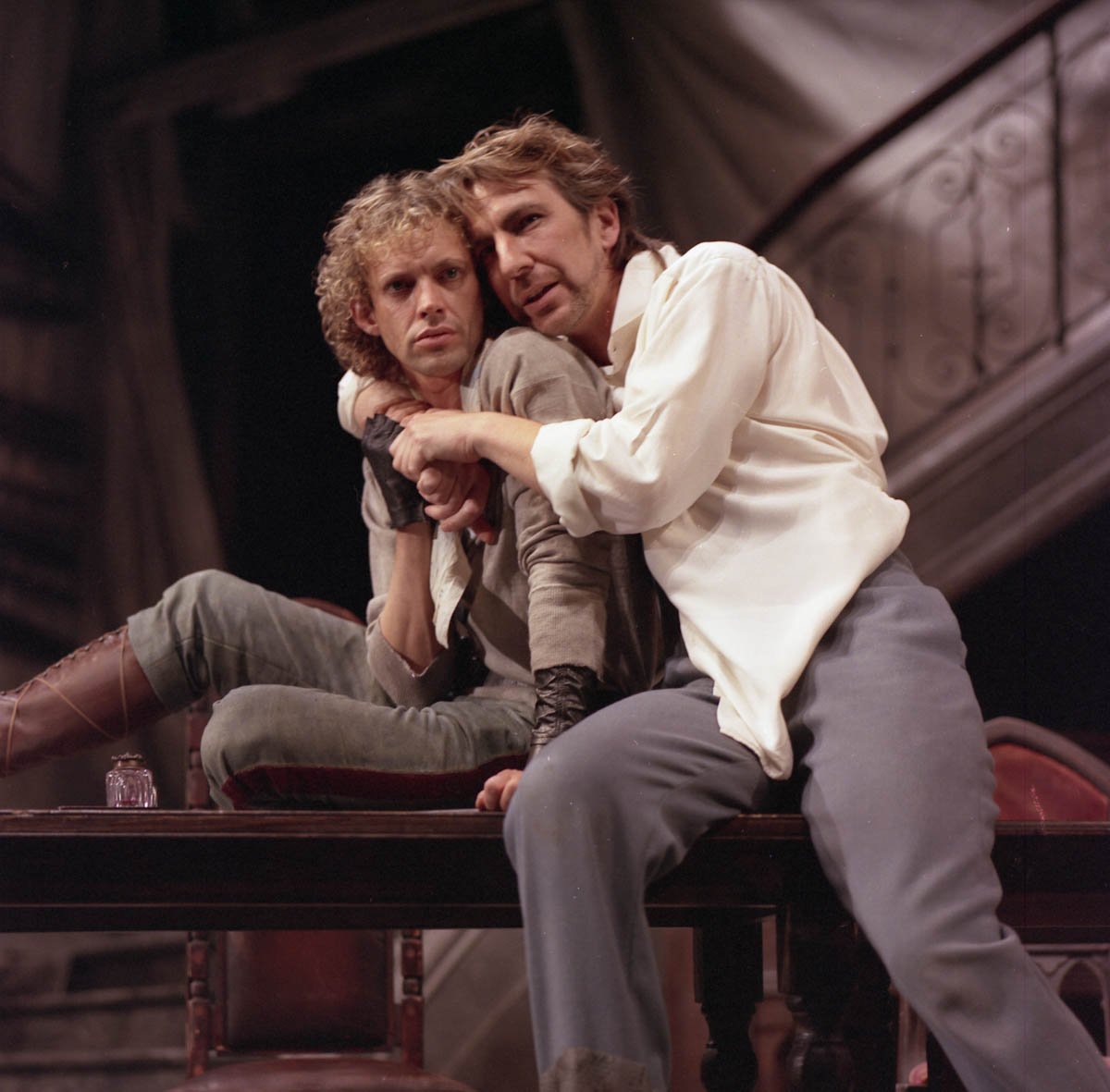
Alan Rickman as Achilles in Troilus and Cressida, Royal Shakespeare Company.

Honorable Mention: David Tennent (Barty Crouch)

To be honest, I thought Tennant was miscast in Harry Potter- he can play villains, (as Good Omens fans know well), but he just isn’t great at being maniacal and evil. That said, Tennant is a rising Shakespearean star and has created many memorable performances from Richard II, to Benedick in Much Ado About Nothing, to Hamlet.

#1: Dame  Maggie Smith (Professor McGonigal)

Say it with me… you probably saw this coming. No one can deny that Dame Maggie’s contributions to Shakespeare, as well as her ubiquitous portrayal of Hogwarts’ current Headmistress Minerva McGonigal, stand the test of time as strongly as the animated chess pieces she placed in the school basement. Let’s look at some of her greatest Shakespearean moments.

Plug for my Acting Class

If you enjoyed this list, you might want to sign up for my Intro to Acting class or my extended acting course, where I delve into Shakespearean acting techniques, and answer the big question, “WHY DO SHAKESPEAREAN ACTORS KEEP GETTING CAST AS WITCHES AND WIZARDS?” To sign up, click the link below: https://outschool.com/classes/609658d1-3f9f-4371-8af2-4fe81ad13d8c

Cover art for my Outschool Beginning Acting Class.

Thanks for reading!

Special Discount For My Online Class:

Scan the QR code to see my list of classes.

This Friday is the grand premiere of my new online class: “Shakespeare: The Lost Play,” where you discover who stole Shakespeare’s play. Below is the latest trailer.

Since I want as many people to play as possible, I’m creating a coupon: Get $10 off my class “Shakespeare’s Lost Play Mystery Game” with coupon code HTHES4OXNY10 until May 8, 2023. Get started at https://outschool.com/classes/shakespeares-lost-play-mystery-game-ny9HhlxI and enter the coupon code at checkout.

My Visit to a Twelfth Night Party!

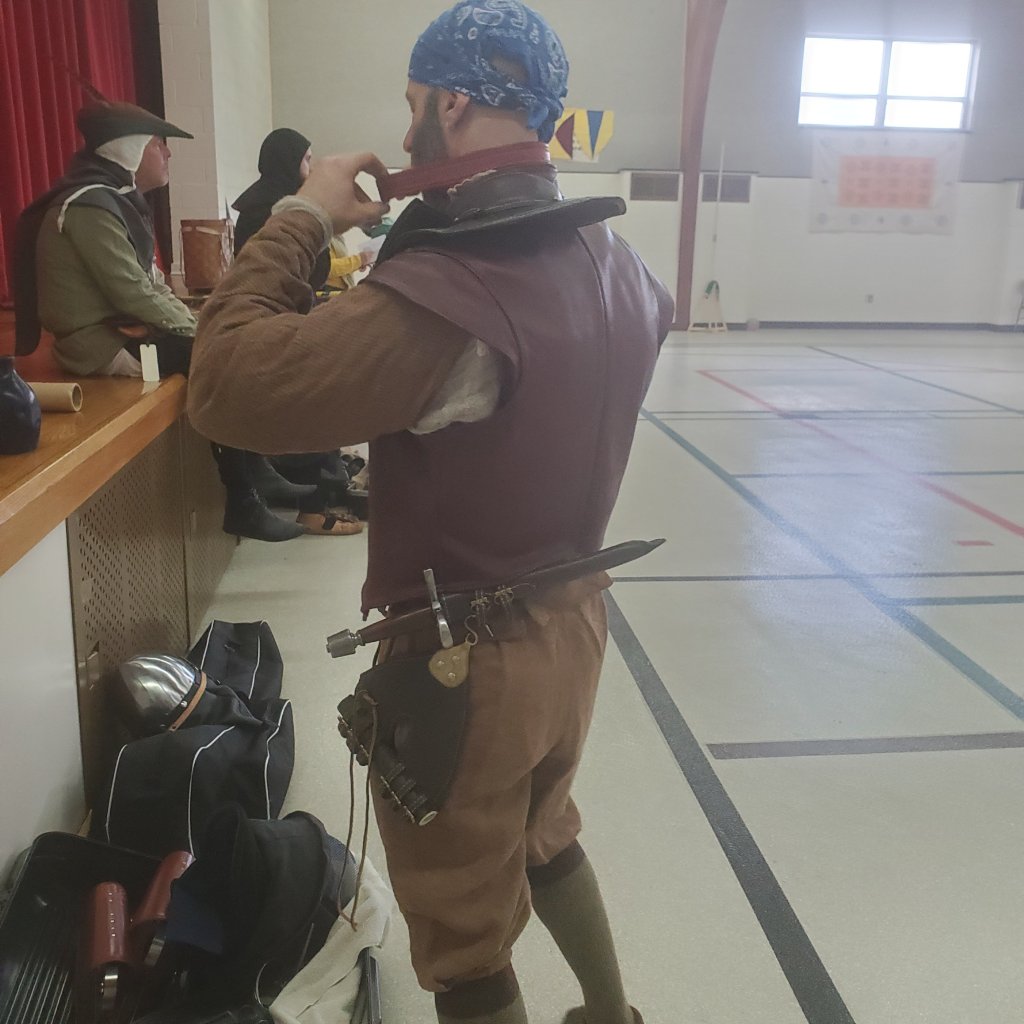
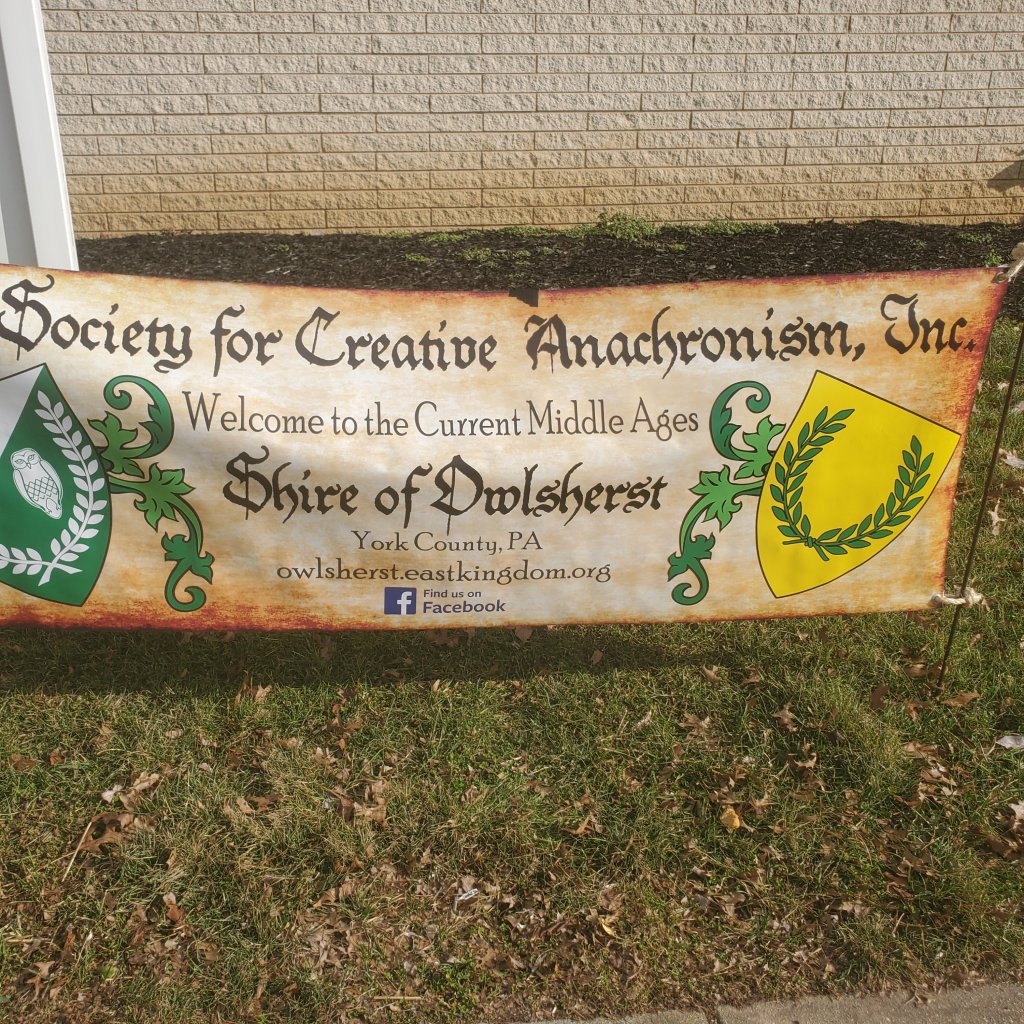
I can think of no better wrapup to my play of the month “Twelfth Night,” than by reporting on my visit to an actual Twelfth night Party, presented by the Society For Creative Anachronism.

What’s a Twelfth Night Party?

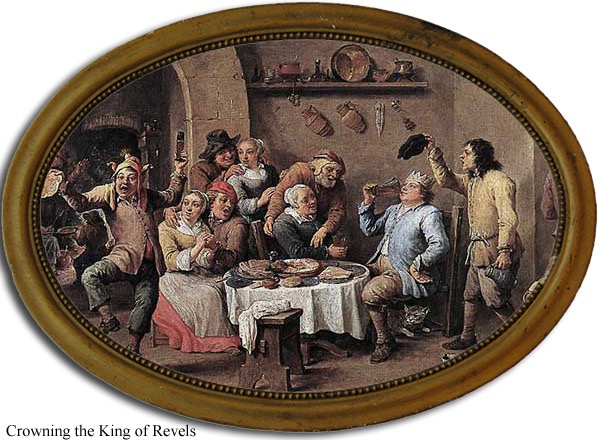
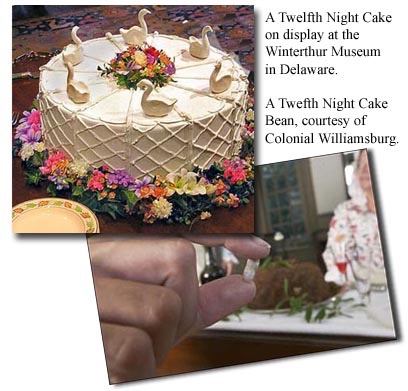
If you took my class on Shakespearean Christmas traditions or read my blog posts, you know that, back in Shakespeare’s day, Twelfth Night was a party to end the Christmas season. It was presided over by a Lord of Misrule, who would lead people in games and songs. The party would also have a Twelfth Night Cake with a bean in the center. If you found the bean, you’d have good luck for the year! So I was pleased to come to a real-life Twelfth Night party and see these traditions come to life!

What is the society for Creative anachronism?

The short answer is- it’s LARPING for history nerds. Rather than creating a D&D persona and then getting arms and armor to play-fight in the backyard, SCA members create personas based on real medieval history, make or buy real historical arms and armor, (or arts and crafts as the case may be) and spend years of their lives studying and perfecting their immersion in that character’s life. SCA-ers learn how to fight with swords, daggers, spears, etc, how to sing medieval songs, medieval dances, and many other medieval ‘mysteries,’ which in this case means arts, crafts, and professions.

The Shire of Owlsherst

Owlsherst is the SCA’s local chapter in York PA. They have a number of dedicated members who specialize in textiles to rapier-dagger fighting. I’ve posted some videos of their fighting demonstrations on Youtube and Tiktok and their archery master has his own Tiktok channel. They hosted this year’s Twelfth Nigh party and have many other events throughout the year. For more information on this chapter, go to https://owlsherst.eastkingdom.org/

My reaction

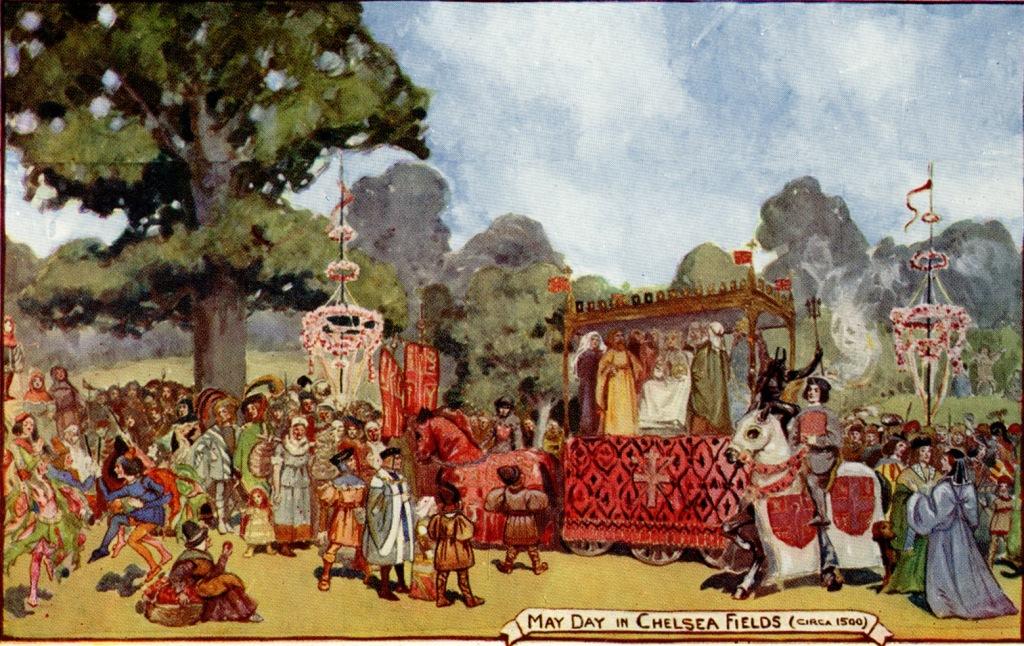
Every SCA event is a great way to celebrate people who are passionate about history and have talents for arts and crafts. Everything from the tapestries to the to the food, to the adorable owl toys, was made by hand by these dedicated people (most of whom brought their own medieval costumes). More members were doing live demonstrations of rapier/ dagger fights, binding books in cow leather, and singing medieval Christmas songs. I was inspired by everyone’s dedication and hard work to put this together. I also wonder if this is how Shakespeare himself felt when, as a child, he went to sheep shearing fairs and saw his friends and fellow artisans put on amateur bible plays on medieval pageant wagons.

That said…

I should warn you that, like a lot of historical reenacting societies like Civil War reenactors, etc, this society is more aimed at hardcore history nerds, than anyone else. This isn’t Medieval Times or a big-budget renaissance fair which is aimed at children and casual fun seekers. As such, it wasn’t really family-friendly. There aren’t many activities for kids and many of the arts and crafts are too delicate for toddlers and young kids. Also, this event isn’t particularly immersive or organized. People mostly just mingled, ate, and watched the various demonstrations. Keep in mind, this is just one chapter and just one event, which means your experience may vary. Nevertheless, because of the organization’s amateur historical nature, I would caution you to manage your expectations. Like I said before, this isn’t some big-budget Disney theme-park ride, but it is a chance for hardcore history nerds to get together, share their knowledge, and celebrate the traditions of a bygone era. If that’s your thing, I highly recommend it!

Great classes are available December 1st.

Scehdule

Class Descriptions:

Basics Of Stage Combat:  Students will learn the basics of safely enacting a fight onstage, in preparation for a Shakespeare play. We will also learn about the history of sword fighting in the military and the duel.

Trailer for Basics of Stage Combat.

My daughter really enjoyed taking this class. She was actually able to use her sabre and try out her routine on her father. Paul is quite knowledgeable about Shakespeare and made the class really fun by teaching a fight scene from Romeo and Juliet. It is amazing watching her practice with Paul over Zoom. I hope Paul will have. more combat classes, it is a different way to learn Shakespeare.

IB, Parent

An Interactive Guide To Shakespeare’s London (New Class)

A virtual tour of Shakespeare’s London will get kids to interact with the culture of Elizabethan England.

Class Experience

To teach kids about the Elizabethan era and the background of Romeo and Juliet, The Instructor will interact with the class (via pre-recorded videos), pretending to be Shakespeare. The class, pretending to be actors in Romeo and Juliet, will get a virtual tour of The Globe Theater, Hampton Court Palace, and a virtual visit to an Elizabethan doctor's office. This activity is an immersive way for them to learn about the period, how it relates to the world of the play, and how Shakespeare changed theater.

The class will take the form of a guided WebQuest activity.  First, the students will get a worksheet that has a series of fill-in-the-blanks about Elizabethan society (below). The students will fill out this worksheet based on a Nearpod and in conjunction with a website I’ve made, https://sites.google.com/nebobcats.org/visit-to-elizabethan-london/home?authuser=0 
Both the Nearpod and each webpage will have a virtual tour, a video, and text explaining some aspects of Elizabethan life. Before they go to each location, I will give a short introduction via prerecorded video:

Wizard Science

In this one-hour course, your child will discover the enchanting world of science through a series of magical experiments. Learn about such topics as Astronomy, Static Electricity, chemistry, and optical illusions.

What was Christmas like For Shakespeare?

In this one-hour course, students will learn and play games that will explore the history behind Christmas traditions. We will also discuss the themes, characters, and famous quotes from Shakespeare’s play “Twelfth Night.”

Intro to Macbeth, “The Scottish Play”

For the spookiest and most cursed month of the year, I’ve chosen Shakespeare’s Macbeth as my play of the Month for October because it’s full of witches, ghosts, and other supernatural creatures. It also shows the terrible effects of fear on people’s minds. Plus, as I explained in my post on Shakespeare and Halloween, most Halloween witches would be all but silent without Macbeth’s witches.

Pages

Play Of the Month: Macbeth

Posts

  1. Crafting A Character: Macbeth
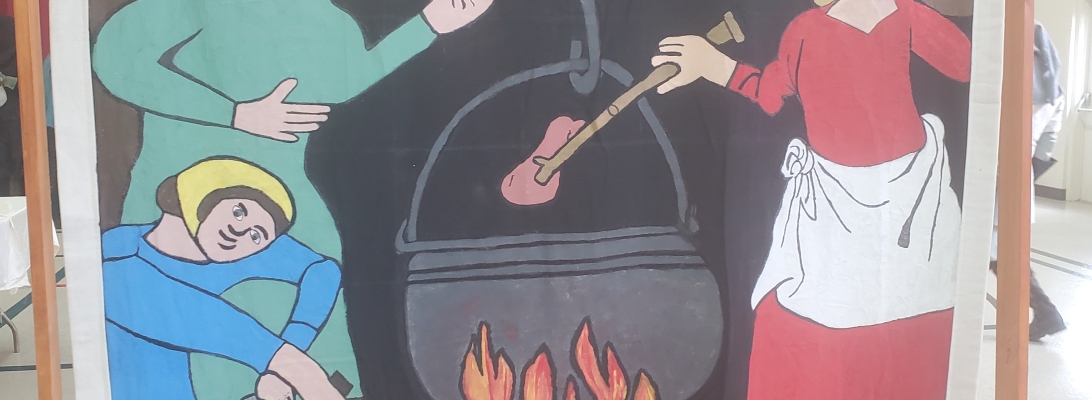
  2. The Witches Of Macbeth
  3. Spooky Shakespeare Stories: The Voodoo Macbeth
  4. Macbeth Escape Room
  5. Sleep No More Review

Podcasts

  1. The Curse Of Macbeth: https://open.spotify.com/episode/7L7cPUX7sl27ByinuBdftv
  2. The Dark History of American Witch Hunts: https://open.spotify.com/episode/3kJzGIa6Bk0MBFVlm30FDr

Videos

Review: Kenneth Branaugh’s Hamlet

It’s hard for me to be objective about this film. I watched it when I was 16, and it started my lifelong love affair with Shakespeare. For the vast majority of people, I feel this movie will not appeal- it’s Shakespeare, it’s set in the past, and it’s FOUR HOURS LONG! That said, I ADORE this movie, and I probably always will.

The Concept

There is a long tradition of actors directing and starring in Hamlet from Irving to Garrick to Olivier and Guilgud. It’s very much an actor’s play and since the lead part also orchestrates much of the action, it’s understandable that he or she would also want to direct.

Once Kenneth Branaugh started filming this film, he had already played the part onstage and as a radio play. Branaugh’s director, Derek Jacobi, was himself a celebrated and acclaimed Hamlet of the 1970s, and Branaugh would later cast him as Claudius in the film. So, once he approached making the film, Branaugh had lots of experience behind him.

Clip from the documentary “Discovering Hamlet” which shows the whole process of Branaugh’s 1990 production, directed by Derek Jacobi.

Much like Antony Sher, Branaugh was aware that any film he made, would probably be compared to Laurence Olivier’s 1948 film. Sir Laurence’s film was dark, gothic, focused on dark, Freudian psychological disorders, and was mostly a star vehicle for Olivier himself.

Short review of Olivier’s Hamlet, (1948).

Branaugh’s concept was to do an inverse of Olivier- his castle Elsinore is bright, more modern, set in a sort of Napoleonic era, with cannons, muskets, and soldiers with mutton chops. While Oliver’s film was a contemplative look at the protagonist’s mind, Branaugh’s film focuses on intrigue and court drama. One of my favorite features of the film is Branaugh’s use of a hall of doors that contain two-way mirrors. In this castle, you never know who’s watching you.

Original theatrical trailer

The setting

While most of the castle was shot at Shepperdon Studious in England, Branaugh filmed most of the exterior shots at Blenheim Palace, the home of the Duke of Marlborough, and Sir Winston Churchill:

https://virtual.blenheimpalace.com/

The Plot Of the Play

https://study.com/academy/lesson/shakespeares-hamlet-character-analysis-description.html

The Controversy- the longest Hamlet ever filmed

Unlike every other Shakespeare movie, Branaugh chose not to cut a single line of Hamlet, which is why his version is four hours long. He chose to use the text of the second Quarto of 1603, the longest edition of the play.

https://www.bl.uk/treasures/shakespeare/playhamlet.html

I am deeply conflicted about this choice. On the one hand, the long run time makes it nearly impossible to show the whole movie in a classroom or a theater. On the other time, like Gone With the Wind or Dr. Zhivago, what Branaugh has done is created an epic full of lush settings, gorgeous music, and incredible performances that will at least always be remembered as an incredible artistic achievement.

The Cast

Hamlet is Shakespeare’s longest part and has 40% of the dialogue, which means Branaugh has the majority of the screen time. Yet, Branaugh isn’t the biggest star in the film. His casting choices emphasize the notion that, since anyone can enjoy Shakespeare, anyone can perform it too. With only two exceptions, I love every performance in the film. Here are some of my favorites:

Nicholas Farrell as Horatio

Nicholas Farell as Horatio

Horatio is a rather thankless part, since mostly what he does is give Hamlet someone to talk to. In one production I saw, they did away with the part entirely and made the audience Horatio. That said, Farell does a beautiful job portraying Horatio’s patience, boundless empathy, and his slow discovery of these “carnal, bloody, and unnatural acts.” Just watch how heartbroken he is as he watches Hamlet slowly die:

Clip of Nick Farell as Horatio from Act V, Scene iii of Hamlet.
Brian Blessed as “The Ghost”

Brian Blessed As “The Ghost”

As I said in my review of “Henry V,” Branaugh usually assigns the core of his cast to his Renaissance Acting Troupe. Accordingly, Branagh cast Brian Blessed as the Ghost of Hamlet’s Father. Brian already is a physically imposing man (he’s actually climbed Mount Everest), and we see through flashbacks that when he was alive, the former king was a powerful, warlike ruler, yet tender to his wife and son.

As the ghost, however, Blessed seems shaken to his core, which might be due to the pain he suffered as a result of the murder, or (as I mentioned in my Shakespeare On Ghosts Post), he might also suffer in the afterlife because Claudius killed him while he was sleeping. Seeing such a powerful man worn to a whisper and full of pain and fear, is a great way to spur Hamlet to his revenge.

Charlton Heston as the player king

When the company of players arrive in the middle of Act II, Scene ii, Hamlet is filled with joy and treats the Player King like an old friend and surrogate father. I’ve seen productions where the same actor plays the Ghost and the Player King, which helps drive this point home.

In the play, the Player King inspires Hamlet with a passionate speech. Hamlet muses how, while the Player is able to conjure emotion and tears when talking about the fictional Queen Hecuba, Hamlet has done nothing yet to revenge the Ghost. Then, thinking about the Player’s performance gives Hamlet the idea to stage a play-within-a-play, to test whether or not Claudius is guilty:

About, my brain! Hum, I have heard
That guilty creatures, sitting at a play,
Have by the very cunning of the scene1665
Been struck so to the soul that presently
They have proclaim'd their malefactions;
For murther, though it have no tongue, will speak
With most miraculous organ, I'll have these Players
Play something like the murther of my father1670
Before mine uncle. I'll observe his looks;
I'll tent him to the quick. If he but blench,
I know my course. Act II, Scene ii, lines 1663-1674

With all this in mind, The Player King is very important to Hamlet’s journey and Heston’s mighty delivery is inspiring and full of passion.

Robin Williams as Osric

Robin Williams as Osric

It seems like an insane idea; cast a stand-up comedian in a Shakespeare movie? Yet, in fact, the late Robin Williams was a classically-trained actor and studied at New York’s Julliard academy, so he must have done Shakespeare in the past.

Branaugh clearly loved working with Williams. Not only did he keep all of Osric’s lines (like all the other lines in the play), Branaugh gave Williams more to do, making him basically a second Horatio who cares for Laertes in the final act of the play.

Usually Osric is played as a classist-joke. He’s a sychophant, a social climber who, because he wasn’t born a noble, the nobles treat him as a suck-up and a fool. Williams gives Osric much more warmth and depth, in addition to his manic charm. Branaugh even gives him a tragic death, to make him stand out even more!

Kate Winslet as Ophelia

Five film versions of Ophelia compilation.

I summarize Ms. Winslet’s performance in one word: Heartbreaking. In Oliver’s version, she seems like an airhead, and Helena Bonham Carter plays the part as sort of a rebellious teenager. Winslet’s performance is just as if not even more tragic than Branaugh’s and it is truly heartbreaking to see her journey.

In the 1990 stage production of Hamlet, Jacobi decided to turn “To Be Or Not To Be” from a soliloquy into a speech that Hamlet says to Ophelia, which then plants into her mind the ideas of madness and suicide that she herself follows to their tragic conclusion. In Branaugh’s film, it seems very clear that he gave Winslet that same direction, (even though the speech is filmed like a soliloquy). Before “To Be” and the subsequent “Get Thee to A Nunnery” scene, Winslet’s Ophelia is happy, sweet, obedient to the men in her life, but still her own person. We see in flashbacks her sneaking off to be with Hamlet and she seems to enjoy her secret romance. Probably Branaugh pulled some ideas from her role in Titanic too. But Polonius and Laertes shut her down at every turn and keep her from being with Hamlet. Winslet shows beautifully Ophelia’s struggle to be an obedient daughter and Hamlet’s girlfriend.

In the “Get Thee To a Nunnery Scene,” it’s not clear whether Hamlet knows he’s being watched (at first), so when he speaks to her gently, he might be trying to get her to leave to protect her. But once Polonius audibly closes a door, Hamlet is full of mysogynistic fury. Again, he might be playing mad in order to deceive Claudius and Polonius, or he might be genuinely mad at Ophelia for going along with this attempt to spy on him, but in any case, It certainly breaks her heart, and Winslet plays that heartbreak with a great deal of skill and passion.

Billy Crystal as the Gravedigger

Billy Crystal as the Gravedigger

Again, it seems bizarre to cast an American comedian as a Shakespearean character, but Crystal did a great job making this 400 year old comic bit seem like he wrote it himself! Plus, Crystal listens very quietly and attentively during the “Alas Poor Yorrick” speech, and doesn’t pull focus.

Kenneth Branaugh as Hamlet

Even though this was a four-hour Shakespeare movie of a play I had not yet read, at 16 I was hooked by Branaugh’s performance. Like Olivier before him, Branaugh knows Shakespeare’s reputation as being boring and out-of-touch, so his film is full of violence, sex, and manic energy. This also comes across in his own performance. Branaugh lost weight and dyed his hair to appear younger and attractive (since he knows Hamlet is supposed to be just out of college). He fills the mad scenes with a dark and silly sense of humor, and he plays the angst of Hamlet in Act One very much like a grieving teenager, lashing out at his stepfather and his mother.

That said, Branaugh is also capable of great depth and gravitas in the soliloquies. I particularly love his delivery of “How All Occasions Do Inform Against Me…” soliloquy in Act IV.

The long tracking shot makes it look like Hamlet is expanding his worldview as he contemplates his role in the play, after failing to avenge his father’s death. It’s almost like this young man is growing up in the course of the movie; from a confused and angsty little rich kid, to a man who would make a good king if his life wasn’t tragically cut short.

For a more sober audience, Branaugh’s energy could probably be seen as annoying and lacking subtlety, but for 16 year old me- I ate it right up.

Notable Moments

  1. Branaugh’s interpretation of “To Be Or Not To Be.” Every actor who takes on Hamlet frets over the problem of how to make this speech engaging and fresh. Fortunately, Branaugh did a great job of staging and delivering this speech for the screen. He uses the two-way mirrors brilliantly creating an atmosphere of suspense where Claudius and Polonius are watching this speech, but it’s not quite clear whether Hamlet knows they’re there. His delivery is hushed but intense. It seems like he’s trying to unnerve Claudius without letting him know Hamlet plans to murder him. Everything from the performance, to the filming, to the setting is iconic, and no matter what people think of the film, this version of the speech should be remembered as an achievement in and of itself.

2. Kate Winslet In “The Mad Scene” Just as “To Be Or Not To Be” is the test for any Hamlet, Ophelia’s greatest challenge is the Mad Scene, Act IV, Scene v. After her brother leaves, and her boyfriend is banished for murdering her father, Ophelia has nothing left to lose, except her mind. Many actresses play the mad scene as a chance for Ophelia to let loose, and explode with all the pent-up emotions she’s been repressing- rage, sexual desire, grief, etc. Winslet plays all of them and is very distinct when and why they hit. She refuses to let the men in the court touch her, except for Laertes, and seems disgusted by Claudius. With her brother, she seems to regress into a childlike state, pretending to hold flowers to give to him. The only lucid moment she has is when she quotes songs (simmilar to the Fool in King Lear), where she expresses sorrow that Hamlet abandoned her, grief for her father, and a nihilistic sadness that her life no longer matters, much like the frustration Hamlet expresses in “To Be Or Not to Be.”

Kate Winslet in the mad scene, (Act IV, v)

3. All of Act II, Scene ii. I found myself rewatching this scene, the longest scene in the play. It’s the scene where Polonius claims Hamlet is mad for Ophelia’s love, where Rosencrantz and Guildenstern spy on Hamlet, the Player King delivers his aforementioned speech, and Hamlet has his “O what a rogue and peasant slave am I” soliloquy.

Every performance is fast-paced and entertaining. Even Don Warrington, as the often-cut character of Voltimand, who only gives one long speech about how Fortinbras is totally NOT GOING TO INVADE DENMARK, captivated my ear with his beautiful voice. The drama keeps coming as new characters keep coming in and interacting with Hamlet, and his mood changes drastically throughout the scene; he’s silly and condescending to Polonius, jovial to the players, guarded and brooding to Rosencrantz and Guildenstern, and tortured and full of grief and remorse once he’s finally alone.

Branaugh actually starts the soliloquy with Hamlet taking a series of huge, heaving breaths as if performing for all of these people is truly exhausting. It’s almost like a movie within a movie, and everyone is wonderful in it.

4. The Duel As I detailed in my post on the duel at the end of Hamlet, there are three separate bouts which each have a different feeling- ranging from a sporting fencing match to a deadly blood combat. Branaugh shows the character shift of the duel incredibly well, with his use of music, choreography, and costume. First, the combatants meet before the king, dressed in their white fencing uniforms. Their fight is quick and agressive, but not yet tense or lethal. Then, once Gertrude takes the poisoned cup, the action stops. Claudius is frozen and his voice is only a whisper. Laertes starts to ramp up the tension as he prepares to really attack Hamlet, which he does by slashing his uncovered shoulder!

The climactic duel between Hamlet and Laertes, with Hamlet, finally taking revenge on Claudius (Derek Jacobi).

From this moment in the duel, all Hell brakes loose. Branaugh chases Michael Maloney all around the castle, not stopping until he grabs Laertes’ sword. Meanwhile, Osric shouts for help as Gertrude is dying near the throne. A string quartet ramps the music up up to a wild, whilrling low-pitched tremulo, with the violins playing pizzicato on top. Plucking their strings like the lethal poison that plucks all the characters’ lives.

My Reaction

Even though this film is long, I adore every scene. Branaugh’s boundless energy and endless love of Shakespeare translate through his direction and performance. At the same time, he lets the other actors shine and takes to heart the lessons of Olivier, Gielgud, Jakobi, and others to create a Hamlet that is epic in scale, beautiful to the eye, and timeless in its handling of the material. Clearly, Branaugh wanted this film to be his masterpiece, and whether you like it or not, it certainly is that.

My advice is If you choose to watch it yourself, read a summary of the play first, then watch the film. Also, take some breaks in between the scenes and watch it in chunks. I actually taped it off of live TV so I could watch it in segments.

If you like this analysis, you might be interested in signing up for my Outschool Course on Shakespeare’s Tragedies. I also have a class on Shakespeare’s writing where I analyze “To Be Or Not to Be:”