Titus Andronicus is one of the most bloody, disgusting plays in Shakespeare. As this infographic from the Royal Shakespeare Company shows, there are tons of deaths and some of them are even the result of cannibalism!
One way to capture the macabre nature of this play in the classroom, (which some scholars see as a horror comedy), is to characterize it through cooking, after all, revenge is a dish best served cold.
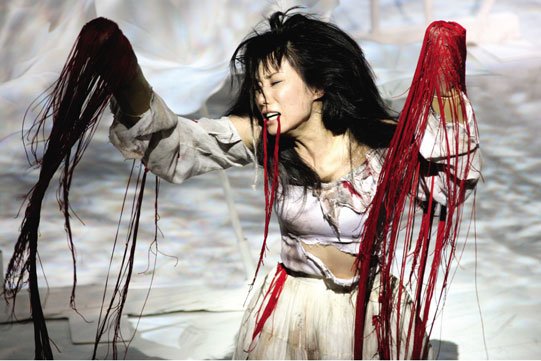
Me in costume as Titus Androgynous, a crazy cooking show host who butchers two people in the same manner as Titus
So here are some ghoulish gourmet dishes and revolting recipes that you can share with your students to help them get into this tragic tale of violence, revenge, and cooking:
Idea 1: recipe cards
Design a recipe card like the ones in cooking magazines based on Titus speech where he murders Chiron and Demetrius
Idea 2: Create a menu that summarizes the play:
Act I:
Starter: Caesar Salad, toad in the hole
As the play begins, Caesar has died and Saturnine wants to devour his father’s empire. Enjoy this light salad in anticipation of far more bloody feasts to come.https://youtu.be/UxZ5NOkRwj0
Act II Scene 3: Breakfast:
Lamb Benedict
Lamb Benedict recipe I found on Reddit
While on an early morning hunting trip, Bassianus is slaughtered like a lamb by his own nephews. Enjoy this sweet treachery with a golden egg in the hole.
Act II, Scene 4: Main course:
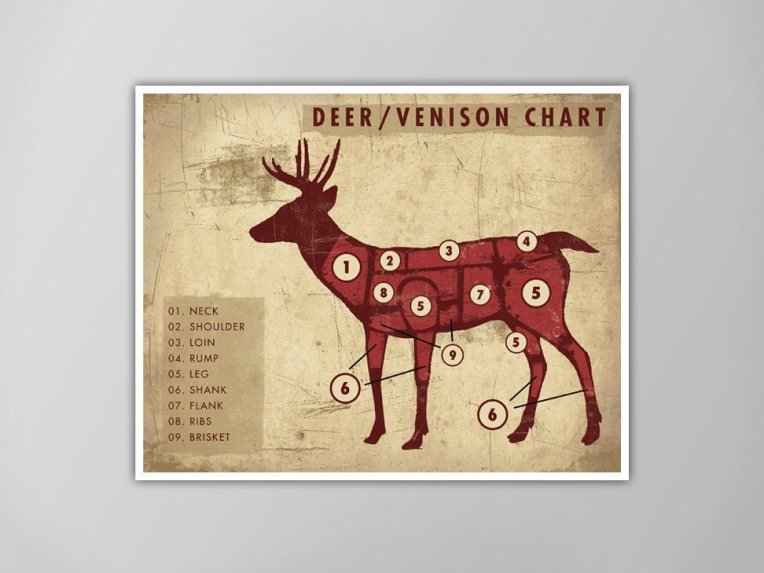
Roast venison with all the trimmings
“As the deer that hath some unrecuring wound.”
“She was washed and cut and trimmed.”
Titus compares his daughter to a deer or welkin, and in the play’s most barbaric scene, the emperor’s sons ravish her and cut out her tongue. They enjoy the cruel rape and mutilation just like two starving lions enjoying their prey.
Act V:
Just desserts: people pot pie.
“More stern and bloody than the centaur’s feast,” A truly unforgettable dessert for this feast of carnage. The cook, Titus, reinvents the term rich food by cooking two emperor’s sons into pies.
Served cold, like revenge!
“Set him breast deep in Earth and famish him.”
Idea 3: Real Titus foods inspired by my favorite Halloween diy recipes
Or this grisly appetizer: cheese hand in prosciutto
3.
People Pies:
There are many horrific pie recipes on the internet, but for a busy teacher on a budget, I’m adapting this one from the YouTube channel Threadbanger: https://youtu.be/E6U6xUl3A5M. Don’t show this video to your students because there’s far too much cursing. That said this recipe is very cheap and it’s easy. He used only store bought items and no fancy cooking techniques, which means if you choose to bake it as a classroom activity, even your students can help make it. Here are some tips from the video to get the most horrible ppeople pie you can make:
• Use red filling like cherry or strawberry for filling.
I designed this on an app called “GooseChase”, appropriate since Shakespeare invented the term!
If you click on the link, you can do a great scavenger hunt where you upload pictures or answer trivia questions for points, and of course they are all related to Shakespeare. If you have the app on your phone, search for Shakespeare Birthday Scavenger Hunt and enter the code: 2BON2B (Get it, to be or not to be)! You can also use the code NLEGVM. Let me know if you like it or if you cannot access the link.
If you’re reading this as I post it, there’s a Shakespearean nerd in your life and your wits are about to turn trying to find a gift. I’ve already written about printed editions of Shakespeare and educational apps, so you can consult those if that’s what you are looking for. Now I’m covering the kinds of stuff that die-hard Shakespeare fans will kill a king and marry with his brother for, basically nerdy swag that no Shakespearean fanatics should be without!
For anyone: Immortal Longings.com- This company is very special to me. If you’ve seen any of my Play Of the Month posts, you’ve seen the gorgeous artwork for Shakespeare’s plays by the artist Elizabeth Schuch. Not only do I love her work, my wife and I put her prints on the decor for our wedding day, and wrapped some of my presents in wrapping paper with her designs on it. If you go to her website, she sells Shakespearean art printed on and inspired by Shakespeare’s plays on everything from tapestries to clothes to iPhone cases. I highly recommend checking her work out, and patronizing it as much as possible: https://society6.com/immortallongings/s?q=popular+framed-prints
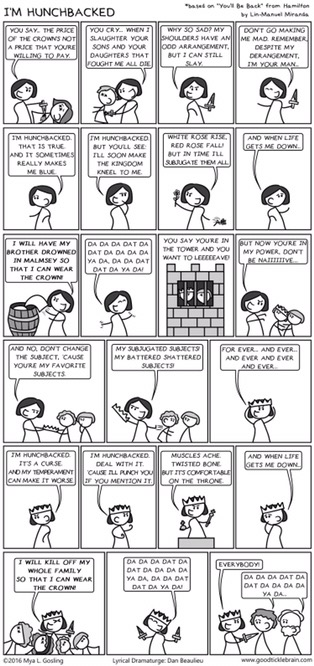
I also want to give a shout-out to the website Good Tickle Brain, a weekly Shakespearean comic that satirizes the Bard’s work with love. I feel the best way to introduce anyone, young or old to Shakespeare is through a healthy dose of satire and parody. Mya Gosling loves Shakespeare and it comes through in her simple, funny retellings of his plays. If you go to their shop (spelled Shoppe to appeal to nerds like me), you can get some of her comic books, funny T-shirts, and a few educational posters for teachers too: https://goodticklebrain.com/shoppe/
Adults
The Bard game This is the Monopoly for Shakespeare Nerds- each player pretends to be a theater manager putting on plays in real locations where Shakespeare’s company toured during his lifetime. You make money by reciting speeches or improvising one in the Shakespearean style, or by answering Shakespearean trivia questions. A must-have for any Twelfth Night Party! Review of the game: https://boardgamegeek.com/boardgame/12372/shakespeare-bard-game https://boardgamegeek.com/boardgame/12372/shakespeare-bard-game
Bards against humanityMost people know the raunchy card game where you try to encapsulate a disgusting word or phrase with a description written on your card. Well, there’s a Shakespeare version too! It makes sense that someone made a card game inspired by the king of the Elizabethan put-downs, (and the inventor of one or two modern curse words!)
Wine🍷 Though I was unable to find actual wine with Shakespeare’s name on it, practically every other part of the wine drinking experience has been branded with Shakespeare- wine bags, glasses, corks and bottle stoppers, and even whole bars! If you spend a few minutes looking online, you can find tons of Shakespearean wine merch. By the way, here’s a convenient list of quotes Shakespeare wrote about alcohol: http://www.shakespeare-online.com/faq/shakespearedrinking.html
Pen and ink There’s a lot of good versions of pen and ink with Shakespeare’s name on them. Imagine the fun you can have writing sonnets with your own Shakespearean pen and ink!
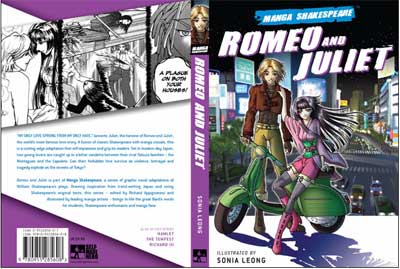
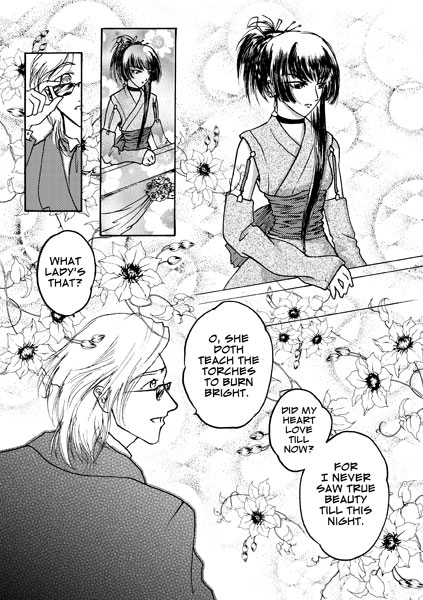
The title page of the clever comic book, “The Manga Shakespeare”
Shakespearean Comic Books. I’ve written reviews about some of these books and I’m very impressed by the artwork and the clever adaptations. Click here to read my review of the Romeo and Juliet Comic.
Kids
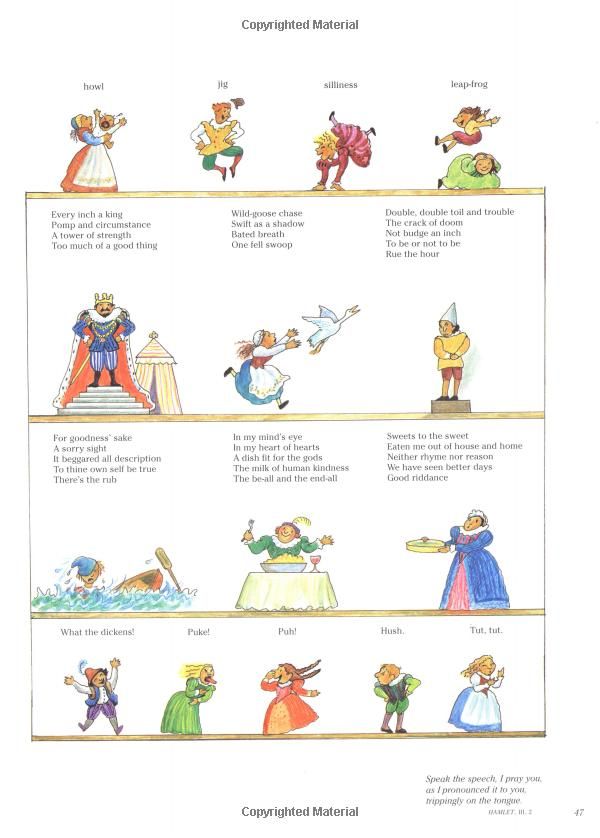
Pop-Up Shakespeare by the writers of the Reduced Shakespeare Company. I’m a huge fan of The Reduced Shakespeare Company and they have created an amazing new popup book for kids of the entire Shakespearean cannon!
Barbie and Ken as Romeo and Juliet. Ok, so this is a bit of a stretch, but hey, I’d get it for my daughter.
Board books 📖 Yes, even toddlers can get into Shakespeare. I actually read this to my daughter a lot. It’s not the story of the play, but it does introduce some of the characters and famous lines which can help a child to become familiar with Shakespeare.
Cover of “King Of Shadows,” an excellent Young adult novel for anyone who loves Shakespeare.
King 👑 Of shadows (Ages 8-12) This is an excellent young adult novel that teaches a lot about Shakespeare’s theater and the time period in which he lived. For a complete review, click here:
This was one of my favorite books growing up. It tells the story of Shakespeare’s life and work, with special attention to the creation of the Globe Theater in 1599. It’s gorgeously illustrated and a great read for kids!
So there are some gift ideas for the Shakespeare nerd in your life. Merry Christmas!
Here’s one more gift that you could give a Shakespeare nerd ages 13-18: A class from ME!
Go to my Outschool profile and Get $5 off the following classes:
War and soldiers come up a lot in Shakespearean plays. After all, he wrote six plays about the Wars Of The Roses. Though most of his work is about the decisions about war made by powerful monarchs, occasionally he gives us some insight into the lives of common soldiers.
We don’t know if he ever fought, but warfare was very much on his mind at the beginning of his career, with good reason. In 1586 The Spanish armada attacked. Was Shakespeare enlisted? We don’t know.
His early plays are generally positive toward soldiers and it’s easy to see why. The growing nationalism in England resulting from the Tudor control over religion and language —was a direct and defensive reaction to the ex-communication of the Tudor monarchs (particularly Henry VIII and Queen Elizabeth. Shakespeare probably saw himself —
. He no doubt saw his role as building the epic sagas of England to remind his countrymen of England’s past victories, especially during the Spanish Armada and the later Irish Rebellion of 1599.
Shakespeare cashed in with 9 plays on English history that mainly take place on the battlefield. His plays were met with praise by audiences and critics:
“How would it have joyed brave Talbot (the terror of the French),” he wrote, “to think that after he had lain two hundred years in his tomb, he should triumph again on the stage and have his bones new embalmed with the tears of ten thousand spectators at least (at several times).” -Thomas Nashe, c. 1590.
In the first tetralogy, common soldiers don’t have any voice. Probably they were played by apprentices, and fencing masters. They were mainly set dressing. Shakespeare mainly focuses on the pivotal importance of leadership and his portrayal f leadership; he understood the consequences of the choices kings make during the war and its effect on millions of common people: like Talbott and King Henry the Fifth.
I want to analyze a short selection from Henry the Fifth, Act IV, Scene I. In this scene, the king is disguised as a commoner the night before a battle to see what his soldiers really think about him, and the impending fight with the French. An outspoken soldier named Williams tells him that if the fighting is wrong, the king is responsible for his soldiers’ deaths, and has to answer for the atrocities that happen during the war:
KING HENRY V
methinks I could not die any where so contented as in the king’s company; his cause being just and his quarrel honourable.
WILLIAMS
That’s more than we know.
BATES
Ay, or more than we should seek after; for we know enough, if we know we are the kings subjects: if his cause be wrong, our obedience to the king wipes the crime of it out of us.
WILLIAMS
But if the cause be not good, the king himself hath a heavy reckoning to make, when all those legs and arms and heads, chopped off in battle, shall join together at the latter day and cry all ‘We died at such a place;’ some swearing, some crying for a surgeon, some upon their wives left poor behind them, some upon the debts they owe, some upon their children rawly left. I am afeard there are few die well that die in a battle; for how can they charitably dispose of any thing, when blood is their argument? Now, if these men do not die well, it will be a black matter for the king that led them to it. King Henry V, Act IV Scene I.
Many productions of Henry the Fifth interpret this speech as Shakespeare’s attitude towards war, (a tempting prospect, since the soldiers’ name is William), but in the very next speech King Henry completely changes Williams’ mind! Here’s the full scene from Kenneth Branaugh’s 1989 movie version of the play, which he directed and starred as King Henry:
Since this is national poetry month, I thought I’d talk a little bit about Shakespeare’s poetry. Shakespeare wrote 154 short love poems called sonnets. What follows is kind of a do-it-yourself poetry manual that would be great if you want to write a poem for a spouse or a loved one for Valentine’s Day, Christmas, Mother’s Day or any other time, to show that you care. Sonnet writing has been a time honored tradition for showing the people we care about just how much they mean to us.
If you’ve never written a sonnet , don’t worry, the kind of sonnet Shakespeare wrote is pretty easy to write, and it follows just a few simple rules. I don’t want to lie; it takes a lot of patience and thought to craft a sonnet, but the rules are easy to follow. So let’s get to it!
What Is A Sonnet? A sonnet is a short poem that’s only 14 lines long, written in what is called Iambic Pentameter, Shakespeare’s preferred form of poetry. I’ve written before about Iambic Pentameter, but just to be clear it’s a 10 syllable line that goes da-Dum- daDum-da-Dum-daDum-daDum. So all you need is 14 lines that follow a particular rhyme scheme. You’ll notice that in the sonnet above, every other line rhymes except the end. This is called an ABAB rhyme pattern, and it is the trickiest thing about writing a sonnet. One reason Shakespeare has this rhyme pattern is to draw your attention to the last two lines, then draw the sonnet to a close with the simpler rhyme of the couplet.
Sonnet Form A sonnet’s 14 lines are arranged into three short groups or quatrains which are four lines long. Usually around line 9, there is a kind of “turn” or change in the direction of the argument, like at line 9 in Sonnet 8 above, where Shakespeare stops talking about summer, and starts talking about the person to whom he’s writing. If it helps, you can think of this as the “But…” part of the sonnet, because it’s the part where he changes the argument using the word “but,” (and what a but it is). The sonnet then concludes with two rhymed lines of Iambic called a rhymed couplet. These last two lines are a way of wrapping up the main idea of the poem in a short, catchy way.
Step by step Tips and Tricks:
Start by planning out your sonnet.
It’s often useful to consider your sonnet like a speech or a short argument. The three quatrains give you a chance to come up with an idea, then develop the idea, and then come to a conclusion, much like any other form of persuasive writing that you might’ve had to do for English class. For example, Sonnet 8 pictured above, (one of Shakespeare’s most famous sonnets), begins with the question: “Shall I compare the to a summers day?” He then goes to flatter the person he’s writing about by talking about how much better they are than a summers day, saying that actual summers are too windy and too hot, and the flowers of the summer are all too brief. By contrast, Shakespeare argues that the subject of the sonnet has beauty that will last forever, particularly if that person goes on to have children. This is the form that Shakespeare sonnets often take and I would advise you to try and make your sonnet into a clear argument.
Example Of Sonnet Writing: Since Mother’s Day is coming up, if you wanted to write about the mother of your child, and thank her for her for being there for your child, you might want to structure your sonnet by using the three stanzas to express three simple ideas like:
1. Thank you for being the mother of our child(ren)
2. A specific time she did something awesome for your child (give examples!)
3. Thank you from you, me, and our child(ren).
Tip 2: Plan Out The Rhyming Couplet: As I mentioned before, the last two lines of every sonnet are called a rhyming couplet; two lines of iambic pentameter that rhyme together and help conclude the sonnet. Just like a English paper, a good conclusion is very important, which is why it’s it’s often useful to work on this these two lines first before you get into writing the meat of your sonnet. For example, here’s a couplet I wrote about preparing breakfast in bed and doing chores for one’s wife on Mother’s Day.
All chores this day will I do in thy stead
Commence I shall with breakfast in thy bed!
Tip 3: Writing Poetry Now that you have the ideas you want to express now comes the hard part: putting them into poetry. I often find it helps to just get a piece of paper, write as much as possible to express the three ideas in your sonnet in prose, then get down to translating your ideas into iambic pentameter.
Quick Tips to help you along:
Make sure the important words are on the right beats. Remember, in a normal Iambic line, every other beat (2, 4, 6, 8, and 10) are emphasized. This means the important words/ sylables need to be on those beats. You might have to invert the order of a word or two to keep those beats clear. like I did in my couplet when I wrote “will I do” instead of “I will do”
You don’t have to use iambic in every line. Shakespeare was never a slave to a particular verse form, and a whole poem in iambic pentameter can sound a little dull sometimes. This is why, if you really want to, you can change a line or two to emphasize different beats
Trochees A clever way to wake up your audience is to start off with a few regular iambic pentameter lines, and then change it to a line where the first beat is the one that’s important. Like a dance or song that suddenly changes tempo, this creates a sense of excitement in the reader.
Spondees Sometimes you can emphasize two syllables at the same time, as Shakespeare does in lines 1 and 3 of Sonnet 8. You wouldn’t pronounce “Shall I” as “SHALL I or shall I,” and the phrase “rough winds” demands that both words are important, so Shakespeare is clearly changing the verse a little just to make the poetry more interesting.
Tip 4: Use Literary Devices: I find Shakespeare very often tried to express an idea by using metaphor and allusion to create images in the listeners mind. Sonnet 8 which we’ve been discussing, is structured around creating a contrast between the speaker and a pretty day in summer. You can do this kind of flattering comparison yourself, but, as we’ve seen, it’s often useful to put a “but” in the argument around line 9, to make it clear that you love the person more than for example a warm summer day. Imagine getting a sonnet that claims that someone loves you more than ice cream!
Sometimes Shakespeare uses contradictory images in his poetry for dramatic effect. Romeo often and talks about “Oh brawling love, O loving hate”. He uses this to express the wildness of his passion. This is called antithesis, and it’s very useful when you want to add a little spice to your poetry. Try comparing your beloved to both ice and fire! Alliteration and assonance: Remember, Shakespeare wrote for the theater not for people reading in the book this is why he often plays with words that sound a particular way and worked very hard to come up with sounds that would grab a listeners attention rather than readers. When a word when several words start the same letter it creates a sense of order and gets the readers attention. Assonance is when consonants are repeated within the middle of a line.
Useful Websites when you’re working
Rhymezone.com– a convenient online rhyming dictionary
Thesaurus.com– useful if you need another word that fits into iambic better.
Kotsheet.com- a website for teachers with lots of useful worksheets to help you organize your sonnet. Useful for writing or teaching sonnets!
I hope this post was helpful. If you have any questions, please comment, or email me in the “Ask the Shakespeare Guru” page. If you write any sonnets yourself and wish to share them on this site, let me know and I’ll gladly re-post them!
Till Next Time,
-The Shakespearean Student.
References
The Sonnets Edited by Rex Gibson. Cambridge University Press, 1997.
The venerated Shakespearean actor, Sir Antony Sher, once said with frustration while he was acting at the RSC that, “even the best Feste is less funny than the worst Malvolio.” I actually have a rare insight into these two roles since I’ve played them both! So allow me if you will to present you with some insights I’ve gained into these two characters that are very much polar opposites. Although they are as different as night and day, they form the central comic premise of the whole play, and have some truly hilarious moments!
Me. as Malvolio, Wooster. High School 2002
I played Malvolio when I was a senior in high school; he was my first principal Shakespearean role. My director chose to set the play in the 1940s and he re-purposed the kingdom of Illyria as the Hotel Illyria, with Malvolio as the concierge or lead butler in charge of all the hotel maids and other housekeepers. This not only made the play more accessible to a 2002 audience, it also really helped me understand Malvolio’s role: he is first and foremost a snob who is obsessed with efficiency and pleasing his mistress Olivia (in this version the owner of the hotel). I would soon also discover that, although Malvolio is certainly snobby and can be a bit of a killjoy, he also has qualities that make him appealing to everyone who has ever felt put down or bullied, and that’s what makes him a complex and endearing character today.
Richard Briars as Malvolio
Some notes on the character: Malvolio’s name means “unsatisfied desire”- somebody who aspires to be what he is not. I find the relationship between Feste and Malvolio interesting because the two are partially defined by how each one is unlike the other. Feste is a clown, hired by the nobles to help them have a good time. He is described as “a merry fellow who cares for nothing.” In other words, Feste never takes anything seriously, except making a living with his jokes and songs. Malvolio is the exact opposite- he is also a servant, but he is a steward, in charge of running the Countess Olivia’s household. As such, he is obsessed with efficiency, commanding respect, and pleasing his mistress through his obsequious manner.
Like the Joker and Batman, both characters live according to an opposing viewpoint; Feste is a chaotic, happy-go-lucky sort, while Malvolio has a strict code of behavior which he expects everyone to follow. Their opposing world views bring them into conflict every time they meet. Plus, in most productions Feste is wearing brightly colored clown apparel or “motley wear,” while Malvolio is dressed in black. I’m not saying Malvolio is anywhere near as cool as Batman, but Malvolio can be just as sanctimonious. His journey is how he goes from being the trusted household servant, to a raving madman, to at last the Spectre at the feast at Olivia’s wedding.
I think the appeal of the character, which balances out the aforementioned snobbery, is that Malvolio is also a nerd: he dreams of becoming a count, he tries to make friends, but he does so by working far too hard at his job and not knowing how to fit in. This is why we inevitably feel sorry for him at the end of the play when he begs to know why his tormentors have locked him in a dark room, treated him like a lunatic, and made him think his lady was in love with him only to utterly destroy his hopes. The balance between the Nerd and the Snob that makes Malvolio a universal and complex part, and that’s why some of history’s greatest actors have played it!
Prepping for the Role: Alec Guinness, Laurence Olivier, Patrick Stewart, Donald Sinden, Nigel Hawthorne, Richard Briars, Steven Fry- these are just some of the names of actors who have played this part over the years. The first actor to play the role was Shakespeare’s leading actor, Richard Burbage, who also played Richard III, Hamlet, and Macbeth. Here’s a sample from Burbage’s famous eulogy, which mentions some of his most famous parts:
A Funeral Elegy On the Death of the Famous Actor, Richard Burbage,
He’s gone, and with him what a world are dead,
Friends, every one, and what a blank instead!
Tyrant Macbeth, with unwash’d, bloody hand,
We vainly now may hope to understand.
Brutus and Marcius henceforth must be dumb,
For ne’er thy like upon the stage shall come,
Vindex is gone, and what a loss was he!
Frankford, Brachiano, and Malevole.
One big decision that every Shakespearean actor needs to make is how to approach their role in a different way. To be honest, I was kind of a thief with my Malvolio- one of the first things I did was read a book by actor Sir Donald Sinden where he talks about how he delivered Malvolio’s first line, which occurs in Act I, Scene iii:
Olivia. What think you of this fool, Malvolio? doth he not mend?
Malvolio. Yes, and shall do till the pangs of death shake him:
infirmity, that decays the wise, doth ever make the 365
better fool (Act I, Scene v).
Sinden described his first line as a snobby “nyess,” as if he were simultaneously bored and embarrassed by Feste’s jokes. The director told me to act around Feste as if I were the villain in a Charlie Chaplin movie- basically to bully Feste and make him feel very small with my lines, in order to justify the revenge Feste innevitably takes on him. Like any character in Shakespeare, this is only one way to play the role, so you don’t have to agree with me.
The Gulling Scene
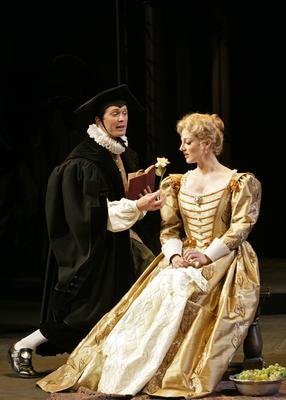
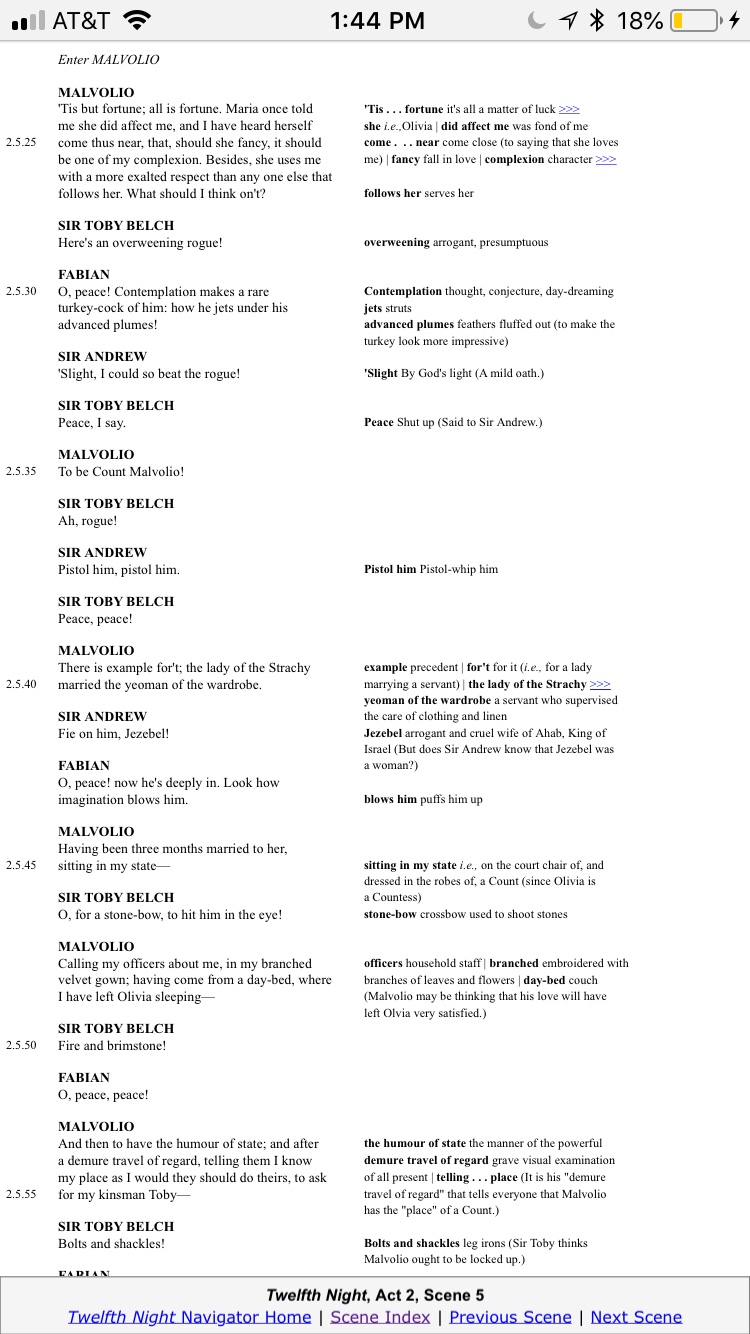
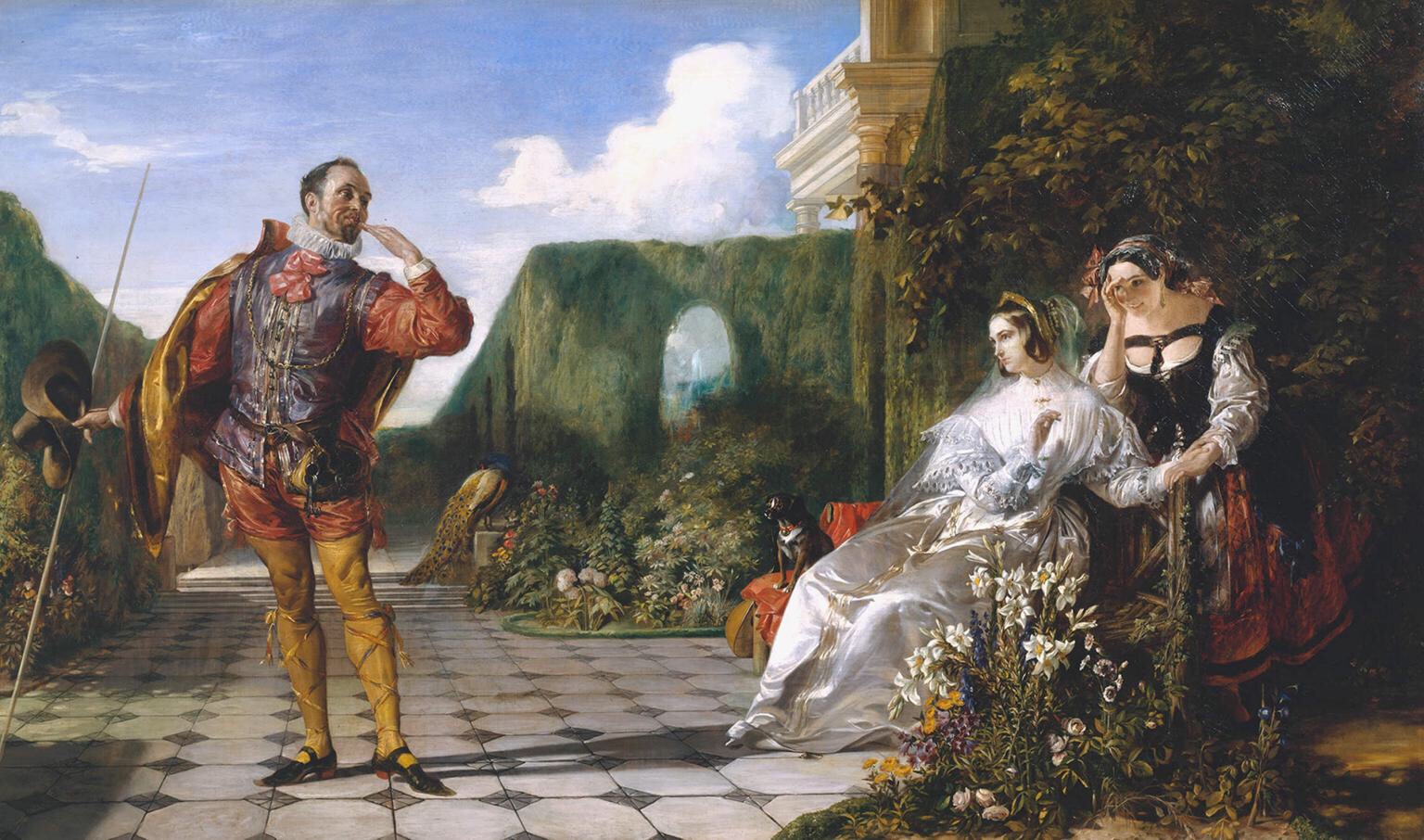
Malvolio’s most famous scene is called “The Gulling Scene,” the scene in which he’s tricked into thinking Olivia is in love with him. This is the moment where Malvolio goes from being a respectable prudish servant, into a raving madman. He enters full of dreams and plans to become “Count Malvolio” and creates an elaborate fantasy of what his life would be like if he married the Countess.
No sooner does Malvolio compete his fantasy of marrying Olivia, when lo and behold, a letter from her suddenly appears! Of course, the audience knows it’s all a trap and even worse, Sir Toby, Sir Andrew, and a boy named Fabian are watching him! It’s a moment of exquisite comedy that’s nearly impossible to get wrong.
One question I had when I did the scene was whether Malvolio really loves Olivia, or just loves her riches and her title. As a high schooler, I chose to believe that he really does have a crush on Olivia, but is too socially awkward to tell her. Having the letter is a chance to make his feelings known, which Malvolio can get very genuinely excited about! On the other hand, as you can see above, Malvolio might just be greedy to make himself even more respected and admired, and to have the power to throw out the likes of Sir Toby, Sir Andrew, and Maria. Malvolio’s revenge fantasy is also fun to watch, since we know he’ll be punished for it later.
Part of the fun involved in the scene is that it’s basically a “play within a play,” a device that Shakespeare used to great effect in Hamlet, A Midsummer Night’s Dream, Love’s Labor’s Lost, and both parts of Henry the Fourth. I think it’s the charm of seeing a character as he really is, Malvolio shows you his fantasies and creates a whole world in the middle of the orchard. Meanwhile, you feel complicit as you watch the people watching him, who could just as easily be part of your audience.Workshop on Twelfth Night and Bullying
On the other hand, the scene has also been called an example of bullying, since Sir Toby and Maria are using the letter to manipulate then humiliate Malvolio. Remember, Malvolio dresses like a fool and act like a fool in front of Olivia in Act III because he believes it will please the Coubtess. Basically Toby and Maria are Catfishing Malvolio, which can seriously hurt psychologically, as anyone who has been deceived over the internet knows. Plus, it ruins Malvolio’s reputation as you can see in this clip:
Again, as a teenager, I could certainly relate to a man making a fool of himself in a vain attempt to impress a girl. Seeing a man lose his head over a girl and then have her break his heart over a prank, is in some ways truly terrible to watch; even Olivia agrees by the end of the play that the joke has gone too far.
Malvolio. Madam, you have done me wrong,
Notorious wrong.
Malvolio. Lady, you have. Pray you, peruse that letter.
You must not now deny it is your hand:
Write from it, if you can, in hand or phrase;
Or say ’tis not your seal, nor your invention:
You can say none of this: well, grant it then
And tell me, in the modesty of honour,
Why you have given me such clear lights of favour,
Bade me come smiling and cross-garter’d to you,
To put on yellow stockings and to frown 2550
Upon Sir Toby and the lighter people;
And, acting this in an obedient hope,
Why have you suffer’d me to be imprison’d,
Kept in a dark house, visited by the priest,
And made the most notorious geck and gull
That e’er invention play’d on? tell me why!
Olivia. Alas, Malvolio, this is not my writing,
Though, I confess, much like the character
But out of question ’tis Maria’s hand.
And now I do bethink me, it was she 2560
First told me thou wast mad; then camest in smiling,
And in such forms which here were presupposed
Upon thee in the letter. Prithee, be content:
This practise hath most shrewdly pass’d upon thee;
But when we know the grounds and authors of it, 2565
Thou shalt be both the plaintiff and the judge
Of thine own cause.
That’s the tragic part of Malvolio’s journey. We’ve all known a Malvolio, and we’ve all been him from time to time. That’s what makes him such an enduring character.
Part One: The Invitation:Tradition says the 12th night does not actually start until nightfall on January 5th; it’s the celebration of the night when the wise men finally got to Bethlehem, so make sure you you’re clear on that in the invitation. If you need help on designing clever 12th night invitations, view my previous post on creating Valentine’s Day cards!Part Two: The FeastTraditionally celebrated with, (as Sir Toby puts it), “cakes and ale,” there’s a lovely recipe for a 12 night cake below.Picture/ recipe is available here: Jane Austin.com: Twelfth Night cakeA Twelfth Night cake is basically a fruitcake stuffed with spices and dried fruit, that symbolizes of the three kings that came from the orient to Bethlehem all those years ago. One game you can play with your guests is putting a bean in the center of the cake. Tradition holds that whoever finds the bean has good luck for the coming year.The alternative version favored in France and Switzerland, is made of puff pastry, egg, and rum. Here’s a recipe I found on food.com: Swiss Twelfth night cakeMusicSinging is a big part of 12th night as evidenced in this scene where sir Toby, Mariah and Sir Andrew start singing songs: Act II Scene III I have taken the liberty of putting down all the songs from 12th night and some YouTube clips of my favorite renditions.Hold Thy Peace, Thou Knave (Shakespeare Songbook)O Mistress Mine (2011)Come Away Death(2014 Shakepeare in the Park SoundtrackHey Robin, Jolly Robin ( Shakespeare Birthplace)I Am Gone Sir (Stratford Shakespeare Festival 2011)The Wind and Rain (Alabama Shakespeare Festival)Games
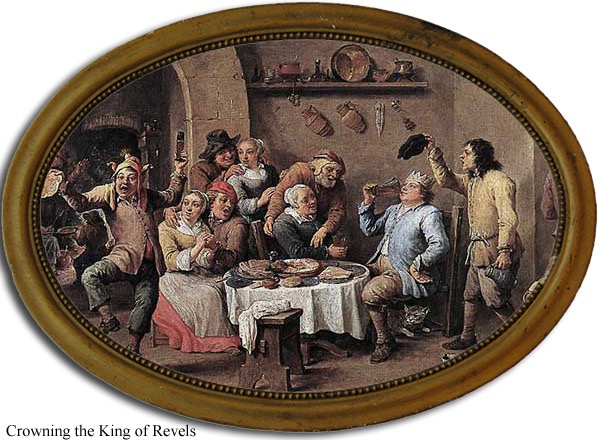
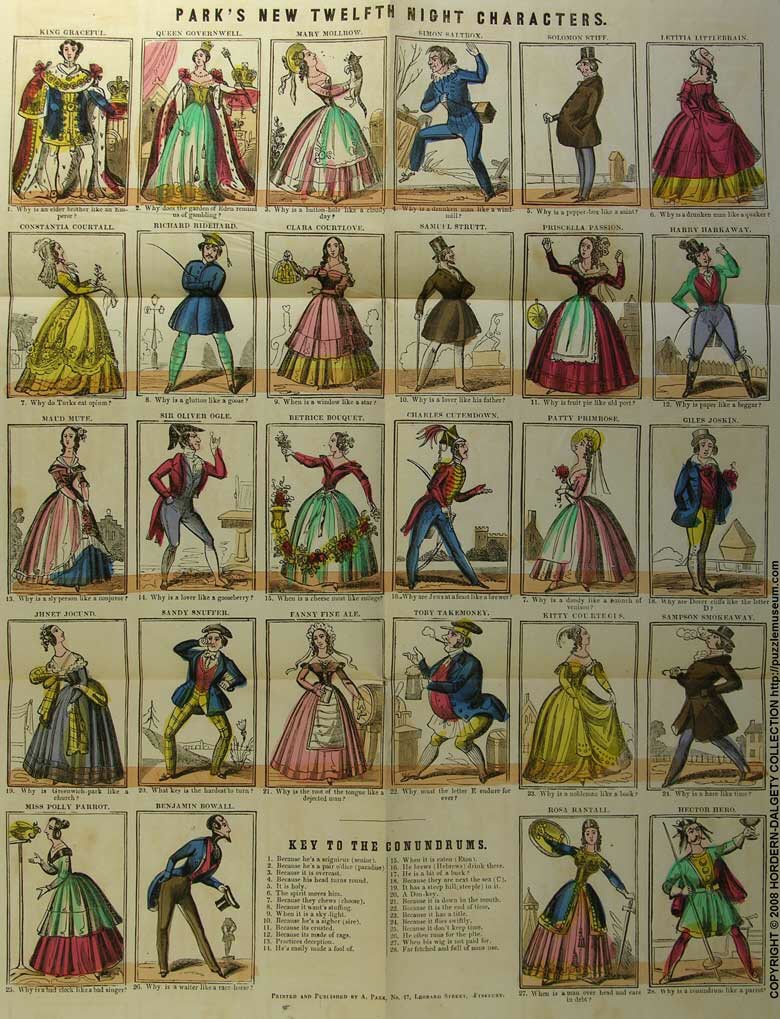
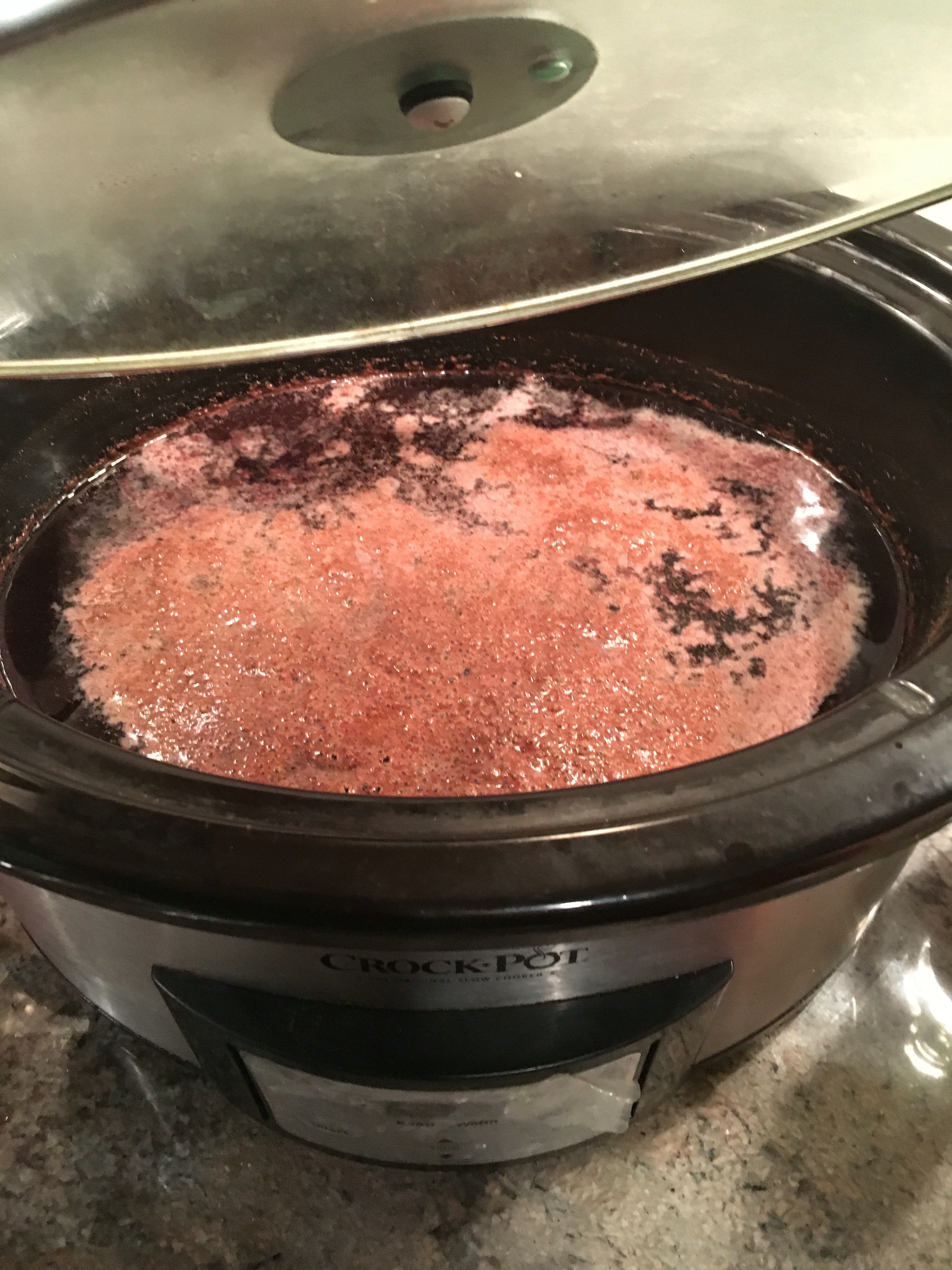
As I’ve mentioned in my previous posts one big part of the Christmas season was appointing a lord of misrule, and ancient tradition that goes back even before Christian times. In the play 12th night Feste basically serves as Lord Of Misrule; he presides over all the games and songs in the house, and he helps Sir Toby baffle Malvolio. In real life a Lord of Misrule presided over each Twelfth Night celebration, choosing which games and dances everyone would engage in.Most early Twelfth Night celebrations included a masked ball. In the 18th century, merrymakers engaged in a sort of role playing game, where they drew a character based on a popular archetype like the soldier Charles Cuttemdown or Beatrice Bouquet, and had to act like that character the rest of the night. Finally, a holiday that encourages you to LARP!Wassail.As I mentioned in my previous post wassail was the quintessential winter beverage and 12 night was not an exception. In this post you can see some photos of me actually making wassail myself in accordance with a trip up recipe I found on the food from the food network’s Alton Brown.Alton Brown Wassail recipe I didn’t have Madeira wine so I substituted port, but otherwise I used all the ingredients he mentioned in the recipe.Like I said in the previous post, Wassail is derived from an old word meaning “lamb’s wool,” and you can see why when you see the frothy mixture on top.I served this wassail to my in laws on Christmas night, and the only complaint I got was that the weather was a little too hot to enjoy it. I can personally attest that wassail warms you right down to your toes, which is great if you’ve been out caroling in 17th century England, but indoors during the hottest Christmas on record, it was a little uncomfortable- I was already wearing shorts and I was still too hot. My advice is- if you get a white Christmas, enjoy your wassail, but if it’s 60 degrees outside, stick to ale or Madeira, or some other kind of spicy spirit that you can serve
Well, that’s my advice, happy Twelfth Night everyone!Update: I’ve adapted the material from this post into an interactive, multimedia online class for kids aged 13-18! It will cover Elizabethan Christmas traditions and the plot and themed of Twelfth Night. You can register now at Outschool.com!Sources:Brownie Locks.com- History of Twelfth Night Catholic Encyclopedia: Feast of Fools Jane Austin.com: Twelfth Night Celebrations Lost Past Remembered: Twelfth night Why Christmas.com: the Twelve Days of Christmastime Project Britain: Twelfth Night http://projectbritain.com/Xmas/twelfth.htm
Merry Christmas Eve everyone! Today I will be talking about how Shakepeare’s two royal patrons, Queen Elizabeth I and James I celebrated this holiday!
We have surviving records that prove Shakespeare and his troupe performed at Christmas during the reigns of Queen Elizabeth and King James I. The buildings still exist so we can imagine what Shakespeare’s performancesal at court might have looked like. What follows is a bit of historical detective work, with a nice holiday flavor to boot.
How did Good Queen Bess celebrate Christmas?
Like her predecessor Henry VIII, Her Majesty Elizabeth accepted presents from the nobles on New Year’s Day instead of Christmas morning. From all over the kingdom, people would bring the best and most extravagant presents to the queen, hoping to gain her favor at court. Take a look at this true case of what her favorite courtier, Robert Dudley gave the queen for Christmas in 1588:
Dudley gives Queen Elizabeth a wristwatch
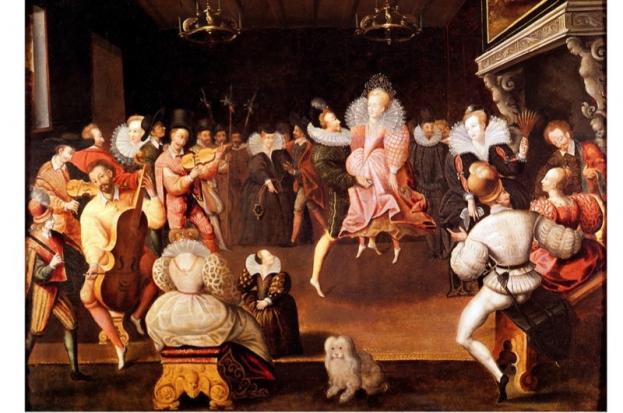
Unlike her dad however, Elizabethan Christmas was a more elaborate affair than a week of sitting and feasting. Yes, Gloriana had elaborate feasts, but she preferred to impress her nobles and visiting dignitaries with dances, jousts, and plays. She was an accomplished dancer and poet, and she loved court masques.
A masque is sort of like a combination masked ball and performance art piece. The nobles would put on costumes and masks and enact a historical or mythological event, like “the Golden Age Restored,” a masque Ben Johnson wrote for Twelfth Night in 1616. The intent was to flatter the queen and her court, as well as having a good time. Of course, Liz still made time on the dance floor for Shakepeare’s company!
.
How the plays were performed:
The plays would be in a large empty hall like the banquet hall or dance hall. Probably the tables would be removed from the feasting, then the dancing would begin. At around 10PM, the actors would take their places. There might be a makeshift tiring house, which was mainly just a curtain that the actors could hide behind to wait for their entrances.
The queen or King would be sitting on a throne on a raised platform so that she or he could be clearly seen by the actors and the audience. Which plays did They Perform?
In 1594 The Lord Chamberlain’s Men played before the Queen at Greenwich Palace. Alas, we don’t know which plays they performed this time. What follows is a list of the plays we do know Shakepeare’s company played at Christmas.
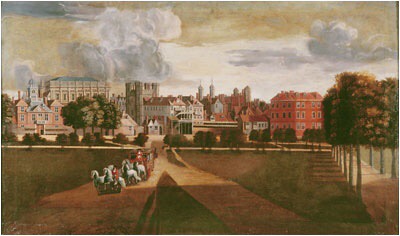
Whitehall Palace by Dankerts, 1675.
Love’s Labors Lost– 1597 at Whitehall palace. This time we know which play they performed before the Queen, because it’s listed right on the title page. I suspect that printing where the play was performed was designed to fire the imagination of the people who bought it. If you couldn’t be at court to see Shakespeare’s play, you could at least read his words and imagine you were there.
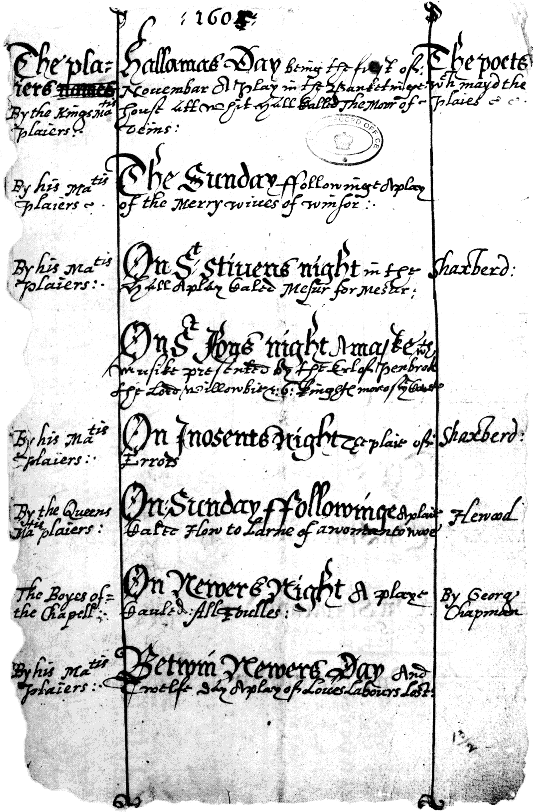
James I invited Shakepeare’s company to perform at Hampton Court many times. Below is an account of the plays for the Christmas holiday in 1603. Notice that Shakepeare’s name is spelled “Shaxberd.”
Here’s a list of some more plays we know Shakepeare’ performed at Christmas:
Midsummer Nights Dream- 1603 on New Years Day, Hampton Court.
Measure for Measure on Boxing Day 1603, Hampton Court.
King Lear on Boxing Day 1606.
Twelfth Night- Candlemas (Feb 2nd 1602).
Twelfth Night 1618 and 1619 (location unknown).
Below is an episode of the incredible documentary “In Search of Shakepeare.” The first twelve minutes show what Christmas might have been like at Hampton Court in 1603, the first year of King James’ reign.
James loved plays and masques even more than Liz, which is why he employed one of the greatest scenic artists of all time, Inigo Jones, to come up with extravagant stage designs and costumes for plays and masques. James’ Queen Anne Of Denmark performed in quite a few masques herself. James also treated the Christmas season as a time of charity, which might have inspired some of the lines in King Lear, which was performed ‘on the feast of Steven’ 1606:
“Poor naked wretches… who soer you are. I have taken too little care of this.” -King Lear, Act III, scene I (The Storm Scene).
We can recall the contrast between King Lear and Good King Wenceslas. In the scene I quoted earlier, Lear laments that he hasn’t been more charitable to the poor, now that he himself feels cold and homeless.
The Christmas season would carry on until oh January 6, aka Twelfth Night. This was the day when, according to Christian tradition, the Three Wise Men finally got to Bethlehem and delivered their presents. Shakespeare’s play Twelfth Night is all about celebrations of feasting, fools and clowns, and of course, epiphanies.
If you liked this post, please consider signing up for my new online class, “What Was Christmas Like For William Shakespeare?” I’ll go further into the traditions of Elizabethan Christmas and add some insight into Shakespeare’s play “Twelfth Night.” Register now at Outschool.com!
Well, Christmas is almost here; soon many of us will be traveling home to celebrate the holidays with our families, enjoying parties, presents, carols, and decorations. However, our modern traditions weren’t always the norm for people who celebrate Christmas. In the interest of historical curiosity, we here at Shakespearean Student would like to talk a little bit about how William Shakespeare might’ve celebrated Christmas!
As with everything in Shakespeare’s life, many times scholars have nothing but “what if’s” to go on, because few records exist, there were no photos from the period, and very few documents survive related to Shakespeare. He also kept no journals or diaries to record what his life might’ve been like. However, based in the holiday traditions of England that have lingered on to this day, we can surmise what Christmas might’ve been like in the late 16th century.
Part 1: Stratford
Shakespeare was born in 1564, in the town of Stratford-Upon-Avon in the county of Warwickshire England. As I mentioned earlier, Shakespeare would not have known many of our modern Christmas traditions. The Christmas Tree as we know it didn’t come into being until Queen Victoria’s reign, (and she certainly didn’t light hers with electric lights). Victoria also invented the idea of putting presents under the tree. I’m not an expert on Christmas, but my research would indicate that probably Elizabethans like Shakespeare didn’t even give out presents on Christmas Day! Instead, in country towns like Stratford in Tudor times, Christmas was a time of feasting, singing, caroling, and theatre!
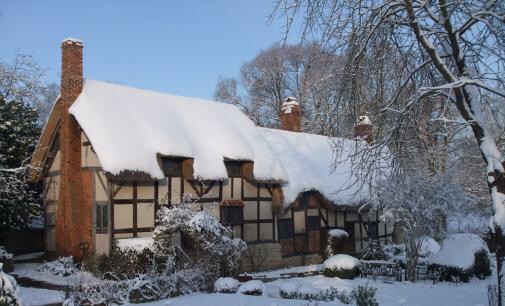
The Shakespeare family home at Christmas
The Christmas season in Shakespeare’s day usually extended from Christmas Eve to the twelfth night after Christmas also known as Twelfth Night or Epithany. Common people usually decorated their homes with holly and ivy, and celebrated Christmas Eve by lighting their homes with candles and by burning the Yule log, an ancient tradition dating back over 1,000 years when the Vikings controlled most of England. It was a symbol of light and warmth in the darkest time of the year.
Replica of Shakespeare’s kitchen.
Feasting-
Roast goose was a staple of the common man’s feast at Christmas. In 1588, Queen Elizabeth commanded the whole country to consume geese to commemorate England’s victory over the Spanish Armada. Other traditional fare included plum porridge, beer or ale, and the most celebrated Christmas beverage of all: Wassail!
Wasailing-
The old tradition of caroling comes from an ancient pagan holiday tradition of showing charity to the poor at the winter solstice. People would go door to door asking for alms and occasionally a warm beverage. This ancient practice evolved into caroling and Wasailing!
The word “wassail” is an old Celtic word that means “lambswool,” it refers to the fact that the drink is covered with a thin foam that looks kind of like the wool of a sheep. It is also derived from the Anglo-Saxon “wassail,” which means “be in health,” so it is simultaneously a drink, a toast, and an explanation of what the drink looks like.
Like our modern-day caroling, people would sing and dance going door to door asking for a traditional glass of wassail or a mince pie. A mince pie is a traditional meat pie that is often filled with 12 different ingredients to symbolize the 12 days of Christmas.
Mince pies were popular with both peasants and kings, and contains both fruit and different types of meat including rabbit chicken duck and hare.
Wasailing also has its roots in ancient pagan holidays and that’s why it’s often accompanied with a traditional Morris dance, where the dancers are waving handkerchiefs, knocking sticks together and dancing with brightly colored ribbons. This was a great tradition back in the small towns and shires of England and continues to this very day. Below you’ll find a video where you can make some wassail yourself! I Just a note that in this recipe, the cook has left out the alcohol and has also left out the egg which is necessary to create the foamy lambswool. Nonetheless I think it’s a very good recipe and I welcome you to try it for yourself.
Plays–
As the mayor’s son, young William had a VIP pass to see all traveling actors who came to town. Shakespeare’s dad would’ve decided who got to perform at the guild halls and local inns, so he and his son would’ve watched private performances of all the shows first. After that, John Shakespeare decided who got to perform, and who would be sent away. In addition to professional troupes at Christmas, craftsmen in Will’s hometown people in Warwickshire would come together and put on a show! These amateur dramatic pieces were known as Mystery Plays.
Mystery Plays got their name from the old meaning of mystery: a trade or skill. Much like modern nativity plays or community theaters, every year all the craftsmen from the town would put on a series of short shows derived from Bible stories at Christmas time, and showcase their crafts as well as their acting talents. For example the goldsmiths were in charge of the Three Wise Men story.
We know that Shakespeare liked these plays because he refers to one in particular many, many times: The play of King Herod. in the Bible, Herod The Great is fearful of the baby Jesus and sends his soldiers to kill any young baby that they can find in the city of Jerusalem. Very often when Shakespeare refers to any of his villainous characters he describes them as Herod-like.
The Mysteries were printed during Shakespeare’s lifetime and people in York, Coventry, and Wakefield England still perform them today! Here’s a video of a little girl who performed in the York Mystery play last year:
I hope you enjoyed this little sojourn into the ancient traditions of the common folk back in Shakespeare’s England.
If you liked this post, please consider signing up for my new online class, “What Was Christmas Like For William Shakespeare?” I’ll go further into the traditions of Elizabethan Christmas and add some insight into Shakespeare’s play “Twelfth Night.” Register now at Outschool.com!










 If you click on the link, you can do a great scavenger hunt where you upload pictures or answer trivia questions for points, and of course they are all related to Shakespeare. If you have the app on your phone, search for Shakespeare Birthday Scavenger Hunt and enter the code: 2BON2B (Get it, to be or not to be)! You can also use the code NLEGVM. Let me know if you like it or if you cannot access the link.









 What Is A Sonnet? A sonnet is a short poem that’s only 14 lines long, written in what is called Iambic Pentameter, Shakespeare’s preferred form of poetry. I’ve








 Sources:



![Candleglow%20PR%20small[1]](https://shakespeareanstudent.com/wp-content/uploads/2015/12/candleglow20pr20small1.jpg)


 The Shakespearean Student