In this section, I review a Shakespeare book, movie, or TV show that I feel has some kind of value, either as an interpretation of Shakespeare, or a means to learn more about the man and his writing.
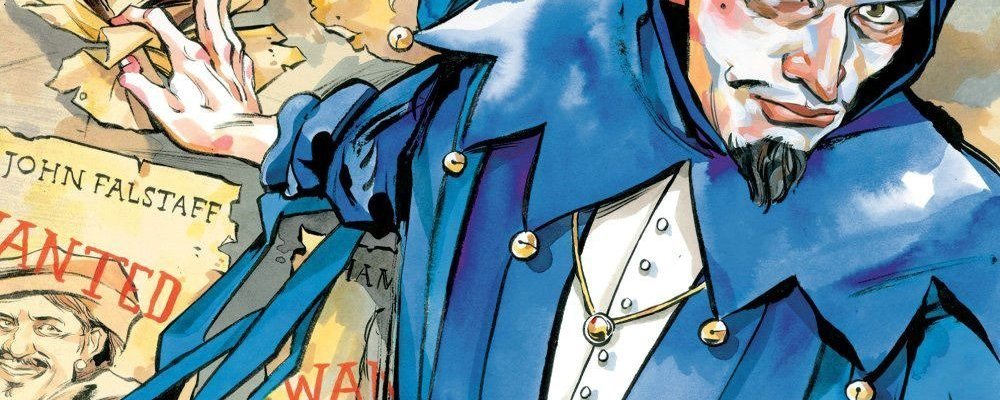
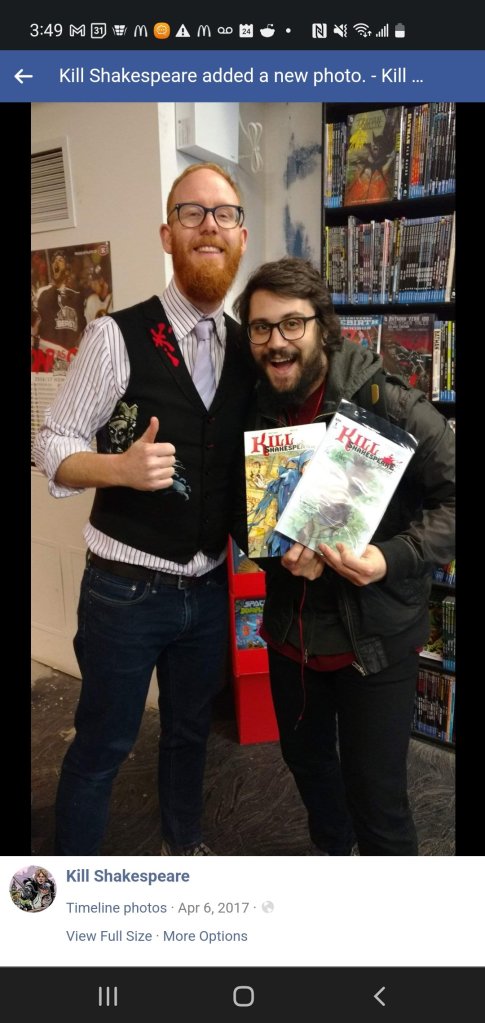
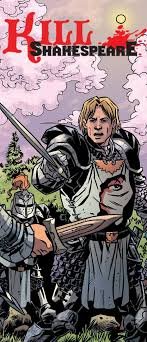
Name: Kill Shakespeare (Vol. 2) by Connor McCreery and Anthony Del Col
Ages: Adult/ Teen. There’s some PG-13 language and a lot of fighting and gore, so it’s not really for kids
Premise: William Shakespeare is more than just a simple playwright- he has a magic quill that brings his characters to life. Some of the characters worship him like a god or like a father. Unfortunately, others (namely, the villain characters), are unhappy with their stories and want revenge, causing a civil war led by Richard III, Macbeth, Lady Macbeth, and Iago (who is once again, betraying Othello). Our heroes include Juliet, Othello, Falstaff, Hamlet, and Captain Cesario (who is actually Viola from Twelfth Night in disguise). Can the heroes defeat the villains? Can Shakespeare save his precious creations from destroying each other before it’s too late?
My reaction: In essence, this graphic novel is like Season 4 of one of my favorite TV shows, Once Upon A Time. The premise is that an ordinary writer is given the power to create living characters, some good and some evil. In fact, in Once Upon A Time Lore, Shakespeare WAS one of the Authors in the OUAT universe
Basic Details:
The main difference between Once Upon A Time and Kill Shakespeare is that the action is far more violent, and the characters have one main quality- ANGST. As I said, the villains are not happy with Shakespeare, which makes perfect sense. Macbeth famously called his life a “Tale told by an idiot,” and Richard III loves to blame his problems on either God, or his mother, since one or both of them cursed him with deformity and love of wickedness. It makes complete sense that these characters would rage against their creators. The heroes (especially the tragic ones) are also struggling with their sad pasts and trying to reconcile their feelings for Shakespeare. Is he their god? Is he their father? If so, is he a good one or a bad one?
What I like the most about this graphic novel is that the characters are consistent with how the real Shakespeare wrote him, yet they make different choices in the graphic novel. They also grow and play off each other in many interesting ways. Here are some examples:
Juliet in this version is much more of a fighter than a lover. She is a general of all the heroic Shakespearean characters and uses her hope and her wits to rally the troops. That said, she still misses Romeo, who died from the poison just like in Shakespeare’s version, and still has love in her heart. I won’t give anything away but, let’s just say that this time she climbs someone else’s balcony.
Falstaff This might be my favorite change in this version. Falstaff is still witty and gluttonous, but in this version, he’s on a bit of a redemption arc. He commits himself to fight with the rebels and even has faith in Shakespeare and the people around him. Plus, just like his moments with Prince Hal, Falstaff forms a father-son bond with Hamlet in this version, which is really fun to watch. It’s like they took everything bad about Falstaff and metaphorically ‘trimmed the fat.’
Hamlet (AKA The Shadow King in this version), is still brooding over the loss of his father, his murder of Polonius, and his loss of Ophelia. He has once again been thrust into a quest that he’s not sure he can complete- fighting King Richard, finding Shakespeare, and convincing him to help the heroes. That said, he is still capable of warmth, humor, and even romance (no spoilers).
MAJOR SPOILER ALERT
William Shakespeare
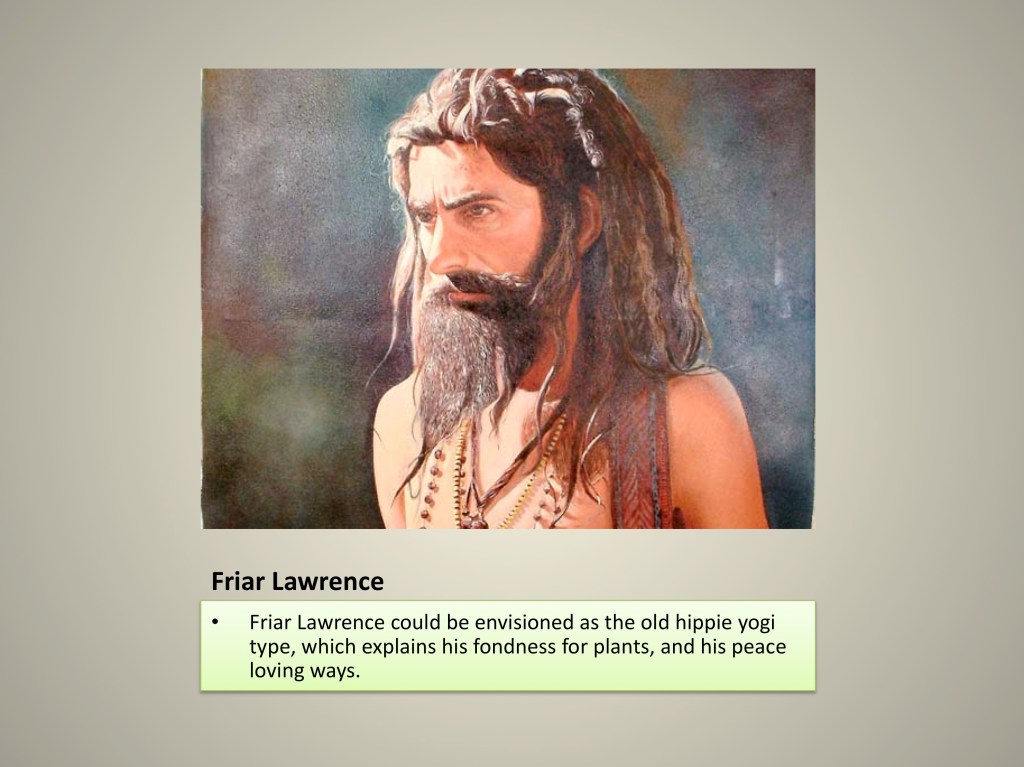
In Volume 2, Shakespeare is a jaded mentor figure who has retreated to an enchanted forest after failing to protect his creations. His arc is very similar to Luke Skywalker in The Last Jedi, in that he made a major mistake, failed to live up to the impossibly high standards people had for him, and hides away at the bottom of a bottle. He now has to choose whether to take responsibility for his creations or stay hidden away alone. I love this arc, I love the scene where he talks to Hamlet, and I love the way they develop his character.
Critique
It’s a small point, but with the exception of Falstaff and Viola, the comic characters in Shakespeare (at least in Volume 2), don’t have much to do. Feste and Sir Toby Belch appear as traveling players but they barely interact with the tragic leads. I think this was to keep the tone of the novel consistent, but honestly, I do kind of wish they had broken up some of the tragedy with some more comedy.
Recommendation: I’d recommend this book to all mature fans of Shakespeare, anime, Manga, D&D, or any kind of nerd stuff!
In 1978, a “holiday special’ was released under the Star Wars umbrella. Today it is universally panned as the worst Star Wars product ever conceived. It is tonally completely different from Star Wars and it spends most of its time either in a bar on Tatooine or on Kashik with Chewbacca’s family; characters we don’t know, can’t understand, and have no influence on the larger Star Wars Universe!
The only bright spot in this tragic black hole of a time-wasting special, (at least according to most of the internet), was that this special brought back the character of Boba Fett, the cool, anti-heroic bounty hunter who is constantly deceiving our heroes. As you can see, they changed the format into a cartoon, so that’s a little bizarre, but it was nice to see an old friend in this otherwise who’s who of lame new characters.
THIS WAS NOT A NEW IDEA, EVEN FOR 1978,
In around 1598 (allegedly), Queen Elizabeth the first asked William Shakespeare to write a comedy about Sir John Falstaff, the fat cowardly comic center of the Henry IV plays. The Queen wanted to see a comedy about Falstaff in love, which Shakespeare allegedly completed in a few short weeks.
Ant the result, was the Star Wars Holiday Special of the Shakespearean Cannon.
Unlike Henry IV, which is a complex history play about rebels going up against an empire (Henry IV claimed part of France so that counts :), Merry Wives a silly comedy set in the country town of Windsor. Just like the Holiday Special, Shakespeare’s comedy has a totally different tone than the other plays that feature Falstaff.
I think Shakespeare wisely didn’t try to make Falstaff a romantic figure- that would be absolute character assassination. What he does instead is take Falstaff’s ability to sweet-talk women and his penchant for thievery, and make the play about his attempts to seduce two virtuous housewives and steal their money. Just like how Boba Fett was not changed into a good-guy to pander to audiences (yet), but instead, Lucas made him a cunning deceiver who tries to sell out our heroes to Darth Vader.
Though Falstaff himself works within the context of the play, most of the new comic characters are very dated and not very funny. Dr. Caius and the Welshman are written with outrageous accents making them as incomprehensible as alien bit players in Star Wars. Frankly, I’d rather kiss a Wookie than listen to these losers try to woo Mistress Page’s daughter. It’s like Shakespeare cut and pasted the worst scenes from Taming Of The Shrew and added a French accent.
Even more boring are the scenes at the Garter Inn- a place that must’ve had significance for knights in the 1590s, but nowadays is somewhat forgettable, (like the Cantina, deal with it NERDS!)
The one really good part of the play is this scene in Act II, Scene I where Mistress Page and Mistress Ford simultaneously receive letters of “love,” (which really means ‘I want sex and your money), from Falstaff. The ladies are incensed for a couple of really good reasons:
A. It’s Falstaff- a fat, old, penniless knight who is well known as a drunk.
B. They’re already married, and he has the pudding guts to assume they’d betray their husbands.
C. If they were to cheat on their husbands, THEY WOULDN’T DO IT WITH FALSTAFF
D. The love poem he writes them is terrible. If he wanted these virtuous wives to cheat on their husbands for someone as completely undeserving as him, he could’ve at least put some effort into it!
I would also argue that the worst thing about the Holiday Special became the best thing about Merry Wives: the songs!
The most egregious change to the tone of Star Wars that the Holiday Special made was putting in a bunch of terrible musical performances by people like Jefferson Starship (get it?) to make the special more of a variety show with the Star Wars characters slapped on top of it like a sticker on a lunch box. Now we know what it sounds like when Princess Leia sings a song that clearly required a second draft:
Luckily for Shakespeare, instead of Jefferson Starship, he got opera composer Otto Nikoli, who saved this mostly terrible play by turning it into a charming opera! Look at this duet from Act I!
A lot of the more absurd plot points of Merry Wives work extremely well as musical comedy shtick, and Falstaff himself works very well as a big basso profundo
So if you go to see Merry Wives, know that it’s not a very good play by Shakespearean standards. It’s silly, kind of pointless, and not a very good addition to the story of Falstaff, but much like the Star Wars Holiday Special, it’s sure to make you laugh:
I’m beyond excited that I am able to offer three multiple week courses through Outschool for kids aged 6-12. If you scan the QR code below, you can see class descriptions and individual trailers. You can also check out the “My classes,” Page on this blog. I hope you and your family will join me this summer!
Since Valentines Day is next week, I thought I’d talk a little bit about Shakespeare’s love poems. Every year I try to study a sonnet or two and write one of my own for my wife and my family. So here’s some insight into the sonnets and I hope that this inspires you to read and craft your own love poems.
My mini-lecture on Shakespeare’s Sonnets.
What Is A Sonnet?
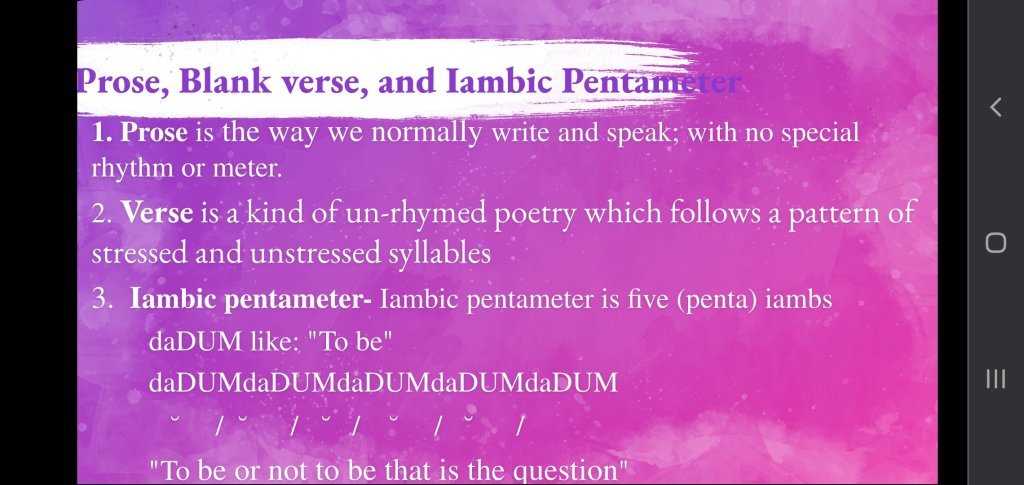
Shakespeare wrote 154 short poems called sonnets. They are 14 lines long Each line has 10 syllables, generally in iambic pentameter
12 of the 14 lines are grouped into 3 groups of 4 lines called quatrains The final two lines are called a rhyming couplet
A little History
The first collection of Shakespeare’s Sonnets was published in 1609, but NOT BY SHAKESPEARE.
We don’t know if this is the order he intended, we don’t know if he intended them to be published, and we DEFINITELY DON”T KNOW IF THEY ARE AUTOBIOGRAPHICAL.
Themes and Ideas
A lot of the sonnets use extended metaphors where the speaker describes his feelings by describing himself as another person, place, or thing. In some sonnets, he’s a painter or looking in a mirror, or an astronomer looking through a telescope or outdoors in nature and something reminds him of the beloved. Most follow a similar theme: You’re beautiful like… [or] I’m trying to write about you but… You wil age and die.
TIme and the sonnets
Pierre Mignard Time Clipping Cupid’s Wings (1694)
The most pervasive idea in the sonnet is a fight against Time. Time is often personified in the sonnets as being jealous, cruel, cold, unfeeling or petty. Time is also associated with the concept of Death. Like the Grim Reaper, he is the enemy of romantic love because he makes young lovers age and die.
Devouring Time, blunt thou the lion’s paws,
And make the earth devour her own sweet brood;
Sonnet 19
THe BIG BUT..
In most of the sonnets there’s a “But” around the third quatrain (lines 9-12 or thereabouts), which challenges the power of time or Death. For example, the first 8 sonnets basically say: “You will age BUT… you will become immortal if you have children.” Couplet
The Young Man sonnets (1-126)
From fairest creatures we desire increase,
That thereby beauty’s rose might never die,
But as the riper should by time decease,
His tender heir might bear his memory:
William Shakespeare, Sonnet 1
Henry Wriosley, Earl of Southampton and Shakespeare’s patron.
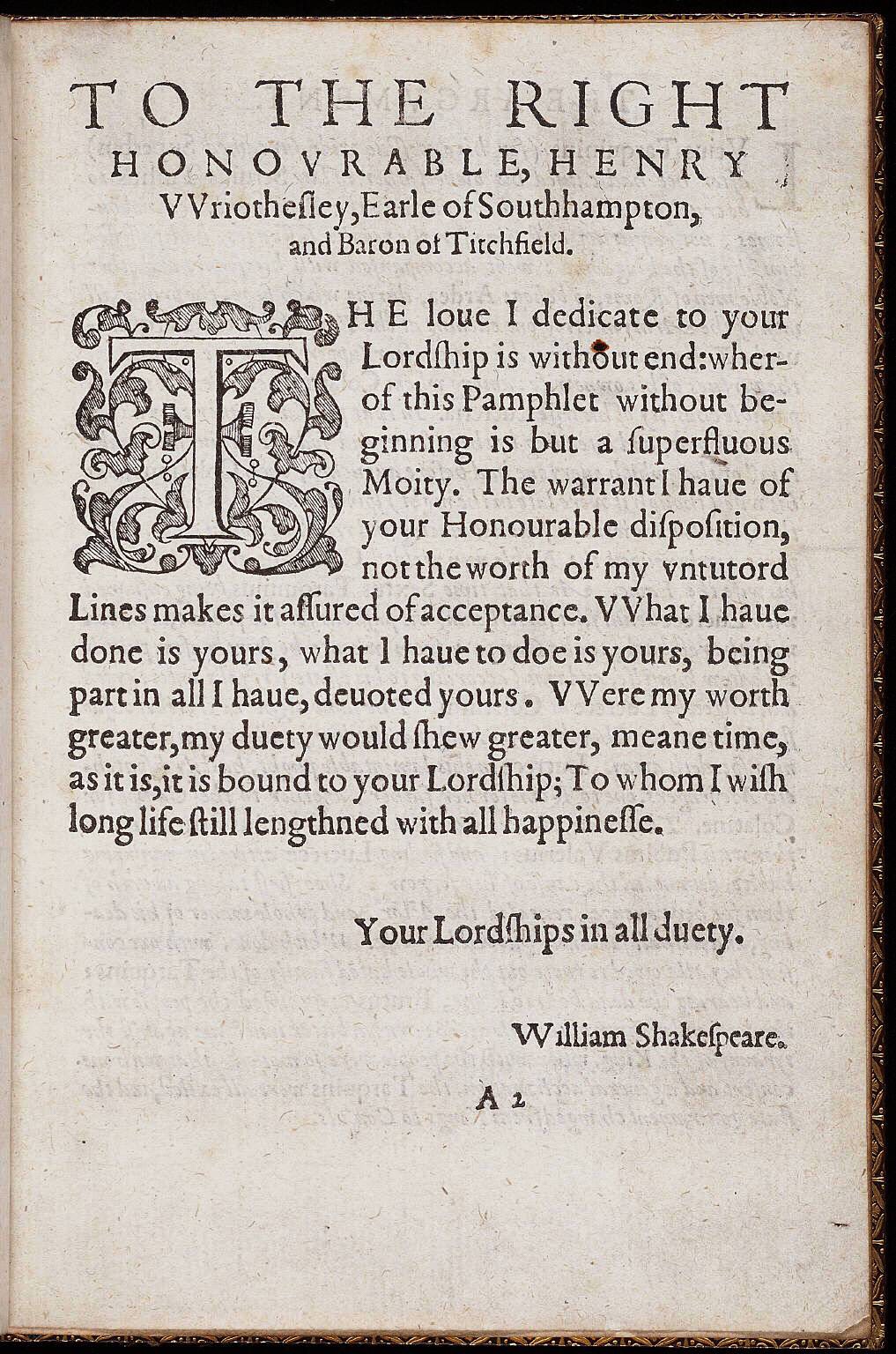
The first 126 sonnets (roughly) are about a young man with blonde hair. Though there is no evidence that the sonnets were autobiographical, many scholars have speculated that he might have been partially inspired by Henry Wriosley, the Earl of Southampton. Shakespeare dedicated two poems to Henry: The Rape of Lucrece and Venus and Adonis, which you can see the title page of here:
Title page to the 1593 edition of Venus and Adonis
Sonnet 12
When I do count the clock that tells the time, And see the brave day sunk in hideous night; When I behold the violet past prime, And sable curls, all silvered o’er with white; When lofty trees I see barren of leaves, Which erst from heat did canopy the herd, And summer’s green all girded up in sheaves, Borne on the bier with white and bristly beard, Then of thy beauty do I question make, That thou among the wastes of time must go, Since sweets and beauties do themselves forsake And die as fast as they see others grow; And nothing ‘gainst Time’s scythe can make defense Save breed, to brave him when he takes thee hence
I love this sonnet for its use of alliteration, the use of words that sound the same: “count,” “clock” “tells,” “time,” “green,” “girdled,” etc. The use of “count,” and “clock” in particular makes you imagine the sound of a clock in your head. The sonnet makes you keenly aware of the passage of time, first from the seconds of a ticking clock, then to the changing of the seasons, then at last to the span of a lifetime. This sonnet might not inspire much in terms of feelings, but its technical construction literally works ‘like clockwork.’ If you’re interested in r Elizabethan clocks and other timekeeping instruments, click here for a fascinating blog: https://www.cassidycash.com/did-shakespeare-have-a-clock-part-1-of-5/
Sonnet 18
Shall I compare thee to a summer's day?
Thou art more lovely and more temperate:
Rough winds do shake the darling buds of May,
And summer's lease hath all too short a date:
Sometime too hot the eye of heaven shines,
And often is his gold complexion dimmed,
And every fair from fair sometime declines,
By chance, or nature's changing course untrimmed:
But thy eternal summer shall not fade,
Nor lose possession of that fair thou ow'st,
Nor shall death brag thou wander'st in his shade,
When in eternal lines to time thou grow'st,
   So long as men can breathe, or eyes can see,
   So long lives this, and this gives life to thee.
I go into detail explaining sonnet 18 in my class: “Love Poetry Shakespeare Style,” but to put it succinctly, this sonnet is famous for talking about the ways the beloved is Better than a summer’s day.
Sonnet 27- “Weary With Toil…
Weary with toil, I haste me to my bed,
The dear repose for limbs with travel tired;
But then begins a journey in my head
To work my mind, when body's work's expired:
For then my thoughts--from far where I abide--
Intend a zealous pilgrimage to thee,
And keep my drooping eyelids open wide,
Looking on darkness which the blind do see:
Save that my soul's imaginary sight
Presents thy shadow to my sightless view,
Which, like a jewel hung in ghastly night,
Makes black night beauteous, and her old face new.
   Lo! thus, by day my limbs, by night my mind,
   For thee, and for myself, no quiet find.
Not to seem crass, but this sonnet is literally panting with sexual desire. The speaker is exhausted but cannot sleep, with the image of his beloved haunting his thoughts. There are also a few religious allusions too where the speaker calls himself a “pilgrim,” much like Romeo and Juliet in their first meeting in Act I, Scene v. It almost seems like the beloved is both an angel that the speaker wants to bless him, and a succubus or vampire draining him of love and life.
XXIX “When In disgrace…”
Sonnet 29: “When in disgrace With Fortune and men’s eyes
When in disgrace with fortune and men's eyes
I all alone beweep my outcast state,
And trouble deaf heaven with my bootless cries,
And look upon myself, and curse my fate,
Wishing me like to one more rich in hope,
Featured like him, like him with friends possessed,
Desiring this man's art, and that man's scope,
With what I most enjoy contented least;
Yet in these thoughts my self almost despising,
Haply I think on thee, and then my state,
Like to the lark at break of day arising
From sullen earth, sings hymns at heaven's gate;
   For thy sweet love remembered such wealth brings
   That then I scorn to change my state with kings.
Sonnet 29
Sonnet 118- The “Marriage” Sonnet
Let me not to the marriage of true minds admit impediments.
– Shakespeare, Sonnet 29
Let me not to the marriage of true minds
Admit impediments. Love is not love
Which alters when it alteration finds,
Or bends with the remover to remove:
O, no! it is an ever-fixed mark,
That looks on tempests and is never shaken;
It is the star to every wandering bark,
Whose worth's unknown, although his height be taken.
Love's not Time's fool, though rosy lips and cheeks
Within his bending sickle's compass come;
Love alters not with his brief hours and weeks,
But bears it out even to the edge of doom.
     If this be error and upon me proved,
     I never writ, nor no man ever loved.
This sonnet is one of the most famous poems in all of English literature all. In fact, it's quite personally important to me, because my wife recited it to me on my wedding day. It is full of powerful metaphors about how married love is stronger and more resilent than simple lust or infatuation. On my wedding day it was a powerful affirmation that my wife and I will endure age, change, Time, and eventually death, but our love will remain the same.
The Dark Lady Sonnets 127-152
Sonnets 127-152 seem to be collectively addressed to a woman with dark hair, dark skin, and musical talent, who seems to be in a love triangle with the speaker of the sonnets, and someone else. As you can see in this video, many theories have come up to try and expose who she really was, but again, he have no proof that these sonnets were in any way autobiographical.
As far as we know, the Dark Lady sonnets might simply have been a writing exercise for Shakespeare while he was writing Othello and Antony and Cleopatra. I’m not interested in the Dark Lady conspiracy, except for its usefulness for historians to highlight important Elizabethan women. I have to admit that I wouldn’t have known about Emilia Lanier, or the Countess of Pembroke if they hadn’t been roped into the Dark Lady theory. Otherwise, I’m only interested in the Dark Lady sonnets for their poetry and the interesting stories they tell.
In the old age black was not counted fair,
Or if it were, it bore not beauty's name;
But now is black beauty's successive heir,
And beauty slandered with a bastard shame:
For since each hand hath put on Nature's power,
Fairing the foul with Art's false borrowed face,
Sweet beauty hath no name, no holy bower,
But is profaned, if not lives in disgrace.
Therefore my mistress' eyes are raven black,
Her eyes so suited, and they mourners seem
At such who, not born fair, no beauty lack,
Sland'ring creation with a false esteem:
   Yet so they mourn becoming of their woe,
   That every tongue says beauty should look so.
I admit this is a retroactive reading, but Shakespeare has been guilty of equating fair skin with beauty, so it’s nice to see this sonnet, which lends itself to a refutation of that notion. Much like how “Hath not a Jew eyes…” has been appropriated as a plea for tolerance, I hope this sonnet gains popularity as a source of pride for POC.
In the old age black was not counted fair, Or if it were, it bore not beauty’s name; But now is black beauty’s successive heir, And beauty slandered with a bastard shame: For since each hand hath put on Nature’s power, Fairing the foul with Art’s false borrowed face, Sweet beauty hath no name, no holy bower, But is profaned, if not lives in disgrace. Therefore my mistress’ eyes are raven black, Her eyes so suited, and they mourners seem At such who, not born fair, no beauty lack, Sland’ring creation with a false esteem: Yet so they mourn becoming of their woe, That every tongue says beauty should look so.
Sonnet 128 How oft when thou, my music, music play’st, Upon that blessed wood whose motion sounds With thy sweet fingers when thou gently sway’st The wiry concord that mine ear confounds, Do I envy those jacks that nimble leap, To kiss the tender inward of thy hand, Whilst my poor lips which should that harvest reap, At the wood’s boldness by thee blushing stand! To be so tickled, they would change their state And situation with those dancing chips, O’er whom thy fingers walk with gentle gait, Making dead wood more bless’d than living lips. Since saucy jacks so happy are in this, Give them thy fingers, me thy lips to kiss.
Sonnet 130
My mistress’ eyes are nothing like the sun; Coral is far more red, than her lips red: If snow be white, why then her breasts are dun; If hairs be wires, black wires grow on her head. I have seen roses damasked, red and white, But no such roses see I in her cheeks; And in some perfumes is there more delight Than in the breath that from my mistress reeks. I love to hear her speak, yet well I know That music hath a far more pleasing sound: I grant I never saw a goddess go, My mistress, when she walks, treads on the ground: And yet by heaven, I think my love as rare, As any she belied with false compare.
I ended with this sonnet, because unlike the previous ones, Shakespeare beautifully shows the frankness and honesty in true love. Shakespeare doesn’t use extravagant praise or pretty metaphors, but instead just says he loves his mistress for who she is. I wish that all of you reading this will find a love that you can enjoy without false comparison, (but then again, what is life without a little poetry in it)?
You probably know that I love to speculate and do a little historical detective work and find out whether Elizabethans like Shakespeare celebrated our modern holidays and then compare and contrast how they celebrated them back then versus how we do today. Valentine’s Day is a day we associate with love and poetry, so of course, I wondered if the most celebrated poet of the Renaissance celebrated it himself!
Based on my findings, if Shakespeare celebrated Valentine’s Day, he probably did mainly what we did- writing letters and poems to his beloved and maybe sending a trinket of love. It’s unlikely he celebrated it like modern Catholics do to honor the martyrdom of a Catholic saint. In my research, I was surprised to learn that Valentine’s Day has been celebrated for hundreds of years and has its roots in a holiday that Shakespeare describes in one of his most famous plays.
Part I: The Feast of Lupercal: Valentine’s Day’s Dark Ancestor
According to NPR’s podcast: “The Dark Origins of Valentine’s Day”, like Christmas, Halloween, and many other holidays, the Christian holiday of St. Valentine’s day was designed to replace the pagan holiday of Lupercal, which was a Roman fertility festival where men engaged in basically what we’d now call- swingers’ parties or key parties where they’d draw a woman’s name from a lottery and… couple for the night.
The Lupercal was also synonymous with the founding of Rome. Lupa is the name of the wolf that saved the infants Romulus and Remus, who would become the first kings of Rome. If you click here, you can read an article about a recent archeological discovery; a cave found under Rome that was once revered as the place where Romulus and Remus lived with Lupa:
Shakespeare actually starts his play of Julius Caesar on the Lupercal, and makes reference to its status as a fertility festival. In Act I, Caesar is watching Antony run a race and tells him to be sure to touch Calpurnia, owing to the superstition that if a man touches a barren woman on Lupercal, it will make her capable of bearing children:
Caesar. Calpurnia!
Calpurnia. Here, my lord. 85
Caesar. Stand you directly in Antonius' way,
When he doth run his course. Antonius!
Antony. Caesar, my lord?
Caesar. Forget not, in your speed, Antonius,
To touch Calpurnia; for our elders say, 90

The barren, touched in this holy chase,
Shake off their sterile curse.
Antony. I shall remember:
When Caesar says 'do this,' it is perform'd.
Caesar. Set on; and leave no ceremony out. Julius Caesar, Act I, Scene ii, Lines 84-95
Shakespeare leaves out that, according to tradition, Antony should be naked and anointed with goat’s blood and slap Calpurnia with a goatskin thong, but that was part of the Roman Lupercal festival.
St. Valentine was either a Catholic priest or bishop who was martyred in the 3rd century AD (Source History.com). According to tradition, he conducted Christian marriages in defiance of Roman law, and rejected the concept of Lupercalian coupling, which is why Emperor Claudius murdered him. Thus, the holiday is intentionally meant to replace Lupercalia, and celebrate monogamous relationships under the Christian God. The popular story is that before his death, he sent a letter to the young daughter of a family he converted to Christianity and signed it: “Your Valentine,” thus starting the tradition of signing cards in this manner. In the 5th century, Pope Gelasius made Valentine’s day an official Catholic feast day to replace Lupercal once and for all.
Part III: The oldest surviving Valentines
Evidence is sketchy on how the traditions of Valentine’s Day evolved, in the Middle Ages, but in Catholic Europe, the concept of celebrating married love on Valentine’s Day spread, and poets like Chaucer and Shakespeare helped popularize it.
Geoffrey Chaucer wrote in the 14th century of how birds would choose their mates on Valentine’s Day:
For this was sent on Seynt Valentyne's day
Whan every foul cometh ther to choose his mate.
According to History.com, there’s a possibility that Chaucer invented the idea of a St. Valentine’s feast, and forever linked it with the celebration of love:
The medieval English poet Geoffrey Chaucer often took liberties with history, placing his poetic characters into fictitious historical contexts that he represented as real. No record exists of romantic celebrations on Valentine’s Day prior to a poem Chaucer wrote around 1375. In his work “Parliament of Foules,” he links a tradition of courtly love with the celebration of St. Valentine’s feast day–an association that didn’t exist until after his poem received widespread attention. The poem refers to February 14 as the day birds (and humans) come together to find a mate.
This theme has been repeated in other pieces of literature. In John Lydgate’s 15th-century poem, “A Valentine to Her that Excelleth All”, he writes of how it was the custom on Valentine’s Day for people to choose their love:
To look and search Cupid’s Calendar and choose their choose by great affection.
John Ludgate: “”A Valentine to her that Excelleth All”
The Paston’s oldest surviving valentines
In the 1470s in a series of correspondence, from Margery Brews to her husband John Paston refers to the latter as “My right well-beloved Valentine, John Paston, Esquire.”
Margery also wrote adoring letters to John, who was probably away frequently, fighting in the Hundred Years War, and advising Margary’s kinsman, John Fastolfe, (whom Shakespeare mentions in Henry VI, Part I. Her poetry is very tender and must have comforted her husband much:
And if ye command me to keep me true wherever I go,
I wis I will de all my might you to love, and never no mo(re).
And if my friends say, that I do amiss,
They shall not me let so for to do,
Mine heart me bids ever more to love you
Truly over all earthly thing,
And if they be never so wrath
I trust it shall be better in time coming.
Margery’s letters are some of the earliest surviving Valentine’s poetry. Her letters prove that the tradition of giving poetry to one’s beloved during February was around in the 15th century, and probably while Shakespeare was a child in the 16th.
Shakespeare’s contributions to Valentine’s Day
Shakespeare mentions Saint Valentine’s Day twice in his works. In A Midsummer Night’s Dream, (a play that is set in Ancient Greece and has connections to Lupercal), he builds on Chaucer’s claim that Valentine’s Day is the day that birds couple for the night. Duke Theseus and Aegeus discover the four lovers asleep. They are surprised that they are sharing the same ground, since Lysander and Demetrius (as far as the old men know), are rivals for Hermia’s affection.
Good morrow, friends. Saint Valentine is past: Begin these wood-birds but to couple now?
— A Midsummer Night Dream, Act IV, Scene ii.
Egeus. My lord, this is my daughter here asleep; And this, Lysander; this Demetrius is; This Helena, old Nedar’s Helena:1685 I wonder of their being here together. Theseus. No doubt they rose up early to observe The rite of May, and hearing our intent, Came here in grace our solemnity. But speak, Egeus; is not this the day1690 That Hermia should give answer of her choice? Egeus. It is, my lord. Theseus. Go, bid the huntsmen wake them with their horns. [Horns and shout within. LYSANDER, DEMETRIUS,] HELENA, and HERMIA wake and start up]1695 Good morrow, friends. Saint Valentine is past: Begin these wood-birds but to couple now?
Shakespeare has a much darker reference to Valentine’s Day in Hamlet:
Ophelia has gone mad with the loss of her brother, her father, and Hamlet breaking her heart. She starts wandering the castle and can only communicate through songs. She sings a very melancholy song that alludes to the superstition that if two single people meet on the morning of Saint Valentine’s Day they will likely get married: Tomorrow is Saint Valentine’s Day, All in the morning betime, And I a maid at your window, To be your Valentine. Then up he rose And donned his clothes And dupped the chamber door Let in a maid then out a maid Never departed more.
Ophelia seems to be darkly admitting that she and Hamlet have had pre-marital intimate relations and she is no longer a virgin, The song implies that Ophelia entered Hamlet’s chamber a maid (that is, an unmarried virgin), but is let out a maid (unmarried), while the Hamlet very clearly has taken her virginity. Hamlet re-enforces this suspicion by commanding her to go to a nunnery, one of the only recourse for single mothers. It is reasonable to assume that Shakespeare is implying that Ophelia is in fact pregnant, and is driven mad with sorrow that she now has to deliver her baby without any form of support from her father (who is dead), from her brother (who is in France), or her baby’s father, who wants her to leave and never return. Ophelia’s song is a lament that she wishes the superstition were true, and Hamlet had indeed married her.
It’s unlikely that Shakespeare celebrated Valentine’s Day as a religious holiday, after all, Queen Elizabeth had made England a Protestant country. Celebrating a saint day could have been seen as idolatrous in Protestant England. Nevertheless, Shakespeare and other romantic writers helped transform Valentine’s Day into less of a religious holiday, and more as a secular celebration of love and monogamy, very different from its bloody, promiscuous roots.
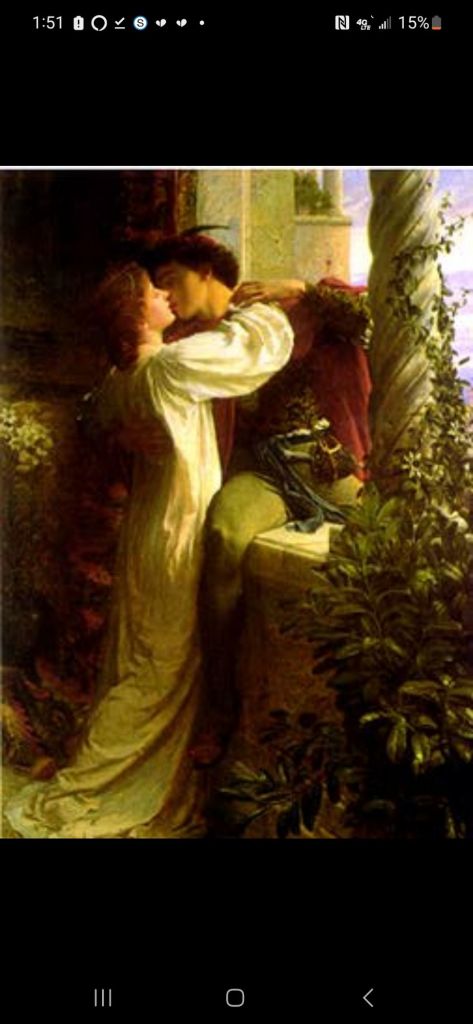
Costumes from thr 1968 Romeo and Juliet FilmOlivia Hussey as Juliet, 1968.“Romeo and Juliet” by Francis Dicksee, 1884.Juliet- Glibe Theater 2007
I’ve seen four live productions of Romeo and Juliet, (5 if you include West Side Story). I’ve also watched four films (6 if you include West Side Story and Gnomio and Juliet) and one thing that I’ve noticed again and again, and again is that you can tell the whole story of the play with clothing. This is a story about families who are part of opposite factions whose children secretly meet, marry, die, and fuse the families into one, and their clothes can show each step of that journey.
The feud Nearly every story about a conflict or war uses contrasting colors to show the different factions. Sometimes even real wars become famous for the clothes of the opposing armies. The Revolutionary War between the redcoats and the blue and gold Continentals, the American Civil War between the Rebel Grays and the Yankee Bluebellies. In almost every production I’ve ever seen, the feud in Romeo and Juliet is also demonstrated by the opposing factions wearing distinctive clothing.
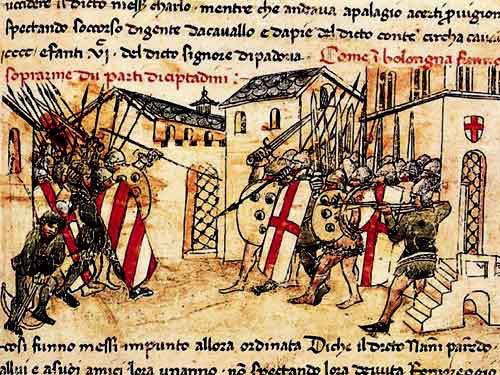
Historically, warring factions in Itally during the period the original Romeo and Juliet is set, wore distinctive clothes and banners as well. . In this medieval drawing, you can see Italians in the Ghibelline faction, who were loyal to the Holy Roman Empire, fighting the Guelph faction (red cross), who supported the Pope. Powerful families were constantly fighting and taking sides in the Guelf vs. ghibelines conflict in Verona, which might have inspired the Capulet Montegue feud in Romeo and Juliet.
Even the servants of the nobles got roped into these conflicts, and they literally wore their loyalties on their sleeves. The servants wore a kind of uniform or livery to show what household they belonged to. The servants Gregory and Sampson owe their jobs to Lord Capulet, and are willing to fight to protect his honor. Perhaps Shakespeare started the play with these servants to make this distinction very obvious. Here’s a short overview on Italian Liveries from the Metropolitan Museum of Art:
In 1966, director Franco Zepherelli set a trend with his iconic use of color in his movie. He chose to make the Capulets wear warm tones while the Montegues wore blue and silver. Juliet (Olivia Hussey) wore a gorgeous red dress that made her look youthful, passionate, and lovely, while Tybalt (Michael York), wore red, orange, and black to emphasize his anger, and jealousy (which has been associated for centuries with the color orange). By contrast, the Montagues like Romeo (Leonard Whiting) wore blue, making him look peaceful and cool. These color choices not only clearly indicate who belongs to which contrasting factions, but also help telegraph the character’s personalities. Look at the way these costumes make the two lovers stand out even when they’re surrounded by people at the Capulet ball:
Dance scene from the iconic 1968 film of Romeo and Juliet, directed by Franco Zeffirelli.Poster for “Gnomio and Juliet, 2011
Zepherilli’s color choices were most blatantly exploited in the kids film Gnomio and Juliet, where they did away with the names Capulet and Montegue altogether, and just called the two groups of gnomes the Reds and the Blues.
The Dance
To get Romeo and Juliet to meet and fall in love, Shakespeare gives them a dance scene for them to meet and fall in love. He further makes it clear that when they first meet, Romeo is in disguise. The original source Shakespeare used made the dance a carnival ball, (which even today is celebrated in Italy with masks). Most productions today have Romeo wearing a mask or some other costume so that he is not easily recognizable as a Montague. Masks are a big part of Italian culture, especially in Venice during Carnival:
In the 1996 movie, Baz Luhrman creates a bacchanal costume party, where nobody wears masks but the costumes help telegraph important character points. Mercutio is dressed in drag, which not only displays his vibrant personality but also conveniently distracts everyone from the fact that Romeo is at the Capulet party with no mask on.
Capulet is dressed like a Roman emperor, which emphasizes his role as the patriarch of the Capulet family. Juliet (Claire Danes) is dressed as an angel, to emphasize the celestial imagery Shakespeare uses to describe her. Finally, Romeo (Leonardo DiCaprio) is dressed as a crusader knight because of the dialogue in the play when he first meets Juliet:
Romeo. [To JULIET] If I profane with my unworthiest hand
This holy shrine, the gentle fine is this:720
My lips, two blushing pilgrims, ready stand
To smooth that rough touch with a tender kiss.
Juliet. Good pilgrim, you do wrong your hand too much,
Which mannerly devotion shows in this;
For saints have hands that pilgrims' hands do touch,725
And palm to palm is holy palmers' kiss.
Romeo. Have not saints lips, and holy palmers too?
Juliet. Ay, pilgrim, lips that they must use in prayer.
Romeo. O, then, dear saint, let lips do what hands do;
They pray, grant thou, lest faith turn to despair.730
Juliet. Saints do not move, though grant for prayers' sake.
Romeo. Then move not, while my prayer's effect I take.
Thus from my lips, by yours, my sin is purged.
Juliet. Then have my lips the sin that they have took.
Romeo. Sin from thy lips? O trespass sweetly urged!735
Give me my sin again.
Juliet. You kiss by the book. Romeo and Juliet, Act I, Scene V, Lines 719-737.
Notice that Romeo calls Juliet a saint, and later an angel in the famous balcony scene, which explains her costume at the ball. Juliet refers to Romoe as a Pilgrim, which is a cheeky comment on his crusader knight costume. In the Crusades, crusader knights made pilgrimages to the holy land, with the hope that God (and presumably, his angels) would forgive their sins. Romeo’s name even means “Pilgrim.” Luhrman makes clever nods to Shakespeare’s text by dressing Romeo and Juliet in this way, and gives the dialogue a bit of a playful roleplay as the characters make jokes about each other’s costumes- Romeo hopes that he will go on a pilgrimage and that this angel will take his sin with a kiss.
In Gnomio and Juliet, the titular characters meet in a different kind of disguise. Rather than going to a dance with their family, they are both simultaneously trying to sneak into a garden and steal a flower, so they are both wearing black, ninja-inspired outfits. Their black clothing helps them meet and interact without fear of retribution from their parents (since they do not yet know that they are supposed to be enemies. The ninja clothes also establishes that for these two gnomes, love of adventure unites them. Alas though, it doesn’t last; Juliet finds out that Gnomio is a Blue, when they both accidentally fall in a pool, stripping their warpaint off and revealing who they are.
Trailer for “West Side Story,” (2021) directed by Steven Spielberg.
Sometimes the dance shows a fundamental difference between the lovers and the feuding factions. West Side Story is a 20th-century musical that re-imagines the feuding families as juvenile street gangs, who like their Veronese counterparts, wear contrasting colors. The Jets (who represent the Montagues) wear Blue and yellow, while the Sharks (Capulets), wear red and black. The gang members continue wearing these colors on the night of the high school dance, except for Tony and Maria (the Romeo and Juliet analogs). In most productions I’ve seen, (including the 2021 movie), these young lovers wear white throughout the majority of the play, to emphasize the purity of their feelings, and their rejection of violence. Thus, unlike Shakespeare’s version of the story, West Side Story makes the lovers unquestionably purer are more peaceful than Shakespeare’s Romeo and Juliet, and their clothing makes this clear.
Romeo (John Warren), meets Juliet (Alesia Lawson) in the 2010 Ashland University production of “Romeo and Juliet,” directed by Ric Goodwin.
The Merging of the family (8:30-11:00)
Costume Designer Charlene in the 2006 AU production deliberately had the characters change clothes when they get married. Juliet was wearing the same iconic red dress as Olivia Hussey for the first two acts of the play but then changed into a pale blue gown that matches Romeo. The clothes re-enforce the idea that the marriage represents Romeo and Juliet abandoning their family’s conflicts, and simply showing their true colors.
Two sets of costumes for Juliet in the 2006 Ashland University Production. Pull the slider bar left to see how Juliet’s costume changes from the start of the show to the end.
Another way of getting everyone in the family to subconsciously unite in grief would be to costume everyone wearing black except Romeo and Juliet. At the end of the play, The Capulets are already mourning Juliet, (because she faked her death in Act IV), and the Montegues are already mourning Lady Montegue (who died offstage). Just by these circumstances, everyone could come onstage wearing black, uniting in their grief, which is further solidified when they see their children dead onstage.
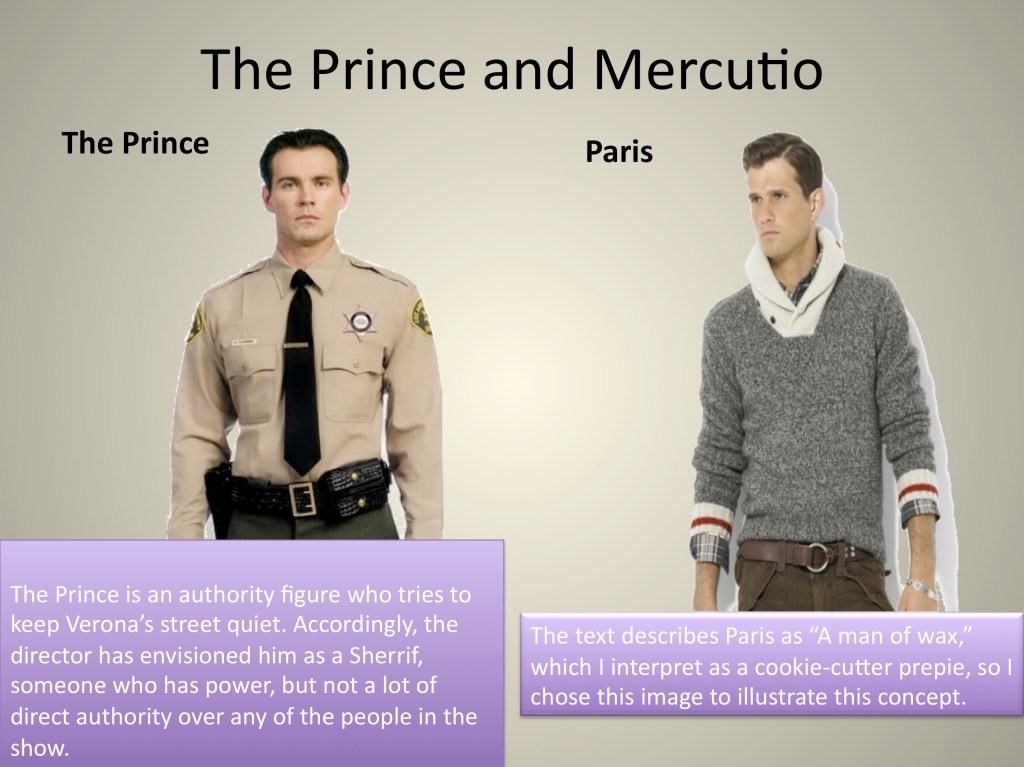
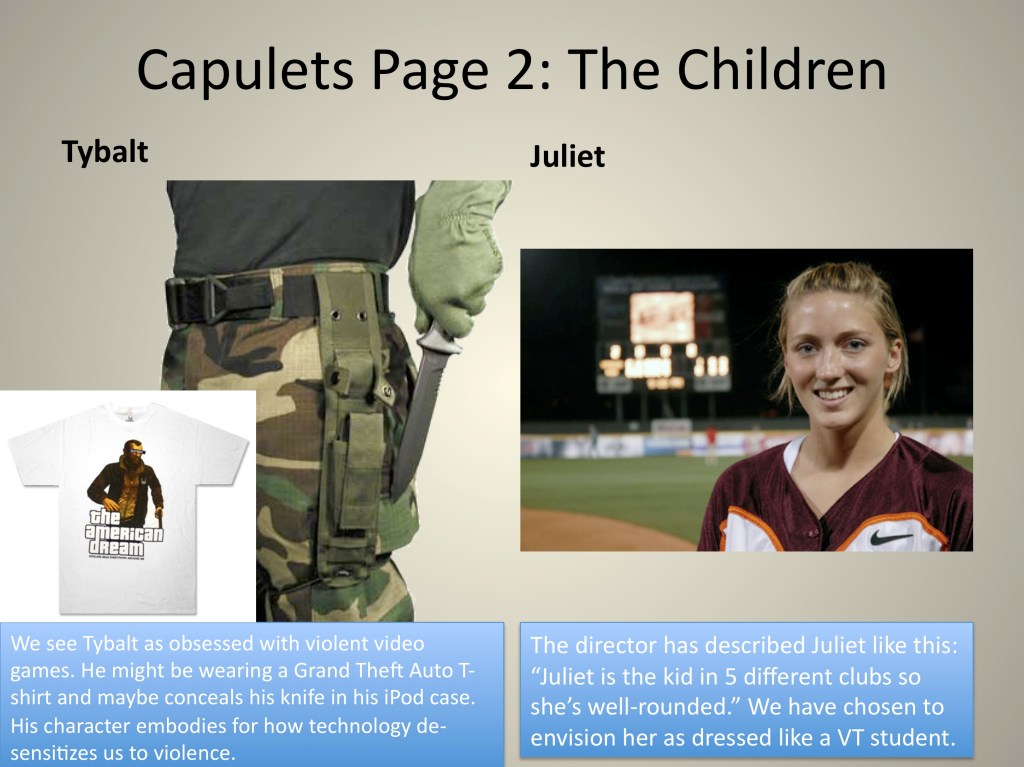
Not all productions choose to costume the characters like warring factions, but nevertheless, any theatrical production’s costumes must telegraph something about the characters. In these production slides for a production I worked on in 2012, the costumes reflect the distinct personality of each character and show a class difference between the Montagues and the Capulets.
The 2013 Film: Costumes Done Badly
The 2013 movie is more concerned with showing off the beauty of the actor’s faces, and the literal jewels than the clothes:
Most of the actors and costumes are literally in the dark for most of the film, probably because the film was financed by the Swarofski Crystal company, who literally wanted the film to sparkle. Ultimately, like most jewelry, I thought the film was pretty to look at, but the costumes and cinematography had little utilitarian value. The costumes and visual didn’t tell the story efficiently, but mainly was designed to distract the audience with the beauty of the sets, costumes and the attractive young actors. The only thing I liked was a subtle choice to make Juliet’s mask reminiscent of Medusa, the monster in Greek Myth, who could turn people to stone with a look. I liked that the film was subtly implying that love, at first sight, can be lethal.
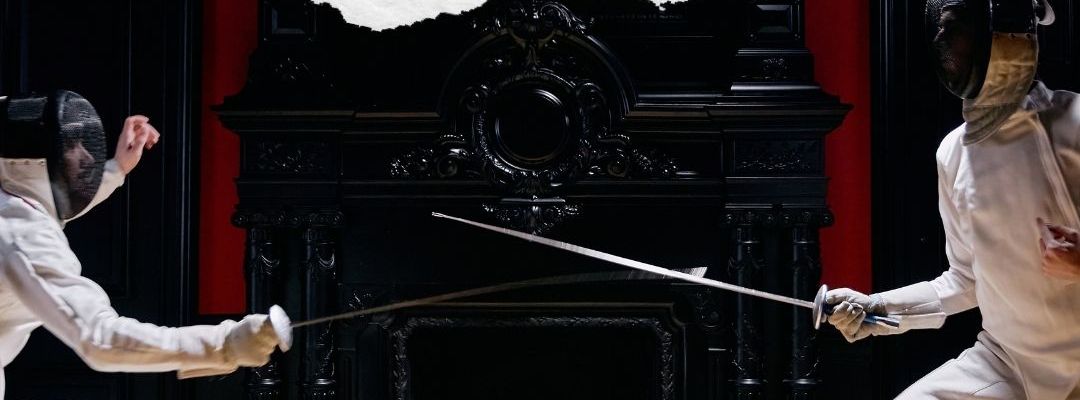
This 7 part class is geared towards students who have taken my class or some other combat class in the past. We will go in-depth into how to train for, rehearse, and perform a fight from a Shakespeare play. We'll cover fight safety, footwork, proper cuing, and selling the fight. I will also contextualize the fights in "Romeo and Juliet," (the play with more fights than any other in Shakespeare), to explain how the Elizabethans felt about violence, and what this play says about violence in our own time.

The class will mostly be up-on- your feet demonstrations with me in front of the camera and the students mirroring my movements, but there will also be handouts, websites, and video presentations to help supplement what I say.

Class Structure:
Week of  March 5th: Background on swords/ sword crafts
-We will learn about the history of swords from ancient military weapons, to the instrument of private dueling. We’ll also cover the culture of duelling that permeated 17th century Europe, as well as the text of Shakespeare’s Romeo and Juliet. The class will conclude with me instructing the kids how to make a practice sword themselves!

Week of March 12: Proper Footwork/ Stances For Sword Combat-
We’ll cover proper stance and en guard positions
We’ll practice advances and retreats
We’ll show you how to do a lunge and the footwork involved.
We’ll incorporate advances and retreats with simple high-low parries and cuts.

Week of March 19th : Cuts, Swipes, and Thrusts
You’ll learn the lines of attack and defense
You’ll learn the proper way to hold a blade and deliver realistic-looking cuts.
Learn how to thrust (online and offline)

Week of March 26th: Parries and other defensive moves
We’ll cover the 6 basic parries to stop an attacker’s blade.
We’ll also cover ducking, avoidances, and

Week April 2nd: Fight Rehearsal 1
We’ll assign roles for the fight between Mercutio, Tybalt and Romeo in Act III I of "Romeo and Juliet." The students will then get a fight
script, and you can practice the fight at ½ speed. We will also explain the concept of Cue-Reaction-Action: A basic stage combat principle/process used to achieve a safe and dramatically effective sequence of events.
We will discuss the importance of eye contact and cuing to ensure that the combatants know what to expect at all times.

Week of April 9th: Fight practice 2
- We'll go through a warm-up fight drill
- We'll rehearse the fight at 3/4 speed to make sure you understand all the moves.
- We'll Incorporate acting into the fight- selling pain, anger, and fear. Use distance to show character relationships.

Week of April 16th: Final Fight performance
- We'll go through a warm-up fight drill again
- We'll rehearse the fight at 3/4 speed again to make sure you understand all the moves.
-We’ll pretend we’re doing this fight for an audience at ¾ speed. If need be, I’ll play one of the aggressors and you can do the fight pretending I’m in the room with you.
At the end of class, I’ll show you a similar fight from my production of Romeo and Juliet and we’ll discuss the differences between our fight and the one I showed the students. Finally, we will discuss the way Shakespeare portrays violence in the play and its relevance in our world.
I’m very proud to announce that just in time for Valentines’ Day, I’m offering a course of classes about Shakespeare’s most popular play about love. The play will include fight choreography, dramatic readings, games, escape rooms, and an activity where the students create their own Shakespearean insults!
Course Description:
We’ll engage with the play with thoughtful discussion.
You’ll go on a virtual tour to the Globe Theater!
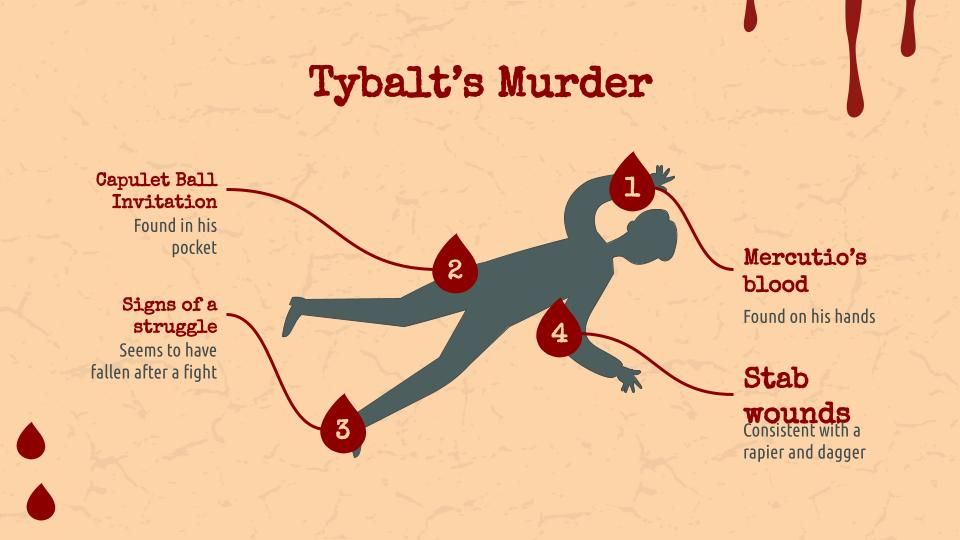
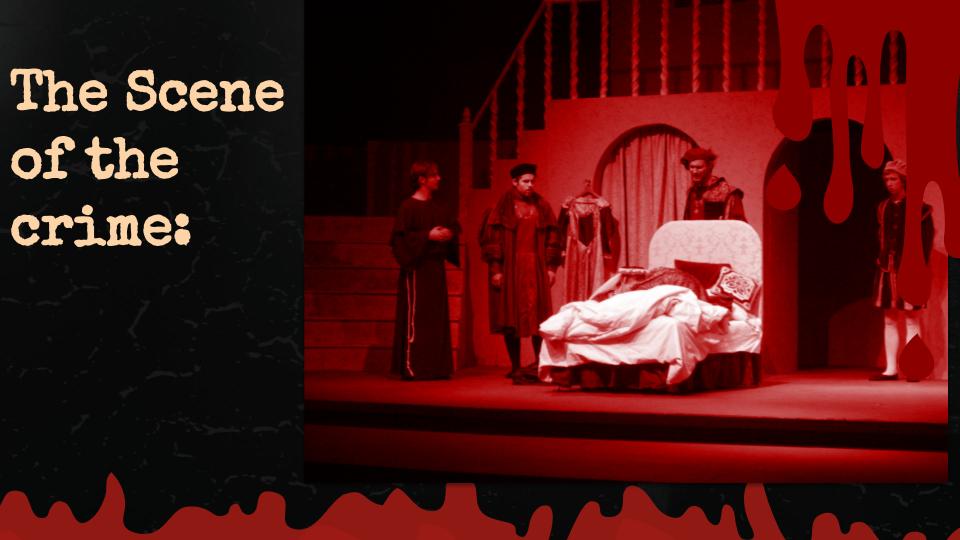
You’ll play detective and solve a Shakespearean murder!
Instead of just reading the play "Romeo and Juliet," this class will actively delve into the world of the play through a combination of lectures, dramatic readings, virtual field trips, online quizzes and activities, and finally, a digital escape room to test the student's knowledge of the play and its ideas. Each class is ala carte, meaning that once you take one class, you choose whether to stop at one class or continue onwards. Each class will delve into a different theme, literary device, and historical concept in the play:
Class Structure:
Class 1: Why Read Romeo and Juliet?
- The teacher will decode the Prologue of Romeo and Juliet and tell the basic story of the play
- We will explain dramatic irony through looking at the prologue,
- The teacher will explain why Shakespeare used poetry in the play, instead of just writing in common prose
- We will discuss why we still read Shakespeare and Romeo and Juliet in particular.

Class 2: Foils and Fights
- The learner will learn about the culture of dueling and sword fighting that was rampant in the 17th century.
- The teacher will explain and the learner will learn to recognize character foils in the play like Romeo and Friar Laurence
- We will cover the topic of antithesis- how opposite imagery permeates the play.
- We will discuss figurative language through insults and the students will have a contest to see who can craft the best Elizabethan insults!

Class 3: Acts 1& 2- The Language of Love and Hate
- We will recap how insults work- hyperbole and metaphor used to make someone seem the worst, the smallest, the ugliest, the dumbest, etc.
- We'll examine passages from Act II that show how these techniques apply to wooing and expressing love through metaphor, hyperbole, and allusions.
- The teacher will explain what a sonnet is and how Shakespeare uses them repeatedly in "Romeo and Juliet"
- We will discuss staging the famous Balcony Scene of Romeo and Juliet and ask if it's possible to do so in a virtual environment.

Class 3:  Act 3 fighting 💪 swordplay and plague imagery
The teacher will explain the plot structure of Elizabethan tragedies and explain that Act III is the climax of the play.
We will recap  the events that led to the deaths of Mercutio and Tybalt
The teacher will unpack Mercutio’s famous curse "A plague on both your houses," which is a foreshadowing, and the climax of the action.
The class will end with a short, safe demonstration of stage fighting where the students may choose to enact Mercutio's fight with Tybalt and/ or Romeo's fight with Tybalt.

Class 4: Act 4 antithesis and dramatic irony
We will talk about the imagery in Act IV, scene 1, which foreshadows the end of the play. I will also do a dramatic re-enactment of Juliet's soliloquy in Act IV,
We'll go on a virtual field trip to an Elizabethan wedding.
The teacher will historical context of the black death and its relevance to the play and Shakespeare's life.

Class 5: The final curtain
We will discuss Act V of the play and how so many forces seemed to be out of Romeo and Juliet's control, pushing them apart. We will also discuss whether or not Friar Laurence should be punished for encouraging Romeo and Juliet to disobey their parents.

Class 6: Performance then and Now
The teacher will perform in character as William Shakespeare, and teach the students how to act like real Elizabethan actors. This will include a virtual tour of the Globe Theater, a virtual costume fitting, stage fighting lessons, and DIY Elizabethan crafts. The teacher will then engage the class by discussing different adaptations, sequels, and spin-offs of Romeo and Juliet, in order to illustrate how popular and long-lasting this story is. The students will watch and discuss clips from various movies, plays, and ballets based on Romeo and Juliet. The instructor will conclude by sharing his own experience acting in Romeo and Juliet three times as The Prince, Friar Laurence, and Peter.

Class 7:
Final project- CSI ROMEO AND JULIET STYLE
The class will play the role of a detective trying to solve the mystery of Juliet's death in Act IV, (when she actually takes the sleeping potion). (S)he doesn't know what happened but must piece together clues hidden in a digital escape room, such as handwritten notes, blog posts, receipts from "The Apothecary," etc. The clues will not only test the student's knowledge of the play, but their understanding of metaphor, verse, Elizabethan history, and more! In the end, the Detective will be the one who tells Lord and Lady Capulet the true story of what happened to Juliet. To unlock the digital escape room, the students will decode messages hidden in the clues and enter them into a Google Form.
First course runs from February 2nd to March 19th, 7PM EST. If you can’t make it to this section, I can schedule one for you.



































 The Shakespearean Student