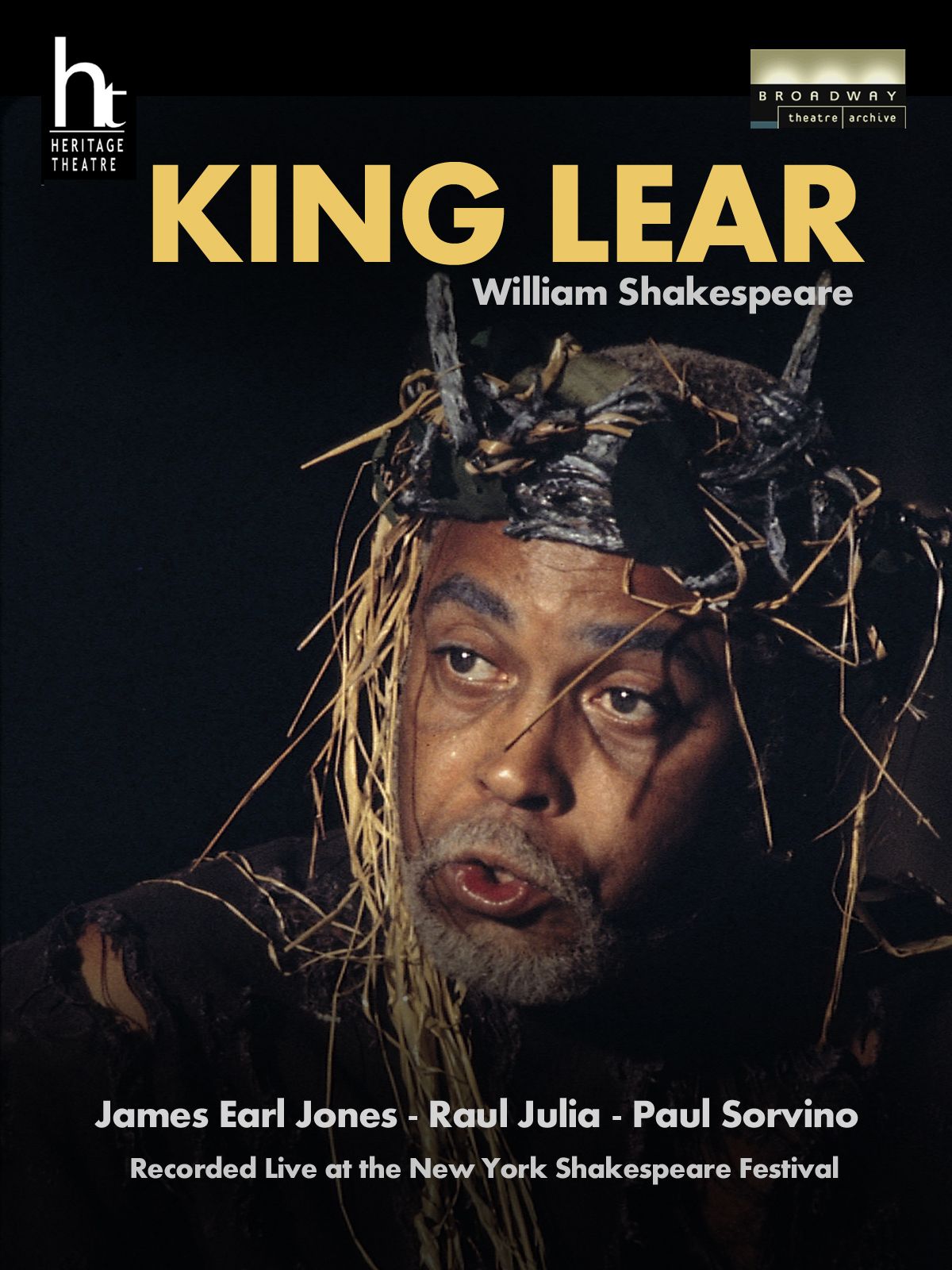
I’m sure I don’t need to tell you that one of the most iconic voices of our generation, James Earl Jones has passed away at the age of 93. I’m sure I also don’t need to mention his iconic film roles in such films as Field of Dreams, Coming To America, The LIon King, and of course, his (initially uncredited) role as the voice of Darth Vader in the Star Wars Trilogy. As I’ve written before, Jones had a powerful, authoritative voice that played kings, generals, knights, and even gods, which came directly from his training as a Shakespearean actor. So, instead of taking a look at his illustrious film career, I’d like to celebrate Jones’ contributions to Shakespeare, and how Shakespeare changed his life, and through him, changed mine.
Jones and Poetry
“I don’t mind talking about my stuttering because it’s just another example of you finding yourself with a weak muscle and you exercise it, and sometimes that becomes your strong muscle,” Jones told KCRA in 1986. “I was mute from grade one through freshman year in high school — mute because I just gave up on talking.”
-James Earl Jones in a TODAY Show interview, 1986
James Earl Jones was born in 1931 in Arkabutla, Mississippi. Not only did he struggle with racial discrimination at home and in his career, he also dealt with a debilitating stutter which, as you can see in the quote above, left him all but mute for years of his life. It was one of his teachers who helped Jones find his voice by giving him poetry to read, inspiring him to become an actor. As a Shakespearean actor who also struggles with a stutter, reading this about Jones helped me become an actor as well.
The New York SHakespeare Festival
Your voice has the power to inspire, motivate, and change lives. Don’t be afraid to use it.
James Earl Jones
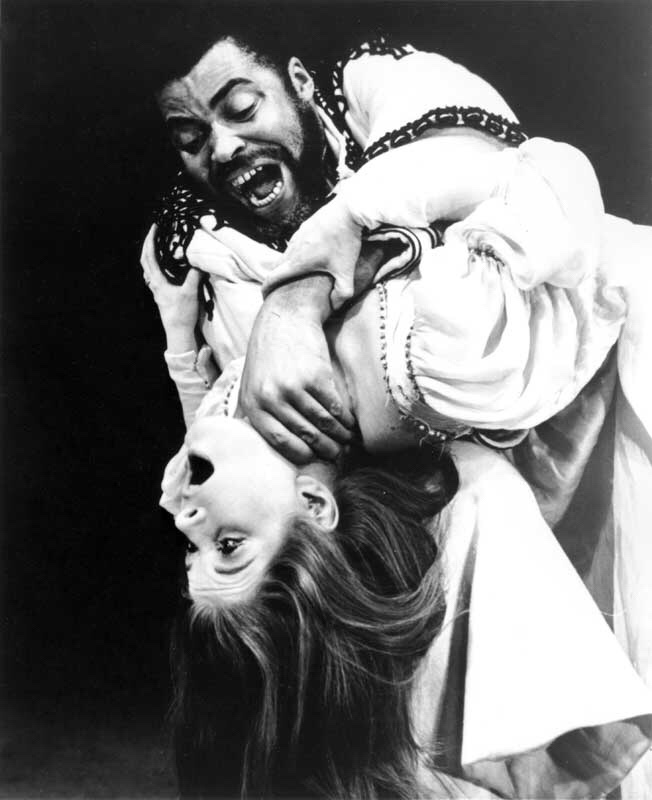
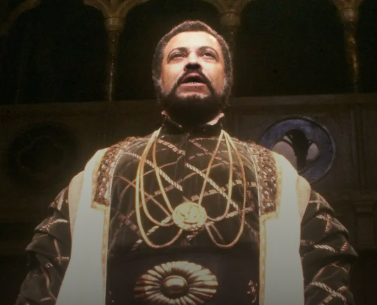
Before he became a star in the Hollywood firmament, Jones was a classically trained actor who starred in many contemporary and classic plays like The Iceman Cometh, The Great White Hope, and a title role in a drama about the great Shakespearean actor, Paul Robeson. In addition, Jones was a regular performer at the New York Shakespeare Festival, starring as King Claudius in Hamlet, Oedipus Rex, The Prince of Morocco in The Merchant of Venice, and like Paul Robeson, Jones was celebrated for his dignified and powerful portrayal of Othello.
James Earl Jones as Othello and Cecilia Hart as Desdemona in a scene from the Broadway revival of the play “Othello.”
James Earl Jones as Othello and Christopher Plummer as Iago in a scene from the Broadway revival of the play “Othello” (New York 1982)
“Mr. Jones commands a full, resonant voice and a supple body, and his jealous rages and frothing frenzy have not only size but also emotional credibility,” .”
The Times wrote in a review in 1964
From Shakespeare to Strangelove
James Earl Jones made the leap from stage and TV (he was one of the first celebrity guests on Sesame Street among others), after a surprising performance. In 1964, he was playing the relatively minor role of the Prince of Morocco in Merchant of Venice at the New York Shakespeare Festival, while George C. Scott played the more iconic role of Shylock. Surprisingly, Director Stanley Kubrick saw both of them and cast them both in Dr. Strangelove, Or: How I Learned to Stop Worrying And Love the Bomb, Jones’ first film role.
This goes to show that success is often not a straight line, that sometimes it’s the people you know and the reputation you garner that gives you success in your field.
Success should not be measured by material possessions, but by the contentment and fulfillment we find within ourselves.
James Earl Jones
My Favorite Performance of Jones
Though his film roles brought him international acclaim, James Earl Jones still performed onstage well into his 80s, including many more memorable performances at the New York Shakespeare Festival, including my favorite performance of all Jones’ stage roles- his role as King Lear. I’ve written before that Jones is still my favorite Lear- he plays the characters’ rage and commanding presence extremely well, but tempers it with the frailty and foolishness of age. You get the sense that this man was a force to be reckoned with, but is now unable to command himself, much less others. Jones’ interpretation apparently changed drastically in rehearsal, as he delved into Lear’s all-too-human flaws, playing him more like a king with dementia than like Mufasa.
Final thoughts
James Earl Jones would be the first to admit that Shakespeare and poetry changed his life. I would argue that the poetic qualities of his voice was what made him such a great actor. He could rumble and smash but also soothe and charm with a single sentence, and that is why I am glad that his voice is now preserved in the halls of Hollywood. Though he was a movie star, his voice was a Shakespearean through and through.
True strength is not in showing power over others, but in conquering your own fears and insecurities.
According to Branaugh, the idea behind the film was to emphasize beautiful things like tranquility and love, but preserve and heighten the danger of being hunted by a powerful warlord like the Duke
Interview with the director and cast at the Barbican
The Plot Of the Play
Historical Context
Branaugh set the film in 19th century Japan, at a time when English people came to Japan for the first time, and created small English communities in the country. I’ll discuss later that I have very conflicting feelings with this choice, but I will give Branaugh this- it does highlight the fish out of water journey that Rosalind and the other characters go through leaving their homes at court, and becoming enamored with a new country.
The Cast
The cast is full of veteran Shakespeareans and gifted Hollywood stars. Bryce Dallas Howard is charming as Rosalind, and has good chemistry with RSC actor David Oyelowo. I also enjoyed Brian Blessed’s dual role as Duke Senior and Duke Frederick. Kevin Klein is very sincere as Jaques but I wish he had a bit more fun with the over exaggerated melancholy that Jaques puts on. The overall effect of the performances is a sentimental, charming, beautiful, witty group of people who are having a fun time.
My Reaction
The cast is great, the cinematography is stunning, and the music is charming. Overall, Branaugh has done a great job of bringing the spirit of the play alive- that of a sweet, pastoral comedy about love, unrestrained by wealth or status. What I worry about though, is that Branaugh might inadvertently be celebrating colonialism. Yes, Japan is a beautiful country with a highly sophisticated and rich culture, so it makes sense that English people would be drawn to it. That does not justify the cruel way the English and Americans colonized parts of Japan, made the people mine for gold, and forced them to trade with the west. I worry that, like The Mikado, Branaugh celebrates Japan in a way that makes it seem like westerners were justified in taking so much away from it. I wish the plot had more of a “look but don’t touch” attitude to Japanese culture.
I also question the decision to cast barely any Asian actors. Given the story Branaugh wants to tell, it makes sense to cast non-asian actors as Thr Duke, Rosalind, Celia, and even Orlando, since they are the ones who come to the forest from an English-style court. But the roles of Corin, Silvius, Audry, Phoebe, and even Old Adam are people who are supposed to be familiar with the country, meaning it would make perfect sense to cast Asian actors in these roles. Frankly, there are very few well known Asian actors in Hollywood and I would love to give some of them a chance to shine, especially since Shakespeare has long been a way for actors to show their skills.
In conclusion, I can see why people like this movie and I too enjoy it, despite its questionable subtext. I don’t want to take away anyone’s enjoyment of the film, just to remind people not to be too seduced by the historical practice of taking something “As You Like It”
If you like this analysis, you might be interested in signing up for my Outschool Course on Shakespeare’s Comedies. Link down below. Share this class with a friend and you will get $20 USD off! You’ll also get $20 USD when you sign up with your link and take their first class!
The popular Netflix show “Bridgerton”, takes place in England during the reign of King George III (reigned 1760-1820). This was a time of enormous cultural and political upheaval- less than one century after the monarchy was restored, with the American and French Revolutions taking place across the pond. This was an era of power and privilege for the aristocracy, but a time of great uncertainty for nearly everyone else.
Crash Course in Sentimental Comedies, the preferred theater of the late 18th century.
Shakespeare in this period was considered a bit old hat and too vulgar for the refined age of the 18th century. During the Regency, Sentimental Comedies were all the rage. These comedies and tragedies were designed to instill audiences with Catharsis or empathy with the characters, rather than get people to think or use their reason. Gone were the days of laughing at people’s humorous behaviors and more along the lines of pitying the poor fates of middle-class rustics. These poor characters remained good-natured at the cruelty of powerful aristocrats. This explains the popularity of such plays as Beaumarchais‘ The marriage of Figaro, or Mozart’s opera Don Giovanni, in which an evil aristocrat is ruining the lives of common people like the naive peasant Zerlina with his insatiable sex drive.
After the religious wars of the 16th century and the civil wars of the 17th century, early 19th century people were more disillusioned about the monarchy, especially after the seismic shifts of the French revolution and the American Revolution. This was the beginning of the end of the aristocracy, and even though we don’t see it in Bridgerton for comedy reasons, you can sense that the eponymous family is preserving their family and houses, rather than crown and country, which is one reason why the show still resonates with young people.
The Bridgertons might be aristocratic but they have no illusions about their own self-importance. They’re rich, yes but, like modern rich people, they don’t believe that they deserve their riches because of God- they merely fight to preserve their riches for their children, to find their daughters good love matches, and to survive the complex social Laviathon of eighteenth Century and Nineteenth Century England.
Popular Productions Of the Georgian Era
Georgian Shakespeareans
The Georgian Era was the first time in history that Shakespeare started to have a Global audience. French and German writers like Goethe, Schiller and Voltaire helped to kick off the practice of Shakespeare being translated and performed in non English speaking countries in the 18th century. In addition, Empress Catherine the Great brought Shakespeare as far as Russia with her 1786 production of The Merry Wives of Windsor. By the end of the 19th century, Shakespeare had been translated into French, German, Hindi, Hungarian, Italian, Spanish, and Danish (Downer, 468).
In England, however, with the trend towards sentimentality and accessibility, (as the video above mentions), the idea of adapting and modernizing Shakespeare became more common in this type period. What’s interesting is that, just when Shakespeare seemed to be on the way out culturally, people like David Garrick began to rehabilitate Shakespeare (McDonald 358).
English writers of the 18th century were trying their best to use Shakespeare as a tool of moral instruction.
Not only did Garrick create popular adaptations of Shakespeare, he also successfully made Shakespeare a cultural icon. Garrick’s famous jubilee of enthroned Shakespeare as the perfect example of english writing and the common man (even though most of his characters are aristocrats), the fact that Shakespeare was a common writer a not an aristocrat or a University educated man, actually benefited his reputation in the 18th century.
Even though Bridgerton prides itself on its colorblind casting and the black & white characters haven’t a shred of racial discrimination (except in the spin-off), this society is still plagued with sexism. What I find the most interesting about Bridgerton is that, like a Shakespearean comedy, the show’s conflicts center around how women navigate sexist patriarchal systems.
In Bridgerton, the London season and the annual balls are more than just a chance to to socialize and meet handsome young man, dance, and wear pretty dresses; they are the only hope that upper class women had for the future security of their houses. These systems were put in place because women were denied the ability to determine their own destinies. Though Queen Charlotte runs the social season, she is enforcing a patriarchal system; one that places a woman’s value entirely on her ability to charm and retain the affections of men.
the bridgerton ladies are extremely aware of this and you can see their anxiety every time they attend a ball. They know that their future depends on this and the show isn’t shy about that. So so like a Shakespearean heroine, the comedy and the central conflict is how these women will navigate this socio-economic gender-based political mindfield.
Cleopatra and her son CesareanPortia, wife of Brutus, swallow coals rather than be captured by Octavius.Beatrice from “Much Ado About Nothing”Cordelia Disenherited Jessica prepares to elope with Lorenzo Rosalind in “As You Like It”
What Shakespeare frequently does in his comedies is have women deliberately challenge or abandon this strict social structure. Young Shakespearean heroines frequently omen disguise themselves as men and/ or go traveling abroad so that they can find husbands and determine their own destinies. Shakespeare won’t Go So Far as to abandon the notions of marriage and childbearing, but he does create a sort of Female Fantasy: “wouldn’t it be nice to determine a one’s Future for oneself?”
Rosalind courts Orlando in As You Like It
In As You Like It, Rosalind, in disguise as a man, is able to dictate for herself the way that she marries and courts Orlando, which must have been shocking and hilarious for Elizabethans. Viola again disguised as a Man is able to criticize his outdated notions of women to his face, and disdains his repeated attempts to woo a woman who does not share his affections. Meanwhile Juliet, a woman whose arranged is dramatically portrayed from start to finish, abandons her father’s choice and marries for love. All these women have the same conflict as the bit bridgerton women they just confront them in more extreme way
Since International Women’s Day is Friday, I’m devoting the following week to talking about the awesome female characters in Shakespeare’s Roman plays: Titus, Andronicus, Julius Caesar, Antony and Cleopatra, and Coriolanus
First, here’s my post and an accompanying podcast on Roman women, which includes an analysis of Lavinia, Portia, Valumnia, and Cleopatra:
Here’s a fascinating video about the lives of Roman girls:
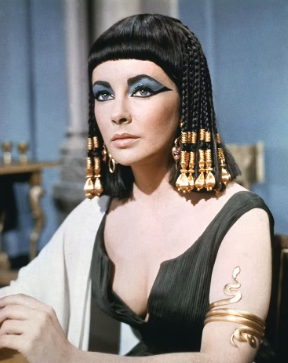
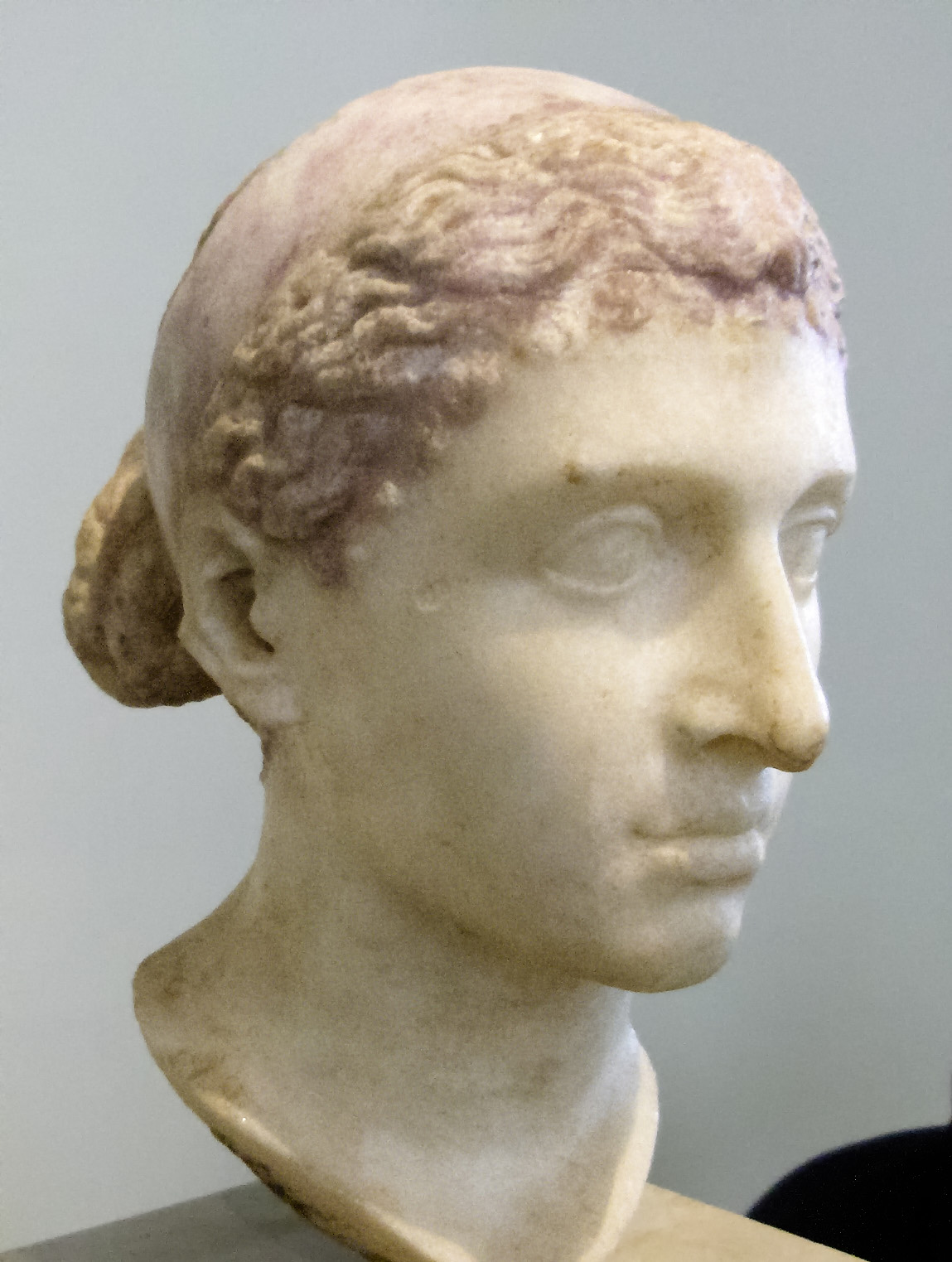
And here’s a special section about Cleopatra:
Comedy sketches about Cleopatra from “Horrible Histories” BBC, 2015.
A Lady-Gaga-esque song about Cleopatra from “Horrible Histories,” 2014Infographic from an article about Cleopatra’s beauty regimen. Source: http://socialdiary.pk/
“Welcome Spirit, How Camest Thou hither?” The sources for Puck
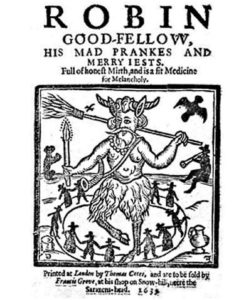
Puck, in medieval English folklore, a malicious fairy or demon. In Old and Middle English the word meant simply “demon.” In Elizabethan lore he was a mischievous, brownielike fairy also called Robin Goodfellow, or Hobgoblin. As one of the leading characters in William Shakespeare’s Midsummer Night’s Dream, Puck boasts of his pranks of changing shapes, misleading travelers at night, spoiling milk, frightening young girls, and tripping venerable old dames. The Irish pooka, or púca, and the Welsh pwcca are similar household spirits.
Shakespeare also took inspiration from English poet Edmund Spencer, who visited Ireland in the 1590s and adapted the folklore he picked up into his opera The Fairy Queen, which Shakespeare adapted into A Midsummer Night’s Dream
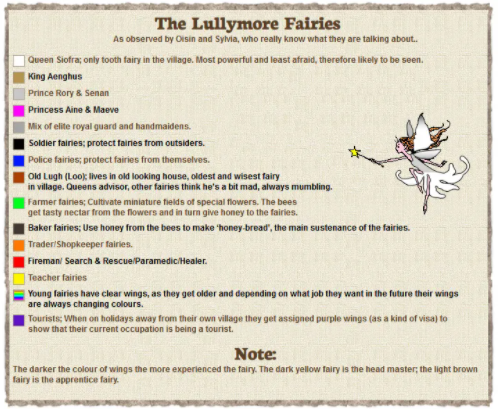
Types of fairies you can “spot” at the Lullymore Park in Ireland:
Puck/Robin’s Dual Nature
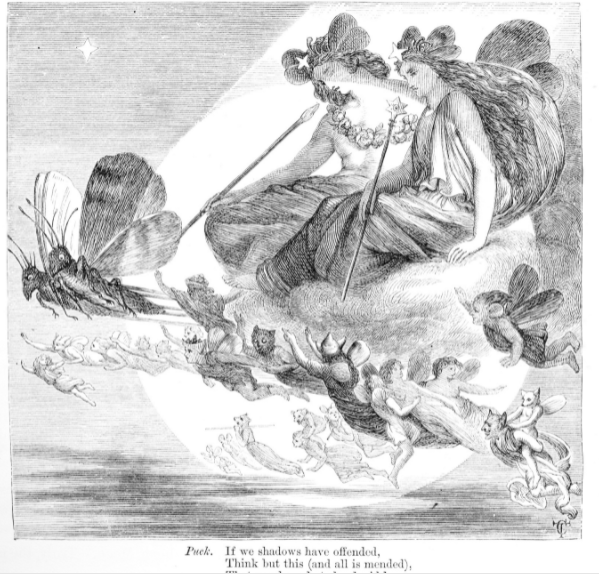
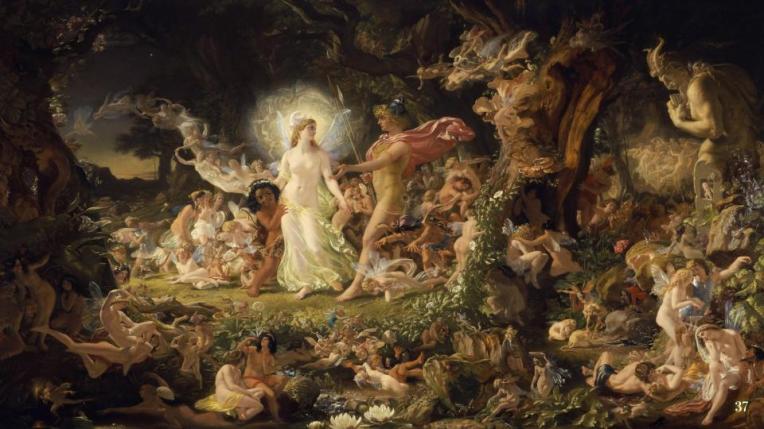
The old stories tell that Fairies are magical creatures who live in hollow places in the earth. Some are benevolent and help give rain and pleasant weather to the Earth, Like the king and Queen of the fairies, Oberon and Titania:
And the mazed world, By their [the tides] increase, now knows not which is which: And this same progeny of evils comes From our debate, from our dissension; We are their parents and original.
— Titania, (Queen of the Faries), A Midsummer Night’s Dream Act II, Scene i.
Titania in this speech shows great concern for nature, humanity, and the planet. She believes it is the responsibility of fairies, particularly herself and her husband Oberon, to control the elements and keep humans and fairies safe. Some fairies, however, are cruel and enjoy playing tricks on mortals, just like Puck in A Midsummer Night’s Dream, or Queen Mab in Romeo and Juliet.
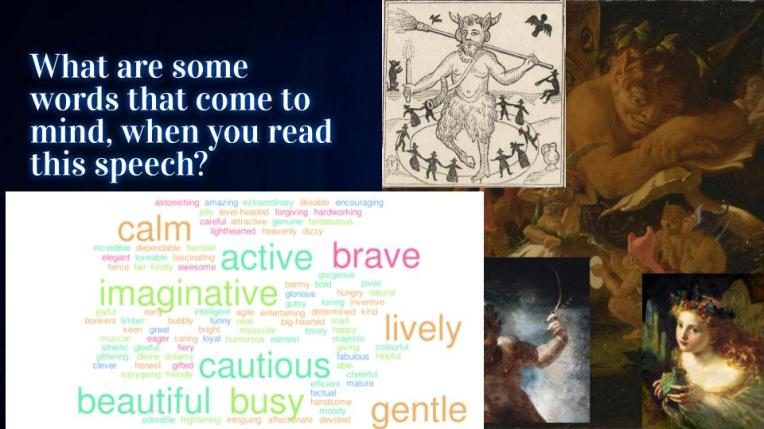
Close reading of Puck’s speech (MND II, i)
.
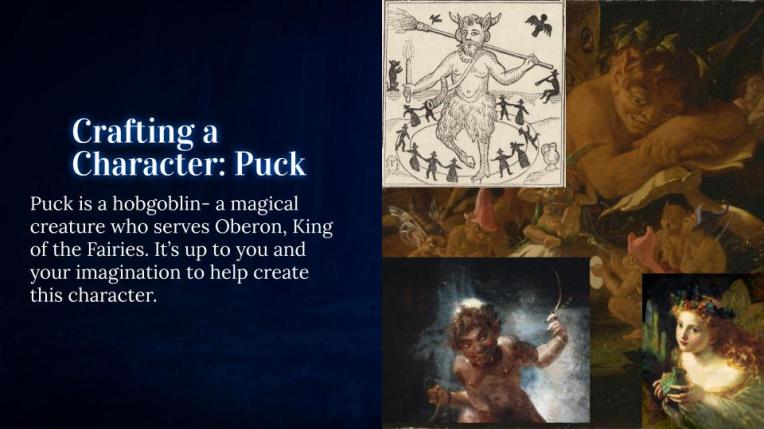
This is a short analysis I created of the tricks Puck plays on people in A Midsummer Night’s Dream, as part of my acting course on Ouschool.com. Note the different ways Puck is portrayed in photos as a satyr, a rotund elf, and sometimes as an almost- demon like figure.
Punishments or contracts with fairies formed a significant part of Goodfellow’s purpose on earth. While he could issue good fortune and support, this was always at the cost of those involved. As Reginald Scot commented, Goodfellow had a ‘standing fee’ of a ‘mess of white bread and milk’, which he expected after supporting housewives with their chores. If his payment was forgotten, Goodfellow was believed to steal from the home that owed him, often stealing grain and milk from the dairy.
Abigail Sparkes, Historic UK.com
Performing Puck
Because Puck is not human, and somewhat ambiguous in the text, an actor can play Puck in many different ways. Generally speaking, actors tend to explore Puck’s attitude toward humans, their love of mischief, and how to translate that physically and vocally
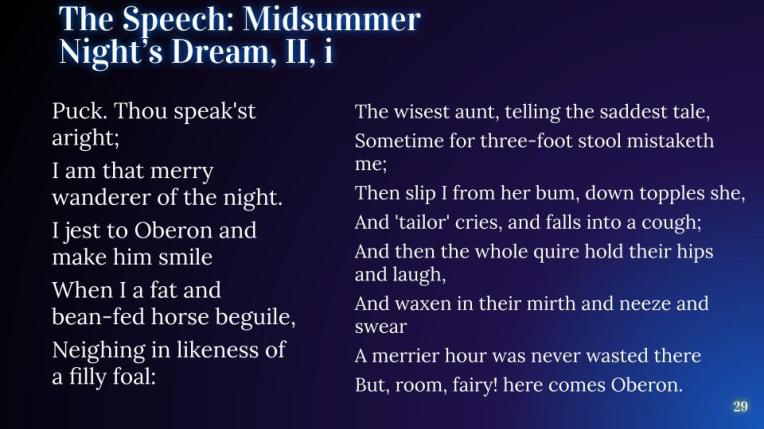
Puck. My mistress with a monster is in love. Near to her close and consecrated bower, While she was in her dull and sleeping hour, A crew of patches, rude mechanicals, Were met together to rehearse a play The shallowest thick-skin of that barren sort, Who Pyramus presented, in their sport Forsook his scene and enter’d in a brake When I did him at this advantage take, An ass’s nole I fixed on his head:
Anon his Thisbe must be answered, And forth my mimic comes. So, at his sight, away his fellows fly; And, at our stamp, here o’er and o’er one falls; He murder cries and help from Athens calls. I led them on in this distracted fear, And left sweet Pyramus translated there: When in that moment, so it came to pass, Titania waked and straightway loved an ass!
This is my new trailer for my fully online, fully immersive murder mystery game based on Shakespeare’s “Romeo and Juliet.” You play as a detective hired to solve the mystery of Juliet’s murder. You will piece together the plot and characters of Romeo and Juliet, but also use forensic science to identify clues, interrogate suspects, and examine the crime scene just like a real detective! Register now at Outschool.com SPECIAL OFFER: Get $5 off the murder mystery class with coupon code HTHESSQ76F5 until Apr 22, 2023. Get started at https://outschool.com/classes/romeo-a… and enter the coupon code at checkout.
Happy Black History Month Everyone! Today I’m paying tribute to a great actor and activist, Mr. Ira Aldridge (1807-1867).
Ira Aldridge portrait by James Northcote
Mr Ira Aldridge was not only a great actor but also an influential figure in the abolitionist movement. He rose from the depths of discrimination and dehumanization to become a famous, respected international actor. Furthermore, his life was marked by creating new opportunities for himself and other people of color.
Mr. Aldridge as Othello.
Who Was Ira Aldridge?
Early Life
True feeling and just expression are not confined to any clime or colour.
Ira Adridge
Born in New York in 1807, Mr. Aldridge had dreams to found an all-black theater even as a teenager. His first job was with William Brown’s African Theatre, the first African American theater company. However, discrimination and racism blocked Mr. Aldridge from success in New York, when another theater manager “hired thugs to beat up the actors”. The theatre subsequently burned down and the actors were abused by the New York police. Undaunted, Aldridge decided to take his talents to England, boarding a ship, and arriving in the early 1820s. (Howard, qtd in Thorpe 1). Even though he faced discrimination and violence as a child, Mr. Aldridge would not be deterred. Soon his skill as a Shakespearean actor would soon command respect from all.3.) He refused to be defined by the color of his skin, but by his skill as an actor.
Success In Shakespeare
Ira Aldridge as Aaron in “Titus Andronicus”
In order to become a professional actor, Ira Aldridge boarded a ship to London and became a Shakespearean actor in the early 1820s. He not only became the first black actor to play the role of Othello, he also played other roles such as Shylock in The Merchant of Venice, Gambia in The Slave, and other roles that denounced the evils of slavery:
Aldridge chose to play a lot of anti-slavery roles, including Othello, as well as the standard lead parts in the repertoire,” said Tony Howard, professor of English at Warwick University.
Not only did his performances call attention to the evils of slavery, they also challenged preconceived notions of what black people were capable of. As you can see in this reproduction of Mr. Aldridge’s 1851 tour advertisements, Ira Aldridge chose to bill himself as “The African Roscius,” a reference to an ancient Roman actor. His performances were heralded for his poise and dignity. The Leeds Times highlights “The passions he admirably portrayed in the human breast.”
No sooner did the Moor make his appearance, than I felt myself, I confess it, instantly subjugated, not by the terrible and menacing look of the hero, but by the naturalness, calm dignity, and by the stamp of power and force that he manifested.
Ira Aldridge
From 1820 to his death in 1867, Mr. Aldridge touredmore than 250 theatres across Britain and Ireland, and more than 225 theatres in Europe. Though he had much more success in Europe, Mr. Aldridge still had to confront prejudices. According to ArtUK.org:
One scathing (and racist) review for The Times claimed that: ‘His figure is unlucky for the stage; he is baker-knee’d and narrow-chested; and owing to the shape of his lips it is utterly impossible for him to pronounce English in such a manner as to satisfy even the fastidious ears of the gallery.’
Thus, Aldridge’s performances confronted and challenged racist views of whether or not a real black person could play Othello, subtly changing the hearts and minds of the European public, at a time when the question of slavery threatened to rip Europe, (and later the United States) apart.
Abolitionism
Although Aldridge didn’t arrive in Britain with the sole purpose of promoting the abolitionist movement, his impressive skill, charisma and oratory capabilities inevitably swayed public opinion. He became known for directly addressing the audience about the injustices of slavery on the closing night of his play at a given theatre (Source: https://artuk.org/discover/stories/ira-aldridge-a-brief-visual-history-of-the-black-shakespearean-actor )
As I’ve written before, Shakespeare has a complicated relationship with the American Civil War, and ironically, many people in the Civil War were Shakespearean actors. More importantly, England at this time was deeply divided about whether or not to support the Union or the Confederacy. England was embroiled in the cotton trade with America, and thus had an economic incentive to support the South. At the same time, public opinion was very much against slavery at the time, and Aldridge helped keep England’s public within that mindset.
Ira Aldridge cared about abolitionism and making life better for black people, especially actors. Not only did he speak out against slavery onstage, he also helped change hearts and minds in local communities. According to ArtUK, in 1828, Mr. Aldridge was approached by Sir Skears Rew to become the new manager of the Coventry Theater. He was the first black man to manage an English theater. Aldridge became a beloved member of the community of Coventry and may have helped inspire the community to petition Parliament to abolish slavery. EThus, Mr. Aldridge’s success in Europe helped open doors for European black actors and encouraged the abolitionist movement, while his sympathetic portrayals of former slaves and oppressed peoples helped change hearts and minds.
Aldridge’s Influence Today
“Aldridge has always interested black stars, but the wider influence he had is not well known,” said Howard. “Robeson was a great fan of his, and when he came to London to play Othello in 1930 at the Savoy, he put on an exhibition about Aldridge in respect of his memory.”
For nearly 100 years, actors and devotees of Mr. Aldridge have been inspired by his life. As the quote above indicates, the next great American Shakespearean Paul Robeson helped build his career on Aldridge’s success; being the first black man to play Othello on the American stage, and eventually touring Europe himself as an actor and a distinguished opera singer. Click below to read more about how Aldridge inspired generations of black actors, and his tours helped bring Shakespeare to many previously unknown European countries.
In modern films and plays, Mr. Aldridge is remembered as a hero, and rightfully so. In the play “Red Velvet,” actor Adrian Lester plays Aldridge and highlights his struggles and successful contributions to the theatre. He was not only a great actor but a dignified and courageous champion of the rights of all people. I’m proud to conclude my black history month posts with this review of the life and career of a man who inspires all Shakespeareans and turned his profession into a powerful call for change.