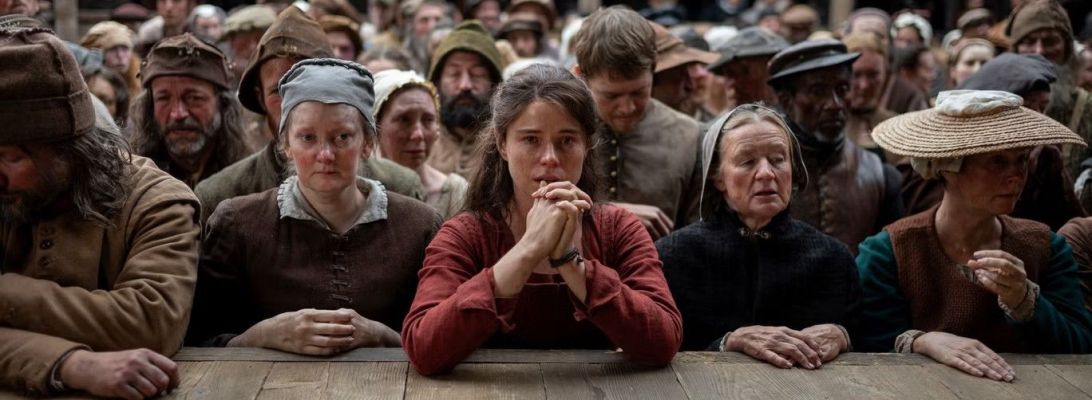
Let me begin with a special shout out to Jesse Buckley, the first Irish woman to win an Oscar for her portrayal of Shakespeare’s wife Anne ‘Agnes’ Hathaway in the movie Hamnet.
I promise I will write a full review soon, but for now here’s a behind the scenes look at the film:
In addition, here’s a link to my post on how Shakespeare depicts Irish culture in his plays
And finally, today is the anniversary of Marcus Brutus’ attempt to win over the Roman crowd, attempting to justify his tyrannicide. Here’s a scene from HBO’s Rome, in which Brutus surrenders to Caesar after the Battle of Pharsellus. In this scene, Caesar is played by Irish actor, Ciarán Hinds.
With awards season in full swing, there has been a lot of controversy over two stories that Shakespeare had a great influence over- Hamnet, based on the novel of the same name, and Guillermo Del Toro’s adaptation of Frankenstein. Despite getting five golden globe nominations, Frankenstein went home with a hand emptier than the monster floating off on an iceberg. Meanwhile, Hamnet took the best actress and best picture award, and is poised for an Oscar nomination.
I’ll review Hamnet at a later date. What I want to do now is discuss the influence Shakespeare and other Renaissance writers had on the classic 1818 novel, and how well Del Toro hints at the story’s Renaissance roots.I would argue that, although rooted in the 10th century Romantic world, Frankenstein has many Shakespearean and Early Modern influences, notably Dr Faustus by Christopher Marlowe, and The Tempest by Shakespeare
In 1818, a young woman named Mary Wolstonecraft, heard from her friend, a Swiss doctor, about a prominent experiment called galvanism and was faced with the terrifying prospect that man might someday be able to resurrect the dead, (a feat that had only successfully been done by God). When Mary Shelley wrote the novel Frankenstein she redefined the Faustus story and made it about Man not taking responsibility for the consequences of his actions, and also a warning to progress for its own sake without compassion without reason without wisdom. As we shall see, Shelly was a trailblazer in turning the Faustian wizard into the mad scientist.
The Morality Tale
Faustus is one of the oldest and most quintessential German stories it is a morality tale medieval in its origins it also is loosely based on a real person a real scholar named Doctor John foustis and this story was influential on forming German cultural identity and the story itself has inspired countless authors some German and some merely influenced by German culture and it’s very interesting to trace the way that it’s being used And how the the trope of the Faustian bargain has influenced Germany America and and England other Anglo sects and countries so the story of Faustus is Medieval in origin but he became extremely popular when English playwright Christopher Marlowe Shakespeare’s contemporary and rival wrote it down in his play of Dr. Faustus
What’s interesting about this interpretation is that you could easily see it as Faustus Rejects from the beginning the notion of divine grace he believes that he cannot that he is either unwilling or unable to believe that he is beloved by God and therefore he turns to satanic poworse it’s somewhat ambiguous why he does this one possible interpretation is that Faustus might actually be a that faustis like Marlow might be a possible gay man and is convinced that he is an abomination under the Lord and therefore he might as well indulge in satanic activities.
Whatever the reason the play does a great job of showing the struggle of Faustus as he is presented several times with the chance to repent, and actively refuses it every single time.
“Tutors Not So Careful”
In Marlow’s version, Faustus studies at the University of vittenburg in Germany, whicb also boasts other notable allumni- Prince Hamlet which Shakespeare would later write in his own play Hamlet Prince of Denmark. The prince broods over whether the creature he has seen return from the dead is actually a devil, sent to destroy him.
Shelley admits that a lot of her as a source for that her sources for Shakespeare her sources for Frankenstein included Shakespeare in The Tempest. Though Doctor Frankenstein his book is not a is Swiss not German he is educated at the University of english stat in Germany where he learns organic chemistry and acquires the ambition to do with the alchemists and conjurors of faustis day failed to do namely create the elixir of life.
“Graves, at my command, Hath waked their sleepers”
One big trope in Frankenstein is the danger of man crossing over into God’s domain- that from the beginning of time there has been a knowledge that God deliberately kept from humankind. In Frankenstein, this takes the form of scientific knowledge, but in Shakespeare, it is magic. In Macbeth, the title character is tempted by witches to know his destiny and is punished severely for it. Remember that when Shakespeare wrote the play, King James presided over hundreds of witch hunts and wrote a book on how to identify witches.
In The Tempest, Shakespeare gives us a more ambiguous look at magic where the magician Prospero has the power to create storms, conjure up spirits, and like Frankenstein, raise the dead:
 I have bedimm'd
The noontide sun, call'd forth the mutinous winds,
And 'twixt the green sea and the azured vault
Set roaring war: to the dread rattling thunder2065
Have I given fire and rifted Jove's stout oak
With his own bolt; the strong-based promontory
Have I made shake and by the spurs pluck'd up
The pine and cedar: graves at my command
Have waked their sleepers, oped, and let 'em forth
By my so potent art. The Tempest, Act V, Scene i.
Even though Prospero is the protagonist and he faces no consequences for his magic, for some reason he chooses to abandon it. It’s almost as if Shakespeare was anticipating Frankenstein by having a proto mad scientist character give up his art before it is too late:
 But this rough magic
I here abjure, and, when I have required
Some heavenly music, which even now I do,
To work mine end upon their senses that
This airy charm is for, I'll break my staff,2075
Bury it certain fathoms in the earth,
And deeper than did ever plummet sound
I'll drown my book.
Prospero, Act V, Scene i.
“This thing of Darkness”
“You taught me language, and my profit in’t is I know how to curse!”
“Cursed, cursed creator! Why did I live? Why, in that instant, did I not extinguish the spark of existence which you had so wantonly bestowed? I know not; despair had not yet taken possession of me; my feelings were those of rage and revenge. I could with pleasure have destroyed the cottage and its inhabitants and have glutted myself with their shrieks and misery.
Shelly, Chapter 16
If you’ve never read the book Frankenstein, you might be surprised to learn that unlike Boris Karloff’s grunting silent monster, in the novel the Monster is actually intelligent and well-spoken. One thing I enjoyed about Guillermo Del Toro’s version is that the Monster gets time to tell his tale. As we in the audience get to know him, the notion of who is the true Monster and who is truly human becomes as murky as the subterranean lair the doctor chains his creation within. He engages in intellectual debates with his creator and demands to know why Frankenstein chose to abandon him.
My abhorrence of this fiend cannot be conceived. When I thought of him I gnashed my teeth, my eyes became inflamed, and I ardently wished to extinguish that life which I had so thoughtlessly bestowed. When I reflected on his crimes and malice, my hatred and revenge burst all bounds of moderation.
With the holidays approaching, why not give your kids the gift of learning Shakespeare in a low-key, no-pressure scenario? I have classes on Shakespeare’s life, Romeo and Juliet, and my celebrated Stage Combat class! Sign up now for all the fun on Outschool.com!
Shakespeare and Star Wars
Class Description: Using self-paced online activities, your child(ren) will compare the plot and characters of Star Wars to Shakespeare’s plays. We will also discuss Shakespeare’s writing by looking at “William Shakespeare’s Star Wars” by Ian Doescher.
Romeo and Juliet Murder Mystery
Course Description: A flexible schedule class that teaches kids the plot and characters of “Romeo and Juliet,” in the context of a detective story where you solve the mystery of the young lovers’ deaths.
Course Descriptions
How to Write Like Shakespeare: Learn the basics of iambic pentameter, sonnet form, and Shakespeare’s dramatic structure, and practice writing Shakespearean speeches.
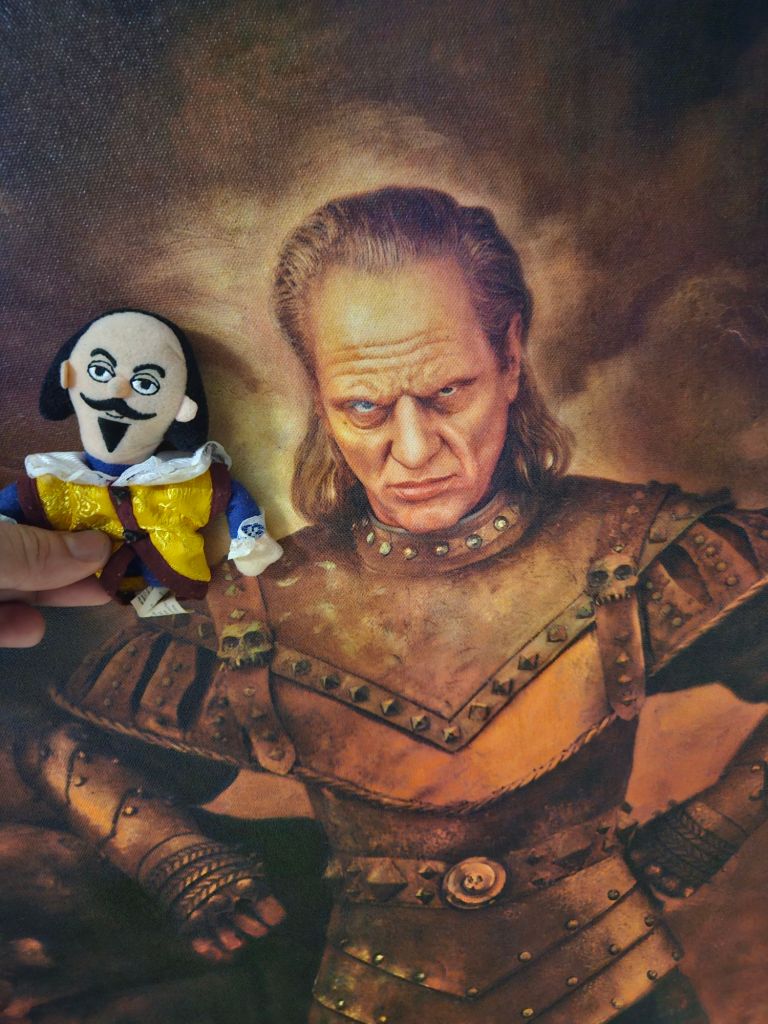
So, why Ghostbusters? Well, as William Shakespeare’s Star Wars has shown, it’s not only fun to adapt popular stories into Shakespearean parodies, it can also be educational. I knew I wanted to do a short play for my school’s fall festival, but I didn’t think to do “Ghostbusters” until I saw the final joke in the Simpson’s parody of Hamlet, where Homer says: “Son, [Hamlet] is not only a great play, but also became a great movie, called Ghostbusters!”
This joke got me thinking- Hamlet has a comic scene where the prince and his two friends are running around the stage away from a ghost, one that refuses to speak to them and then terrifies them. This reminds me of the moment where the ghost of the librarian shushes the heroes, and becomes a hideous creature:
The librarian in Ghostbusters is similar to the Ghost of Hamlet’s Father.
From this realization. I took it as a personal challenge to adapt Ghostbusters into a one-act stage play with as much Shakespearean dialogue as possible.
My Process
Re-writing the script of a movie into a Shakespeare text required me to overhaul the story of Ghostbusters, as well as retrofitting Shakespearean lines and speeches from Hamlet, Macbeth, Henry IV & Henry V. I knew I wanted to freely cut-and-paste from Shakespeare, as if he’d written the original Ghostbusters. The result is a sort of stitched together blanket of Shakespeare lines, lines adapted from Ghostbusters, and some lines I created myself.
The Outline
Like I said, I kept the story limited to how the four Ghostbusters learn that ghosts are real, become professional ghost catchers, and then receive a call from a damsel in distress (Ms. Dana Barrett), who allows them to become heroes by defeating the ghost that has possessed her. I also decided to use the commercial in the movie as a framing device:
In my version, the Ghostbusters start by doing a commercial that then becomes a flashback where the heroes recap everything that has happened to them over the past week. I then ended the play by joking referring to the play as “A very long commercial.”
Scenes I Included/ Scenes I Cut
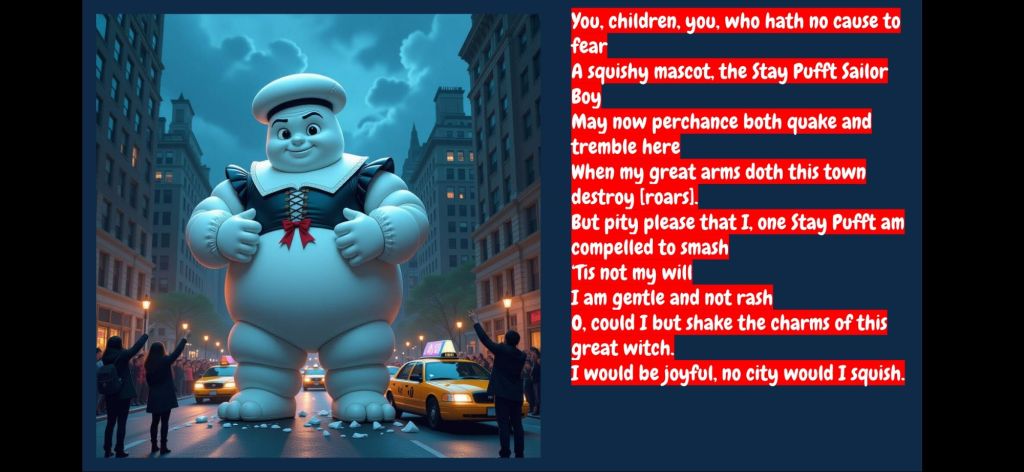
I only had 30 minutes allocated for my show, so I knew I’d have to pare down the story to its bare bones. This meant I had to eliminate a lot of subplots and characters and condense several scenes. As much as I love Walter Peck, Dean Jaeger, Louis Tully, Janine Melnitz, and the guy who gets electrocuted, they are not absolutely essential to the plot, so I cut them from my version. I also combined the characters of Dana and Gozer, eliminating the two terror dogs and limiting the antagonists to Gozer and the Stay Pufft Marshmallow Man. So I watched the film a few times, and created an outline of just 7 scenes.
Character Models
One thing I’ve said again and again is that Shakespeare’s characters are all based on archetypes that we see everywhere throughout literature, theater, and yes, movies. While I was watching Ghostbusters, I tried to find the Shakespearean archetypes that match the best with the characters in the movie:
Ray Stantz- Hamlet from Hamlet– Ray is a bookish man who is obsessed with death and with the occult, which makes him very much like the scholarly Prince Hamlet. He’s also a man on a mission to try and understand the supernatural and help keep it from destroying our world. Dr. Venkman describes him as “The heart of the Ghostbusters”, and that humorous heart gets him into trouble sometimes.
Egon Spangler- Horatio from Hamlet If Ray is the heart of the team, Egon is the brain. He is the no-nonsense scientist who provides the team with data and equipment to help them fight ghosts effectively, much like how Horatio reports to Hamlet that his father’s ghost has returned from the grave.
Dr. Venkman– Sir John Falstaff/ King Henry V
Dana Barret- Ophelia from Hamlet
Gozer– Hecate from Macbeth
The Stay Pufft Marshmallow Man- Snug the Joiner from A Midsummer Night’s Dream
Sneak Peak
Here’s one of the scenes I wrote, with the original scene for context
[The ghostbusters climb the stairway to the penthouse, where Gozer is sitting in a cloud. They have been going for a while and are clearly tired]. Venkman: Though I have not known fair Dana long, I know she must be a virtuous maid. Ascend this penthouse tower and let’s rescue she! Like to the Knights of ancient chivalry! Egon: These apparitions whizzing in the air Give so much light that I may read by them. [They reach the top and behold Gozer] Ray: I am resolved to speak to Gozer. This is the latest parle we will admit. Gozer: Art thou a god? Ray: Nay. Gozer: Then perish, half-man! Winston: Enough Ray of thy diplomacy! Speak, thou proton pack for me! [He fires, then the rest join in] Gozer disappears Venkman: The sky hath bubbles as the water hath, and she be one of them! Gozer [in Voice Over]: Sub creatures! Hark! Tis time! Pick the Destructor’s form Be it a Goblin damned or angel bright! Tornado or a earthy bright Or greatest Monkey with an appetite! Winson: Our thoughts contain the form that seals our doom? Then make them blank as a new-made room! [They all gesture to their heads as if pushing thoughts out] Gozer: Thy choice is made. Prepare to meet thy doom! Venkman: Nay! I chose nothing Winston: Nor I! Egon: Nor I [Pause] All: Ray? Ray: Twas not my fault! It popped into my mind Venkman: What? What hast popped in? Egon: LOOOK!!!
Why no Coriolanus?? David Oyelowo is playing him at the National Theatre and it’s the one analysis of Shakespeare you don’t have! Please hurry! I’m seeing it on Friday!
User Noittickles, sent to me today
Well, with a request like that, how can I refuse!
Coriolanus is the only Shakespearean story about Republican Rome, which is to say, before Julius Caesar turned Rome into a dictatorship. The play has been called pro-democracy, pro-monarchy, fascist, Marxist, and many other things. In some ways, the play is rather simple and its verse isn’t much fun to read, but the questions it poses, and the way Coriolanus shows the clash between power and common people, makes it fascinating to think about.
The play’s title character is also the most opaque one Shakespeare ever wrote. Some say he is a war hero, undone by the mob. Some say he is a want-to-be dictator who hates the common people and wants to keep power among the military elite. Unlike Hamlet, Macbeth, or any of Shakespeare’s other tragic heroes, we never get a sense of his true intent, or his actual feelings on anything.
To illustrate this, let’s look at two very different interpretations of the same speech. In Act III, Scene iii, the tribunes (representatives of the commons in the Senate), have organized a smear campaign to prevent Coriolanus from becoming Consul, (the highest rank a Roman aristocrat could achieve before Emperor Augustus). Coriolanus is furious at the Tribunes, and vows to leave Rome to take his revenge on the city. Here’s the text of the speech:
Coriolanus. You common cry of curs! whose breath I hate
As reek o' the rotten fens, whose loves I prize
As the dead carcasses of unburied men
That do corrupt my air, I banish you;
And here remain with your uncertainty!
Let every feeble rumour shake your hearts!
Your enemies, with nodding of their plumes,
Fan you into despair! Have the power still
To banish your defenders; till at length
Your ignorance, which finds not till it feels,
Making not reservation of yourselves,
Still your own foes, deliver you as most
Abated captives to some nation
That won you without blows! Despising,
For you, the city, thus I turn my back:
There is a world elsewhere.
[Exeunt CORIOLANUS, COMINIUS, MENENIUS, Senators,]
and Patricians]
Aedile. The people's enemy is gone, is gone!
Citizens. Our enemy is banish'd! he is gone! Hoo! hoo!
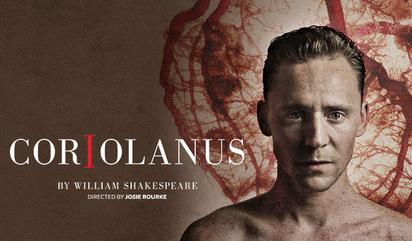
In the first speech, Tom Huddleston plays Coriolanus as a heroic soldier, disgusted and hurt by the lies of the scheming Tribunes:
Hiddleston chose to play Coriolanus not as a villain but as a frustrated demagogue- someone who wants to lead his people to greatness, whether they like it or not. Whether you approve of his methods, Hiddleston’s Caius Martius does care about the good of Rome. You can almost see the tears in his eyes as he leaves the city he loves, the city he bled for, and that has now betrayed him.
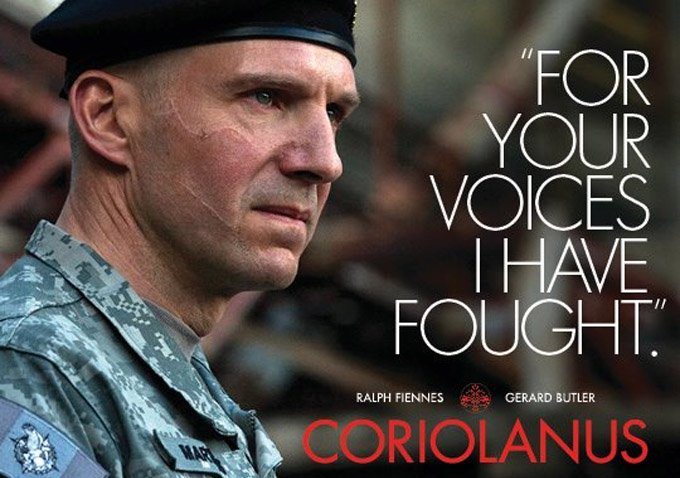
By Contrast, Ralph Fiennes takes a much more authoritarian and cruel route in the film Coriolanus, which Fiennes also directed:
Youtube critic Kyle Kallgren made the excellent case that Fiennes’ Coriolanus is first and foremost, a soldier. You could argue that perhaps Coriolanus has no political ambition whatsoever; he merely wants to keep fighting because war is all he knows. Maybe he purposefully sabotaged himself during his campaign for Consul, because all he wishes to rule is the battlefield:
Kalgren also highlights the “proto fascist” parts of Fiennes’ performance, since Fiennes himself has played Nazis, serial killers, and of course, Lord Voldemort, who is essentially a fascist dictator. Like Merchant of Venice, the Nazi party used Coriolanus as a propaganda tool, claiming that Caius’ fall from grace showed the failure of a weak democracy:
The poet deals with the problem of the people and its leader, he depicts the true nature of the leader in contrast to the aimless masses; he shows a people led in a false manner, a false democracy, whose exponents yield to the wishes of the people for egotistical reasons. Above these weaklings towers the figure of the true hero and leader, Coriolanus, who would like to guide the deceived people to its health in the same way as, in our days, Adolf Hitler would do with our beloved German Fatherland.
Martin Brunkhorst, “Shakespeare’s Coriolanus in Deutscher Bearbeitung. Quoted from Weida
It makes sense that fascists would gravitate towards a play about a seemingly virtuous Roman military leader. After all, the word “fascism” is an Italian word, coined by Benito Mussolini, to evoke the glory days of the Roman Empire- days when Roman society was based on military conquest under a strong leader. What these fascists fail to recognize is that Coriolanus is not a strong leader- he hates politics and is unable to gain any support from the people or from the elites in power. His inability to “play the game” of Roman politics, does make him appealing to some, but on the whole, his career is a disaster.
Some have chosen to interpret the story of Coriolanus as a sort of action-movie wish fulfillment- a man in a lawless society who uses his fists rather than words. Back in the 1990s, Steve Bannon (former advisor to President Donald Trump), wrote a hip-hop musical called: The Thing I Am, which re-interpreted the story of Coriolanus as a police captain who is trying to clean up downtown LA, which is embroiled in gang warfare. I find this interpretation paper-thin and not at all conducive to the spirit of the original play. It also has very racist and paternalistic undertones. You can read my review of it here:
Shakespeare refuses to be prescriptive on political or social issues. He tries to represent all sides of an issue and let the audience decide. With the rise of neo-fascist movements, sectarian violence, and the persistent questions surrounding police and military forces, Coriolanus is more relevant than ever. I haven’t seen this production at the National Theater, but I hope it calls attention to the various angles and points of view of the play- Coriolanus the war hero, Coriolanus the traitor, Coriolanus the soldier, Coriolanus the would-be-dictator. David Oyelowo is a fantastic Shakespearean actor, so I’m sure he can bring a great deal of complexity and nuance to this complicated man.
What I find interesting is that the trailer chooses to use this speech, when Coriolanus has defected to Rome’s enemies, the Volskies. He seems sorrowful, desperate, and afraid of what the Volskies will do to him, now that he is in their camp. One line that Oyelowo delivered exceptionally well was the line “Only the name remains.” I haven’t seen the whole play, but it seems THIS Coriolanus is concerned with the glory of his name living after him. The final question this play asks is, for such a complicated man, how will Coriolanus be remembered?
Well, there you go, Stopittickles! Hope you enjoyed this overview of the play Coriolanus. If you like this review, you might like to sign up for my online class on Julius Caesar via outschool.com:
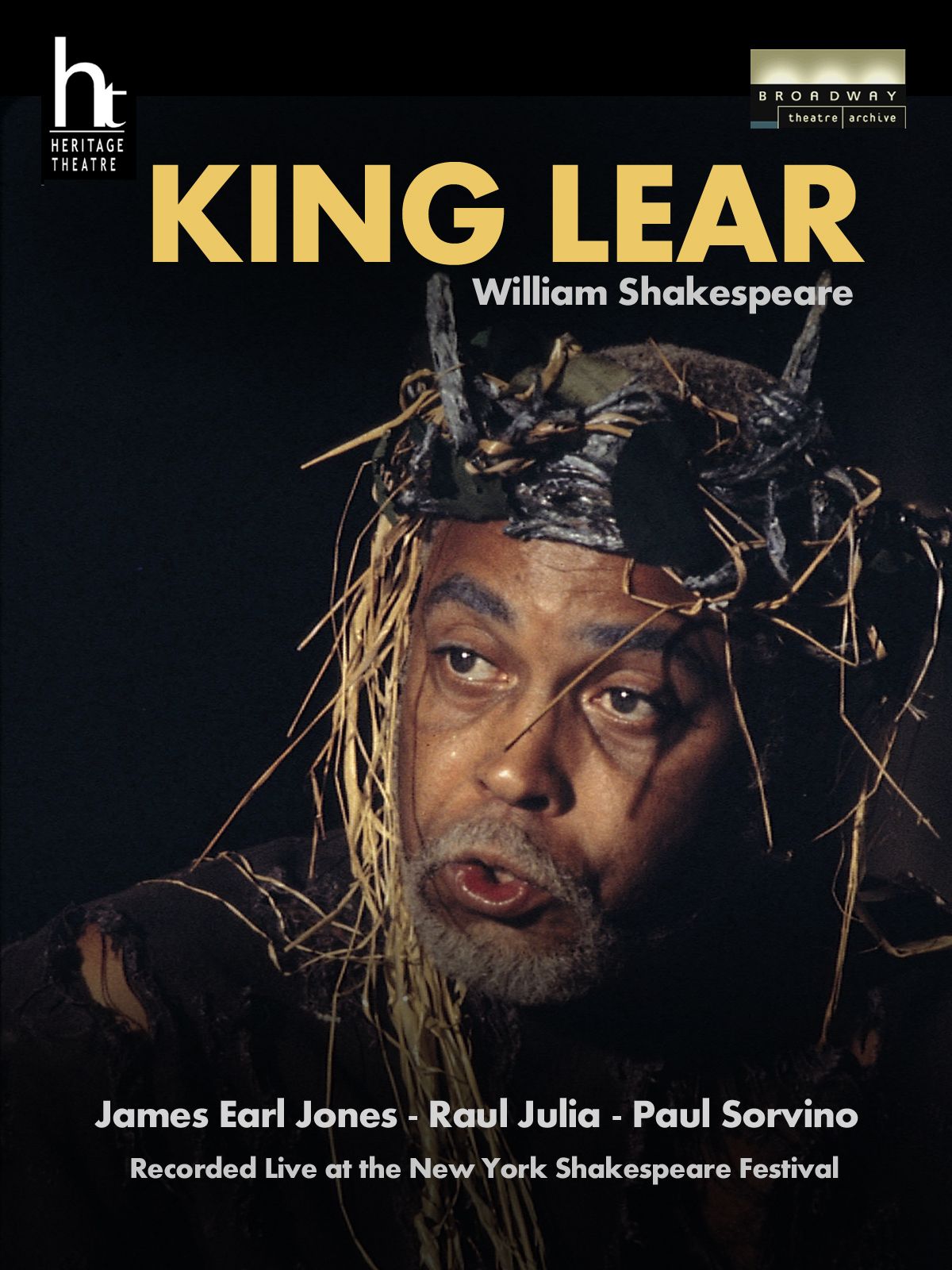
I’m sure I don’t need to tell you that one of the most iconic voices of our generation, James Earl Jones has passed away at the age of 93. I’m sure I also don’t need to mention his iconic film roles in such films as Field of Dreams, Coming To America, The LIon King, and of course, his (initially uncredited) role as the voice of Darth Vader in the Star Wars Trilogy. As I’ve written before, Jones had a powerful, authoritative voice that played kings, generals, knights, and even gods, which came directly from his training as a Shakespearean actor. So, instead of taking a look at his illustrious film career, I’d like to celebrate Jones’ contributions to Shakespeare, and how Shakespeare changed his life, and through him, changed mine.
Jones and Poetry
“I don’t mind talking about my stuttering because it’s just another example of you finding yourself with a weak muscle and you exercise it, and sometimes that becomes your strong muscle,” Jones told KCRA in 1986. “I was mute from grade one through freshman year in high school — mute because I just gave up on talking.”
-James Earl Jones in a TODAY Show interview, 1986
James Earl Jones was born in 1931 in Arkabutla, Mississippi. Not only did he struggle with racial discrimination at home and in his career, he also dealt with a debilitating stutter which, as you can see in the quote above, left him all but mute for years of his life. It was one of his teachers who helped Jones find his voice by giving him poetry to read, inspiring him to become an actor. As a Shakespearean actor who also struggles with a stutter, reading this about Jones helped me become an actor as well.
The New York Shakespeare Festival
Your voice has the power to inspire, motivate, and change lives. Don’t be afraid to use it.
James Earl Jones
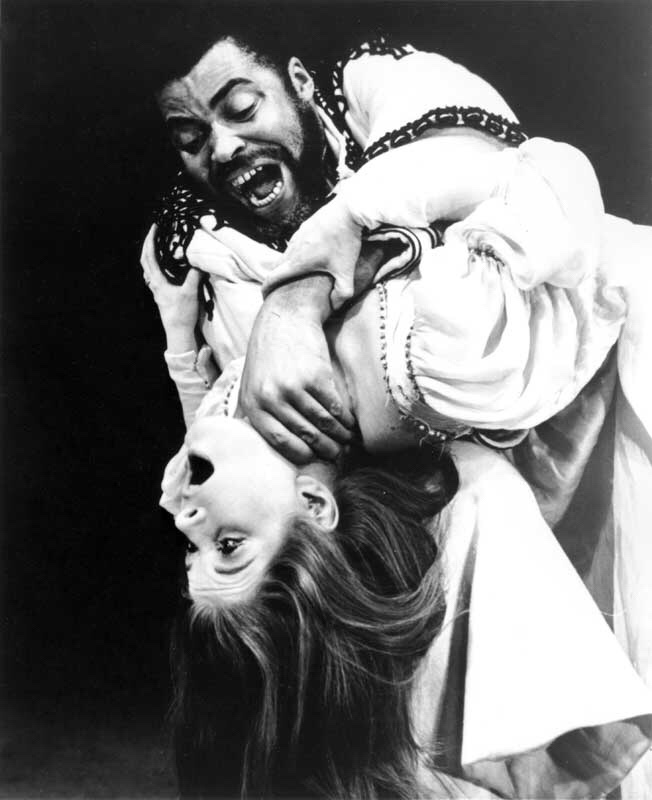
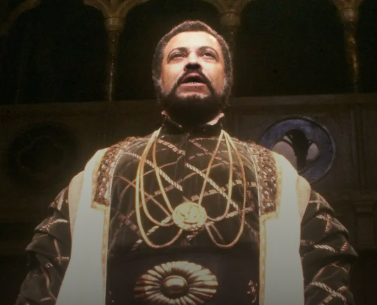
Before he became a star in the Hollywood firmament, Jones was a classically trained actor who starred in many contemporary and classic plays like The Iceman Cometh, The Great White Hope, and a title role in a drama about the great Shakespearean actor, Paul Robeson. In addition, Jones was a regular performer at the New York Shakespeare Festival, starring as King Claudius in Hamlet, Oedipus Rex, The Prince of Morocco in The Merchant of Venice, and like Paul Robeson, Jones was celebrated for his dignified and powerful portrayal of Othello.
James Earl Jones as Othello and Cecilia Hart as Desdemona in a scene from the Broadway revival of the play “Othello.”
James Earl Jones as Othello and Christopher Plummer as Iago in a scene from the Broadway revival of the play “Othello” (New York 1982)
“Mr. Jones commands a full, resonant voice and a supple body, and his jealous rages and frothing frenzy have not only size but also emotional credibility,” .”
The Times wrote in a review in 1964
From Shakespeare to Strangelove
James Earl Jones made the leap from stage and TV (he was one of the first celebrity guests on Sesame Street among others), after a surprising performance. In 1964, he was playing the relatively minor role of the Prince of Morocco in Merchant of Venice at the New York Shakespeare Festival, while George C. Scott played the more iconic role of Shylock. Surprisingly, Director Stanley Kubrick saw both of them and cast them both in Dr. Strangelove, Or: How I Learned to Stop Worrying And Love the Bomb, Jones’ first film role.
This goes to show that success is often not a straight line, that sometimes it’s the people you know and the reputation you garner that gives you success in your field.
Success should not be measured by material possessions, but by the contentment and fulfillment we find within ourselves.
James Earl Jones
My Favorite Performance of Jones
Though his film roles brought him international acclaim, James Earl Jones still performed onstage well into his 80s, including many more memorable performances at the New York Shakespeare Festival, including my favorite performance of all Jones’ stage roles- his role as King Lear. I’ve written before that Jones is still my favorite Lear- he plays the characters’ rage and commanding presence extremely well, but tempers it with the frailty and foolishness of age. You get the sense that this man was a force to be reckoned with, but is now unable to command himself, much less others. Jones’ interpretation apparently changed drastically in rehearsal, as he delved into Lear’s all-too-human flaws, playing him more like a king with dementia than like Mufasa.
Final thoughts
James Earl Jones would be the first to admit that Shakespeare and poetry changed his life. I would argue that the poetic qualities of his voice was what made him such a great actor. He could rumble and smash but also soothe and charm with a single sentence, and that is why I am glad that his voice is now preserved in the halls of Hollywood. Though he was a movie star, his voice was a Shakespearean through and through.
True strength is not in showing power over others, but in conquering your own fears and insecurities.
As is often the case for me, I like to get at the heart of what makes a piece of pop culture relevant and compare it to Shakespeare. I wish to stress that Shakespeare is not the source of all great art, but at the same time, he knew where to find the source of art, and most great art has some sort of Shakespearean influence.
2. Plot
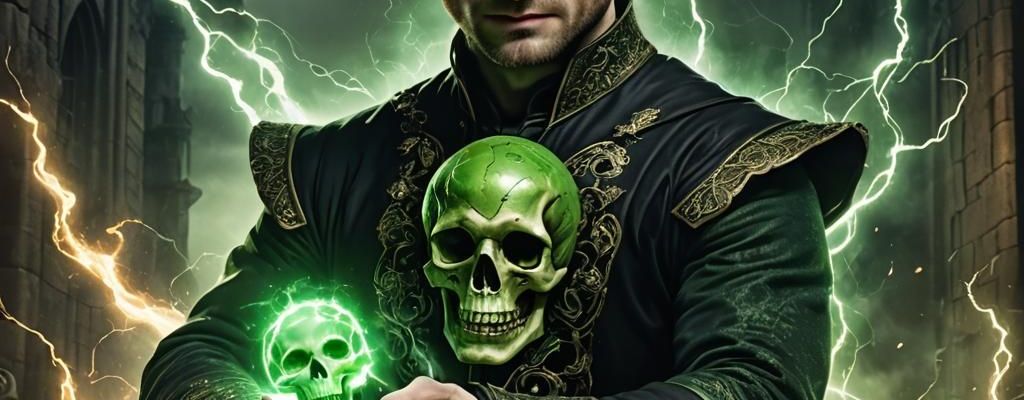
Harry Potter as Hamlet (AI artwork)
In the case of Harry Potter, we have some surface plot similarities to Hamlet: a young man brooding over the loss of his parents, who takes revenge against the man who took them from him. Both stories also have a powerful autocrat who is associated with snakes:
The serpent that did Sting thy father’s life
now wears his crown.
Is Harry hearing voices? Chamber ofSecrets
In both Harry Potter and Hamlet, the hero’s friends worry that he’s losing his mind; in the second book: Harry Potter can hear the basilisk because he speaks the snake language. Nobody else can understand what he’s hearing, and they conclude Harry is hearing voices. Meanwhile, Hamlet is the only one who hears the ghost of his father:
In the fifth book, Harry Potter and the Order of the Phoenix, Harry can hear voices coming from a vale between the land of the living and the land of the dead, because he saw death at a very young age. This isolates Harry from other characters, (who have not suffered loss), and they once again think that he is losing his mind.
Hamlet and Harry have a visceral understanding of grief; they understand that when one is experiencing grief, one sees the world in a way that most other people can not comprehend. In a way, insanity is a metaphor for grief, and both characters (both of whom, by the way, spend most of their time wearing black) personify how this grief changes their worldview.
The fundamental difference between Hamlet and Harry Potter could be summarized like this; Hamlet is devoted to his father, Harry to his mother. The ghost of Hamlet’s Father sets the action of Hamlet into motion, as he demands that his son revenge his murder. By contrast, Harry Potter is constantly inspired by his mother. Although he only sees his mother for a short time, it’s what he learns about her that drives many of Harry’s actions. Even after death, the memory of Lilly’s kindness and love not only inspires Harry, but other characters like Snape, Slughorn, Dumbledore, Sirius, and Lupin. Lilly’s memory rallies all the heroes to unite and defeat Voldemort.
In addition, Harry’s choices emulate his mother’s personality more than his father’s. Harry’s primary concerns are to stop Voldemort from taking over the Wizarding World, to show kindness and respect to everyone, and to guard his friends with his life if necessary, just as his mother did for him. In other words, the matriarchal virtues of love, self-sacrifice, and familial devotion drive Harry, not a patriarchal desire for vengeance which drives Hamlet. Therefore, Harry Potter is a more modern Hamlet, driven by a desire to improve a world and a community, rather than just “The royal bed of Denmark,” which Claudius has defiled.
The Melancholy Dane is driven by anger over his father’s untimely and foul murder and the sadness of losing him. Many actors have chosen to play Hamlet as a man who wants revenge, but one for whom vengeance doesn’t come naturally. Hamlet’s conscience, his scruples, his gentleness, and sometimes his sympathy for Claudius, blocks him from quickly taking revenge. In the clip below, Ethan Hawke is literally watching an avenger in a movie (Brandon Lee in The Crow) on a movie screen. It’s as if Hamlet is looking at a reflection of what he wishes he could be- a decisive, ruthless avenger:
As mentioned before Harry Potter’s ability to command loyalty, friendship, and respect from others allows him to accomplish his goals; he succeeds by rallying everyone, his friends, family and even his enemies to unite and fight. By contrast, Hamlet is a man who cannot trust anybody and therefore must rely on his own cunning (and sometimes ruthlessness), in order to achieve his goals.
Harry’s powers to mobilize the best in people are the powers that the dark Lord did not understand. Like a tyrant, Voldemort keeps all the power to himself; he rules by being more powerful than the people around him and inspiring fear. This makes him vulnerable when his foes band together, and his friends desert him, like when Laertes implicates Claudius for killing Hamlet and finds himself alone, friendless, and ready to taste Hamlet’s revenge:
When Shakespeare sat down to write Hamlet, the Elizabethan age was very cut throat- England had gone through the Civil War, violent factions were springing up at court, and Elizabeth herself suffered multiple assassination attempts. Hamlet is very much a product of a time where everyone is worried about being watched and betrayal can happen at any moment. By contrast, Harry Potter was written at another paranoid time- right after the September 11th attacks where racism, homophobia, and xenophobia were (and to a certain extent, still are), ripping the world apart. For all her faults, JK Rowling created a new kind of Hamlet figure, one who tries to bring people together in times of fear and grief, not one who wishes he could be “bounded in a nutshell” or that his “too too solid flesh”Close Reading: “Oh That This Too Too Solid Flesh” would melt away.
3. A Common Ancestor- Hercules
Like all Renaissance playwrights, Shakespeare took inspiration from ancient Greek and Roman sources. Scholars have seen echoes of Orestes, Perseus, and of course, Oedipus in Hamlet, but one Greek myth that pops up in both Hamlet and Harry Potter is the myth of Hercules. Here’s a short list of commonalities:
1. Both heroes defeat a serpent as a baby and is raised by people who aren’t his parents. Hercules strangles snakes in his cradle, Harry defeats Voldemort, and Hamlet (who is still a child), defeats his uncle who is called a serpent by the Ghost.
2. Cursed by a malevolent creature who hates his mother. Harry gets his scar, Hercules is cursed by Hera (his father’s wife, but not his biological mother). Hamlet
3. Labors involving wild beasts- Nemean Lion (sorting hat), Hydra= basilisk. 3. Captures a stag (Conjures a patronus) 4. Boar= Troll 5. Stables= basilisk in the bathroom 6. Stymphalian birds= golden snitch 7. Girdle of Hipolita= Ravenclaw diadem 8. Cattle of Geryon= other horcruxes 9. Golden Apples= mermaid egg guarded by dragon
10 and most obvious- BOTH OF THEM FACE A THREE HEADED DOG
I bring this up because in many ways, Harry Potter, Hamlet, and Hercules are timeless myths that represent what Joseph Campbell called “The Hero’s Journey”- an eternal story of growth, struggle, death, and rebirth that transcends time, place, and cultures.
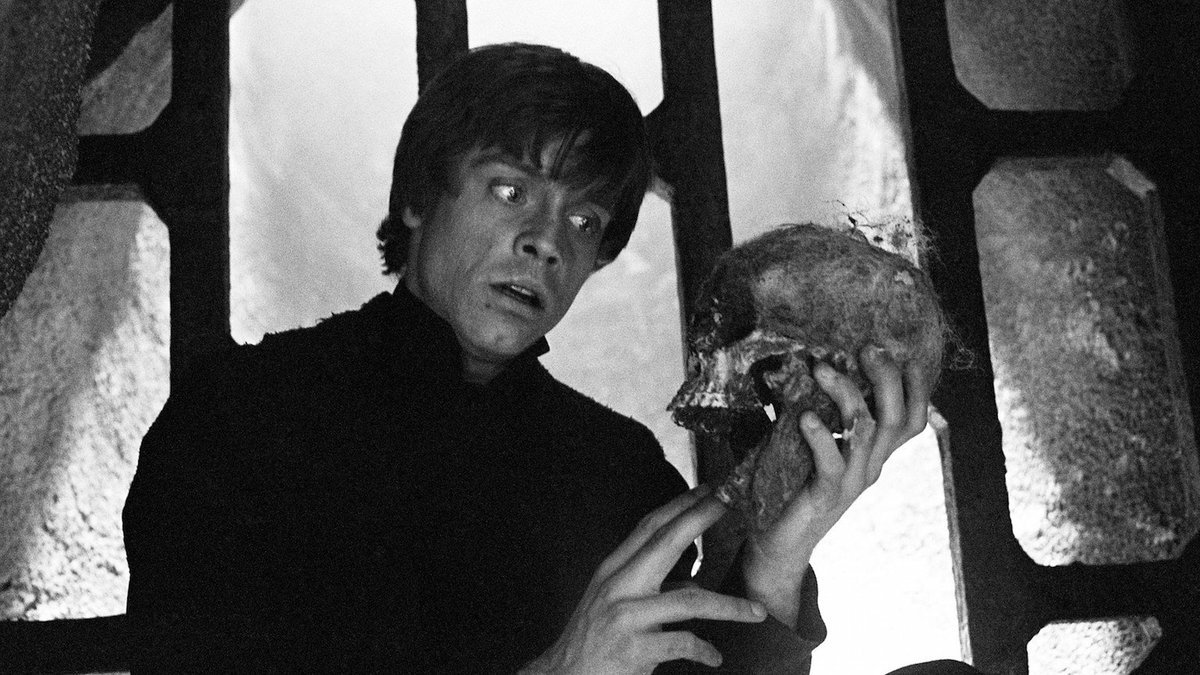
Another character that shares a lot of similarities with Hamlet and Harry Potter is Luke Skywalker from Star Wars. If you enjoyed this analysis of Shakespeare and Harry Potter, you might enjoy my course on Shakespeare and Star Wars from Outschool.com:
This two-week course is fully online and fully immersive. You can learn about Shakespeare through the lens of Star Wars, (and like this post), you will learn about characters, plots, and the ideas behind classic stories by comparing them to contemporary pop culture. Click the link below to get started:
Parent Description- A fully online, fully interactive course into Shakespeare’s histories taught by a professional text coach and actor.
Students- Uncover the scandalous and gory history behind Shakespeare’s most action-packed plays! Shakespeare’s histories have inspired such works as “Empire,” “Game of Thrones,” “Hamilton” and even the “Star Wars” trilogy. This class will unlock for you why these stories of power and betrayal have been so popular for 400 years.
Format:
0. The class will have a Nearpod with slides, activities, and links to my other resources. The class will be a combination of slides, activities, and videos. Each class will have
Weekly Discussion questions via Google Forms such as: “What do you know about Shakespeare the man?” or, “Are Shakespeare plays still relevant today?”
Video Analysis- Every week I’ll discuss a different play with a short video.
I’ll provide some context, explaining what is happening in the play durin the speech, and any relevant historical context.
We’ll watch a recording and the students can write their impressions on what they like and don’t like.
Immersive activities such as:
– Shakespeare arts and crafts and recipes such as making costumes and props.
– My online Shakespeare board game.
Virtual tours of the Tower Of London,
Weekly Web Quests like “find a Shakespeare quote that you use in normal speech,” “find a movie or character that’s based on Shakespeare,” or “Draw a picture of a Shakespearean character (stick figures are acceptable).
6 Week Course
Week 1 – Why Hamilton is Like A Shakespeare History Play Hamilton and Shakespearean History We’ll discuss what makes a history play a history play, why they were so popular in Shakespeare’s day, and draw parallels between Shakespeare and the Broadway Musical “Hamilton.”
What is a history play?
Song quest: Watch the Horrible histories king song
Worksheet- which Shakespearean character reminds you most of Hamilton?
What would you call the tone of this speech? Patriotic? Mournful? Excited? Bitter?
The deposition Scene (video- 3 minutes)
The danger of this scene:
Though Queen Elizabeth I is now almost universally beloved, she wasn’t always in Shakespeare’s time. By 1601, she was 68 years old and had no male heir. Her government had also failed to put down a rebellion in Ireland. Some people in her government were getting restless.
Robert Devereaux, Earl of Essex was one of those restless nobles. He’d been one of the Queen’s favorites, but after failing to crush the rebellion in Ireland, his relationship with her sourered. He then plotted to rebel against the Queen, and take the throne for himself.
To do that though, Essex would need to get people on his side, so he recruited Shakespeare! One of Essex’s servants paid Shakespeare’s companies to perform a scene from Shakespeare’s Richard II; the scene where a handsome and charismatic nobleman convinces the king to willingly give up his power.
This scene was so dangerous that when the play was published, it was taken out by Elizabeth’s censors.
Playing Richard video: Fiona Shaw Questions What does making Richard female emphasize for an audience? What point does Shaw’s performance say about women in power?
Week 3 Henry V week
Tom Hiddleston as Henry V
Basic plot- Young king fights a war and conquers France proving himself to the world.
Olivier vs. Branaugh
-Concept- what if the play was a Hockey movie?
Henry is like the coach or team captain who gives inspirational speeches
The underdogs win
The snooty bad guys lose
How this translates to staging fights/ directing the characters (website/ youtube interviews)
Activity= write a trailer or design a poster for Henry with a cool tag line.
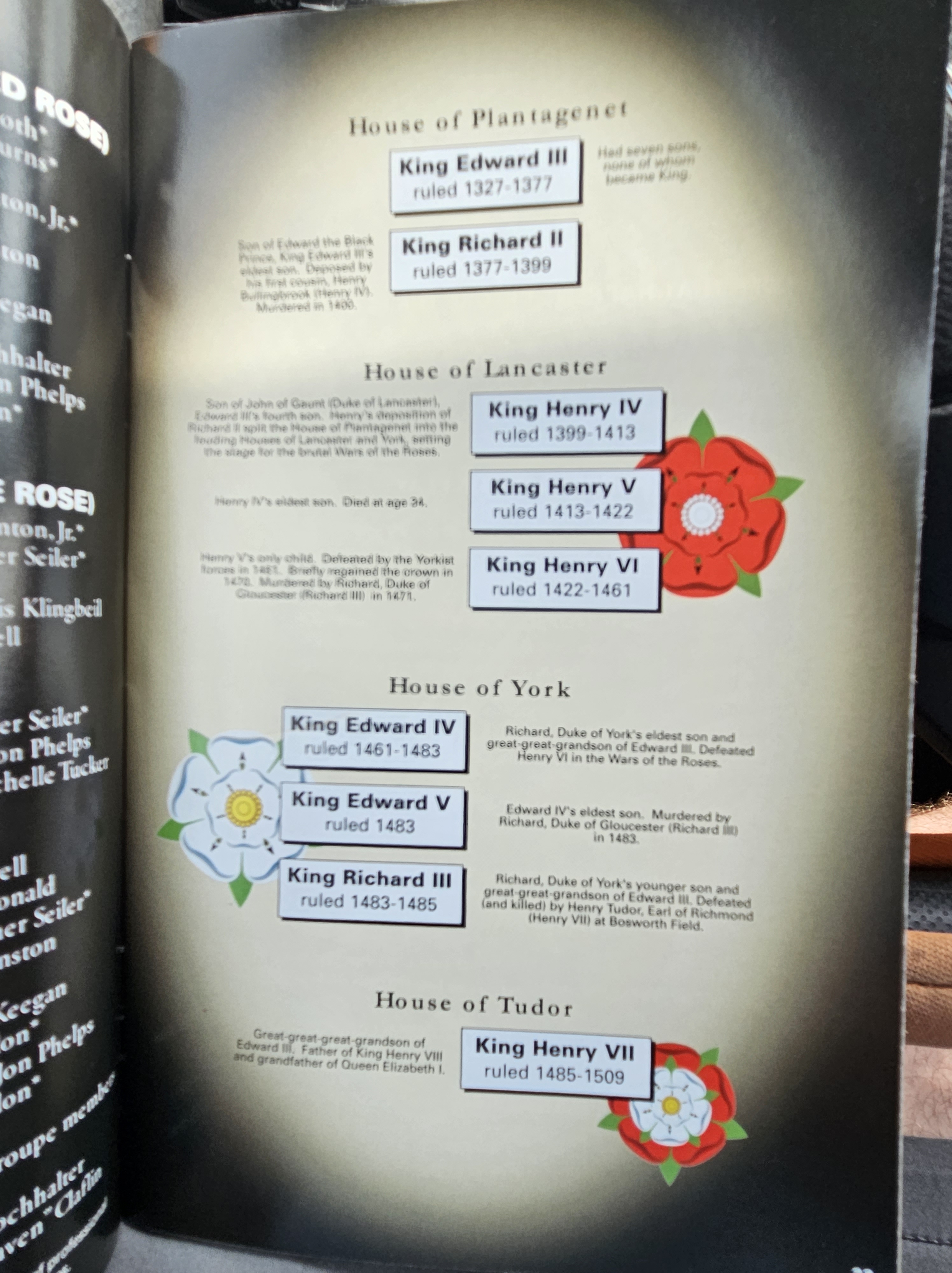
Week 4- The Wars of the Roses-
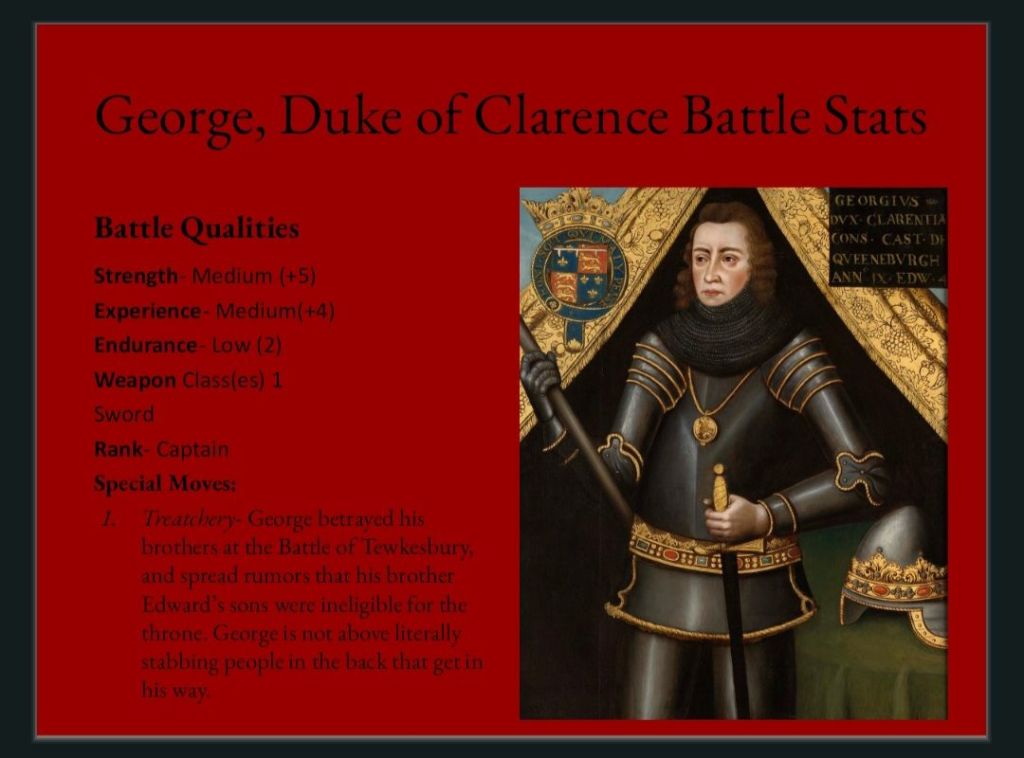
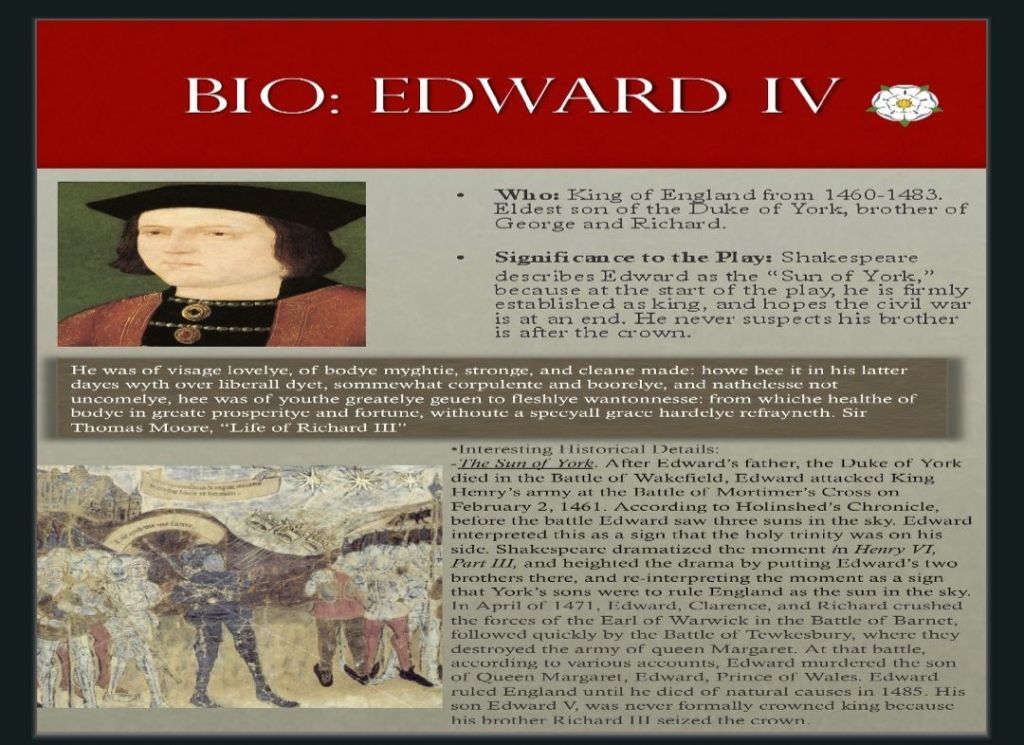
Summary of the three Henry VI plays
Wars of the Roses Horrible Histories
Web quest- research one major character from the 3H6 ASC website:
Richard of Gloucester
Henry VI
Margaret of Anjou
Richard of York
Medieval warfare
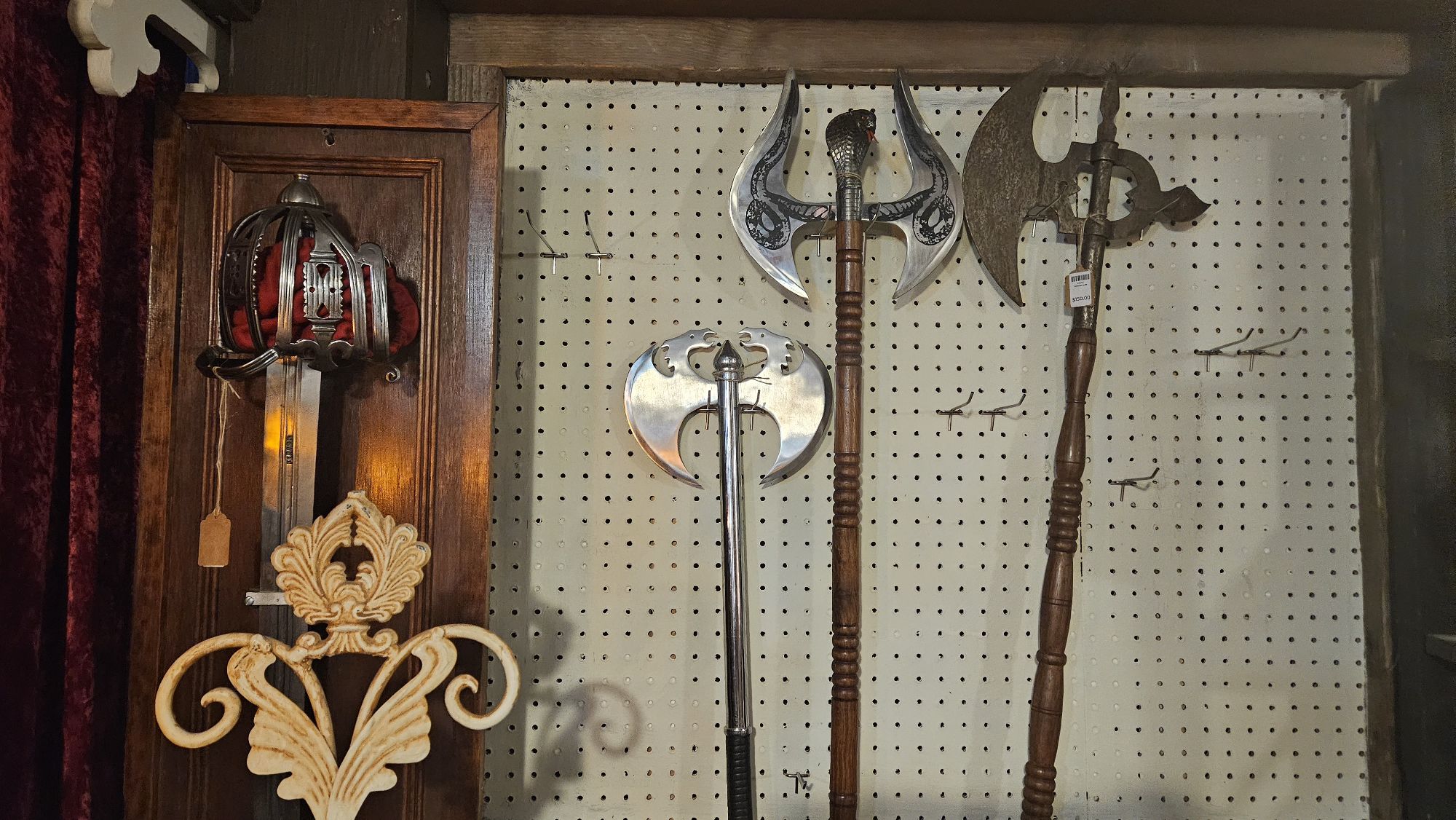
Watch one of the Weapons that Made Brittain videos and answer 5 questions.
The battles of the Wars of the roses
Costumes
Week 5- Richard III- The rise of the corrupt king
Close reading- “Now Is the Winter of Our Discontent”
Slides on Richard’s plot.
Richard and Machiavelli
Richard and Emperor Palpatine
Richard and Modern Leaders
Richard vs. the Amir of Gloucester
Propaganda activity- make a campaign slogan/ poster for Richard.






















 The Shakespearean Student