

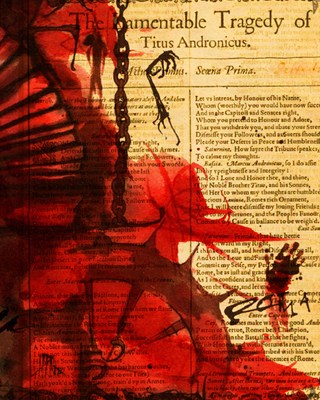
With just a few days left until Halloween, many of us will be anxious to put the candy bowl away, dim the lights, and watch a scary movie. I’d like to recommend my pic for the single best Shakespeare play for Halloween, and you might be surprised to learn which one it is:
It’s not Macbeth, despite its ghosts and witches, it’s not Hamlet, though it has a famous scene in a graveyard. In my opinion, the scariest, most horrific, most disturbing Shakespearean play is the ancient Roman revenge tragedy Titus Andronicus!
Titus Who?
Titus is the most violent, most outrageous play in the Shakespearean cannon and features murder, mutilation, cannibalism, (and even featured the first recorded trick or treating). It was also his first tragedy ever, written around 1590. Back in this period, Shakespeare’s theater was also the site of public executions and blood sports like Bear-baiting, so Shakespeare knew that gore sells. He also knew that people were reading the bloody tragedies of the Roman poet Seneca, so he created a play that out-does the Roman master of bloody violence!
So why have you not heard of it?
- Too violent for school For most people, their first encounters with Shakespeare is in the classroom, and because of the violence in this play it’s definitely not appropriate for high school. The most famous atrocity in the play happens to Titus’ daughter, who is raped offstage. Then, to keep her from incriminating the men who raped her, the rapists cut off her hands and cut out her tongue. Quite a departure from the “Honey tongued” Shakespeare we see in the comedies and sonnets.
- It’s vulgar: T.S. Eliot declared that Titus Andronicus is “one of the stupidest and most uninspired plays ever written.” For people who expect Shakespeare to be poetic and romantic, this play is a sad dissapointment.
- It’s Over the top- People don’t just die in this play, they get butchered horror movie style! Some get stabbed and thrown in a pit, some get their limbs chopped off, one character is buried alive! Many scholars say that after one atrocity after another, the only way you can react to the horror onstage is to laugh. Look at this scene where the villain of the play, Aaron the Moor, confesses to a laundry list of hideous atrocities which he did just for the pleasure of being evil:
Scholars often compare the dark comedy of Titus to the films of Quentin Tarantino, who will murder his characters in grotesque, but funny ways. I won’t even give away the surprise ending where Titus and his daughter gets their revenge, but let’s just say that they would certainly agree with Tarantino that revenge is a dish, best served cold!
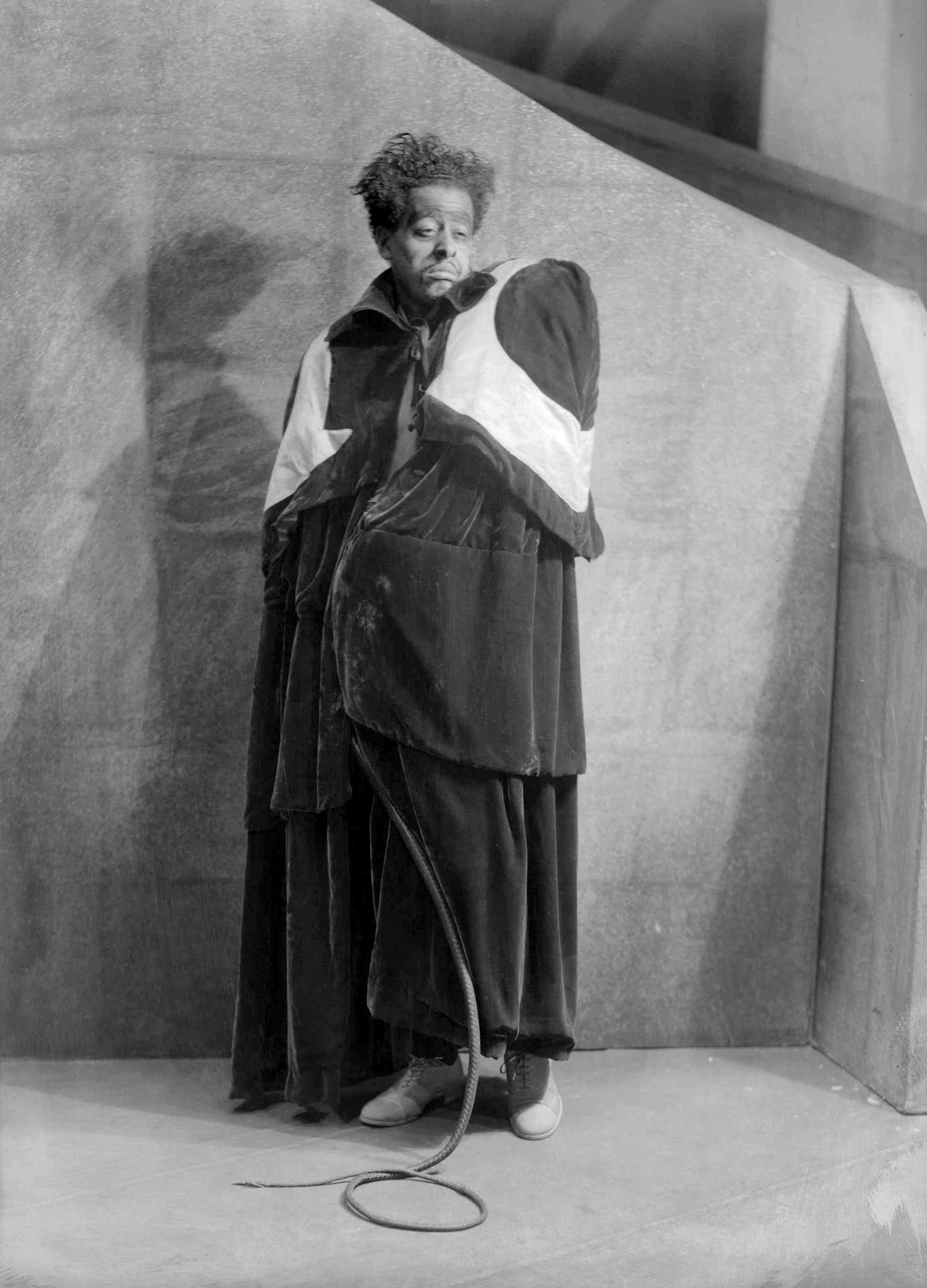
- It might be racist As I mentioned in the clip above, the main villain of the play is a black man. Aaron, like Richard III is completely evil and unapologetic about it. When I was studying Shakespeare in college, James Earl Jones, (Darth Vader himself) came to my school to talk about Shakespeare’s racially diverse characters. He argued though that nobody treats Aaron any differently until they learn about his heinous crimes and that the person who seems to hate Aaron’s blackness the most is himself. Look at this passage and see if you agree:
AARON
Look by and by to have thy sons with thee.
Aside Their heads, I mean.
O, how this villany
Doth fat me with the very thoughts of it!
Let fools do good, and fair men call for grace.
Aaron will have his soul black like his face (Titus, Act III, Scene 1).
Now the question to ask about Aaron and most of Shakespeare’s villains, is are they bad because they’re different (different race, differently abled, illegitimate birth), or did they become bad from people treating them badly?
Serious note– Even though productions often dramatize the violence and rape in Titus as over-the-top black comedy, this kind of rape and violence happens in real life, every day, particularly violence against women like Lavinia. One reason why this play is gaining popularity is sadly, that this kind of violence is more common in our current society with the shocking number of rapes committed in this country (1 in 5 women, according to the National Sexual Violence Resource Center), and the brutal murders in this play suggest many real-life atrocities such as Abu ghraib,
Plot summary and more at Schmoop.com
More at http://www.gradesaver.com/titus-andronicus/study-guide/summary
Review of Julie Taymor’s Titus
If you can’t get to the theater this Halloween and want to watch a production of Titus, you’re in luck: In 1999, Julie Taymor, famed director of the Broadway production of The Lion King, directed a film adaptation of Titus which I consider the single greatest Shakespearean film of all time. The movie captures the grotesque comedy of the play, while also visually showing the beauty of Shakespeare’s poetry. It also doesn’t get hung up on historical accuracy just because the play is set in Rome. Best of all, the cast in incredible: Anthony Hopkins, Jessica Langue, Alan Cumming, Harry Lennox and more. This cast knows how to do Shakespeare for the movies and their work shows in every scene. Interesting side note: Hopkins actually considered making this movie the last movie of his career, which explains his amazing glee and energy in the role of Titus. Below is a nice in-depth analysis of the film
Another good review comes from the French Shakespeare Society: https://shakespeare.revues.org/1558
And finally, a review from Roger Ebert: http://www.rogerebert.com/reviews/titus-2000
So that’s my two cents on Titus Andronicus. Happy Halloween everybody!





 The Shakespearean Student