
https://shakespeareandbeyond.folger.edu/2020/10/23/shakespeare-halloween-guide-2020/


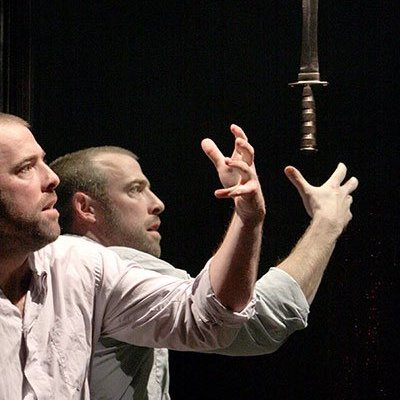

Today I pay tribute to a remarkable book written by a great actor, who has inspired me and countless others.




I was privileged back in 2011 to see Anthony Sher on stage playing is playing Edmund Kean in John Paul Sartre’s pastiche of Shakespeare entitled “Kean.” It was a very good casting because this actor very clearly had a lot of raw energy and at the same time charisma and wit. But at the same time, he also seemed to have tenderness, sadness, and insecurity behind his eyes. I didn’t realize it but this actor, Sir Antony Sher, who sadly passed away just last year, would change my life.
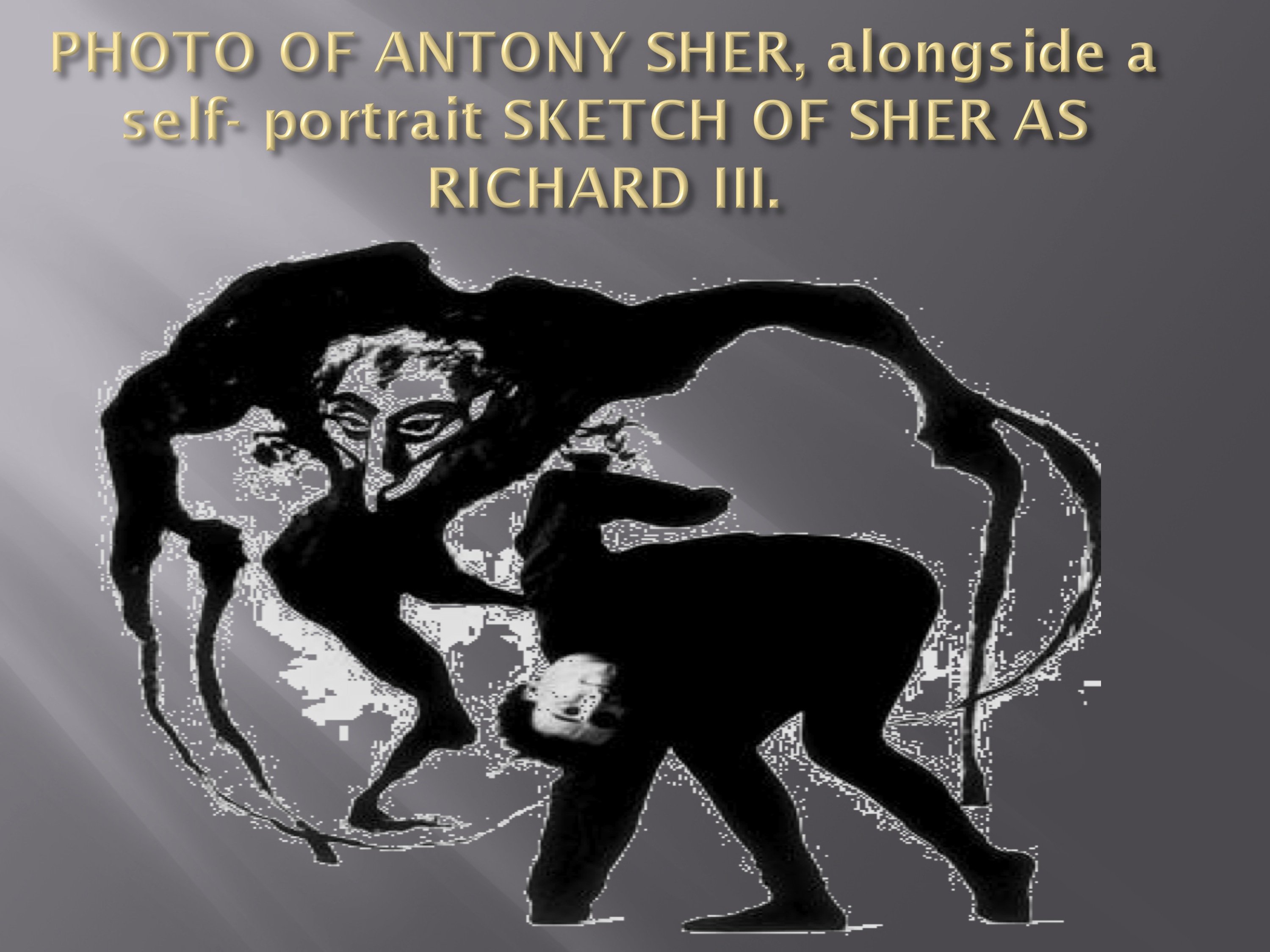
When I was still in college I knew that I was going to go to grad school, and I wanted to write a graduate thesis on Richard III. Through my research, I came to realize that this same actor produced what is still regarded it as one most acclaimed and influential productions of the play ever. In 1984, Sir Antony played an iconic Richard III at the Royal Shakespeare Company which was revolutionary for its raw energy, tragic emotions, and creative physicality. Mr. Sher played the role on crutches and was able to scuttle around the stage like a spider.

I feel very therefore very privileged that I was able to see him perform live and to research his performance for my thesis.
One of my greatest aids for this was Sir Antony’s own book about the process of writing Richard that he wrote while in the process of doing Richard, “A Year Of the King. It’s organized in the form of a diary and a lot of the pages are available for free on Google Books. I strongly recommend it. In this review, I’m going to praise his massive preparations for the role and talk about the effects of the production going forward in future productions of Richard III.
In 1982, Sir Antony was playing the Fool in a production of King Lear with Michael Gambon, (the future Dumbledore from Harry Potter). During the performance, Sher suffered a leg injury that required him to be on crutches for several months. In his diary, Sher records how angry being perceived as disabled made him feel. His physical therapy took place at the Remedial Dance Clinic, Harley St.
Six months later in August of 1983 Sher was cast in Tartuffe with Bill Alexander as director, (who would later direct him again in Richard III). A chance meeting with Trevor Nunn, (who was the Artistic director at the time), put the idea of Sher playing Richard into Alexander’s head. After another meeting with Terry Hands, Sher was offered the role.
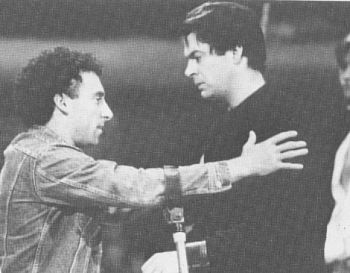
“The truth of the matter was I was terrified of the verse, ashamed of my inexperience with it and nursing a fear that I was trespassing anyway. Wasn’t classical theatre the territory of handsome, rich-voiced Brittish giants like Gielgud and Oliver, and out of bounds for little Cape Town newbies like me?”
Sher, Year Of the King, page 9
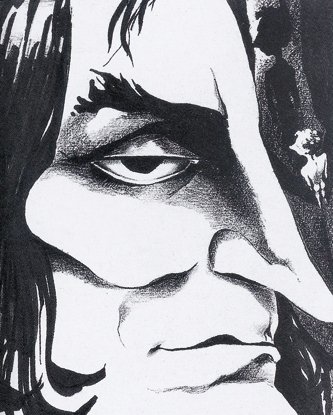
When Antony Sher approached the role of Richard in his 1984 RSC production, his first intention was to make his portrayal of Richard’s deformity and disability different from Laurence Olivier’s. Sher and Olivier believed Richard is both physically and mentally deformed, therefore, Sher’s massive preparation for the role included thorough research into the physical effects of real disability and a deep examination of its psychological effects.
Unlike Olivier, Mr. Sher believed that Richard’s deformity was the key to understanding his character and that every aspect of Sher’s characterization stemmed from his interpretation of that deformity. This work produced a captivating physical characterization and a startlingly human re-conception of Richard’s mind.
Sher’s characterization of Richard’s body resulted in an image, which he referred to as “The Bottled Spider.” Richard had a massive hump in the center of his back, massive arms, and two crutches that fitted onto Sher’s forearms, allowing him to scuttle across the stage, giving the impression of a poisonous spider. Sher created this iconic physical characterization through a combination of textual research, sketches, medical research into real deformities, image research, and real-life experience. The guiding principles that Sher used in creating Richard’s deformity were creating a severely deformed character that the audience would identify with. At the same time, Sher attempted to create a physicality that he could sustain through the run of the show without major injuries (21 &30). According to Sher, the role of Richard III is notorious for crippling actors who sustain severe damage to their backs and shoulders (39). Thus Antony Sher’s Richard was physically designed to be both functional for the actor, as well as realistic and remarkable for the audience.
The first step towards Sher’s physical characterization of Richard was going through the text for clues. Sher found several references to what Richard’s deformity looks like in the speeches of Queen Margaret. Margaret refers to Richard repeatedly as various beasts, alternating between boars, hounds, and the bottled spider that would become so important to the final characterization. Before Sher settled on a spider as the animal Richard most resembles, he experimented with several others, including boars, apes and bulls. Sher did several sketches of bulls, which he saw in a BBC TV program. Sher was attracted to bulls and their raw power and massive shoulders. Sher wanted an animal that was threatening and powerful to give his portrayal a ‘tragic dimension’ (64).
Having to say ‘I was born in South Africa’ stuck in my throat like a confession of guilt.’
Sher, p. 25
Another image from the text that Sher thought about repeatedly was the image of Richard’s hump as a mountain. When Richard refers to his hump as “an envious mountain on my back,” Sher thought back to the Lion’s Head mountain in Kingstown South Africa. Sher grew up in South Africa and visited there during apartheid. The mountain spoke to Sher’s notion of Richard’s raw, tragic power. Sher sketched the mountain several times, and combined it with other images of bulls and spiders and this became the overall concept for Richard’s hump- an image of thick power that simultaneously weighs down the figure of Richard, and gives him his strength.
I feel he should be severely deformed, not just politely crippled as he’s often played. Bill says one should identify with him: a man looking in from the outside and thinking, ‘I’ll have some of that.’
November 7, 1983
The most memorable part of Sher’s physical performance as Richard was the way he manipulated the two arm crutches that he wore for the first half of the performance. Sher’s Bottled Spider image mainly depended on his ability to manipulate the crutches. The crutches became part of Richard’s body (Cerasano 621) and, far from making Sher’s movements clumsy or stiff, they gave him the ability to transform himself into a strange four-legged creature that would move around the stage incredibly fast.
Director Bill Alexander told Sher during rehearsals that he intended to use the crutches in as many ways as possible. For example, the crutches also served as a weapon because of Sher’s ability to swing them around like clubs. One chilling moment of the performance occurred when Sher’s Richard entraps lord Hastings (Brian Blessed) by folding his crutch-arm across Hasting’s neck; foreshadowing Richard’s later decision to chop off Hastings’ head (Cerasano 621).
The problem in playing him extremely deformed is to devise a position that would be 100 per-cent safe to sustain over three hours, and for a run that could last for two years. Play him on crutches perhaps? They would take a lot of the strain off the danger areas: lower back, pelvis and legs. And my arms are quite strong after months at the gym. Also I was on crutches for months after the operation so they have a personal association for me of being disabled. They could be permanently part of Richard tied to his arms. The line, ‘Behold mine arm is like a blasted sapling wither’d up,’ could refer to one of them literally. The crutches idea is attractive, too attractive at this early stage. Must keep an open mind on the subject.
Sunday Nov, 19, 1983
Physical therapist Charlette Arnold, helped Sher get into clinics for people with real disabilities. She also provided Sher with books on back disorders, which led Sher to choose the disorder Kyphosis as the model for Richard’s hump. Kyphosis causes a large central hump in the back, which Sher immediately adopted because it resembled the mountain image of his sketches. Also, the central hump was different from Olivier’s side hump.
Sher’s research on back disorders was of great use in the coronation scene in which he and Lady Anne appear with bare backs. Bill Alexander hired makeup artist Christopher Tucker to create a lifelike prosthetic for Richard’s back. The audience was thus forced to see Richard as a naked, deformed man, contrasted next to the beautiful bare back of his wife, creating a powerful moment that re-enforced Richard’s humanity. Sher would also use a humanistic approach to his portrayal of Richard’s mind, which, like Richard’s body, he developed through extensive research.

“In several copies I’ve looked at it’s called The Tragedy of King Richard the Third. Yet a tradition has evolved of playing it as black comedy. I’ve never seen anyone play Richard’s pain, his anger, his bitterness, all of which is abundant in the text. It seems to me that Richard’s personality has been deeply and dangerously affected by his deformity, and that one has to show this connection.
November 19, 1983 p. 30
In his research, Sher made the link between deformity and psychopathology. Unlike Oliver, who played Richard as a paranoic, Sher played Richard as a psychopath. In his research into psychopaths, Sher uncovered the idea that psychopaths often suffer childhood traumas. The text of Richard suggests that Richard’s mother hated him, and such a lack of affection could realistically change a boy into a psychopath. Through this probing of the text and research into psychology, Sher concluded that Richard’s deformity is a realistic source of desire for revenge.
Sher talked to his own psychiatrist, Monty Berman who provided him with insight into Richard’s mind. Monty helped Sher dispel the idea that Richard is a superhuman fiend. On the contrary, Richard’s persona is very similar to real live psychopaths. Berman theorized that the pain at being deformed, coupled with the violent upbringing Richard living through in the Wars of the Roses, could transform him into a remorseless killer.
Sher: “How do you explain Richard the Third then?”
Monty: “Well, how did you feel when you were on crutches last year?”
Sher: “I hated people staring at me.”
Monty: “What did you want to say to them?”
Sher: “F#$% off! What are you staring at?”
Monty: “Precisely. Anger. Richard is revenging himself on the whole world, destroying a world he sees as hating him.”
Monty: “We treat the disabled appallingly. They come up against dreadful prejudice. The disabled person experiences frustration and if given the chance, will lash out.”
Sher: “So are you saying Richard’s behavior is normal?”
Monty: “Under the circumstances, absolutely normal.”
Sher and Berman also believe Richard has the humor of a psychopath- a sardonic wit that has no regard for the feelings of his audience. Sher looked at the parallels between Richard III, and serial killer David Nilsen, who would invite people over for tea and strangle them, and boil their heads on his stove. Nilsen once told police with Richard-like humor that; “Having corpses was better than going back to an empty house.” One could easily hear the same sort of gruesome wit in the phrase: “I do love thee so, that I shall shortly send thy soul to heaven,” (R3 I,i).
A psychopath like Richard kills in order to try and feel emotion; “Each murder is an attempt to release anger, an attempt at catharsis, and each time it is unrelieved. It’s like promiscuous sex without love. Each climax is less and less fulfilling so the appetite grows until it is insatiable.” Thus Berman allowed Sher to break with the tradition of playing Richard as an inhuman monster, and play him as a very real, very tortured, human soul.
Although Antony Sher attempted to play Richard as a psychopath, his portrayal of Richard’s pain could become sympathetic. His observation of people in clinics and his own personal experience of being on crutches taught him about the cruelty that the disabled suffer. However, although he did great work to try and understand the condition of being deformed and disabled, his portrayal was still an affected disability; an act. In the book “Framed: Interpreting Disability in Today’s Media,” the author speaks about how watching an able bodied actor play disability can actually alienate the audience from the character he is portraying. The performance is seen as an act, a novelty, not an honest representation of real people. One way to eliminate this barrier between character and actor is to cast a Richard who really does suffer from a disability or deformity. I’ve talked in previous posts about how last month’s Public Theater performance was a deliberate attempt to move away from theatrical illusion and re-contextualize Richard’s deformity in the form of race, and contextualize disability by letting actors with disabilities play the heroic parts, while only Richard was able-bodied.
In a way, like Olivier, Sher’s performance is a new monolith that actors must work hard to distinguish themselves from. He spent an entire year building his Richard from the ground up, experimenting with new ways to portray his deformities, his disability, his psychology, and of course, how he looks and moves onstage. Reading this book, an actor gets a great appreciation for all the work Sir Antony Sher included in this wonderful performance, and hopefully, the book will inspire new and creative ways to portray this character in the future.
Thank you for reading. If you want to see some of Sher’s physical and psychological techniques in practice, please watch the thesis presentation that I did at the Blackfriars playhouse below. If you are interested in signing up for one of my acting courses, click here. Thank you!

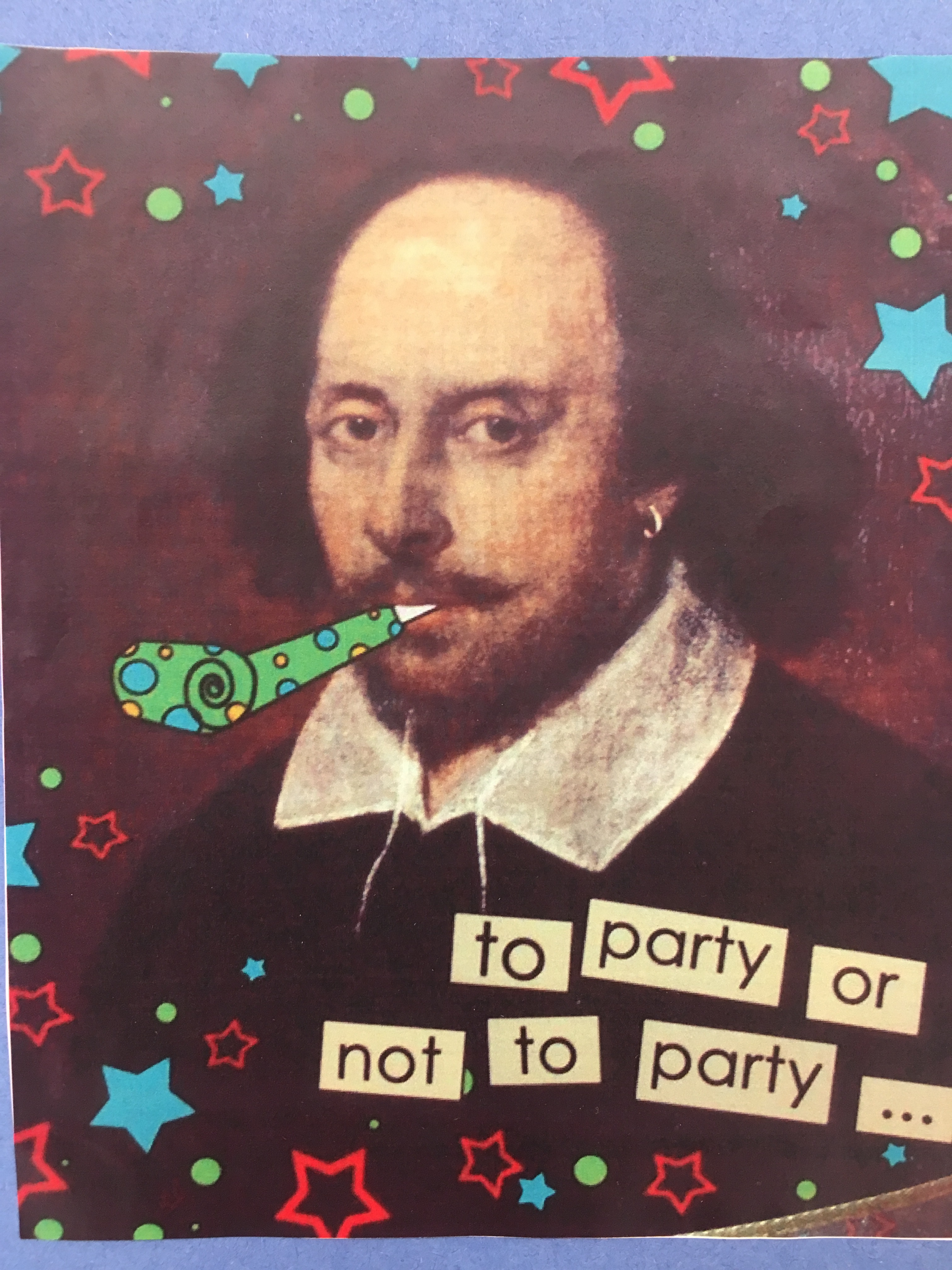
Happy Birthday Shakespeare!
With Shakespeare’s birthday coming up, I got to wondering if Shakespeare and other Elizabethans celebrated birthdays, and if so, did they use birthday cakes covered with lit candles?
Shakespeare’s plays make it clear that they did at least mark birthdays- Cassius in Julius Caesar and Cleopatra in Antony and Cleopatra do mention birthdays and several other plays mention cake.
One passage from Troilus and Cressida, (a comedy set in Ancient Greece) is practically a recipe for an Elizabethan cake:
Pandarus. Well, I have told you enough of this: for my part,
I'll not meddle nor make no further. He that will
have a cake out of the wheat must needs tarry the grinding.
Troilus: Have I not tarried?
Pandarus. Ay, the grinding; but you must tarry
the bolting.
Troilus. Have I not tarried?
Pandarus. Ay, the bolting, but you must tarry the leavening.
Troilus. Still have I tarried.
Pandarus. Ay, to the leavening; but here's yet in the word
'hereafter' the kneading, the making of the cake, the
heating of the oven and the baking; nay, you must
stay the cooling too, or you may chance to burn your lips.
You might think Shakespeare is being anachronistic, but according to Food and Wine Magazine, the Ancient Greeks invented the practice of putting candles on cake, because Greek cakes were offerings to the Moon goddess Artemis, and the pious worshippers wanted their cakes to shine like the Moon!
There are also stories from Greco-Roman myths about a special honey cake that was so good, it even appeased Cerberus, the three-headed dog of the underworld!
It was the Romans who had the first birthday parties with cake, though their parties were strictly for the aristocracy, not common people. The first children’s birthday cakes with candles came to be in Germany in the 18th century.
So we know birthday cakes were a thing in Shakespeare’s Day, and that he was aware of them. The question is whether Christian Elizabethans chose to continue the practice of birthday cakes, and if common men like Shakespeare partook in them.
Sadly, the research I’ve gathered suggests that common men like Shakespeare probably didn’t eat cakes to celebrate their birthdays, (though, as I have discussed in other posts, Shakespeare might have eaten cakes at Halloween, Christmas, and Twelfth Night).

Although the concept of a birthday cake with frosting and candles wasn’t really a thing in Shakespeare’s Day and not available to people of his social class, we can still celebrate his birthday in plenty of fun and delicious ways! Below is a video from the Utah Shakespeare festival that features a young girl making an Elizabethan cake from The Complete Cook in Shakespeare’s honor, in front of a special guest!
You’ll notice that the recipe doesn’t have leavening agents like baking powder except for yeast, so like Pandarus warns Troilus, an Elizabethan cake requires kneading, more time, and will produce a smaller and less fluffy result, (much like Troilus’ relationship with Cressida, but I will get into that later). I encourage you to try this and other Shakespearean recipes and stay tuned to my blog, YouTube page, etc, for lots of fun posts in honor of Shakespeare’s Birthday!

https://www.bigsmall.in/blogs/unique-gifts/the-history-behind-cutting-a-birthday-cake

I just got approved by Outschool.com to teach a multi-week course on Shakespeare’s comedies!
Get $10 off my class “Shakespeare’s Comic Plays” with coupon code HTHESEJEL310 until May 1, 2022. Get started at https://outschool.com/classes/shakespeares-comic-plays-868BR5hg and enter the coupon code at checkout.

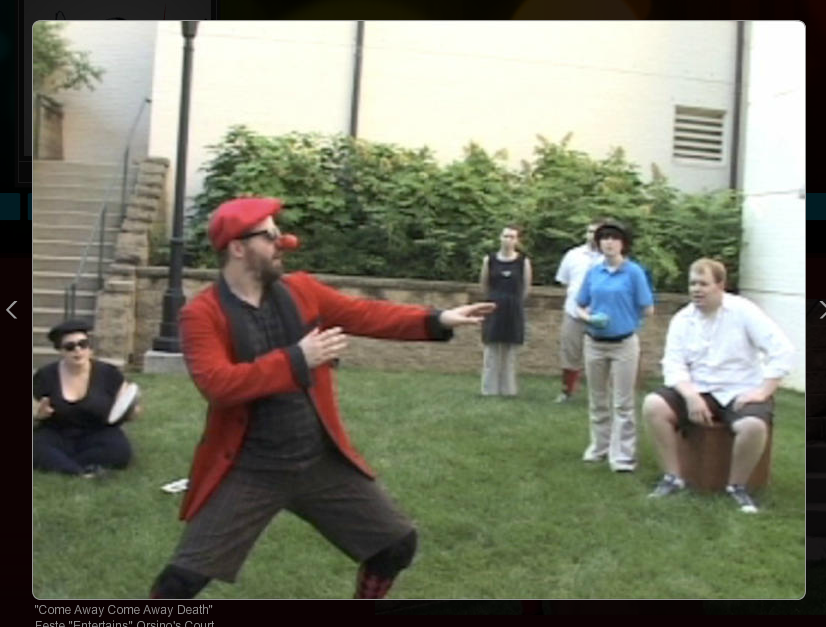


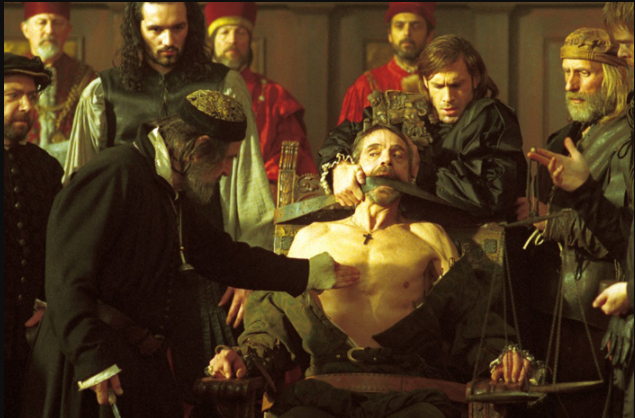

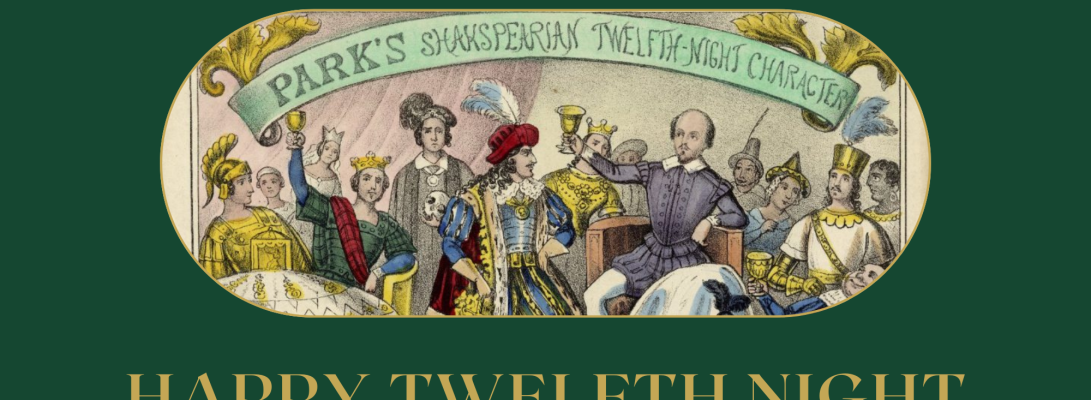
Happy Twelfth Night and farewell to the Christmas season!

This weekend I am offering a special discount on my class on Shakespeare’s Twelfth Night! You can take the course at a $5 discount with coupon code HTHESNIF6B5 until Jan 13, 2022. Go to https://outschool.com/classes/what-was-christmas-like-for-william-shakespeare-BwVLyBPp?usid=MaRDyJ13&signup=true&utm_campaign=share_activity_link and enter the coupon code at checkout.
Finally, here’s a short musical interlude from the movie version of Twelfth Night: Ben Kingsley singing “O Mistress Mine,” from Twelfth Night:
Happy Twelfth Night, and enjoy your cakes and ale responsibly!
More Twelfth Night Posts:
1. Play of the Month: Twelfth Night
2. Creating a Character: Malvolio

As you probably know if you subscribe to this blog, I love to review adaptations of Shakespeare, so imagine my delight when I realized that the classic teen comedy Mean Girls from 2004, (and the current Broadway show of the same name), is based on Julius Caesar! This movie doesn’t have Shakespearean dialogue or the names or locations, but the essence of the play is the same, albeit with a more modern ending.
In Shakespeare’s play and Tina Fey’s script, the main antagonist is popular, and dangerous, and inspires fear and envy from everyone. Regina George and Caesar both rule their empires through their armies, intimidation, their wealth, and their supreme self-confidence. In addition, both names are associated with royalty- Regina in Latin means queen.
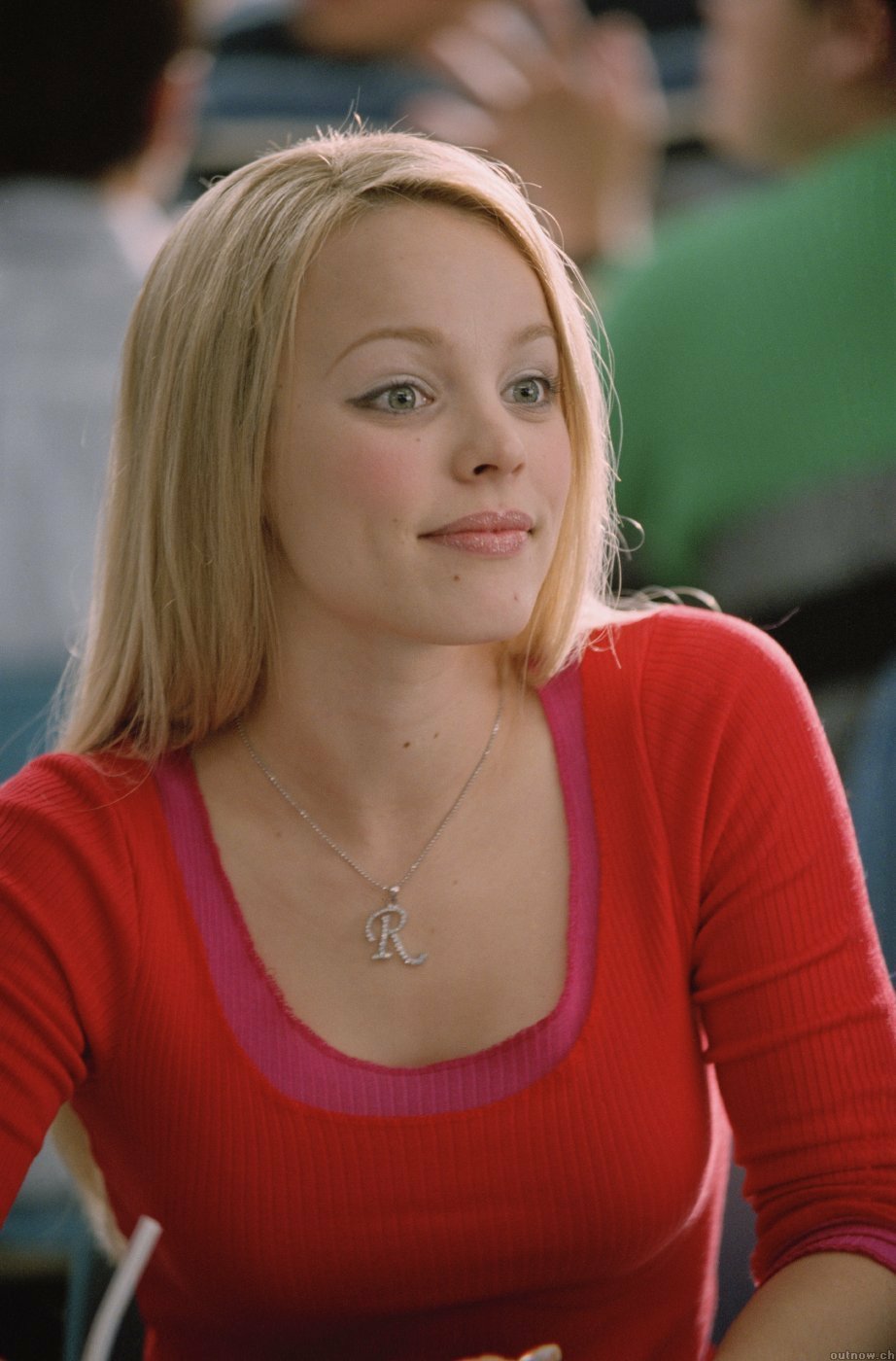
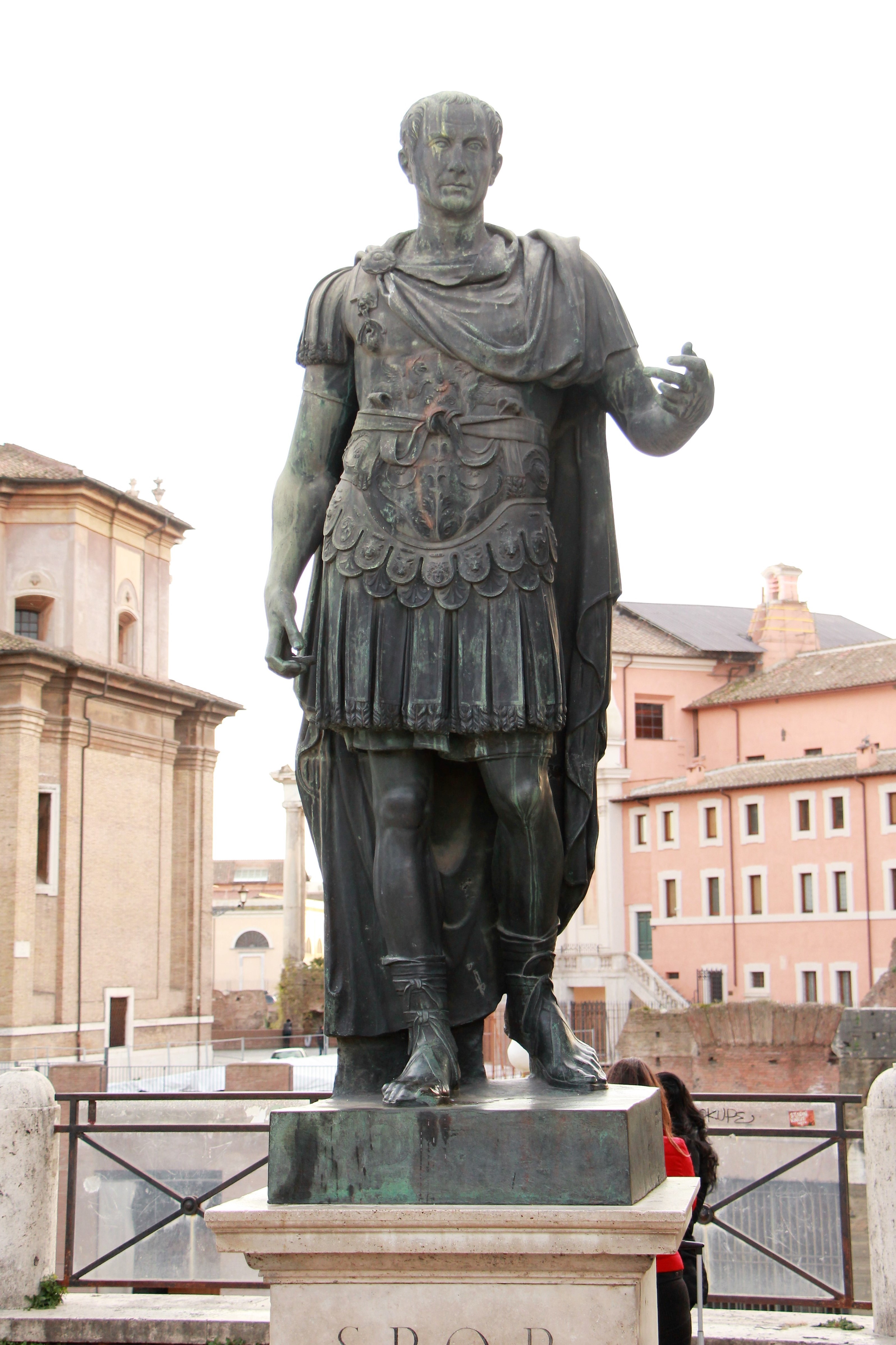
I didn’t realize that the movie has its roots in Julius Caesar until I saw this video from the YouTube channel The Take: https://youtu.be/FRfoEzZbK_Y. It was when I watched this video, that I realized Mean Girls character Janis was an analog for Shakespeare’s character Cassius, the man who sets the plot in motion to assassinate Caesar.
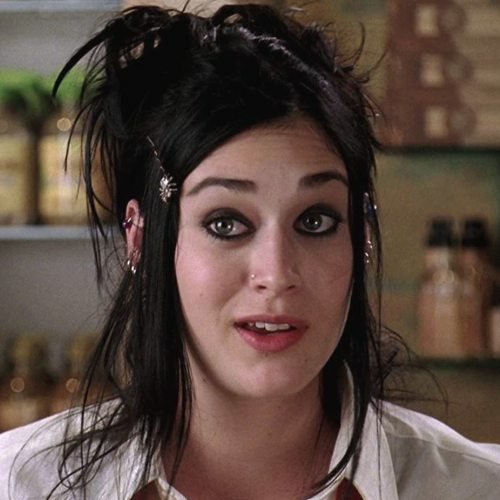
In the movie, Janis meets a well meaning girl and manipulates her into betraying Regina. Look at this clip where after Cady feels betrayed by Regina, Janis outlines her conspiracy, with a Roman sword in her hand! https://youtu.be/D0JMoa4QfA0

Like Cassius, Janis claims that once Regina is destroyed, the social order of the high school will change from a dictatorship to a democracy, but what she really wants is to supplant and replace Regina and make herself the new queen Bee. Even her name is a clue to her malevolent nature, she is named after the Roman god with two faces!

Sir Patrick Stewart as Cassius in the 1972 RSC production of Caesar
Similarly in Julius Caesar, Cassius convinces Brutus that once Caesar dies, Rome will be a republic again. In real life, Brutus was Caesar’s close friend, so Brutus agonizes over whether he is doing the right thing and whether he owes more loyalty to Rome, or his friend Caesar: https://youtu.be/IoDwXjKIenI
If Janis is Cassius, what about Brutus?

Cady Heron (played in the movie by Lindsay Lohan), is naive but intelligent. Like Brutus, she is manipulated and carefully chosen to betray the king. Janis chooses Cady because she’s pretty enough to get close to Regina, her looks are like social currency. Brutus’ social currency was his family: he was descended from the founder of the republic so he lent credibility to the conspiracy. He was also close in family to Caesar and Cassius.

In both stories once the monarch is destroyed, the power vacuum immediately starts to close; rather than change the social order, a new monarch arises. In Caesar, the second triumvirate takes over for the first, and Caesar’s nephew Augustus eventually becomes the supreme ruler of the Roman empire.
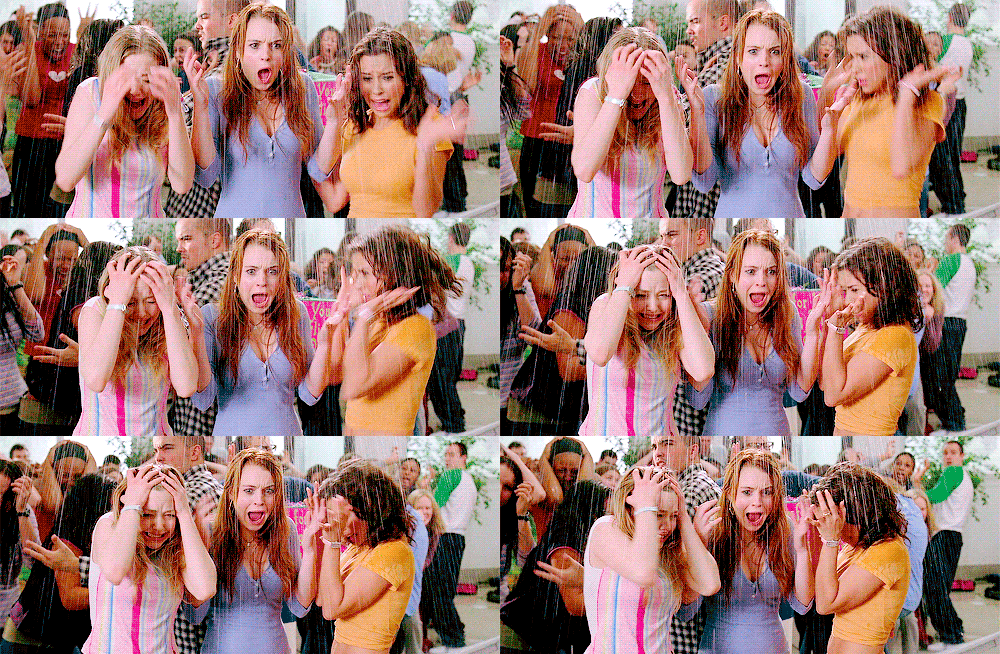
In Mean Girls, once Regina loses her social cache, Cady takes her place.
Then when Janis exposes Cady and Regina, she briefly basks in becoming a new Queen Bee- her revolution to overthrow a tyrant has paid off, bit now she is the tyrant herself. This actually mirrors the real Julius Caesar, who took power from the feared dictator Lucius Cornelius Sulla.
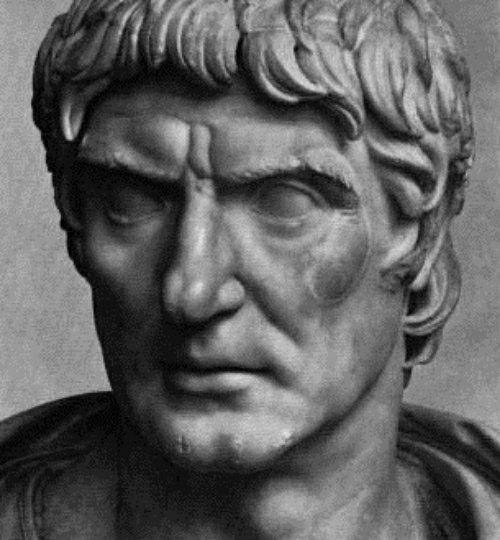
Bust of Sulla
Like Regina and her Burn Book, Sulla kept a list of people he saw as threats called the Proscriptions, only Sulla used it to execute the people on the list and seize their property. Caesar started his career as a populist soldier working for the Senate against Sulla and for the people, but became a dictator himself, the very thing he was sworn to oppose!
The movie does end on an encouraging note when the adults finally step up and address the terrible things that their students are doing, which has important lessons about bullying that every young person should see.

Tina Fey actually admitted that she herself was a Mean Girl in high school, so there’s a great deal of honesty when her character confronts the kids about the consequences of bullying each other.
Though the movie ends happily, the Cesarian parallels are not over; even though this high school has been democratized, the problems that created this Mean Girls autocracy remains. As you can see in the final minutes of the movie, a new crop of Plastics arrive just as the old group disbanded.https://youtu.be/LshX2God-wkIn four years when the regime changes again, will there be a new Caesar?
After rewatching clips from the movie, I realized that Tina Fey actually made a Caesar reference right there in the movie!
In this clip, Gretchen is in English class, perfectly paraphrasing Cassius’ speech in Act I, Scene ii, even the part about Caesar being a colossus:
Cassius. Why, man, he doth bestride the narrow world
Like a Colossus, and we petty men
Walk under his huge legs and peep about
To find ourselves dishonourable graves.
Brutus and Caesar: what should be in that ‘Caesar’?
Why should that name be sounded more than yours?
Write them together, yours is as fair a name;
Sound them, it doth become the mouth as well;
Weigh them, it is as heavy; conjure with ’em,
Brutus will start a spirit as soon as Caesar.
Now, in the names of all the gods at once,
Upon what meat doth this our Caesar feed,
That he is grown so great? Age, thou art shamed!
Rome, thou hast lost the breed of noble bloods!
When went there by an age, since the great flood,
But it was famed with more than with one man?
When could they say till now, that talk’d of Rome,
That her wide walls encompass’d but one man?
Now is it Rome indeed and room enough,
When there is in it but one only man.
O, you and I have heard our fathers say,
There was a Brutus once that would have brook’d
The eternal devil to keep his state in Rome
As easily as a king. I.ii. 226-252.
Now I know Mean Girls is based more on a book and by Tina Fey’s own experiences than Shakespeare, but the point is that the next time you are bored and angry about having to read a play based on a guy who’s been dead for over 2,000 years, take a look at the lunch table next to you and you’ll see that things haven’t changed that much.


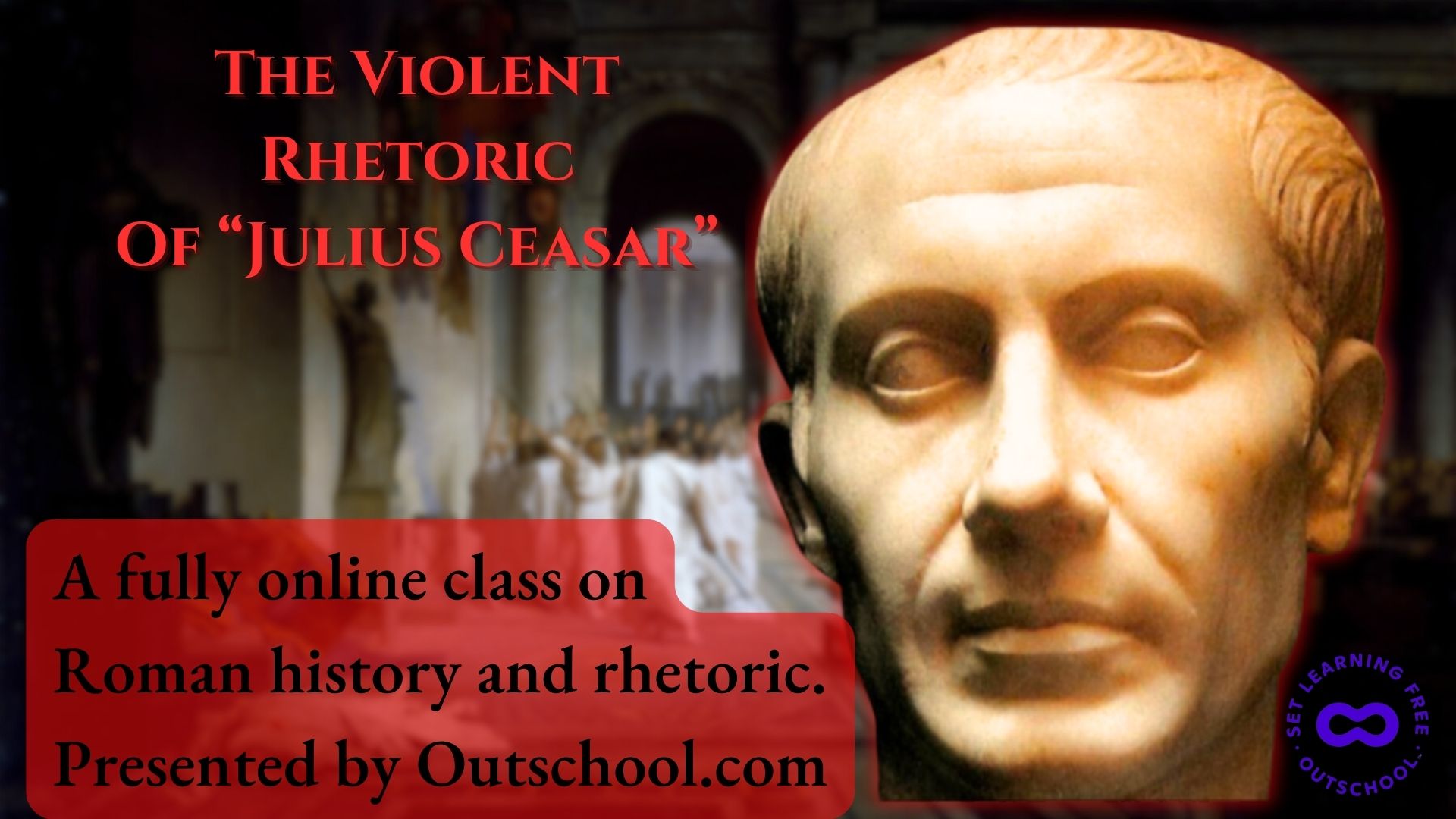
If you liked this post, please consider signing up for my online class, “The Violent Rhetoric Of Julius Caesar,”

The class breaks down some of the most famous speeches in Julius Caesar and gives you some tips and tricks on how to write persuasive speeches like Antony’s “Friends, Romans, Countrymen,” speech. Use these powers for good though, not to turn your school into a Mean Girls dictatorship! https://outschool.com/classes/84ee847d-19f3-45f8-9f25-81e688b8497d
There’s also a fully asynchronous version that you can do on your own time whenever you want:
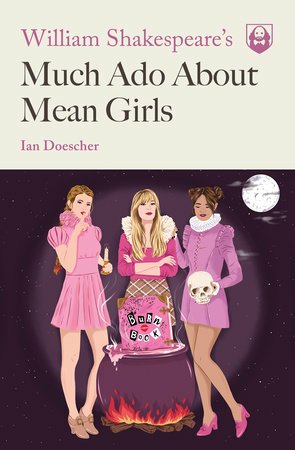
Finally, if you love Mean Girls and Shakespeare, check out Much Ado About Mean Girls by Ian Doescher, author of the William Shakespeare’s Star Wars trilogy.

https://gsch.se/game/99ef58a585e547cf9120f602970dfc20/share/
I designed this on an app called “GooseChase”, appropriate since Shakespeare invented the term!
 If you click on the link, you can do a great scavenger hunt where you upload pictures or answer trivia questions for points, and of course they are all related to Shakespeare. If you have the app on your phone, search for Shakespeare Birthday Scavenger Hunt and enter the code: 2BON2B (Get it, to be or not to be)! You can also use the code NLEGVM. Let me know if you like it or if you cannot access the link.
Happy Hunting!

In the spirit of black history month, enjoy this excellent documentary about Shakespeare’s only black hero: www.pbs.org/wnet/shakespeare-uncovered/uncategorized/othello-david-harewood-full-episode/
 Here’s a classroom guide that you can use with your students: Othello Classroom Guide

Much Ado About Nothing is about upper class people preparing for a wedding, which means fashion is a frequent topic of their conversation. Below I’ve provided a few costume references from the play with definitions from Shakespeare’s Lexicon by Alexander Schmidt.


Authentic reproduction of of real doublet.


Sometimes entire passages in Much Ado About Nothing refer to fashion, as in this example from Act III, Scene iii:
BORACCIO: Thou knowest that the fashion of a doublet, or a hat, or a cloak, is nothing to a man.
CONRAD: Yes, it is apparel.
BORACHIO: I mean, the fashion.
CONRAD: Yes, the fashion is the fashion (Act III, Scene iii).
This passage tells a lot about Boraccio’s motivations, and also shows a lot about the role of fashion in the Elizabethan period. “Fashion” in this case refers not only to the clothing, (its fine craftsmanship and contemporary style), but also to its wealth. Back in the Elizabethan era, people showed off their wealth and status with the clothes they wear; they literally wore their money on their backs. When Boracchio refers to fashion being nothing to a man, he means that a man of wealth and property has no reason to worry about buying fancy clothes. This betrays the reason Boraccio wants to work for Don John- money, and aspirations of becoming a wealthy gentleman. Act III, Scene iii.
Close Reading- Act III, Scene ii
DON PEDRO: There is no appearance of fancy in him, unless it be a fancy that he hath to strange disguises; as, to be a Dutchman today, a Frenchman to-morrow, or in the shape of two countries at once, as, a German from the waist downward, all slops, and a Spaniard from the hip upward, no doublet. Unless he have a fancy to this foolery, as it appears he hath, he is no fool for fancy, as you would have it appear he is (Act III, Scene ii).
In this passage, Don Pedro observes Benedick and mockingly tries to get Benedick to confess that he is in love. Benedick has fallen in love with Beatrice and it has changed his behavior completely- including his manner of dress, which Pedro singles out as a sign of love. This is not unlike a similar passage in As You Like It, where Rosaline tells Orlando that disorder in dress is one of the signs of love. To understand Don Pedro’s remarks, one must first look at some of the European fashions of the time.
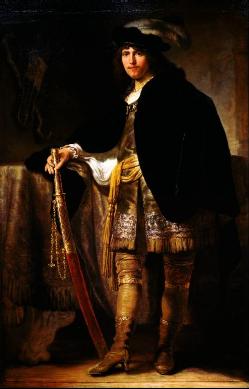
Image 1: The Dutch
Consider this picture of a Dutch courtier by Ferdinand Bol, c. 1640. Notice that though he looks rich, his outfit is fairly austere, no exaggerated codpiece, pants that cover and do not emphasize the shape of the man’s thigh or legs. This is the demure image of the Dutch aristocrat, which is why the liberal prince makes fun of him.
This is an image of a French courtier from the Valois Tapestry (1576). This man’s outfit is practically the opposite of the smart, modest Dutchman. His hose are tight-fitting, decorated with fine embroidery to draw the eye, and his hose show off the shape of his leg. This would be like wearing leather pants today- this outfit is all about flash and sex appeal. Here is a sketch of German aristocrats from the late 16th century. The English liked to make fun of the baggy clothing of the Germans with their padded slops and their peascod belly doublets. These men look like their clothing is only designed to ward off Germany’s cold winters, rather than looking strong, sexy, or powerful.
Image #3: The Germans

To the right is a picture of German slops, which, as the century wore on, got bigger,

and baggier. Going back to the passage quoted earlier, you’ll notice how the people that Pedro makes fun of are all foreigners, none of them are English or Italian. The English liked to make fun of the fashions in other countries, especially the Spanish and the French, (their political enemies). They made fun of the German and French for their slops in particular, probably because slops were so baggy; a man wearing them looked like he was concealing an erection. Pedro is implying Benedick has ‘something to hide,’ since he is thinking about Beatrice all day. Mercutio makes the same joke, when he makes fun of Romeo’s “French slop.”
Don Pedro’s comment about a doublet suggests that Benedick has been walking around with no jacket. This was considered a sign of madness and Ophelia uses it as evidence of Hamlet’s madness in Hamlet, Act II, Scene i: Notice how both passages shockingly refer to the unusual fashion of not keeping ones doublet in proper order. Once again, Pedro is subtly hinting to how Benedick must be in love based on his erratic behavior, which fits in with the stereotype of Spaniards as sex-crazed hot bloods. Spaniards did not Remember, Elizabethans had no heating systems to spare them from cold, so not wearing one’s doublet was very dangerous. Only a madman (and by extension, an unrequited lover), would engage in such self-destructive behavior. Thus, through Don Pedro’s subtle pokes at Benedick, the prince lets him know that he cannot hide his love for Beatrice; it has already manifest itself in his clothes.
As mentioned before, wealthy Elizabethans spent their money on clothes the way modern rich people spend money on yachts and home entertainment systems. Dukes and counts would buy tailor-made, beautifully embroidered clothes, and their outfits sometimes were as famous as the people who wore them.
This final quote from Act III, Scene IV illustrates this principle. The day of Hero’s wedding, her gentlewoman Margaret is comparing her gown to the famous dress of the Duchess of Milan:
By my troth, ‘s but a night-gown in respect of yours: cloth o’ gold, and cuts, and laced with silver, set with pearls, down sleeves, side sleeves, and skirts, round underborne with a bluish tinsel: but for a fine, quaint, graceful and excellent fashion, yours is worth ten on ‘t ( MARGARET, Much Ado, Act III, Scene iv).

Margaret refers to a famous gown worn by Christine of Denmark, a real noblewoman who was immortalized in this portrait: This is a portrait of Christtine of Denmark, Dutchess of Milan from 1521-1590. Notice that, just like Margaret’s description, the cloth is cut with gold, the sleeves and gown are adorned with gold, silver, and pearls, and the dress itself is mostly black (the most expensive color to produce back in the 1590s). These were all common fashions for the upper class in the 16th century. Notice also that the cloth on the sleeves is slashed, (cut open) to reveal the much more expensive silk embroidered with silver and gold. Pearls were a symbol of virginity to the Elizabethans, and at this point, Chistine had been widowed twice over, which is why she is clutching the tassel with the pearl around it, as a symbolic assertion of her chastity. The image was scanned from the Weiss Gallery catalogue: A Noble Visage, Early Portraiture, 1545 – 1660, London, 2001.
I hope you’ve enjoyed this look at the material culture of Elizabethan England. If you would like more info on Elizabethan fashion, please leave a comment below
 The Shakespearean Student